




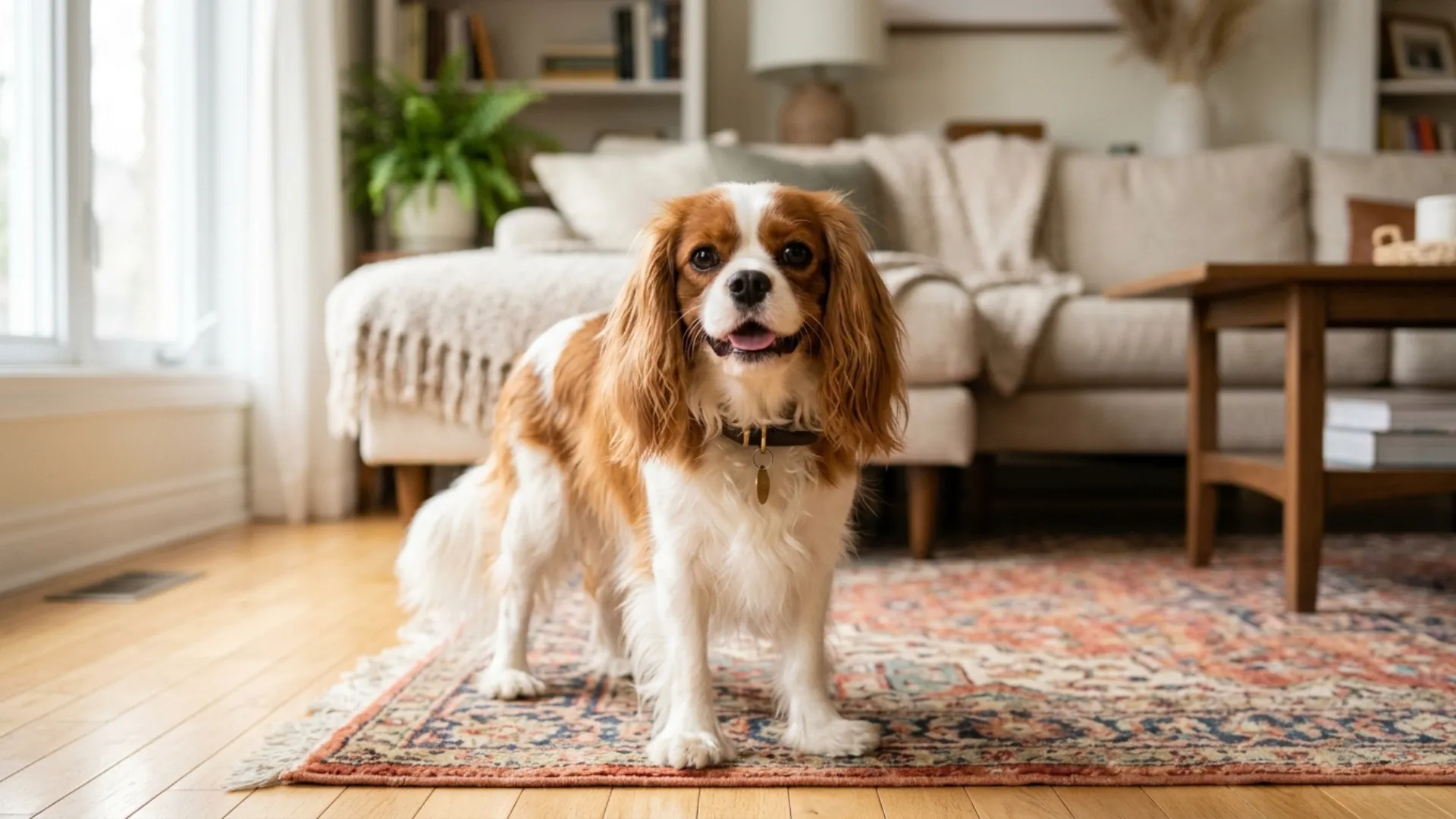
Bringing home your first dog is an exciting milestone, but choosing the right breed can make the difference between a smooth experience and an overwhelming one.
While every dog requires commitment, some breeds are naturally more adaptable, easier to train, and better suited to owners who are still learning the responsibilities of pet care. Selecting a breed that matches your lifestyle is one of the most important steps toward building a successful lifelong bond.
Easygoing and low-maintenance dogs offer many advantages for first-time owners. These breeds often adapt well to different living environments, require manageable levels of exercise, and respond positively to training. Their friendly nature and willingness to please can help new owners feel more confident while developing essential skills in dog care and companionship.
The best beginner-friendly breeds typically combine trainability, adaptability, and gentle temperaments. Understanding a breed’s personality and care needs will help you find the perfect canine partner for your experience level and everyday routine.
Top Easiest Dog Breeds to Care For – First-Time Owners
1. Golden Retriever
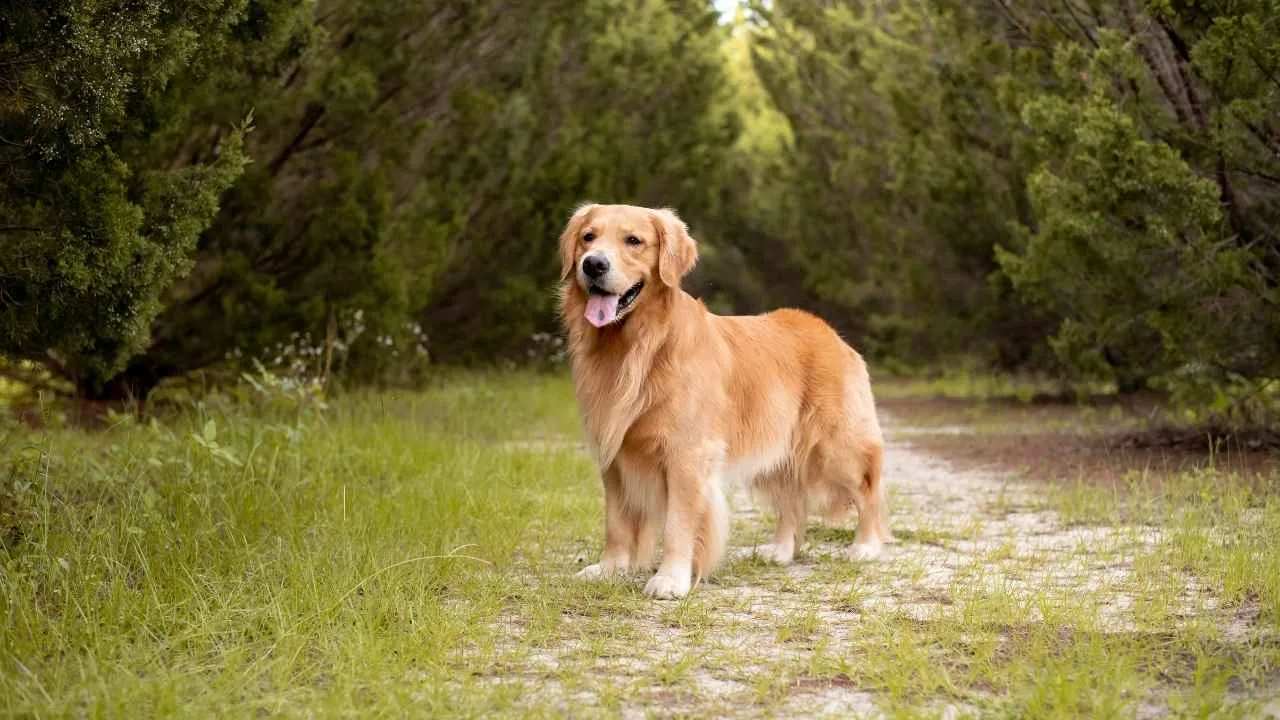
The Golden Retriever is a beloved sporting breed recognized for its friendly nature, intelligence, and beautiful golden coat.
According to PetMD, Golden Retriever dogs are intelligent, loyal, affectionate, and easy to train. Their friendly temperament and ability to get along well with children and other pets make them outstanding family companions when properly socialized.

Golden Retrievers are naturally gentle and sociable, making them easy to welcome into homes. Their patient temperament helps new owners feel more confident while learning the responsibilities of dog ownership.
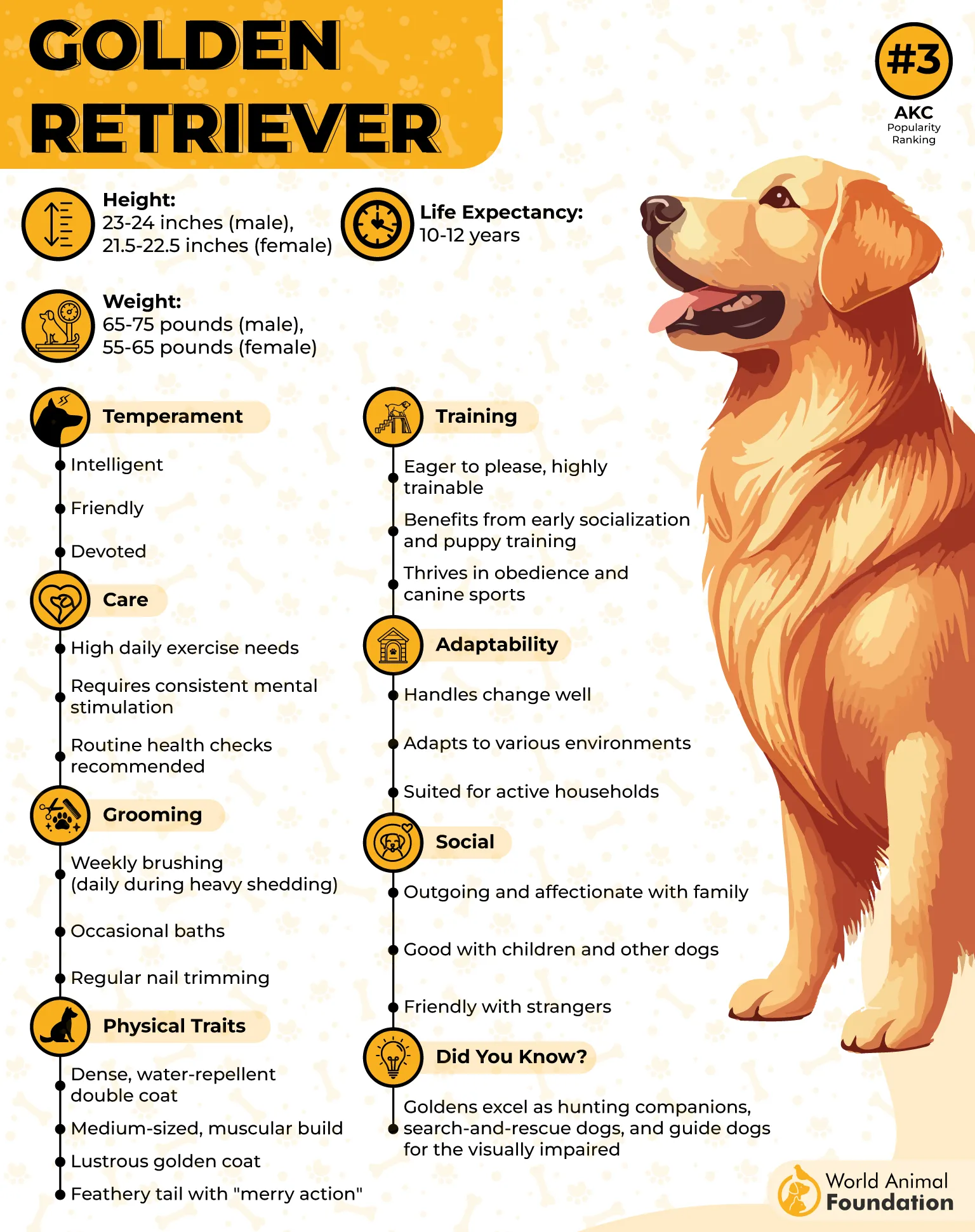
One reason this breed stands out for beginners is its eagerness to learn. Goldens enjoy training sessions and are generally quick to understand commands, helping first-time owners establish good habits without constant frustration. Their willingness to please creates a strong partnership between dog and pet owners.
Although these dog breeds require regular exercise and daily activity, their grooming needs are fairly manageable with weekly brushing and extra attention during shedding periods. They are also naturally alert and may bark when someone approaches the home while remaining friendly toward visitors.
Fact: Golden Retrievers have an instinctive love of water and are often happiest during outdoor adventures with their families.
2. French Bulldog
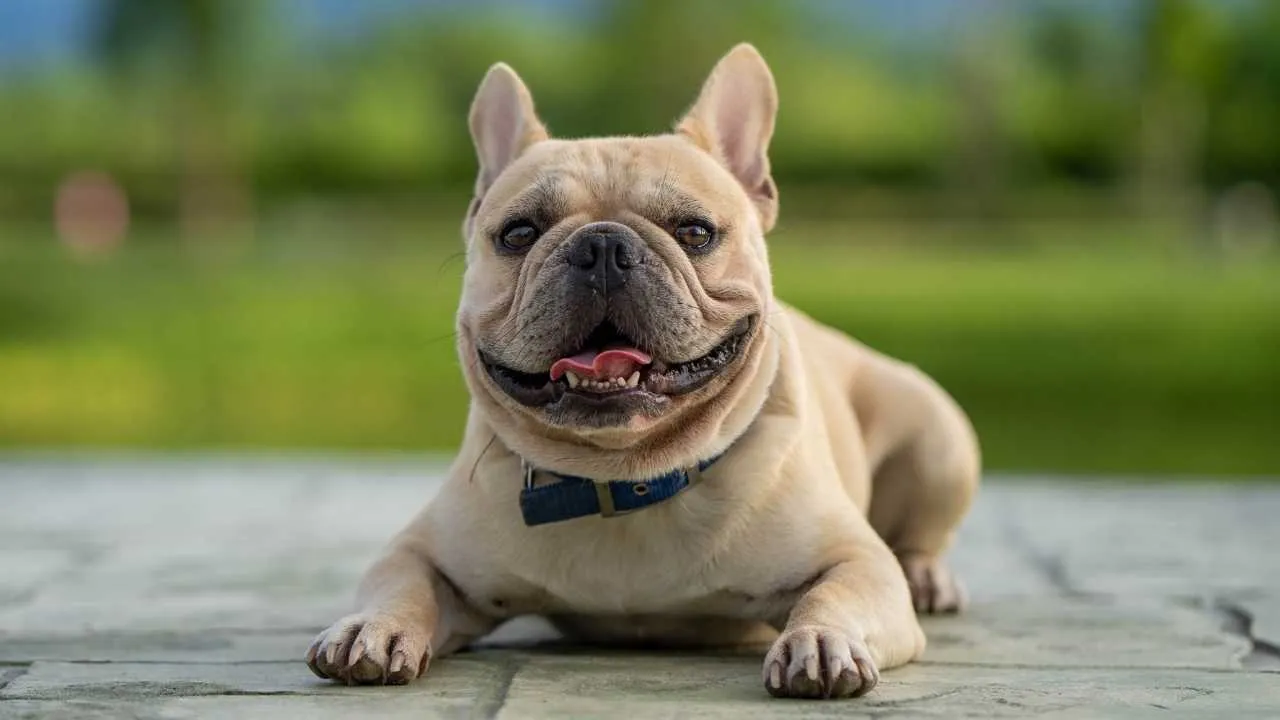
The French Bulldog, often called the Frenchie, is a compact companion. Small in size but full of character, this breed has become a favorite choice for people seeking an easy-to-manage first dog.
According to Purina, French Bulldogs are easily recognized by their large bat-like ears and even-tempered personality.
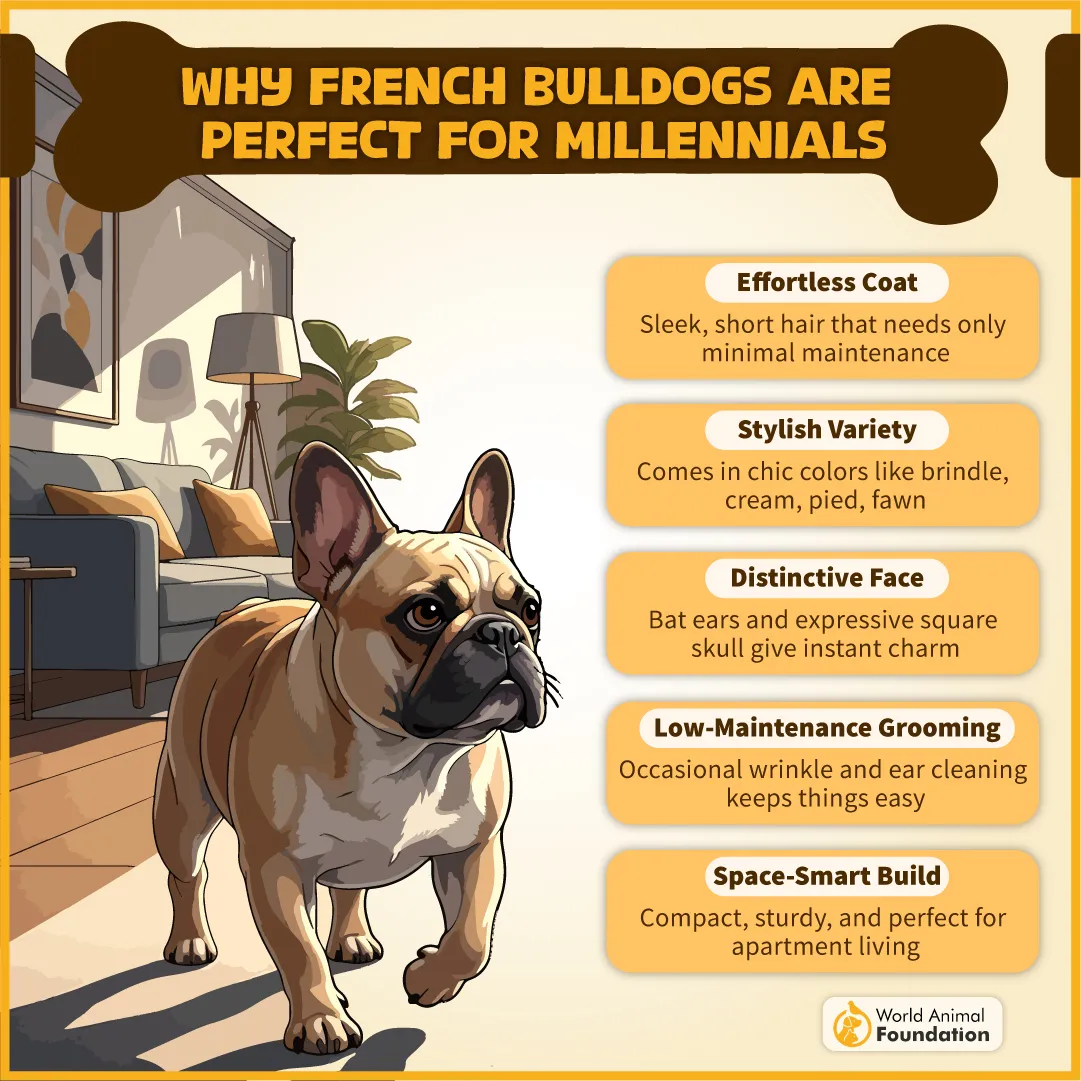
French Bulldogs fit comfortably into a variety of living situations, especially apartments and urban homes. Their adaptable temperament allows them to settle into daily routines quickly, making them a practical option for new owners adjusting to life with a dog.
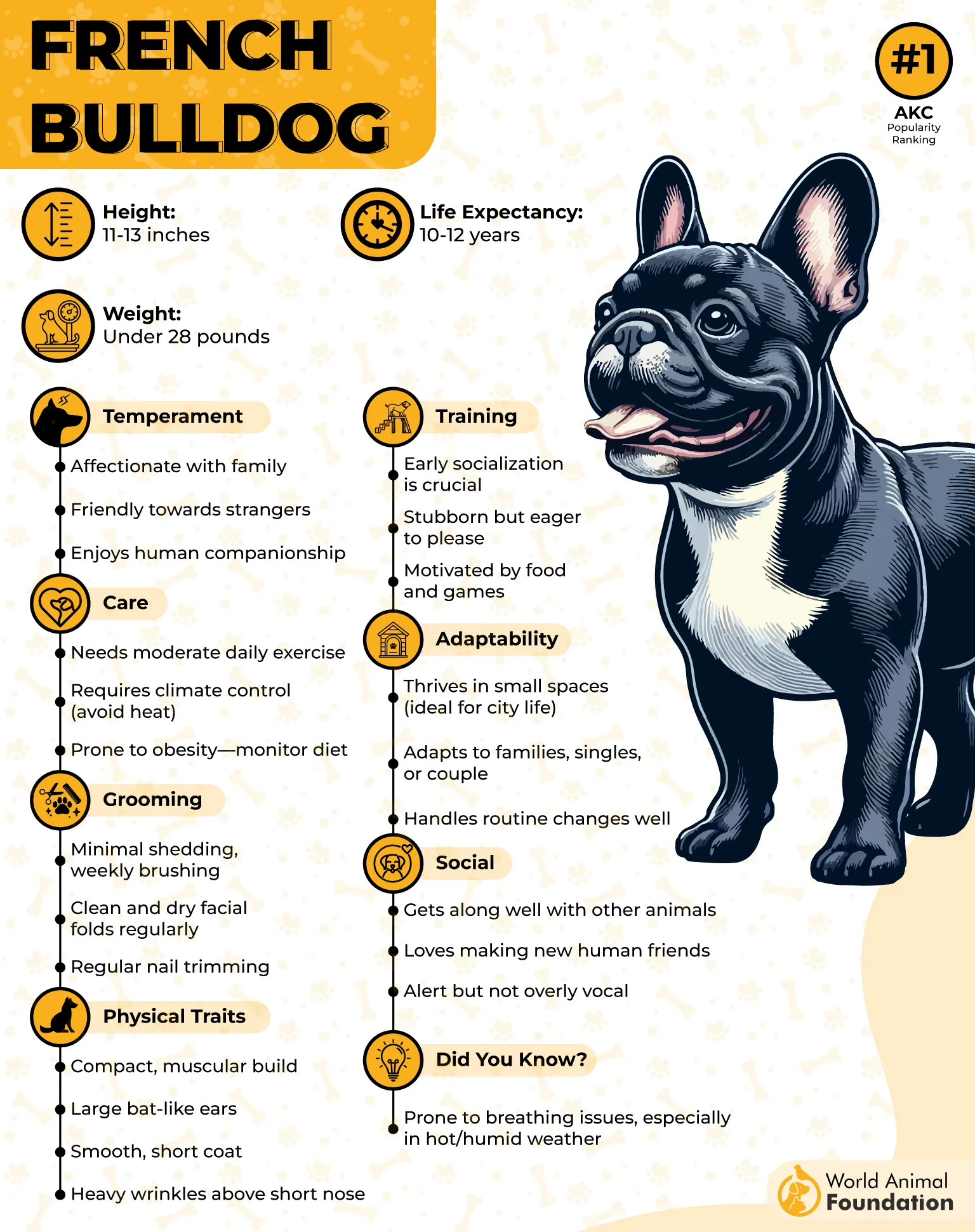
Unlike highly active breeds, Frenchies are content with moderate activity and do not require long exercise sessions. This lower-energy lifestyle appeals to busy individuals who want a loyal companion without demanding daily exercise commitments.
Their affectionate nature means they enjoy spending time with family members, yet they are often happy relaxing quietly at home. Minimal grooming needs further simplify ownership, helping beginners focus on building a strong bond rather than managing extensive care routines.
Fact: French Bulldogs are naturally quiet companions that are often perfectly content spending much of the day relaxing and napping indoors.
3. Cavalier King Charles Spaniel
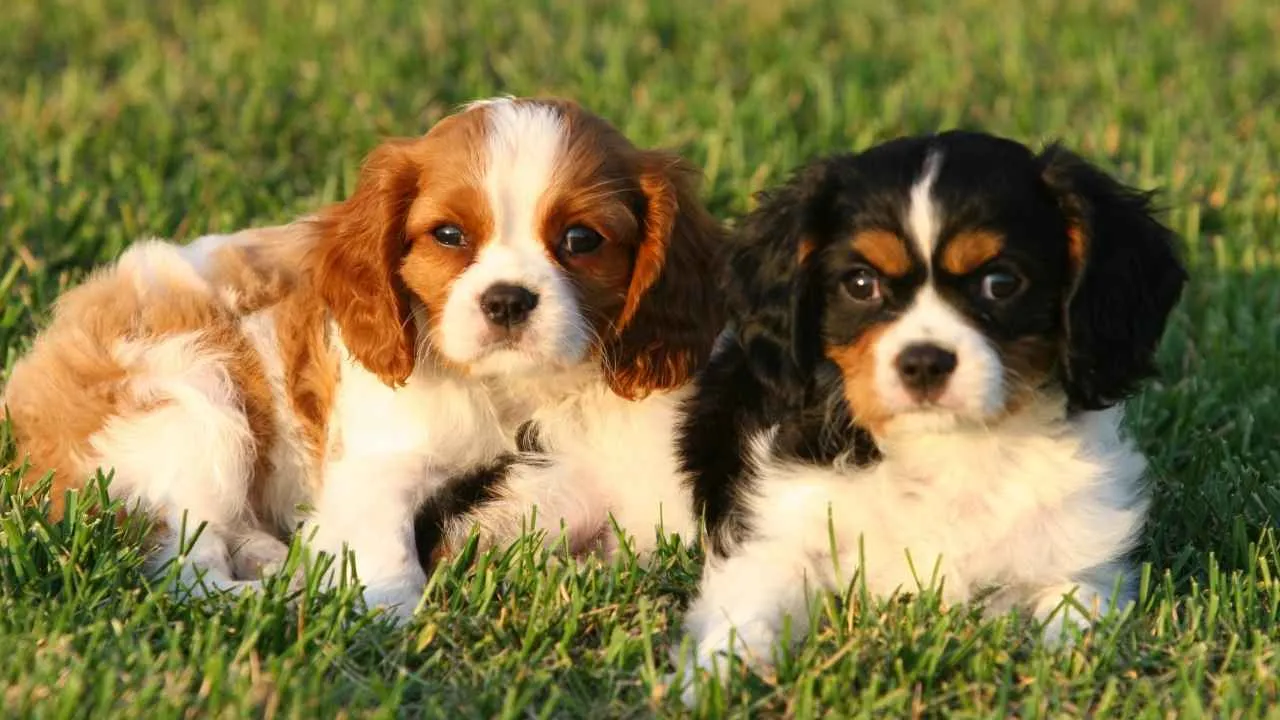
The Cavalier King Charles Spaniel is a charming toy breed admired for its silky coat and expressive eyes. Originally bred as a companion dog, it remains one of the most approachable and beginner-friendly breeds for new owners.
According to the AKC, Cavalier King Charles Spaniel dogs combine the gentle, affectionate nature of a toy breed with the energy and athleticism of a sporting spaniel. Their name also reflects the breed’s long connection to British history.
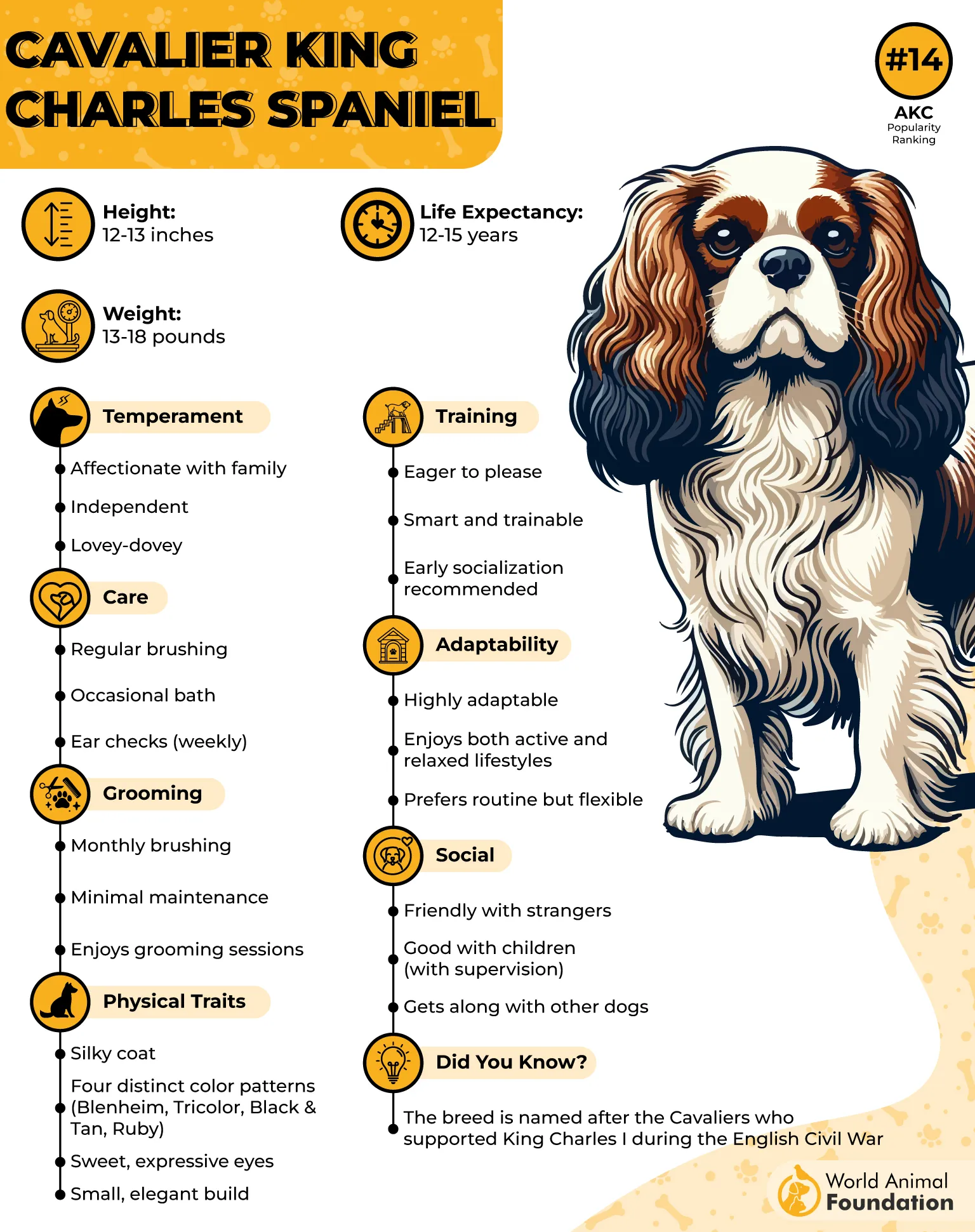
Cavaliers are naturally gentle and sociable. They tend to get along well with children, seniors, guests, and other pets, helping first-time owners feel at ease as they learn the responsibilities of dog ownership.
Their moderate exercise needs make daily care simple and manageable. A regular walk combined with indoor play is usually enough to keep them happy, making the breed particularly suitable for apartment dwellers, busy families, and people who prefer a relaxed routine.
Despite their elegant appearance, their grooming requirements are relatively straightforward, with regular brushing. Cavaliers are also responsive to positive reinforcement training and adapt well to different living environments while offering a balance of affection and independence.
Fact: The Cavalier King Charles Spaniel is often considered one of the closest breeds to the ideal beginner dog because of its gentle temperament and adaptable nature.
4. Pug
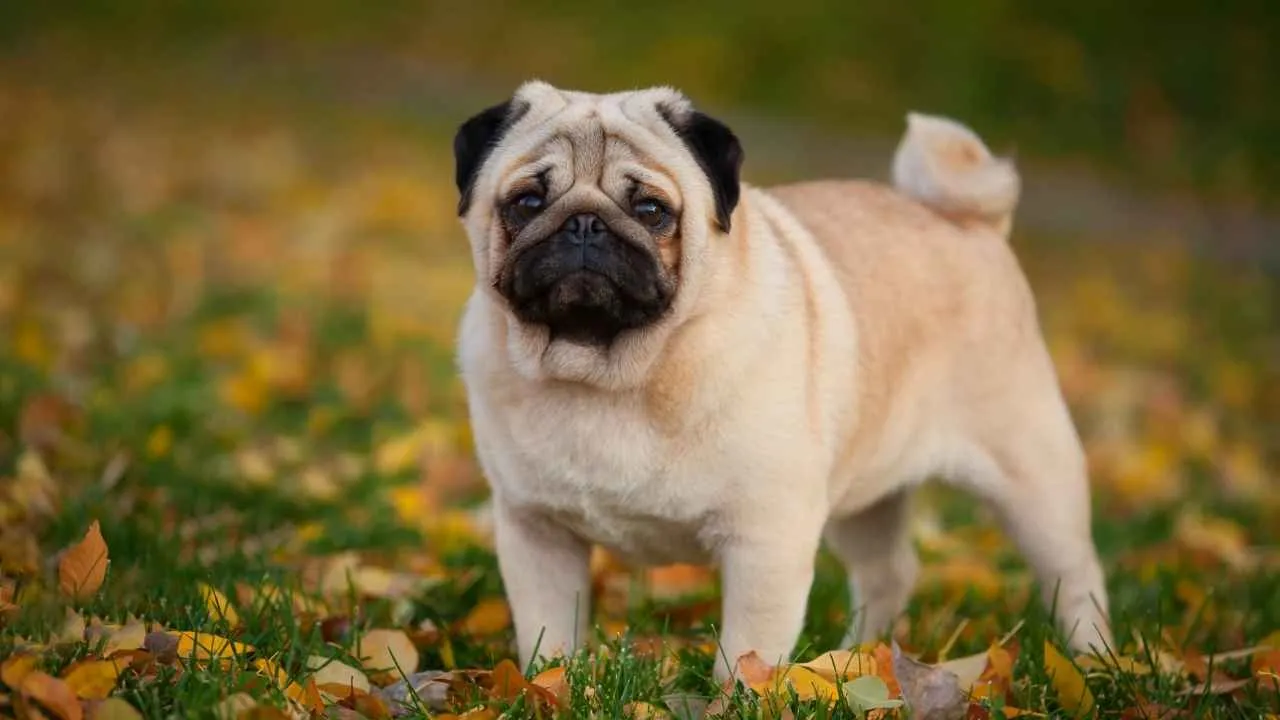
The Pug is a compact companion recognized for its wrinkled face, curled tail, and comical expressions. With a friendly disposition and manageable size, this breed has remained a favorite among first-time dog owners for generations.
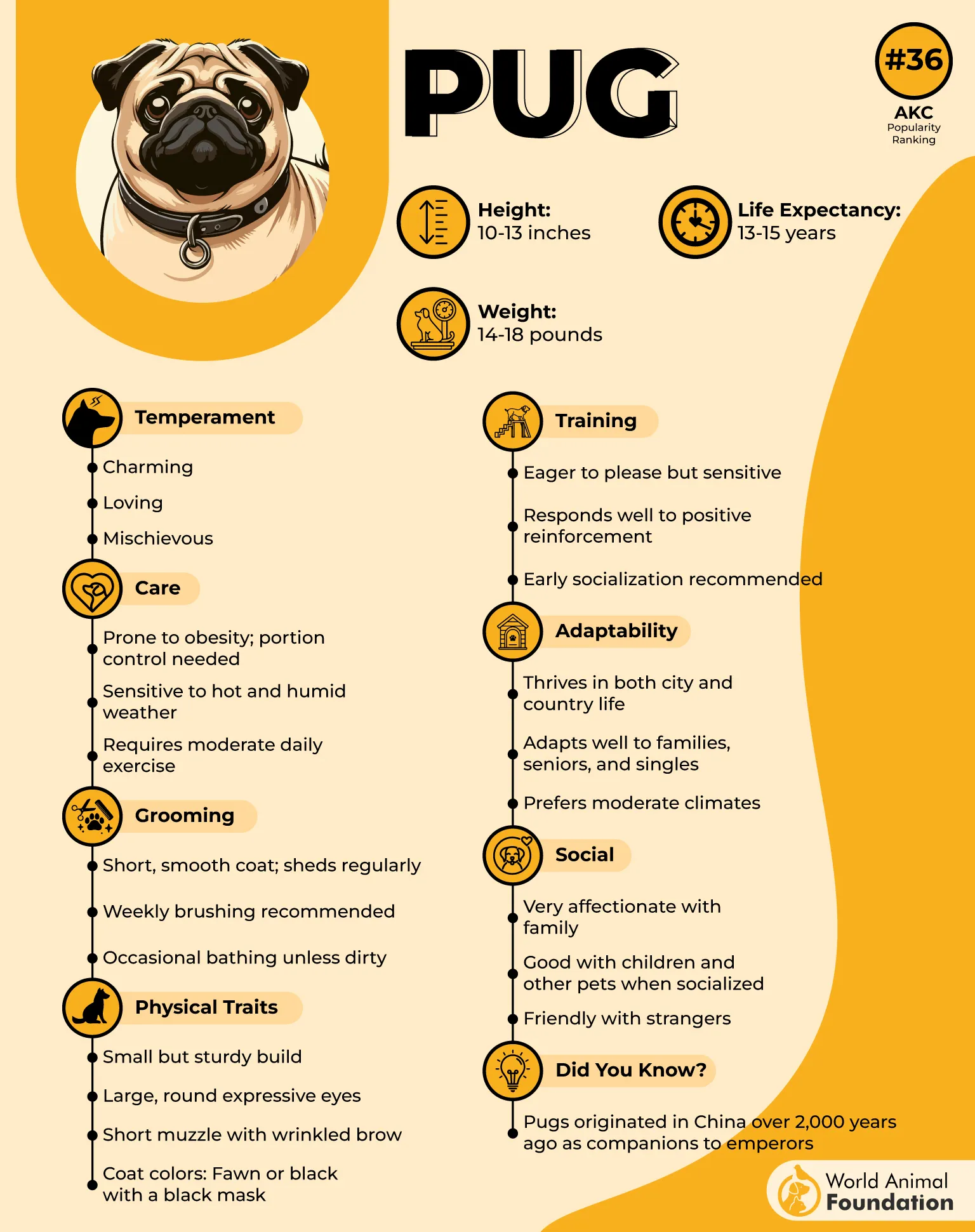
One reason Pugs are so beginner-friendly is their relaxed attitude toward daily life. They enjoy spending time with their families and are usually content with short walks and simple indoor activities, making them well-suited to apartments and smaller homes.
Training is often straightforward because Pugs are intelligent and highly motivated by rewards. Their eagerness to earn treats and praise helps new owners teach basic commands and household manners without excessive difficulty. Early socialization further encourages a confident and well-adjusted temperament.
Their short coat requires only modest grooming, while their adaptable personality allows them to fit comfortably into many lifestyles. New owners should pay attention to their weight and overall health, as Pugs can be prone to breathing and eye-related issues associated with their distinctive facial structure.
Fact: Pugs are typically food-motivated, which makes them relatively easy to train using positive reinforcement methods.
5. Boston Terrier
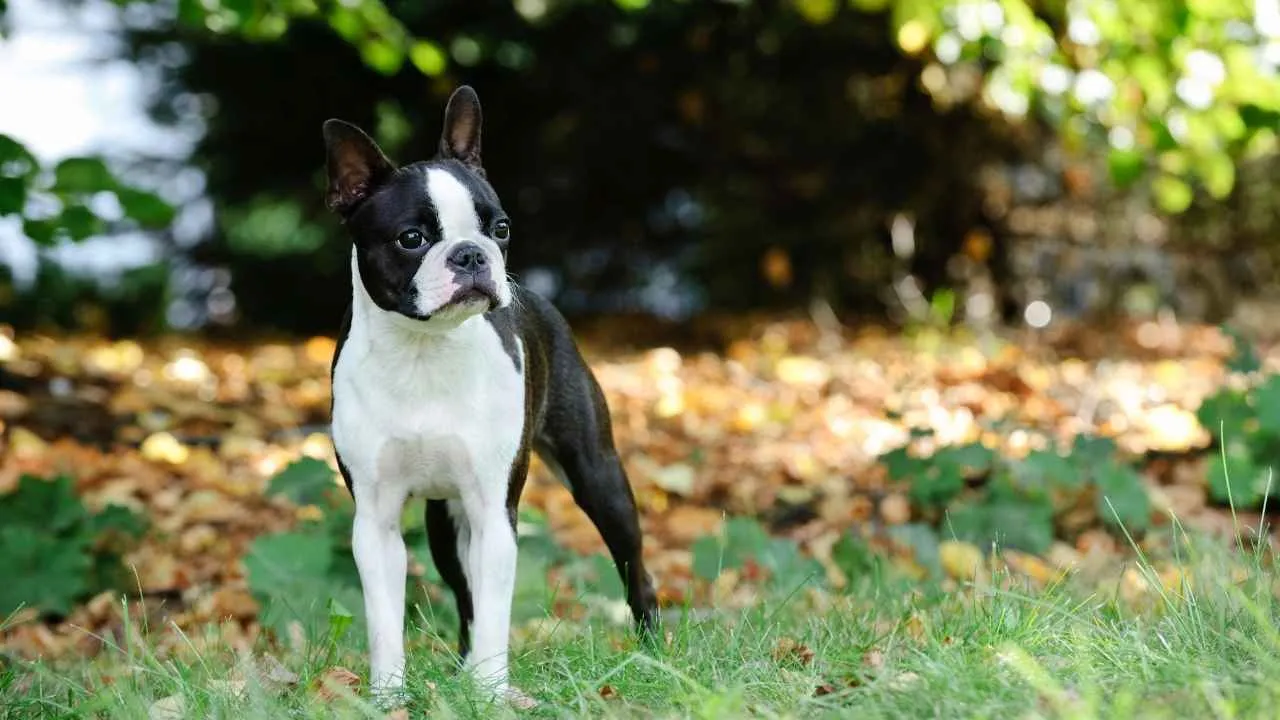
The Boston Terrier, affectionately known as “The American Gentleman,” is a small, sturdy companion recognized for its tuxedo-like coat, bright expression, and friendly personality.
Originating in the United States, this charming breed is valued for its good manners and ability to fit comfortably into a variety of households.
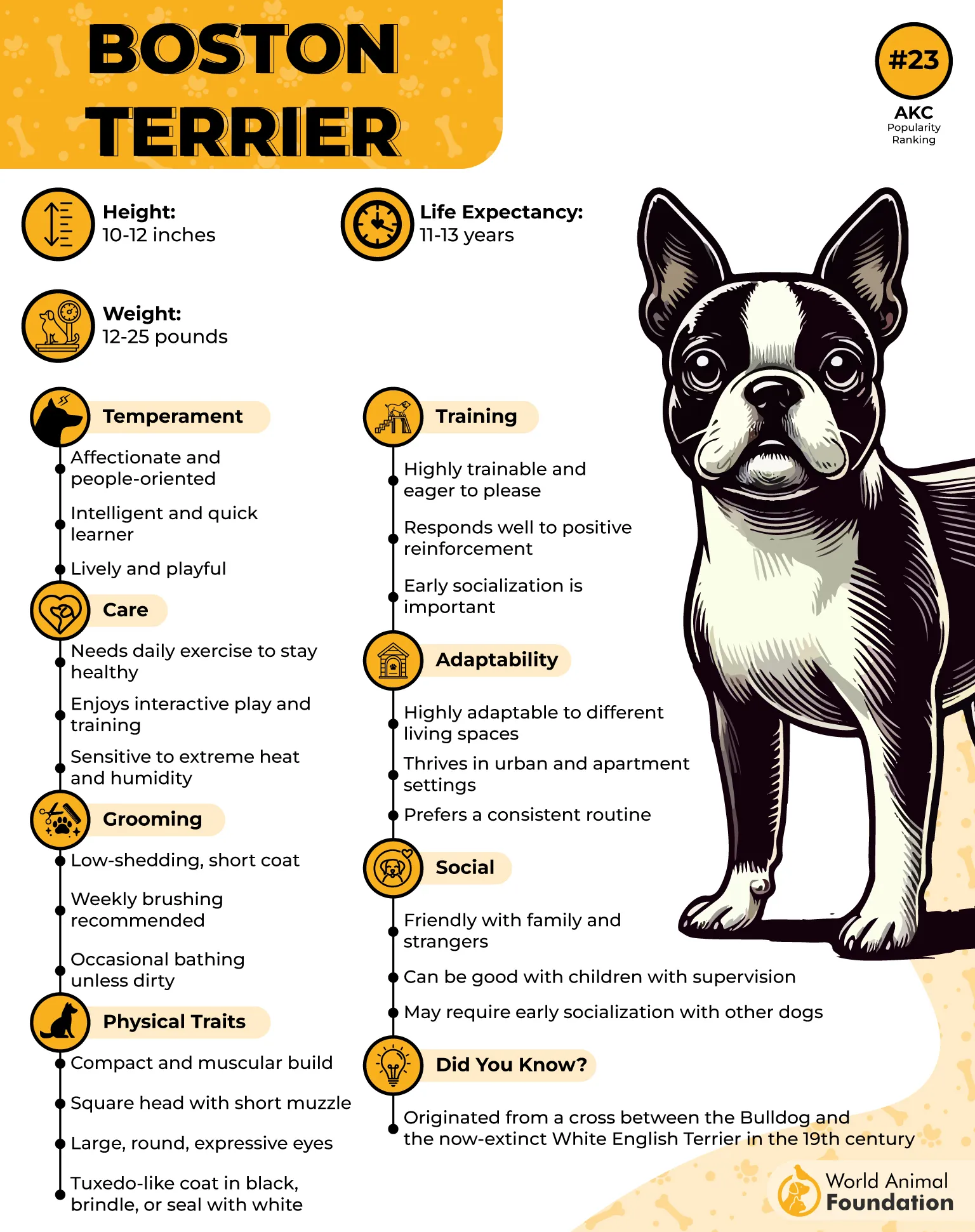
Boston Terriers are especially appealing to first-time owners because they strike a balance between playfulness and manageability. They enjoy participating in family activities but do not require the intense exercise demands associated with many high-energy breeds.
Their sociable nature allows them to adapt well to apartment living, suburban homes, and family environments with children. Regular walks and interactive play are usually enough to keep them happy, making daily care straightforward for inexperienced owners.
The breed’s short coat requires only minimal grooming, helping reduce maintenance responsibilities. Consistent routines, positive training, and plenty of companionship bring out the best in these affectionate dogs. Owners should be mindful of hot weather, however, as their flat-faced structure can make breathing difficulties more likely during excessive heat or strenuous exercise.
Fact: The Boston Terrier became the first breed developed in the United States to be recognized by the American Kennel Club, earning official recognition in 1893.
6. Japanese Chin
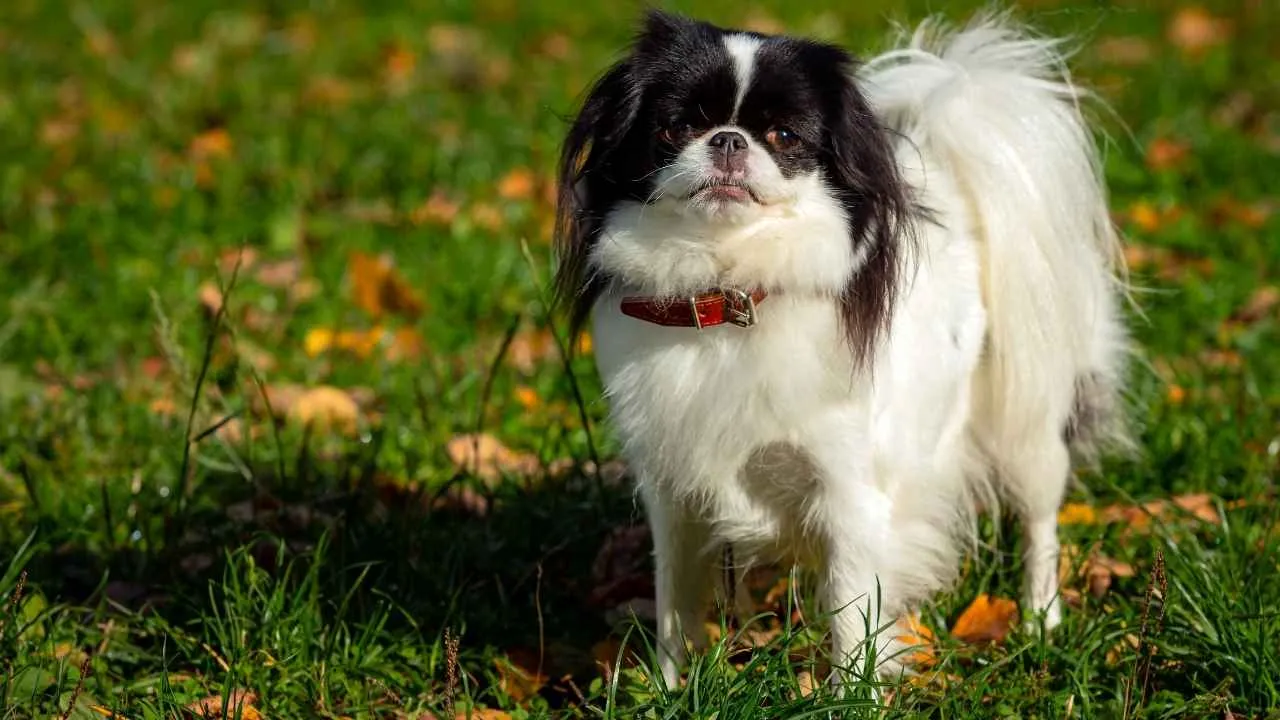
The Japanese Chin is an ancient toy breed admired for its broad head, expressive, wide-set eyes, silky coat, and aristocratic heritage. Bred as a cherished companion for nobility, this small dog combines elegance with a lively and affectionate personality.
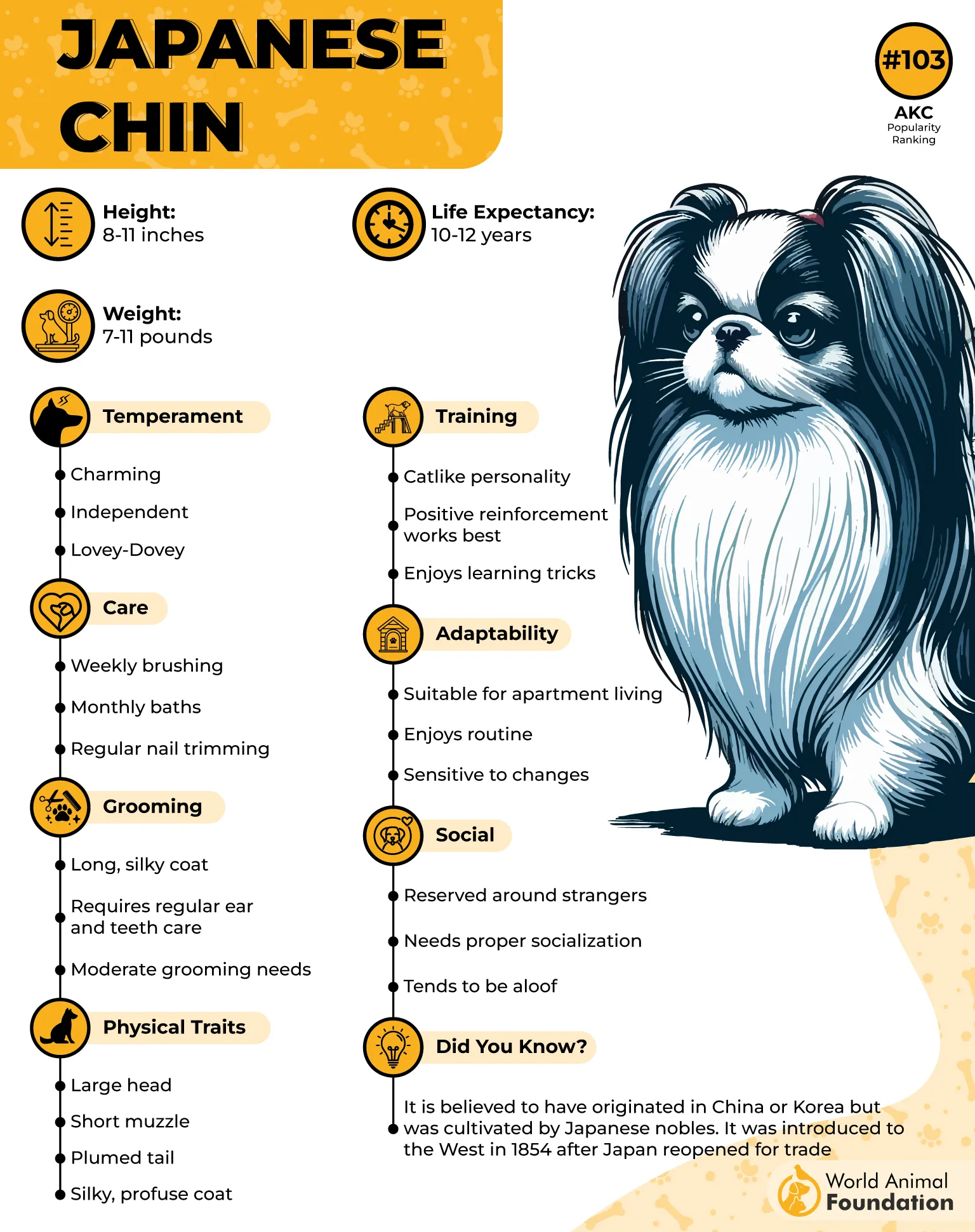
While occasionally independent-minded, this breed is capable of learning household manners, tricks, and even indoor potty routines when trained with patience and positive reinforcement.
Its modest exercise requirements make daily care simple. A couple of relaxed walks and indoor play sessions are usually enough to keep this companion content, making it a practical choice for apartments and smaller homes.
The Japanese Chin is also known for its cat-like habits, often grooming itself and seeking high resting spots around the house. Its silky coat requires regular brushing but is generally easier to maintain than many long-haired breeds. Because of its flat-faced structure, owners should take extra care during hot weather and avoid excessive exercise in high temperatures.
Fact: The Japanese Chin was first recognized by the American Kennel Club in 1888 and was historically gifted to nobles and visiting dignitaries.
7. Whippet
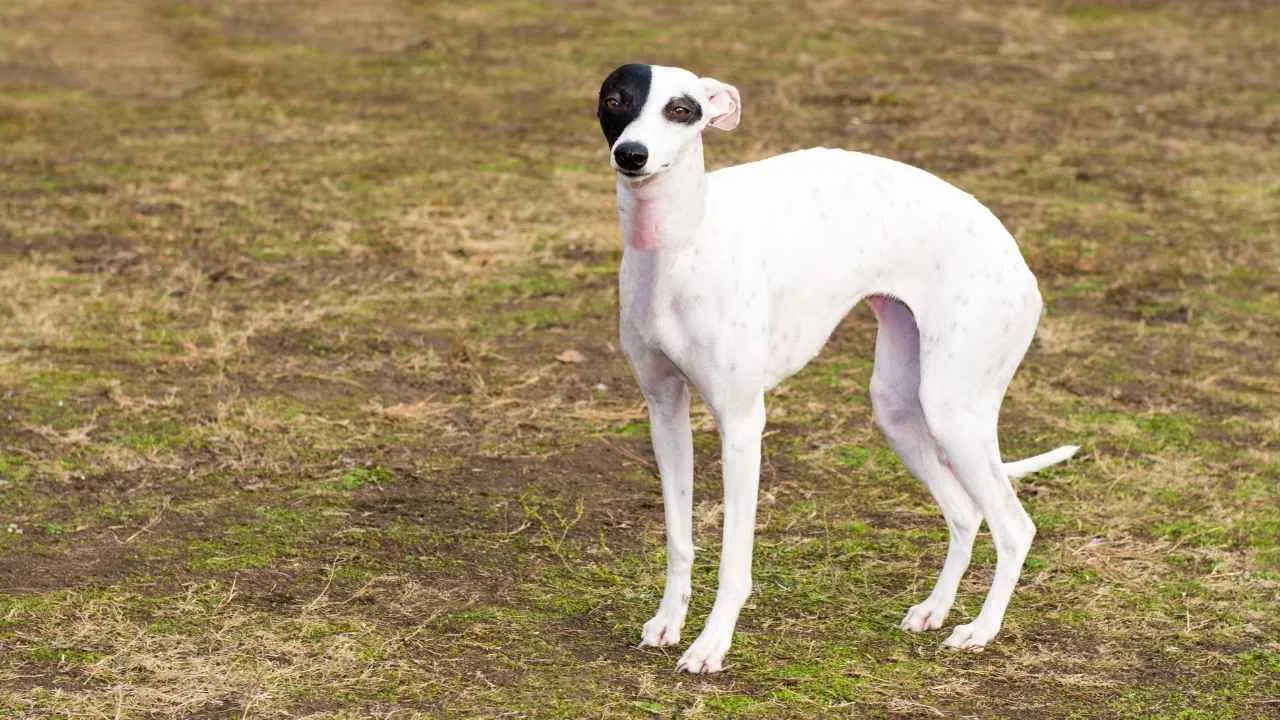
The Whippet is a sleek sighthound admired for its graceful build, gentle expression, and impressive speed. Though closely related in appearance to the Greyhound, the Whippet combines athletic ability with a remarkably calm and affectionate nature.
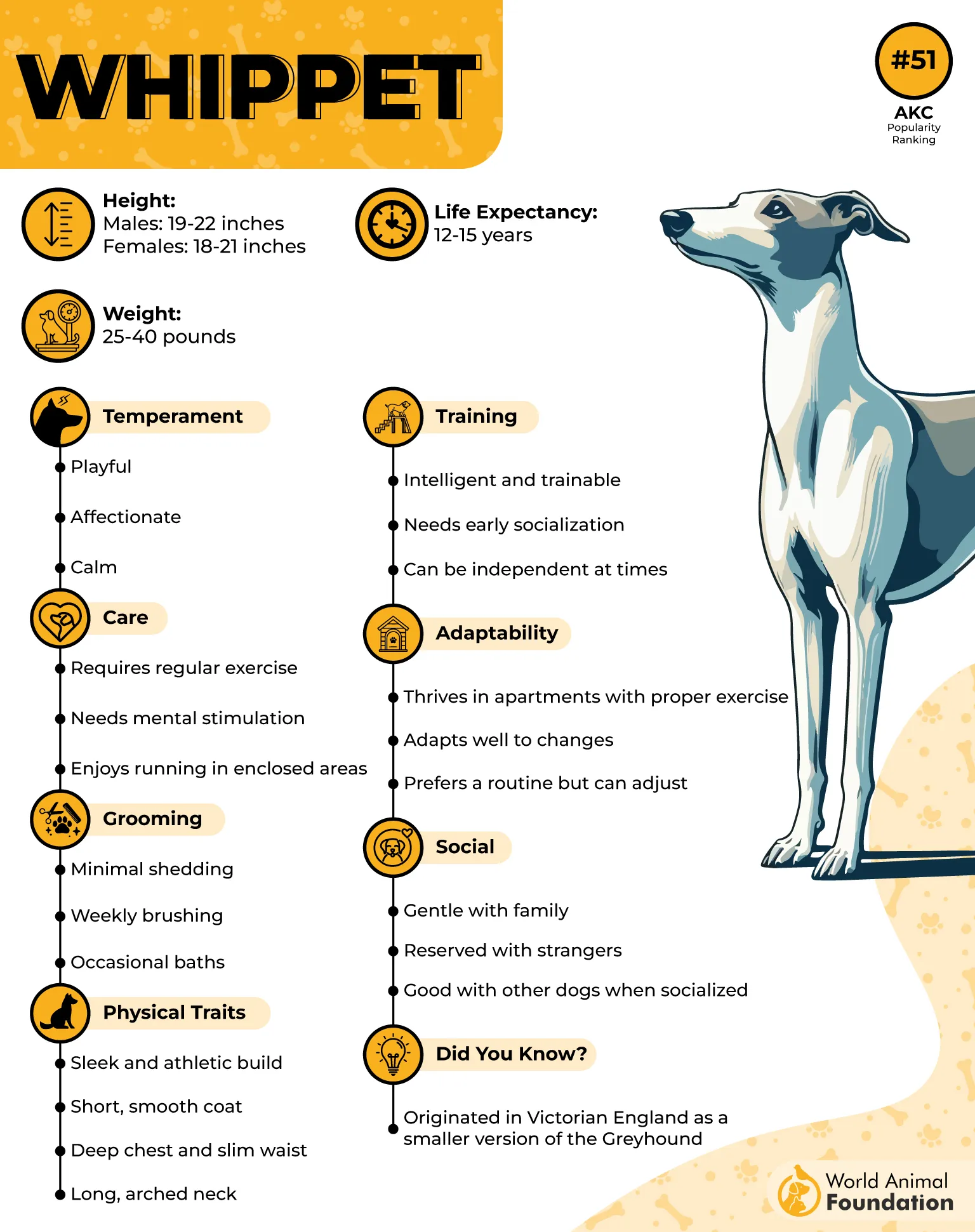
The Whippet shows an appealing balance between activity and relaxation. While these dogs enjoy short bursts of running and play, they are equally happy spending long periods lounging beside their families, making them easier to manage than many energetic breeds.
Their quiet temperament is another advantage for beginners. Whippets are not known for excessive barking and generally adapt well to apartments or smaller homes, provided they receive regular exercise and opportunities to stretch their legs safely.
Maintenance is refreshingly simple thanks to their short, smooth coat, which requires only basic grooming. Their sensitive and affectionate personality responds best to gentle handling and positive training methods. Because they have very little body fat, owners should provide extra warmth during colder weather to keep them comfortable.
Fact: Whippets can reach speeds of up to 35 miles per hour, yet many owners describe them as calm couch companions when indoors.
8. Papillon
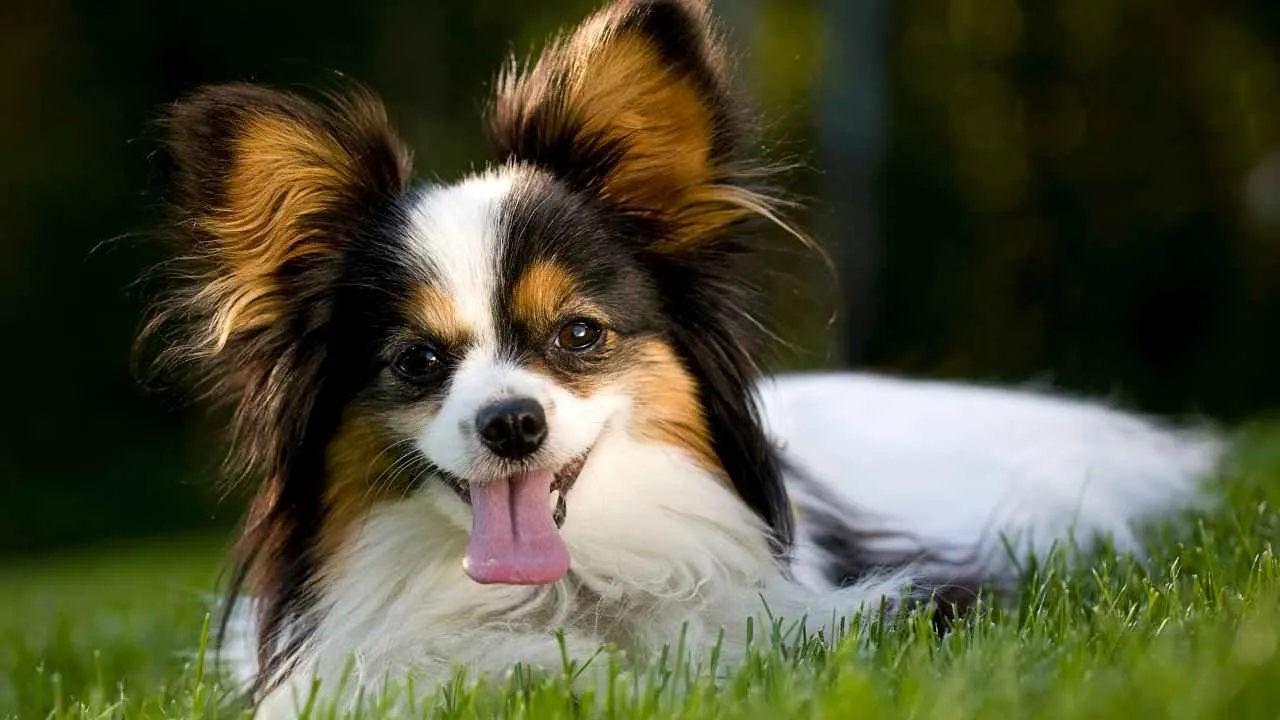
The Papillon, whose name means “butterfly” in French, is a charming toy breed recognized for its large, wing-shaped ears and elegant feathered coat. Despite its delicate appearance, this lively companion is remarkably intelligent, adaptable, and eager to engage with its family.
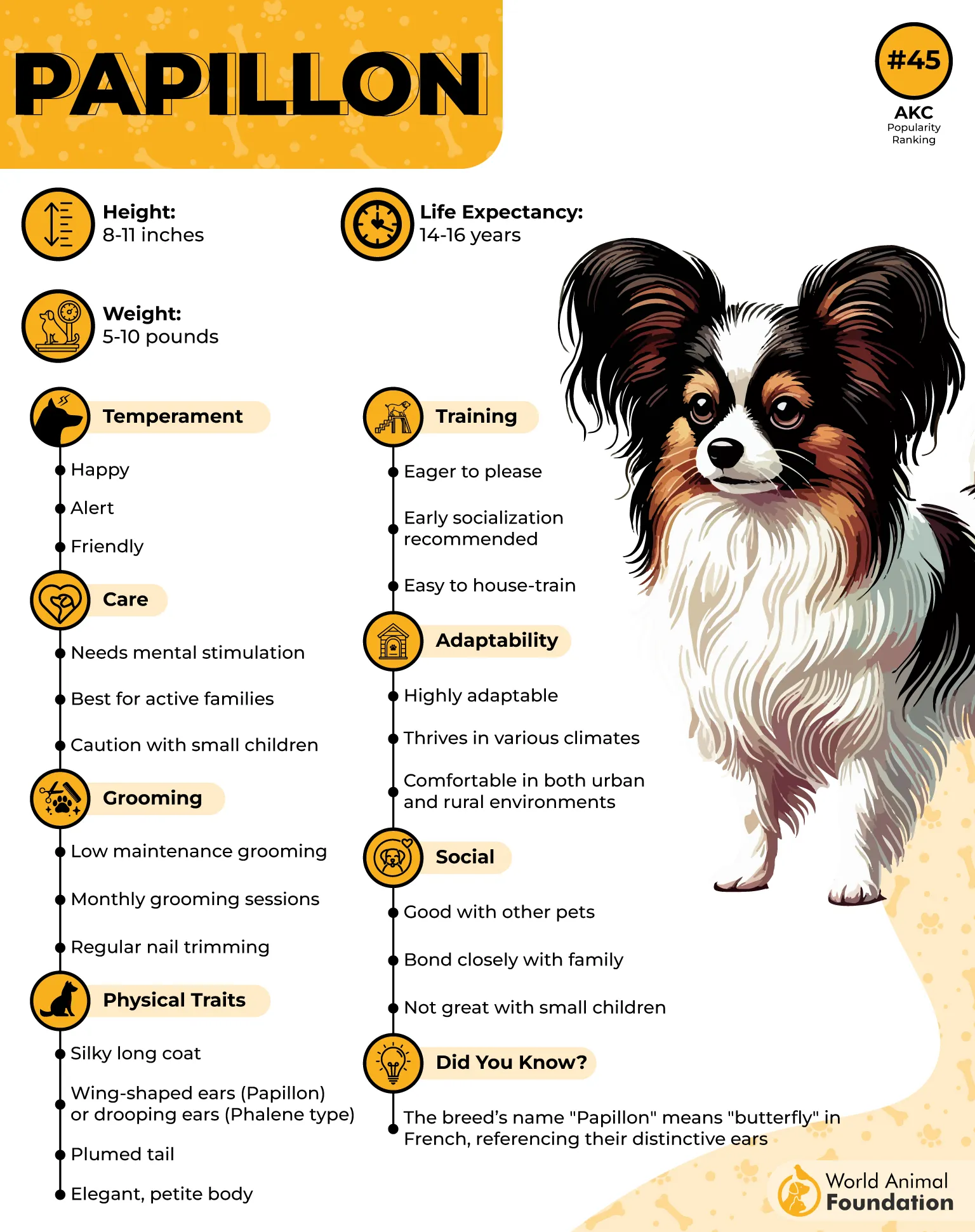
These intelligent dogs are often recommended for first-time owners because of their exceptional trainability. They learn quickly, respond well to positive reinforcement, and excel in activities ranging from basic obedience to agility and therapy work when given consistent guidance.
Their compact size makes them suitable for apartments and smaller homes, yet they are more energetic than many toy breeds. Regular walks, indoor games, and mental challenges help satisfy their curious minds and prevent boredom.
Although their long coat requires brushing several times a week, overall care remains manageable for dedicated owners. Papillons thrive when included in daily family life and enjoy building close bonds with their people. Because of their small and delicate frame, households with very young children should supervise interactions carefully to avoid accidental injuries during play.
Fact: Papillons have been depicted in European artwork since the sixteenth century and were bred for centuries primarily as companion dogs.
9. Greyhound
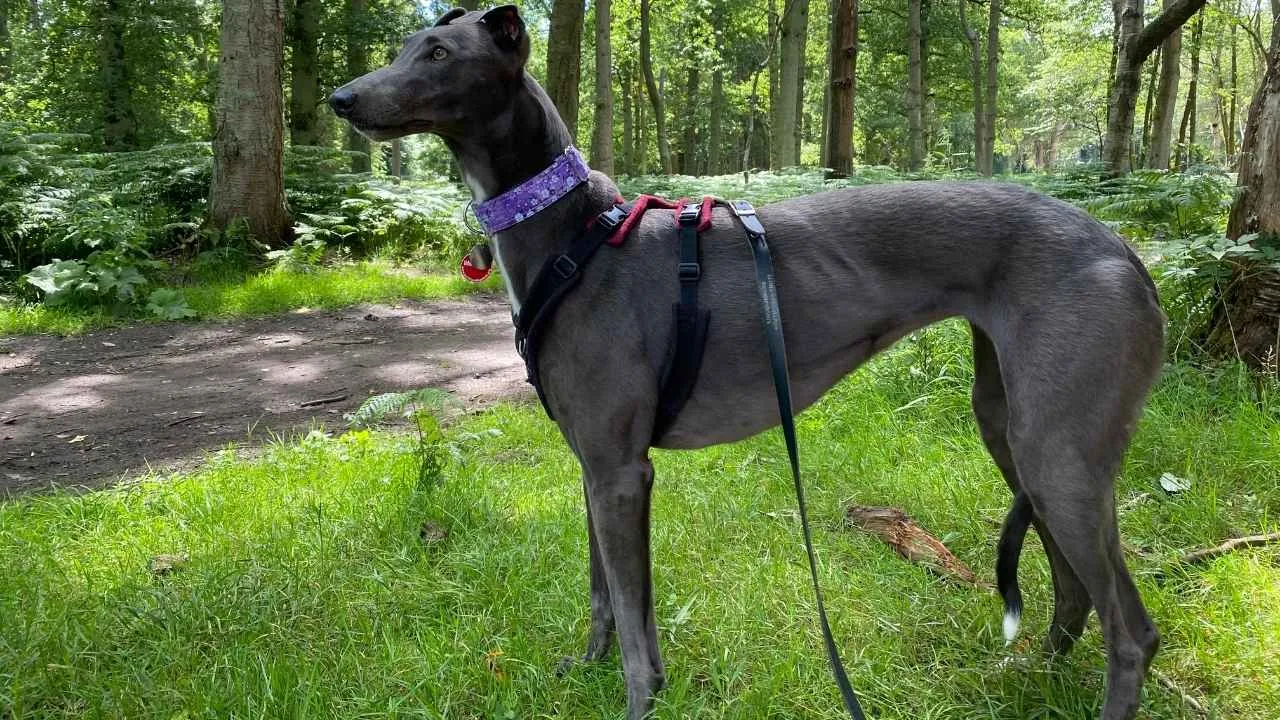
The Greyhound is a graceful sighthound recognized for its sleek build, gentle temperament, and remarkable speed. Despite its athletic reputation, this breed is surprisingly calm indoors and enjoys spending much of its time relaxing beside its family.
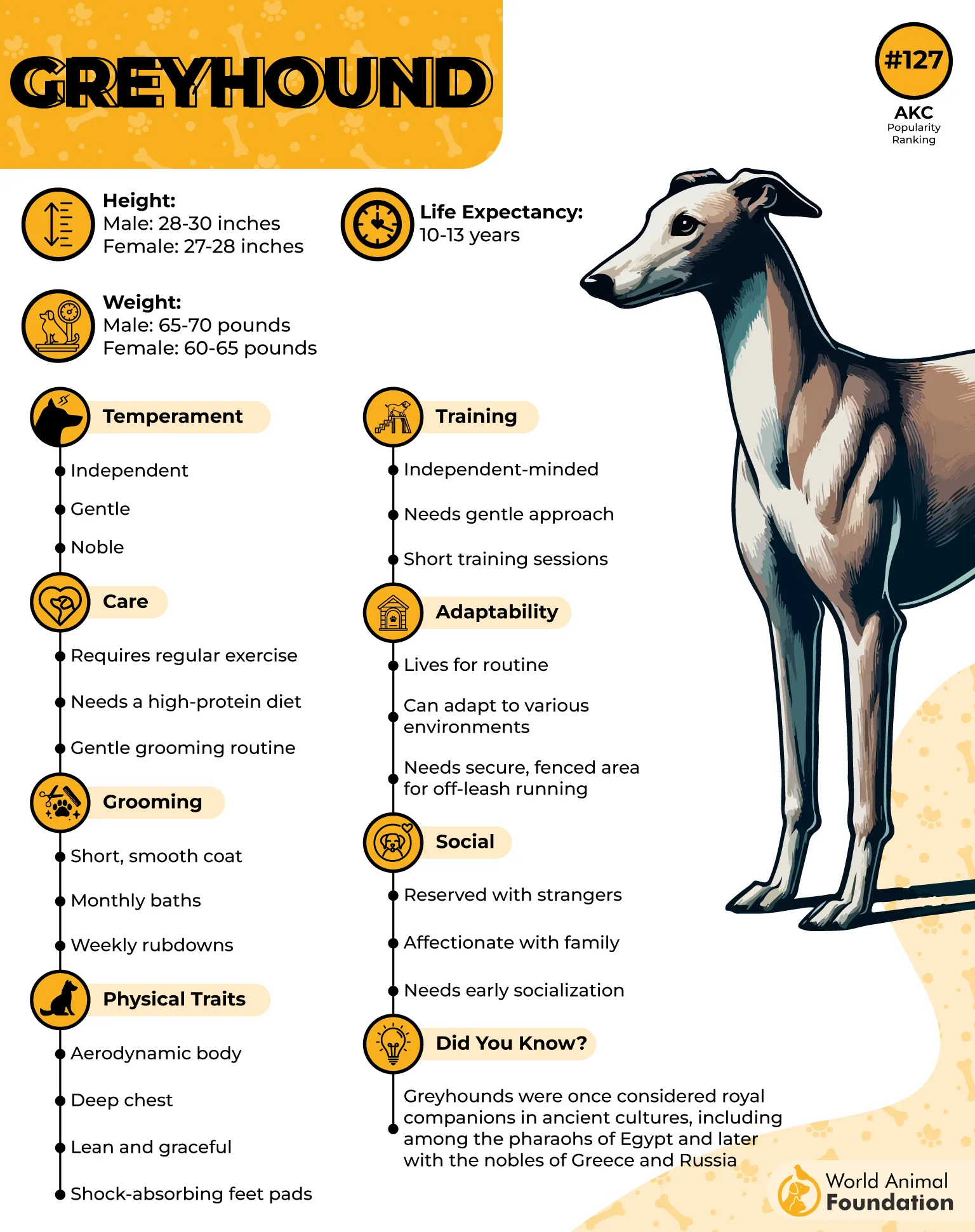
Greyhounds balance affection with an easygoing nature. Rather than demanding constant attention, they usually show their devotion through quiet companionship, often resting nearby, leaning gently against their favorite people, or following them from room to room.
Their care requirements are relatively straightforward. Although they appreciate regular walks and opportunities to stretch their legs, many retired racers are content with short bursts of activity followed by long periods of rest, making them surprisingly manageable household companions.
Consistency and patience help Greyhounds settle comfortably into family life. As trust develops, they often form deep bonds and become loyal companions. However, their strong hunting instincts mean they may not be suitable for homes with small furry pets such as rabbits or cats.
Fact: Greyhounds frequently express affection through subtle behaviors like leaning against their owners, resting nearby, and sharing quiet companionship.
Conclusion
Choosing your first dog becomes much easier when you focus on breeds known for friendly temperaments, manageable care needs, and strong adaptability. The right companion can make the transition into dog ownership both enjoyable and rewarding.
From affectionate family favorites like the Golden Retriever to easygoing apartment companions such as the French Bulldog and Cavalier King Charles Spaniel, the best dog breeds for first-time owners offer qualities that help new owners build confidence and lasting bonds.
Many of these dogs are highly trainable, sociable, and content with moderate exercise and straightforward grooming routines. Their willingness to learn and fit into different lifestyles makes daily care less overwhelming for beginners.
While every dog has a unique personality, selecting a furry companion that matches your living situation, activity level, and expectations can set the foundation for a successful relationship. With patience, consistency, and plenty of love, first-time owners can enjoy years of companionship, loyalty, and unforgettable memories.
