




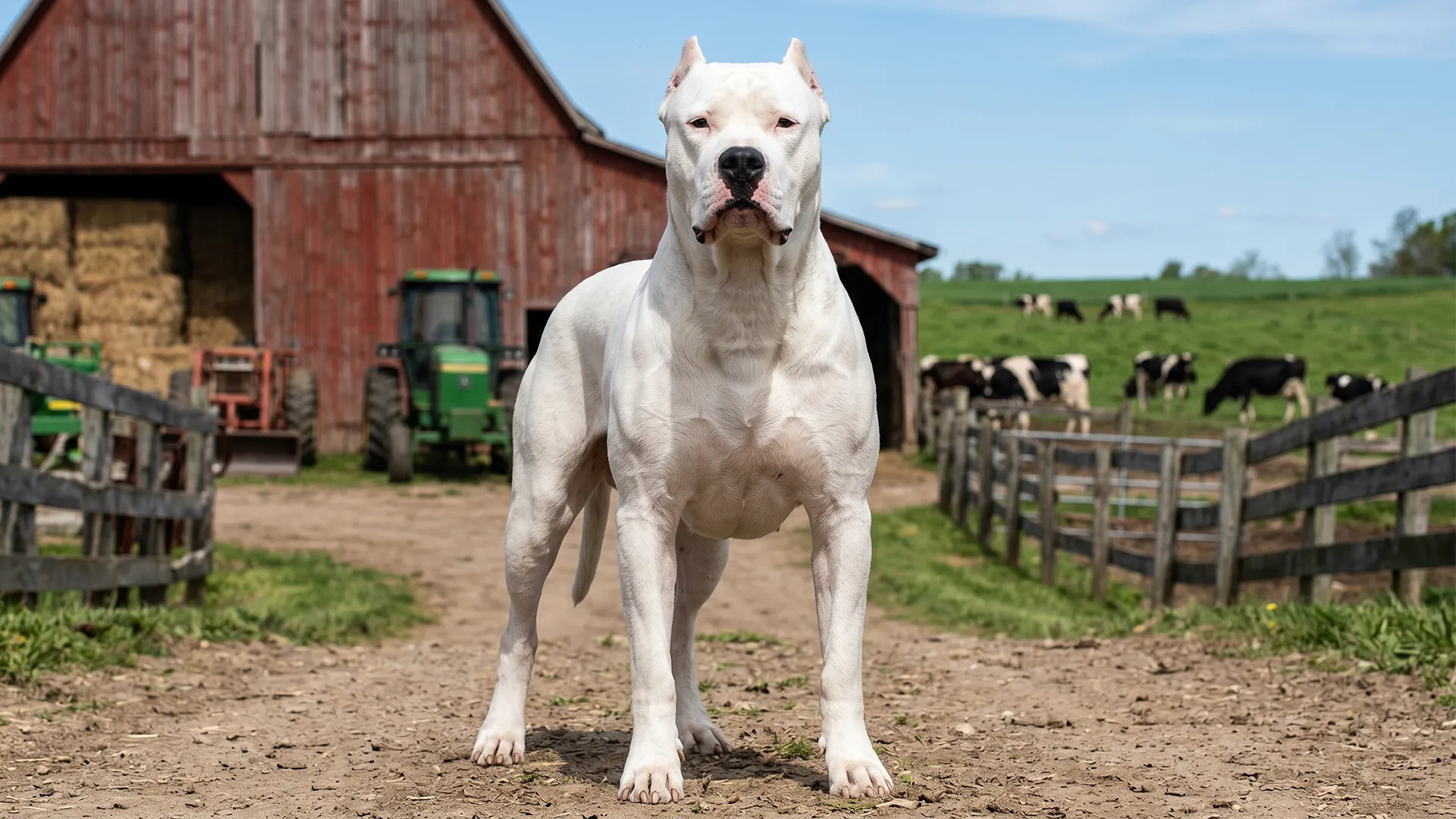
Life on a farm is not for the faint-hearted. The work is tough, the days are long, and challenges can appear without warning. That is why many farmers rely on strong working dogs that can handle demanding tasks while remaining loyal companions. These dogs are more than muscle. They are trusted partners that help protect livestock, guard property, and provide peace of mind.
According to the American Kennel Club, working dogs were originally developed to perform jobs such as guarding, herding, and pulling loads. Their strength and intelligence made them invaluable to human communities. Even today, many farms depend on these traits.
Let us explore some of the most muscular working breeds that continue to earn their keep every day.
Top Muscular Working Dog Breeds for Farm and Labor
1. Anatolian Shepherd
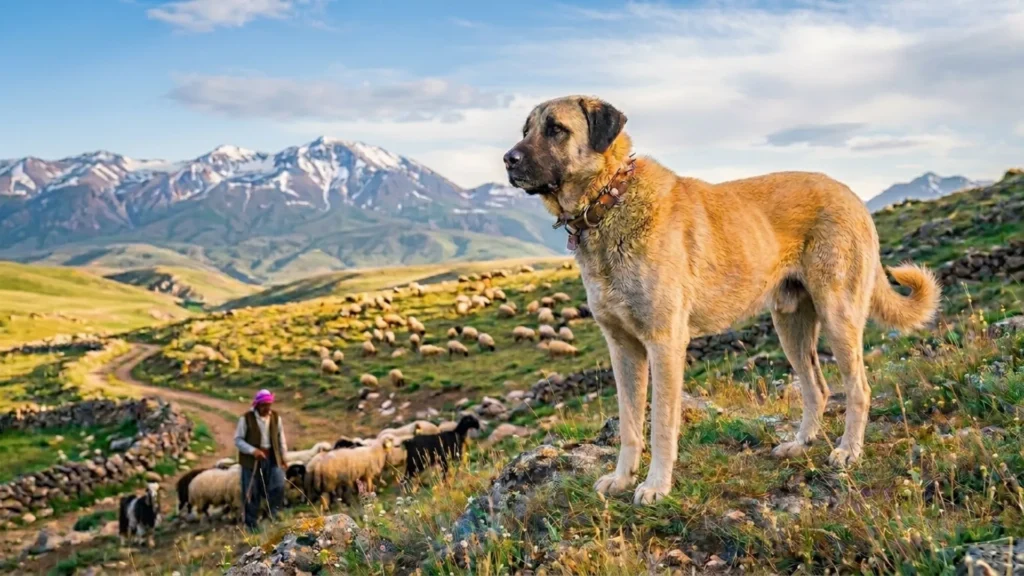
The Anatolian Shepherd dog is one of the oldest known dog breeds, dating back thousands of years. This dog was originally bred in Turkey as a livestock guardian. This breed has also been employed by the African government to protect endangered cheetahs, according to PetMD.
This farm dog breed has loose skin around its neck and body. The elastic skin bunches up and twists around to counterattack when a large predator tries to grab it by the neck. Not only that, the neck has a thicker mane, providing further protection.
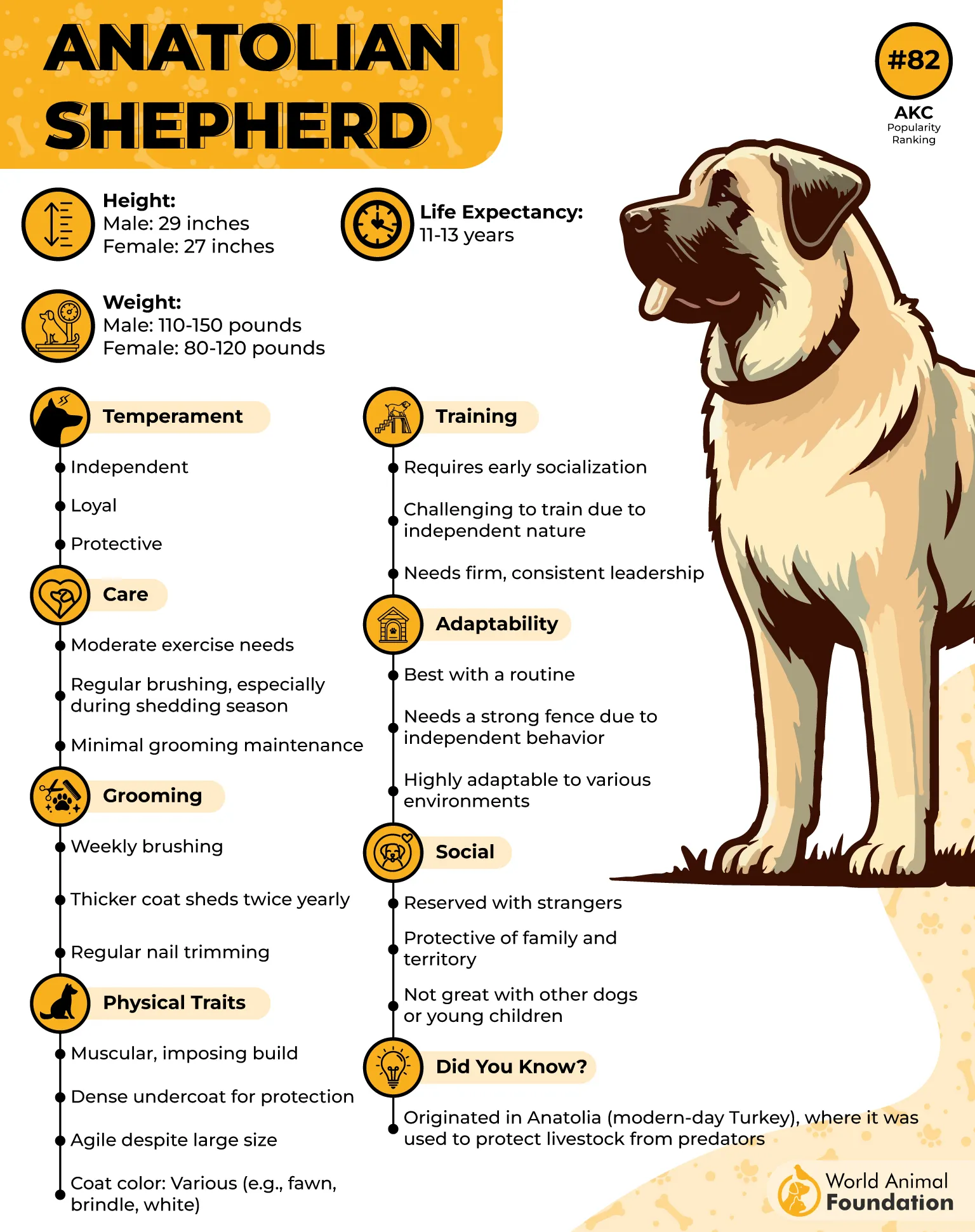
The breed is hard-wired to make its independent decisions. It has a slender body and a tucked-in abdomen that helps with agility and high speed. It needs 1-2 hours of daily exercise: brisk walks, jogs, and mental stimulation games. Avoid high-impact exercise for puppies because of their developing joints.
Is the Anatolian Shepherd Good for First-Time Farmers?
- Not ideal for most first-time farmers.
- Very independent and self-reliant.
- Excellent livestock guardian.
- Needs training and secure fencing.
- Best for experienced owners.
🎧 Dogcast
Episode 37 — Why Dogs Stay Close without Touching
If you don’t hear sound, tap the button above to enable audio.
2. Rottweiler
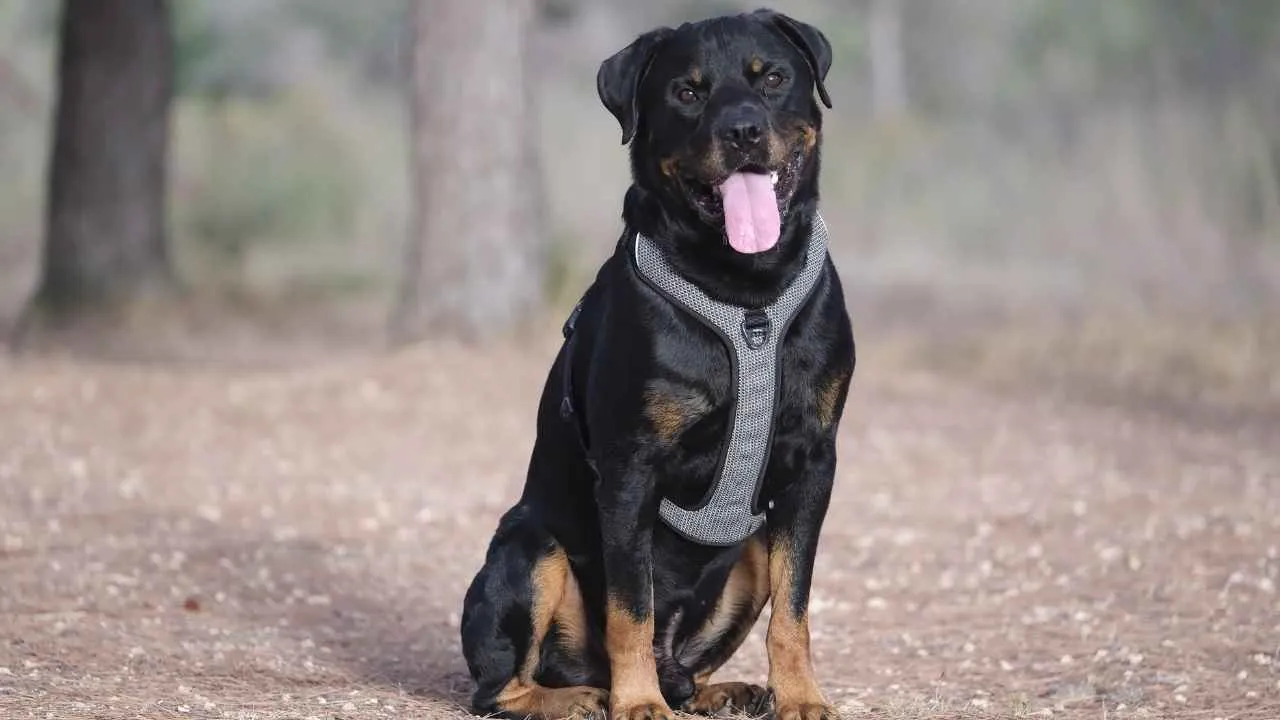
This medium-to-large-sized mastiff-type dog was bred in Germany. Also known as a ‘Rottweiler Metzgerhund’ (Rottweiler Butcher’s Dog), this dog has a muscular build and was used to pull heavy meat carts to the markets, long before the invention of railways. It is widely used in SAR operations, protection, and for herding purposes.
It weighs between 80 and 135 pounds, and the giant physique is required to physically nudge and redirect stubborn livestock. It has a trotting gait, where the back remains firm, allowing it to cover long distances without tiring. It lowers its front end slightly while focusing on dominant cattle, giving it absolute authority.
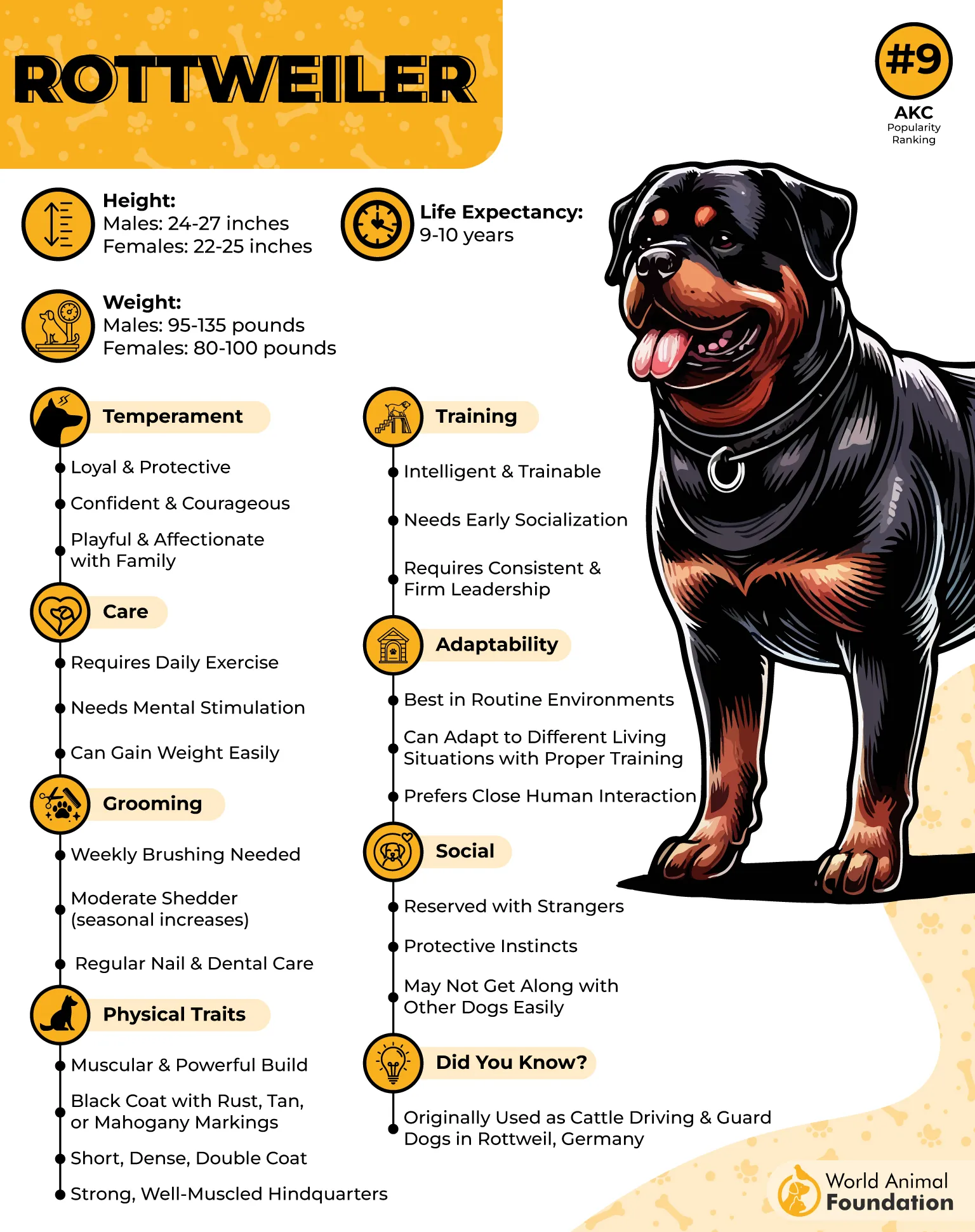
This family dog has a long and highly arched neck, which gives it the strength to control and pull heavy loads. The effective farm dog requires 1-2 hours of vigorous exercise: background playtime, jogging, cart pulling, and brisk walks.
Is the Rottweiler Good for First-Time Farmers?
- Can suit dedicated beginners.
- Highly trainable and intelligent.
- Good for guarding and farm work.
- Needs daily exercise and socialization.
- Thrives with firm leadership.
3. Dogo Argentino
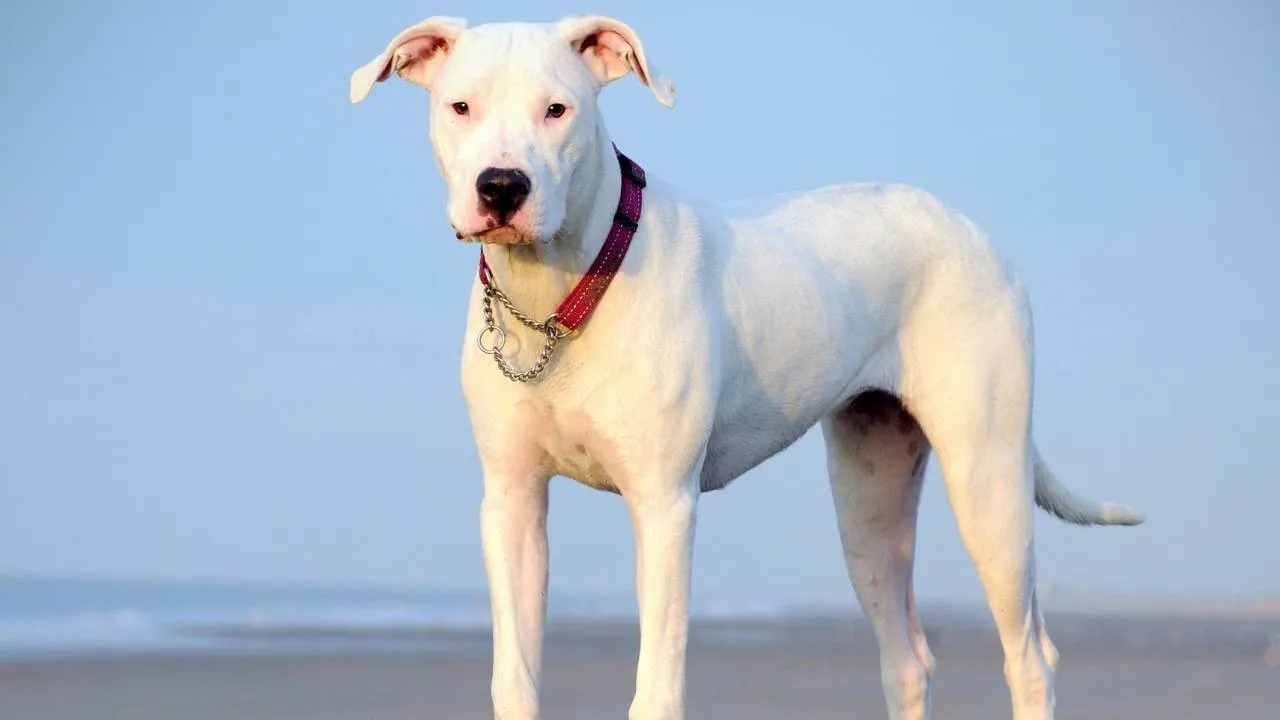
This mastiff-type large dog was originally developed in Argentina. It was bred in the early 20th century as a hunting dog breed for large game, such as peccaries, wild boar, and pumas. The breed is a cross product of a now extinct breed, the Córdoba fighting dog. Other dogs include the Mastín del Pirineo and a Bull Terrier, as per Wikipedia.
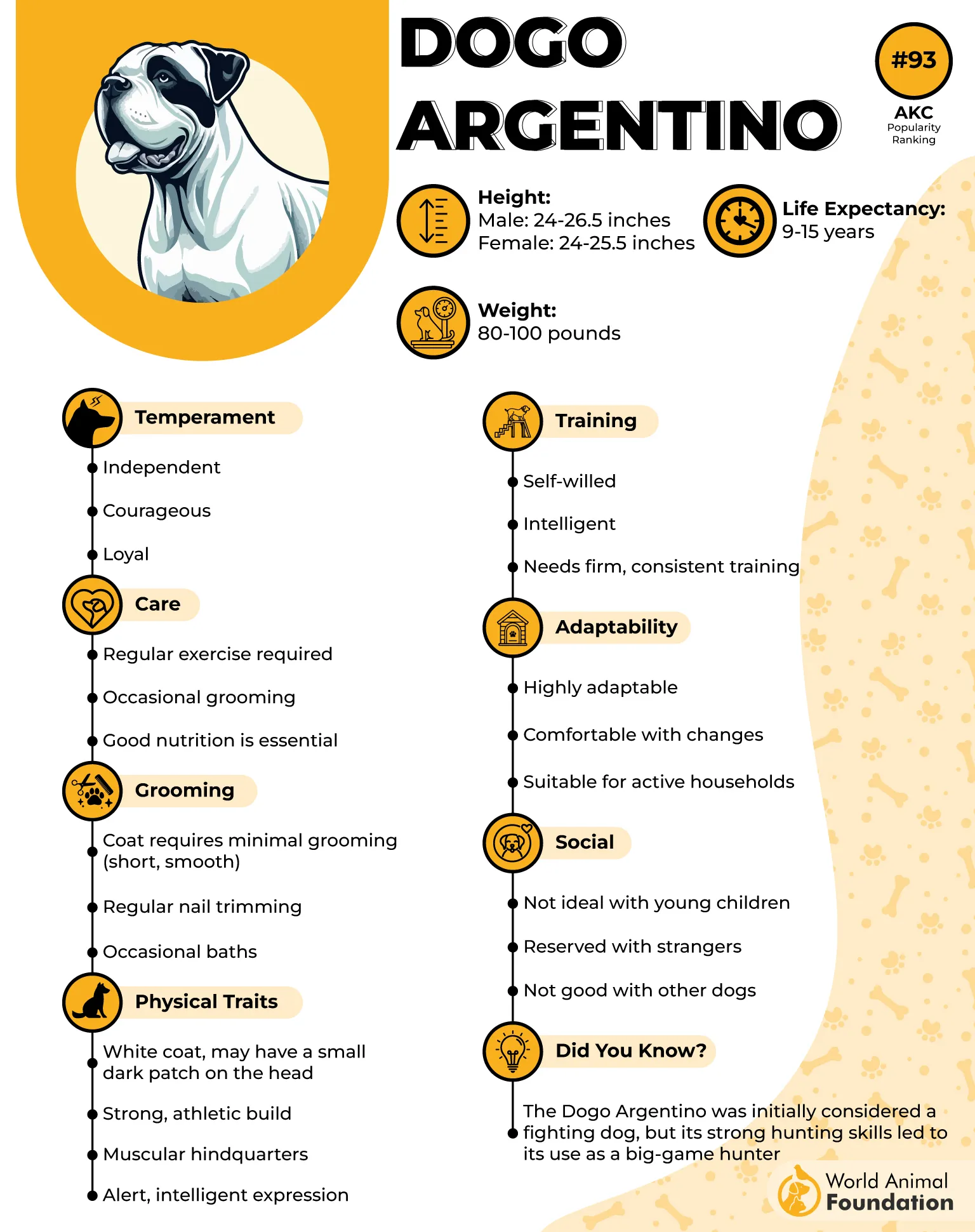
This most effective farm dog has thick skin that fits tightly but elastically around the body. It was selectively bred to be a white dog to be identified by hunters from a great distance. A wide chest provides extensive lung capacity. The muscular legs are angulated for the front suspension and rear propulsion.
This dog needs 1-1.5 hours of daily exercise: leash walks, vigorous play (fetching and hiking), and mental stimulation. Use a rubber curry brush and a soft bristle brush to remove the loose hair and evenly distribute natural oils.
Is the Dogo Argentino Good for First-Time Farmers?
- Not recommended for beginners.
- Strong and athletic working breed.
- Requires experienced handling.
- Has a strong prey drive.
- Best for knowledgeable owners.
4. Cane Corso
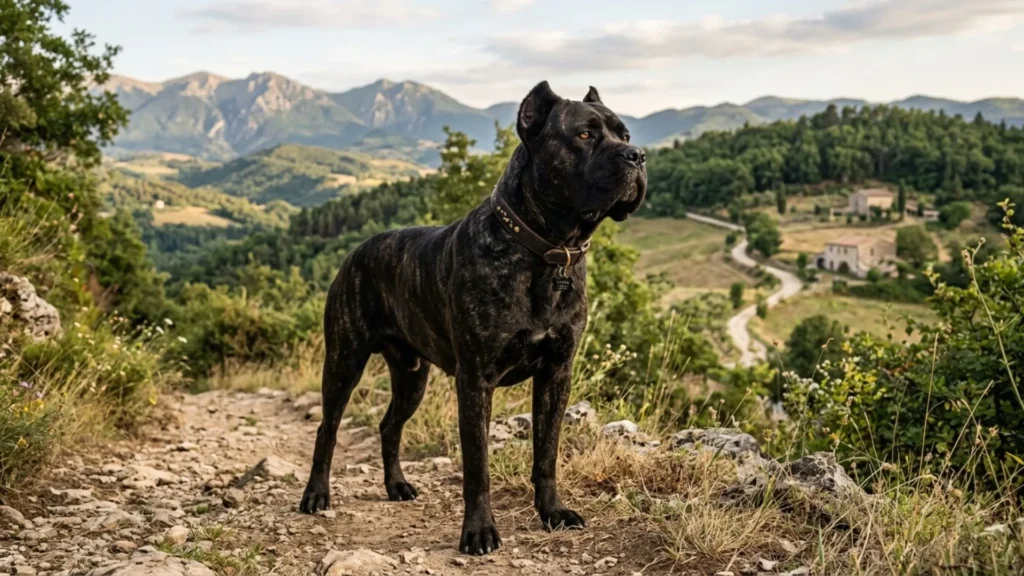
Also known as the Italian Mastiff, the Cane Corso was developed in Italy as a protection dog because of its strong protective instincts. It is also kept as a guard dog, companion dog, and herding dog. The name literally means ‘a bodyguard dog.’
The short and coarse double coat is water-resistant and dirt repellent. The brawny and rectangular frame has a deep chest and heavy bones, giving it the strength to navigate uneven terrain. This is the perfect farm dog, which advanced ‘switch-off’ mode; once the job is done, it goes back to its resting phase.
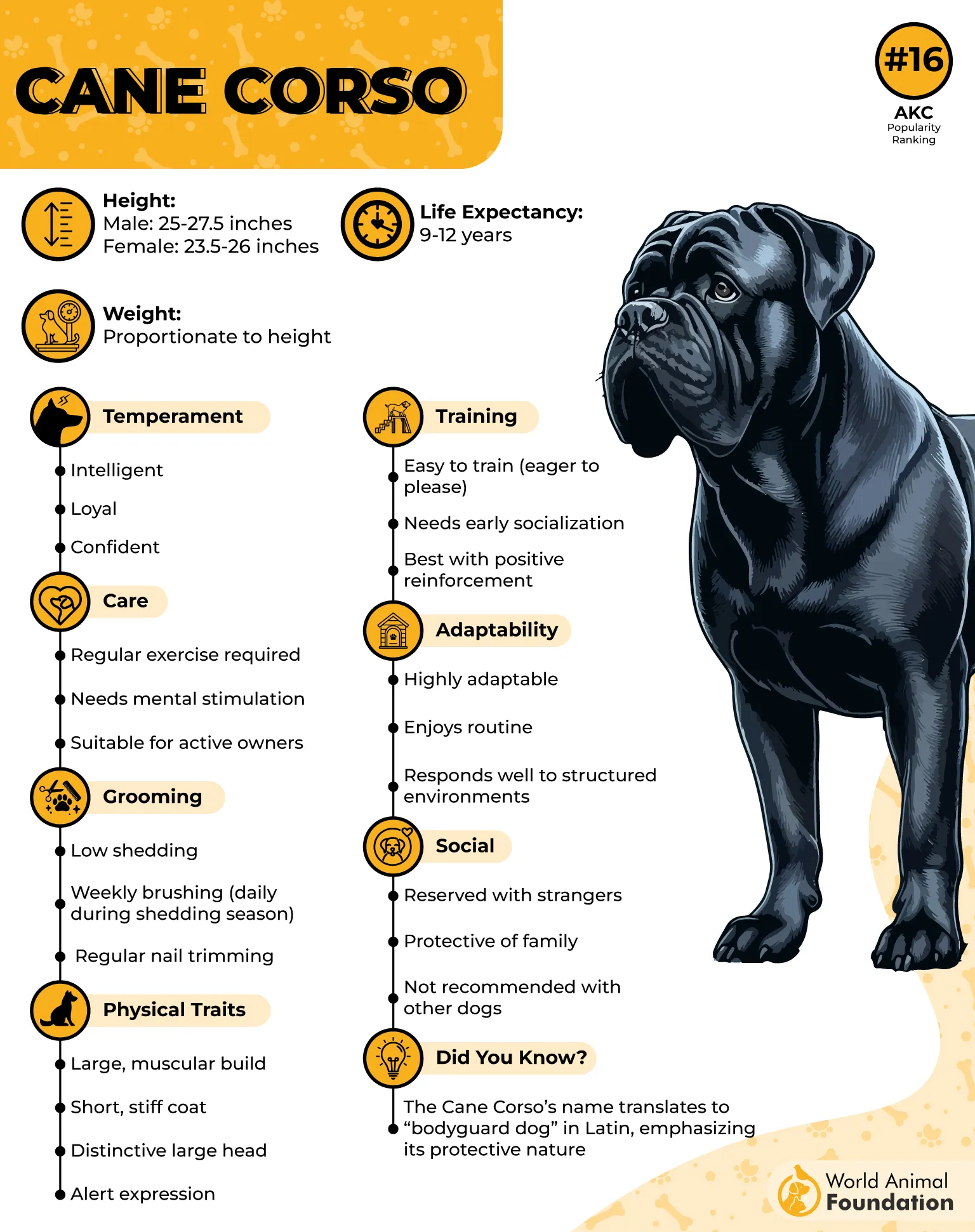
It weighs around 80-120 pounds, acts as a natural deterrent against large predators and trespassers. The breed has a high prey drive and needs careful supervision around small livestock. The Cane Corso has medium exercise requirements (30-60 minutes): tracking, walks, obedience training, and puzzle toys.
Is the Cane Corso Good for First-Time Farmers?
- Generally not beginner-friendly.
- Naturally protective and alert.
- Needs early socialization.
- Requires consistent training.
- Best with experienced owners.
5. Mastiff
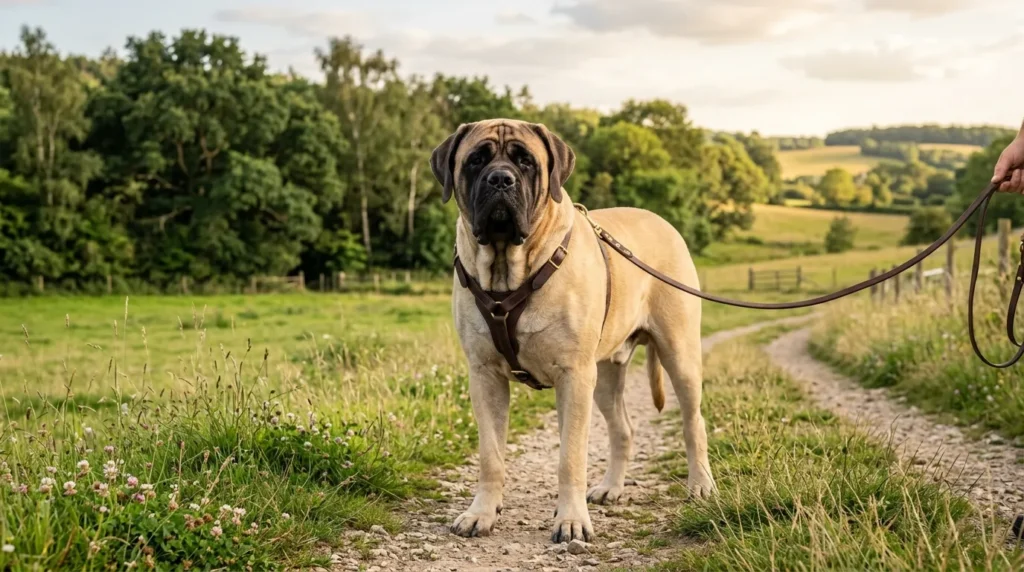
This farm protection breed was introduced to the UK by Phoenician traders when the Romans invaded the region. The Romans were impressed by the strength of this powerful breed, and they adopted it as a fighting dog. The name of the breed comes from a Roman word, ‘mansuetus,’ which means ‘tame,’ says Purina.
The breed was developed for guarding, rather than hunting and chasing. Thus, it has a low prey drive, making it the best farm dog breed. It is one of the heaviest known dog breeds (120-230 pounds), because of the broad chest and a heavy boned structure. The square skull and a formidable bite force allow the breed to physically threaten the attackers.
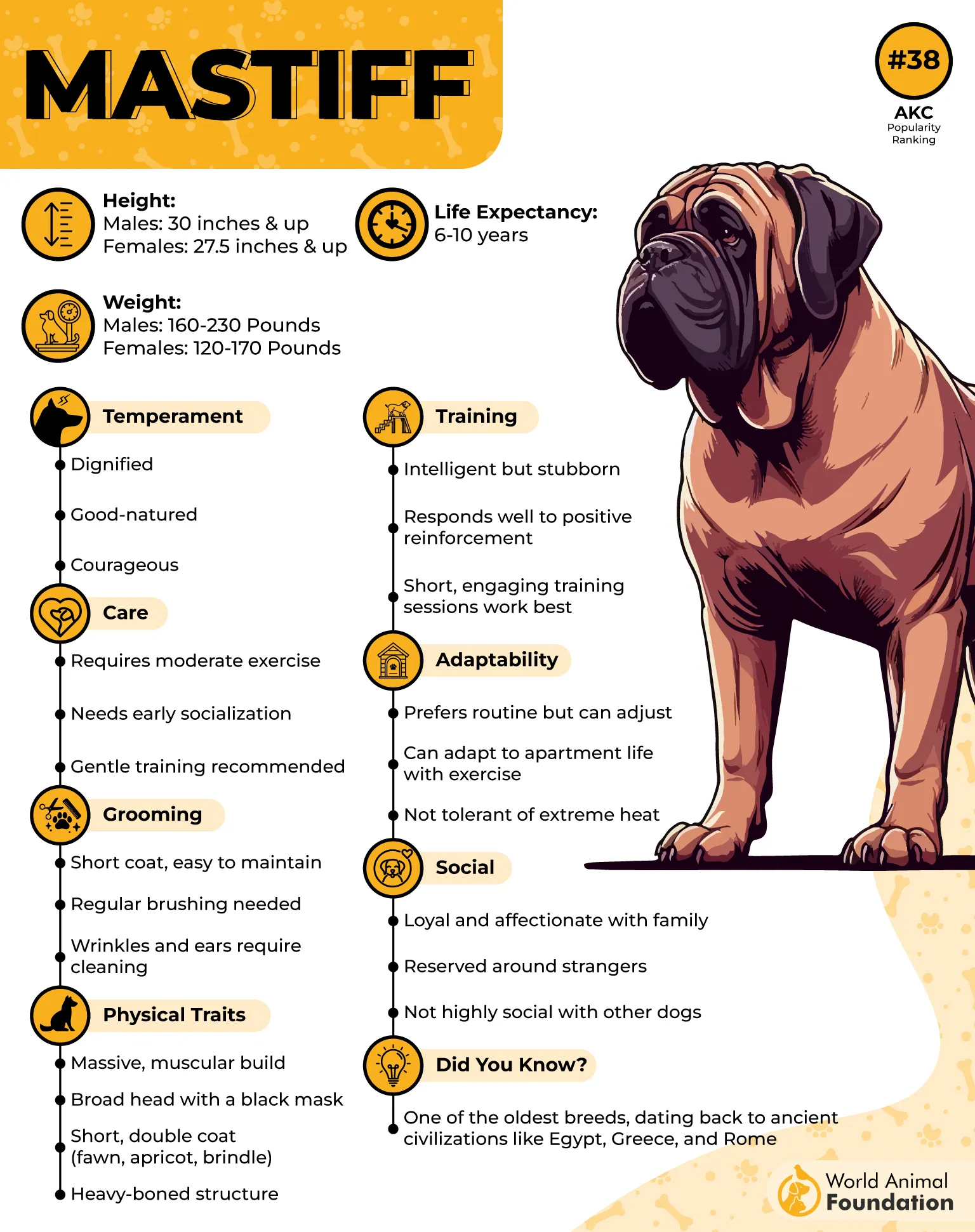
Since it is a heavy set dog, the exercise requirements highly depend on its age: adults (18+ months) need 2-3 short walks and interactive play sessions, and puppies need light exercise and controlled play on soft surfaces. Because of its large size and short muzzle, it is prone to overheating.
Is the Mastiff Good for First-Time Farmers?
- Can work for prepared beginners.
- Calm and steady temperament.
- Lower prey drive than many breeds.
- Needs moderate daily exercise.
- Large size requires management.
6. Boerboel
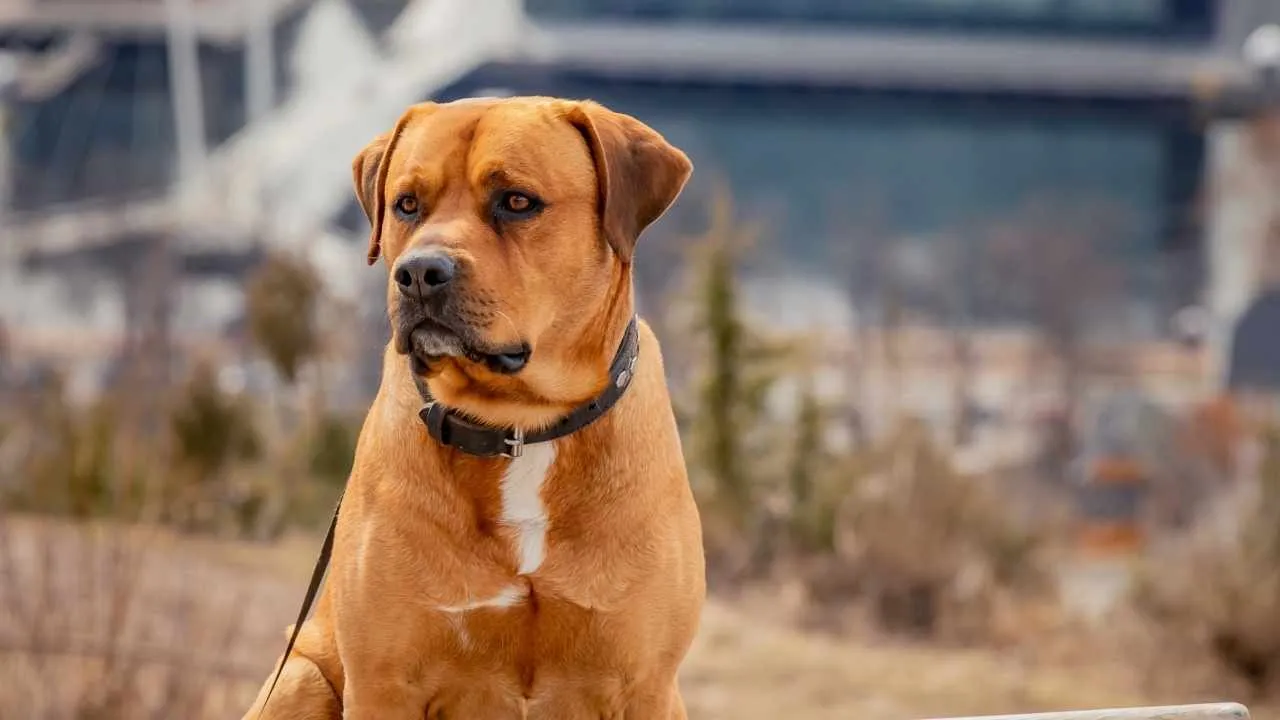
This large dog was originally developed in South Africa to defend homes and farms. The word ‘Boerboel’ is derived from ‘Boerboel,’ which means ‘farmer.’ The ancestors of the breed were introduced by Dutch, French, and English settlers.
The breed has a deeply pigmented skin (often black), providing a biological shield against UV and preventing sunburns. It has a ‘double suspension gallop,’ an athletic gait where all four feet leave the ground at one point, ensuring a high speed. The breed has one of the strongest bite forces, 500-800 PSI.
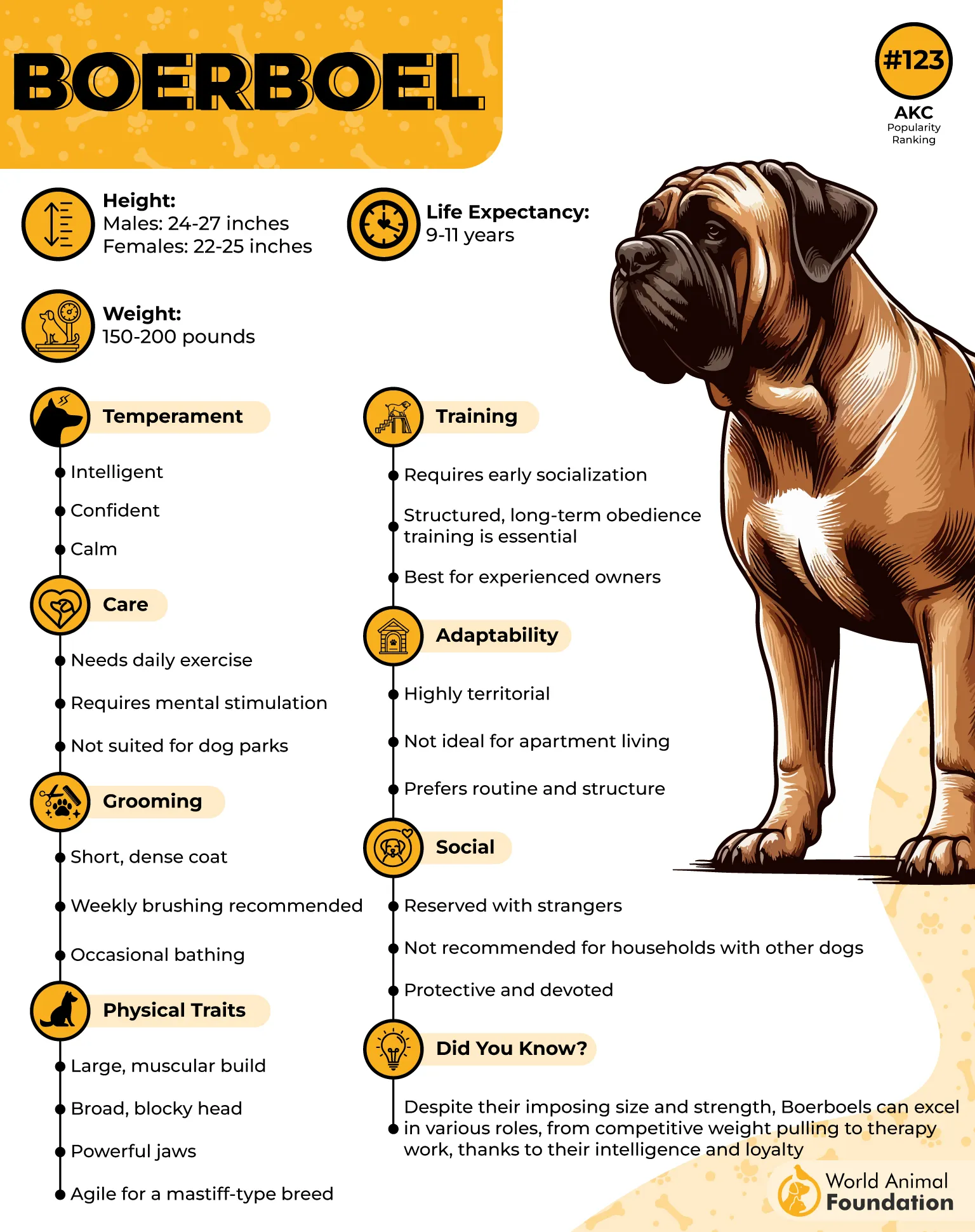
The Boerboel is a situational thinker: analyzes, distinguishes between the normal and a threatening situation, and body blocks to deter intruders. It is capable of handling a life-threatening situation with high pain tolerance. Proper training and early socialization are non-negotiable to prevent stubbornness.
Is the Boerboel Good for First-Time Farmers?
- Not recommended for beginners.
- Strong protective instincts.
- Needs early training and socialization.
- Powerful and confident breed.
- Best for experienced handlers.
7. Spanish Mastiff
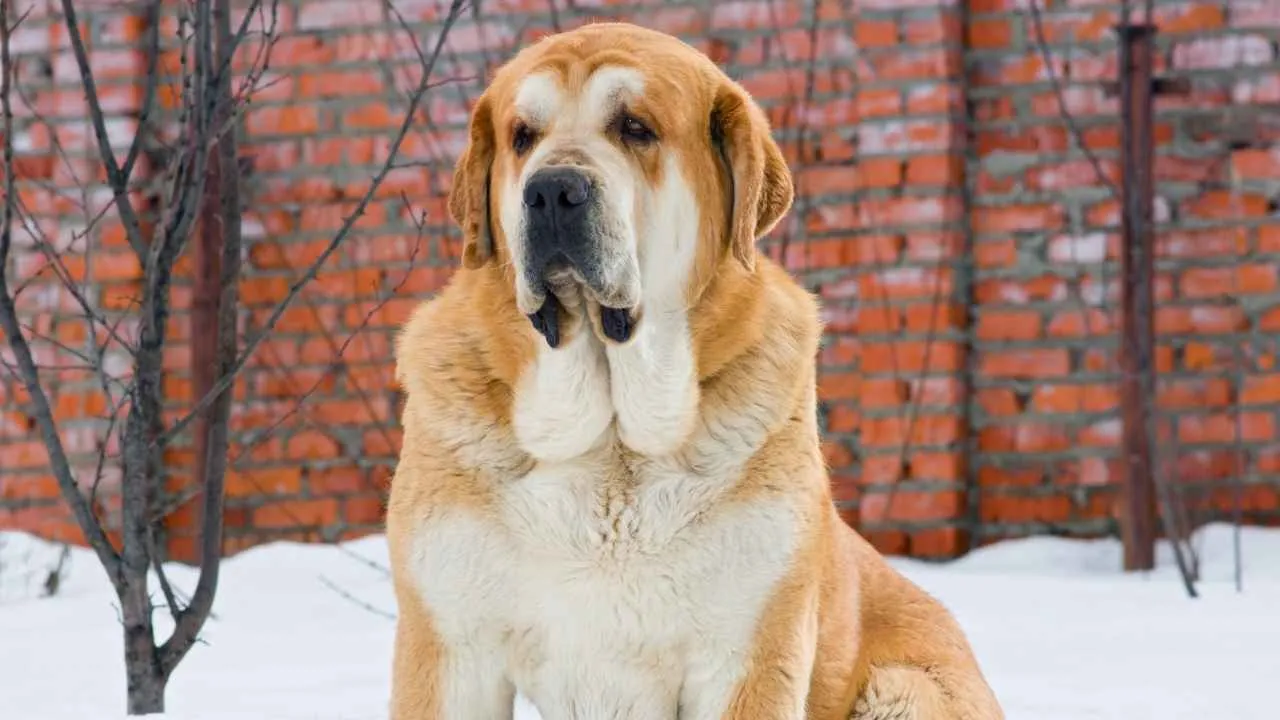
This is one of the oldest dog breeds and was brought to the Iberian Peninsula by Greeks and Phoenicians over 2,000 years ago. Originally used as a livestock guardian, the breed was later used to contribute to the Spanish wool economy, says the American Kennel Club (AKC).
The thick, double dewlaps protect vulnerable arteries and internal areas during physical combats with large predators. It has double dewclaws on the hind legs, providing balance, superior traction, and stability over rugged terrain. It tends to stay closer to the territory and herd rather than wandering.
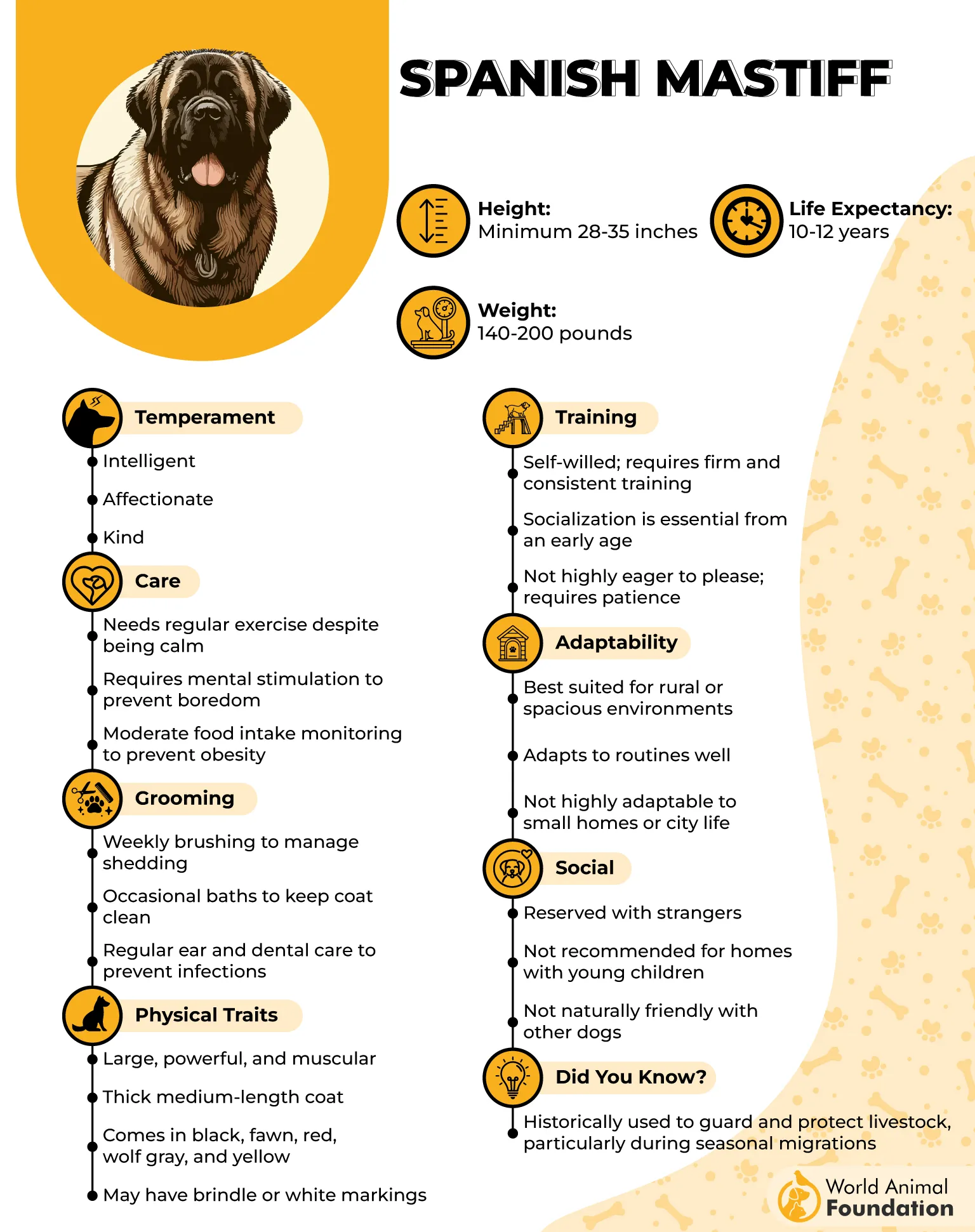
It has moderate energy levels and requires daily exercise (45-60 minutes) a day. It is a low-maintenance breed and requires weekly brushing using a metal comb and a pin brush. A monthly bath is enough. Avoid over-bathing to help prevent natural oils that lead to dry skin.
Is the Spanish Mastiff Good for First-Time Farmers?
- May suit patient beginners.
- Excellent livestock guardian.
- Calm and relatively low-energy.
- Independent but loyal.
- Best for farms with livestock.
Conclusion
Strong working dogs have earned their place in agriculture through generations of service. They provide protection, companionship, and practical assistance that many farmers still rely upon today. The Anatolian Shepherd, Rottweiler, Dogo Argentino, Cane Corso, Mastiff, Boerboel, and Spanish Mastiff each bring unique abilities to farm life.
Choosing the right breed depends on the specific needs of the farm. Yet one thing remains constant: these muscular working dogs are far more than powerful animals. They become trusted partners, loyal friends, and steady companions through every season. On a busy farm, that kind of support is worth its weight in gold.
