




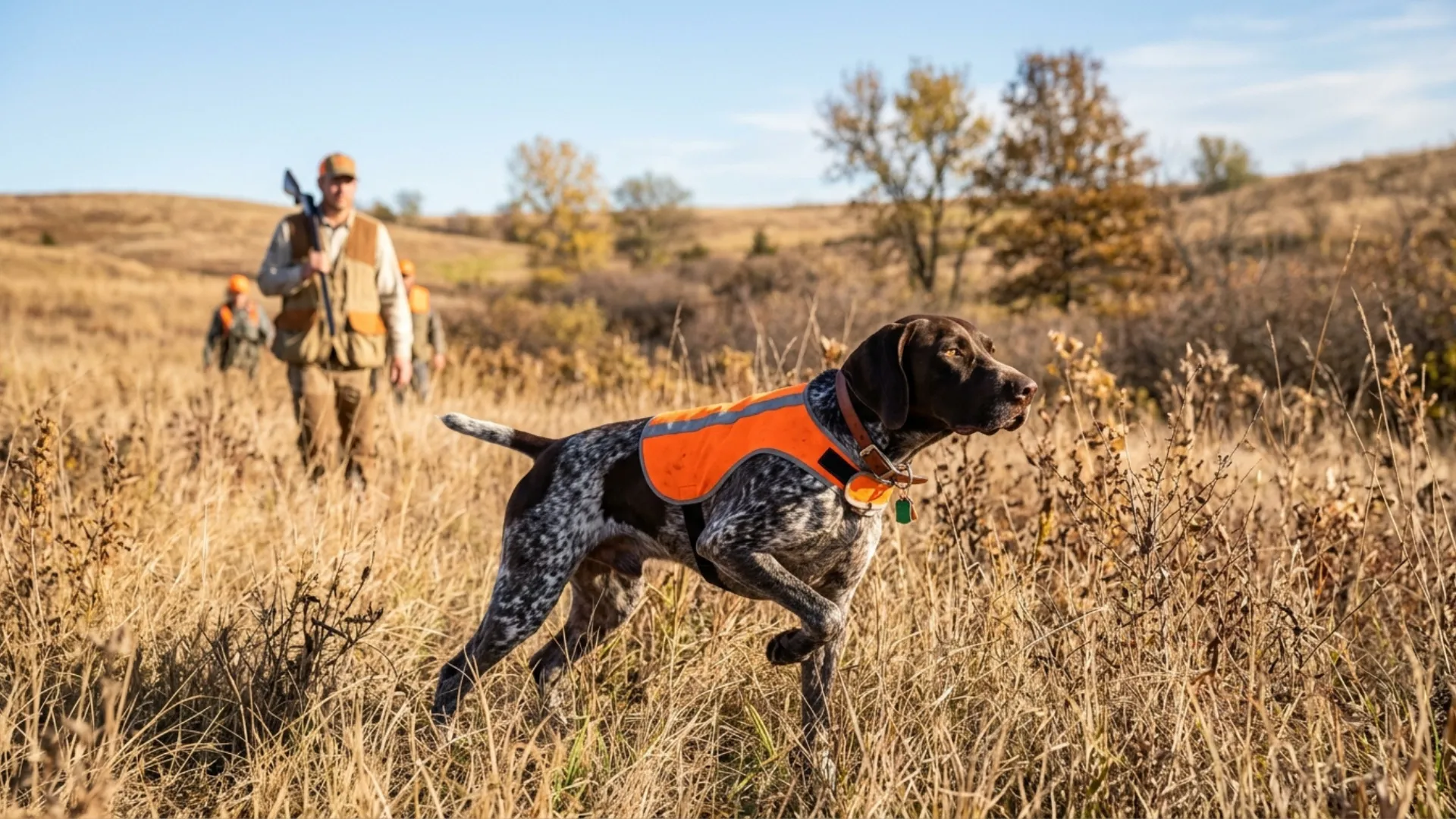
All you need to hunt upland birds is a shotgun, a hunting license, and a dog that locks up on point. Simple enough; except that last part can make or break your entire hunt.
You could have the sky full of birds, the best gear, and prime ground, and still walk away empty-handed if your dog isn’t up to the job. Choosing the right hunting dog for upland birds is more nuanced than it might seem.
The ideal candidate is strong, sharp, and energetic, with a keen nose and the skills to back it up: flushing, pointing, and retrieving, so you’re not losing birds or wasting time in the field.
In this guide, we’ll cover seven of the best upland bird hunting dogs. Some excel at pointing, others have mastered the retrieve. Along the way, you’ll also learn about their training needs, temperament, and exercise requirements- everything you need to know before bringing one home.
Top Dog Breeds for Upland Bird Hunting Adventures
1. English Pointer
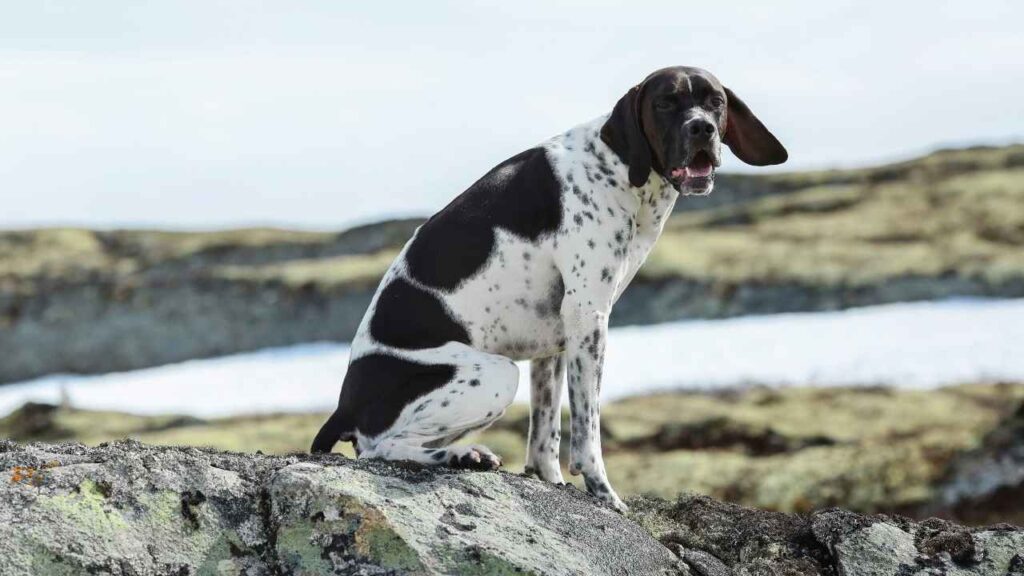
Also known as gun dogs or bird dogs, English Pointers do exactly what their name suggests; they locate birds by scent, freeze, lift one paw, and point their nose like an arrow toward the target until you move in, according to PetMD.
Loyal, energetic, and friendly, English Pointers can be independent-minded in the field, but don’t mistake that for stubbornness. It’s simply a dog that knows exactly what it was born to do. They’re particularly well-suited for hunting quail and pheasants.
That focus and drive means they need vigorous exercise: long runs in open space are ideal for both physical health and mental stimulation. They respond well to consistent, positive training, though their strong working instincts make them better suited to experienced owners.
On the grooming side, their short coat sheds moderately and only needs brushing a few times a week.
2. German Shorthaired Pointer
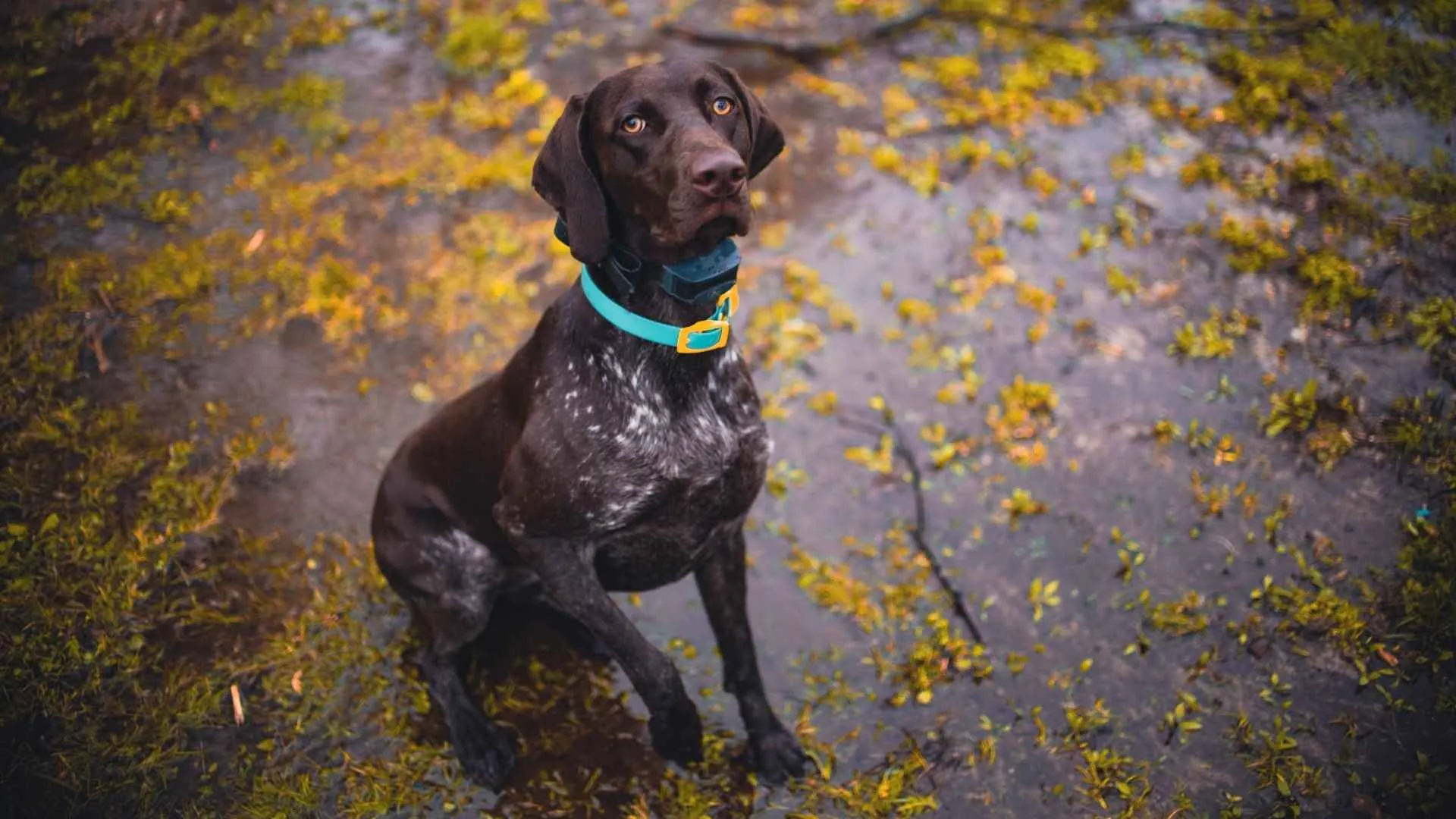
German Shorthaired Pointers are versatile gun dogs that can scent, track, point, and retrieve, covering both upland birds and waterfowl. Essentially, you’re getting a pointer and a retriever in one dog.
Eager to please, smart, friendly, and people-oriented, GSPs want to be by your side whether you’re at home or out in the field. These medium-sized dogs excel at hunting pheasant, quail, grouse, and woodcock. Despite their high energy needs, they’re actually one of the easier gun dogs to train, a big plus for hunters looking for a capable but manageable partner.
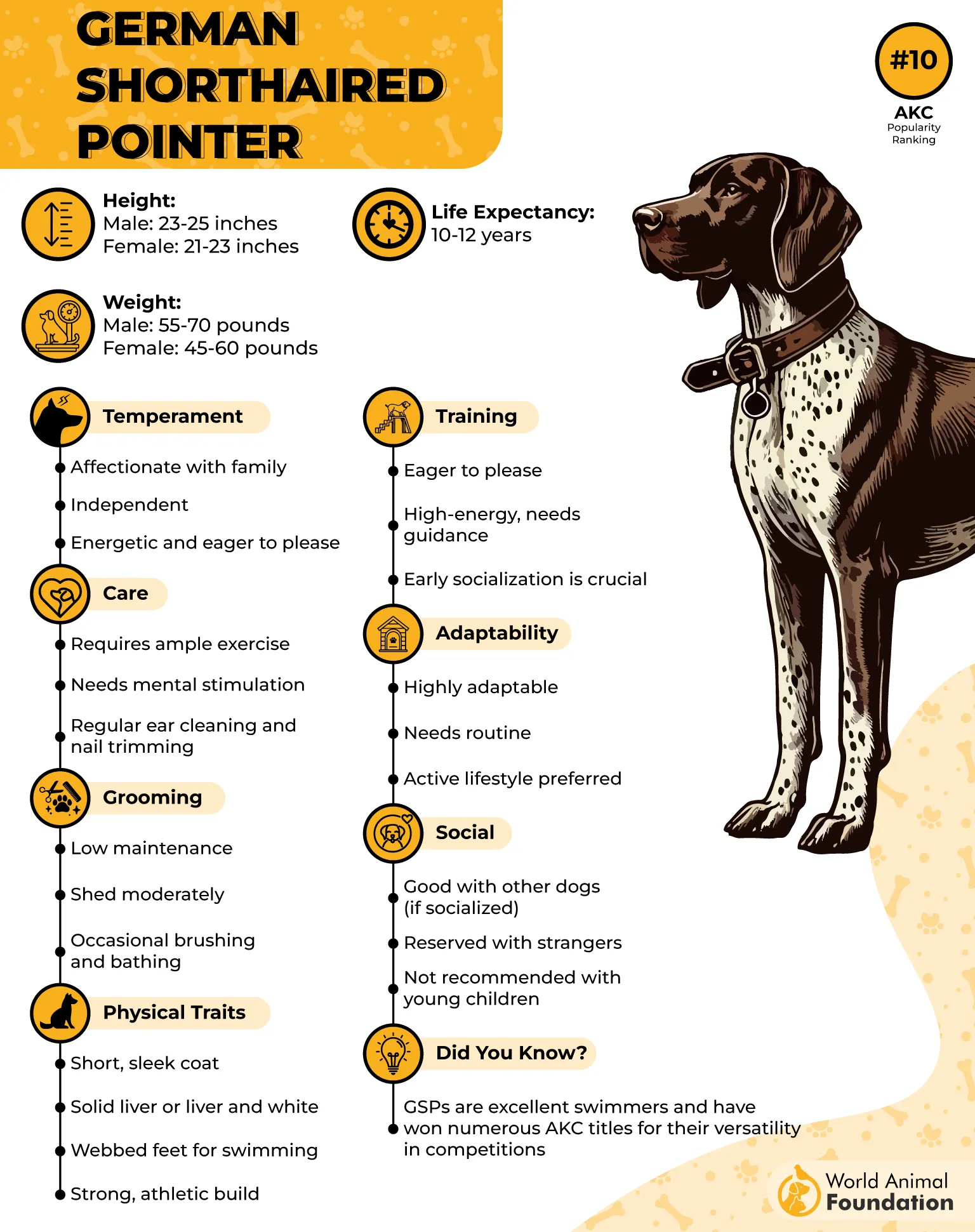
Their short, dense coat needs brushing once or twice a week and sheds moderately, so they may not be the best fit for anyone with dog hair allergies. They can make fantastic family dogs, but their high-maintenance nature is best suited for active households.
While extremely affectionate, loyal, and playful, their intense energy and strong hunting instincts require a dedicated daily commitment to exercise and mental stimulation.
3. English Setter
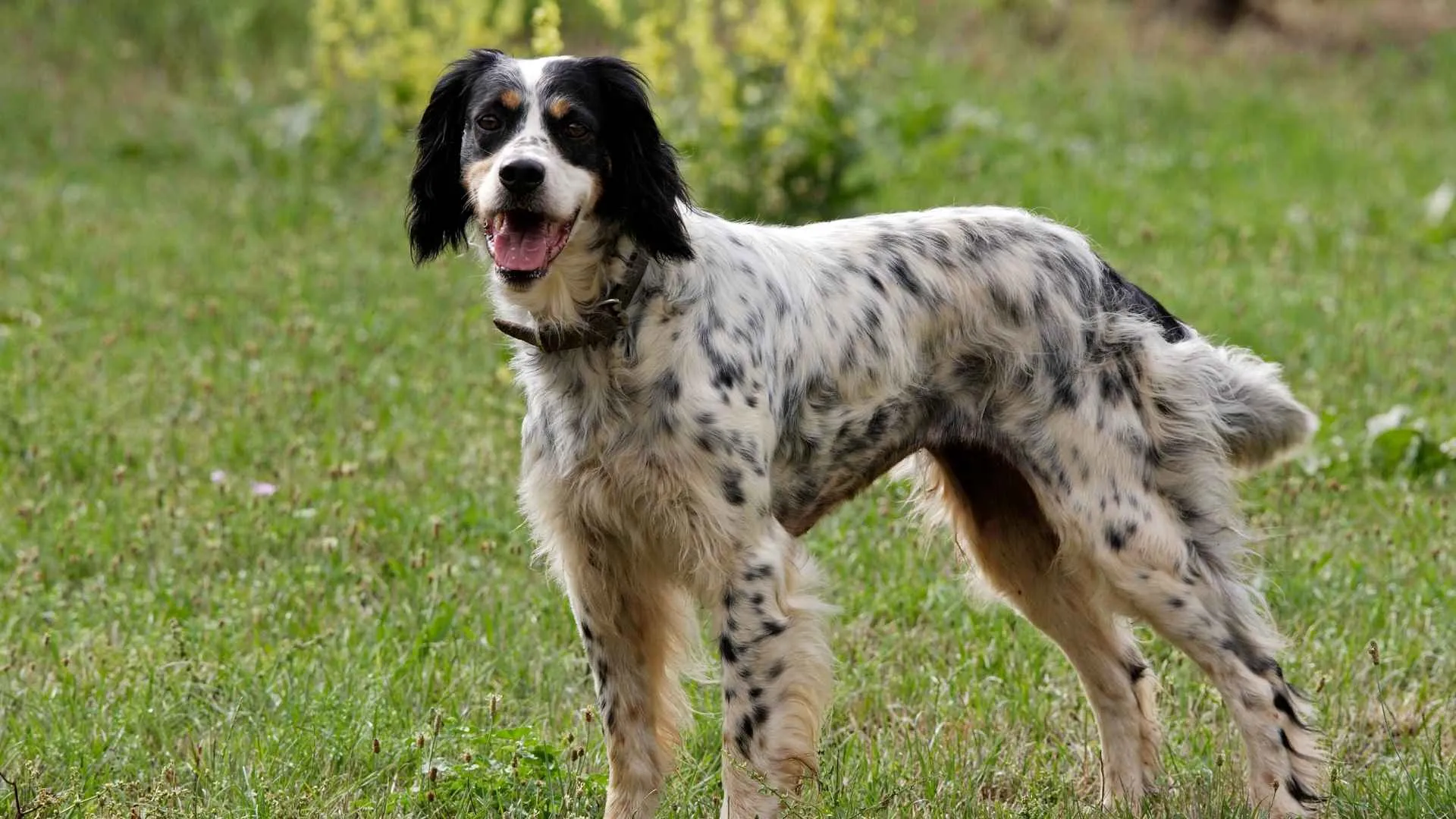
Affectionate, friendly, and calm, English Setters are often called the “gentlemen of the dog world,” composed indoors, but switched-on and high-energy the moment they hit the field.
Their name comes from their hunting style: they were bred to crouch low and “set” to the ground when locating game birds. With an exceptional sense of smell, they keep their nose high to catch a scent, then freeze completely and point toward the hiding spot once they’ve locked onto it.
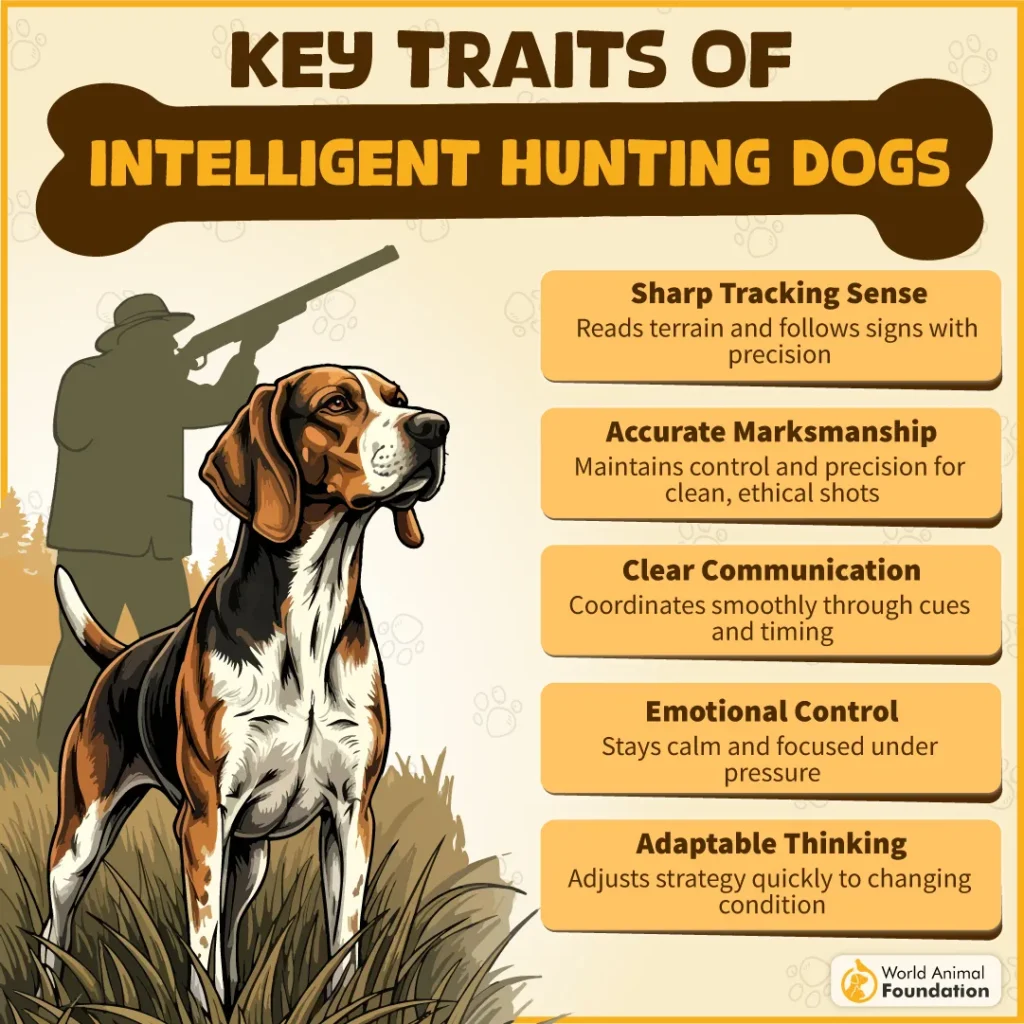
Beyond pointing, English Setters are smart enough to track down runners like pheasants, and won’t hesitate to push through thick cover to retrieve a downed bird. That all-round versatility is what makes them such valued hunting companions.
They do need plenty of exercise and an experienced owner to bring out their best in training. On the grooming side, their silky coat with long, beautiful fringes on the legs and tail needs brushing two to three times a week, along with occasional trimming to keep it well-maintained.
4. Brittany
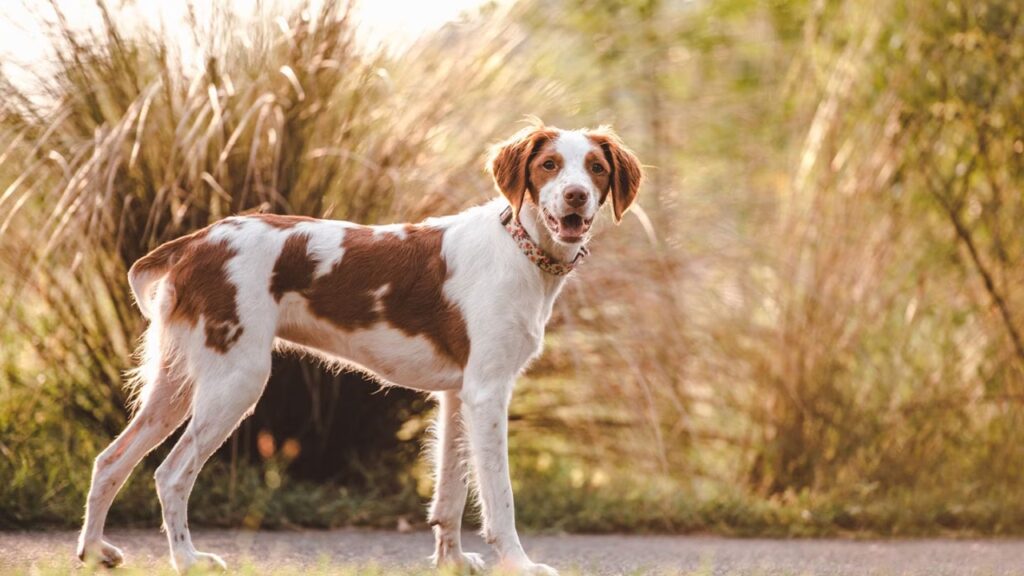
Originally bred by peasants and hunters in France, Brittany Spaniels were designed to be all-around hunting dogs that could do a little of everything. Fast, energetic, and skilled pointer dogs, they track a bird’s scent and show the hunter exactly where it’s hiding, then follow through by retrieving game from both land and water.
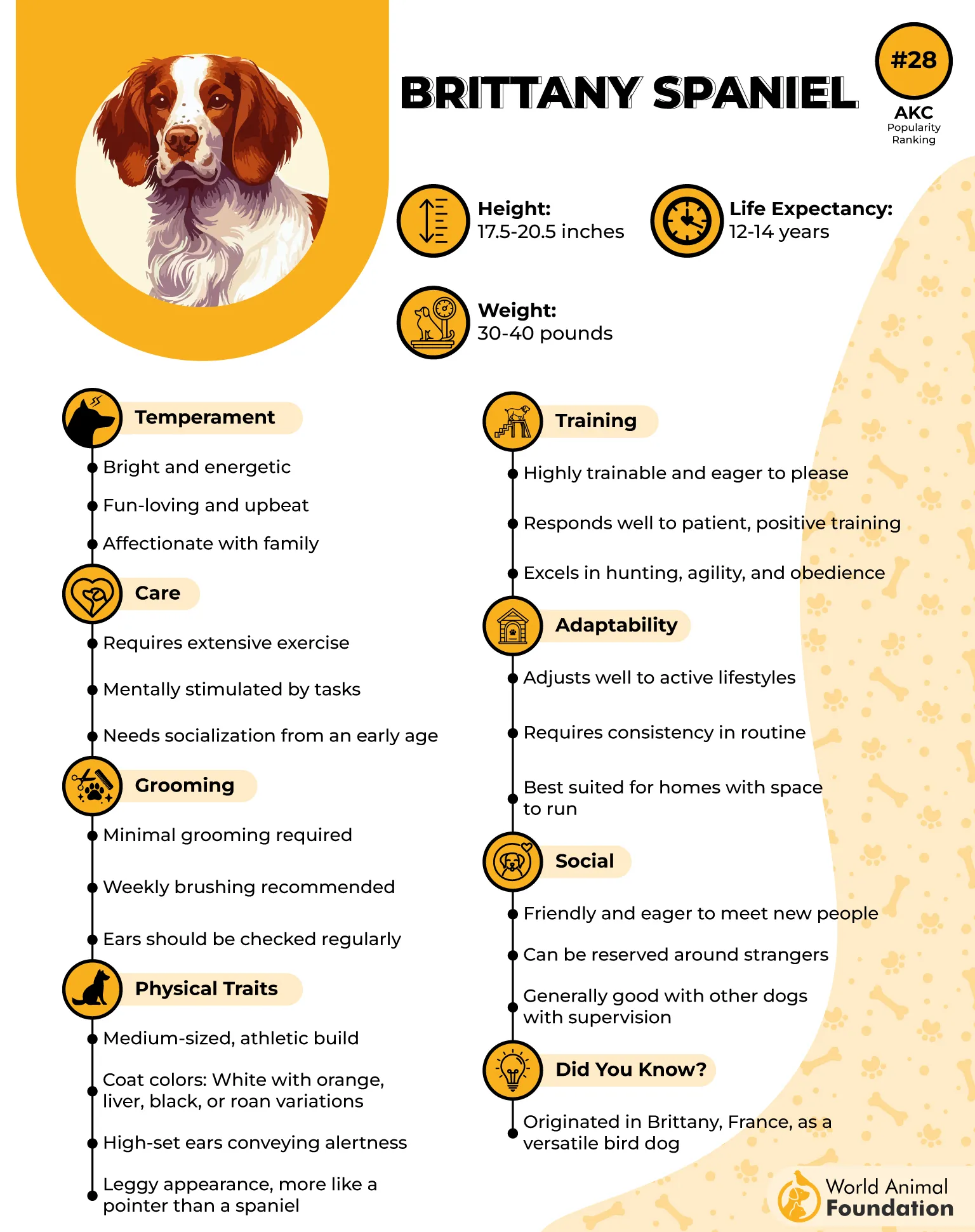
Beyond the field, Brittany Spaniels are happy, sweet, and affectionate dogs that get along well with children and other pets. They’re high-energy, though, and need at least an hour of daily exercise to stay mentally and physically satisfied.
They respond well to positive training and treats, making them approachable for first-time owners, provided that the owner is committed to plenty of daily activity. That said, someone with experience handling hunting dogs will get the most out of this breed.
5. Labrador Retriever
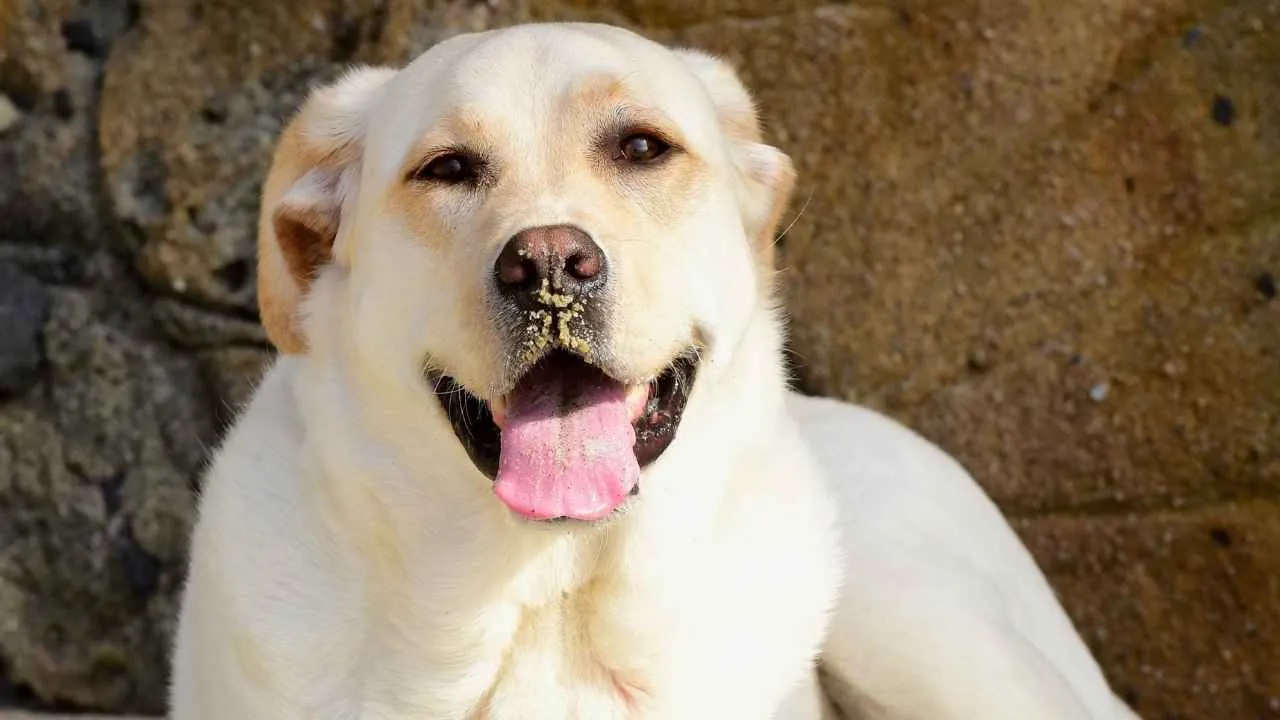
Labrador Retrievers live up to their name; they remember where multiple birds have fallen and track them down with impressive accuracy. More flushing dog than pointer, Labs stay close to the hunter, push birds into the open, and then retrieve them once the shot is taken.
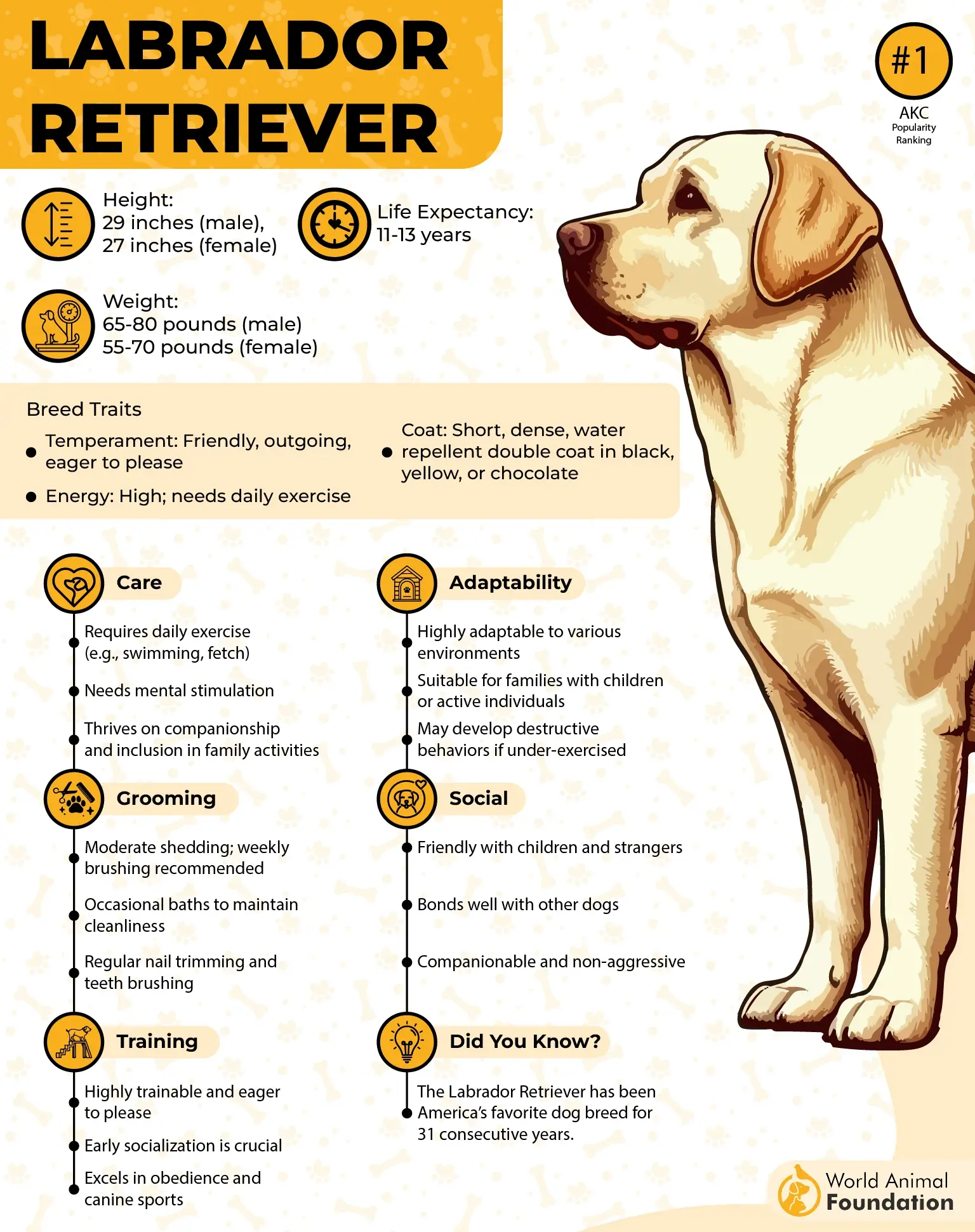
Don’t let their happy-go-lucky attitude fool you; Labs can switch effortlessly from couch potato to focused field dog when the situation calls for it. Highly social and adaptable, they also serve as guide and rescue dogs, according to the AKC.
These medium-to-large dogs have plenty of energy and stamina, and need daily exercise to match: long walks, fetch games, and swimming all work well and help keep destructive behavior at bay. Their short double coat is low-maintenance, needing only a brush once or twice a week.
6. Vizsla
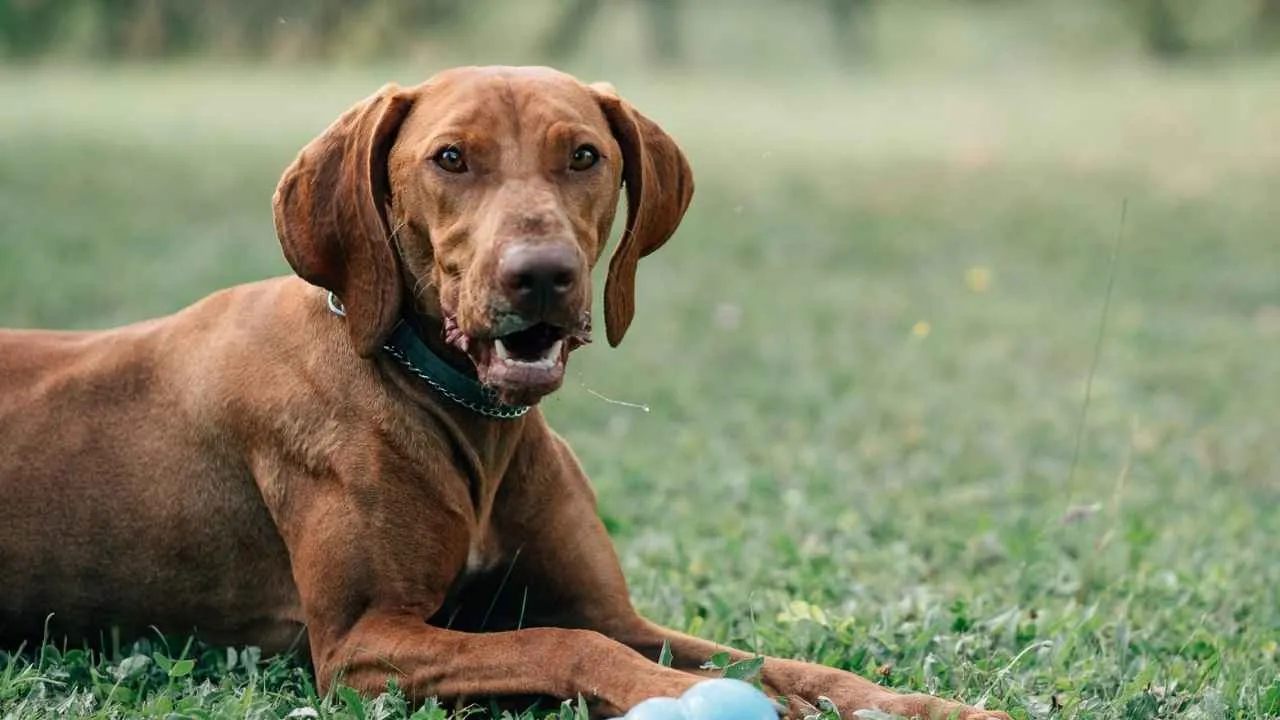
Famously known as “velcro dogs,” Vizslas form incredibly strong bonds with their owners. Sweet, gentle, and affectionate at home, they shift into sharp, focused hunting mode the moment they hit the field.
Bred to be dual-purpose dogs, Vizslas handle both pointing and retrieving with equal ability; tracking down and bringing back birds from land or water. The trade-off is their exercise needs, which are significant. Without enough physical and mental stimulation, they won’t be at their best.
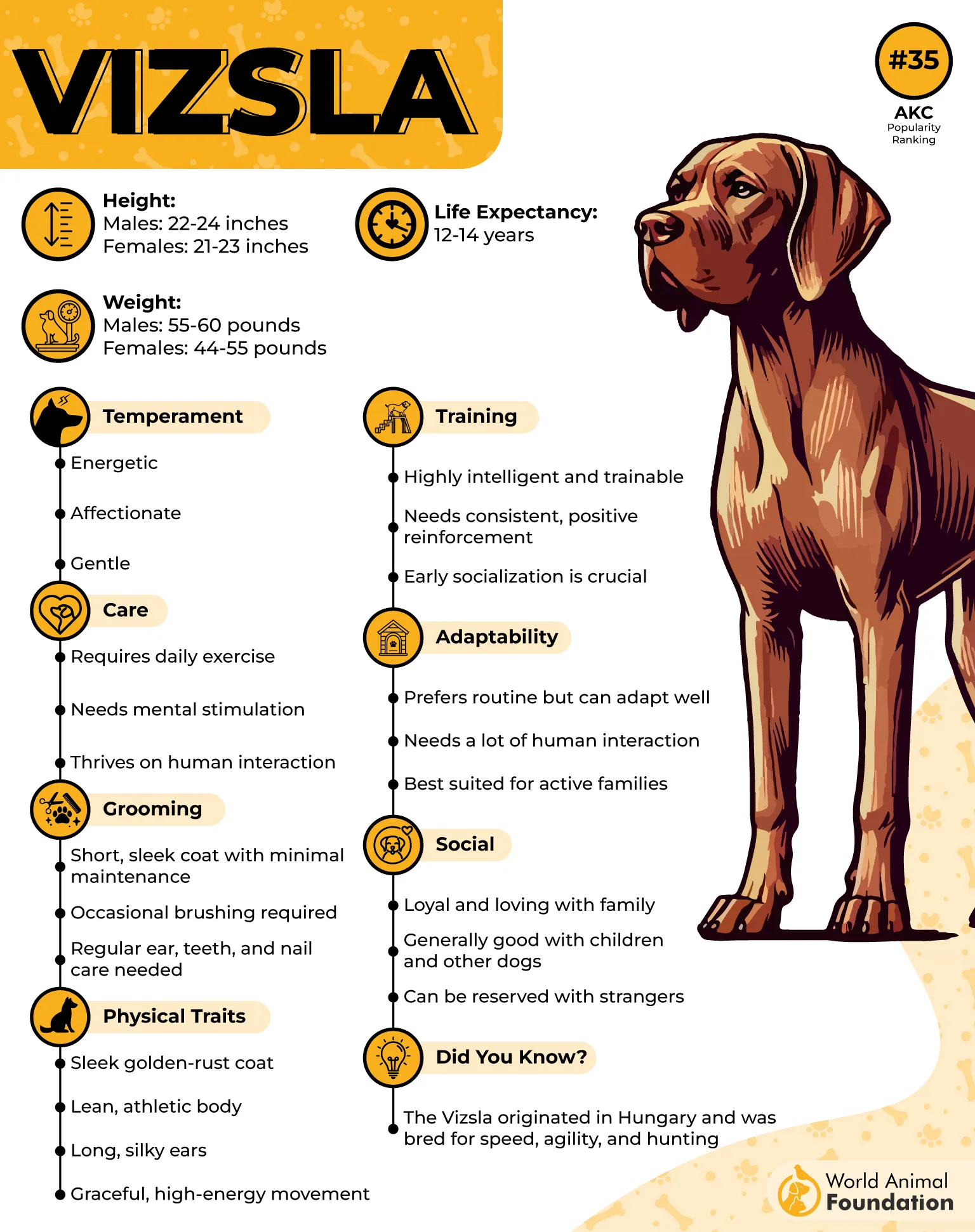
Highly intelligent but also sensitive, Vizslas respond best to gentle, positive training methods. Their short single coat with no undercoat means light to moderate shedding and virtually no doggy odor, a nice bonus for house dogs.
Their boisterous, bouncy nature means they get along great with older children who can match their energy. However, that same exuberance makes them a risky fit for households with very young children, as accidental knockdowns are a real possibility.
7. Boykin Spaniel
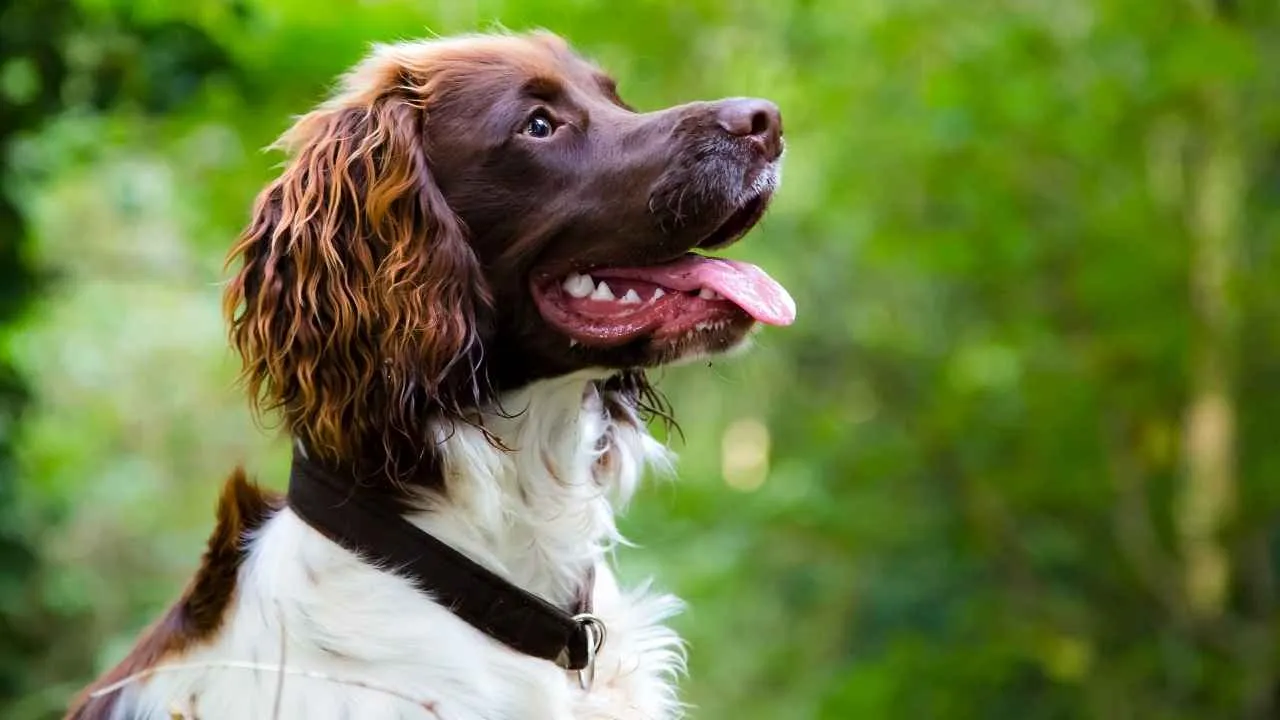
Boykin Spaniels are skilled flushing dogs with an excellent nose for tracking bird scent, and their enthusiastically wagging tails are a reliable sign that game is close. They’re equally capable retrievers, bringing back wounded birds including pheasants, quail, and doves.
Friendly, cheerful, and social, Boykin Spaniels love being around people and bring that same warm energy home from the field.
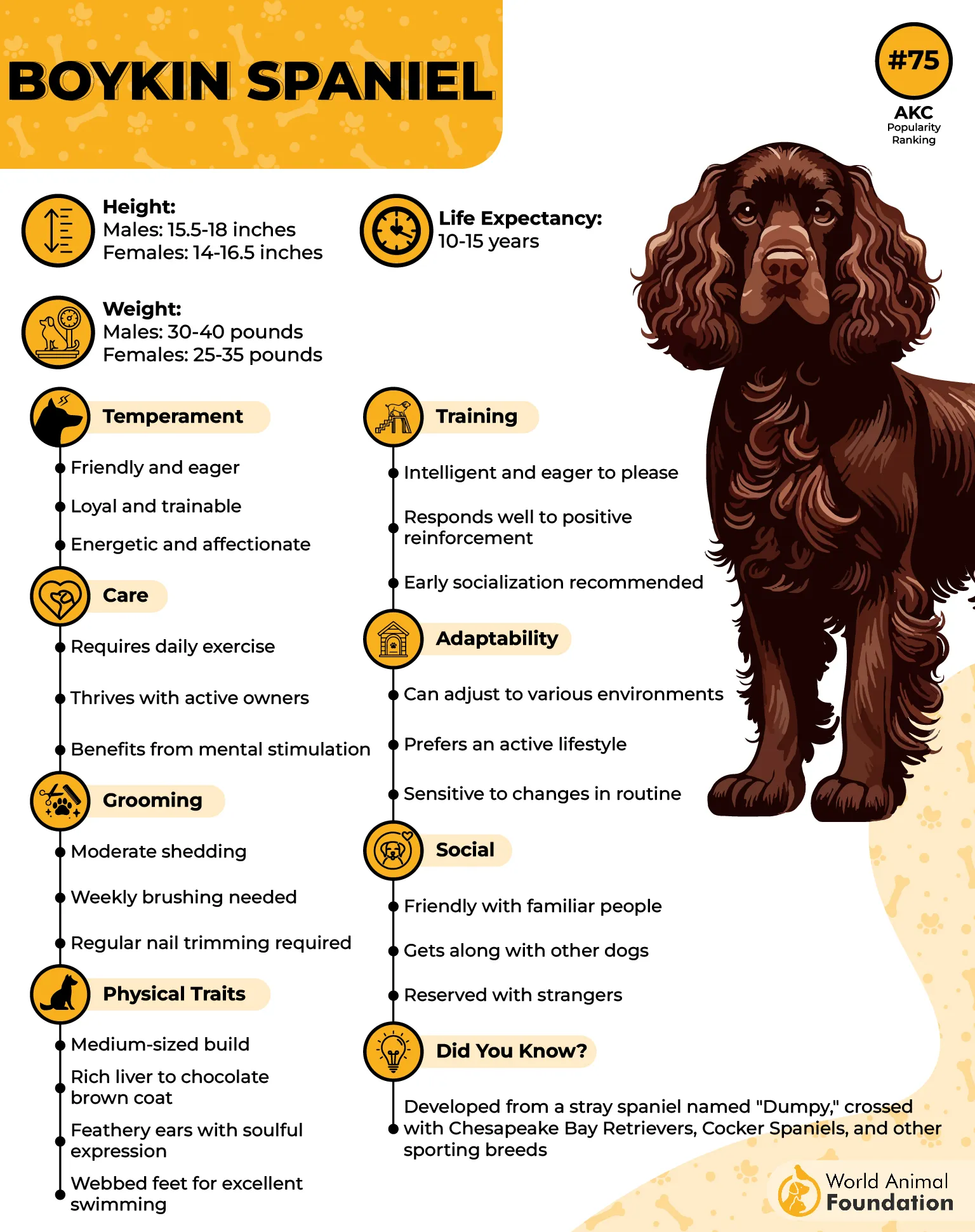
They’re high-energy dogs that need plenty of exercise and mental stimulation, but tend to be noticeably more relaxed indoors. Sensitive by nature, they don’t respond well to harsh corrections or raised voices; patience and positive reinforcement are the way to go.
Also known as the “Swamp Poodle” and “Little Brown Dog,” according to Orvis, these medium-sized dogs have a wavy or curly medium-length coat that sheds moderately year-round, worth keeping in mind for anyone with dog hair allergies.
Conclusion
The best bird dog breeds excel at hunting upland game birds due to their exceptional physical strength, tireless stamina, and razor-sharp sense of smell. Because every hunting breed possesses a distinct temperament and highly specific training requirements, it is vital to thoroughly research their background before bringing one home.
While owning an elite sporting dog is an incredible asset in the field, you must honestly evaluate your daily routine. If you cannot consistently meet their intense daily exercise demands or manage their specialized coat care, the partnership can quickly become overwhelming for both of you. To ensure a rewarding experience on and off the field, choose the breed that truly aligns with your lifestyle.
