




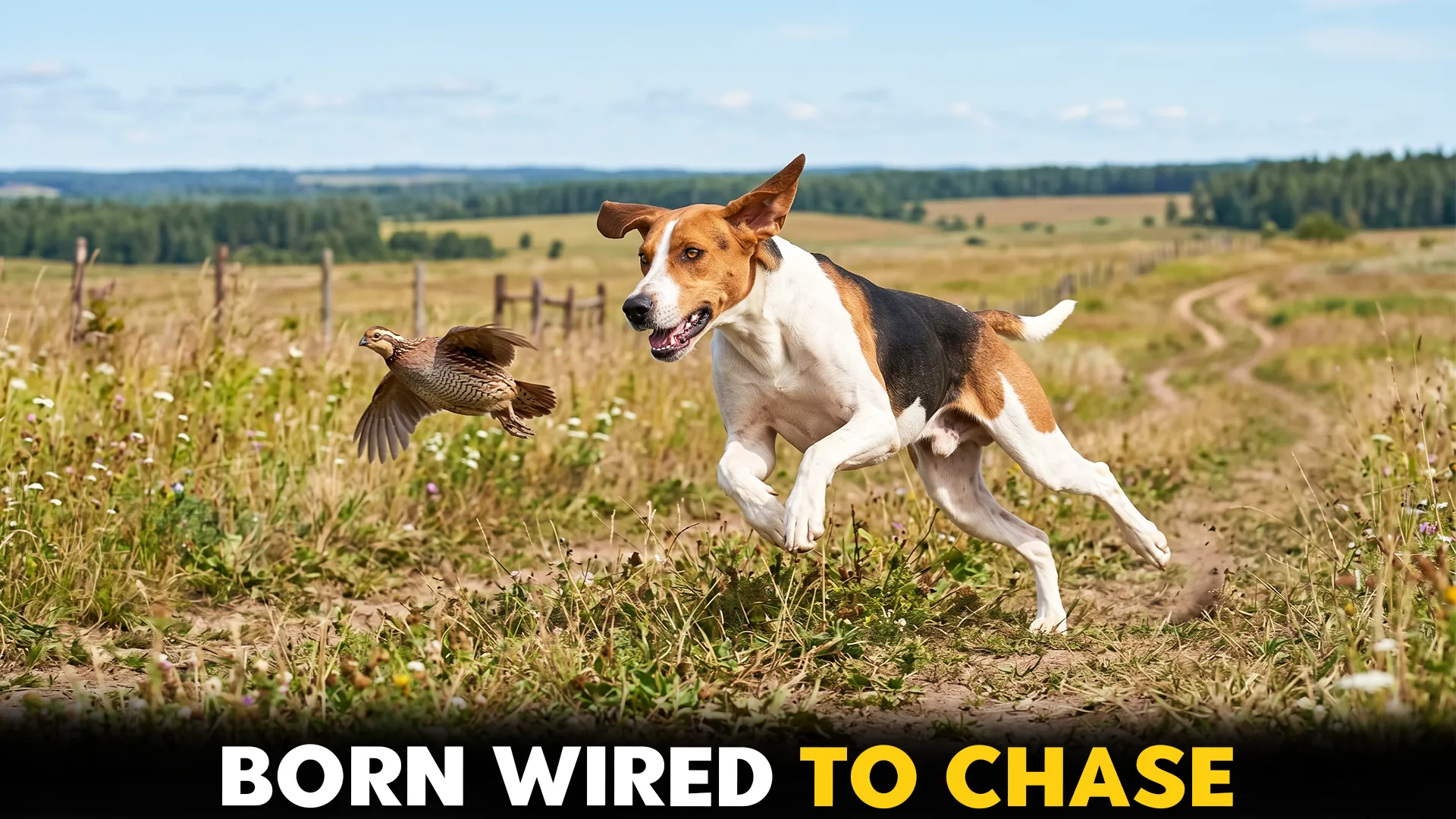
Some dogs see a squirrel and look back at you like, “Did you see that little guy?”
Other dogs see a squirrel and are already gone.
That second dog is prey drive in action.
And if you live with one of these hunting breeds, you already know EXACTLY what that sentence feels like in real life.
The thing about prey drive in dogs is not aggression or bad behavior, or a flaw.
It is a deeply wired, selectively bred instinct that humans spent centuries developing on purpose.
We needed dogs that could chase, track, and catch. So, we built them. Really, really well.
And now those same dogs are living in suburban backyards, side-eyeing the neighbor’s cat.
So this guide is about understanding prey drive, honestly.
What it looks like in different breeds and what it means for your everyday life. Plus, how proper training and early socialization can help you live with a dog whose brain is always running a background program called “FIND THE MOVING THING.”
Did You Know?
A Greyhound can hit 45 miles per hour in just a few strides, making it the fastest dog breed on Earth. But… Greyhounds are actually calm indoors and are often called “45-mph couch potatoes” by their owners. That explosive speed is pure prey drive switching on in an instant. One second, totally relaxed. Next second, gone. All because something small moved across the yard.
Dog Breeds with Intense Hunting Instincts – Prey Drive Guide
1. German Shorthaired Pointer
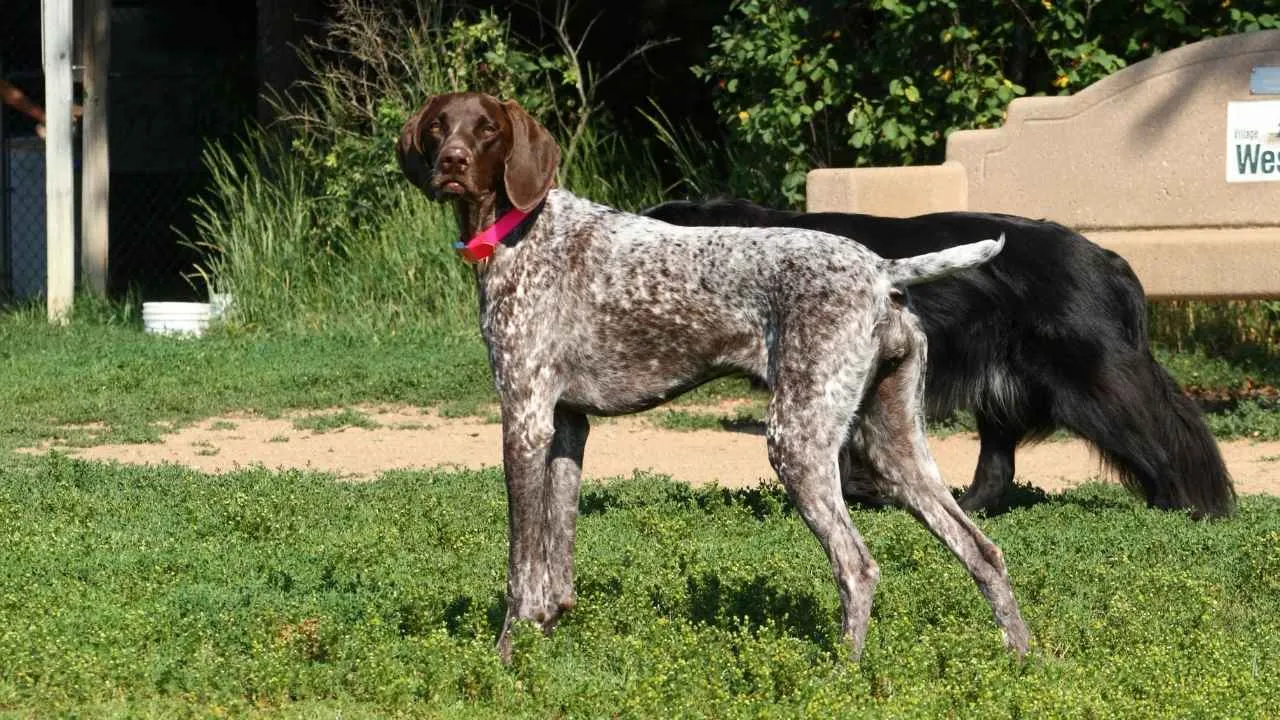
The German Shorthaired Pointer does not have a prey drive. It IS a prey drive wearing a dog’s costume.
This breed was originally bred to be the complete hunting package.
Point, flush, retrieve, and track. And it does all of it with an impressive, intense focus. But it is exhausting to manage if you are not ready for the energy of this Pointer dog breed.
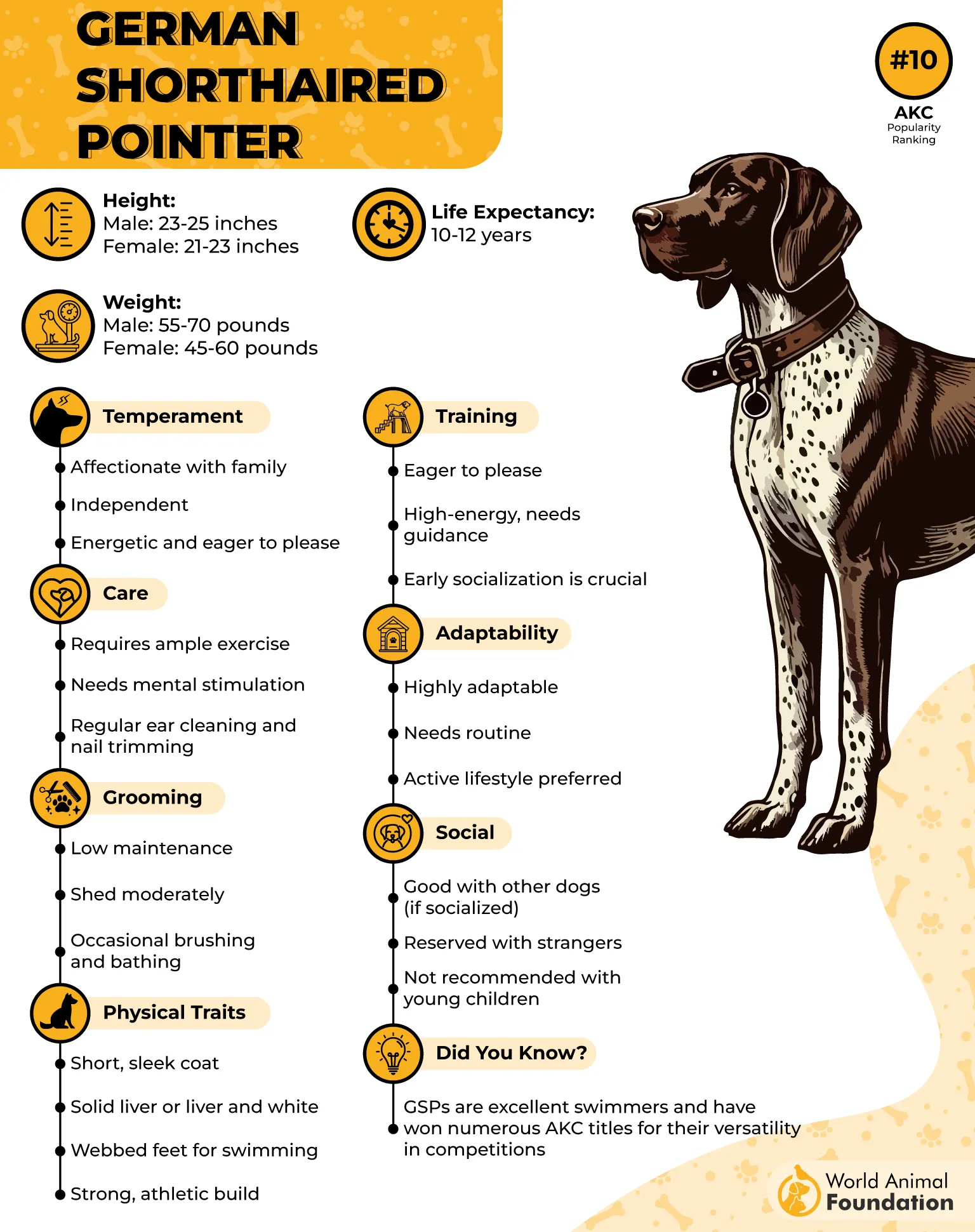
The GSP is one of the highly intelligent, energetic dogs that need a job every single day. Mental stimulation is NOT optional here, but it is a requirement. Without it, they will redirect those powerful instincts toward fast-moving animals in your yard, fast-moving objects through the window, or whatever else catches their eye.
That’s why Purina advises providing them with plenty of enrichment and brain games.
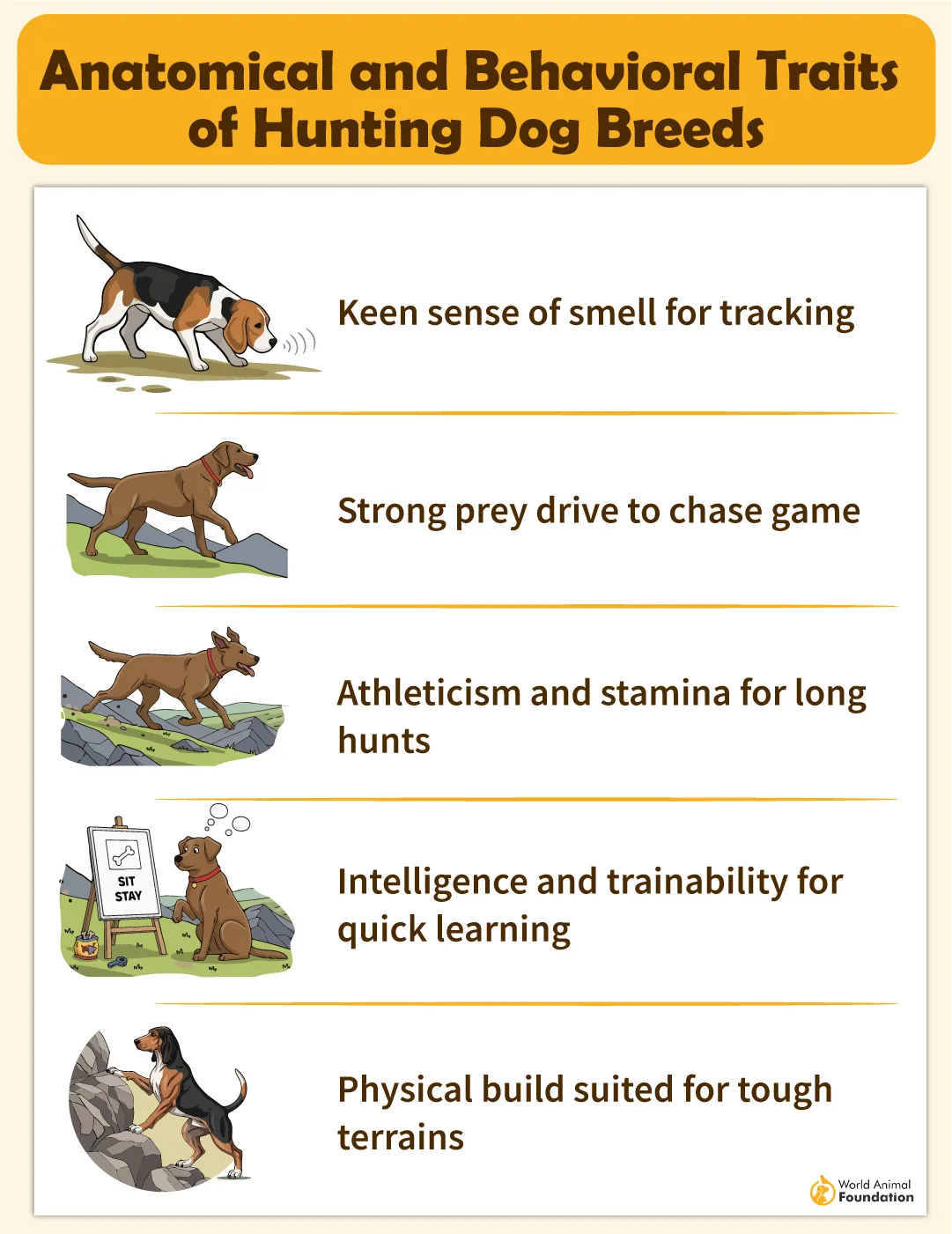
This dog has a strong prey drive, a strong bond, and is extremely responsive to consistent training when started early. Early training is everything with this breed.
But, FAIR WARNING, this dog is not suitable for homes with small pets. That prey instinct toward small animals runs deep and does not switch off easily, no matter how well-mannered companions they become.
Don’t skip structured training and consistent handling from puppyhood.
2. American Foxhound
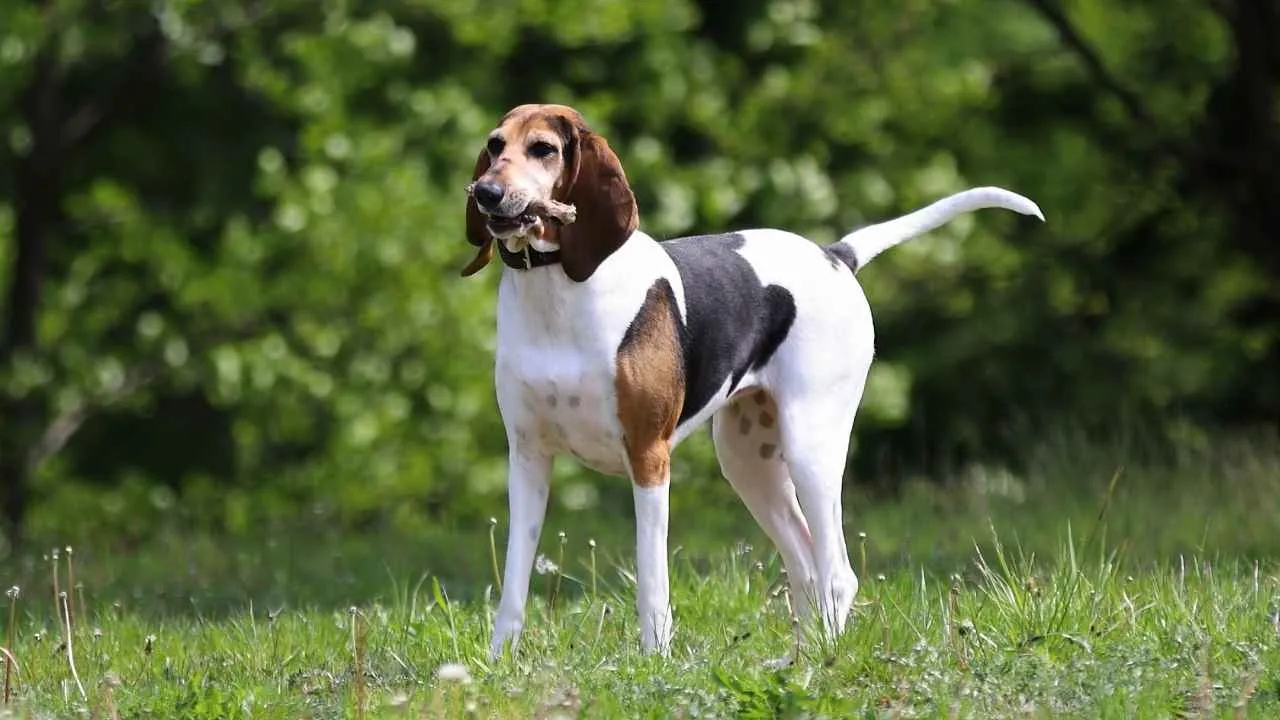
The American Foxhound was bred for one thing. Trailing.
Nose to the ground, locked onto a scent, and completely tuned out to everything else in the world, including you calling its names, the traffic, literally anything that is not the trail.
That is not stubbornness, mind you, but selective breeding.
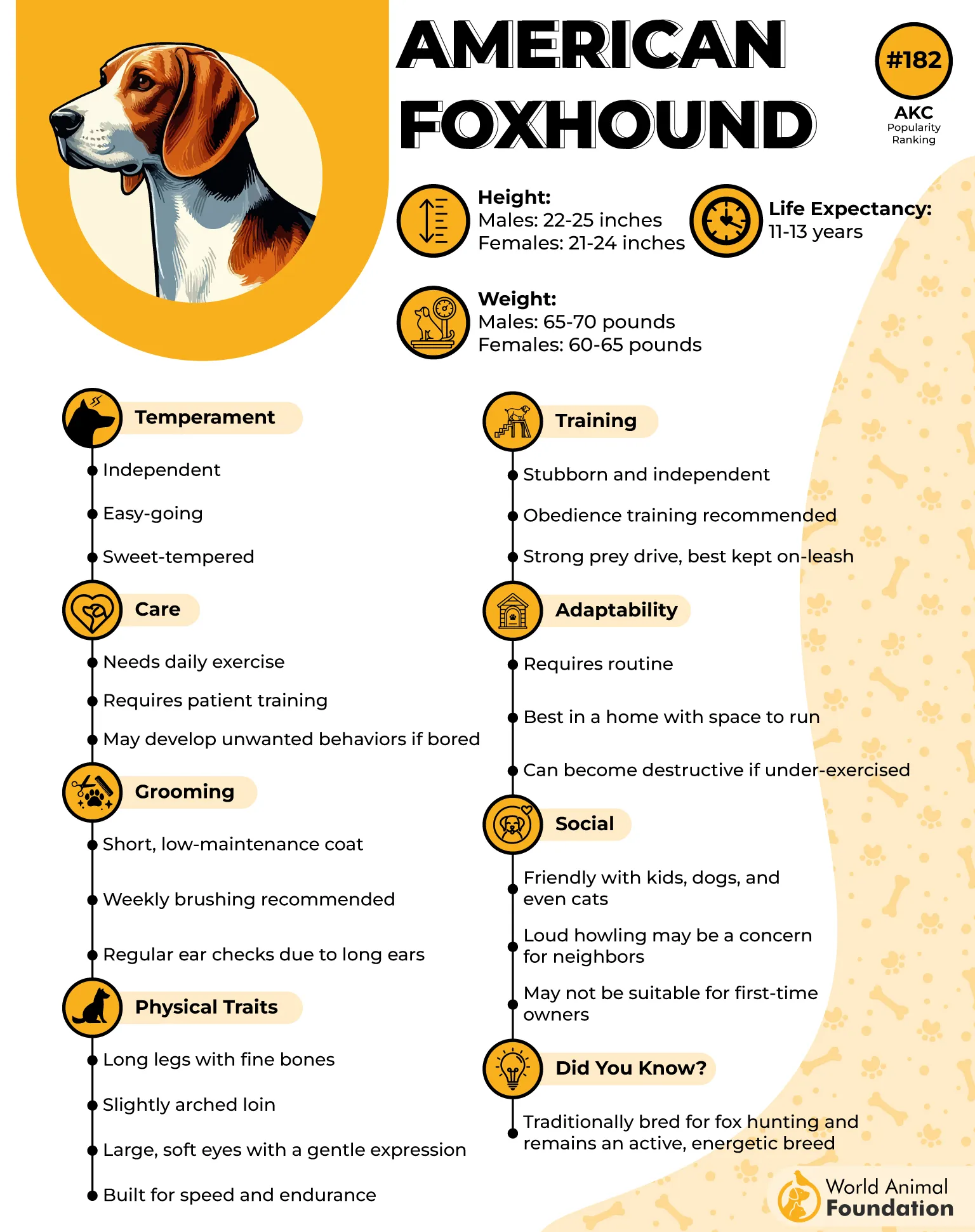
This is one of the original American hunting breeds, dating back to Colonial-era fox hunting. They owe a big part of their rise to fame to George Washington, PetMD notes, as they were bred for endurance and scent work across long distances.
The prey drive here is more scent-based than visual. That makes it different from sight hounds but no less intense.
American Foxhounds are friendly, gentle dogs with humans, good with older children, and generally okay with other dogs.
But small pets like cats and rabbits….
The chase instinct toward small prey is strong. Early socialization is important if you have a mixed-pet household. WebMD says that positive training works really well with them and motivates them to listen to you.
They also have serious physical activity needs. This is a high-energy breed that will not just lounge around. Give it proper outlets, or it will find its own, and you will not love the results.
3. Bluetick Coonhound
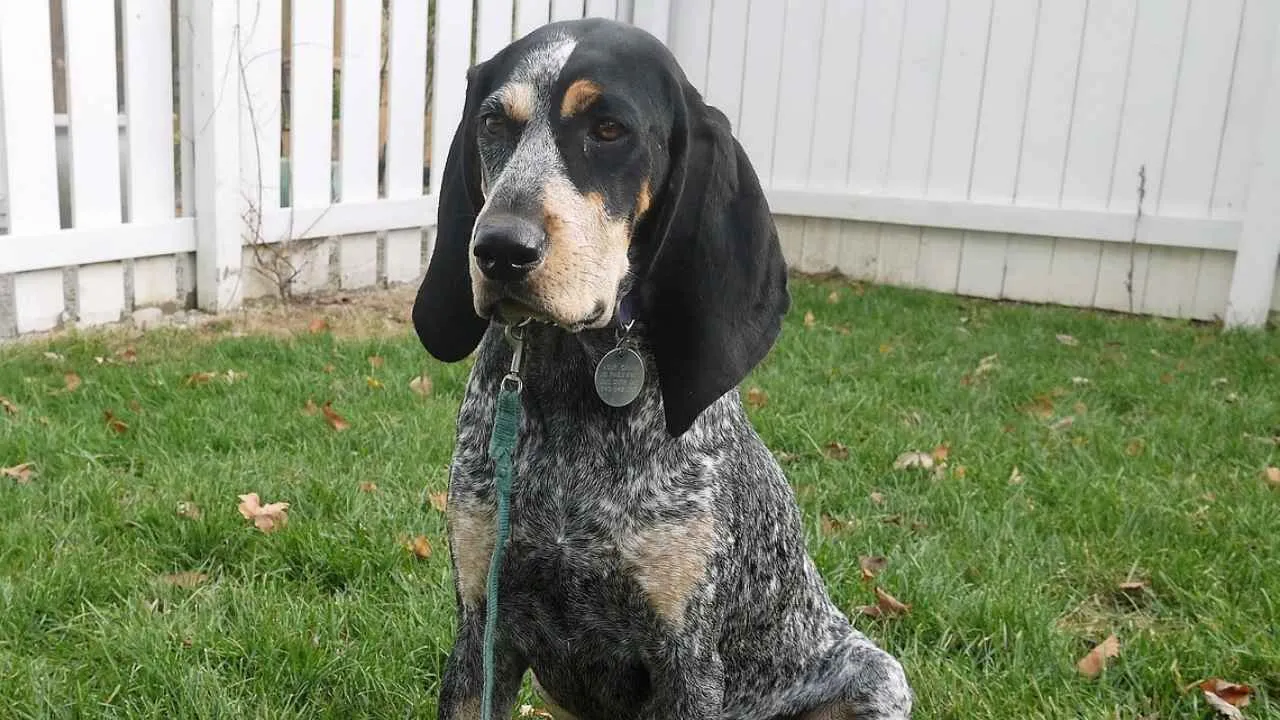
The Bluetick Coonhound has an impressive nose, and “adventure” is its middle name.
This hound dog was originally bred to track prey across rough terrain, usually at night and for hours.
It is a dog that picks up a scent trail and follows it with a focus so complete that the rest of the world stops existing for it.
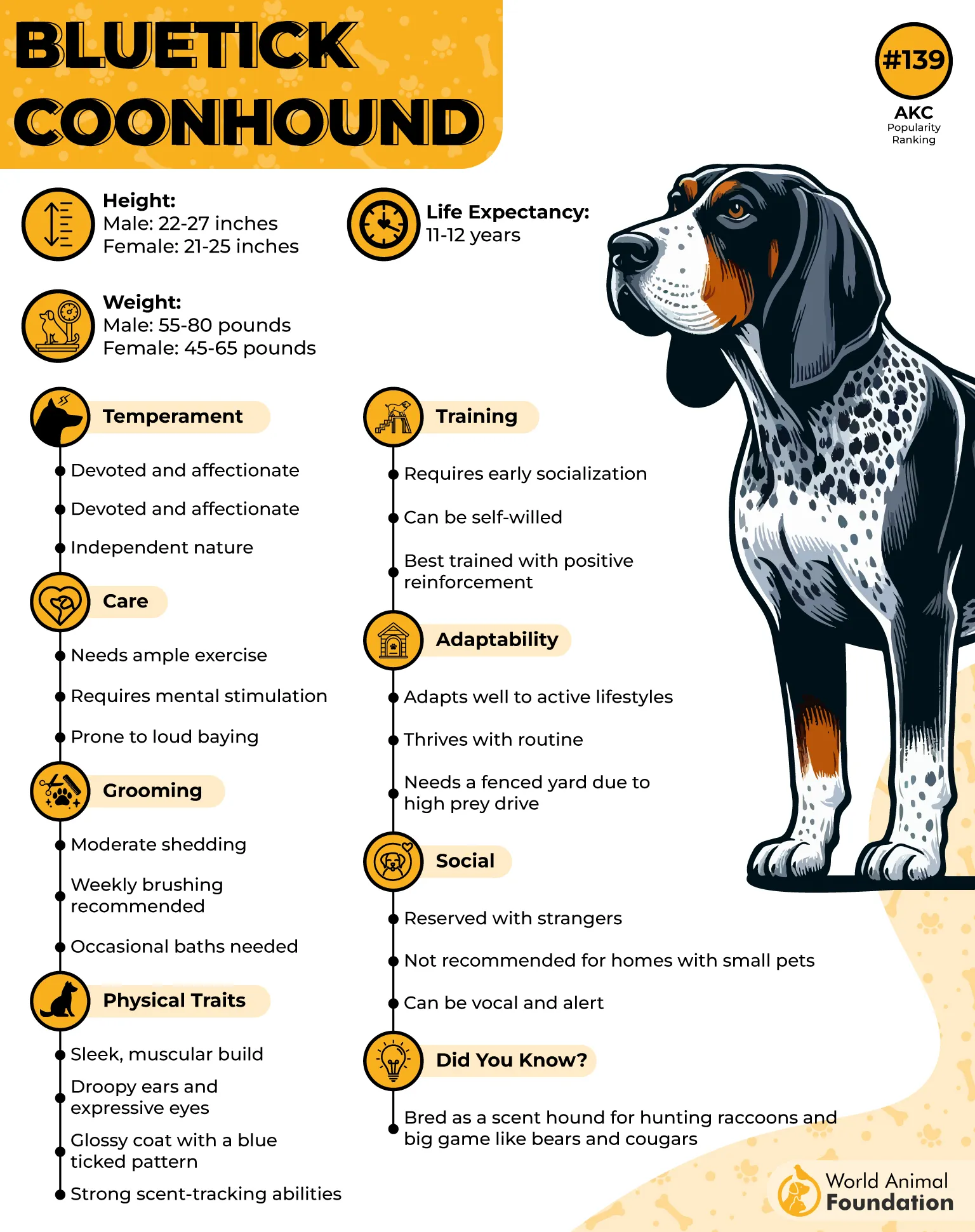
The Bluetick is a scenthound through and through. Big nose, big voice. This dog’s prey drive expresses itself through trailing rather than chasing speed.
When it locks onto a scent, that intense focus is something to witness.
Despite their high prey instincts, these hunting dogs are surprisingly affectionate at home. They are calm indoors when properly exercised, good with families, and deeply loyal.
But prey drive in dogs like Bluetick means you need a securely fenced yard, a solid leash routine, and realistic expectations about recall training around interesting scents.
Consistent training and physical activity help their hunting brain find something to chase.
4. Pointer
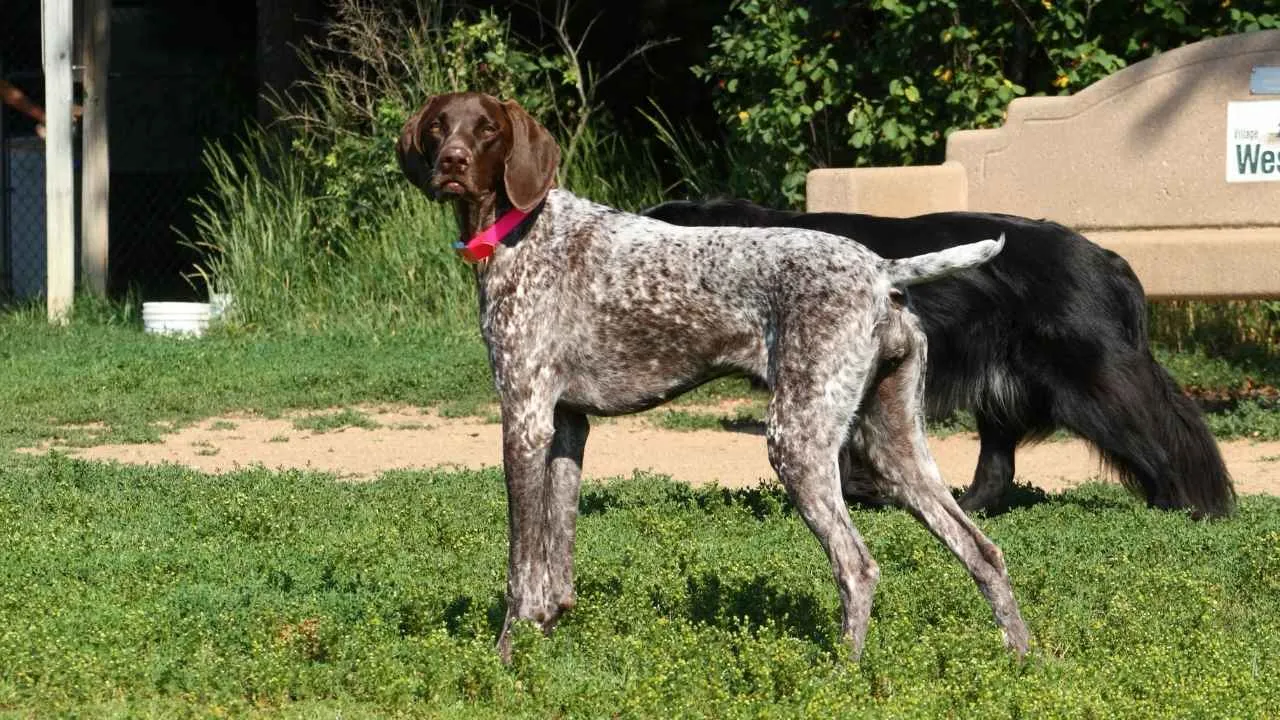
The Pointer is basically the embodiment of intense focus.
You have seen the classic images. Dog frozen mid-stride, one paw lifted, nose aimed like an arrow at something in the brush.
That is not a trained pose, but pure instinct.
That is prey drive locking the body into a silent signal.
The Pointer was developed for upland bird hunting, and its job was to locate game and hold position until the hunter arrived.
That job demands extraordinary self-control layered on extraordinary drive.
This is one of the more athletic, energetic dogs on this list. It needs space, exercise, and serious mental stimulation to stay balanced. Bred for covering ground at speed, these hunting dogs don’t do well in small apartments or low-activity homes.
Prey drive toward small animals is high. Early socialization and training from puppyhood are non-negotiable if you want a well-mannered dog.
5. Chesapeake Bay Retriever
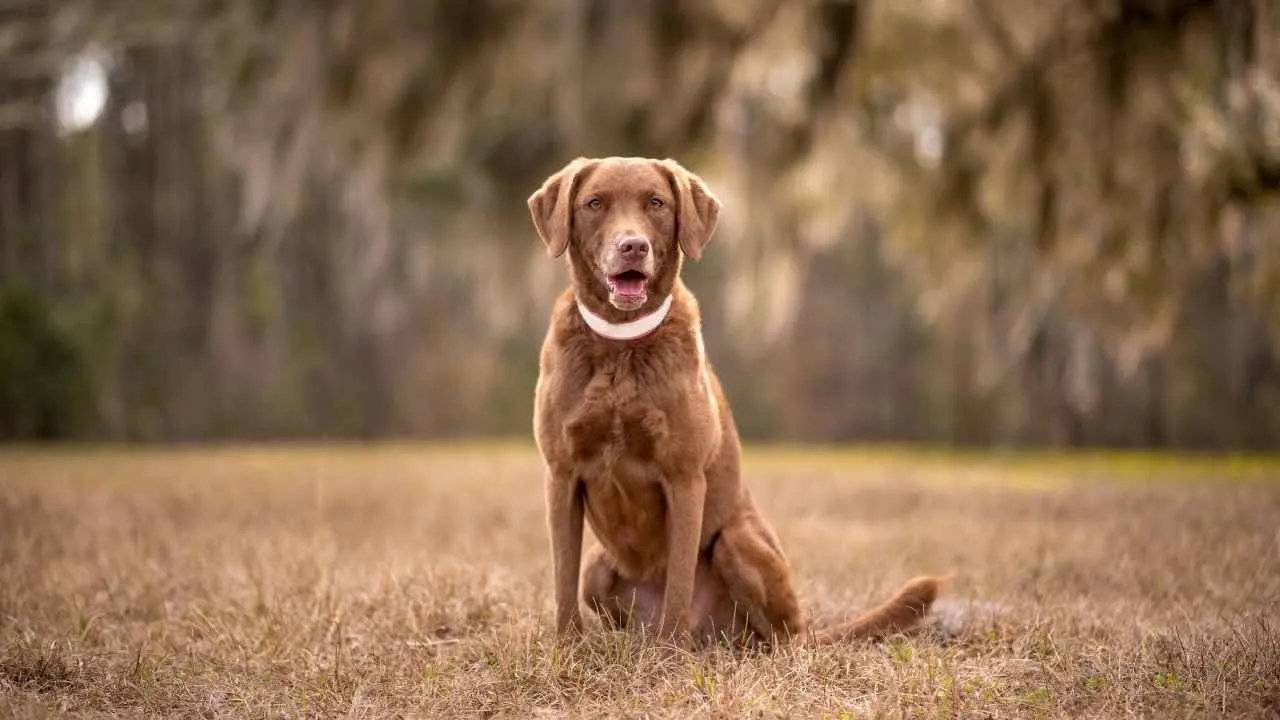
The Chesapeake Bay Retriever looks like a laid-back, wavy-coated retriever. And in some ways, it is. But underneath that calm exterior is a working dog with a high prey drive and protective instincts.
Unlike the more easygoing retrievers, the Chessie has an edge.
It is more independent, intense, and serious about its work.
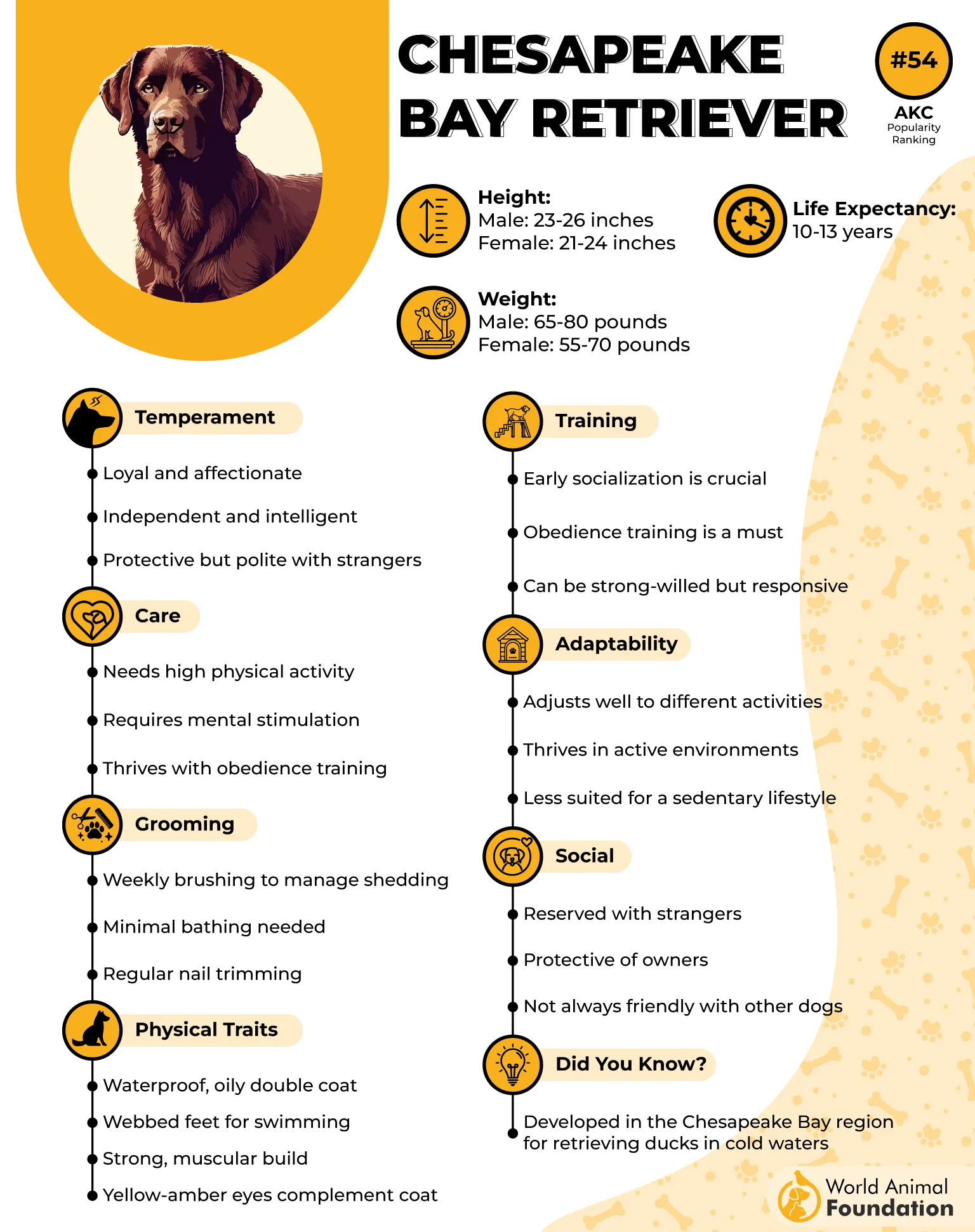
Originally bred for cold waterfowl retrieval under brutal conditions, the Chesapeake Bay Retriever has endurance, drive, and determination. They are skilled swimming dogs with keen vision.
The prey drive and guarding instinct genuinely overlap in this dog, and make it one of the great guard dogs among retrievers.
They might not always be friendly with strangers, and sometimes tricky with other animals.
That independence means consistent handling is not optional. It is the only way this breed becomes a reliable, well-mannered companion.
Professional guidance during early training is worth it for first-time owners.
6. Black and Tan Coonhound
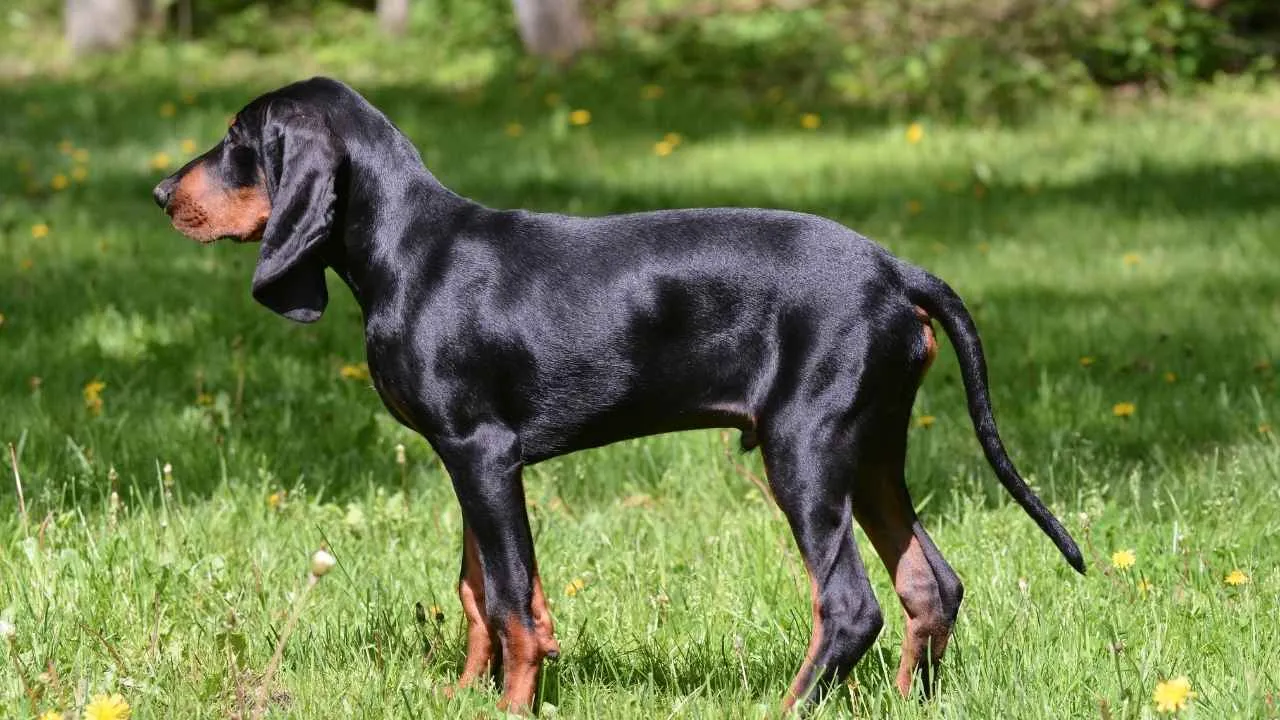
If you want a dog that will follow a scent trail through mountains, across rivers, and into the dark without hesitation, the Black and Tan Coonhound is your dog.
This breed was bred to track large prey across difficult terrain. That is not a dog with a casual relationship to hunting. This is a dog with hunting LITERALLY built into its DNA at a foundational level.
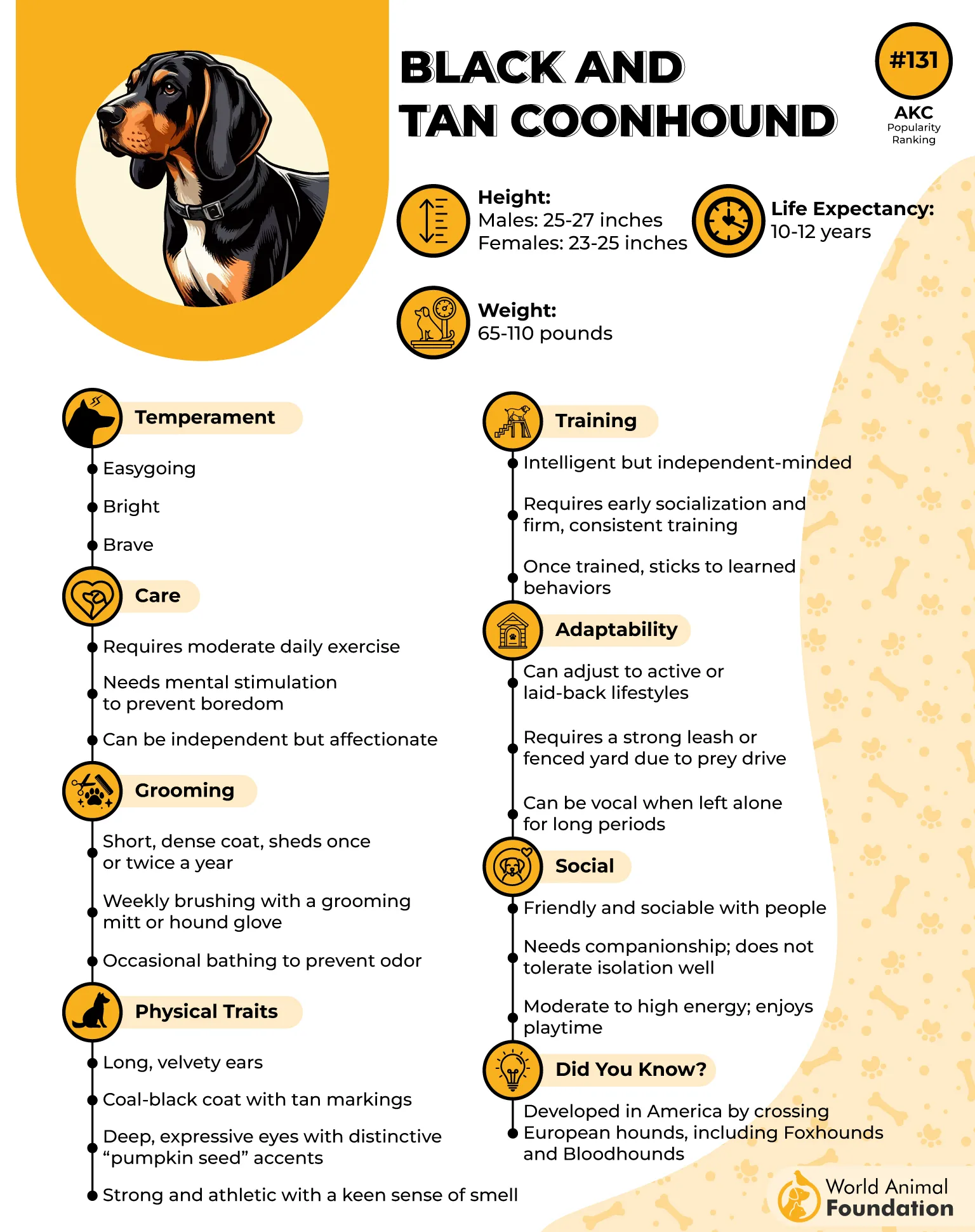
The Black and Tan Coonhound has a powerful instinct and a nose that ranks among the best of any domestic dog. Orvis mentions that these are laid-back indoors, calm, easygoing, and sweet at home. It surprises a lot of people who expect a dog this driven to be this intense all the time.
But on a scent…
These are different animals entirely.
Strong prey drive toward small prey means you need to put effort into proper socialization with cats and other pets. But first, understanding prey drive is important for yourself.
This is one of the most underrated and good hunting dogs. Serious hunters who know, know.
7. Greyhound
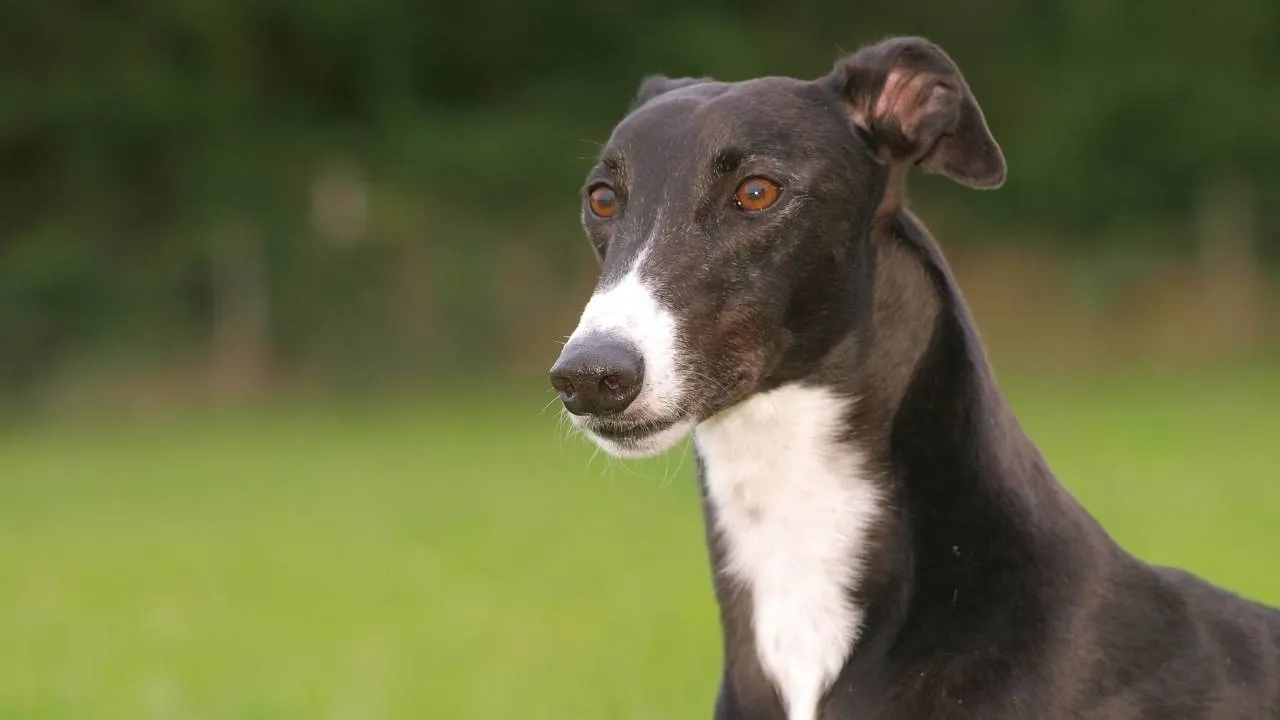
The Greyhound is a sight hound, which means its prey drive is triggered by movement. Not smell, or sound, or movement.
Something fast moves across its field of vision, and that instinct activates. This is what 45 miles per hour of explosive speed is actually for.
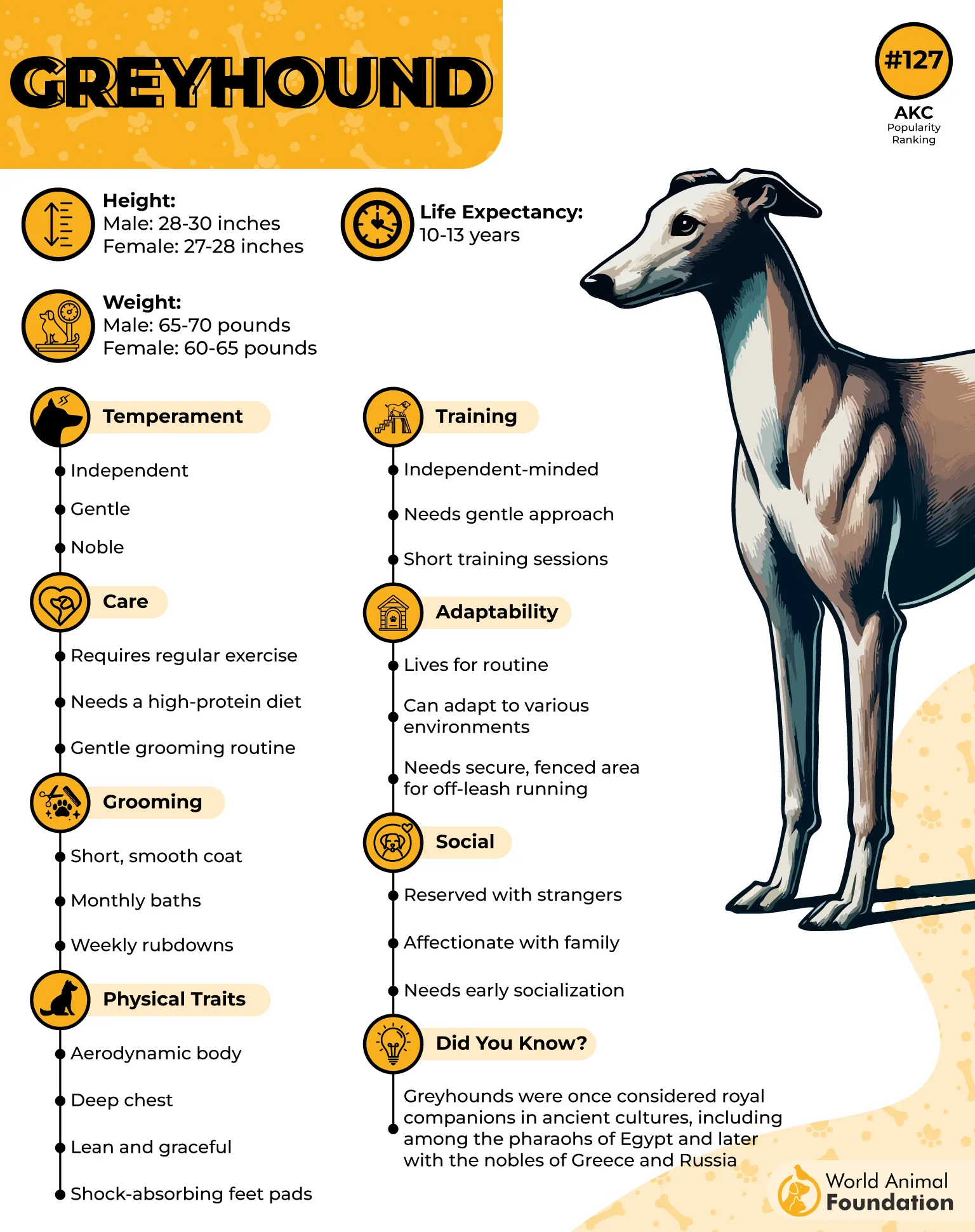
Greyhounds are one of the oldest dog breeds in existence, and their keen vision and speed have been bred for thousands of years.
Unlike many dogs who go on hunts and run around all the time, Greyhounds are calm indoors and low-maintenance in terms of daily exercise compared to other high-prey breeds.
Small pets like cats and rabbits are a real concern. Many Greyhounds can live peacefully with proper early socialization.
A well-trained Greyhound is one of the most elegant, gentle dogs you will ever meet.
Just keep it on a leash in open spaces. Trust us on this one!
Conclusion
Prey drive is not a problem to fix, but a characteristic to understand.
These seven breeds were selectively bred over generations to chase, track, and catch. Certain breeds like the Jack Russell Terrier, Border Collie, English Setter, Rhodesian Ridgeback, Pit Bull Terrier, and German Shepherd are also highly responsive and best in the fields.
Know the breed, do the work, keep your dog safe, and you will get a dog with strong prey drive. Give them proper training, mental stimulation, and be a professional handler.
That dog will become incredible.
