




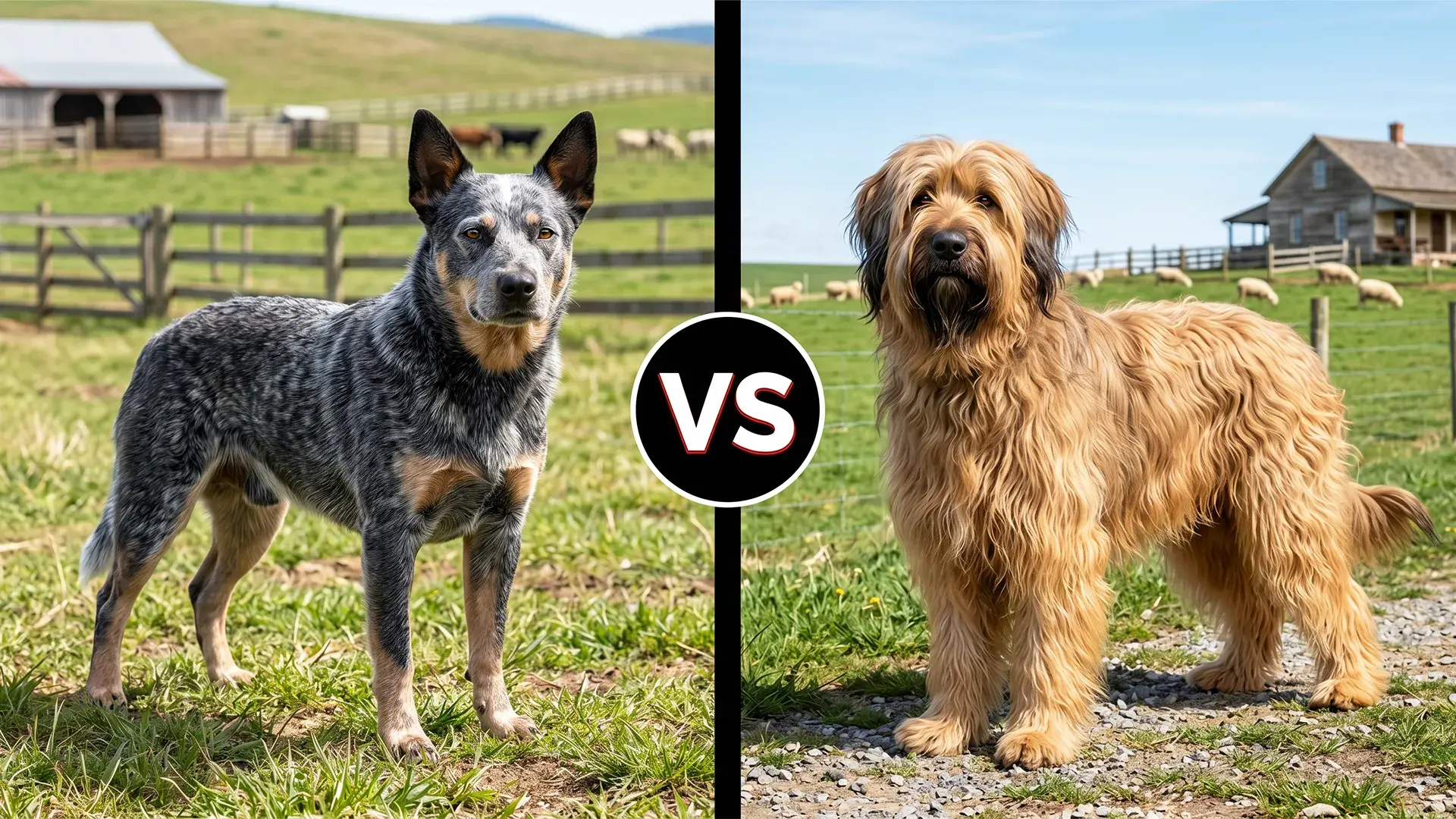
What if your ideal working dog… either herded stubborn cattle through the blazing Australian outback or calmly guarded sheep while looking like a fancy medieval poet who accidentally wandered onto a farm?
Because that’s basically the choice here.
On one side, you have the fearless, turbo-charged Australian Cattle Dog — a compact powerhouse with enough energy to reorganize your entire ranch before breakfast. This is the kind of dog that treats “taking a break” like a personal insult. Blink once, and it has already rounded up the livestock, chased off a suspicious squirrel, and somehow judged your work ethic in the process.
Then there’s the Briard.
Tall, shaggy, intelligent, and carrying the mysterious energy of a wise old shepherd who definitely knows secrets about the universe. The Briard doesn’t rush around like a caffeinated tornado. Instead, it works with calm confidence, quietly watching everything like it’s the manager of the entire countryside.
Picture this.
A dusty ranch road at sunrise. Cattle shifting in the distance. One dog is darting through the herd with lightning speed, while another stands tall nearby, calmly keeping watch like a fluffy security system with legs.
Both breeds are hardworking.
Both are incredibly loyal.
And both have enough personality to make life very interesting.
But when it comes to intelligence, stamina, trainability, family life, and pure working ability… which dog actually comes out on top?
Let’s find out.
Did You Know?
The Australian Cattle Dog was originally bred to handle harsh Australian terrain and stubborn cattle, which is why it has such legendary endurance. Meanwhile, the Briard has been used in France for centuries as both a herding and guard dog — and even served as a military messenger during World War I.
Australian Cattle Dog vs. Briard: Which Is the Better Working Dog?
Size and Strength
The Australian Cattle Dog is smaller in size but built with remarkable strength and endurance.
Standing between 17 and 20 inches tall, this compact herder was developed to control stubborn cattle across Australia’s harsh terrain, often working long distances in intense heat.
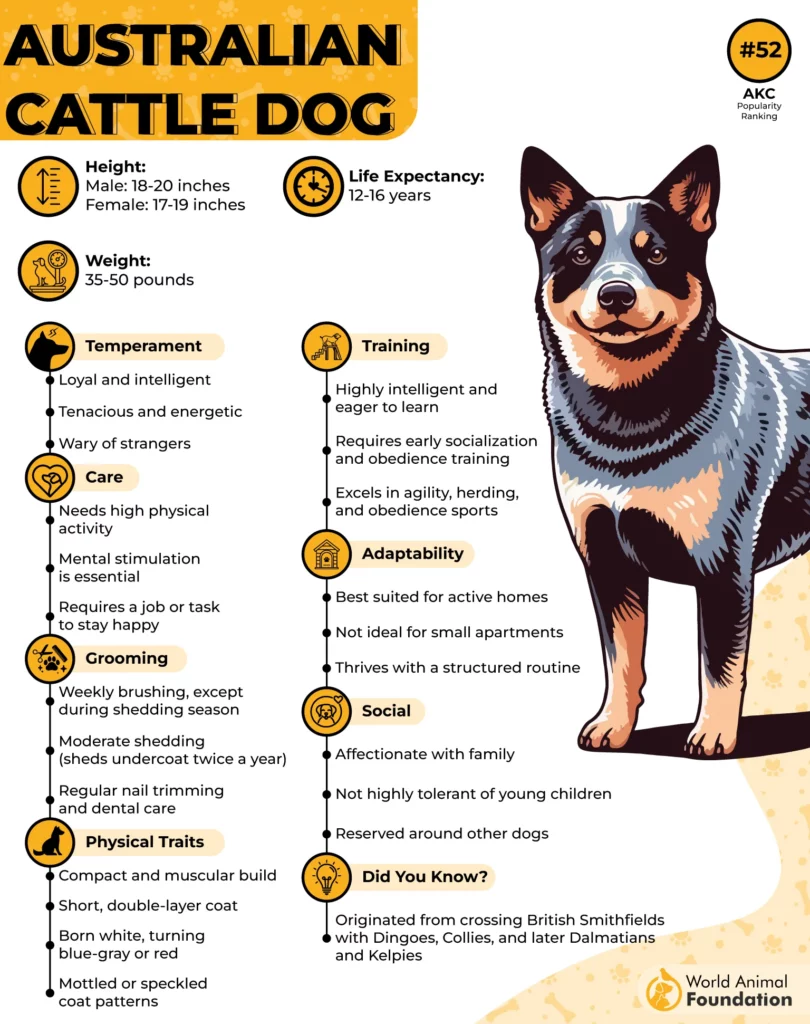
Its muscular body, strong shoulders, and quick footwork allow it to dart around livestock with speed and precision instead of relying on sheer size.
The breed’s connection to the Australian Dingo contributed to its toughness, resilience, and ability to handle demanding outdoor work without tiring easily.
Conversely, the Briard takes a larger and more powerful approach to herding work.
Reaching up to 27 inches at the shoulder, the Briard combines solid muscle with surprising agility.
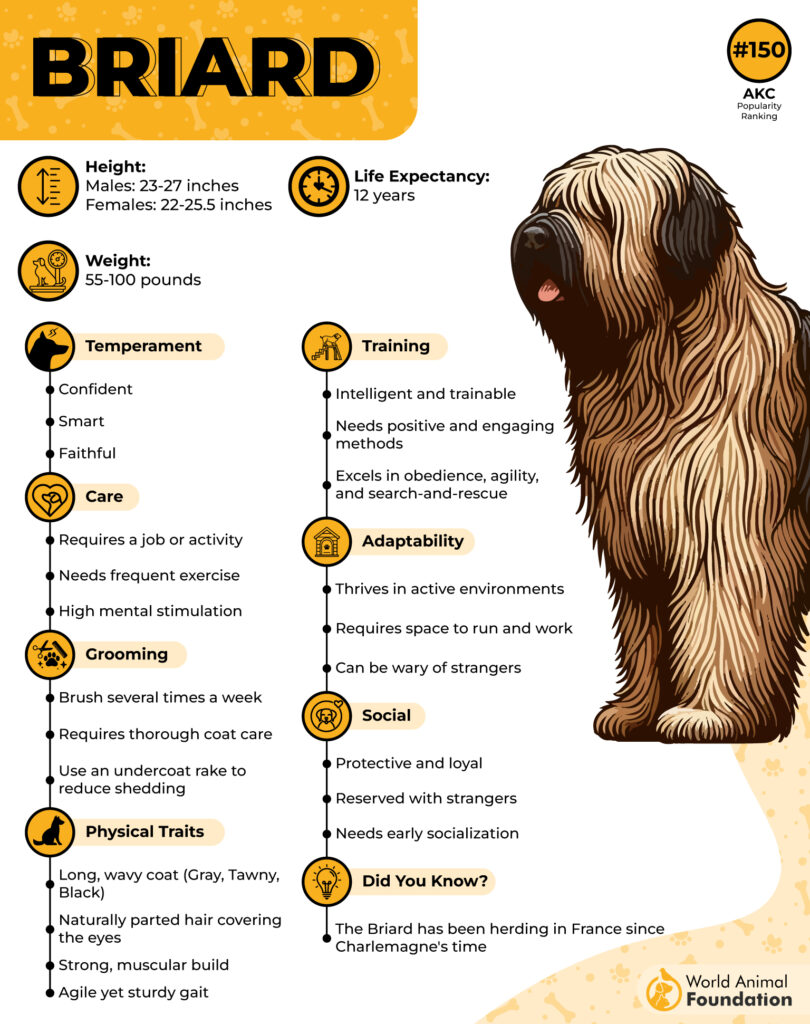
Farmers historically relied on this French breed not only to move sheep but also to guard flocks from threats while staying calm under pressure.
Beneath the long, wavy coat is a rugged frame designed for stamina and balance. Its rear double dewclaws, a rare physical trait, provide extra stability while moving through rough countryside and uneven fields.
Temperament and Personality
The Australian Cattle Dog works low to the ground and snaps at heels to manage stubborn cattle over long distances, while the Briard uses quicksilver movement for managing sheep flocks.
The Australian Cattle Dog is the kind of worker that always wants something to do. Bred to control livestock across massive Australian ranches, this breed combines sharp intelligence with relentless energy, as mentioned by the Britannica.
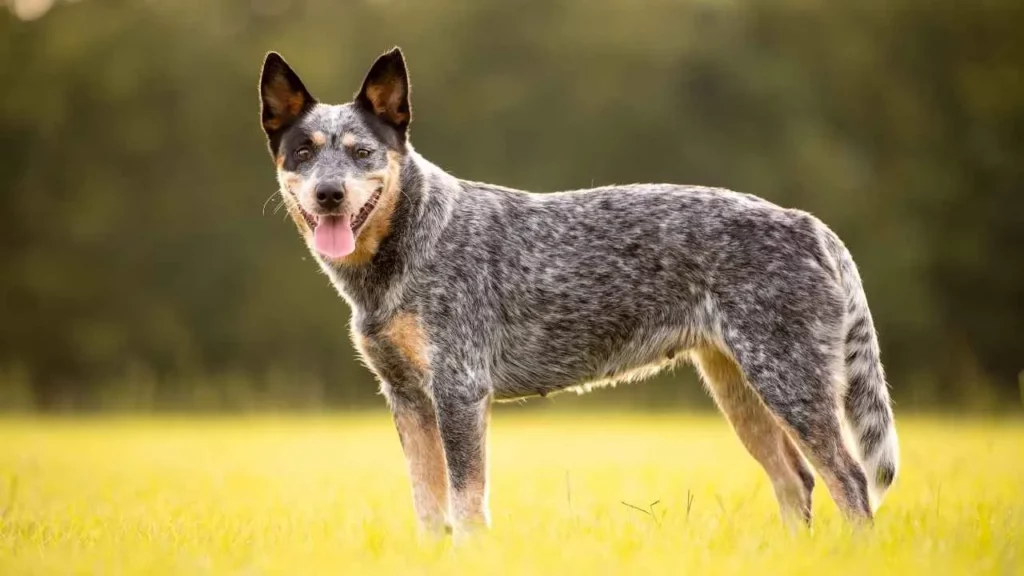
It learns commands quickly but also likes making its own decisions, which can challenge inexperienced owners. Many heelers naturally nip at heels while moving cattle, and that instinct sometimes appears during play with children or other animals.
With proper training and daily activity, they become deeply loyal companions that thrive with hiking, agility work, and demanding outdoor routines.
Without enough stimulation, they often create their own entertainment, usually in ways owners do not appreciate.
On the other hand, the Briard approaches work with a calmer but equally independent mindset.
Originally trusted to herd and guard sheep in the French countryside, the Briard stays highly alert and naturally protective around unfamiliar people or animals.
This breed forms strong emotional bonds with its family and often shadows its favorite person from room to room. Briards also tend to “herd” children gently by circling or nudging them, a behavior rooted in centuries of flock management.
The Australian Cattle Dog is often one-person oriented and wary of strangers, while the Briard is known for being deeply loyal and acting as a ‘velcro’ dog.
Health and Lifespan
The Australian Cattle Dog is widely respected for its durability and long working life. Many live between 12 and 16 years, which is impressive for such an active herding breed.
In fact, an Australian Cattle Dog named Bluey holds the world record for longevity after reaching 29 years of age. These dogs were developed to handle exhausting ranch work in harsh Australian conditions, so they are generally sturdy and resilient.
Still, owners should watch for inherited problems like progressive retinal atrophy, deafness, and hip dysplasia.
Vision loss and hearing issues can appear gradually, especially as the dog ages, but many heelers adapt surprisingly well to stable routines and proper training.
In contrast, the Briard typically lives around 12 years and stays active well into adulthood when properly cared for.

This hardworking French herder is prone to hip dysplasia, hypothyroidism, and several inherited eye conditions, including congenital night blindness.
Briards also have a coarse double coat that naturally protects them during outdoor flock work, but it requires regular maintenance to prevent skin and ear problems.
Training and Exercise
The Australian Cattle Dog is not the kind of dog that stays satisfied with a short evening walk around the block. This breed was developed to herd cattle for hours across enormous Australian ranches, so daily physical activity and mental challenges are essential.
Australian Cattle Dogs learn commands quickly and often master advanced tasks faster than many owners expect. However, their intelligence also means they become stubborn and destructive when bored.
Many owners keep them engaged through agility courses, obedience trials, hiking, or herding exercises that give the dog a clear purpose.
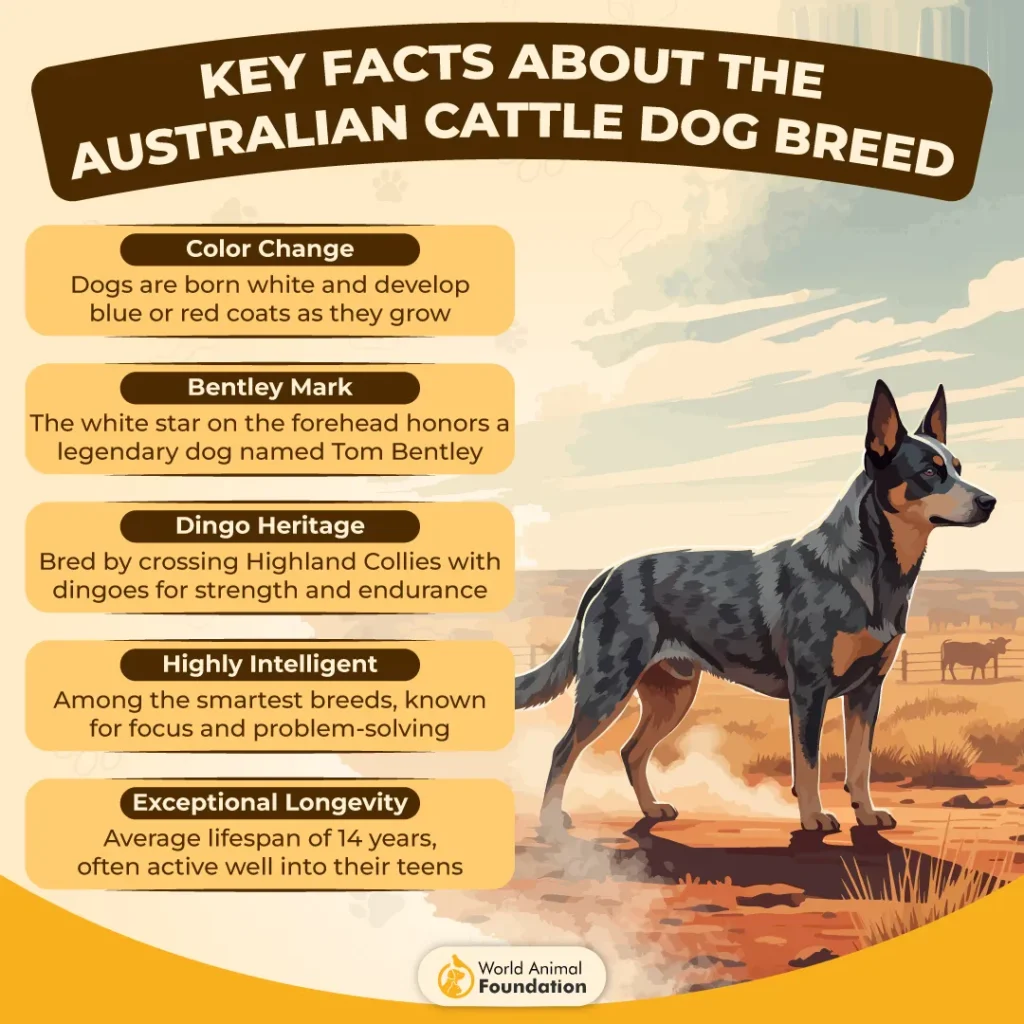
One fascinating behavior unique to this breed is its habit of silently stalking livestock with intense focus before quickly nipping at their heels to move them forward.
In comparison, the Briard approaches training with a more independent attitude. Bred to make decisions while guarding and managing flocks, Briards sometimes question commands instead of following blindly, as stated by the AKC.
They respond best to upbeat, varied training sessions that keep their sharp minds interested. With proper guidance, they excel in obedience, search-and-rescue work, agility, and advanced canine sports.
Exercise is equally important for this breed. Long hikes, jogging, interactive games, and large fenced spaces help channel their energy in productive ways.
Briards also crave close companionship and often work best when activities include regular interaction with their favorite people.
Grooming Needs
The Australian Cattle Dog was developed for tough outdoor work, and its coat reflects that practical purpose.
The short double coat naturally resists dirt, weather, and moisture, making grooming surprisingly simple for such an active breed. Most owners only need to brush the coat once a week to remove loose hair and keep it looking clean.
Unlike many working dogs, the Australian Cattle Dog’s coat usually carries very little doggy odor or oily buildup, even after long days outdoors.
Twice a year, however, the breed “blows” its undercoat heavily, filling brushes, floors, and furniture with loose fur unless brushed every few days. Regular nail trimming is also important because these hardworking dogs stay constantly on the move.
Meanwhile, the Briard requires far more grooming commitment due to its long, wavy coat.
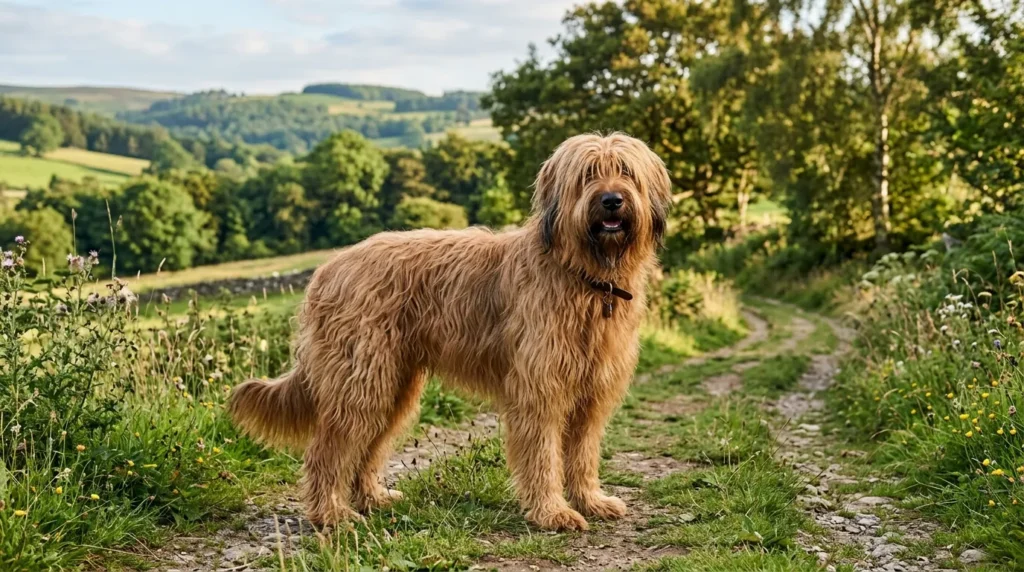
That shaggy outer layer protected French flock guardians from rough weather and thorny fields, but it also tangles easily without frequent care.
Briards usually need thorough brushing several times a week, reaching all the way down to the skin to prevent mats from forming. Many owners introduce grooming early because adult coat maintenance can take considerable time.
Energy Level
The Australian Cattle Dog was built for nonstop movement and demanding outdoor work. Developed to herd cattle across massive Australian ranches, this breed has the stamina to stay active for hours without slowing down.
Short walks and casual backyard play rarely burn enough energy for a heeler. Most thrive when given structured activities like running, agility training, obedience work, or herding exercises that challenge both mind and body.
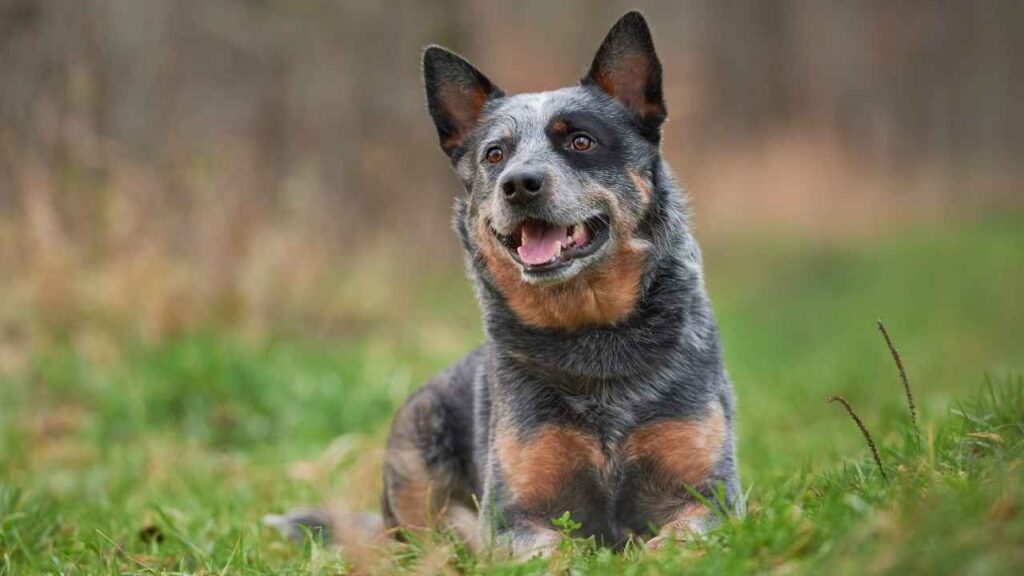
Without enough stimulation, they often become restless and start inventing their own jobs around the house or yard.
One well-known behavior in this breed is its intense heel-nipping style used to control stubborn cattle while staying quick enough to avoid kicks.
In contrast, the Briard also needs an active lifestyle, but its energy is paired with steady endurance rather than constant intensity.
Originally responsible for herding and guarding sheep in France, Briards enjoy long hikes, jogging, biking trips, and games that allow them to stay physically engaged alongside their owners.
They are happiest when exercise includes companionship and a clear sense of purpose.
Briards are also known for circling and gently guiding movement while managing livestock, a behavior that still appears during play and family activities today.
Natural Guard Instincts
The Australian Cattle Dog was developed to protect livestock, property, horses, and handlers across isolated Australian ranches, so alertness comes naturally to this breed, as highlighted by WebMD.
Australian Cattle Dogs pay close attention to everything happening around them and usually notice unfamiliar movement long before their owners do.
Unlike noisy watchdogs that bark at every sound, heelers tend to stay quiet unless they genuinely believe something is wrong.
Their quick decision-making ability helped cattle workers rely on them in rough conditions where immediate reactions mattered. Many remain cautious around unfamiliar people and can become territorial without proper socialization.
One unusual habit strongly connected to the breed is its tendency to silently monitor an area for long periods while staying fully focused on potential threats or movement nearby.
On the other hand, the Briard earned its reputation as both a flock guardian and homestead protector in northern France.
Briards were expected to guide sheep during the day while also watching over farms at night without constant human supervision.
That history created a breed with strong protective instincts and a natural sense of responsibility toward family members.
Briards often position themselves between loved ones and unfamiliar visitors while carefully observing situations before reacting.
Protective Temperament
The Australian Cattle Dog was shaped by the demanding conditions of 19th-century Australian cattle stations, where ranchers needed a dog capable of protecting livestock, property, and people across isolated land.
That background created a breed that stays constantly aware of its surroundings and reacts quickly when something feels unusual. Australian Cattle Dogs are deeply loyal to their families and often form strong bonds with one particular person.
They are naturally cautious with strangers and usually prefer observing newcomers before accepting them. Unlike many noisy watchdogs, heelers often stay silent until they sense a genuine problem.
One behavior strongly tied to the breed is its habit of positioning itself where it can monitor both livestock and owners at the same time without being directed.
The Briard developed as both a sheep herder and flock guardian in northern France, giving it a calm but serious protective nature.
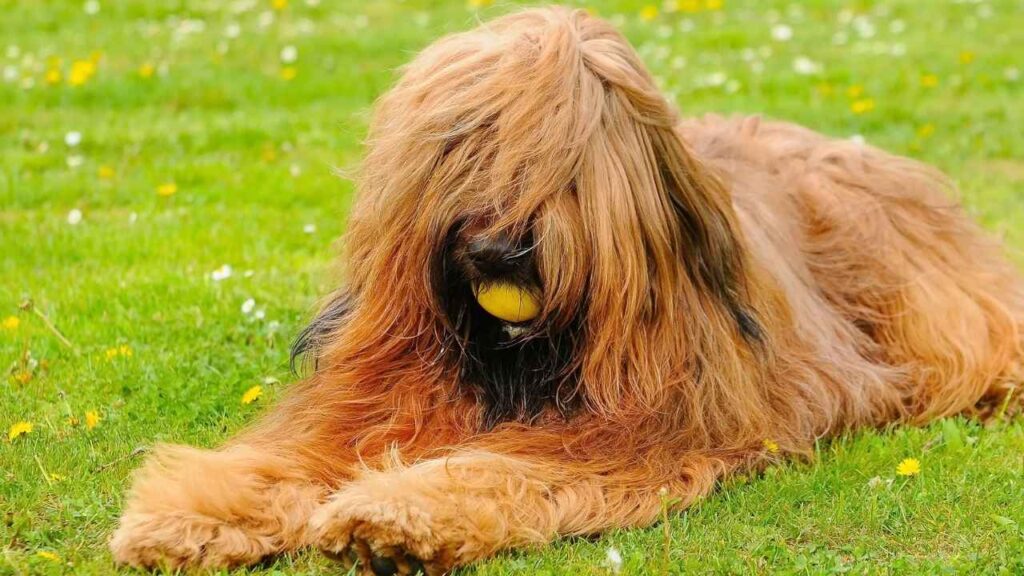
Briards are especially watchful around children and often treat family members like part of their flock.
Farmers historically trusted only a few Briards to control hundreds of sheep while remaining alert to danger throughout the day.
They are naturally wary of unfamiliar people, but with proper socialization, Briards usually become steady, confident protectors rather than overly aggressive guard dogs.
Conclusion
Both breeds are exceptional workers, but they succeed in different ways.
The Australian Cattle Dog is all about speed, stamina, and nonstop action. It thrives in demanding jobs that require quick movement, sharp instincts, and endless energy.
The Briard brings a calmer and more balanced working style, combining herding ability with strong guarding instincts and deep loyalty toward its family.
For intense cattle work and high-energy lifestyles, the Australian Cattle Dog has the edge. For owners wanting a steady protector and versatile farm companion, the Briard stands out as the better fit.
