




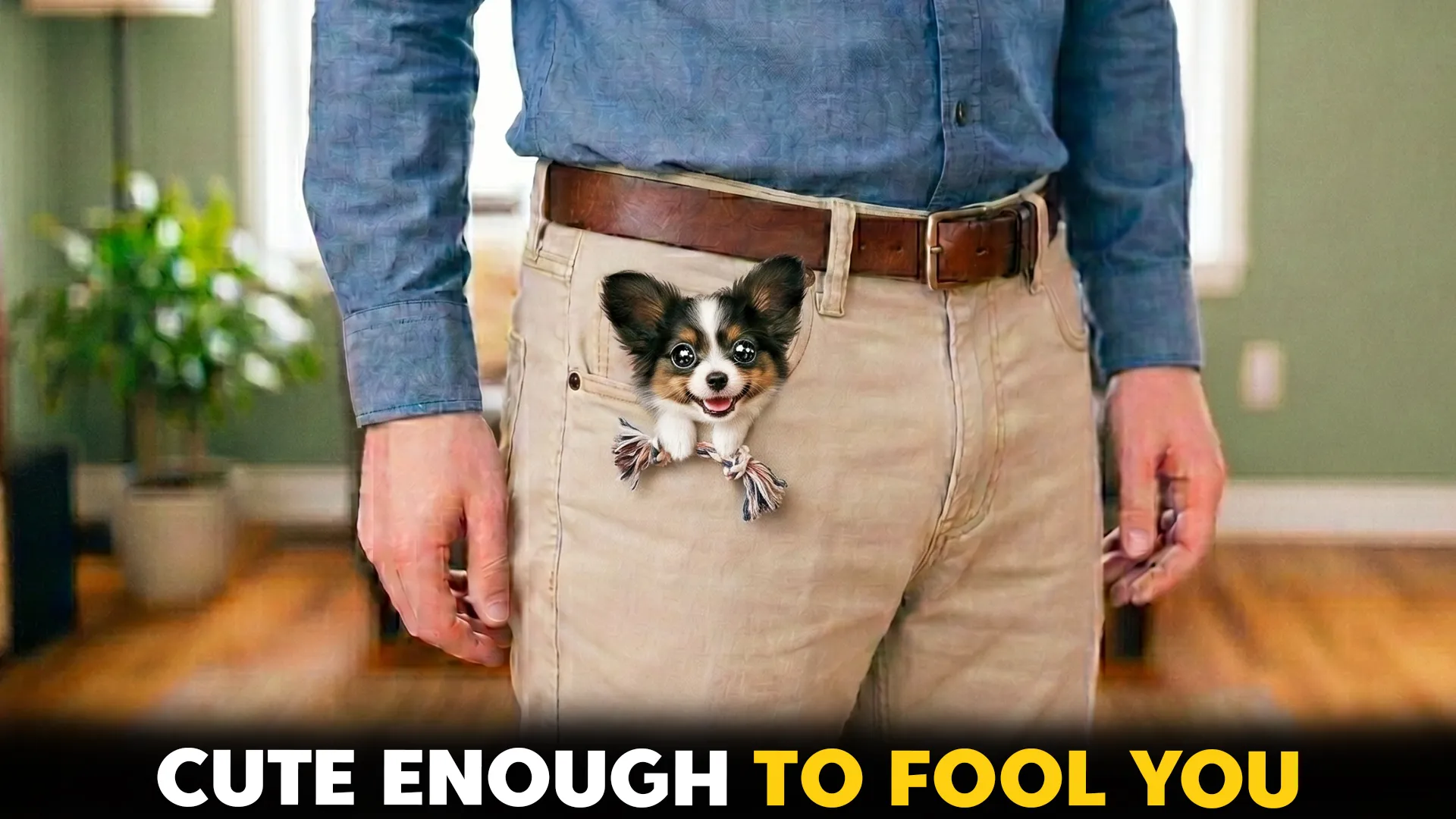
Thinking about adding a tiny furry friend to your life? Pocket-sized dogs aren’t just adorable—they’re full of personality, spunk, and charm that can completely light up your home. But before you fall in love with that cute face in a photo, it helps to know that “small” doesn’t mean “simple.”
These little companions have big hearts, distinct temperaments, and unique care needs that can make a huge difference in your daily life.
Some are content lounging by your side all day, while others are tiny dynamos that need mental stimulation and playtime to stay happy. Understanding these traits ahead of time ensures you pick a dog that matches your pace, space, and personality.
In this article, we’ll walk you through everything you need to know about the best pocket dogs: how to care for them, what their personalities are like, and how to find one that’s the perfect fit for you.
Key Takeaways
Pomeranians, Papillons, and Maltese thrive as affectionate, playful lapdogs.
Chihuahuas and Yorkshire Terriers need early training and mental stimulation.
Havanese and Pugs enjoy daily exercise and companionship for happiness.
Regular grooming, dental care, and supervision with kids keep all pocket breeds healthy.
Best Pocket Dog Breeds: Personality and Care Guide
1. Pomeranian
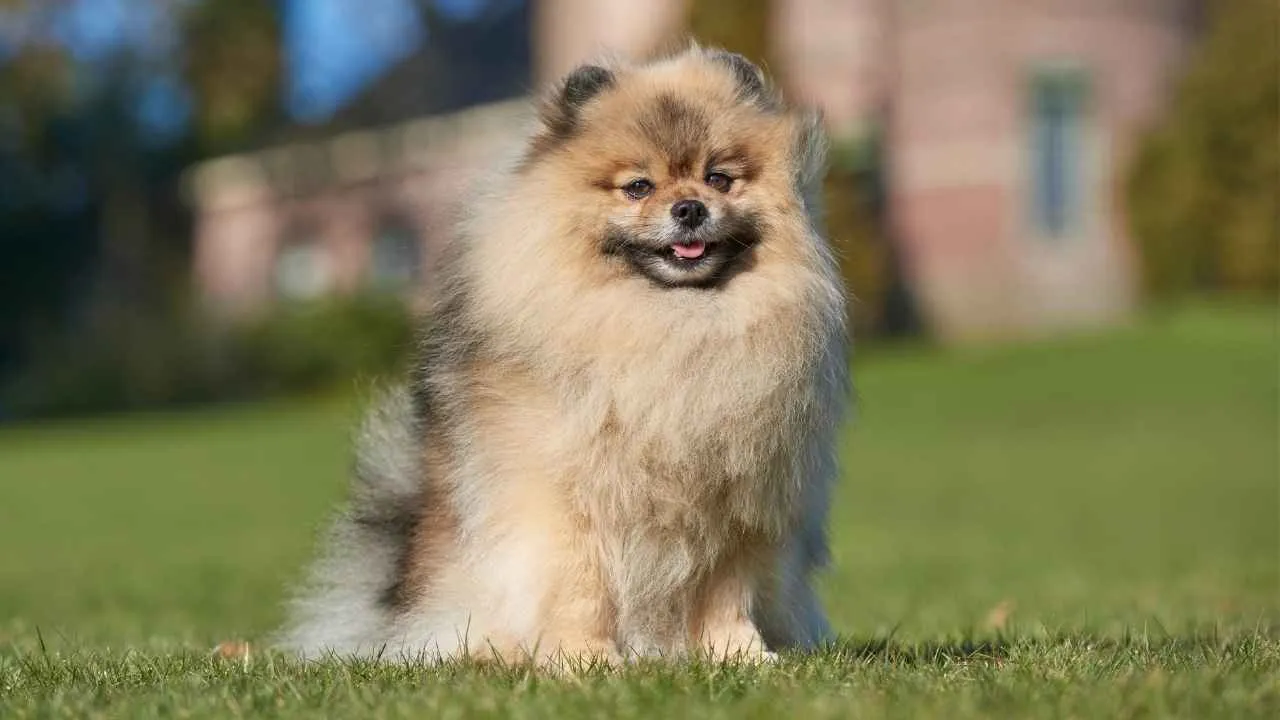
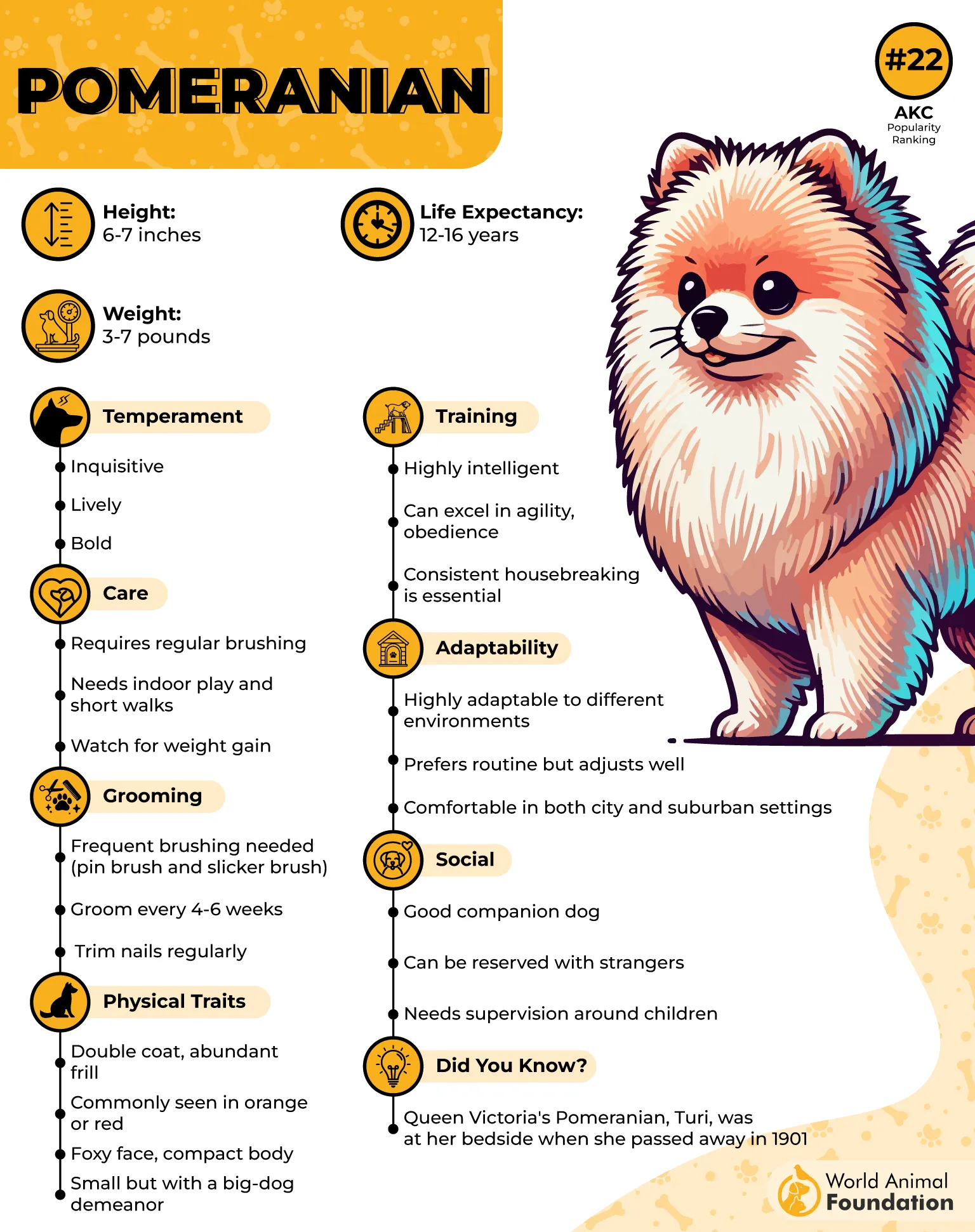
Pomeranians are classic pocket dogs, loved for their lively and confident personalities. They have thick double coats, foxy faces, and a playful, alert nature. These dogs are intelligent and eager to learn, making them quick to pick up tricks, games, and training exercises.
They are affectionate companions who thrive on human attention. While playful, they don’t need extensive outdoor activity, so they adapt well to both city and suburban homes.
Personality and Behavior
Pomeranians are spunky and bold, often acting like much larger dogs. They enjoy being lap companions but still like to explore and play. Early leash training and housebreaking are important, along with consistent socialization to prevent excessive barking, hyperactivity, or separation anxiety.
These dogs excel in activities like agility, obedience, and rally, and some even make wonderful therapy dogs. Teacup Pomeranians share the same traits but need extra care due to their delicate size.
Care and Health
Pomeranians’ coats require frequent grooming to stay healthy. Regular brushing and professional grooming every few weeks are recommended. Their nails should be trimmed, and teeth brushed during grooming sessions.
Teacup Pomeranians need careful handling during play and walks to avoid injury. Both standard and Teacup Pomeranians can live long, healthy lives with proper nutrition, exercise, and regular vet care. Key tips include:
Brush daily or every other day to prevent mats.
Provide mentally stimulating games and gentle exercise.
Monitor Teacup Pomeranians for low blood sugar and fragile bones.
Ensure safe play and avoid high jumps or rough interactions.
2. Papillon
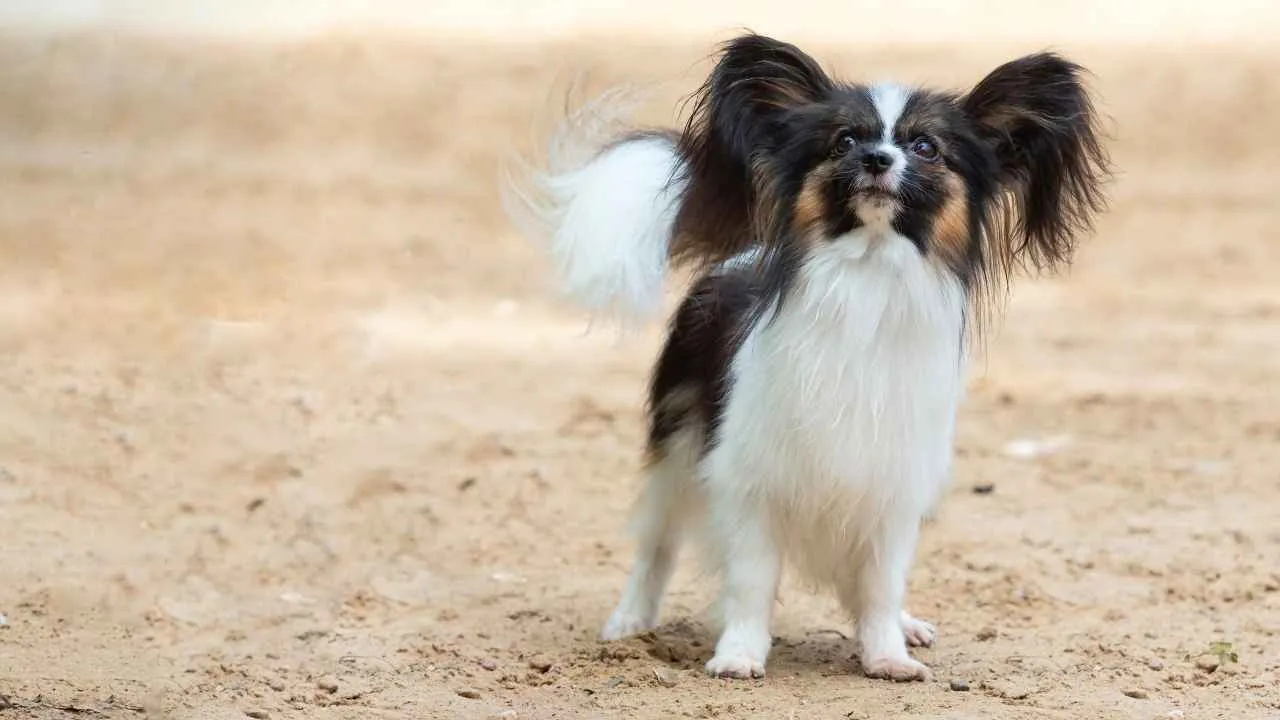
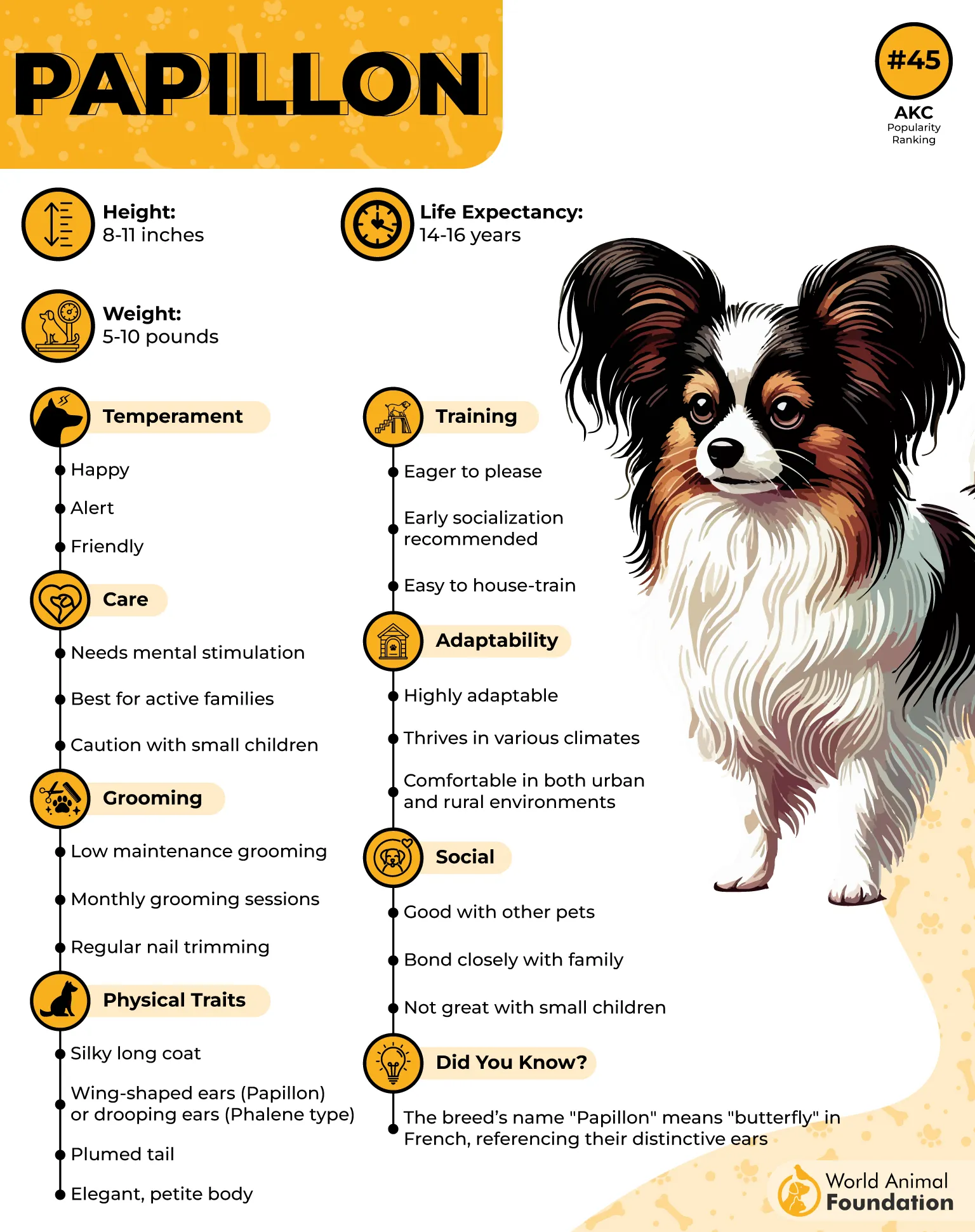
Papillons are small dogs with big personalities. Known for their butterfly-like ears, they are happy, alert, and friendly. These dogs are active and intelligent, making them quick learners who enjoy tricks, games, and agility activities.
Papillons bond closely with their humans and can also get along with other pets. They love attention and may develop separation anxiety if left alone for long periods.
Personality and Behavior
Despite their delicate appearance, Papillons are sturdy and spirited. They enjoy indoor play, fetch, and short walks, and they love running in a safe, fenced area. Early socialization and training are essential to prevent excessive barking or hyperactivity.
These dogs thrive with positive reinforcement and mental stimulation. They are affectionate lap companions, but they also need daily exercise and play to stay happy and well-behaved.
Care and Health
According to PetMD, Papillons have long, silky coats without an undercoat, so grooming is easier than for many other toy breeds. Brushing a few times a week prevents mats, and occasional baths keep them clean. Nails should be trimmed regularly, and dental care is important.
Papillons are adaptable and healthy, but pet parents should supervise interactions with larger dogs and very young children. Key tips include:
Brush regularly to prevent tangles and mats.
Provide indoor and outdoor play for mental and physical exercise.
Monitor interactions with larger dogs and small children.
Start socialization and training early for a confident, well-behaved dog.
3. Maltese
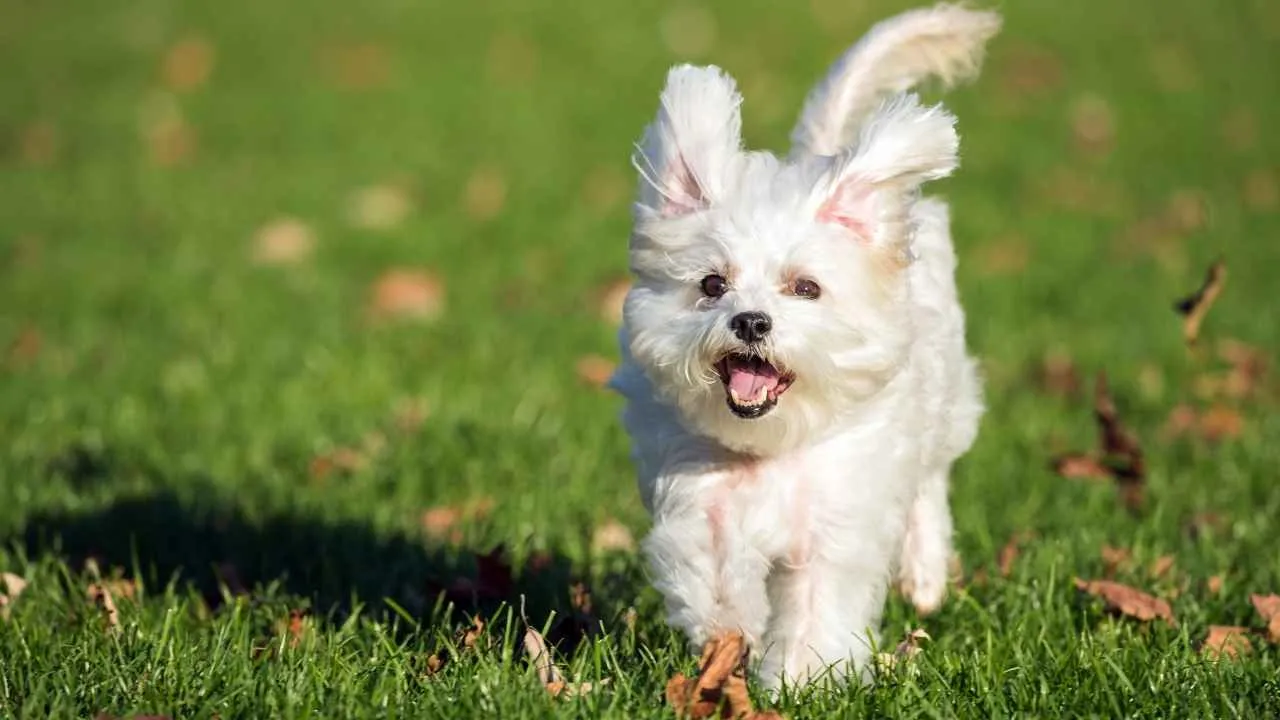
Maltese are small dogs with big personalities. They are playful, affectionate, and love being close to their humans. Known for their long, silky white coats, Maltese have a charming and elegant appearance.
Despite their delicate look, they are hardy, alert, and surprisingly athletic. These dogs can be excellent watchdogs, therapy pets, and participants in dog sports like agility or obedience.
Personality and Behavior
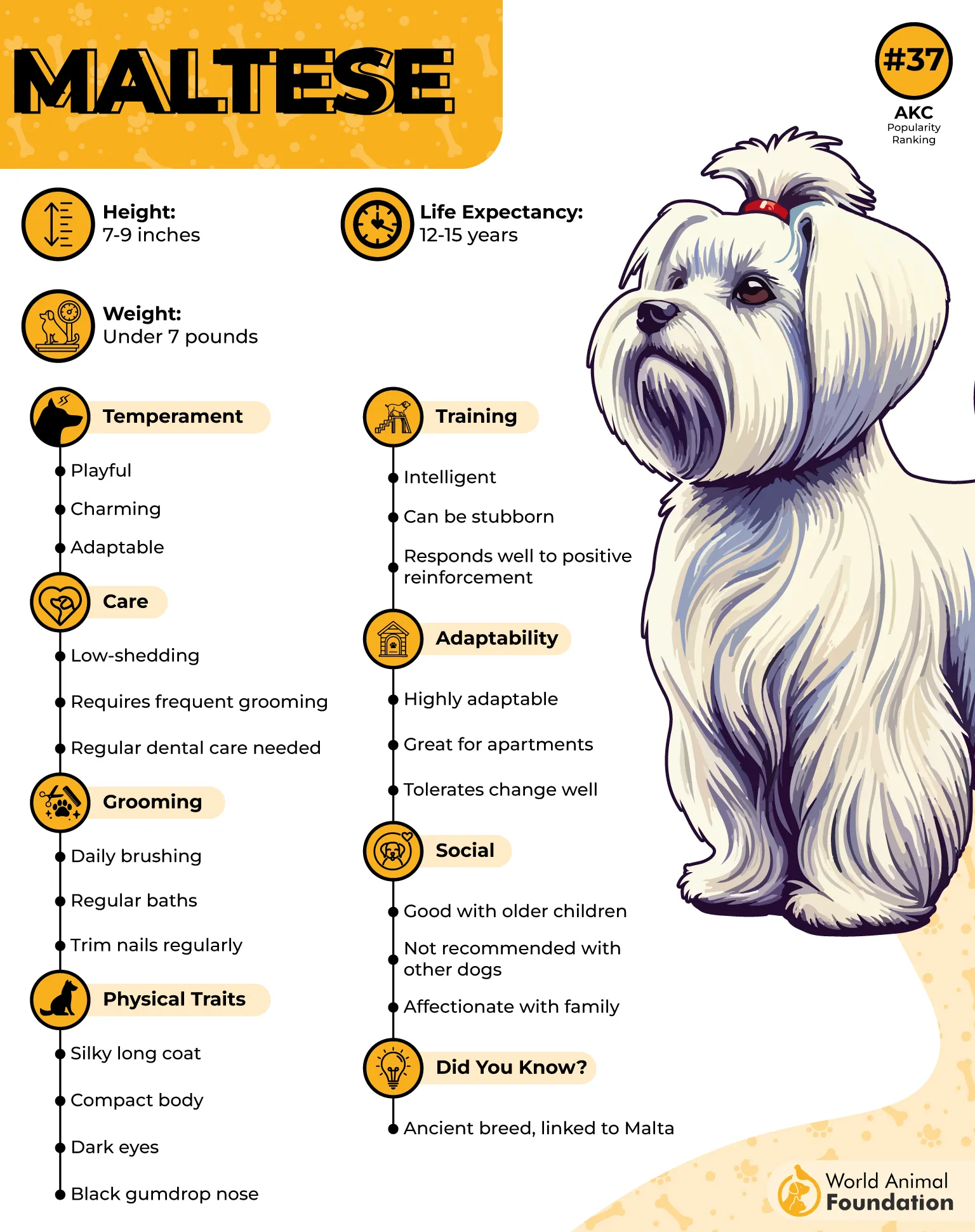
Maltese are intelligent and social. They bond closely with their families and enjoy attention and cuddles, making excellent family dogs. Early socialization and consistent training help prevent stubbornness and undesirable behaviors.
WebMD states that Malteses are energetic but don’t need extensive exercise. Short walks, indoor play, or time in a fenced yard are usually enough to keep them happy. They are curious and playful, but supervision is recommended around very young or rambunctious children.
Care and Health
Malteses require daily grooming to keep their long coats smooth and tangle-free. Regular baths, coat conditioning, nail trims, and ear checks are essential. Teeth should also be brushed frequently to prevent dental issues.
While generally healthy, Maltese can be prone to hereditary conditions like patellar luxation, white dog shaker syndrome, heart or liver issues, ear infections, and dental problems. Key care tips include:
Brush daily to prevent mats and tangles.
Provide moderate exercise indoors or outdoors.
Clean ears and trim nails regularly.
Brush teeth frequently to maintain dental health.
Supervise interactions with young children and larger pets.
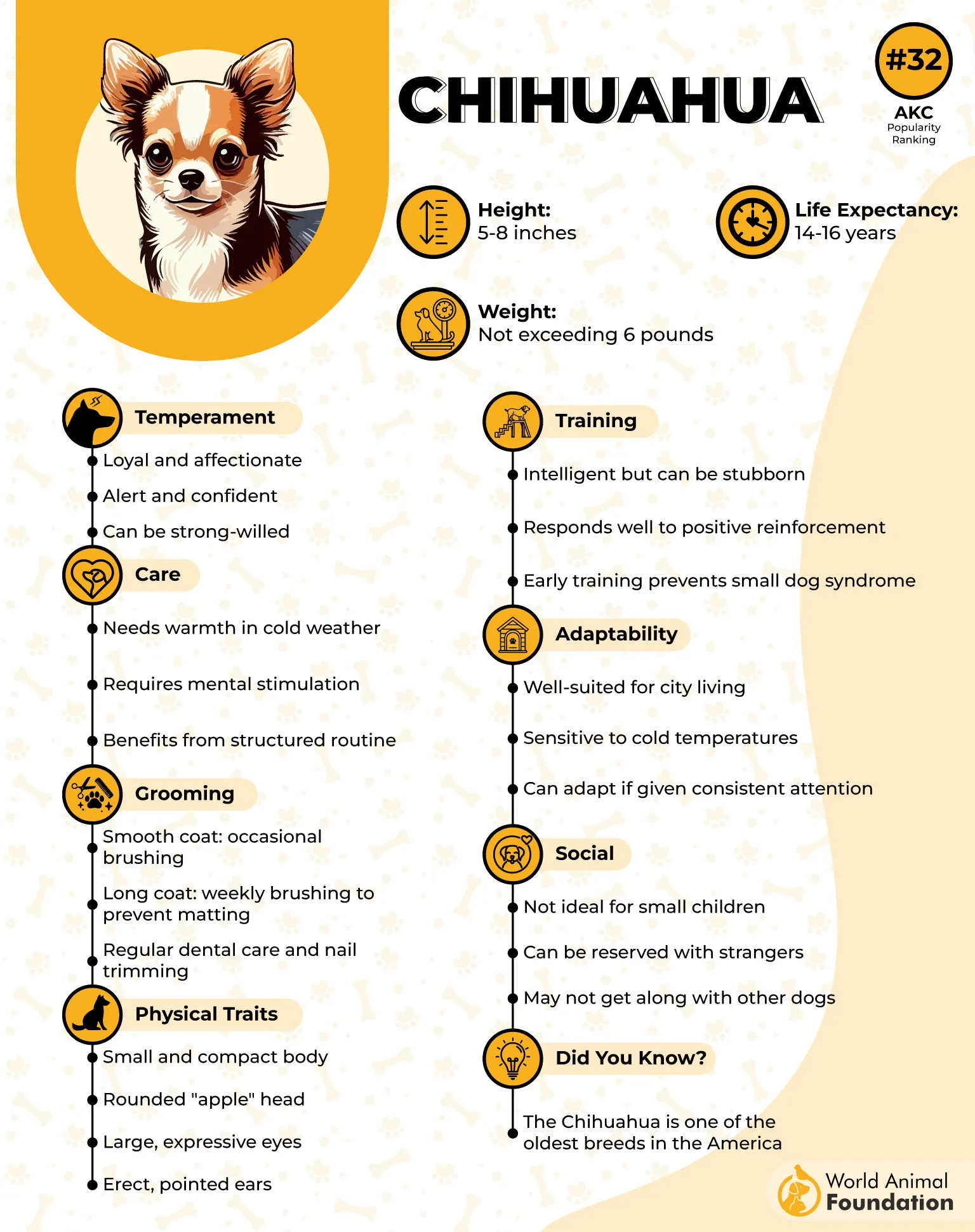
4. Chihuahua
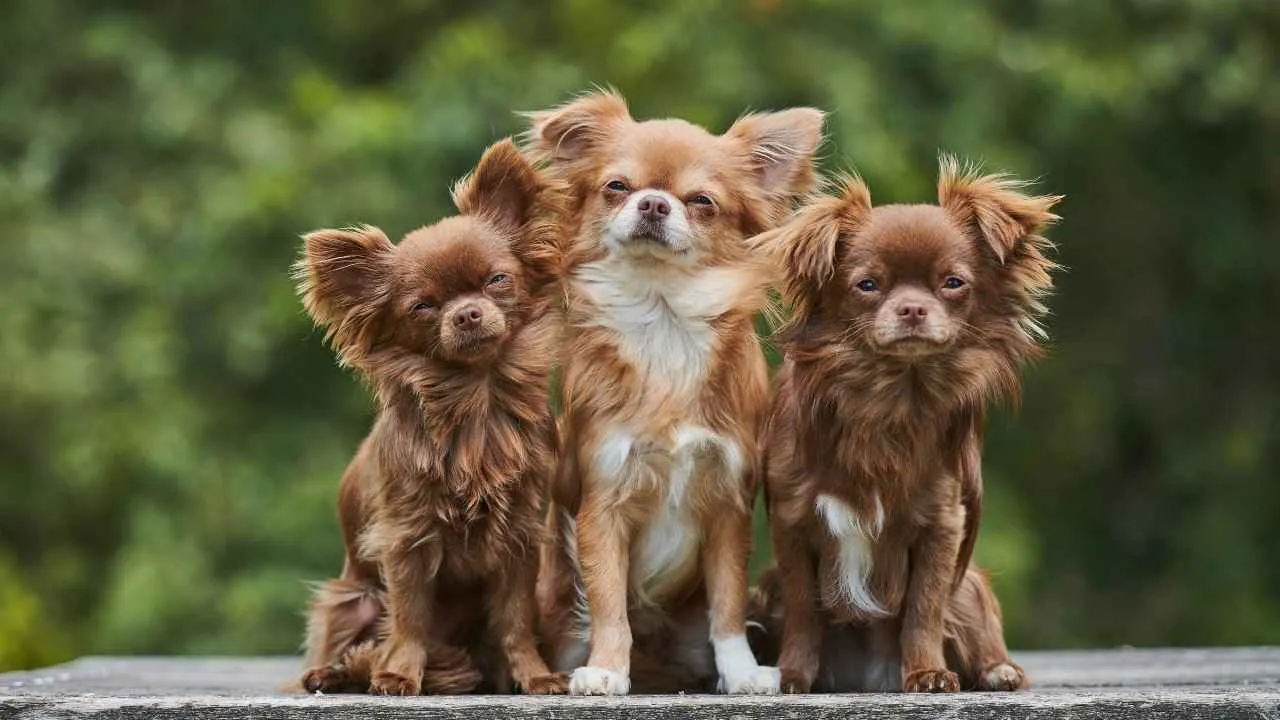
Chihuahuas are small dogs with huge personalities. They are lively, alert, and loyal, often acting like much bigger dogs. These little companions are playful, affectionate, and love being close to their humans.
With expressive eyes and erect ears, Chihuahuas charm everyone they meet. They adapt well to city life and enjoy being lap dogs, but need gentle care in cold weather and around young children.
Personality and Behavior
Chihuahuas are smart and eager to please, but they can be strong-willed. Early training and socialization are essential to prevent stubbornness or overconfidence. They enjoy playtime, short walks, and indoor games to burn off energy.
Chihuahuas may bark at strangers or other dogs, but consistent positive reinforcement helps manage this behavior. Long-haired Chihuahuas tend to be gentler, while short-haired types are often more energetic and confident.
Care and Health
Chihuahuas require regular grooming, especially long-haired varieties. Nails should be trimmed, ears checked, and teeth brushed frequently. Short walks or indoor play provide sufficient exercise, and a warm sweater helps them stay comfortable in cold weather.
While generally healthy, Chihuahuas may face dental issues, kneecap problems, and low blood sugar in puppies. Key care tips include:
Brush long coats weekly to prevent tangles.
Trim nails and check ears regularly.
Provide short walks and indoor play for exercise.
Brush teeth frequently to prevent dental issues.
Monitor interactions with young children and larger dogs.
5. Yorkshire Terrier
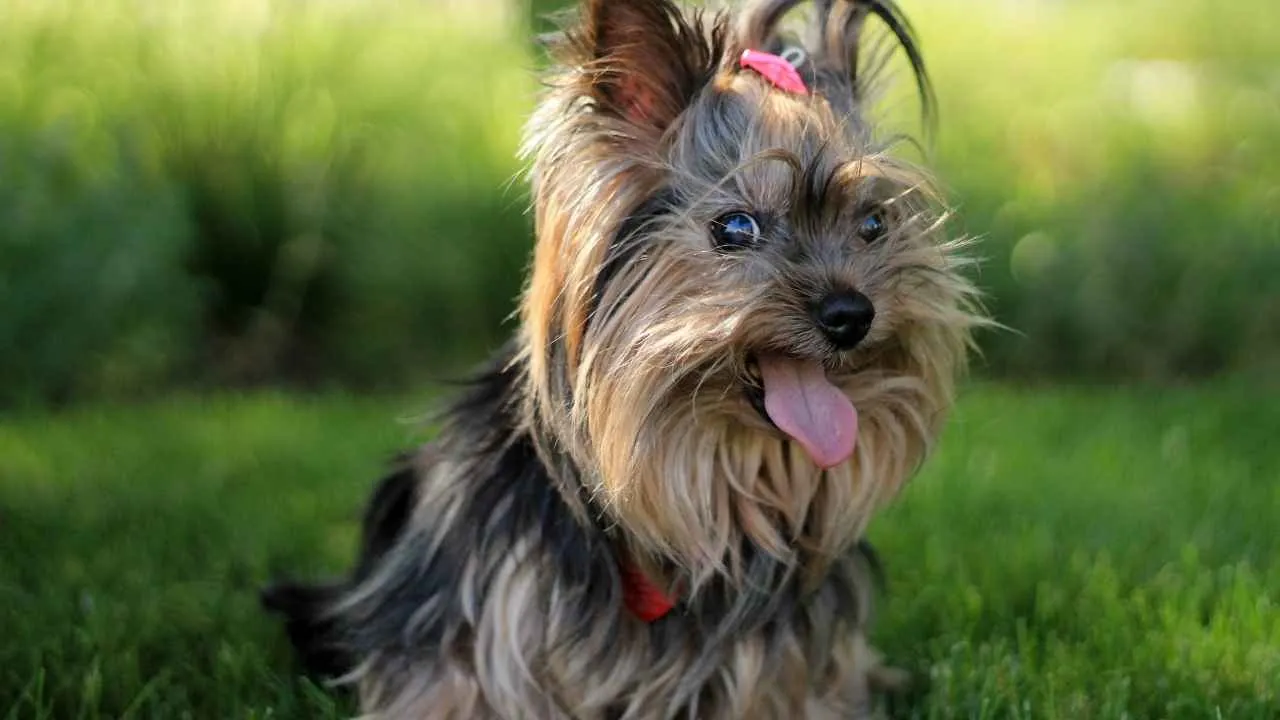
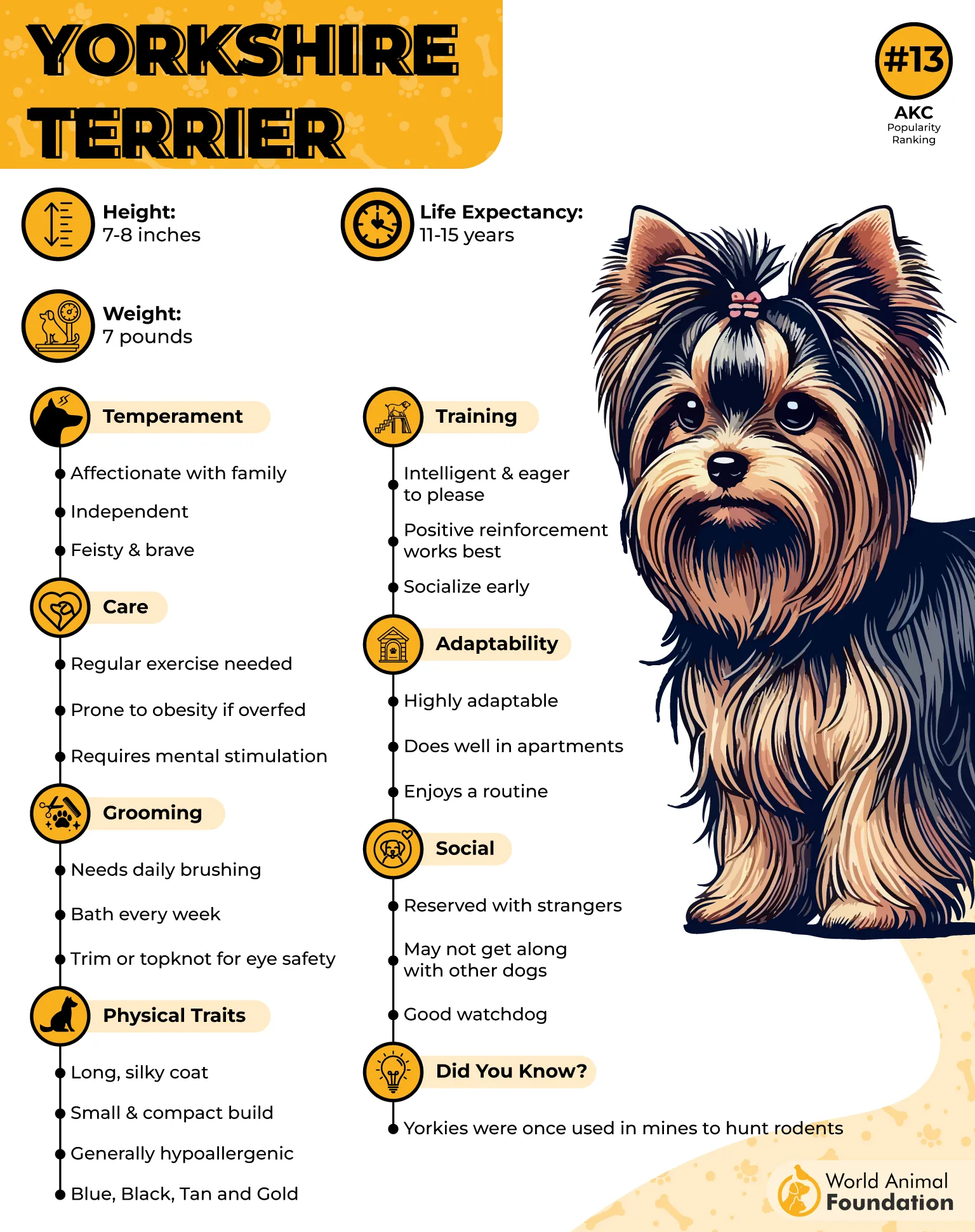
Yorkshire Terriers, or Yorkies, are tiny dogs with bold, feisty personalities. Once ratters in textile mills, these little terriers are now beloved lapdogs with steel-blue and golden coats. Yorkies have a playful, confident, and affectionate nature.
They have a big-town attitude packed into a small body, making them popular for cities and apartment living. Hypoallergenic and long-lived, they make excellent watchdogs and wonderful companions.
Personality and Behavior
Yorkies are intelligent, curious, and eager to please. Positive reinforcement and treats work best for training, while harsh corrections can backfire. Early socialization helps prevent excessive barking, bossiness, or shyness.
Yorkies enjoy indoor games, short walks, and dog sports like agility, rally, or obedience. They bond closely with their humans but may need supervision around very young children or larger dogs due to their small size.
Care and Health
Yorkies require daily grooming if their coat is long, including brushing, baths, and trimming around the eyes. Ears should be checked weekly, nails trimmed, and teeth brushed regularly. Moderate daily exercise and mental stimulation keep Yorkies happy and healthy.
They are generally healthy but may face issues like dental problems, joint concerns, or ear infections. Key care tips include:
Brush daily to maintain long coats and prevent mats.
Provide short walks and indoor play for exercise.
Trim nails, check ears, and brush teeth regularly.
Supervise interactions with young children and larger pets.
Offer mental stimulation through toys, puzzles, and short training sessions.
6. Havanese
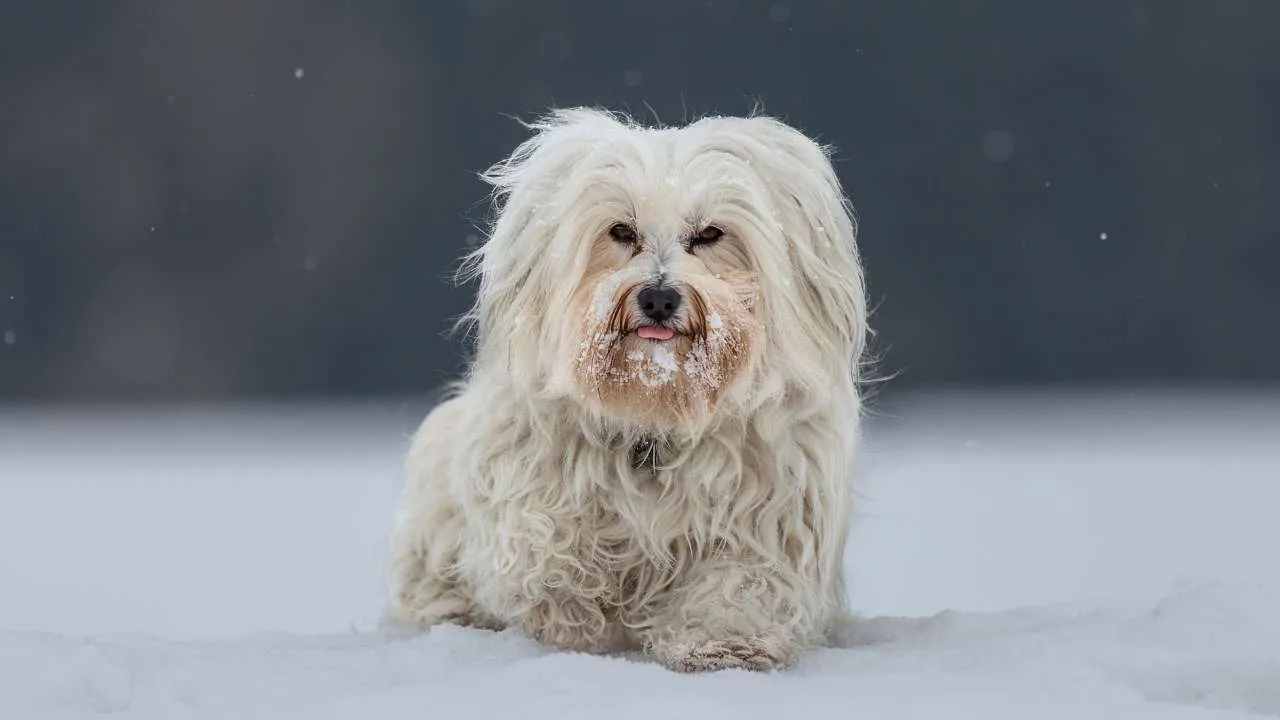
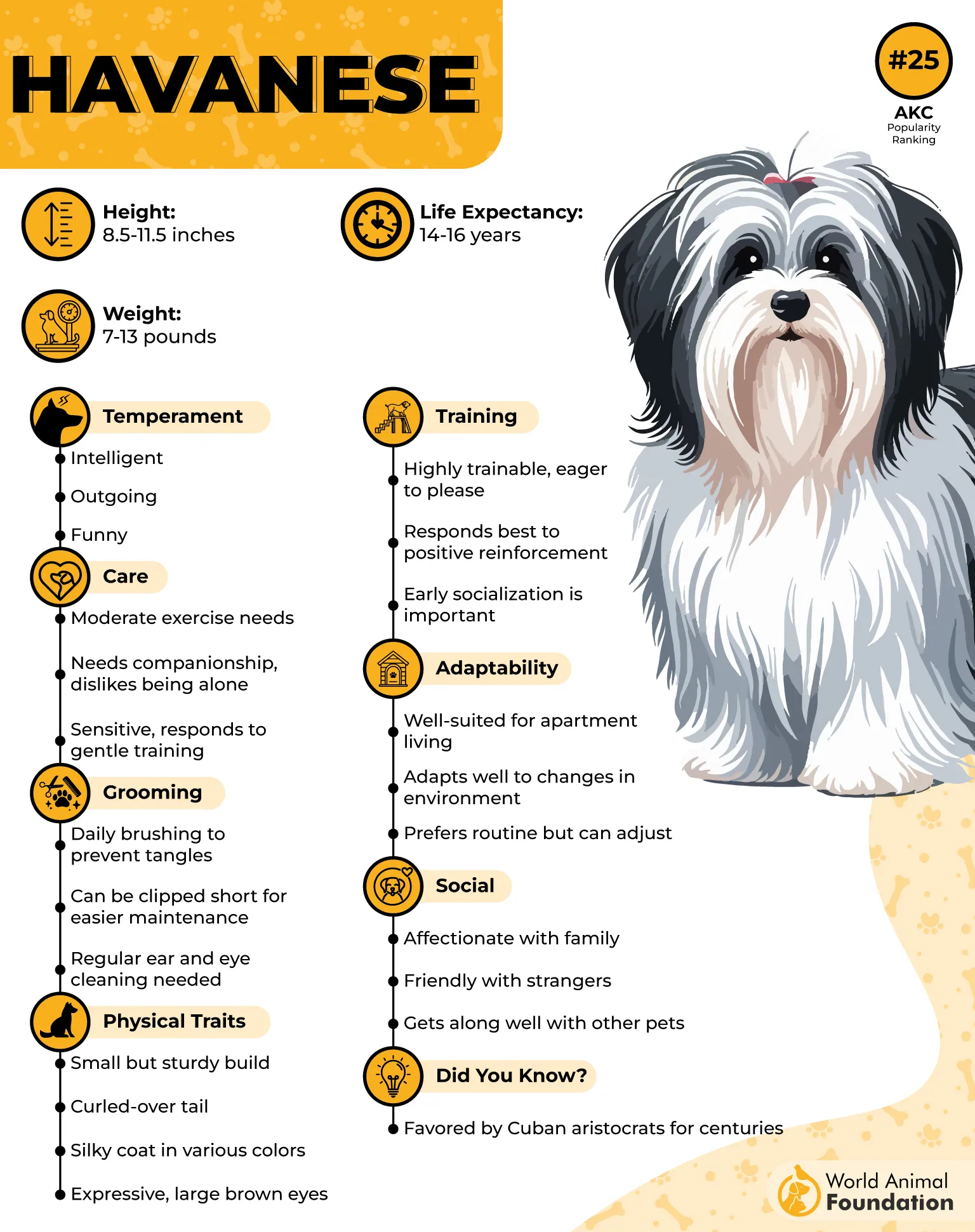
Havanese are lively, affectionate dogs with bright, expressive eyes and silky coats. Native to Cuba, they are small but sturdy, with playful personalities and a love for human attention.
Havanese are intelligent, social, and eager to please, making them excellent companions for families, singles, or city dwellers. They are natural tricksters with a sense of humor and can be good watchdogs while keeping barking to a minimum.
Personality and Behavior
Havanese are outgoing and friendly, enjoying interaction with humans and other nonaggressive pets. Early socialization helps them stay confident and well-mannered. They do not like being left alone for long periods and can develop separation anxiety without human companionship.
Gentle, consistent training with positive reinforcement works best. Havanese enjoy games, learning tricks, and playful indoor or outdoor activities.
Care and Health
Havanese have long, soft coats that need daily brushing to prevent mats and tangles. Many owners choose a short trim to simplify grooming. Nails should be trimmed, ears checked, and eyes cleaned regularly. Moderate daily exercise, such as short walks or playtime, keeps them happy and healthy.
Generally healthy, Havanese can live 14–16 years but may be prone to minor medical issues. Key care tips include:
Brush daily or opt for a short trim to reduce grooming.
Provide 30 minutes of daily exercise or indoor play.
Clean ears, eyes, and trim nails regularly.
Socialize early to prevent timidity or separation anxiety.
Use positive reinforcement for training and mental stimulation.
7. Pug
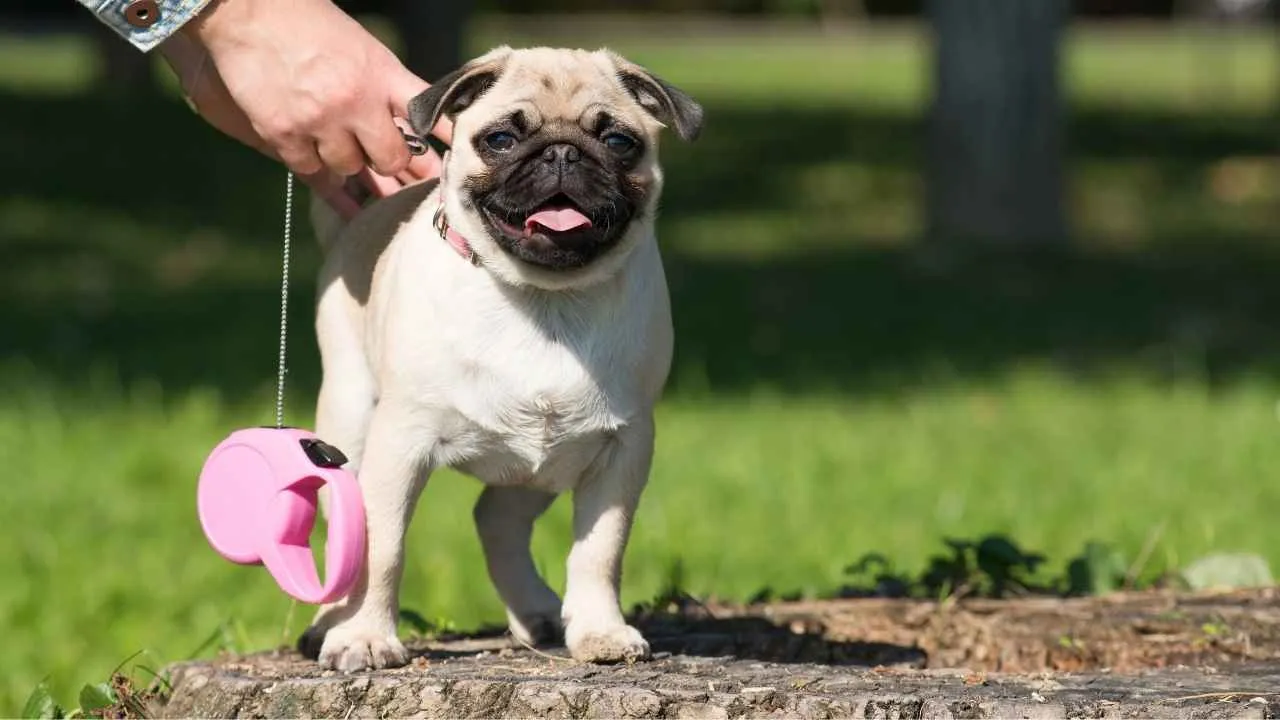
Pugs are small dogs with big hearts and cheerful personalities. They have a social, gentle nature and love being near their humans. Known for their wrinkled faces, sparkling eyes, and curled tails, Pugs express a range of amusing, human-like emotions.
These lively little dogs adapt well to city or country life and get along with children and other pets when properly socialized and supervised.
Personality and Behavior
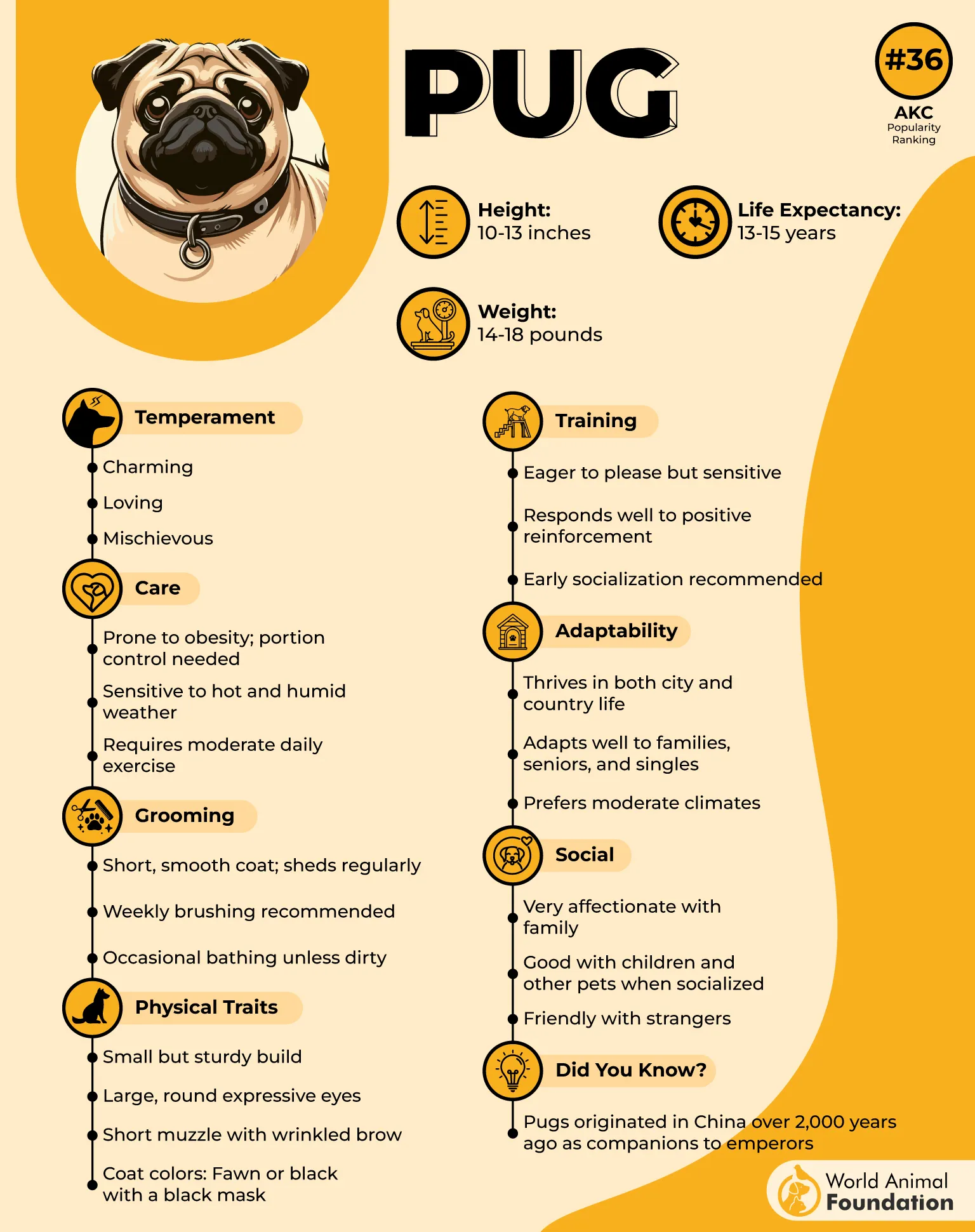
Pugs are intelligent, eager to please, and friendly. They respond best to gentle, positive training and early socialization. These dogs enjoy indoor play, short walks, and interactive games. PDSA says that Pugs can be prone to separation anxiety if left alone too long.
While playful, they are not high-energy athletes and prefer moderate daily exercise. They can also snore or snort due to their flat faces, so hot weather and strenuous activity should be avoided.
Care and Health
Pugs have short, smooth coats that shed moderately and need weekly brushing. Skin folds should be cleaned regularly to prevent irritation, nails trimmed, and teeth brushed often. Moderate daily exercise keeps them fit, and their diet should be monitored to prevent obesity.
Pugs are generally healthy but may be prone to breathing issues, joint concerns, or eye problems. Key care tips include:
Minimal grooming needs; only weekly brushing to manage shedding.
Clean skin folds, trim nails, and brush teeth regularly.
Provide moderate daily walks and indoor play.
Avoid hot weather and strenuous activity due to their short muzzles.
Use gentle, positive training methods to encourage good behavior.
Conclusion
Choosing the right pocket dog is about more than size—it’s about personality, care needs, and how a dog fits into your life. From energetic tricksters to calm lap companions, these small dog breeds each bring their own charm, loyalty, and joy.
Understanding their exercise, grooming, and social requirements ensures a happy, healthy relationship for both you and your new companion. No matter which breed steals your heart, the most important step is to spend time with them, learn their quirks, and prepare your home for their needs.
These small breed dogs may be tiny, but they give back endless love, laughter, and companionship—reminding us that sometimes the biggest joy comes in the smallest packages.
