




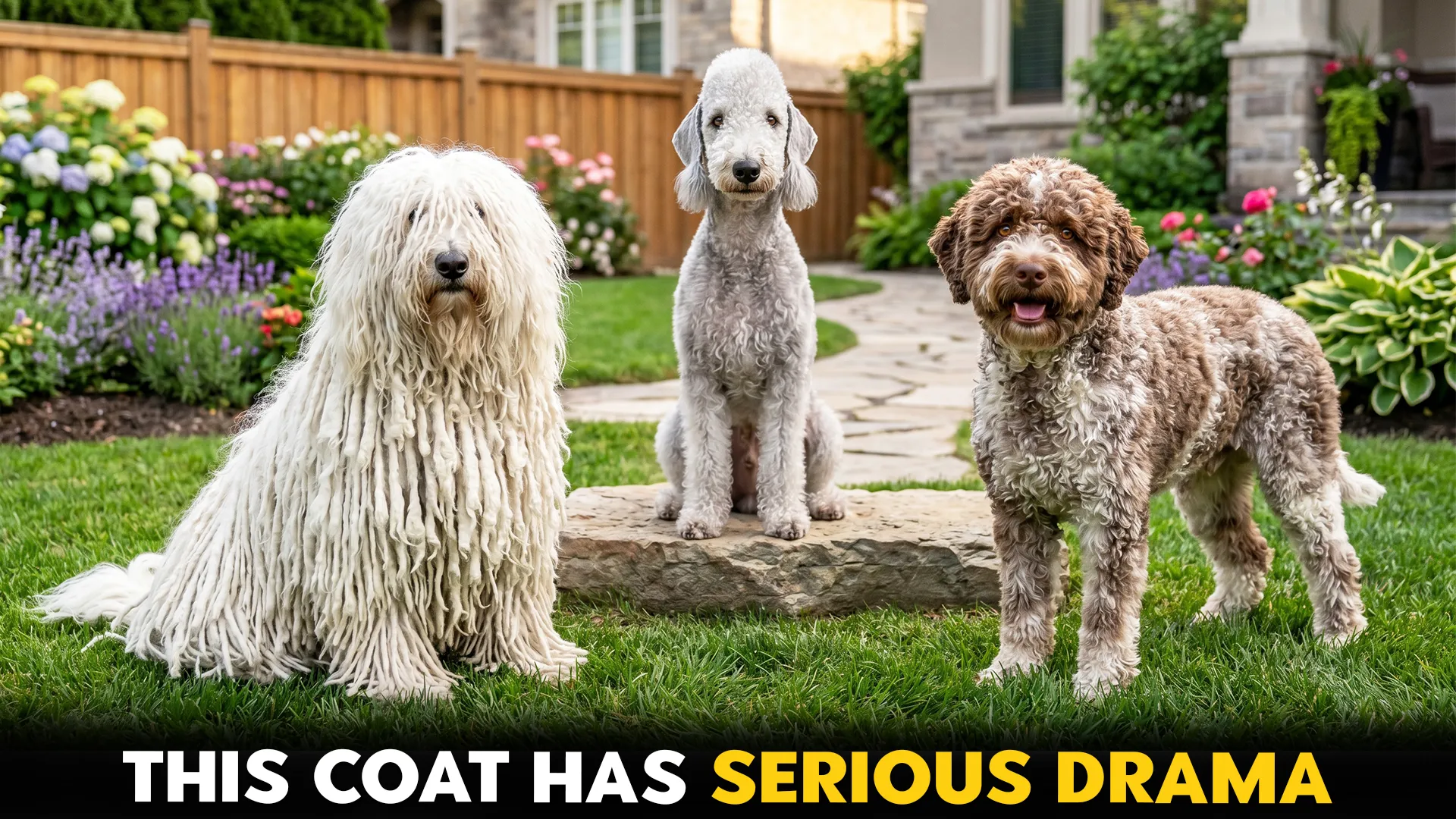
Some dogs stand out because of their size. Others because of their personality. But then there are the dogs whose coats look so unusual that people literally stop mid-walk to ask, “Wait… what breed IS that?”
From dreadlock-style cords to sheep-like curls and waterproof ringlets, certain breeds evolved coats that are way more than just a matter of aesthetics. These textures were built for survival, protection, camouflage, and hard work in brutal environments long before social media turned them into viral dog celebrities.
And honestly? These dogs look like they came from a fantasy RPG character creator.
Below are some of the most fascinating dog breeds with truly unique coat textures—plus deeper insights into how those coats actually function in real life, what grooming is really like, and why owners become obsessed with them.
Amazing Dog Breeds Sporting Unique Coat Textures
1. Bedlington Terrier
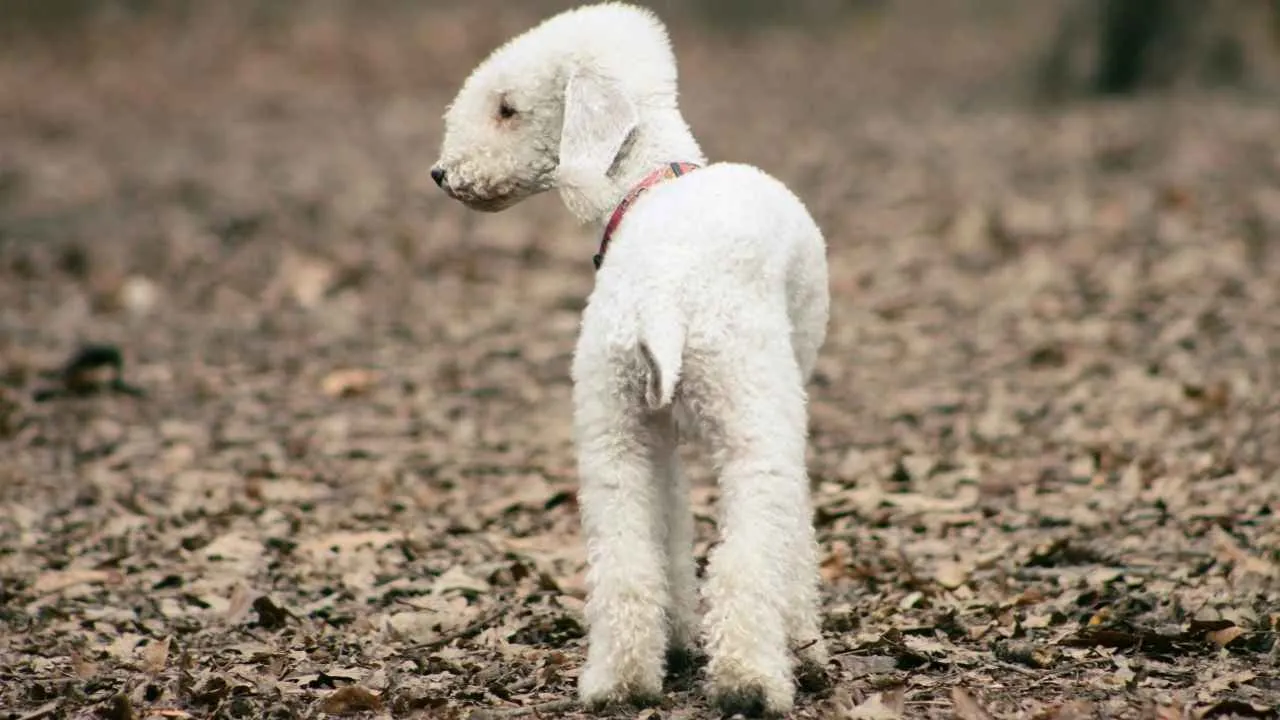
The Bedlington Terrier is one of the most visually confusing dogs on Earth. At first glance, most people assume it’s either a sheep, a designer doodle, or AI-generated.
Its arched back, narrow head, tassel ears, and woolly coat create one of the most distinctive silhouettes in the dog world.
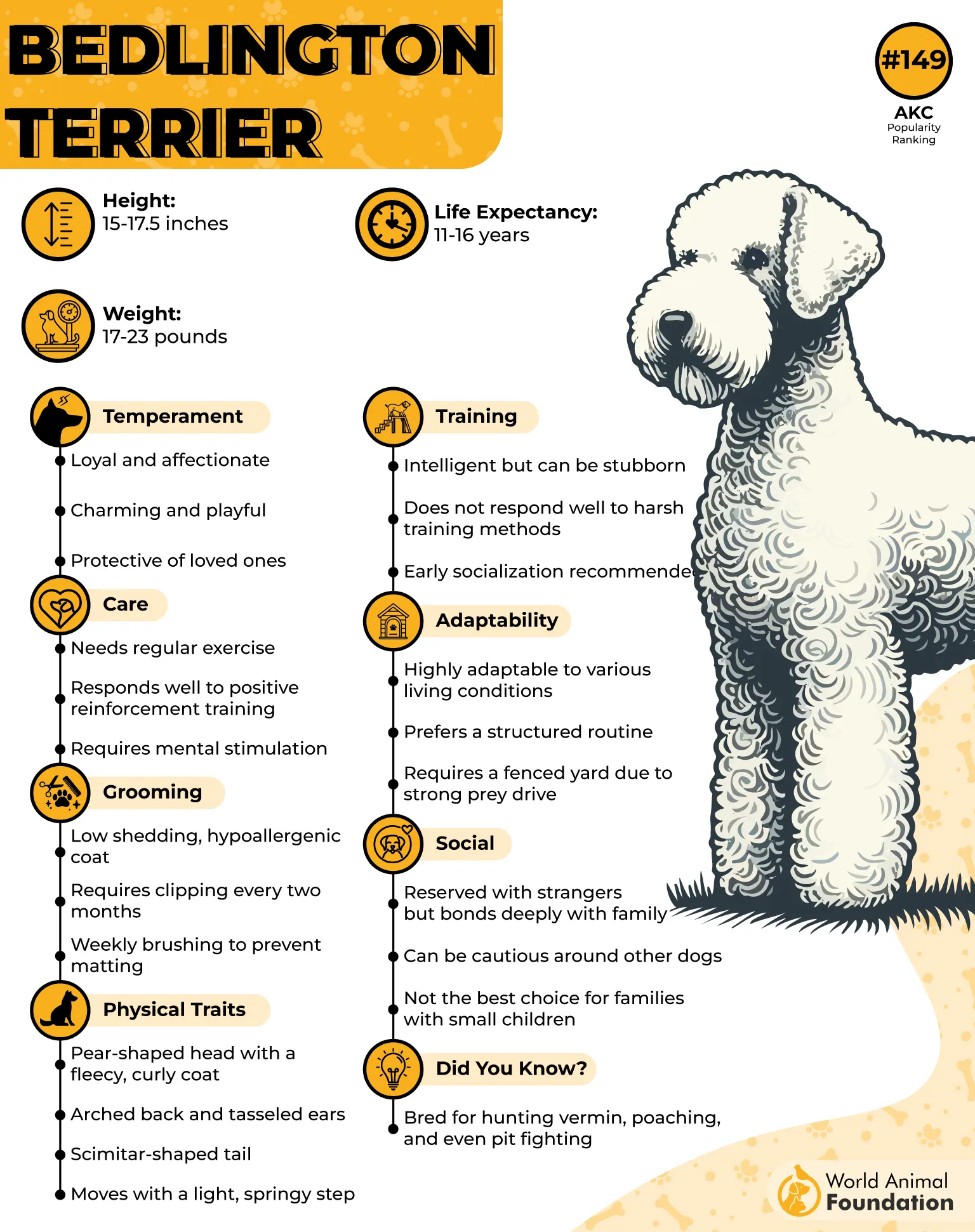
Unlike many curly-coated dogs, these medium-sized dogs have a mix of soft, linty hair and crisp, wiry hair. That combo creates their famous “crisp but fluffy” texture. The coat bends and twists naturally instead of lying flat. The result feels almost like cotton mixed with velvet.
These hypoallergenic, medium-sized dogs are often recommended for allergy sufferers because they shed minimally. According to VCA Hospitals, terriers with continuously growing hair tend to release less loose dander into the environment.
But there’s a catch: Their coat mats VERY easily without maintenance. Most owners brush multiple times weekly and schedule professional trims every 6–8 weeks.
Many first-time owners expect a delicate lapdog. Instead, Bedlingtons can suddenly activate “track star mode” outside. Historically, they were fast hunting terriers capable of chasing vermin and racing competitively.
Puppy coats are often darker and soften with age. Liver and sandy shades can fade dramatically over time.
2. Irish Water Spaniel
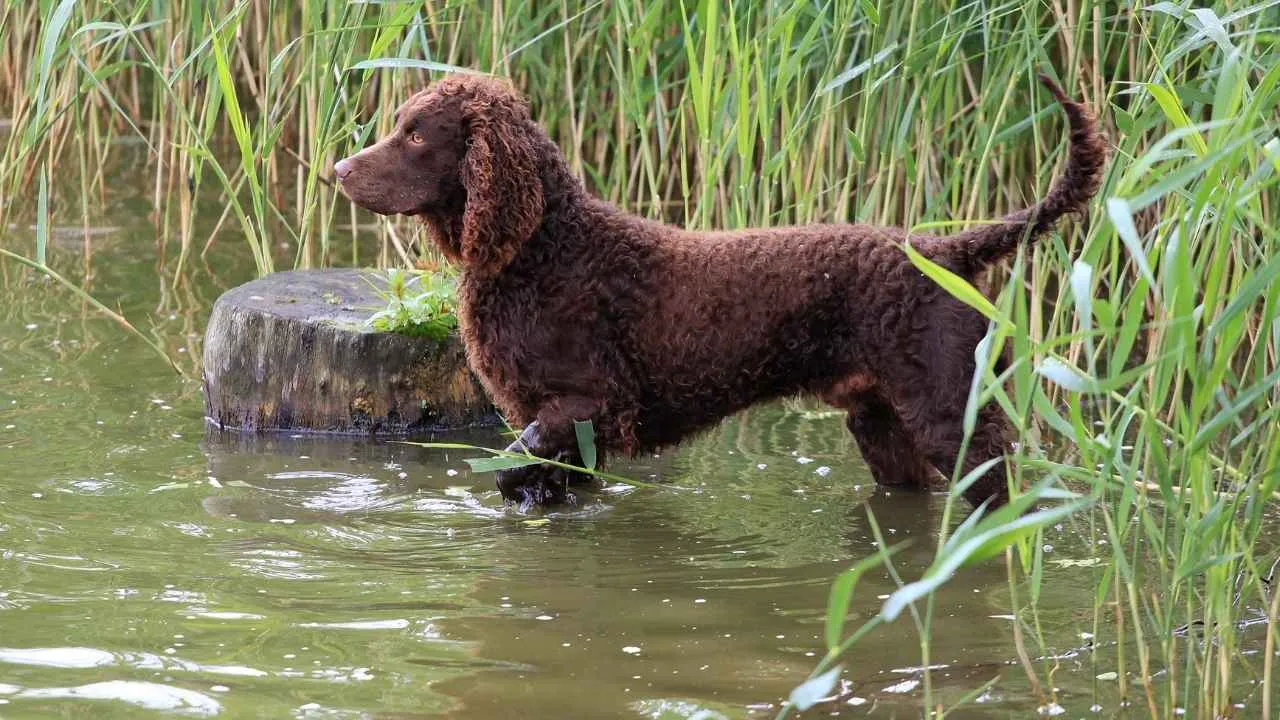
The Irish Water Spaniel is an absolute looker!
The American Kennel Club, AKC, says their dense, liver-colored curls and famous “rat tail” make them instantly recognizable.
This coat wasn’t bred for fashion. It was engineered for survival in icy wetlands.
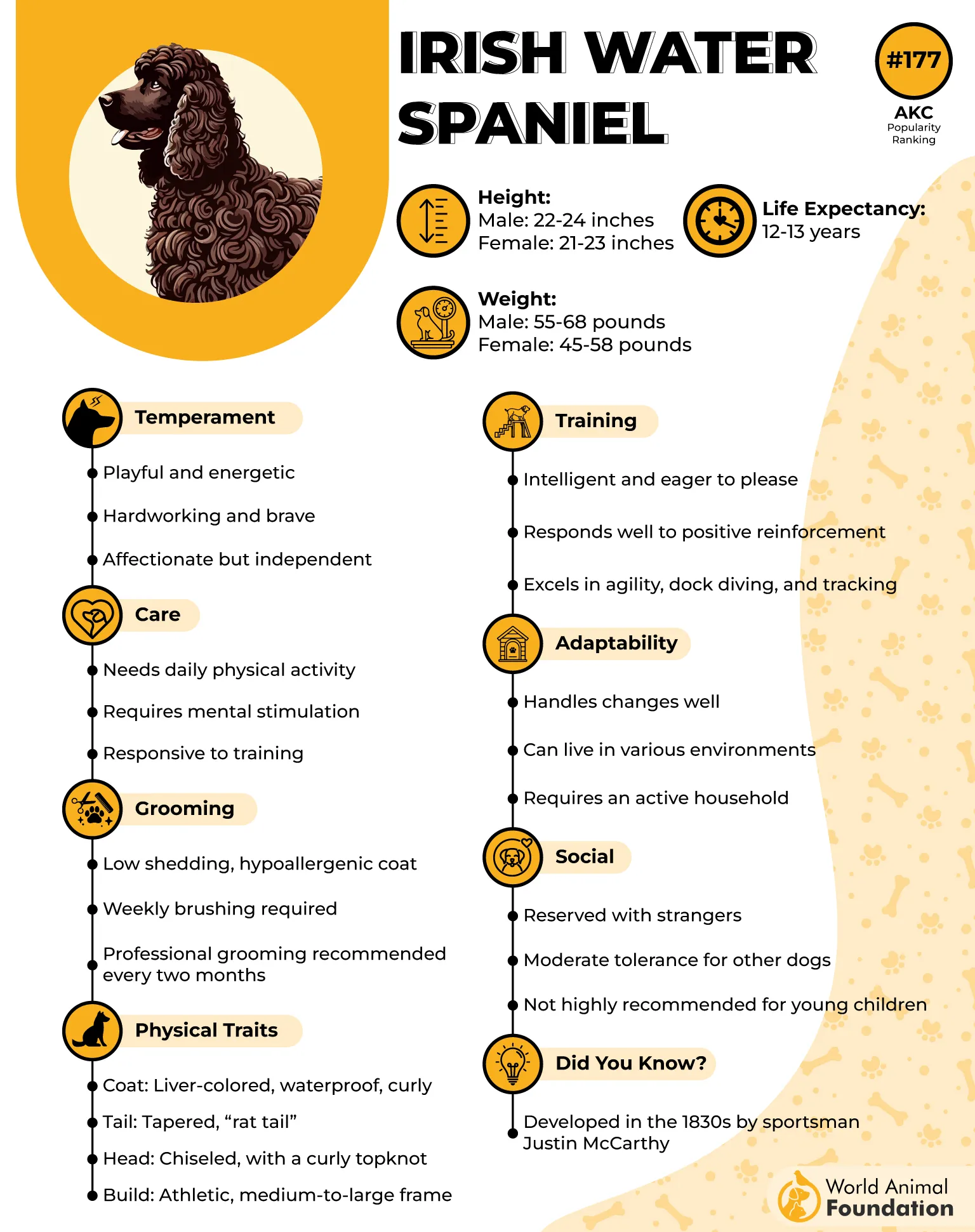
The dense oily curls repel water, trap warmth, and protect against cold Irish weather. Their coat acts almost like a natural wetsuit.
Despite their incredible intelligence, Irish Water Spaniels remain uncommon. IWSCA data consistently places them among the rarer sporting breeds in North America. That rarity means many groomers aren’t experienced with their coat type. Also, they rarely have any health issues!
Owners often say the coat changes dramatically depending on humidity. Dry weather leads to tighter curls, while wet weather leads to full “chaotic wizard” mode.
These Spaniels are highly intelligent but emotionally sensitive. They bond strongly with humans and can showcase separation anxiety if left alone too long.
3. Lagotto Romagnolo
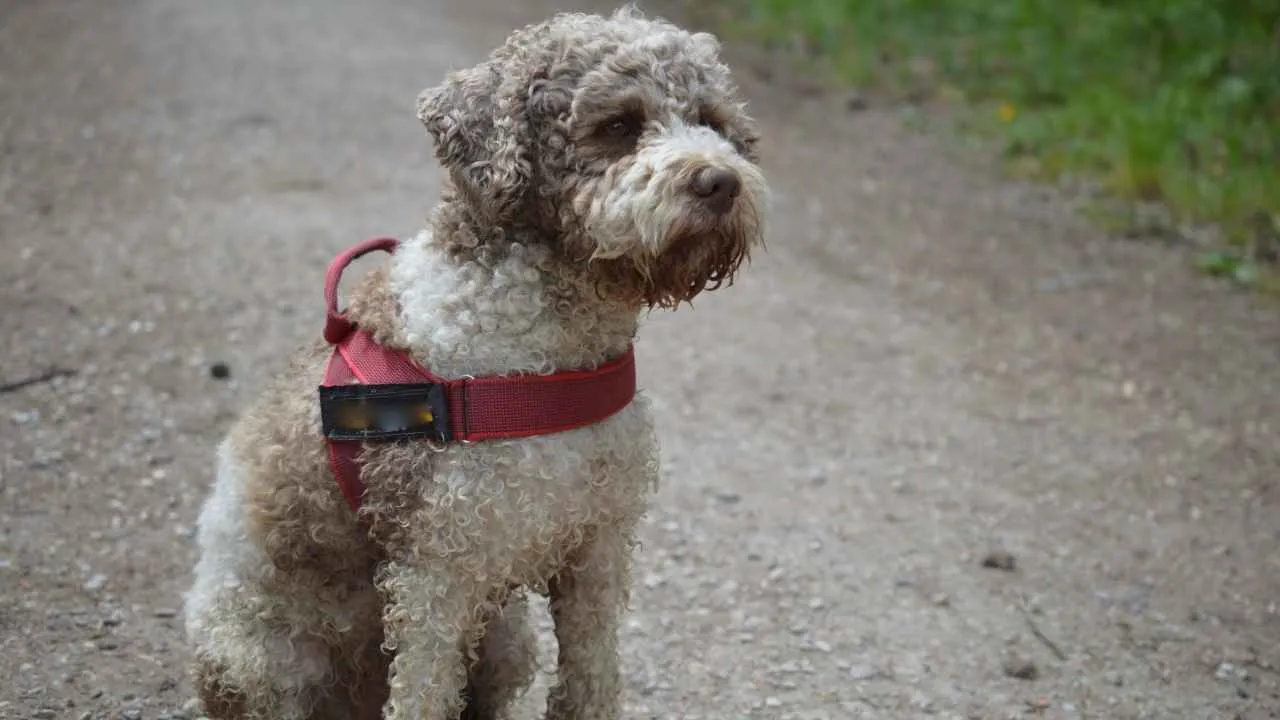
The Lagotto Romagnolo has one of the most touchable coats in the canine world. Their tight rustic curls feel somewhere between sheep wool and a fleece blanket.
These dogs were originally bred in Italy for truffle hunting, using their noses to locate underground fungi worth serious money. Yes, this fluffy dog literally hunts luxury mushrooms.
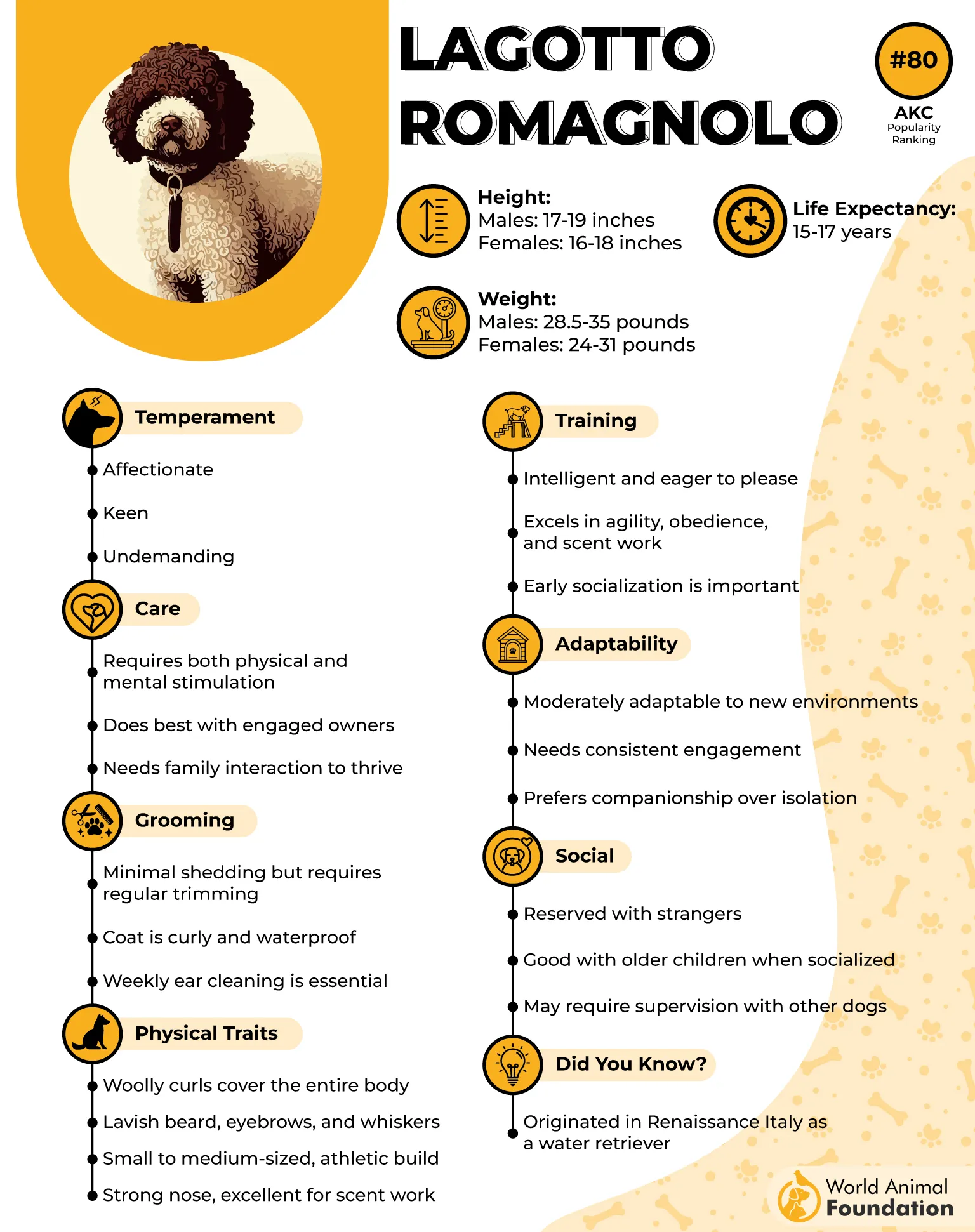
Lagotto’s curls are intentionally rustic. The dense curls protect against thorny terrain, wet marshes, and cold weather. The coat naturally repels dirt surprisingly well.
Lagottos shed very little, but loose hairs get trapped inside the curls instead of falling away. Without brushing, mats form fast. Most owners trim the coat every few months to maintain texture and prevent painful tangles.
Many Lagottos dramatically fade with age. Brown puppies may slowly transform into silver-roan adults over several years. It’s basically the dog version of a slow Instagram filter transition. These dogs with a gentle nature bond intensely with their people and thrive on mental stimulation.
Without enough enrichment, they invent their own entertainment, which may include digging, stealing socks, or emotionally reorganizing your laundry.
4. Barbet
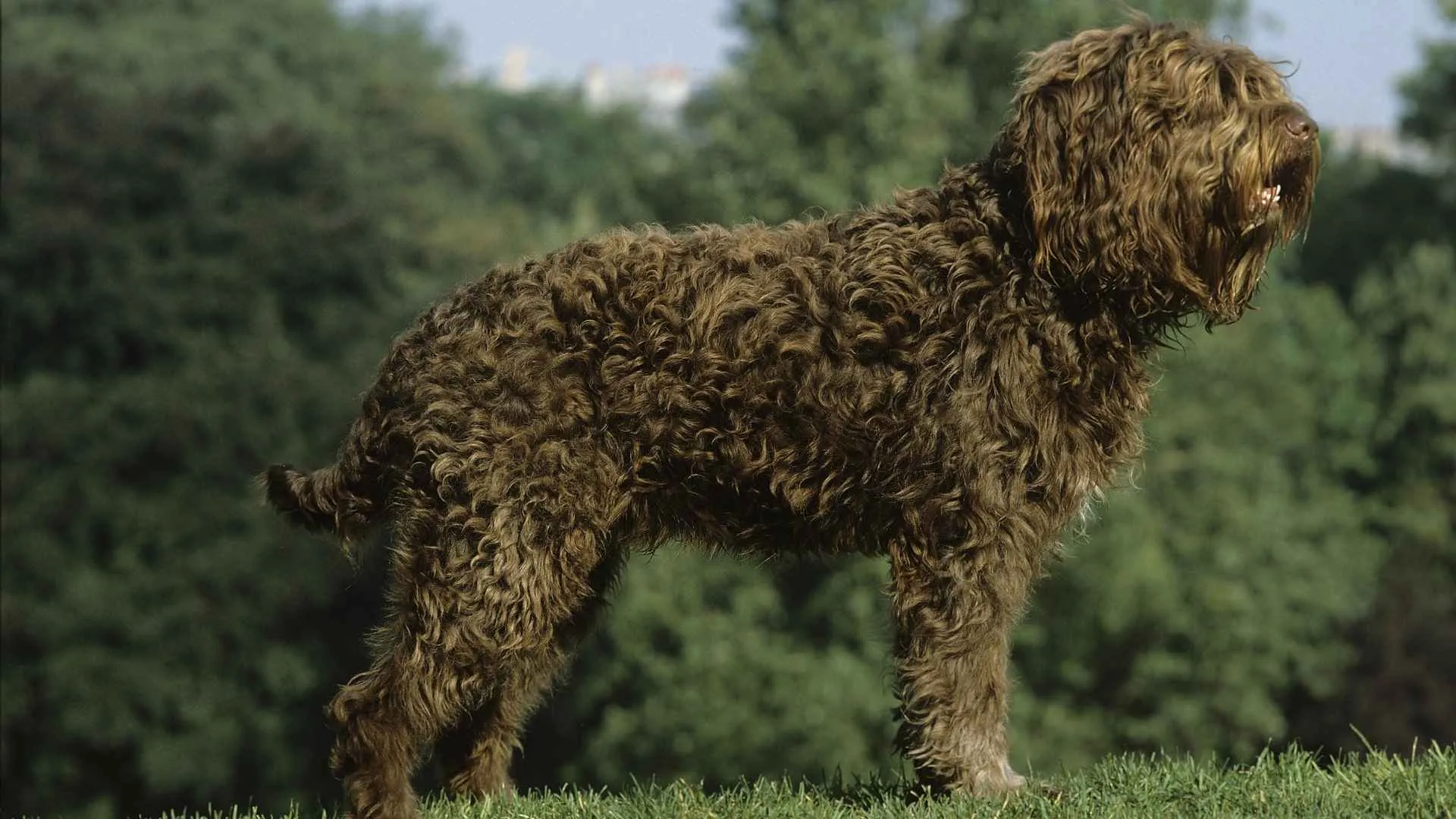
The Barbet is one of Europe’s oldest water dogs and possibly an ancestor of the Poodle. Its dense, curly coat and beard (“barbe” means “beard” in French) give it major fantasy-sidekick energy. This surprises many people.
This dog’s coat should NOT look overly polished or sculpted. Breed standards actually favor a more natural, rustic appearance.
Too-perfect grooming removes the breed’s authentic look. Their thick curls trap insulating air while repelling moisture. This allowed Barbets to retrieve birds from cold lakes for hours.
Essentially, they came with built-in thermal protection DLC.
Owners often say Barbets collect half the forest during walks. Leaves, twigs, grass, mystery particles? All welcome.
Daily inspection is important after hikes. Barbets are known for stable temperaments and adaptability. They tend to combine retriever friendliness, moderate energy, and emotional sensitivity. That balance makes them increasingly popular with active families.
5. Komondor
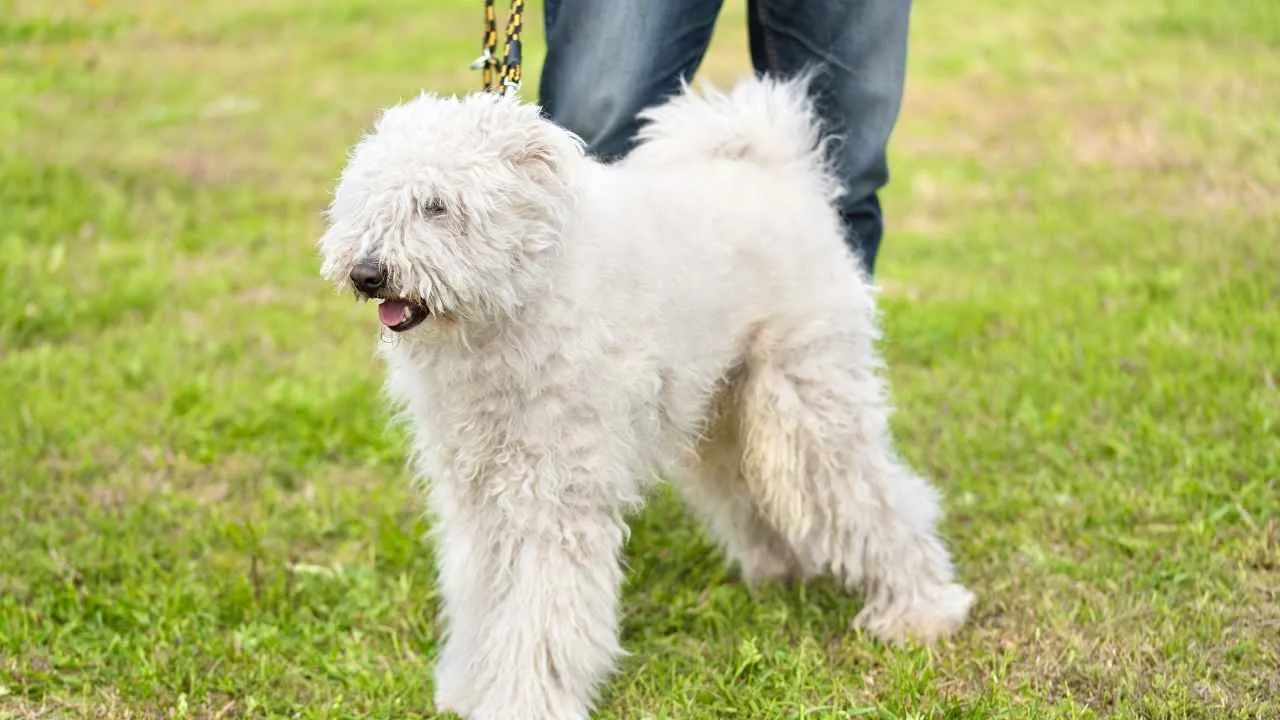
The Komondor looks less like a dog and more like an enchanted floor mop guarding ancient treasure.
Its massive corded coat naturally forms into heavy tassels resembling dreadlocks over time. And no—those cords don’t need daily brushing.
The Komondor’s coat evolved to blend into sheep flocks, insulate from harsh weather, and protect against predator bites.
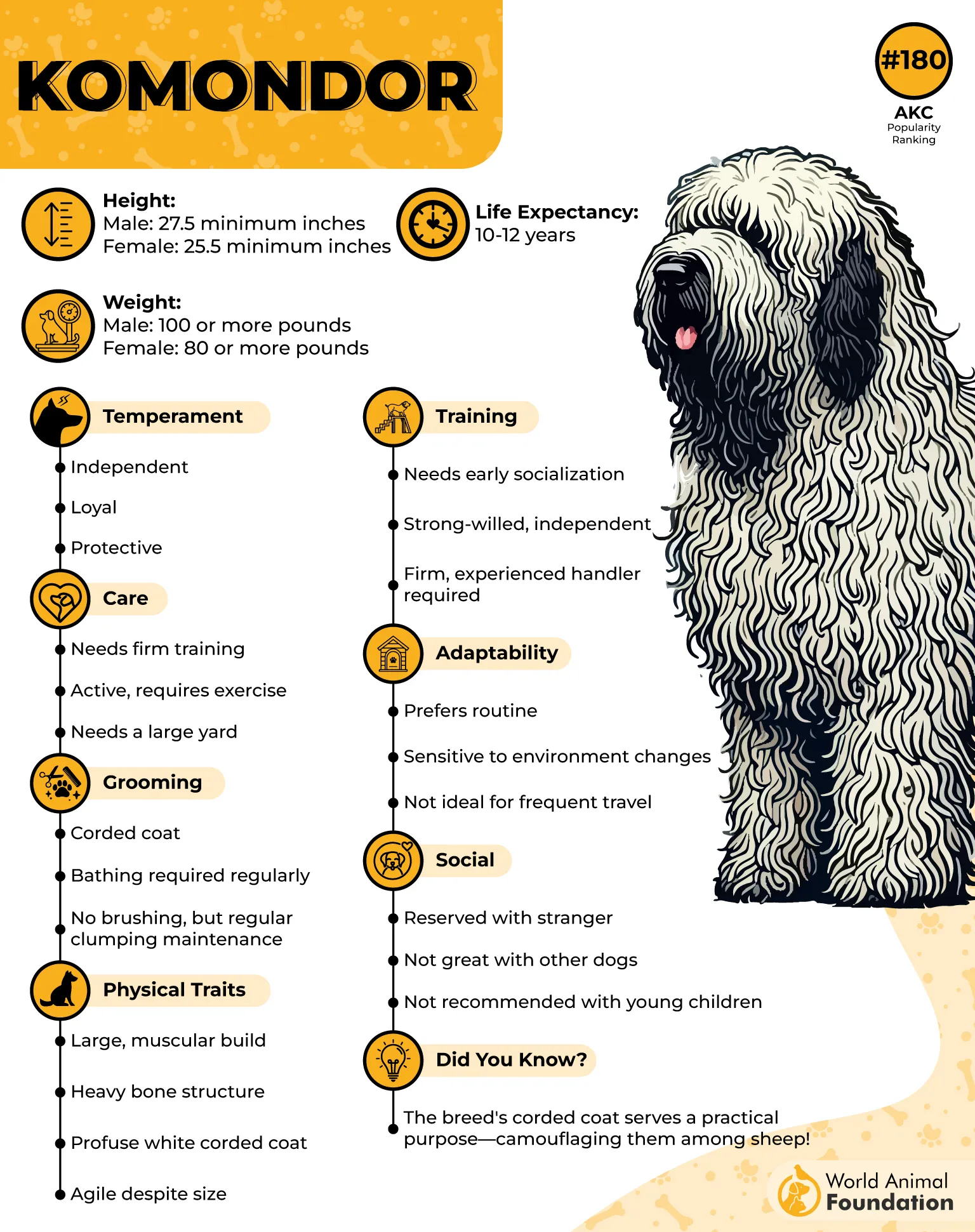
The cords absorb impact surprisingly well. This wasn’t fashion, but rather medieval livestock-defense technology. These long-haired puppies start fluffy and soft.
Around 8–12 months: The coat begins matting naturally. Full-length cords may take 5–6 years to develop completely. Instead of regular brushing, owners manually separate the cords. Bathing becomes a full-day event because drying can take many hours. Some owners literally use industrial fans.
They are calm but highly protective, as per PDSA. They are not casual social butterflies and need experienced handling.
6. Bergamasco Sheepdog
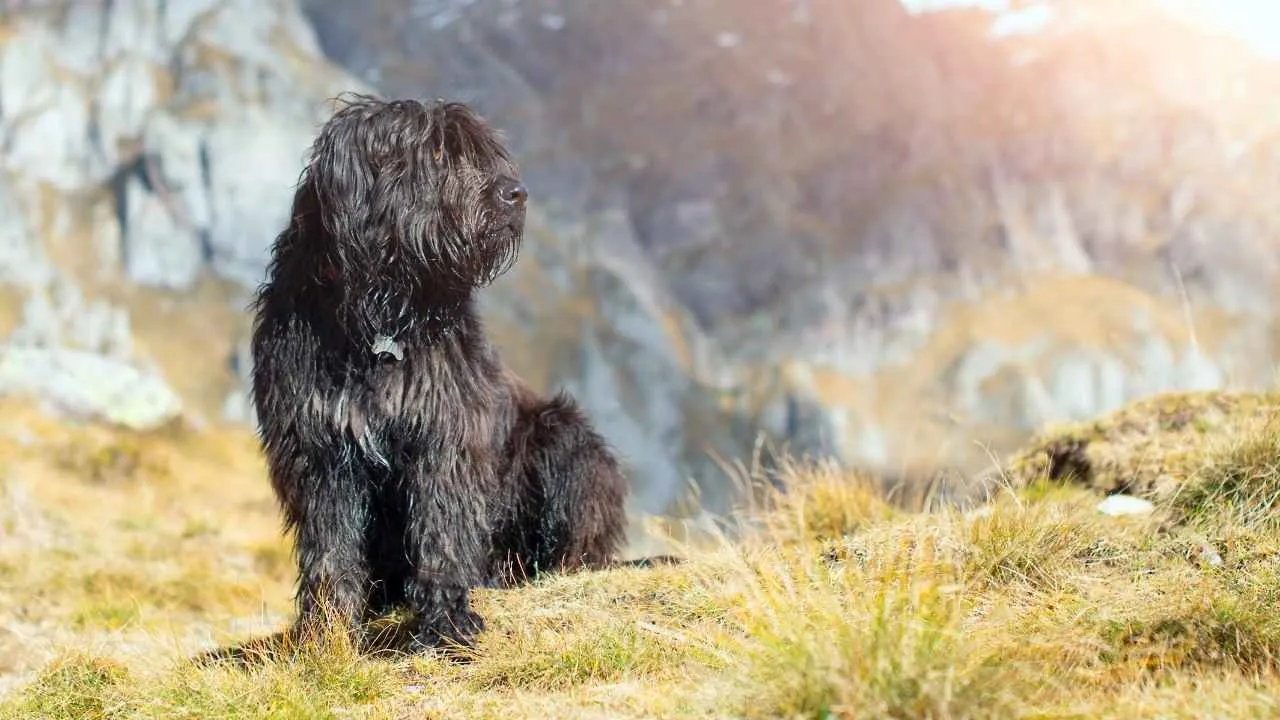
The Bergamasco Sheepdog has one of the strangest coats in the animal kingdom. It wears a patchwork-pattern coat. Its coat forms flat felted mats made from THREE hair types, including wool, goat hair, and outer “dog hair.”
That combination creates layered mats called “flocks.” The mats help to insulate in winter, cool in summer, and shield against sunburn and insect bites.
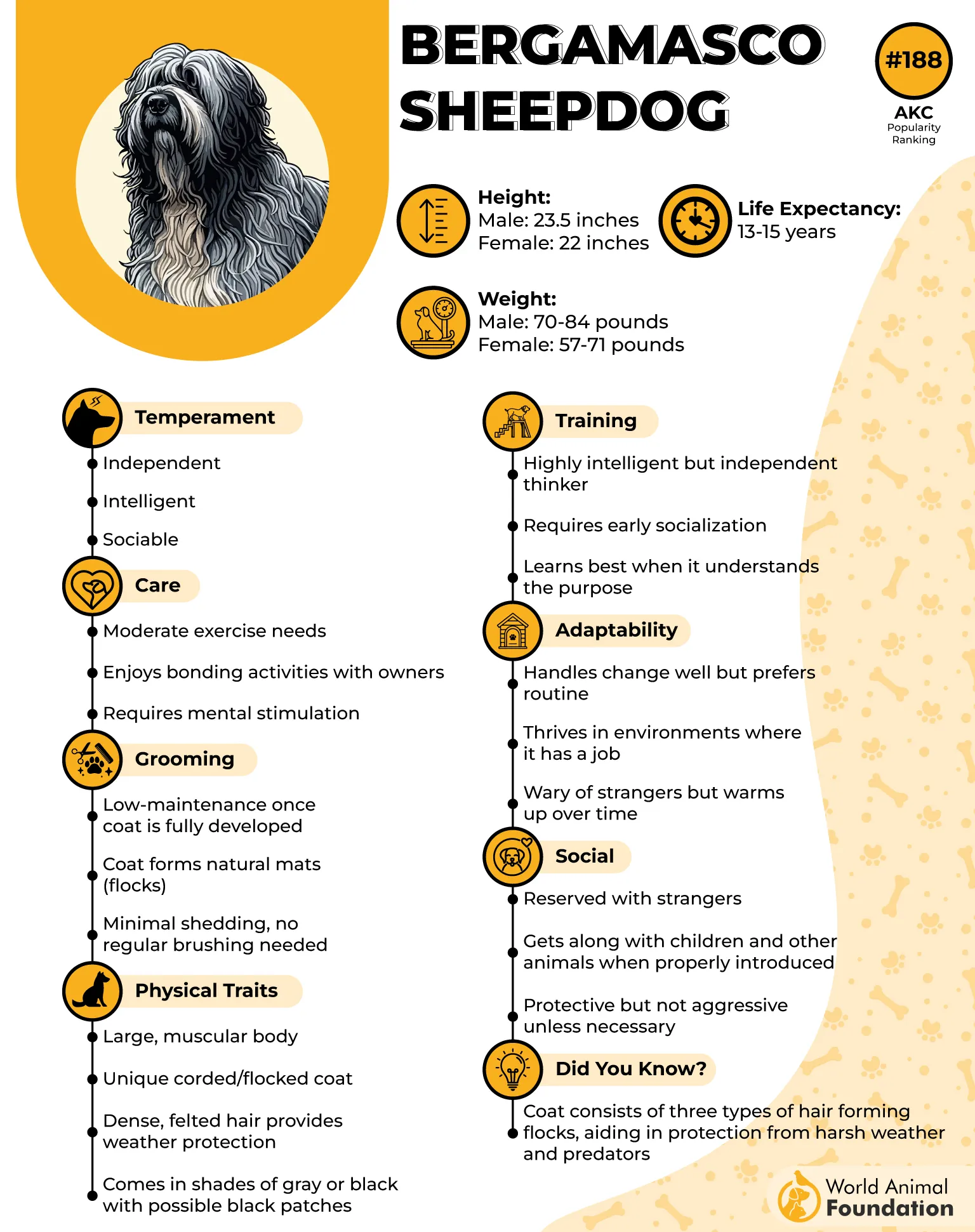
It’s basically multifunctional biological outerwear. The hardest stage occurs around age one, when owners manually separate the forming mats. After that? Maintenance drops dramatically.
Many adult Bergamascos only need occasional checks and very infrequent bathing, mentions Purina. Owners say dirt falls OUT of the coat after drying. That sounds fake, but the texture genuinely resists debris surprisingly well.
These pups are intelligent but thoughtful rather than hyper. They often pause and assess situations before reacting.
7. Puli
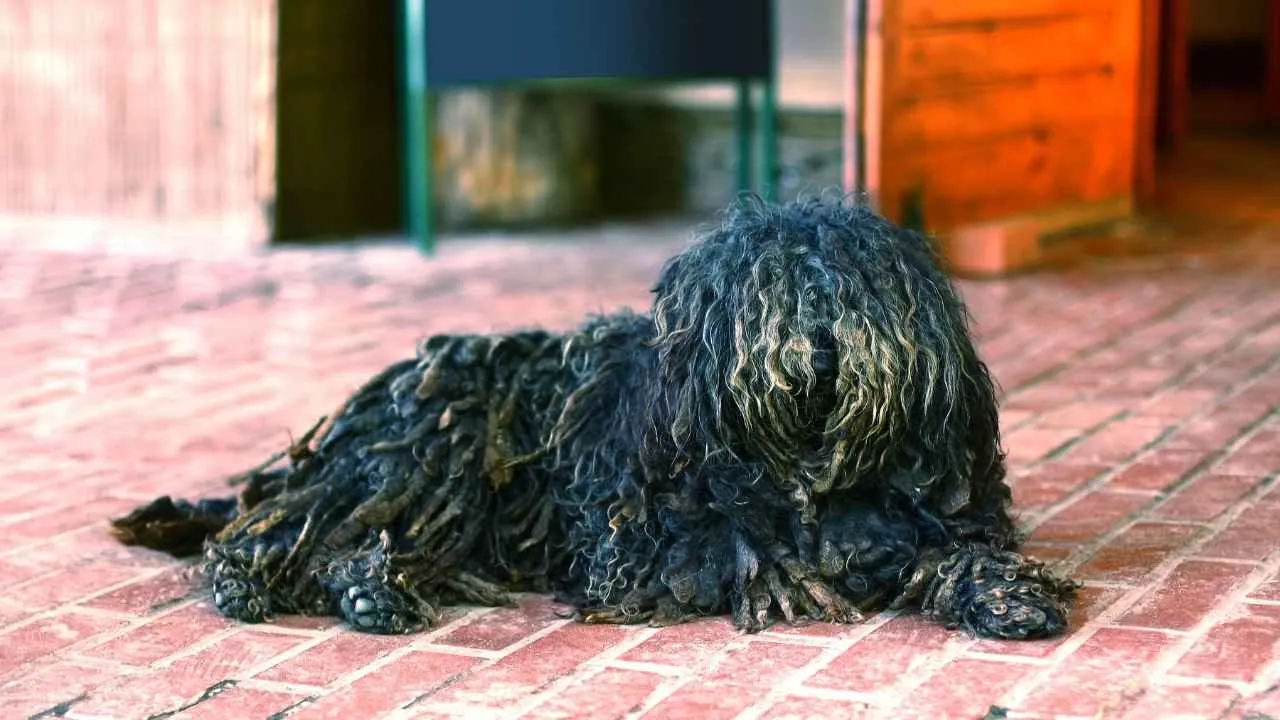
The Puli is basically the smaller, hyperactive cousin of the Komondor. Underneath all those cords is an incredibly agile herding dog capable of insane speed and athleticism.
The corded coat protected Puli while herding sheep across harsh Hungarian terrain.
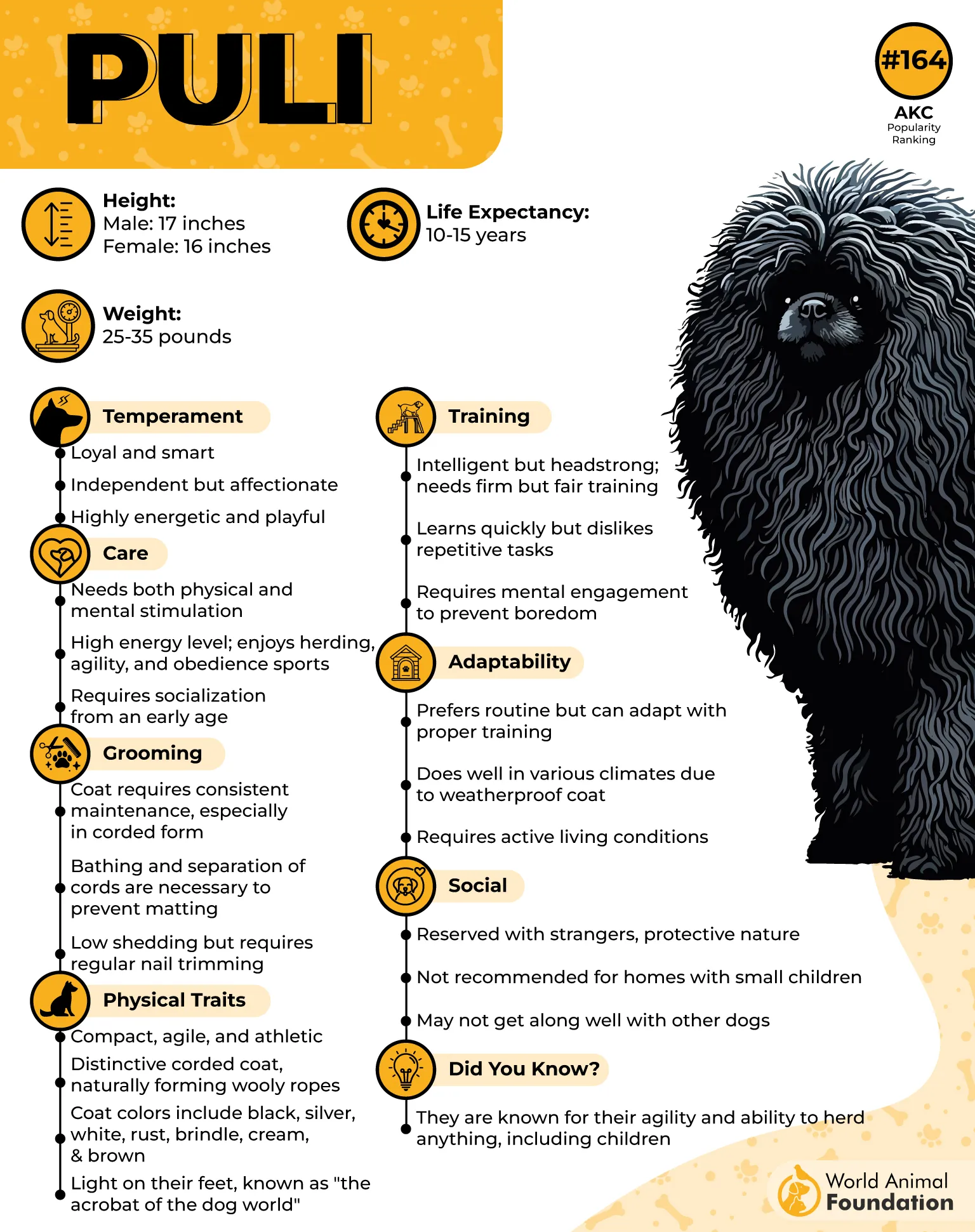
The coat repels water, insulates, and protects from weather extremes. The cords begin forming naturally during adolescence as the undercoat and outer coat intertwine. Full cords may take up to 5 years.
Many owners say strangers constantly ask if the dog can see! Yes. Very well. The cords move with the dog and don’t block vision the way people assume. Despite their mop-like appearance, Pulik are HIGH-energy working dogs.
Without stimulation, they become expert-level chaos engineers.
Conclusion
Unique coat textures in dogs aren’t random design choices—they’re living history.
Every curl, cord, mat, and woolly layer evolved for a reason. It offers protection, camouflage, insulation, water resistance, or survival in extreme climates.
And while these coats look incredible, they also come with responsibility. Many of these breeds need a professional groomer, patient maintenance, and owners willing to commit to long-term coat care.
The other two dogs known for their unique coats are Australian Shepherds and Great Danes.
Still, for people who love unusual dogs, these breeds are unforgettable. They don’t just walk into a room—they instantly become the main character.
