




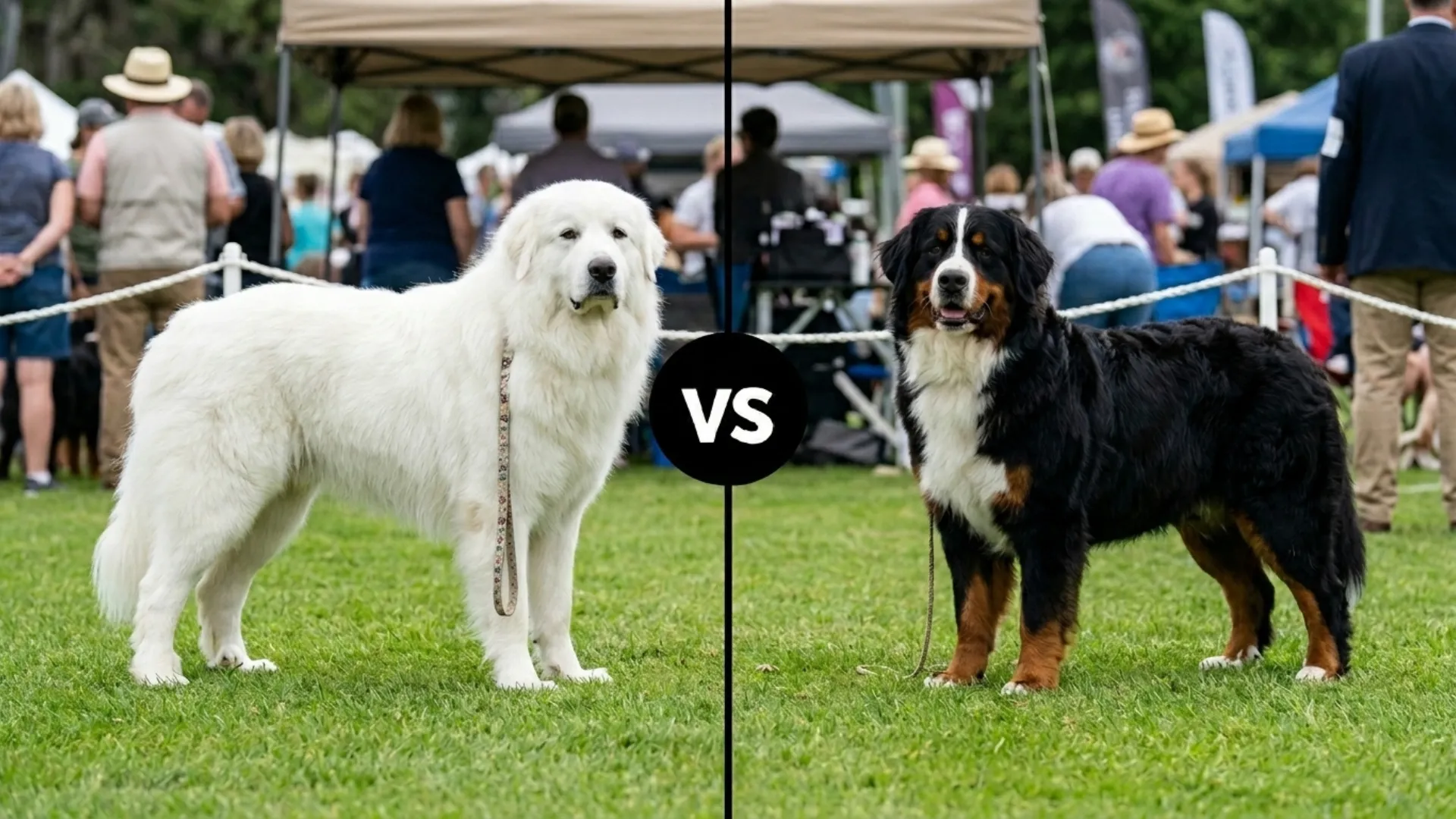
Big fluffy mountain dogs, big loyal hearts, and very big “excuse me, this couch is mine now” energy. The Great Pyrenees and Bernese Mountain Dog may look like they belong on the same snowy postcard, but their personalities are not copy-paste cute.
One is more of a calm, watchful guardian with serious “I saw that squirrel first” instincts. The other is a sweet, people-loving worker who often brings the eager-to-please charm. Both are strong, family-friendly, and built for cold-weather cuddles, but the right choice depends on your home, lifestyle, patience, and tolerance for fur tumbleweeds.
So, let’s meet these gentle giants properly.
Did you know?
Dogs may gently nudge people into moving more, one leash walk at a time. Some dog owners spend close to 300 minutes a week walking their pups, which is a pretty solid cardio plan with tail wags included.
Great Pyrenees vs Bernese Mountain Dog: Key Differences Explained
Breed Origins & Functional Background
One of these dogs feels like the calm mountain guard who silently watches the fence line at 2 a.m. The other gives cheerful, hardworking farm helper energy, as it would happily supervise chores and then flop dramatically onto your feet afterward.
Way back in the Pyrenees Mountains between Spain and France, the Great Pyrenees built its reputation around guarding livestock. That watch and guardian focus still shows up in the breed’s protective personality and independent streak today.
Over in Switzerland, the Bernese Mountain Dog earned its keep as a farm dog with herding and working roots. The affectionate, eager-to-please personality makes total sense once you realize this breed was bred to work closely with people.
Physical Characteristics & Body Structure
These dogs basically look like winter arrived early and grew legs. Big coats, strong frames, and serious fluffy presence come with both breeds, but their overall style lands very differently once they walk into the room.
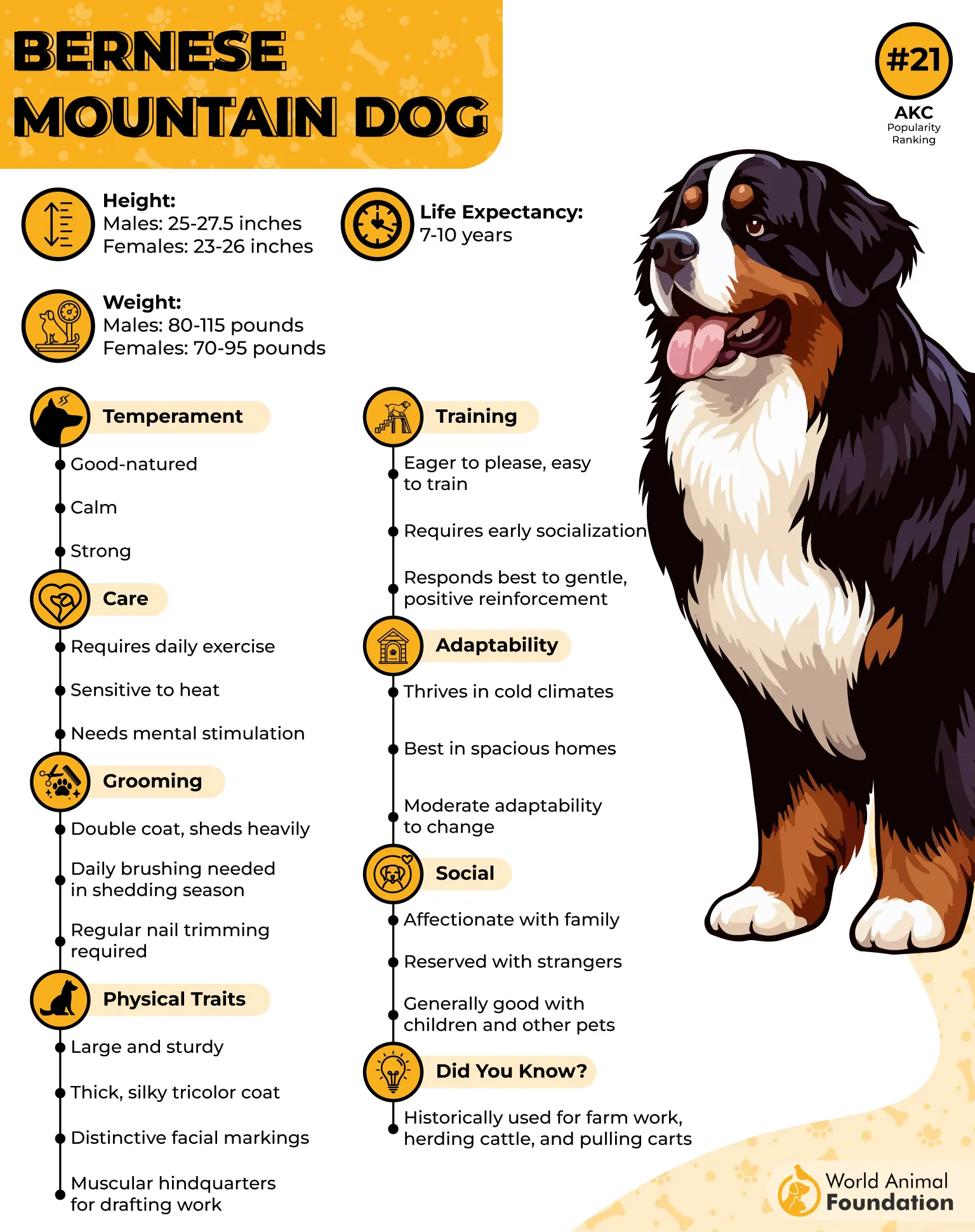
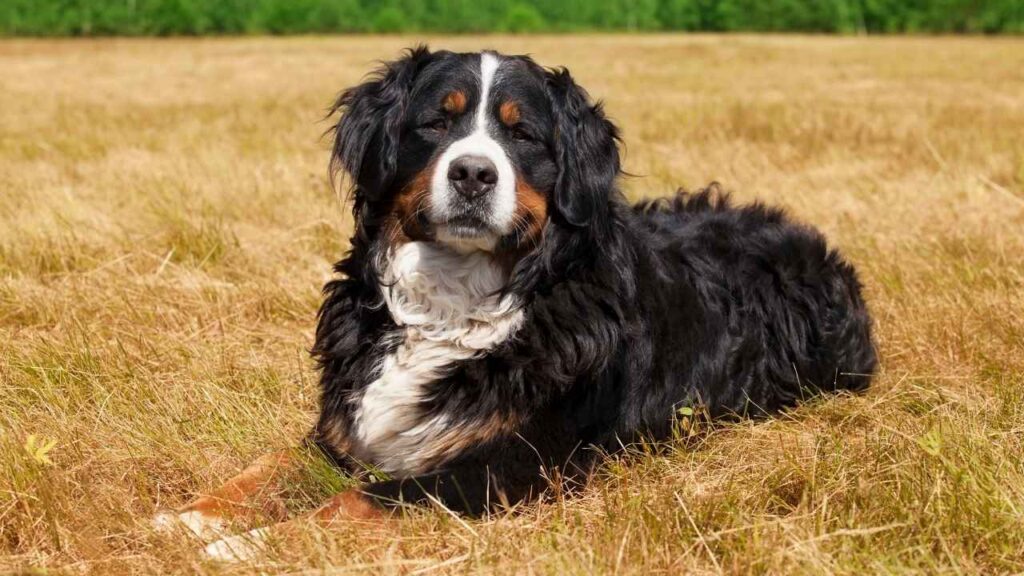
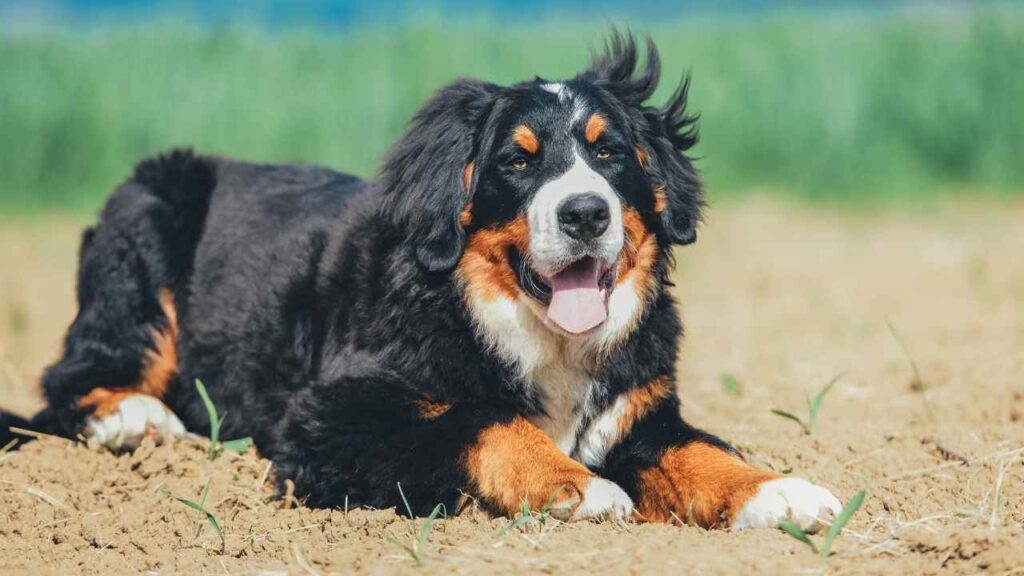
The Bernese Mountain Dog carries a medium-length double coat with shaggy and straight fur texture. Black, rust, and white coloring give this breed that classic storybook mountain-dog appearance people instantly recognize.
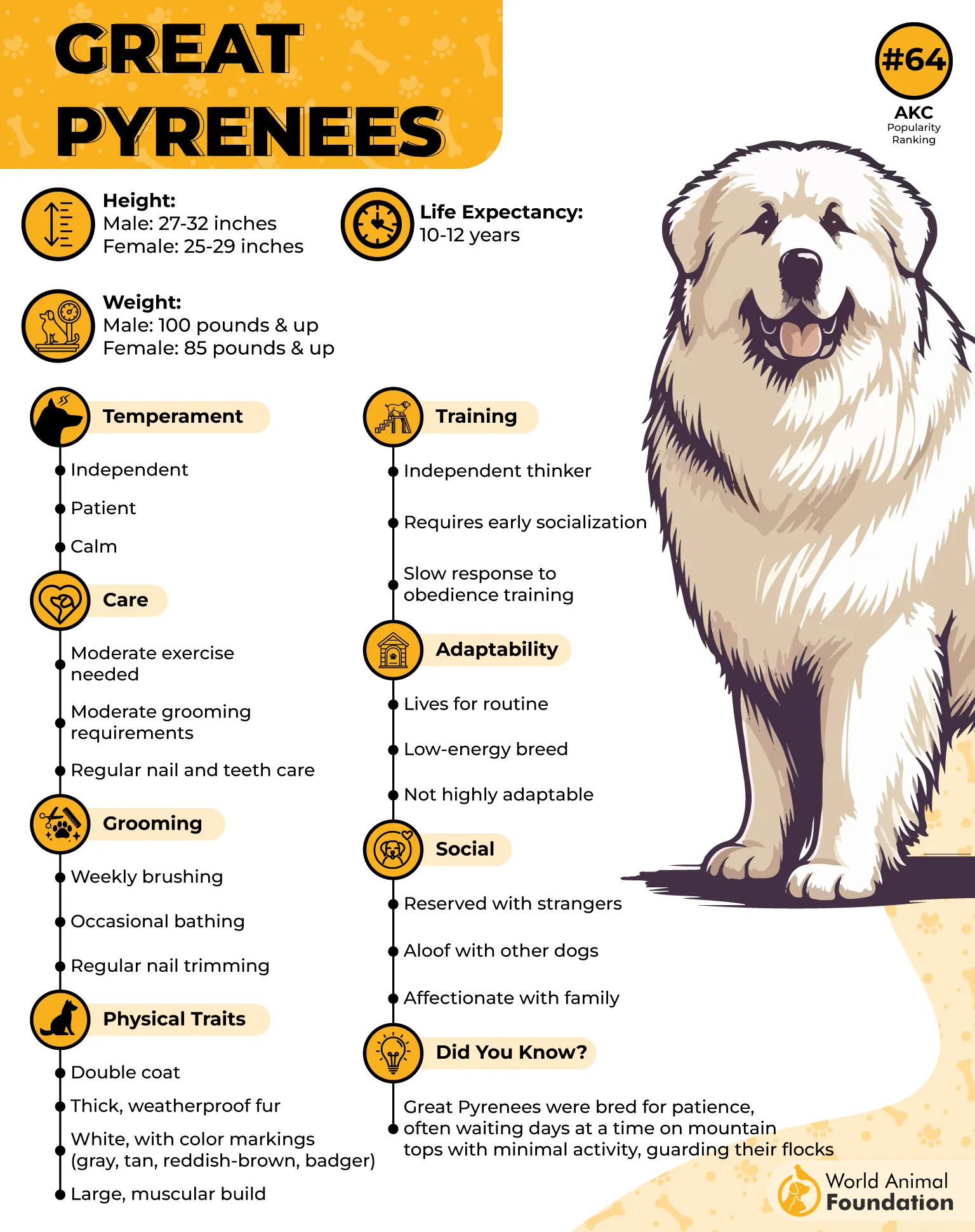
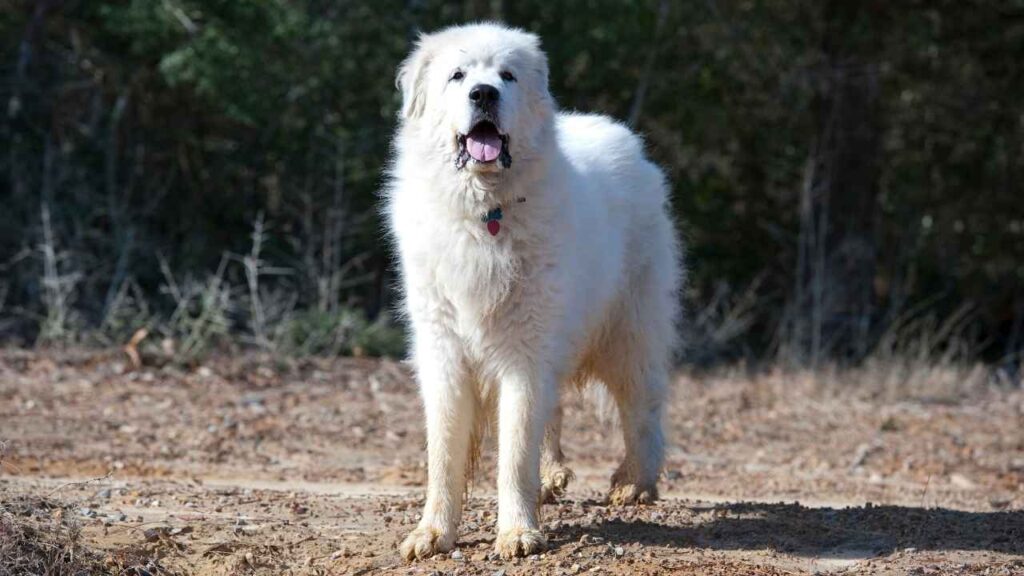
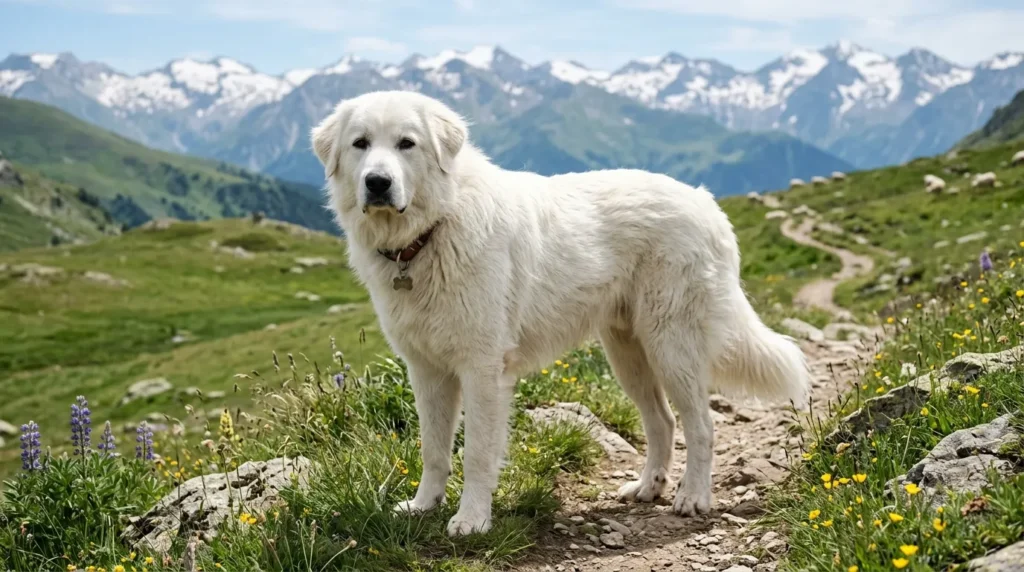
Meanwhile, the Great Pyrenees leans into the majestic snow-cloud look with a straight, long coat. The mostly white coloring mixed with very high strength gives this dog a calm but imposing physical presence.
Temperament & Behavioral Profile
Meeting these breeds feels a bit like meeting two cousins with wildly different social batteries. One carefully studies everybody entering the house, while the other is already emotionally attached after hearing your voice once.
The Great Pyrenees carries affectionate and loving traits, though stubborn definitely joins the conversation too. Stranger-friendly ratings sit lower here, and the strong guarding instinct means this breed naturally stays alert around unfamiliar situations.
On the Bernese Mountain Dog side, the vibe feels softer and more openly social. Needy, snuggle, affectionate, and willing to please traits help explain why this breed becomes deeply attached to family members and welcomes attention so easily.
Activity Requirements & Energy Levels
Neither of these giant fluff units was designed for cramped apartment chaos, and three rushed potty breaks a day. They enjoy room to move, cooler temperatures, and enough space to stretch out like oversized rugs afterward.
The Great Pyrenees usually prefers a slower, calmer routine instead of nonstop activity all day long. This large dog tends to enjoy peaceful outdoor time, relaxed walks, and quietly keeping an eye on everything nearby like a fluffy neighborhood security patrol.
As mentioned by Purina, Bernese Mountain Dogs need a balanced approach to exercise, especially during puppyhood. Young dogs should avoid too much strain while their bones and joints develop, while adults usually enjoy around an hour of daily activity and outdoor movement.
Trainability, Intelligence & Learning Ability
Some dogs hear a command and immediately spring into action. Others stare at you like middle management reviewing a questionable email request. These two mountain breeds land on very different sides of that training conversation, and honestly, it shows pretty fast.
According to the AKC, Great Pyrenees dogs like doing things on their own terms, which can make obedience training feel a little slow and dramatic. They are intelligent, though early socialization and puppy training classes help shape a calmer, better-mannered companion at home.
With the Bernese Mountain Dog, training sessions usually feel smoother and far less dramatic. The willing to please personality paired with average follow commands behavior creates a dog that enjoys learning while staying closely connected to its people.
Coat Maintenance & Grooming Needs
Living with either of these dogs means accepting one universal truth. Fur will absolutely appear everywhere. Your couch, your clothes, your floor, and somehow even inside a coffee mug you swear was nowhere near the dog.
As noted by PetMD, Bernese Mountain Dogs basically turn grooming into a part-time household activity. Their thick double coat needs frequent brushing to control shedding, while regular baths, ear cleaning, and gentle eye care help keep these fluffy giants comfortable and healthy.
Things stay slightly more manageable with the Great Pyrenees and its medium coat maintenance and medium shedding levels. The long double coat still needs regular attention, though the grooming workload feels less intense overall.
Average Lifespan & Longevity
Nobody likes thinking about how long dogs stay with us, especially when giant breeds become such huge parts of daily life. Still, lifespan differences matter when choosing between two dogs that can easily take over your entire heart.
The Great Pyrenees is listed with an average lifespan of 10 to 12 years. Health concerns connected to this large breed include bloat, hip dysplasia, cataracts, elbow dysplasia, patellar luxation, entropion, and drug sensitivity.
For the Bernese Mountain Dog, the average lifespan is around 6 to 8 years. Common health issues listed for the breed include bloat, cancer, hip dysplasia, elbow dysplasia, progressive retinal atrophy, and Addison’s disease.
Suitability for Family Life vs. Guard Duties
Living with these dogs creates two very different household moods. One happily follows the family from room to room, hoping to join every little moment, while the other prefers calmly monitoring the surroundings like the neighborhood security manager nobody hired but everybody appreciates.
The Bernese Mountain Dog can make a great family pet because it blends easily into lively homes and usually enjoys attention from kids, guests, and other pets. Its affectionate nature and cuddly personality make everyday routines feel sweeter, especially for families wanting a dog that stays closely involved with everyone.
The Great Pyrenees carries a more reserved attitude and naturally pays close attention to unfamiliar activity nearby. Pet parents looking for a dependable watchdog often appreciate its calm, protective nature, especially when quiet observation and strong guarding instincts matter most.
Conclusion
The Bernese Mountain Dog brings easygoing affection, playful family energy, and a strong desire to stay close to people through every part of the day. The Great Pyrenees naturally steps into the role of calm protector, quietly watching everything around the home like security is a full-time personal mission it takes very seriously.
At the end of the day, the better fit depends on your lifestyle, patience, available space, and what kind of companion feels right for your household. Spend time learning about both breeds carefully, because the dog that truly matches your everyday routine often turns into an unforgettable part of the family for many wonderful years.
