




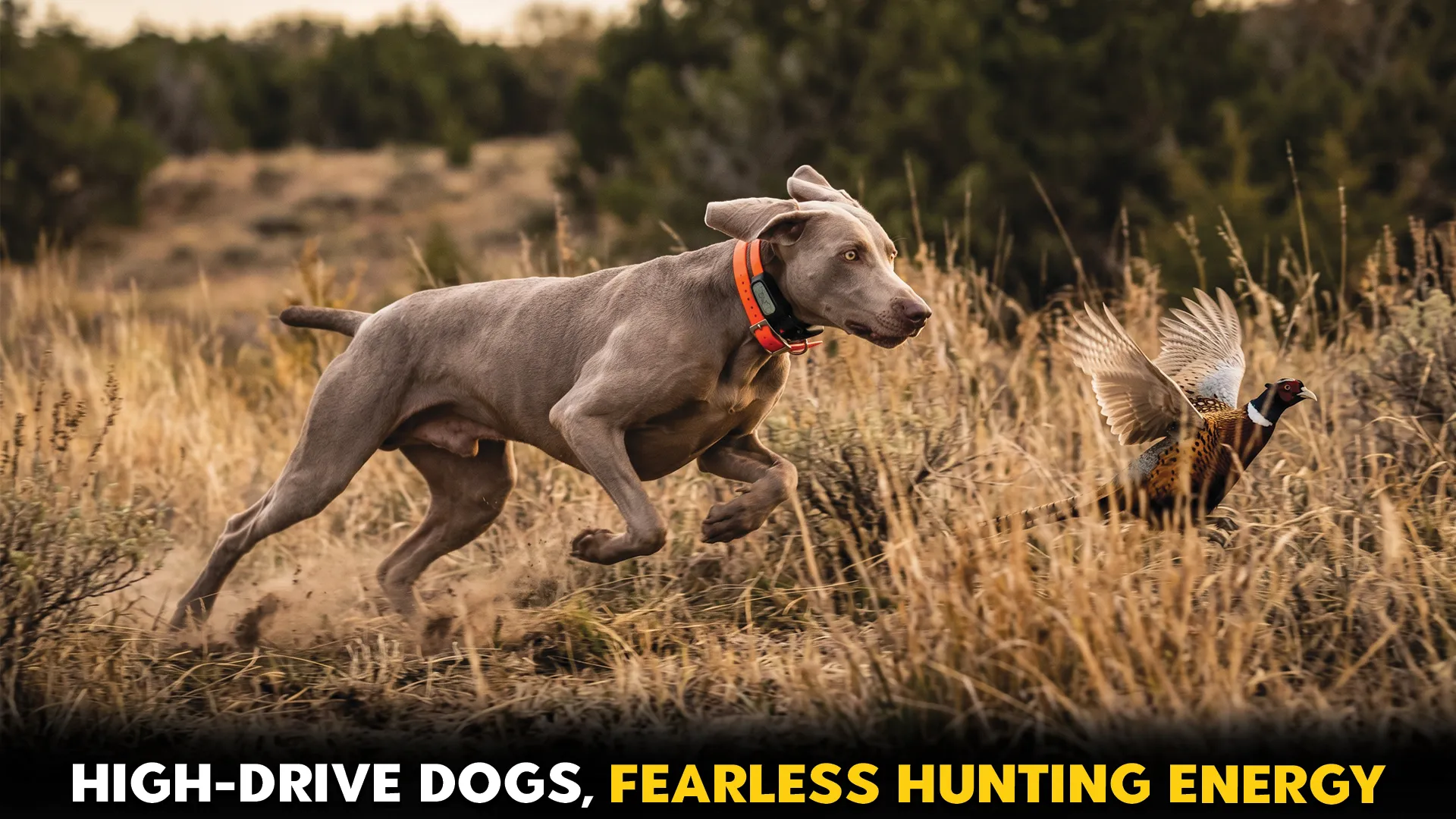
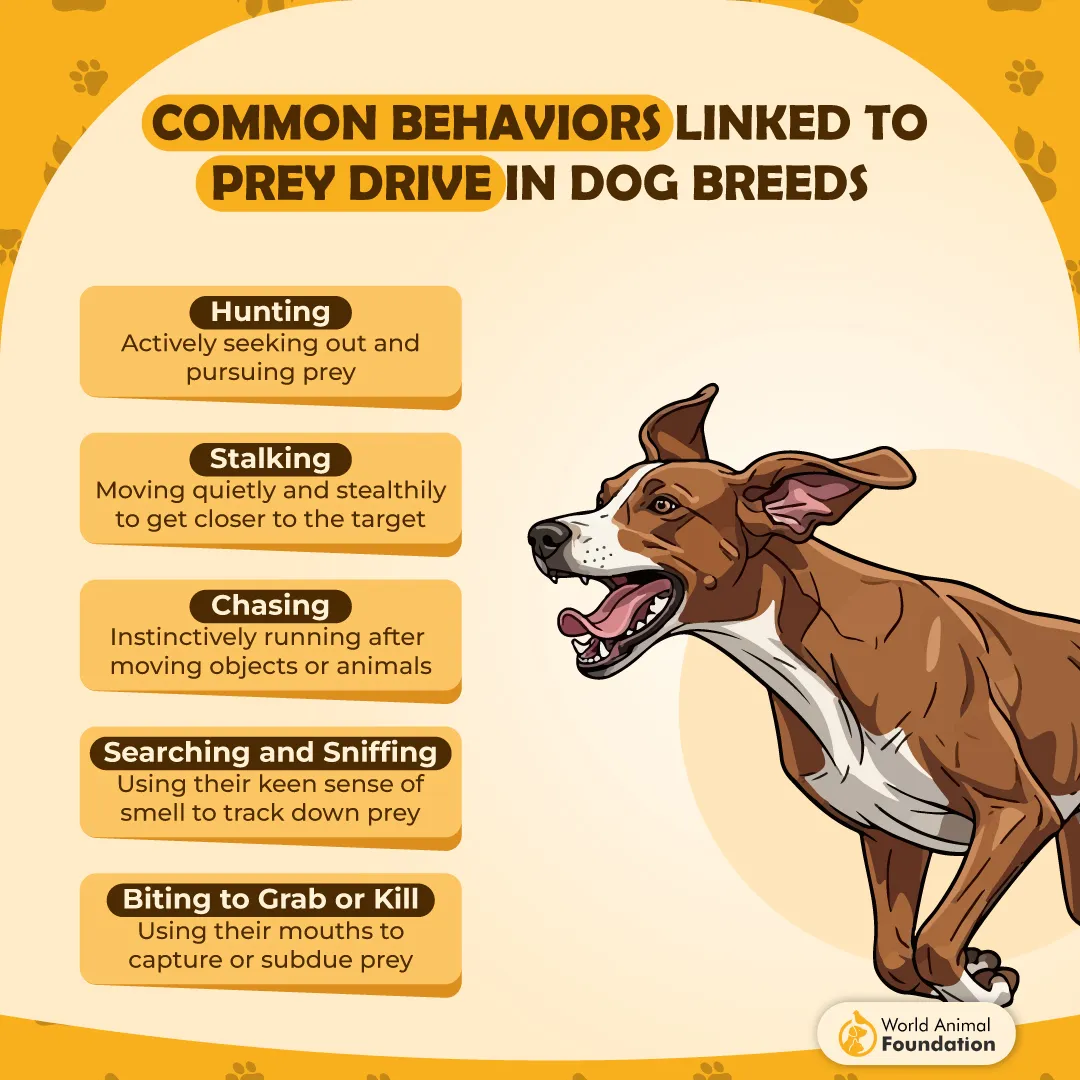
Some dogs spot a squirrel and casually walk past it. Others lock on instantly, eyes fixed, body tensed, quietly calculating speed, ignoring everything around them, and then switching into full pursuit mode as they’ve just stepped into an action film.
This powerful urge to chase is known as prey drive, and in many breeds it is deeply rooted in history. Hunting dogs, herding dogs, and working dogs were originally developed to track, chase, control, or pursue moving animals. Even today, these instincts remain strong and highly active in certain breeds.
A high prey drive does not mean a dog is aggressive or dangerous. It simply means that when something moves, especially quickly, their instinct to chase can take over. This response may be triggered by small animals, bicycles, joggers, or even blowing leaves. These dogs are intelligent, athletic, and highly driven, but they require proper training and mental stimulation to manage their instincts in a safe and controlled way.
Below are 9 energetic dog breeds known for their strong prey drive and natural tendency toward motion and pursuit compared to other dogs.
Dog Breeds with a Powerful Drive to Pursue Prey
1. Greyhound
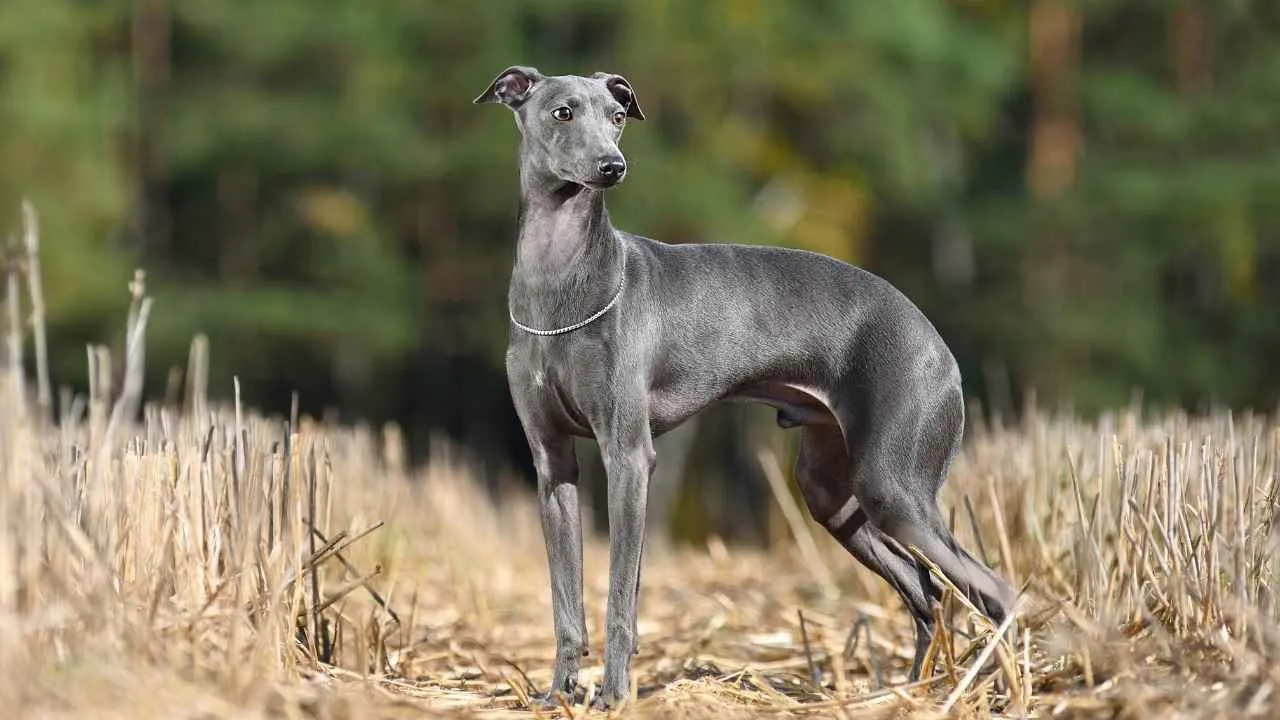
Greyhounds are often described as being built like living missiles, designed for speed, precision, and explosive acceleration.
Originally used to chase game across open fields, Greyhounds developed an intense instinct to pursue moving objects. When something runs, their natural response is to lock in visually and give chase, as if their entire focus narrows to that single target.
Fast-moving small animals such as rabbits or squirrels can strongly trigger their prey drive. Once they fix their sight on something in motion, their attention becomes highly focused and difficult to redirect.
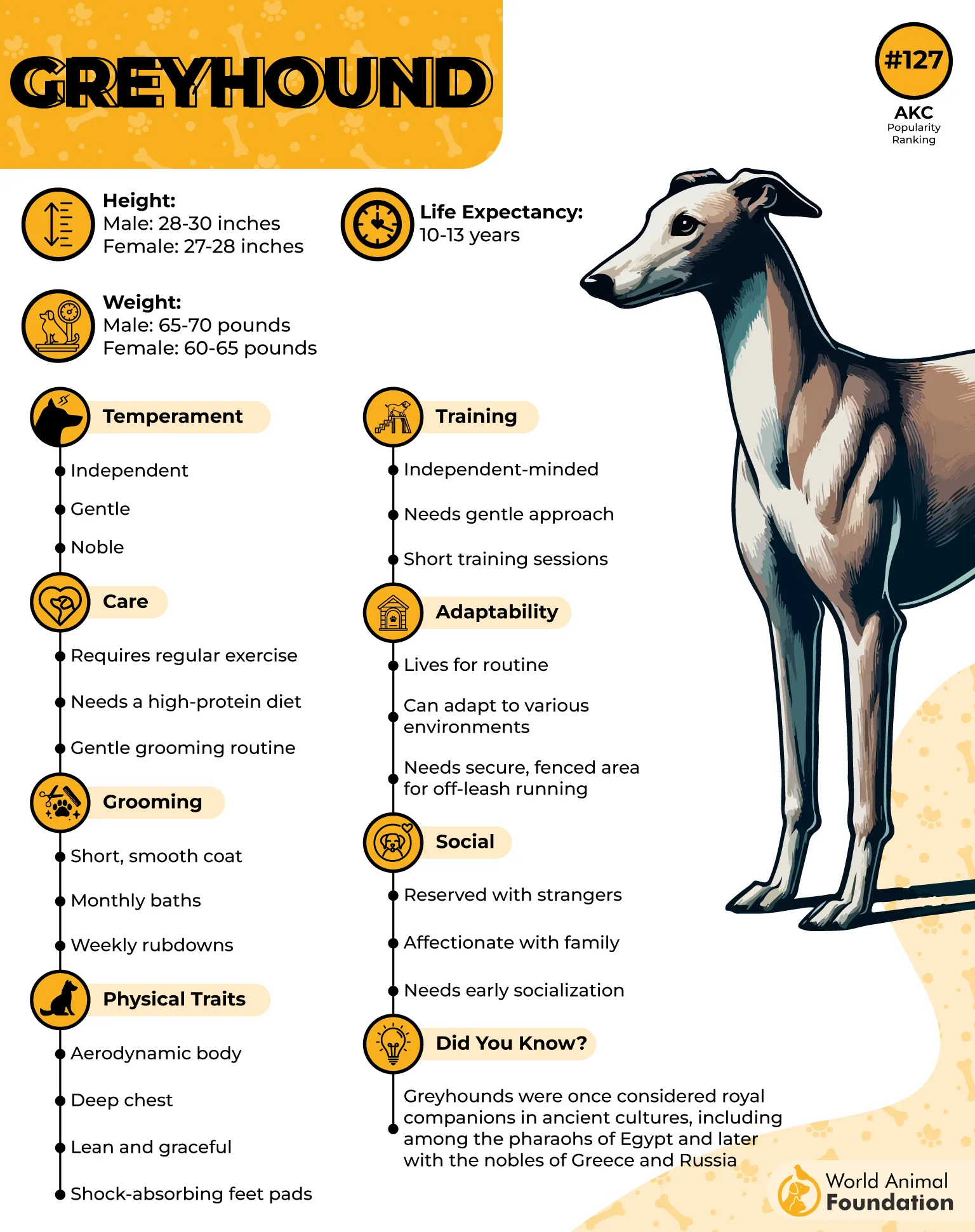
Despite their athletic reputation, Greyhounds are surprisingly calm and easygoing in the home. After short bursts of exercise, many quickly transition into relaxed, quiet “couch potato” behavior.
However, due to their strong chase instinct, secure fencing and strict leash control are essential. Even a moment of distraction can lead to sudden bursts of speed that most owners may not anticipate.
According to the American Kennel Club, Greyhounds were specifically developed for speed, sharp eyesight, and long-distance pursuit, making them one of the most efficient chasing breeds in the canine world.
2. Border Collie
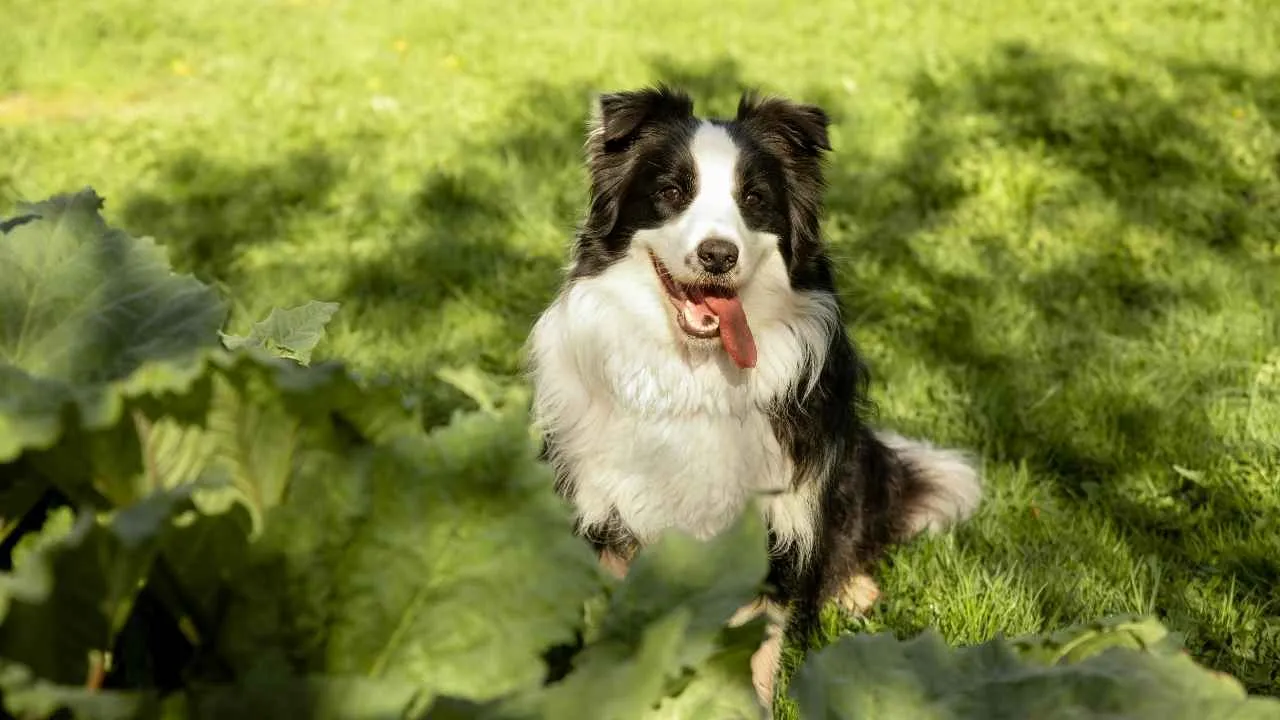
Border Collies do not necessarily pursue prey, but their herding instinct creates an exceptionally strong chase drive.
These dogs are highly sensitive to movement. Anything that moves, running or even flying, can instantly trigger their intense focus. Their famous “herding stare” is not just a behavior trait; it is an instinctive tool used to control and manage livestock with precision and control.
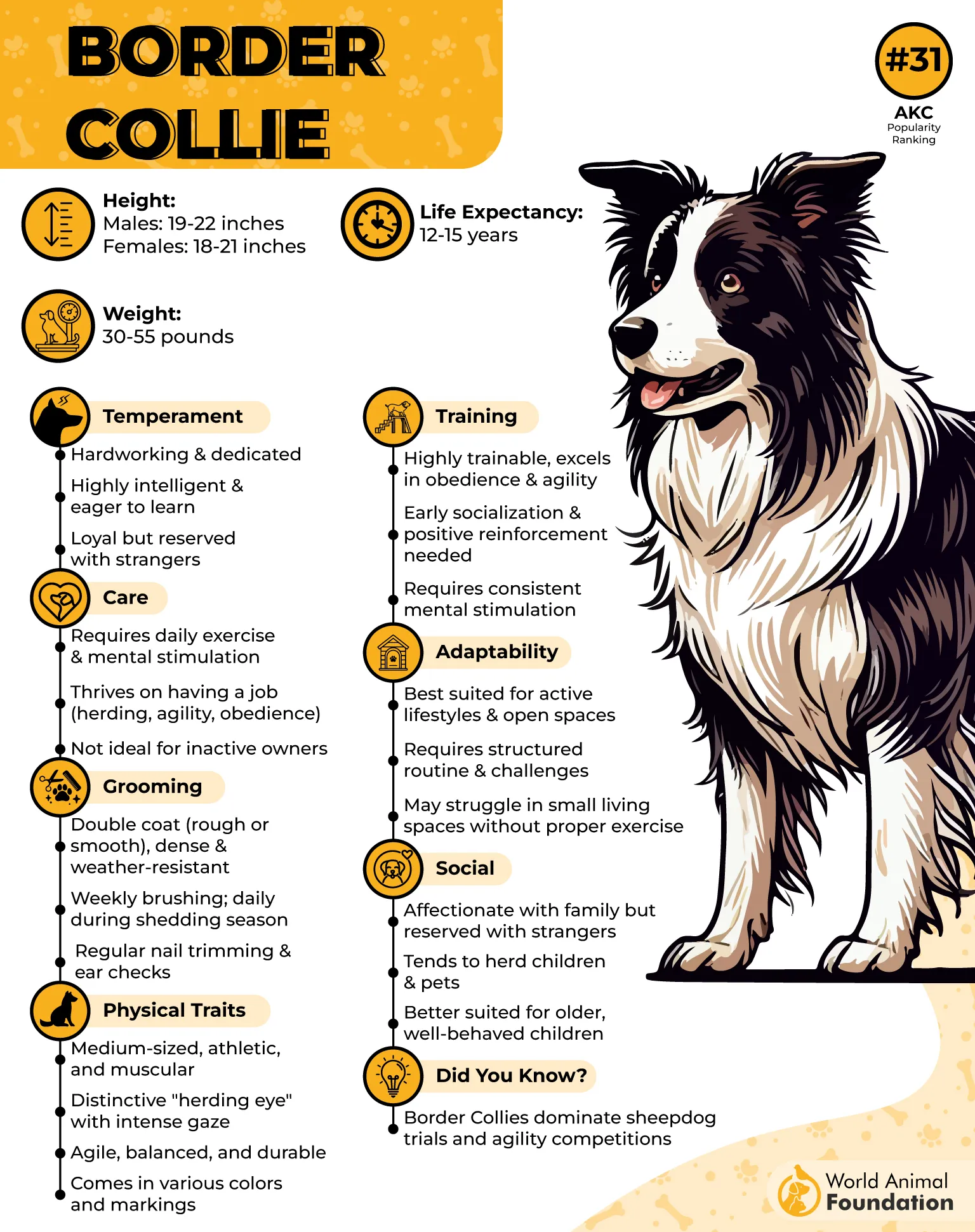
Border Collies are widely regarded as one of the most intelligent dog breeds in the world. However, this intelligence comes with a trade-off: extremely high mental and physical energy requirements. Without proper stimulation, their strong chase and herding instincts can sometimes be redirected into unwanted behaviors.
Advanced training and structured activities such as agility, herding trials, and obedience work are essential for maintaining balance. They thrive in active homes where owners can provide structure, mental challenges, and consistent interaction throughout the day.
3. Weimaraner
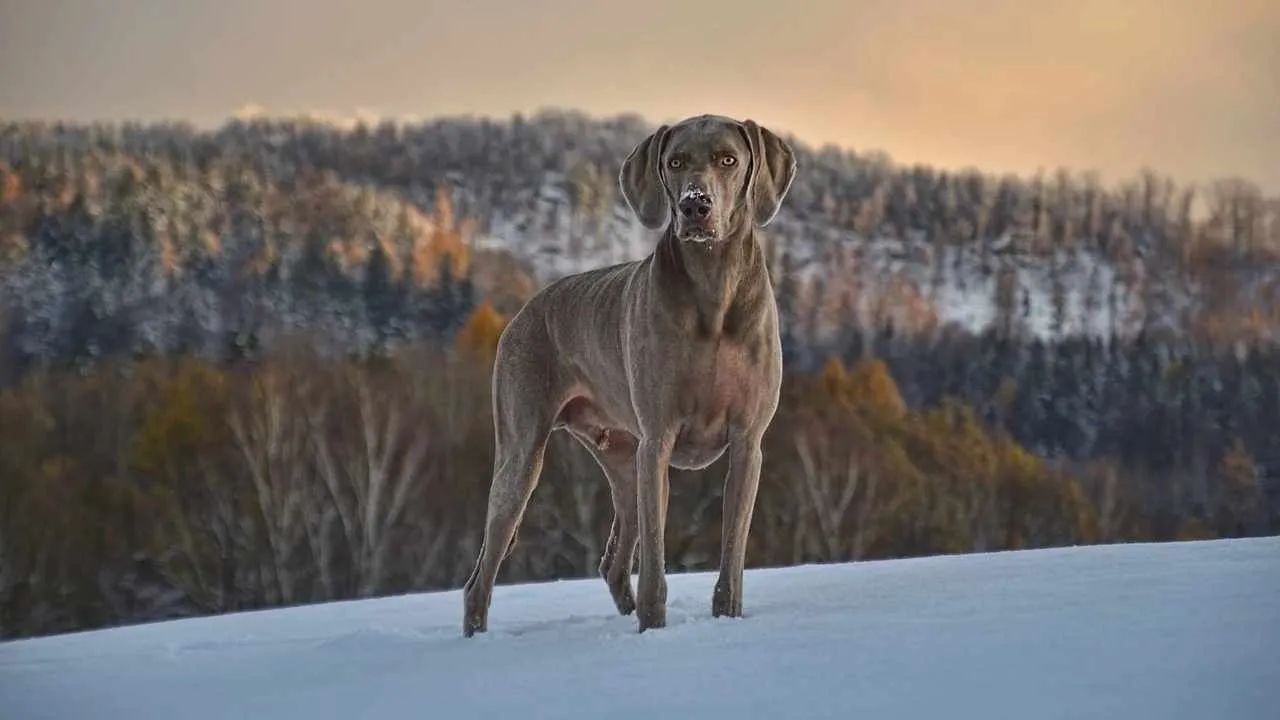
Weimaraner is often called the “Gray Ghost” due to its sleek silver-gray coat and its history as a skilled hunting dog bred for tracking and pursuing large game. Even today, the breed retains a strong prey drive and sharp instincts shaped by its working background.
These are smooth, athletic dogs that are fast, persistent, and highly sensitive to movement. Small animals such as birds or squirrels can quickly trigger their instinct to chase, often resulting in immediate pursuit behavior.
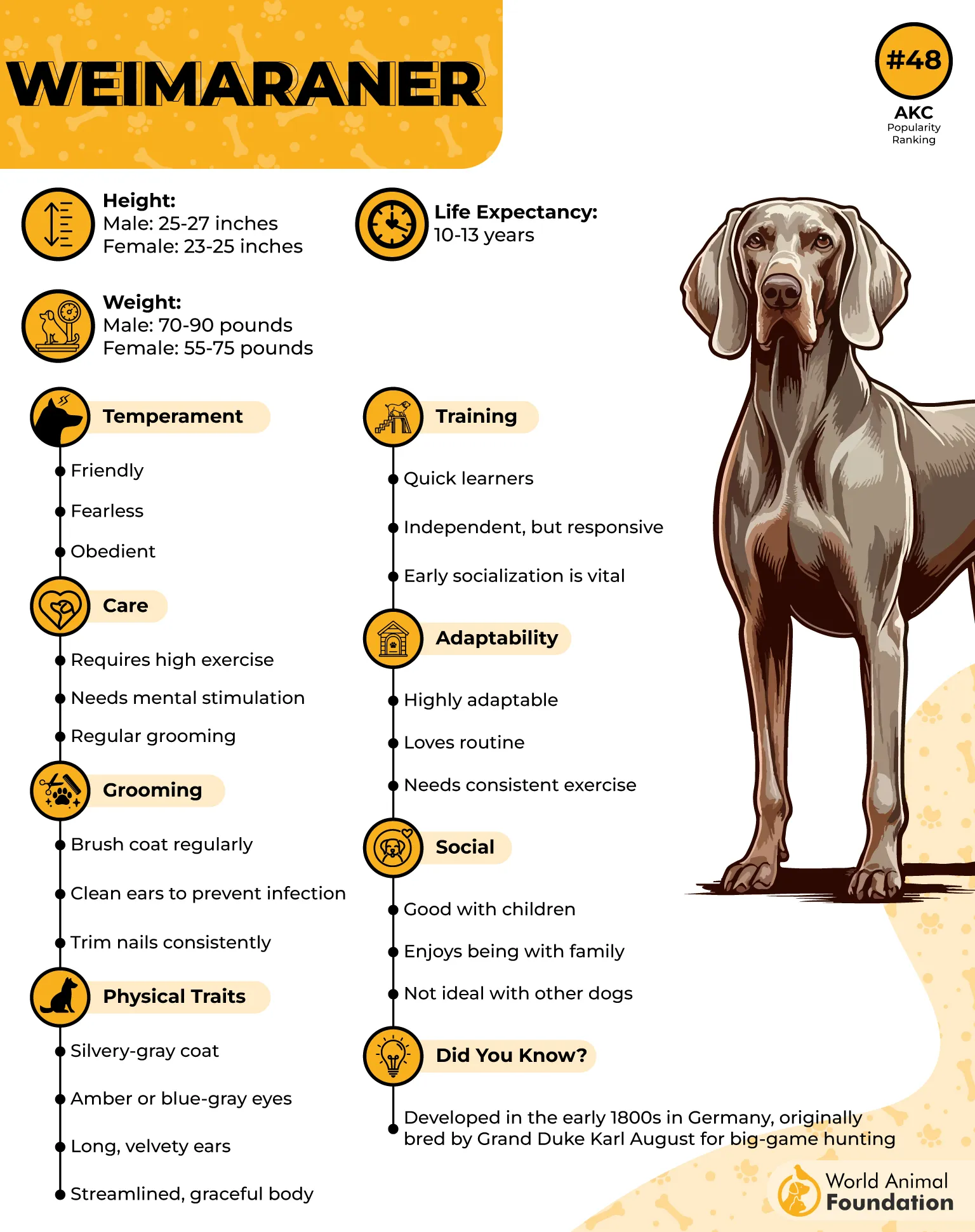
Weimaraners are highly active dogs that require substantial daily exercise. When understimulated or bored, they may create their own form of entertainment, which can often become challenging for their owners to manage.
They form strong emotional bonds with their families and prefer to stay close to their people. However, they need consistent training and regular mental stimulation to help manage their intensity and energy levels. Intelligent and athletic, they are best suited for active owners who enjoy outdoor activities and can provide structure, engagement, and exercise.
4. Jack Russell Terrier
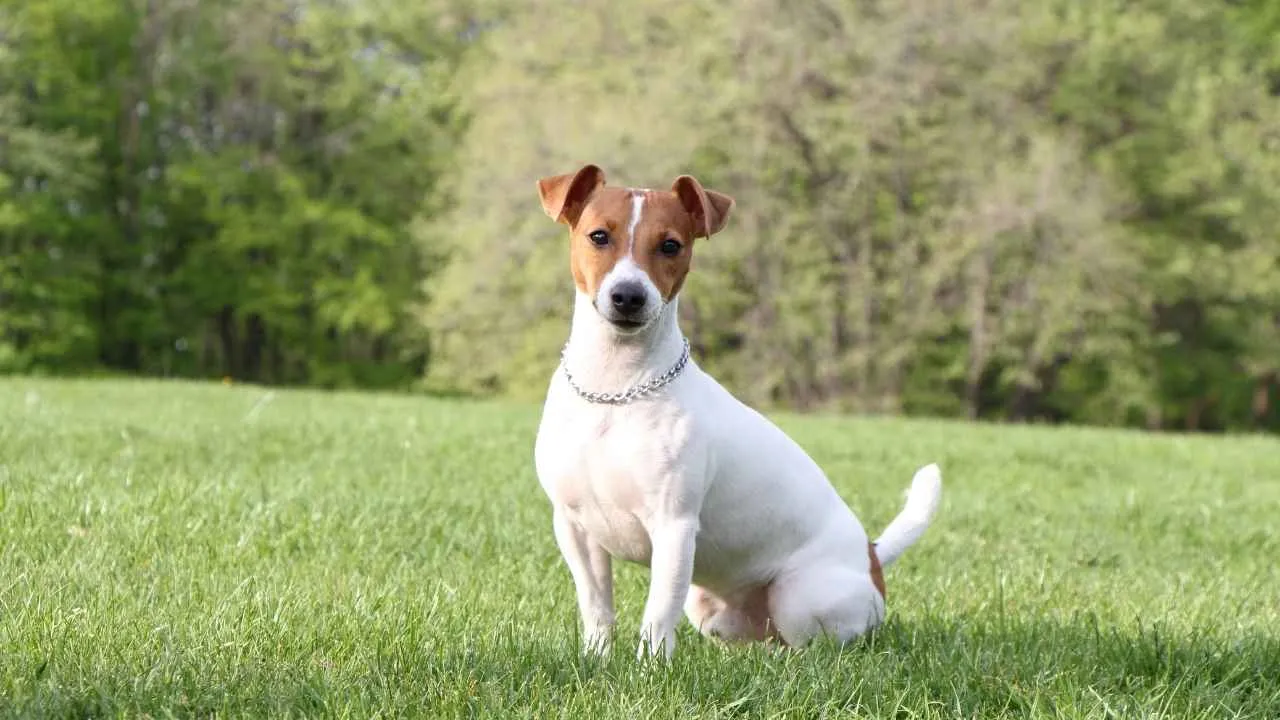
Jack Russell Terriers are often described as miniature rockets of energy, driven by instinct, curiosity, and an exceptionally strong prey drive.
Originally bred for fox hunting, they are fearless, highly determined, and remarkably persistent for their size. If a Jack Russell spots something small and moving, it can instantly switch into full chase mode without hesitation or warning.
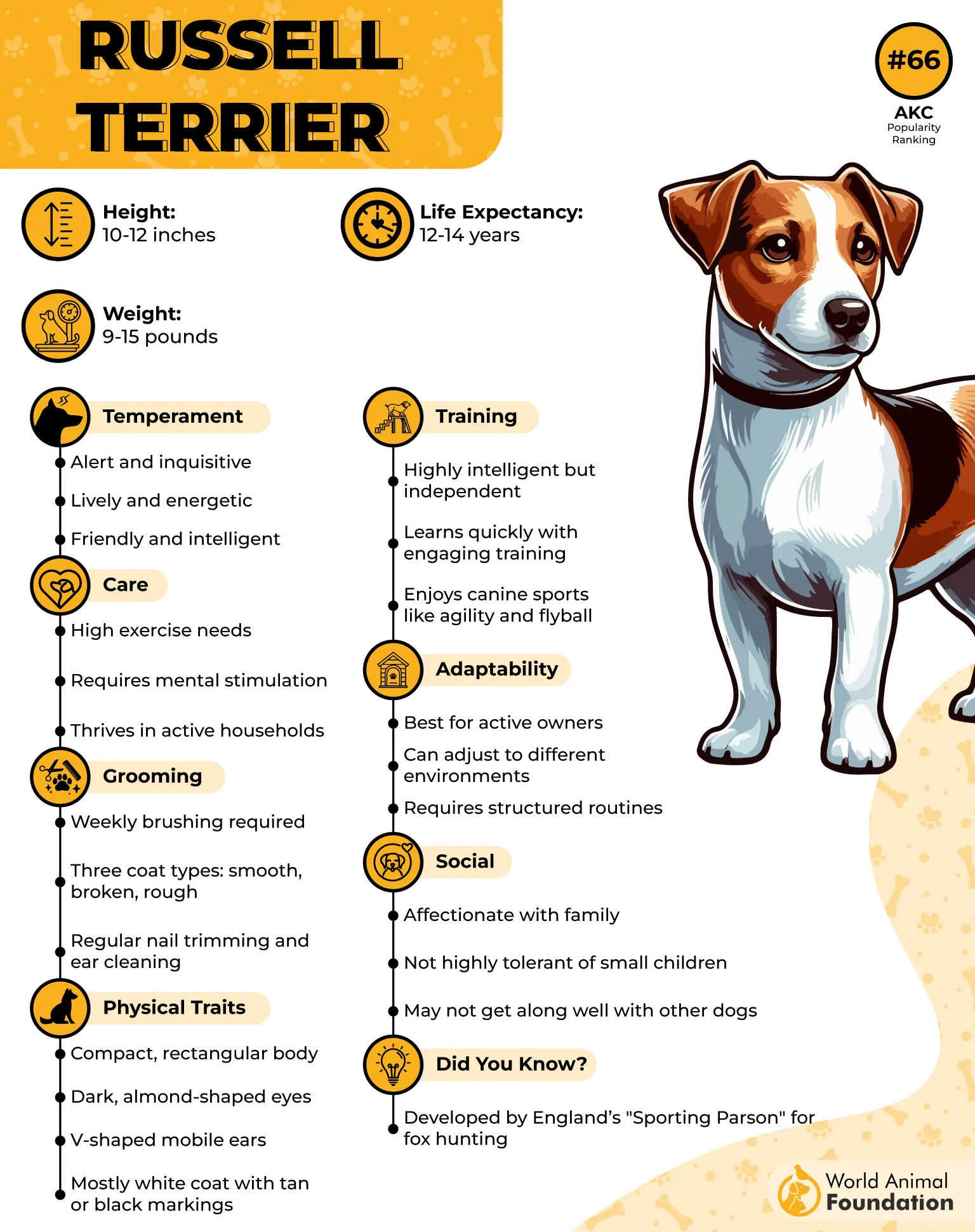
Jack Russell Terriers are fast, agile, and famously stubborn. Digging, climbing, exploring, and investigating are natural behaviors for this breed. They require both physical exercise and mental stimulation to stay balanced and manageable.
Without enough structured activity, their energy can be redirected into destructive or difficult behaviors. However, in the right environment, they are extremely fun, lively companions for active owners who enjoy playful and energetic dogs.
According to Petplan, Jack Russell Terriers thrive when given plenty of exercise and engaging mental challenges that keep both their body and mind occupied.
5. Australian Cattle Dog
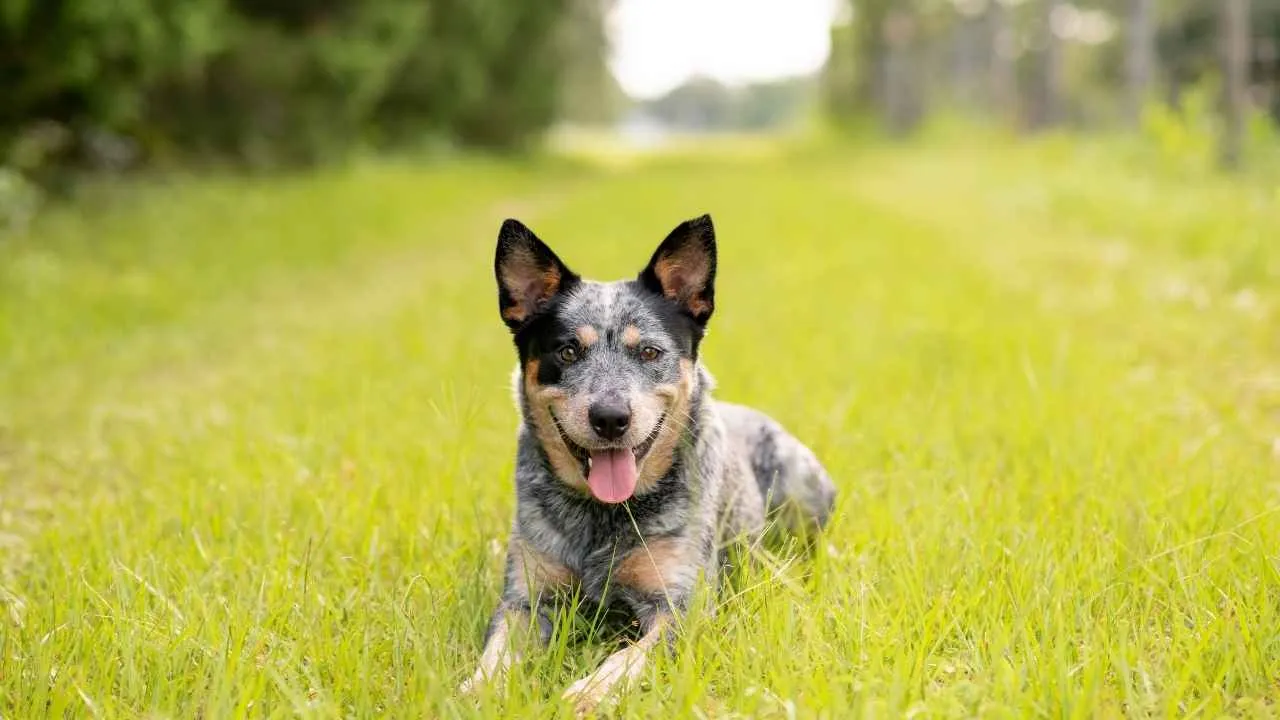
Australian Cattle Dog was developed to herd livestock across harsh, demanding environments, and its working instinct remains extremely strong even today.
These dogs are highly vigilant and naturally responsive to movement. Their drive is not purely predatory, but rooted in control and direction of motion, an instinct that can sometimes appear as intense chasing behavior.
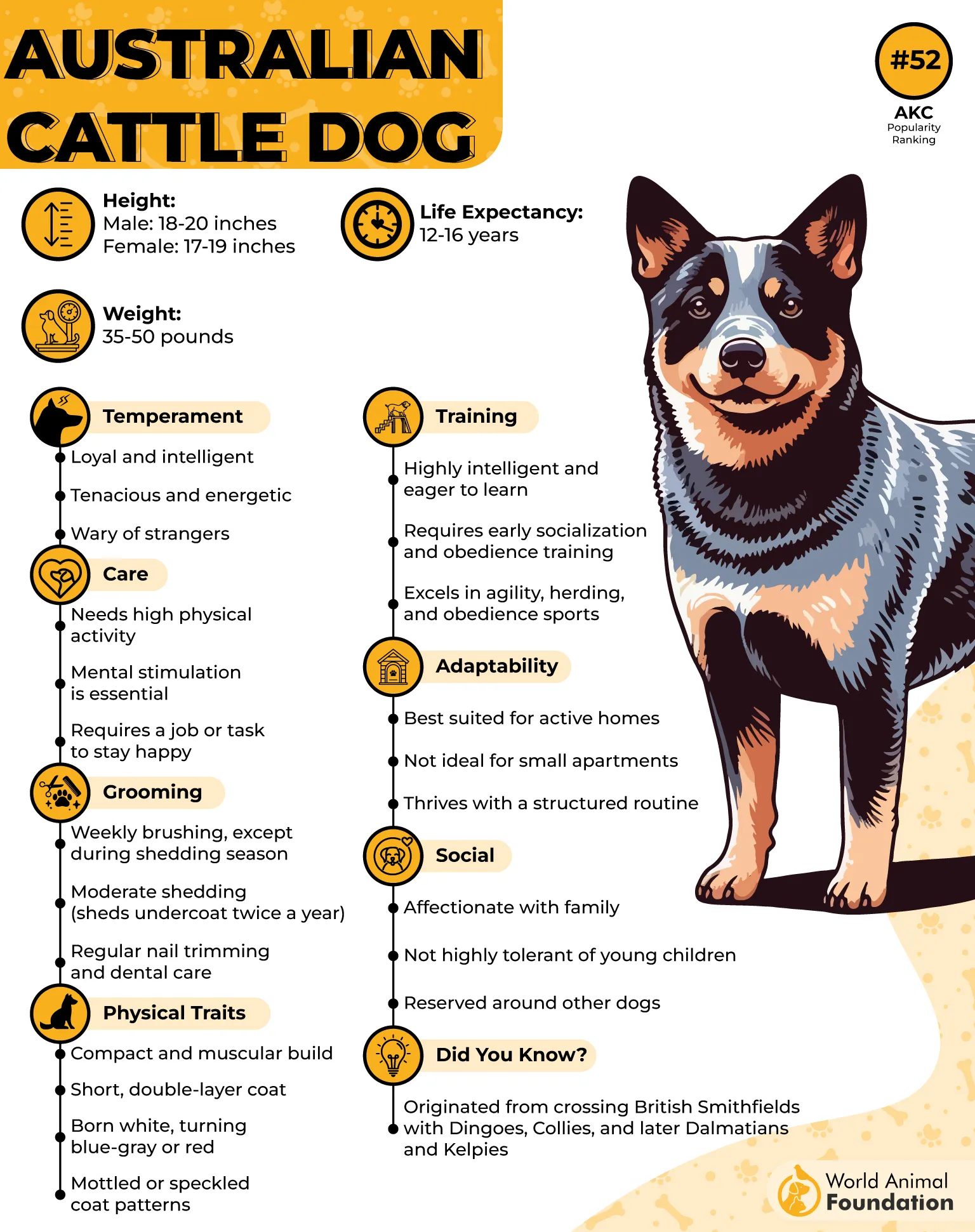
Australian Cattle Dogs are intelligent, industrious, and highly active. They perform best when given consistent work, structured training, or physically engaging tasks. Without proper outlets, they can become frustrated or overly intense.
They are not typically “lap dogs” and do not seek constant cuddling. Instead, they thrive on purpose, routine, structure, and movement.
These energetic dogs make excellent companions for very active owners who can match their drive and work ethic. They require structured training, long walks, and regular physical and mental stimulation to remain balanced and well-behaved around different people, pets, and environments.
6. Rhodesian Ridgeback
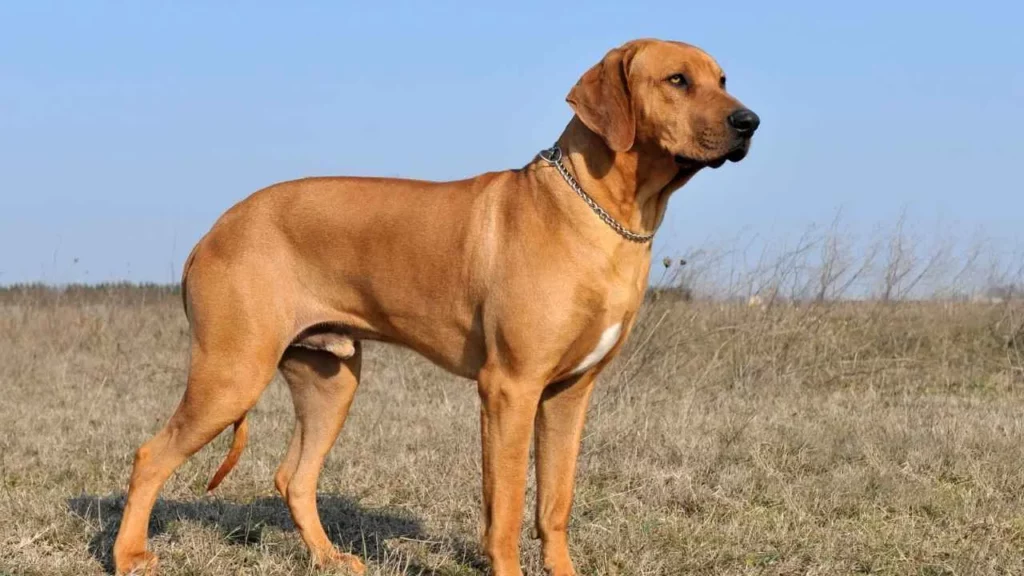
Rhodesian Ridgeback is a strong, independent hunting breed originally developed in southern Africa to track and hold large game, including lions, until hunters arrived. This demanding background shaped a dog with remarkable stamina, athletic ability, and a naturally high prey drive.
Ridgebacks are highly alert and can become intensely focused on moving animals or objects. Their strong instincts and quick response to motion make them particularly sensitive to anything that triggers their chase drive.
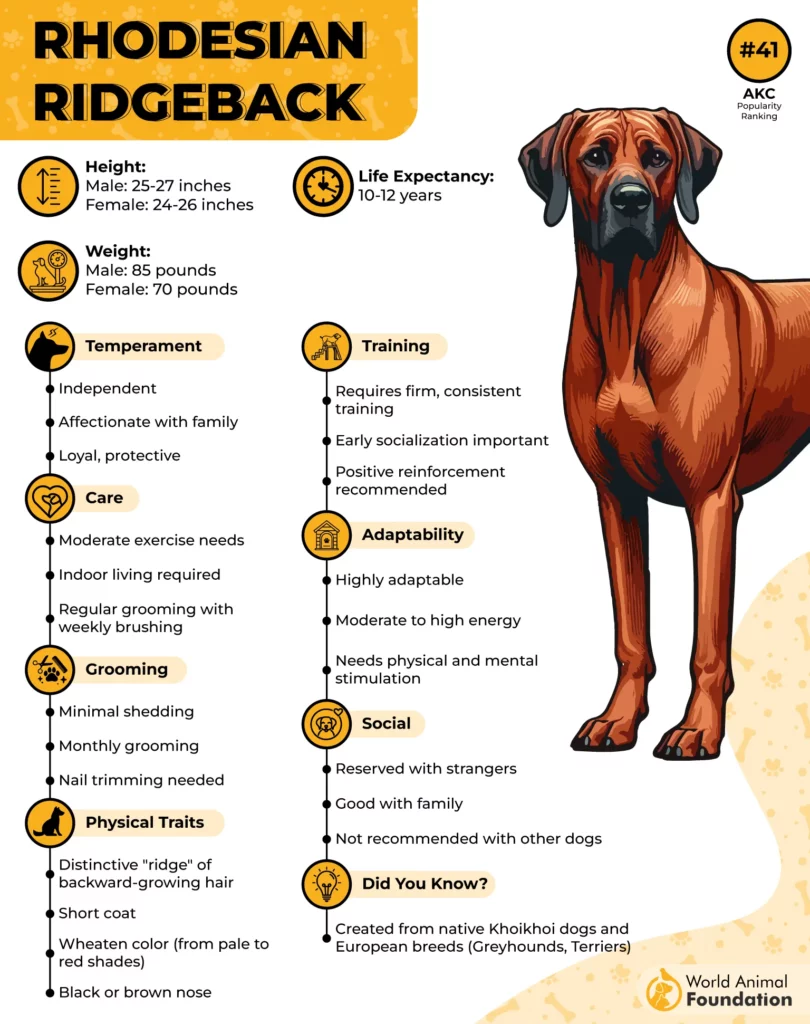
Indoors, Rhodesian Ridgebacks are typically calm, composed, and well-mannered compared to more hyperactive breeds. However, once their instincts are triggered, they can become extremely determined and focused on pursuit.
Early socialization and consistent training are essential, as Ridgebacks are independent thinkers and may not always respond immediately to commands. They require an experienced, structured approach to training and handling.
They thrive in active households where their strength and energy can be properly channeled. Without supervision or clear boundaries, their size and drive can become challenging, especially around smaller pets or young children.
7. Afghan Hound
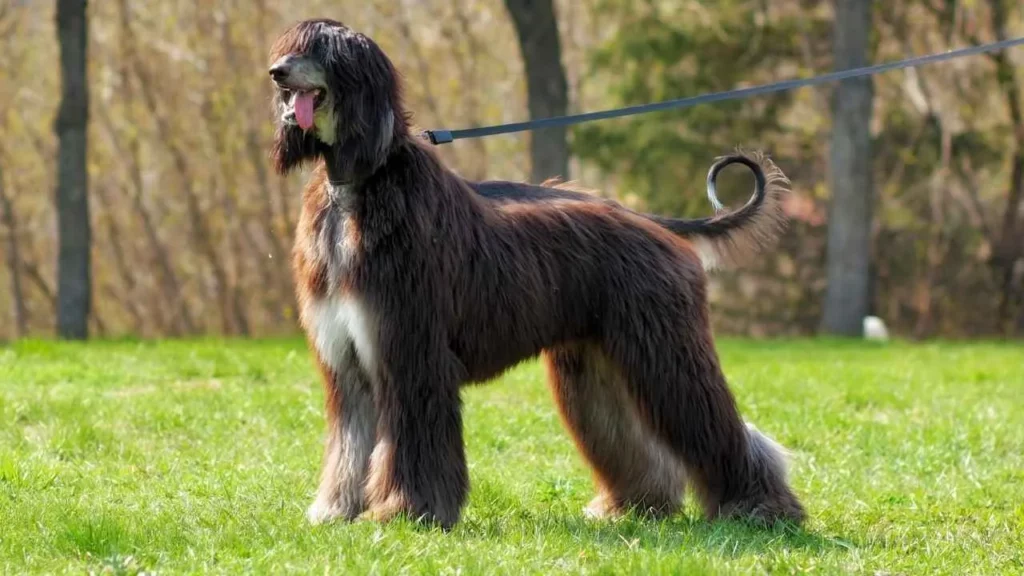
Afghan Hound is often described as a glamorous, runway-like breed, known for its flowing coat and elegant appearance. However, beneath this striking look lies a serious and highly capable sighthound originally bred to chase prey across rugged, mountainous terrain.
Unlike scent hounds, Afghan Hounds hunt primarily by sight and speed, meaning sudden movement instantly captures their attention. This visual hunting style makes them extremely responsive to anything in motion.
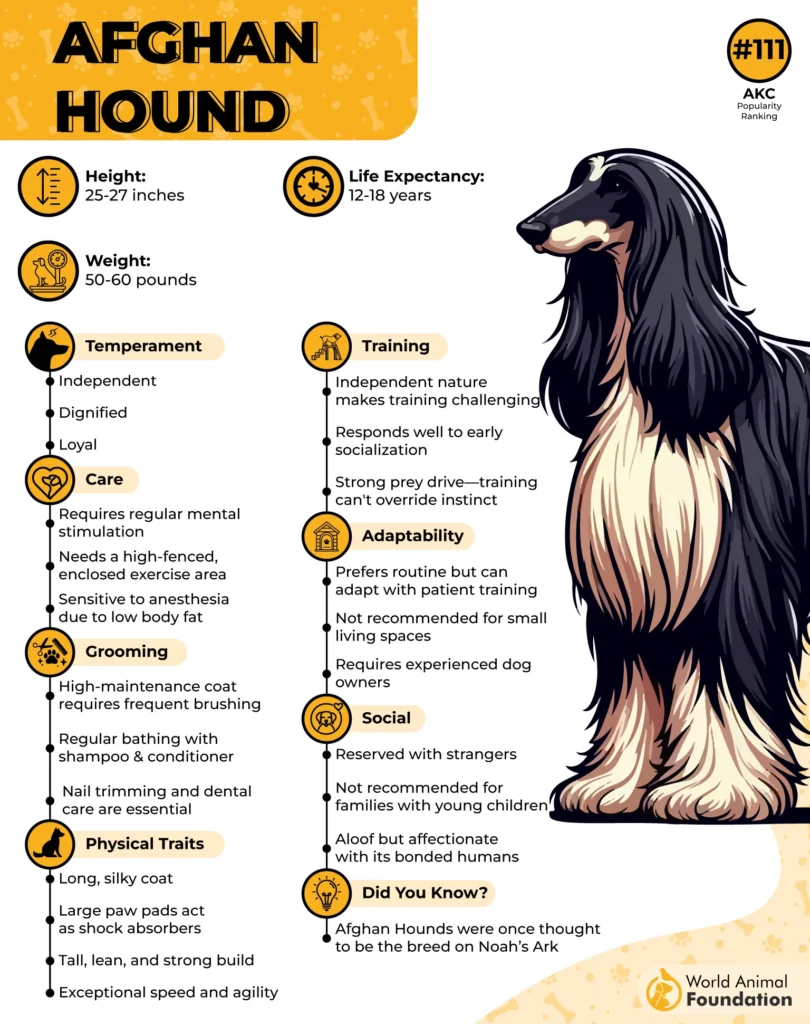
Afghan Hounds are independent and can sometimes appear aloof or reserved, yet their prey drive remains very strong. Once they begin a chase, it can be difficult to redirect their focus due to their intense concentration on movement.
Their long, silky coat requires regular and careful grooming to maintain its condition, even though their athletic ability is often underestimated because of their refined appearance.
They do best in secure environments with safe, enclosed spaces for exercise and consistent recall training. However, even well-trained Afghan Hounds can remain highly distracted by moving objects, reflecting their deep-rooted hunting instincts.
8. Saluki
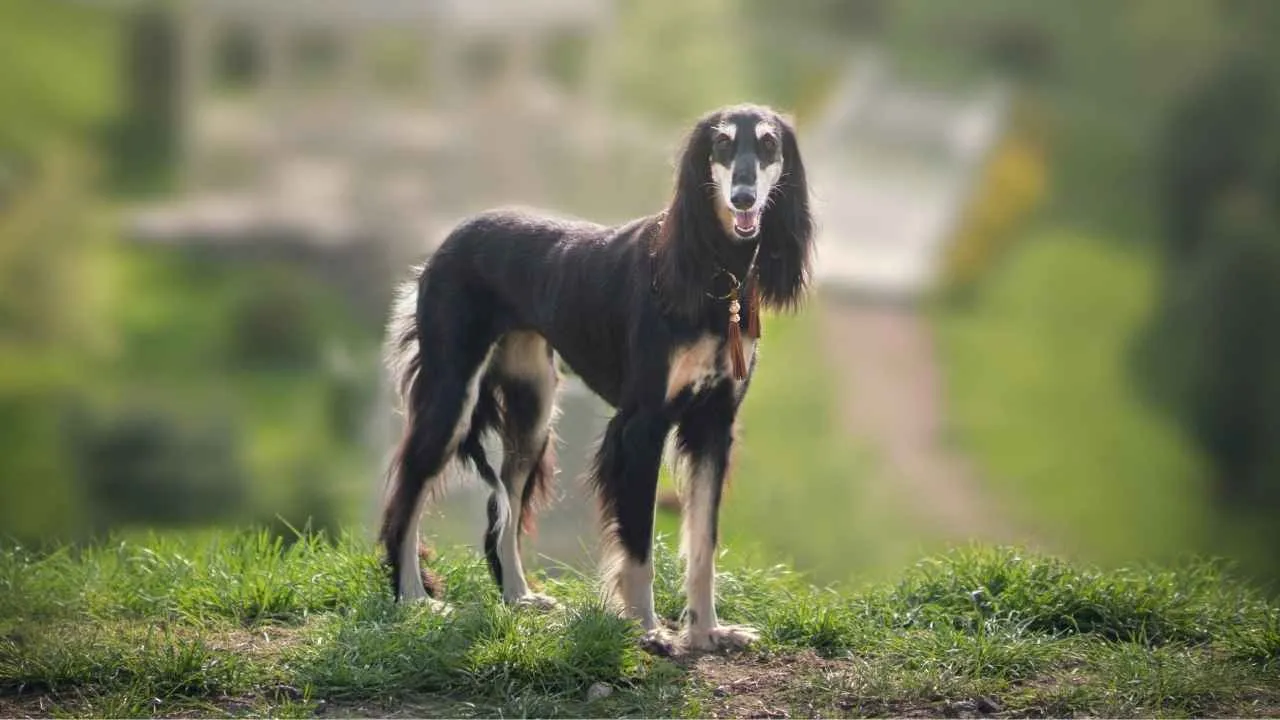
Saluki is one of the oldest known hunting dog breeds, originally developed to chase fast-moving prey across vast desert terrain. Graceful and refined in appearance, it is instantly recognizable by its lean build and distinctive, long, floppy ears.
These dogs are exceptionally fast, elegant, and highly sensitive to movement, much like other sighthounds. Their strong visual hunting instinct means they can quickly react to anything that moves, reflecting their deep-rooted prey drive.
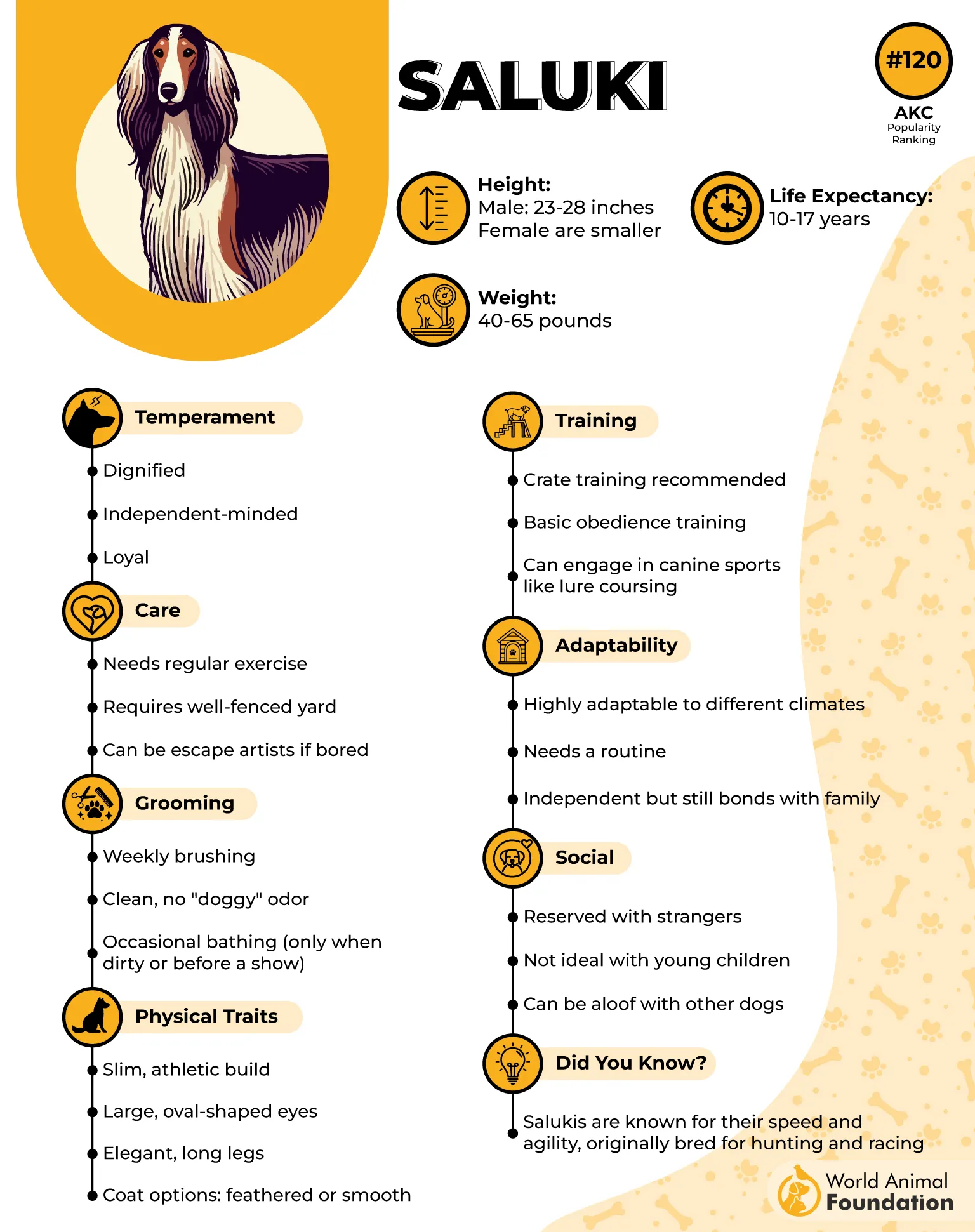
Salukis are typically calm, quiet, and gentle indoors, but transform into powerful, high-performance athletes outdoors, displaying remarkable speed and endurance.
Training can be a gradual process due to its independent nature. They are intelligent dogs, but not always eager to obey simply for the sake of obedience, requiring patient and consistent handling.
Historically valued for their speed, stamina, and hunting ability in harsh climates, Salukis have long been admired as elite hunting companions, as noted by Omlet UK.
They tend to form strong bonds with their owners and can coexist peacefully with other pets, including cats, when properly socialized.
9. Belgian Malinois
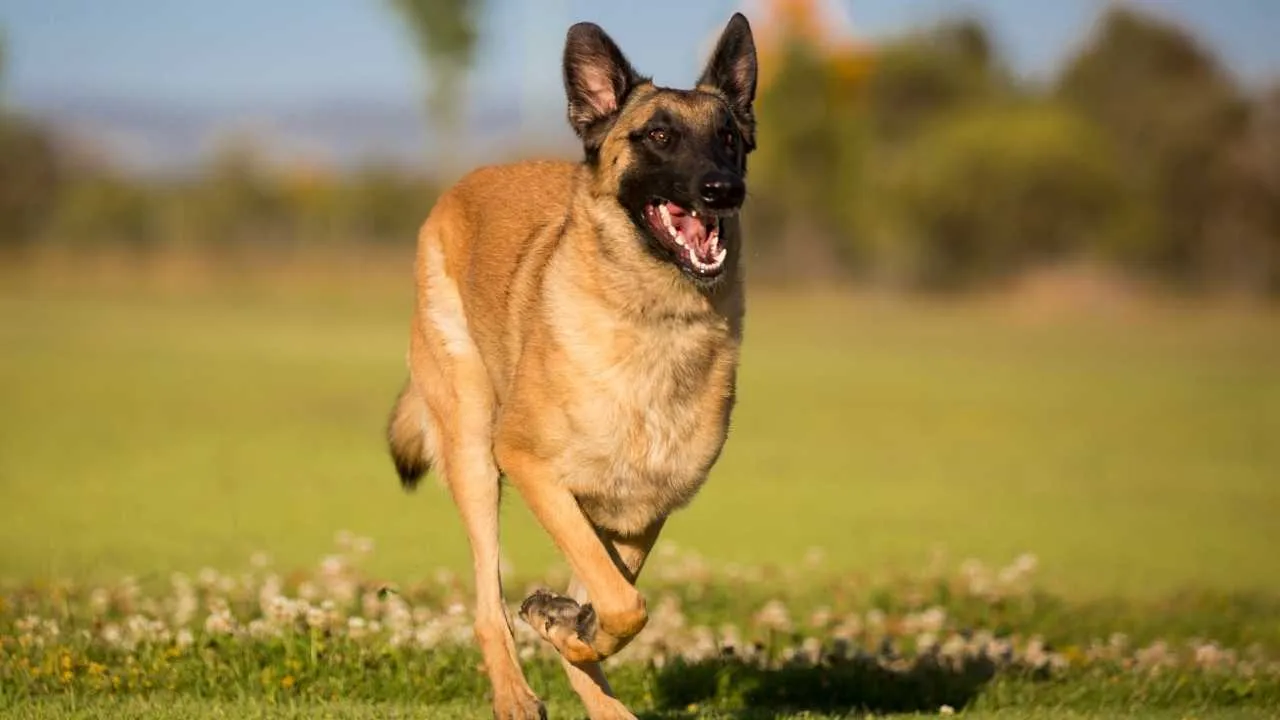
Belgian Malinois has one of the strongest working drives in the canine world, including a powerful instinct to track, follow, and engage moving targets.
These dogs are highly responsive to motion and react with remarkable speed and precision. Originally bred for herding and protection work, they are now widely used in police, military, and high-level sport training due to their intelligence, agility, and intense energy levels.
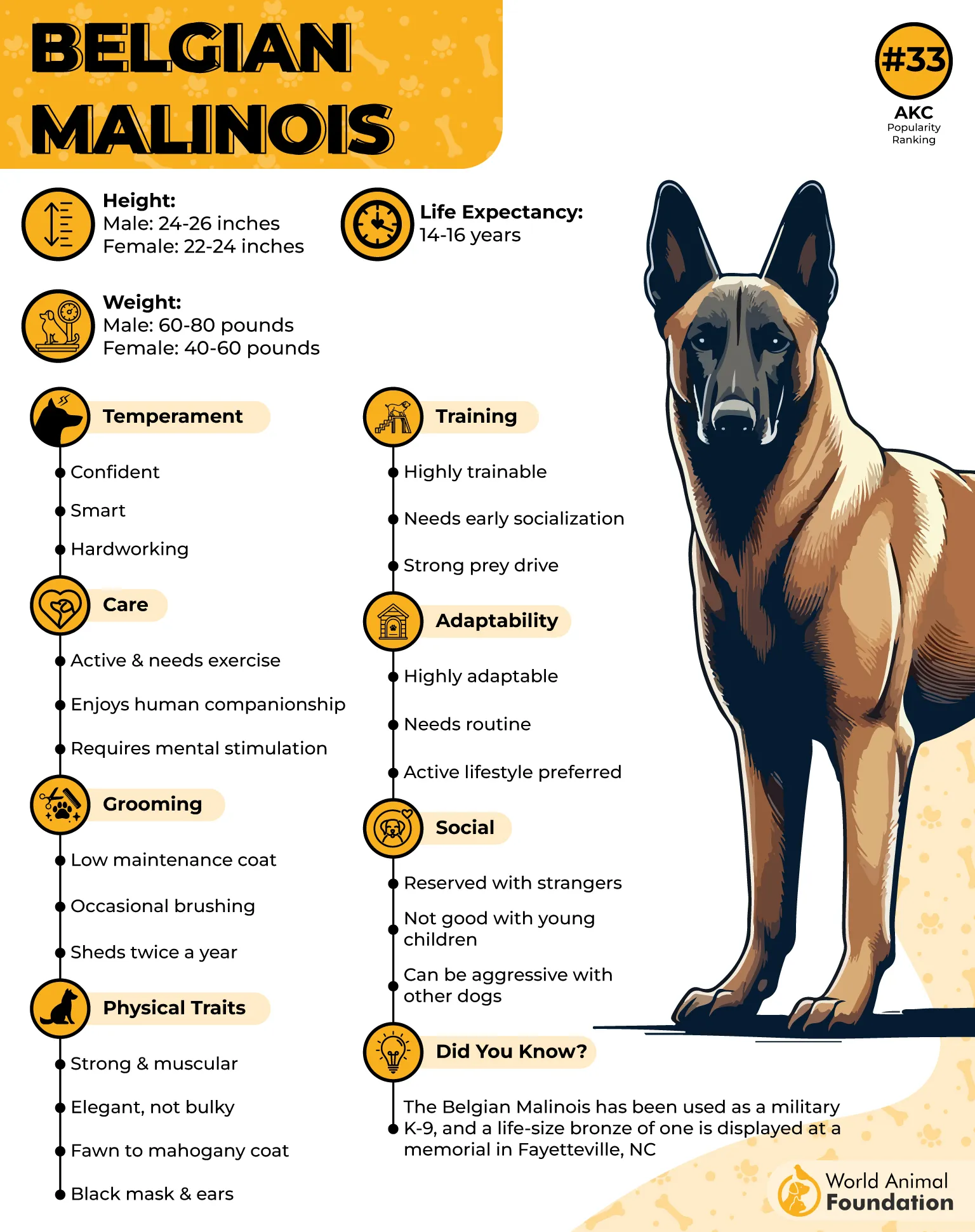
Belgian Malinois are extremely intelligent, alert, and highly energetic dogs. They require structured handling, consistent training, and near-constant mental stimulation to stay balanced and well-behaved.
When under-stimulated, they can become destructive or difficult to manage, as both their mind and body are built for continuous work and engagement. However, in the hands of experienced owners, they are among the most capable and impressive working dogs in existence.
Conclusion
Dogs with a strong prey drive are intelligent, energetic, and highly instinctive companions. Their tendency to chase is not random, but the result of generations of selective breeding for skills such as hunting, tracking, herding, and pursuit.
However, these instincts also come with responsibility. In modern homes, high prey drive breeds require proper training, consistent supervision, regular exercise, and secure environments to stay balanced and well-behaved. Without a clear structure, their natural instincts can become difficult to manage.
With the right guidance and routine, these dogs can become highly rewarding companions, loyal, focused, and deeply connected to owners who understand and channel their instincts in a positive way.
