




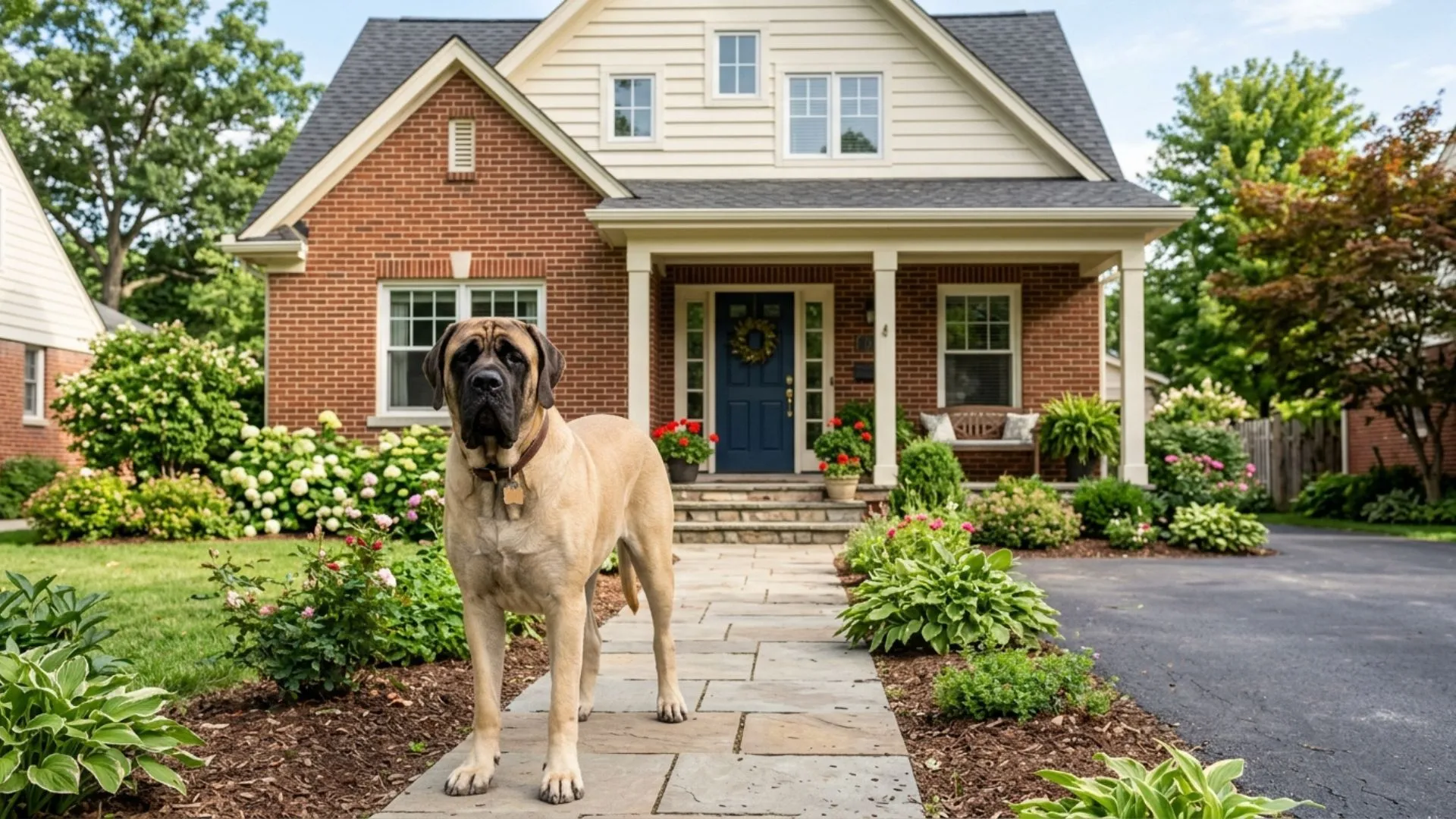
You love the idea of having a dog that feels like a calm companion but can still quietly keep an eye on your home.
The problem is, most people today are already juggling busy routines—work, family, and everything in between—so they don’t want a pet that adds extra stress or constant demands. What you really want is a dog that blends into your lifestyle, not one that completely reshapes it.
That’s where easy-going guard dogs come in. These dogs naturally stay alert and observant, noticing unusual activity without being overly reactive or difficult to manage.
With the right upbringing, they can offer a reassuring sense of safety while still being gentle, adaptable, and low-maintenance in daily life—perfect for homes that value both comfort and security. So, what are you waiting for? Let’s take a look at some of the best guard dog breeds for low-maintenance homes.
Key Takeaways
Calm, protective dogs that guard your home without disrupting your daily routine.
Learn how low-maintenance breeds balance loyalty, intelligence, and easy care.
Explore real excellent guard dogs like the Newfoundland, the Great Pyrenees, and the Boerboel in action
Discover why the right temperament matters more than size or strength alone.
Easy‑Going Guard Dog Breeds for Low‑Maintenance Homes
1. Newfoundland
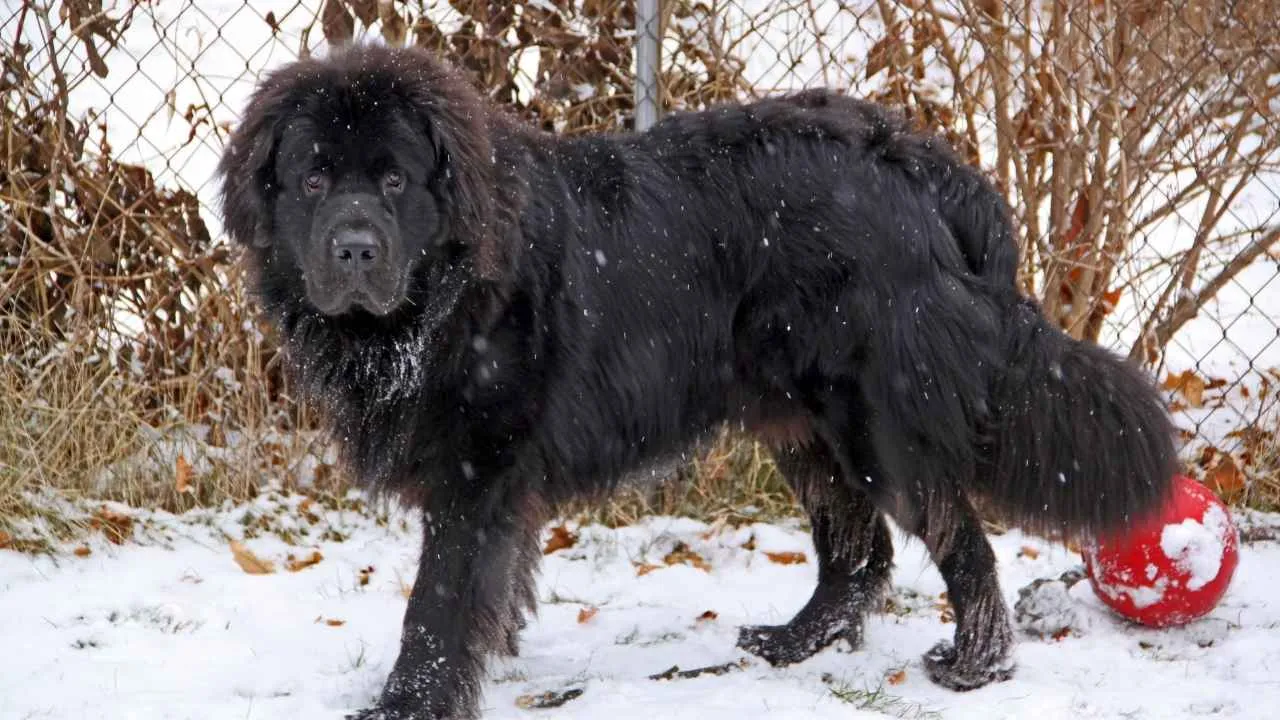
The Newfoundland is a calm, powerful, and deeply loyal working dog that naturally fits the role of a gentle protector. Despite its massive build, it is famously sweet-tempered and patient, especially with children, which is why it is often called a “nanny dog,” as mentioned by Britannica.
It has a strong instinct to watch over its family and may quietly place itself between loved ones and any perceived threat. However, it is not naturally aggressive or reactive. Instead, it shows protection through presence, awareness, and steady confidence.
With early socialization and proper training, it grows into a well-mannered and dependable family guardian that is both affectionate and alert.
Key Traits for a Low-Maintenance Guard Dog
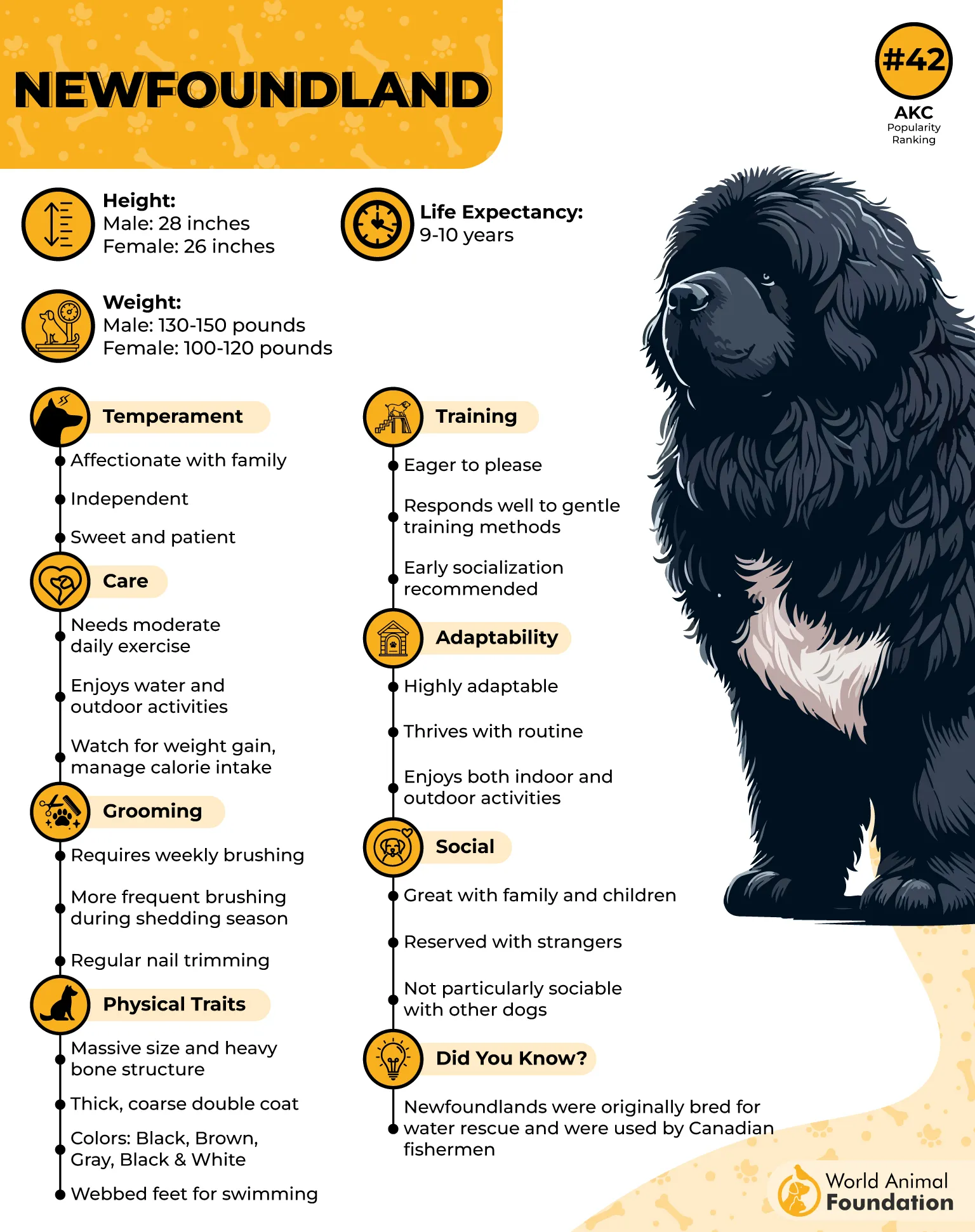
Naturally protective but calm and non-aggressive
Highly loyal, intelligent, and easy to train with positive reinforcement
Extremely patient and gentle with children and other pets
Adaptable to indoor living despite its large size
Low exercise needs compared to its size (daily walks or swimming are enough)
Watchful personality without excessive barking
The Newfoundland has a thick double coat that is water-resistant and requires regular brushing to prevent matting and manage year-round shedding.
Grooming becomes more frequent during heavy shedding seasons, but overall care remains manageable with weekly maintenance, routine baths, and nail trimming. It is also known for drooling, which is a normal part of its nature and should be expected in daily care.
This breed is intelligent but grows very quickly, so early obedience training and socialization are important to manage its strength and size. It responds best to gentle, reward-based training and does not do well with harsh correction.
While it is calm and relaxed indoors, it still benefits from light daily activity and enjoys swimming or relaxed outdoor time. With consistent care, it becomes a steady, easy-going guard dog breed that offers both emotional comfort and quiet home protection.
2. American Staffordshire Terrier
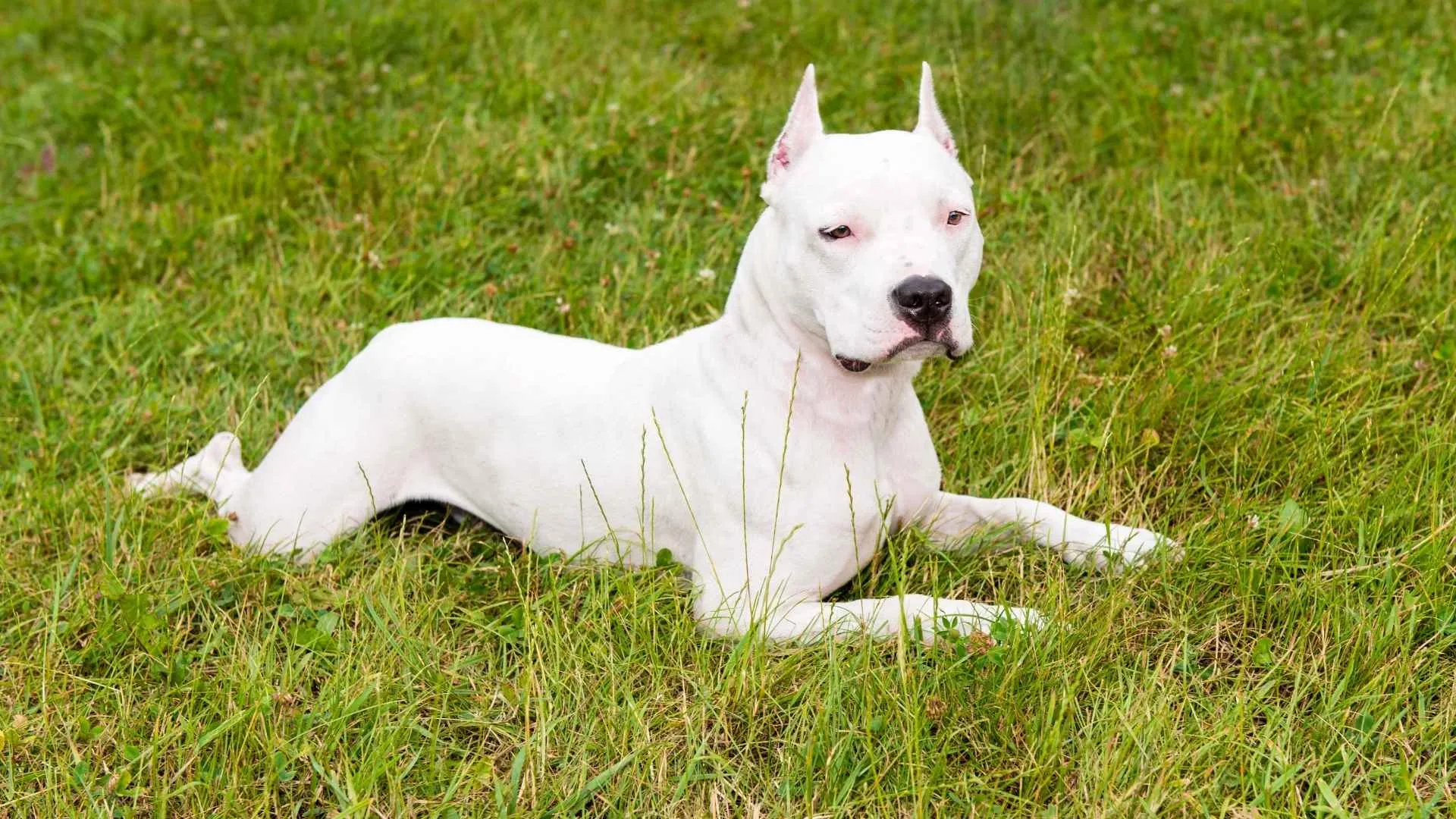
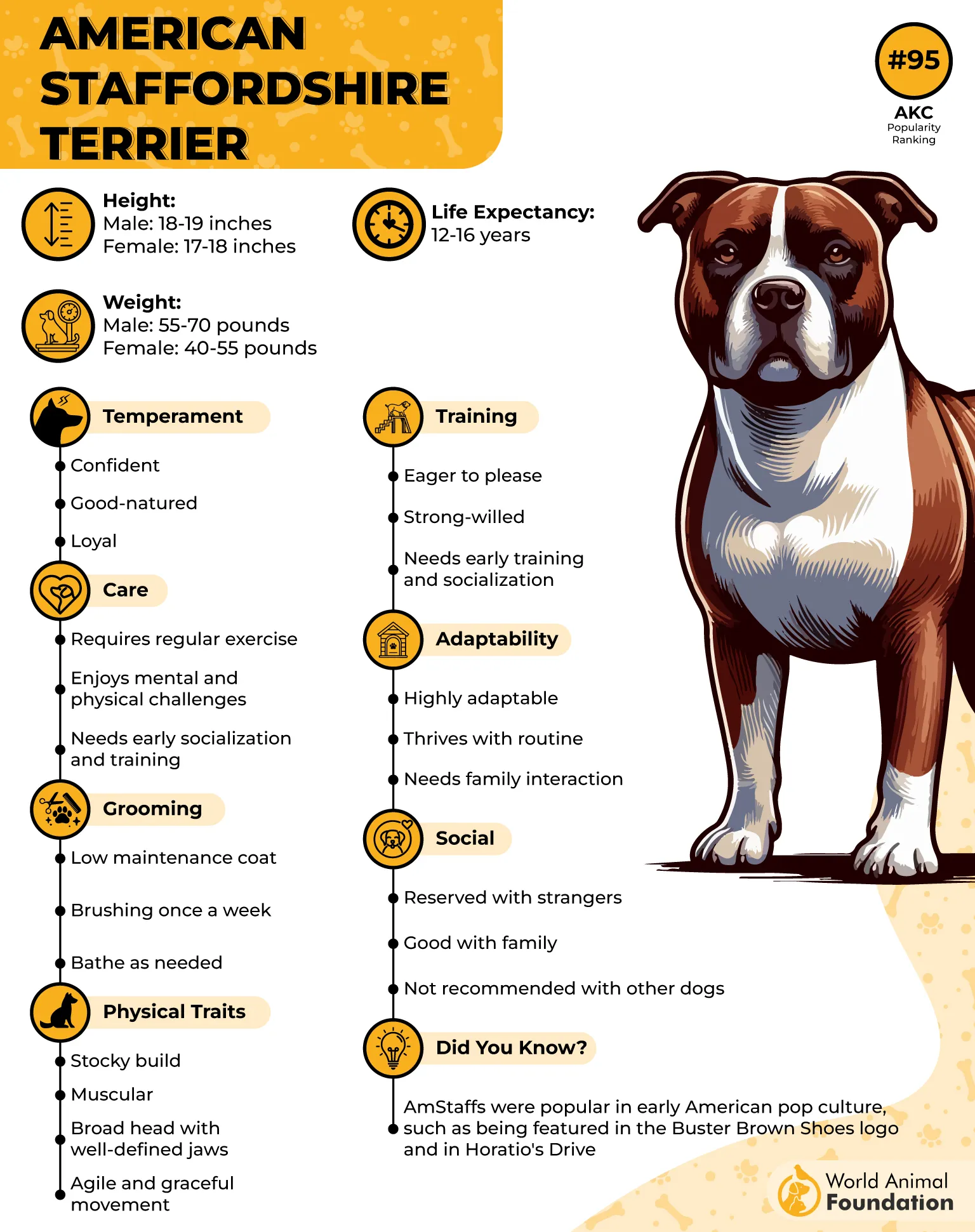
The American Staffordshire Terrier, often called AmStaff, is a confident and intelligent dog with a naturally courageous personality.
It is muscular and agile, but at home it is often affectionate, playful, and people-oriented. This breed forms strong bonds with its family and is known for being loyal and trustworthy when properly raised.
While it has a strong guarding instinct and keen awareness of its surroundings, it is not meant to be overly aggressive. Instead, it becomes a steady and alert companion that thrives when included in daily family life.
Key Traits for Easy-Going Protection
Naturally confident and highly alert to surroundings
Loyal and affectionate with family members
Intelligent and highly trainable with positive reinforcement
Strong but agile, with balanced energy levels
Good-natured personality when well-socialize
Moderate exercise needs (daily play or walks are enough)
Early socialization and puppy training are essential for this breed because of its strength, confidence, and strong will. It responds well to reward-based training and enjoys mental challenges, but may develop habits like chewing or digging if not properly guided.
Consistency is important, and training should feel engaging rather than forced. While it is the smartest breed, it does best when training is turned into a fun activity rather than strict commands.
The AmStaff has a short, smooth coat that is very easy to maintain. Weekly brushing is usually enough to keep it clean and healthy, with occasional baths when needed.
Regular nail trimming and basic ear and dental care are also important. It is not an outdoor-only dog, as it prefers being close to its family and participating in daily routines.
3. Great Dane
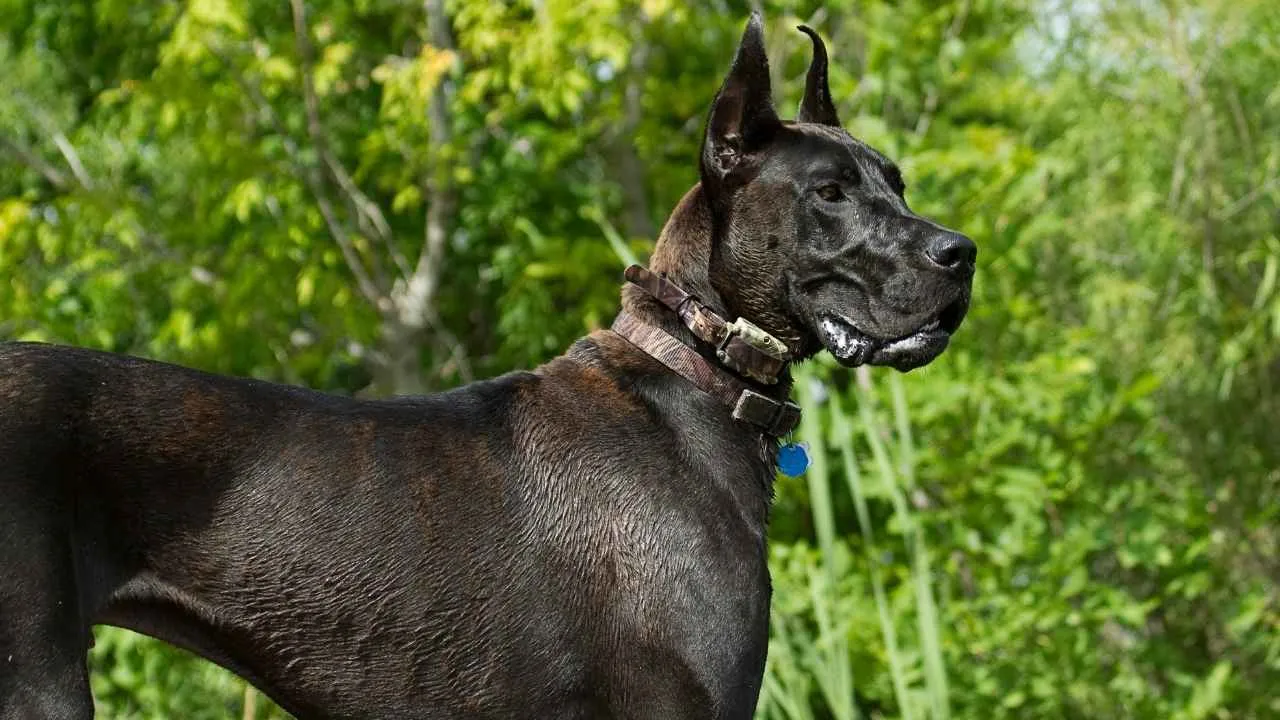
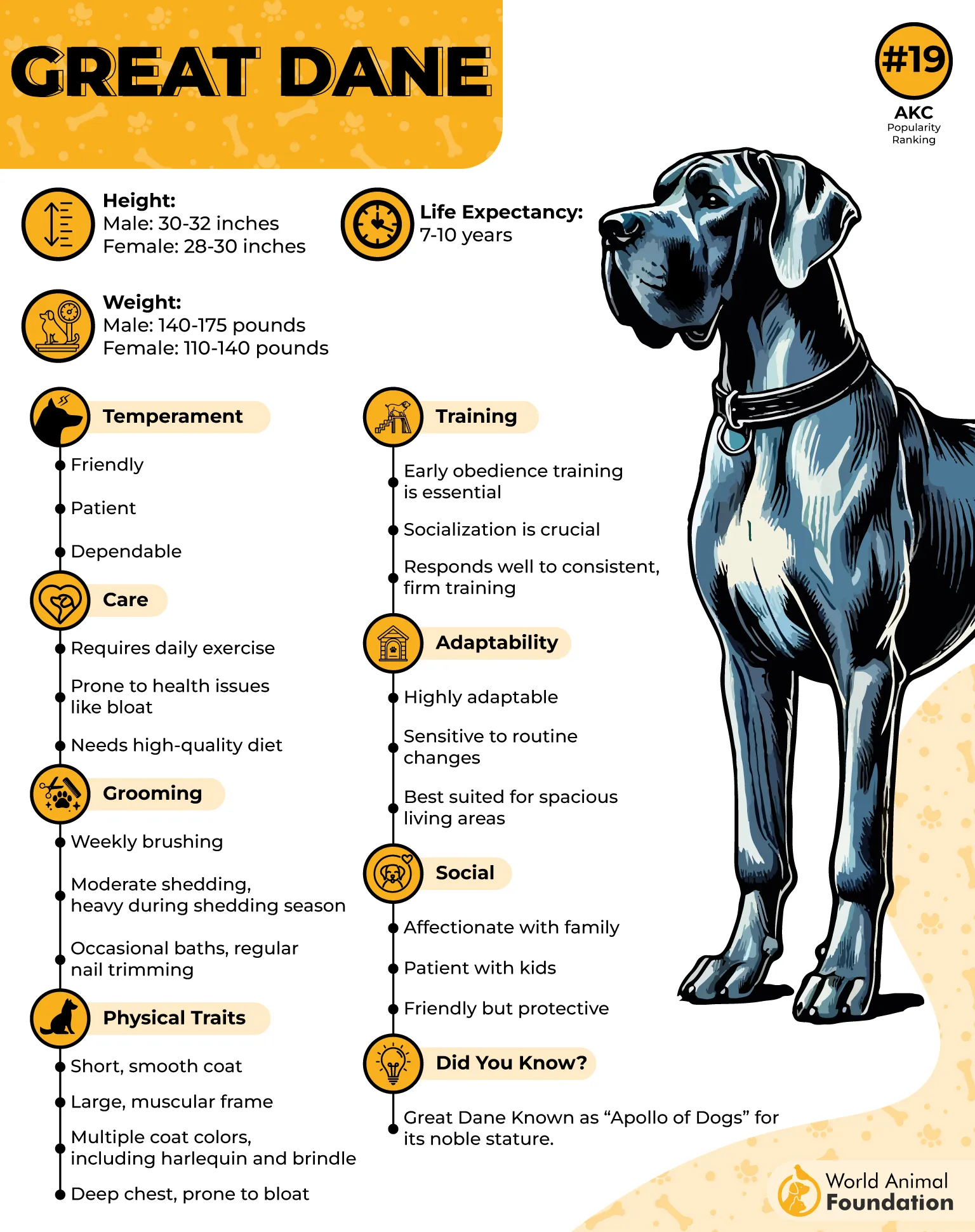
The Great Dane, often called the “Apollo of Dogs,” is a towering yet gentle companion known for its calm and friendly nature. Despite its impressive size and strength, it is surprisingly affectionate and people-oriented. It forms strong bonds with its family and enjoys being part of daily home life.
While it is not an aggressive dog, its sheer presence is often enough to discourage strangers, making it a natural but non-confrontational guardian. It is typically patient with children and sociable when properly trained and socialized, blending elegance with a soft, loving temperament.
Key Traits for Easy-Going Home Protection
Naturally alert and watchful without being aggressive
Loyal and eager to please with consistent training
Friendly with children and generally social with others
Requires moderate daily exercise (short walks are enough)
Low-maintenance grooming due to short coat
Protective presence through size and confidence rather than aggression
Early socialization and obedience training are essential for this breed due to its size and strength. It responds well to firm, consistent, and positive reinforcement-based training. Gentle exposure to different people, places, and situations helps it grow into a balanced and well-mannered adult.
It is generally calm indoors but still needs daily walks and light activity to stay healthy. Heavy exercise should be avoided during early growth stages to protect developing joints, and intense activity around meals should be avoided due to digestive sensitivity.
The Great Dane has a short, smooth coat that is easy to maintain with weekly brushing to control shedding. Bathing is only needed occasionally, and routine nail trimming, ear cleaning, and dental care keep it in good condition.
While it sheds moderately, grooming is still simple compared to many larger breeds. It thrives in a home where it receives attention, companionship, and structured care.
4. Mastiff
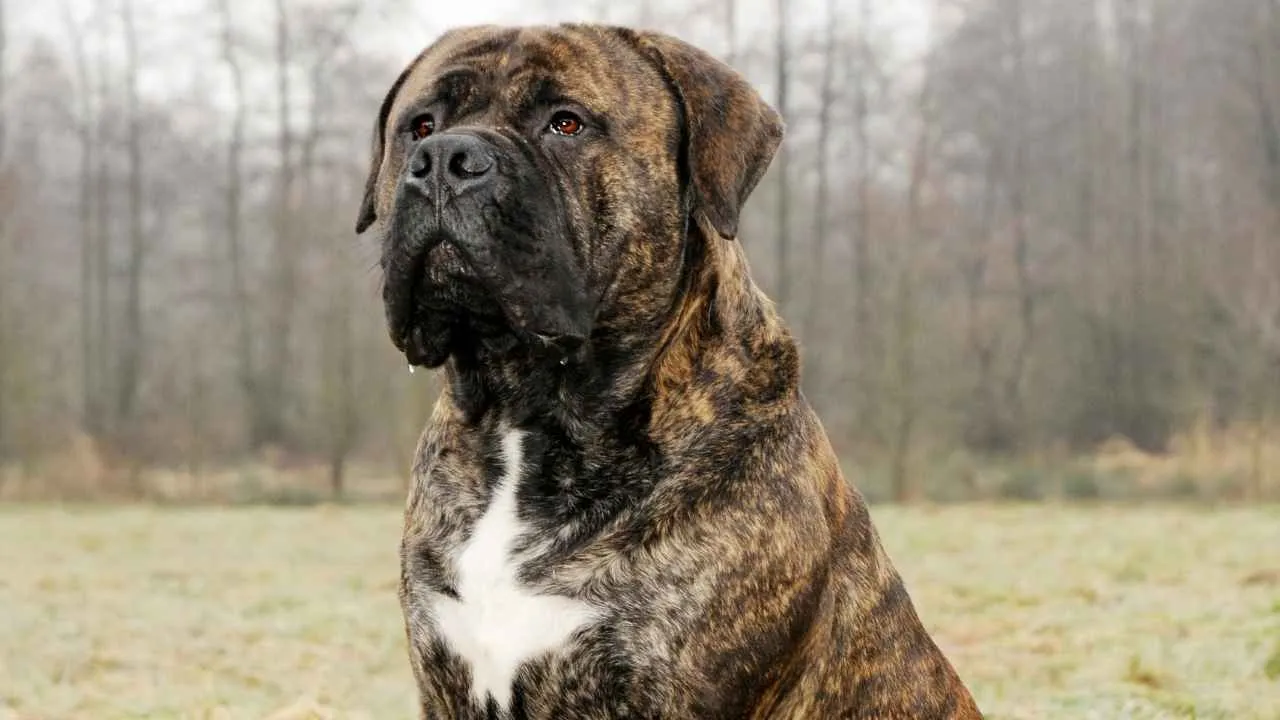
The Mastiff is one of the oldest and most powerful guardian breeds, known for its massive build and deeply loyal temperament. Despite its intimidating appearance, it is calm, dignified, and naturally gentle with its family.
It forms strong emotional bonds and prefers to stay close to its people rather than roam independently. While it is not overly vocal, it is highly alert and will quietly step into a protective role when it senses anything unusual.
Its guarding style is steady and controlled rather than reactive, making it a strong yet easy-going home protector.
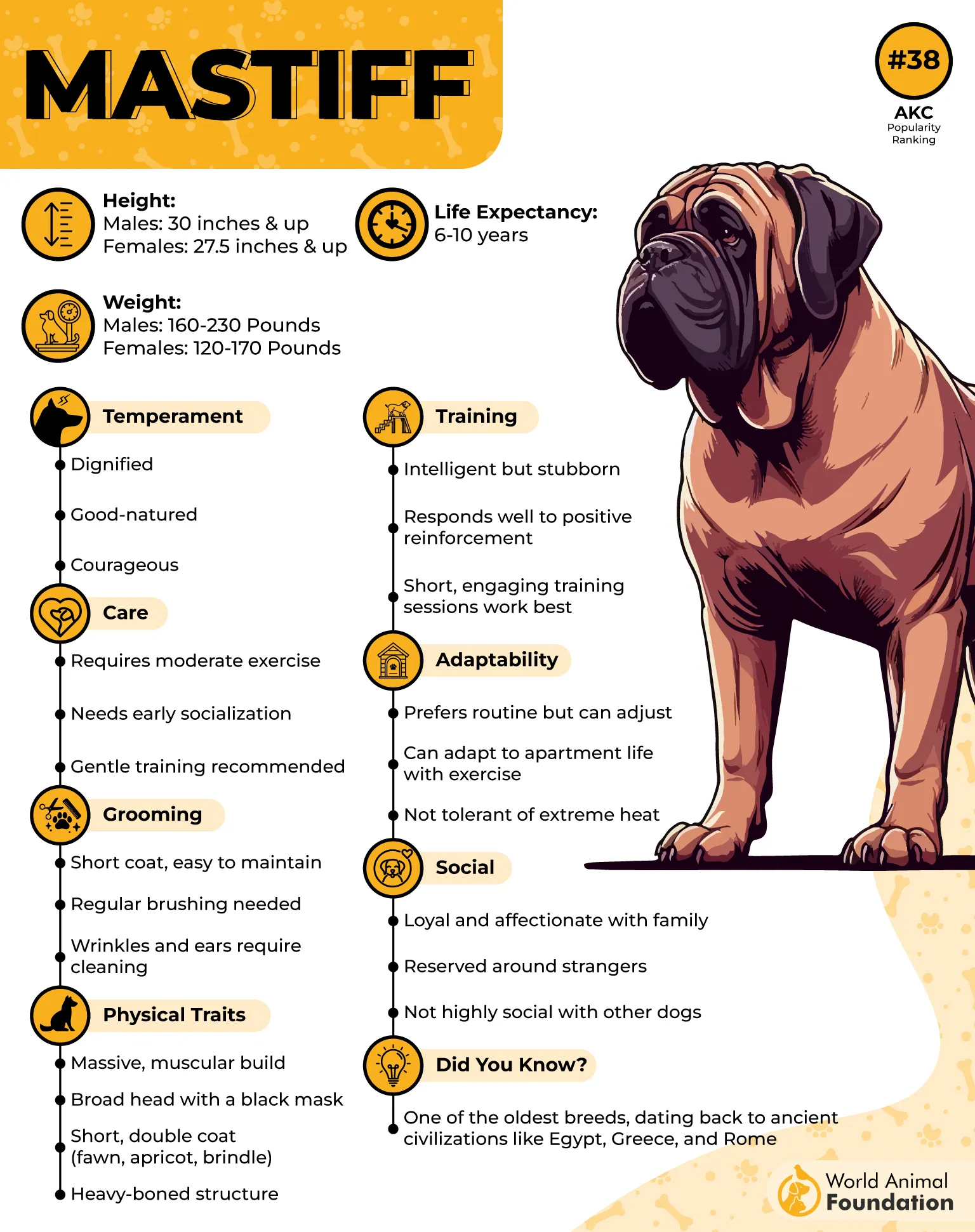
Key Traits for Easy-Going Protection
Naturally protective but calm and non-aggressive
Patient with older children, gentle in daily life
Intelligent but responds best to short, simple training sessions
Low exercise needs (daily walks and light play are enough)
Generally quiet, but highly observant of strangers
Strong territorial instinct balanced with a calm temperament
Early socialization and obedience training are essential for this breed, especially due to its size and protective instincts. It learns quickly but can become bored with repetitive training, so short, varied, and positive sessions work best.
Harsh correction should be avoided, as it responds better to praise and calm guidance. It is naturally laid-back, but consistent early exposure to people, places, and situations helps it grow into a stable, well-mannered adult.
The Mastiff has a short, dense coat that is easy to maintain with regular brushing every few days. It sheds more heavily during certain seasons, but overall grooming remains simple. Basic care includes cleaning facial wrinkles, checking ears, and regular nail trimming.
WebMD mentions that drooling is common and part of its nature, so owners should be prepared for it. It requires moderate daily walks but should not be over-exercised, especially in puppyhood.
5. Rhodesian Ridgeback
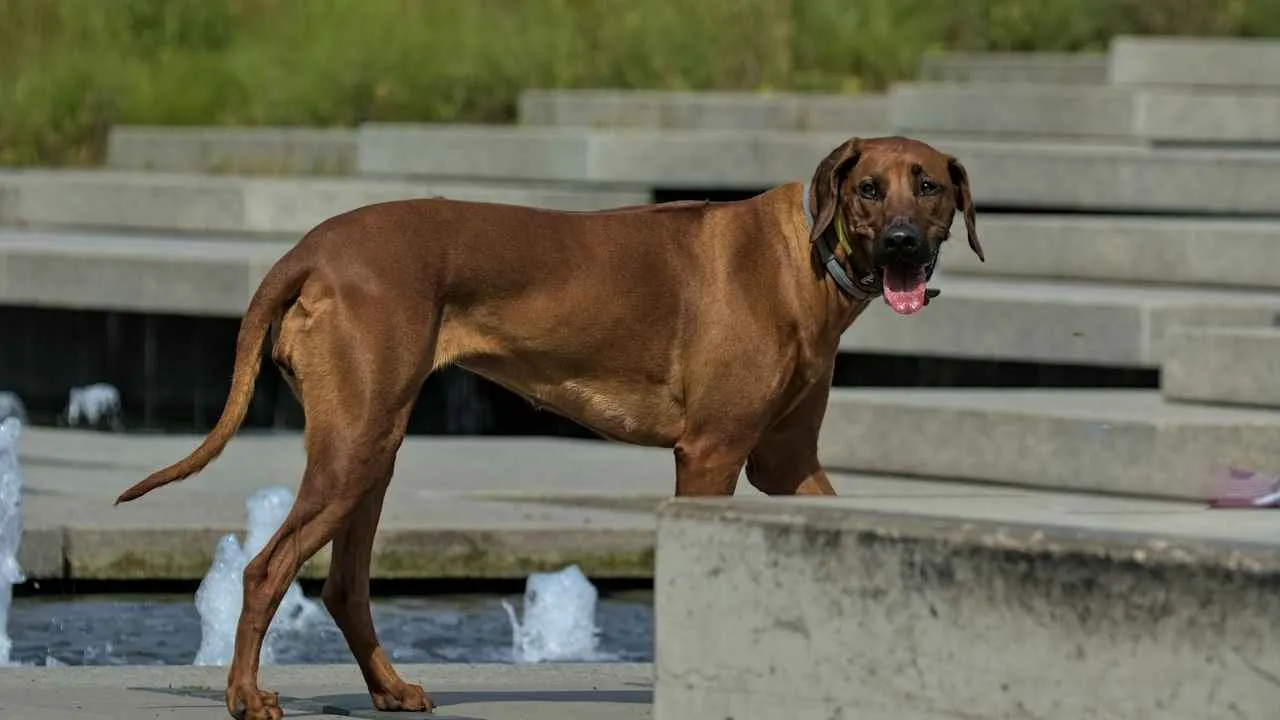
The Rhodesian Ridgeback is a strong, athletic, and intelligent dog originally bred for tracking large game, including lions, in Africa. Despite its hunting background, it is now valued as a calm yet watchful family companion.
It is naturally independent and confident, with a quiet guarding instinct that makes it observant without being overly aggressive. This breed is deeply loyal to its family and can be affectionate and gentle at home, but it often remains reserved around strangers.
Its protective nature, combined with its calm indoor behavior, makes it a balanced choice for families who want security without constant noise or hyperactivity.
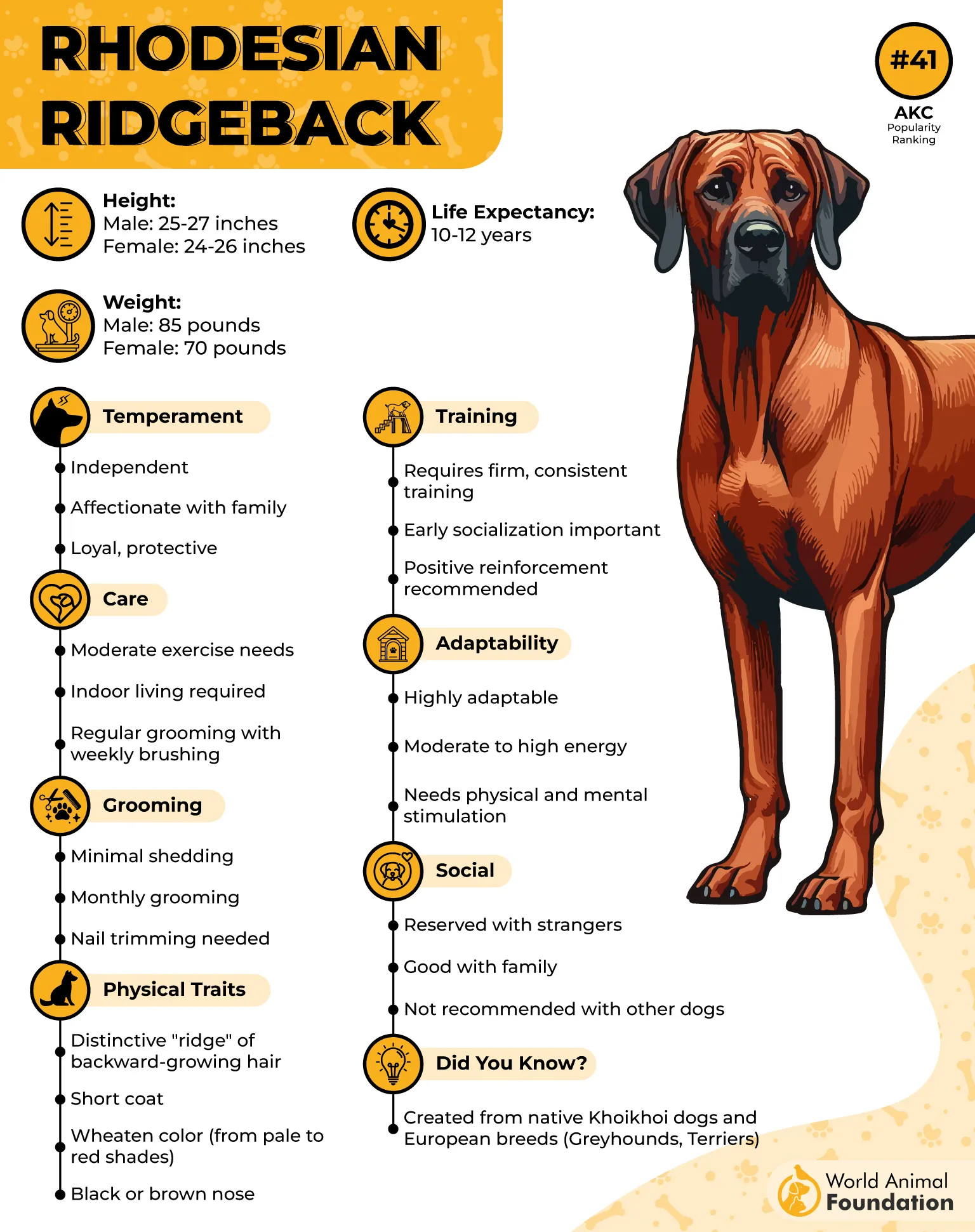
Key Traits for Easy-Going Protection
Naturally alert and highly observant
Loyal and affectionate with family, but reserved with strangers
Strong but calm temperament when properly trained
Independent yet trainable with positive reinforcement
Moderate exercise needs (daily walks, runs, or play sessions)
Strong prey drive requires secure outdoor spaces
Low barking tendency with good mental stimulation
Early socialization and lifelong obedience training are essential for this breed due to its strong will and independent nature. It responds best to calm, consistent, reward-based training and can excel in activities like tracking, agility, and obedience work.
Without proper mental and physical stimulation, it may become bored and develop unwanted behaviors such as chewing or escaping. Because of its prey drive, it should always be kept in a secure, enclosed area when off-leash.
The Rhodesian Ridgeback has a short, low-maintenance coat that requires only weekly brushing to remove loose hair and keep it healthy.
Occasional baths are enough, and routine nail trimming is important for comfort and movement. It sheds moderately but is generally easy to care for compared to many breeds.
6. Great Pyrenees
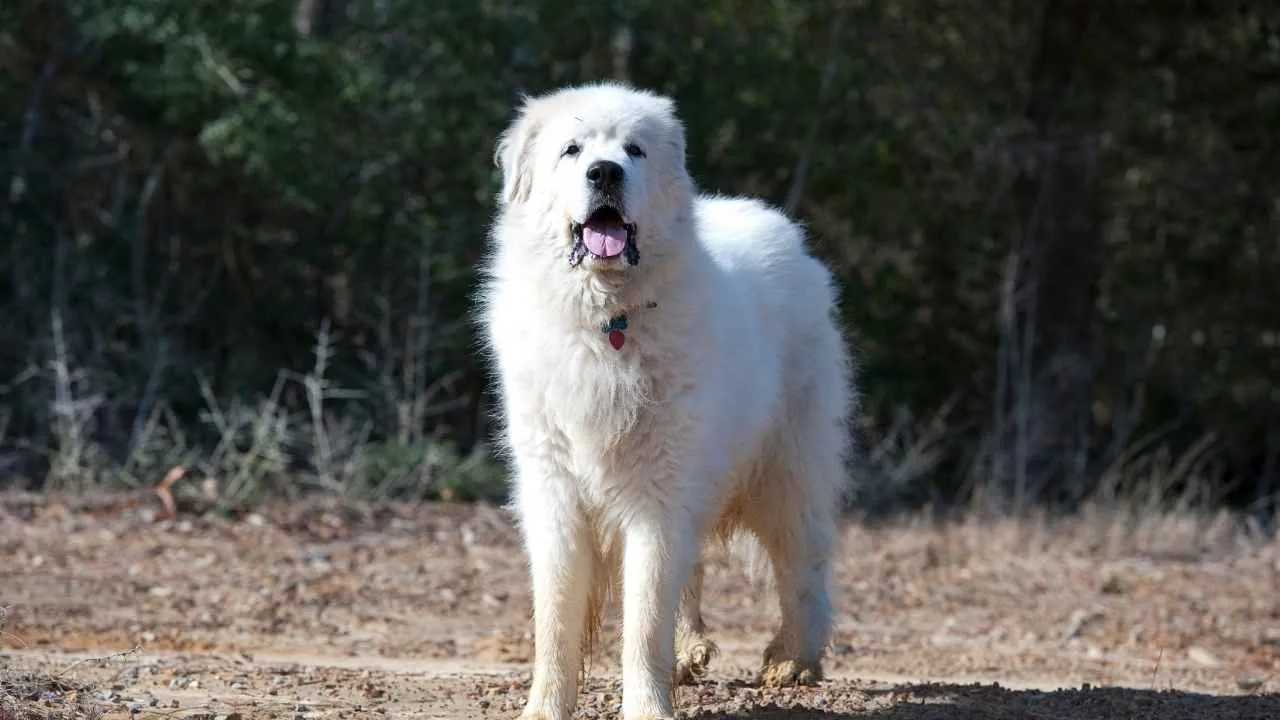
The Great Pyrenees is a majestic and powerful livestock guardian breed known for its calm, steady, and deeply protective nature. Originally bred to guard flocks in snowy mountain regions, it has an instinct to watch over its family and territory with quiet confidence.
Despite its size and strength, it is usually gentle, relaxed, and affectionate at home. It is not an overly reactive dog, but it is highly alert and will bark to warn its family of anything unusual.
This balanced temperament makes it an excellent, easy-going guard dog for homes that want protection without constant intensity.
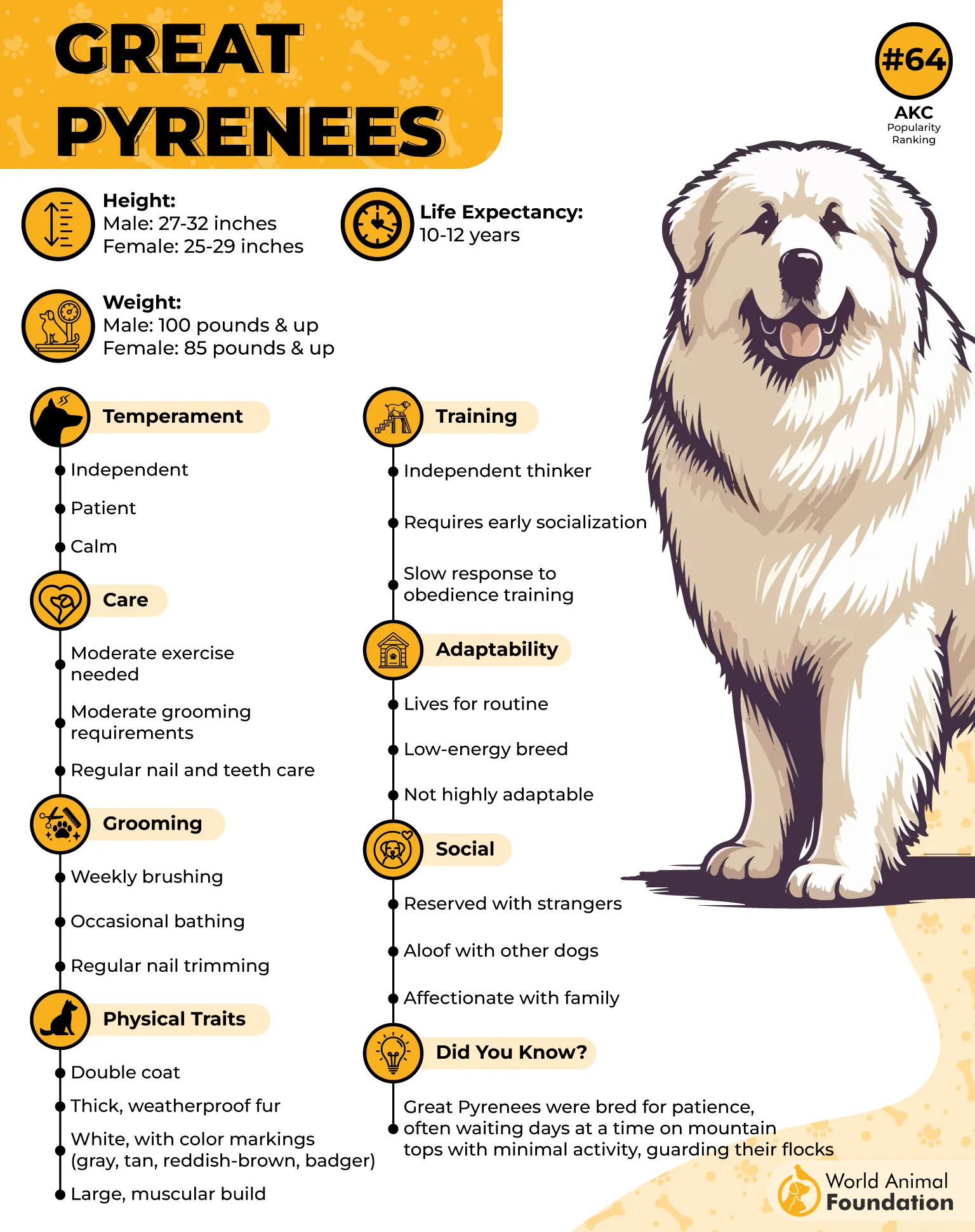
Key Traits for Easy-Going Protection
Strong guarding instinct without unnecessary aggression
Loyal and gentle with family members
Independent thinker with low demand for constant attention
Moderate exercise needs (daily walks are enough)
Excellent territorial awareness and alert barking behavior
Generally low energy indoors, but protective outdoors
This breed is highly independent, which comes from its history of working alone in mountain environments. Because of this, it may show little interest in repetitive obedience training and can sometimes appear stubborn or slow to respond.
However, early socialization and consistent, positive reinforcement training are still important to help it develop into a well-adjusted companion. It benefits from exposure to different people, places, and situations from a young age, even if it prefers to think for itself.
The Great Pyrenees has a thick double coat that looks high-maintenance but is surprisingly dirt- and tangle-resistant. Weekly brushing is usually enough to manage its coat, though shedding can increase heavily during seasonal coat changes.
Routine nail trimming and dental care are also necessary for overall health. It enjoys moderate outdoor activity like walks or light roaming, but is not highly active.
7. Boerboel
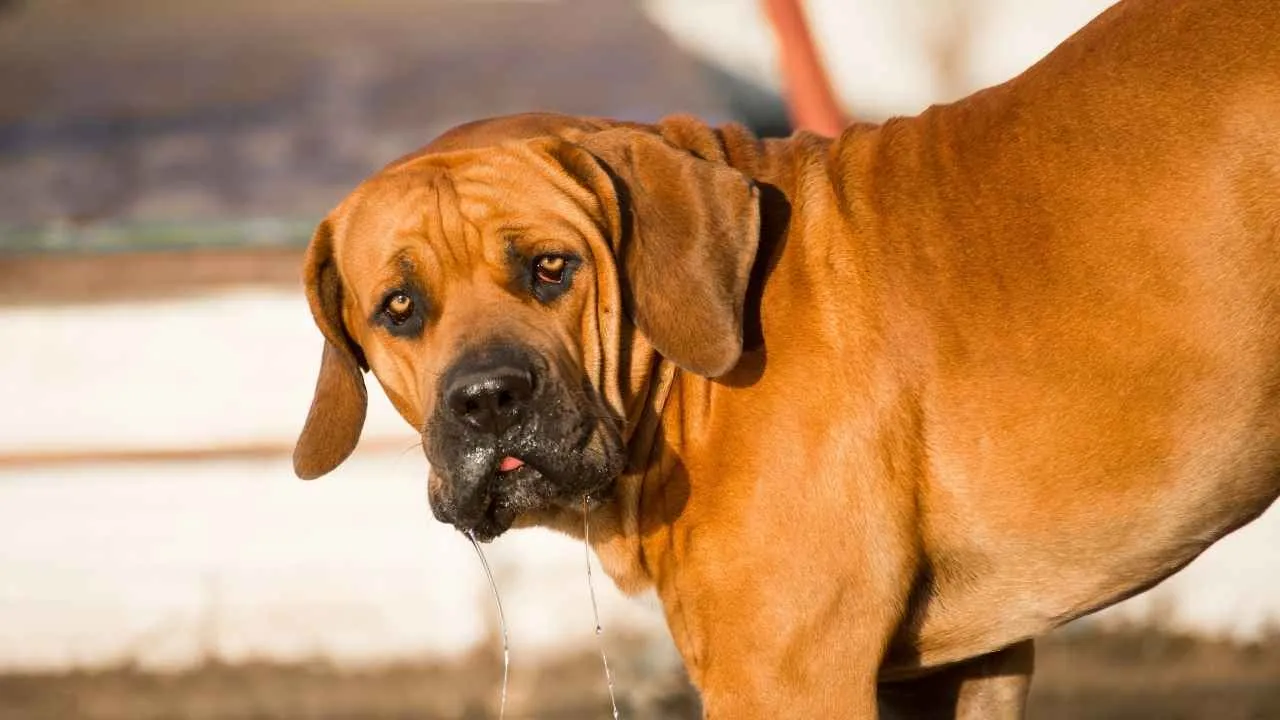
The Boerboel is a large, muscular guardian breed developed in South Africa to protect homesteads from dangerous predators. Despite its intimidating appearance, it is calm, intelligent, and deeply loyal to its family.
It is a naturally confident and highly protective dog breed, often forming a strong bond with its household while staying reserved around strangers. This breed is not overly reactive, but it is always alert and ready to defend when necessary.
Its steady temperament and strong presence make it an effective but controlled guard dog for experienced owners.
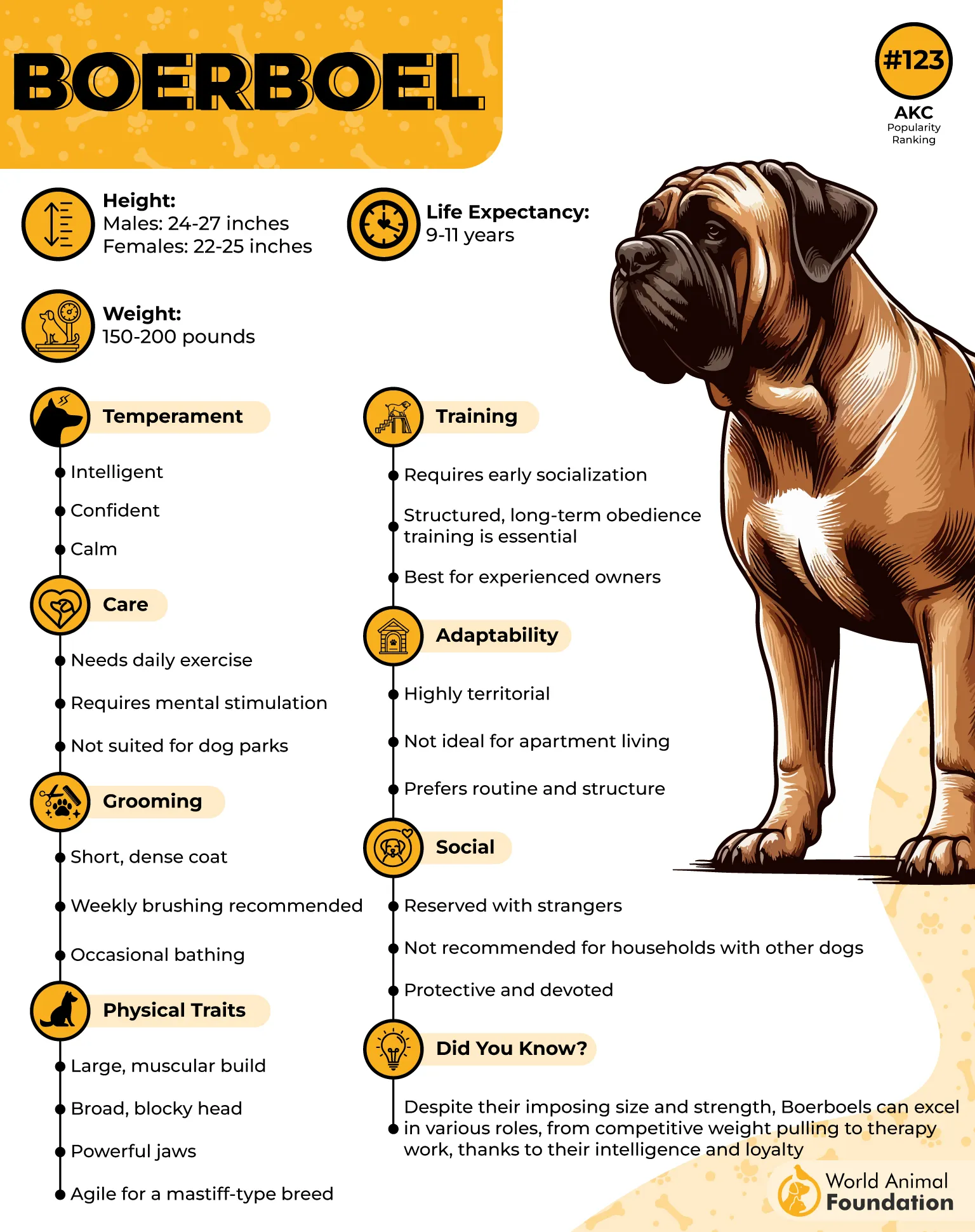
Key Traits for Easy-Going Protection
Naturally protective, confident, and highly alert
Loyal and deeply attached to family members
Calm and stable when properly trained and socialized
Intelligent and eager to learn with consistent guidance
Moderate to high energy with a need for daily exercise
Strong territorial instincts and reserved with strangers
Not suitable for off-leash or uncontrolled environments
Early socialization and structured obedience training are essential for this breed, as it can develop dominant behavior without clear guidance. It responds best to confident, experienced owners who use positive reinforcement and consistent rules.
Training should begin in puppyhood and continue into adulthood to maintain good behavior. According to the American Kennel Club, it is not well-suited for dog parks or being off-leash due to its protective instincts and potential intolerance toward unfamiliar dogs.
The Boerboel has a short, dense coat that is easy to maintain with weekly brushing using a grooming mitt or soft brush. It sheds moderately and requires occasional baths to stay clean.
Routine ear checks, dental care, and regular nail trimming are important, especially since this breed can develop discomfort if neglected. It also tends to drool, so light daily cleaning may be needed.
Conclusion
Choosing the right easy-going guard dog isn’t just about strength or size—it’s about finding a balance between protection and everyday livability.
At the end of the day, the right dog should feel like part of your lifestyle, not a challenge to manage. Whether you want quiet protection, steady companionship, or a dependable presence at home, the key is matching temperament with your daily reality.
Take your time, understand each breed’s needs, and choose a dog that doesn’t just guard your home—but truly belongs in it.
Looking for more protection dogs? You can also check out the Staffordshire Bull Terrier, German Shepherd, Doberman Pinscher, Australian Shepherd, and Cane Corso.
