




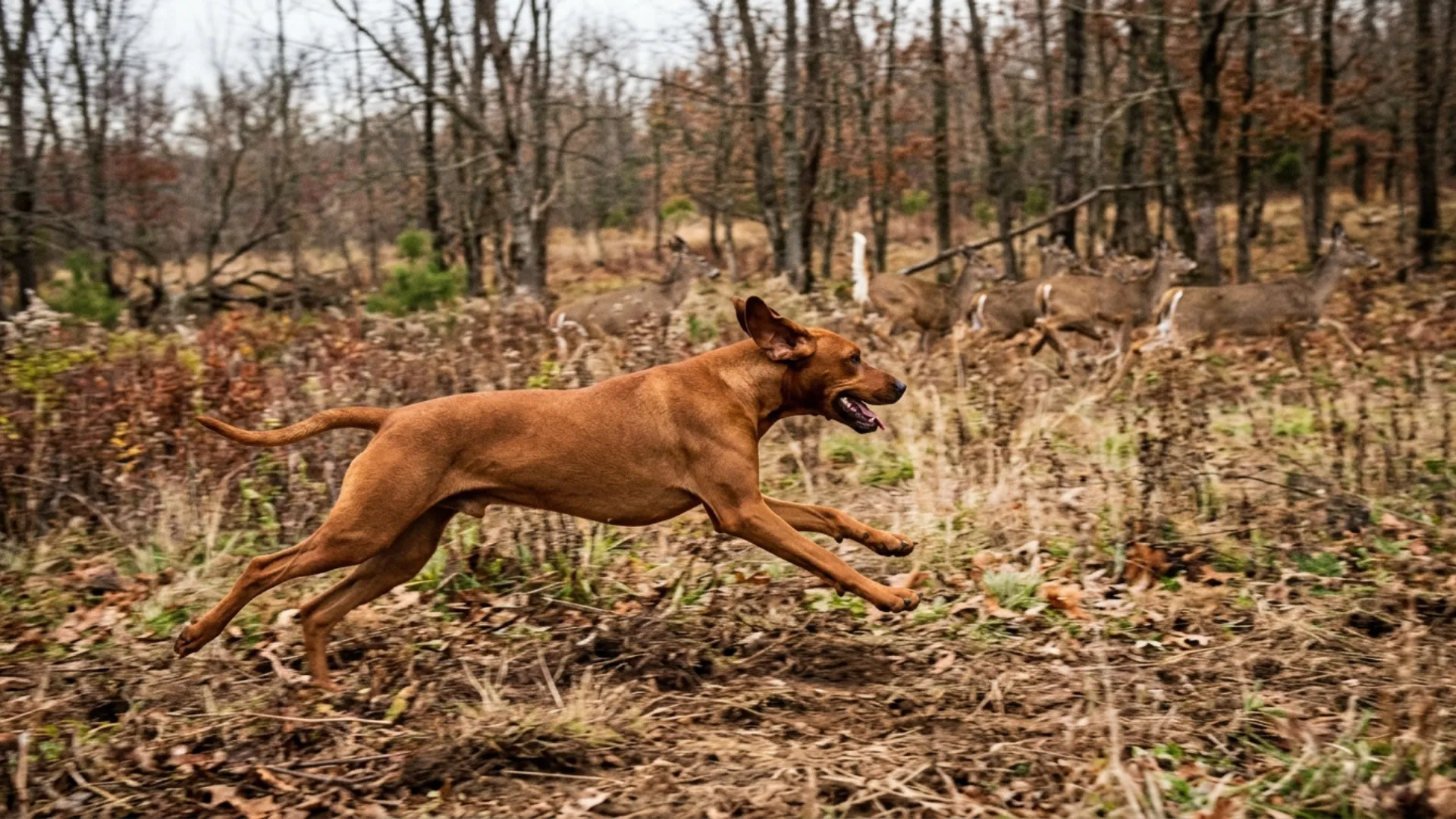
If you’ve ever watched a deer explode into motion, you know just how unreal their speed really is—one moment still, the next already vanishing through the trees like it never stood there at all.
That’s exactly why hunting them has always been one of the most challenging tests of skill, timing, and endurance in the natural world.
To keep up with such fast and agile prey, seasoned hunters have historically relied on specially trained dogs with explosive bursts of speed, sharp focus, and the ability to sprint across rough and varied terrain without losing direction.
Deer can reach speeds of around 30–40 mph in short bursts, and they don’t just run straight—they zigzag, double back, and use terrain to their advantage. That means only highly athletic, intelligent dogs with strong instincts and stamina can truly match the chase.
So what are you waiting for? Let’s take a look at some of the best deer hunting companions.
Dog Breeds Skilled at Hunting Deer with High-Speed Sprints
1. American Foxhound
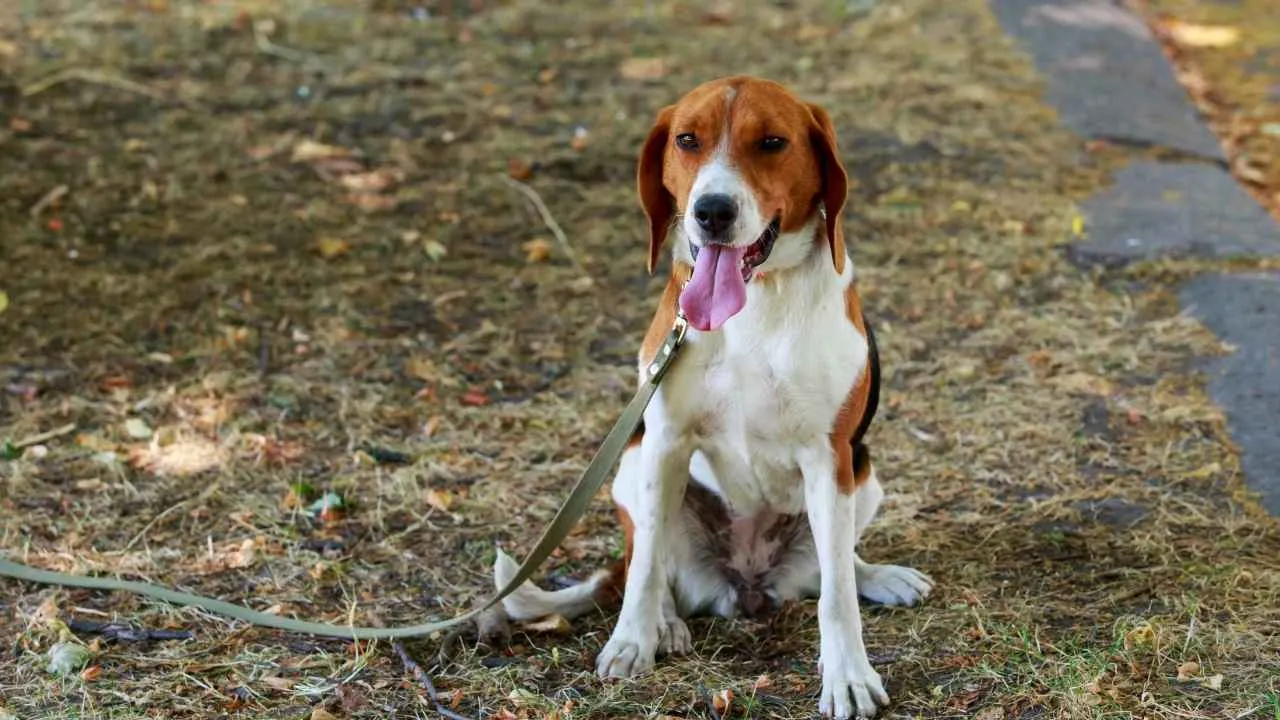
When it comes to hunting deer that rely on fast, zigzag sprints through open land and forests, the American Foxhound stands out as a true endurance athlete. This breed is sleek, fast, and built for long-distance pursuit.
It is closely tied to American hunting history and even linked to early figures like George Washington, who helped shape its development.
Known for its gentle expression and long, agile frame, this hound was designed for one thing—following scent trails over miles without losing focus. Its powerful nose and steady pace make it a strong match for fast-moving prey like deer.
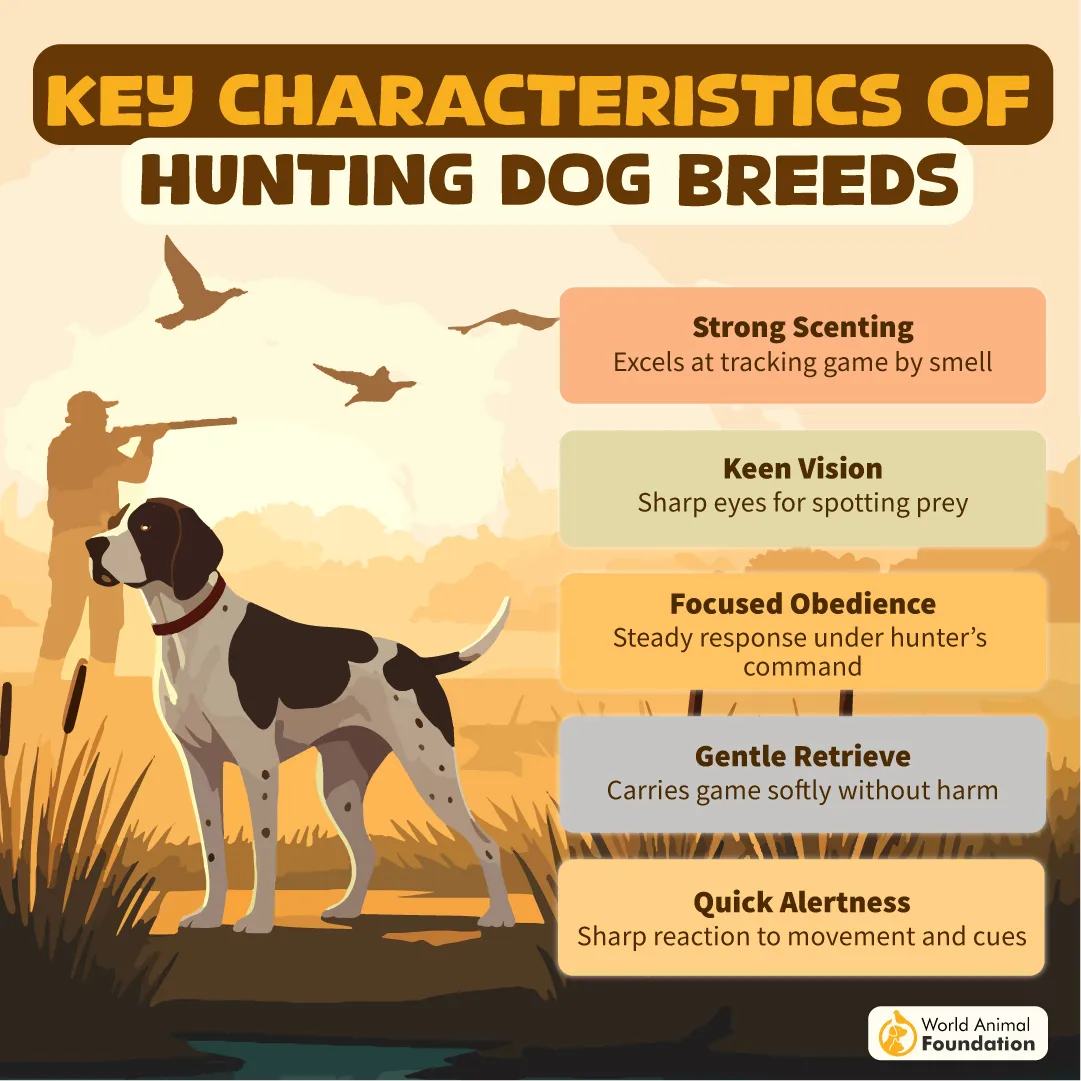
Key Hunting Strengths
Exceptional scent tracking over long distances
High stamina for extended chases
Strong prey drive for persistent pursuit
Works well in packs during hunts
Natural speed suited for open terrain tracking
This breed is not just about speed—it is about consistency. The American Foxhound can keep running when many dogs would slow down, making it useful in deer hunts where stamina matters as much as burst speed. It’s loud, musical baying also helps hunters track it from a distance while it follows the scent trail.
Temperament, Training, and Lifestyle Needs
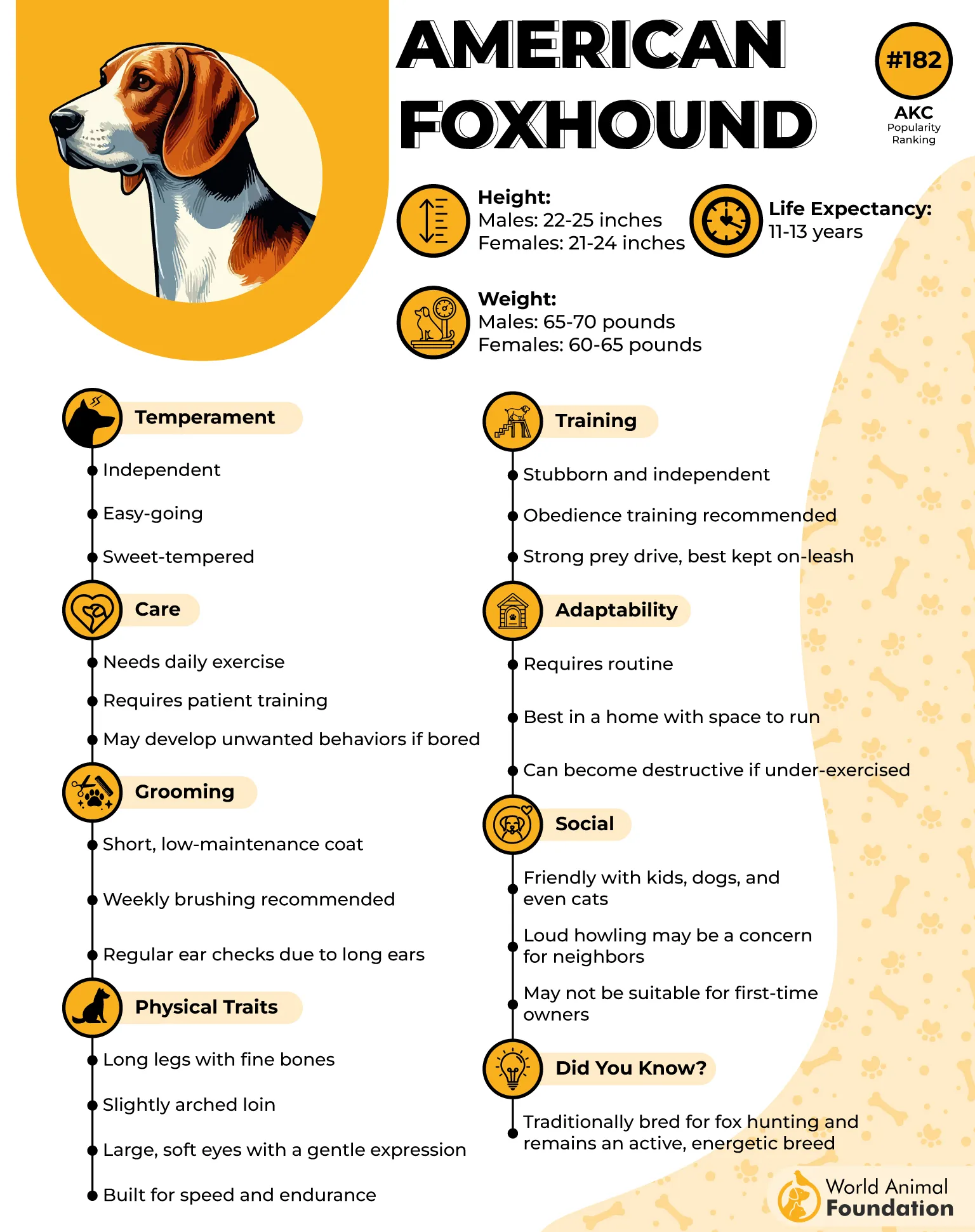
The American Foxhound is friendly, gentle, and social. It usually gets along well with children and other dogs, and can even live peacefully with cats when properly raised. However, its hunting instincts are very strong.
That means small animals may trigger their chase response, so supervision is important. It is a pack-oriented dog, so it does not like being alone for long periods and can become bored or destructive if ignored.
Training this breed requires patience. It is intelligent but also independent, which can make it stubborn at times. Positive reinforcement works best, and early training is important. Because of its strong nose, it should never be trusted off-leash in open areas.
It can easily follow a scent and disappear from control. This breed also needs at least one to two hours of daily exercise. Long walks, hikes, tracking games, and field activities help keep it balanced, focused, and well-behaved.
2. Plott Hound
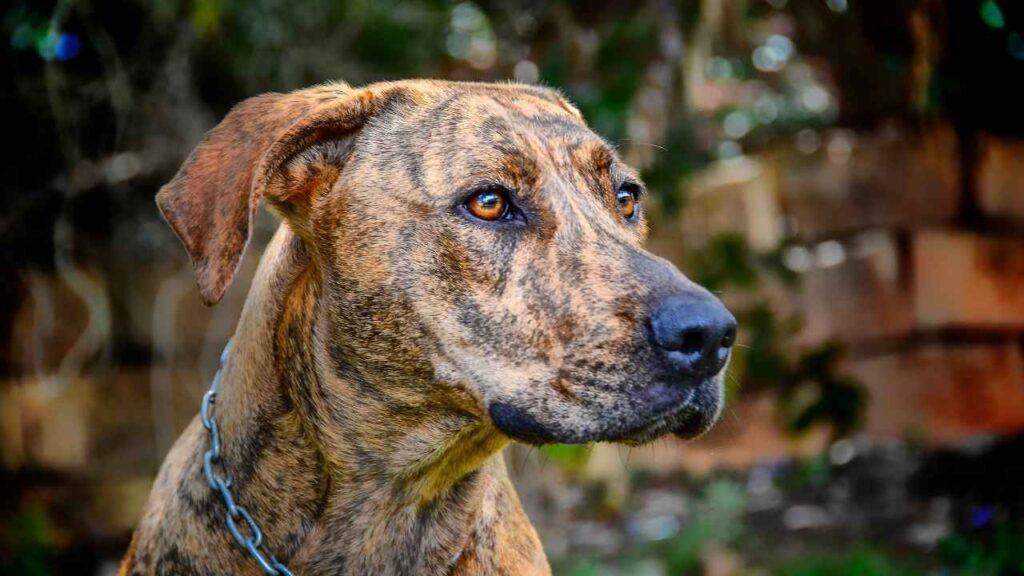
The Plott Hound is a powerful scent hound known for its fearless nature and relentless tracking ability. Originally developed in the mountains of North Carolina and now recognized as the state dog, it has a strong hunting background rooted in wild boar and large game pursuit.
This breed is built for tough terrain and fast, unpredictable chases—making it well-suited for deer hunting, where speed bursts and sharp direction changes matter.
Its brindle-striped coat and alert expression reflect a dog that is always ready for action, especially when following a scent trail at full drive.
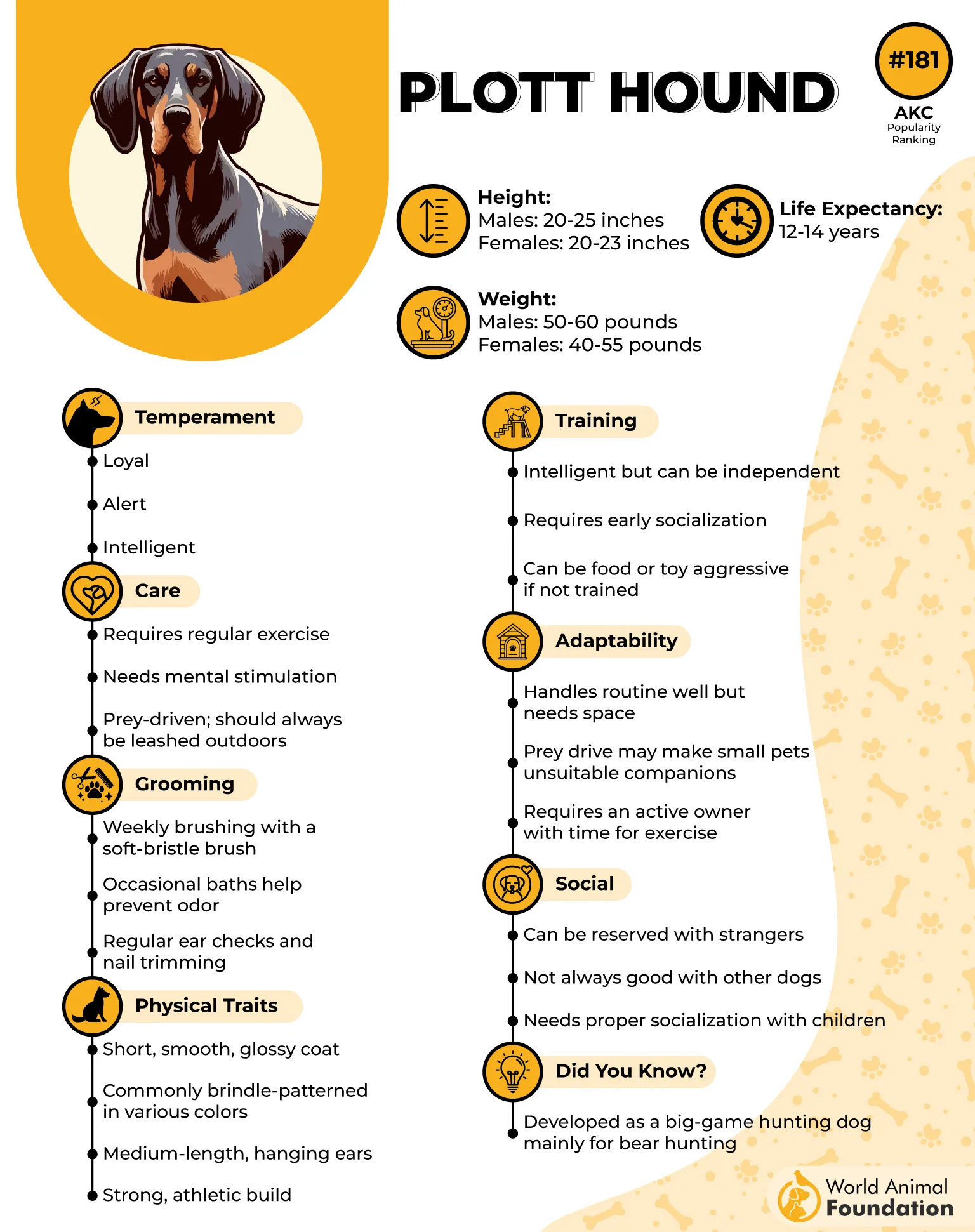
Key Hunting Strengths
Exceptional stamina for long tracking sessions
Strong scenting ability for following deer trails
High prey drive with fearless chasing instinct
Agile and light-footed for rough terrain movement
Excellent endurance during high-speed pursuits
The Plott Hound is not just fast—it is relentless. Once it locks onto a scent, it continues with determination until the chase is complete.
This makes it especially effective in deer hunting situations where the animal relies on speed and sudden direction shifts. Its loud, steady voice also helps hunters track its position during long pursuits.
Temperament, Training, and Daily Needs
At home, the Plott Hound is loyal, affectionate, and family-oriented, often getting along well with children and other dogs. However, it can be slightly reserved with strangers. Its personality is a mix of calm companionship indoors and intense focus in the field.
Because of its strong intelligence, it needs mental stimulation along with physical activity, or it may become bored and develop unwanted behaviors like chewing or food guarding.
Training must begin early, as this breed can be stubborn and independent. Positive reinforcement works best, especially when training feels like a game. The Plott Hound needs daily vigorous exercise such as running, hiking, or long walks.
Off-leash activity is only safe in fully fenced areas due to its strong prey drive. Without enough activity, it may become restless and vocal, as it is naturally inclined to use its voice while working.
3. Bluetick Coonhound
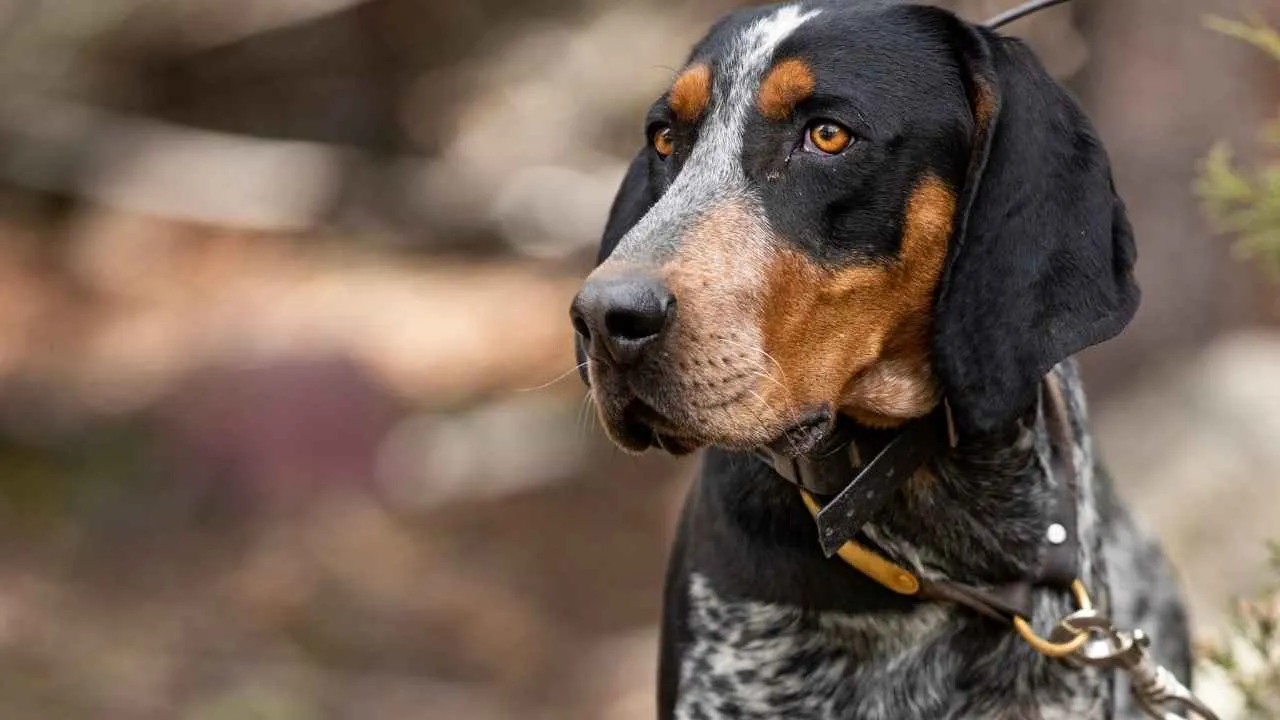
The Bluetick Coonhound is a striking scent hound known for its speed, endurance, and powerful tracking ability. Originally bred in the United States for hunting, it is especially skilled at following scent trails in low light and rough terrain, making it a strong match for fast-moving prey like deer.
Its sleek, muscular build and distinctive blue-ticked coat reflect a dog made for long, demanding chases. Behind its calm, affectionate nature at home lies a bold and single-minded hunter in the field.
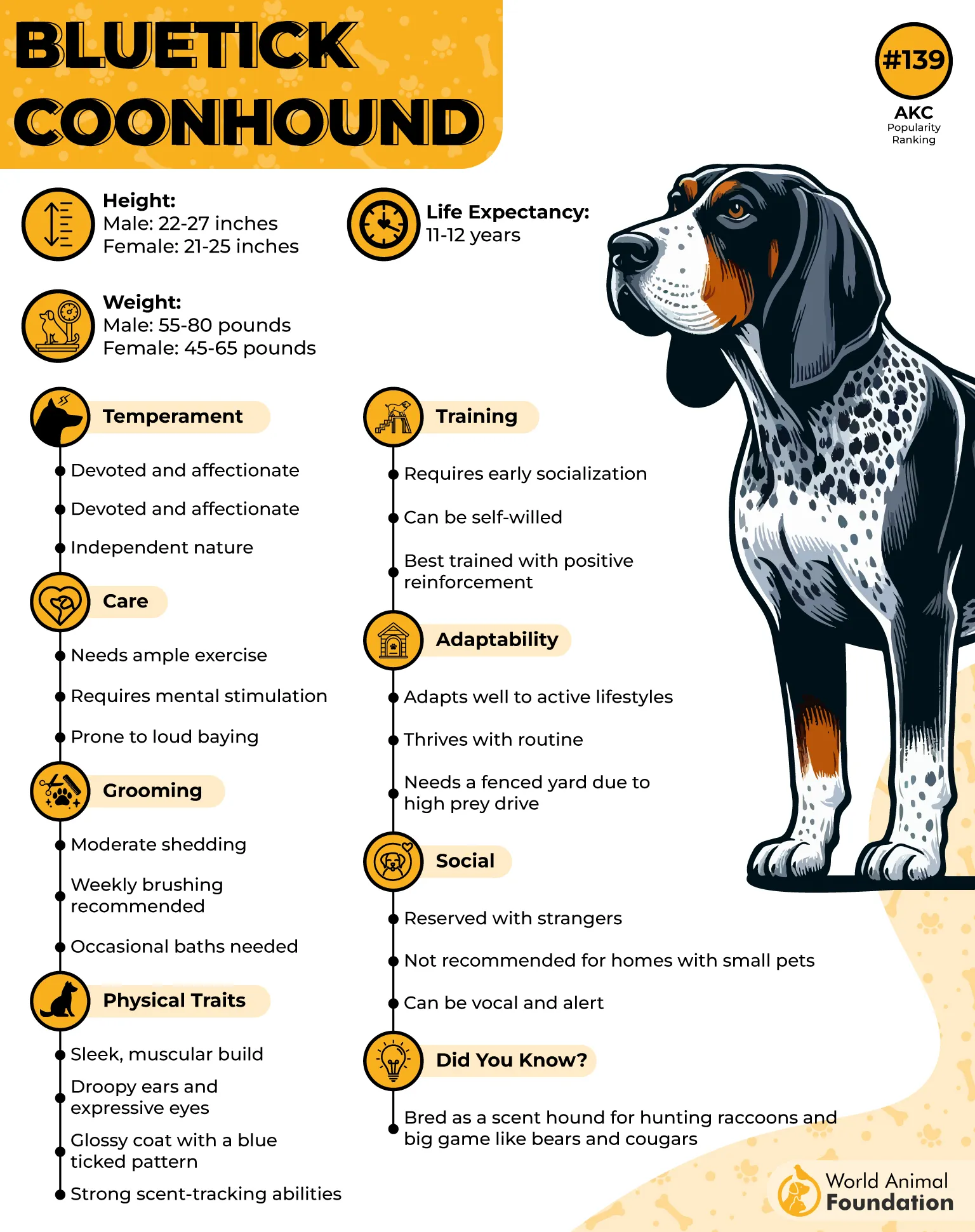
Key Hunting Strengths
Strong scent detection for tracking deer over distance
High stamina for long, continuous pursuits
Fast, agile movement across varied terrain
Powerful prey drive with focused chase instinct
Excellent endurance for night and early-morning hunts
Once it locks onto a scent, the Bluetick becomes extremely focused and persistent. This makes it effective in deer hunting scenarios where the animal relies on speed and sudden directional changes to escape. It’s loud, musical baying helps hunters follow its position even when it is far out of sight during a chase.
Temperament, Training, and Daily Needs
At home, the Bluetick Coonhound is affectionate, loyal, and friendly. It enjoys companionship and often forms strong bonds with its family. However, it is also energetic and can become restless if left alone for long periods.
Without enough activity, it may develop unwanted behaviors like excessive barking or howling, as it naturally expresses itself vocally.
Training this breed requires patience and consistency. It is intelligent but independent, meaning it can be stubborn during training sessions. Early socialization is important to manage its strong prey instincts, especially around smaller animals.
The Bluetick needs daily vigorous exercise such as long walks, runs, or outdoor play in a secure area. This energetic dog thrives in active households where it gets both physical movement and mental stimulation, helping positively channel its natural hunting drive.
4. Redbone Coonhound
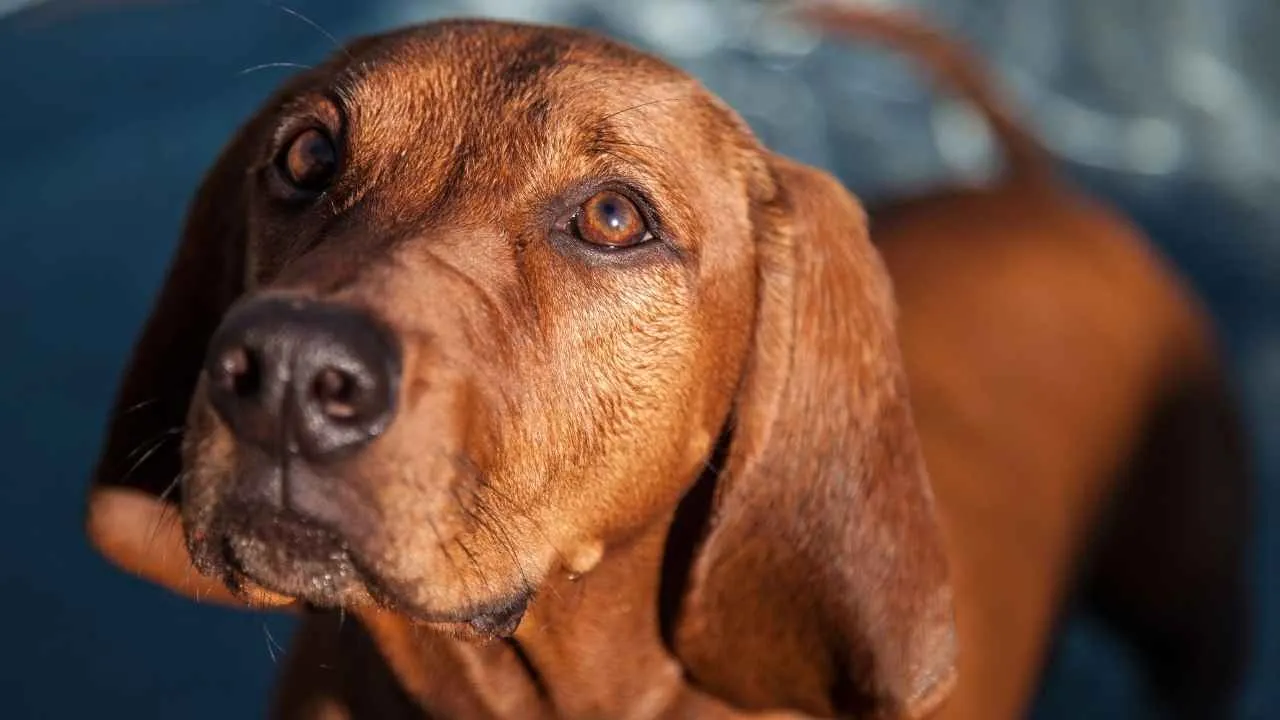
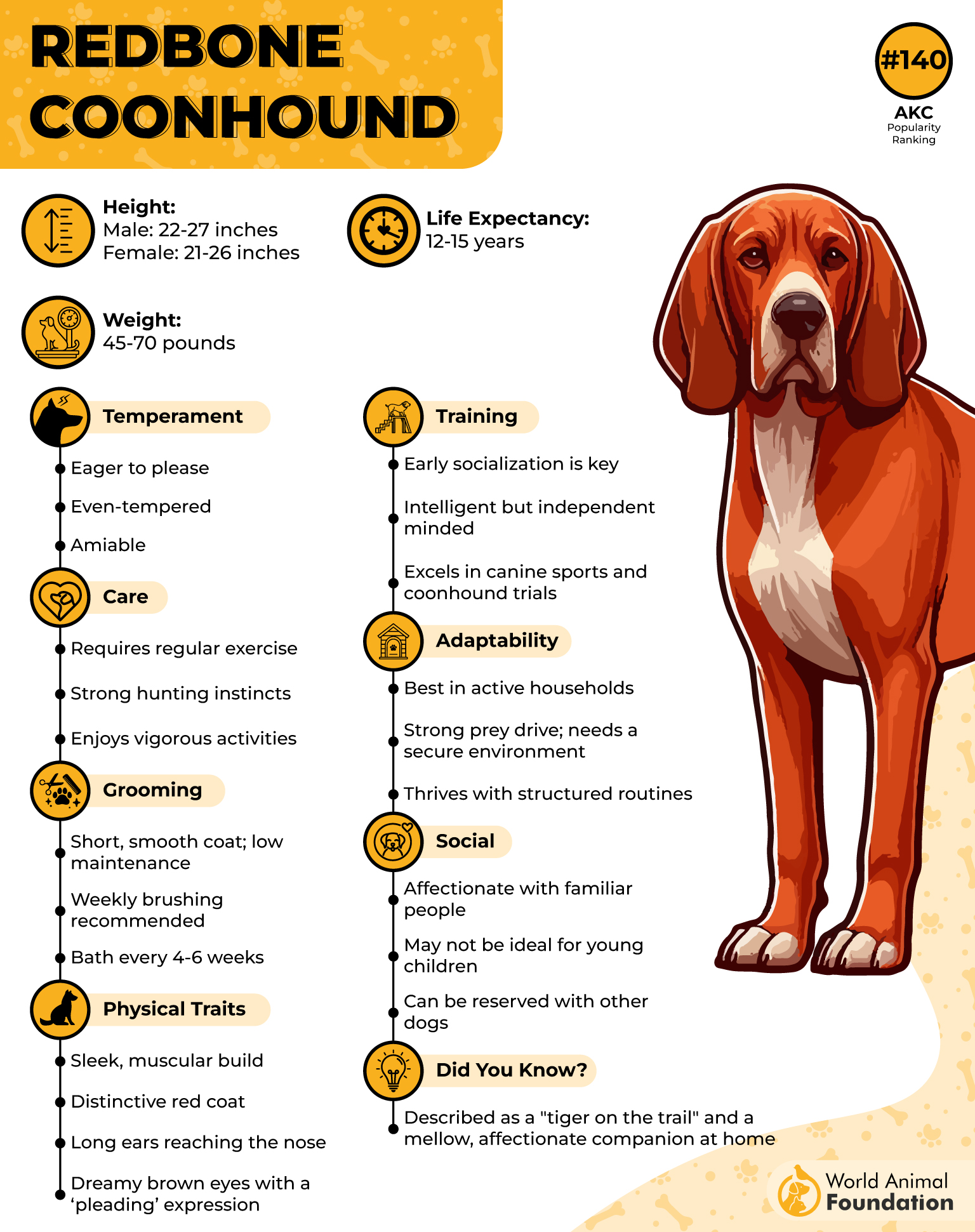
The Redbone Coonhound is a sleek and powerful American hunting dog known for its speed, endurance, and striking red coat. Bred in the United States in the late 18th century, it was developed to track game across difficult landscapes like swamps, hills, and forests.
While it is gentle, friendly, and calm at home, it transforms into a highly driven and focused hunter in the field. This makes it especially effective for fast-moving prey like deer, where quick direction changes and long-distance sprinting are key.
Key Hunting Strengths
Strong scent tracking ability for following deer trails
High speed and agility across rough terrain
Excellent stamina for long chases without slowing down
Powerful prey drive with strong focus on pursuit
Smooth, efficient movement built for endurance hunting
Once the Redbone picks up a scent, it becomes intensely focused and hard to distract. This makes it ideal for deer hunting, where the animal relies on sudden bursts of speed and sharp turns to escape.
The Redbone’s loud, melodic baying also helps hunters track its position during long pursuits, even when it is far out of sight.
Temperament, Training, and Lifestyle Needs
At home, the Redbone Coonhound is affectionate, loyal, and highly social. It enjoys being around people and often gets along well with children and other pets, as mentioned by VCA. However, it is also very energetic and requires regular activity to stay balanced.
Without enough exercise, it may become restless and show unwanted behaviors like barking, digging, or trying to escape in search of scents.
Training this breed requires consistency and patience. It is intelligent and eager to please, but its strong nose can easily distract it. Early socialization and obedience training are important to manage its independent nature.
The Redbone needs daily vigorous exercise such as running, hiking, or outdoor play in a secure area. Because of its strong tracking instinct, it should always be kept on a leash or in a fenced space.
5. Weimaraner
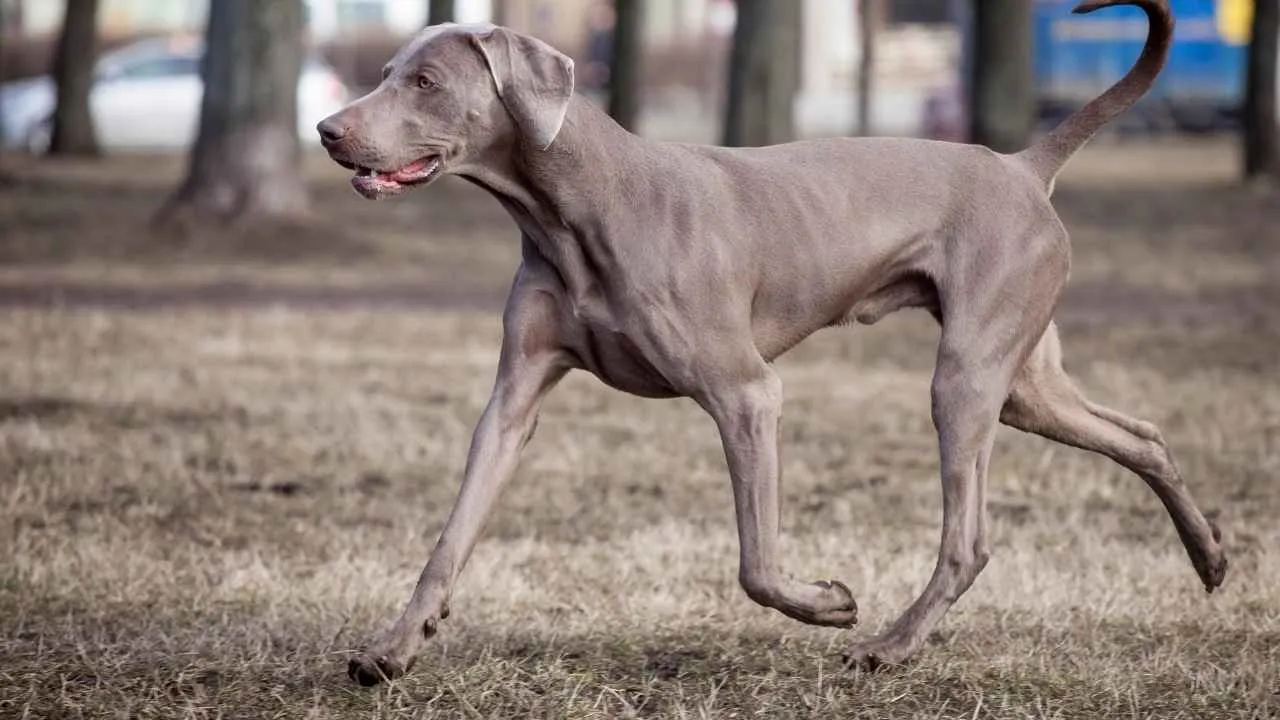
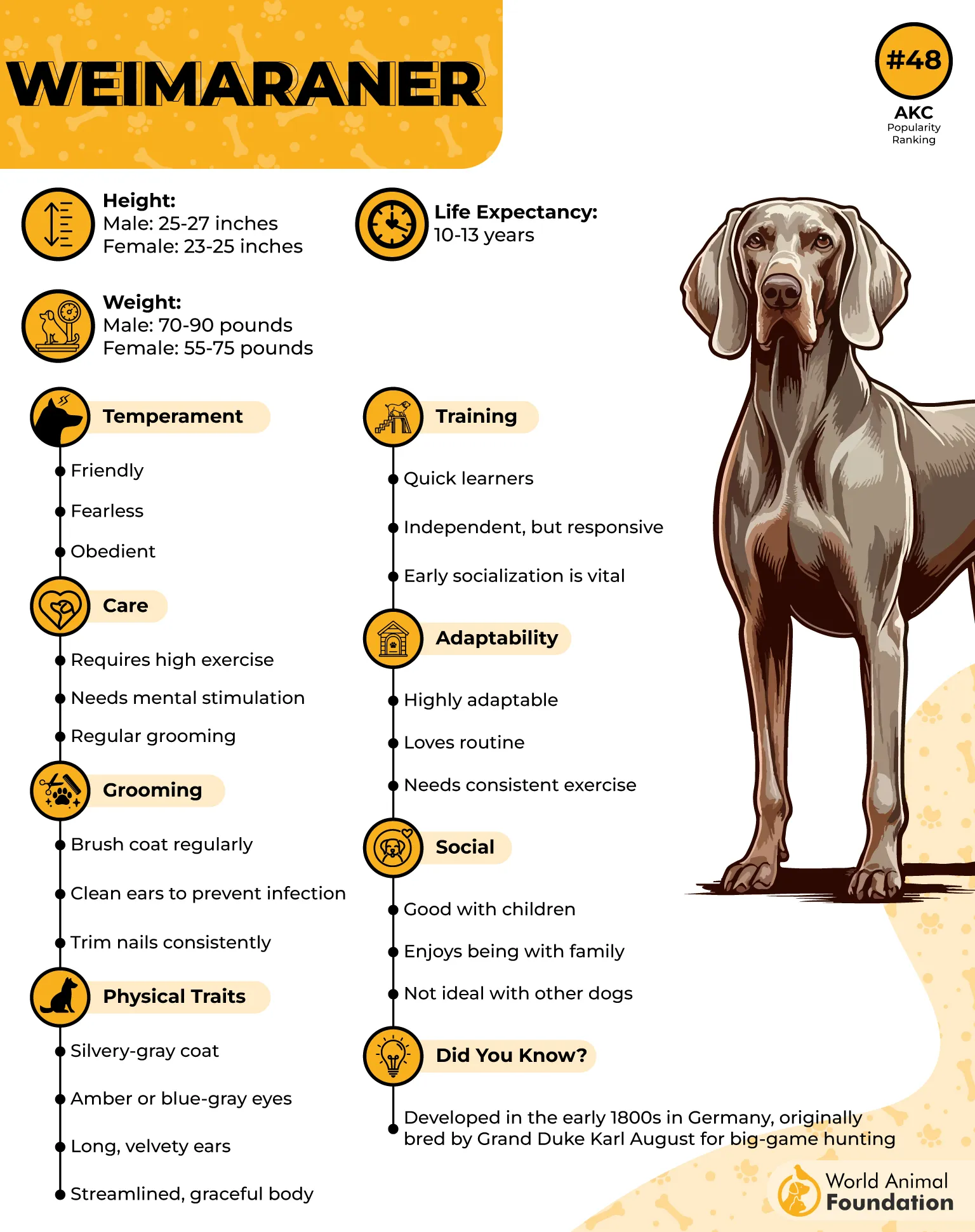
The Weimaraner, often called the “Gray Ghost,” is a sleek, fast, and highly intelligent hunting dog originally developed in 19th-century Germany for tracking and pursuing large animals. Built for speed, stamina, and sharp focus, it was bred from the start to combine courage with endurance in the field.
Its smooth silver-gray coat, long ears, and striking eyes give it a graceful appearance, but behind that beauty is a powerful athlete made for fast, demanding chases like deer hunting across open and rugged terrain.
Key Hunting Strengths
Exceptional speed for chasing fast-moving prey
Strong stamina for long-distance pursuit
Sharp tracking ability with excellent focus
High intelligence for quick decision-making in the field
Powerful athletic build suited for open terrain hunting
The Weimaraner excels in deer hunting situations where speed bursts and sustained running are essential.
It can quickly gain ground on prey and maintain pressure over long distances without losing focus. Its natural pointing and tracking instincts also help it locate game efficiently before the chase begins.
Temperament, Training, and Daily Needs
At home, the Weimaraner is deeply attached to its family and makes a wonderful pet. It prefers constant human interaction and does not enjoy being left alone for long periods.
Without attention, it may develop separation anxiety or destructive behaviors like chewing, barking, or trying to escape. It is friendly and good with children, but supervision is needed due to its large, active nature.
Training must start early because the breed is extremely intelligent and learns both good and bad habits quickly. It responds best to consistent, positive reinforcement and mental challenges. According to PetMD, the Weimaraner needs at least two hours of daily exercise, including running, not just walking.
This versatile dog thrives with active families where hiking, field training, and outdoor activities are part of daily life. A secure, fenced space is essential, as its strong prey drive can lead it to chase smaller animals or wander off following a scent.
6. Treeing Walker Coonhound
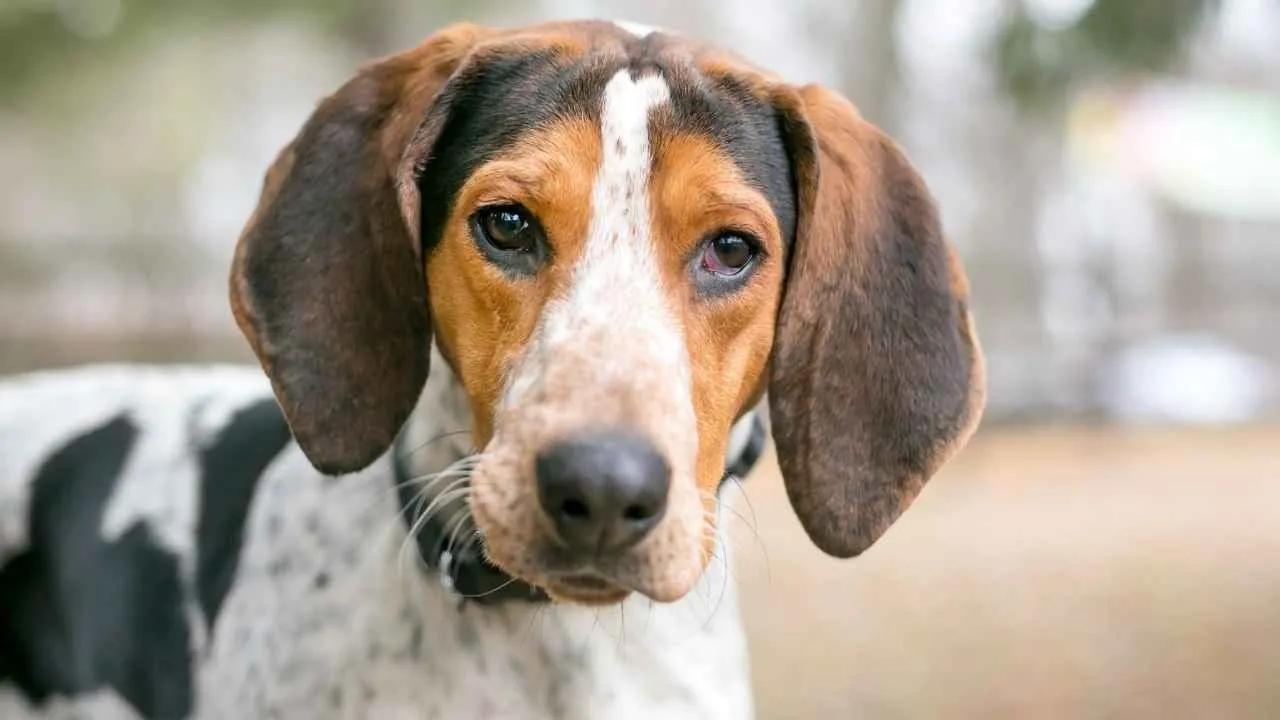
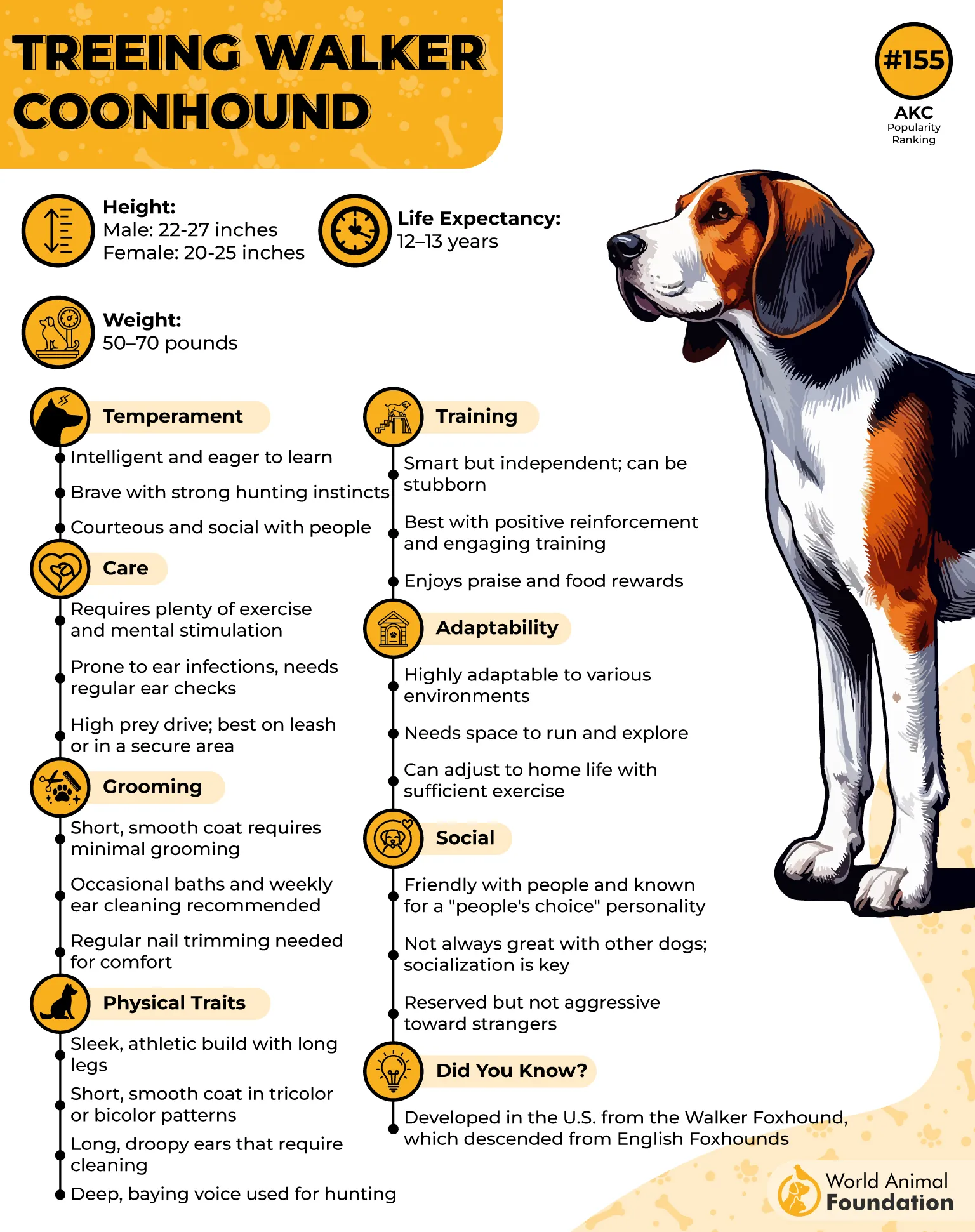
The Treeing Walker Coonhound is a fast, intelligent, and highly driven American hunting dog known for its incredible speed and endurance. Often called “The People’s Choice,” it was developed for chasing and treeing game over long distances and rough terrain.
Despite its friendly and gentle expression at home, it transforms into a focused and relentless runner in the field. This makes it especially effective for deer hunting, where animals rely on rapid sprints and unpredictable direction changes to escape.
Key Hunting Strengths
Exceptional speed for fast-moving prey like deer
Strong endurance for long-distance pursuit
Powerful scent tracking ability over large areas
Agile, athletic build for rough terrain running
Intense prey drive with strong chasing instinct
The Treeing Walker is built for covering ground quickly and efficiently. Once it picks up a scent, it can maintain high-speed pursuit for long periods without slowing down.
In deer hunting, where the target often uses speed and zigzag movement to escape, this breed’s combination of speed and stamina makes it especially effective. Its loud, clear voice also helps hunters track its movement during a chase.
Temperament, Training, and Daily Needs
At home, the Treeing Walker Coonhound is friendly, social, and affectionate. It enjoys being around people and makes a good family dog.
However, it is also energetic and needs regular activity to stay balanced. Without enough exercise, it may become restless or vocal due to its natural drive to work and run.
Training requires patience and consistency. The breed is intelligent and eager to learn, but also independent, which can make it stubborn at times. Positive reinforcement works best, especially when training feels engaging and rewarding.
The Treeing Walker needs daily long runs, hikes, or active play sessions to stay healthy. Because of its strong prey drive, it should always be kept on a leash or in a secure fenced area to prevent it from chasing scents over long distances.
7. Brittany
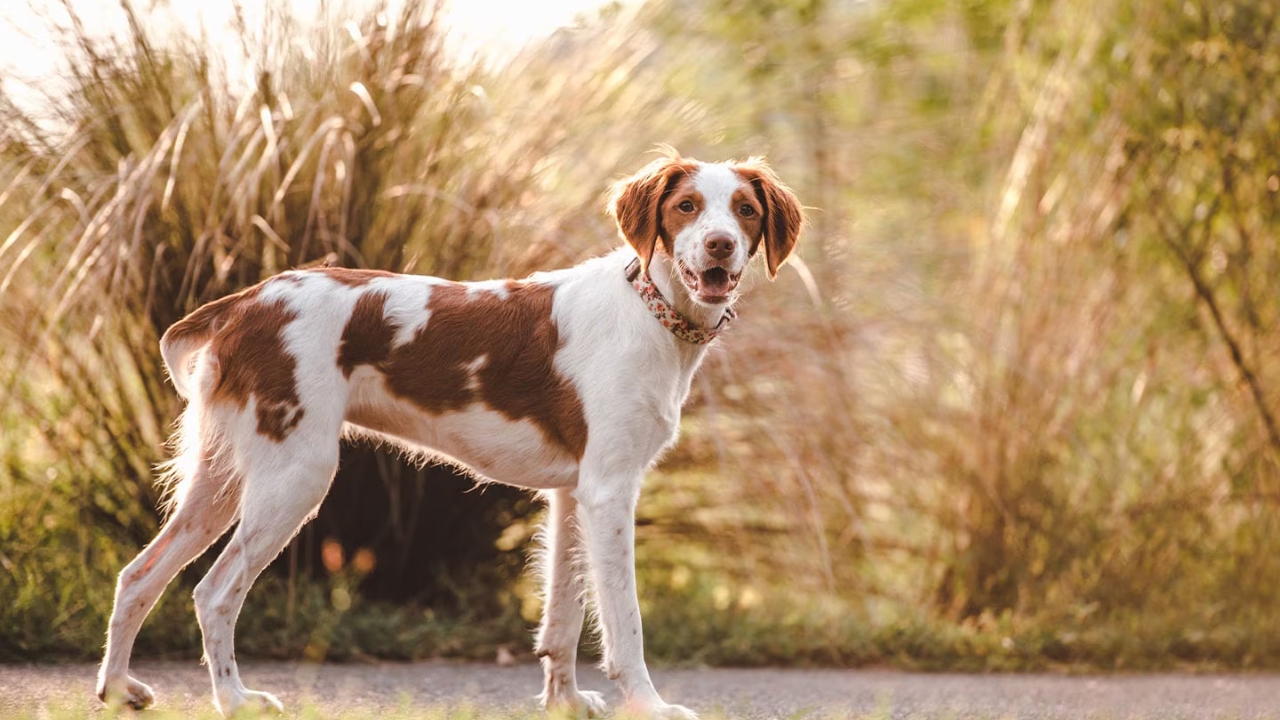
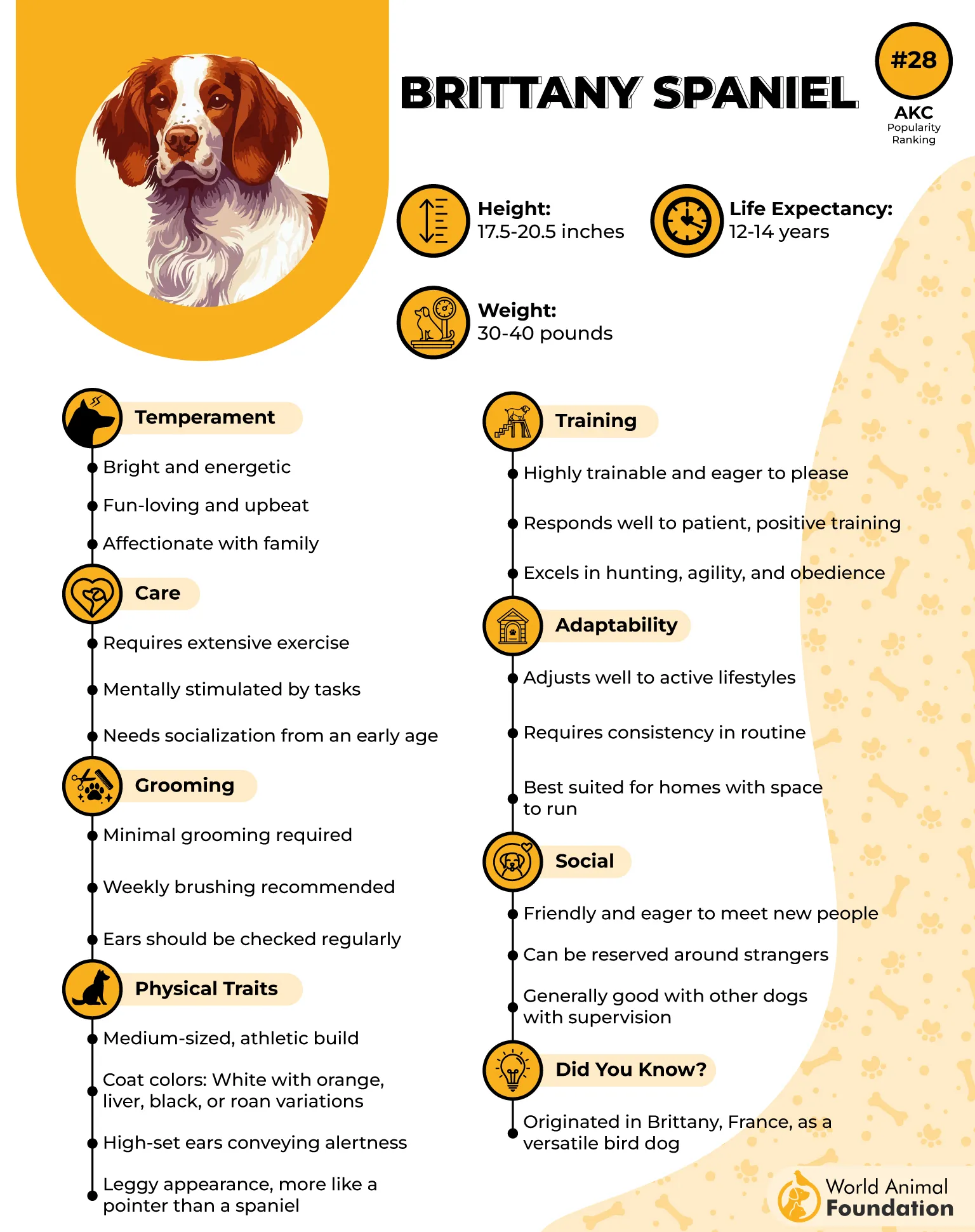
The Brittany is a fast, intelligent, and highly energetic hunting dog known for its agility and versatility in the field. Originally bred for bird hunting in Europe, it has developed into a tireless working companion that can cover large areas quickly with speed and precision.
Its lightweight, athletic build allows it to move effortlessly across open fields and rough terrain, making it highly effective for fast-chasing game like deer that depend on sudden bursts of speed and sharp turns.
Key Hunting Strengths
Exceptional speed and agility for covering ground quickly
Strong stamina for long hours of active pursuit
Sharp intelligence for quick response in the field
Excellent scenting and tracking ability
Natural focus and drive during high-energy hunts
Brittany’s biggest advantage is its ability to combine speed with control. It can move rapidly while still staying focused on scent trails, which is essential in deer hunting scenarios where the prey changes direction quickly.
Temperament, Training, and Daily Needs
At home, Brittany is friendly, affectionate, and highly social. It forms strong bonds with its family and prefers being close to people most of the time.
Orvis says that it is especially good with children and thrives in active, engaging environments. However, it does not do well with long periods of boredom or isolation and may become restless or vocal if under-stimulated.
Training is usually smooth because the breed is intelligent and eager to please. However, it is also sensitive, so positive reinforcement and calm consistency work best. Early socialization is important to help it stay balanced and confident.
Brittany needs daily intense exercise such as running, hiking, or field play. This active dog also excels in dog sports that challenge both mind and body. Without enough activity, it may develop unwanted behaviors like roaming or excessive barking.
Conclusion
From fast scent hounds to explosive sprinters, each breed we explored shows how deeply speed, instinct, and endurance shape the world of hunting dogs. Their strength lies not just in speed, but in intelligence, stamina, and an unbreakable drive to follow the hunt until the very end.
If there’s one takeaway, it’s that choosing the perfect canine companion is about matching energy, terrain, and purpose—not just appearance or popularity. These breeds thrive when their instincts are respected and properly guided through training, exercise, and engagement.
In the end, a well-matched hunting dog isn’t just a field companion—it becomes a rhythm of movement, trust, and teamwork that turns every chase into a shared pursuit.
There are other breeds as well that make great hunting companions and family pets. These include the Labrador Retriever, Golden Retriever, Jack Russell Terrier, German Shorthaired Pointer, Chesapeake Bay Retriever, Cocker Spaniel, Irish Setter, and English Springer Spaniel.
