




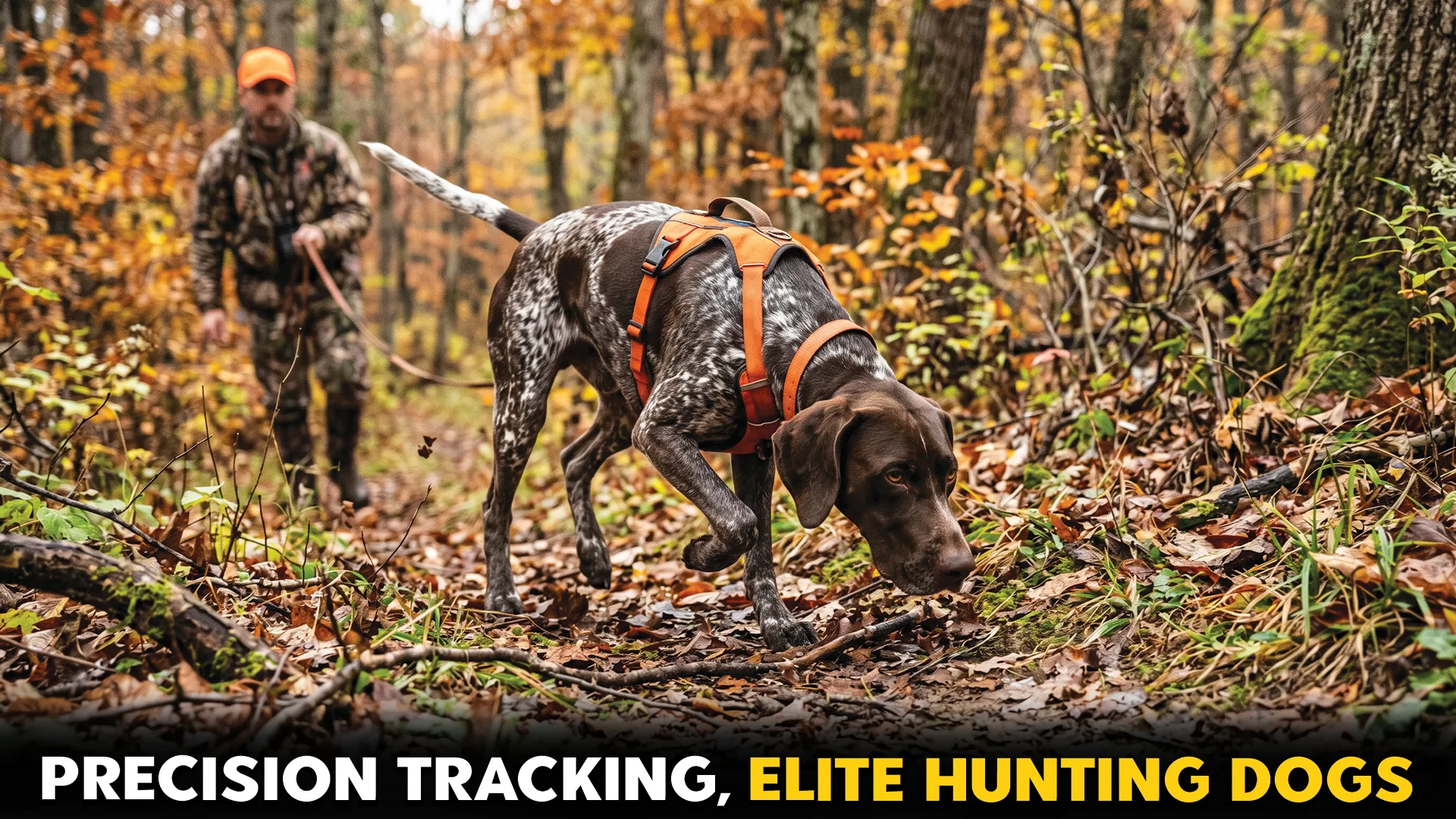
Across centuries of partnership between humans and dogs, selective breeding has produced extraordinary hunting companions with unmatched scenting ability, stamina, and intelligence.
From dense forests to open fields, these canines have helped hunters locate, track, flush, and retrieve game with remarkable precision.
Today, the world’s top hunting breeds are valued not only for their loyalty but also for their finely tuned instincts and specialized skills that make them indispensable in the field.
Among them are versatile retrievers, relentless scent hounds, agile flushers, and highly focused pointing dogs that freeze and indicate the exact location of hidden game.
The Pointer, for instance, developed in England around the 17th century, is renowned for its natural ability to locate and hunt birds and hold a steady stance once scent is detected—often showing signs of instinctive behavior at a very young age.
This list of the top 10 hunting dog breeds highlights the most capable and time-tested canine hunters, each excelling in accuracy, endurance, and field performance in real-world hunting scenarios.
Top Hunting Dog Breeds That Track With Precision
1. Pointer
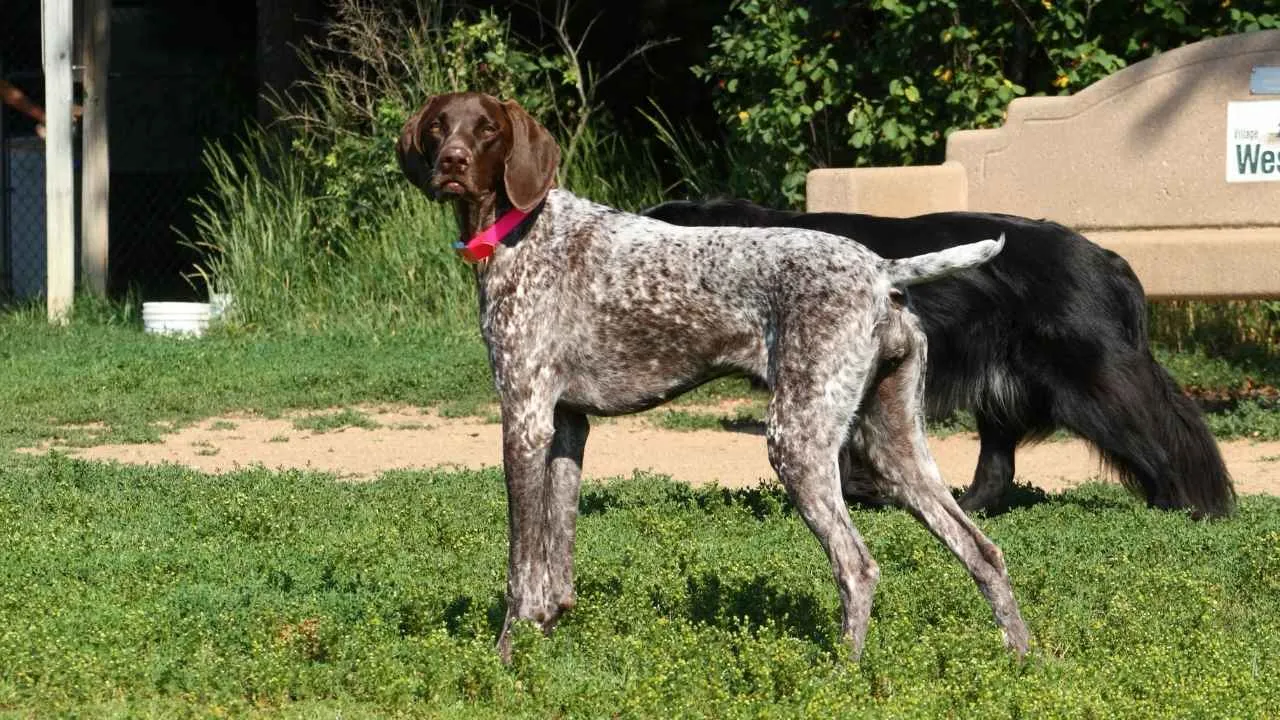
Pointers stand among the most refined hunting companions, celebrated for their exceptional speed, agility, and unwavering endurance in the field, as mentioned by PetMD.
Often grouped under “gun dogs” or “bird dogs,” they are specifically bred to locate game with remarkable precision rather than simply chase it.
Once a Pointer detects scent, it instinctively freezes in place, body tense, nose directed toward the hidden quarry, effectively “pointing” the exact location for the hunter.
The Pointer is highly social and thrives on active engagement with its handler, forming a strong working bond in outdoor environments. Their athletic build and natural stamina make them ideal for long hours of fieldwork across varied terrain.
Because of their high energy levels, they require substantial daily exercise—typically one to two hours or more—incorporating running, field training, or interactive games like fetch and agility drills.
Without sufficient physical and mental stimulation, they can become restless or destructive, but when properly exercised, they transform into calm, affectionate companions at home.
Their balance of drive and gentleness makes them a cornerstone in any list of precision-based hunting breeds, valued for both reliability in the field and loyalty in family life.
2. Redbone Coonhound
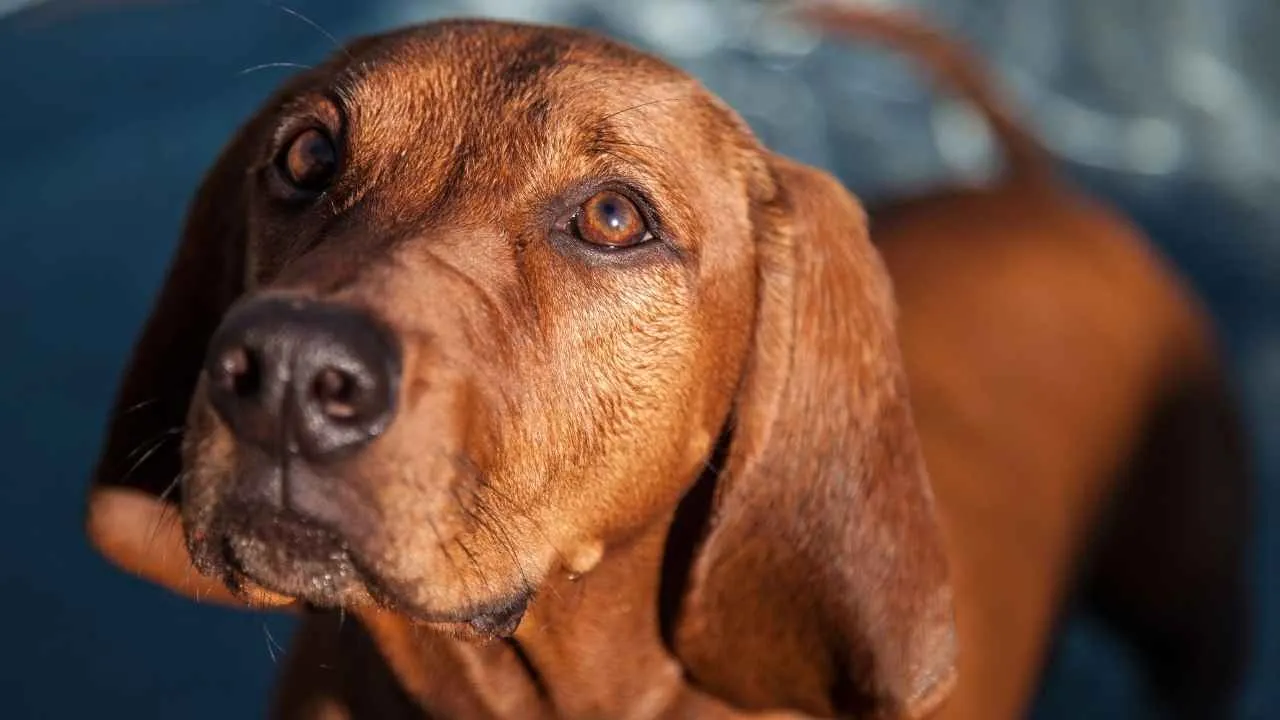
Redbone Coonhounds are known for their endurance, determination, and exceptional scent-tracking ability, making them one of the most reliable trailing hounds in the hunting world.
The Redbone Coonhound was developed in the United States for tracking raccoons and is highly adaptable for larger game as well, excelling at following both fresh and cold scent trails across forests, swamps, and rugged terrain with steady accuracy and unwavering focus.
Built as a medium-to-large hound, this great tracking dog combines a powerful yet streamlined frame with athletic agility, allowing it to cover long distances efficiently without unnecessary fatigue.
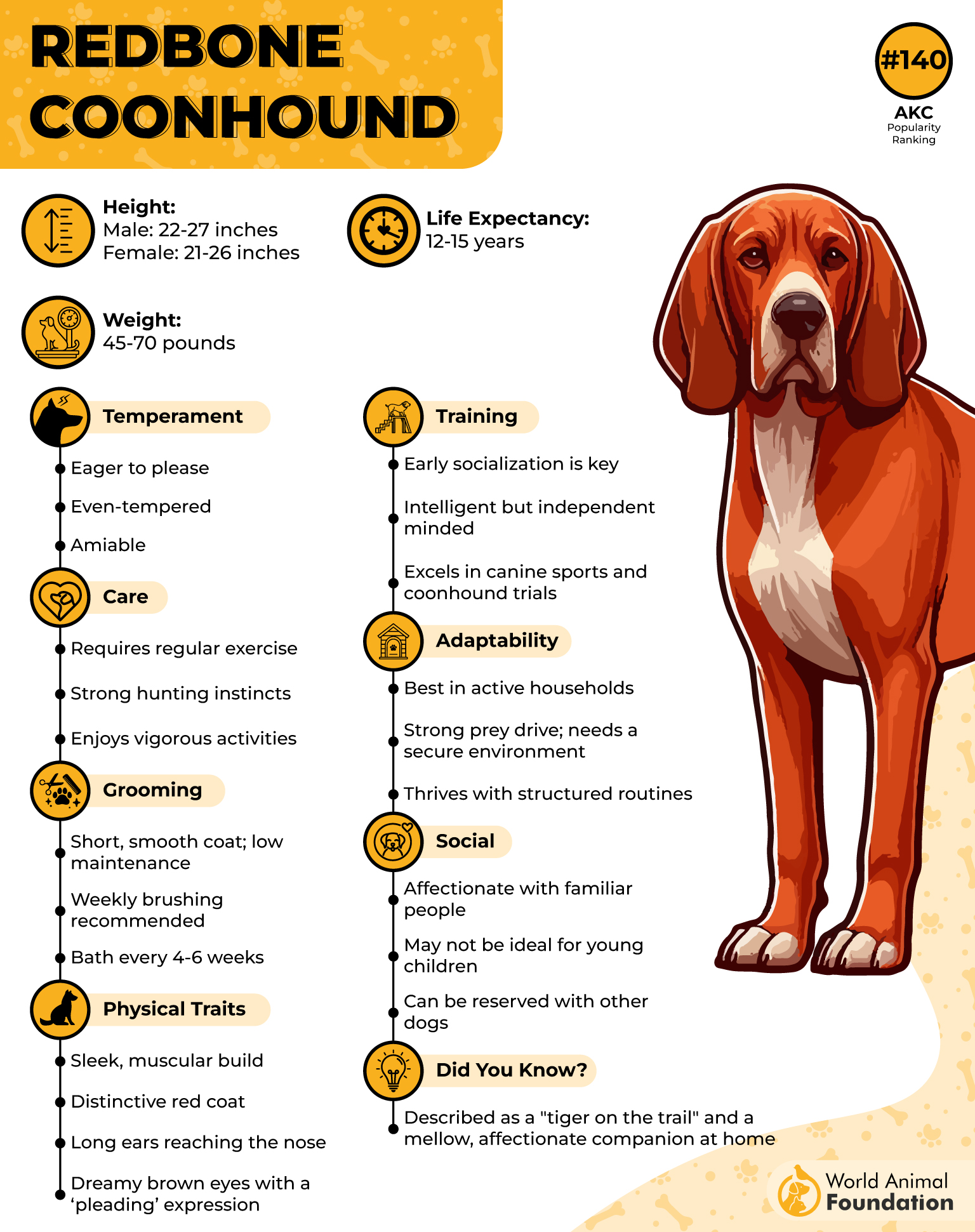
Its short, glossy mahogany-red coat, long drooping ears, and expressive eyes give it a distinctive appearance, but its true strength lies in stamina and precision tracking ability.
In the field, it is recognized for its rhythmic pursuit style and distinctive, musical baying that helps hunters locate game even over vast distances.
At home, Redbones are typically calm, affectionate, and easygoing companions, bonding closely with their families.
However, due to their high energy levels, they require regular daily exercise such as running, structured training, or active outdoor hunting work to remain balanced and well-behaved.
3. Irish Setter
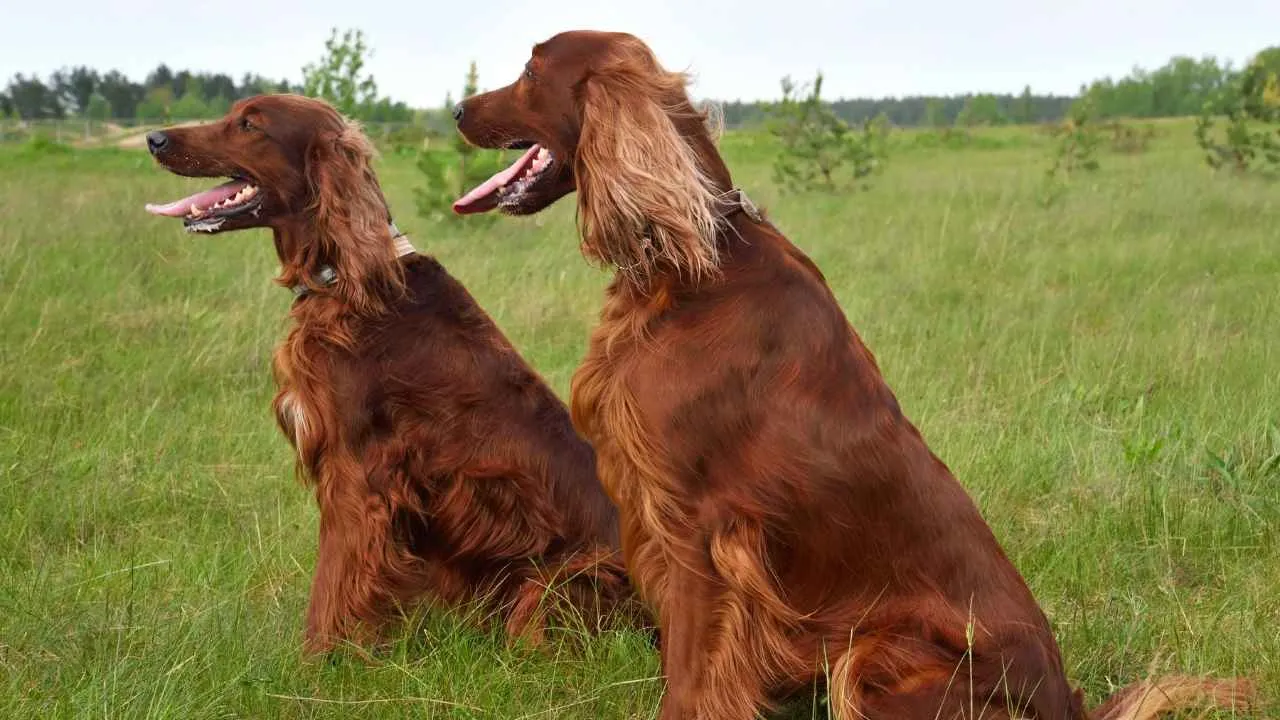
Irish Setters are admired for their elegance, speed, and reliable scenting ability, making them one of the most graceful yet capable hunting companions among upland game dogs.
The Irish Setter has been developed over centuries, with a history of more than 200 years as a skilled bird-hunting partner, valued for its ability to locate and work game with accuracy across wide, open fields.
This breed is instantly recognizable by its striking mahogany or rich chestnut coat, combined with a tall, athletic frame built for endurance and fast, sweeping movement.
Long legs and powerful hindquarters give it exceptional speed, allowing it to cover large hunting grounds efficiently while maintaining steady control and focus on scent.
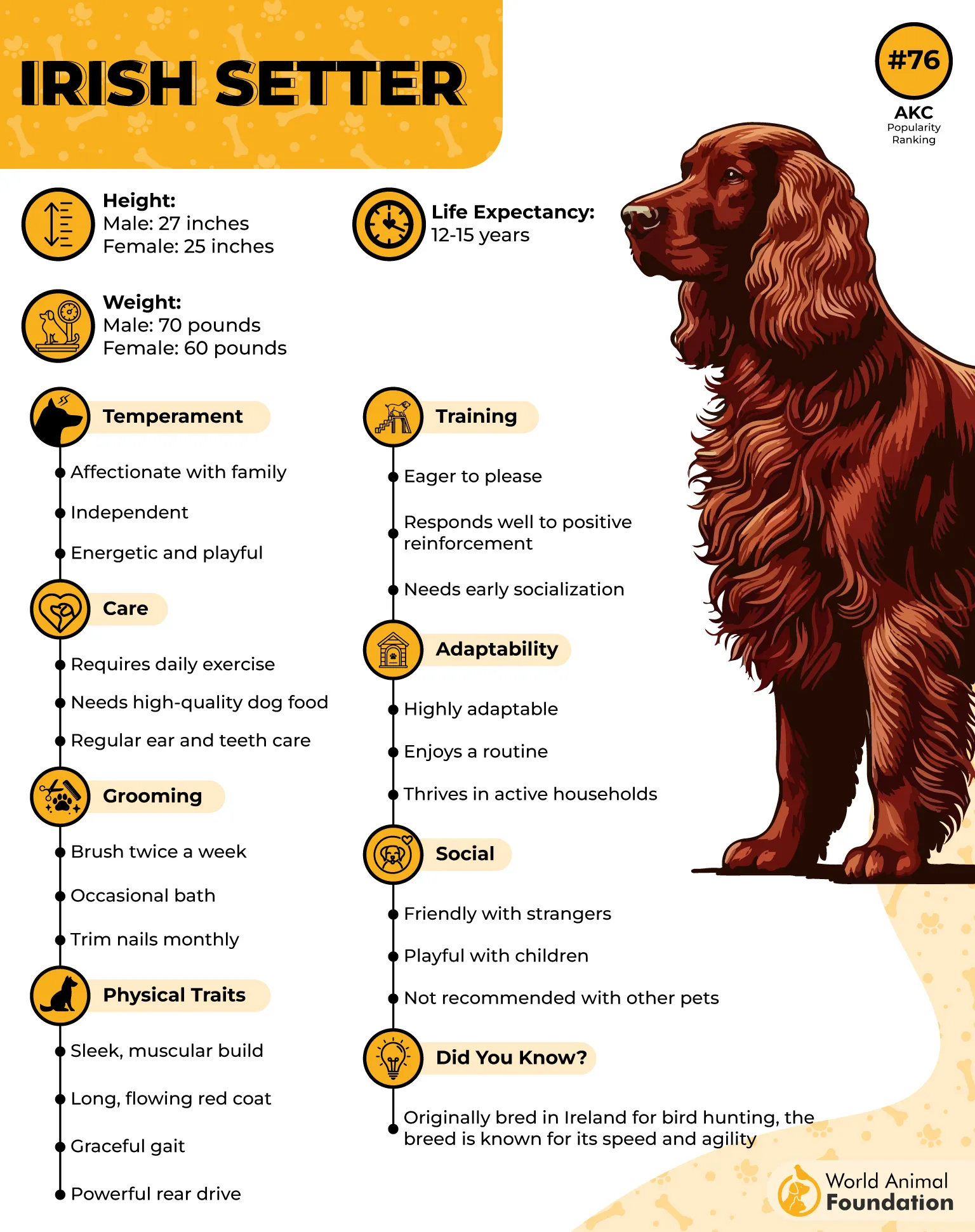
In the field, Irish Setters are energetic, alert, and driven, working with a bold and determined style when tracking or flushing upland birds. Their natural enthusiasm and keen nose make them dependable partners for sportsmen who value both range and responsiveness.
At home, they are famously friendly and affectionate, known for their playful, outgoing nature and strong bond with families.
They enjoy active lifestyles and respond best to patient, positive training. With enough exercise and mental stimulation, they balance their high energy with a gentle, affectionate temperament that has made them beloved hunting and companion dogs for generations.
4. Bluetick Coonhound
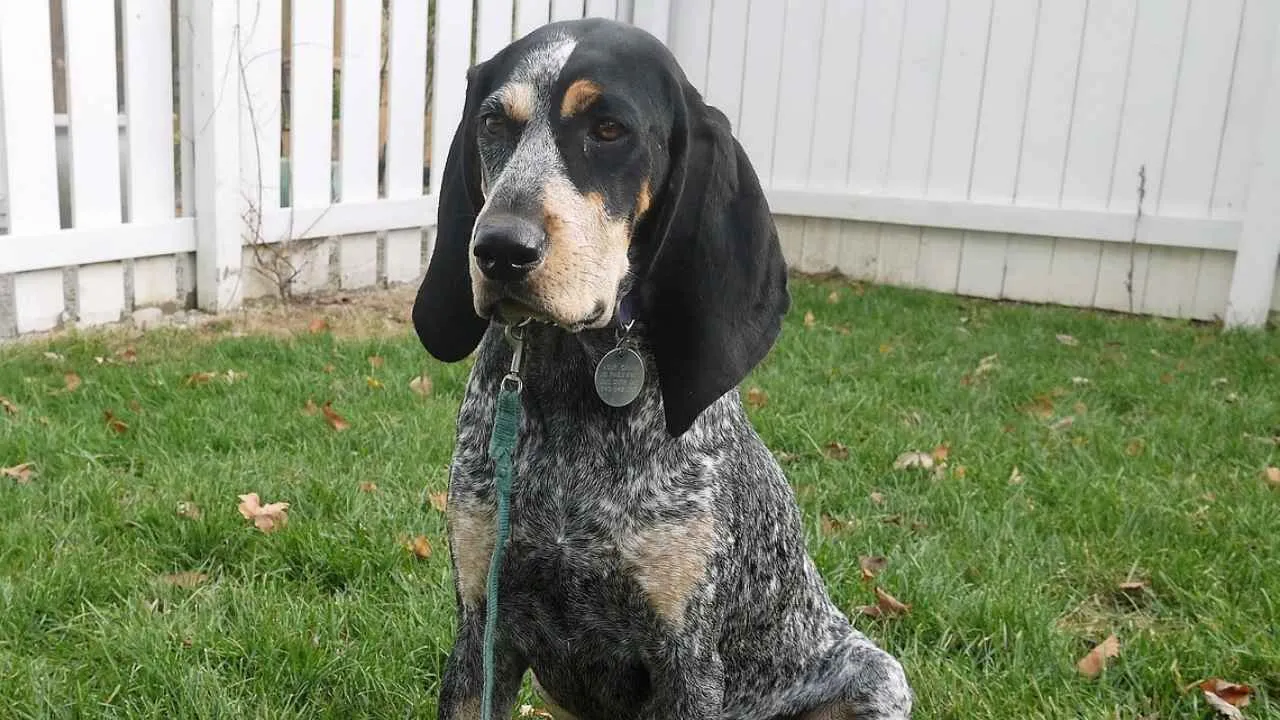
Bluetick Coonhounds are powerful scent-driven hunters known for their precision tracking, endurance, and intense focus when following game across difficult terrain, as mentioned by the AKC.
The Bluetick Coonhound is an American breed developed for nocturnal hunting, especially valued for its ability to follow cold scent trails with remarkable accuracy over long distances.
In the field, it moves with a steady rhythm, using its strong nose to track raccoons and larger game with persistence and control.
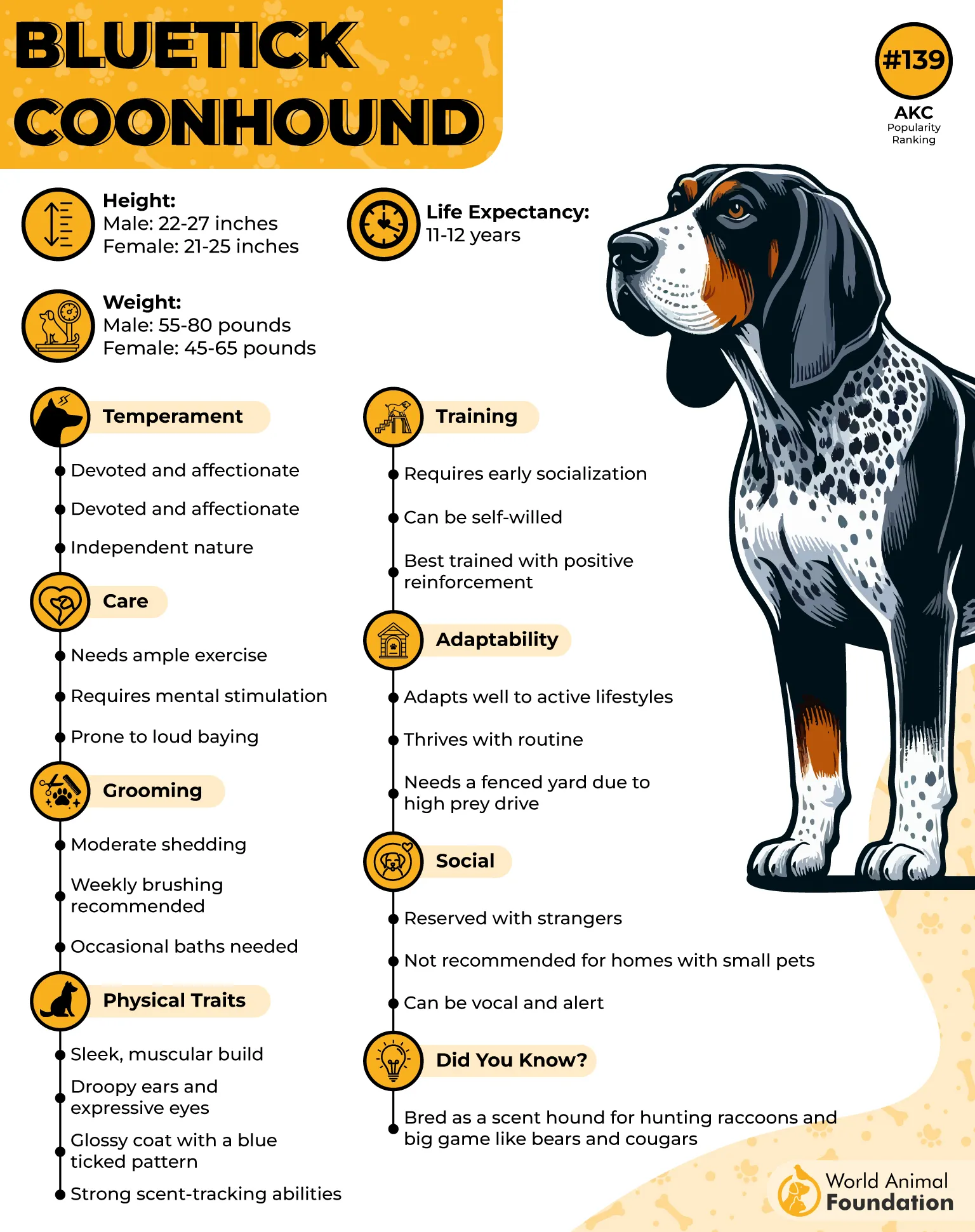
Its athletic build, mottled blue-and-black coat, and long ears support both speed and scent retention during extended hunts through forests and rough terrain.
Blueticks are also known for their distinctive baying voice, which carries over distance and signals quarry location to hunters working at night.
At home, they are affectionate, loyal companions, but require regular exercise and mental stimulation to prevent restlessness and unwanted vocal behavior.
In hunting scenarios, they are prized for unwavering concentration, adaptability across terrain, and the ability to maintain scent trails for extended periods without losing direction or intensity, making them highly reliable tracking partners overall.
5. Weimaraner
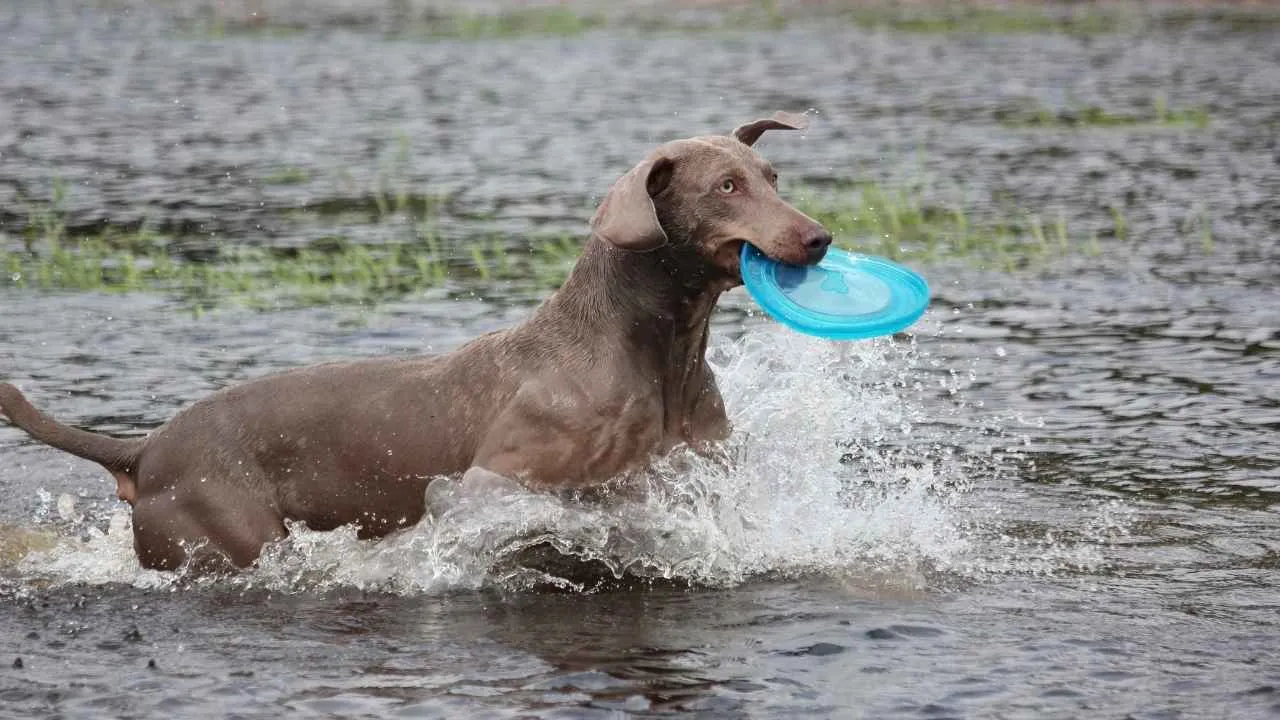
Weimaraners are highly energetic, intelligent hunting dogs renowned for their speed, sharp senses, and precise tracking ability across open terrain.
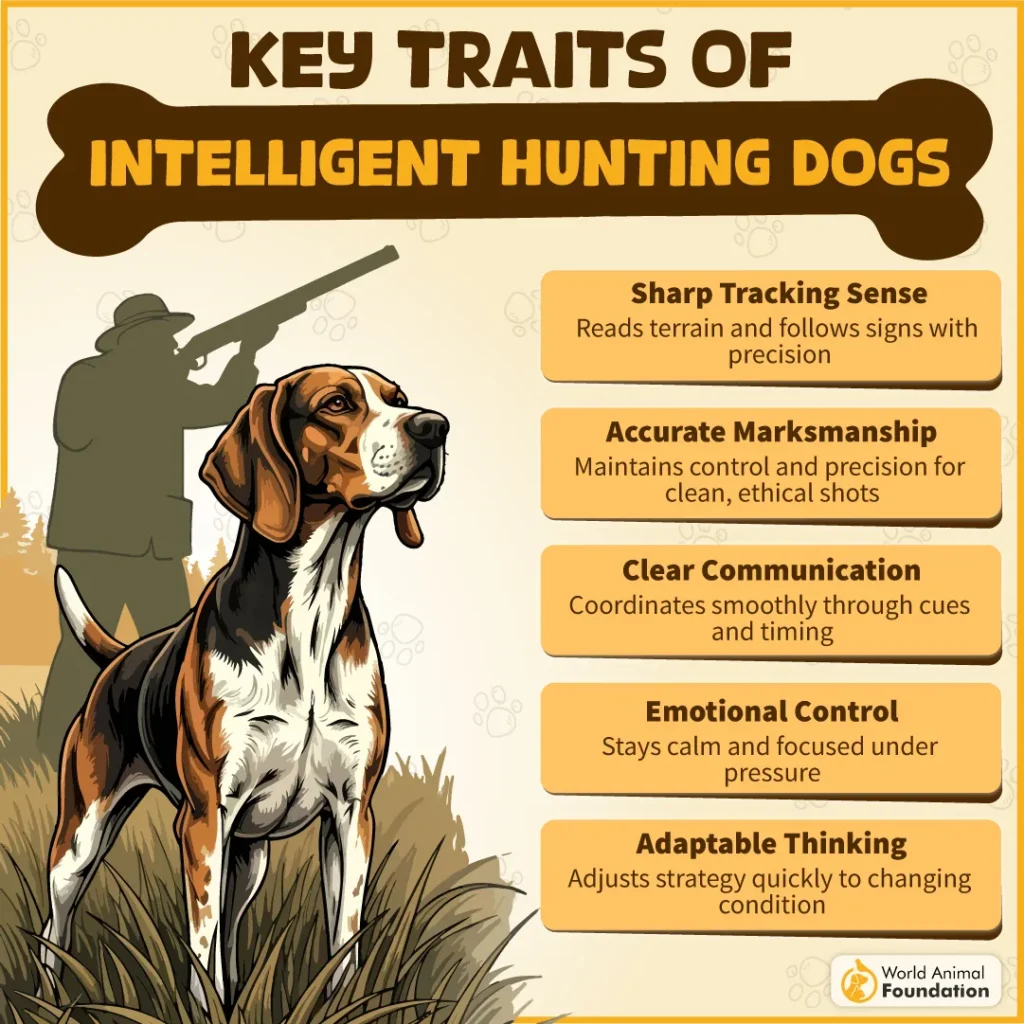
The Weimaraner originated in Germany as a versatile gun dog used for tracking big game, such as deer hunting and boar tracking over long distances with speed, endurance, and precision.
It later gained popularity in the United States after arriving in the late 1920s, admired by notable owners including President Dwight Eisenhower and actress Grace Kelly.
Built for endurance and agility, this large breed requires extensive daily exercise and mental stimulation to remain balanced and focused.
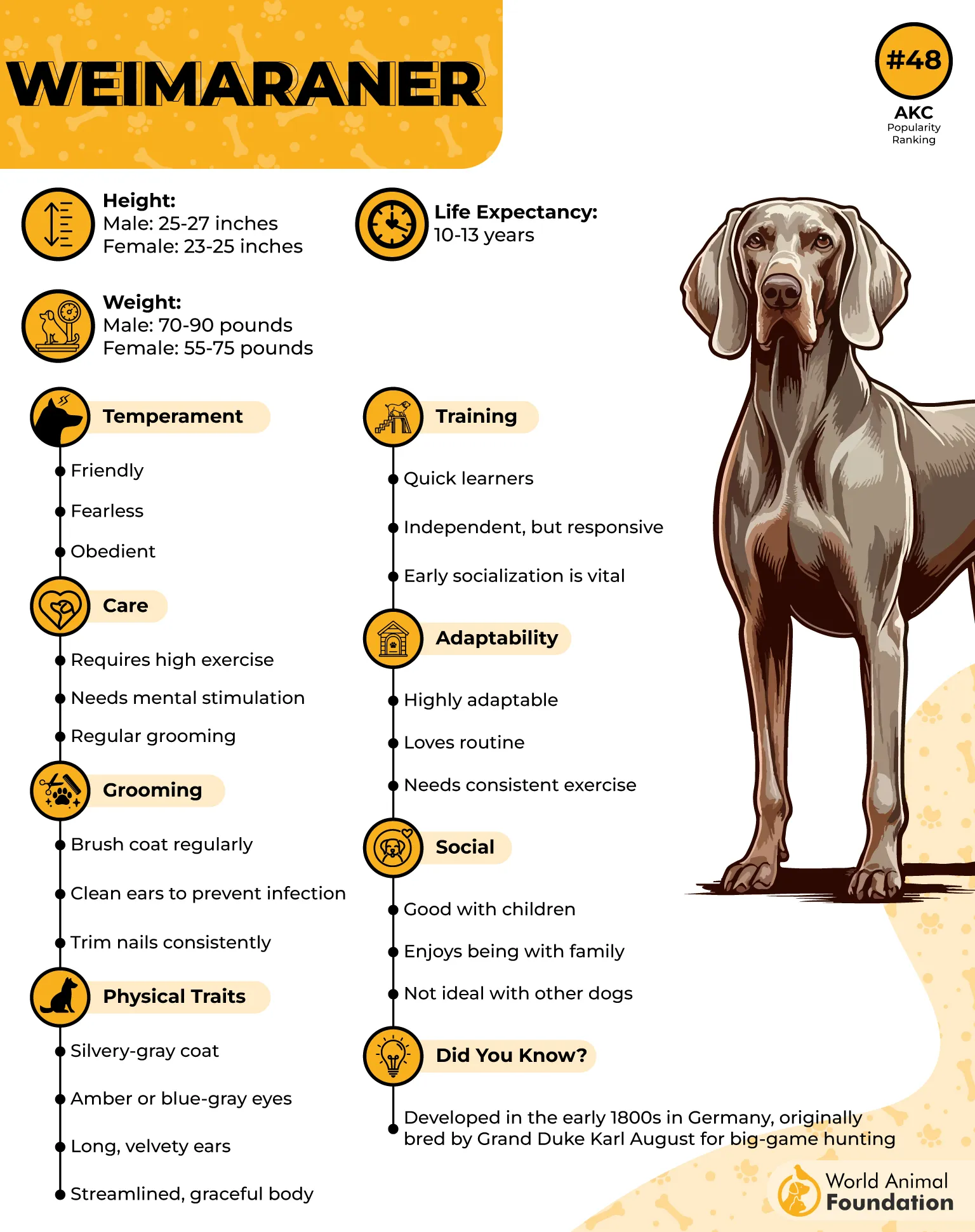
Their strong prey drive and keen hunting instincts make them effective at tracking and pursuing game, but also mean they must be carefully managed around smaller animals.
In the field, Weimaraners are known for their determination, intelligence, and ability to work closely with handlers over long distances.
At home, they are affectionate and loyal but can become restless or destructive without adequate activity.
They thrive best in active households with space to run, such as a securely fenced yard, and excel in environments that involve regular outdoor work, hiking, or structured hunting tasks.
6. English Springer Spaniel
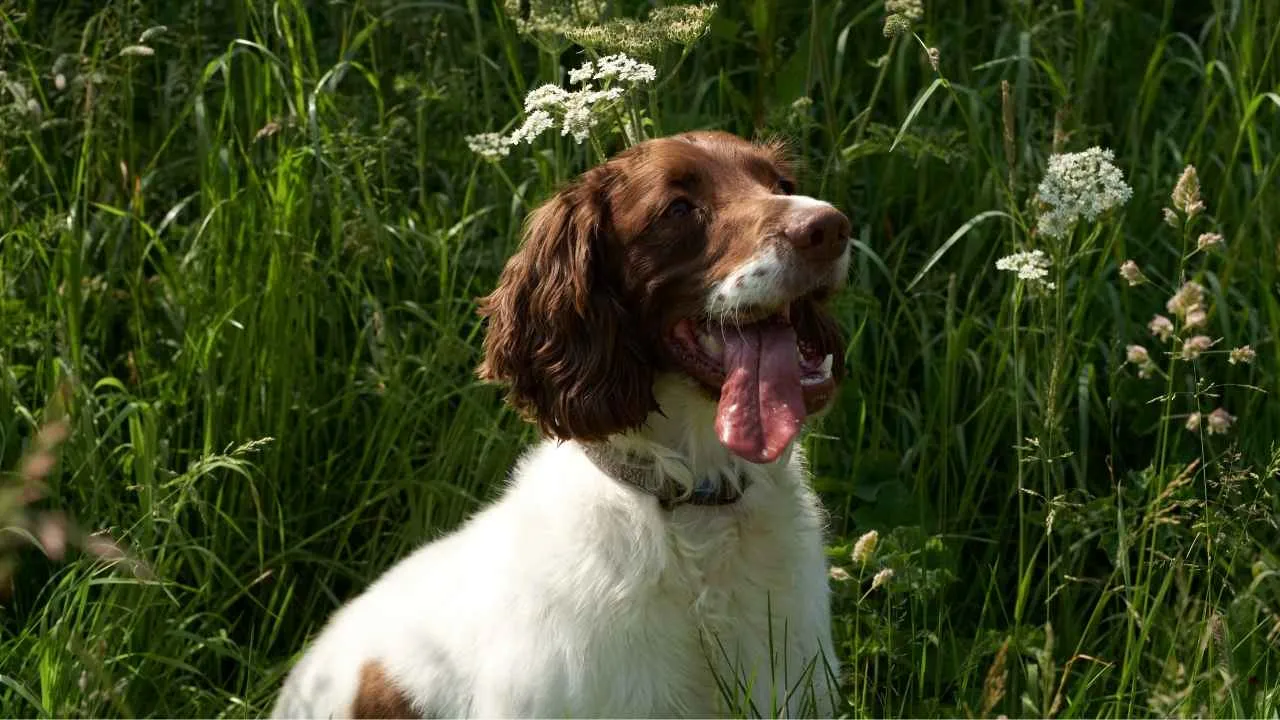
English Springer Spaniels are energetic, quick learners, and highly skilled bird dogs known for their precise scenting ability and exceptional field performance.
The English Springer Spaniel has a long history as a versatile hunting companion, originally bred to locate and flush game birds from dense cover so hunters could take a clear shot.
The term “springer,” first widely used in the early 20th century, reflects this natural ability to “spring” or flush birds into flight, though the breed’s origins trace back many centuries within spaniel-type hunting dogs.
Compact yet muscular, this breed is built for endurance, allowing it to work long hours across fields, wetlands, and thick brush without losing focus or energy.
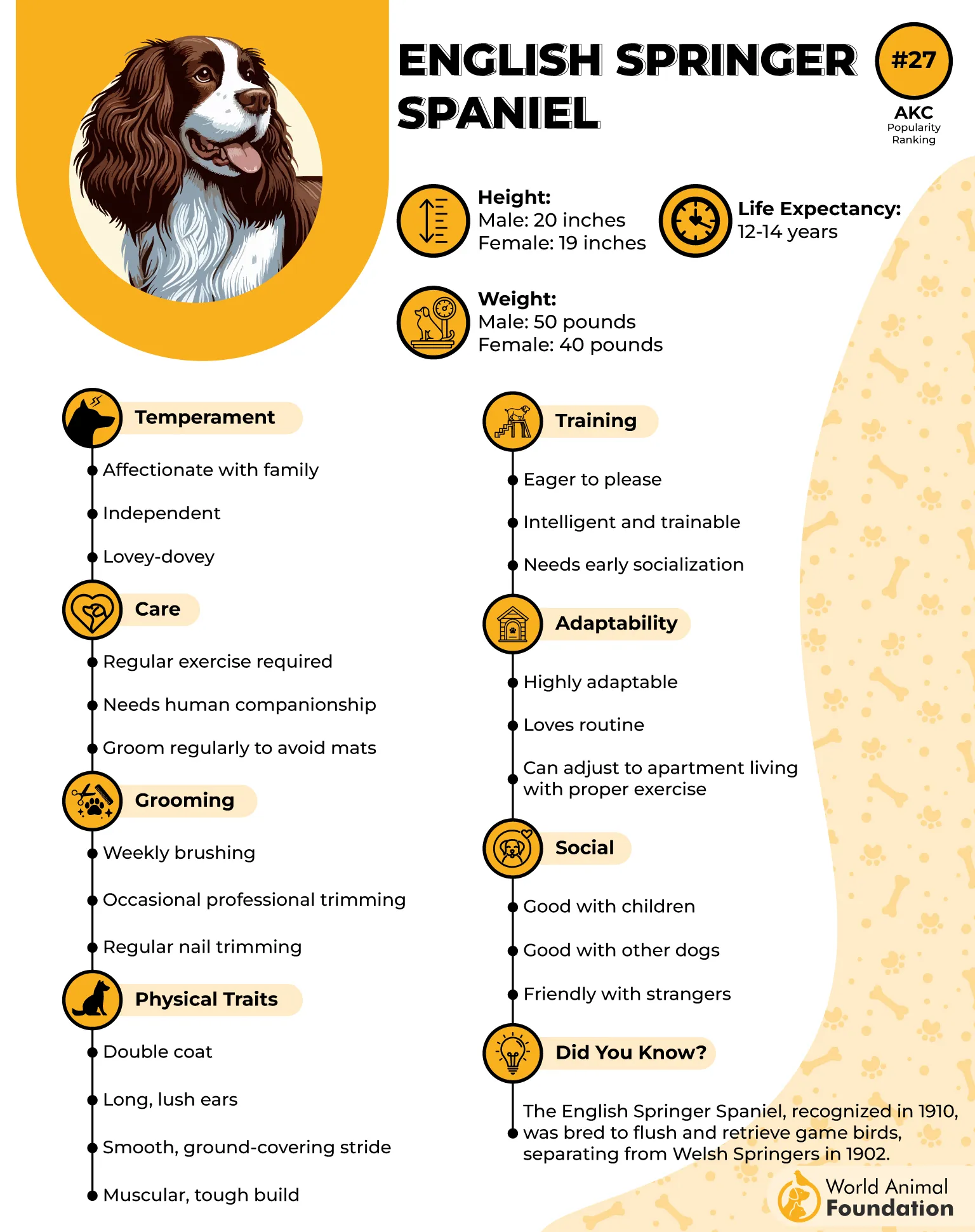
Its wavy coat and long ears help protect it during heavy cover work, while its keen nose and responsive nature make it highly effective in tracking and retrieving game.
In the field, English Springer Spaniels are known for their enthusiasm, close cooperation with handlers, and reliable scent-tracking precision.
At home, they are friendly, cheerful, and affectionate, adapting well as family companions when their high exercise needs are met through regular outdoor activity and structured training.
7. Brittany
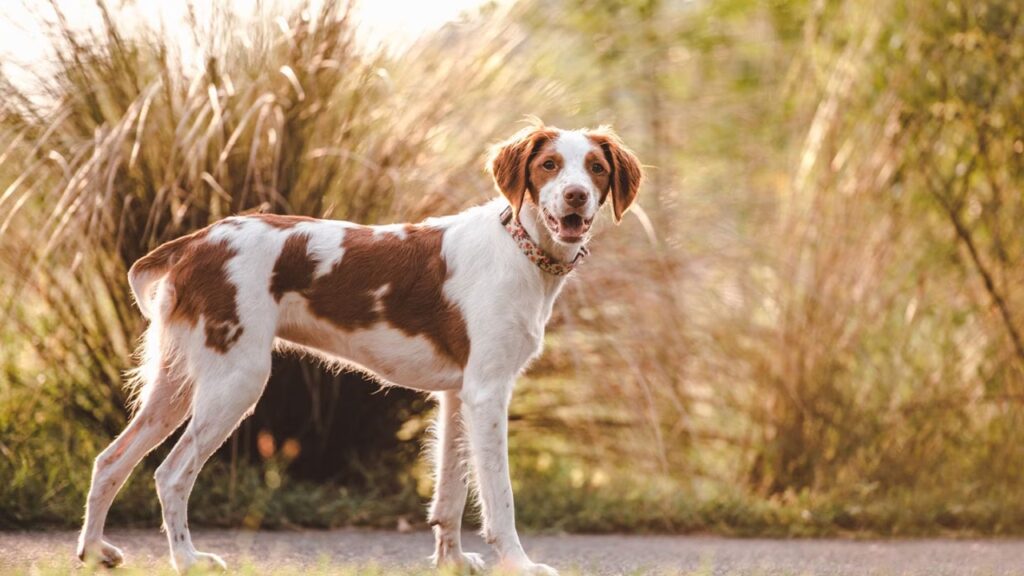
Brittany Spaniels are agile, energetic hunting dogs valued for their precision scenting ability and versatile performance in the field.
The Brittany was developed in France and is widely regarded as one of the most efficient pointing breeds, capable of tracking and locating game birds with remarkable accuracy across varied terrain.
Smaller than setters yet leggier than spaniels, it combines athletic speed with a compact frame that supports long hours of hunting without fatigue.
Its distinctive coat features bold white, orange, or liver patterns that make it easily recognizable in the field while also providing moderate protection in rough cover.
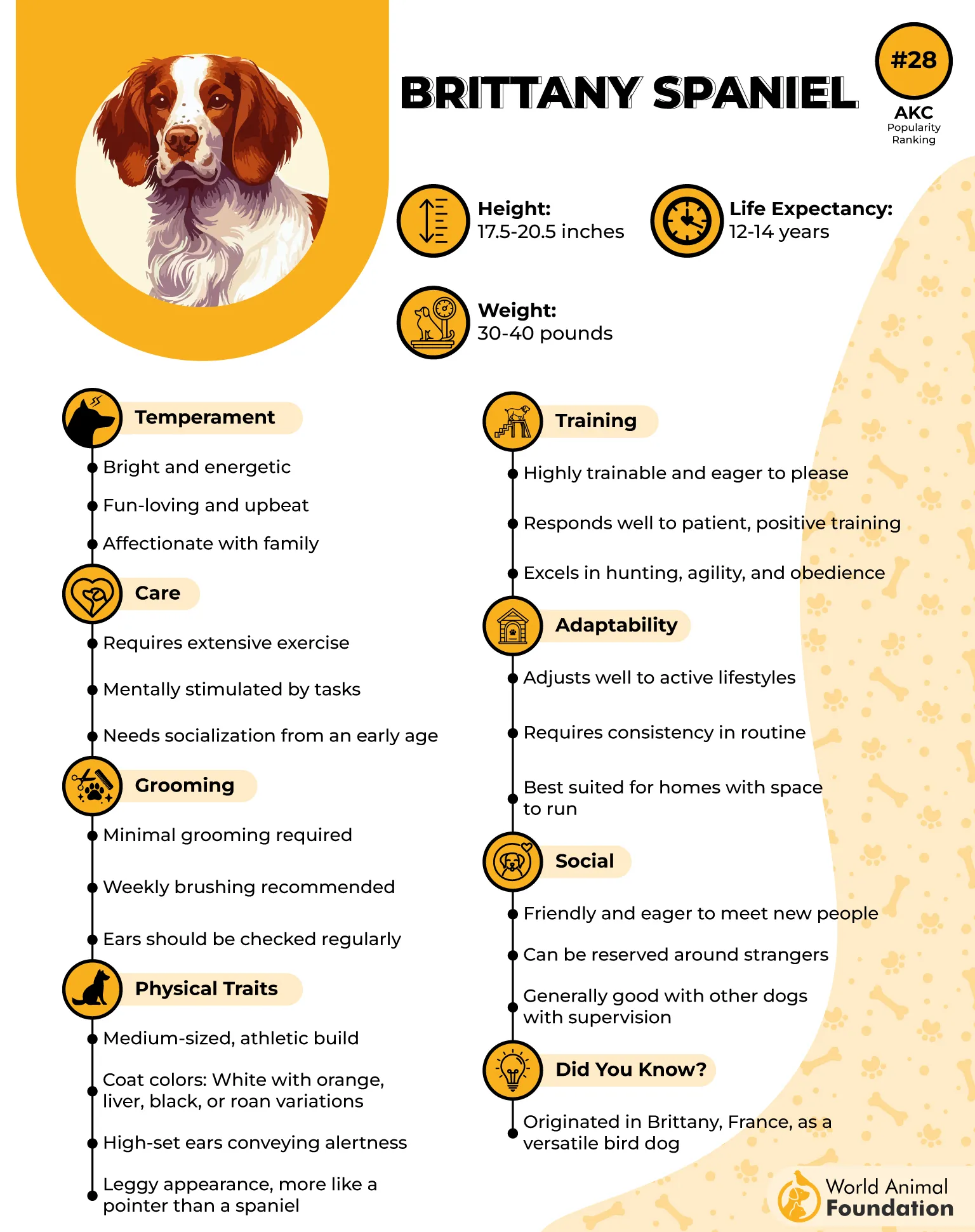
In the field, Brittanys are fast, focused, and responsive, working closely with handlers to track scent trails and flush or point game efficiently.
At home, they are friendly, affectionate, and highly trainable, excelling in obedience, agility, and other breeds’ sports when given sufficient daily exercise and engagement.
Their combination of stamina, intelligence, and precision tracking makes them a reliable hunting partner for active outdoors-oriented owners in diverse conditions, overall reliability
8. German Shorthaired Pointer
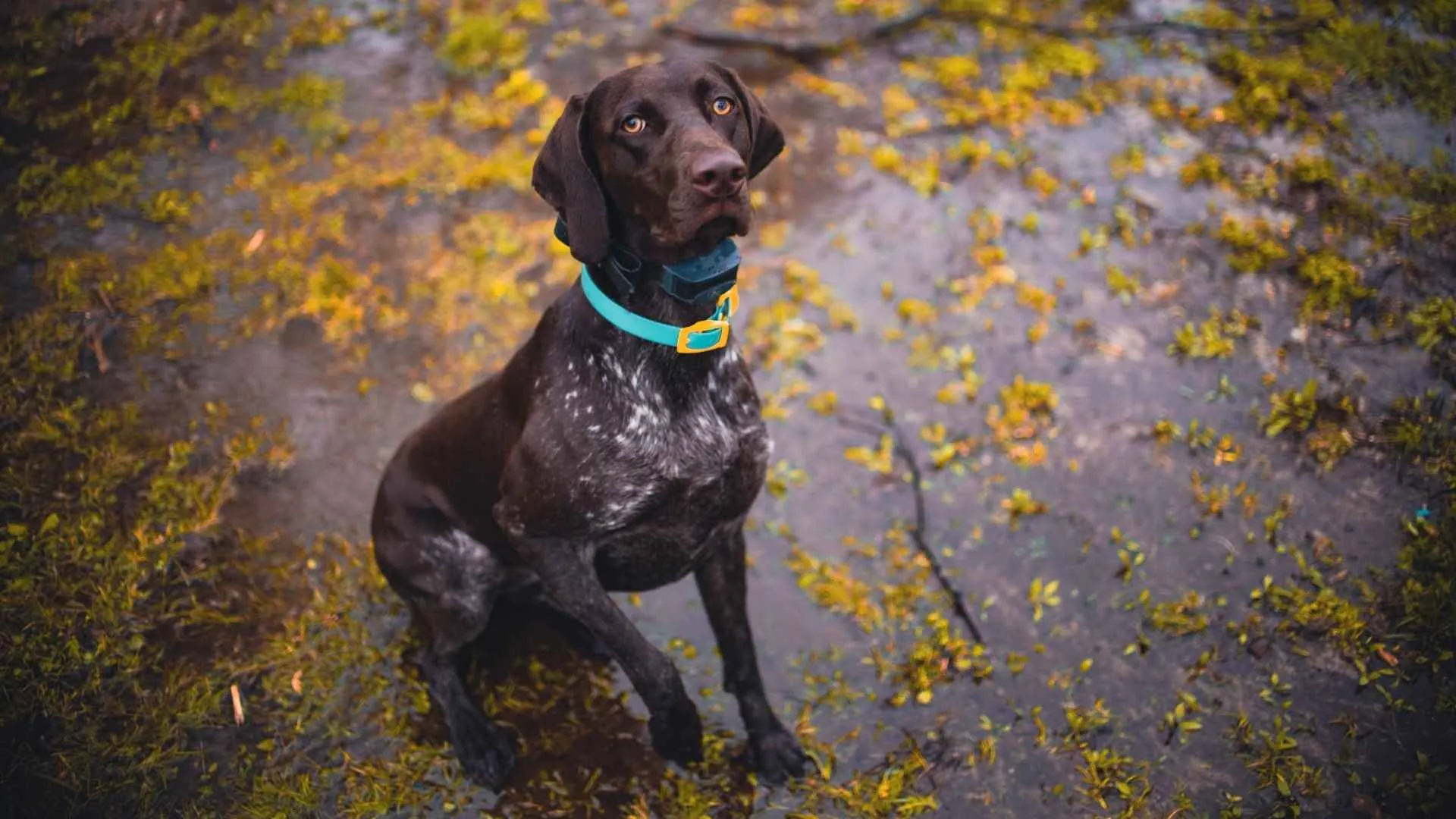
German Shorthaired Pointers are highly versatile, energetic hunting dogs renowned for their precision tracking speed and all-day endurance in the field.
The German Shorthaired Pointer is bred in Germany as a multi-purpose gun dog capable of pointing, tracking, and retrieving game birds across varied terrain.
Built as a medium-sized athletic breed, it typically stands 21 to 25 inches tall and combines lean muscle with strong scenting ability for long hunts.
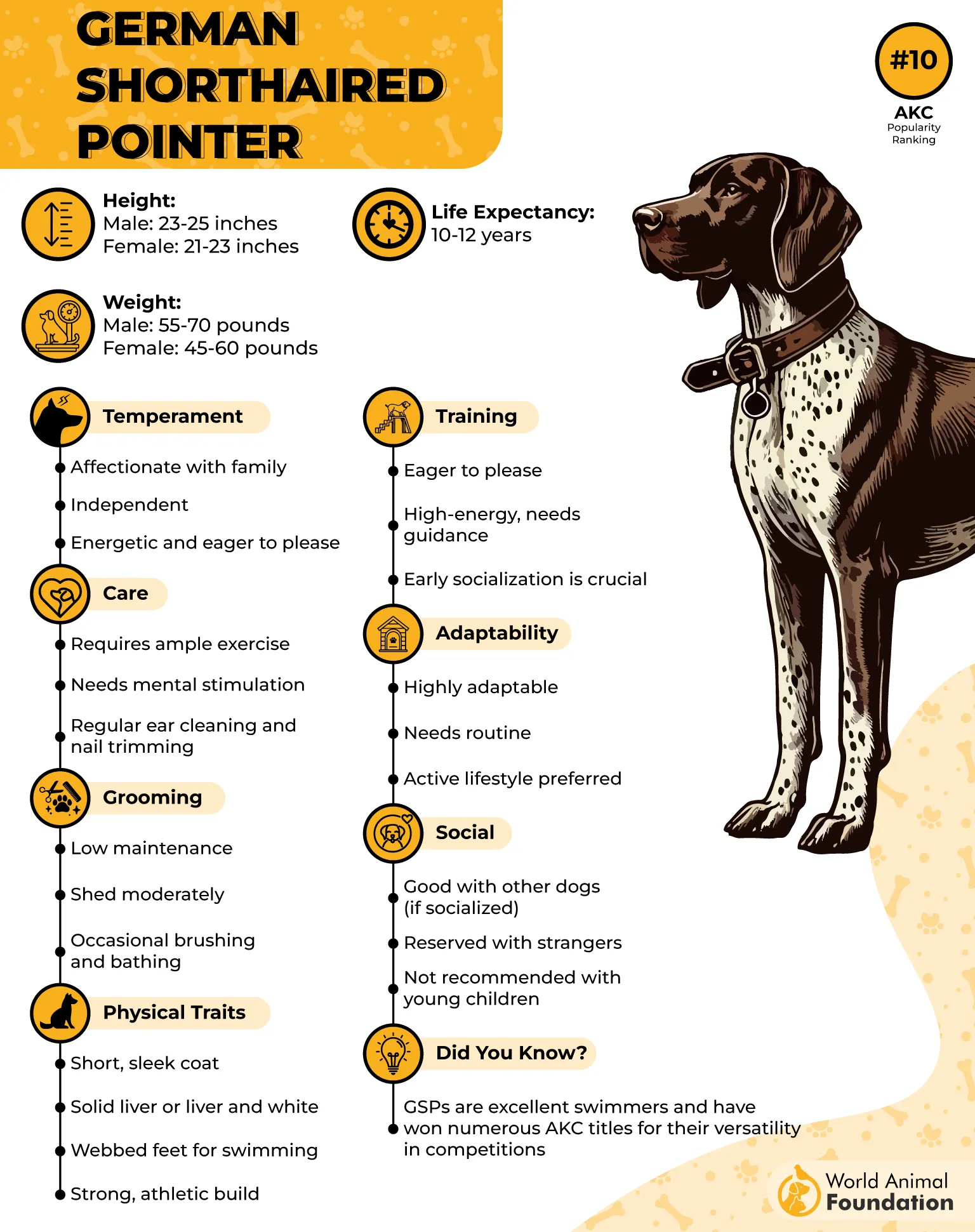
In the field, German Shorthaired Pointers are known for their focused tracking style, quick movement, and close cooperation with handlers when locating or flushing game.
At home, they are affectionate, loyal, and highly active, requiring at least one to two hours of daily exercise such as running, fetching, or agility work to stay balanced and healthy.
Their strong prey drive makes them highly effective tracking companions, but it also requires proper training and secure environments, especially around smaller animals, to ensure control, focus, and reliability in real hunting situations.
This helps maintain their natural intelligence, responsiveness, and working drive in practical field conditions.
9. American Foxhound
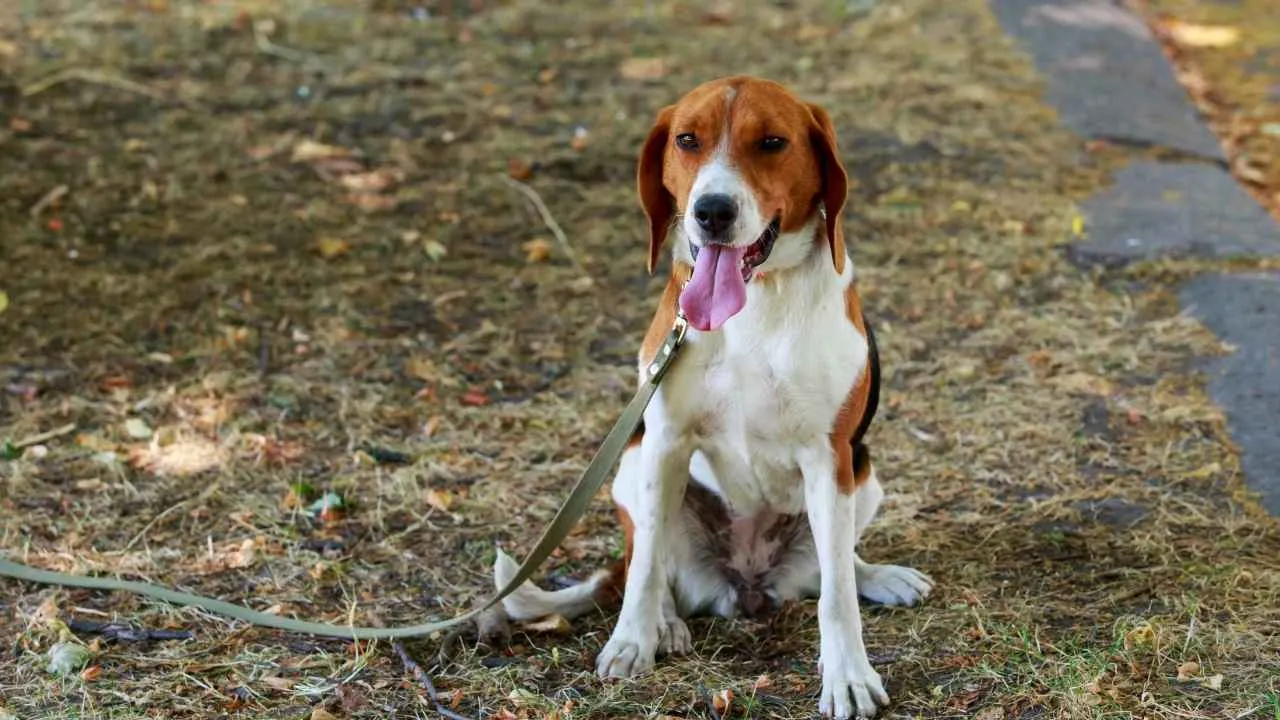
American Foxhounds are energetic, determined scent hounds known for their remarkable tracking precision and tireless stamina in the field, as noted by WebMD.
The American Foxhound was developed in the United States from early English Foxhound stock and became closely associated with historic hunting traditions in colonial America, especially across the estates of Virginia.
Officially recognized by the American Kennel Club in 1886, this breed was purpose-built for pursuing foxes over vast distances using its powerful sense of smell.
In the field, American Foxhounds work with a steady rhythm and exceptional endurance, following scent trails across long, challenging terrain without easily losing focus.
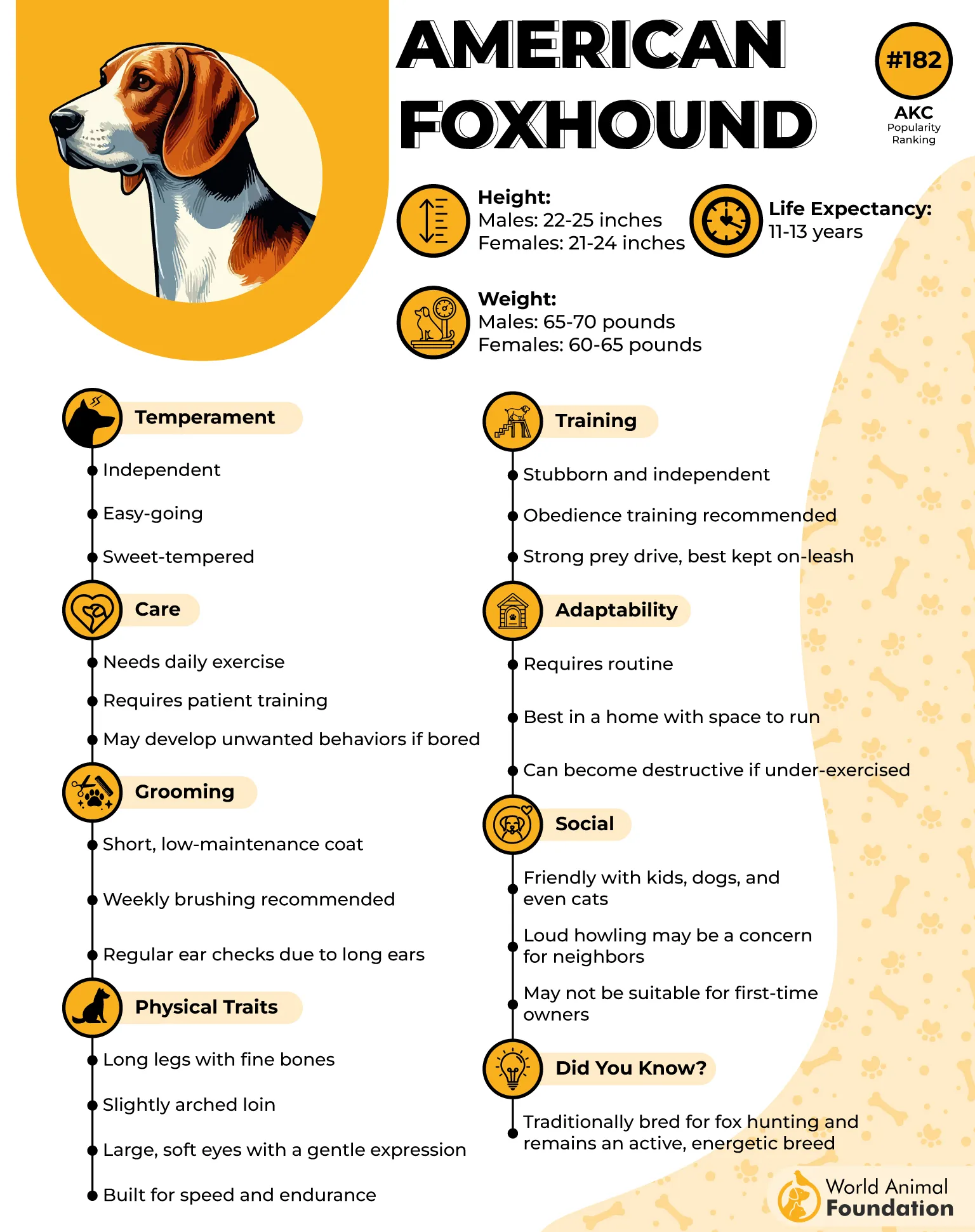
Their lean, athletic build supports sustained speed, making them ideal pack hunters capable of covering extensive ground during a chase. One of their most distinctive traits is their musical, far-carrying howl, which hunters use to track pack movement during hunts.
Today, several strains exist, including Walker, Trigg, July, and Penn-Marydel, each adapted to different hunting styles but still recognized under the same breed.
At home, they are affectionate and social but require significant exercise and open space to remain balanced, thriving best in active outdoor environments.
10. Vizsla
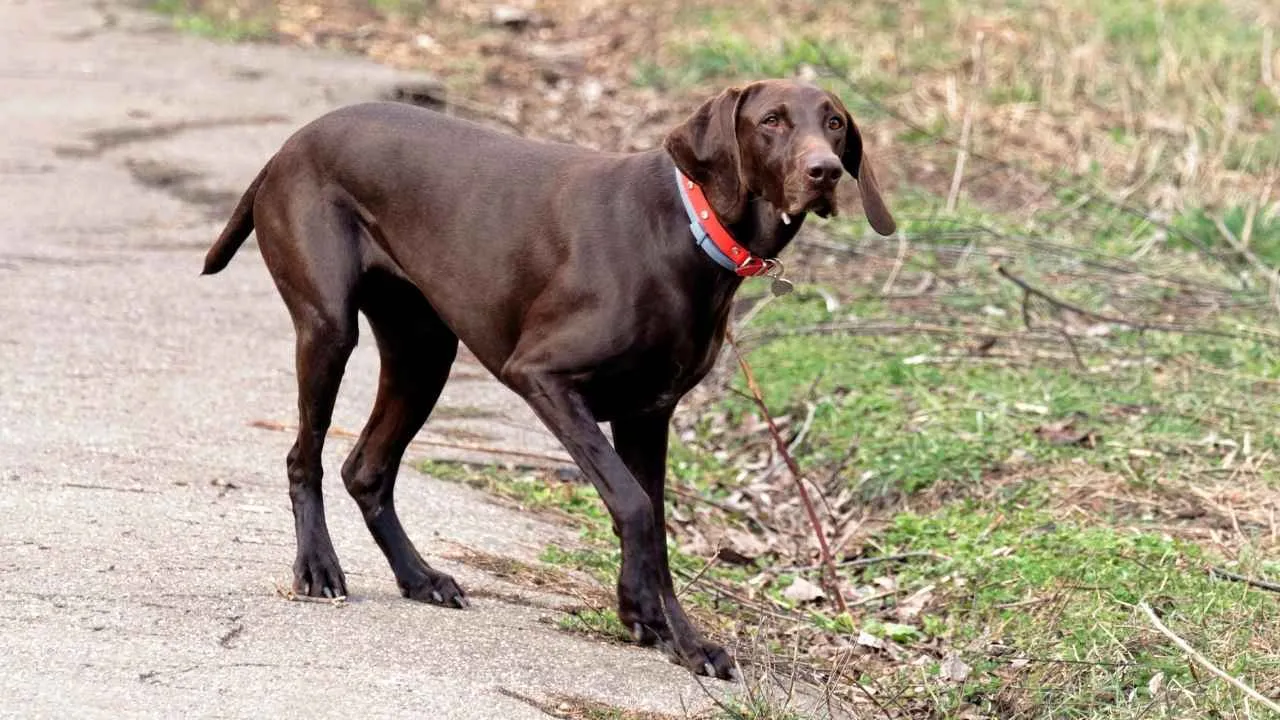
Vizslas are agile, intelligent hunting dogs known for their exceptional tracking ability, close working style, and natural precision in locating game.
The Vizsla originates from Hungary, where it was bred as a versatile gun dog for tracking, pointing, and retrieving game across varied terrain.
Built with a lean athletic frame, it moves quickly through dense cover, working closely with its handler to maintain accuracy on scent trails.
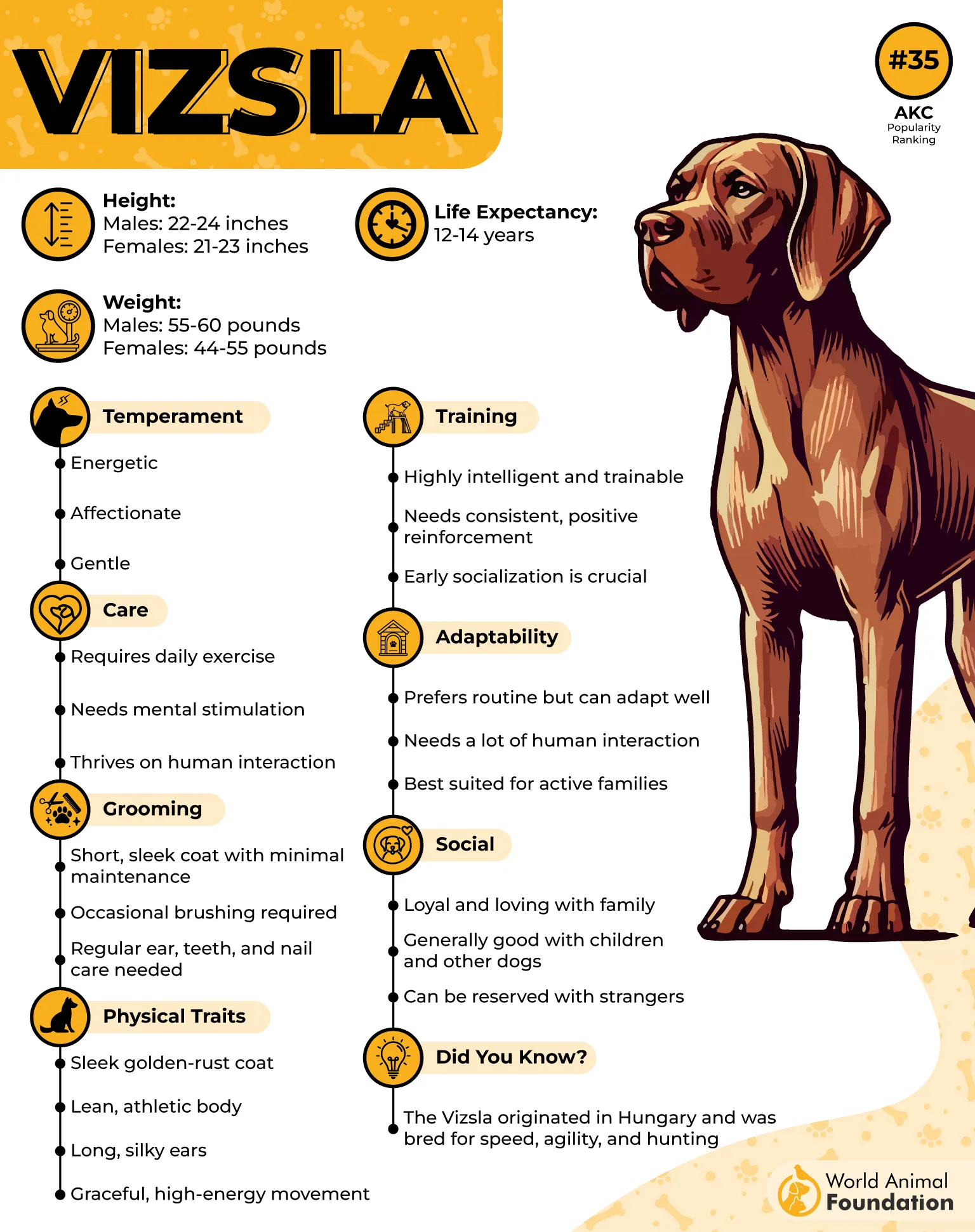
It is also known for its strong affinity for water and readily swims to retrieve downed game, making it highly versatile in the field. After World War II, the breed spread widely beyond Hungary and gained popularity as both a sporting companion and family dog.
At home, Vizslas are affectionate, energetic, and thrive best in active households that provide regular exercise and mental stimulation.
In the field, they are valued for their consistent scenting accuracy, calm focus, and ability to maintain steady contact with hunters during long tracking sessions.
Their intelligence and eagerness to please also make them highly trainable working partners in precision-based hunting environments.
Conclusion
Precision-based hunting dogs remain some of the most skilled working companions ever developed through selective breeding.
Their unmatched scenting ability, stamina, intelligence, and close cooperation with handlers make them essential in tracking, flushing, pointing, and retrieving game across diverse terrains.
Each of these dogs is built for endurance and accuracy, combining instincts with trainability that enhances performance in real hunting conditions.
Beyond their field abilities, they also form strong bonds with humans, making them loyal partners when given proper exercise, structure, and mental stimulation in active environments.
