





Dog lovers are often fascinated by contrasts in the canine world, and few matchups are as compelling as the Blue Heeler versus the Rottweiler.
In this head-to-head showdown, two powerful working breeds step into the spotlight, each shaped by a legacy of demanding tasks and unwavering loyalty.
The Rottweiler, a confident guardian with Roman-era roots, is known for its strength, protective instincts, and calm authority when properly trained.
In contrast, the Blue Heeler, a tireless Australian herder, thrives on speed, intelligence, and constant mental stimulation. While both breeds are highly intelligent and deeply devoted to their families, their energy levels, training needs, and working styles differ dramatically.
This comparison explores how these remarkable dogs behave, what makes them unique, and which lifestyle they suit best. Whether you are drawn to protective guardianship or a relentless herding drive, this guide helps you understand which breed may fit your world better overall balance.
Key Takeaways
The Blue Heeler and Rottweiler are both working breeds, shaped by demanding jobs that built their intelligence, loyalty, and strong instincts.
Blue Heelers are extremely high-energy dogs that require constant physical activity and mental stimulation to stay balanced and happy.
Rottweilers are powerful, steady dogs that also need regular exercise, but they tend to be more controlled and less restless than Heelers.
Both breeds are highly intelligent, but Blue Heelers are more independent thinkers, while Rottweilers respond better to structured leadership.
Protective instincts are strong in both, with Rottweilers acting as calm guardians and Heelers showing alert, action-oriented protectiveness.
- Head‑to‑Head Showdowns: Blue Heeler Dog Breeds vs. Rottweilers
Blue Heeler vs Rottweiler: Complete Head-to-Head Comparison
Origins & Purpose
The Blue Heeler and Rottweiler come from very different worlds, shaped by purpose and survival rather than appearance. The Blue Heeler traces its roots to 19th-century Australia, where farmers needed a tireless herding dog capable of handling vast cattle stations and harsh terrain.
Through careful crossbreeding of working dogs, a sharp, resilient, and endlessly driven herder emerged. Every instinct in the breed reflects movement, control, and problem-solving in demanding outdoor conditions, according to Lyka.
The Rottweiler, on the other hand, has ancient Roman origins, descending from mastiff-type dogs used to drive and guard livestock during long military journeys.

Over time, they became trusted working companions for butchers and farmers in Germany, valued for strength, reliability, and protective instincts.
Unlike the Heeler’s fast-moving herding role, the Rottweiler’s purpose centered on control, guarding, and steady power. Both breeds were shaped by work, but each carries a distinct legacy of endurance and responsibility.
Physical Size & Build
The Blue Heeler and Rottweiler differ dramatically in size, structure, and physical presence, reflecting their original working roles. The Blue Heeler is a medium-sized, compact, and highly athletic dog built for speed and agility.
Its lean but muscular frame allows quick directional changes, endurance over long distances, and effortless movement across rough terrain. Despite its smaller stature, it carries surprising strength packed into a tightly balanced body.
The Rottweiler, in contrast, is a large and muscular breed with a broad chest, thick bone structure, and a heavily muscled build. Every part of its body reflects strength and stability, from its solid hindquarters to its confident, grounded stance.
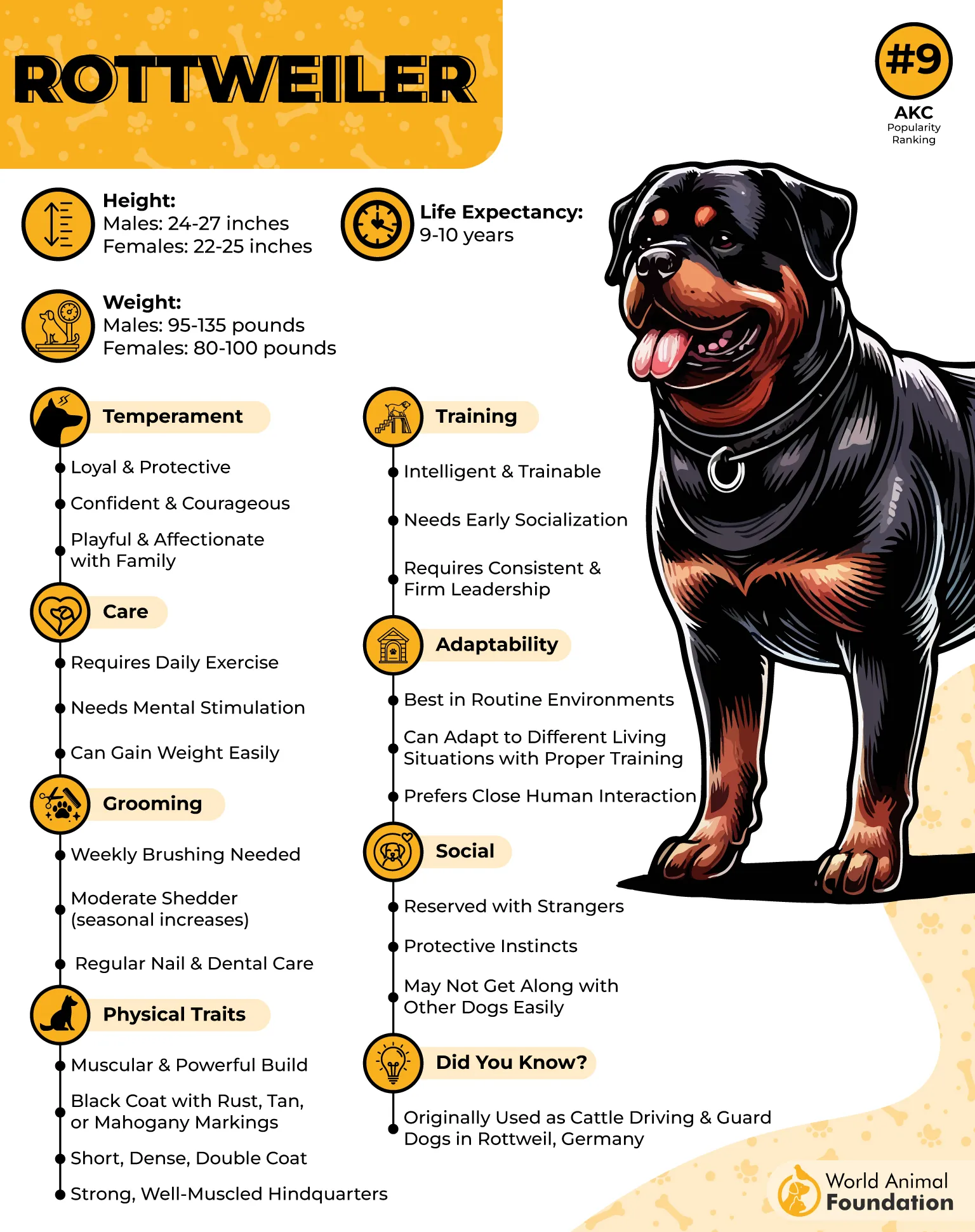
While the Heeler appears agile and quick, the Rottweiler feels imposing and steady, designed for power rather than speed, as stated by the American Kennel Club.
Both breeds are physically impressive in their own right, but they represent two different extremes of working dog structure, light-footed endurance versus controlled, muscular force.
Pricing & Availability
When it comes to availability, both the Blue Heeler and Rottweiler are widely recognized breeds, but their demand and sourcing can differ depending on region and breeder quality.
Blue Heelers are often more accessible in regions where working dogs are common, especially in rural or farm-oriented communities. Their popularity as active companions means they are relatively available, though responsible breeding still plays a key role in ensuring healthy, well-tempered pups.

Rottweilers, being one of the more globally popular guardian breeds, are also widely available but often come with stricter breeding standards and higher variation in pricing depending on lineage, training background, and health certifications.
In both cases, ethical breeding practices significantly influence cost, as responsible breeders prioritize temperament, health testing, and proper early socialization. Ultimately, availability exists for both breeds, but finding a well-bred, responsibly raised dog matters far more than convenience or price alone.
Temperament & Sociability
The Blue Heeler and Rottweiler both share deep loyalty, but their personalities express it in very different ways. The Blue Heeler is intensely driven, alert, and highly energetic, always seeking purpose in movement or tasks.
It bonds strongly with its family but may be reserved with strangers, often preferring structure, stimulation, and clear direction. Without engagement, its intelligence can turn restless, leading to independent or overly protective behavior.
The Rottweiler carries a calmer, more grounded temperament. Confident and naturally protective, it often appears aloof to outsiders but affectionate and deeply devoted within its family circle. It thrives on companionship and clear leadership, responding well to consistent training and early socialization.
Unlike the Heeler’s constant motion, the Rottweiler’s presence is steady and watchful. Both breeds are loyal to the core, but one expresses it through high-energy engagement, while the other shows it through calm guardianship and emotional steadiness.
Energy Levels & Exercise Needs
The Blue Heeler and Rottweiler both carry impressive energy, but they express it in very different ways. The Blue Heeler is a nonstop powerhouse, bred to move, think, and react all day long.
It thrives on constant activity; long runs, structured tasks, and mentally stimulating games are essential to keep it balanced. Without enough engagement, its energy can quickly turn into restlessness.
The Rottweiler, while not as restless, still demands serious daily exercise. Strong, muscular, and built for endurance, it enjoys long walks, play sessions, and purposeful activity. Around two hours of movement and stimulation is often recommended to keep it physically and mentally satisfied.

Where the Heeler feels like a spark that never fades, the Rottweiler is steady power that builds and releases through controlled activity. Both breeds need commitment, but their energy rhythms reflect two very different working-dog personalities.
Trainability & Intelligence
Both breeds are highly intelligent, but they learn and challenge you in different ways. The Blue Heeler is quick, sharp, and highly observant. It picks up commands fast but may question them just as quickly if something more interesting appears.
Training this breed requires creativity, consistency, and patience, as it tends to think independently rather than blindly follow instructions.

The Rottweiler is equally intelligent but generally steadier and more focused when properly guided. It responds well to structured, consistent training and can develop into a highly obedient companion when leadership is clear. However, it also requires firm direction from an early stage to shape its powerful instincts positively.
While the Heeler tests your flexibility, the Rottweiler tests your leadership. Both demand respect rather than repetition, and both reward owners who invest time in building trust, structure, and clear communication.
Protectiveness & Guarding Ability
Protectiveness runs deep in both breeds, but it shows itself in contrasting styles. The Rottweiler is naturally composed, confident, and observant. It tends to assess situations calmly before reacting, making it an instinctive guardian of home and family, as explained by Greencross Vets.
Its presence alone often acts as a deterrent, and its loyalty creates a strong sense of responsibility toward its “pack.”
The Blue Heeler, on the other hand, is alert and reactive, always aware of movement and change in its environment. Its protective nature is tied closely to its herding instincts, often stepping in to control or manage situations rather than simply guard.
While the Rottweiler stands as a steady protector, the Heeler is a vigilant controller of motion and order. Both are loyal and deeply attached to their families, but their guarding instincts reflect different interpretations of responsibility, one grounded in strength, the other in awareness and action.
Grooming & Maintenance
When it comes to grooming, both breeds are relatively manageable, but they still require consistent care. The Blue Heeler has a short, dense double coat that sheds moderately throughout the year.
Regular brushing helps control loose hair and keep the coat healthy, especially during seasonal shedding periods. Its grooming routine is simple, but consistent attention is key.
The Rottweiler also has a short coat, but it is slightly thicker and sheds more noticeably during seasonal changes. Weekly brushing helps maintain shine, reduce shedding, and keep the skin healthy. Basic hygiene tasks like ear cleaning, nail trimming, and dental care are important for both breeds.

Neither dog requires complex grooming routines, but they do benefit from regular maintenance that supports overall health. In both cases, grooming becomes less about appearance and more about bonding, care, and early detection of potential health concerns.
Health & Lifespan
Both the Blue Heeler and Rottweiler are strong working breeds, but their lifespans and health concerns differ. The Blue Heeler is generally known for its resilience and can live a relatively long life, often into its mid-teens with proper care.
Its active nature helps maintain fitness, but joint health and dental care still require attention over time.
The Rottweiler, while powerful and sturdy, typically has a shorter lifespan. As a large breed, it may be more prone to certain structural and heart-related conditions, making regular veterinary care especially important. Its size and strength require careful attention to weight management and joint support throughout life.
Both breeds benefit greatly from balanced nutrition, regular exercise, and preventive care. While one tends toward longevity and endurance, the other reflects strength and intensity within a shorter lifespan. In both cases, quality care directly shapes their well-being.
Which One Is Right for Your Lifestyle?
Choosing between a Blue Heeler and a Rottweiler depends entirely on your lifestyle, experience, and daily energy. The Blue Heeler suits highly active individuals or families who enjoy constant movement, outdoor activities, and mental engagement.
It thrives in environments where it has a job, structure, and consistent stimulation. Without that, it can become frustrated and restless.
The Rottweiler fits best with owners who want a calm yet powerful guardian companion, according to PetPlan. It requires confident leadership, early training, and space to move, but it also values stability and close family bonds. It is more suited to structured households that can provide both guidance and companionship.
In essence, the Blue Heeler matches fast-paced, energetic living, while the Rottweiler aligns with steady, confident lifestyles. Both are deeply loyal and intelligent, but the right choice depends on whether you’re prepared for constant motion or controlled strength.
Conclusion
Both the Blue Heeler and the Rottweiler stand out as extraordinary working dogs, but they excel in very different ways. The Rottweiler brings a calm yet powerful presence, shaped by centuries of guarding, herding, and protection work.
It thrives in structured environments where leadership, training, and companionship are clearly defined. On the other hand, the Blue Heeler is a high-energy problem solver, built for endurance, agility, and constant mental engagement, making it ideal for active lifestyles and demanding outdoor work.
While both breeds are intelligent, loyal, and deeply bonded to their families, their needs for exercise, stimulation, and handling vary significantly. Choosing between them ultimately depends on lifestyle, experience, and commitment to training.
For owners seeking a steady protector, the Rottweiler may be the better match, while those who prefer an energetic, ever-busy partner may gravitate toward the Blue Heeler. In the end, both dogs reward dedication with unmatched loyalty and companionship.
