




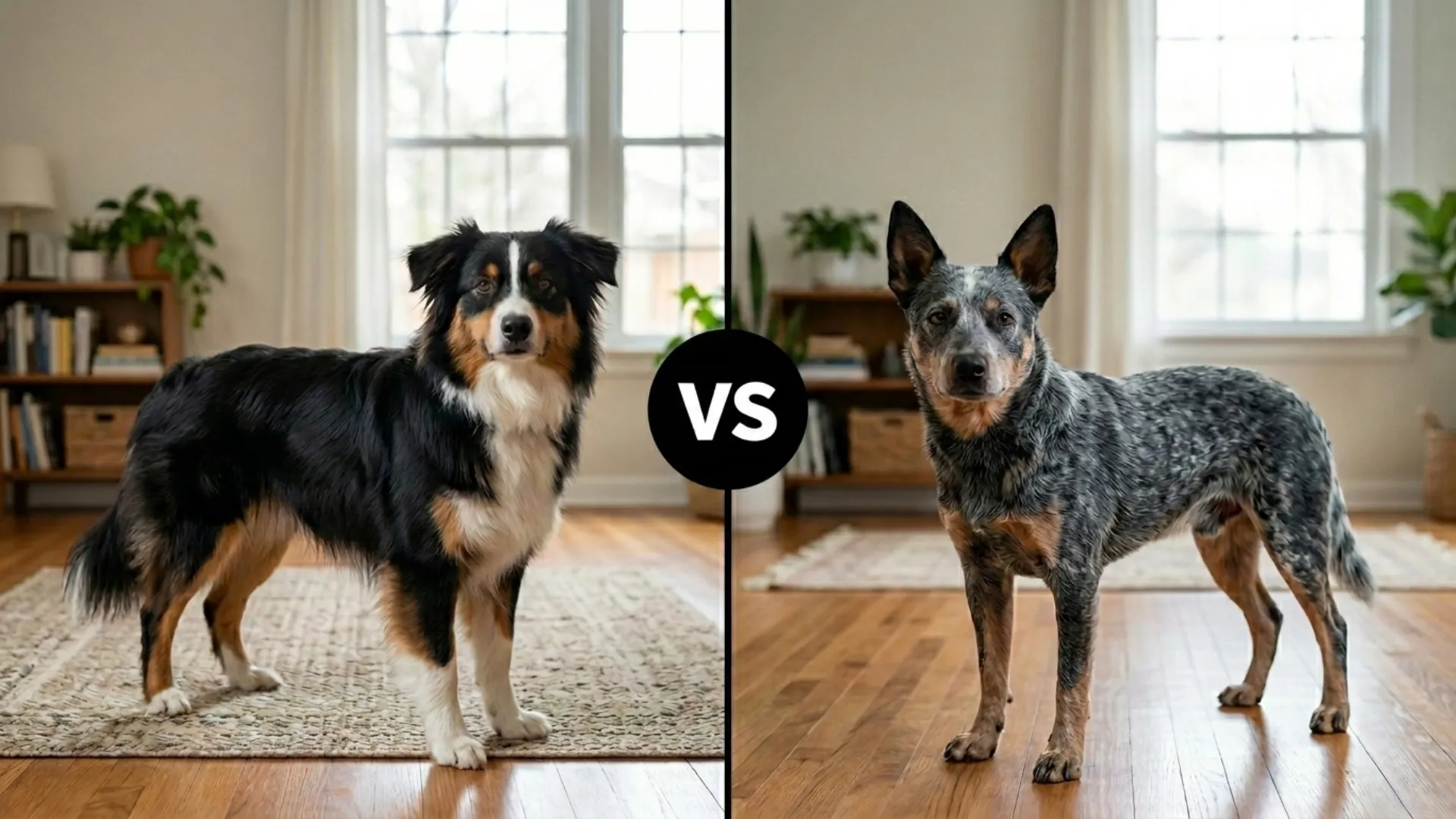
The Australian Shepherd and the Blue Heeler, aka Australian Cattle Dog, are two highly energetic herding dog breeds known for their intelligence, strength, and strong working instincts. At first glance, they may appear quite similar because both are active, alert, and built for demanding farm and ranch work.
However, a closer look shows clear differences in their physical build and behavior. The Australian Shepherd is generally larger with a more balanced, athletic structure, while the Australian Cattle Dog is more compact, muscular, and built for intense bursts of power and endurance.
Their personalities also set them apart, with the Australian Shepherd being more social and people-focused, while the Blue Heeler is more independent, determined, and task-driven. These differences make both breeds unique in their own way, each excelling in different working and family environments.
In this article, we explore the key differences between the Australian Shepherd and the Australian Cattle Dog, focusing on their size, temperament, energy levels, training, and overall personality to help you understand which breed may be the better fit for your lifestyle.
Australian Shepherd vs. Blue Heeler: Size and Personality Difference
Size and Strength
Australian Shepherd
The Australian Shepherd is a slightly larger and well-proportioned herding breed, typically standing 18 to 23 inches tall at the shoulder and weighing around 40 to 65 pounds.
Its body structure is lean yet powerfully built, giving it a perfect balance of speed, endurance, and agility. This breed is designed to cover long distances efficiently, which makes it especially effective in herding and active working environments where constant movement is required.
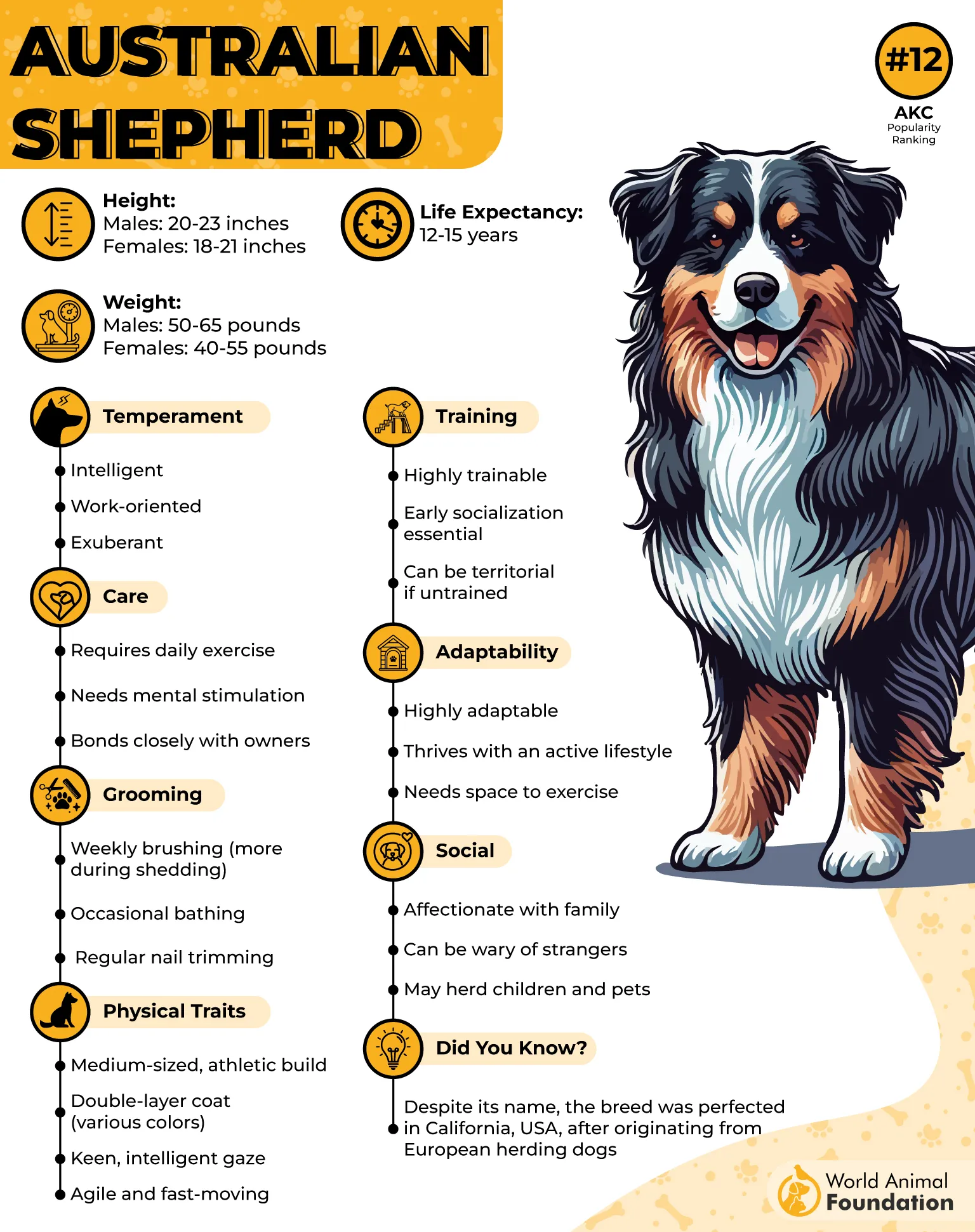
In terms of strength, the Australian Shepherd relies more on sustained energy and versatility rather than raw power. Its athletic frame supports quick directional changes, smooth coordination, and long working hours without tiring easily.
This combination of stamina and flexibility allows it to excel not only in herding but also in competitive dog sports where intelligence and physical performance must work together.
Australian Cattle Dog (Blue Heeler)
The Australian Cattle Dog is more compact in size, usually standing 17 to 20 inches tall and weighing around 35 to 50 pounds, but it is exceptionally dense and muscular for its frame.
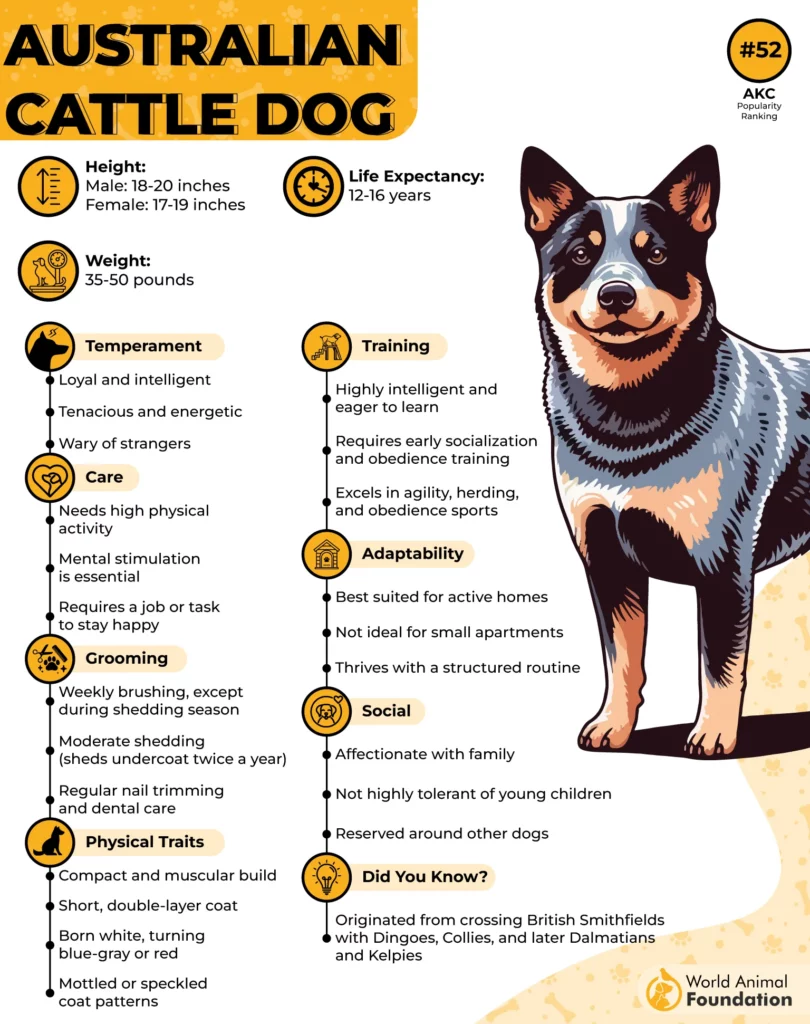
Despite being smaller than the Australian Shepherd, its body is built for toughness, endurance, and powerful bursts of energy. This makes it highly effective in controlling stubborn livestock over rough and demanding terrain.
Its strength is more concentrated and force-driven, allowing it to react quickly, maintain control, and work tirelessly in challenging conditions.
The Blue Heeler is known for its resilience and determination, often showing an intense work ethic that enables it to push through physically demanding tasks with ease. This makes it a highly reliable and efficient working dog, especially in situations that require precision and persistence.
Temperament and Personality
Australian Shepherd
The Australian Shepherd is widely known for its friendly, loyal, and highly social nature. It builds a very strong emotional bond with its owners and prefers to stay involved in family activities, making it feel like a true companion rather than just a working dog.
This breed is intelligent, quick to learn, and generally eager to please, which makes training smoother when handled with consistency and positive reinforcement.
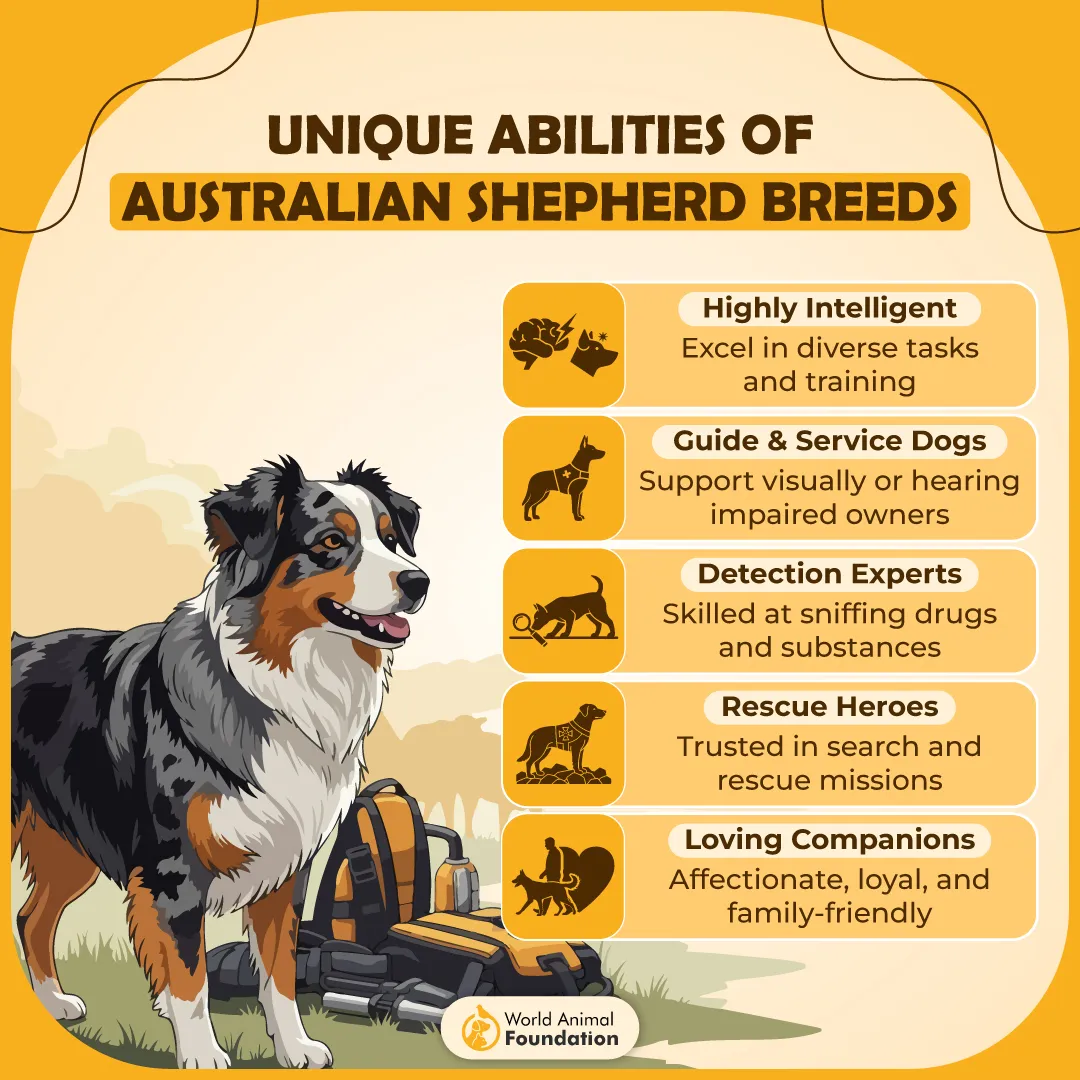
Australian Shepherds are also playful, active, and highly energetic, meaning they need regular mental and physical stimulation to stay happy. They are naturally protective of their family and can be cautious around strangers at first, as mentioned by ASCA.
Australian Cattle Dog (Blue Heeler)
The Australian Cattle Dog is known for its bold, independent, and extremely determined personality. While it is just as intelligent as the Australian Shepherd, it tends to rely more on its own judgment, which can make it more strong-willed during training.
This breed is highly focused and thrives when given a clear job or purpose, especially in demanding or structured environments.
Australian Cattle Dogs are deeply loyal to their owners but are usually more reserved in showing affection compared to Aussies. They are naturally alert and cautious around strangers, often taking time to trust new people.
However, once a bond is formed, they become incredibly devoted and protective. Their temperament is defined by resilience, intensity, and a strong working drive that makes them exceptional herding and guard dogs.
Health and Lifespan
Australian Shepherd
The Australian Shepherd is generally a healthy and active breed, but like many purebred dogs, it can be prone to certain genetic and hereditary conditions. Responsible care, regular check-ups, and a balanced lifestyle play an important role in maintaining its long-term well-being.
Prone to hip dysplasia, which affects joint mobility
May develop eye conditions and vision-related issues
Can be affected by deafness in some lines
Susceptible to skin and flea allergies, causing irritation
Requires regular veterinary check-ups for early detection
Despite these concerns, the Australian Shepherd is a long-living breed, with a typical lifespan of 13 to 15 years. With proper nutrition, exercise, and preventive care, it can remain active and healthy well into its senior years.
Australian Cattle Dog (Blue Heeler)
The Australian Cattle Dog is known for its toughness and overall strong health, reflecting its working-dog background. However, it is still prone to a few common health issues that owners should be aware of to ensure proper care throughout its life.
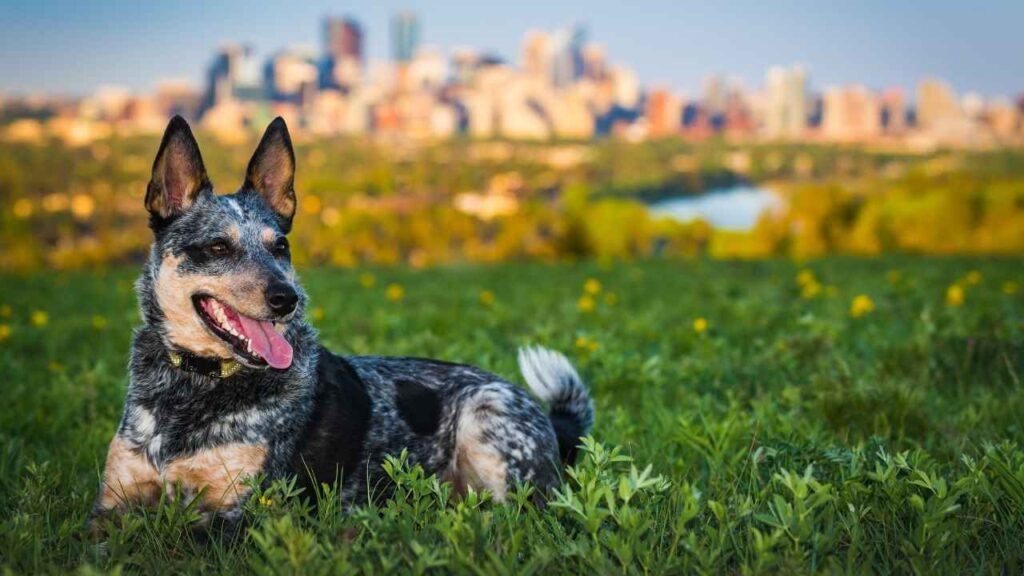
Can suffer from hip dysplasia, affecting movement and comfort
May develop hereditary deafness, especially in some bloodlines
Prone to eye problems, including progressive vision issue
Susceptible to skin conditions like mange and hot spots
Needs regular exercise to prevent obesity and joint strain
Like the Australian Shepherd, the Australian Cattle Dog also has a life expectancy of around 13 to 15 years. With proper diet, consistent activity, and routine veterinary care, it remains a resilient and energetic companion throughout its life.
Training and Exercise
Australian Shepherd
The Australian Shepherd is highly intelligent, energetic, and eager to learn, which makes it generally responsive to training—especially when started at an early age.
It has a strong desire to please its owner, so positive reinforcement and consistent routines work very well. However, because of its intelligence, it can easily get bored if training becomes repetitive or lacks challenge.
Learns quickly and responds well to positive reinforcement
Needs early training and socialization for best behavior
Can become bored or destructive without mental stimulation
Excels in agility, obedience, and herding activities
Requires structured routines to stay focused and balanced
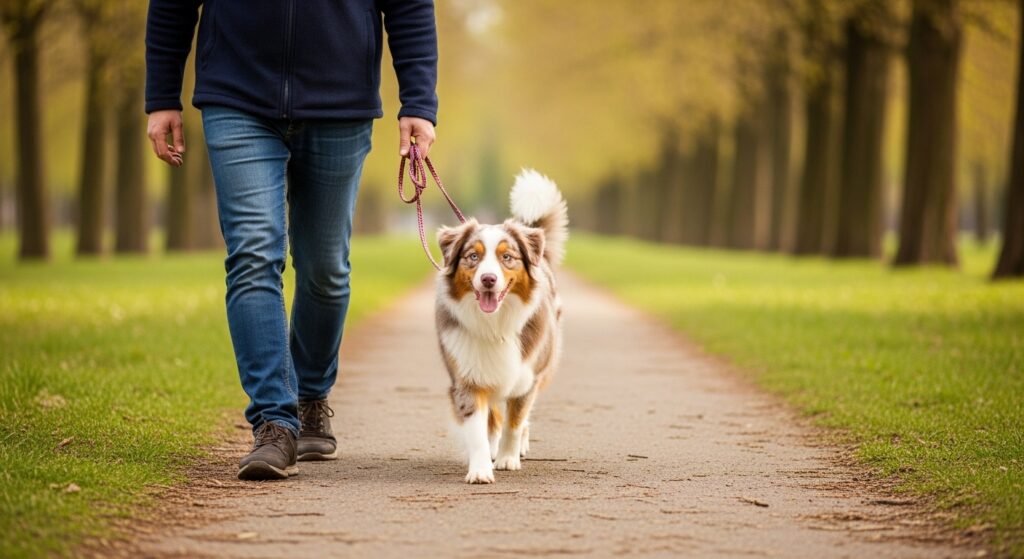
In terms of exercise, the Australian Shepherd is a high-energy breed that typically needs at least 60 minutes or more of daily activity.
Long walks, running, agility training, and interactive games help keep it physically fit and mentally satisfied. Without enough exercise, it may develop unwanted behaviors due to pent-up energy.
Australian Cattle Dog (Blue Heeler)
The Australian Cattle Dog is extremely intelligent but also more independent and strong-willed, which can make training a bit more challenging compared to the Australian Shepherd.
It respects consistency, discipline, and firm leadership. If the owner is inconsistent, the dog may ignore commands or try to take control of situations.
Highly intelligent but independent and stubborn
Requires firm, consistent, and structured training routines
Responds best to reward-based and task-oriented training
Needs early socialization to manage strong herding instincts
Can become bossy without proper guidance
WebMD mentions that the Australian Cattle Dog has very high stamina and needs more than two hours of physical exercise daily, along with mental challenges.
Activities like herding games, running, obedience drills, and problem-solving tasks are ideal. Without proper exercise, it may become restless and develop behavioral issues due to excess energy.
Grooming Needs
Australian Shepherd
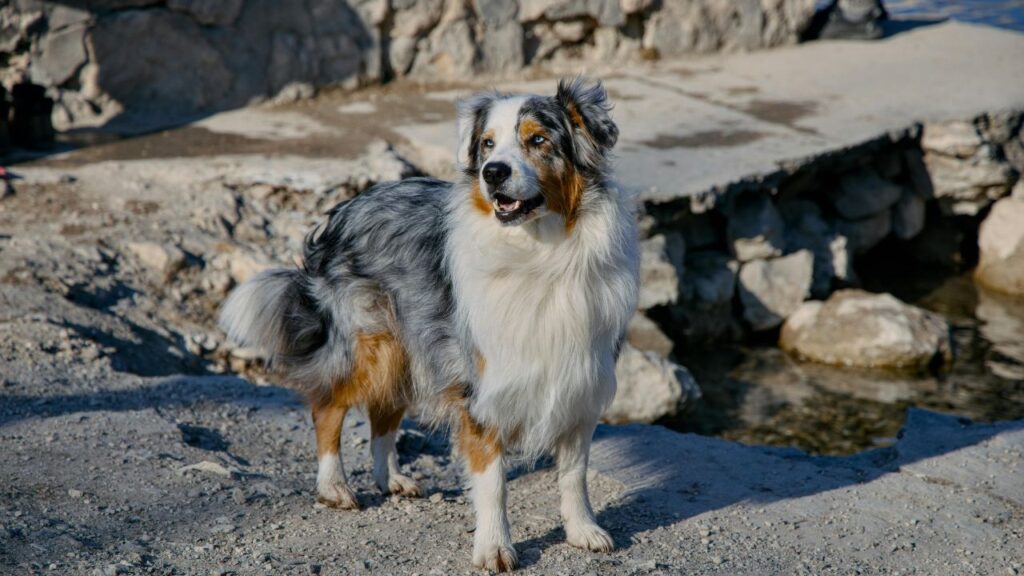
The Australian Shepherd has a long, wavy, and thick double coat that requires regular and consistent grooming to keep it healthy and manageable.
Because of its dense fur, this breed sheds heavily, especially during seasonal shedding periods, so frequent brushing is essential to prevent matting and reduce loose hair around the home. Without proper grooming, the coat can quickly become tangled and difficult to maintain.
Occasional bathing helps keep the Australian Shepherd’s coat clean, soft, and free from dirt buildup, while also supporting skin health.
One of the most attractive features of this breed is its wide range of coat colors, including blue merle, red merle, solid black, and solid red, often with unique markings that make each dog look different.
Regular care, such as nail trimming, ear cleaning, and dental hygiene, is also important to maintain overall health and appearance.
Australian Cattle Dog (Blue Heeler)
The Australian Cattle Dog has a short, dense coat that is very low-maintenance compared to many other breeds. Its grooming routine is simple and requires only occasional brushing to remove loose hair and keep the coat clean and healthy.
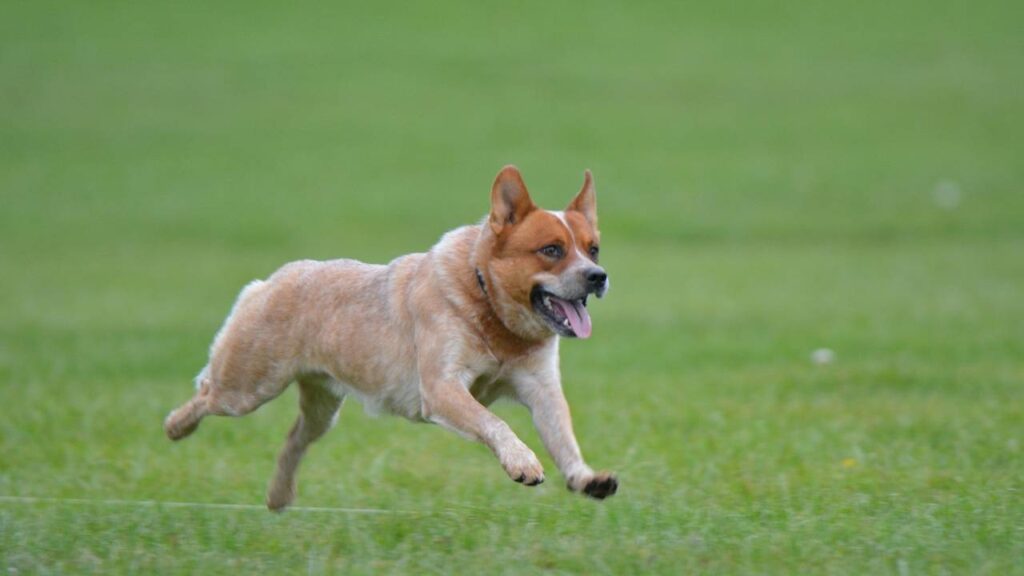
Bathing is only needed when the dog gets dirty, as its coat naturally stays relatively clean. The breed is known for its distinctive color variations, commonly called Blue Heeler and Red Heeler.
The Blue Heeler has a mix of black and white hairs creating a blue-speckled or mottled appearance, while the Red Heeler has reddish or brown speckling that gives it a warm, rusty tone. Basic care, such as nail trimming, ear cleaning, and dental hygiene, is still necessary to ensure overall well-being.
Energy Level
Australian Shepherd
The Australian Shepherd has a very high energy level and is always ready for activity, whether it is running, herding, playing, or learning new commands.
This energetic breed was developed to work closely with humans in active environments, so it naturally enjoys staying busy throughout the day. It does not like long periods of inactivity and can quickly become bored if not given enough physical and mental stimulation.
Because of its energetic nature, the Australian Shepherd thrives in environments where it can exercise daily and take part in structured activities like agility, obedience training, or herding tasks.
It is also known for its playful and enthusiastic personality, which makes its energy feel more dynamic and interactive rather than purely work-driven. Without proper exercise, it may develop restlessness or unwanted behaviors due to built-up energy.
Australian Cattle Dog (Blue Heeler)
The Australian Cattle Dog also has a high energy level, but its energy is more intense, focused, and work-oriented. Originally bred for long hours of cattle herding in harsh conditions, this breed has exceptional stamina and can work continuously without tiring easily.
This high-energy dog requires regular physical exercise along with mental stimulation to stay balanced and well-behaved. Activities such as running, herding games, and problem-solving tasks are ideal for it.
Unlike more playful breeds, the Australian Cattle Dog channels its boundless energy into determination and endurance, making it extremely reliable for demanding work but sometimes harder to manage without proper training and structure.
Natural Guard Instincts
Australian Shepherd
The Australian Shepherd is naturally alert, observant, and highly aware of its surroundings, which gives it a strong sense of protection toward its family.
While it was primarily bred as a herding dog, its high intelligence and close bond with humans make it naturally protective of its home and loved ones. It tends to stay watchful and will quickly react to anything unusual, making it a reliable early-warning companion.
Although it is not an aggressive guard dog, the Australian Shepherd can be cautious around strangers and new situations. This reserved behavior comes from its instinct to assess before trusting.
With proper socialization, it learns to differentiate between normal and threatening situations, making it a balanced protector that combines friendliness with natural vigilance.
Australian Cattle Dog (Blue Heeler)
The Australian Cattle Dog has very strong natural guarding instincts due to its history as a tough working and herding breed.
According to Hill’s Pet, it is fiercely protective and naturally wary of strangers, which makes it an excellent watchdog. This breed is quick to notice unusual activity and will not hesitate to alert its owner if something seems off.
Unlike more socially open breeds, the Australian Cattle Dog is selective with trust and takes time to accept new people. Its loyalty to its family is intense, and it is naturally protective without needing formal guard training.
Protective Temperament
Australian Shepherd
The Australian Shepherd is naturally alert, quick to react, and highly aware of its surroundings, which gives it a strong protective instinct toward its family.
It was bred as a herding dog, so it tends to stay watchful and ready to respond, often using barking as an alert system when something unfamiliar happens. This makes it a dependable watchdog, even though it is not typically aggressive.
Because of its intelligence and fast learning ability, the Australian Shepherd can be trained to manage its protective instincts in a balanced way. However, it may show caution around strangers and new environments, which is why early socialization is important.
Without proper guidance, its herding behavior may also lead it to try to “control” movement by nipping or herding people, especially children or fast-moving objects like bikes.
Australian Cattle Dog (Blue Heeler)
The Australian Cattle Dog has a naturally strong protective and territorial temperament, shaped by its history as a tough cattle herder working in demanding environments.
It is highly alert, extremely loyal, and often wary of strangers, making it an excellent natural watchdog. This breed is quick to notice unusual activity and will not hesitate to alert its owner if it senses anything suspicious.
Unlike more openly social breeds, the Australian Cattle Dog tends to be reserved with unfamiliar people and takes time to build trust.
However, its loyalty to its family is intense, and it forms very strong protective bonds. While it may appear independent or aloof, it is deeply devoted and always aware of its surroundings.
Conclusion
Both the Australian Shepherd and the Australian Cattle Dog are intelligent, energetic, and deeply loyal herding breeds, but they shine in different ways.
Choosing between them ultimately depends on your lifestyle and experience with active dogs. If you want a more people-oriented and playful companion, the Australian Shepherd may be the better fit, while the Australian Cattle Dog suits those who prefer a more independent, driven, and task-focused partner.
Either way, both breeds reward commitment with unmatched loyalty—so taking the time to understand their needs is the first step toward building a strong and lasting bond.
