




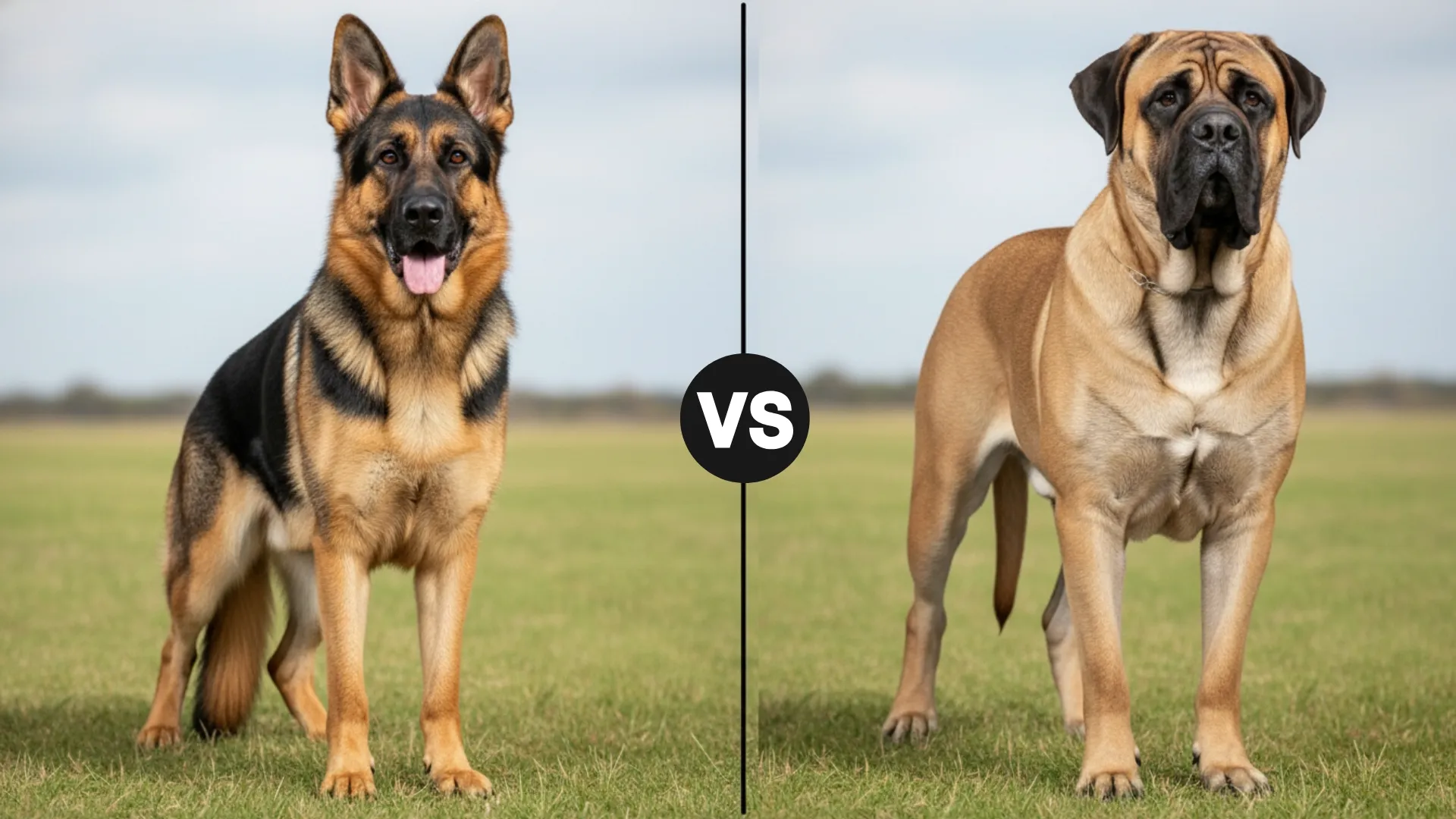
When it comes to powerful, loyal companions, few breeds spark as much curiosity as the German Shepherd and the English Mastiff. Both are iconic in their own right—one known for sharp intelligence and unmatched versatility, the other for sheer size and calm, commanding presence.
At first glance, the differences are striking. The German Shepherd is agile, alert, and highly trainable—often seen in police, military, and service roles. In contrast, the English Mastiff carries a quiet strength, with a massive build and a more relaxed, watchful temperament.
Yet beneath these contrasts lies a shared foundation: deep loyalty, protective instincts, and a natural devotion to their families that make both breeds exceptional guardians and companions.
Choosing between them isn’t just about size or strength—it’s about lifestyle, energy, and expectations. Do you want a highly active, mentally driven partner, or a gentle giant with a laid-back nature?
Understanding what truly sets the German Shepherd and English Mastiff apart is the key to finding the perfect match for your home—and that’s exactly what this guide will help you uncover.
Key Takeaways
Discover why German Shepherds are smart, loyal, and thrive in active family homes.
Find out how English Mastiffs use calm strength to protect and stay affectionate.
Explore the differences in size, temperament, and energy between Shepherds and Mastiffs.
Learn which breed suits your lifestyle best, whether an energetic guardian or a gentle giant.
Facts: German Shepherd Dog Breeds vs. English Mastiff
Size & build Differences
German Shepherd
The German Shepherd is a medium-to-large, athletic breed known for its balanced and agile build. Standing around 22–26 inches tall and weighing between 50–90 pounds, it has a slightly elongated body that supports its smooth, ground-covering movement.
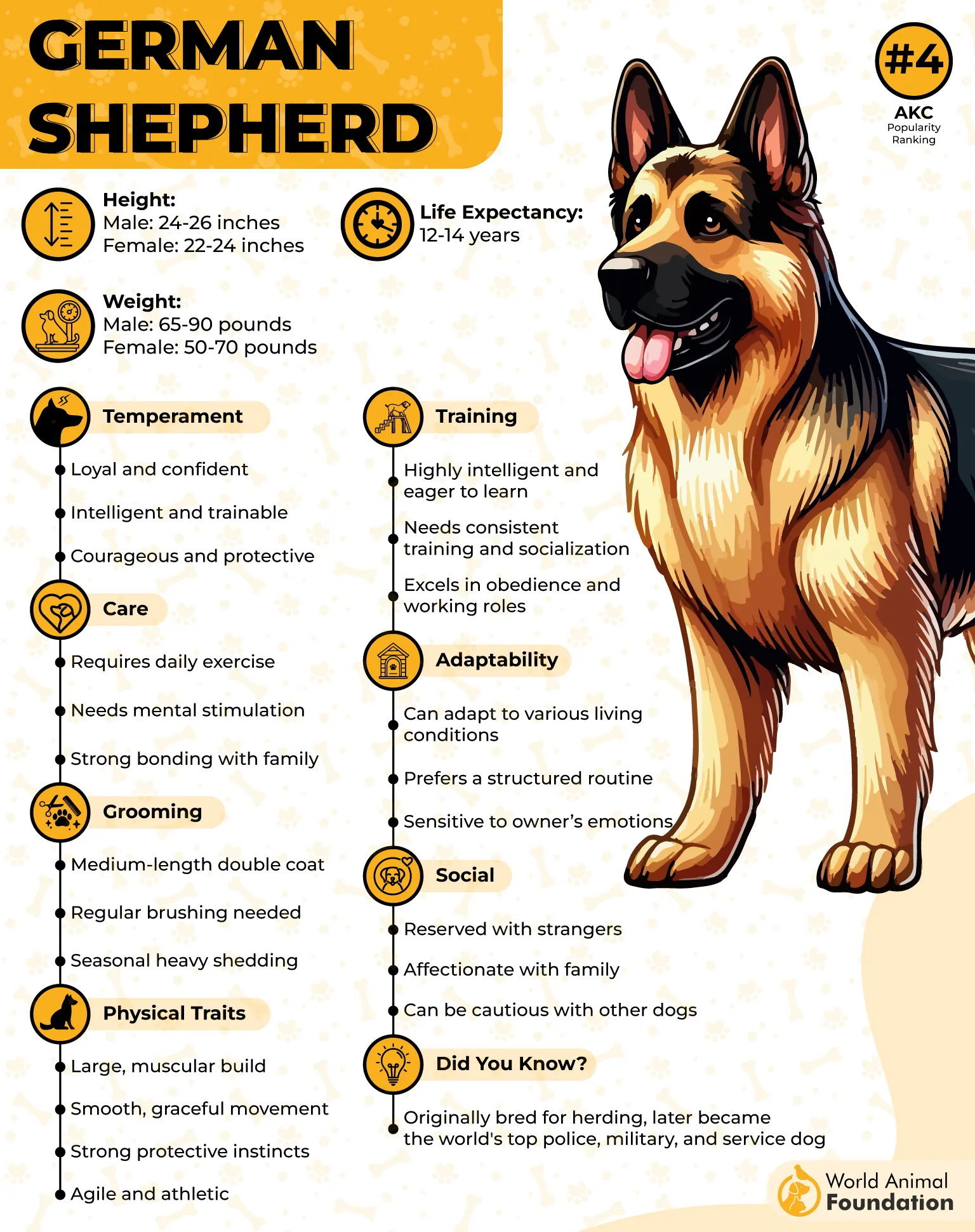
Its lean muscles, deep chest, and gently sloping topline give it both strength and endurance without bulk. Overall, the German Shepherd is designed for speed, stamina, and continuous activity rather than sheer size.
English Mastiff
The English Mastiff is a giant, heavily built dog that stands out for its immense size and powerful structure. Males can exceed 30 inches in height and weigh anywhere from 160 to over 230 pounds, making them one of the largest dog breeds.
Its broad head, thick bones, and deep, wide chest create a strong and imposing appearance. Despite its massive build, the Mastiff remains balanced and steady, built more for strength and presence than agility or speed.
Temperament & Personality
German Shepherd
The German Shepherd is known for its intelligence, loyalty, and strong work-driven personality. It forms deep bonds with its family, often attaching closely to one primary person while still being affectionate with everyone.
Naturally confident and slightly reserved with strangers, it has a built-in protective instinct that makes it an excellent watchdog. This breed thrives on mental stimulation, training, and daily involvement, often acting like a “shadow” that follows its owner everywhere.
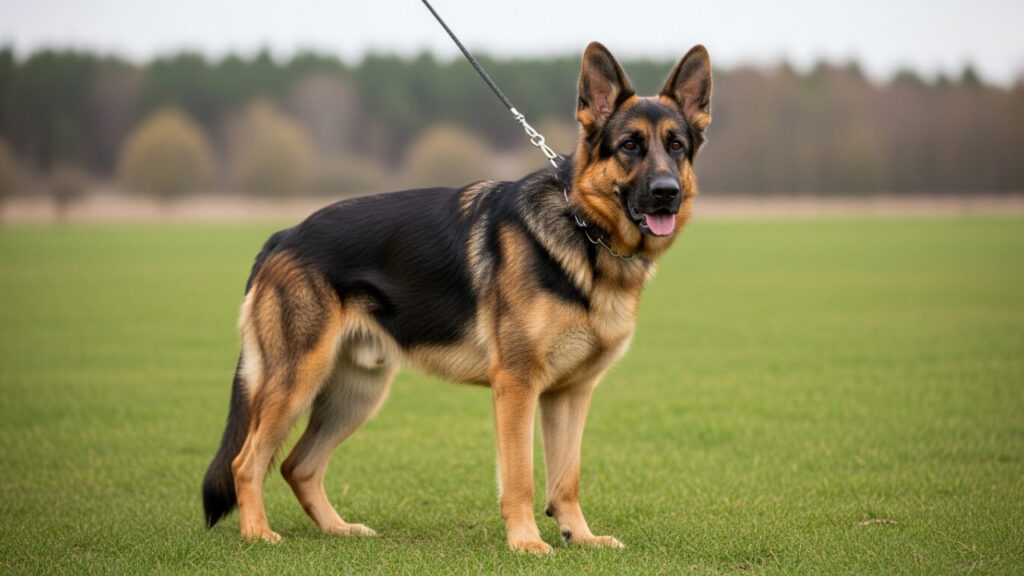
However, without proper socialization and activity, it can develop issues like overprotectiveness, barking, or anxiety, making consistent training and engagement essential.
English Mastiff
The English Mastiff has a calm, dignified, and deeply loyal temperament, often described as a true gentle giant. Unlike the energetic Shepherd, the Mastiff is more relaxed and observant, preferring to lounge near its family while quietly keeping watch.
It is naturally protective but usually expresses this through presence rather than action, staying cautious but polite with strangers. With loved ones, it is affectionate, sometimes clingy, and enjoys close physical contact.
While intelligent, it can be stubborn and strong-willed, as mentioned by Orvis. Thus, they require patient and consistent training, along with early socialization to prevent fearfulness in such a powerful dog.
Exercise & Energy Levels
German Shepherd
The German Shepherd is a high-energy, work-driven breed that needs both physical exercise and mental stimulation every single day. This is not a dog that will be satisfied with a short walk—it thrives on activity, learning, and having a purpose.
Without enough engagement, it can quickly become bored, leading to behaviors like barking, chewing, or overprotectiveness. According to PetMD, a healthy adult German Shepherd typically needs 1 to 2 hours of daily activity, ideally split into multiple sessions:
Long walks with time to explore and sniff
Obedience training or learning new commands
Active play like fetch or tug
Mental challenges, such as puzzle toys or scent games
This breed is best suited for active owners or families who can involve the dog in daily routines, outdoor adventures, or even dog sports.
English Mastiff
The English Mastiff, in contrast, has a low to moderate energy level and a much more relaxed approach to exercise. While still needing daily activity for health, it does not require intense or prolonged workouts.
In fact, due to its massive size and heavy build, overexertion—especially in puppies—should be avoided. Most adult Mastiffs do well with 30–60 minutes of steady daily exercise, such as:

Calm, controlled walks at a comfortable pace
Light play sessions or free time in a secure yard
Gentle mental stimulation, like basic training or scent games
They tire more easily and often prefer lounging with their family, making them a better fit for less active households.
Training & Intelligence
German Shepherd
The German Shepherd is one of the most intelligent and trainable dog breeds, known for its eagerness to learn and strong desire to please its owner. It responds exceptionally well to positive reinforcement, including praise, toys, and food rewards, and often enjoys problem-solving during training.
This breed thrives on structure, consistency, and mental challenges, making it ideal for obedience work, advanced training, and even professional roles like police or service work.
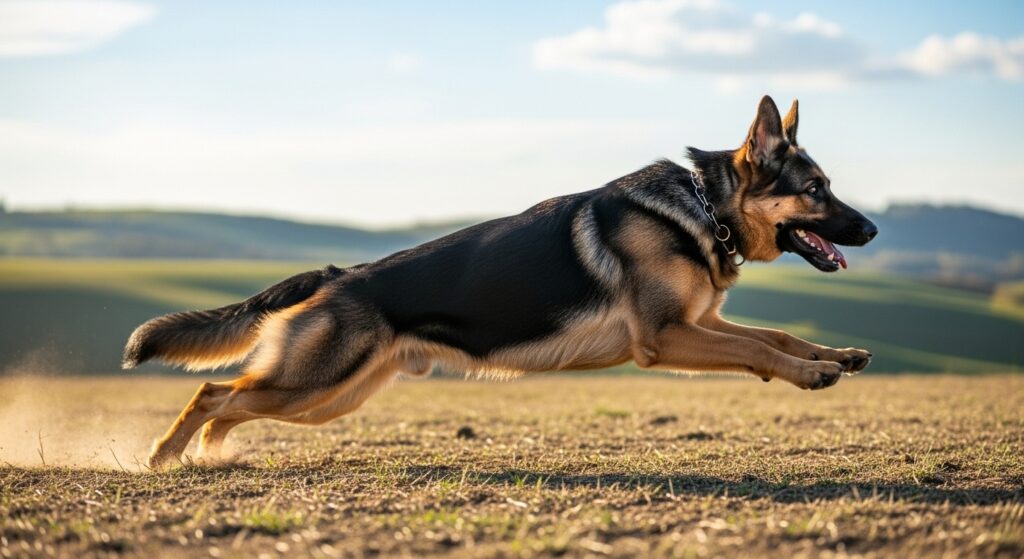
Early training and socialization are essential, especially because of their protective instincts, helping them grow into a confident and well-mannered adult.
Key training focus areas:
Basic obedience (sit, stay, come, leash manners)
Reliable recall and impulse control
Early and consistent socialization
Ongoing mental stimulation to prevent boredom
English Mastiff
The English Mastiff is intelligent in its own way but has a more independent and stubborn personality, which can make training slower and more patience-driven, as noted by the AKC. Unlike the eager-to-please Shepherd, the Mastiff often asks “why?” before obeying, so motivation—especially food rewards—is key.
It responds best to calm, gentle, and consistent training, as harsh methods can cause it to shut down emotionally. Early training should focus on practical life skills and socialization, as managing such a large, powerful dog requires reliable obedience and good manners.
Key training focus areas:
Loose leash walking and polite behavior
Recall and basic commands
Handling tolerance (grooming, vet checks)
Controlled socialization to build confidence
Vocal Behavior
German Shepherd
The German Shepherd is a highly vocal and expressive breed, using a mix of barking, whining, howling, and body language to communicate. Bred for herding and guarding, these dogs are naturally alert and quick to “speak up” when they notice something unusual.
Their vocalizations are often paired with sharp observation skills—they constantly read human cues and respond accordingly. This makes them excellent watchdogs, but it also means they can become noisy if bored, anxious, or under-stimulated.
Common vocal behaviors include:
Alert barking: Deep, repetitive barks when sensing strangers or threats
Playful sounds: High-pitched barks or yips during excitement or play
Anxious barking: Sharp, rapid sounds when stressed or unsure
Other sounds: Howling, whining, or “talking” to express needs or emotions
Their bark can be very loud and intimidating, sometimes exceeding typical urban noise levels, which is why training and mental engagement are key to managing excessive vocalization.
English Mastiff
The English Mastiff is generally a quiet and low-vocal breed, especially compared to the German Shepherd. It does not bark unnecessarily and tends to conserve its voice for important moments, such as alerting its owner to a stranger.

When a Mastiff does bark, however, it is deep, powerful, and impossible to ignore, reflecting its guardian heritage.
Typical vocal traits include:
Low-frequency alert barking: Used mainly for protection or warning
Occasional groaning or whining: When bored, lonely, or seeking attention
Minimal unnecessary noise: Naturally calm and not prone to constant barking
Overall, the Mastiff relies more on its size and presence than on constant noise, making it a quieter but still effective guardian.
Coat & Grooming
German Shepherd
The German Shepherd has a dense double coat designed to protect them from the elements. Their undercoat is soft and insulating, while the outer coat is harsh and water-resistant. This combination keeps them warm in winter, cool in summer, and dry in wet conditions.
Shedding: German Shepherds shed year-round, with heavier “blowouts” once or twice a year.
Brushing routine: Regular brushing several times a week helps remove loose hairs and prevents mats. During seasonal shedding, daily brushing may be needed.
Grooming tips: Use a good quality vacuum cleaner, lint rollers, and a firm-bristle brush or undercoat rake. Avoid cutting the coat with summer trims, as it serves as a protective barrier.
Additional care: Check for skin issues, maintain a healthy diet, and ensure overall cleanliness to reduce excessive shedding.
A well-groomed German Shepherd should appear balanced, athletic, and ready for work, with a wedge-shaped head, almond-shaped alert eyes, and erect ears. Grooming is essential not just for appearance but also for skin and coat health.
English Mastiff
The English Mastiff has a short, dense double coat that is easy to care for, though their large size makes grooming a time-consuming task. Mastiffs shed year-round, with heavier shedding during spring and autumn.
Brushing routine: Once a week is usually sufficient, with extra brushing during shedding seasons. A rubber grooming mitt or soft-bristle brush works best.
Skin folds: Facial wrinkles and lips require regular inspection and gentle cleaning to prevent infections.
Bathing: Bathing every 8 to 12 weeks keeps the coat clean without stripping natural oils.
Additional care: Nail trimming, ear cleaning, and attention to hotspots or irritations are important for overall health.
Despite being low-maintenance, grooming can be a bonding experience due to the Mastiff’s calm and patient temperament. The goal is to maintain a healthy coat, clean skin folds, and control shedding throughout the home.
Health Issues & Lifespan
German Shepherd
The German Shepherd is a strong, athletic breed, but is prone to certain health conditions. Responsible breeding, good nutrition, and proper exercise are key to long-term well-being.
Common Health Concerns
Hip Dysplasia: A developmental hip joint condition causing arthritis, pain, and mobility issues.
Elbow Dysplasia: Affects front limbs, leading to lameness and discomfort.
Degenerative Myelopathy: Progressive spinal cord disease causing hind limb weakness and paralysis, usually in older dogs.
Bloat (Gastric Torsion): Life-threatening twisting of the stomach; watch for sudden abdominal swelling, restlessness, or unproductive retching. Preventive measures include smaller meals and avoiding vigorous exercise around mealtime.
Gastrointestinal issues: Sensitive digestion, pancreatic insufficiency.
Skin and allergy problems: Reactions to food or environment, requiring careful monitoring.
Eye conditions: Less common but can occur in certain lines.
Lifespan and Care
Average lifespan: 9–13 years.
Maintaining a healthy weight reduces stress on joints and the spine.
Regular veterinary care: vaccinations, parasite control, dental care, and blood work.
Choosing a responsible breeder who tests for hips, elbows, heart, eyes, and temperament is vital.
Rescue dogs should undergo a full health examination upon adoption.
English Mastiff
The English Mastiff is a giant breed with a relatively short lifespan. Health care and breeding practices are essential to maintain the quality of life.
Common Health Concerns
Hip and Elbow Dysplasia: Abnormal joint development causing pain, arthritis, and lameness.
Bloat (Gastric Dilatation Volvulus): Deep-chested breeds are prone; prevent with smaller meals, calm feeding, and avoiding exercise around mealtimes. Surgical preventive gastropexy may be considered.
Heart Conditions: Cardiomyopathy and valve disorders; breeders may use echocardiograms for screening.
Breathing Difficulties: Short muzzles can lead to heat intolerance; provide shade, water, and avoid strenuous activity in high temperatures.
Skin Issues and Allergies: Facial folds require inspection and cleaning to prevent infection; hotspots can occur if moisture accumulates.
Lifespan and Care
Average lifespan: 7–10 years.
Maintaining lean body weight reduces joint strain and supports overall health.
Routine veterinary checks for mobility, appetite, and cardiac health are crucial.
Owners should monitor normal posture, breathing, and movement to catch early signs of illness.
Responsible breeders provide hip, elbow, heart, and eye evaluations, and sometimes genetic testing for hereditary conditions.
Suitable for Home Security vs Good for Families
German Shepherd
The German Shepherd is a natural protector, originally bred for herding and guarding. Their intelligence, alertness, and high energy make them excellent for home security:
Alert and Protective: German Shepherds are highly aware of their surroundings. They will bark, assess, and react to unusual activity, making them natural watchdogs.
Trainable and Obedient: They respond well to structured training, which allows you to teach them to differentiate between real threats and normal household activity.
Energetic and Agile: Perfect for active families who can provide daily exercise, mental stimulation, and structured training sessions.
Family Compatibility: German Shepherds are devoted and protective of their family members, including children. They thrive on attention and consistent interaction, but require supervision with younger kids until boundaries are well established.
Best suited for: Families who want a protective, loyal dog with high energy and who enjoy engaging in training, exercise, and outdoor activities.
English Mastiff
The English Mastiff is imposing in size and presence, which naturally deters intruders. They are less reactive than German Shepherds, but their sheer size commands respect:
Physical Deterrent: Their massive build alone discourages trespassers. A Mastiff rarely needs to bark aggressively to make its presence known.
Calm and Reserved: Mastiffs are generally patient, gentle, and affectionate with family members, including children. They are less energetic and prefer relaxed routines.
Guarding Instincts: While they may not actively patrol like a German Shepherd, Mastiffs will protect their home and family when needed. Early socialization ensures they are confident but not overly aggressive toward strangers.
Family Friendly: Mastiffs are ideal for families who want a loving, calm companion. They enjoy close contact and often follow family members around the home.

Best suited for: Families who want a protective, gentle giant that is calm, affectionate, and more laid-back than high-energy working breeds.
Conclusion
Both the German Shepherd and the English Mastiff bring unique qualities to a home, balancing protection and companionship in very different ways. German Shepherds are energetic, intelligent, and alert, making them ideal for families who want a hands-on, trainable guardian.
Mastiffs, on the other hand, are calm, gentle, and imposing, offering a quieter but equally effective form of home protection while being patient and loving with children. Understanding their personalities, exercise needs, and training styles helps you choose the breed that fits your lifestyle.
Bringing either of these breeds into your home is a commitment, but one filled with loyalty, love, and unforgettable companionship. Take the time to plan, prepare, and learn about their needs so they thrive as part of your family.
