




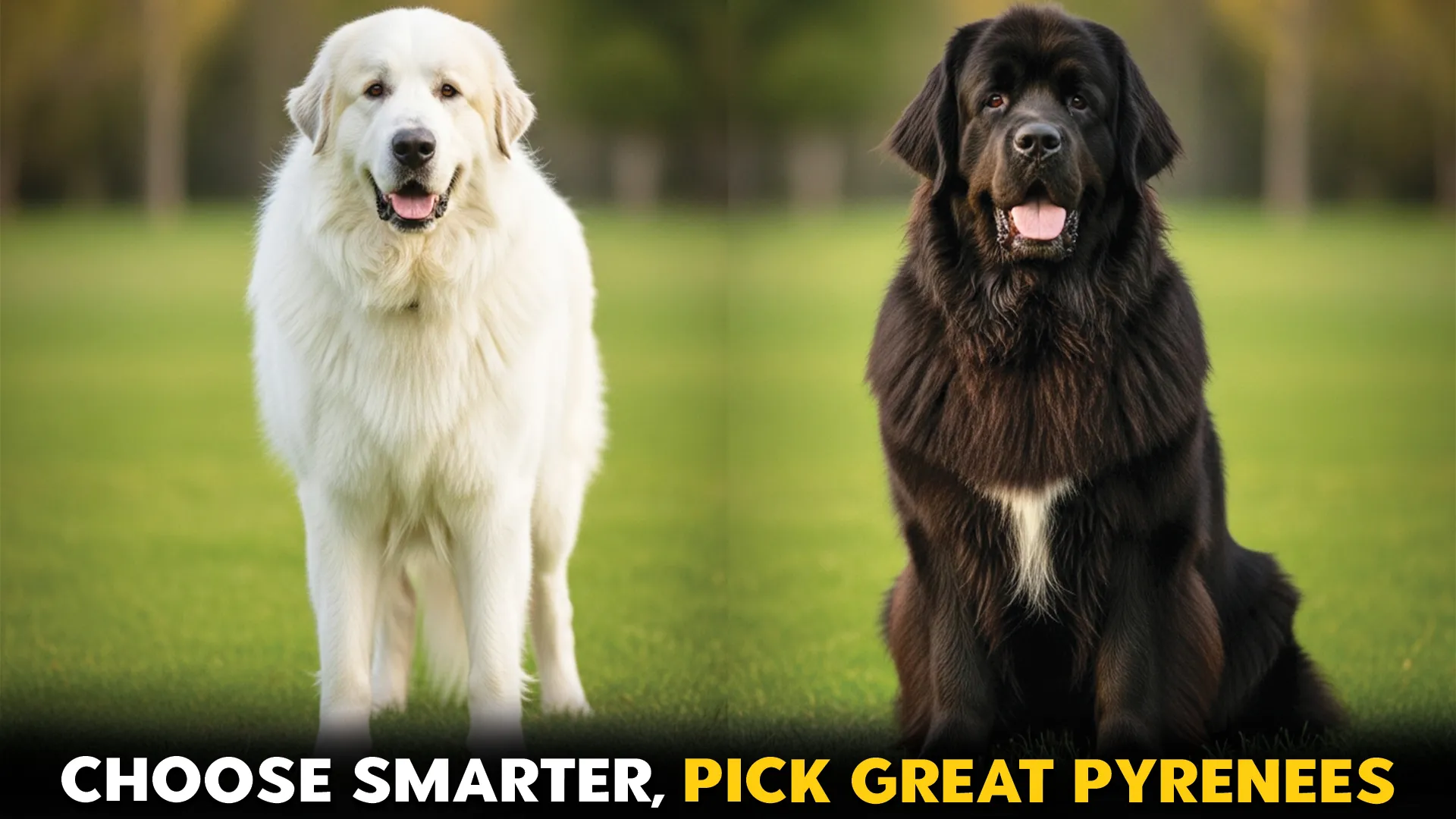
Choosing between a Great Pyrenees and a Newfoundland can be tough because both are gentle, loving giant breeds with loyal personalities.
If you want a big companion but your day-to-day routine is busy, it helps to look beyond looks and focus on practical care, energy level, grooming needs, and how each dog fits your home life.
While Newfoundlands are famously sweet, the Great Pyrenees may be a better match for some owners who want an independent, calm dog with strong guardian instincts.
In this guide, we will look at the key reasons a Great Pyrenees might suit your lifestyle better than a Newfoundland.
Reasons to Choose a Great Pyrenees Dog Breed Over a Newfoundland
While both are legendary gentle giants, the Great Pyrenees often edges out the Newfoundland for owners seeking a majestic guardian with a longer lifespan and significantly less drool.
Beyond the “slobber factor,” the Pyrenees offers a more independent spirit and a dirt-resistant coat, making it the perfect choice for those who want a powerful mountain protector that is surprisingly low-maintenance.
To find out more, read further below:
Size and Strength
Great Pyrenees and Newfoundland dogs are both giant breeds, but their build and look create some clear first-impression differences for owners.
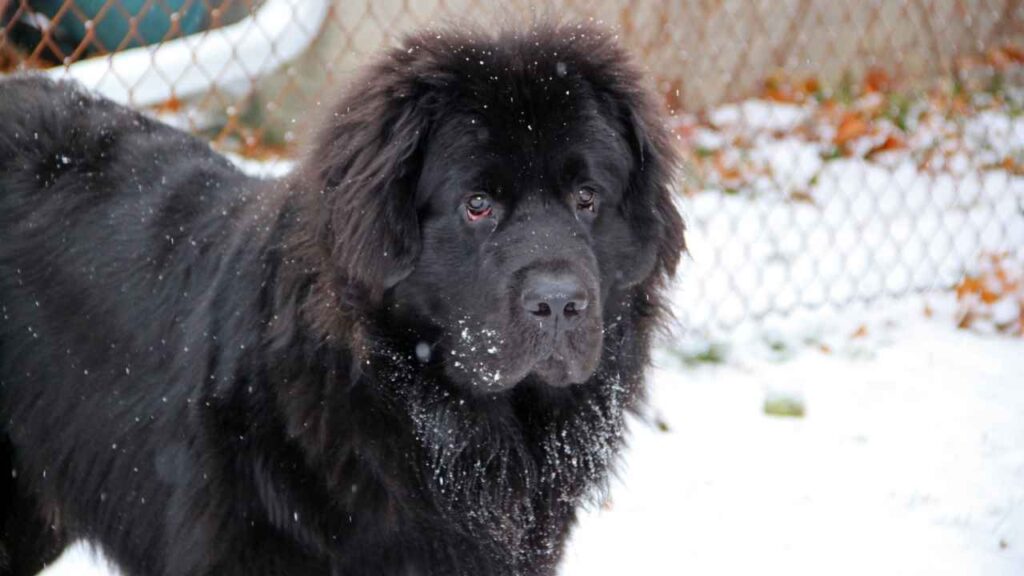
According to PetMD, the Great Pyrenees is listed at about 25 to 32 inches tall, with females over 85 pounds and males over 100 pounds, while the Newfoundland commonly stands about 26 to 28 inches and weighs around 100 to 150 pounds.
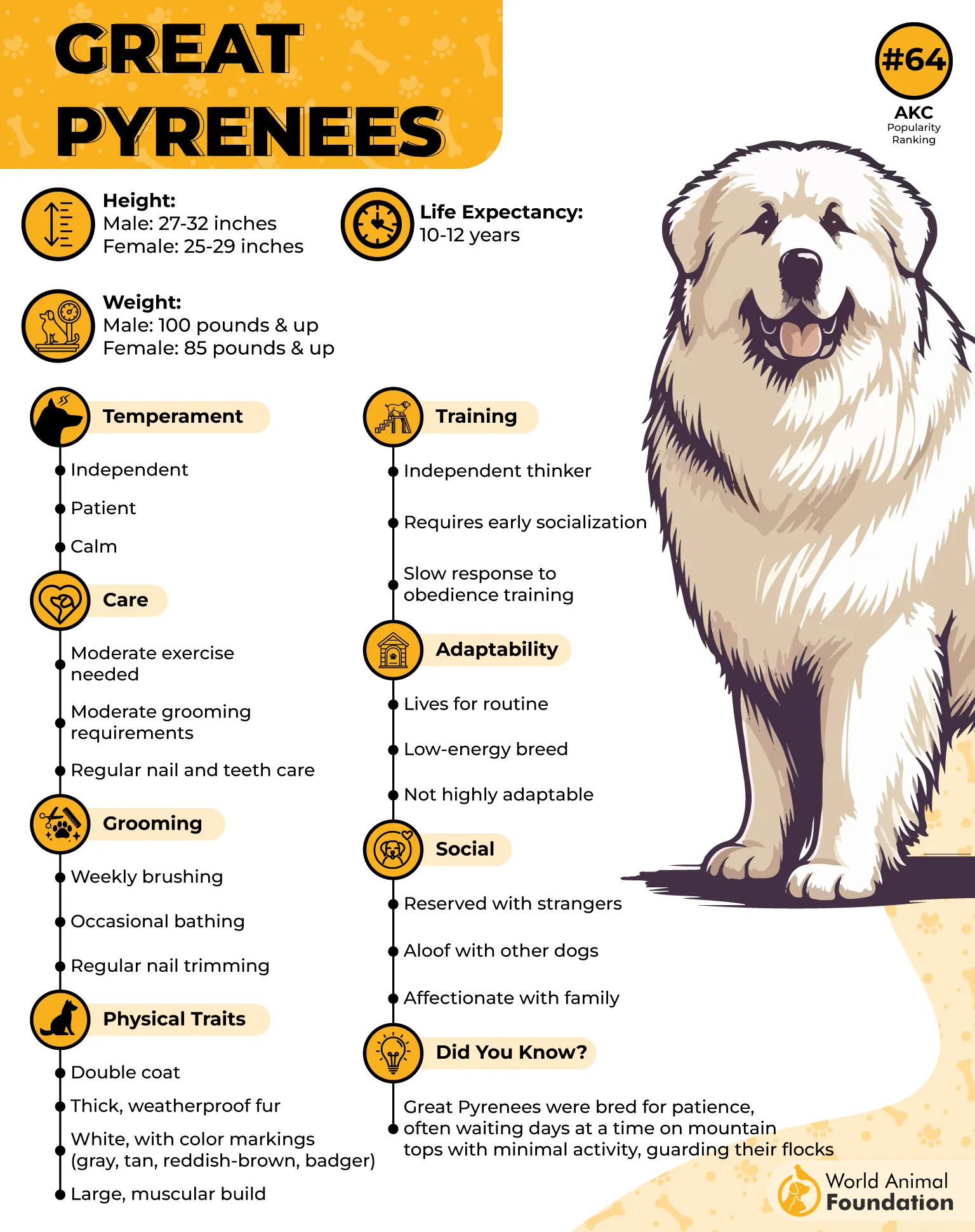
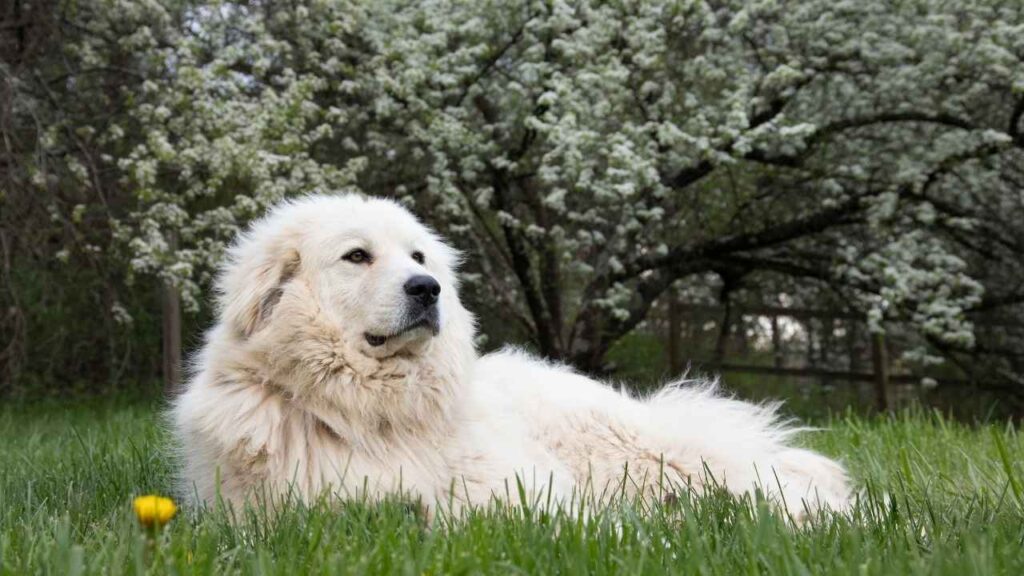
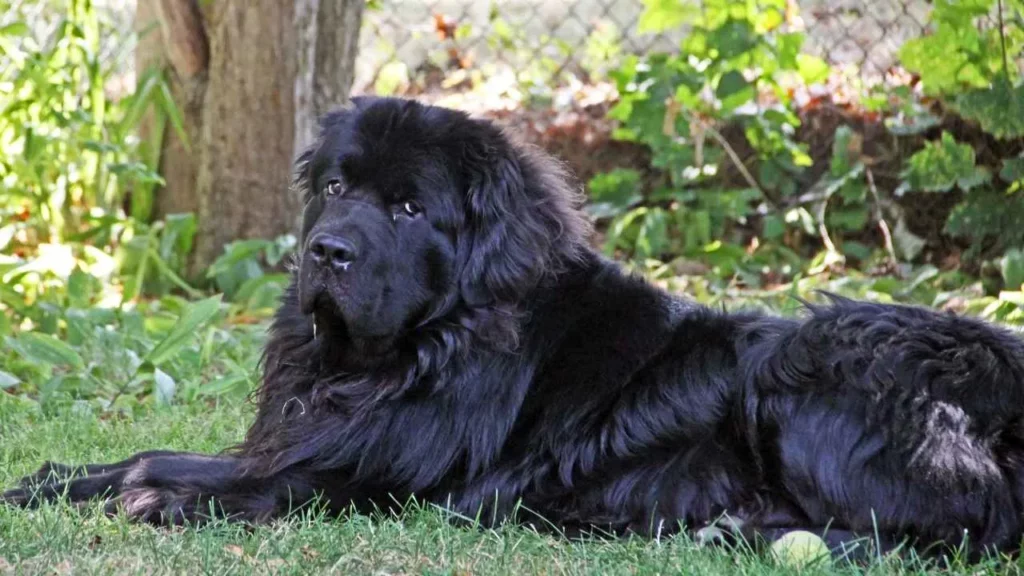
The Pyrenees often has a longer, more refined head shape, while the Newfoundland has a shorter, boxier muzzle and ears that sit more forward on the face. Great Pyrenees dogs also have smaller triangular ears that can blend into the fur, which gives the breed a different expression.
These key differences matter for families choosing a large dog that matches their preference in appearance and presence.
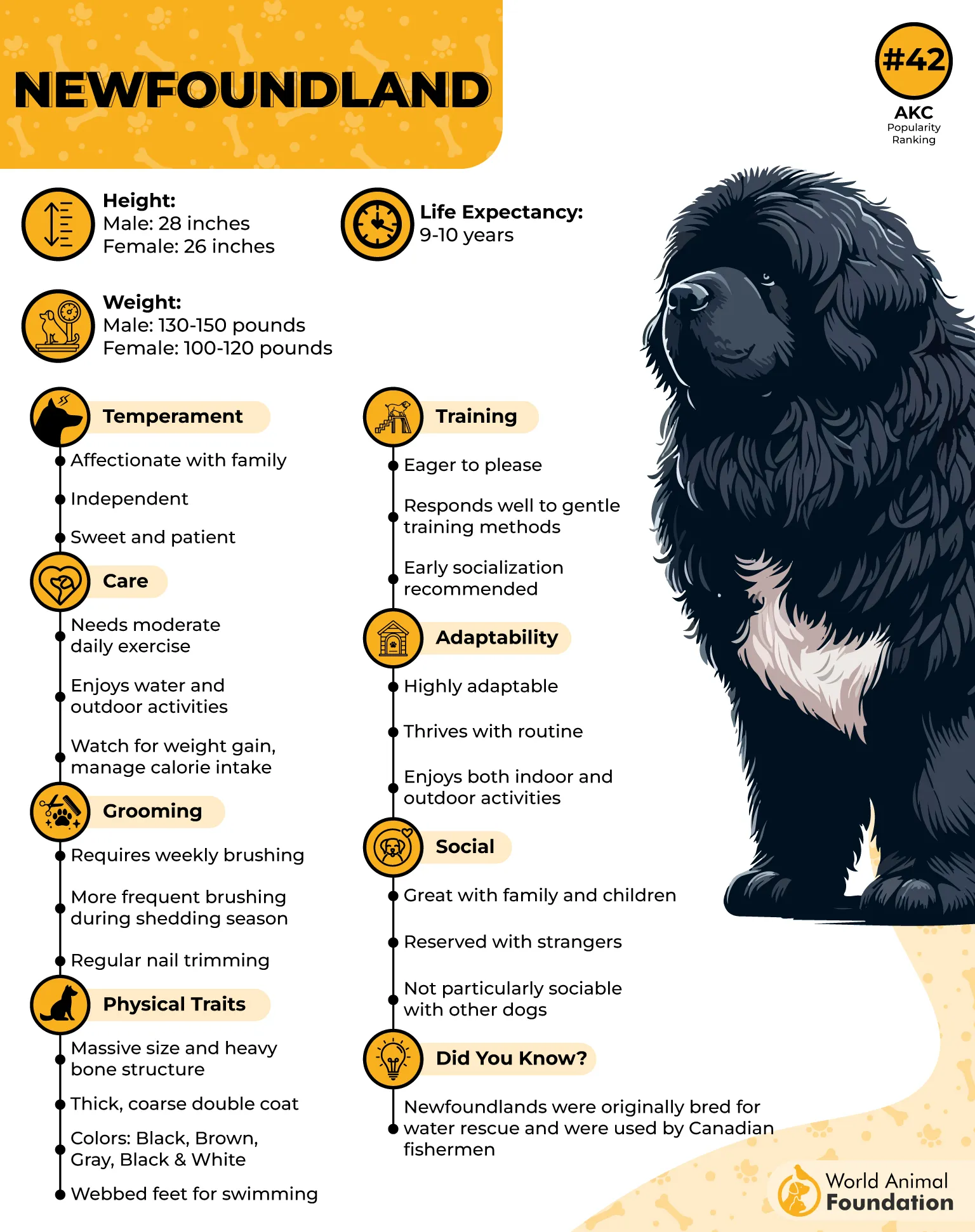
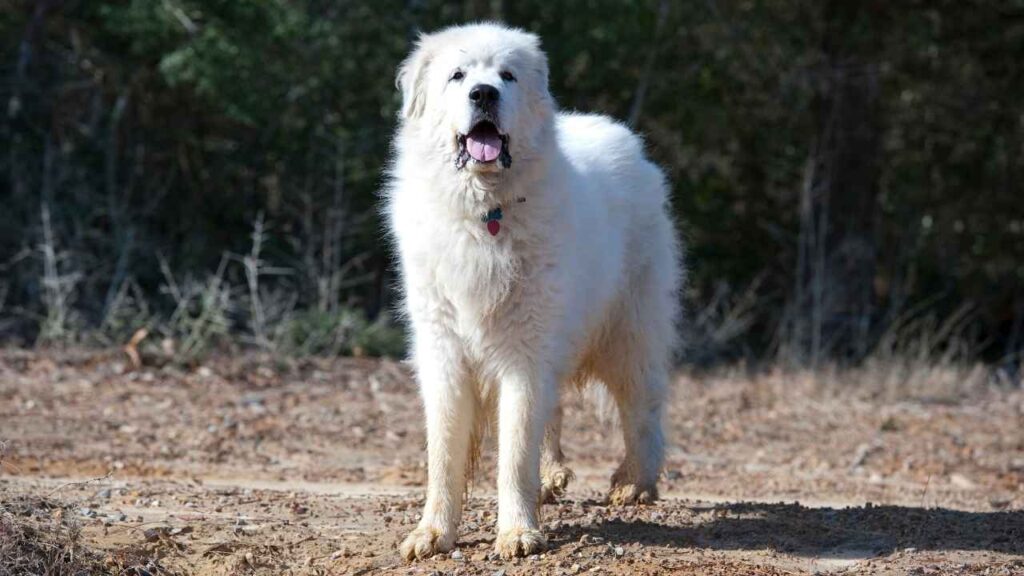
Coat color is another practical point in the Great Pyrenees vs. Newfoundland choices. Newfoundland dogs may be black, brown, grey, or white and black, while the Great Pyrenees breed is white with markings in shades like tan, grey, badger, or reddish-brown.
If your family wants a striking giant with a bright, mostly white coat, the great pyrenees brings a very distinct look that stands out in a pet-friendly home.
Temperament
In Great Pyrenees vs Newfoundland temperament, both breeds are loyal, affectionate, and gentle with family, but they do not always respond the same way to strangers.
The great pyrenees is often calm, watchful, and slower to trust new humans, while the newfoundland is usually more open and social from the start. These unique characteristics can shape how comfortable owners feel with guests, neighbors, and busy home routines.
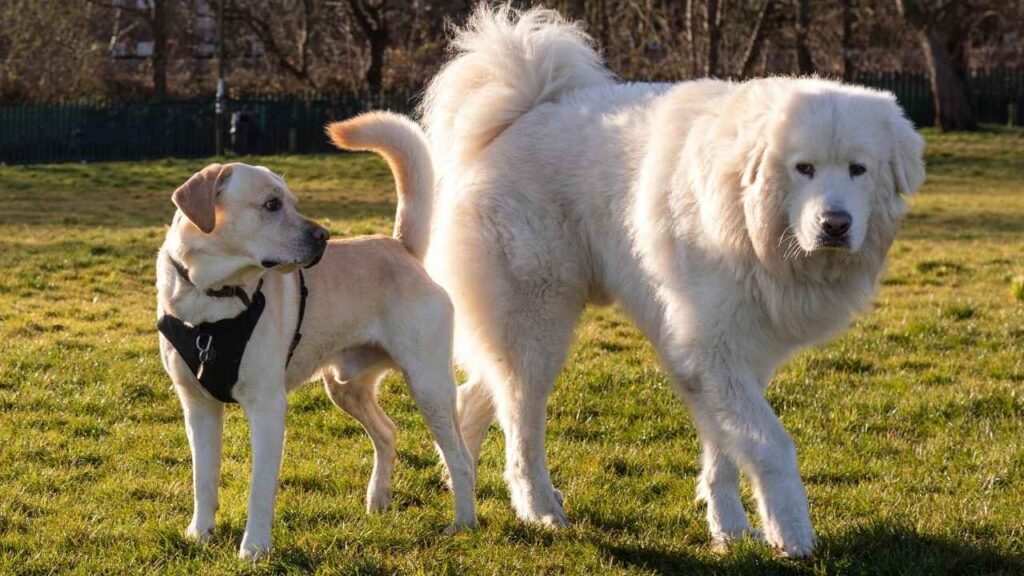
Great Pyrenees dogs and Newfoundland dogs both have strong guarding instincts, and that protective nature shows up in different ways. A Pyrenees may pause, observe, and decide how to respond, while a Newfoundland may appear sweet and welcoming more quickly.
Both breeds can become very attached and affectionate with their people, so they do best when family members spend meaningful time at home. Even loving pets need to learn for short periods, because a steady routine helps dogs stay calm and comfortable in daily life.
A great Pyrenees can be a smart match for owners who want a loyal, protective companion that stays gentle with family and more reserved with strangers.
Health
The Great Pyrenees and Newfoundland are described as relatively healthy breeds, but owners still need to watch for health issues and keep regular veterinarian visits on schedule.
During the first year of life, a puppy typically needs frequent care for vaccines, parasite prevention, growth checks, microchipping, and spaying or neutering planning. After that, healthy dogs generally move to yearly checkups and updated vaccines.
In Great Pyrenees vs. Newfoundland health planning, proper care includes understanding that certain health conditions can still appear, even in well-bred animals. The provided list includes hip dysplasia, elbow dysplasia, osteochondrosis, eye issues, Addison’s disease, bloat, and patellar luxation.
These health conditions can affect comfort, movement, and long-term quality of life, which is why pet parents should stay consistent with checkups. Responsible breeding practices and breed standards can reduce risk, but they do not remove all health concerns.
Great Pyrenees dogs and Newfoundland dogs both benefit from close observation at home, a healthy diet, and a veterinarian who knows giant breeds and can guide food, exercise, and ongoing health care decisions.
If your family can stay organized with veterinarian visits and proper care, both breeds can fit well into long-term life with pets.
Training
Training is one of the biggest key differences in Great Pyrenees vs Newfoundland decisions because the Great Pyrenees was bred to think and work more independently.
As per Orvis, Great Pyrenees dogs were developed as watchdogs for flocks, so they can show an independent streak and a stubborn side during training. Owners usually get better results with consistency, patience, and positive reinforcement instead of harsh correction.
Early socialization is especially important for the Great Pyrenees because the breed can be suspicious of strangers without enough safe exposure.
A puppy that meets people and positively experiences new places is more likely to stay calm and manageable later in life. This matters at home, during walks, and when children or visitors come around the house.
The provided notes also describe both the Newfoundland and the Pyrenees as receptive to training and protective of family, with strong guard instincts and a willingness to learn. For owners who struggle, professional training can help build structure and confidence.
Great companions are made through daily practice, clear communication, and routines that match the personality of the dogs.
A great Pyrenees is a strong match for owners who enjoy training with patience and want a smart, protective dog that thinks for itself.
Endurance
Endurance shows up very differently in Great Pyrenees vs Newfoundland comparisons, and that difference affects daily routines for owners and pets.
According to AKC, the Newfoundland is described as built for endurance work, especially in water, with powerful muscles, webbed feet, and a waterproof coat that supports steady stamina. Its history also includes hauling work on land, with endurance focused more on sustained effort than speed.
Great Pyrenees dogs also have strong endurance, but their style is more about steady, watchful stamina than athletic intensity. The Pyrenees was developed to guard sheep in mountain terrain and stay alert for long periods, so the breed often appears calm while still being ready to protect.
In modern family life, this often translates into lower to moderate activity needs rather than nonstop exercise. For most owners, the great pyrenees benefits from regular daily exercise, walking, and safe roaming time instead of intense sessions.
These key differences in exercise requirements can make the Pyrenees feel easier to manage for busy households that want a protective, loyal companion without a high-energy pace.
A great Pyrenees can be ideal for families who want steady endurance and calm daily exercise, not constant high-output activity.
Calmness
Both breeds are known as calm giant dogs, but the way that calm behavior appears in daily family life is one of the most useful key differences to understand. The Great Pyrenees is often mellow, gentle, patient, and independent, with a watchful style that reflects its livestock guardian background.
That means calm does not always mean passive, because the pyrenees may quietly monitor people, pets, and unfamiliar sounds. The Newfoundland is also calm and gentle, but its calmness is often described as more openly sweet, social, and easygoing in family settings.
In Great Pyrenees vs Newfoundland discussions, owners sometimes prefer the Great Pyrenees because its personality feels more naturally protective and self-directed. Others may prefer the Newfoundland for a softer, more outwardly affectionate social presence.
For families with children and other pets, both dog breeds can be great companions when training and supervision are handled well. Great Pyrenees dogs often bring a calm, loyal presence that fits homes looking for a quieter guardian-type personality rather than a more socially expressive giant breed.
A great Pyrenees works well for owners who want calm pets with a protective brain and a gentle, steady way of being around family.
Protective and Guarding Instinct
The Great Pyrenees is a natural guardian with a strong instinct to protect sheep, animals, and family members, which is central to the breed’s personality. Great Pyrenees dogs were bred to guard flocks at night, so many owners notice that Great Pyrenees dogs may bark more after dark than during the day.
This protective behavior can help deter strangers, but it also means that training and boundaries matter in family neighborhoods. Because of that protective nature, the breed may react if it thinks children or owners are in danger, including rough play that looks too intense.
Families should supervise kids and dogs together and teach children how to interact safely and respectfully. In the Great Pyrenees vs. Newfoundland choices, this is one of the key differences that can shape day-to-day life with guests and visiting children.
The provided structure also notes the importance of a secure fenced yard, since Pyrenees dogs may roam if the space is not safely enclosed. A Pyrenees can be a loyal, affectionate, protective companion, but proper care, training, and a suitable house setup are essential for a pet-friendly home.
Conclusion
Choosing a Great Pyrenees over a Newfoundland comes down to the kind of daily life you want with your dog.
If you prefer a calm, loyal, and protective companion with an independent personality, the Great Pyrenees can be a wonderful fit for many years. This breed often suits families who want a watchful guardian that is affectionate with its people and steady in the home.
The Newfoundland is also a sweet and gentle giant, but the key differences in temperament, training style, endurance, and guarding instinct may make the Pyrenees a better match for some owners.
With proper care, regular grooming, good training, and a healthy routine, a Great Pyrenees can become one of the most devoted pets in your family life.
