




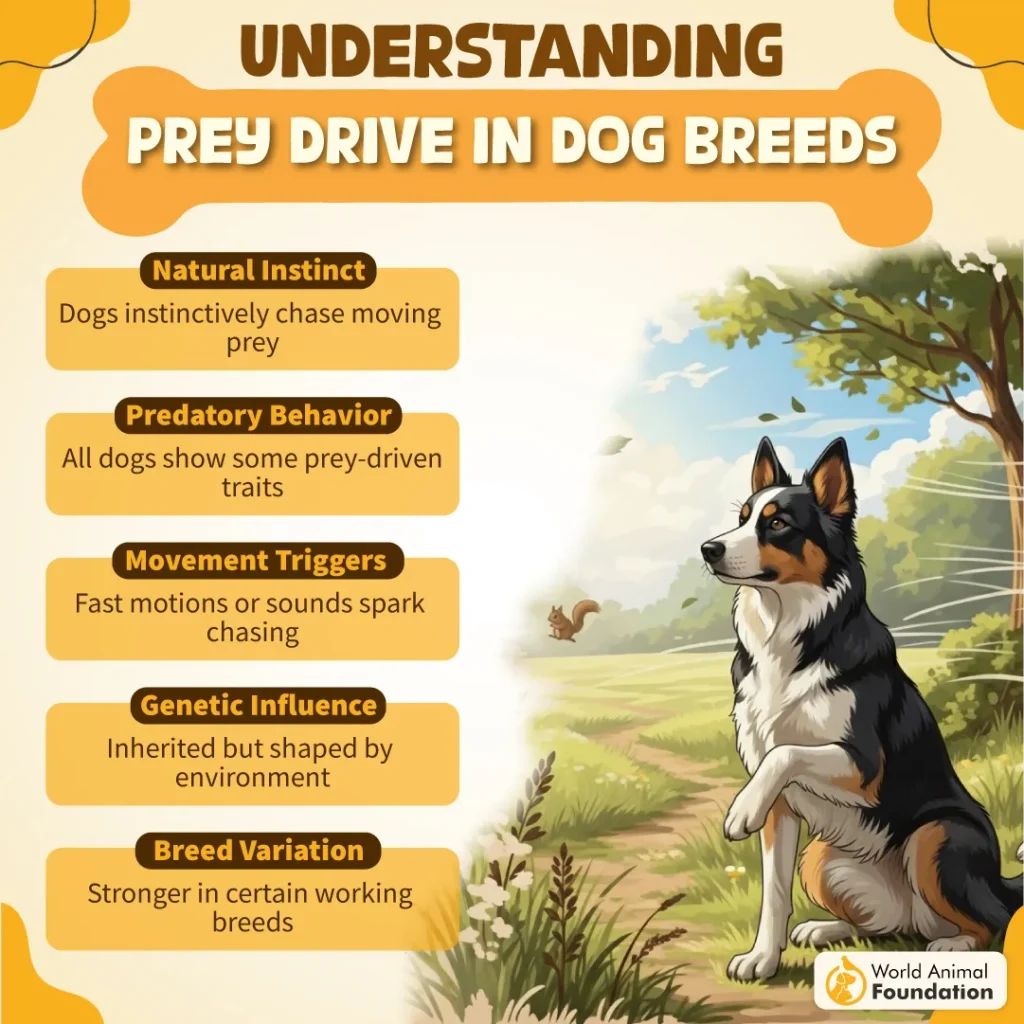
Some dogs are born with an unstoppable urge to chase, hunt, and pursue—it’s woven into their very DNA. This instinct, known as prey drive, was carefully shaped over centuries through selective breeding, helping certain breeds become expert hunters, skilled herders, or highly capable working companions.
Dogs with a strong prey drive are often sharp, alert, and full of energy, making them incredibly focused and athletic. However, without proper outlets and training, these instincts can also lead to challenges for owners who aren’t prepared to manage them.
Understanding prey drive is more than just knowing why your dog loves to chase squirrels or fetch endlessly—it’s about recognizing how this instinct influences behavior, energy levels, and training needs.
Here, we’ll dive into the dog breeds with the highest prey drive and explain what this trait really means in day-to-day life. From lightning-fast sight hounds to high-energy working dogs, these breeds thrive when given purposeful activity and stimulation that channel their instincts.
Top Dog Breeds Exhibiting High Prey Drive Traits
1. Border Collie
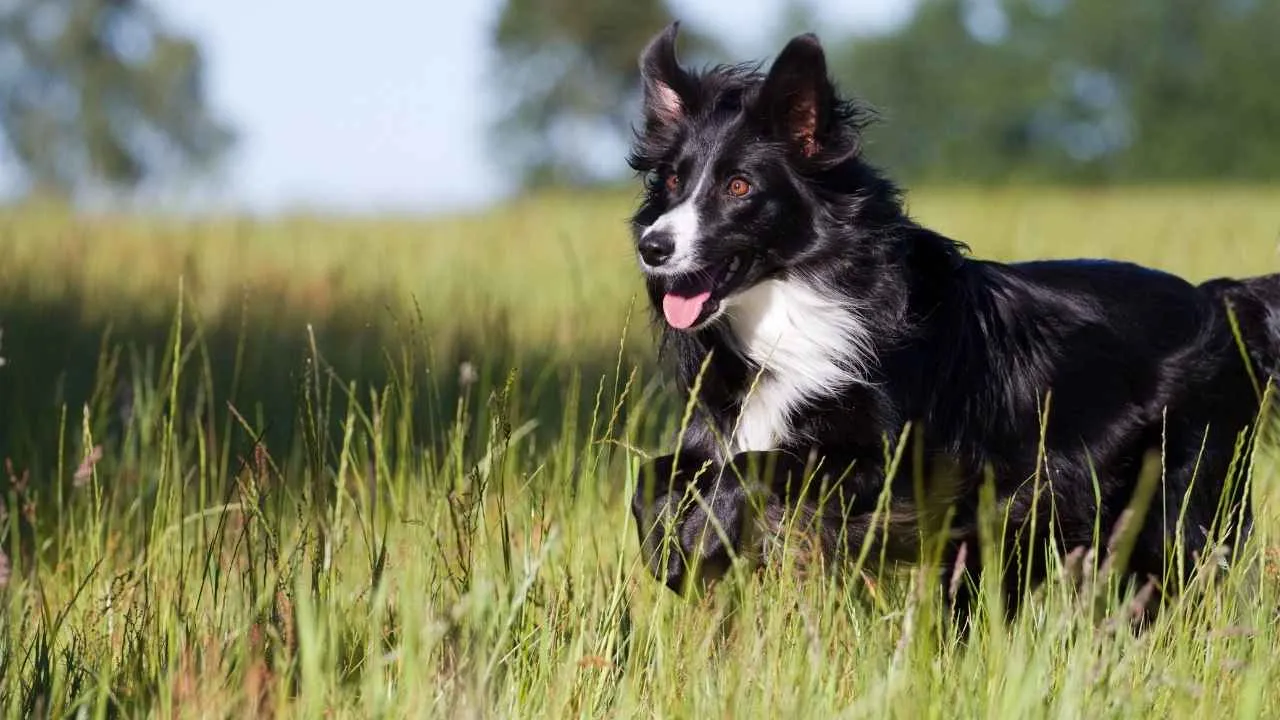
If dogs could ace the SATs while running a marathon, the Border Collie would be your valedictorian. These pups are brilliant, athletic, and laser-focused—traits honed over generations of herding sheep with uncanny precision.
But here’s the twist: all that intelligence and energy comes with a turbo-charged prey drive. That means your mail carrier might get the chase of their life, squirrels better run for cover, and your unsuspecting cat may suddenly star in a one-dog action movie.
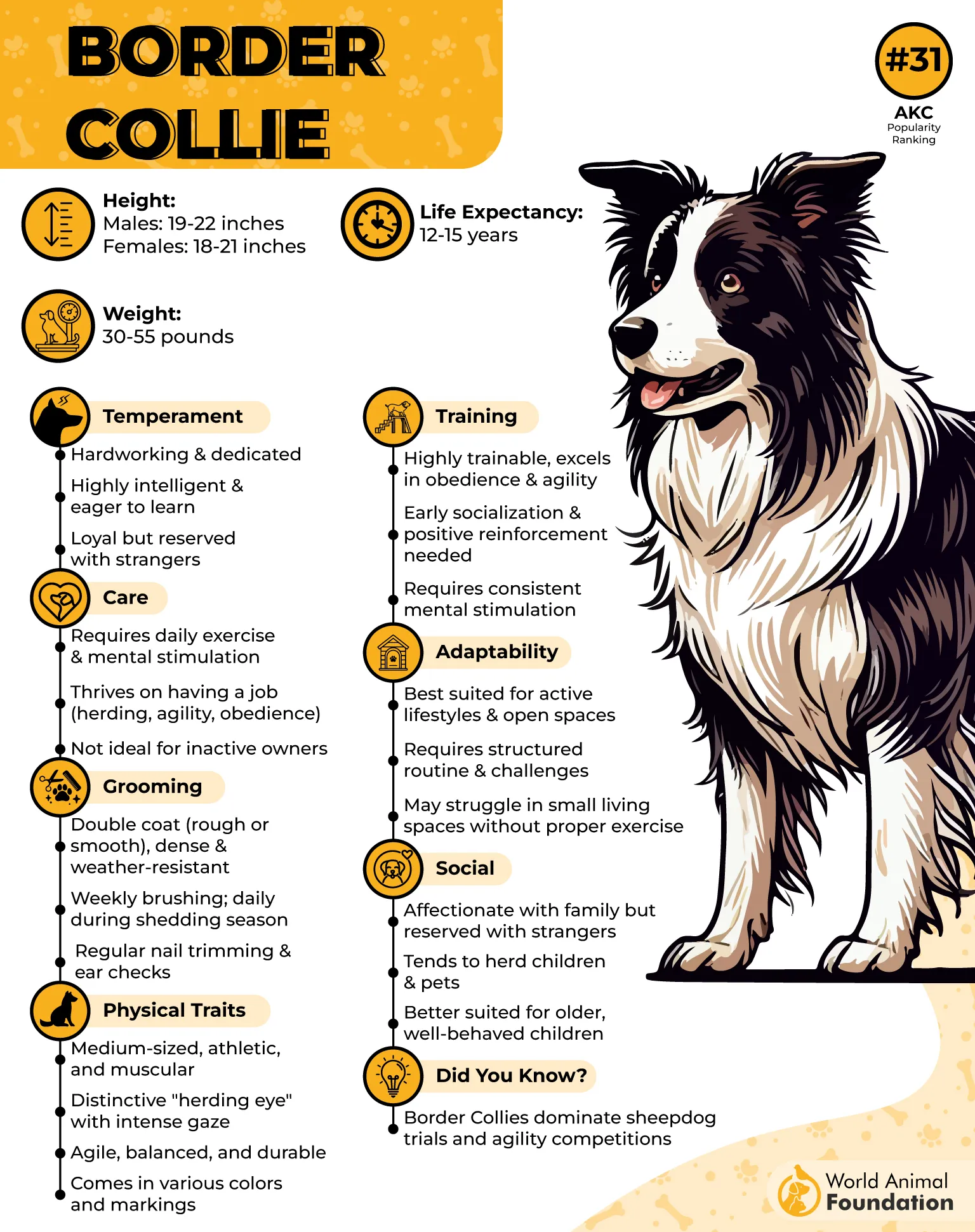
And yes, little siblings or the neighbor’s goldfish? Also, potential “herding targets.” The secret to keeping a Border Collie happy (and your furniture intact) is a combo of plenty of exercise, puzzle toys that challenge the brain, and structured training.
Think of it as giving their brilliant minds a gym membership—mental workouts are just as crucial as long walks or fetch sessions. With the right outlet, a Border Collie can be your most loyal companion and a dog who’ll “work” for you instead of against the cat.
Fun fact: underestimate their prey drive, and suddenly the backyard becomes an obstacle course worthy of American Ninja Warrior—only starring your dog and every moving thing it can see.
2. Jack Russell Terrier
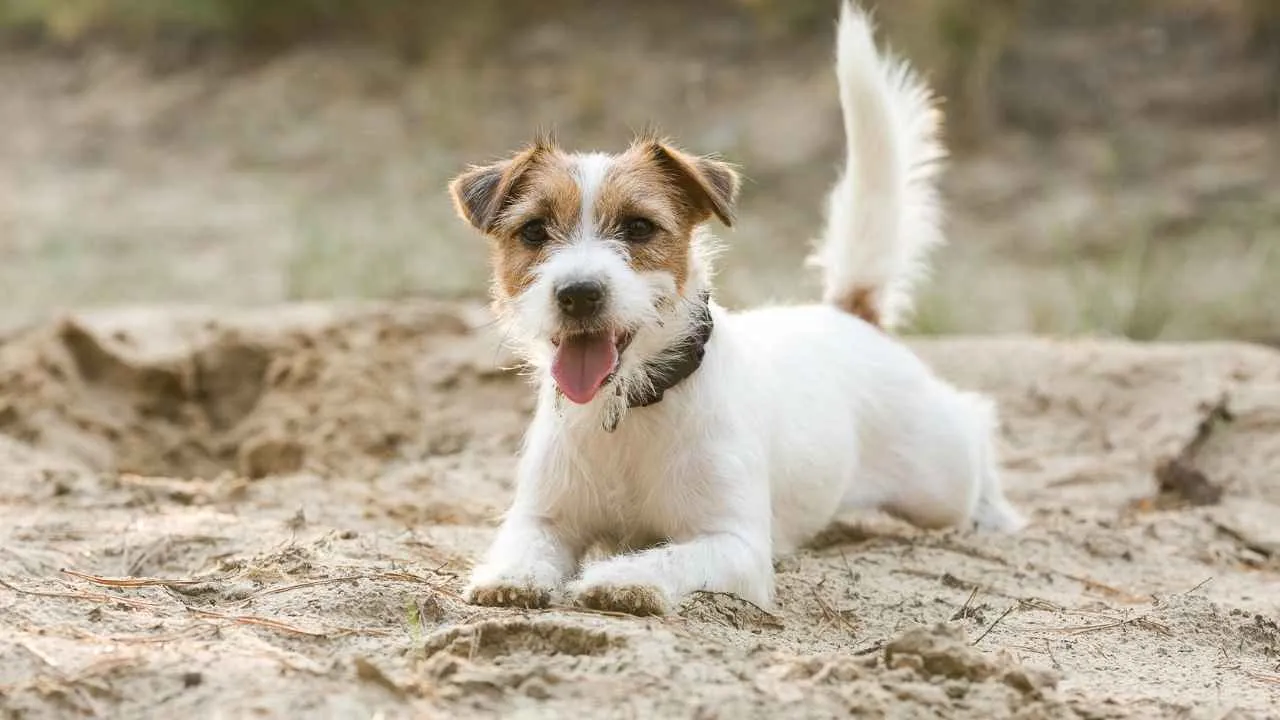
Don’t let their pint-sized stature fool you—Jack Russell Terriers are basically four-legged energizer bunnies with a PhD in mischief. These little dynamos are bold, confident, and convinced that size is just a number. A dog twice their size? Challenge accepted.
Jack Russells thrive on games, attention, and anything that gets them moving. Throw a ball, and they’ll fetch it like a tiny missile.
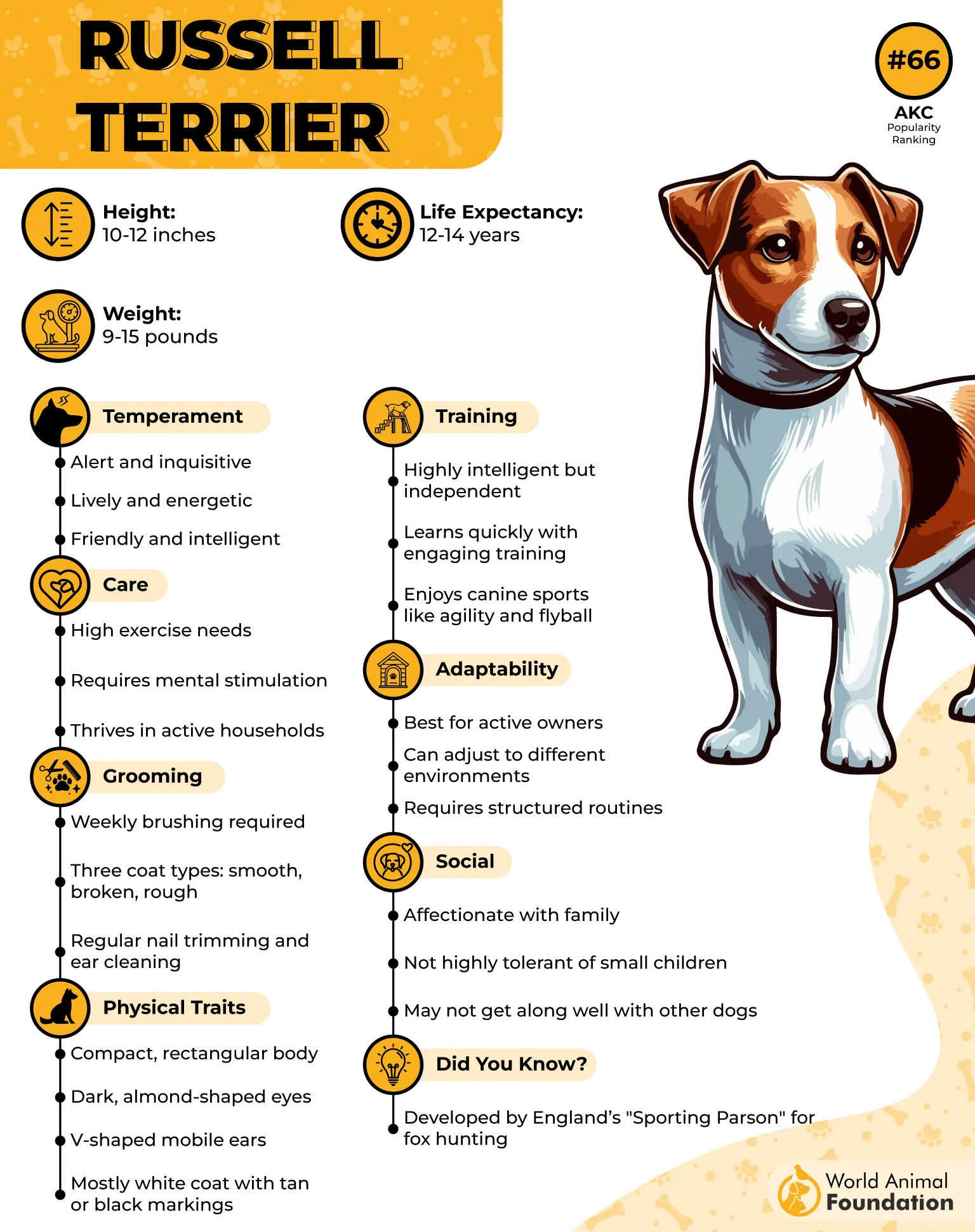
They also have a prey drive that could rival a jungle predator. Squirrels? Chased. Cats? Chased. That suspiciously slow tumbleweed? Definitely chased. Even cars… well, let’s hope you have a fenced yard.
These terriers were originally bred to hunt rats and other small prey, so they aren’t ideal roommates for rabbits, guinea pigs, or anything that might run fast for a living. And yes, puppies have teeth sharper than a ninja star, so chew toys are non-negotiable unless you want your shoes to become their personal teething gym.
Despite their chaotic energy, Jack Russells can live harmoniously with other dogs and even cats—though some might treat your feline friends like Olympic sprinters on a daily chase circuit.
With proper training, boundaries, and mental stimulation, these little mischief-makers become loyal, hilarious companions who never let boredom stand a chance.
3. Australian Cattle Dog
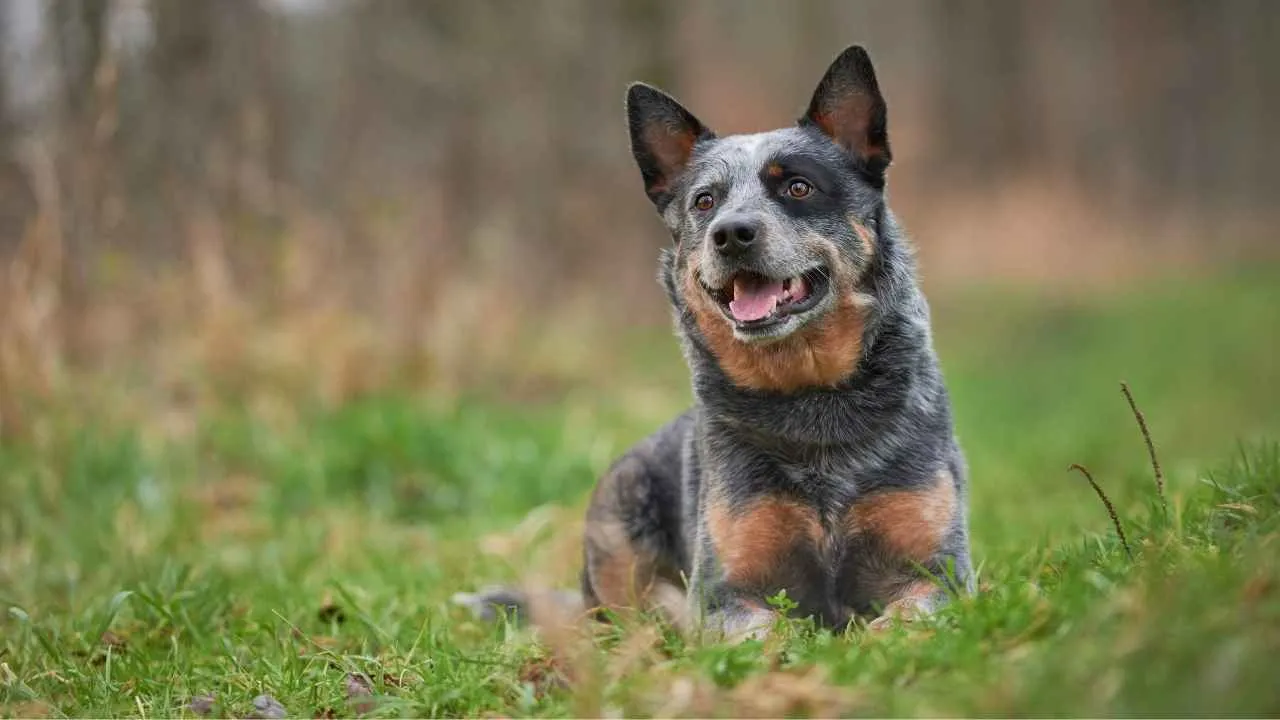
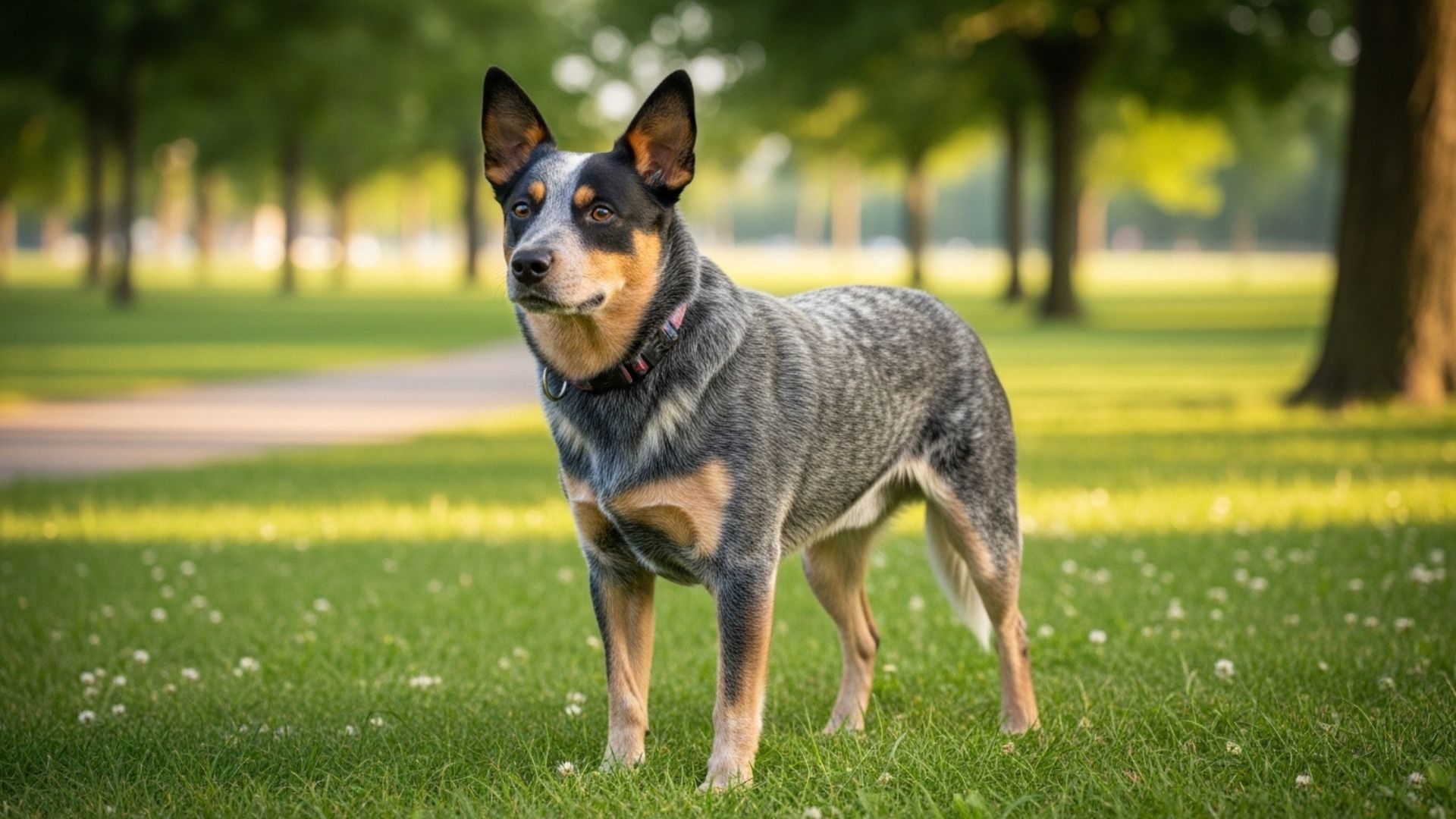
Meet the Australian Cattle Dog, a four-legged powerhouse with brains, brawn, and a to-do list longer than your grocery receipt. These herding breeds weren’t made for lounging on the couch—they were bred to herd cattle across the rugged Australian outback.
Translation: they have work ethic in spades… and a prey drive to match. Without enough mental and physical stimulation, boredom can strike hard.
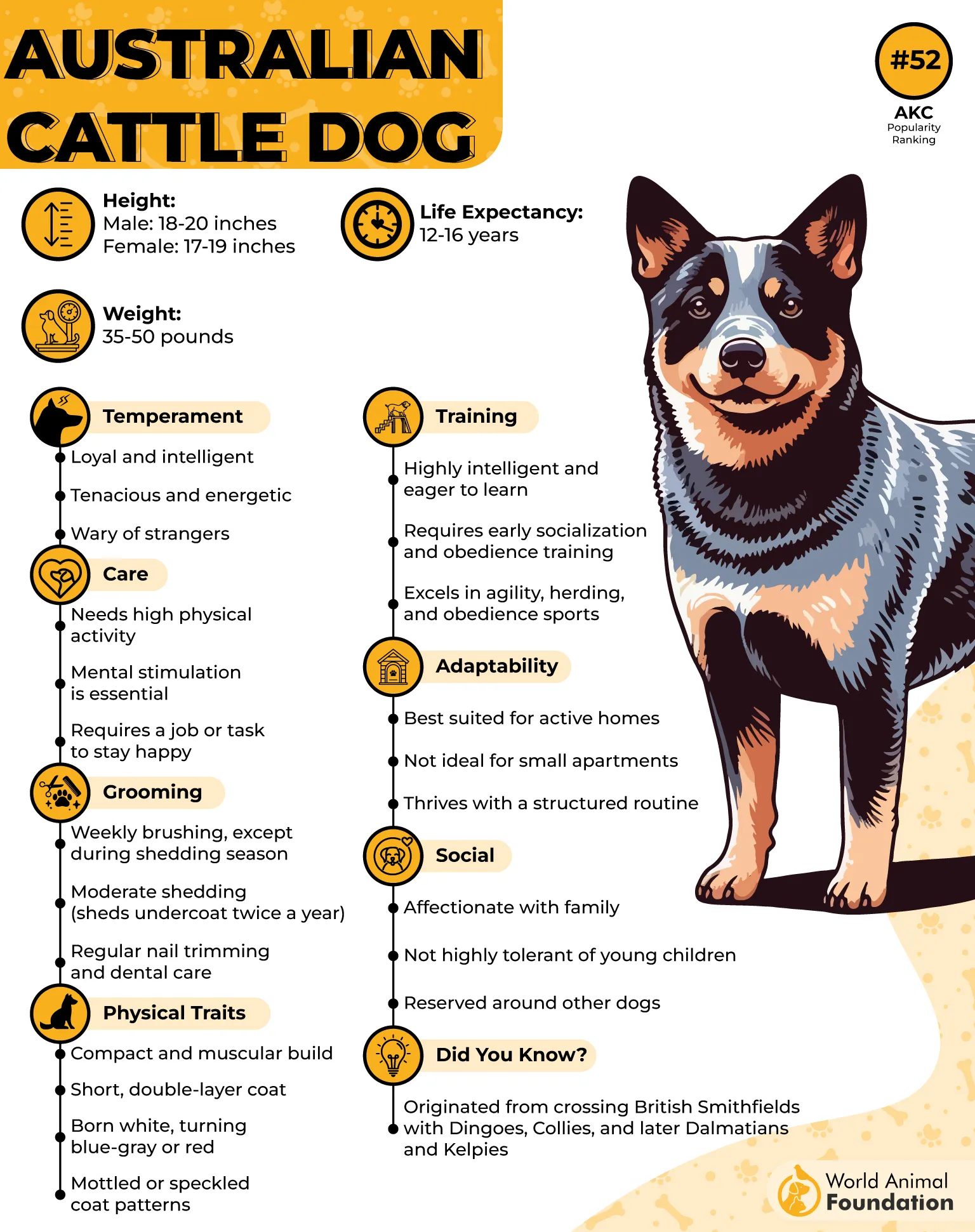
Imagine a Cattle Dog left idle for an afternoon—it might turn your favorite shoes into chew toys or your backyard into an obstacle course. And if there are little humans around, don’t be surprised if those herding instincts kick in: nipping at heels is their version of saying, “Follow the plan!”
Raised with kids or cats from puppyhood? They can learn boundaries—but their chase instincts never completely vanish.
On walks, any small animal—squirrels, rabbits, or the neighbor’s overly ambitious hamster—can spark a full-blown distraction-fest. Leash control and training aren’t just helpful; they’re essential survival tools.
In short, Australian Cattle Dogs are best suited for families or owners who can match their energy, provide plenty of challenges, and appreciate a dog whose motto could easily be: “Work hard, herd harder, nap later.”
4. Weimaraner
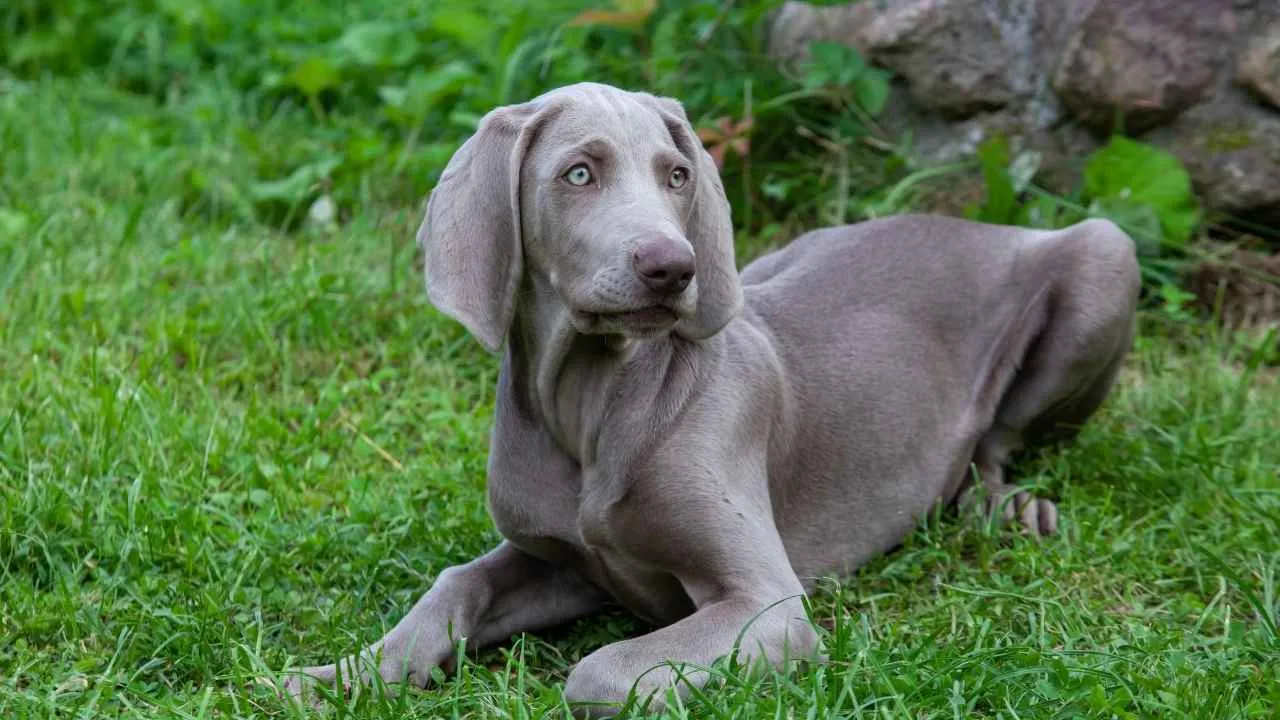
Say hello to the Weimaraner, also known as the “Gray Ghost”—and for good reason. With a sleek silver-blue coat and piercing bluish eyes, this dog can disappear into a shadow faster than you can say “squirrel!”
Weimaraners were bred for big-game hunting, so fearlessness and a strong prey drive are baked into their DNA.
They’re like the James Bond of dogs: elegant, fast, smart, and always on the hunt. Crossbreeding Bloodhounds with German and French hunting breeds gave them the nose, stamina, and laser-focused determination that can make a lazy walk feel like training for a marathon.
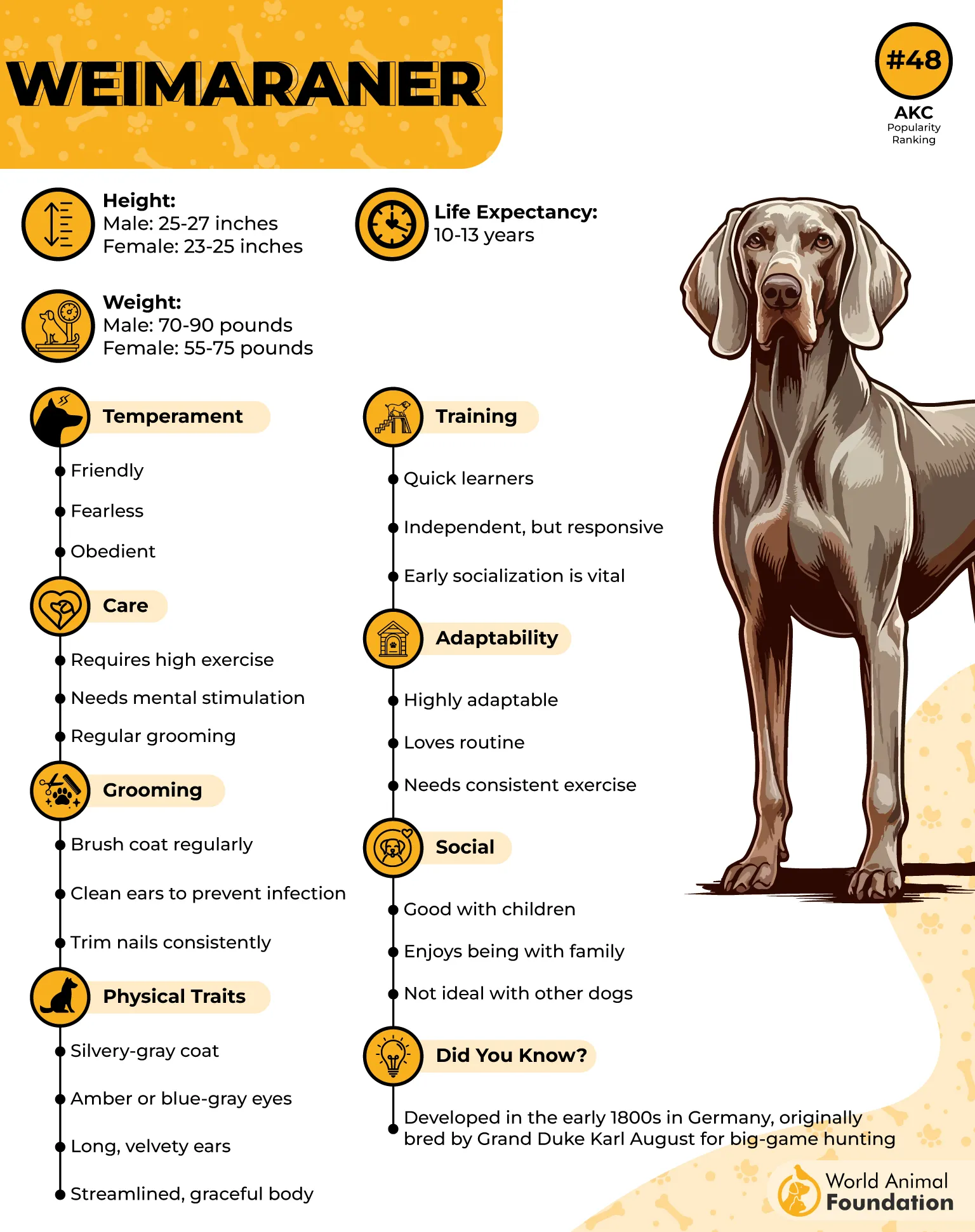
These pups love family time indoors, but don’t let that fool you—they need serious mental and physical stimulation. A bored Weimaraner is not a quiet, contemplative philosopher—they’re more like a furry tornado with opinions, capable of barking, chewing, and finding trouble in ways that make you question your life choices.
The trick? Keep them moving, give them challenges, and let them hunt… in the form of fetch, scent games, or agility training.
When happy and exercised, a Weimaraner is loyal, playful, and an absolutely stunning companion who might occasionally disappear into the shadows just to remind you who’s really in charge of the backyard.
5. Rhodesian Ridgeback

Meet the Rhodesian Ridgeback, a dog with the heart of a lion… and a prey drive to match. Originally bred in Africa to assist humans in hunting lions (yes, lions!), these dogs are strong, confident, and naturally athletic—which can make walks and dog park visits feel like a strategic mission if training isn’t on point.
PetMD says because of their hunting history, Ridgebacks are not ideal roommates for small pets like cats, guinea pigs, or anything that might inspire a chase. But with early socialization, these hunting dogs can get along well with other dogs.
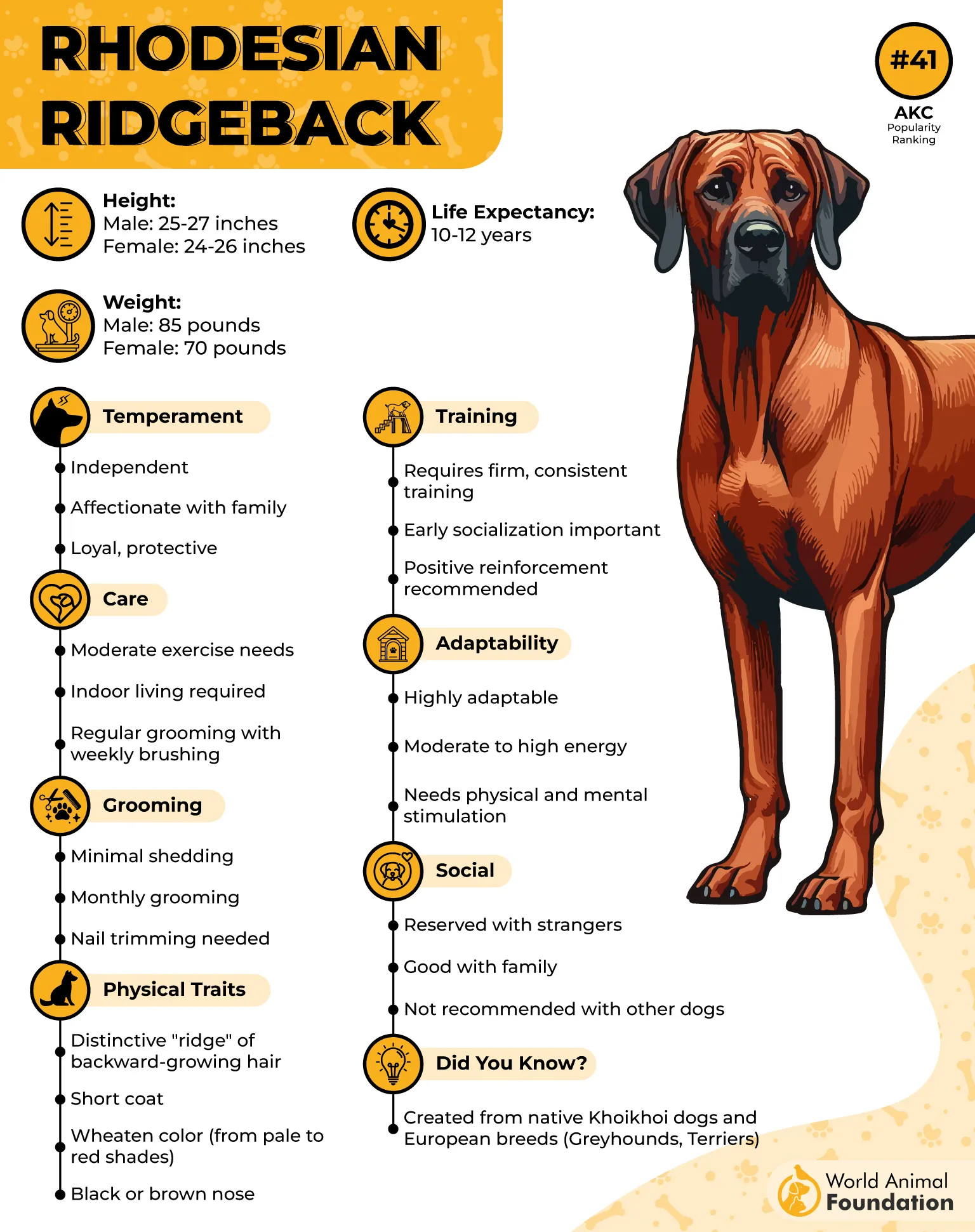
Think of them as the dignified, “I’ll tolerate you… for now” type—they respect boundaries if boundaries exist. Ridgebacks tend to do best in homes with older kids, where their herding-and-hunting instincts won’t accidentally turn a toddler into a moving target.
They also appreciate a quiet spot to call their own, because even lion hunters need nap time.
In short, a Rhodesian Ridgeback is a majestic companion—loyal, protective, and athletic—who brings a touch of wild adventure to everyday life, as long as you remember: when it comes to small moving things, they are 100% on the hunt.
6. Saluki
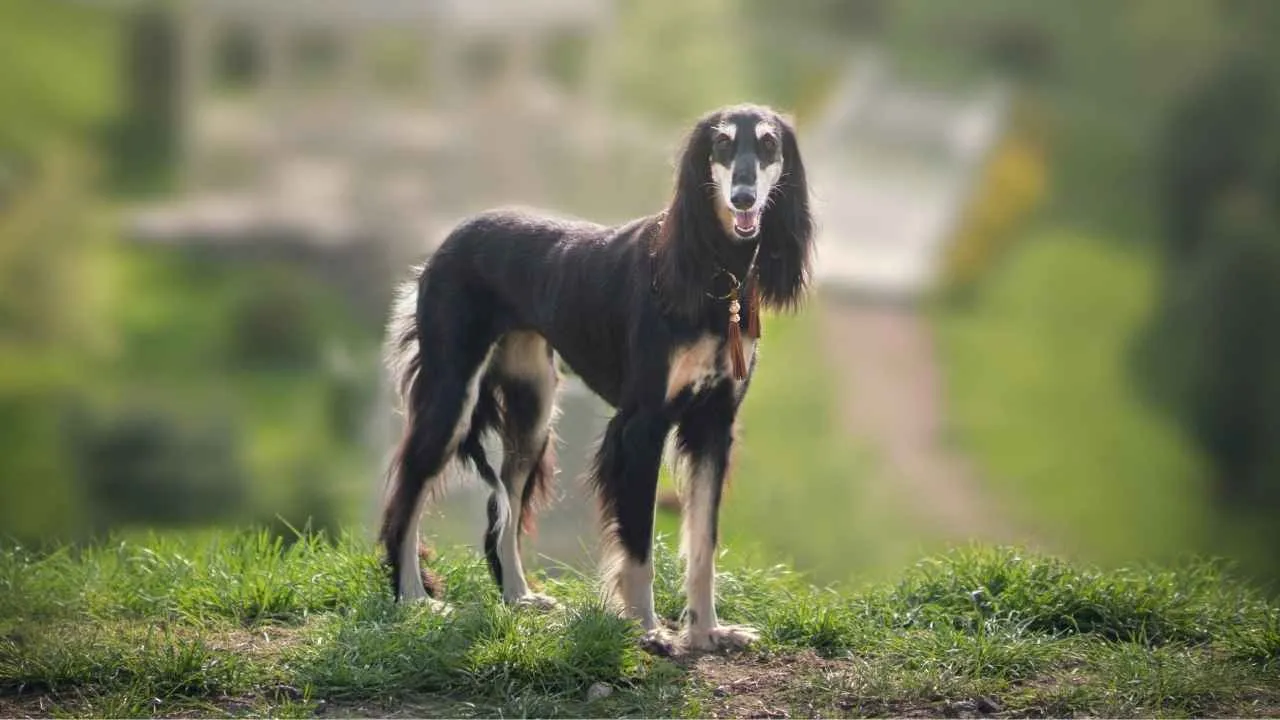
Say hello to the Saluki, a dog so elegant and fast that the ancient Egyptians thought they were worthy of the afterlife. Seriously, some were even mummified to accompany Pharaohs on their eternal journey. If that doesn’t scream “royal speedster,” I don’t know what does.
As per Wikipedia, Salukis are sighthounds, meaning they hunt with their eyes rather than their noses. Spot a hare? Consider it gone in a blur of fur and grace.
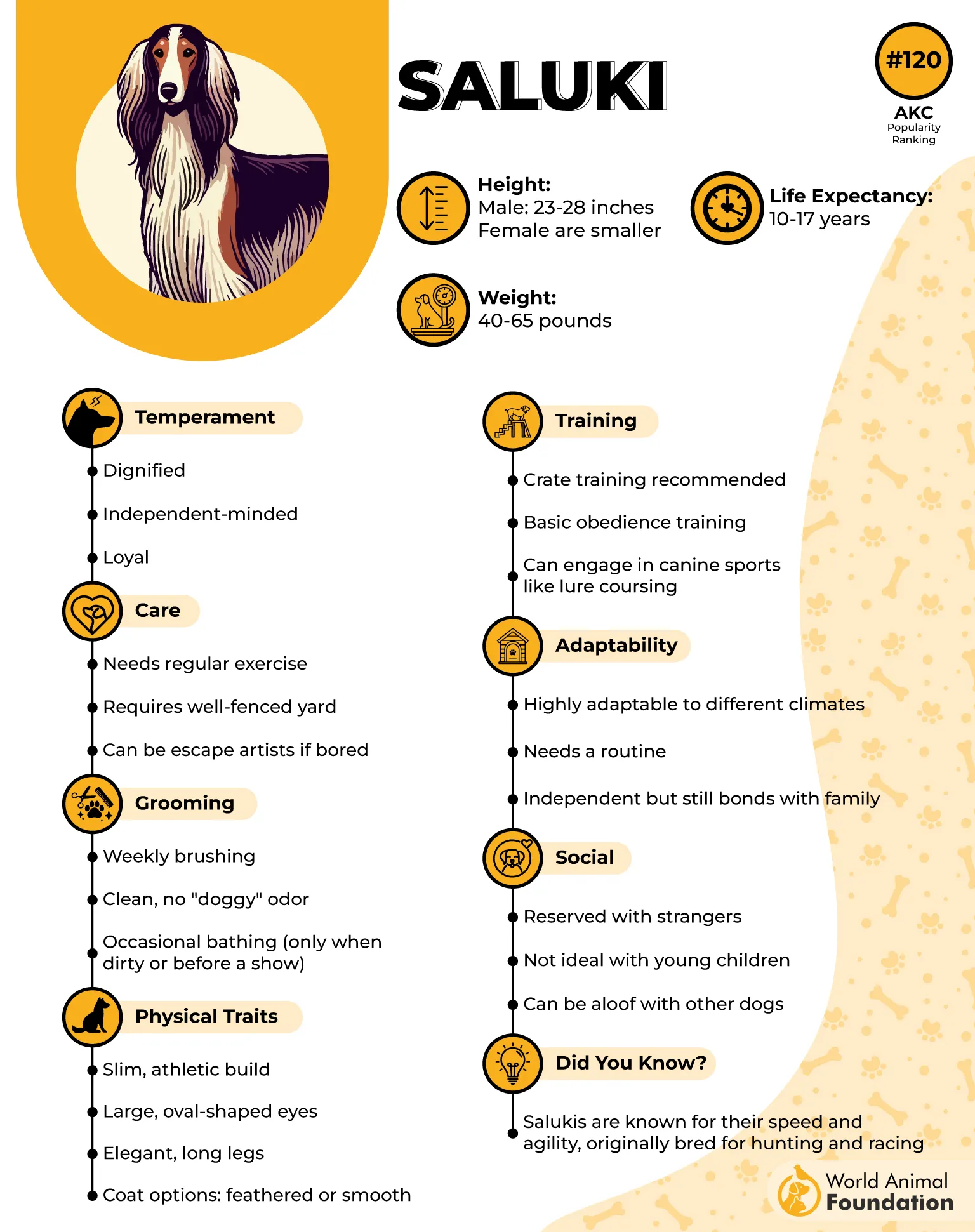
Historically, Bedouin hunters would launch these dogs off camels to give them a running start, and sometimes even use hawks to distract their quarry—basically a full medieval action movie starring a dog.
Modern Salukis still carry that prey drive and chase instinct, but thankfully, their targets are usually squirrels, balls, or other fast-moving toys in the backyard rather than actual wildlife.
They love their families deeply but are often reserved with strangers and children, preferring homes with active adults who can match their speed on hikes, runs, or long sprints across open fields.
Cats can coexist with Salukis—but introductions need to be careful and supervised, because while these dogs are regal, they still have the instincts of a hunter who once chased gazelles across the desert.
7. Whippet
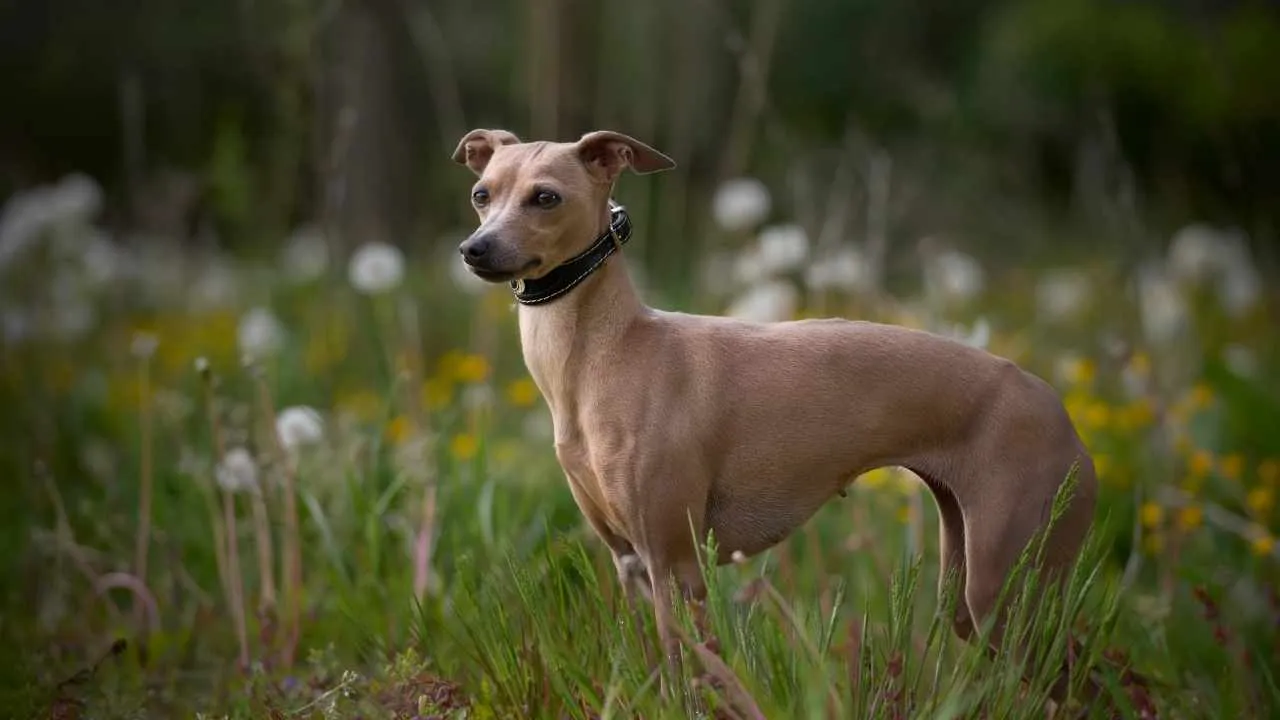
Meet the Whippet, basically a Greyhound in miniature form, built for speed and adorable antics. These dogs are lightning-fast, athletic, and endlessly playful, making them perfect running buddies—just don’t blink, or they’ll be halfway down the block chasing a squirrel or rogue leaf.
The AKC mentions that Whippets love to sprint, fetch flying discs, and play chase games in a securely fenced yard. But don’t mistake them for all action and no affection—these pups are also total goofballs who melt into a cozy snuggle session at the end of the day.
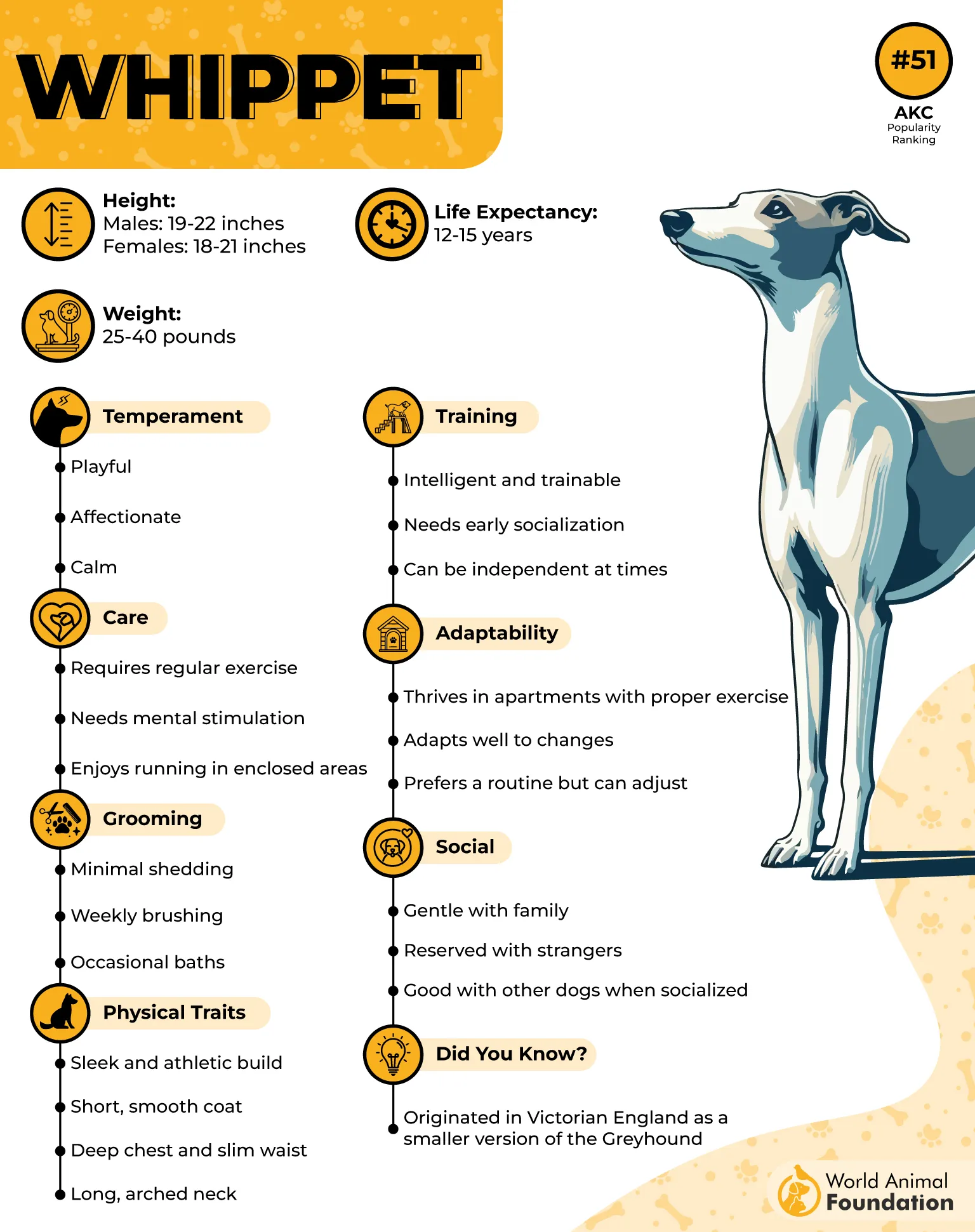
Short coats mean they get cold easily, so a cute pet jacket isn’t just stylish—it’s a survival tool for chilly walks. Thanks to their prey drive, Whippets may not be the best roommates for tiny pets, though they generally get along well with other dogs and even cats if properly socialized.
Think of them as Olympic sprinters with a sweet side: fast enough to make your heart race, but gentle enough to curl up on your lap afterward.
In short, if you want a dog that’s part athlete, part comedian, and part blanket hog, the Whippet is your dream mix.
Conclusion
When adopting a dog with an intense prey drive or a history of destructive behavior, preparation and knowledge are essential.
Breeds such as Golden Retriever, Labrador Retriever, Irish Setter, and other energetic dogs may have strong instincts for chasing animals, catching prey, or pursuing prey, which is natural behavior that must be managed with impulse control and training from a young age.
Whether you live in apartment living or are part of an active family, providing a securely fenced area and structured routines helps dogs safely express their instincts.
Highly intelligent dogs benefit from mental stimulation and guidance, while smaller dogs or those with a low prey drive may be easier to manage in multi-pet homes.
By understanding both the breed and the individual dog, you ensure a successful adoption, giving every dog—regardless of past experiences—a loving, safe, and fulfilling home.
