




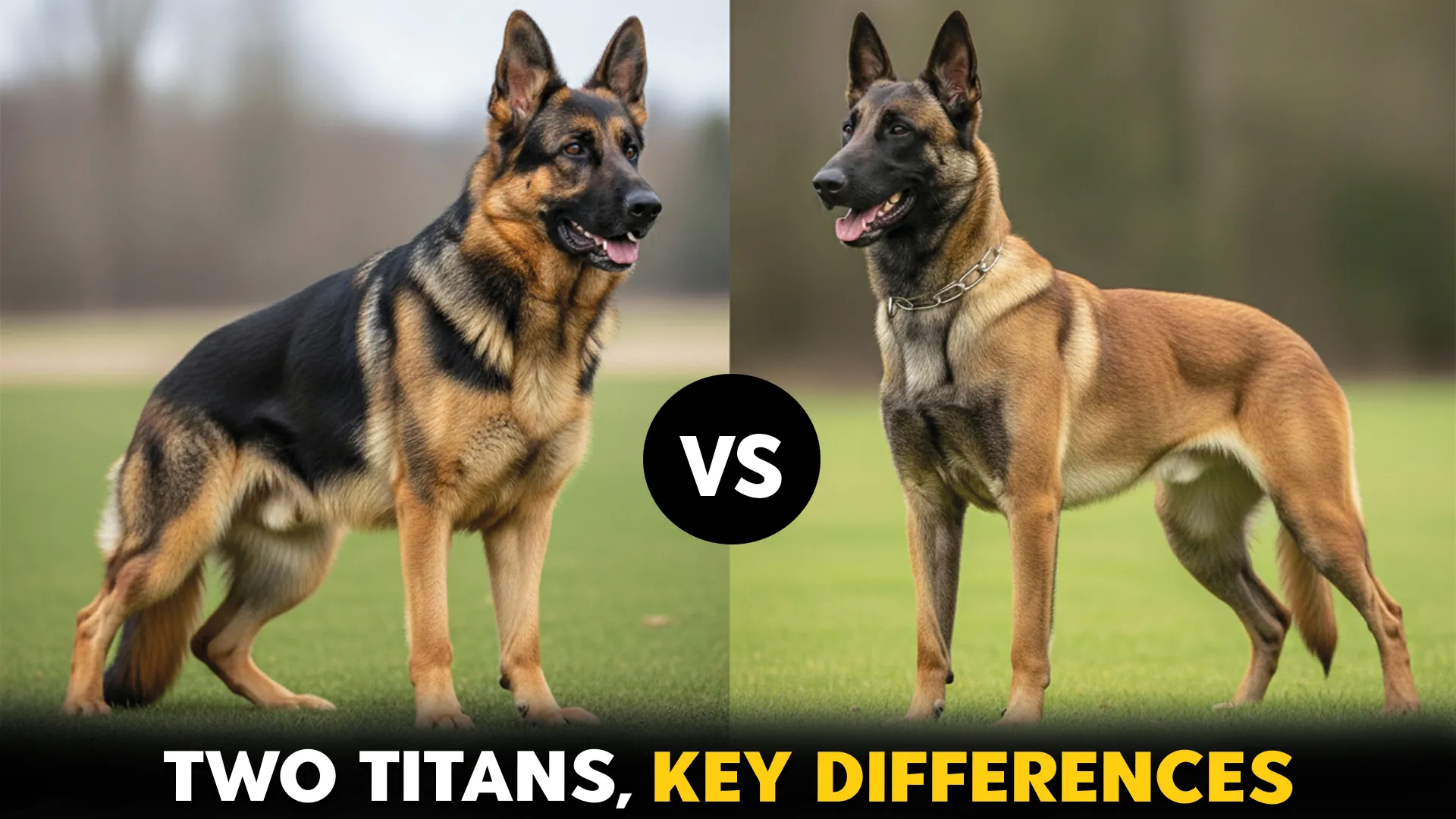
Two beloved dog breeds often top family wish lists: the German Shepherd and the Belgian Malinois. People love them for their loyalty, sharp minds, and brave hearts. Families compare them so often because both dogs protect well, learn fast, and form strong bonds with their people.
According to Encyclopaedia Britannica, German Shepherd dogs are not only great workers, but they are also devoted family companions who guard their homes with calm alertness. In the same way, Belgian Malinois dogs bring fierce focus and strong drive, which makes them trusted partners in police and military work.
Each breed still stands out in daily life. One offers steady care and calm strength. The other brings speed and high energy. Some homes suit a relaxed guardian. Other homes suit a tireless working partner.
This guide helps you choose the right fit for your life and space.
German Shepherd vs. Belgian Malinois
People often compare the German Shepherd and Belgian Malinois for good reasons. Both dogs look strong and alert. Both learn fast. Both love having a job. So, many families see them as close rivals.
Over time, each breed gained wide fame. Movies helped one grow popular. Police work helped the other shine. Today, many people see both dogs as top choices for work and home. That fame keeps them in the spotlight.
Both popular dog breeds became trusted partners through real service. They help in search tasks. They guard important places. They support teams in risky work. People trust them because they stay focused under stress.
Pet parents debate which one fits better for daily life. One may suit calm homes. The other suits busy homes. Each dog handles routines in its own way. One enjoys slow family time. The other wants steady tasks and play.
Both breeds need strong leadership to thrive. Clear rules help them relax. Kind guidance builds trust. With the right leader, both dogs become loyal, safe, and joyful companions.
Origins & Purpose
German Shepherd
According to Wikipedia, in the late 19th century, a German cavalry officer, Captain Max von Stephanitz, worked to combine various traditional German herding dogs into a uniform breed, creating the foundation of the German Shepherd as we know it today.
These dogs were originally bred to herd sheep and other livestock efficiently while remaining highly trainable and obedient. Over time, their intelligence and courage made them invaluable in World War I, police work, military operations, and search and rescue missions.
Today, German Shepherd dogs are recognized as loyal family companions and trusted working dogs around the world.
Did you know?
In 1990, a German Shepherd guide dog named Orient helped Belle Irwin become the first blind hiker to complete the Appalachian Trail.
Belgian Malinois
Belgian Malinois dogs were shaped by farmers in Belgium, who bred them for herding sheep and other livestock with speed, focus, and stamina.
According to Britannica, developed around the city of Malines in northwestern Belgium, the Malinois shares roots with the German Shepherd and Dutch Shepherd but became recognized as a separate breed by the American Kennel Club in 1959.
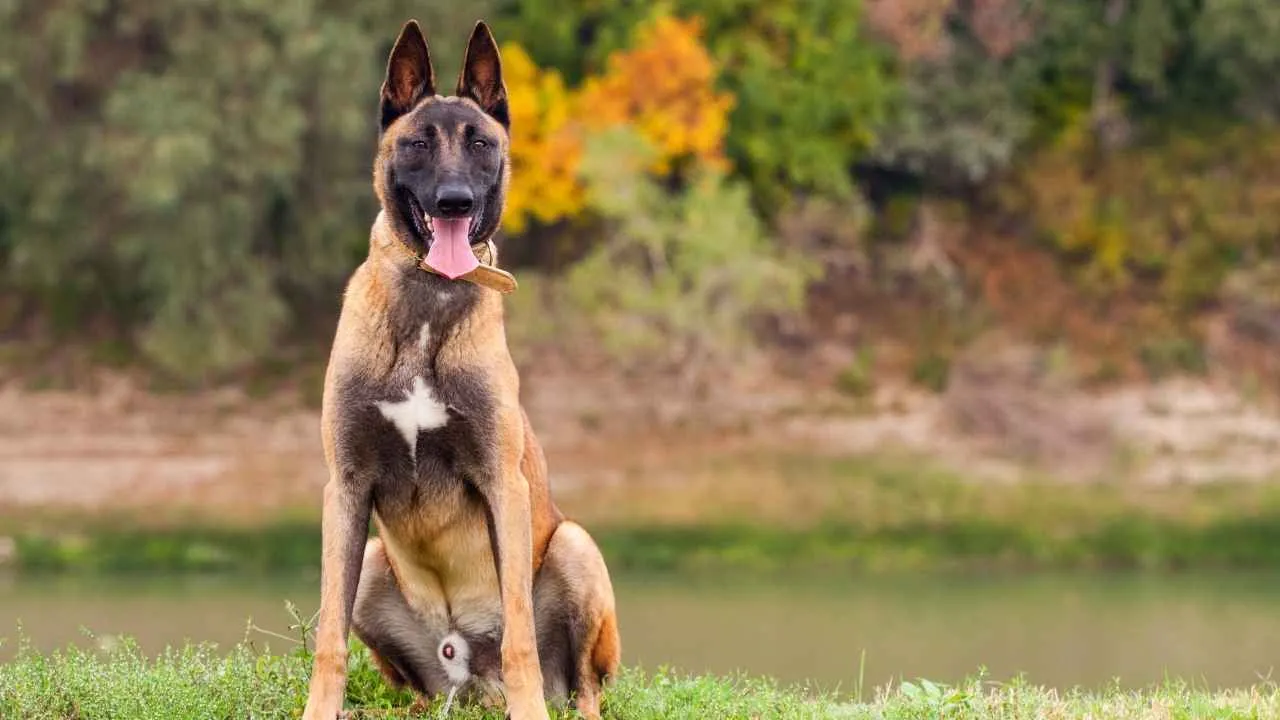
Their sharp instincts and drive quickly caught the attention of police forces and military teams, while modern dog sports further boosted their global popularity. Today, Belgian Malinois are celebrated for their energy, intelligence, and versatility as working partners.
Did you know?
In 2011, a male Belgian Malinois named Cairo played a key role in helping a U.S. Navy SEAL team capture Osama bin Laden.
Size & Physical Build
German Shepherd
German Shepherds have a strong frame with solid bones that support their athletic physique. Their broad chest and muscular build give them power and endurance for work and play.
A dense double coat keeps them insulated, while loose hair and a slightly oily, waterproof coat protect them in rain or snow. This combination makes them versatile outdoors and able to handle a variety of climates and terrains.
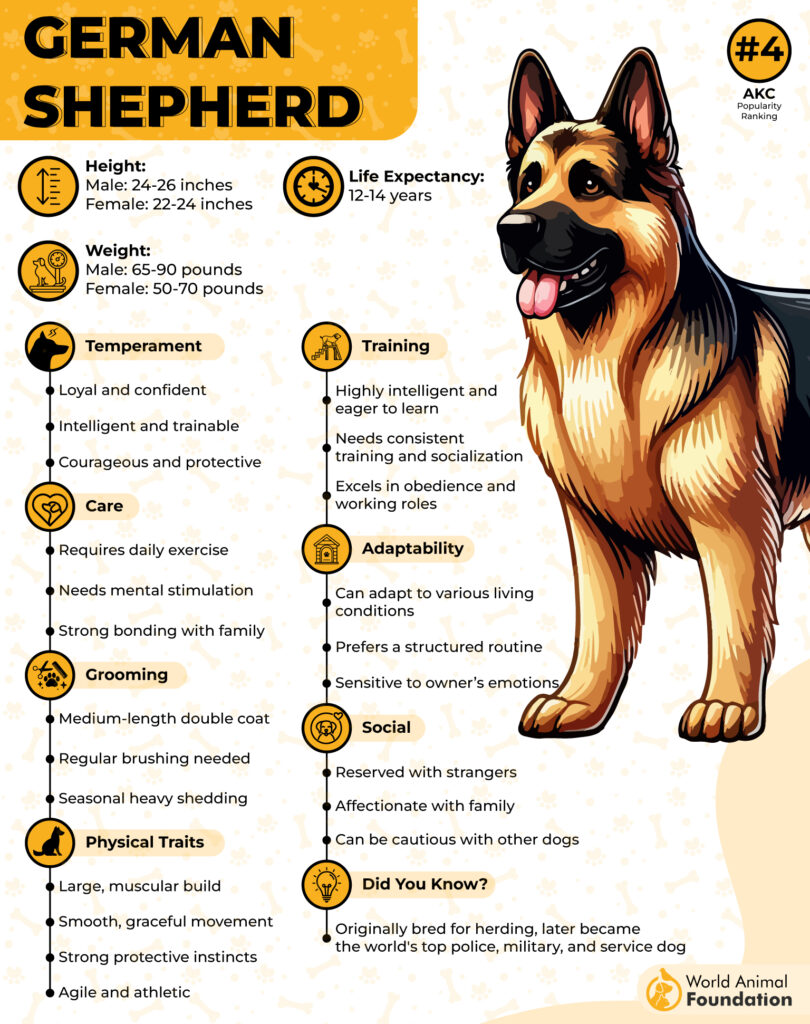
Male
Height: 24–26 inches (60–65 cm)
Weight: 65–90 lbs (29–41 kg)
Female
Height: 22–24 inches (55–60 cm)
Weight: 50–70 lbs (23–32 kg)
Belgian Malinois
Belgian Malinois dogs have a lean, athletic body built for speed and agility. Their shorter coat dries quickly and keeps them cool in warm weather.
The breed’s characteristic upright Malinois ears and sharp, alert expression highlight their focus and readiness. Designed for fast movement and endurance, they excel in tasks requiring energy and precision.
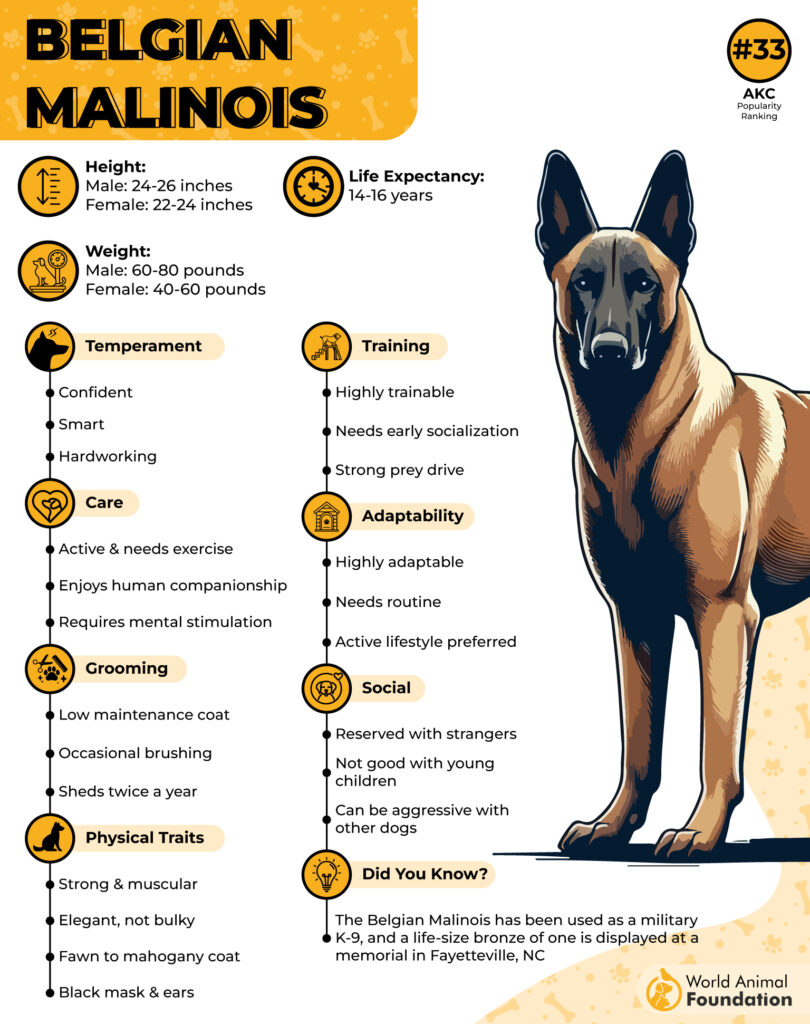
Male
Height: 24–26 inches (61–66 cm)
Weight: 60–80 lbs (27–36 kg)
Femal
Height: 22–24 inches (56–61 cm)
Weight: 40–60 lbs (18–27 kg)
Temperament & Personality
Both the German Shepherd and the Belgian Malinois are better suited for experienced dog handlers. Both share similar personality traits, including loyalty, intelligence, and a strong desire to have a job to do. Let’s understand the difference between the German Shepherd and Belgian Malinois temperament and personality.
German Shepherd
German Shepherd dogs are calm and steady at home. They are loyal to their family and deeply protective, yet gentle with proper training. Similar personality traits show in both breeds, such as intelligence, focus, and devotion.
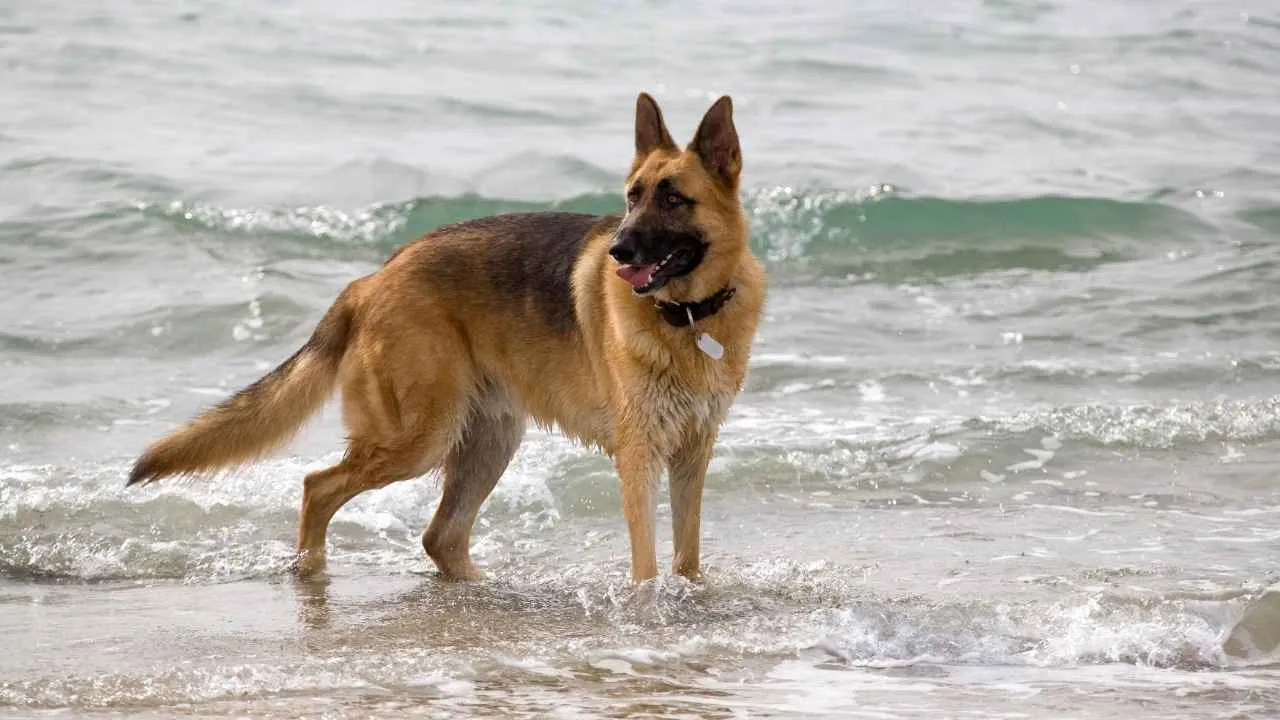
German Shepherds tend to bond deeply with their pet parents, making them affectionate, vigilant, and protective family members. They are playful and energetic, enjoying time with children and seniors alike. While PetMD states that they can be gentle around family, they may be reserved with strangers.
They can bark in response to perceived threats but are not overly noisy or excitable. Their intelligence and alertness make them highly trainable, though they may be wary of other pets if not socialized properly.
Belgian Malinois
Belgian Malinois are bold and alert in new places. They love tasks that challenge their problem-solving skills and stay focused for long periods. These dogs need daily mental stimulation and consistent activity, or they may develop destructive behaviors.
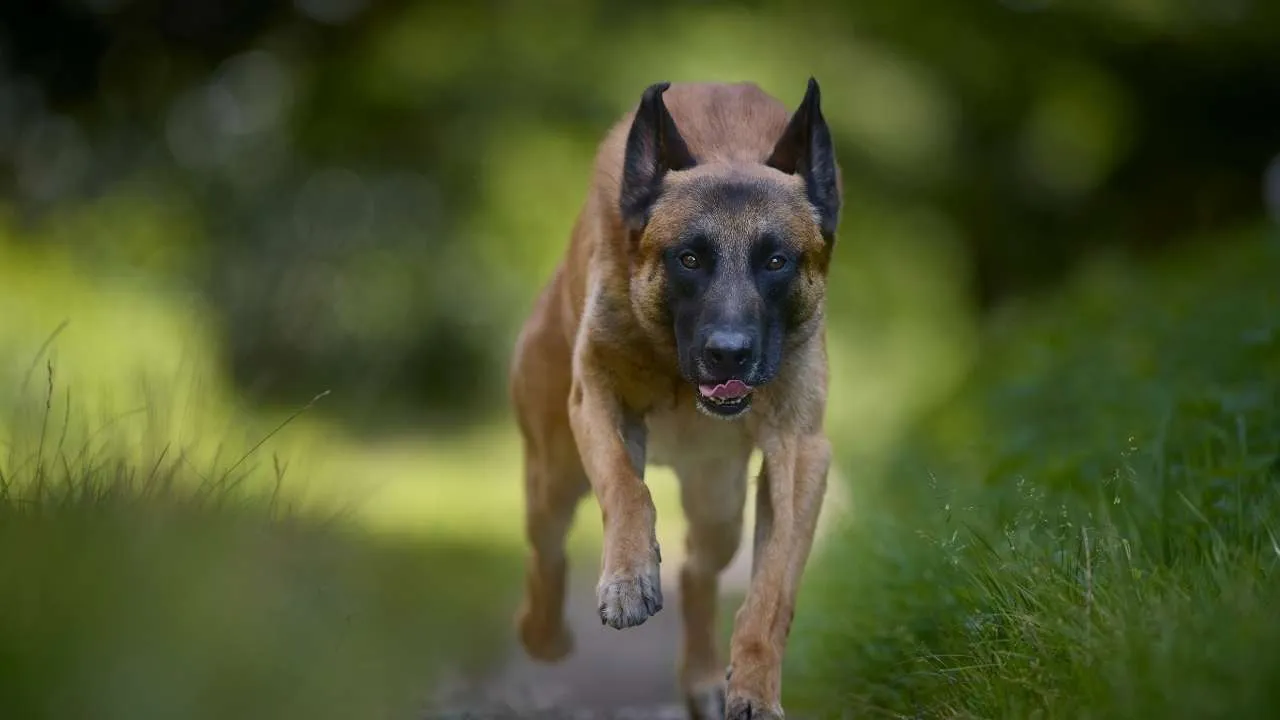
Known for their intense drive and focus, Belgian Malinois are agile, energetic, and highly protective of their pet parents. Their intelligence and loyalty make them excellent partners, though they require experienced handlers who can channel their energy productively.
With proper guidance, they thrive in active homes and enjoy challenges that allow them to use both body and mind.
Exercise & Energy Levels
Both German Shepherd and Belgian Malinois thrive in homes that support an active lifestyle. These two breeds require regular exercise and mental stimulation to stay happy and healthy, making them ideal for owners who enjoy spending time outdoors and engaging in training activities.
German Shepherd
German Shepherds enjoy long walks and hikes, and they thrive when given regular exercise each day. They love playtime with the whole family, making them both active and affectionate companions. This athletic breed fits an active lifestyle and needs daily movement to stay calm and focused.
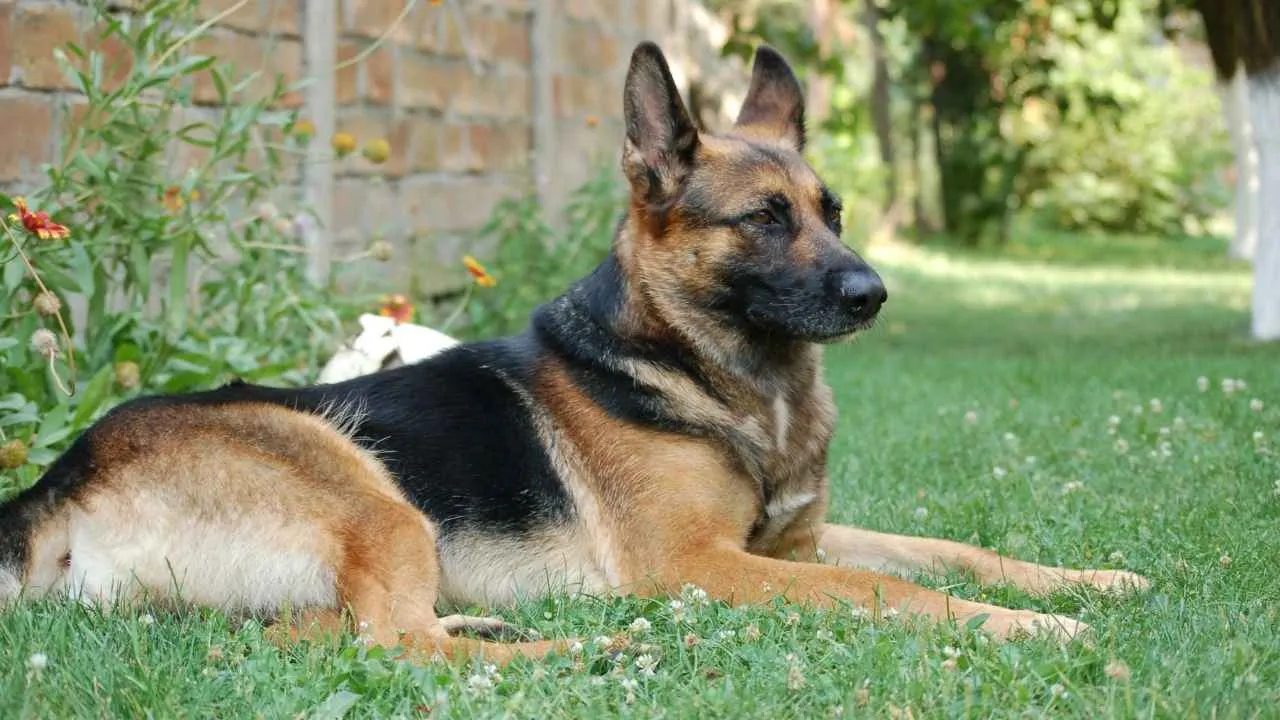
German Shepherds generally require one to two hours of exercise, including walks, games, or light agility work, to channel their energy productively. Regular physical activity also helps prevent boredom and keeps their mind sharp.
Belgian Malinois
Belgian Malinois are high-energy dogs from sunrise to night, with a natural drive for activity and work. They need agility training, dog sports, and daily mental stimulation to stay balanced and content.
These athletic, muscular dogs love fast-paced games and drills, and they perform best with advanced training that challenges both mind and body.
Belgian Malinois thrive under experienced handlers who can provide structured activities and regular exercise, making them one of the most energetic and focused working breeds. Without proper outlets, they can become restless or display destructive behavior.
Training & Intelligence
Both the Belgian Malinois and German Shepherd are highly intelligent and thrive when properly trained. These two beloved breeds share many similarities in their ability to learn quickly, solve problems, and excel when given clear guidance and consistent routines.
German Shepherd
German Shepherds are known for their high intelligence, which allows them to respond well to clear rules and structured training. When guided by kind and consistent leaders, they learn fast and shine in competitive obedience as well as police work.
Their versatility and focus make them one of the most reliable working dogs, whether as family companions or service dogs. With proper training, German Shepherds become devoted, obedient, and highly capable partners in any environment.
Belgian Malinois
Belgian Malinois learn complex tasks very quickly and excel in agility and tracking exercises. They require training with a strong structure to channel their energy and intelligence effectively.

Malinois thrive in military work, dog sports, and advanced training programs, loving intense sessions that challenge both mind and body.
Their focus, drive, and loyalty make them exceptional working dogs, and when properly trained, they can be as reliable and devoted as German Shepherds, showcasing why both breeds are such celebrated and beloved breeds worldwide.
Health & Lifespan
Both the German Shepherd and Belgian Malinois can live long, healthy lives with proper care, smart habits, and regular checkups.
German Shepherd
German Shepherds are prone to joint problems as they age, which can affect their comfort and movement over time. They also face a higher risk of elbow dysplasia and other forms of dysplasia that may impact active working dogs.
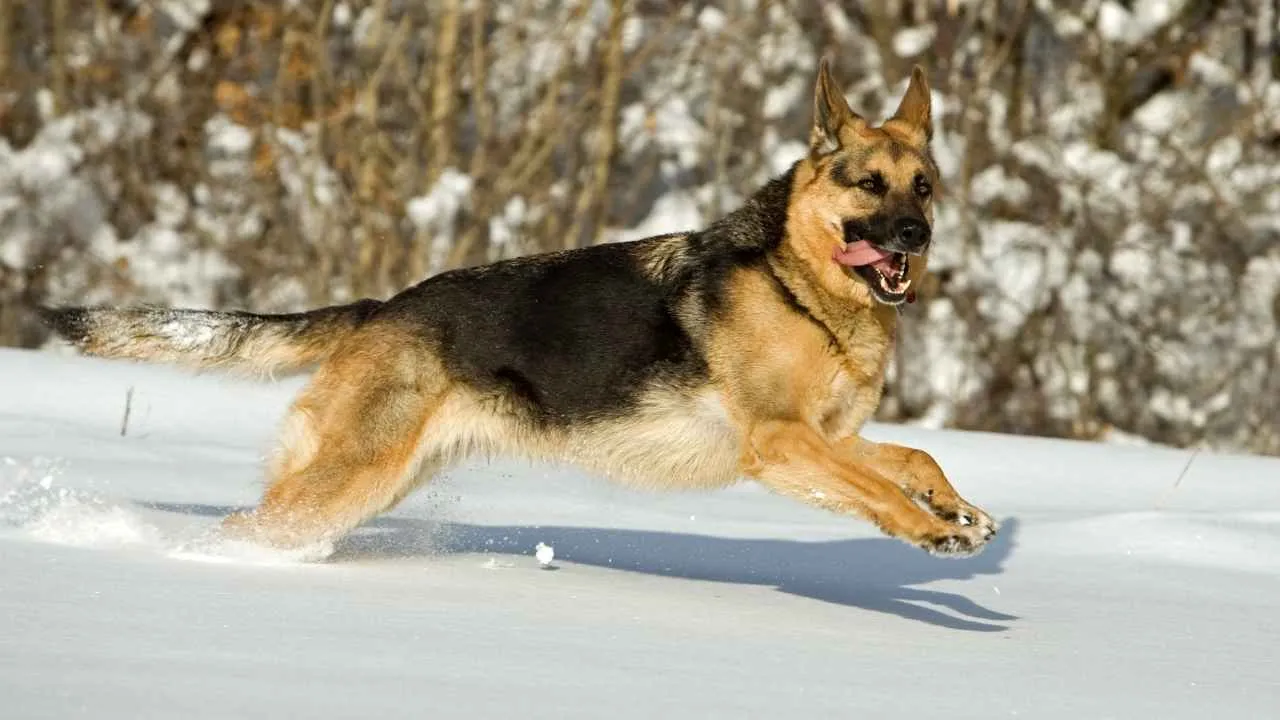
Some individuals can face genetic issues, so responsible breeding and early screenings matter. A balanced diet helps support strong bones and a healthy weight. Steady vet care, gentle exercise, and good rest routines can greatly improve their quality of life.
Belgian Malinois
Belgian Malinois are often seen as a healthier breed, especially when raised with strong habits from a young age. Still, they can face some health considerations, such as the risk of elbow dysplasia and progressive retinal atrophy, which may affect vision later in life, noted by Orvis.
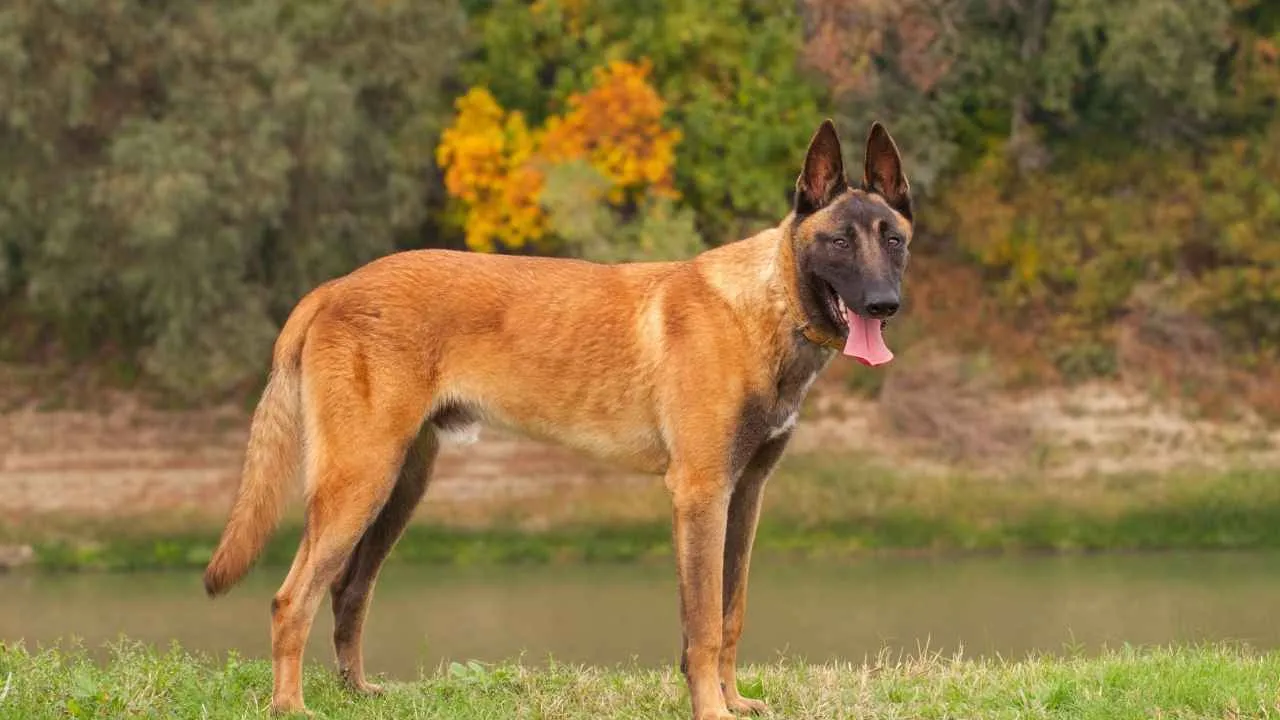
These dogs need strong muscles for work and performance, so proper conditioning matters. They also need rest after hard training to avoid strain. With good care, smart training plans, and regular vet visits, Malinois often stay fit and energetic for many years.
German Shepherd vs. Belgian Malinois Suitability as Family Pets vs. Guard Dogs
When families compare the German Shepherd and the Belgian Malinois, they often weigh how these two breeds fit into daily life as both family pets and guard dogs.
Among many breeds, their strong physical characteristics and loyal nature make each a trusted furry companion and reliable protector.
German Shepherds are a great choice for families with kids, since they are gentle when trained and become excellent companions who are protective but calm at home, which helps them fit many home styles.
Belgian Malinois build their best relationships with active pet owners, show strong guard instincts, need a job to feel calm, bond closely with one handler, and thrive with a clear routine.
Both breeds are widely trusted as police dogs, yet with the right home, training, and care, they can also become devoted family protectors.
Conclusion
The German Shepherd and the Belgian Malinois are beloved breeds because they offer loyalty, courage, and deep bonds with their humans.
Many similarities still exist between these two breeds, especially in their intelligence, drive to work, and desire to stay close to their people. At the same time, key differences shape daily life. One fits calmer family routines more easily.
The other thrives on nonstop action and focused tasks. Training and time matter most for both dogs. They grow best with structure, patience, and daily care. To choose between these two breeds, think about your energy level, space, and schedule. Be honest about your time and skills.
Final tip for future pet owners: pick the dog that matches your lifestyle, not just your dreams.
