




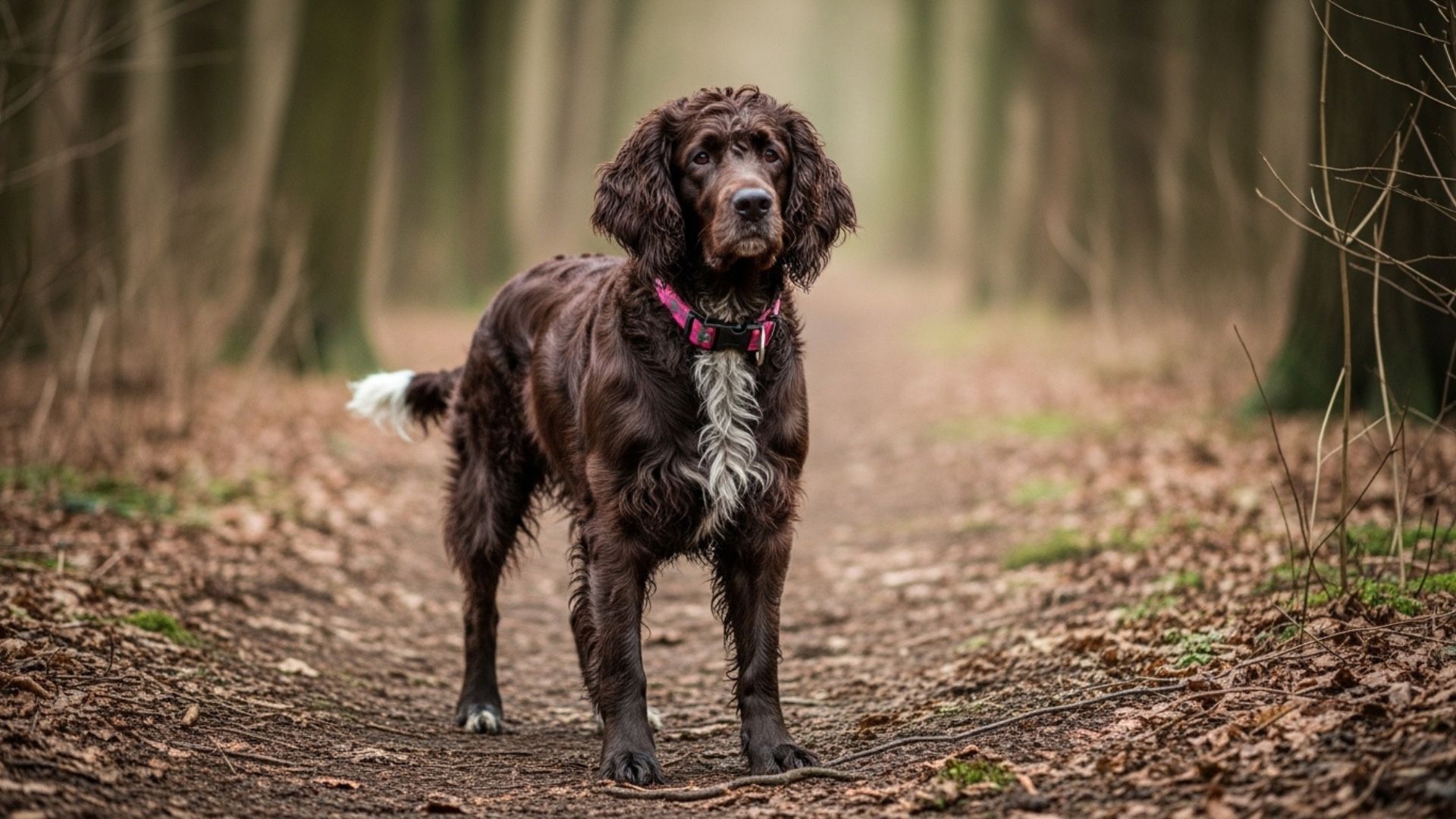
Hunting in thick woods can be challenging, but the right dog can make all the difference. From following faint trails to retrieving wounded game, skilled hunting dogs turn difficult hunts into successful adventures.
Dogs can detect scents hundreds to thousands of times fainter than humans. This incredible ability likely helps them track game even through dense underbrush or tall grasses.
Additionally, research shows a dog’s nose is roughly 100,000 times more sensitive than a human’s. This heightened sense likely enables them to detect and follow hidden or wounded game over long distances, making them indispensable companions during hunting season.
Choosing the best dog breeds for forest hunts and dense cover tracking isn’t just about appearance. Hunters need dogs with strong prey drive, excellent scent skills, and the stamina to navigate rugged terrain.
With proper training, these dogs excel at tracking small game, flushing birds, and retrieving wounded animals, all while being loyal companions.
Best Dog Breeds for Forest Hunts and Dense-Cover Tracking
Let’s explore seven top dog breeds that are perfect for forest hunts and dense-cover tracking, each bringing unique skills to the field.
1. German Wirehaired Pointer
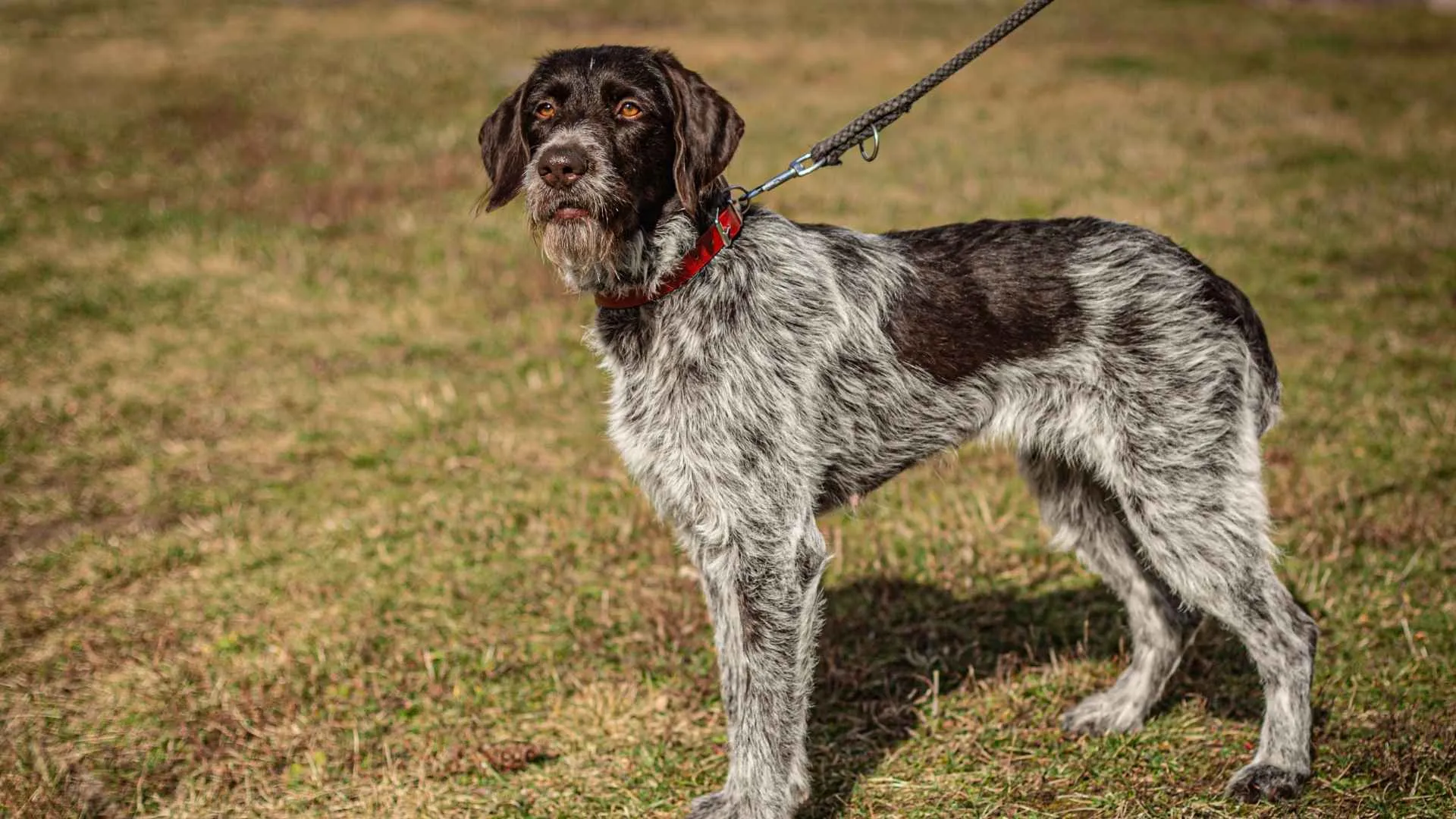
The German Wirehaired Pointer is a rugged, all‑purpose hunting dog that began in 19th‑century Germany when hunters wanted a single breed that could track, point, and retrieve game — regardless of terrain or weather.
According to the American Kennel Club (AKC), the breed is recognized as a versatile Sporting Group dog that works well in the field and in water. Breeders combined several breeds to create a dog that could work in forests, water, mountains, and fields with equal skill.
This made it ideal for hunters who needed a reliable tracking dog and partner in dense cover. Bred originally to hunt both furred and feathered game, this dog excels at following scent trails and reaching birds or other animals that are hard to find.
Its keen nose and tireless stamina let it hunt all day long, while its ability to recover wounded game helps bring hunters’ prey back from thick brush or deep woods. Physically, German Wirehaired Pointers have a weather‑resistant coat with a rough outer layer that protects them from thorny undergrowth and cold water.
As noted by Britannica, they stand sturdy and muscular, with a deep chet and strong limbs built for long days in the field. Their distinctive wiry coat, bushy eyebrows, and beard aren’t just looks — they work to shield the dog while it pushes through dense cover.
These bird dogs are high‑energy and intelligent, so they need plenty of exercise and consistent training to stay happy and focused. Hunters and active families should plan daily work and stimulation to keep this breed at its best.
Key Traits & Hunting Strengths
German hunting roots: Bred in Germany for versatile field work across varied terrain.
Tracking and scenting ability: Strong hunting drive makes it a good tracking dog for birds and game.
Retrieving skills: Excellent at finding and bringing back wounded animals in dense cover.
Durable coat: Weather‑resistant double coat protects in harsh conditions.
Energy and training: Very energetic dog; thrives with structured, regular training.
2. English Springer Spaniel
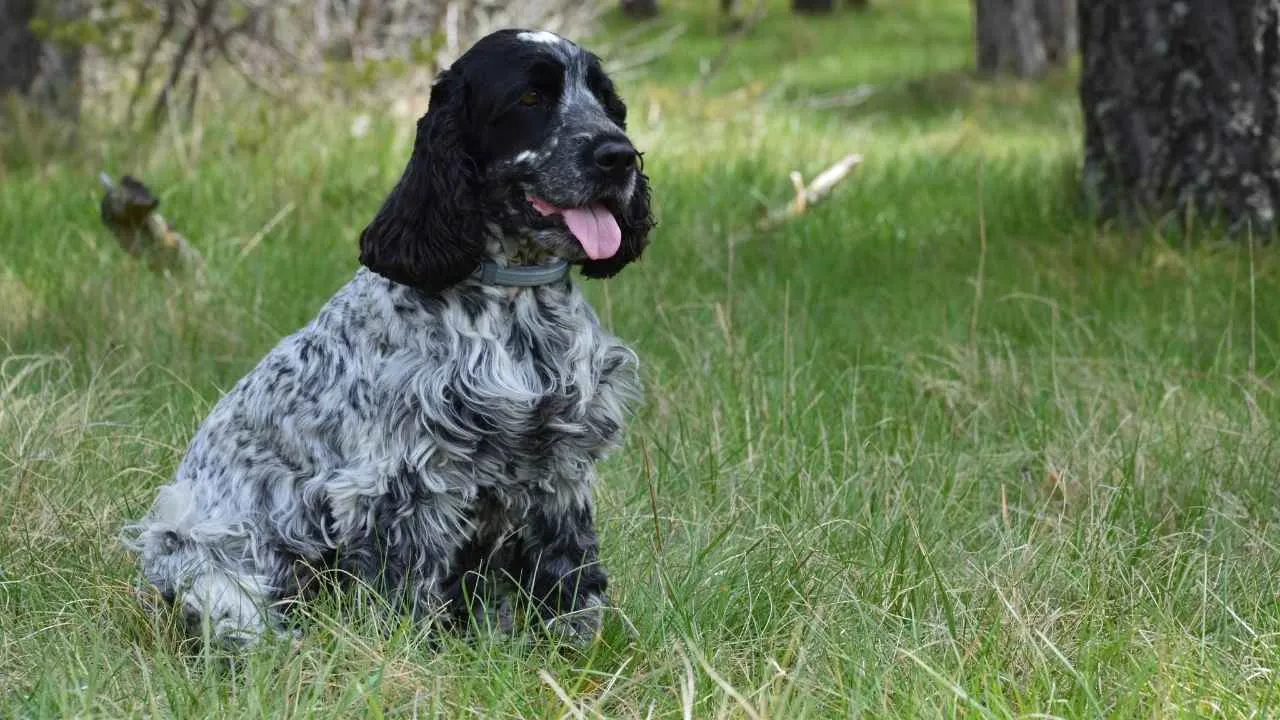
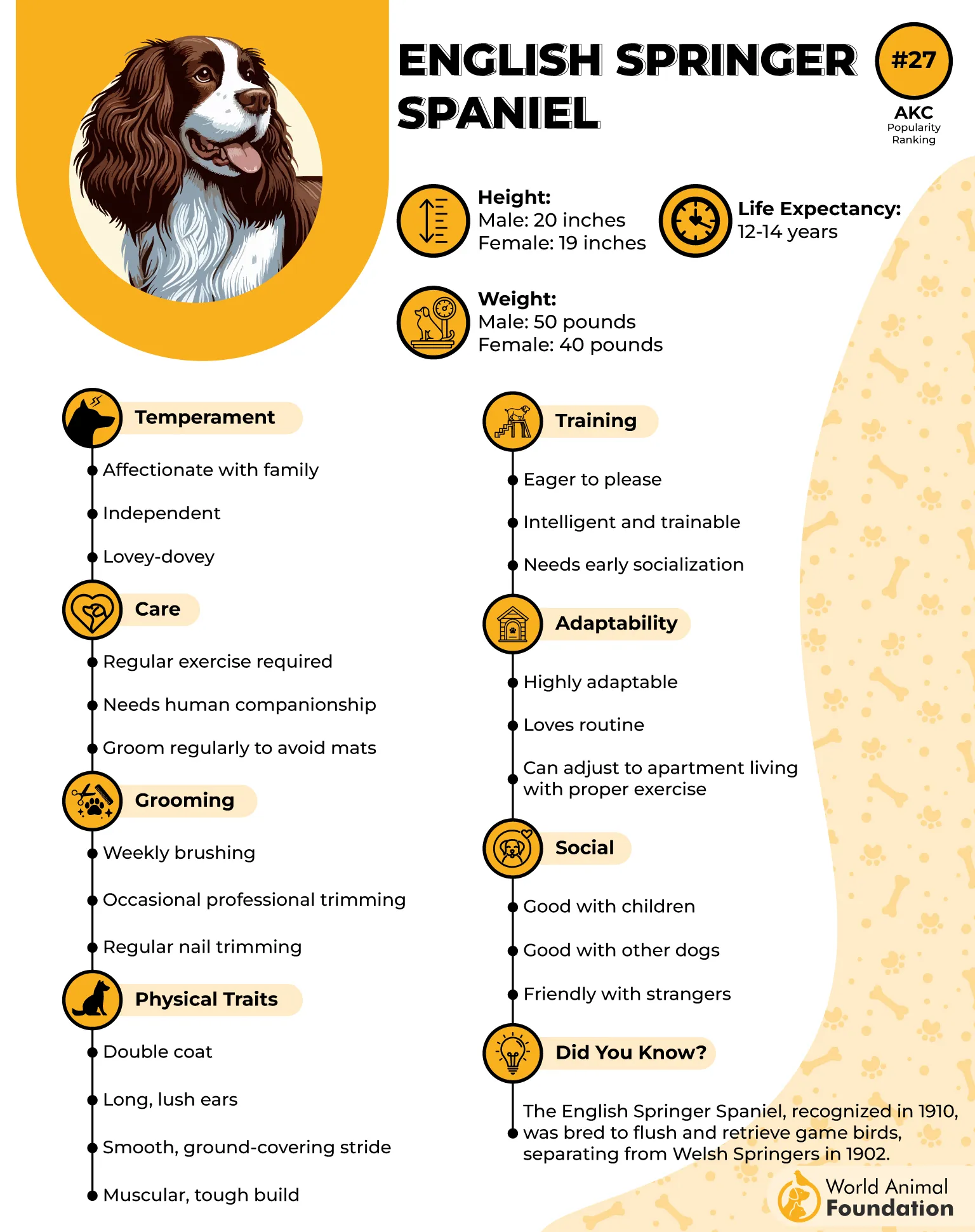
The English Springer Spaniel is a classic bird‑flushing pup with a lively spirit and a very friendly nature. They were originally bred to hunt birds like pheasants, quail, and other upland game into the air for hunters, using their speed and scenting skills to cover ground efficiently.
This hunting style makes them one of the most trusted companions for flushing birds and small game. But Springers are more than just hunting dogs. They have a cheerful, affectionate, and social personality that helps them fit right into family life.
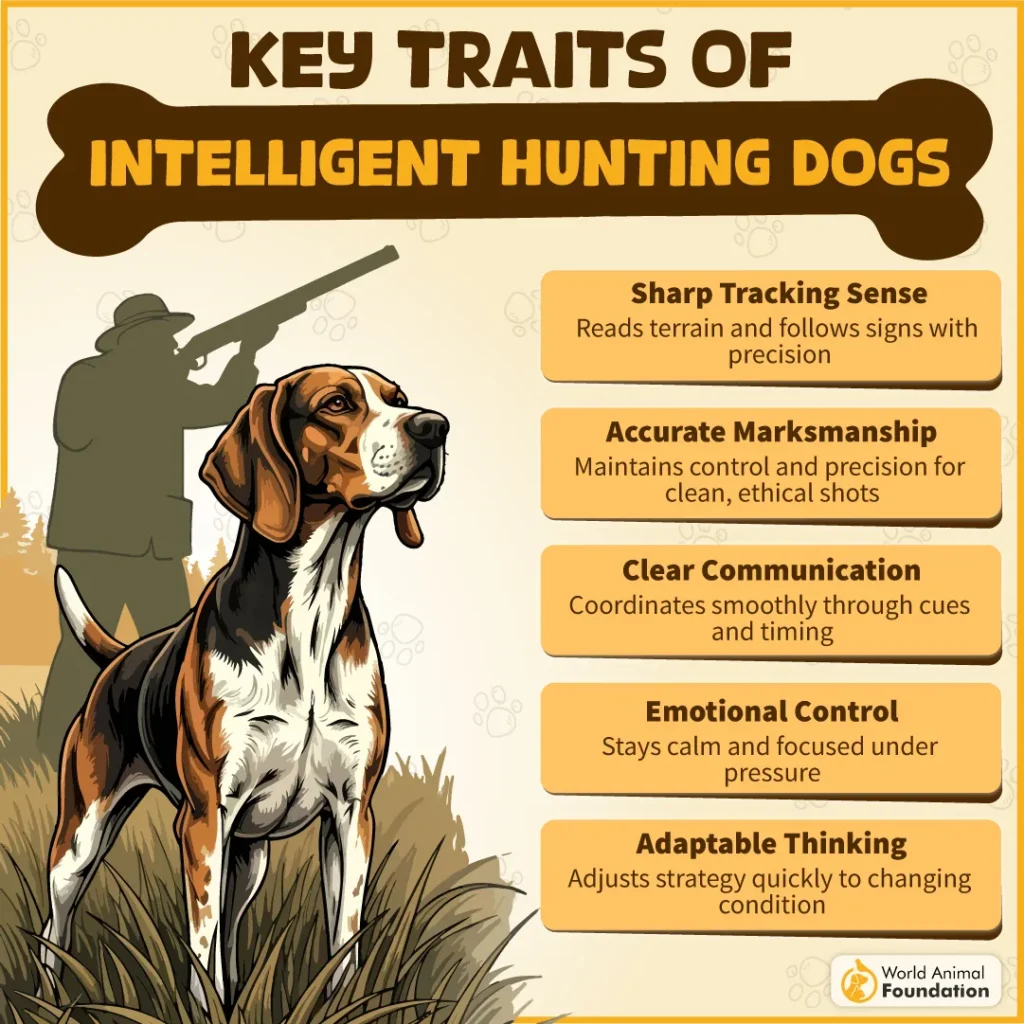
According to Purina, these dogs thrive when around people and enjoy being part of family outings, playtime, and activities. They respond well to commands and training, and mental tasks help keep their smart minds active.
Without enough mental or physical stimulation, they can become bored or restless. Because they are eager to please and trainable, English Springer Spaniels are often a good choice for first‑time owners and families who want a versatile dog that is both a hunting partner and a loving housemate.
What Makes Them Great Hunters & Family Dogs
Natural bird flushing instincts in forests and thick cover.
Friendly and social, great with kids and adults alike.
Highly trainable — responds quickly to commands when stimulated.
Enjoys mental challenges like obedience and interactive games.
Good choice for beginners, thanks to their trainability and eagerness.
3. Irish Water Spaniel
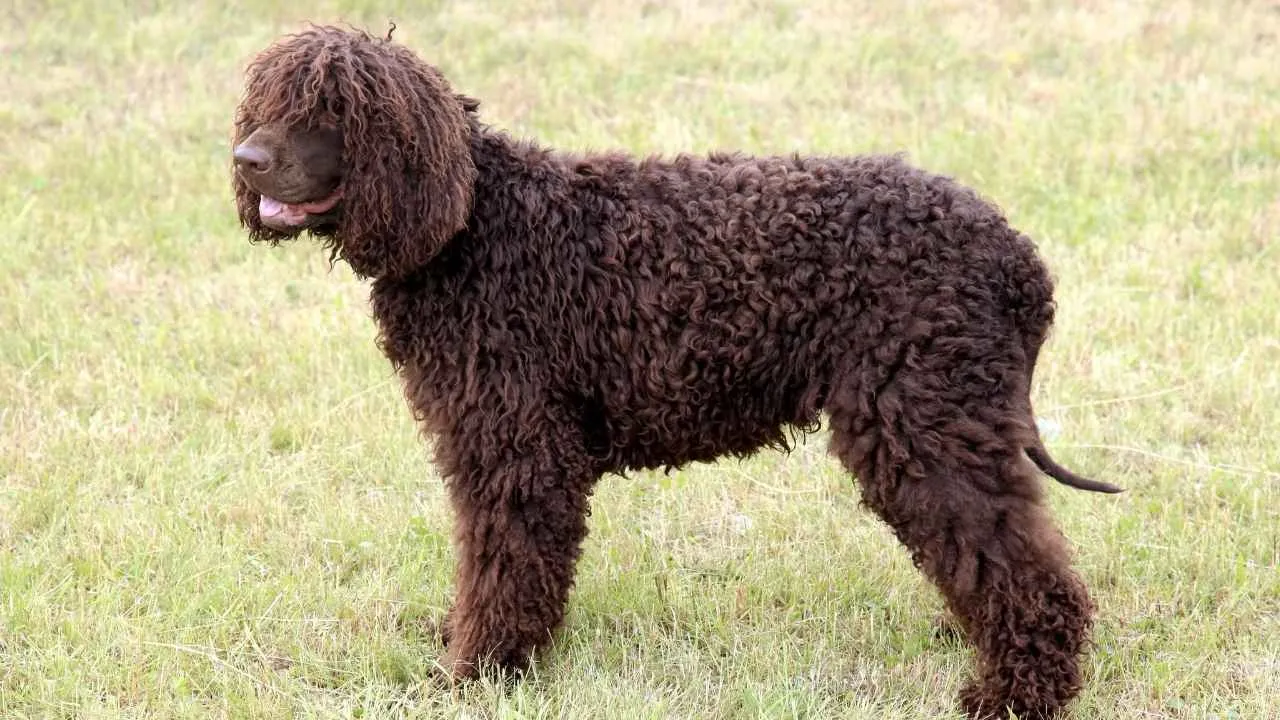
The Irish Water Spaniel stands out as a true aquatic hunting dog with a remarkable talent for retrieving birds and game from water. Known for its natural swimming ability, this breed’s body is built to excel in wet, marshy environments where waterfowl hunts take place.
With webbed feet and a water‑repellent coat, Irish Water Spaniels can move through lakes, ponds, and rivers with ease — ideal for hunters who rely on dogs that can retrieve waterfowl in cold, challenging conditions. This breed’s coat is one of its most defining features.
The dense curls are water‑resistant, helping to repel moisture and protect the dog from chills after long swims. But a coat like this also means regular care is essential. Brushing a few times each week prevents matting and keeps the coat healthy.
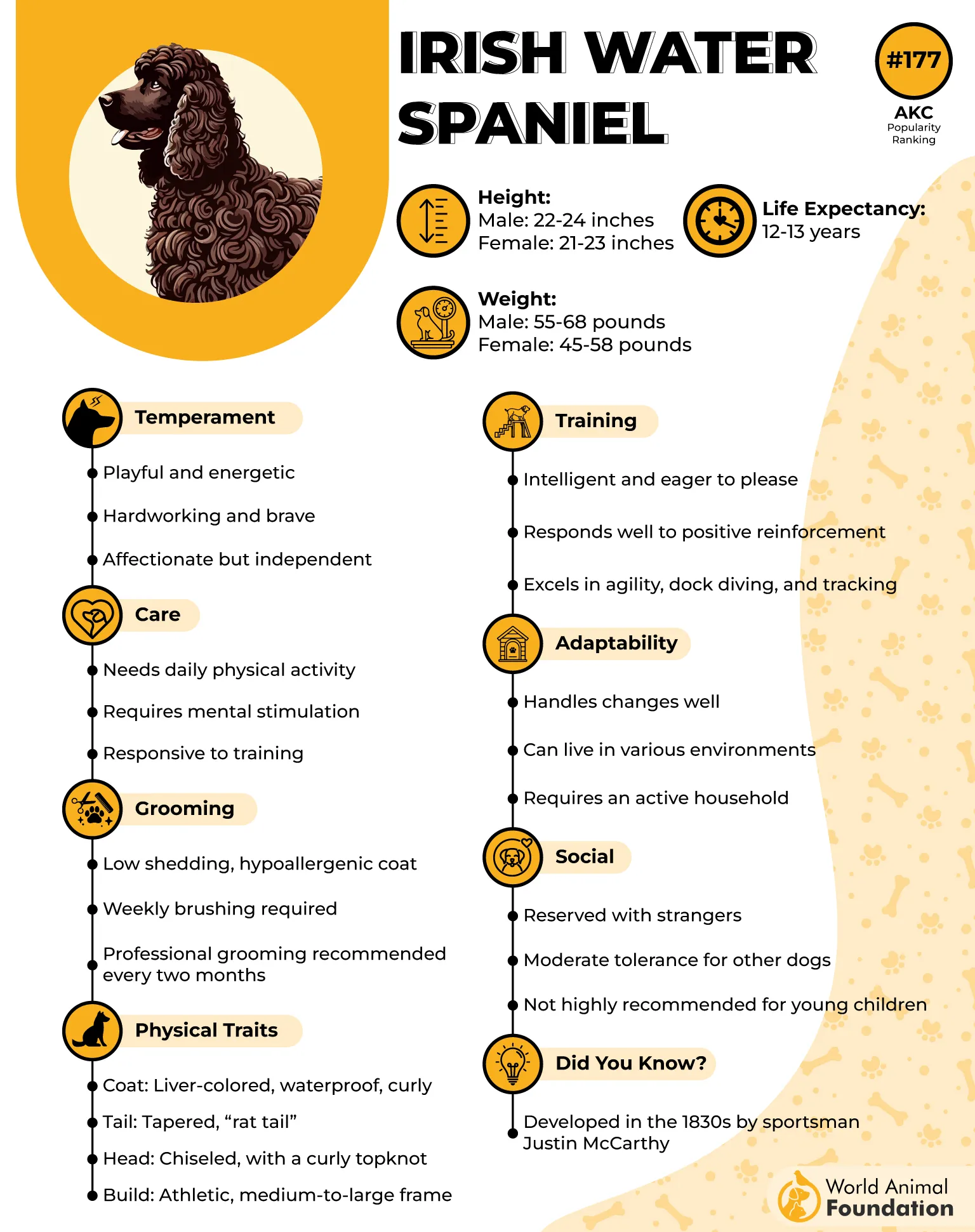
Occasional professional grooming and careful drying after water work help maintain its unique texture and protective quality. Proper care also includes attention to ears and skin — because this dog spends so much time in water, owners should check and dry ears to minimize infections and keep the coat free from trapped moisture.
Overall, the Irish Water Spaniel’s aquatic hunting ability, care needs, and astonishing coat make it a standout choice for water hunters who want a dog suited to both wet terrain and retriever work.
Aquatic Traits & Coat Care
Natural water retriever: Built to swim and retrieve waterfowl with ease thanks to webbed feet and strong movement.
Water‑resistant coat: Dense, curly hair repels water and provides protection in cold conditions.
Grooming routine: Brushing 2–3 times weekly prevents mats and keeps the coat in good shape.
Drying after swims: Important to prevent dampness and skin issues.
Ear care: Check and clean regularly to avoid trapped moisture and infections.
4. Boykin Spaniel
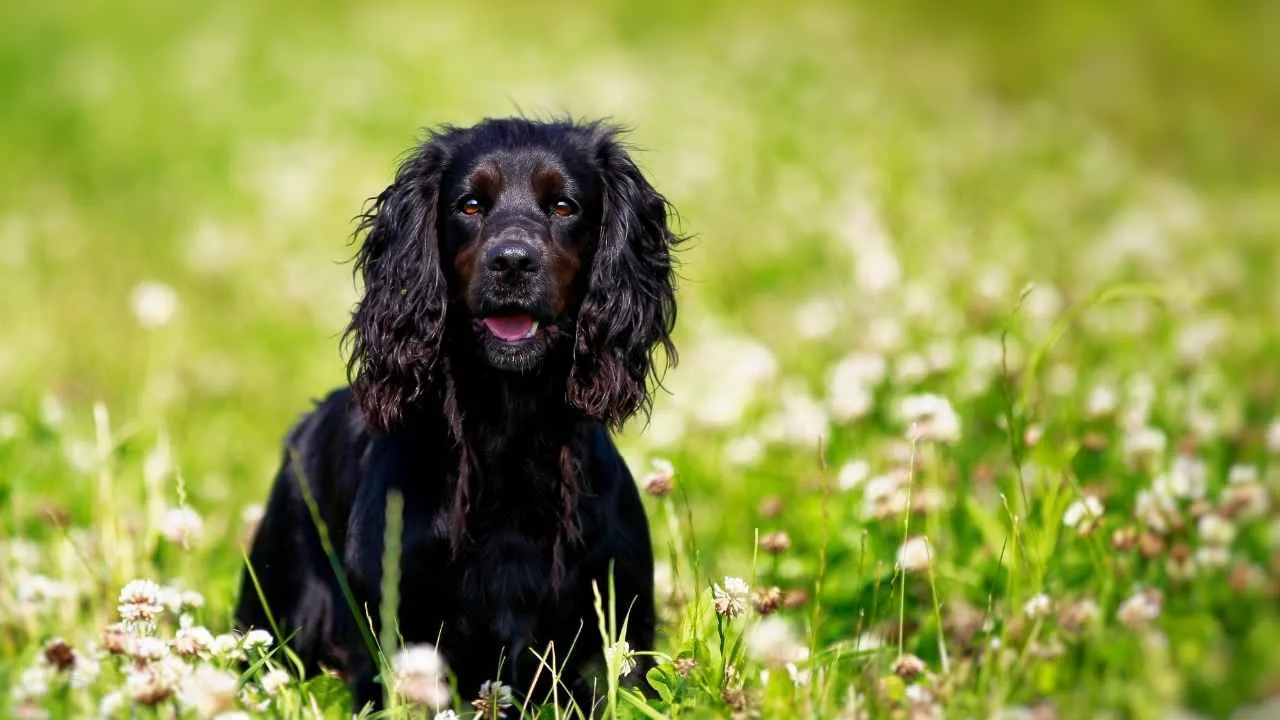
The Boykin Spaniel is a medium‑sized gun dog that played a key role in waterfowl hunting in its home region of South Carolina’s swamps and waterways.
Originally developed to hunt ducks and other birds in shallow waters and plains, this duck dog uses its sharp instincts and love of the field to flush game and retrieve it efficiently—making it a true hunting companion for bird hunters.
Boykins are also known for their adaptability in different hunting settings. Though born in flat swampland, many hunters today use them in dense forests and brushy terrain because the breed can handle changes in cover and terrain while staying focused on the hunt.
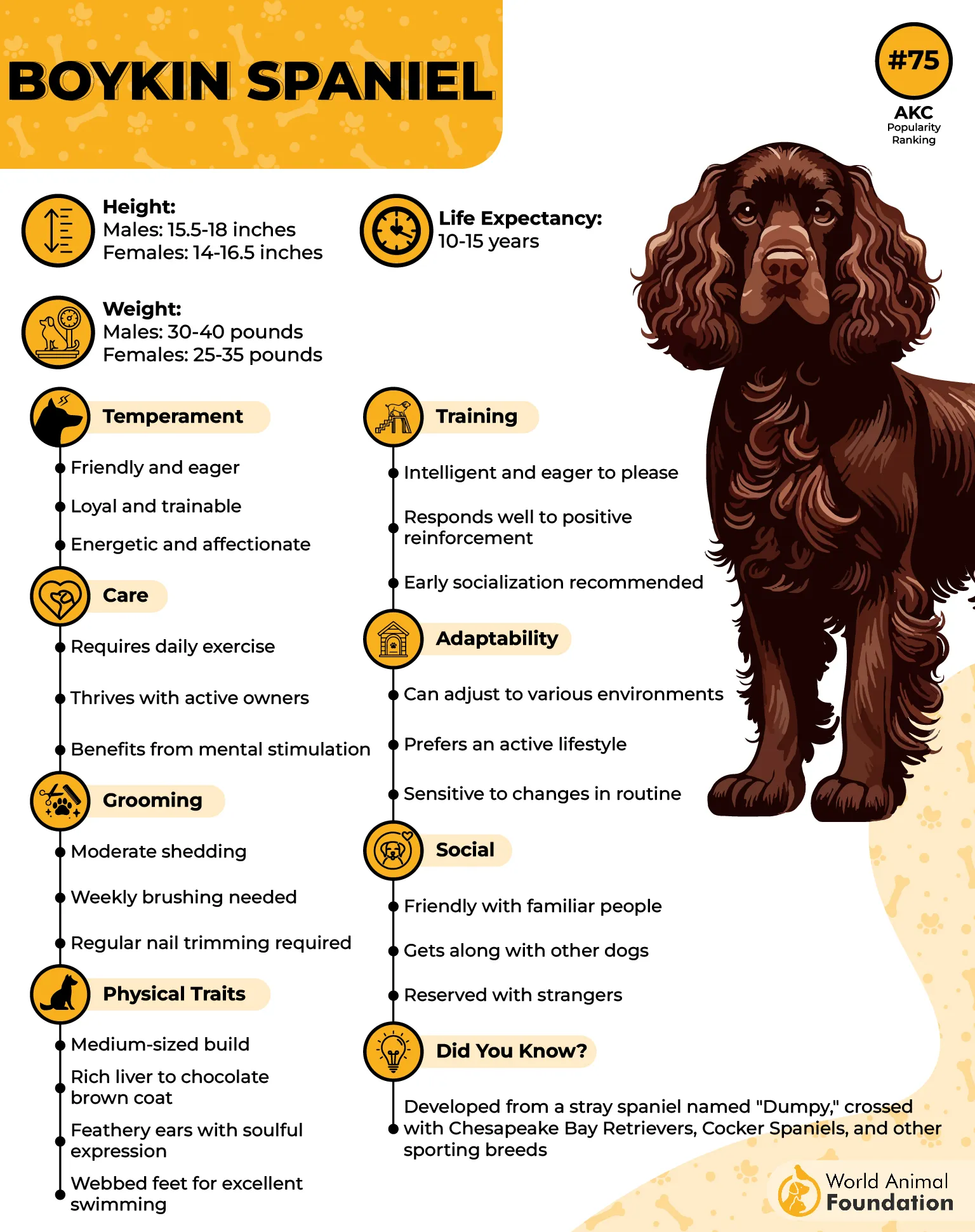
Their skill at flushing birds and tracking movement makes them valuable partners, whether working in open fields or thicker cover. Off the field, Boykin Spaniels bring a friendly, sociable temperament into family life.
They tend to be affectionate and people‑oriented, which helps them bond with family members, including children and other pets, when properly socialized.
Their willingness to learn and responsiveness to training make them quick learners, and many first‑time hunting dog owners find this breed easier to train than some other sporting breeds.
Hunting & Personality Highlights
Designed for ducks and birds: Built to work in shallow water and plains as a flushing and retrieving dog
Adaptability in terrain: Can perform well in forested or brushy conditions beyond its original swamp habitat
Friendly and people‑oriented: Makes a steady family companion with proper socialization.
Quick learner: Intelligent and responsive to positive training techniques.
Good for beginners: Often easier to train than some other sporting breeds due to eagerness to please.
5. Labrador Retriever
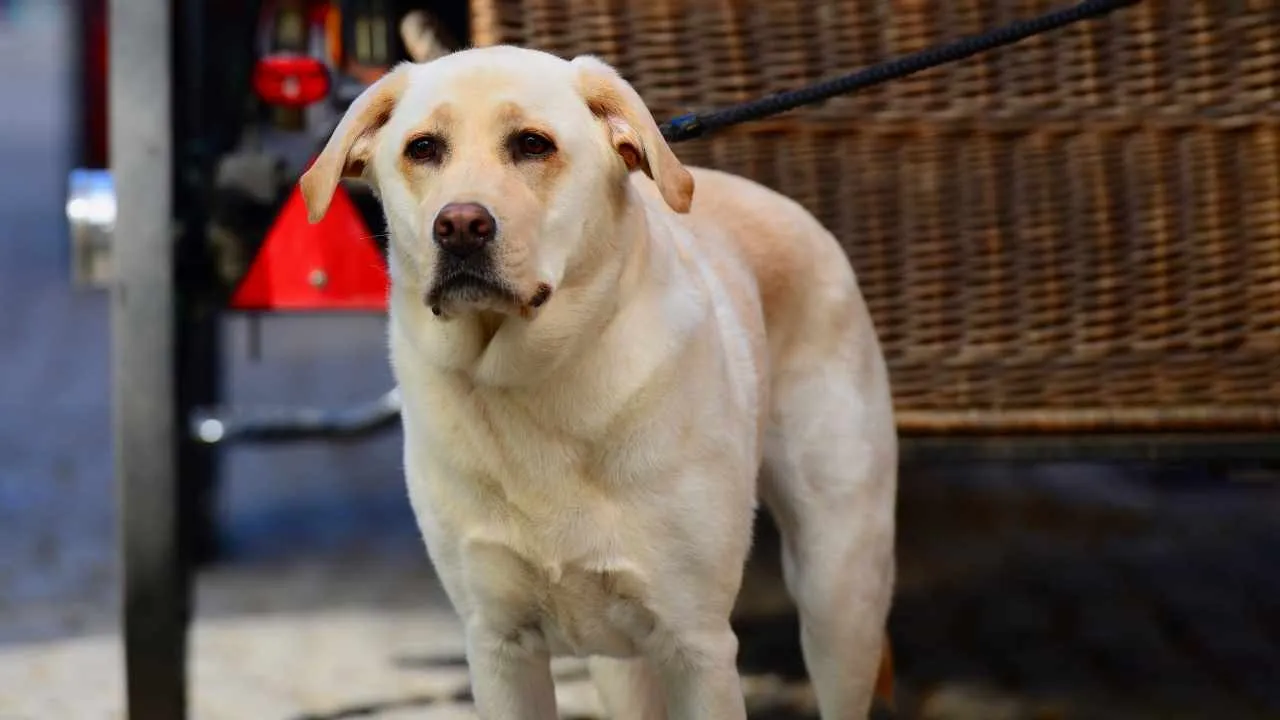
The Labrador Retriever remains one of the most recognizable and beloved dogs in the U.S.
Its popularity is no accident — for many years, this breed topped or near‑topped the list of the country’s most registered dogs, showing just how much people love Labrador Retrievers both as family pets and working partners. Labs are famous for their retrieving skills, especially when hunting small game.
Their strong retrieval instincts come from generations of work with birds and waterfowl, and they are particularly valued for their ability to retrieve in cold water, where other dogs might slow down or struggle.
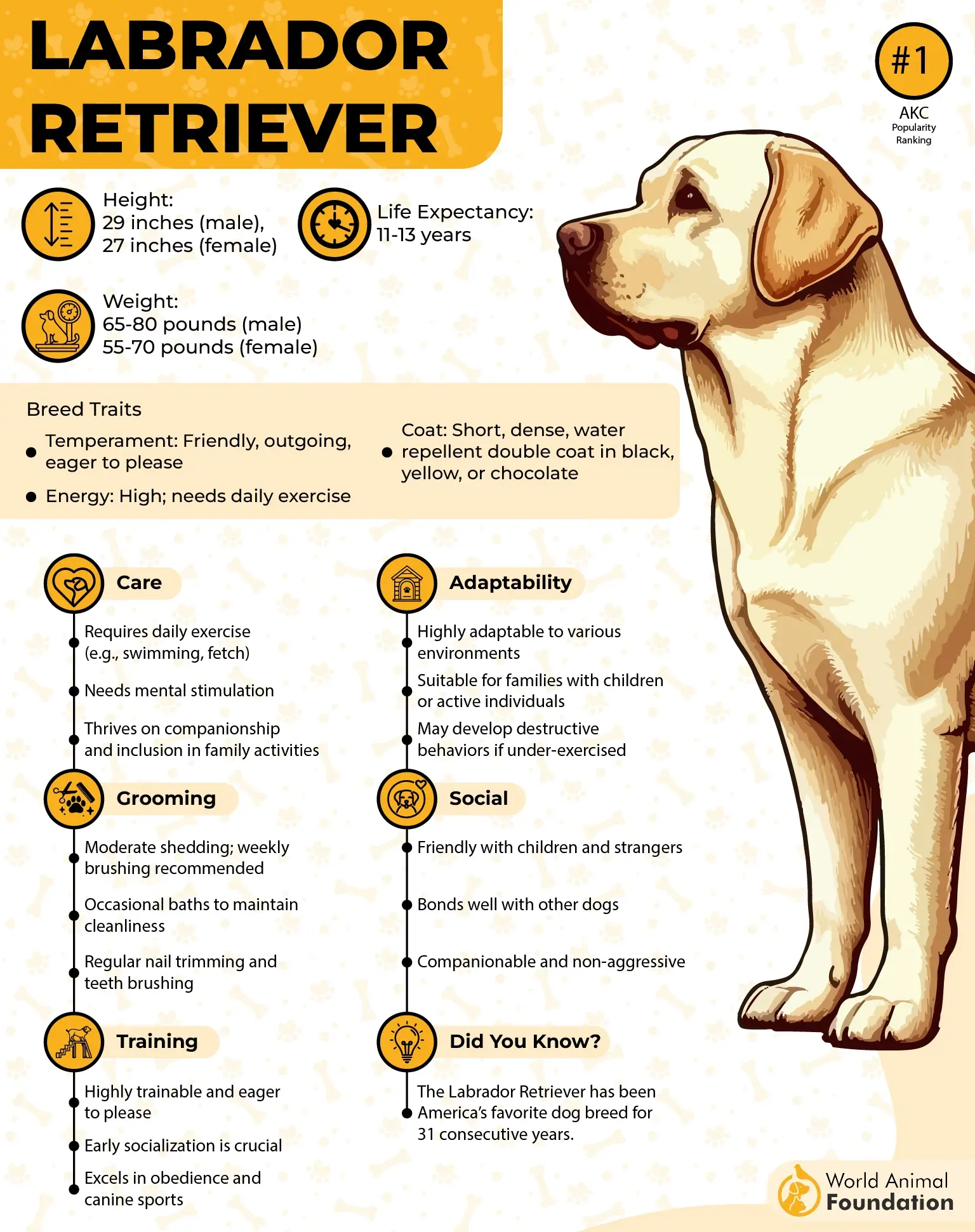
Their coat helps repel water and adds protection during long days in marshes or ponds. Along with these skills, Labradors are known for their cooperation with dog handlers.
They respond well to training and cues during hunts, which makes them effective partners whether flushing birds or retrieving game from land and water.
Many hunters appreciate how adaptable Labs are, as they can shift from retrieving ducks and geese in water to chasing down small game on land during the same outing.
Popularity, Versatility & Skills
Widely loved in the U.S.: Labradors have been among the most popular dog breeds for years.
Top‑notch retrieving ability: Skilled at bringing back downed birds and small game.
Cold water retrieval: Built to work in water, thanks to a water‑repellent coat.
Cooperative with handlers: Responds well to commands during hunting tasks.
Adaptable hunting tasks: Useful for both upland and waterfowl hunting roles.
6. Treeing Walker Coonhound
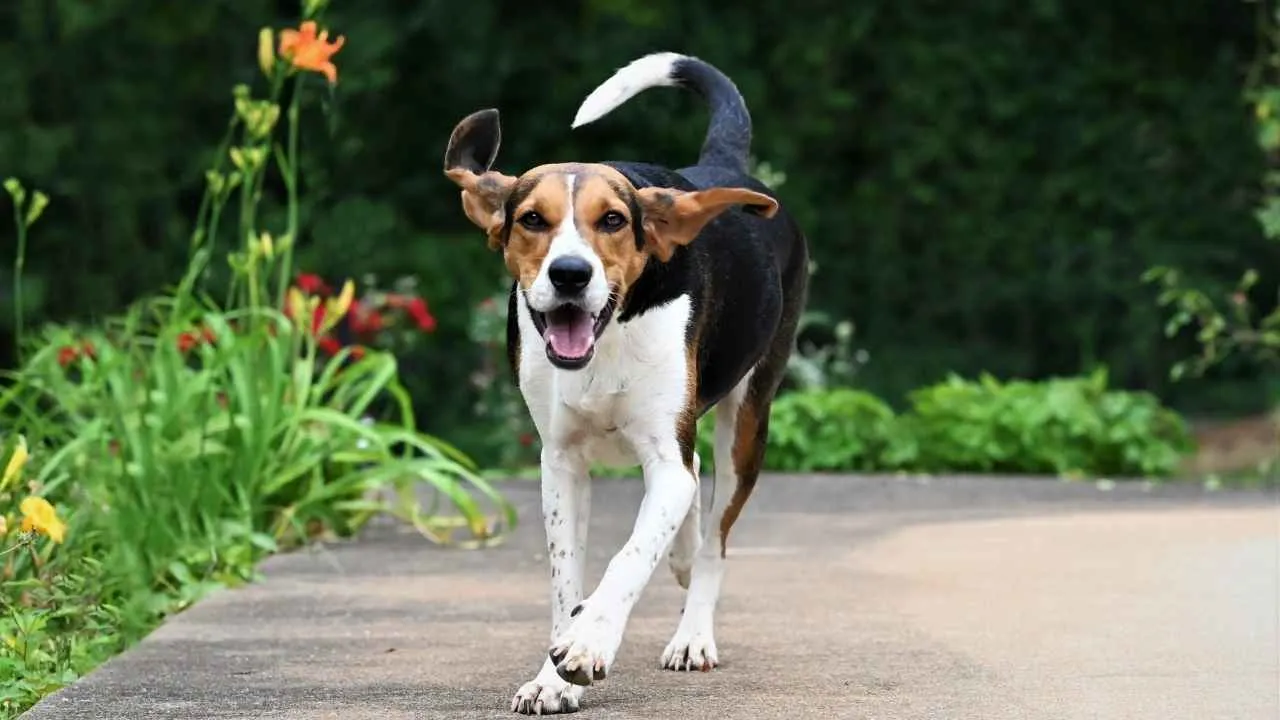
The Treeing Walker Coonhound is a classic scent hound known for its superior tracking ability, endurance, and traditional hound traits. These dogs were developed to follow scent trails over long distances and tree game, meaning they run prey like raccoons up trees until the hunter arrives.
Their keen nose helps them track both big game and small game through forests and thick cover with confidence. This hound breed’s characteristics — especially its long, floppy ears and excellent sense of smell — play a big role in its tracking prowess.
Those ears help track scents toward their excellent noses, making them even more sensitive to changes in the scent trail. Their deep chest and muscular legs support steady movement through rugged terrain, and their scent work remains sharp even on complex trails.
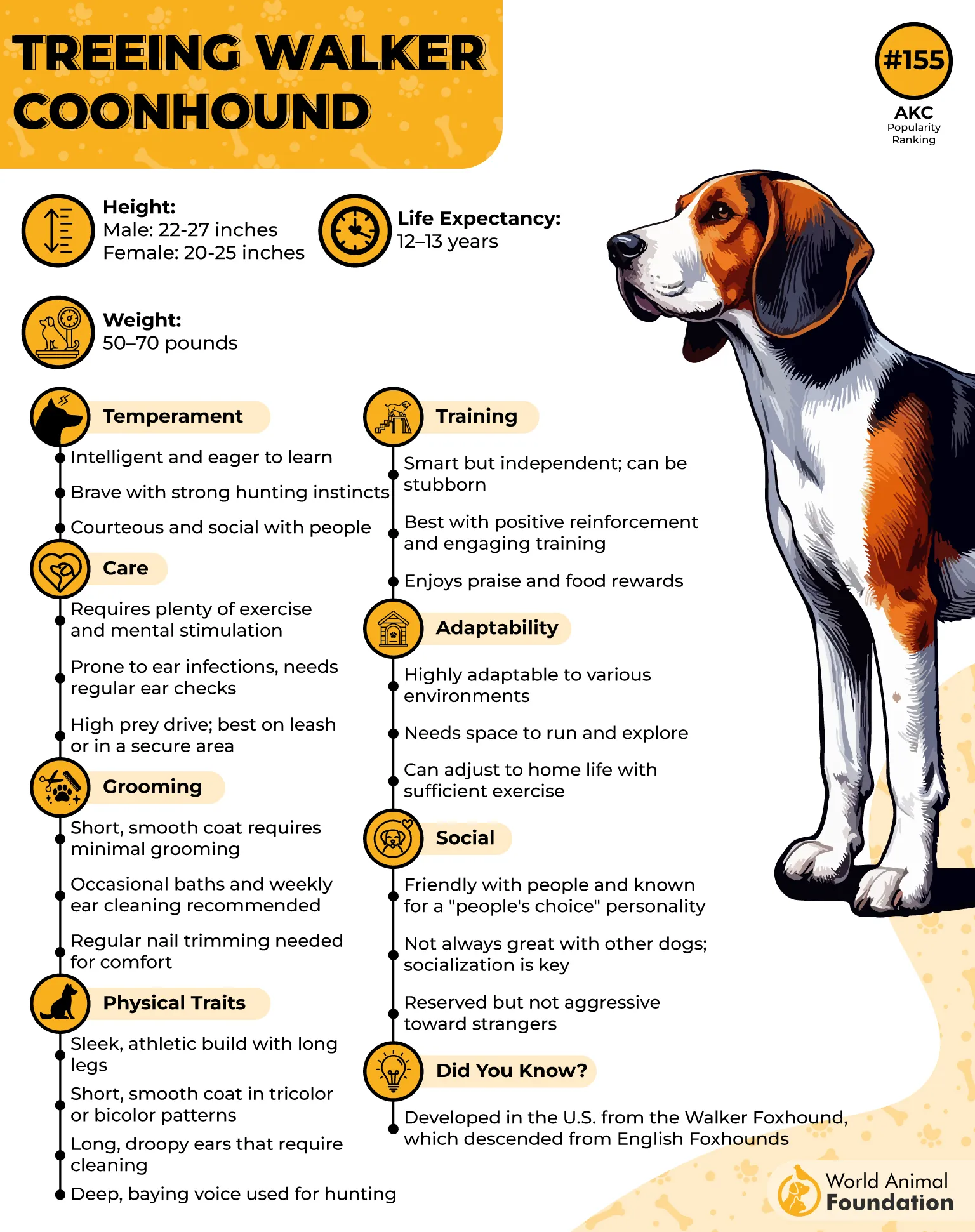
Treeing Walkers are also known for their ability to work closely with handlers during hunts. They respond well to direction during tracking tasks and can adjust their pace or direction based on human cues.
This cooperation makes them reliable partners for hunters who want a dog that will stay on scent and follow commands while out in the woods or fields.
Scent & Hound Traits That Help in the Field
Superior scent tracking: Built to follow faint scent trails through dense cover and forest.
Long ears for scent work: Ears help direct scent toward the nose for better tracking accuracy.
Adapted for big and small game: Uses scent to track everything from small animals to larger quarry.
Work well with handlers: Respond to cues and direction during hunts.
Endurance built in: Muscular build and deep chest support long tracking sessions.
7. Norwegian Elkhound
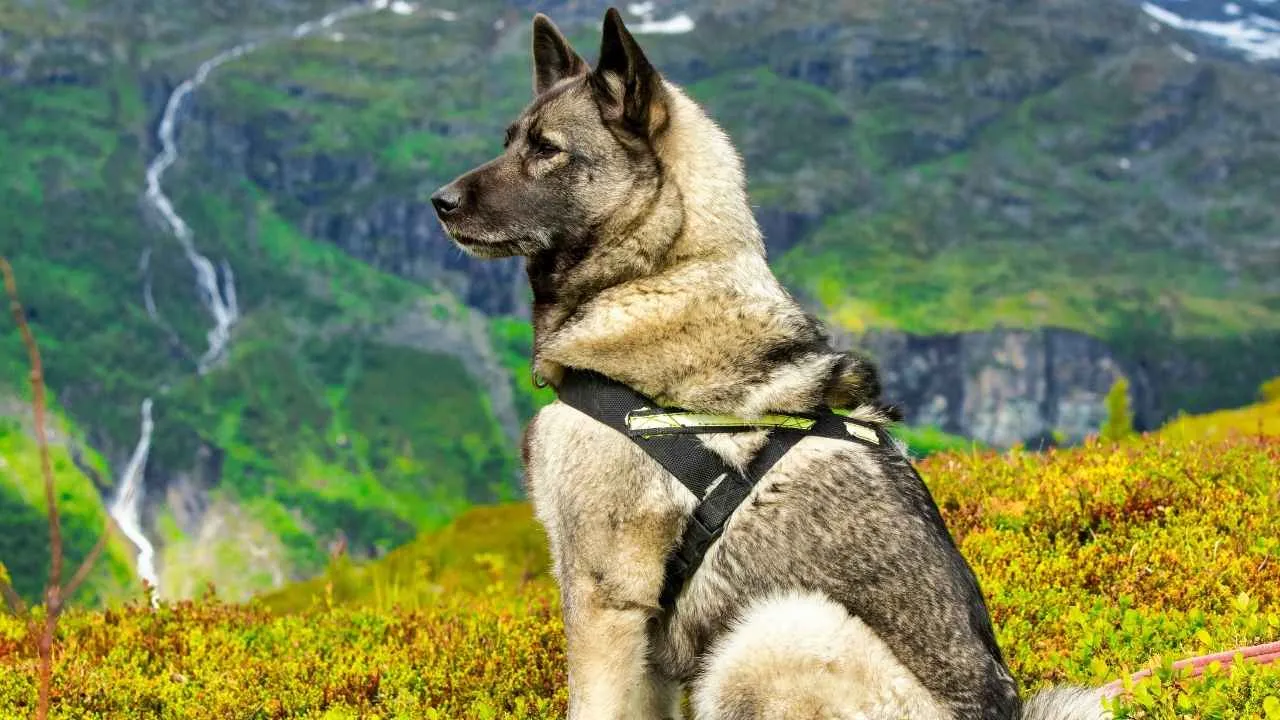
The Norwegian Elkhound is a medium‑sized hound with a long history of helping big game hunters like elk and moose, and even larger predators, using scent and sheer stamina.
In its native Norway, this dog was bred specifically to scent out large animals and hold them at bay so hunters could close in, a skill that requires both courage and sharp tracking ability. These dogs aren’t just scent trackers — their endurance lets them follow game trails for long hours across forests and rough terrain.
Hunters depended on them to pursue quarry through thick underbrush and cold woods, often working at a steady pace until the trail led them straight to their target. Elkhounds are known for their loyalty and courage, making them ideal partners for outdoor adventures in difficult environments.
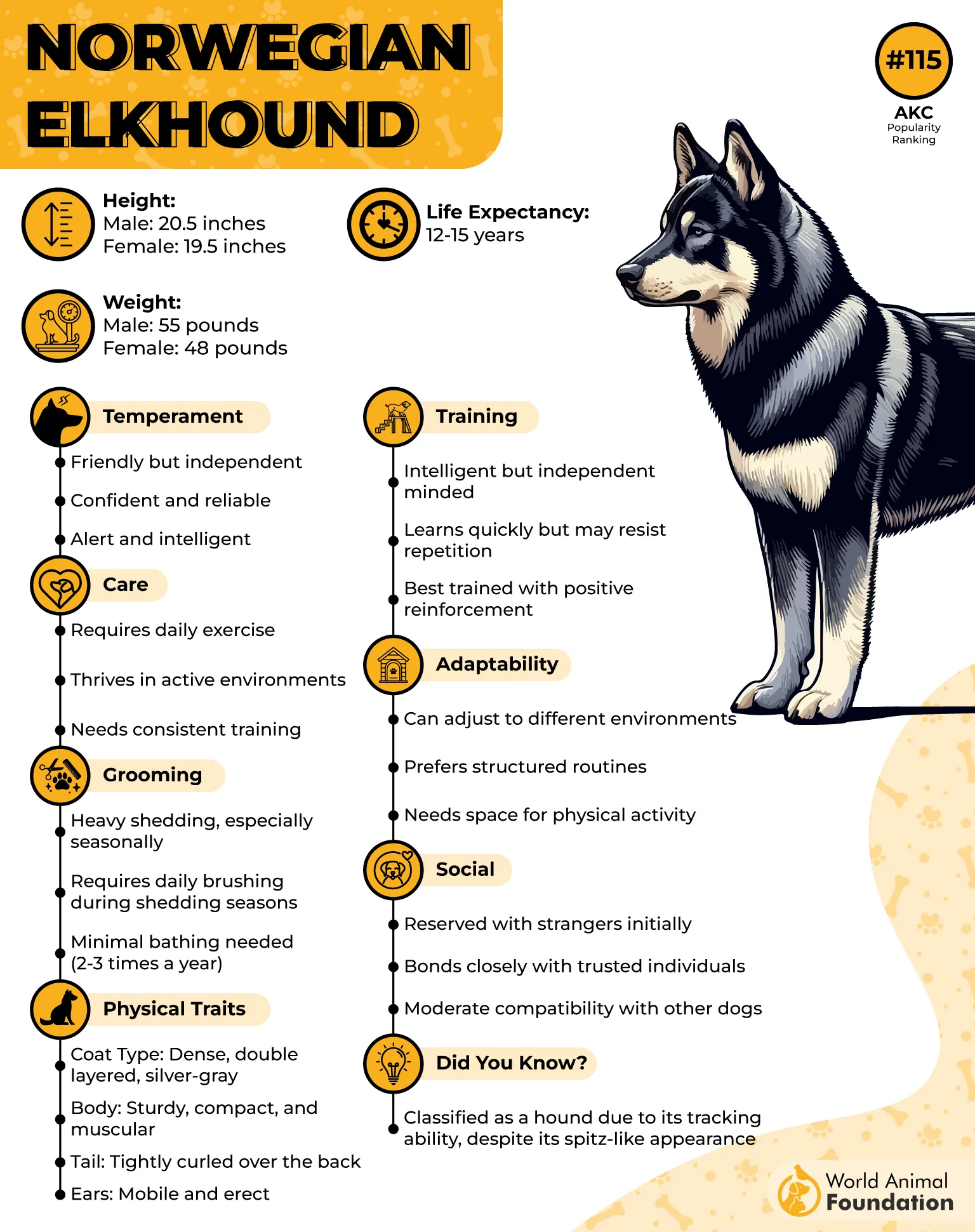
According to Wikipedia, their naturally protective nature means they stay close to their handlers and use their voice and presence to alert and assist. They also have a medium coat that helps protect them in cold forest conditions.
The outer layer sheds water, and the inner layer insulates against chill, which makes them better suited than many breeds for long days in chilly weather. While this coat needs regular brushing to manage seasonal shedding, it’s part of what makes the Elkhound a true northern hunting dog.
Big Game & Field Strengths
Scent‑driven hunter: Tracks big game like elk and moose through challenging terrain.
Endurance for long hunts: Built to follow scent trails for hours without tiring.
Loyal and brave: Stays close to the handler, offering steady courage on the trail.
Cold‑weather coat: Medium double coat shields against cold forests and winter winds.
Hardy, work‑ready build: Strong bone and balanced body suit rugged hunts.
Conclusion
Choosing the right hunting breed is essential for a successful and enjoyable outdoor experience. The best dog breeds for forest hunts and dense cover tracking each have unique skills that make them excel in different tasks.
Some are natural tracking dogs, perfect for following scent trails and hunting big game. Other breeds are expert flushers, guiding hunters to follow birds, while breeds like retrievers shine at bringing downed game from both land and water.
Importantly, hunting dogs are more than field partners. With training and socialization, many of these dogs become loyal, loving family dogs, blending adventure with companionship.
Selecting a breed that matches your hunting style and home environment ensures a fulfilling relationship for both owner and dog.
Whether you’re chasing upland birds, retrieving ducks, or tracking game, there’s a hunting companion ready to join your next adventure — combining skill, loyalty, and fun.
