




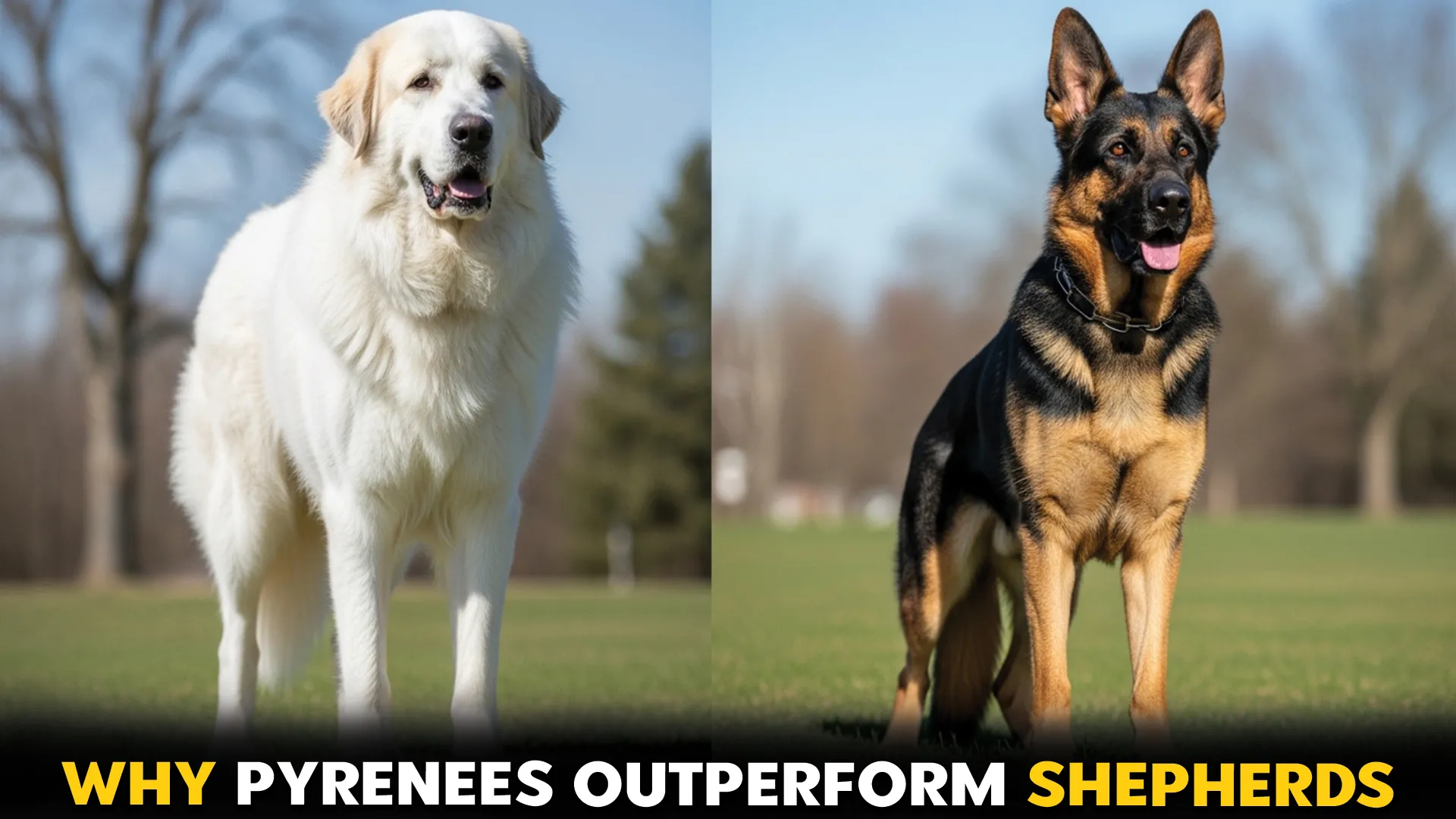
The process of selecting a dog requires people to examine more than the dog breed’s appearance because they need to consider their daily activities, their available living area, their family requirements, and their preferred relationship style.
The article ahead argues how the Great Pyrenees surpasses the German Shepherd. Both dog breeds offer their own distinctive traits that benefit farmers and other people equally. But let’s dive into how the Great Pyrenees offers some superior qualities over the German Shepherd dog.
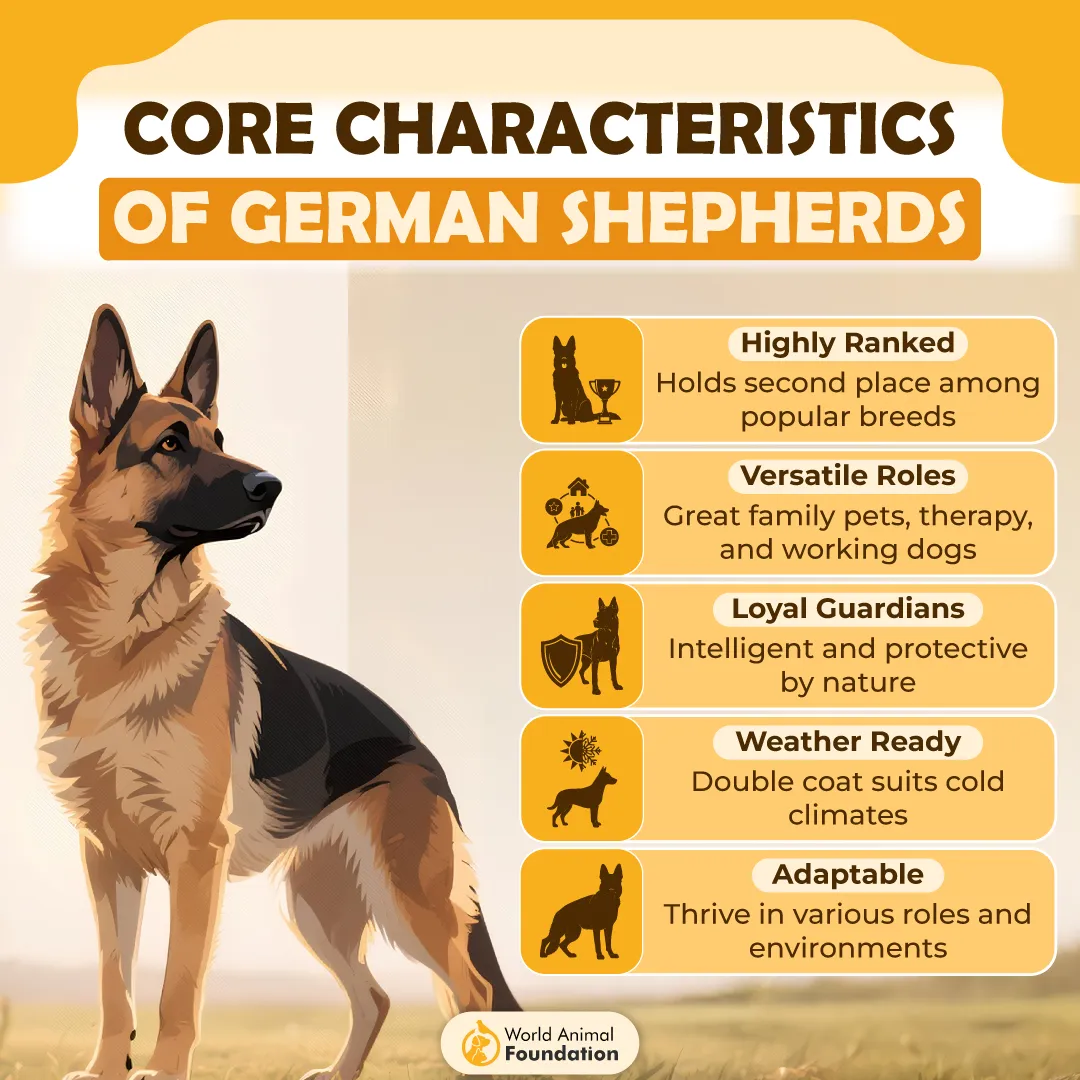
The Great Pyrenees demonstrates superior skills, which include family bonding and livestock protection, and its calm nature and strong protective abilities. The German Shepherd breed exists as a popular working dog that people consider highly intelligent.
The Great Pyrenees used to guard sheep in the Pyrenees Mountains, while the German Shepherd breed operated as a herding dog. The original functions of these animals have continued to influence their instinct and behaviors and overall nature throughout history.
Great Pyrenees dogs perform better than German Shepherd dogs because they serve as family pets and farm dogs, and are gentle giants who protect their families with unwavering loyalty.
Fun Fact
Studies show that calm, protective dog breeds can help reduce household stress levels and create a stronger sense of emotional security for families.
Things Great Pyrenees Dog Breeds Do Better Than German Shepherds
Overview
The two breeds share a common trait of being large dogs who exhibit strong physical presence, yet their behavioral traits and their essential needs show distinct variation. The German Shepherd exhibits high energy training requirements, which it achieves through structured work and athletic activities.
The Great Pyrenees breed produces dogs that work independently because their main purpose involves safeguarding livestock.
German Shepherds require ongoing interaction through training activities and mental challenges. Insufficient physical activity leads them to experience separation anxiety, together with destructive tendencies.
The Great Pyrenees breed displays natural calmness, which enables them to spend extended periods observing their environment without making noise.
According to Hills Pet, working breeds develop traits based on their original purpose. The Great Pyrenees exhibits natural protective behavior because it does not require constant instructions, while the German Shepherd breed needs guidance from its handlers to function properly.
Size & Build Differences
The Great Pyrenees has a heavier, more solid frame compared to the leaner and more athletic German Shepherd. The Pyrenees breed possesses equal strength to other breeds but demonstrates weight distribution through its unique body structure, which enables it to perform effectively during guard duties and multiple-hour operations.
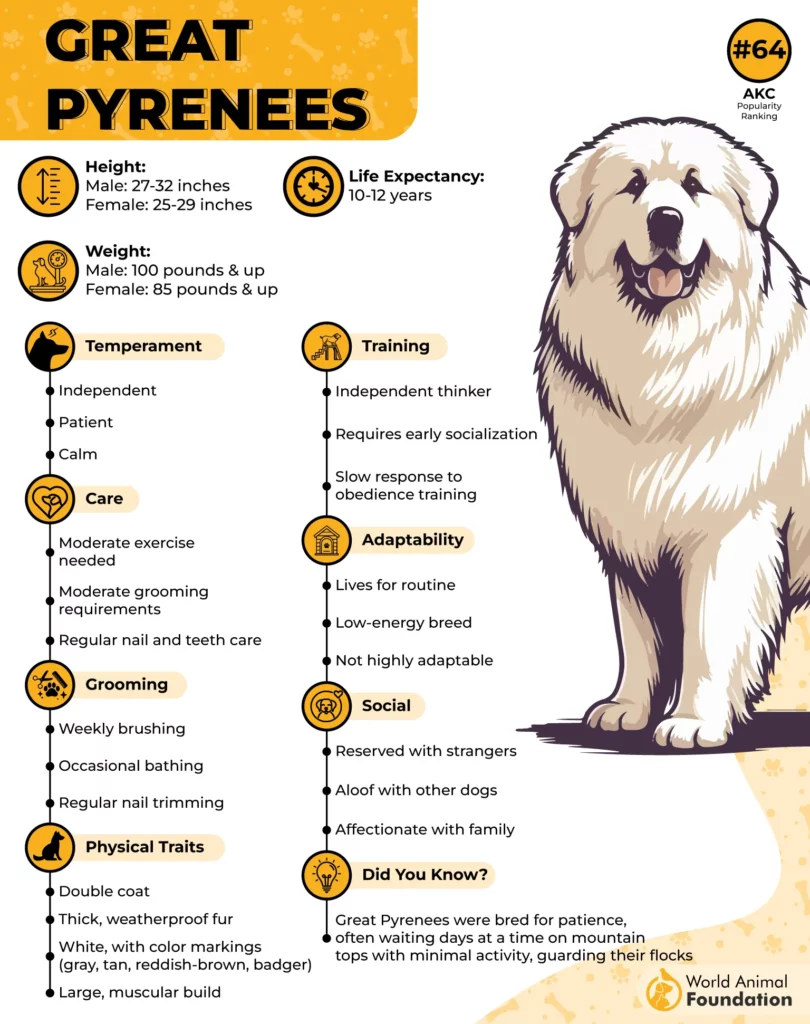
A typical Great Pyrenees dog has a broad chest, long muzzle, and a strong back built to stand its ground against potential threats. The design of German Shepherds enables them to move quickly and maintain agility when they operate outside their designated leash boundaries.
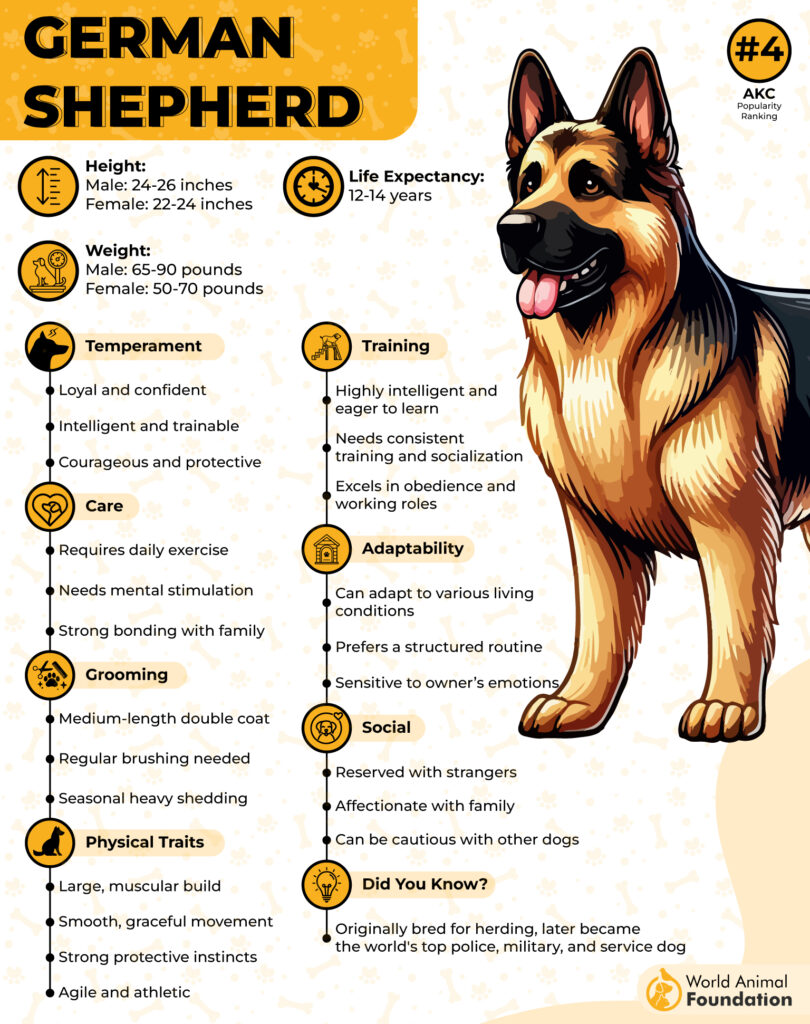
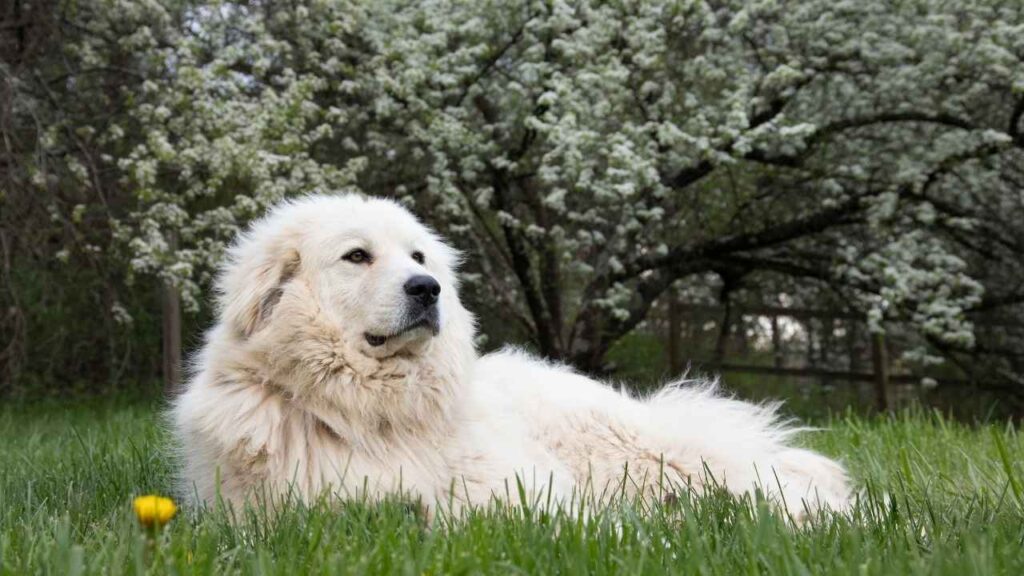
Great Pyrenees dogs were developed by their breeders to endure extreme mountain weather conditions, according to the American Kennel Club, which describes their strong bone structure, dense fur, and peaceful behavior toward other animals.
The Pyrenees dogs show better guarding abilities through their physical traits, which make them effective at protecting livestock and farms that raise sheep, goats, and other livestock.
Temperament & Personaility
The Great Pyrenees serves as an excellent family companion because it demonstrates a positive temperament. The breed known as the gentle giant maintains an inner peace while showing patience and emotional intelligence toward people.
German Shepherds display strong loyalty to their owners, yet they respond to situations with intense reactions. They form deep bonds with one person and may become overly protective. The Great Pyrenees spreads its loyalty evenly across the family, making them ideal for homes with children and other pets.
PetMD explains that independent thinkers like the Pyrenees make decisions based on instinct rather than constant commands, which is why they remain composed even in unfamiliar situations.
Exercise and Energy Level
Families choose Great Pyrenees dogs over German Shepherds because these dogs maintain a protective yet calm nature.
The German Shepherd dog requires more than one hour of daily exercise, which includes organized playtime and educational activities. The lack of sufficient exercise leads to boredom, which develops into problematic conduct.
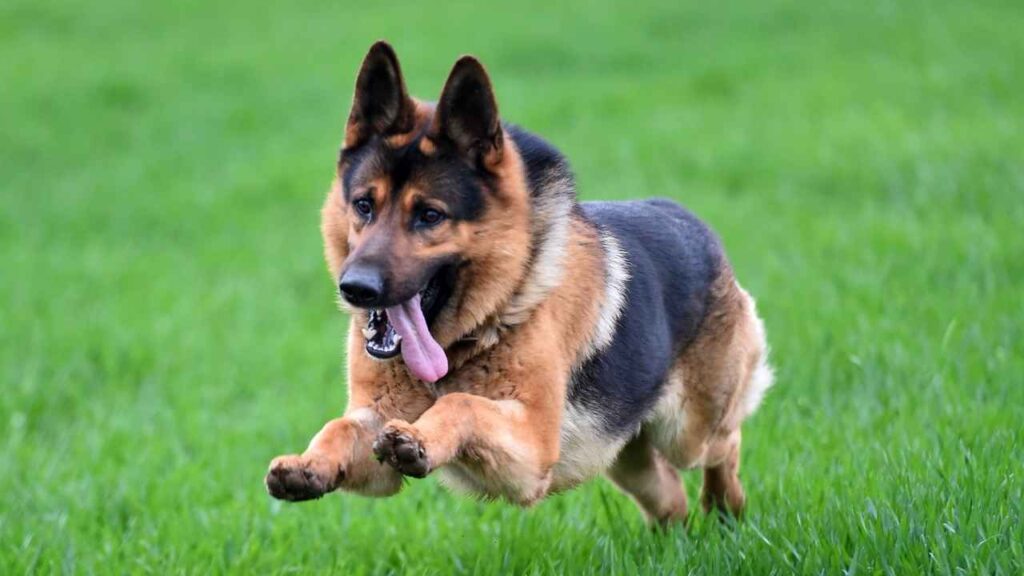
Great Pyrenees dogs need a fair amount of exercise, but at a slower pace. The dog needs daily walking and light playtime activities, together with a safe fenced area for free movement to maintain their well-being and happiness.
The Great Pyrenees dog receives greater benefits from regular low-intensity exercise than from high-intensity training sessions.
The Pyrenees breed suits families who desire an exceptional dog yet do not want to handle ongoing energetic activities or required visits to dog parks.
Training & Intelligence
German Shepherds establish their reputation as intelligent dogs because they succeed at obedience training. The dogs need stable leadership because their training requires structured guidance and will fail without it.
Great Pyrenees dogs demonstrate their intelligence through different means. The breed developed to guard sheep from potential threats without the need for human assistance. The breed operates independently because it does not require anyone to give it commands.
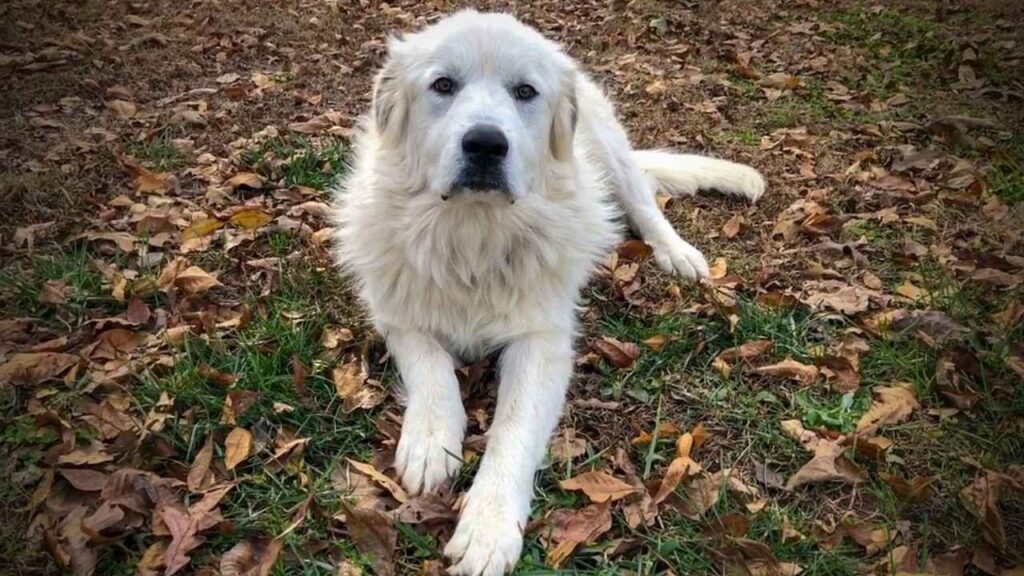
Those Pyrenees puppies need early socialization to develop independence while learning to respond to commands.
The Pyrenees breed shows superior real-world decision-making skills, which assist in home protection and livestock security, while German Shepherds excel at training competitions.
Vocal Behavior
The Great Pyrenees uses barking to achieve definite goals because it performs more than other breeds. The dogs use barking as a warning system because they do not pursue any threats. The dogs became vocal animals because their owners used them to protect livestock during nighttime hours throughout different centuries.
German Shepherds bark because they experience three different states of mind, which include excitement, anxiety, and overstimulation. This situation becomes difficult to handle when people reside in active households or apartment spaces.
That guardian breeds, which include the Pyrenees dog breed, use barking as a defense mechanism to identify threats that they perceive through their barking.
The Pyrenees dog breed functions as an instinctual alert system for home security because it provides effective protection without showing any signs of aggression.
Coat & Grooming
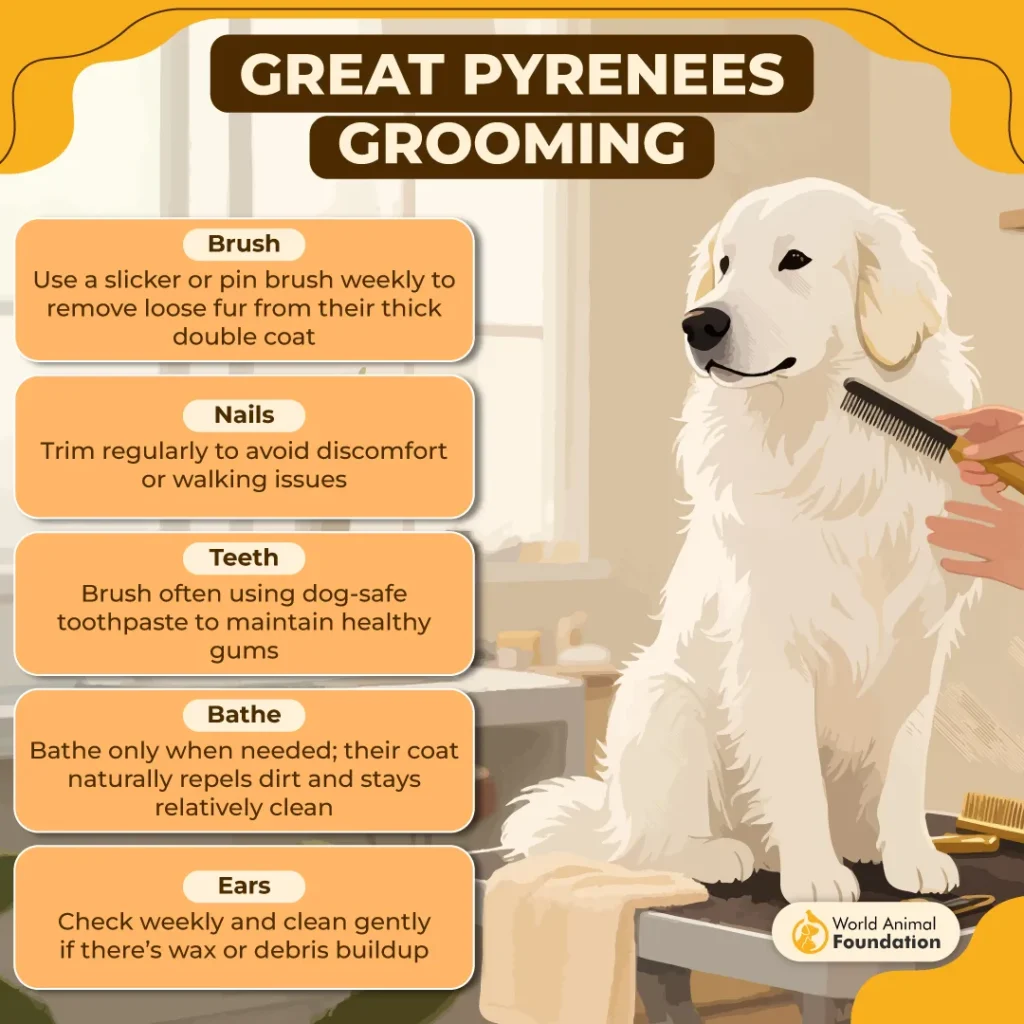
The Great Pyrenees’ double coat creates a strong defense against extreme cold and severe weather conditions. The dog requires regular brushing because it loses hair, and the process helps maintain its coat.
German Shepherds experience heavy shedding, which continues throughout most of the year and creates difficulties for their owners who need to control their pets inside the house.
Purina states that working dogs with double coats need regular grooming because their double coat provides them with natural body insulation and skin defense.
The grooming process for Pyrenean dogs becomes easy because their shedding pattern follows a seasonal schedule, which makes their coat maintenance tasks easier to perform.
Health Issues & Lifespan
Both breeds experience health problems, which large dogs commonly experience because of their hip dysplasia condition. However, Great Pyrenees dogs generally have fewer stress-related conditions because their nature provides them with greater peace of mind.
German Shepherds develop joint problems, experience digestive issues, and show anxiety-related symptoms that become worse in stressful situations.
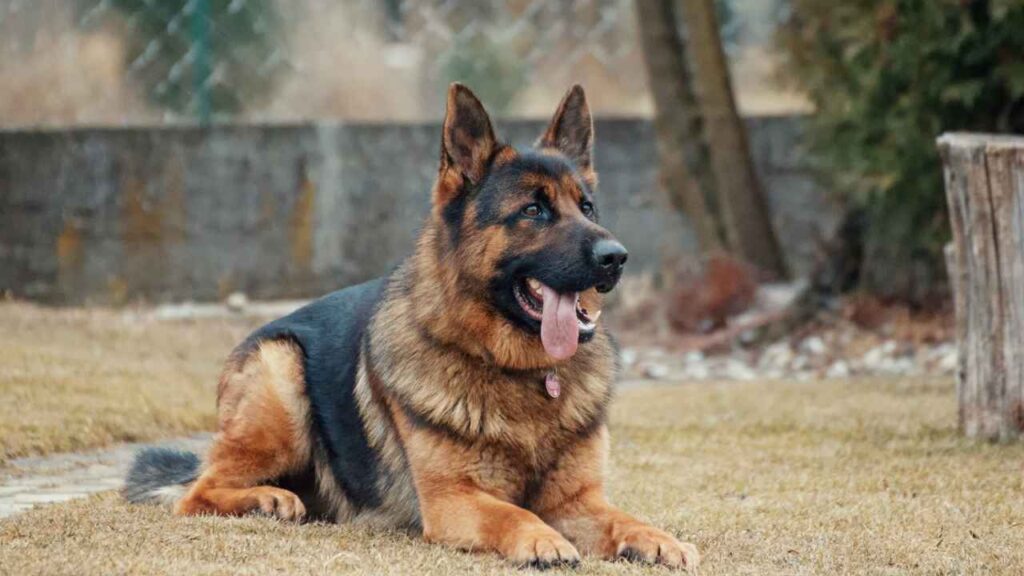
According to Pawlicy Advisor, working breeds that display calm behavior throughout their lives develop fewer problems with their behavioral health.
Great Pyrenees dogs achieve a balanced life, which lasts until their old age when they receive proper food, training, and care from their owners.
German Shepherd vs Great Pyrenees: Suitability For Home Security vs Good for Families
German Shepherds serve as exceptional guard dogs because they possess training that enables them to respond with speed. However, this intensity may feel overwhelming for families with small kids or cats.
Great Pyrenees dogs use different methods for their guarding duties. They observe, assess, and position themselves between their family and potential threats. This makes them exceptional family pets and farm dogs.
That livestock guardian breeds protect their territory through their instincts, which display no aggressive behavior, making them safe companions for children and other pets.
Great Pyrenees dogs provide families with a protective dog breed that displays calm affection, which makes them better than German Shepherds.
Conclusion
The Great Pyrenees demonstrates superior performance in emotional stability and family connections, and natural guarding abilities, while German Shepherds maintain their status as one of the top dog breeds for police work and dog sports competitions.
The gentle giant demonstrates its strength through its ability to protect livestock and raise children. The Great Pyrenees becomes a lifelong companion and protector for families who have enough space and the ability to train and show affection.
The Great Pyrenees breed offers families three essential qualities that they need to select the best dog for their particular needs.
