




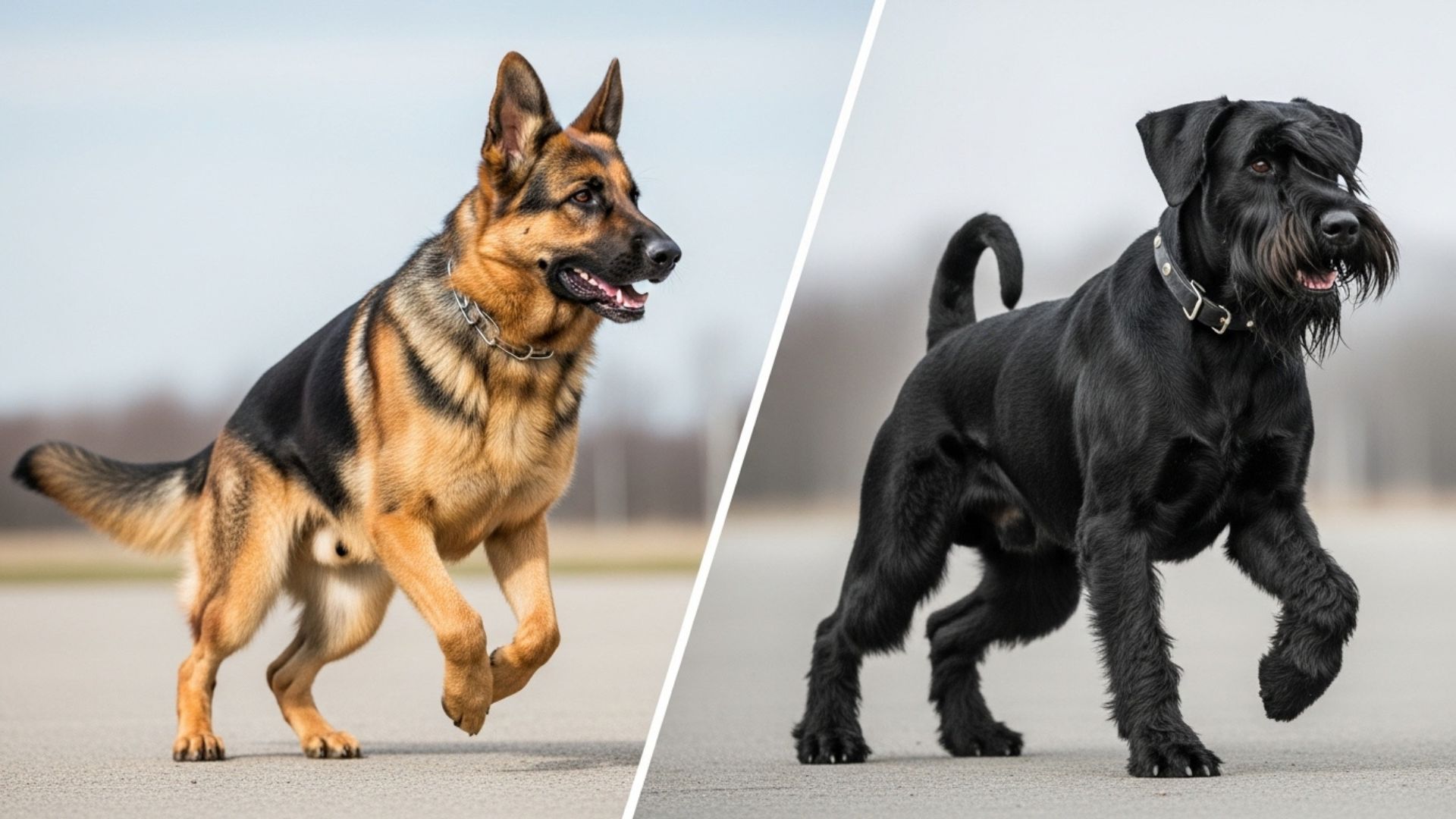
Finding the perfect dog can feel like a big adventure, especially when German Shepherds and Giant Schnauzers are in the mix. Both are fascinating breeds, but picking the one that fits your life isn’t always simple.
Each brings a unique presence to a home. One may stay close, quietly observing your every move, while the other carries bold energy and a commanding sense of purpose that can’t be ignored.
For anyone thinking about adding a dog to the family, considering your daily routine, space, and lifestyle is essential. Choosing wisely can make life with your new companion smooth and enjoyable.
This guide breaks down everything you need to know about German Shepherds and Giant Schnauzers, from care to routines, to help you decide with confidence.
German Shepherd vs. Giant Schnauzer
When comparing these two dog breeds, you are looking at two of the most capable working breeds in the world. The German Shepherd is widely known for its versatility in various crucial roles, while the Giant Schnauzer is a rugged, powerful dog originally used on farms and for guarding.
One has a sleek, athletic build, while the other is more blocky and powerful. Their grooming needs are also vastly different, as one sheds constantly while the other requires regular professional maintenance. If you are trying to decide which of these dogs is right for you, it is important to look at how their specific traits align with your daily routine.
1. Origins & Purpose
The German Shepherd was developed in the late 19th century by Captain Max von Stephanitz. His goal was to create a standardized herding breed that was consistent in both ability and appearance.
In 1899, he established the official breed organization and used a dog named Horand v Grafeth as the foundation. Through careful breeding, the German Shepherd became a unified breed known for its intelligence and utility.
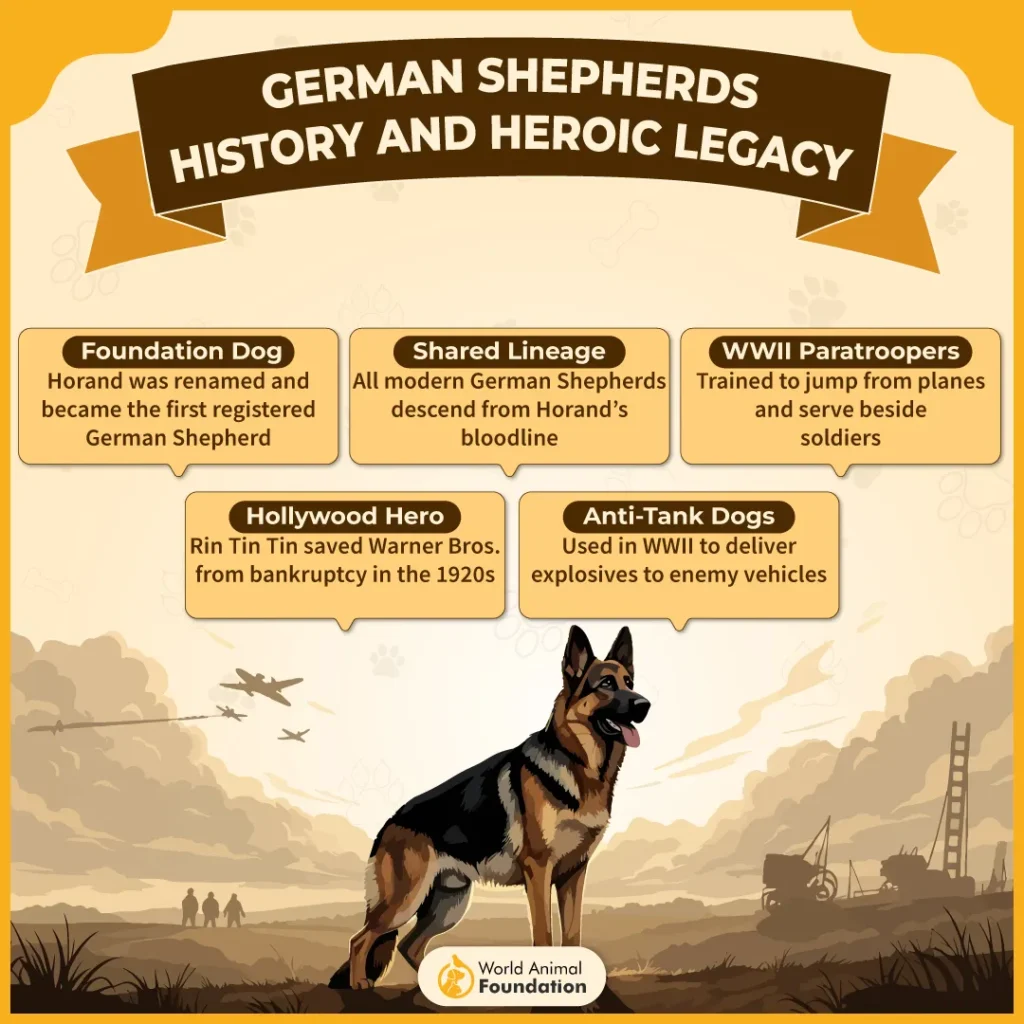
The Giant Schnauzer also originated in Germany and was first shown in Munich in 1909. This dog was originally developed as a versatile farm dog, tasked with guarding property and herding livestock to market.
Giant Schnauzers gained official recognition as working dogs in 1925 and made their way to North America shortly after, receiving AKC recognition in 1930.
2. Size & Physical Build
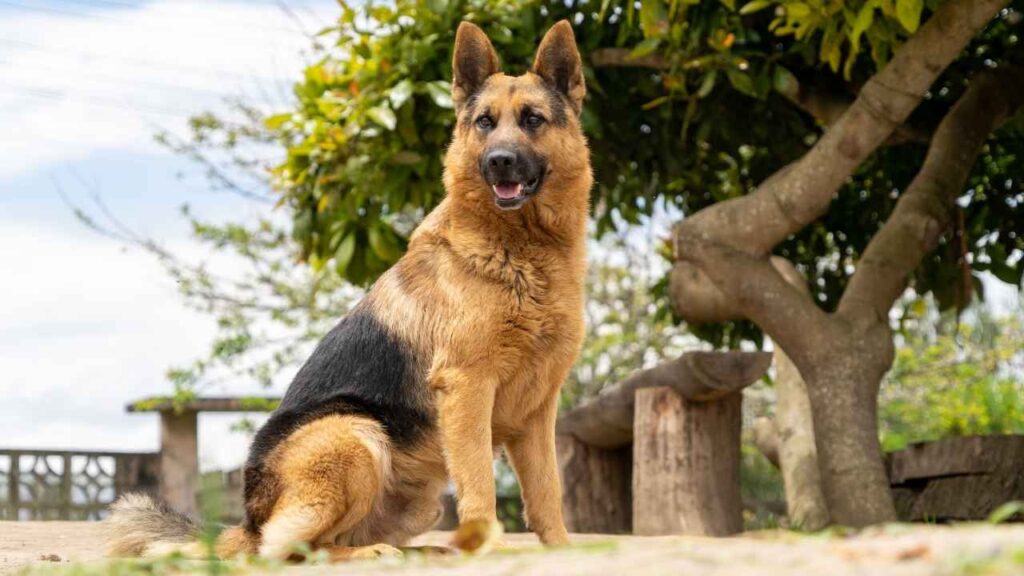
German Shepherds are balanced, muscular dogs that always look ready for a task. They have a large, deep-chested body that is slightly elongated with smooth curves rather than sharp angles.
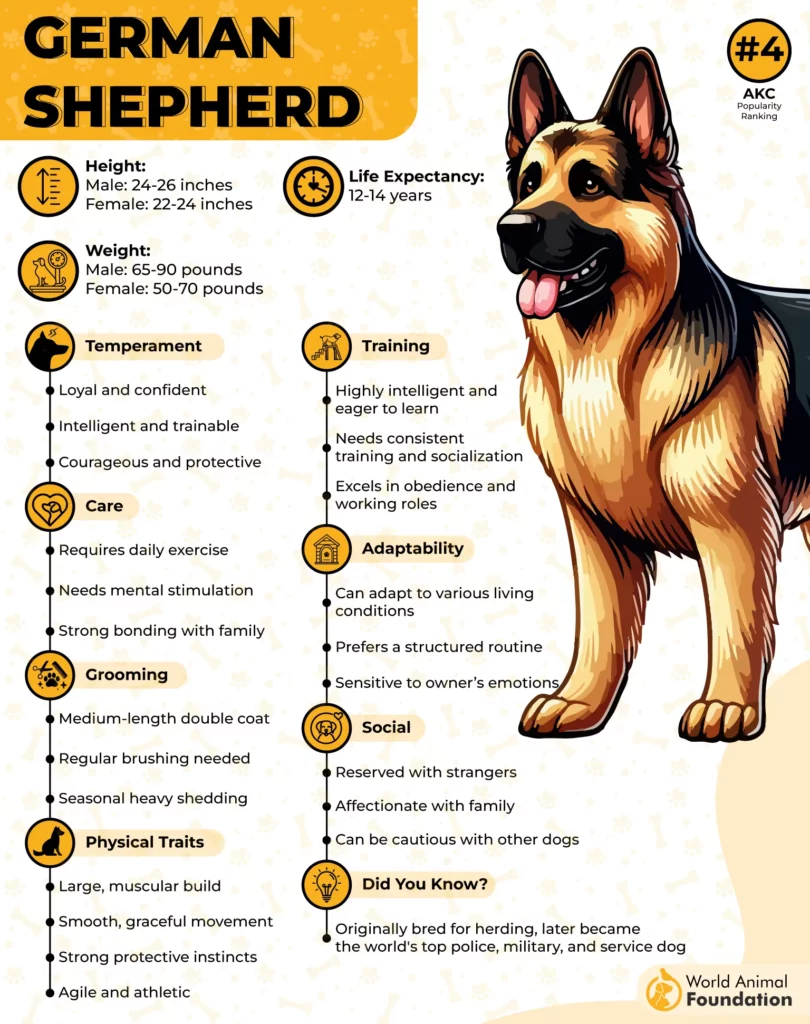
Their ears are medium-sized and carried upright, and their dark, almond-shaped eyes give them a very alert expression. They also possess a strong jaw with a scissor bite, where the upper teeth closely overlap the lower ones.
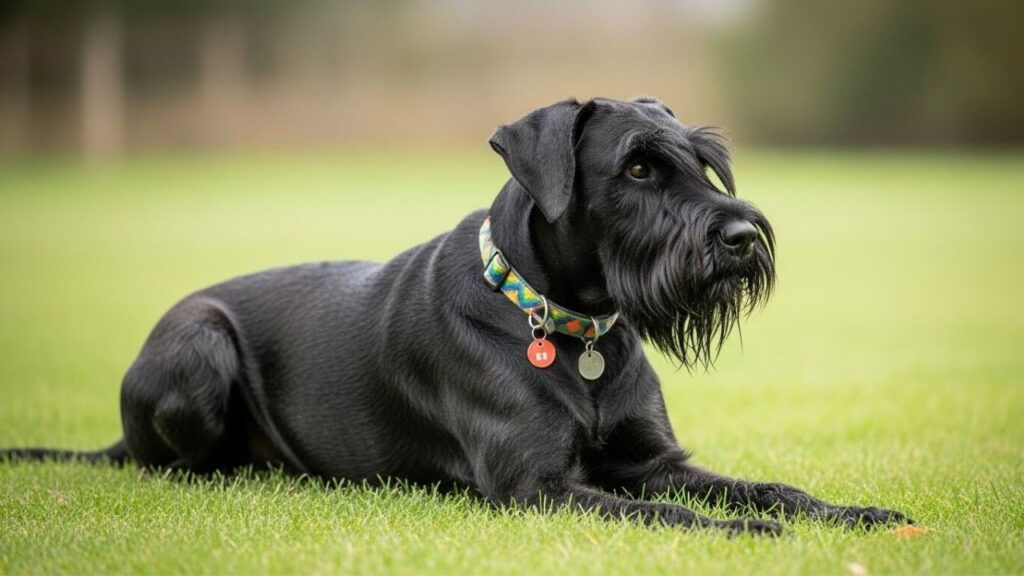
The Giant Schnauzer is a powerful dog that demonstrates strength in every movement. They have a large, athletic body that gives them a very dignified and imposing look.
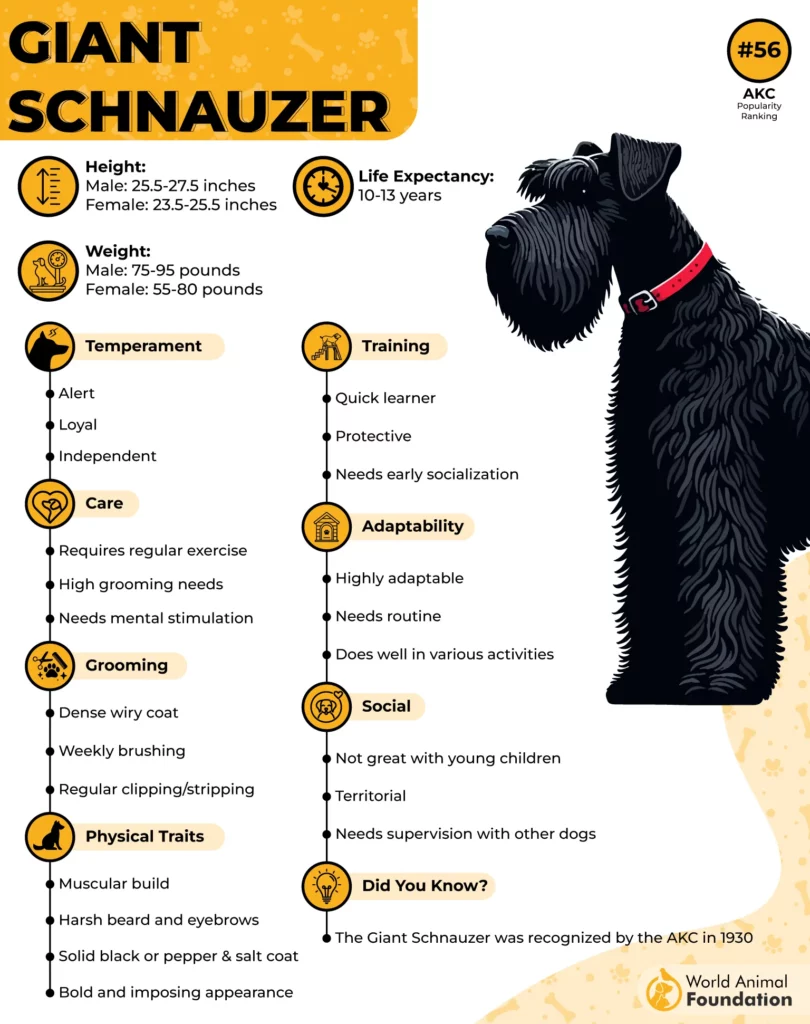
Stand-out features of this breed include a strong, blocky head, a harsh beard, and bushy eyebrows. Their coat is wiry on the outside with a dense undercoat, contributing to their sturdy and weather-resistant appearance.
3. Temperament & Personality
German Shepherds are famous for being devoted and affectionate, making them excellent family dogs. They are generally friendly toward children, provided they are treated kindly, as mentioned by PetMD. Because they are so naturally protective and act as guard dogs, early socialization is critical.
You should expose a German Shepherd puppy to different people, sounds, and environments early on to ensure they grow into a well-adjusted adult.
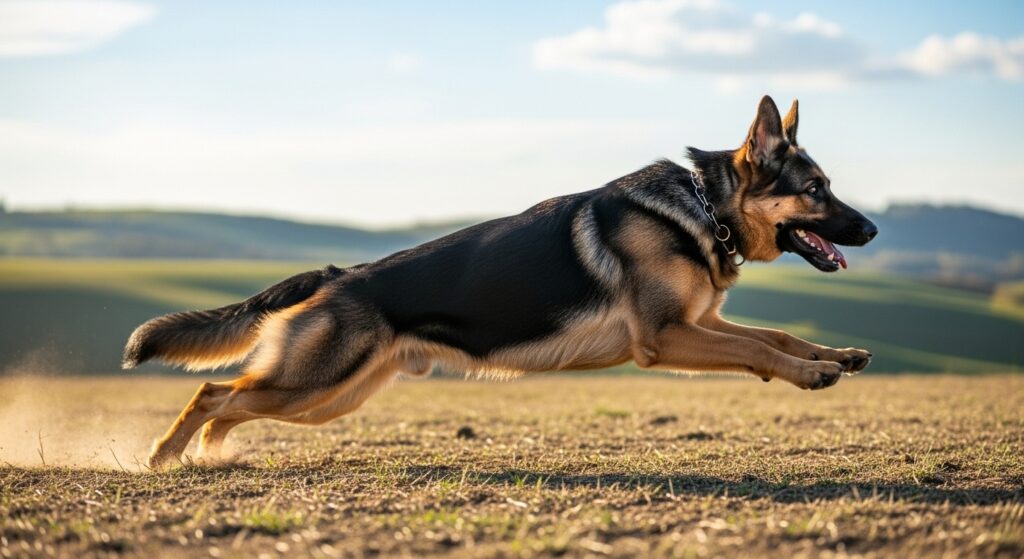
The Giant Schnauzer is good-natured but tends to be more dominant. They are typically friendly with other dogs and very loyal to their families. This wonderful breed is also highly protective and wants to be involved in every family activity.
These dogs need a lot of companionship and do not do well if they are left alone in the house or the yard for long periods.
4. Exercise & Energy Levels
German Shepherds are active dogs that thrive when they have a job to do. They need regular mental and physical exercise to stay happy and healthy. This can include daily walks, runs, and the use of puzzle toys to keep their minds busy.
Many Shepherds also excel in organized dog sports like agility, tracking, and competitive obedience, which help keep their minds sharp.
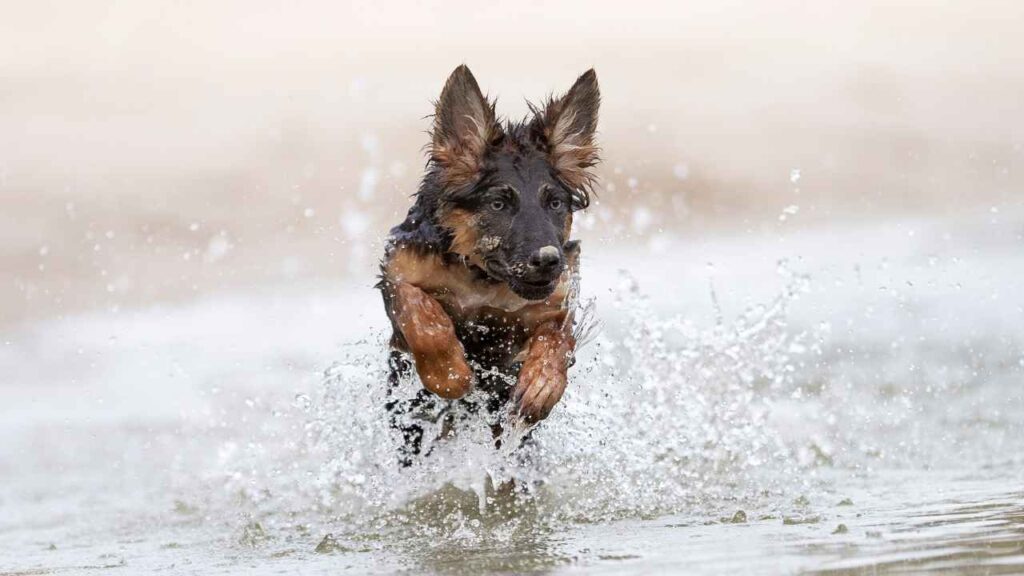
According to the American Kennel Club, Giant Schnauzers have higher energy levels than many other large breeds and require a significant amount of exercise. They enjoy activities like herding, carting, and rally.
While a long daily walk and a playdate with other dogs can help, they truly need plenty of space and time to burn off their energy. If their physical and mental needs aren’t met, they can become restless.
5. Training & Intelligence
German Shepherds are very eager to learn and usually respond well to reward-based training. They prefer a firm but calm tone and are highly capable of following complex instructions.
This is why they excel in police and military work, serve as service dogs, and assist in search and rescue. Moreover, this particular breed also supports people with disabilities. GSDs enjoy the challenge of learning new things and working closely with their owners.
Giant Schnauzers are also very intelligent, but they can be more hard-headed. You can manage these stubborn tendencies by using positive reinforcement with treats and toys.
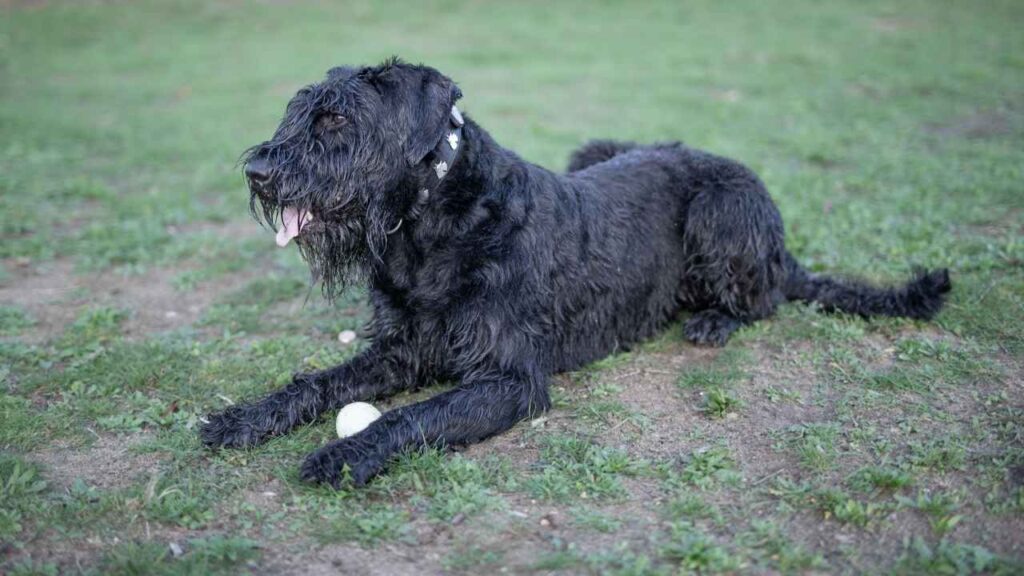
Training should be consistent and gentle, starting from a very young age. They learn quickly but need a purpose, even if it is just playing fetch. Moreover, Giant Schnauzers are also known for being more reserved around people they don’t know.
6. Coat Maintenance
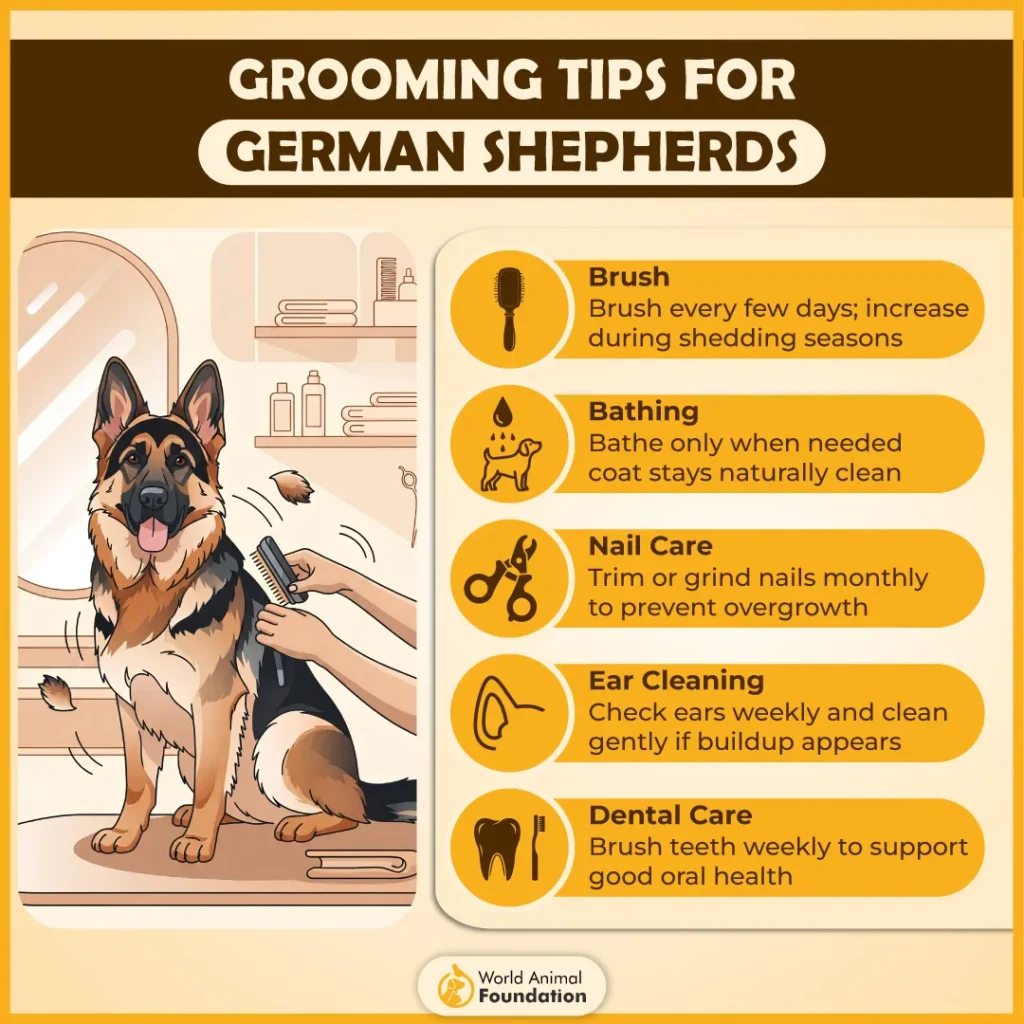
If you choose a German Shepherd, be prepared for regular brushing. You’ll need to do this every few days to keep the coat clean and manage loose hair.
They go through heavy shedding periods once or twice a year, during which you will likely need to brush them every day to keep the hair in your home under control.
The Giant Schnauzer has a thick, wiry double coat that requires a different kind of care. They need weekly brushing and regular professional clipping or stripping to keep their coat in good shape. Maintaining their look takes a significant amount of time and effort compared to the Shepherd. Periodic trips to a professional groomer are usually necessary to keep them looking their best.
7. Health & Lifespan
The average lifespan for a German Shepherd is 7 to 10 years. They are prone to a few specific health issues, so many owners choose to invest in pet insurance.
It is important to work with a reputable breeder who screens their dogs for genetic conditions before breeding to ensure the puppies are as healthy as possible.
According to WebMD, Giant Schnauzers generally live longer, typically between 12 and 15 years. They are considered a healthy breed overall, but they are still prone to certain conditions.
To keep them in peak health, they should be seen by a veterinarian at least once a year for a checkup. Their longer lifespan means they are a longer-term commitment for a family.
8. German Shepherd vs. Giant Schnauzer: Suitability as Family Pets
Both breeds can be wonderful family pets, but they require different levels of commitment. The German Shepherd is a classic choice for families who want a loyal, affectionate, and easily trained companion. They are very focused on their owners and adapt well to many different living situations as long as they get enough exercise.
The Giant Schnauzer is a great fit for active families and experienced owners who can deal with dominant breeds. These animals are incredibly loyal and protective, but their high energy and independent nature have to be properly managed. If you can provide the time for grooming, training, and extensive exercise, the Giant Schnauzer is a devoted and impressive companion.
Conclusion
Choosing between a German Shepherd and a Giant Schnauzer really comes down to your lifestyle and what you’re looking for in a dog. Both have their own personality; they are loyal, smart, and protective, but show it in different ways.
If you want a dog that sticks close, learns quickly, and adapts easily to family life, one may fit better. If you’re ready for high energy, strong independence, and a dog that thrives with firm guidance, the other could be perfect.
Understanding exercise needs, grooming, and personality quirks makes the decision easier. With the right match, either breed can become a loving, long-term companion.
