




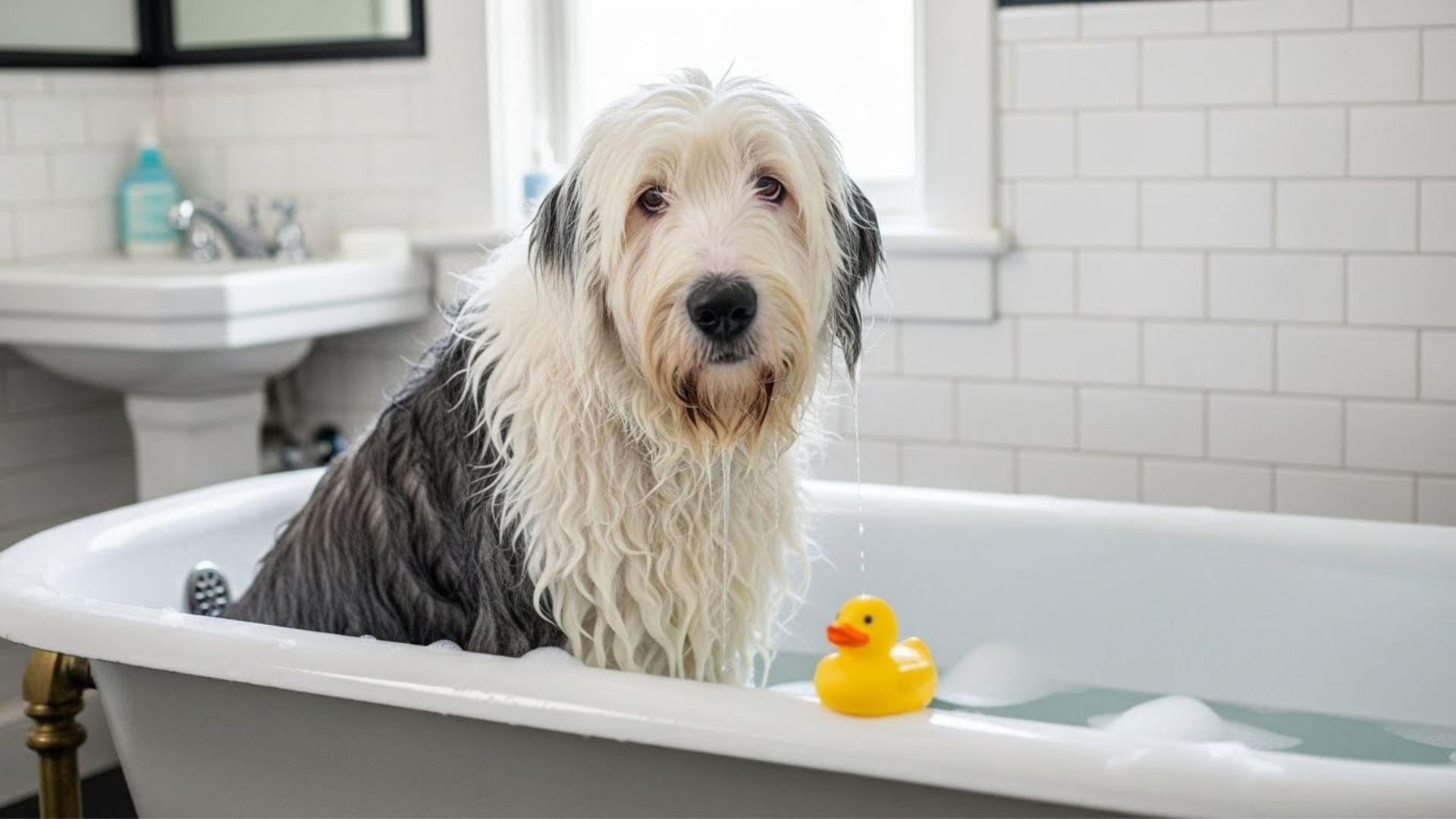
Clean coats, cute trims, and happier dogs start with one simple habit.
If you love a dog with a “wow” silky coat, this blog is for you. Some breeds do not just shed and call it a day. Their hair keeps growing. Their curls hold dirt. Their thick coats trap mud like a sponge. And a few wear cords that can hide a whole leaf collection.
Frequent bathing and trimming are not about being fancy. It is about comfort, skin health, and keeping knots from turning into painful mats. Neglected fur in long-haired or curly coat breeds can form mats that tug on the skin, causing pain, irritation, and potential infections. Regular grooming is essential for maintaining your dog’s coat’s health.
It also keeps that “wet dog” smell from moving in rent-free.
Your couch will thank you, too. For real, though. Here’s the good part. Once you build a routine, the grooming process stops feeling scary and starts feeling normal.
Frequent grooming helps distribute natural skin oils, keeping the coat healthy and shiny, and can improve blood circulation and reduce stress in dogs, strengthening the bond between the animal and its owner.
Dog Breeds That Need Frequent Bathing and Trimming
1. Poodle (Standard)
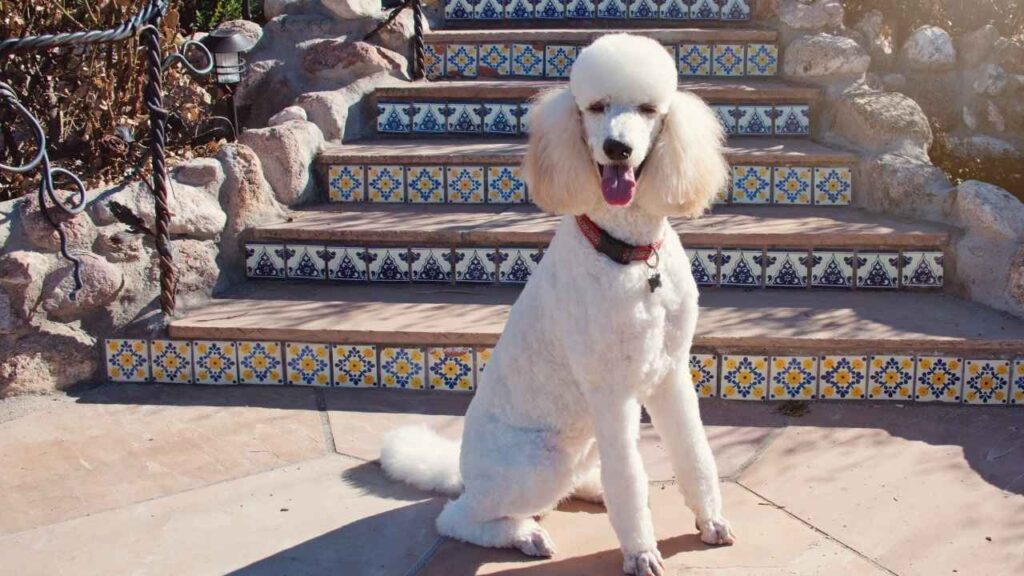
The Standard Poodle has hair that keeps growing, more like ours than typical dog fur. The natural curly coat presents unique challenges, as the curls continue to grow and require ongoing maintenance to prevent tangling and matting.
That is why frequent bathing and trimming matter so much. When curls get long, they tangle fast, especially where a collar rubs, behind the ears, and under the legs.
If those tangles turn into mats, they pull at the skin and can trap moisture. Curly and long hair types can easily mat, forming painful clumps that can cause skin infections and discomfort, requiring regular brushing and haircuts. That can lead to irritation, sore spots, and a smell that makes you go, “Okay, bath day. Right now.”
The good news is that the Poodle coat is super flexible. You can keep it short for an easy life, or go fluffy for that classic look. Either way, trims on a steady cycle keep the coat even and clean. Baths help the curls stay springy, but brushing between baths is the real secret sauce.
Daily brushing is necessary to maintain the coat and prevent tangles, especially for curly and long hair types.
Sounds crazy, right? One “no brush” week can create a “why is the comb stuck” moment. Did you know many Poodle styles began as practical cuts for working in water, not just fashion?
And here’s the best part! Poodles are bright and often enjoy routine. Many learn to stand calmly for brushing because they like praise and patterns. They are also alert and can bark when something feels off, so they are not just pretty faces.
How to Keep a Poodle Clean?
Plan a trim on a regular cycle so mats do not get a head start.
Keep ears clean and dry since fluffy ears can trap moisture.
Ask for a face, feet, and a sanitary tidy to reduce mess.
Use treats during drying so bath day feels like a win.
2. Old English Sheepdog
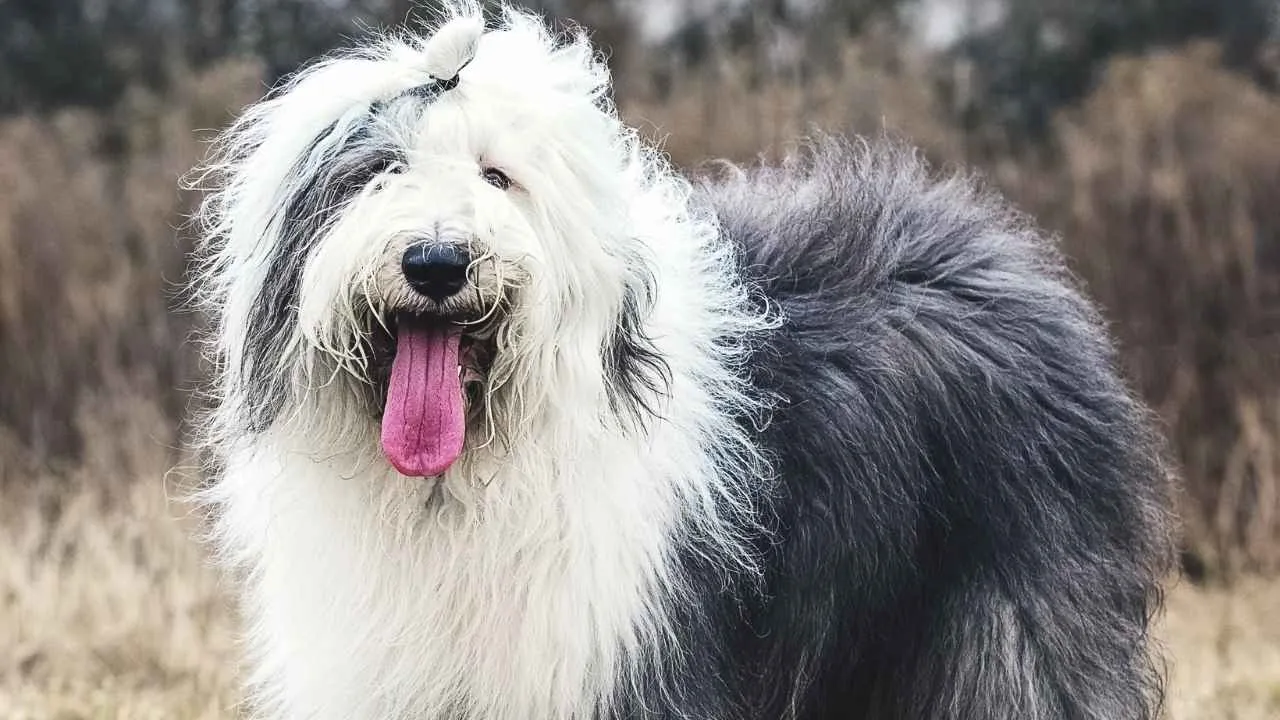
Old English Sheepdogs come with that famous shaggy coat that looks like a walking cloud. Cute, yes. Low effort, nope. Their thick double coat can mat down to the skin if you skip their grooming sessions. And once mats form, they can hide hot spots, ticks, and sore skin.
It gets even worse, though, when wet fur dries into tight clumps that pinch. That is why frequent bathing and careful drying matter for this breed.
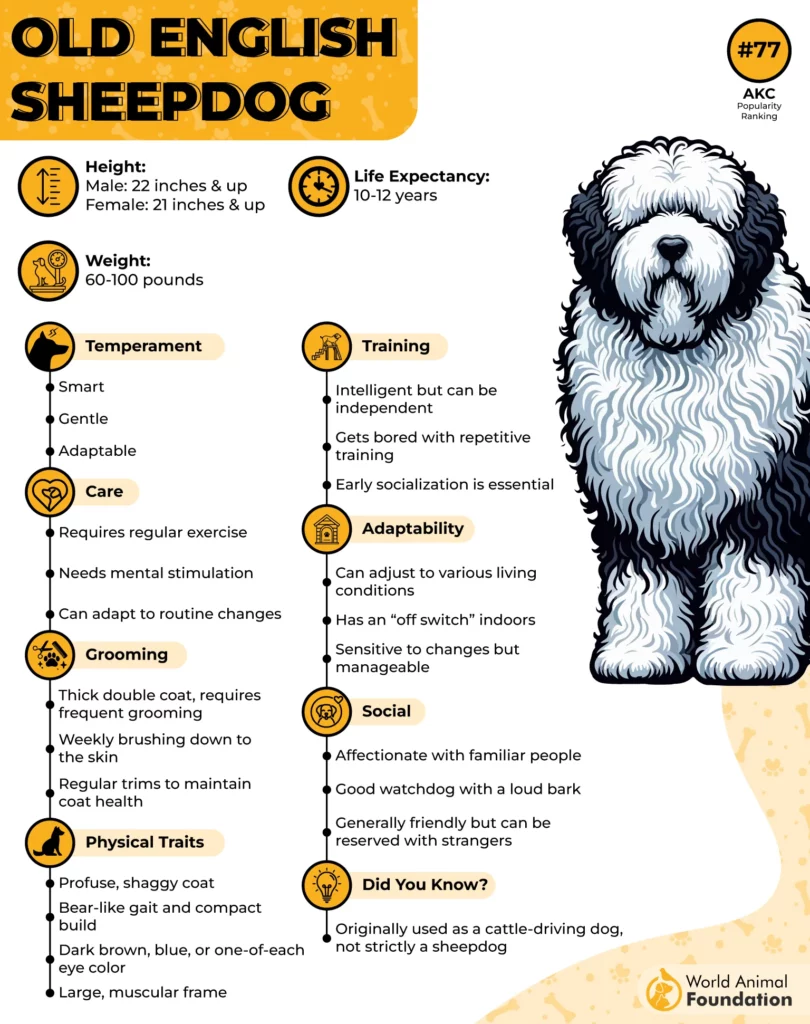
Many pet parents keep a “puppy trim” or a shorter coat because dense coat care takes serious time. Even with a shorter style, you still need regular baths and trims to keep the coat clean and the legs from turning into mud mops.
Daily brushing in sections helps because this coat is dense. If you only skim the top, the under layer can still knot up like a secret problem. Did you know this breed was used as a drover dog, moving livestock on the road, so that coat had a job before it had fans.
But why bother with that? Because when an Old English Sheepdog is well groomed, they feel amazing. They move better. They scratch less. And they look like the happiest, bounciest teddy bear you have ever met. We’ve watched one do a full-body wiggle after a blow-dry, like it just won the lottery.
Also, shorter trims can help you spot skin issues early, which is a big deal with all that fluff.
How to Keep an Old English Sheepdog Clean?
Brush down to the skin, not just the fluffy top layer.
Dry the coat well after baths to avoid damp, itchy skin.
Trim around feet and belly so dirt has fewer places to cling.
Do quick rear-end clean-ups to avoid stink and skin trouble.
3. Komondor
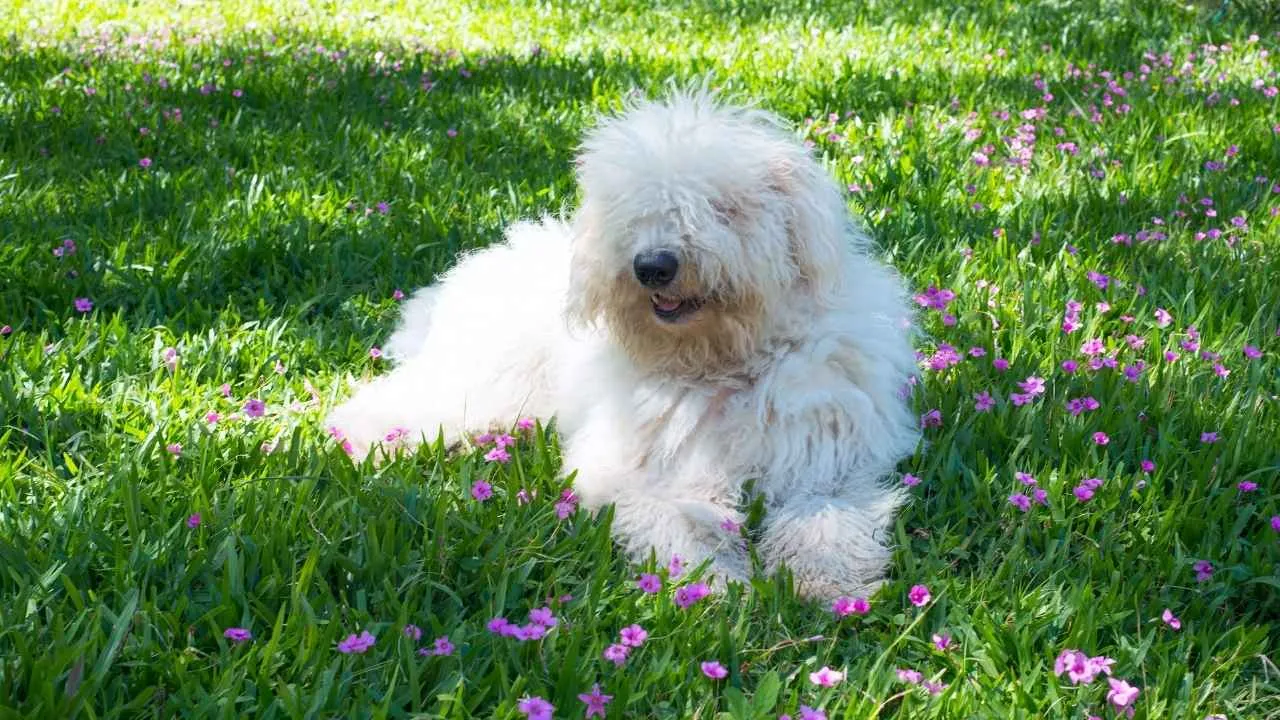
The Komondor is your furry friend that looks like it is wearing a floor mop, and that is not an insult. Those cords are the point. The coat forms naturally as the coarse outer coat wraps around the soft undercoat. Once cords form, brushing is not the usual plan.
Instead, you separate cords by hand so they do not merge into one giant mat. This breed was built to guard flocks, so the coat also helps protect the skin.
Bathing a Komondor is not a quick splash. Water has to reach the skin through the cords, and shampoo must rinse out fully. Then comes the big challenge: drying. A wet corded coat can stay damp for a long time.
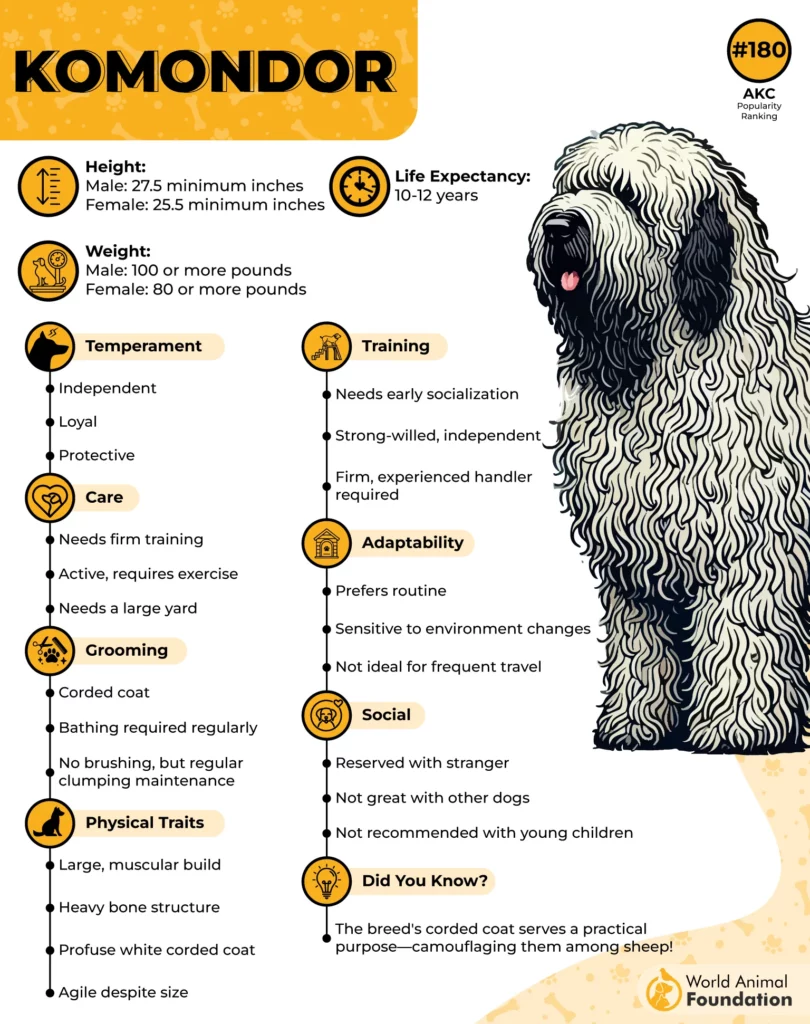
If you put a Komondor away wet, moisture can get trapped, and that can lead to skin trouble and a sour smell. So yes, frequent bathing matters, but it has to be done the right way, with plenty of time for drying and airflow.
Trimming is different here. You are not shaping curls. You are keeping cords clean, even, and safe. Many people trim cord ends so they do not drag on the ground and soak up everything.
Did you know that younger Komondors may have shorter cords, and that is normal as the coat changes with age. The payoff is a coat that sheds less in the usual way, but asks for patient, hands-on care.
How to Keep a Komondor Clean?
Separate cords often so the coat stays in tidy sections.
Squeeze shampoo through cords, do not scrub like a towel wash.
Rinse forever, then rinse once more, because trapped soap is misery.
Dry completely with towels and airflow so the coat does not sour.
4. Yorkshire Terrier
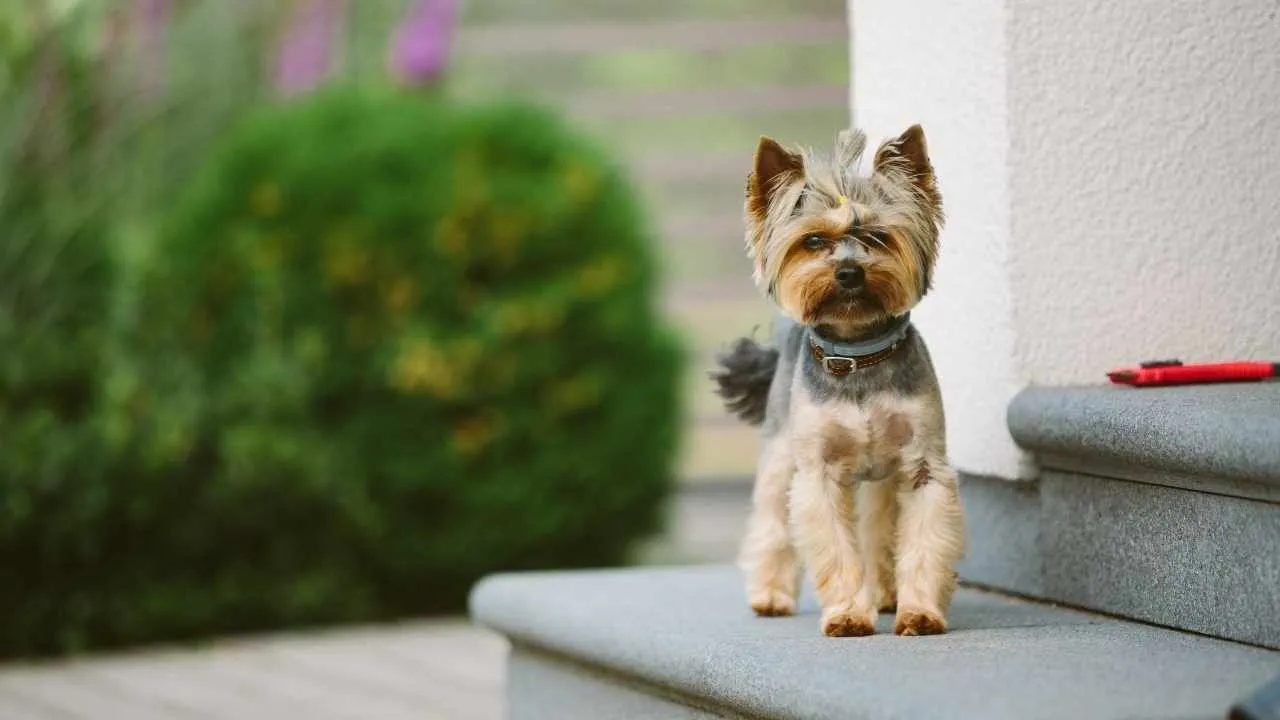
Yorkies are tiny in size, but their grooming needs are not. Their silky coats are often compared to human hair, and it keeps growing. The silky texture is prone to tangling and matting, so regular grooming is essential to maintain that glossy, smooth appearance.
This is a dog breed that requires daily brushing to stay silky and knot-free. Many people choose a shorter “puppy cut” because, honestly, life is busy.
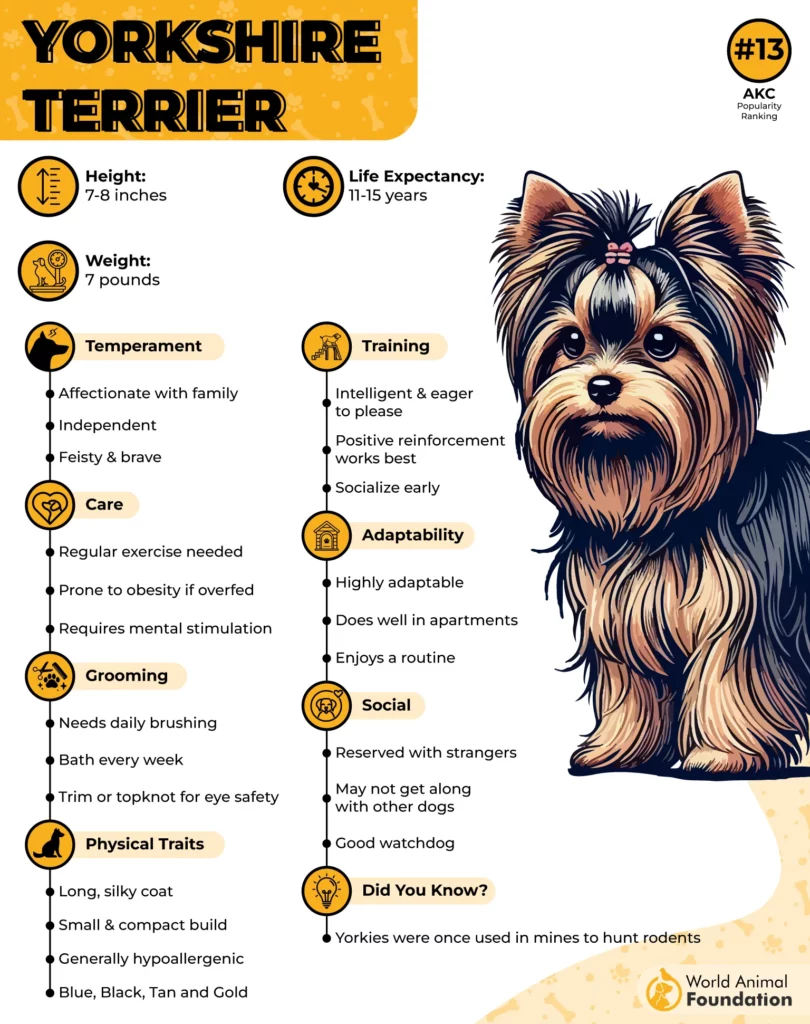
Yorkshire Terriers have fine, silky hair that requires regular trims to avoid tangles. Even with a shortcut, Yorkies still need occasional bathing and regular maintenance because fine hair shows dirt fast and can tangle around the legs.
Frequent trims matter for comfort too. Hair can poke into the eyes. Ear fringes can knot. And the hair around paws can trap grime like Velcro. Plus, Yorkies can get messy around the rear if the coat is long, so a clean sanitary trim is a gift to everyone involved.
Did you know, according to AKC, Yorkies are incredibly smart, and they were once tough little ratters in mills and mines, long before they became lap legends.
Here’s the good part. Yorkies often love being close to you, so professional grooming sessions can feel like cuddle time with a purpose. Put them on a towel, talk to them, and keep sessions short.
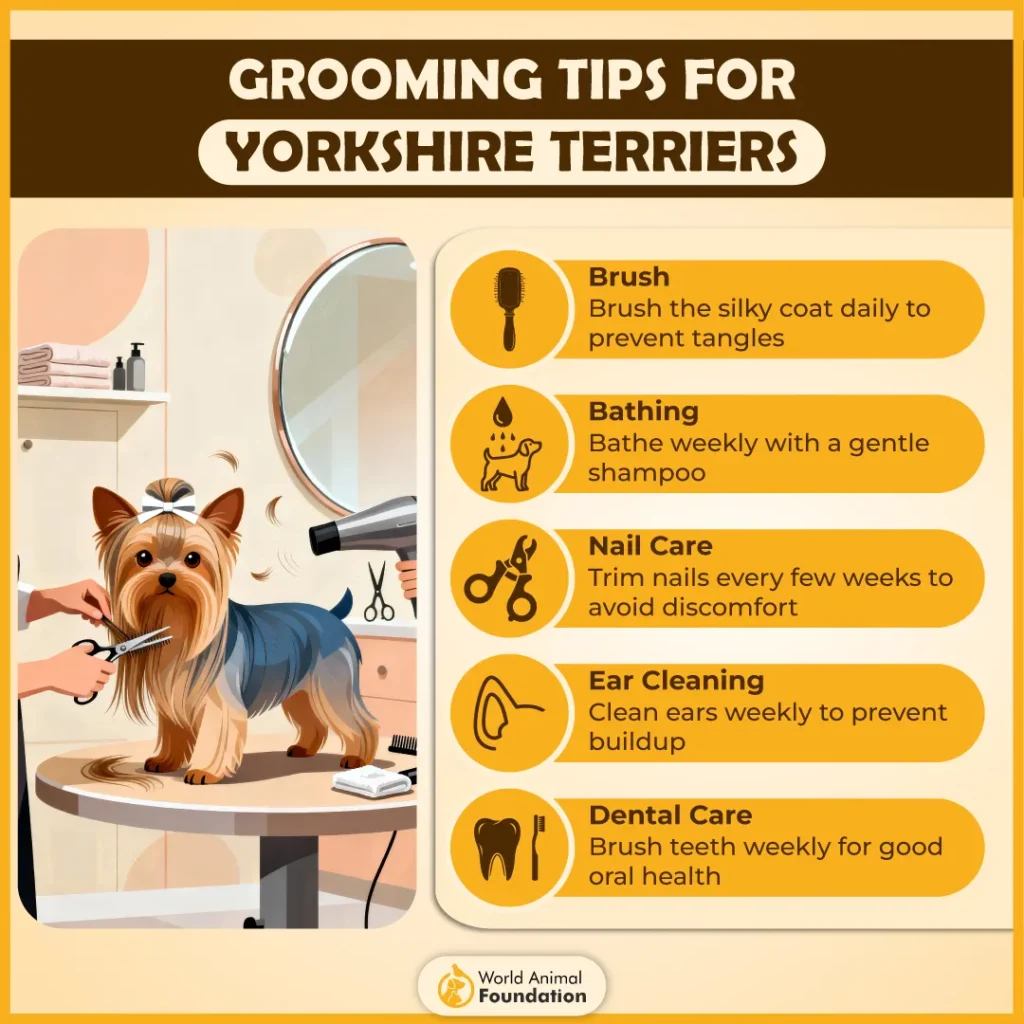
If you rush, they will act like you just offended their whole bloodline. If you stay calm, they usually settle in. A neat trim can also help you spot dry skin early, which some Yorkies deal with.
How to Keep a Yorkie Clean?
Bathe on a steady schedule so the coat stays bright and soft.
Trim around eyes and feet to stop irritation and slipping.
Comb gently to prevent breakage and painful tugging.
Keep nails short, because small dogs can easily snag them.
5. Leonberger
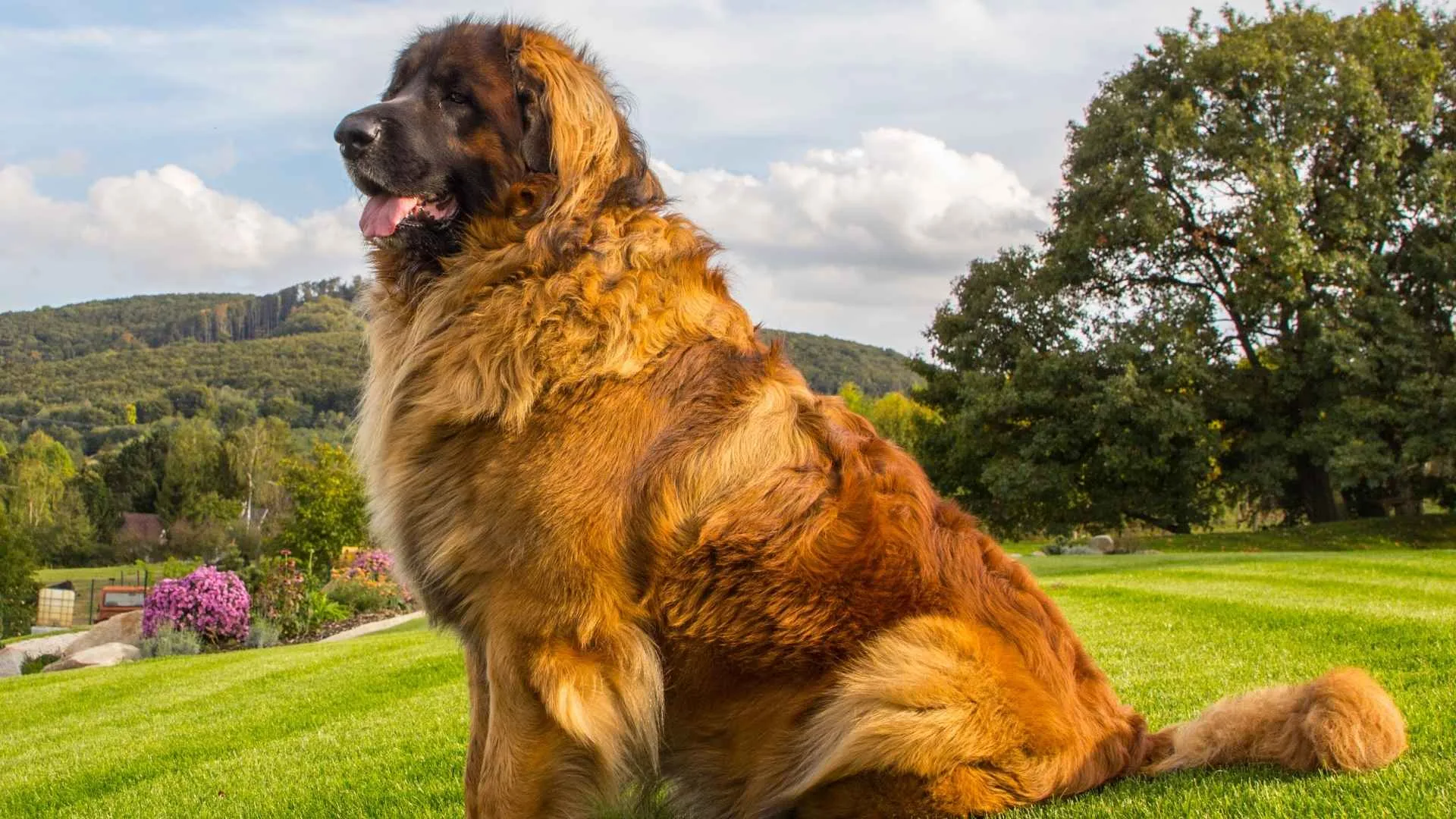
Leonbergers are gentle giants with a long, double coat that can feel like a warm blanket. That coat is also a dirt magnet, especially on the feathering around the legs and tail.
Regular brushing is key, and baths help when the coat starts to smell “outdoorsy” in a not-cute way. During heavy shedding seasons, they can drop undercoat like confetti, so grooming needs ramp up fast to reduce shedding.
Trimming for Leonbergers is usually tidy work, not a full haircut. You often trim feet, hocks, and feathering to keep them clean and prevent mats. And because these dogs are huge, a bath is a whole event.
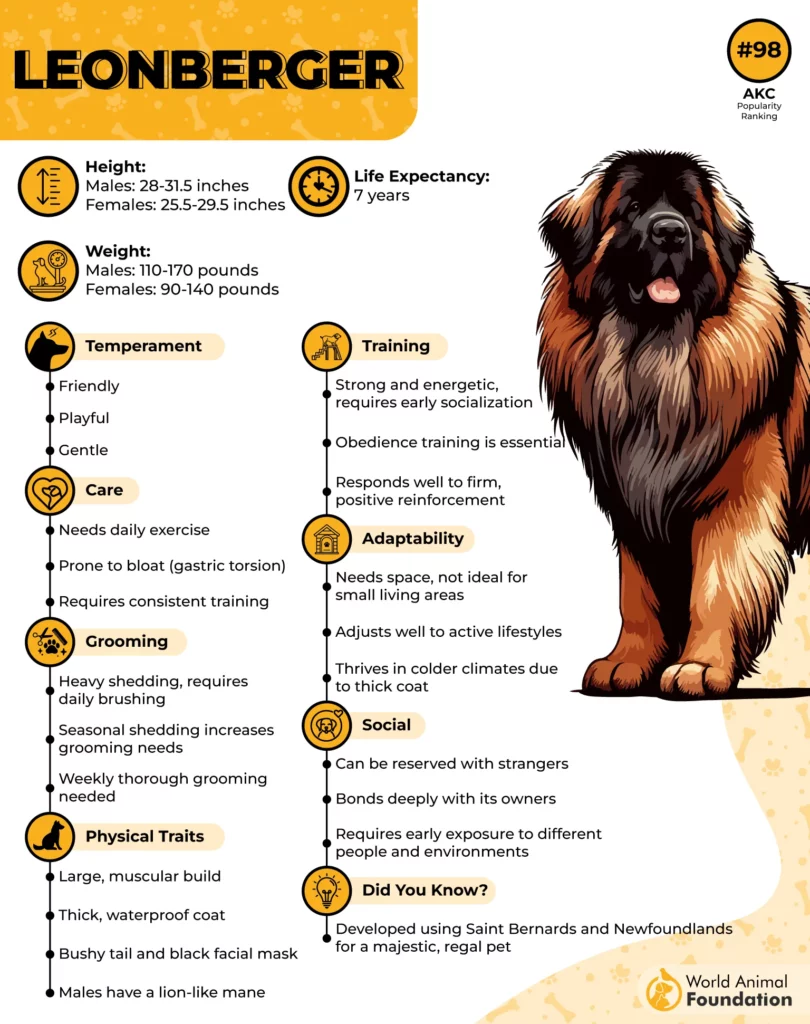
You will want a plan, good towels, and a sense of humor. But wait, there’s more! Their coats can be slow to dry, and a damp undercoat can trigger itchy skin, so drying matters as much as washing.
The sweet part is their temperament. Many Leonbergers are calm and patient, which helps during regular grooming.
Still, start early. Teach “stand,” “turn,” and “chin” like little grooming tricks. It makes the process smoother and keeps you from hating yourself.
How to Keep a Leonberger Clean?
Brush more during spring and fall when the undercoat blows out.
Trim feathering and paw hair so mud does not set up camp.
Rinse very well and dry deeply, especially near the skin.
Check ears and nails often, because big dogs can hide issues.
6. Puli
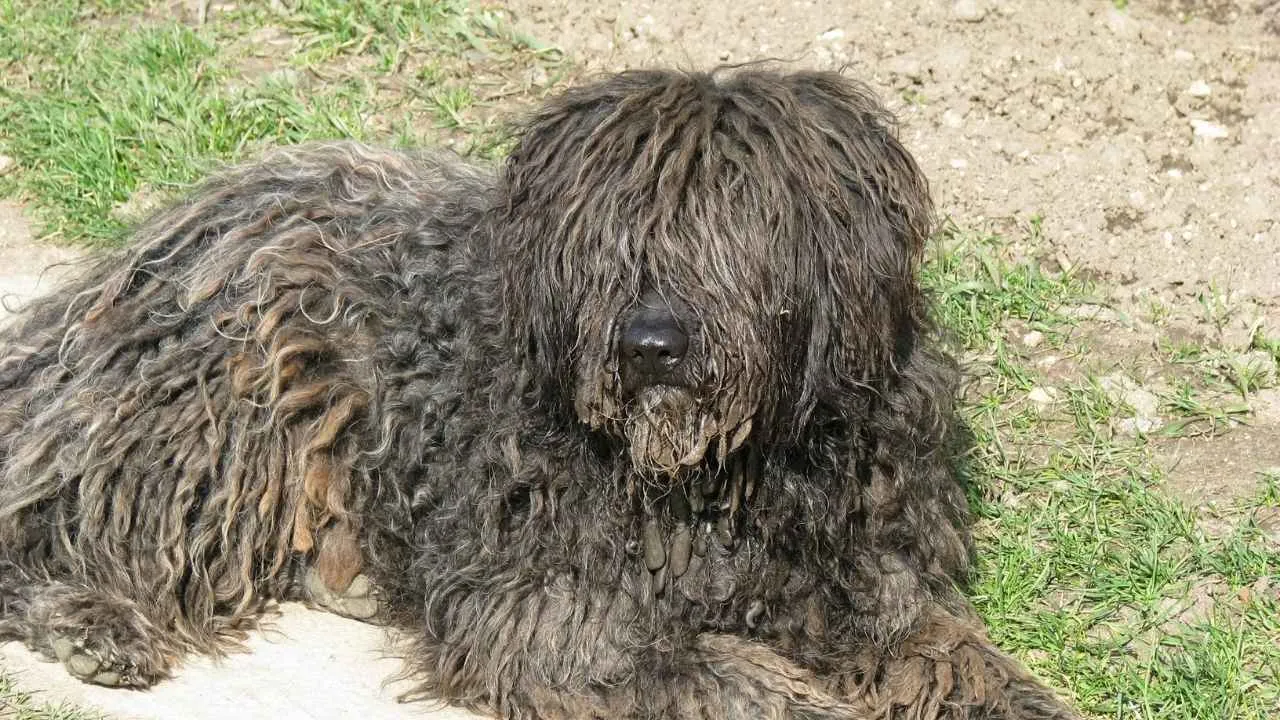
The Puli is another corded-coat legend, but in a smaller, sporty package. Their cords can look like bouncing ropes, and yes, people will stare. Cord care is hands-on.
You help cords form and stay separated, especially as the puppy coat changes into an adult coat. If cords clump together, you get heavy mats that pull at the skin and feel awful.
Bathing a Puli can take a long time because cords hold water. Drying can take most of the day, sometimes longer, depending on the weather and coat thickness. That is why many owners plan bath day like a mini holiday. It is not hard, but it takes time.
Trimming can mean shortening cords for a cleaner, lighter feel, or clipping the coat for a more easy-care look. Some people clip because they want Puli energy without the full cord workload, and honestly, fair.
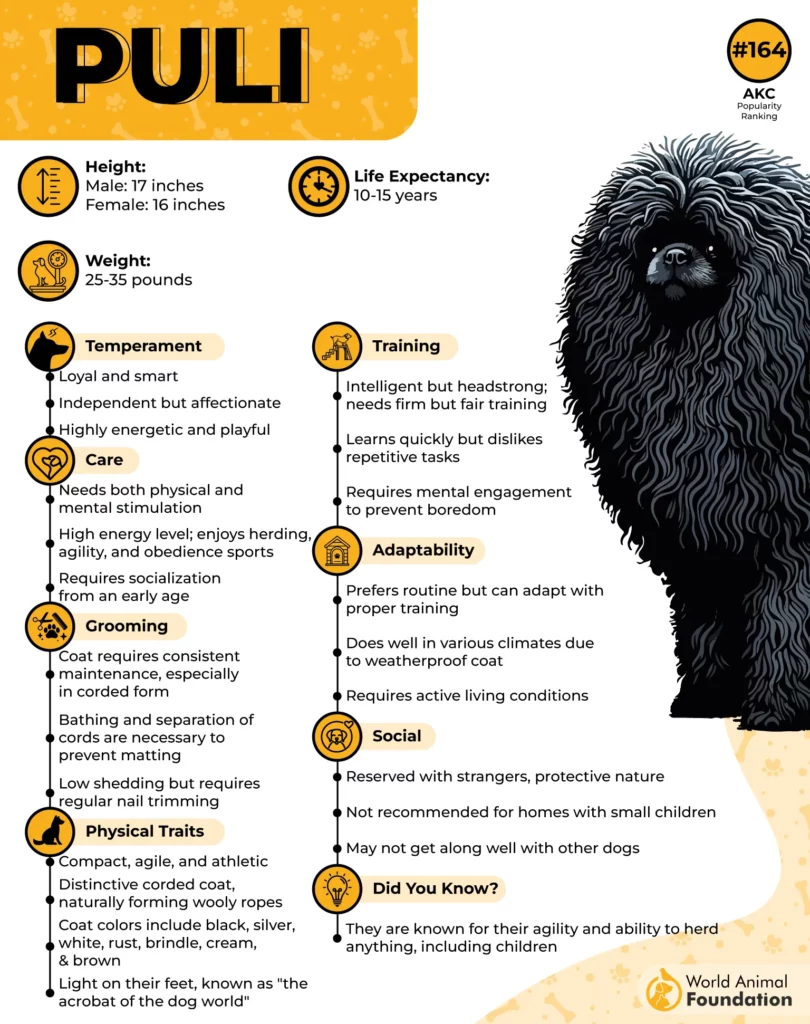
Important note: a very dense corded coat can make heat feel worse. In warm weather, think shade, water, and chill breaks.
Did you know the Puli was bred to herd, so they love movement and mental games. A tidy coat makes those games safer because there is less dragging, less snagging, and fewer mystery burrs stuck near the skin.
How to Keep a Puli Clean?
Separate cords with fingers, especially around armpits and collar lines.
Keep bath days spaced enough for skin oils, but not so long that dirt builds up.
Dry fully, or the coat can smell musty and feel itchy.
Consider a clipped style if cords do not fit your schedule.
7. Spanish Water Dog
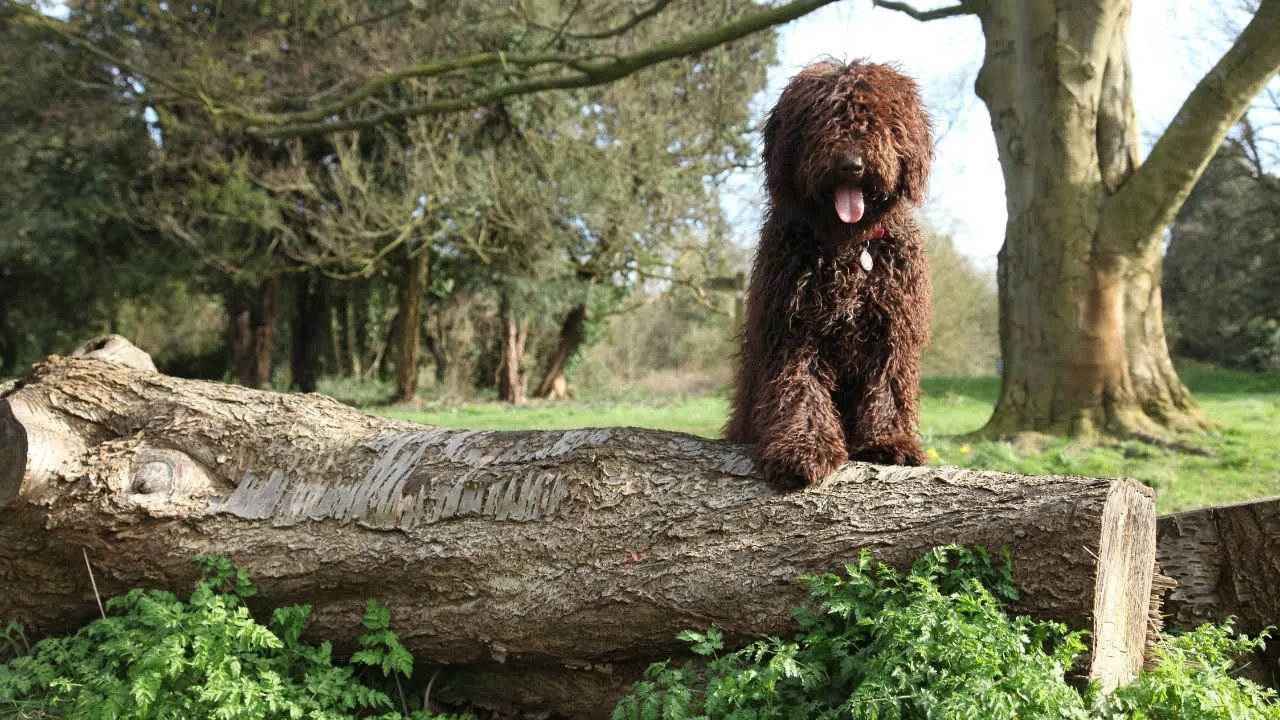
Spanish Water Dogs have wooly curls that form tight little clumps and can mat if handled the wrong way. Here is the twist: many coat plans for this breed skip weekly brushing and combing. Instead, you use your fingers to check for knots and gently tease them apart.
If you brush the coat out, it can turn into a puffball that mats faster. So consistent grooming is still needed, but the tools and touch are different. It’s important to provide the right care and attention to maintain their unique coat.
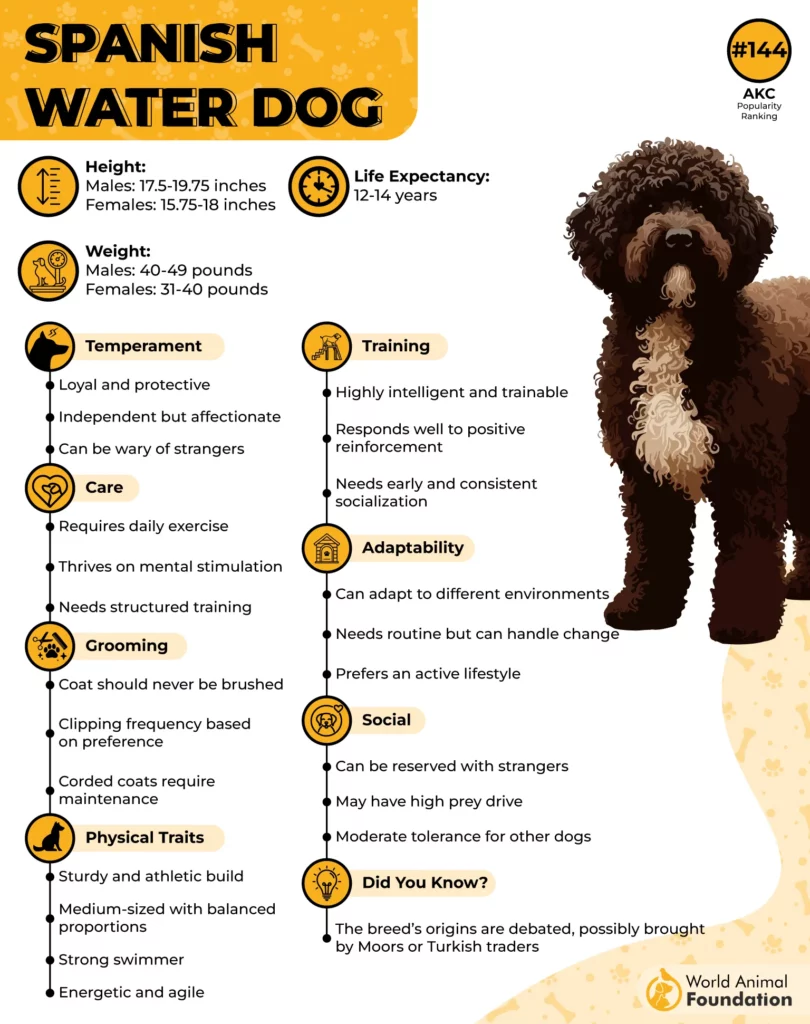
Bathing is also a “squeeze, don’t scrub” job. Think of washing a sweater, not scrubbing a rug. You work shampoo through with gentle squeezes, then rinse until the water runs clear. Trimming matters because these dogs are often kept in an all-over clip, usually with even length.
A good clip keeps mats down, keeps the dog lighter, and makes it easier to rinse and dry after muddy fun. Some pet owners clip once a year, others clip more often, based on lifestyle and coat.
Regular grooming also allows you to clean skin folds and check ears for infections, which is especially important in high-maintenance breeds with unique physical traits like the Spanish Water Dog.
And here’s the best part! This breed often loves water and work, so they get dirty in the best ways. A predictable groom schedule keeps that active life comfortable.
Did you know they were used as both herders and water helpers in their homeland? That “do everything” attitude shows up in the coat too, because it is tough, with a curly coat ready for action.
How to Keep a Spanish Water Dog Clean?
Use fingers daily to find knots before they turn into mats.
Clip evenly on a steady schedule so the coat length stays manageable.
Blot with towels instead of rough rubbing to avoid extra matting.
Get ears cleaning done since water-loving dogs can get ear infections.
8. Black Russian Terrier
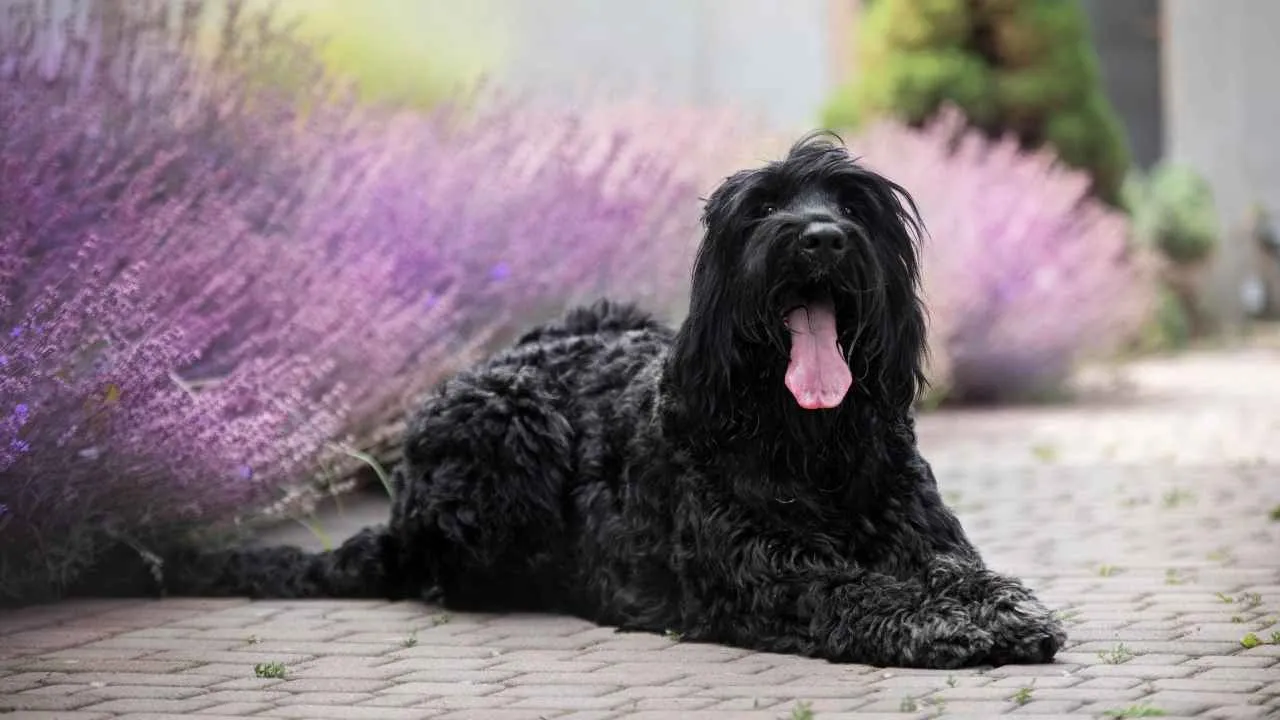
PetMD notes that Black Russian Terrier is big, bold, and covered in a dense, rough coat with a thick underlayer. Add the beard and eyebrows, and you have a dog that looks like it could run a secret agency. That coat needs frequent care because it can mat, especially on the legs, beard, and behind the ears.
Dirt also likes to hang out in the furnishings, and food can turn the beard into a snack scrapbook. Yep, it is a thing.
Bathing helps keep the coat and skin healthy, but brushing before and after baths matters even more. If you bathe a tangled coat, the knots tighten. Trimming is a big part of the routine, too.
Regular grooming is necessary to ensure the dog’s health and well-being, as it helps maintain the flowing coat and skin in optimal condition. It also allows for early identification of potential health issues, such as skin infections or parasites.
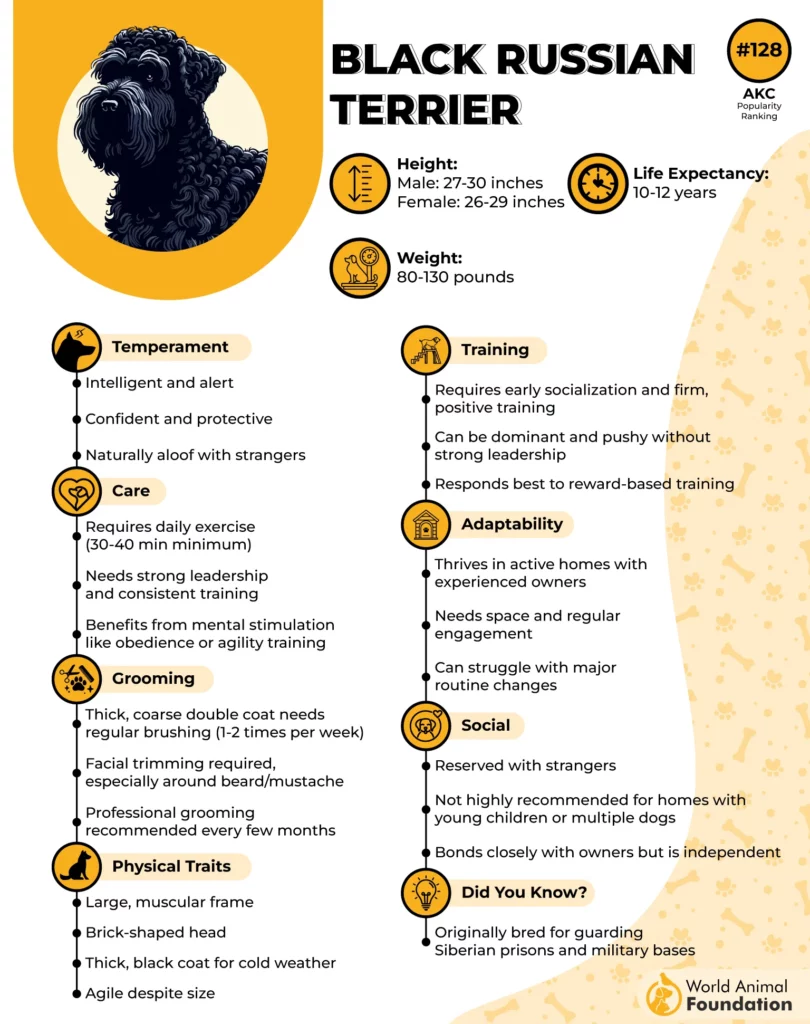
Many dog lovers keep a working style that is neat and practical, with regular shaping around feet, ears, and face. A full groom takes time, so booking it before the coat gets wild is the sane move.
This breed also benefits from calm, steady handling. They are smart and confident, but they do not love being forced. Keep sessions upbeat, and you will see them relax.
Fun fact: the breed was developed for tough work, so the coat is built for harsh weather, not sofa style. That means it is strong, but it still needs care.
How to Keep a Black Russian Terrier Clean?
Brush a few times a week to stop undercoat tangles.
Wash and dry the beard well, or it will smell like old lunch.
Trim around pads and eyes to prevent irritation and slipping.
Turn professional grooming into training with praise and calm reps.
9. Bouvier des Flandres
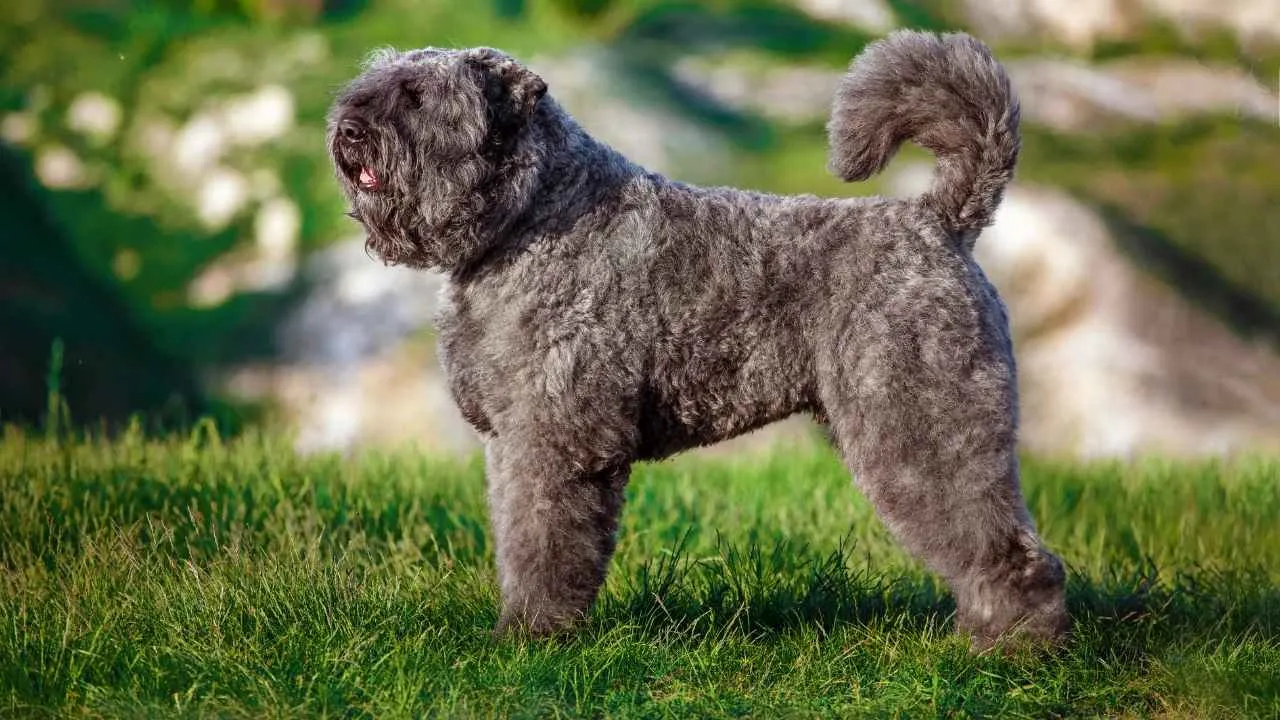
Bouviers look rugged, with a coarse coat, a dense undercoat, and that famous beard. Their coat is made to handle rough weather, but it can also trap debris and mat if you ignore it.
Frequent grooming is the price of that farm-dog look. Brushing every few days helps pull out loose undercoat and keeps the outer coat from turning into felt.
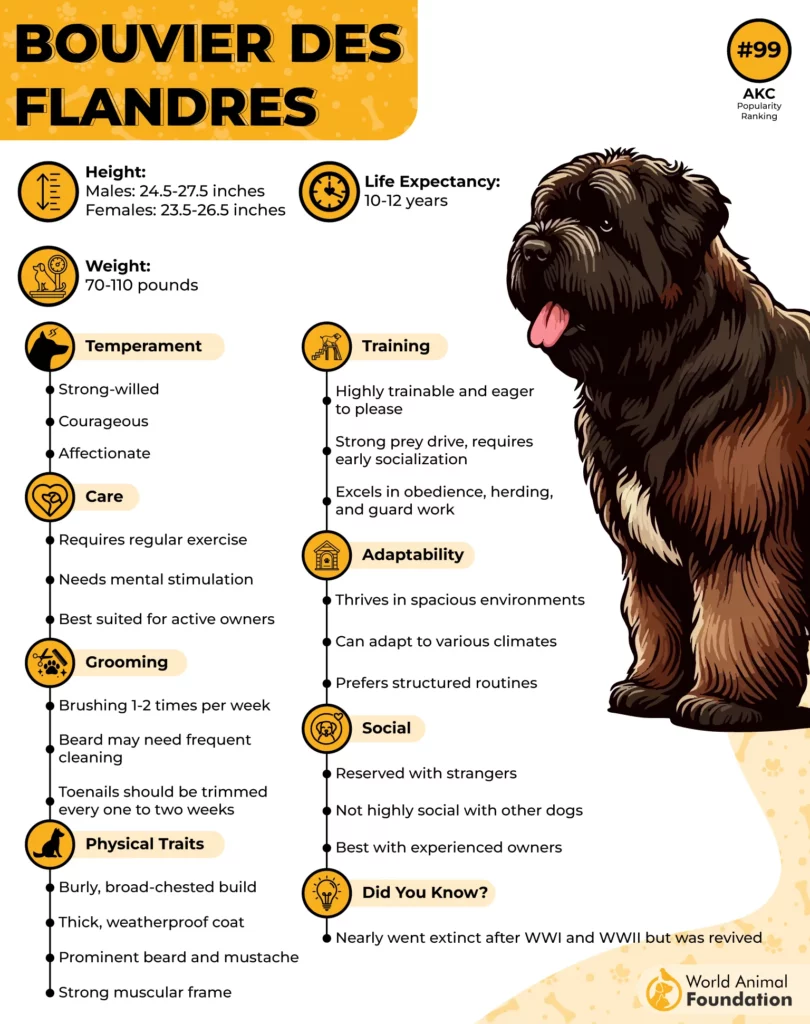
Bathing is not daily, but it is regular, especially if your Bouvier is a mud fan. Trimming is where the magic happens. Many Bouviers need shaping to keep the coat useful, especially around the eyes, feet, and beard.
Some coats can be maintained with careful stripping and light scissoring to keep the texture harsh. Others are clipped into a neat pet style. Either way, if you skip trims, the coat grows into a heavy, messy curtain that collects everything.
But why bother with that? Because a clean, well-trimmed Bouvier is a joy. They look like a wise old soul, and they often act like one, too. When the beard is clean and the eyes are clear, their expressions are priceless.
Did you know this breed once worked farms as a helper dog, doing jobs like herding and guarding? A tidy trim keeps that working spirit comfy at home.
How to Keep a Bouvier Clean?
Brush often to stop mats in the legs, beard, and chest.
Rinse the beard after meals to avoid crust and funk.
Trim eye hair so they can see without blinking through bangs.
Check for burrs after walks, because this coat collects souvenirs.
10. Briard
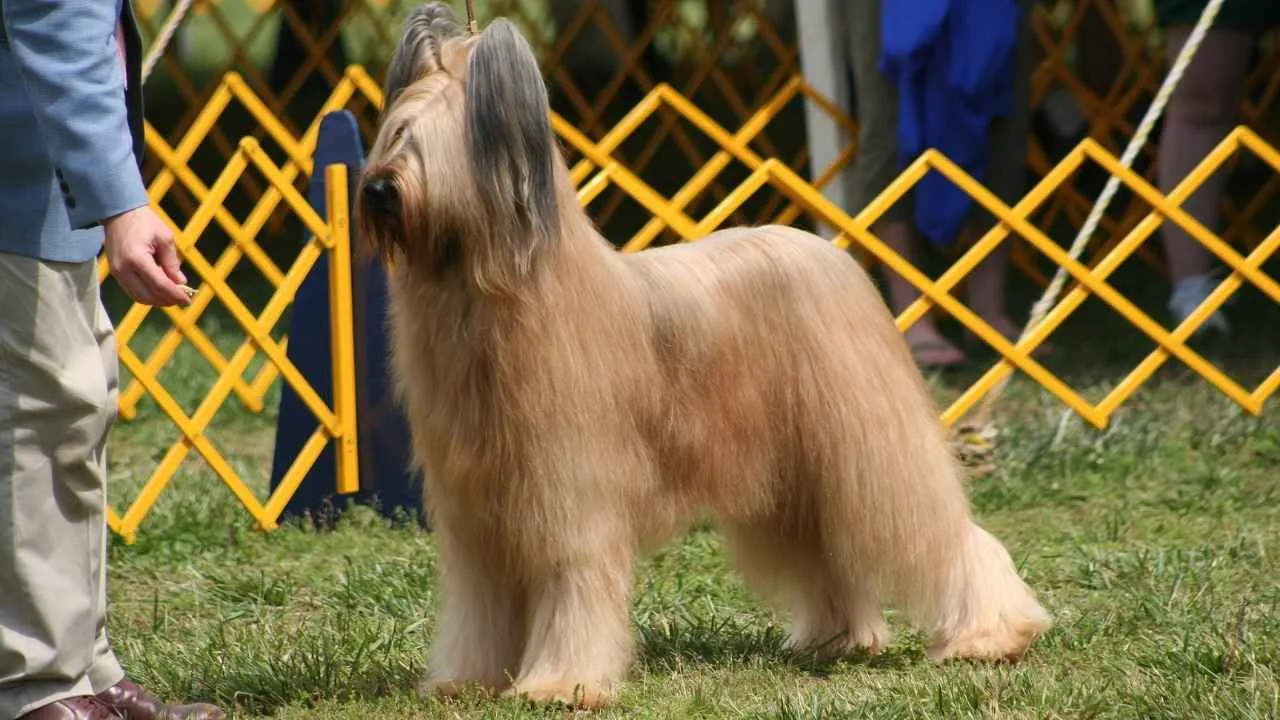
The Briard is a long haired breeds with a slightly wavy coat that can shrug off dirt and water, but that does not mean it is low work. The hair is long and dense, and it loves to tangle close to the skin.
If mats form, they can trap moisture and cause skin irritation. Frequent brushing and regular bathing keep the coat from turning into a solid blanket of knots.

Trimming for a Briard is usually light and tidy. You are not trying to sculpt a new dog. You are keeping hair out of your eyes, cleaning up feet, and trimming the ends so they do not drag through every puddle.
Baths can be monthly or a bit more often if your Briard is a field-loving chaos gremlin. Did you know Briards have double dewclaws on the back legs, and are one of the long-haired breeds that can hide nail issues there, so nail checks matter.
Here’s the good part. As per WebMD, Briards are deeply loyal and often very tuned in to their people. If you make grooming calm and steady, they learn to trust the process.
Soft talk, slow hands, and small breaks go a long way. When a Briard relaxes on the table and lets you work through tangles, it feels like earning a tiny badge of honor.
How to Keep a Briard Clean?
Give good grooming sessions several times a week.
Do a quick comb check after muddy walks so mats do not set
Keep dewclaws and nails trimmed, since long hair can hide them.
Watch for hot spots, especially in warm, humid months.
Conclusion
These breeds prove one thing: a great coat comes with real upkeep. Frequent bathing keeps skin clean and cuts down on stink. Regular trimming keeps hair out of eyes, stops mats, and makes daily life easier.
Cords, curls, beards, and thick undercoats each need their own approach, so copy-paste grooming rarely works. Here’s the best part! Once you find a rhythm, professional grooming becomes your calm time together.
Put on music, chat like you’re hanging with a friend, and reward your patience. If you are picking one of these breeds, pick the schedule too, then stick with it.
