




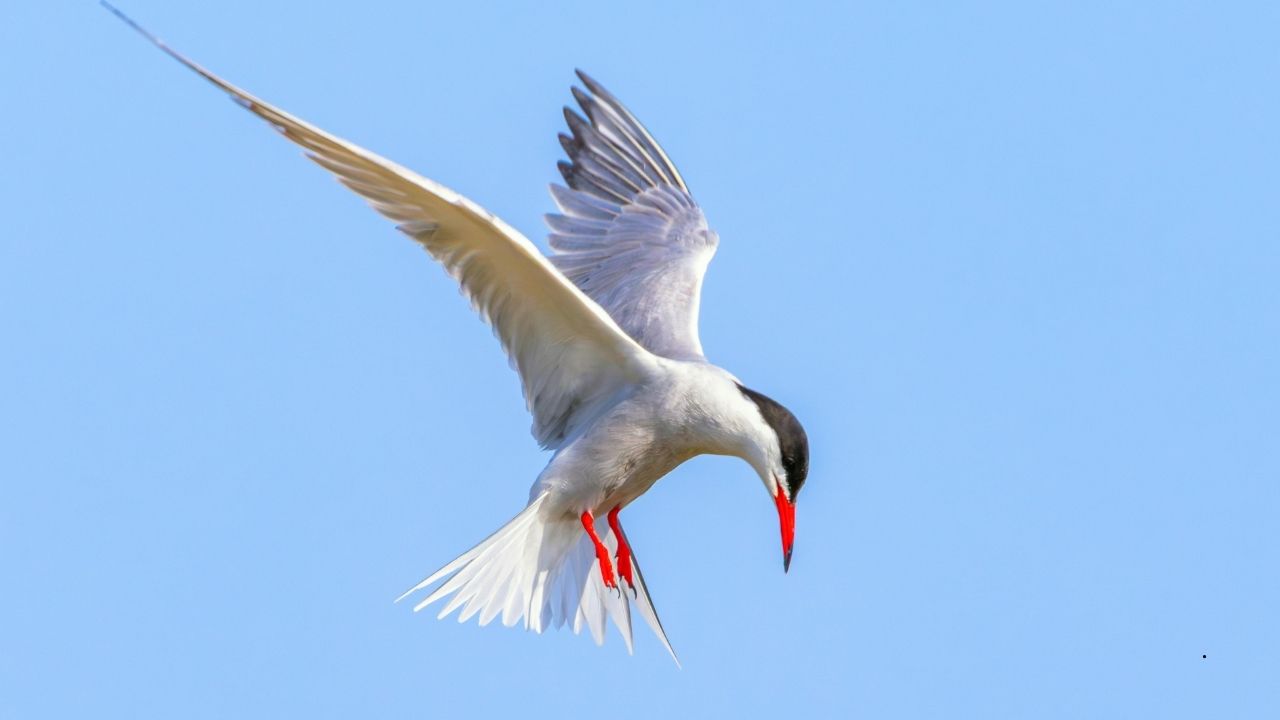
Have you ever paused to watch birds in flight and wondered how they pull off those jaw-dropping mid-air flips, twists, and daring dives? It’s like watching nature’s very own acrobats putting on a show just for us!
While we all know birds can fly, some take it to a whole new level—darting, swooping, and turning with such speed and precision that it’s almost hard to believe. These airborne artists don’t just fly; they dance with the wind, expertly snatching insects right out of the air with lightning-fast moves.
Some of these birds can even perform incredible aerial feats at speeds reaching over 40 miles per hour, all while navigating tight flocks or chasing tiny prey mid-flight. Their amazing agility isn’t just for show—it’s a vital skill that helps them survive and thrive.
So, get ready to take a look at the fascinating world of birds that turn the sky into their very own acrobatic playground with their aerial acrobatics!
Key Takeaways
Discover how peregrine falcons reach mind-blowing speeds of over 240 mph to catch prey mid-air.
Watch barn swallows and common swifts perform stunning aerial acrobatics as they dart and twist with unmatched agility.
Learn about tiny hummingbirds that hover, fly backward, and zip with incredible precision.
Explore the epic migrations of Arctic terns and the graceful soaring of red kites and frigatebirds across vast skies.
Birds That Do Incredible Acrobatics in Mid-Air
1. Peregrine Falcon
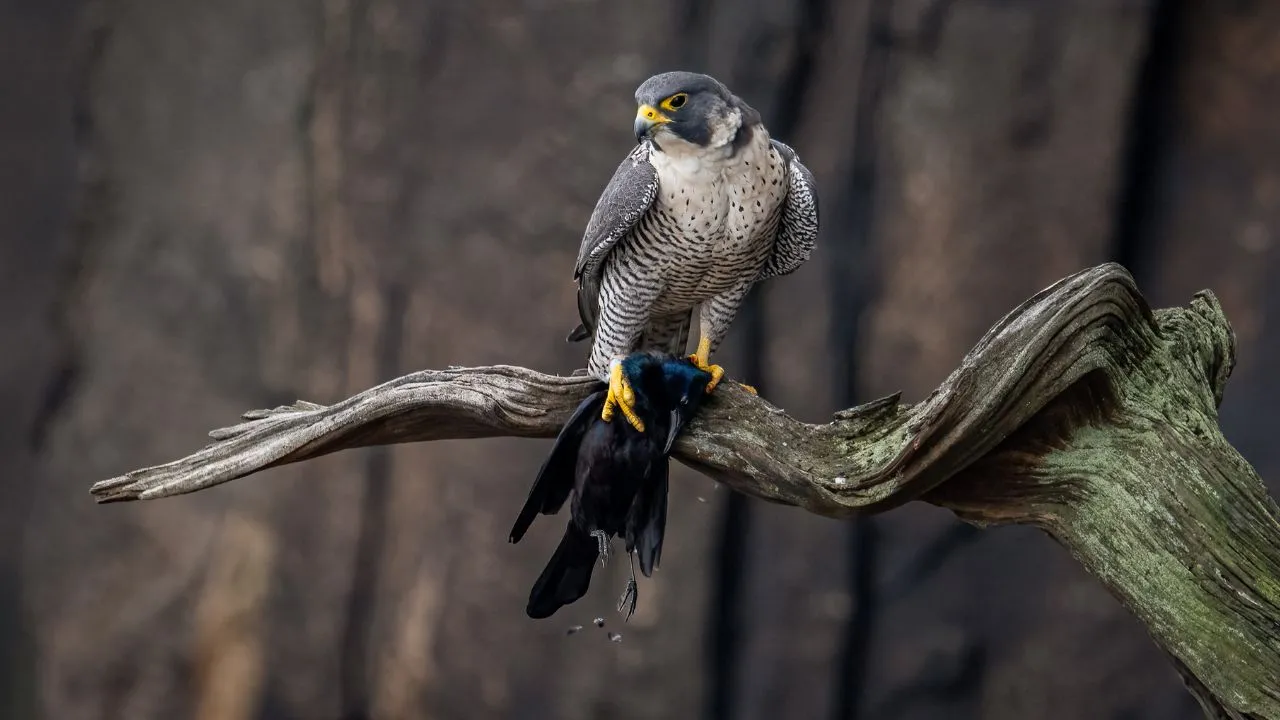
The peregrine falcon is known worldwide for its breathtaking speed. During a hunting dive, it plunges from great heights and can reach speeds of over 240 miles per hour, making it the fastest animal on Earth. This powerful dive allows it to strike prey in mid-air before the target has any chance to react.
Built for Precision and Control
Its body is perfectly designed for high-speed flight. A streamlined shape, long pointed wings, and strong muscles give it exceptional control even while diving at extreme speeds.
Its sharp eyesight helps it spot prey from far above, while special adaptations in its respiratory system allow it to breathe safely during rapid descents.
A Remarkable Comeback Story
Peregrine falcons are found across much of the world, from remote cliffs to busy cities where tall buildings mimic their natural nesting sites.
Once threatened by pesticide use, their populations have rebounded thanks to conservation efforts, making them one of the most successful wildlife recovery stories, as mentioned by The Peregrine Fund.
2. Barn Swallow
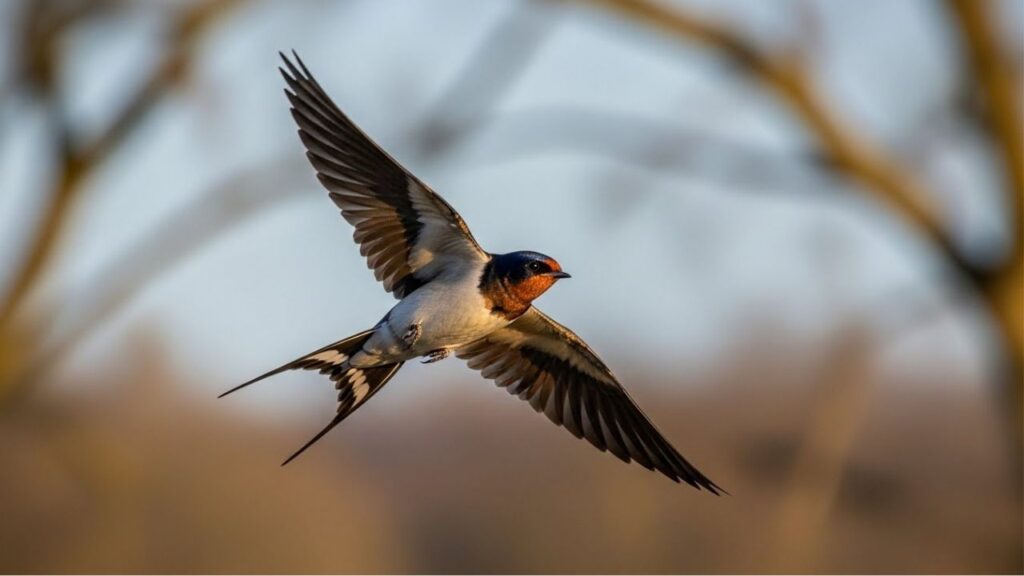
Barn swallows are among the most graceful aerial acrobats in the bird world. With their long, forked tails and slim bodies, they glide, twist, and dart through the air with ease. Watching them fly feels almost like watching a choreographed performance as they skim low over fields and water.
A Life Spent on the Wing
Unlike many birds that hunt from perches or swoop occasionally, barn swallows forage almost exclusively while flying. Their wings and tail give them extraordinary maneuverability, allowing them to fly low over the ground or water and change direction quickly to snatch prey with pinpoint accuracy.
They have been observed following tractors, livestock, and even humans to catch insects flushed into the air, and can eat impressively large numbers of bugs throughout the day.
Adaptable and Widely Seen
These birds have adapted closely to human environments, often building cup-shaped mud nests on barns, bridges, and other structures rather than on cliffs where their ancestors once nested.
Barn swallows breed across much of the Northern Hemisphere and migrate great distances to wintering grounds in warmer regions.
3. Common Swift
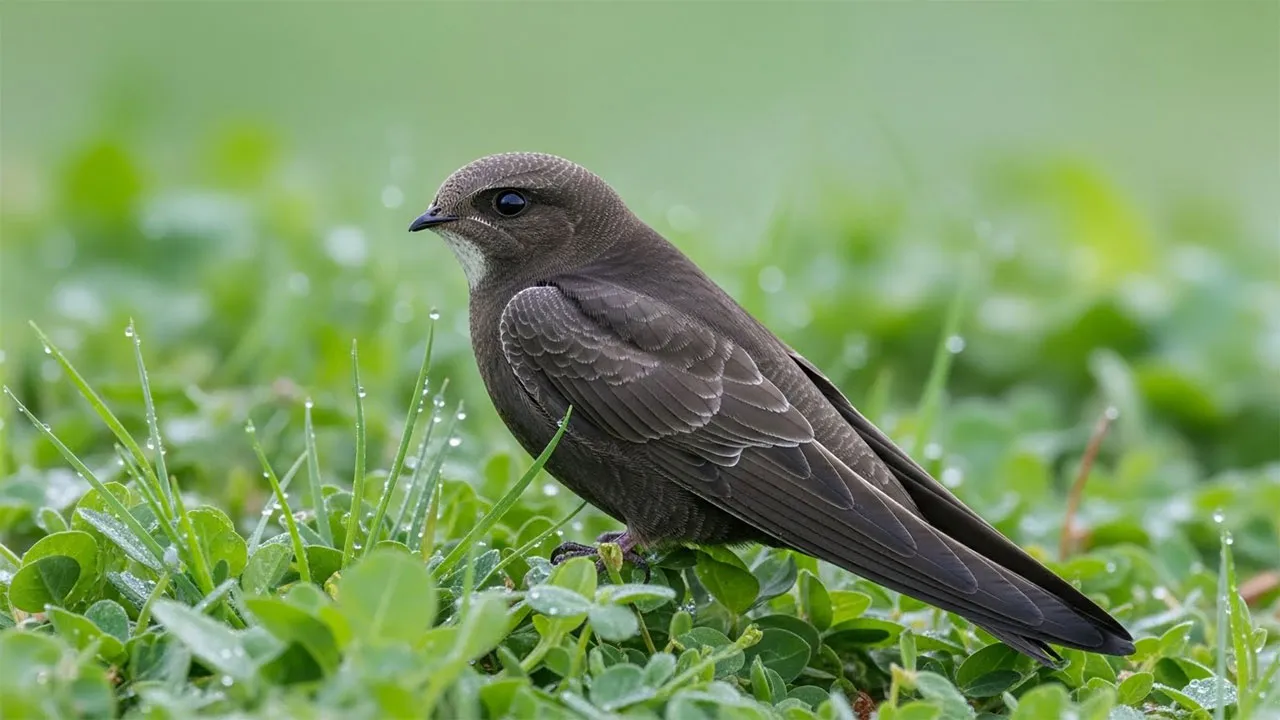
The common swift is one of the most extraordinary fliers on the planet. These birds spend nearly their entire lives in the sky, eating, drinking, and even sleeping while airborne.
They only land to breed, and outside of that time, they can remain in flight for months on end, demonstrating a remarkable adaptation to life on the wing.
Built for Speed and Endurance
With long, slender wings and a streamlined body, common swifts are designed for fast, efficient flight. RSPB mentions that they are among the fastest birds in level flight.
They can reach speeds around 69 miles per hour as they chase airborne insects or take part in social aerial displays. Their wing shape and flight muscles allow them to glide, twist, and soar with agility that few other birds can match.
Wide Range and Adaptability
Common swifts breed across vast areas of Europe and Asia before migrating thousands of miles to winter in Africa.
They have adapted to urban environments, often nesting in building crevices and under roof eaves instead of natural cliff faces. Their unique lifestyle and aerial abilities make them a fascinating sight in summer skies across many regions.
4. Hummingbird
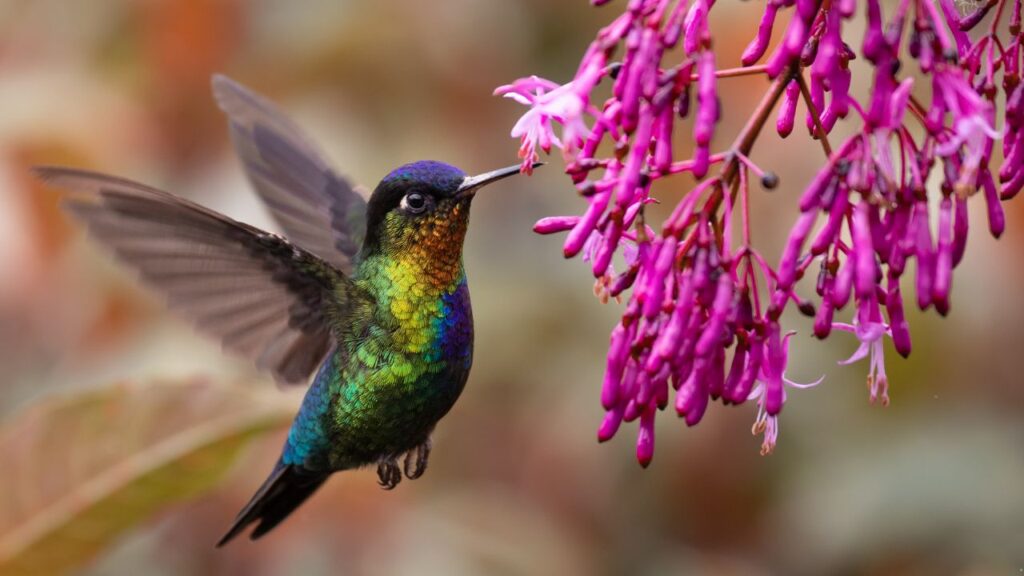
Hummingbirds are unlike any other bird when it comes to flight. Their wings move in a rapid figure-eight pattern that allows them not just to fly forward, but also to hover in place and even fly backward or upside-down.
This makes their aerial movements look almost cartoon-like as they dart among flowers with precision and control unmatched by most other birds.
High Energy, High Performance
These tiny birds beat their wings hundreds of times per second, creating the characteristic humming sound that gives them their name.
Their incredible speed and agility allow them to make sharp turns, hover in one spot while feeding, and zip away backward as easily as they came in. The energy required for this astonishing aerial ability is supported by the world’s fastest metabolic rate among vertebrates, keeping them constantly in motion.
Small Size, Big Journeys
Despite their diminutive size, hummingbirds undertake impressive migrations and travel long distances between breeding and wintering grounds.
Their flight capabilities are vital for accessing nectar from flowers and avoiding predators, making them one of the most fascinating examples of aerial adaptation in the bird world.
5. Red Kite
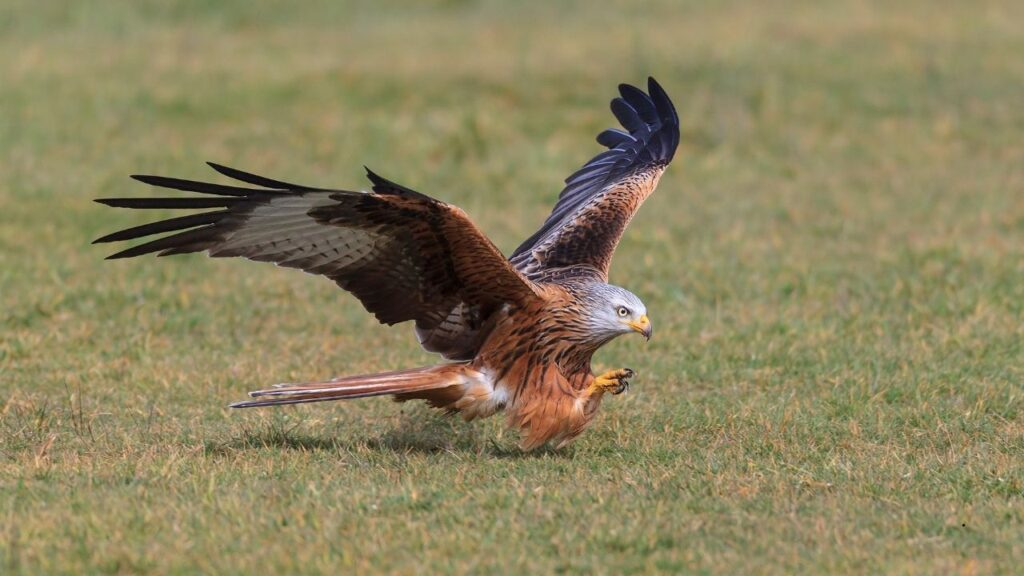
The red kite is a striking bird of prey known as much for its elegant flight as for its reddish-brown plumage and deeply forked tail.
Unlike some raptors that rely on powerful wingbeats, red kites use air currents and thermals to glide effortlessly for long stretches, making their aerial style look smooth and almost leisurely while they scan the ground below for food.
Adapted for Efficient Flight
Their long wings and lightweight bodies give red kites excellent maneuverability and control. They can twist and tilt their wings to change direction swiftly, almost as if riding invisible wind currents.
This ability helps them cover large areas while searching for carrion, small mammals, and other food sources without expending much energy.
A Success Story in Conservation
Once in serious decline in parts of their range, red kites have made an impressive comeback thanks to conservation efforts. Today, they are increasingly common in many open countryside habitats, delighting birdwatchers who enjoy watching these majestic birds drift and circle high overhead.
6. Frigatebird
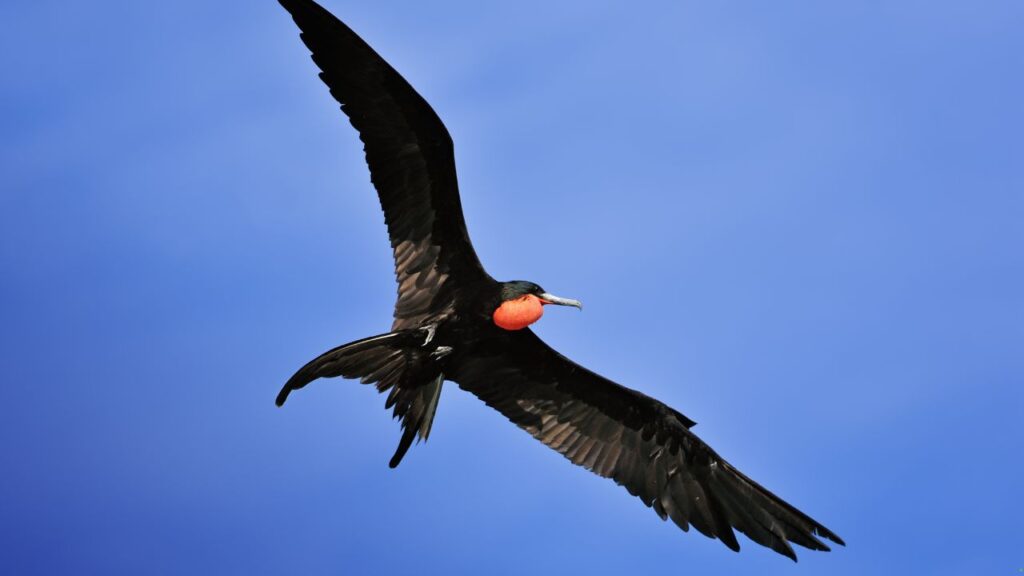
Frigatebirds are awe-inspiring aerial masters that spend most of their lives in the air, cruising over oceans with very little flapping. With their extremely long, narrow wings and deeply forked tails, they can soar on ocean breezes for hours without landing, making them true champions of sustained flight.
Built to Glide and Catch
Their unique skeletal structure and wing design allow frigatebirds to stay aloft with astonishing efficiency.
They rarely land on water because their feathers aren’t built to resist moisture — instead, they stay airborne, often snatching food from the surface of the sea or stealing catches from other seabirds, using their agility and speed to seize opportunities wherever they arise.
Life on the Wing Across Vast Seas
Frigatebirds are found in tropical and subtropical oceans, where wide open skies and steady winds give them plenty of space to glide. Their remarkable aerial lifestyle is an adaptation to a life far from land, thriving on long flights with seemingly effortless motion that few other birds can match.
7. White-Throated Needletail
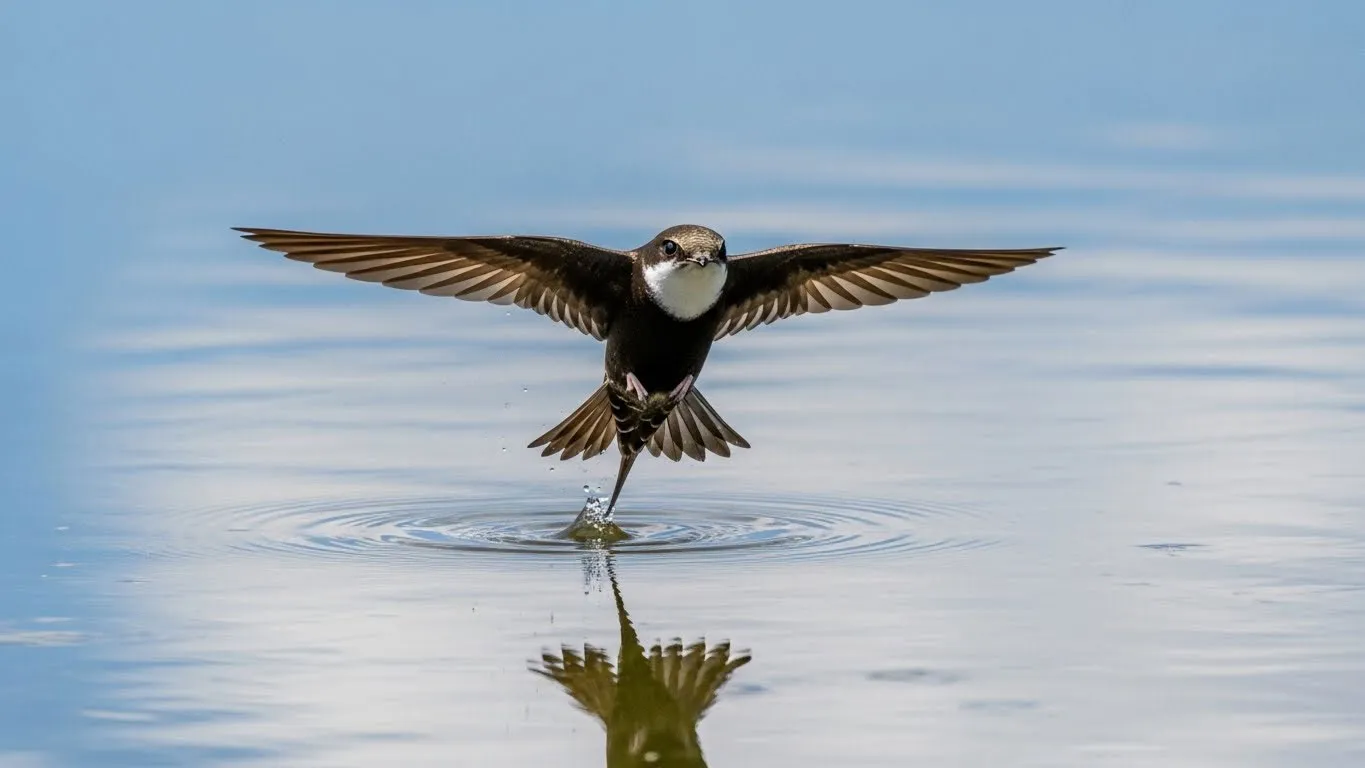
The white-throated needletail is a truly remarkable bird that spends almost all of its life on the wing. These swift relatives rarely land on the ground and are almost always seen cutting through open skies, capturing flying insects as they go.
Fast and Agile in the Air
Reputed to be one of the fastest birds in level flight, the needletail has been associated with top speeds of up to around 170 km/h. While this figure isn’t officially verified by precise measurement, it highlights how exceptionally adapted this species is for rapid, sustained flight.
These birds often forage in flocks, weaving and darting through the air with incredible agility as they chase swarms of airborne insects.
Habitat and Migration
This swift breeds in parts of Central Asia and southern Siberia, then migrates long distances to winter in warmer regions such as Southeast Asia and Australia.
They nest on high cliffs, in hollow trees, or even in old buildings, choosing places that keep them close to open skies where they can launch quickly back into flight.
8. Lilac-breasted Roller
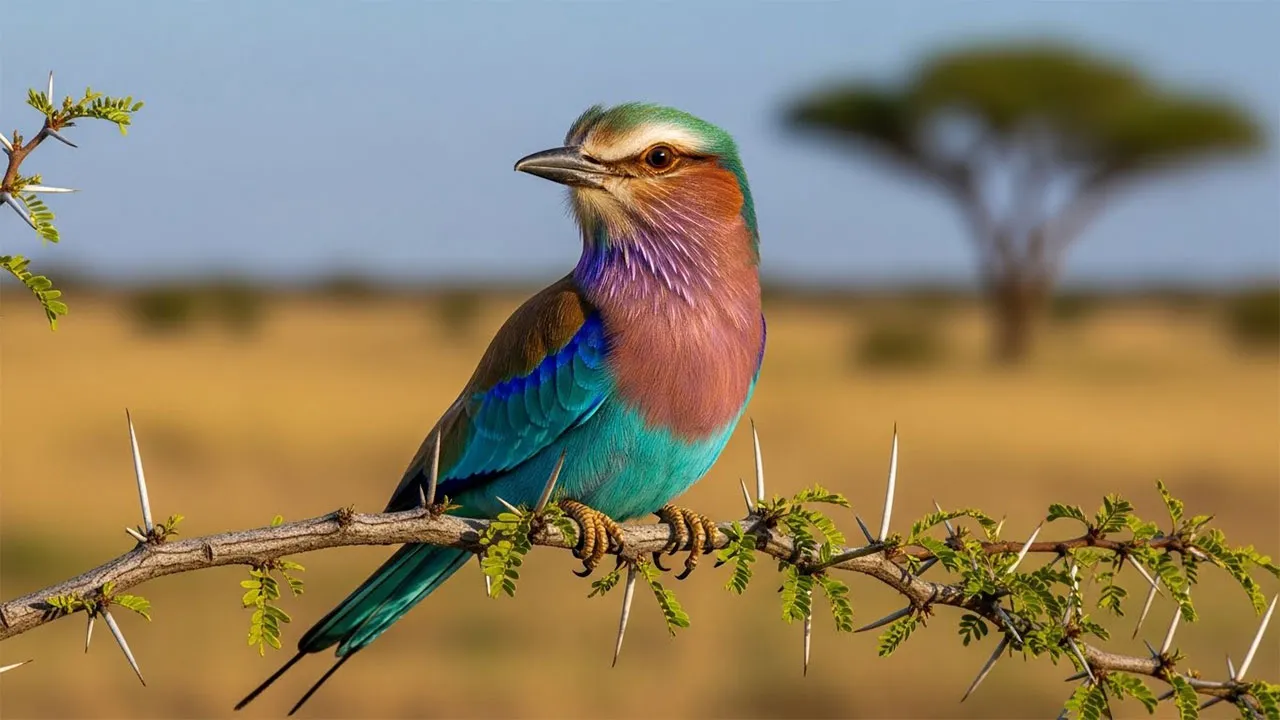
The lilac-breasted roller is one of Africa’s most brilliantly colored birds, instantly recognizable by its array of striking hues and bold patterns. Beyond its beauty, this species is known for its lively flight displays, making it a favorite sight for birdwatchers and safari visitors alike.
Acrobatic Flight and Display
During courtship or territorial displays, lilac-breasted rollers perform dramatic aerial movements, as mentioned by Natural Destinations.
They climb to height and then dive, roll, and swoop toward the ground with sharp turns and agility, often accompanied by loud, chattering calls. These dynamic flight patterns help establish territories and attract mates.
Life on the Savanna
Found widely across southern and eastern Africa, these rollers prefer open woodland and savanna habitats.
They typically perch on high vantage points such as tree tops or poles to scout for insects and small prey on the ground, then launch into flight with remarkable speed and precision. They nest in tree cavities, cliffs, or abandoned holes, fiercely defending their territories during breeding seasons.
9. Artic Tern
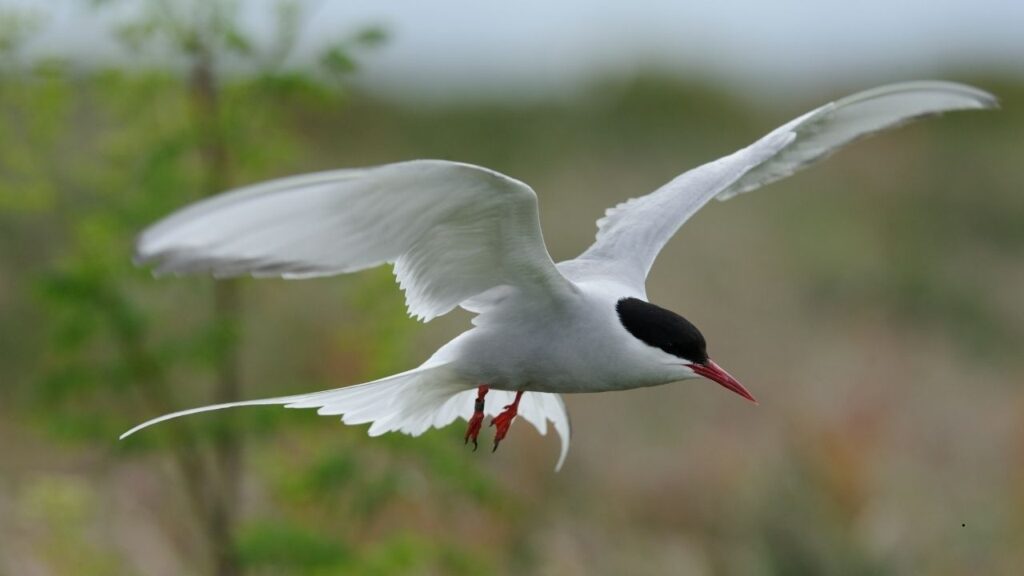
The Arctic tern is famed for having the longest migration of any animal on Earth. Each year, individuals travel from their Arctic breeding grounds all the way to the Antarctic and back again, covering tens of thousands of miles in the process.
Some tracked birds have flown nearly 96,000 km (about 60,000 miles) in a single round-trip migration, showcasing their extraordinary endurance and navigational ability.
Adapted for a Life on the Move
These seabirds have slender bodies, long pointed wings, and forked tails that make them highly efficient fliers over the open ocean.
They spend most of their lives in flight, feeding on small fish and crustaceans, which they often catch by hovering and plunging into the water. Their lightweight frame and narrow wings allow them to glide in the wind with minimal energy expenditure.
Living Across the Globe
Arctic terns breed in coastal and tundra regions of the Arctic and sub-Arctic during the long northern summer, then embark on their epic journey toward the Antarctic to enjoy the southern summer.
This remarkable migration pattern means they experience more daylight each year than almost any other creature on the planet, taking full advantage of extended daylight hours at both poles.
Conclusion
Watching birds perform amazing mid-air movements is something many people remember long after they’ve witnessed it.
Whether it’s an early morning sighting, a moment you heard wings rush past, or a short stop during a walk, these experiences inspire grace and respect for nature.
Birds gather, feed, and protect themselves using skills refined over time, reminding us how much there is to learn from the natural world when we slow down and truly look.
Recently, more people have begun to share these moments, talking about sightings through mail, photos, and stories that travel far beyond fences and rails.
Reading about these birds is good, but seeing them in action is even better—it makes us pause, reflect, and appreciate the resources nature provides. If nothing else, let these stories encourage you to keep watching, keep learning, and remember the small but powerful things happening above us every day.
