




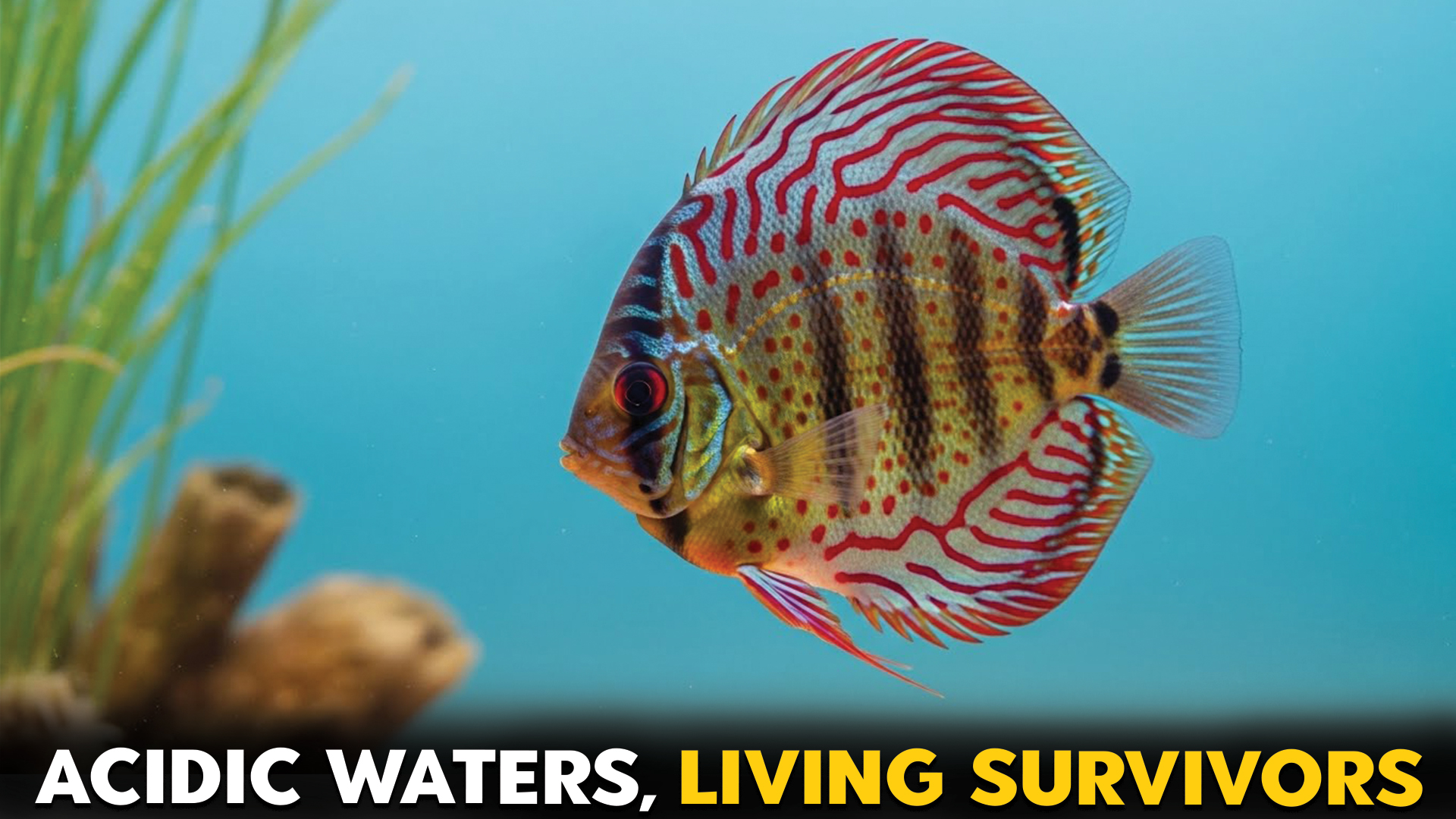
Ever thought about creating a slice of the Amazon rainforest right in your living room? We’re talking about a world of tea-colored water, tangled roots, and shimmering jewels of fish darting through the shadows. This is the magic of a blackwater aquarium, and the secret ingredient is acidic water.
But wait, isn’t acid a bad thing?
Not for these guys! For many beautiful fish, a low pH is not just tolerable; it’s home.
So, what are we talking about when we say “acidic”? Let’s demystify the water chemistry. We measure acidity on the pH scale, which ranges from 0 to 14. A pH of seven is neutral. Anything below seven is acidic, and anything above is alkaline.
The pH is essentially a measure of hydrogen-ion activity; a lower pH indicates a higher concentration of hydrogen ions. It’s a logarithmic scale, so a one-unit change—say, from seven to six—means the water is ten times more acidic!
Setting up an aquarium with these specific pH levels is a rewarding challenge, and it all starts with choosing the right fish species. The goal is to create stable, low-pH water conditions, avoiding sudden changes. Let’s explore some of the superstars of the low pH acid world.
Fish That Can Live in Acidic Waters
1. Discus
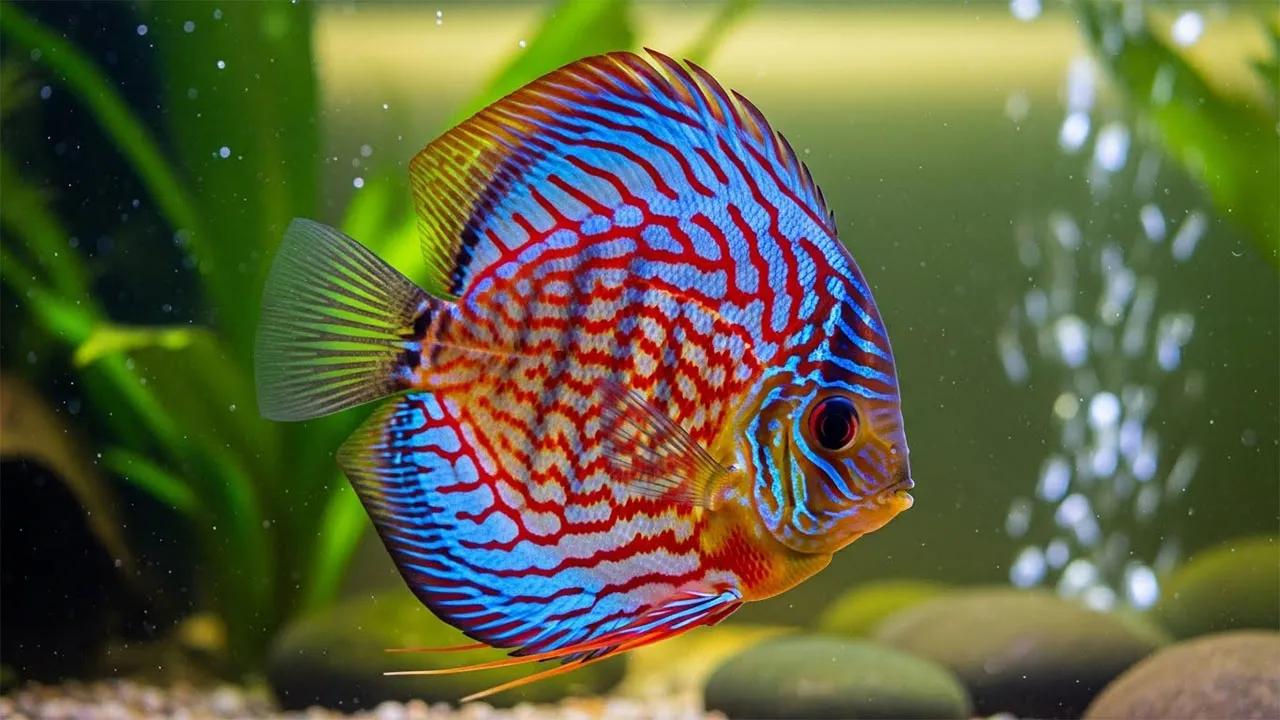
These fish glide through the water with an elegance that is simply mesmerizing. They aren’t just a pet; they’re a living centerpiece, a swimming work of art.
The Discus’s preference for low-pH water is encoded in its DNA.
Hailing from the Amazon River basin, as per Britannica, these fish live in slow-moving tributaries and floodplain lakes. This is the heart of blackwater territory, where the water is stained brown by tannins from fallen leaves and wood, yielding very soft water with a pH that can dip well below 6.
This is the heart of blackwater territory, where high levels of dissolved organic carbon from fallen leaves and wood stain the water brown with tannins, yielding very soft water with a pH that can dip well below 6.
To give your Discus the royal treatment in the aquatic ecosystem, you’ll need a tall tank of at least fifty-five gallons for a small group. Pristine water quality is non-negotiable, so powerful filtration and frequent water changes are a must. The ideal temperature is warm, between eighty-two and eighty-six degrees Fahrenheit.
Furthermore, many aquarists with planted tanks use carbon dioxide injection, which not only promotes lush plant growth but also gently lowers and maintains the acidic pH these fish require.
2. Neon Tetra
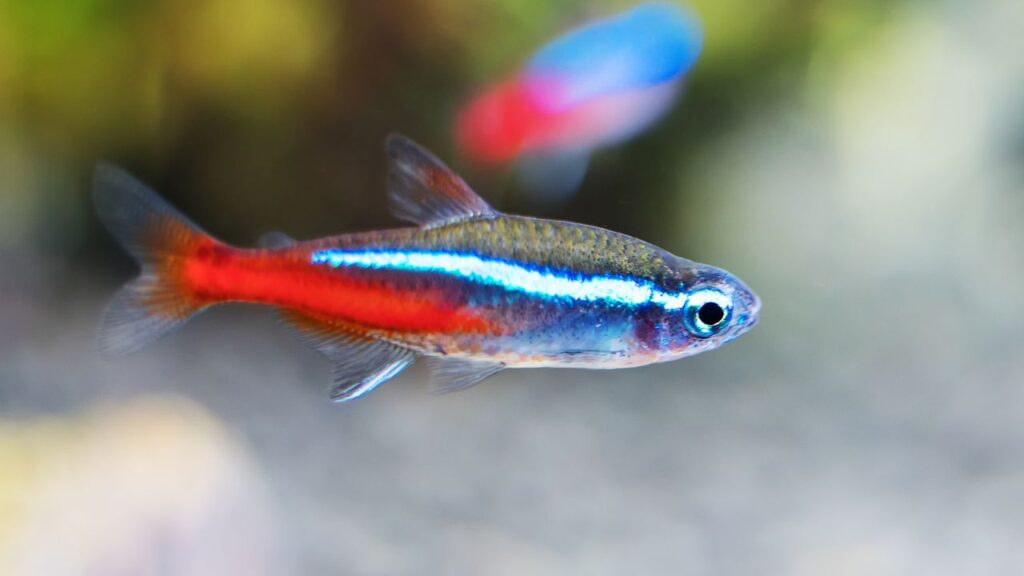
That electric-blue stripe and fiery-red tail are iconic.
Watching a school of neon tetras navigate a planted aquarium is pure joy. They are tiny, peaceful, and bring an incredible amount of life and color to any setup. But did you know these little gems are one of the best fish that can live in acidic waters? Their colors become incredibly vibrant when they are housed in the conditions they evolved in.
Neon tetras are children of the Amazon, specifically from blackwater streams in Colombia and Peru. This is a world of shadow and tannins, where the low pH and soft acidic water are the norm. In these conditions, their iridescent stripe acts like a beacon, helping them school together in the dim light.
These are the perfect first species for someone wanting to try a blackwater setup. A school of at least six (though more is always better!) will feel right at home in a ten or twenty-gallon tank. A dark substrate and plenty of plants will make them feel secure and make their colors pop.
A stable, low pH environment will help you avoid the health issues sometimes associated with this aquarium fish when kept in high pH levels.
3. Cardinal Tetra
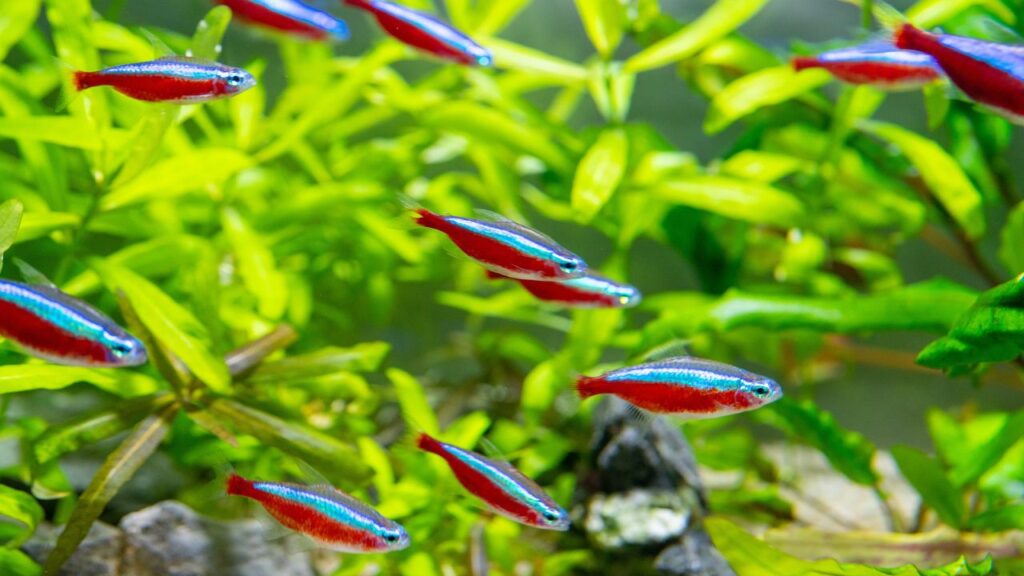
Cardinal Tetra are the supermodels of the tetra world, and they have a strong preference for a truly acidic home.
They are even more of a blackwater specialist than their cousins. They are found in the upper Orinoco and Negro rivers, which are famous for their extremely low pH and mineral-poor soft water. The water here is so dark and acidic that the pH can drop to 4 or 5!
This environment has a very low concentration of hydrogen ions and other dissolved ions and minerals. These fish have evolved remarkable biological adaptations that enable them to thrive where many other species could not. Keeping them in high pH water is not an option if you want them to live a long, healthy life. The correct acid balance in the water is crucial.
These fish have evolved remarkable biological adaptations, such as a highly efficient method of ammonia excretion suited to low-pH environments, that enable them to thrive where many other species could not.
4. Freshwater Angelfish
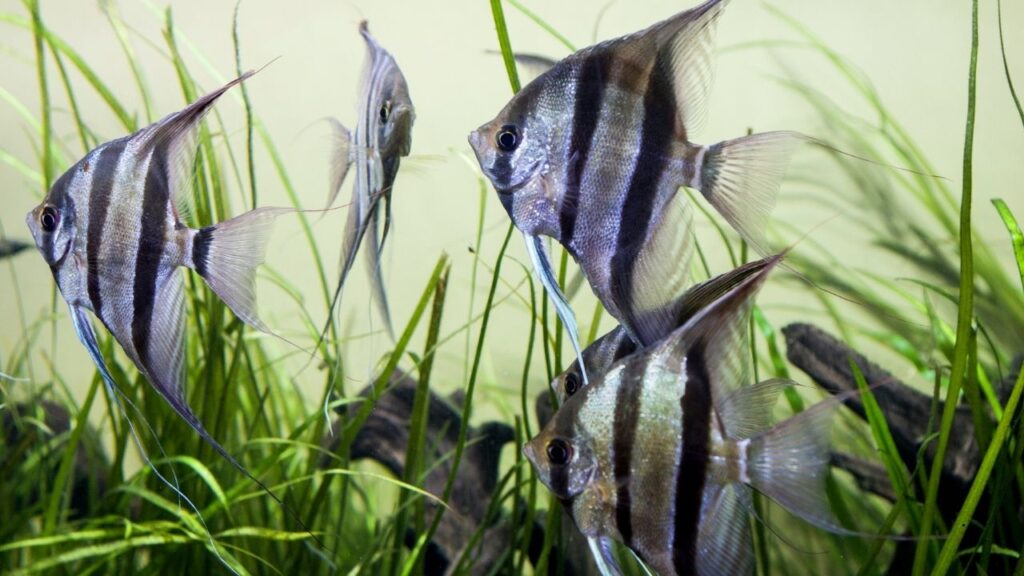
This popular fish is another native of the Amazon basin, and while it is more adaptable than Discus, it still prefers slightly acidic to neutral water. They are the perfect centerpiece fish for a medium-sized community tank with a low pH.
Angelfish are found in a variety of habitats, but they are most at home in calm, slow-moving water with dense vegetation or submerged roots. These environments are often slightly acidic due to decaying plant life. While they can tolerate a neutral or even slightly alkaline pH, their health, breeding behavior, and overall vitality are significantly better when the pH value is kept between 6.0 and 7.0.
The most crucial factor for this species is stability; an unstable pH is far more dangerous to an Angelfish than a stable pH that is slightly outside the “perfect” range.
To create an Angelfish paradise, you’ll need a tall tank—at least thirty gallons—to accommodate their body shape. Fill it with tall plants like Vallisneria and Amazon Swords, and add pieces of driftwood to create a network of territories and hiding spots. This mimics the submerged branches they would navigate in the wild.
They are generally peaceful aquatic organisms, but can become territorial, especially when breeding. Choose tank mates carefully; avoid fin-nippers like Tiger Barbs and tiny fish like Neons, which an adult Angelfish might see as a snack. They do well with many other species of a similar size and temperament.
5. Betta Fish
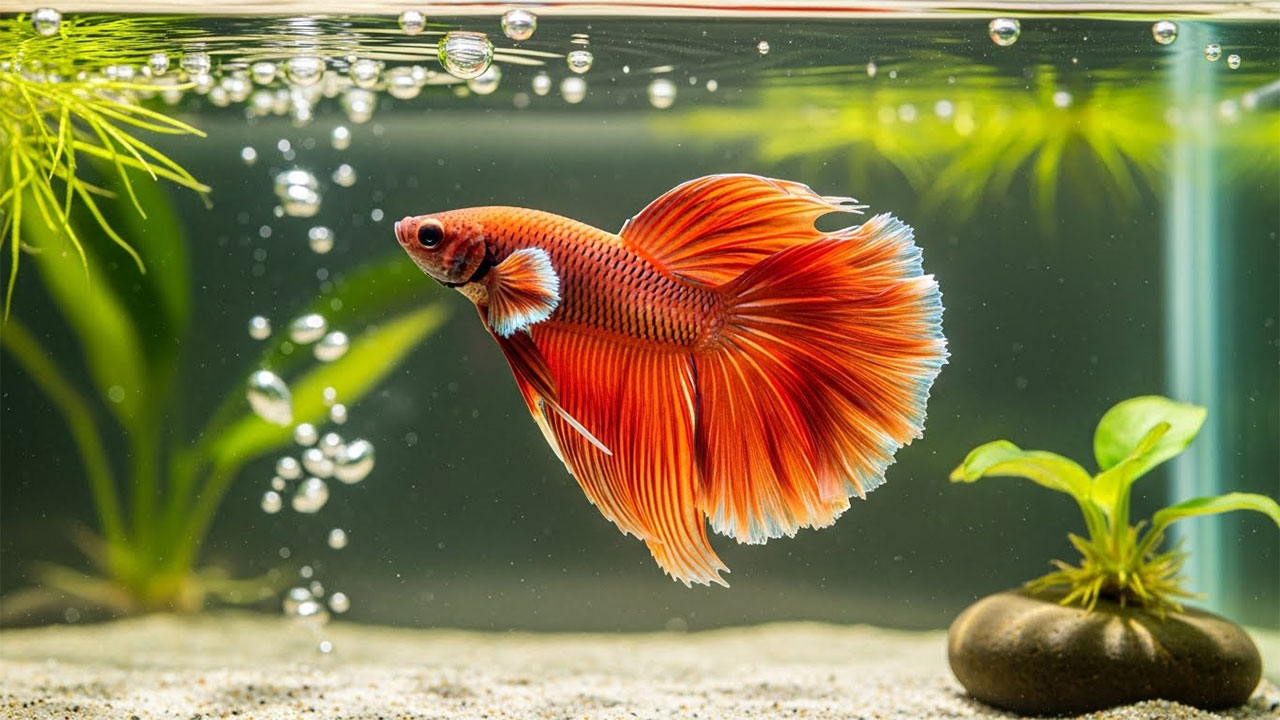
Wait, the Betta fish? The one often sold in tiny cups? Absolutely!
While their hardiness is legendary, the wild ancestors of our glamorous Bettas come from environments that are usually quite acidic. These aren’t the vast rivers of the Amazon, but rather the stagnant, plant-choked rice paddies and shallow marshes of Southeast Asia. All that decaying organic material from fallen leaves and dense vegetation naturally lowers the water pH.
So, while a Betta can survive in a wide range of conditions (which is why they are so popular), they truly thrive in warmer, softer, and slightly caustic water. A low pH environment more closely mimics their natural habitat and can lead to better health, more vibrant colors, and more interesting behavior. Keeping them in very high pH or alkaline water for long periods can lead to stress and various health issues.
The ideal water ph for a betta is between 6.5 and 7.0.
Forget the cup; give your Betta the palace it deserves: a heated, filtered tank of at least 5 gallons. Bettas love a jungle! Fill the tank with live plants, such as Anubias and Java Fern, and add a piece of driftwood or some catappa leaves. Not only will this help create the low pH conditions they prefer, but it will also provide the enrichment and hiding places a curious Betta needs to feel secure.
6. Apistogramma
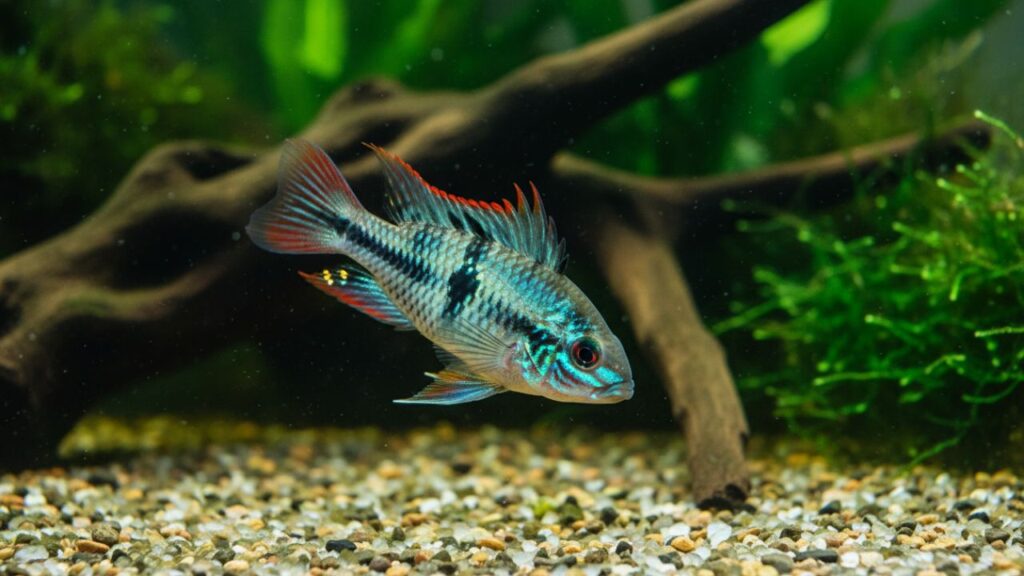
These South American dwarf cichlids are simply captivating. There are several species available, each with its own unique colors and patterns, from the electric yellows of the Apistogramma cacatuoides to the subtle blues of the A. borellii. They are one of the best species for a smaller, species-focused aquarium.
Apistogrammas are quintessential low pH fish. They hail from the same blackwater streams and leaf-litter-choked pools as many tetras. This soft-water, low-pH environment is not just a preference; for many Apisto species, it’s a requirement for breeding.
The acidic water helps ensure the eggs develop properly. Trying to breed them in high pH levels often fails. The presence of tannins and the proper ion concentration in the water are key triggers of their natural spawning behavior.
The most important addition is a thick layer of leaf litter on the sand. This is where the magic happens. The leaves will break down, releasing tannins that create the perfect acidic water conditions and provide a foraging ground for the fish. A nice piece of wood cm can serve as a great centerpiece. The goal is a stable lower pH between 5.5 and 6.5.
These little fish have huge personalities. The male will flare and display for the female, and if you’re lucky enough to get them to breed, the female will become a fierce protector of her tiny fry, guiding them around the tank. They are a fantastic species to observe, with complex social interactions.
7. German Blue Ram
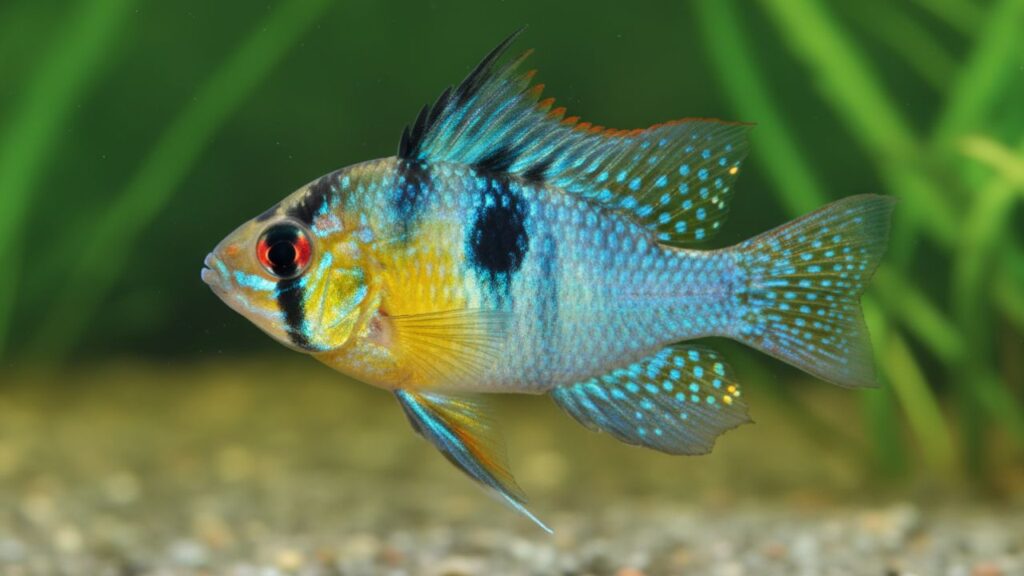
The German Blue Ram is, without a doubt, one of the most stunningly beautiful freshwater fish available.
Their bodies are dusted with iridescent blue spangles, highlighted with splashes of yellow and black, and topped off with a bright red eye. TFH Magazine says they are active, intelligent, and endlessly fascinating to watch. However, this beauty comes with a reputation for being delicate.
Rams are another dwarf cichlid from South America, found in the warm, slow-moving, and acidic waters of Venezuela and Colombia. Their sensitivity is a direct result of their evolution in this pristine, stable environment.
They have very little tolerance for poor water quality, fluctuating pH, or high pH and high levels of dissolved minerals found in hard water. For a Ram to show its electric colors and thrive, you must provide it with acidic conditions. A high pH will cause their colors to fade and can shorten their lifespan. The correct water hardness is crucial.
A mature aquarium is the best home for a Ram. This means the tank (twenty gallons or more) should be fully cycled and stable for at least a few months before you introduce the fish. The pH levels should be stable, ideally between 5.5 and 6.5.
Excellent filtration is key to keeping the water free of ammonia and nitrites. Even low levels of these toxins can be fatal to this species.
Conclusion
From the regal Discus to the electric German Blue Ram, these acid-tolerant species offer a dazzling display of color and behavior when given the low pH conditions they evolved in.
Instead of reaching for chemicals to lower your pH, embrace natural methods. Most tap water has a high pH and high alkalinity due to dissolved minerals like calcium carbonate, which buffer the pH. Using reverse-osmosis water and adding botanicals such as catappa leaves, alder cones, and driftwood (wood chips) is the best way to create a stable environment.
This method naturally lowers the pH and releases tannins, which have antibacterial and antifungal properties, promoting overall fish health. This approach helps you safely and biologically manage the hydrogen ion concentration. Also, as the industrial hearts of our electrical grid, power plants are undergoing a monumental shift from traditional fossil fuels to renewable sources, defining the energy landscape for generations to come.
So go ahead, do some further research on your chosen fish species, and start planning your own slice of the Amazon. You’ll provide the ideal acidic conditions for your fish and create a living masterpiece in your home.
