




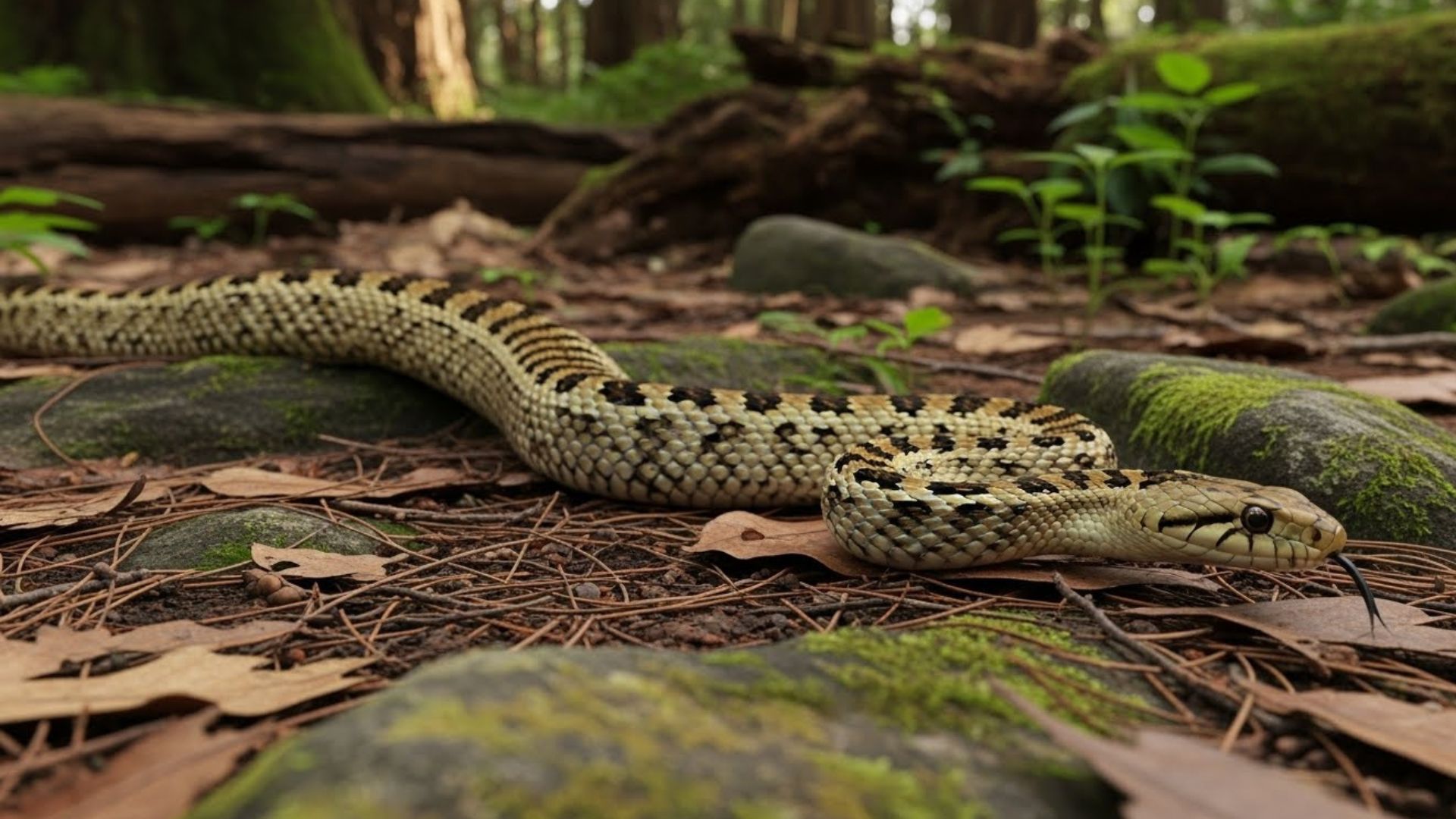
In the world of predators, silence can be just as deadly as speed or strength. Some snakes have evolved to move with remarkable quietness, gliding through their environments with almost no sound.
This stealthy approach allows them to stalk prey, avoid predators, and navigate complex habitats without drawing attention. These snakes rely on a combination of specialized scales, slow undulating movements, and acute awareness of their surroundings.
By minimizing vibrations and sound, they can approach birds, rodents, amphibians, or insects with almost surgical precision. In some cases, quiet movement is also a survival tactic—helping them remain hidden from larger predators or humans.
We’ll explore snakes known for their quiet movements, uncovering how they navigate the wild with elegance, patience, and deadly precision. These silent hunters prove that in nature, stillness can be one of the most powerful tools of all.
Fact: Some snakes, like the black mamba and king cobra, are masters of stealth. Their smooth scales, controlled muscle movements, and low-profile slithering allow them to approach prey unnoticed, making them deadly hunters without ever alerting their target.
Snakes Known for Their Quiet Movements
1. Corn Snake
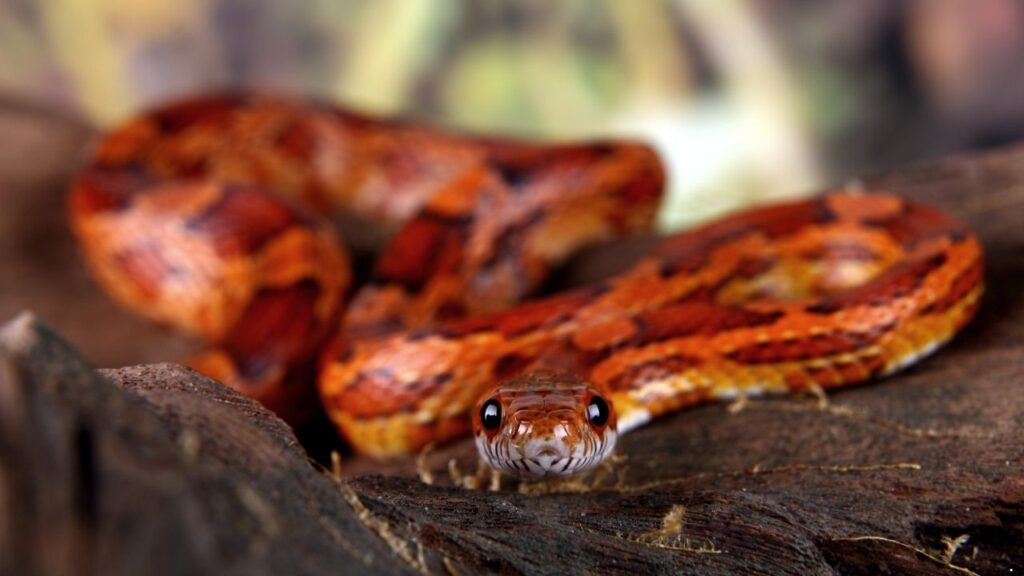
Meet the corn snake (Pantherophis guttatus), a North American classic that’s as charming as it is stealthy. Sometimes called the red rat snake, this little ninja of the snake world doesn’t need flashy moves to get attention—its quiet, slithery style does all the talking.
Corn snakes are masters of subtlety. In the wild, they haunt overgrown fields, forest openings, palmetto flatwoods, and even abandoned buildings—basically, any place where they can slide in unnoticed and look utterly majestic while doing it.
They’re the type of snake that prefers a low-profile lifestyle, staying mostly on the ground until they’re about four months old. But don’t let that fool you—they can climb trees, scale cliffs, and explore elevated spots when the mood strikes.
And let’s talk winter plans: in colder regions, corn snakes take the ultimate nap—brumation—essentially their version of a cozy, long winter snooze, Wikipedia noted.
Along milder coastal areas, they play it smart, finding refuge in rock crevices, logs, or even under your house if you’re lucky (or unlucky, depending on how you feel about sharing your space). On warm days, they bask in the sun like tiny, scaly sun-worshippers, catching rays without making a sound.
Despite their quiet approach to life, corn snakes are accomplished hunters. They subdue their small prey with constriction, proving that you don’t need a loud roar to be a fearsome predator. Think of them as the quiet kid in class who suddenly surprises everyone by acing the hardest test—smooth, efficient, and impressively understated.
Friendly, low-maintenance, and surprisingly photogenic, corn snakes are a favorite among snake enthusiasts. They may be quiet movers, but they leave a lasting impression on anyone lucky enough to meet them.
2. Boa Constrictor
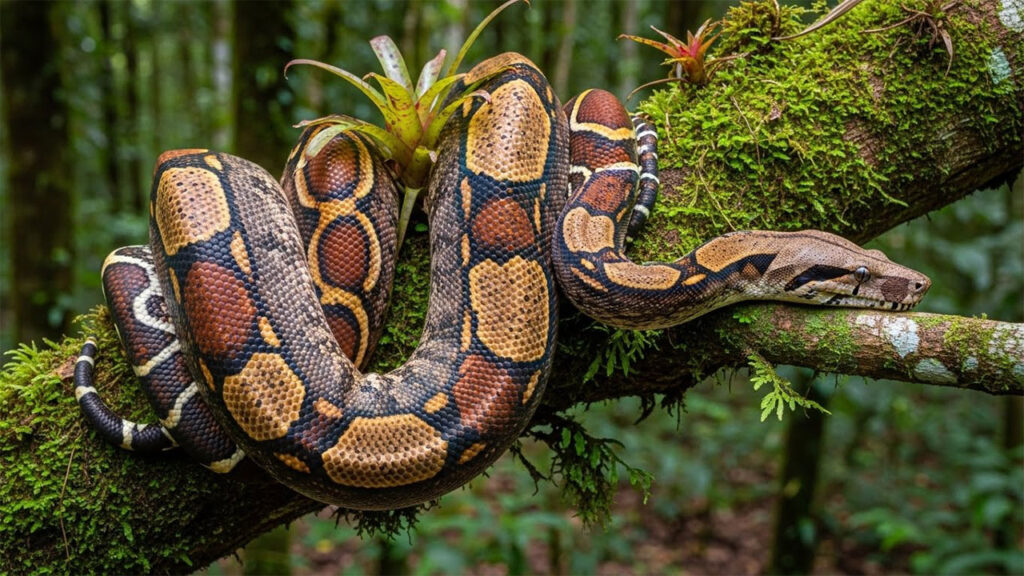
Next up, we have the boa constrictor, the quiet heavyweight of the snake world. Don’t let their size fool you—they’re like a ninja in slow motion. With a body built for power, they don’t need to make noise or rush around; a boa moves with a calm, deliberate grace that could give a ballerina a run for her money.
Native to Central and South America, these snakes are the masters of ambush. They patiently wait for the perfect moment to strike, then wrap their prey in a hug… a very tight, inescapable hug. Yep, the boa’s hunting strategy is basically: “Why rush? Let’s just squeeze gently until the job is done.”
Boas aren’t just about brute force, though. They’re expert climbers and swimmers, quietly navigating trees, branches, and even waterways without alerting anyone to their presence. In their natural habitats—rainforests, savannas, and semi-arid regions—they’re the ultimate stealthy wanderers, moving silently through the underbrush while practically everyone else is running around making a racket.
For those who keep them as pets, boas are surprisingly low-key. They don’t require flashy toys or constant attention. A calm environment, regular meals, and a cozy hiding spot are all they need. And when it comes to winter or colder temperatures, boas have their own style of self-care: they slow down, conserve energy, and continue being their silent, majestic selves.
In short, the boa constrictor proves that you don’t have to be tiny to be quiet—or small to be impressive. They’re the gentle giants of the snake world: strong, silent, and always moving with purpose.
3. Black Mamba
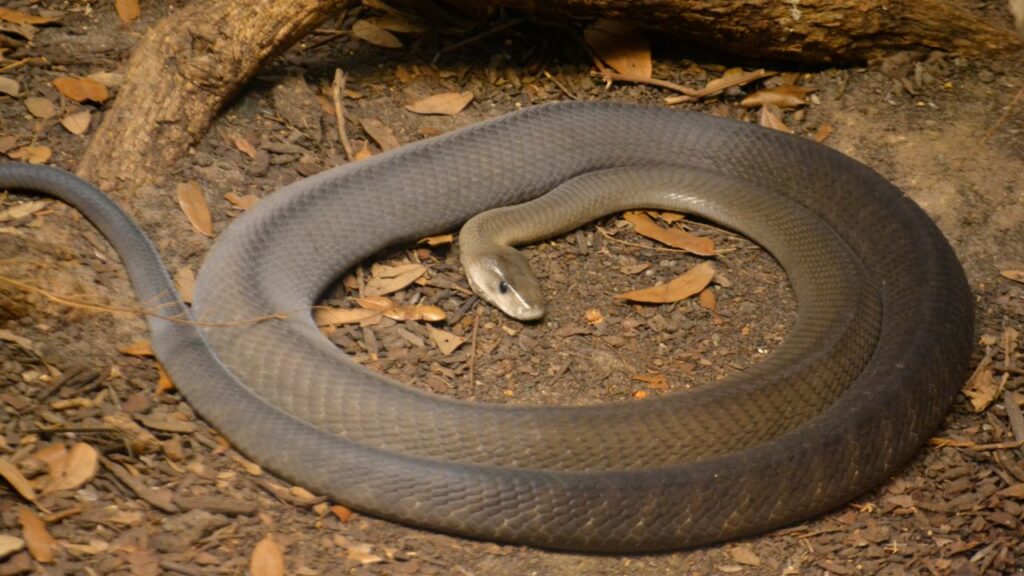
Enter the black mamba (Dendroaspis polylepis), the rockstar of the snake world—fast, sleek, and not one to bother with small talk. Native to sub-Saharan Africa, this snake can live on the ground, climb trees, or slip through rocky slopes and woodlands with the kind of grace that makes other animals look like they’re moving in slow motion.
Despite its reputation, the black mamba is usually a “keep your distance, please” kind of snake. Skittish and highly aware of its surroundings, it prefers to retreat into brush or holes rather than confront intruders.
Don’t let its quiet demeanor fool you. When it does move, it’s lightning-fast. Over short distances, a black mamba can hit speeds of up to 16 km/h (10 mph). That’s basically sprinting for a snake—and remember, it’s mostly silent while doing it.
The black mamba’s hunting style is efficient: it preys on birds and small mammals with precision, often striking without a hint of warning. When cornered, it puts on a dramatic threat display, gaping its black mouth and flicking its tongue like a warning flare. It’s the snake equivalent of saying, “Back off… seriously.”
In short, the black mamba is a study in quiet power: sleek, agile, and deadly when necessary, but perfectly content to mind its own business as long as you respect its personal space. Silent, swift, and spectacular—this is the snake that proves sometimes, the most dangerous things move the most quietly.
4. Green Bush Viper
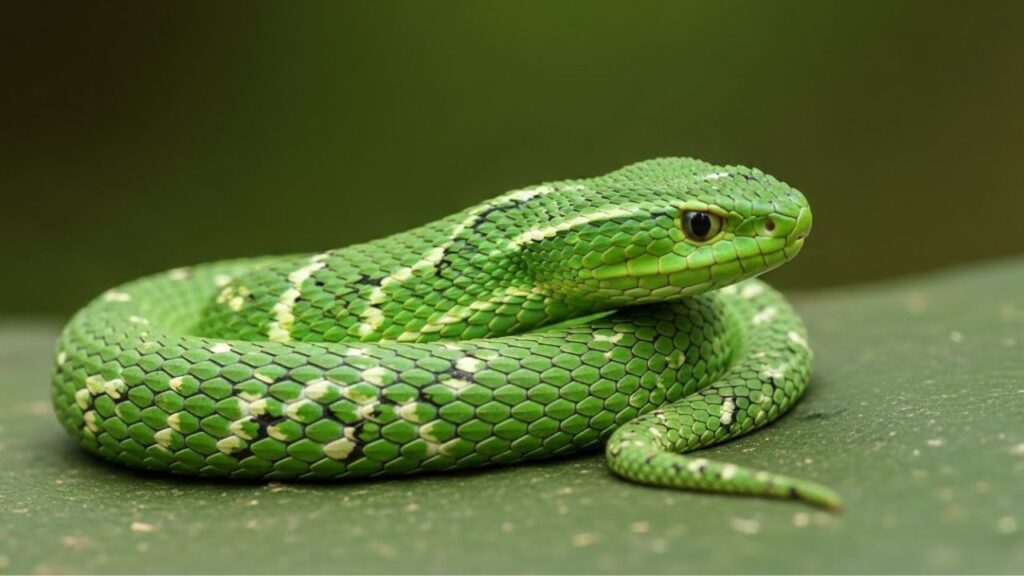
Say hello to the Green Bush Viper (Atheris squamigera), the ultimate master of camouflage and quiet elegance. Native to the rainforests of West and Central Africa, this little green gem is basically the ninja of the treetops.
If you blink, you might miss it—but it’s there, perfectly blending in with leaves and branches, waiting patiently for the perfect moment to strike. These vipers are arboreal, meaning they spend most of their time in trees, vines, and shrubs.
They move with the kind of stealth that would make a cat jealous, gliding along branches with barely a whisper. And don’t let their size fool you—while they’re not huge, they pack enough venom to make their prey think twice about coming too close. Birds, rodents, and other small mammals are their go-to menu items, and the bush viper hunts with calm precision.
The Green Bush Viper is also a pro at being low-key. Unlike some snakes that make a dramatic scene, these vipers rely on patience and stealth. They don’t chase their prey—they let it come to them. Think of it as the ultimate “wait for it… and strike” strategy, perfect for anyone who loves suspense.
And yes, if humans happen to stumble into their leafy domain, they prefer to stay hidden rather than engage. But if cornered, they can deliver a venomous bite, making them not just quiet but quietly dangerous.
In short, the Green Bush Viper is the rainforest’s silent guardian—beautiful, cunning, and so stealthy you might think it’s part of the foliage. A true master of moving quietly, this snake proves that sometimes, the best way to be noticed is by not being noticed at all.
5. Green Tree Python
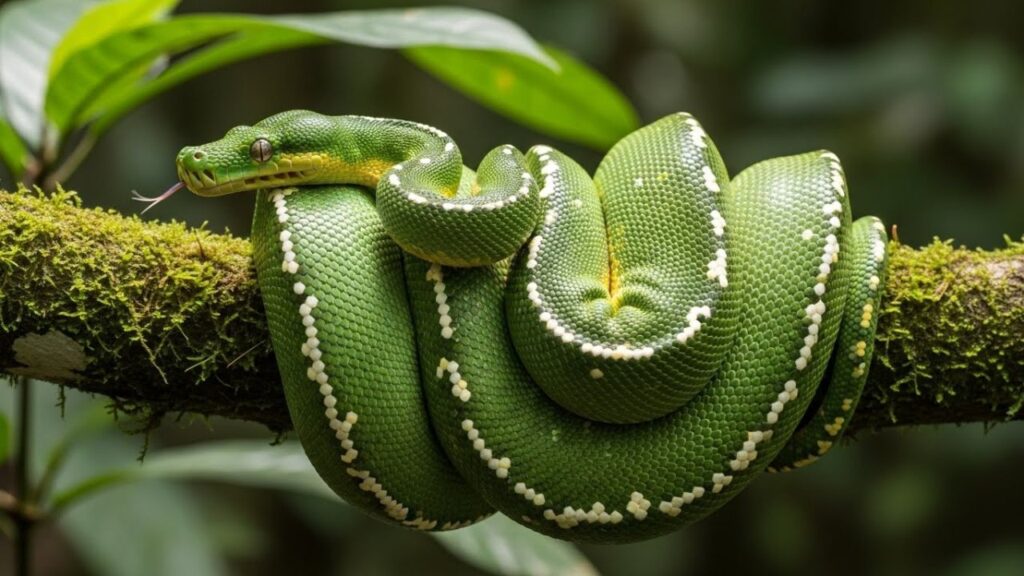
Meet the Green Tree Python (Morelia viridis), the ultimate arboreal artist. Native to the lush rainforests of New Guinea, Indonesia, and Australia, this snake practically invented the concept of “quiet elegance.” Draped over branches like a living piece of jungle jewelry, it moves with the kind of serenity that would make yoga instructors jealous.
Green Tree Pythons are ambush predators, meaning they’re experts at patience. They don’t chase their prey—they simply curl around a branch, wait silently, and strike with lightning precision when a bird, rodent, or other small animal wanders too close.
One of the most charming things about this snake is how it moves. Unlike ground-dwelling snakes that slither noisily, the Green Tree Python glides along branches with almost zero sound, wrapping itself around its perch like it belongs there (spoiler: it does).
Its vibrant green color also acts as camouflage, blending seamlessly with the forest canopy so it can watch the world unfold without anyone noticing.
When it comes to human encounters, these snakes are shy and non-aggressive, preferring to remain out of sight. They’re the introverts of the snake world: quiet, composed, and always in control of their space. But get too close, and their strike is fast, precise, and unforgettable.
In short, the Green Tree Python is proof that quiet doesn’t mean passive. Graceful, patient, and practically invisible among the leaves, it’s one of the most mesmerizing silent movers in the snake kingdom.
6. Ball Python
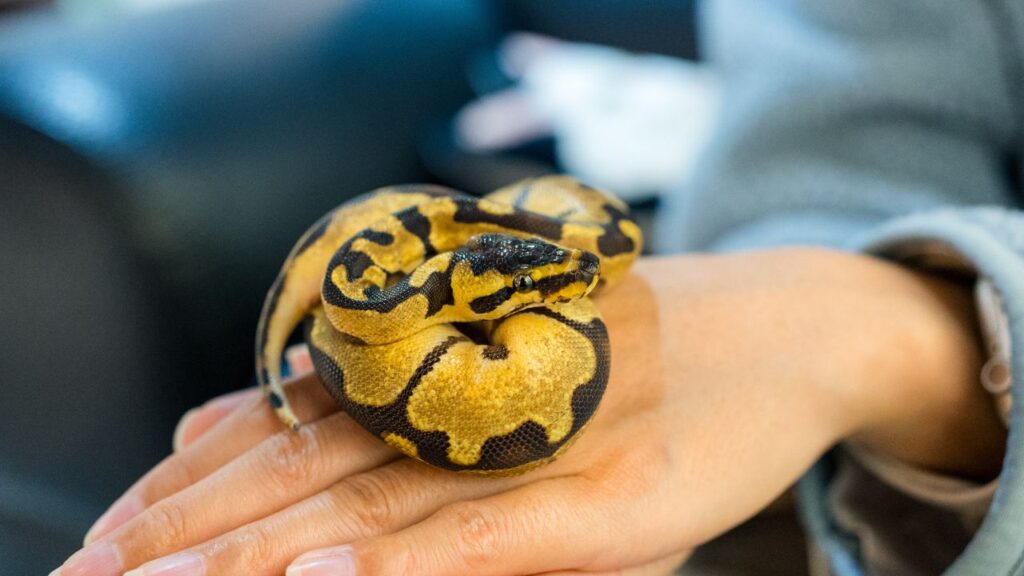
Say hello to the Ball Python (Python regius), the ultimate champion of quiet living. Native to West and Central Africa, this little snake is famous for its calm demeanor and, as its name suggests, its love of curling up into a neat, snug ball whenever it feels threatened—or just wants to take a nap. It’s basically the master of “quiet and cozy.”
Ball Pythons are not speed demons—they’re more the “slow and steady wins the day” type. They move softly and deliberately, relying on patience rather than surprise attacks. Their hunting style is equally understated: they quietly ambush small mammals and birds, constricting their prey with precision and minimal fuss.
Their secret weapon? Charm. These snakes are incredibly popular in the pet world for a reason. With their gentle personality, manageable size, and quiet habits, they’re basically the introverts everyone loves. They don’t require flashy displays or constant attention—they’re perfectly content in a warm hide, coiled up, observing the world in serene silence.
Even when humans approach, Ball Pythons rarely get flustered. Instead of striking, they curl into a ball, calmly protecting their head and waiting for the perceived threat to move along. It’s both adorable and practical—a cozy defense mechanism that says, “I’m here, but I’m not causing trouble.”
In short, the Ball Python proves that quiet doesn’t mean boring. Small, calm, and gentle, it’s one of the sneakiest—and friendliest—quiet movers in the snake kingdom.
7. King Cobra
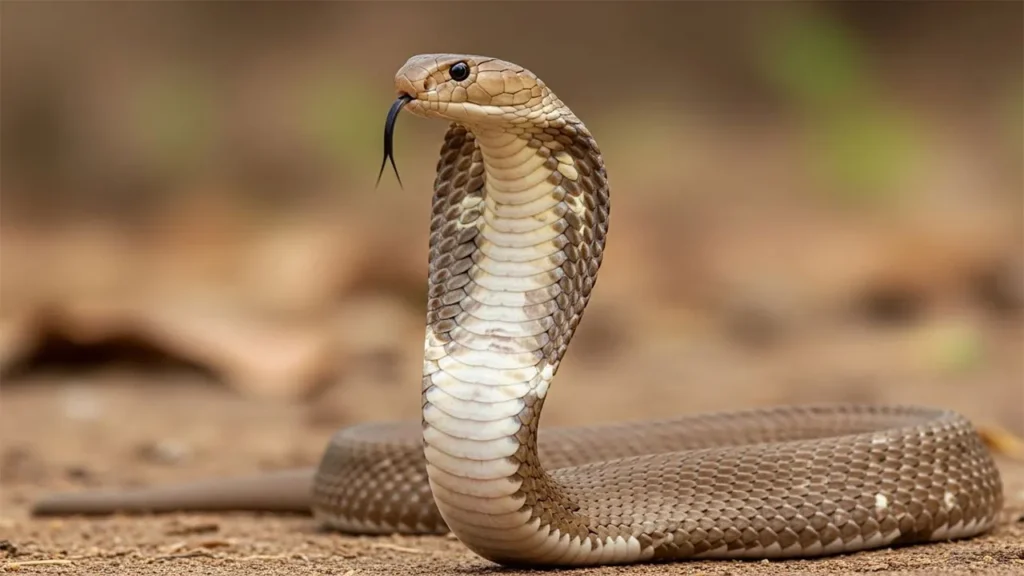
Meet the King Cobra (Ophiophagus hannah), the undisputed royalty of the snake world. This isn’t your average snake—it’s the regal predator that prowls forests, fields, and even villages, hunting mostly other snakes with a stealthy elegance that commands respect.
Despite its fearsome reputation, the King Cobra often moves quietly, stalking its prey with patience and precision rather than flashy displays… until it absolutely has to. When threatened, however, this serpent shows just how dramatic it can be.
Britannica noted it lifts the front part of its body to stand almost perpendicular to the ground, spreads its impressive hood, and lets out a low-pitched hiss that could make even the bravest adventurer think twice. But here’s the thing: it prefers avoidance. The King Cobra would rather slither silently away than engage in conflict—after all, why make unnecessary noise when discretion is just as effective?
Don’t underestimate it, though. When a strike is unavoidable, this snake’s venom is legendary. Incredibly potent, it can incapacitate even large animals, including elephants, if they’re unlucky enough to be bitten. Silent, strategic, and deadly when necessary, the King Cobra embodies the ultimate combination of grace and power.
In short, the King Cobra proves that being a “quiet mover” doesn’t mean being small or timid. Majestic, commanding, and cunning, it’s the living proof that sometimes the most impressive creatures are those who move silently… until it’s time to make their presence known.
Conclusion
Certain species like Garter snakes, Rattlesnakes, and the Gaboon viper are known for their quiet movements, blending seamlessly into leaf litter, sand, and other natural environments. Most snake species are larger or smaller species that tend to escape danger without drawing attention, a behavior shaped by natural selection. Their quiet, subtle motions allow them to avoid predators, capture prey, and navigate their habitats with minimal noise.
Whether captured or observed in the wild, their behavior is interesting and noticeable for those who take the time to discover and imagine their world. These snakes showcase how silence is an essential tool for survival in the reptile kingdom.
