




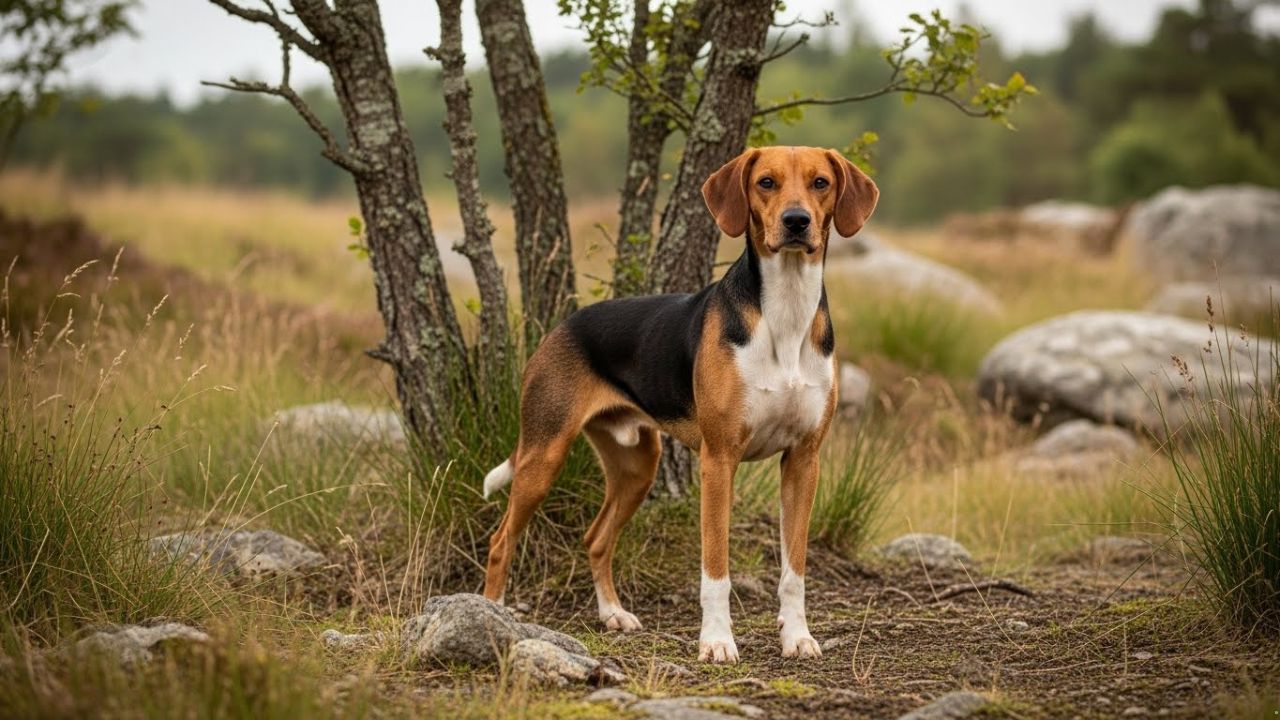
Rare dog breeds often capture attention not for their looks alone, but for the intensity of care they require. These dogs challenge owners in ways popular companion breeds rarely do. Curiosity often turns into commitment.
Many of these breeds were not designed for couches or casual walks. They were shaped by demanding jobs that required endurance, decision-making, and unwavering focus. Survival and success depended on human partnership.
Those historical roles still echo loudly in modern homes today. Strong instincts, high intelligence, and self-direction remain deeply ingrained traits. Time has softened their context, not their capabilities.
This is what makes rare dogs fundamentally different from many well-known family breeds. Their minds and bodies demand purposeful engagement, not passive ownership from day one.
Without consistent attention and structured training, problems quickly replace potential. For these breeds, expert care is not a luxury, but a responsibility. Meeting those needs defines responsible ownership always.
Rare Dog Breeds Demanding Constant Attention and Training
1. Otterhound
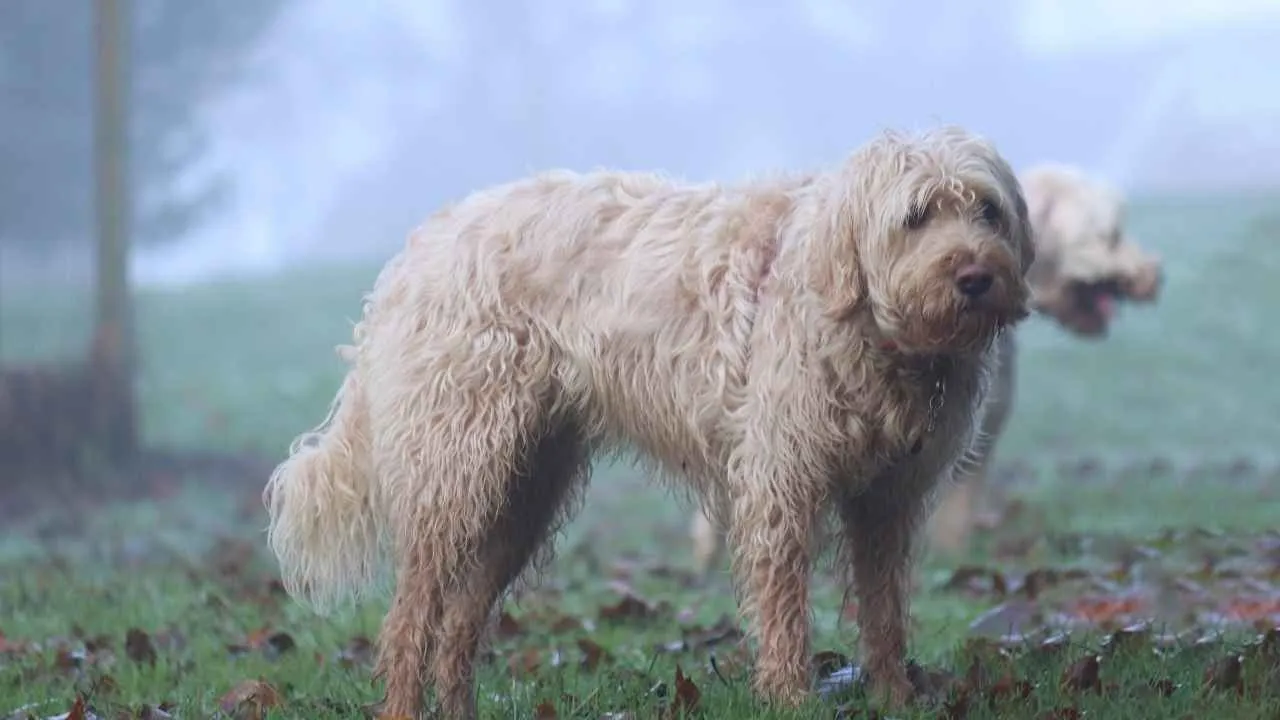
At a glance, the Otterhound is a large, shaggy scent hound with remarkable stamina and an unmistakable independence. Originating in medieval England for otter hunting, this breed was developed to track for hours through water and rough terrain. That working history still drives its endurance, problem-solving ability, and resistance to repetitive routines.
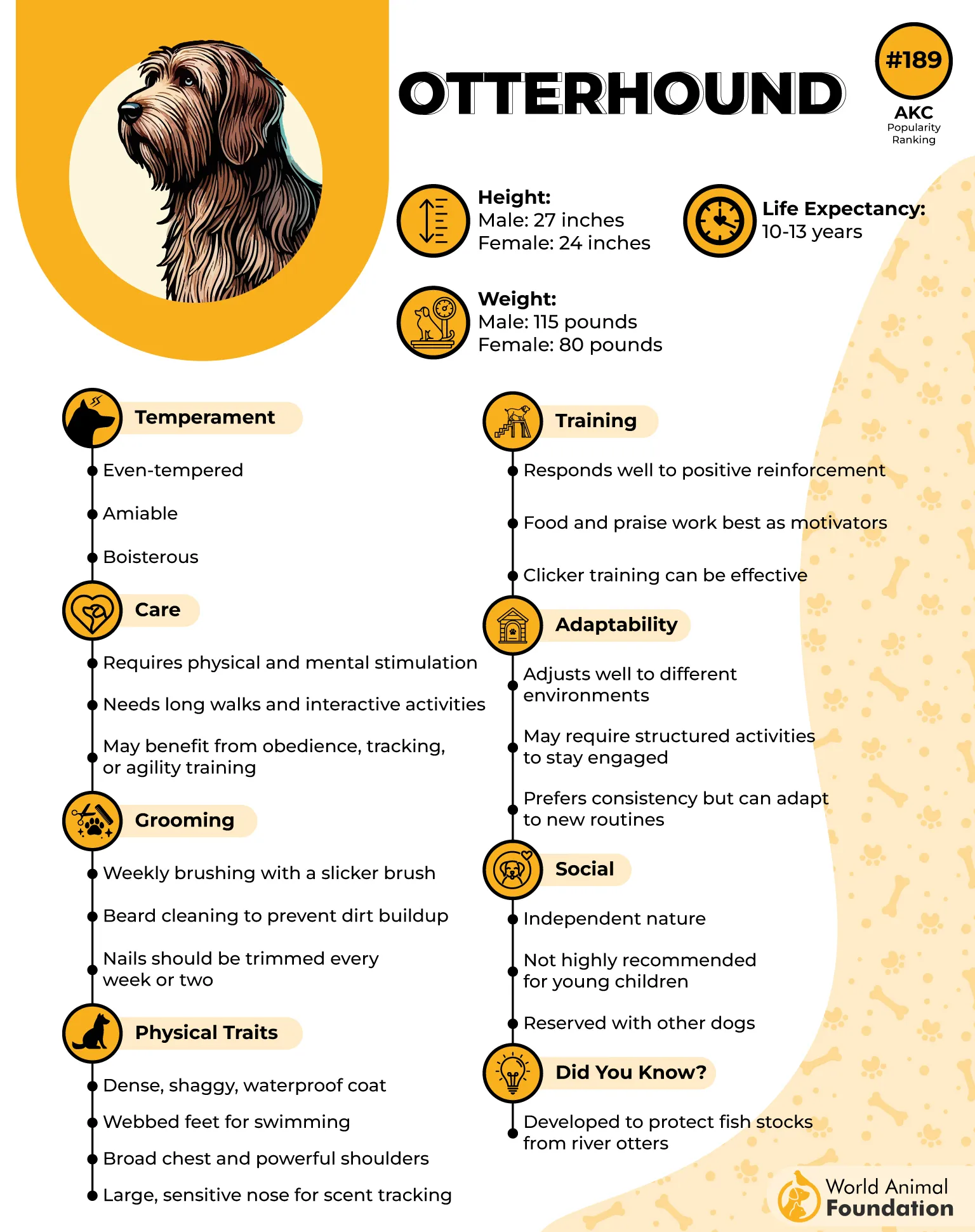
PetMD notes that under the rough coat is a friendly yet strong-minded personality that values autonomy as much as companionship. Otterhounds form loyal bonds, but respect is earned through consistency rather than force. Owners who invest time in engagement are rewarded with an affectionate dog that thrives on shared activity.
The Training Reality Check
Highly scent-driven, making recall training a long-term project
Learns best with variety and patience, not repetition-heavy drills
Requires early impulse control work to manage roaming instincts
Living Environment: Where This Breed Thrives (and Fails)
Best suited to homes with a secure outdoor space
Struggles in sedentary households with limited stimulation
Benefits from access to nature-based exercise
Attention needs extend far beyond daily walks. Otterhounds, as a high-energy breed, require prolonged physical activity combined with scent work or exploratory challenges to stay balanced. Mental engagement is just as critical as physical exertion.
New owners often underestimate the breed’s independence and slow maturity. This dog suits experienced handlers with time, space, and a flexible training mindset. Those seeking quick obedience or low-maintenance companionship may find the Otterhound overwhelming.
2. Harrier
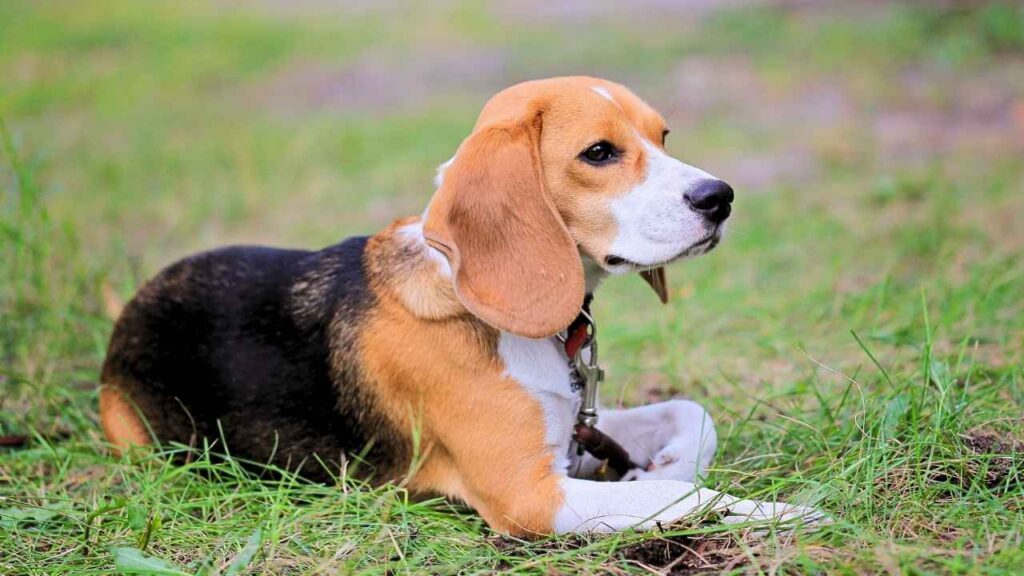
The Harrier presents as a compact, athletic hound built for endurance and speed. Developed in Britain for pack hunting, this energetic dog breed was shaped to follow scent trails relentlessly over long distances. That background explains its tireless energy and need for structured outlets today.
Social by nature, the Harrier enjoys company and thrives on interaction, both human and canine. Commitment brings a cheerful, responsive partner who enjoys learning through motion and teamwork. Engagement unlocks the breed’s enthusiasm and reliability.
The Training Reality Check
Responds best to positive reinforcement and movement-based learning
Easily distracted by scents without consistent focus on work
Requires early recall and boundary training
Living Environment: Where This Breed Thrives (and Fails)
Excels in active homes with daily outdoor routines
Poor fit for small spaces without exercise access
Enjoys structured play and group interaction
AKC claims that Harriers demand more than routine walks. They need sustained activity paired with problem-solving tasks to satisfy their working instincts. Mental fatigue is as important as physical exertion.
Inexperienced owners often misjudge the breed’s exercise threshold. Harriers suit people who enjoy outdoor pursuits and daily engagement. Low-activity lifestyles can lead to frustration-driven behaviors.
3. Karelian Bear Dog
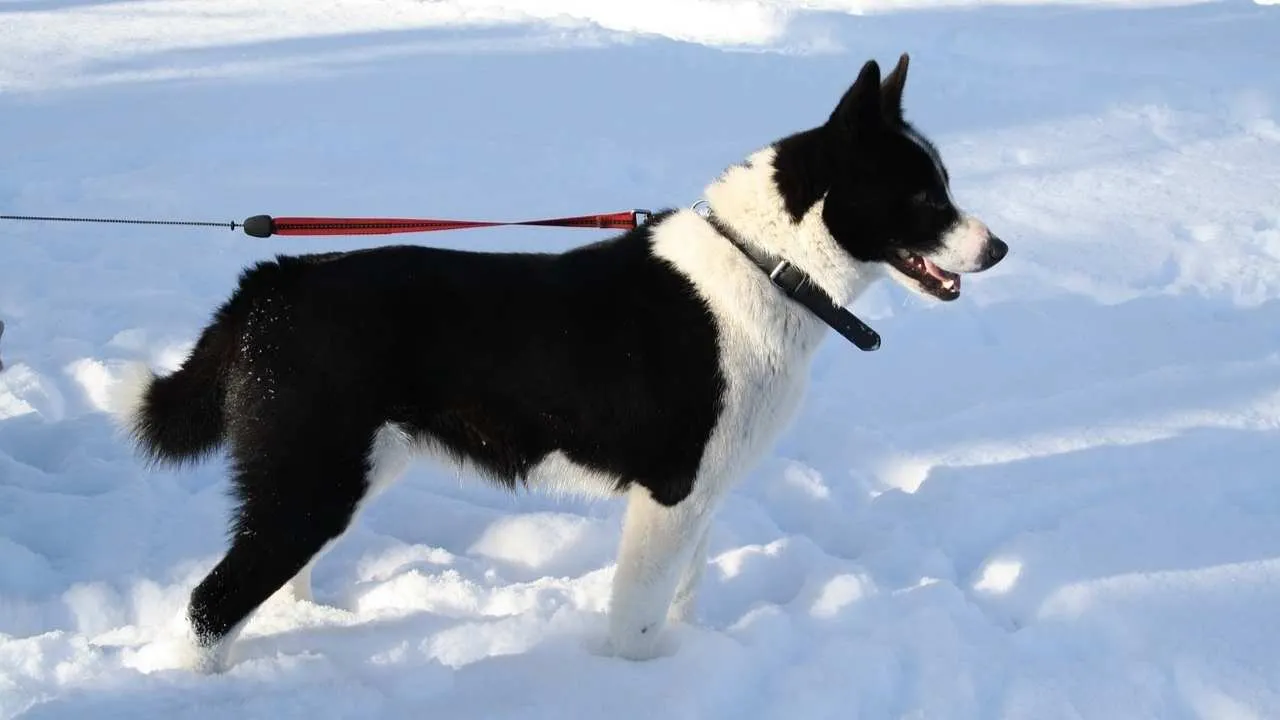
The Karelian Bear Dog is a powerful, alert spitz-type breed with intense focus. Originating in Finland for dog sports and hunting large game, it was bred to work independently in harsh environments. That legacy still defines its confidence and decisiveness.
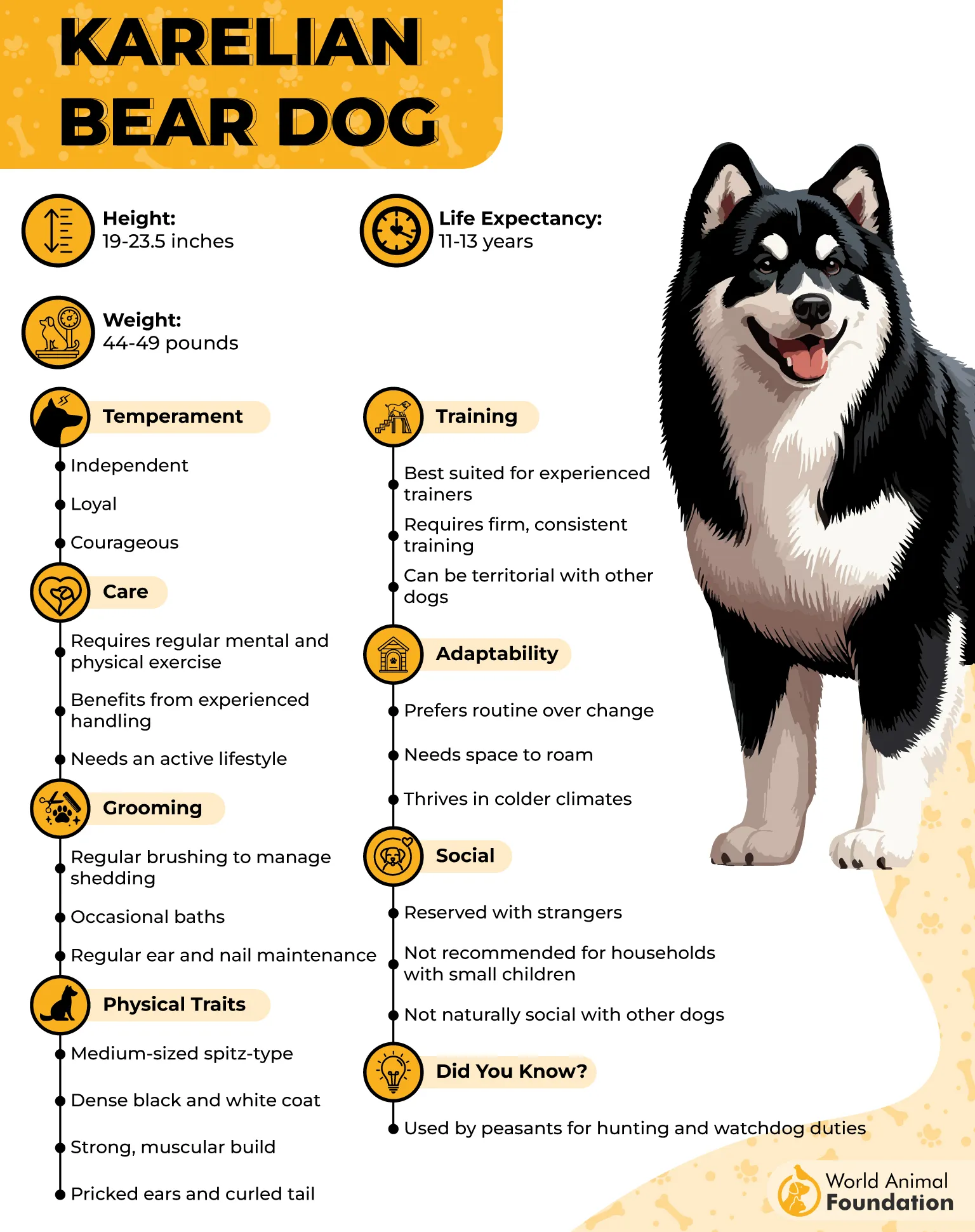
Royal Canin suggests that this breed is loyal but reserved, valuing respect over affection-seeking behavior. Commitment produces a deeply bonded working partner with strong situational awareness. Trust builds through structure, not indulgence.
The Training Reality Check
Requires clear leadership and firm consistency
Independent decision-making challenges novice trainers
Early socialization is essential for control
Living Environment: Where This Breed Thrives (and Fails)
Best in rural or spacious settings
Unsuitable for densely populated urban homes
Needs controlled exposure to people and animals
Attention requirements are substantial and ongoing. This breed needs purposeful work, not casual stimulation, to remain stable. Mental engagement tied to physical outlets is essential.
Common mistakes include underestimating territorial instincts and delaying training. The Karelian Bear Dog suits confident, experienced handlers seeking a serious working companion. Casual ownership expectations often result in management difficulties.
4. Belgian Laekenois
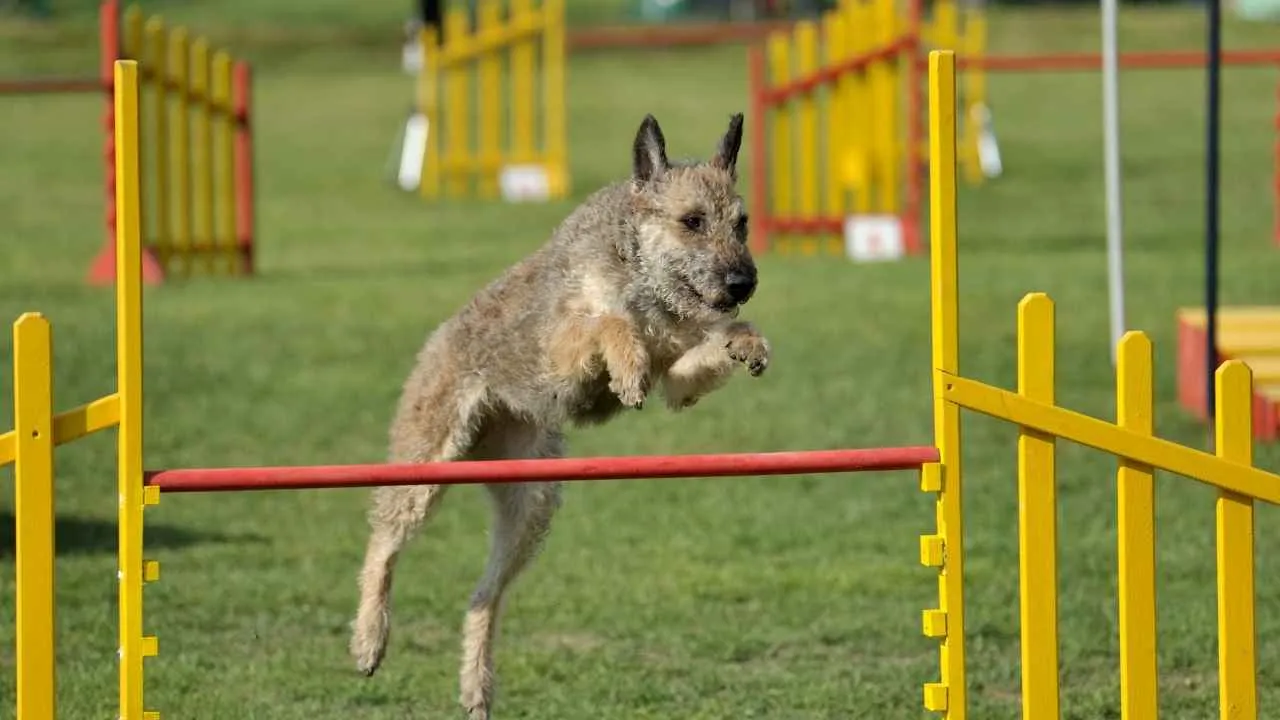
The Belgian Laekenois is an agile, intelligent herding dog with a distinctive rough coat. Bred in Belgium for guarding and livestock management, it was shaped for vigilance and adaptability. Those roots still influence its drive and responsiveness.
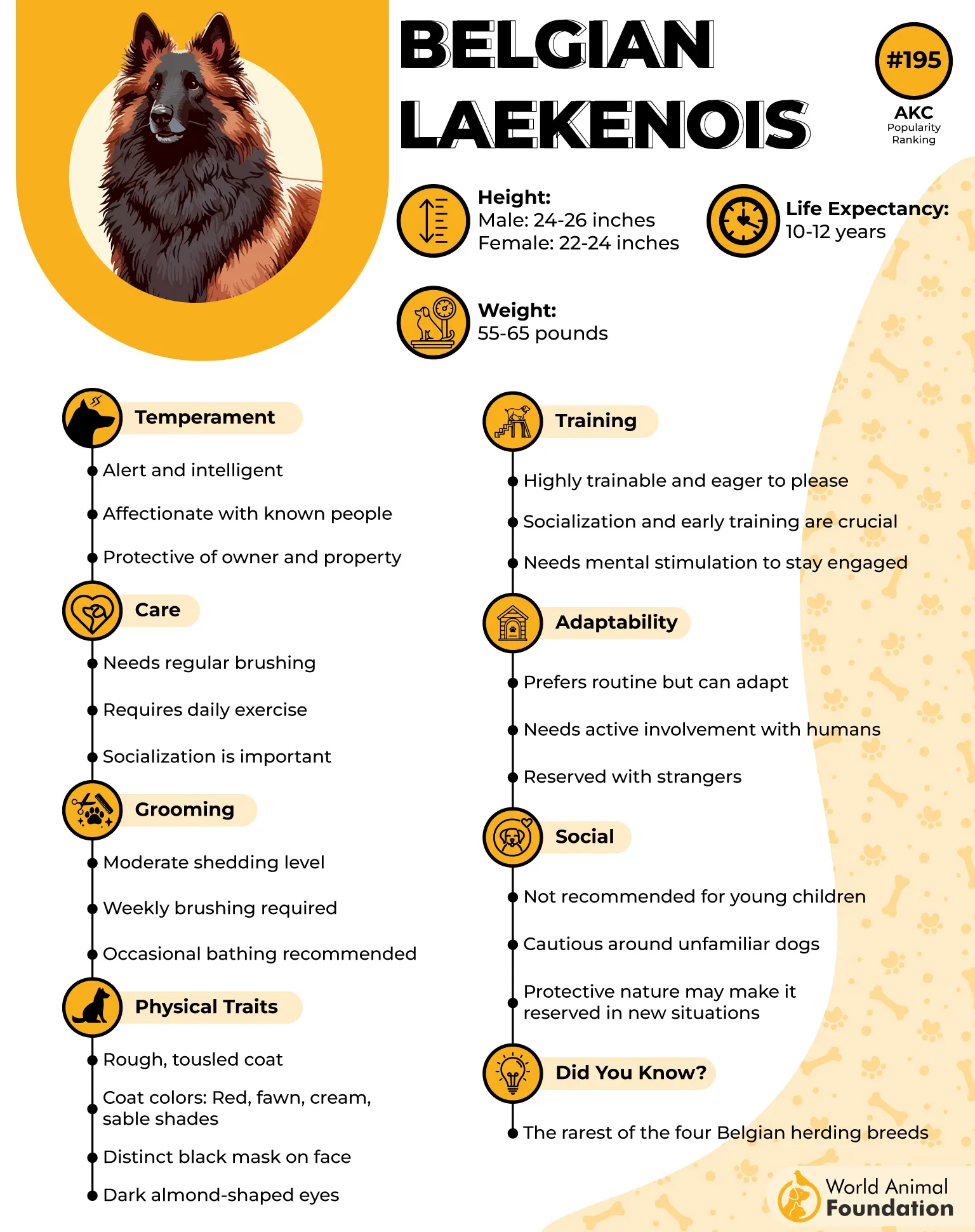
Emotionally attuned and observant, this breed forms intense bonds with its handler. Commitment results in exceptional loyalty and precision in training. Purpose-driven engagement brings out its full potential.
The Training Reality Check
Excels in advanced obedience and task-based learning
Sensitive to inconsistency and unclear cues
Thrives on structured, progressive challenges
Living Environment: Where This Breed Thrives (and Fails)
Ideal for active households with daily training routines
Struggles in homes lacking mental stimulation
Benefits from jobs or canine sports
Attention needs are constant rather than occasional. The Laekenois requires daily mental work paired with physical exercise to maintain balance. Idle time without structure often leads to restlessness.
New owners sometimes confuse intelligence with ease of care. This breed suits dedicated handlers who enjoy ongoing training involvement. Passive ownership styles tend to create behavioral strain.
5. Caucasian Shepherd Dog
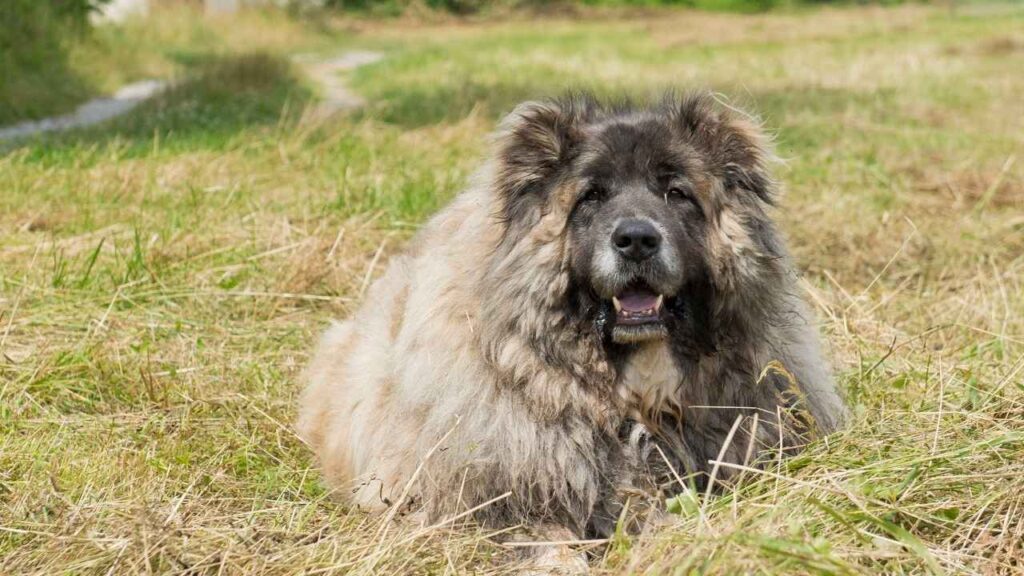
At a glance, the Caucasian Shepherd Dog is massive, imposing, and deeply self-assured. Originating in the Caucasus Mountains, this breed was developed to guard livestock against large predators, often working alone for extended periods. That history explains its confidence, territorial instincts, and natural suspicion of unfamiliar situations.
Under the formidable exterior lies a dog that bonds intensely with its family and property. Commitment brings a steadfast guardian that reads environments with precision and calm authority. Trust is built through clear leadership rather than excessive affection.
The Training Reality Check
Requires firm, consistent guidance from an early age
Naturally independent, limiting reliance on repetitive obedience drills
Early social exposure is critical for controlled behavior
Living Environment: Where This Breed Thrives (and Fails)
Best suited to large, secure properties
Poor fit for apartment or densely populated settings
Needs clearly defined boundaries and routines
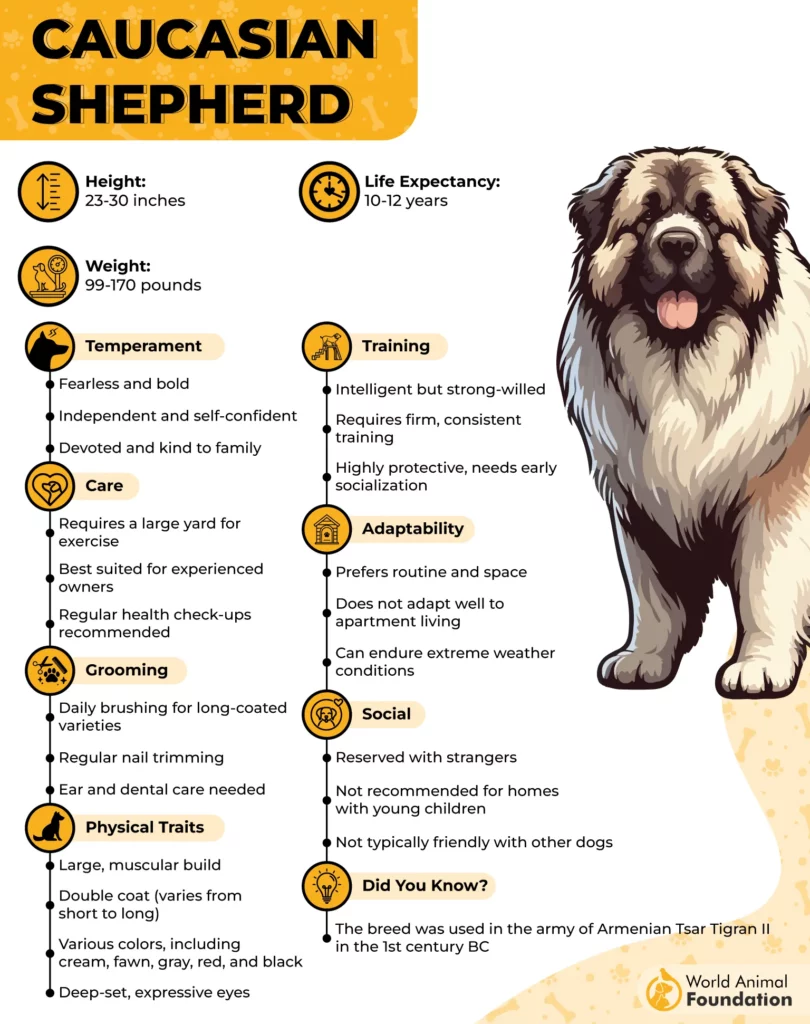
Attention needs center on structure more than activity volume. This breed requires daily interaction that reinforces leadership and expectations. Mental engagement through supervision and purposeful roles keeps behavior stable.
New owners often underestimate the breed’s guarding instincts and size-related responsibilities. The Caucasian Shepherd Dog suits experienced handlers comfortable with assertive breeds. Those seeking an easygoing companion may struggle with its intensity.
6. Dutch Shepherd
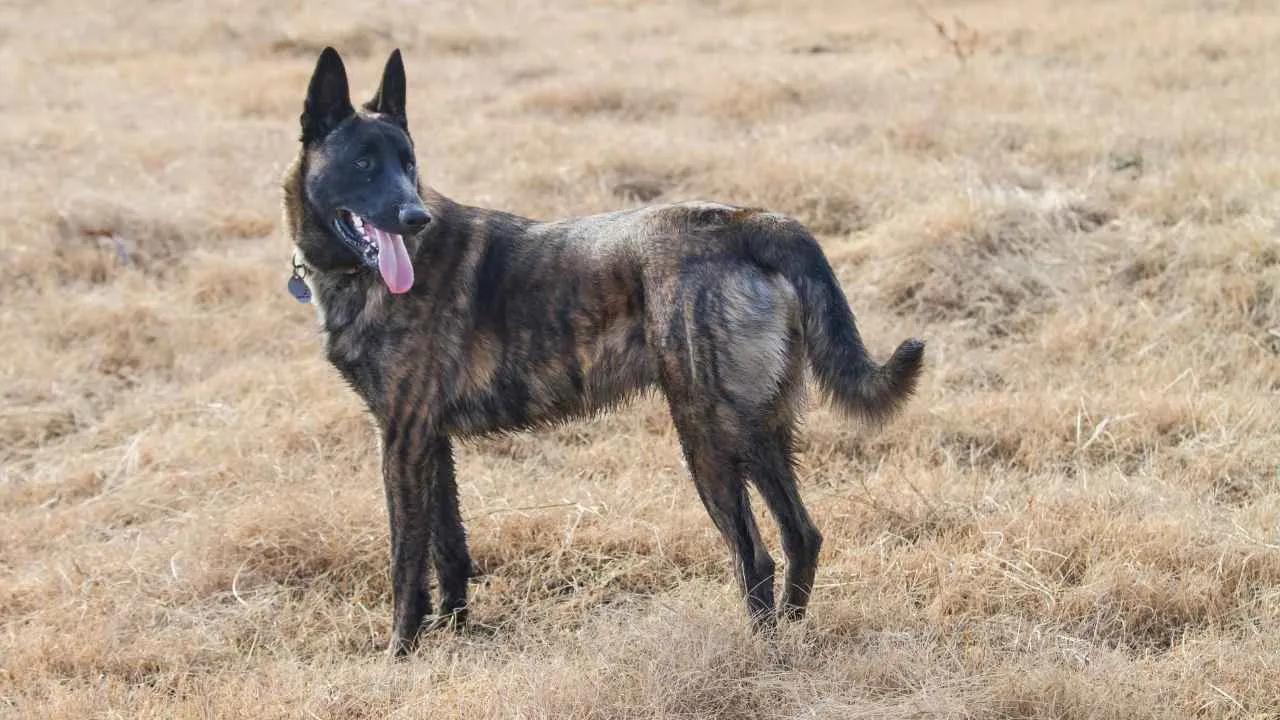
The Dutch Shepherd is a lean, athletic working dog built for versatility. Developed in the Netherlands for herding and farm work, it adapted to multiple roles requiring intelligence and endurance. That adaptability still fuels its strong work ethic and learning speed.
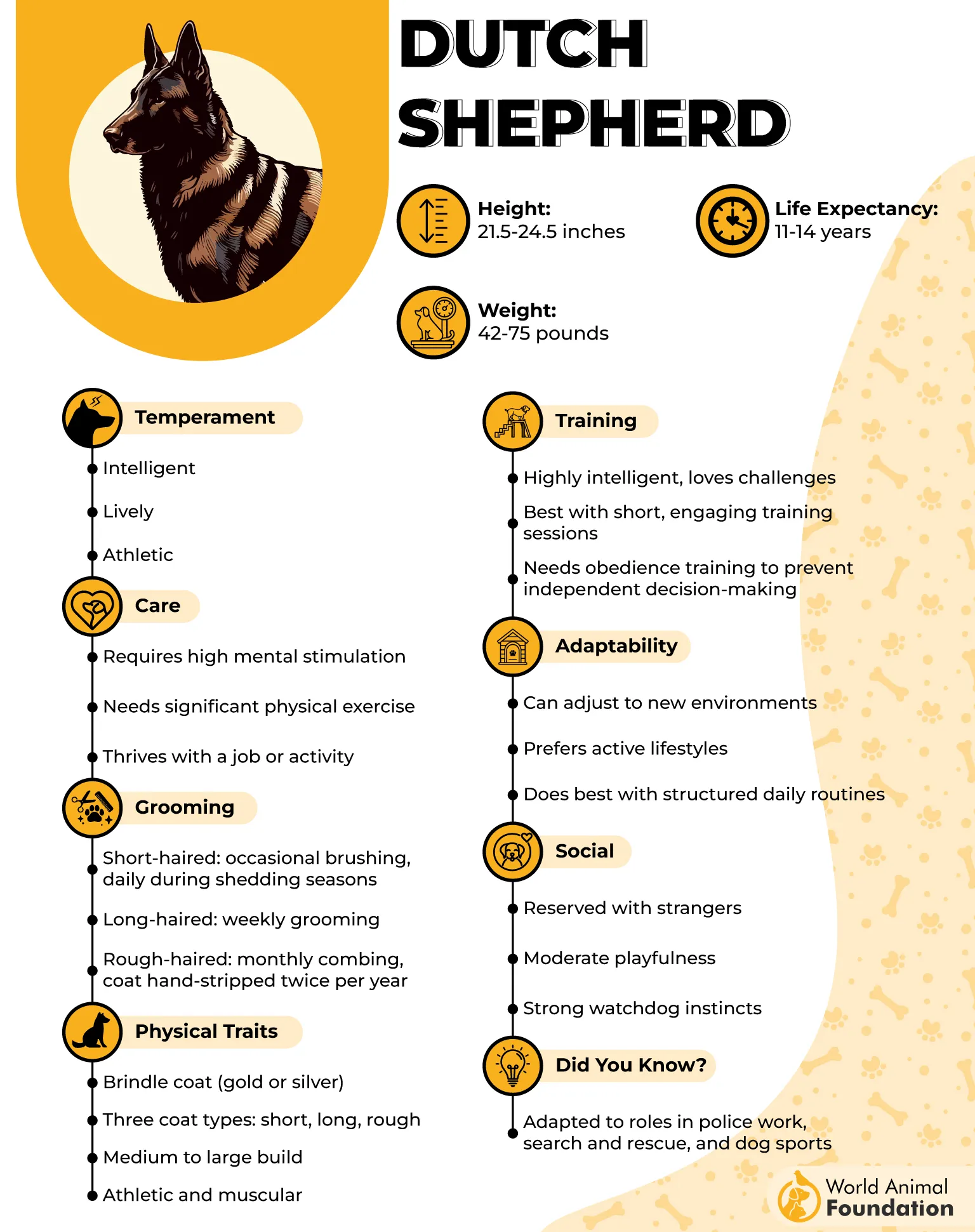
Highly focused and eager to engage, this senior dog breed thrives on collaboration with its handler. Commitment unlocks precision, reliability, and an impressive ability to master complex tasks. The relationship feels more like a partnership than ownership.
The Training Reality Check
Learns quickly but demands consistent challenges
Excels in obedience, protection work, and canine sports
Under-stimulation often leads to frustration-driven behaviors
Living Environment: Where This Breed Thrives (and Fails)
Ideal for active households with structured routines
Struggles in low-engagement or sedentary homes
Benefits from work-oriented environments
Attention requirements are intensive and ongoing. Daily physical exercise must be paired with problem-solving and training sessions. Mental fatigue is essential for balance.
Common mistakes include assuming intelligence equals low effort. This adult dog breed suits dedicated, hands-on owners who enjoy training as a lifestyle. Inconsistent engagement often results in behavioral challenges.
7. Xoloitzcuintli
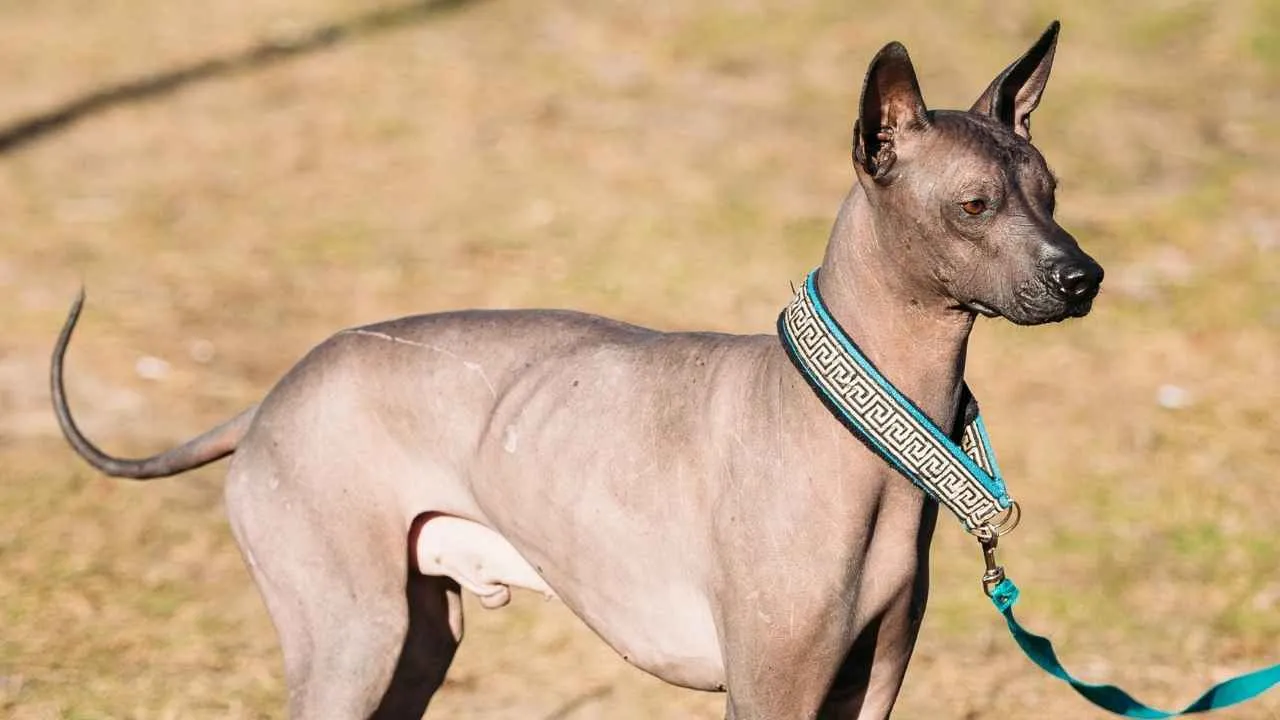
The Xoloitzcuintli is an ancient, elegant breed with a calm yet alert presence. Originating in Mexico, it was historically valued as both a companion and protector. That dual role shaped its emotional sensitivity and attentiveness to human behavior.
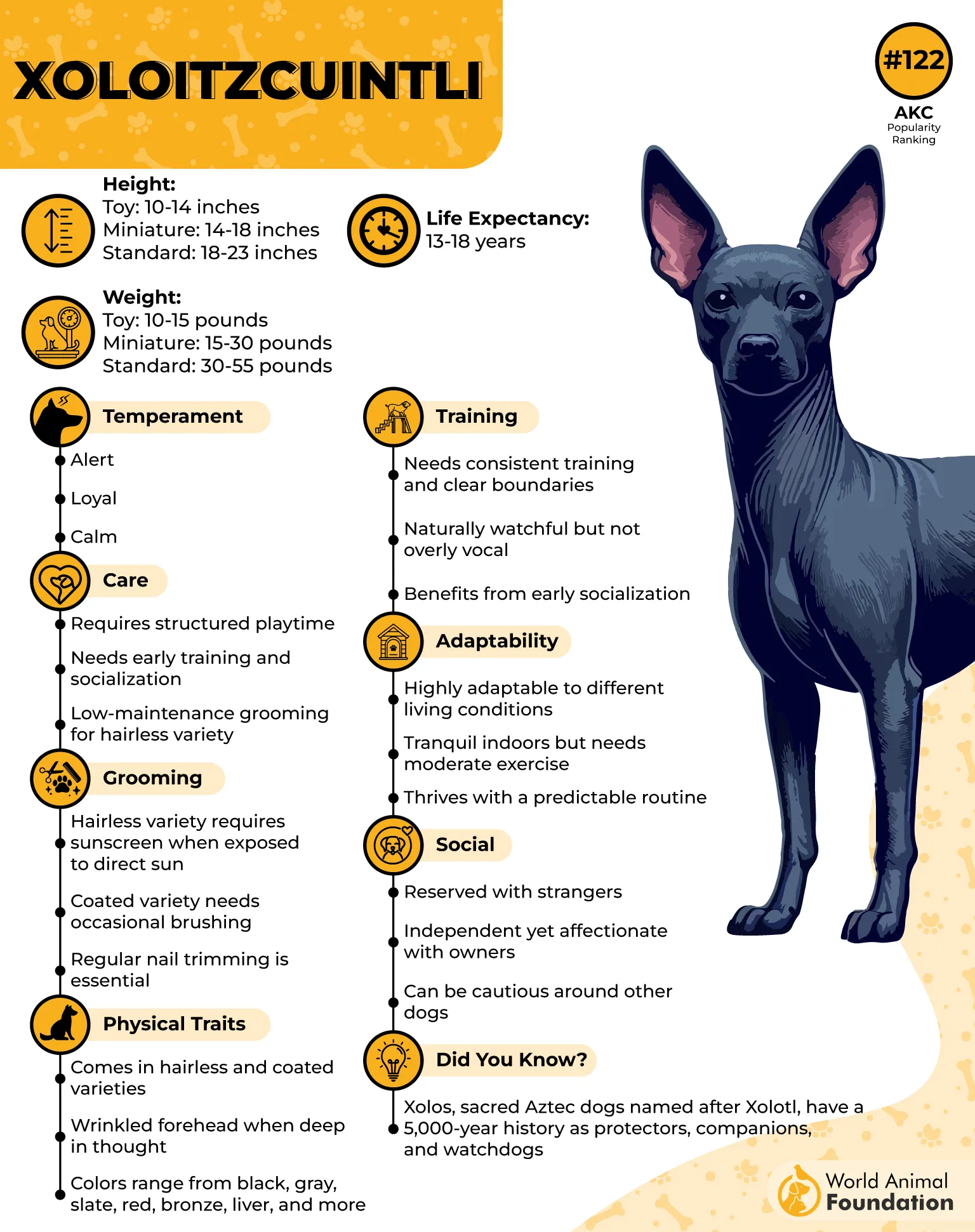
Reserved but deeply loyal, this breed forms strong attachments to its household. Commitment results in a watchful companion that thrives on routine and closeness. Emotional awareness defines much of its behavior.
The Training Reality Check
Responds best to gentle, consistent training methods
Highly observant, quickly picking up on habits and patterns
Benefits from early social exposure to reduce wariness
Living Environment: Where This Breed Thrives (and Fails)
Well-suited to calm, structured homes
Struggles with prolonged isolation
Prefers predictable daily schedules
Attention needs are emotional as much as physical. This breed requires regular interaction and reassurance to feel secure. Mental stimulation through training and companionship is essential. Watch out for health concerns, skin exposure during hot and humid weather, and breathing difficulties.
New owners sometimes misjudge its quiet nature as low maintenance. The Xoloitzcuintli suits attentive owners who value routine and connection. Hands-off approaches often lead to anxiety-related issues.
Conclusion
Challenging breeds and other working breeds are far from couch potatoes; their independent nature, high energy, prey drive, and instincts demand regular exercise, physical stimulation, and consistent training from experienced handling dog owners, not first-time dog owners.
Other dog breeds like border collies, Belgian Malinois, German Shepherd, Siberian Husky, Alaskan Malamute, Afghan hound, Chow Chows, and Jack Russell benefit from reward-based training, obedience training, varied activities, and guidance from a dog trainer to prevent destructive behaviors and behavioral issues.
If you are considering breeds not covered above, including the Lagotto Romagnolo, work with a reputable breeder and commit to proper training, regular stimulation, and mutual respect to support lifelong well-being.
