




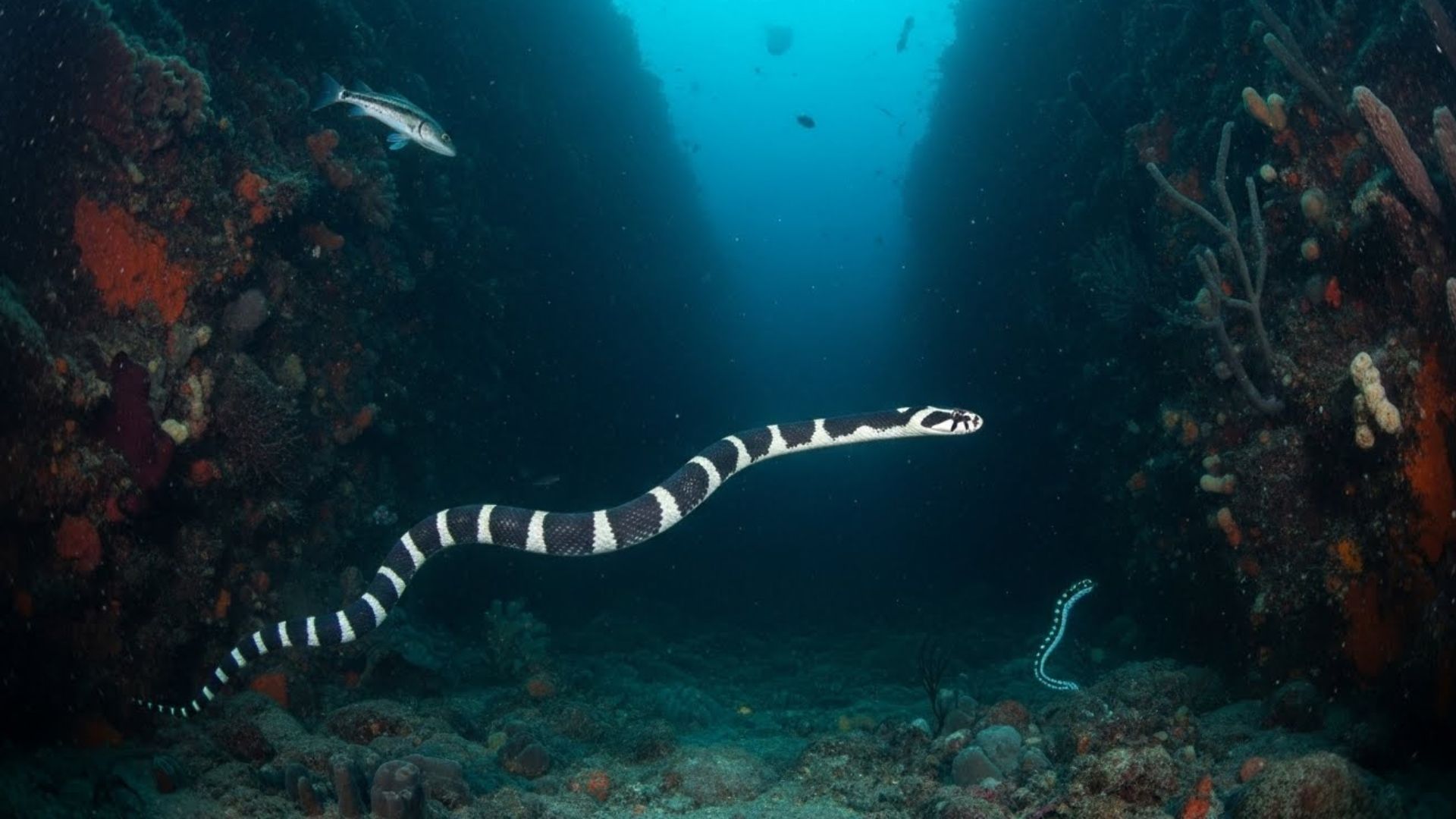
When people imagine snakes, they often picture dry land—but many species have taken survival a step further by mastering the water. Snakes that live in the deepest waterways are specially adapted for aquatic life, navigating rivers, swamps, and flooded forests with remarkable skill.
These snakes rely on strong swimming ability, flattened tails, and the capacity to hold their breath for extended periods.
Some hunt fish and amphibians beneath the surface, while others wait silently along riverbanks, striking with precision. Murky waters and dense aquatic vegetation provide both cover and opportunity, making waterways an ideal habitat for stealthy predators.
We’ll explore snakes that inhabit deep waterways, examining how they move, hunt, and survive in environments where land meets water. These serpents blur the line between terrestrial and aquatic life, proving that snakes are far more versatile—and fascinating—than most people realize.
Fact: Not all snakes slither on land. Sea snakes and anacondas patrol deep rivers, mangroves, and coastal waters, holding their breath for extended periods while hunting fish and other aquatic prey in dark, submerged environments.
Snakes That Live in the Deepest Waterways
1. Olive Sea Snake
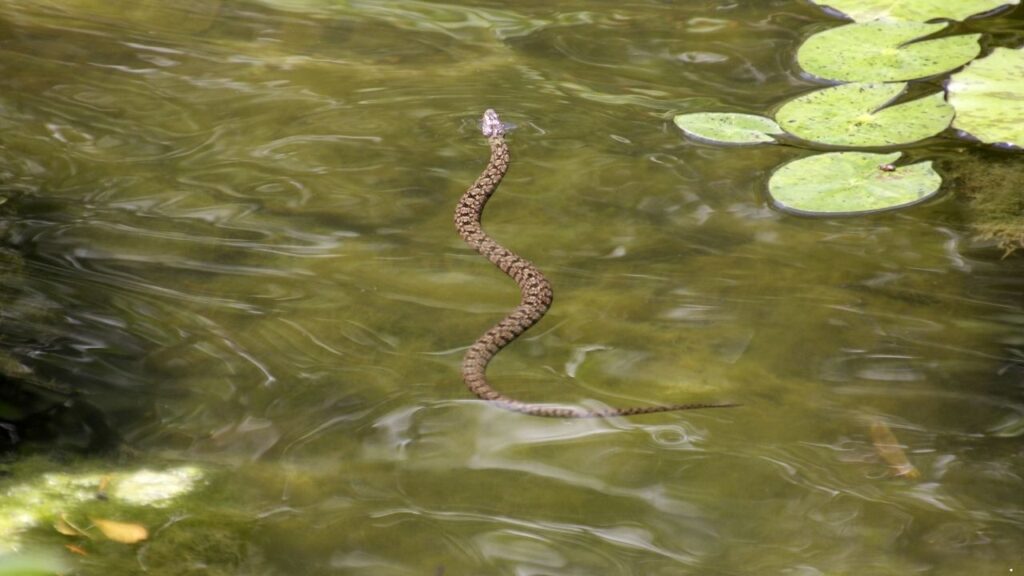
Meet the olive sea snake, also known as the golden sea snake or olive-brown sea snake—basically, Mother Nature’s way of saying, “I like my snakes sleek, stylish, and a little dangerous.” These slithery swimmers can reach up to six feet long and weigh around six and a half pounds—think of a slightly lean, venomous garden hose with attitude.
Living in the crystal-clear coral reefs off Australia and Papua New Guinea, these snakes are the ultimate underwater fashionistas, blending perfectly with the sandy and coral surroundings.
Their diet? A smorgasbord of fish, mollusks, and crustaceans. So yes, while you’re admiring the clownfish, the olive sea snake might be eyeing dinner… just not you.
Now, let’s clear something up: these snakes are venomous, but they’re not the underwater equivalent of a hit-and-run. They don’t attack humans unless they feel threatened. So, if you see one swimming gracefully nearby, it’s more likely to give you a curious “hello” than plot your demise. Think of it as a scaly, golden neighbor waving from a safe distance.
As per Oceana, fishermen, however, might have a more tense encounter. Nets full of fish can accidentally trap these snakes, which can result in a venomous bite if someone tries to free them without caution. Moral of the story: respect the snake, and it’ll respect you back.
Fun Fact: Olive sea snakes can hold their breath for up to two hours underwater! That’s longer than most humans can binge-watch a TV series without needing a snack break.
So, next time you’re snorkeling the Great Barrier Reef, keep your eyes peeled. You might spot a golden flash weaving through the corals, a beautiful reminder that the ocean is home to some truly fascinating—and fashionably deadly—residents.
2. Green Anaconda
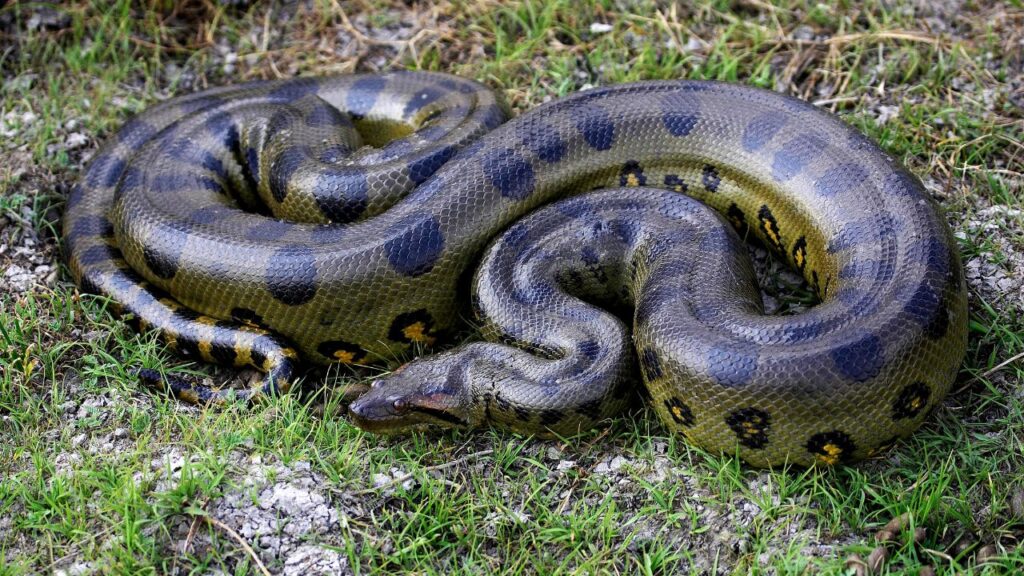
If the olive sea snake is the elegant reef-dweller, the green anaconda is the bulky, muscular heavyweight champion of the waterways. Native to the swamps, marshes, and slow-moving rivers of South America, this massive sea snake is basically the tank of the snake world—long, strong, and built for stealthy swimming.
Green anacondas can grow over 30 feet long (yes, that’s longer than a school bus!) and weigh up to 550 pounds. They are constrictors, which means they don’t need venom—they simply wrap around their prey and squeeze until dinner is officially “done.”
Their menu includes fish, birds, mammals, and occasionally even caimans. Basically, if it moves and can fit, the anaconda’s considering it.
Despite their size, green anacondas are surprisingly stealthy swimmers. They often lie submerged in water with just their nostrils and eyes above the surface, perfectly camouflaged, waiting for the next meal to wander by. Imagine a ninja in a green hoodie, except, you know… way longer and more slithery.
Fun Fact: Green anacondas are excellent mothers! They give birth to live young (instead of laying eggs) and can have up to 40 babies at a time. That’s a LOT of tiny, wriggly anacondas learning the ways of the river.
So, while you might want to stay on the riverbank during your Amazon adventure, take a moment to appreciate these majestic, water-loving giants. Just don’t think about challenging one to a wrestling match—it won’t end well.
3. Banded Sea Krait
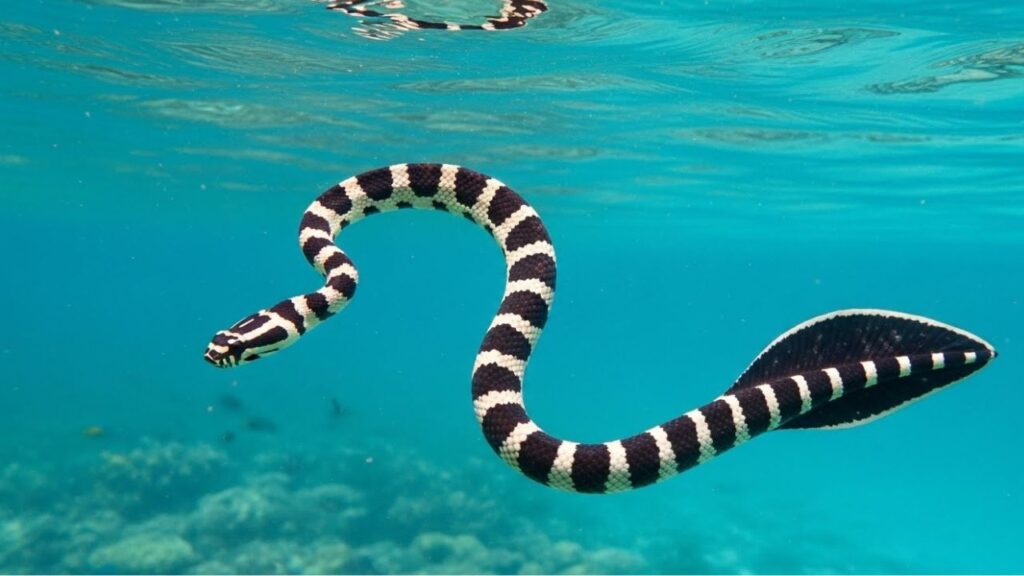
Meet the Banded Sea Krait, the underwater fashionista with black-and-blue stripes that would make any catwalk jealous.
Found in the warm coastal waters of the Indo-Pacific, these snakes are equally at home in the ocean and on land, which is pretty impressive for a snake—basically the amphibious multitaskers of the snake world.
Banded sea kraits are moderate in size, usually around 4 to 5 feet long, but don’t let their slender bodies fool you. They are highly venomous, with venom strong enough to subdue their prey in seconds.
Luckily for humans, these snakes are shy and non-aggressive, preferring to glide through coral reefs in search of eels and small fish rather than chase after swimmers.
Here’s a fun quirk: unlike most sea snakes, banded sea kraits must come to land to digest their meals and lay eggs. So if you see one slithering along a beach or rock, it’s just taking a little “me time” before returning to its underwater hunting grounds.
Fun Fact: Banded sea kraits are excellent partners in crime with fish. Some small fish even follow them around, nibbling leftovers from their prey. It’s like having your own personal cleanup crew!
These snakes are perfect examples of how versatile and fascinating ocean life can be. Elegant, venomous, and surprisingly social (at least with their fishy friends), banded sea kraits are a reminder that the sea holds mysteries far beyond our wildest imaginations.
4. Yellow-Bellied Sea Snake
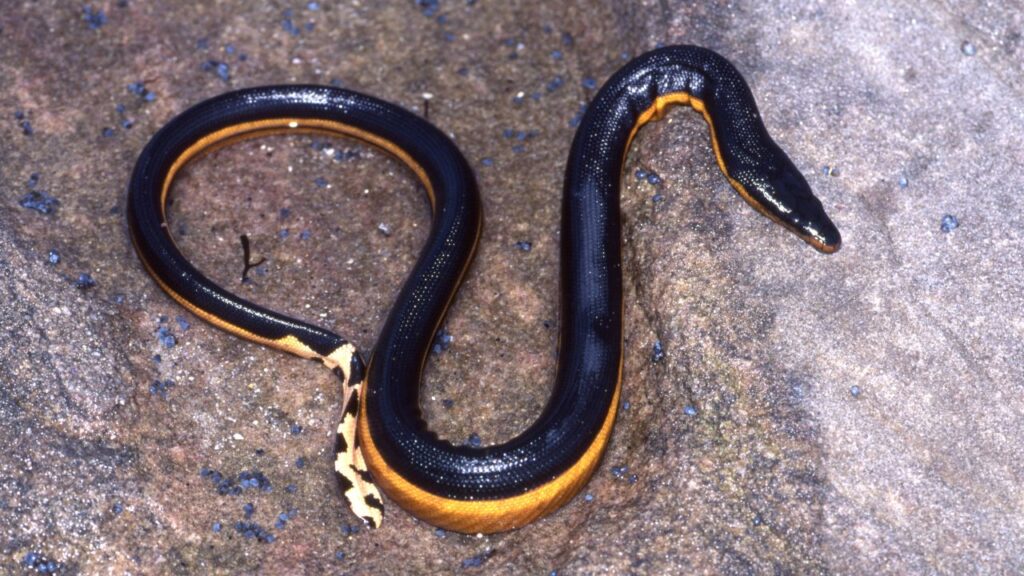
Meet the yellow-bellied sea snake, the ultimate globetrotter of the ocean world. Unlike many snakes that stick close to reefs or riverbanks, this species is completely pelagic, meaning it spends almost its entire life floating, swimming, and drifting in the open ocean. Think of it as a long, scaly yacht riding the waves!
These snakes are widely distributed, thanks to their love of warm waters and ocean currents. They often hitch a ride on drift lines or even storms, using Mother Nature as their personal taxi service.
If there were an Olympic sport for floating gracefully across oceans, the yellow-bellied sea snake would take home gold. But here’s a surprising twist: despite living in saltwater all the time, they actually need fresh water to survive, Wikipedia noted.
They drink rain that collects on the ocean surface—basically sipping tiny puddles while casually drifting thousands of miles from land. Even more impressive, they can survive up to 7 months without water during seasonal droughts. Talk about an extreme survivalist!
Fun Fact: The yellow-bellied sea snake’s bright yellow belly is not just for show—it may act as a warning to predators that this snake is venomous. So it’s like saying, “Back off, I’m not just floating around for fun!”
With their combination of long-distance drifting, venomous power, and extreme resilience, yellow-bellied sea snakes are true masters of the open ocean. Spotting one is like glimpsing a tiny, slithering adventure drifting across the vast blue—mysterious, impressive, and a little magical.
5. Tentacled Snake
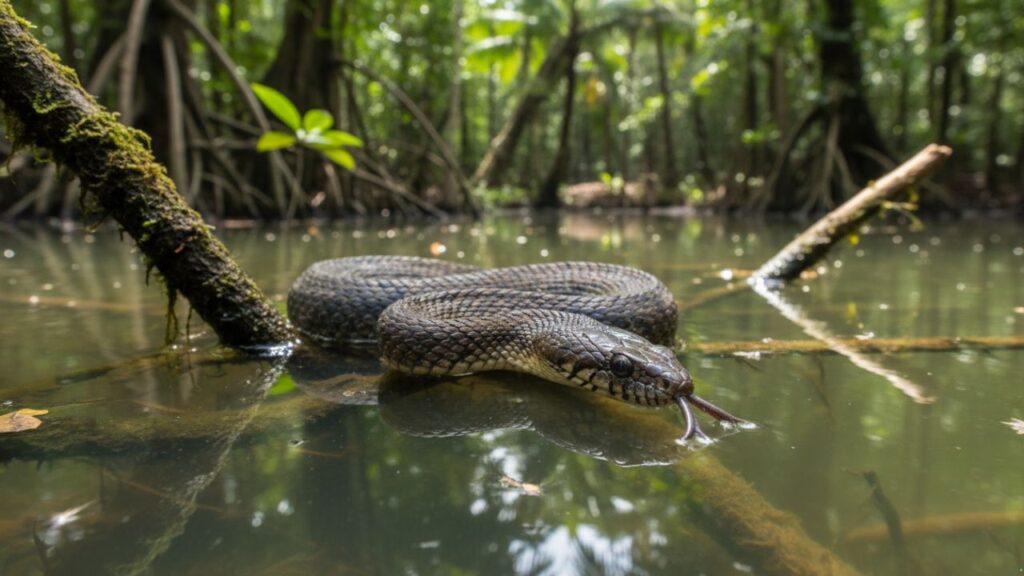
Native to the freshwater swamps, lakes, and slow-moving rivers of Southeast Asia, this snake is almost entirely aquatic and has a very unusual hunting style.
The most striking feature? Two small tentacle-like appendages on its snout. These aren’t for decoration—they’re highly sensitive sensory organs that help the snake detect movement of fish in murky waters. Imagine having a built-in radar that tells you exactly where your dinner is hiding. Pretty handy when you’re hunting in water with zero visibility!
Tentacled snakes are ambush predators. They usually stay perfectly still in the water, hanging upside down in a “J-shaped” pose.
When a fish swims by, the snake strikes with lightning-fast reflexes, often swallowing the prey whole in a fraction of a second. It’s basically the ninja of freshwater predators, complete with stealth mode and a built-in sonar.
Fun Fact: Tentacled snakes have a unique hunting trick called “death feign reflex”. By twitching their body and tentacles, they mimic the movement of small fish, luring their prey closer—basically playing a real-life fishing game, tentacle-style!
Though they look bizarre and maybe a little intimidating, tentacled snakes are shy toward humans and pose no real threat if left alone. But seeing one glide through the water, tentacles swaying like antennae, is a reminder that evolution sometimes has a wild sense of humor.
6. Checkered Keelback
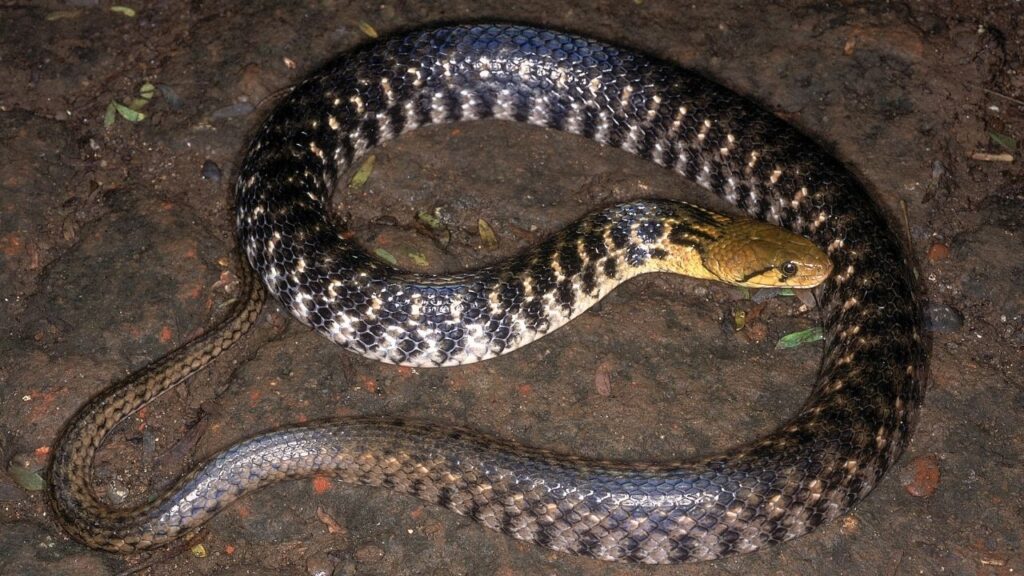
Meet the Checkered Keelback, a snake that proves you don’t need venom to be fascinating. Found in rivers, ponds, and marshes across South and Southeast Asia, this snake is a master of freshwater life, gracefully weaving through aquatic plants and sometimes even popping onto land for a sunbath.
True to its name, the Checkered Keelback has a distinctive checkered pattern along its back, making it look like it borrowed its outfit from a stylish picnic blanket. But don’t let the charming pattern fool you—this snake is a clever hunter, feeding on fish, frogs, and sometimes even small rodents.
Unlike venomous sea snakes, the Checkered Keelback has a cool survival trick: it can mimic the venomous krait by flattening its head and showing warning postures to scare off predators. It’s basically the snake version of putting on sunglasses and acting confident—it might not bite, but it’ll make you think twice.
Fun Fact: Some Checkered Keelbacks have been known to eat other snakes, including venomous species, making them true opportunistic predators. Talk about having an adventurous palate!
With its combination of freshwater finesse, clever defense tactics, and checkered charm, the Checkered Keelback is a reminder that fascinating snakes don’t always need fangs—they just need brains, stealth, and a little flair.
7. Rainbow Water Snake
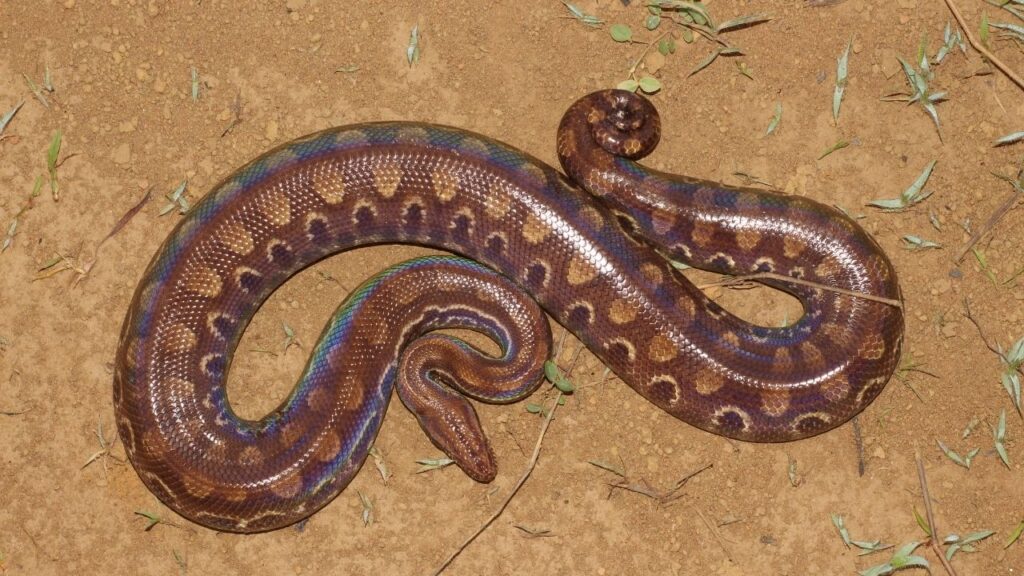
Say hello to the Rainbow Water Snake, a freshwater beauty that’s basically the peacock of rivers and streams. Found across Southeast Asia, this snake loves to live in rivers, swamps, and flooded forests, often gliding effortlessly just beneath the water’s surface.
The most striking thing about this snake? Its iridescent scales shimmer with a rainbow-like sheen in sunlight.
Depending on the angle, it can flash colors that look like a moving liquid rainbow—nature’s own disco ball! Unlike some venomous water snakes, the Rainbow Water Snake is non-venomous, but don’t mistake that for harmlessness—they’re agile hunters, feasting on fish, amphibians, and small invertebrates.
These snakes are also excellent swimmers, able to dart through water with surprising speed. If you see one moving like a streak of color under the river surface, it’s probably chasing lunch—or just showing off.
Fun Fact: Rainbow Water Snakes are known for their incredible flexibility. They can twist, turn, and maneuver around obstacles in water so gracefully that it’s almost like watching a live aquatic ballet.
With its vivid colors, water acrobatics, and sleek hunting skills, the Rainbow Water Snake reminds us that rivers and streams aren’t just watery highways—they’re underwater stages for some truly dazzling performers.
Conclusion
Other sea snakes that live in the deepest waterways are fascinating marine reptiles and aquatic snakes, including coral reef snakes, yellow sea snake, yellow-lipped sea krait, and the largest sea snake. These poisonous snakes inhabit tropical waters, the Indian Ocean, New Caledonia, Western Australia, and shallow waters along the east coast, thriving in brackish environments, marine environments, and sometimes floating debris. With paddle-like tails, specialized body scales, and adaptations for fully aquatic life, they can dive to great depths to hunt fish, fish eggs, and marine animals.
While most species live peacefully, interactions with humans—such as fishing nets—pose danger, as sea snake bites can result in human fatalities. Compared to terrestrial elapids and land snakes, these snakes are highly specialized, spending nearly their entire lives in marine environments. Other species and three species in captivity demonstrate their resilience and adaptability, showing how sea snakes live in both deep waters and shallow ecosystems, making them remarkable examples of reptiles that have fully embraced aquatic life.
