




Ever wish you could disappear at will? In the wild, some snakes have perfected exactly that trick. Camouflage isn’t just about looking cool—it’s about survival. Snakes with amazing camouflage blend so perfectly with leaves, sand, rocks, and tree bark that spotting them becomes a true test of patience and observation.
From intricate patterns that mimic fallen leaves to colors that match desert sands, their disguises are both art and science. Some snakes even combine motionless behavior with perfect coloring to escape predators or ambush unsuspecting prey. Evolution has sculpted each pattern, scale, and hue to maximize survival chances in their unique habitats.
What makes them so fascinating isn’t just their invisibility—it’s the incredible creativity of nature itself. Each snake tells a story of adaptation, patience, and ingenuity. In some cases, humans may walk past them without ever realizing these masters of disguise are just inches away.
We’ll uncover the snakes with the most jaw-dropping camouflage, diving into the science, beauty, and strategy behind their hidden world. Prepare to see the unseen.
Fun Fact: Some snakes are nearly invisible in plain sight! The Gaboon viper blends perfectly into leaf litter with its intricate patterns, the stonefish snake mimics rocks on the forest floor, and the sand boa disappears beneath desert sands—proof that in the wild, invisibility is survival.
Snakes with the Best Camouflage in the Wild
1. Gaboon Viper
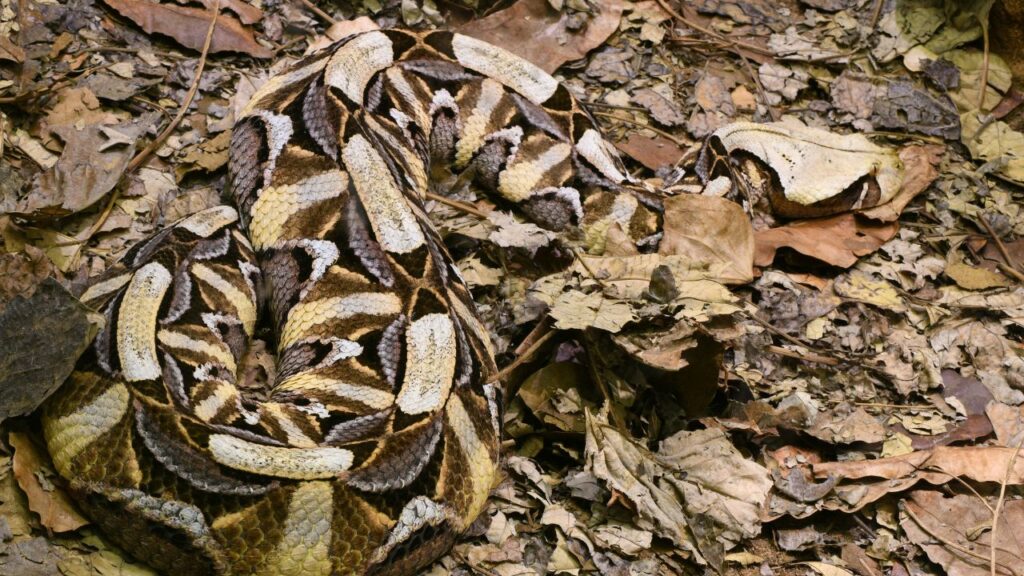
Meet the Gaboon viper, a snake that’s basically wearing nature’s ultimate “hide-and-seek” outfit. With its intricate, mosaic-like patterns, this snake could easily win a fashion award for blending into the forest floor.
Seriously, step on a pile of leaves, and you might just be stepping over this venomous marvel without even noticing. Don’t let its slow-moving, chill vibe fool you—this snake is packing serious firepower. Clocking in at around 7 feet in length but impressively hefty, the Gaboon viper is like the tank of the snake world.
And when it comes to striking? It’s faster than your brain realizing you forgot your keys. The venom? Oh, just one of the deadliest cocktails in nature—enough to make most predators think twice.
According to the National Zoo, found across sub-Saharan Africa in warm, moist habitats, these vipers spend their days hiding like tiny, scaled ninjas under the leaf litter. They’re nocturnal, which is basically a polite way of saying, “I don’t do mornings, but catch me after sundown if you dare.”
At night, they transform into ambush artists, lying in wait for prey to stroll by before delivering a strike that’s precise, quick, and unapologetically effective.
As for threats, adult Gaboon vipers are basically living fortresses, with few predators daring to mess with them. The youngsters, however? Well, that’s where brave birds like the secretary bird come into play—tiny, feathered snake hunters with a taste for risk.
2. Copperhead

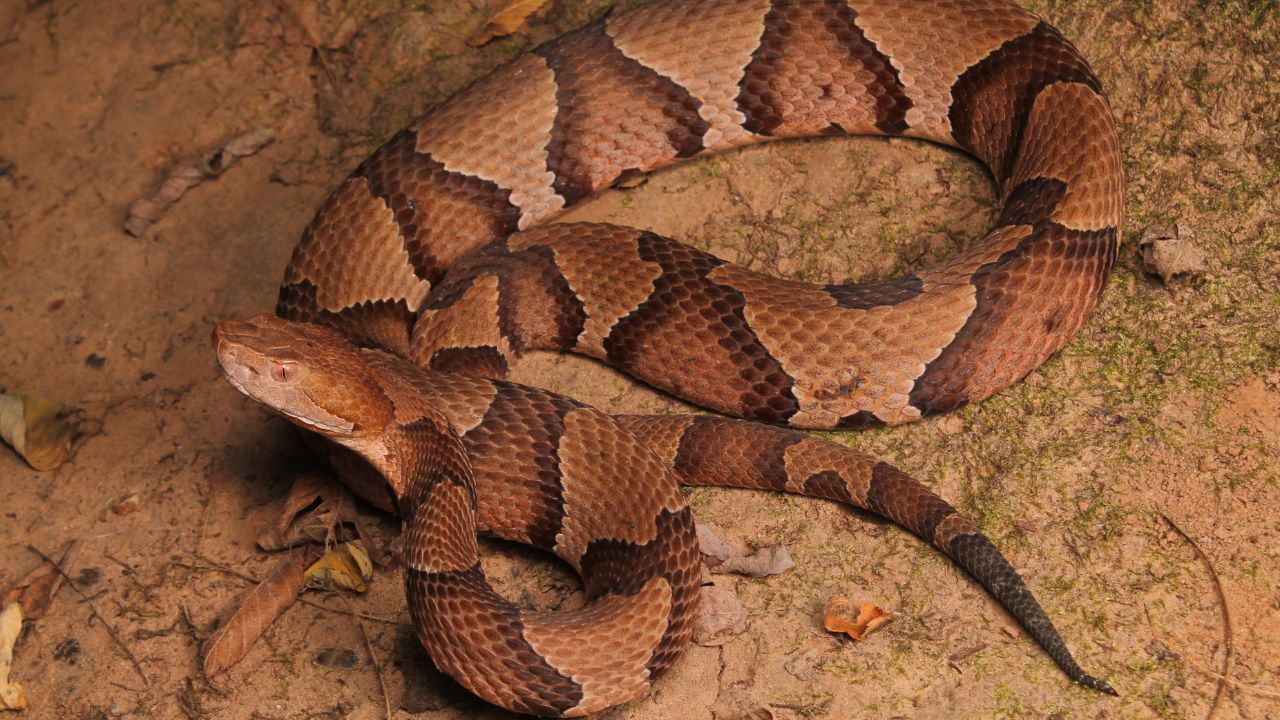
Say hello to the Copperhead, a true expert in the art of blending in. Found throughout the eastern United States, this pit viper has perfected the strategy of “why run when you can disappear?” Its coppery, patterned scales make it almost vanish into fallen leaves, forest floors, and underbrush.
Spotting one is a bit like finding Waldo—but Waldo is venomous and way less forgiving if you step on him. Unlike many snakes that slither away when danger approaches, the Copperhead often just freezes, as per Wikipedia.
Imagine playing freeze tag with a predator—this snake is basically the champion of stillness. Its camouflage is so good that humans often stumble upon it by accident, usually realizing the proximity a little too late for comfort.
Despite its “stand-still-and-hope-you-don’t-see-me” tactic, the Copperhead isn’t shy about defending itself if provoked. Its venom isn’t typically deadly to humans, but it’s enough to teach a lesson in respect.
It’s a reminder that sometimes in life—and in the forest—being still and blending in can be the smartest survival move of all.
In short, the Copperhead is the ultimate introvert of the snake world: content to chill, hide, and let the world pass by…until dinner walks right into its leaf-patterned living room.
3. Green Tree Python
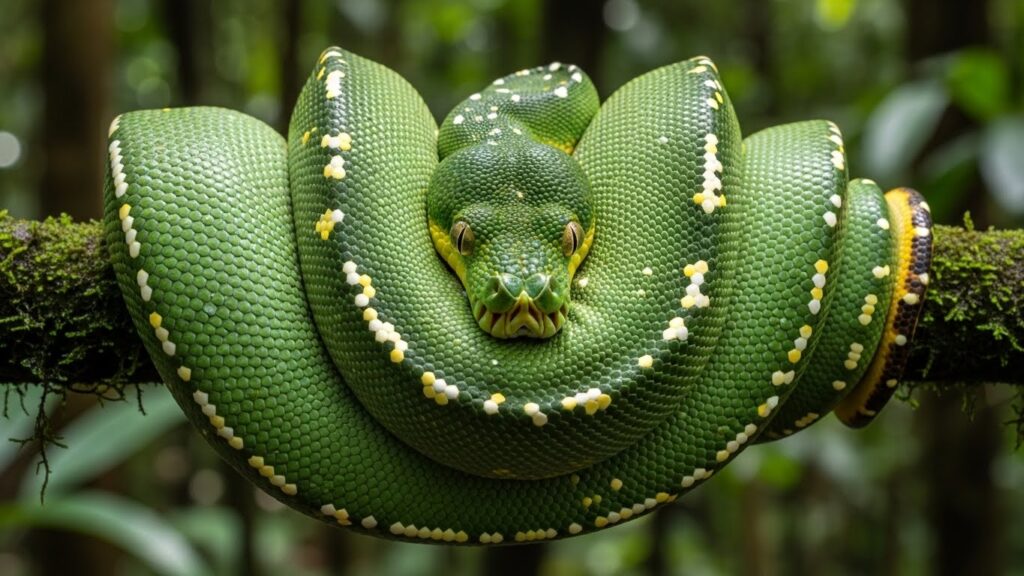
Meet the Green Tree Python, a snake that makes “blending in” look like an Olympic sport. Draped in vibrant shades of green, sometimes with flashes of yellow or blue, this snake could easily be mistaken for a swinging vine or a leafy branch in its rainforest home.
Native to the tropical rainforests of New Guinea, Indonesia, and parts of Australia, the Green Tree Python is an arboreal acrobat. It spends most of its life wrapped around tree branches, waiting patiently for unsuspecting prey to wander by. Its hunting style is all about stealth: no dramatic strikes from the ground—just a slow, calculated ambush from above.
And here’s a fun twist: baby Green Tree Pythons aren’t born green—they start out yellow or red! It’s like they come with a starter disguise and level up to full ninja mode as adults. This color shift helps them stay camouflaged in the shifting layers of leaves, blending perfectly with their surroundings until they’re ready to strike.
While they’re non-venomous, Green Tree Pythons are strong constrictors, squeezing their meals until there’s no debate about who’s in charge. And thanks to their expert camouflage, humans rarely notice them—unless they accidentally mistook a python for a branch while reaching for a snack in the jungle.
In short, the Green Tree Python is the ultimate tree-hugger of the snake world: serene, vibrant, and invisible…until it decides it’s mealtime.
4. Bushmaster
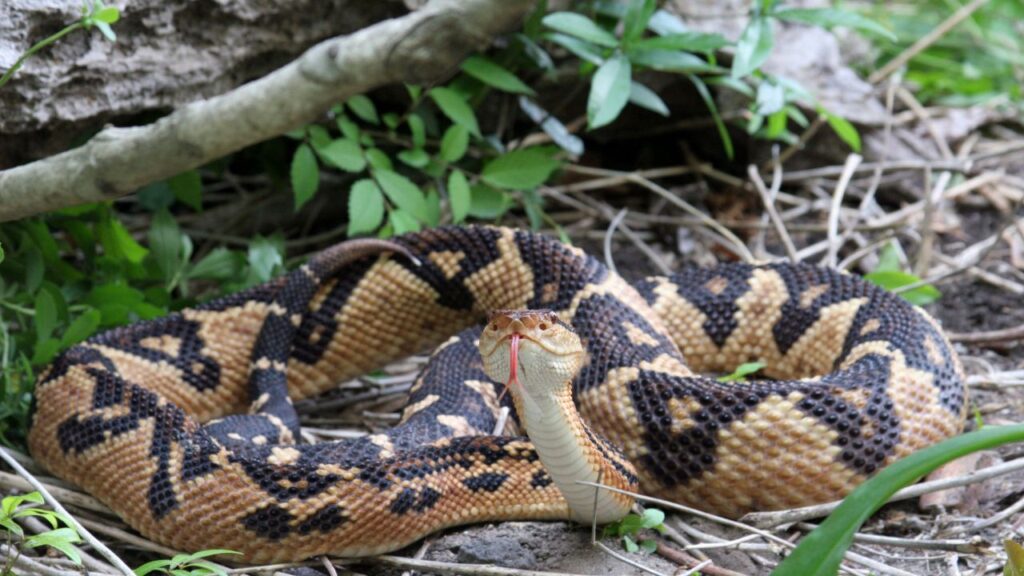
Enter the Bushmaster, the ultimate hide-and-seek champion of the Americas. This snake is so good at staying out of sight that it took decades for the famous herpetologist Raymond Ditmars to finally capture one for his collection. Talk about a snake with commitment to privacy!
The Bushmaster is no tiny ninja—it’s the largest pitviper in the Americas, routinely stretching between 7 and 10 feet, with some legendary individuals reportedly reaching 13 feet. That’s longer than most humans’ living rooms.
And yet, despite its size, this snake has perfected the art of blending in. Its brown-to-orange base color is decorated with dark geometric “saddle” markings that look more like an intricate beaded tapestry than a weapon of nature. Somehow, this bold pattern makes it almost invisible in the leaf litter and forest floor. Nature clearly has a sense of irony.
Shy and reclusive, the Bushmaster rarely crosses paths with humans, preferring to keep a low profile in its rainforest habitat.
But if you happen to stumble upon one…well, it’s best to admire it from a safe distance. These snakes are ambush predators, patient, precise, and surprisingly quick when they decide it’s time for a meal.
In short, the Bushmaster is like the introverted giant of the snake world: impressive in size, stunning in appearance, and a master of staying out of sight. Think of it as a living, breathing piece of camouflage art.
5. Worm Snake
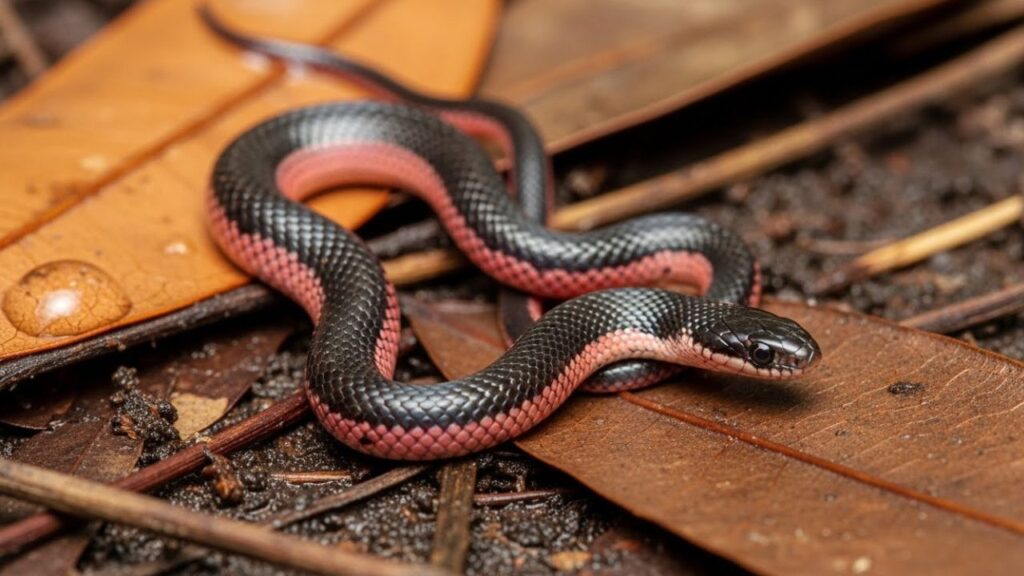
Meet the Worm Snake, the tiniest ninja of the snake world…if ninjas were about the size of a pencil and could masquerade as a wriggly worm. You might pick one up thinking, “Hey, that’s just a harmless worm!”—and then it wiggles, and suddenly you realize, surprise, it’s actually a snake. Plot twist!
This little guy is fossorial, which is a fancy way of saying it lives underground and rarely comes up for air—unless heavy rain floods its subterranean tunnels.
Its life revolves around burrowing and hunting worms and other tiny invertebrates. With its smooth, slender body and muted brownish-pink color, it’s basically invisible in soil or leaf litter. Camouflage? Maybe it’s more “invisible mode,” but either way, it’s wildly effective.
At just a few inches wide, the Worm Snake isn’t dangerous—unless you consider the shock of discovering you’ve been holding a snake instead of a worm. It’s like nature’s little prankster, quietly wiggling underfoot, reminding us that sometimes the tiniest creatures can pull off the sneakiest tricks.
In short, the Worm Snake may not have flashy patterns or striking colors, but it wins the award for “most likely to sneak up on you without anyone noticing.” A small package, big surprise.
6. Tentacled Snake
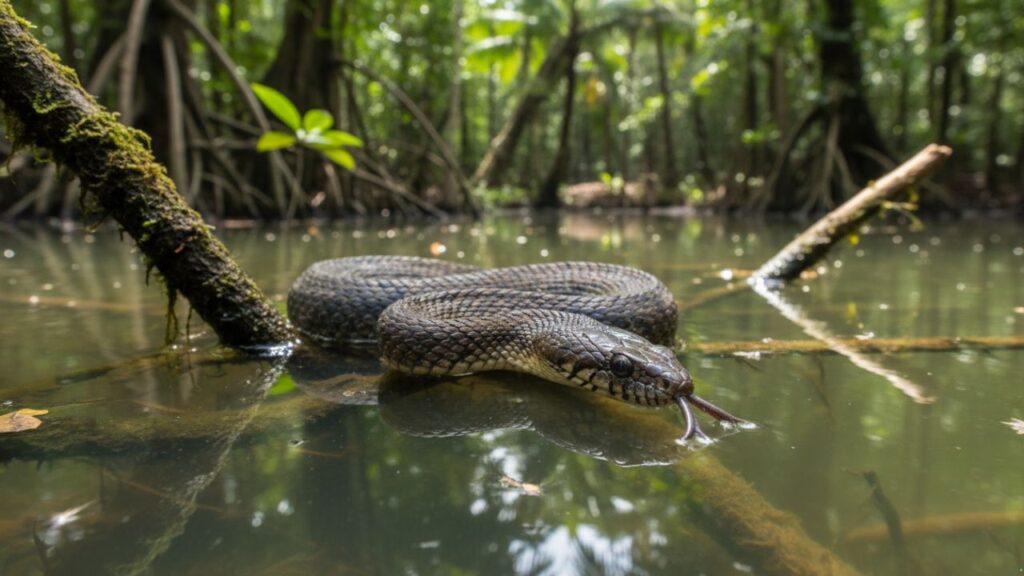
Meet the Tentacled Snake, a master of water-based disguise and an ambush artist like no other. Native to Southeast Asia, this fully aquatic snake is practically helpless on land—so it prefers to keep its feet (or fins…well, no fins, but you get it) wet at all times.
When the water gets too low, it buries itself in mud, basically hitting the “pause” button on life until its watery stage returns. Its claim to fame? The two tiny appendages sprouting from its snout look like nature’s version of decorative antennae.
Combine that with skin colored and textured to perfectly match grasses and algae, and you’ve got a snake that could vanish in plain sight. It’s camouflage so good, you might not even realize the “plant” in the water just blinked—or slithered—at you.
Tentacled snakes are the ultimate patient hunters. They sit absolutely still, mimicking the stalks of plants around them, waiting for prey to swim by. When a fish gets close, they strike with such lightning precision it’s almost unfair—like nature’s version of a magician’s card trick, only deadlier.
In short, the Tentacled Snake is the aquatic Houdini of the reptile world: subtle, stealthy, and practically invisible…until it’s too late for its unsuspecting dinner.
7. Boa Constrictor
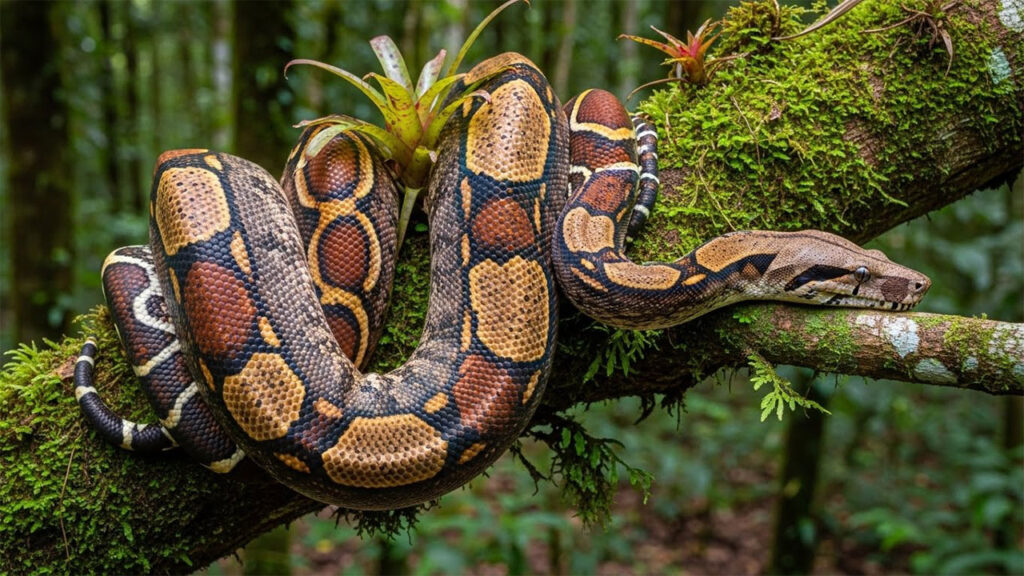
Last but certainly not least, meet the Boa Constrictor, the snake that proves size and stealth can go hand in hand. Found throughout Central and South America, this snake is a true master of blending in with its surroundings.
Its patterned scales—ranging from browns to reds to creams—make it look like a moving part of the forest floor, a fallen branch, or even a pile of leaves. Step carefully, or you might not notice you’re sharing the path with a 10-foot-long ambush predator.
Boa constrictors are ambush hunters par excellence. They patiently coil in wait, perfectly camouflaged, until an unsuspecting prey wanders close. Then, with lightning efficiency, they strike, wrap, and squeeze—the classic constrictor technique.
Despite their reputation for size and power, these snakes are generally shy and will avoid humans whenever possible, relying on their camouflage and patience to keep them safe.
Fun fact: Baby boas often have brighter, more contrasting patterns, which help them hide among the forest’s leaves and dappled sunlight. As they grow, their colors mellow and blend even better with their environment. Basically, they start life in “training mode” and graduate to full camouflage mastery as adults.
In short, the Boa Constrictor is the stealthy classic of the snake world: big, beautiful, patient, and nearly invisible when it wants to be. A true testament to the power of pattern and patience in the wild.
Conclusion
Snakes with the best camouflage in the wild display an extraordinary ability to blend into their surroundings, often making them difficult for most people to notice. Species such as the Kapuas Mud Snake, chameleon snake, can change color in response to light, sunlight filtering through leaves, or when hanging like a twig among branches.
From venomous snakes like rattlesnakes to harmless species that hunt rodents and small lizards, this camouflage helps them survive within their native range. Their bright colors may seem decorative—almost like living ornaments—yet serve vital purposes in hiding, hunting, or warning. Though sometimes heard before they are seen, these snakes are often called masters of disguise, proving that camouflage is one of nature’s most effective survival tools, whether in the wild or occasionally mistaken as exotic pets.
