




Not every protective dog needs to be loud or high-strung. Some breeds combine calm, easygoing temperaments with natural alertness, offering dependable security without turning your home into a constant chorus of barks.
For households that value peace but still want safety, low-key protective breeds are the perfect match. These dogs are intelligent, observant, and discerning. They notice unusual activity or strangers but respond with measured calm rather than unnecessary commotion.
Beyond their protective instincts, these dogs are affectionate and loving companions. They integrate smoothly into family life, enjoying cuddles, walks, and playtime, while still standing guard when it matters most.
Choosing a low-key protective dog means enjoying both calmness and security. They offer peace of mind without the stress, creating a home environment that’s safe, serene, and filled with loyal companionship.
For families or individuals wanting protection without chaos, these breeds are the ideal choice.
Quick fact: Some protective dog breeds combine alertness and loyalty without constant barking or aggression. These dogs rely on observation and situational awareness to safeguard their homes, making them excellent low-key guardians.
Low-Key Dog Breeds That Still Offer Good Protection
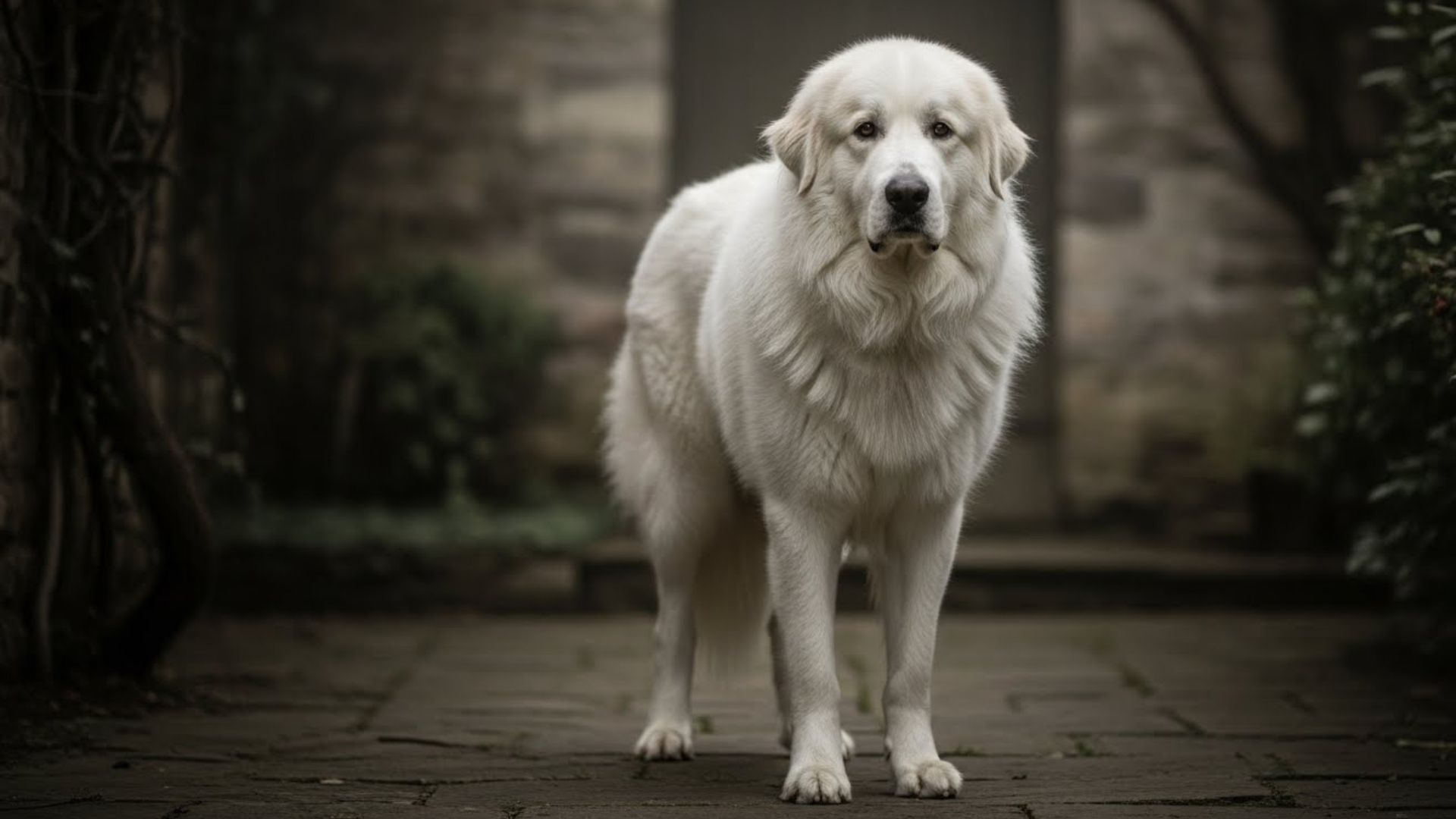
1. Great Pyrenees
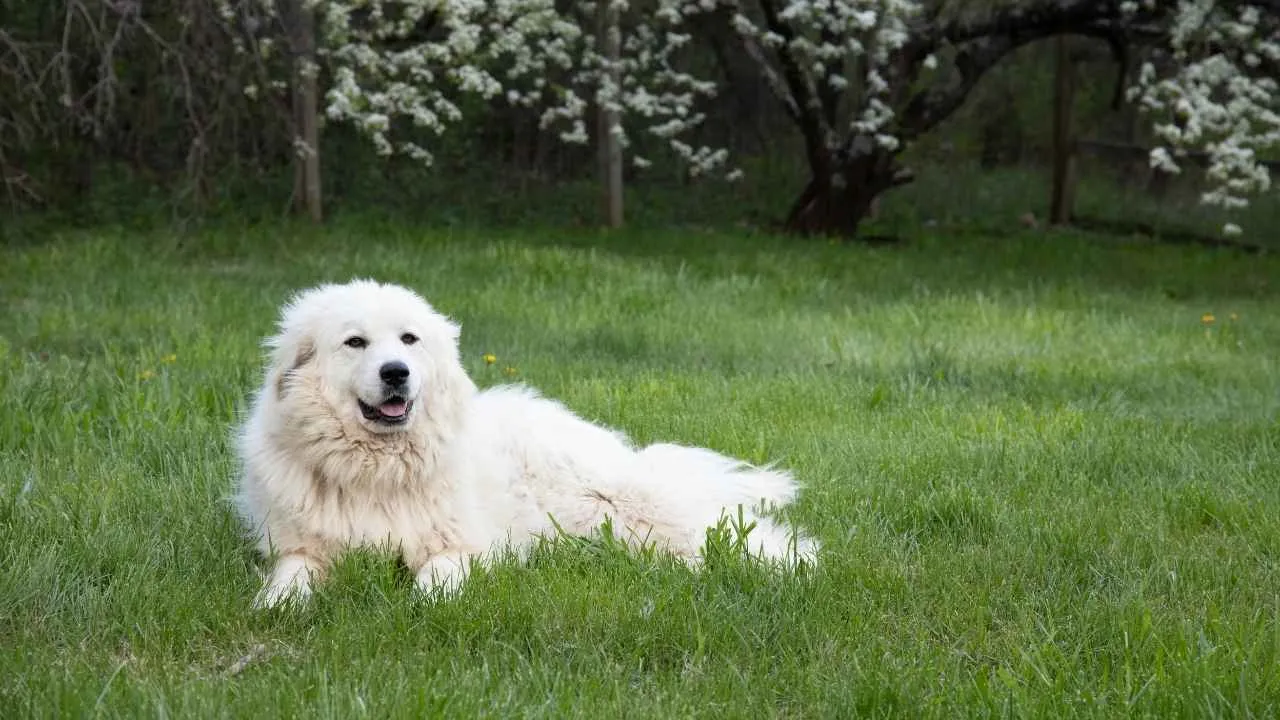
If a cloud and a polar bear had a baby, you’d get the Great Pyrenees. These gentle giants were originally bred to guard livestock from wolves, bears, and the occasional overly-optimistic thief.
Translation?
They know how to stand their ground—calmly, confidently, and with the kind of stare that says, “I have evaluated your life choices, and I’m not impressed.”
Despite their reputation as fearless guardians, Pyrs are absolute marshmallows with their families. They’re loving, mellow, and happiest when they’re lounging across your doorway like a furry security checkpoint.
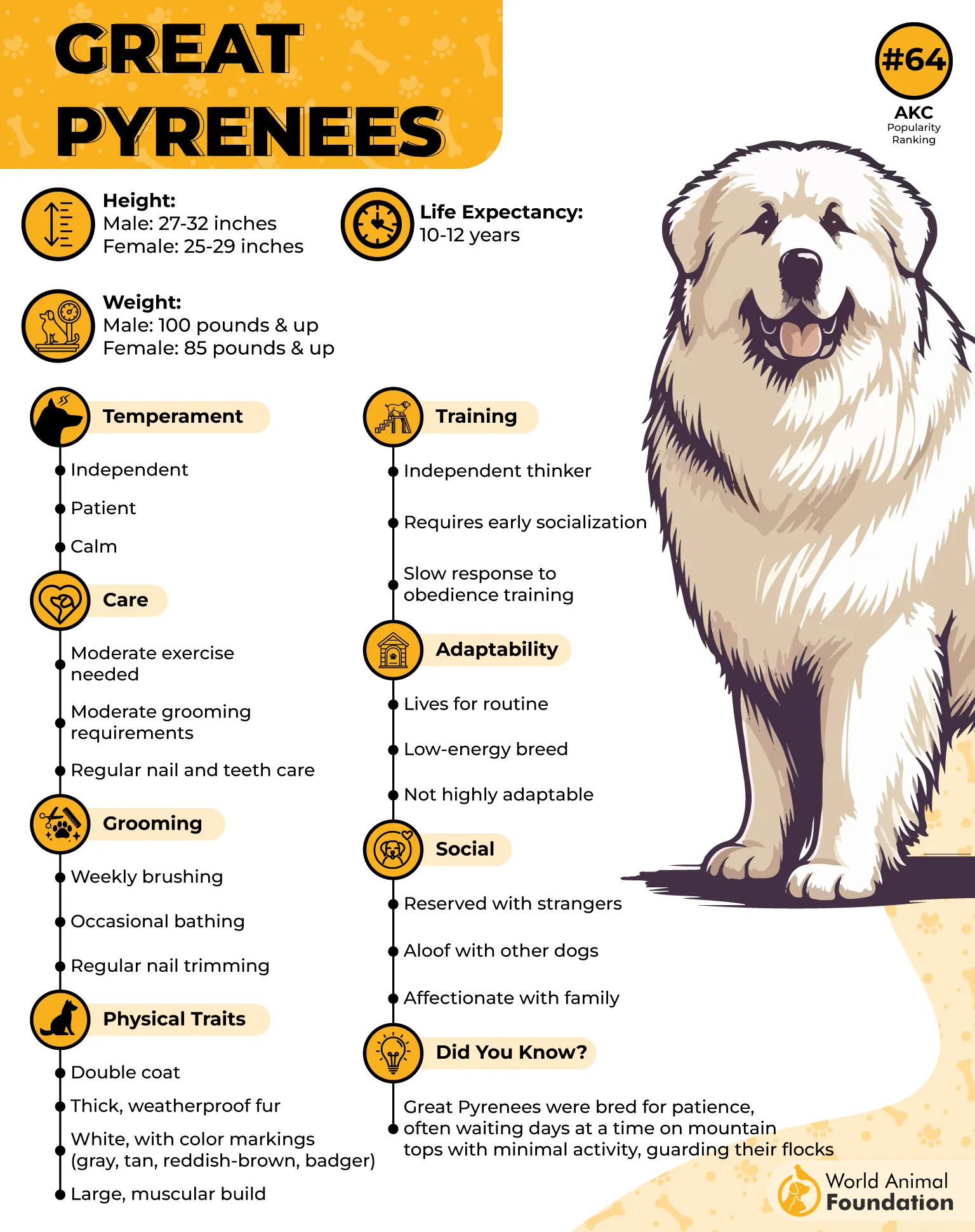
They’re fantastic with children, too—just keep in mind that when a dog weighs as much as a middle schooler, even a joyful tail wag can count as a full-body tackle.
And then… there’s the bark. The one that sounds like it could rattle the shingles off your roof. Pyrs take their guard dog duties very seriously, and that includes announcing everything from suspicious strangers to suspiciously shaped clouds.
Exercise needs? Surprisingly light. A daily walk and some time to survey their kingdom (a.k.a. your backyard) usually keeps them satisfied. Underneath that massive, majestic exterior is a chill companion who’s perfectly content with a low-key lifestyle—as long as they can protect the ones they love.
2. Chow Chow
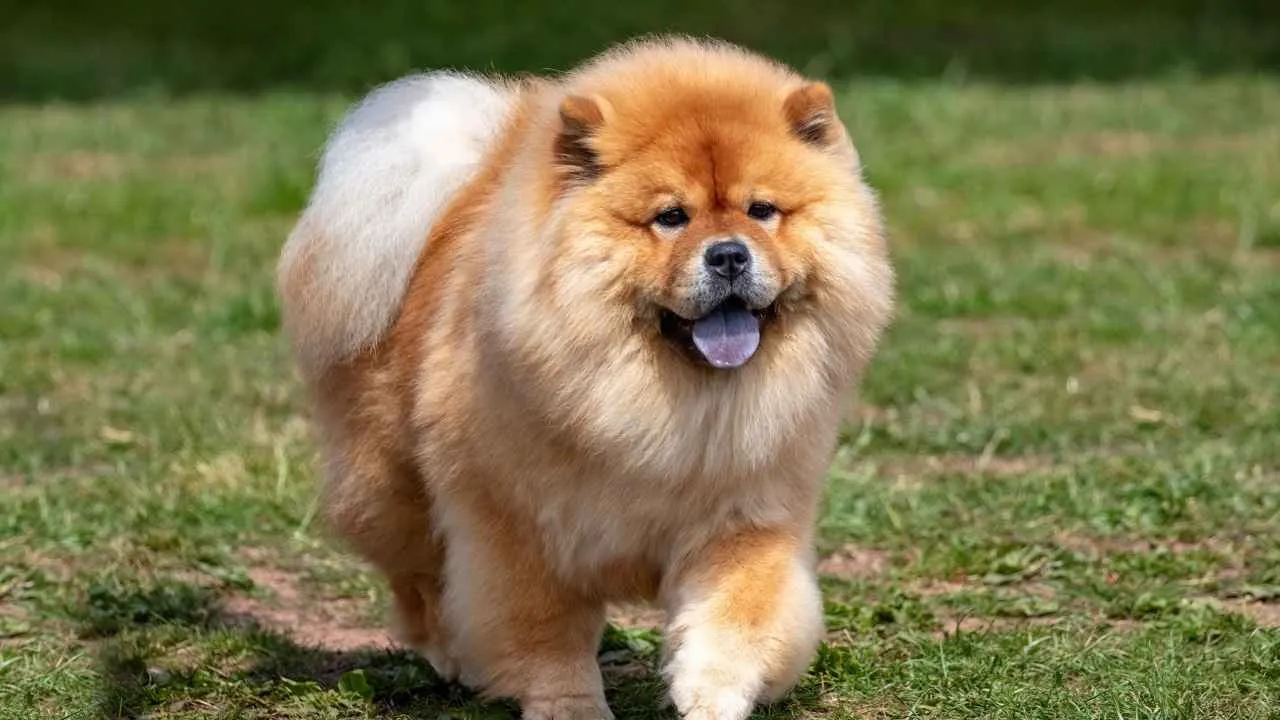
With their puffball mane and famously dignified posture, Chows have a natural “I run this palace” vibe. Historically bred for guarding, these dogs don’t need to bounce around or bark nonstop to be intimidating—they simply stare at you with that squinty, all-knowing expression that says, “State your business, peasant.”
Chows are independent to the point where you may occasionally question who owns whom. They love their families deeply, but on their terms—think of them as the protective roommate who acts aloof but would absolutely vaporize anyone who threatens you.
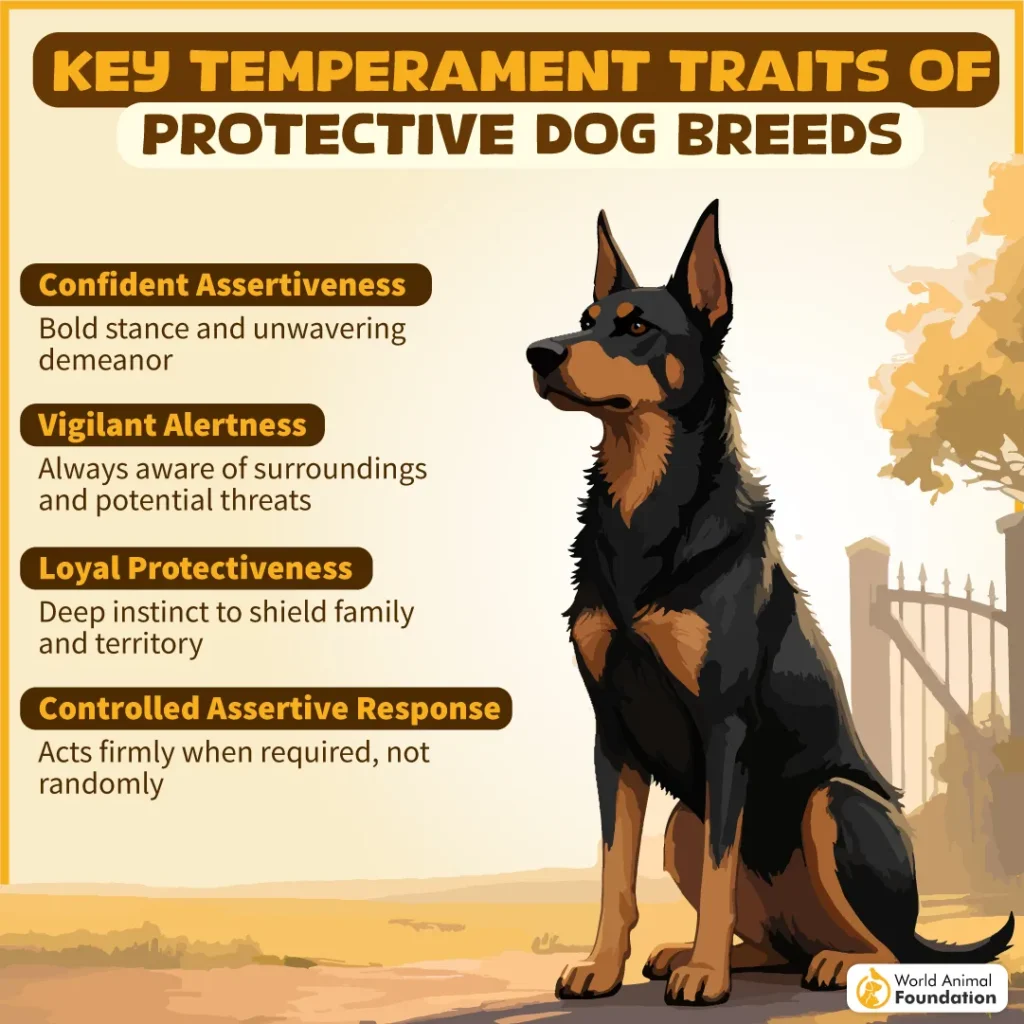
While not overly energetic, they’re surprisingly athletic when they want to be. Most of the time, though, they prefer to conserve their energy… You know, in case they need to valiantly defend the living room from the mailman.
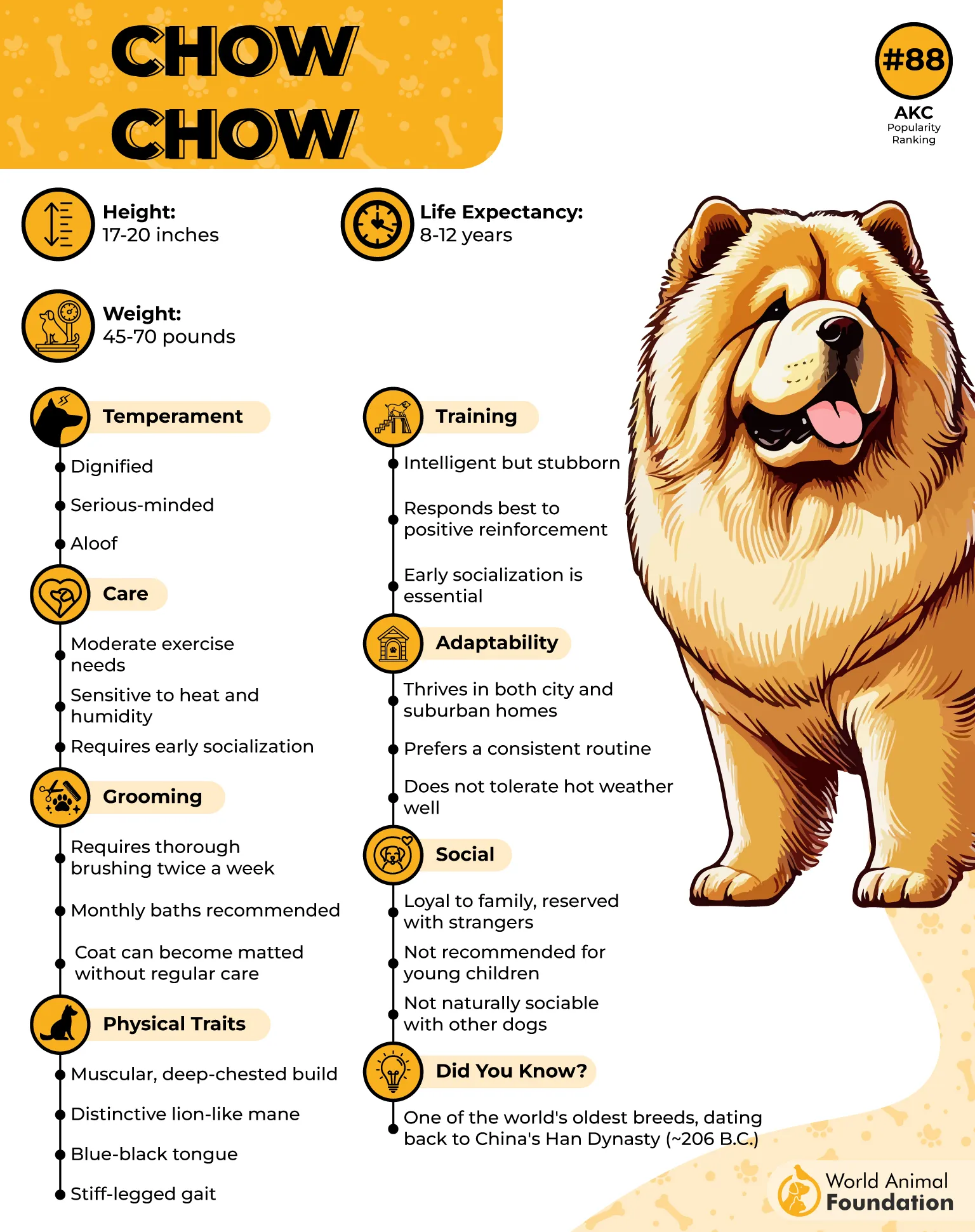
Petplan noted they’re not big cuddlers, and yes, they can be stubborn (okay, very stubborn), but in a charming, “I’m too majestic for that trick” kind of way. With consistent socialization, they’re calm dogs and form incredibly tight bonds with their people.
Plus—bonus feature—they have a blue tongue, which is basically nature’s way of saying, “This dog is rare, mysterious, and possibly knows ancient secrets.”
3. Boerboel
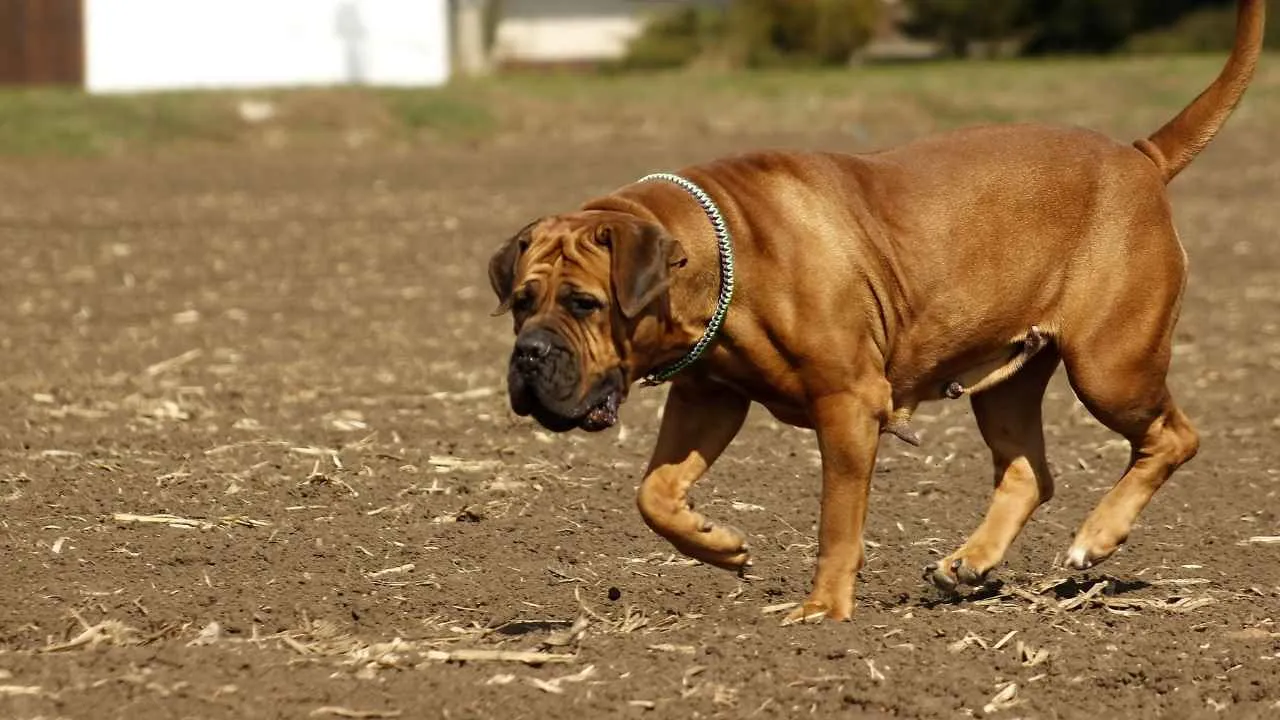
Imagine a canine bodyguard who can go from “gentle giant giving emotional support cuddles” to “immovable wall of muscle defending your castle” in half a second—and you’ve got the Boerboel.
Hailing from South Africa, the Boerboel was bred to protect homesteads from everything from intruders to actual wild predators. These dogs are serious about their job. They’re confident, powerful, and will absolutely stand their ground… and your ground… and their favorite nap spot.
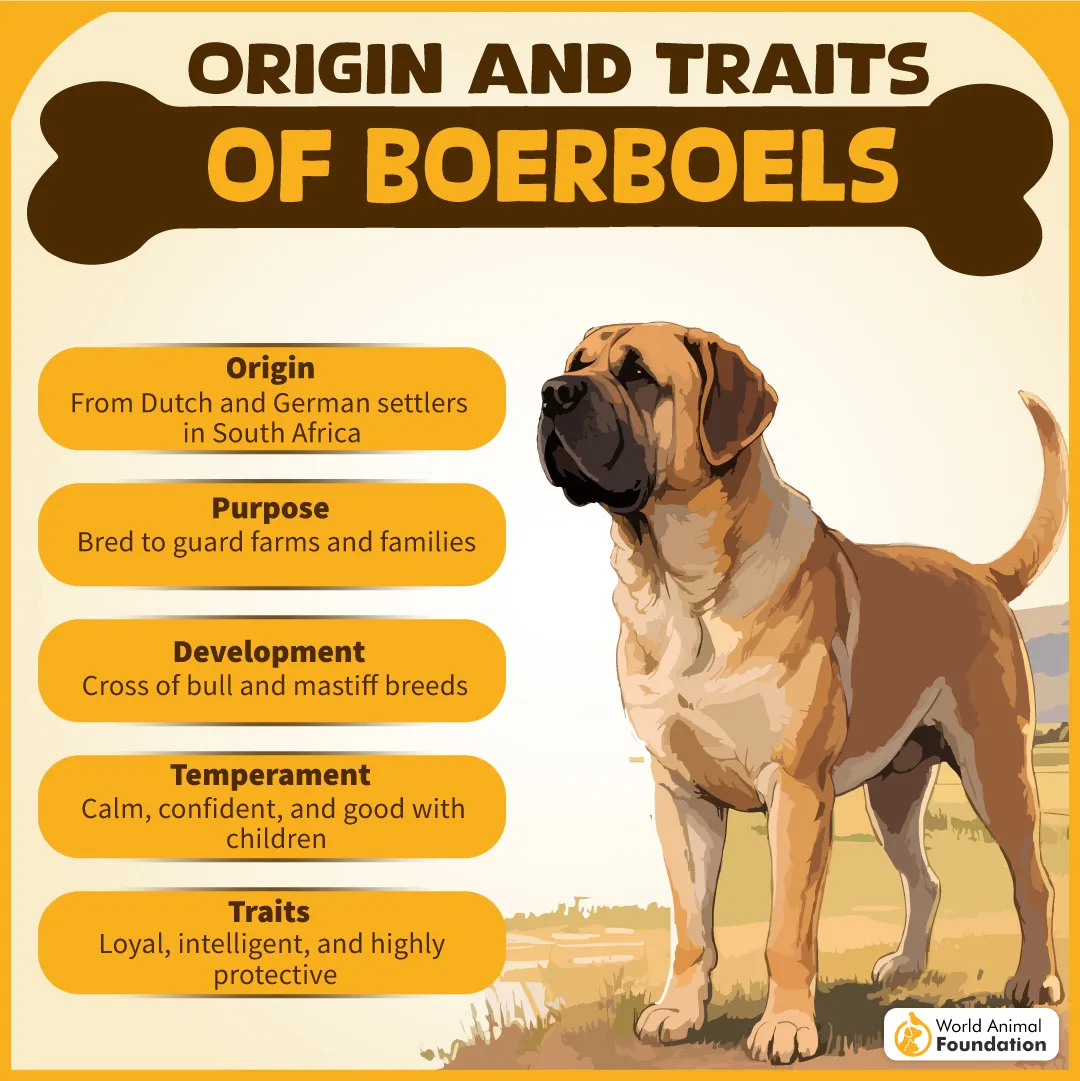
Despite their formidable presence, Boerboels have a surprisingly soft side. They can be incredibly affectionate—some even serve as therapy dogs, which is adorable considering they look like they could bench-press a small car. But this sweet side comes with a very important asterisk: they are not beginner dogs.
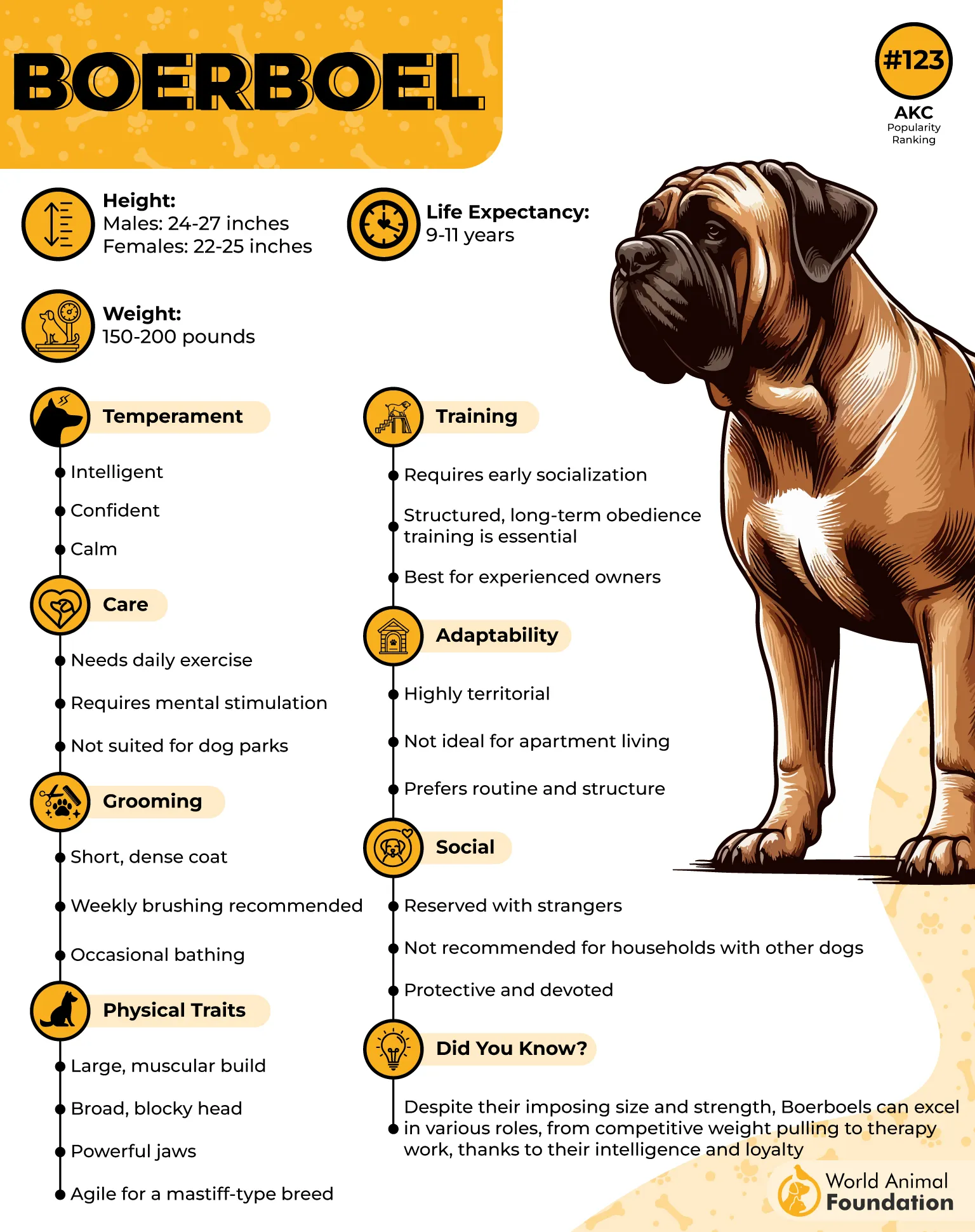
As WebMD notes, they can be challenging for first-time owners because they’re intelligent, strong, and know how to take charge if you don’t.
Their personality is a fascinating blend of dual modes:
They were bred with strong defensive instincts, and when they think something is off, they’re not backing down. A Boerboel facing danger is basically the embodiment of “Not today.”
However, around their family, they’re calm, thoughtful, and sometimes downright snuggly. They love their people with a devotion that can make you feel like you’re starring in your own loyalty-themed movie montage.
Because they’re eager to please, training can actually be a joy—if you have a firm, confident leadership style. Without that structure, though, a Boerboel will happily take over household management duties. And trust me, you don’t want a 150-pound dog deciding the rules of the living room.
4. Newfoundland
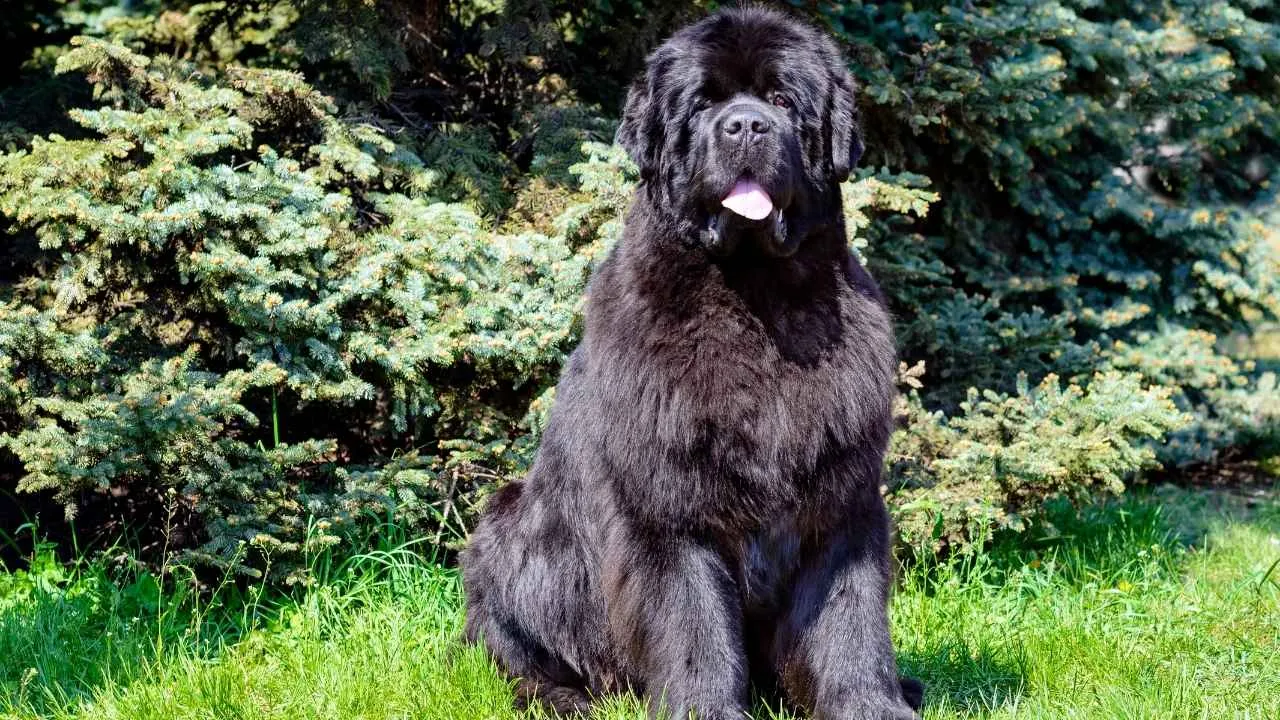
If the world ever needed a dog version of a gentle superhero, the Newfoundland would show up wearing a cape made of drool and good intentions.
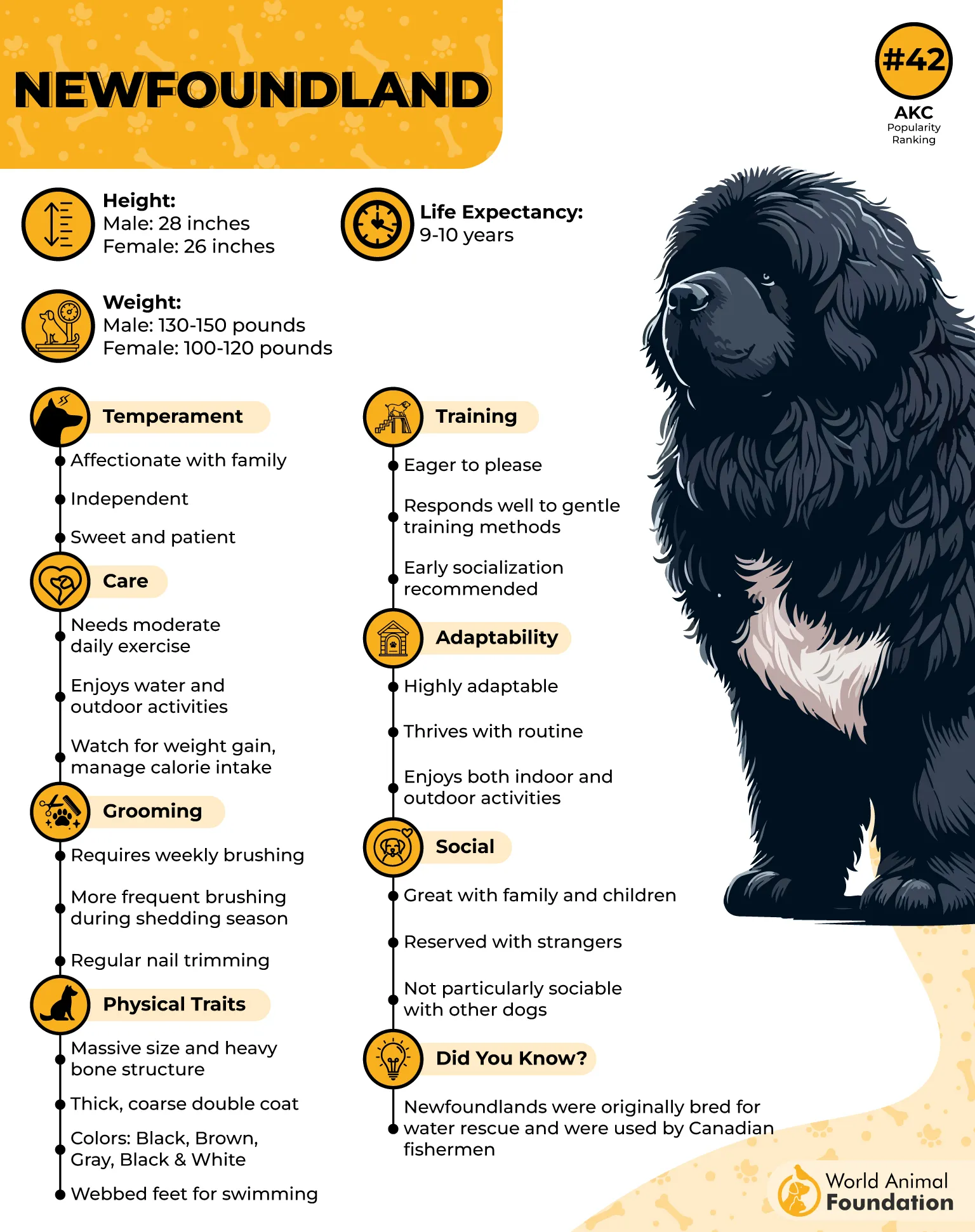
These massive, fluffy water dogs are famous for their calm demeanor, sweet, family-loving personalities—and truly, they adore kids so much it’s like they were born with a built-in “babysitting mode.”
Don’t let their friendliness fool you, though. Newfoundlands might greet strangers with a tail wag, but they’re also fiercely brave when it counts.
They’ve been known to stand between threats and their people with the quiet confidence of someone thinking, “I’m big, I’m strong, and I have no problem using both if necessary.”
One Newfoundland, Seaman (yes, that’s really its name—don’t laugh), accompanied explorers Lewis and Clark. It not only guided the camp but reportedly chased off a rogue buffalo. A buffalo. That’s the kind of courage that makes you look at your own dog and wonder why it can’t even chase off a squirrel.
Historically, Newfies worked on fishing boats in icy waters, where it was literally their job to rescue drowning sailors, as noted by the American Kennel Club. Saving humans was just part of the workday. That kind of instinct doesn’t go away—they’re protectors by heart and by heritage.
Activity-wise, they’re surprisingly low-key for their size. Give them about 30 minutes of moderate exercise a day, and they’re happy.
Swimming is their superpower, hiking and long walks make them content, and yes, they can even pull a cart—because apparently being a hero wasn’t impressive enough on its own.
Friendly, loyal, courageous, and willing to drag you out of a lake if needed, the Newfoundland is the perfect mix of “cuddle buddy” and “quiet, capable guardian.” Want a dog that loves humanity and won’t hesitate to defend you? The Newfie is your giant, fluffy knight.
5. Irish Wolfhound
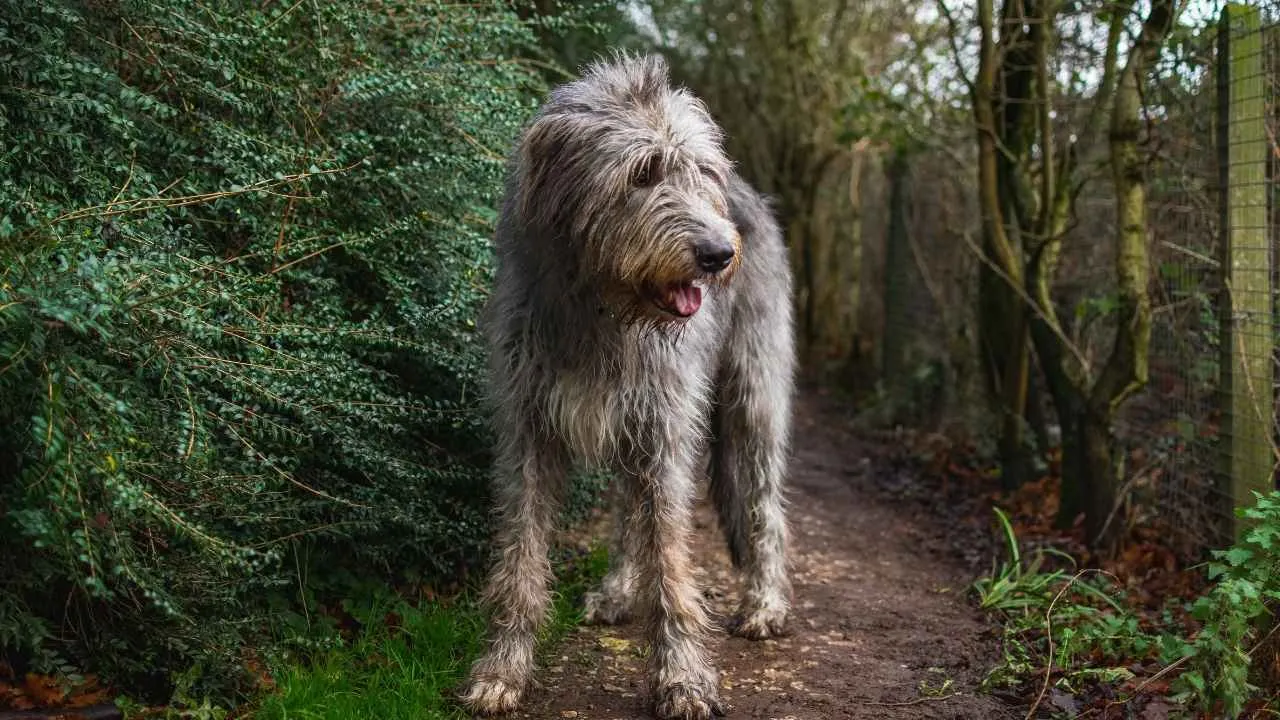
If mythical creatures existed in dog form, the Irish Wolfhound would be the one striding out of the mist like some ancient guardian of the homeland.
These are the gentle giants of the dog world—taller than most people when they stand on their hind legs, yet so sweet and mellow you’d swear they were part oversized marshmallow.
Historically bred to hunt wolves (yes—wolves), Irish Wolfhounds have bravery baked into their DNA. You don’t become a wolf hunter by being timid. But here’s the twist: despite their intimidating heritage and towering height, they’re famously peaceful.
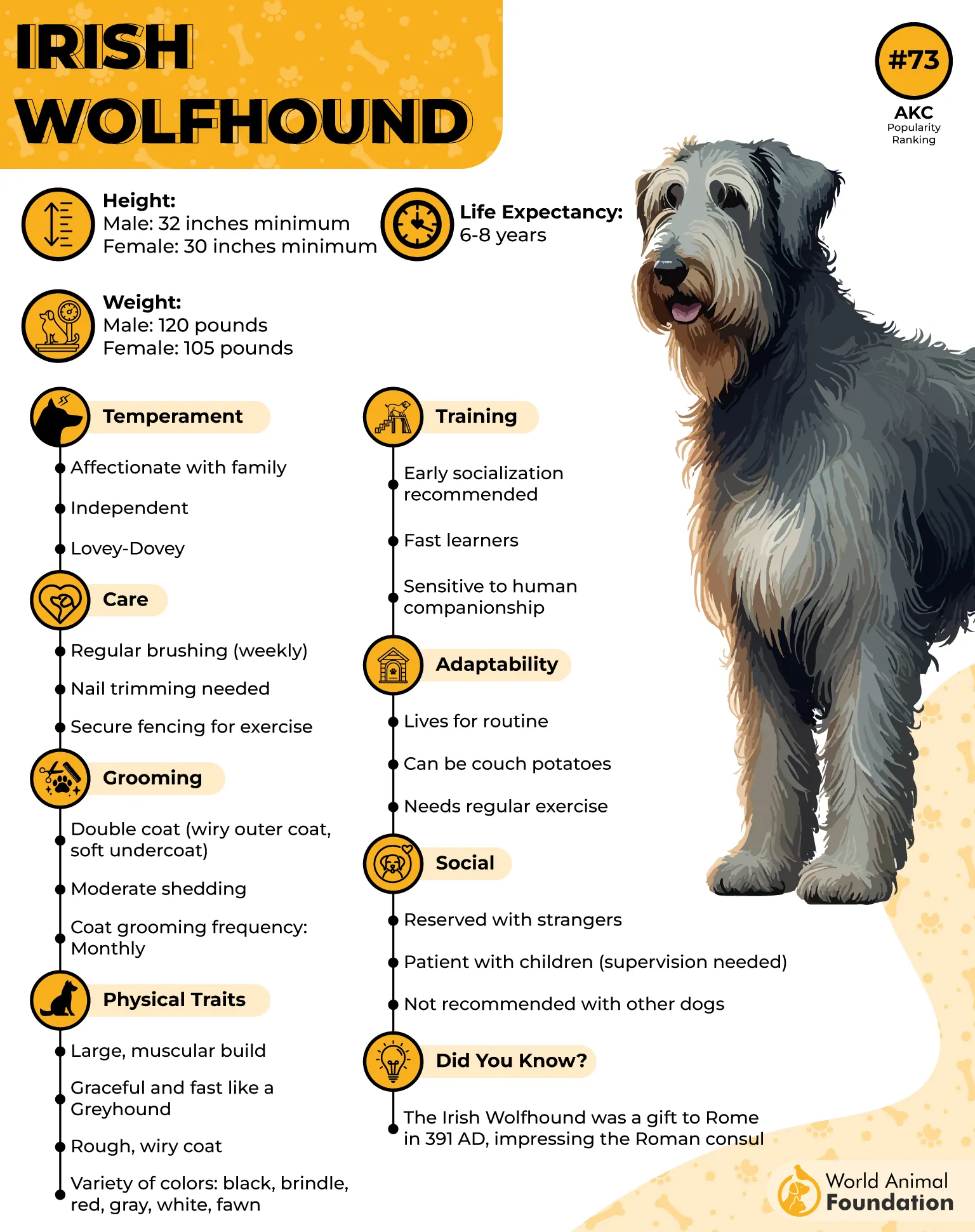
They’re not your typical guard dog—they don’t usually bark at every sound or pace the yard like a sentry. Instead, their protective power is more presence-based.
Imagine a burglar walking up to your house, seeing a dog roughly the size of a small horse looking back at them, and thinking, “You know what? This isn’t worth it.” That’s the Wolfhound effect.
Around family, they’re affectionate, patient, and wonderful with kids—though “gentle giant” still means giant. A happy tail wag from an Irish Wolfhound can be a full-contact sport, and sitting on your foot is basically a weighted blanket experience.
These dogs enjoy long walks and opportunities to stretch those gazelle-like legs, but otherwise, they’re pretty low-key couch philosophers. They’d rather spend time leaning on you like a furry skyscraper than chasing drama.
6. Tibetan Spaniel
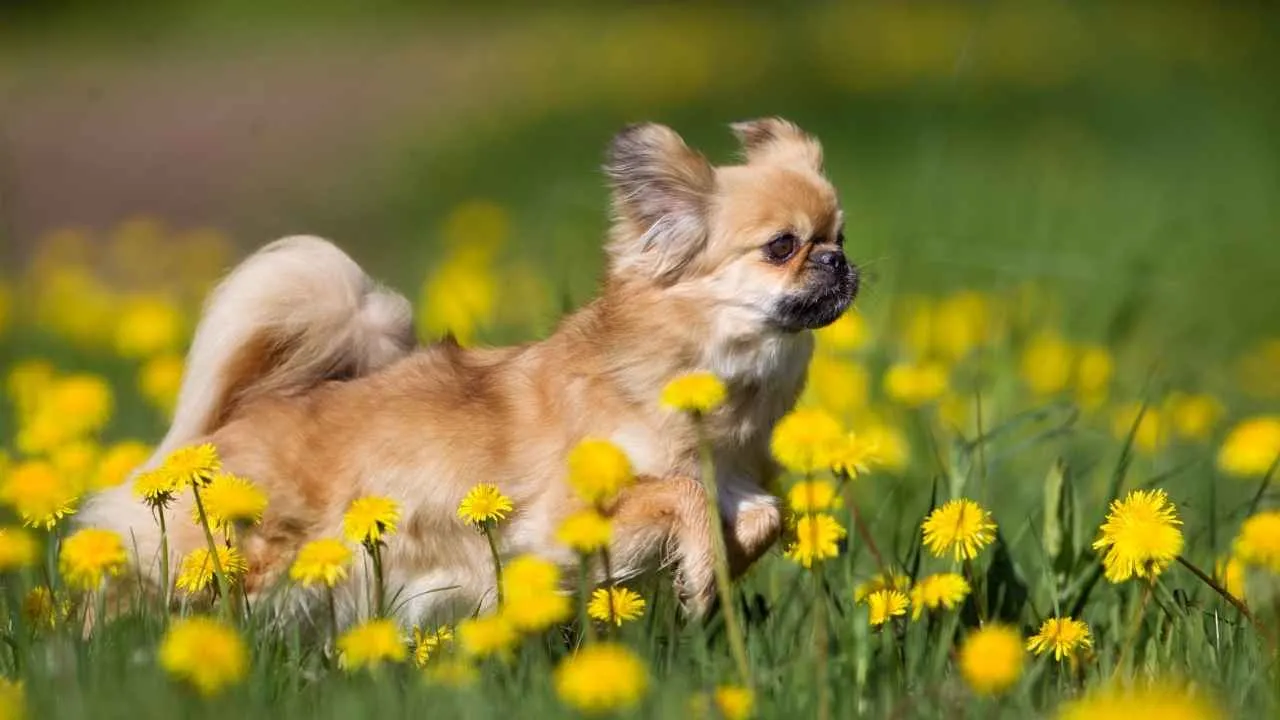
If you’ve ever wanted a guard dog with the body of a fluffy toy and the soul of a high-ranking palace official, the Tibetan Spaniel is your dog.
These little pups were bred by Tibetan monks to act as watchdogs on monastery walls—yes, monastery walls—where they’d perch like tiny, judgmental gargoyles surveying the land.
Despite their small size, Tibetan Spaniels have the confidence of a dog ten times bigger. They’re alert, clever, and have an instinct to protect. In their minds, they are royalty, and you are their beloved subject.
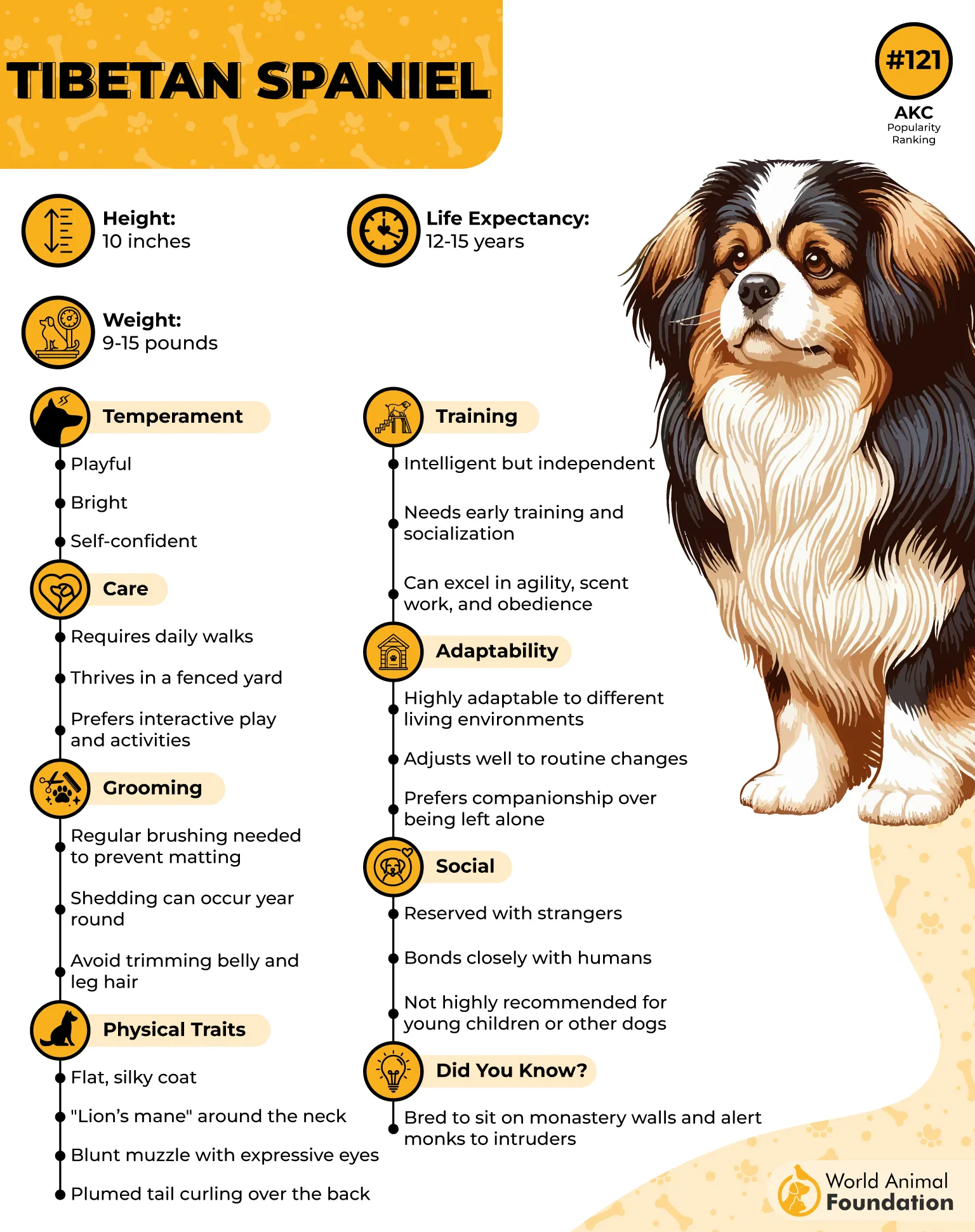
They’re not aggressive, though—just incredibly attentive and fully prepared to sound the alarm if something seems off. A Tibetan Spaniel’s bark might not shake the walls, but it will definitely let you know when the mailman dares to approach.
But here’s the twist: for all their vigilant instincts, these dogs are wonderfully low-key companions. They’re affectionate without being clingy, playful without being hyper, and independent without being standoffish.
Tibbies (as they’re lovingly called) are intelligent, a bit mischievous, and have a knack for making you laugh with their expressive little faces. They don’t need intense exercise, either—a few walks, some playtime, and plenty of cuddle sessions will keep them content.
The Tibetan Spaniel is the perfect blend of small, serene, and surprisingly serious about your safety. They may look like a decorative pillow come to life, but in that tiny heart beats the spirit of an ancient guardian who takes their job—watching over you—very seriously.
7. Great Dane
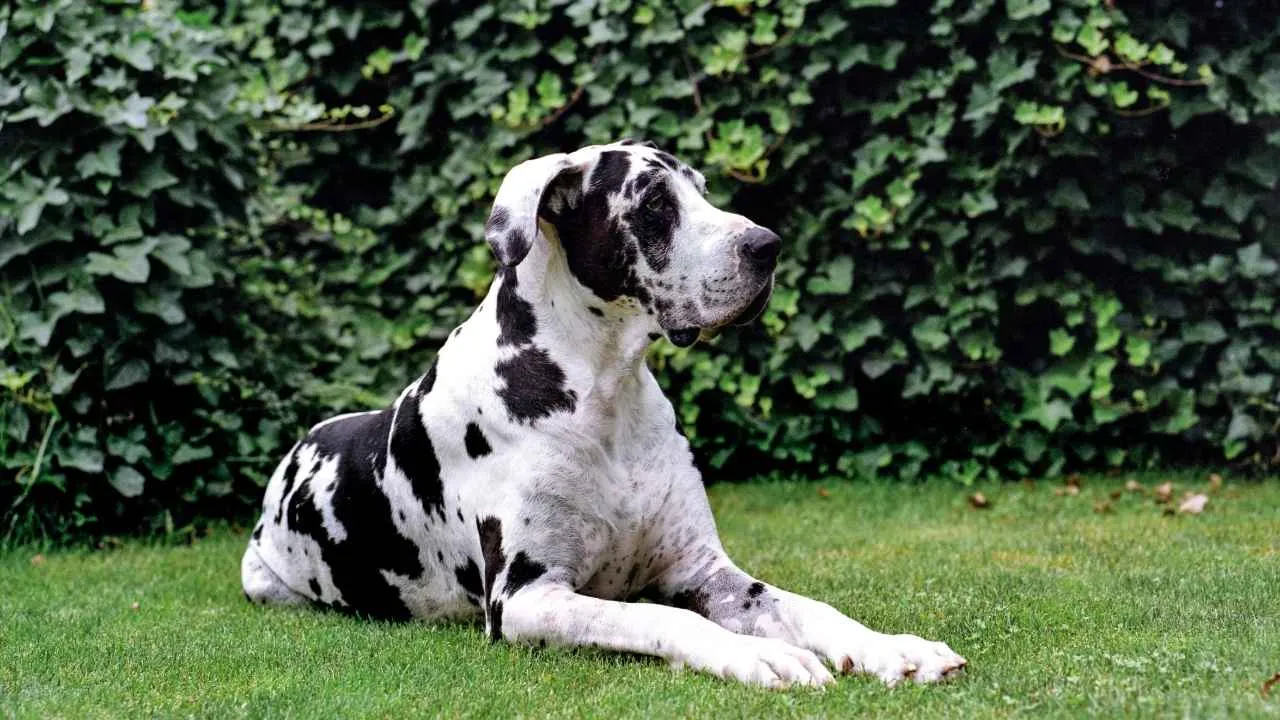
The Great Dane is basically the world’s biggest lapdog—and no one has told them otherwise. These towering sweethearts are affectionate, sensitive, and famously gentle with their families.
They’re patient with kids, too, though given their size, even a tiny joyful hop can feel like being gently tackled by a friendly moose. That’s why they’re usually a better fit for families with older children who won’t get flattened by a wagging tail of doom.
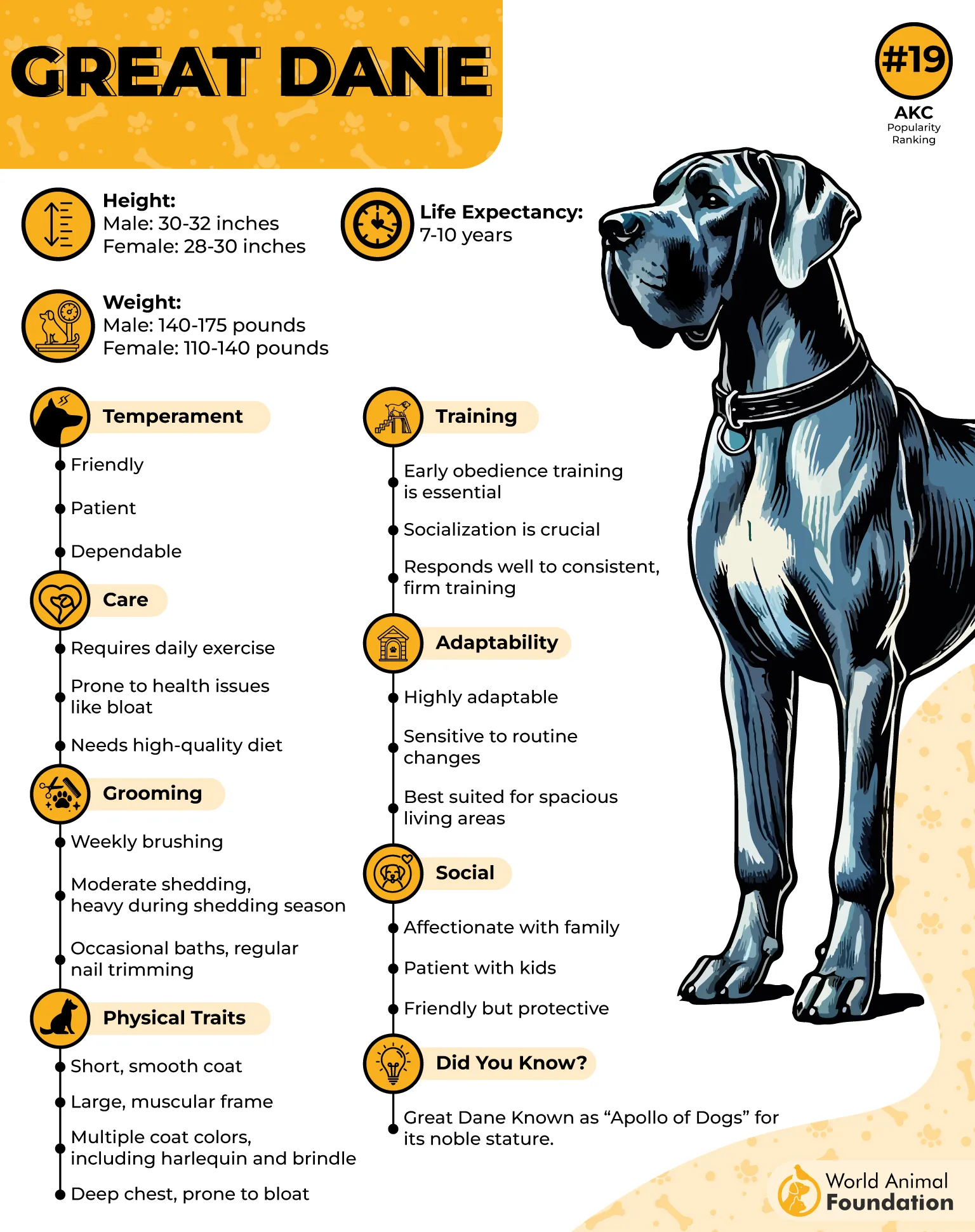
Historically, Great Danes were boar hunters and protection dogs, which is wild to imagine when yours is currently curled up on the couch pretending to be a small throw pillow. But that old courage still runs through them.
They’re typically friendly, but if their family needs defending, a Great Dane will rise—slowly, dramatically, like a mythic creature awakened from slumber—and make it very clear that this house is off-limits.
Activity-wise, they’re wonderfully adaptable. Want to take a relaxed walk? They’re in. Light hike? Sure. Lounge around the house like big decorative statues? Absolutely, their specialty.
They do need daily walks for both body and brain, but they’re surprisingly low-maintenance for a dog that could easily wear a saddle.
One important thing, though: Great Danes grow fast and don’t finish maturing until around two years old. Until then, their joints are still developing, which means vigorous exercise—jogs, long hikes, or anything that turns your dog into a bouncing giraffe—is a no-go.
In the world of couch potatoes, the Great Dane is the gentle guardian who looks intimidating from the outside but is really just a massive bundle of love… that also happens to scare away trouble just by existing.
Conclusion
When it comes to low-key dog breeds that still offer good protection, many calm dogs and chill dogs prove that you don’t need a high-energy guardian to feel secure.
Certain breeds like the Greyhound, Pekingese, and other gentle giant types remain even-tempered, low energy, and wonderfully family-friendly, while still staying alert to a knock or changes in their surroundings.
With the right mental stimulation, regular exercise, and patient guidance in new environments, these pets get along well with cats, other pets, and other dogs, making them safe, steady companions for every person in the home.
After generations of selective temperament, the particular dog you choose can offer both peace and protection while still being fun, loving, and reassuringly low-key.
