




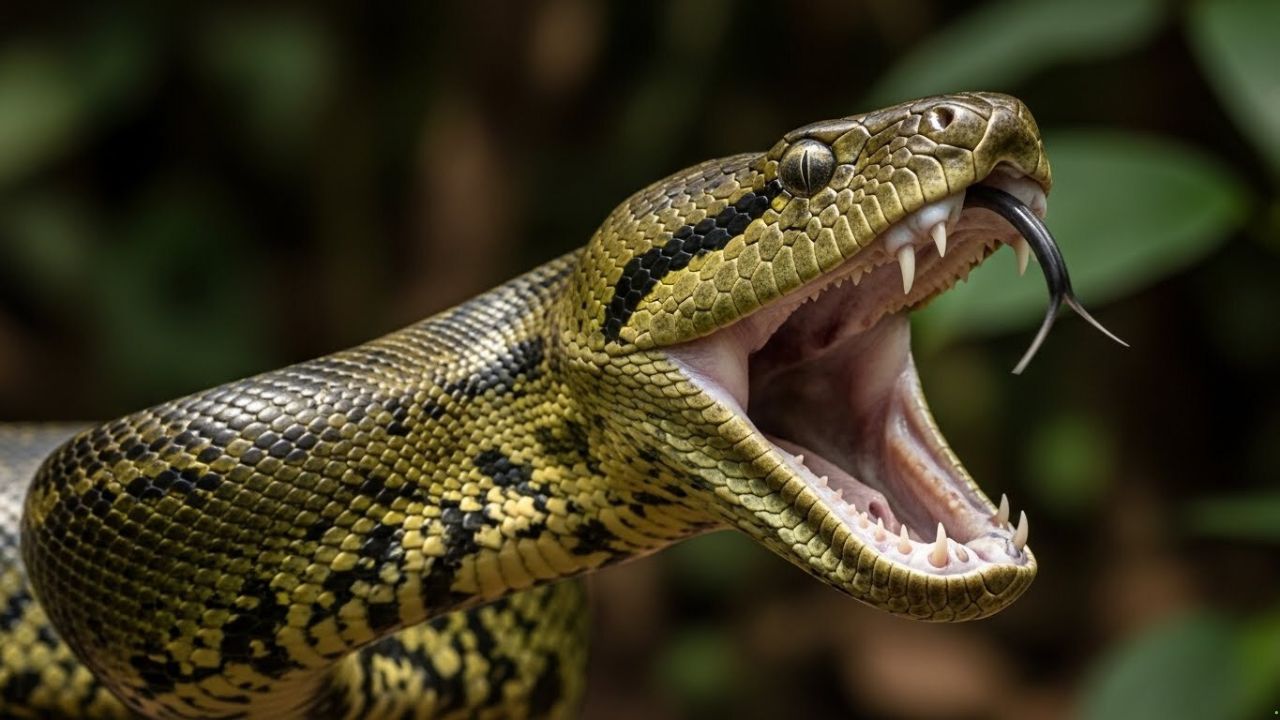
When you think of powerful bites in the animal kingdom, your mind might jump to lions, crocodiles, or sharks—but some of the strongest, most impressive bite forces belong to creatures that slither silently through forests, deserts, and jungles.
Snakes may not look like animals built for brute strength, yet many species have evolved jaw power that is astonishing, efficient, and undeniably fierce. Because snakes swallow their prey whole, their jaws aren’t just built for biting—they’re engineered for gripping, holding, and overpowering.
Venomous snakes rely on fast, penetrating strikes that deliver toxins with precision, while large constrictors use their muscular jaws to seize and secure prey before their coils finish the job. Either way, the strength behind their bite is a crucial survival tool.
From the bone-crushing grip of the Green Anaconda to the deep-piercing fangs of the Gaboon Viper, these reptiles demonstrate that bite force isn’t solely about size—it’s about design, speed, and evolutionary brilliance. Each snake’s bite tells a story of adaptation, power, and the unique role it plays in its environment.
Ready to explore the jaw-dropping world of snake bite strength? These species will leave you in awe of nature’s engineering.
Fact: The king cobra may be the world’s longest venomous snake, but when it comes to pure bite force, it’s actually out-crunched by several much smaller species.
Snakes with the Strongest Bite Force
1. Green Anaconda
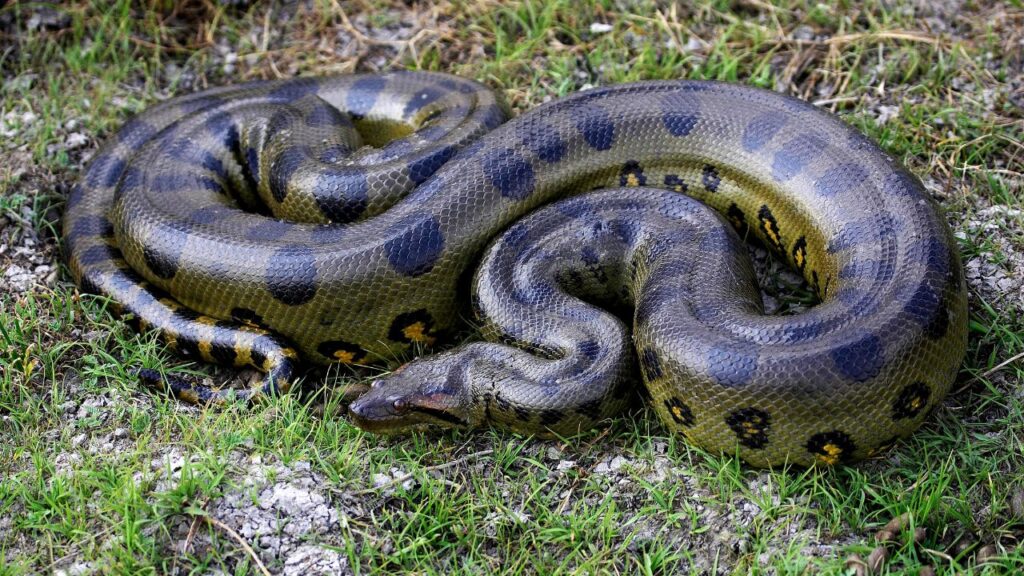
If the reptile world had a heavyweight champion belt, the Green Anaconda would probably wear it—and the snake wearing it would be roughly the size of a city bus. These giants hold the title of largest snake on the planet, stretching an incredible 20–30 feet and weighing up to 550 pounds.
Yes, that’s right—some of these snakes weigh as much as a grand piano, except they’re much better at swimming and significantly worse at playing Chopin. Native to the steamy wetlands of South America, Green Anacondas are masters of camouflage.
Their olive-green bodies with dark, coin-shaped blotches allow them to disappear into murky waters like scaly ninjas. Imagine trying to spot a giant olive with an attitude in a lake—that’s about the experience.
And if you think their usual size is impressive, wait till you hear about the whopper: a jaw-dropping 33-foot, 850-pound monster discovered by a construction crew in Brazil. If you’ve ever wondered what it feels like to question every life decision immediately… that’s probably how those workers felt.
Green Anacondas rely not only on their size but also on their stealth. Their coloration conceals them effortlessly as they wait underwater with just their eyes and nostrils peeking above the surface—like they’re spying on you from behind a newspaper.
Once prey wanders close enough, snap! Their incredibly powerful bite clamps down, and the rest is dinner-time history.
2. King Cobra
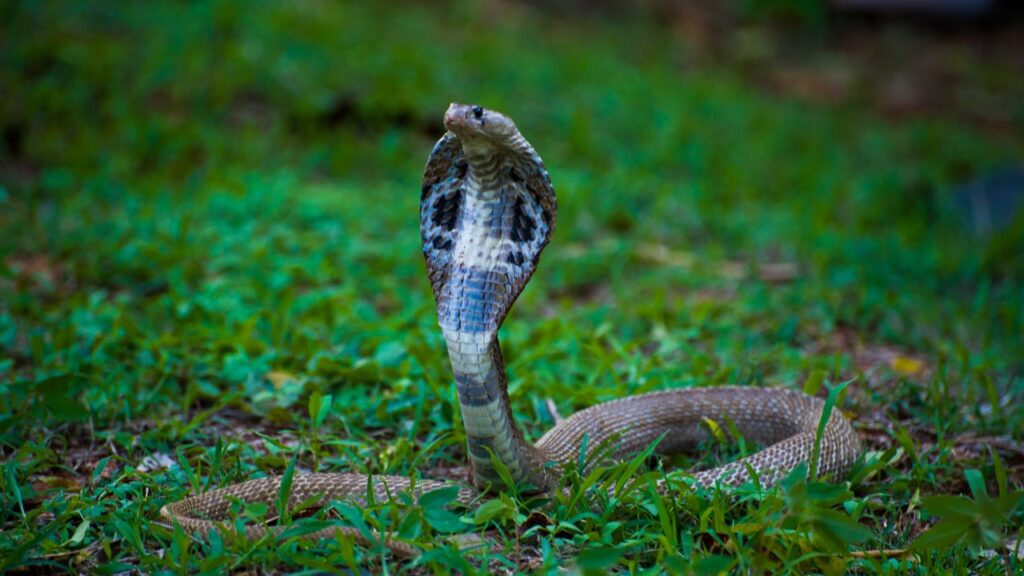
If snakes had royalty, the King Cobra would absolutely rule the throne—wearing a crown, holding a scepter, and hissing, “kneel before me, peasant.” At an average length of four meters (that’s over 13 feet!) and a record-holder stretching a jaw-dropping 5.85 meters, this serpent isn’t just long… It’s “you need to zoom out to fit it in the picture” long.
Like its smaller cousin, the Indian cobra, the King Cobra carries a rich cultural legacy across the Indian subcontinent. In fact, it’s the national reptile of India, which is honestly a pretty metal choice when other countries went with birds or cuddly mammals.
Despite its revered status, this majestic snake faces ongoing threats from habitat loss and poaching for traditional medicine—problems that even a king can’t fend off alone.
India takes cobra conservation seriously: harming or killing one is a criminal offence punishable by up to six years in prison. Imagine explaining to your cellmate that you’re doing time for picking a fight with a literal king.
Fun fact: Wikipedia says, in older literature, you may find the King Cobra under the dramatic moniker “hamadryad.” Sounds like a wizard from an ancient fantasy saga, right? Fitting, because this snake has the mythic presence to match.
With its flaring hood, piercing gaze, and ability to stand tall enough to look an adult human in the eye, the King Cobra is basically the final boss of the reptile world.
3. Boa Constrictor
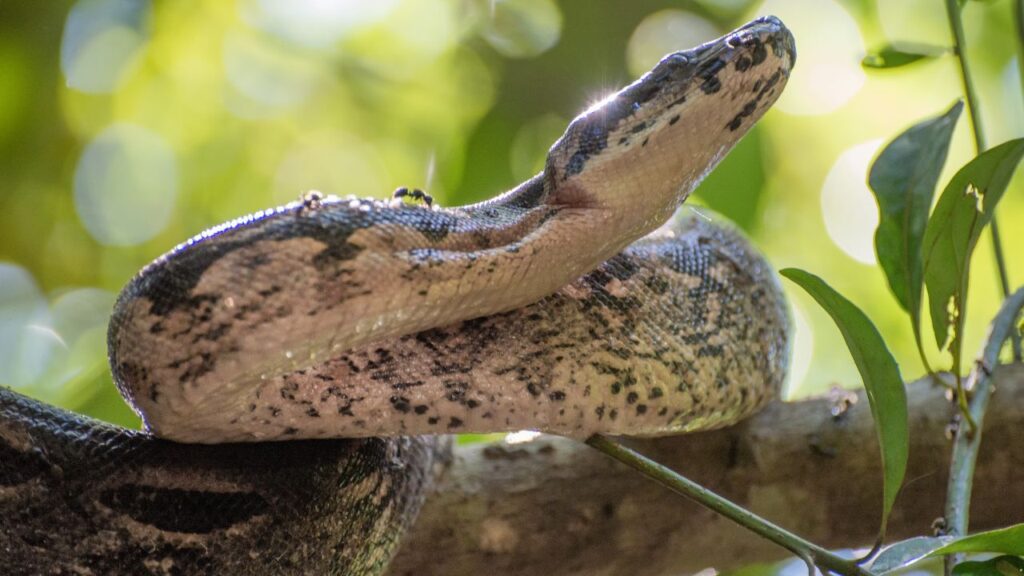
With “constrictor” right there in the name, boa constrictors pretty much come with their own warning label. These snakes don’t mess around—they squeeze with the kind of enthusiasm most of us reserve for bubble wrap.
And while kingsnakes are known for picking fights with bigger reptiles, even they know better than to square up with a full-grown boa constrictor. That’s like a housecat challenging a sumo wrestler: technically possible… but ill-advised.
Boa constrictors are built like the powerlifters of the snake world—thick-bodied, muscular, and more than ready to show off their strength. On average, they weigh 20–30 pounds, but some heavyweight champions have reportedly tipped the scales at 100 pounds.
Stretching 8–10 feet long, with some individuals reaching 12 feet or more, they’re long enough to make you double-check that the “garden hose” you stepped over didn’t blink at you. The record-breaker? A stunning 18-foot boa constrictor, which is less a snake and more a living rope bridge.
These serpents use their powerful bodies to wrap around their prey, which usually includes small mammals like rabbits, opossums, and squirrels. A large rabbit dinner can fuel a boa for an entire month, thanks to their slow, efficient digestion.
And while boas are famous for their squeezing skills, don’t underestimate their bite either. They may not be venomous, but when a boa constrictor bites down, you’ll understand very quickly why they made the list of snakes with the strongest bite force.
4. Reticulated Python
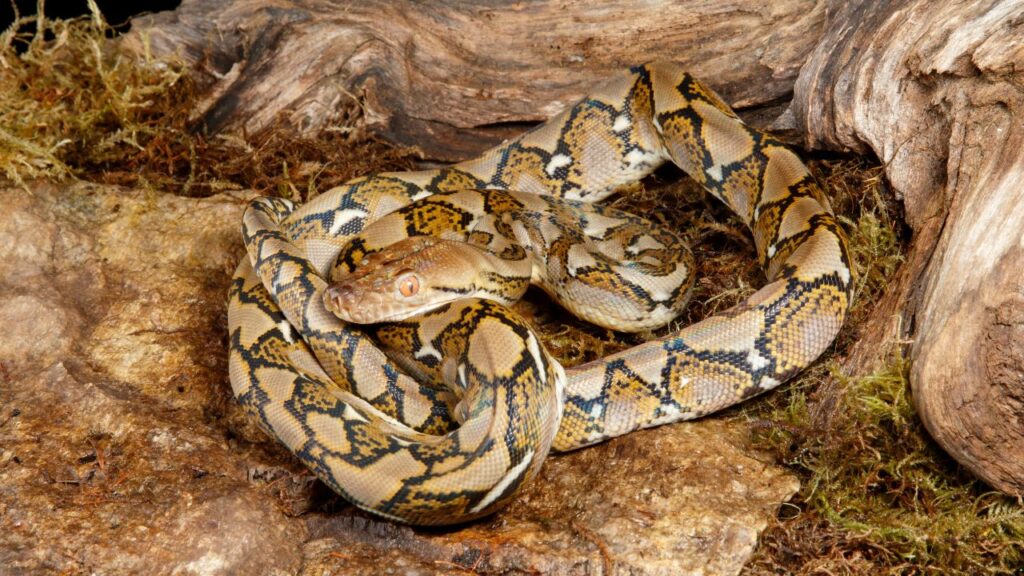
This snake, known scientifically as Malayopython reticulatus, holds the title of the longest living snake in the world—which means if you ever see one in person, your first reaction might be to take several respectful steps back… and possibly rethink your life choices.
Reticulated pythons are true giants of the animal kingdom. Their name comes from the intricate, net-like pattern running along their bodies—“reticulated” literally means “netted.” It’s basically nature’s version of a luxury designer print, except this designer can constrict a medium-sized deer.
While no one knows the exact size of the global reticulated python population (because, frankly, few people volunteer to go out and count them), Britannica notes that the species is impressively adaptable.
These snakes thrive around human environments and bounce back quickly even when populations drop—thanks to their ability to mature and reproduce at surprisingly fast rates. Think of them as the overachievers of the reptile world: “Oh, you changed the habitat? No problem—we’ll adjust.”
Despite their intimidating size, reticulated pythons are fascinating creatures with remarkable strength. Their bite force, combined with their legendary ability to coil, makes them one of the most formidable constrictors on the planet. A retic doesn’t just hug—you become the hug.
And while videos of these snakes sometimes go viral online (you may have seen a few!), nothing beats the awe of learning about them up close—preferably from a safe, non-constrictable distance.
5. Black Mamba
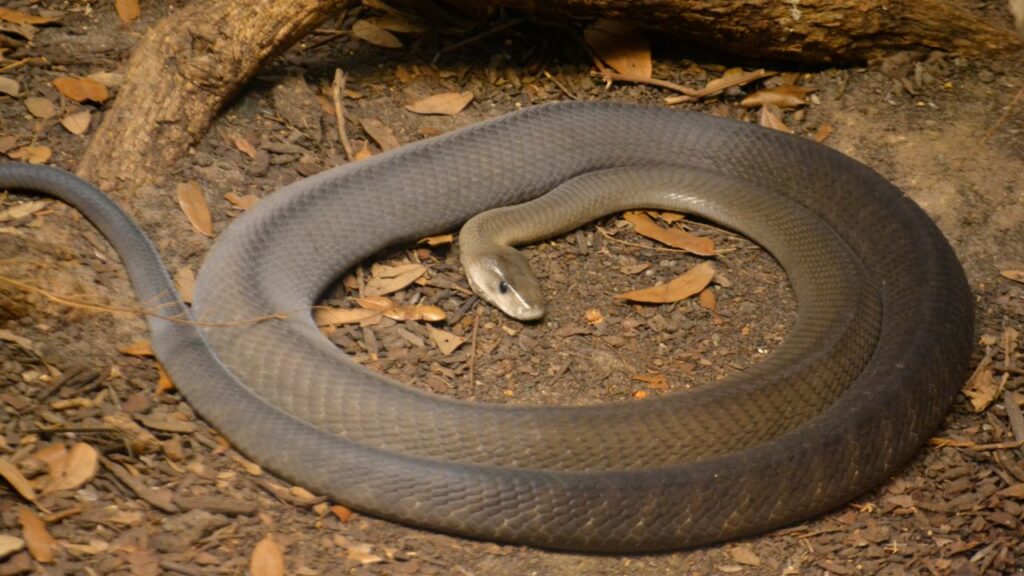
If snakes had an Olympics for speed, power, and sheer intimidation, the Black Mamba would take home gold, silver, and bronze—then hiss at the other competitors for even showing up. Found across parts of sub-Saharan Africa, this legendary serpent has a reputation so fearsome that even its name sounds like a villain from an action movie.
But Black mamba bite? Oh, its bite is where things get really dramatic.
The Black Mamba produces some of the most potent venom on the planet, with an average yield of 300–400 mg per bite. To put that into perspective: that’s 10 times more lethal than the venom of a tiger snake, and 20 times more than what’s needed to kill an average adult human.
In other words, this snake doesn’t just play the game—it rewrites the rulebook. Though often feared, the Black Mamba isn’t out there picking fights. In fact, it’s shy and prefers to avoid humans entirely. But if cornered or startled? This is one snake you do not want to argue with.
Armed with lightning-fast reflexes and a bite that could make a medical textbook sweat, the Black Mamba stands as one of nature’s most formidable predators.
And here’s a twist: despite its name, the snake isn’t actually black. Its skin is usually gray to olive, but the inside of its mouth is inky black—kind of like nature’s way of giving you a final warning sign: “Don’t even think about it.”
6. Bushmaster
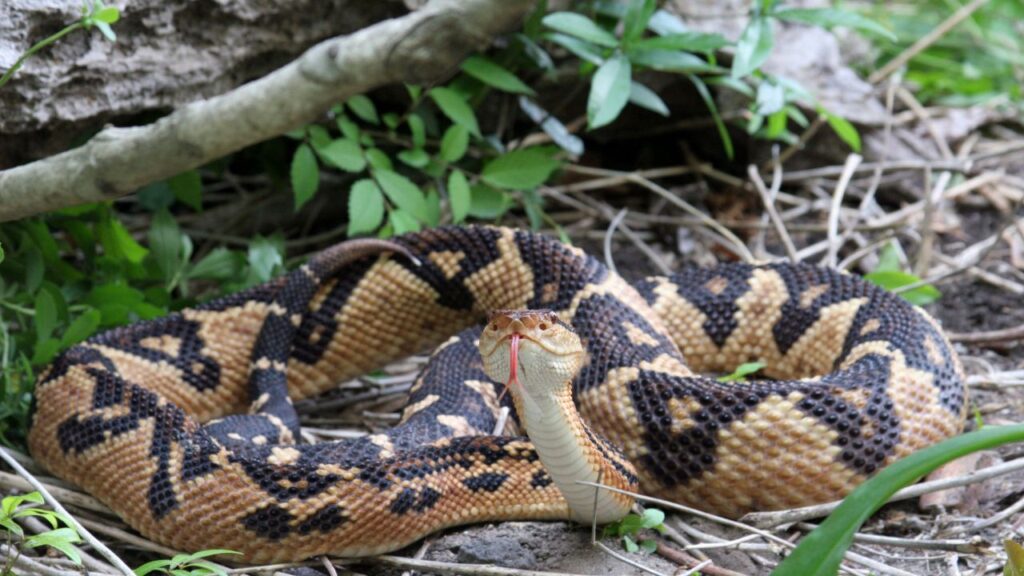
With a scientific name that translates loosely to “silent death,” the Bushmaster is basically the ninja of the snake world—deadly, stealthy, and impressively quiet. Its Latin name, Lachesis muta, includes the word muta, meaning “mute,” which is a polite scientific way of saying: this snake shakes its tail like a rattlesnake, but because it doesn’t have a rattle… You get no warning at all. Good luck out there.
These striking serpents roam Central America, northern South America, and the island of Trinidad, preferring warm, humid old-growth forests with plenty of water nearby.
Picture the kind of environment where your hair gets frizzy, and your clothes stick to you—that’s paradise for a Bushmaster. You’ll usually find them on the forest floor, blending into the leaf litter like beautifully patterned land mines.
But make no mistake: as gorgeous as they are, Bushmasters are no joke. They’re among the most dangerous snakes in the Americas, and not because they’re out hunting humans—rather, they’re capable of fast, repeated strikes and deliver large quantities of snake venom that attack both the circulatory and nervous systems.
Symptoms of a bushmaster bite can escalate quickly: pain, swelling, nausea, vomiting, sweating, diarrhea, slow heartbeat, abdominal pain—and if no antivenom is given, things can spiral into shock, plummeting blood pressure, and even cardiac arrest. In short, this is a snake you admire from very far away, preferably through a documentary… or from the safety of your couch.
Yet, like most snakes, the Bushmaster plays an important ecological role. They help control rodent populations and may even hold secrets in their venom that could contribute to future medical treatments.
Silent, powerful, and undeniably mesmerizing, the Bushmaster is one of nature’s most awe-inspiring serpents… just not one you’d invite to your backyard barbecue.
7. Gaboon Viper
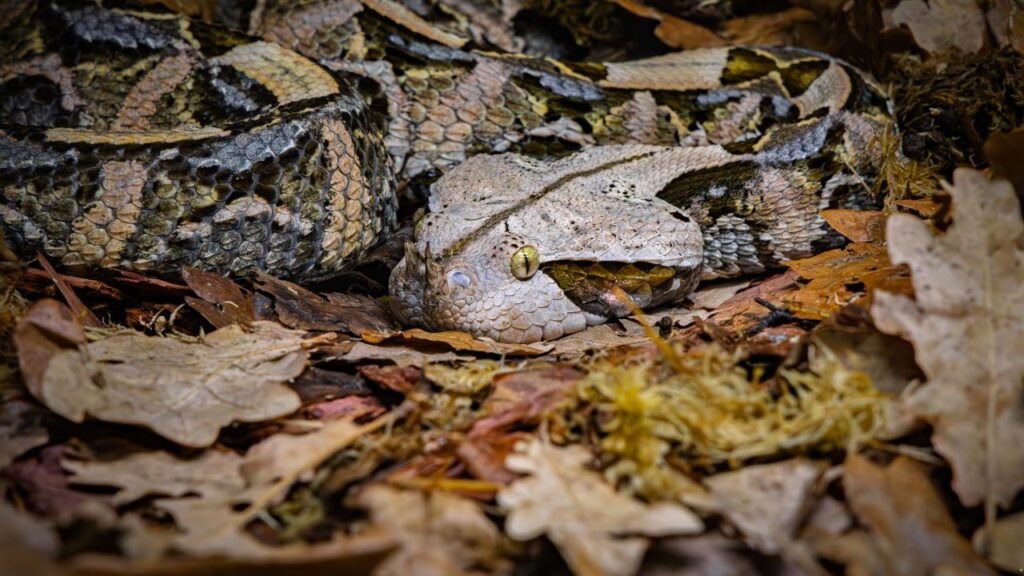
Meet the Gaboon Viper, Africa’s largest viper and arguably the best-dressed snake on the continent. With a broad, leaf-shaped head and intricate, earthy patterns, it’s basically the forest floor’s camouflage champion—so good at blending in, you might step over one without even realizing it. Nature really went all out with this snake’s fashion sense.
Despite being venomous, the Gaboon viper is surprisingly chill. It’s a calm, patient hunter, content to lounge in leaf litter and wait for unsuspecting prey—small mammals, birds, or amphibians—to wander by.
Unlike most snakes that strike and let go, the Gaboon viper has a very “slow and steady wins the meal” approach: it hangs on until its prey expires, making it a master of efficiency (and a bit of a drama queen, honestly).
Humans aren’t usually on its menu. Most bites happen only when someone accidentally steps on the snake, giving it no chance to escape. When threatened, the Gaboon viper doesn’t immediately attack; it raises the upper part of its body and hisses, like a polite warning sign: “Excuse me… do you mind?” If that fails, it’ll strike—but it’s generally not aggressive.
A gentle giant in the viper world, with one of the most impressive venomous bites on the planet, this snake proves that sometimes the calmest creatures pack the hardest punch.
Conclusion
When exploring snakes with the strongest bite force, it’s important to consider snake species like the Inland Taipan, Coastal Taipan, Tiger Snake, Saw Scaled Viper, Black Mamba, African Rock Python, and Ophiophagus Hannah. Many of these are highly venomous, capable of injecting venom that delivers a lethal dose in a single bite, causing severe damage to muscle tissue or disrupting breathing if left untreated. The venom toxicity and most painful bite vary due to so many factors, including the venom injected, bite site, diet, breeding season, and the size of the victim or other prey such as rodents, frogs, fish, turtles, or even larger prey.
Some species, like the African Rock Python, rely more on constriction than venom, while snakes like the Inland Taipan or Coastal Taipan are generally docile in the wild yet remain dangerous to humans due to their venom. Scientists study these snakes extensively for medical research, helping to understand high mortality rates, huge venom potency, and behavior patterns across other snake species and wildlife, highlighting the delicate balance between fascination and caution when encountering these formidable reptiles.
