




When choosing a dog, people tend to stick to the familiar breeds. Their popularity amongst the general population isn’t the only reason, but also because of their intelligence, loyalty, and easygoing nature.
On top of everything, these are breeds you can count on with your life. Even with little kids or the elderly in the house, you don’t have to worry about them wreaking havoc or acting out.
However, there are some people who, in search of something “unique”, can end up digging a grave for the serenity of their homes by getting a very unusual breed, not the right fit at all. These dogs come with their rare, eccentric personalities, looks, demeanor, etc.
But where it can be exciting, there’s a thin line between looking savage and adopting one. And the outcome is not the same at all.
Owning a rare breed isn’t always a walk in the park. Many of them are rare to have as household pets for new owners for a reason. These lesser-known breeds come with their challenges, quirks, and an exercise, diet, and grooming routine that can exhaust even the most passionate dog lovers.
Let’s explore some of these breeds in this guide.
Best Unusual Dog Breeds to Avoid
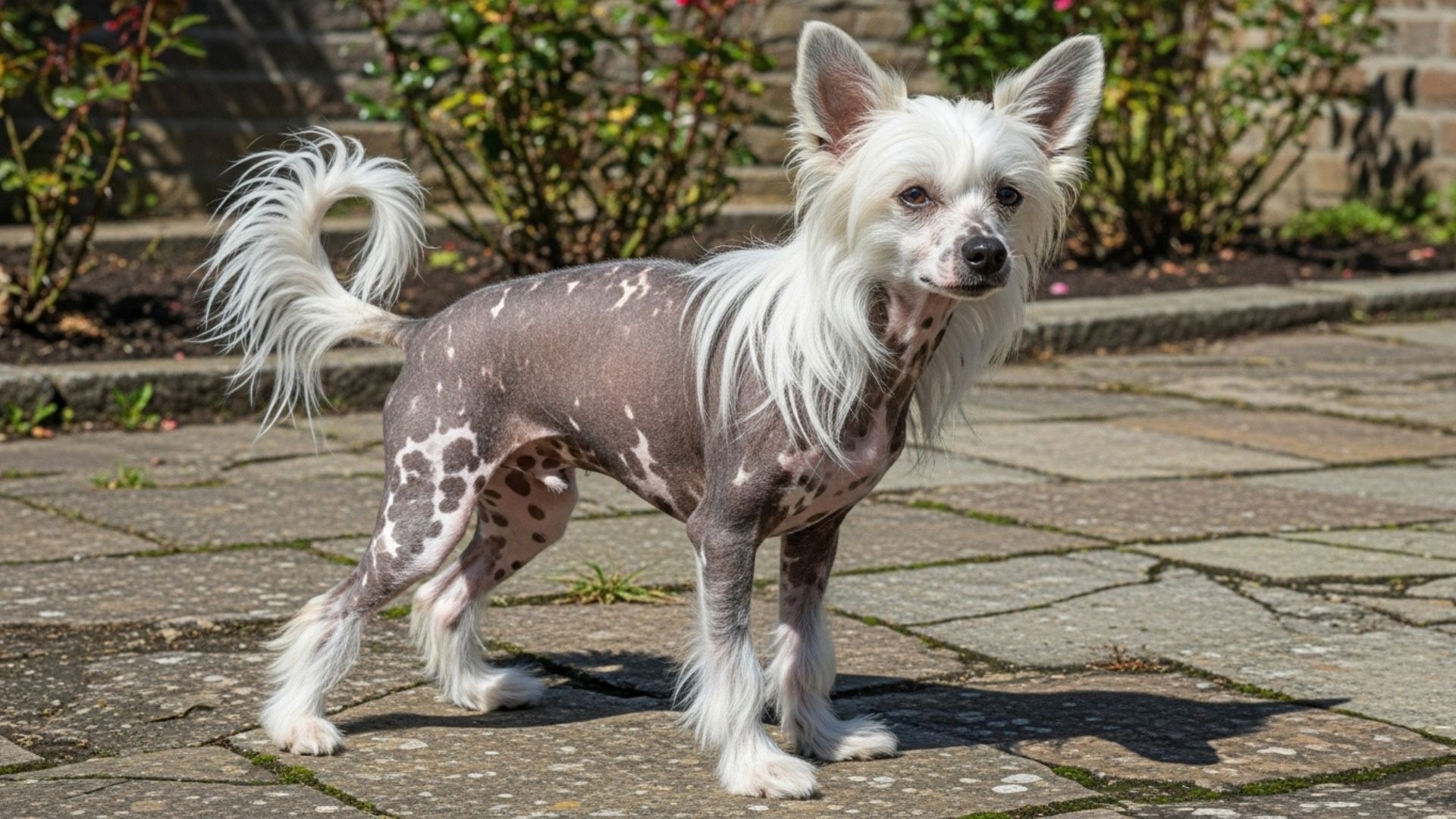
1. Chinese Crested
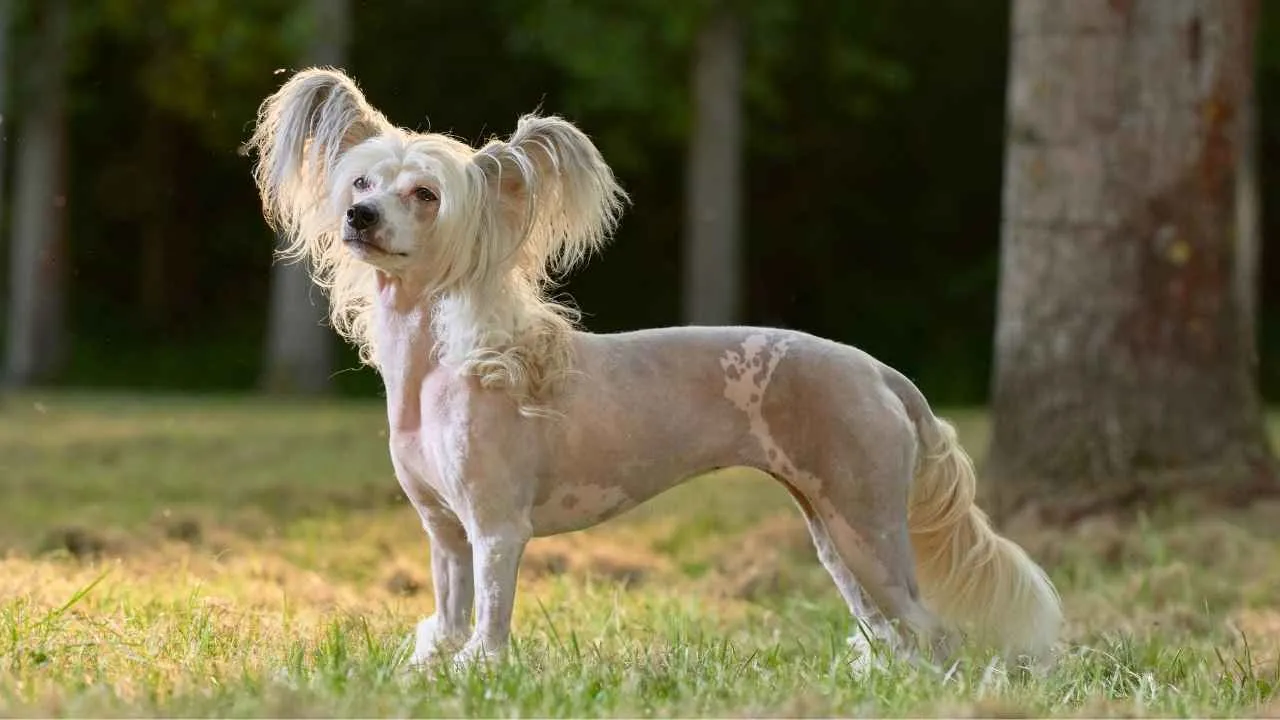
The Chinese Crested likely evolved from the African hairless dog. They were believed to be bred down by Chinese sailors to be used to chase, hunt, and kill rats on ships, as mentioned by the AKC.
Evidence even points to ancestry with other hairless breeds from Mexico and South America, despite the name suggesting Chinese origin. They were brought to Europe in the 1800s.
Difficulties for a First-Time Owner
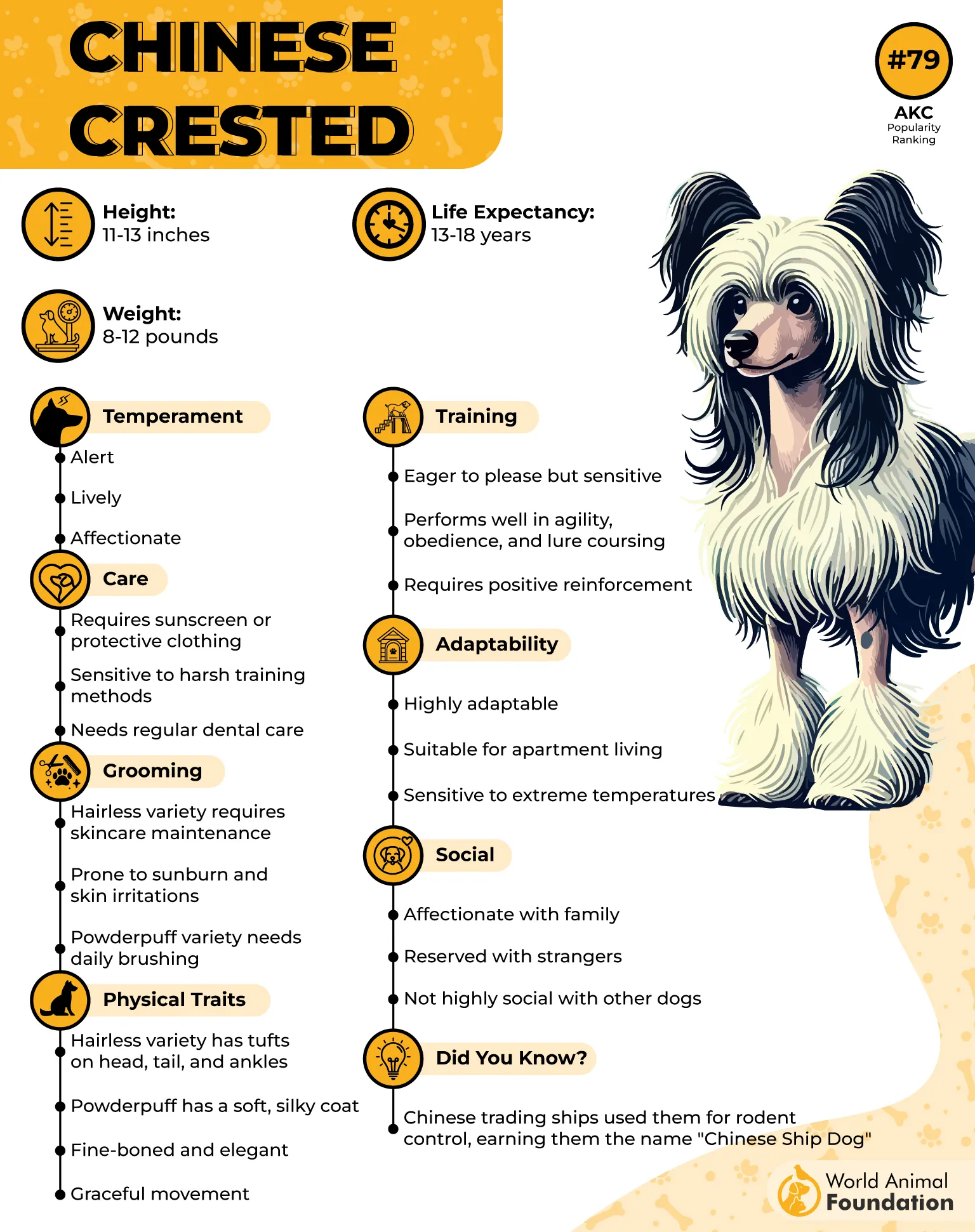
They can be difficult to housebreak, despite excelling in other arenas and being really obedient too. They require a lot of training with a gentle hand and positive reinforcement, and lots of patience.
If you have a demanding routine that requires you to be outside the house for long hours in a day, this breed is absolutely not for you. They can get anxious and do not adapt well to being left alone for long hours. They thrive on companionship and want to stay with their humans.
They have sensitive skin and, due to the lack of hair, they are prone to getting sunburnt. The lack of hair also means that they are more sensitive to the cold.
2. Xoloitzcuintli
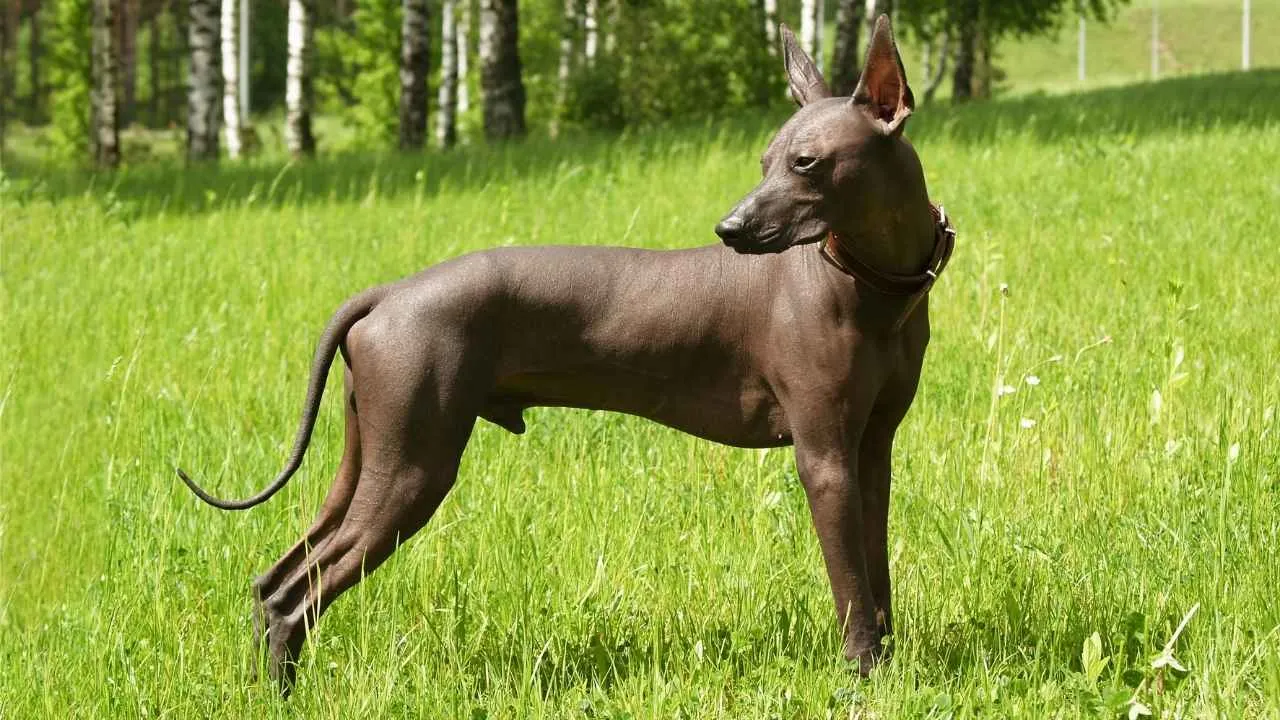
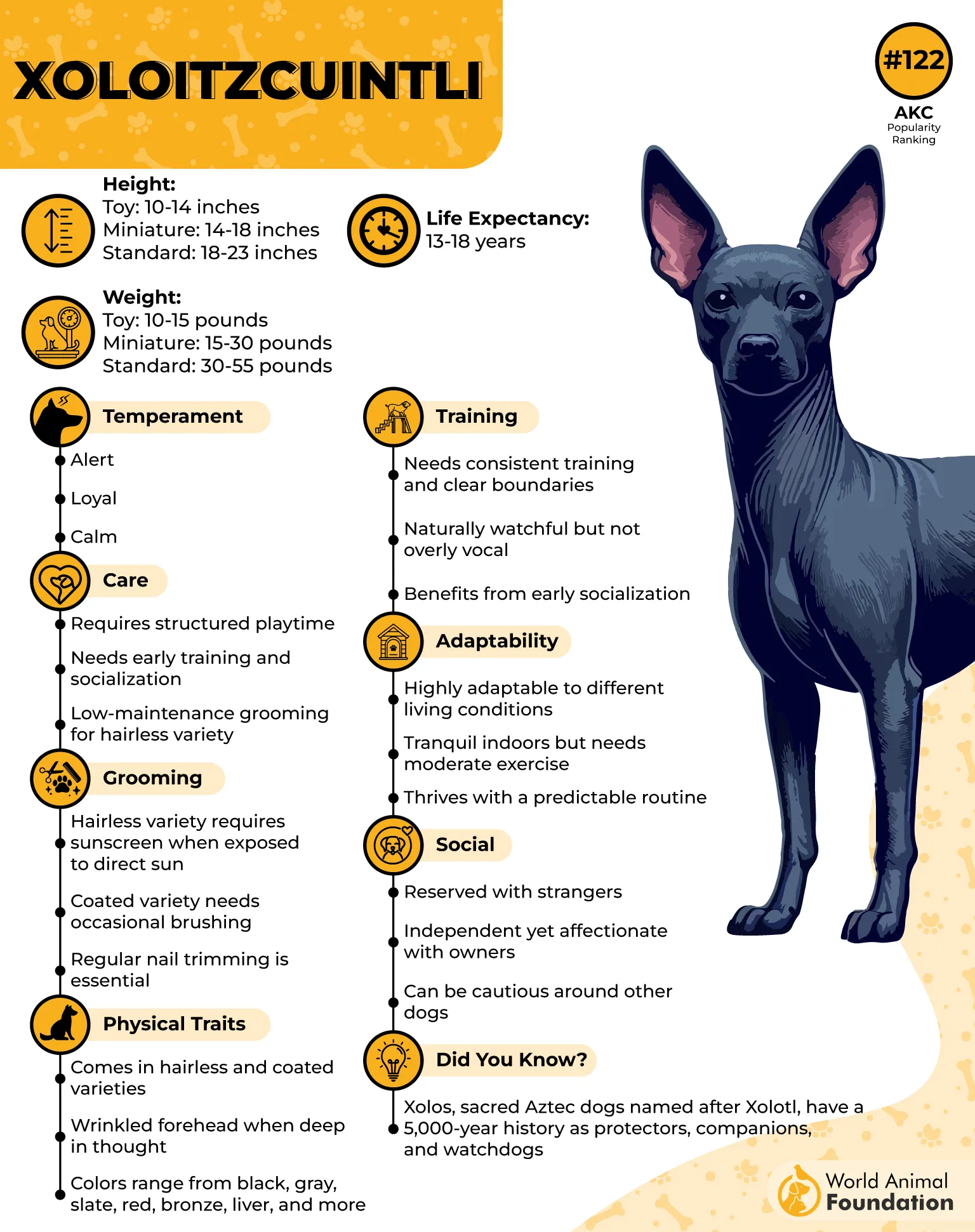
The Xoloitzcuintli is an ancient breed, with origins spanning over 3,500 years. It originated in Mexico and was admired and welcomed into other cultures and regions, like the Aztecs and Mayas. Purina writes that they were considered sacred, believed to possess healing powers.
They were also thought to guide the dead to the underworld and were even buried with their owners for this purpose, or sacrificed in ceremonies, and even eaten.
Difficulties for a First-Time Owner
Despite them having a calm and assertive temperament, the fact that they are smart can lead them to be stubborn more often than not. They need consistent training and strictly established boundaries to behave.
This is a headstrong breed, as we discussed. It will find ways to bend the rules and test the boundaries you have set up at any given chance. You will need to put in the work with their training and especially their socialisation to address this issue before it becomes a problem.
Due to their lack of fur, they can experience dryness a lot. Their skin is sensitive, so you can expect sunburn, allergies, acne, bacterial and fungal infections, too, if they are not groomed and taken care of well enough.
3. Bedlington Terrier
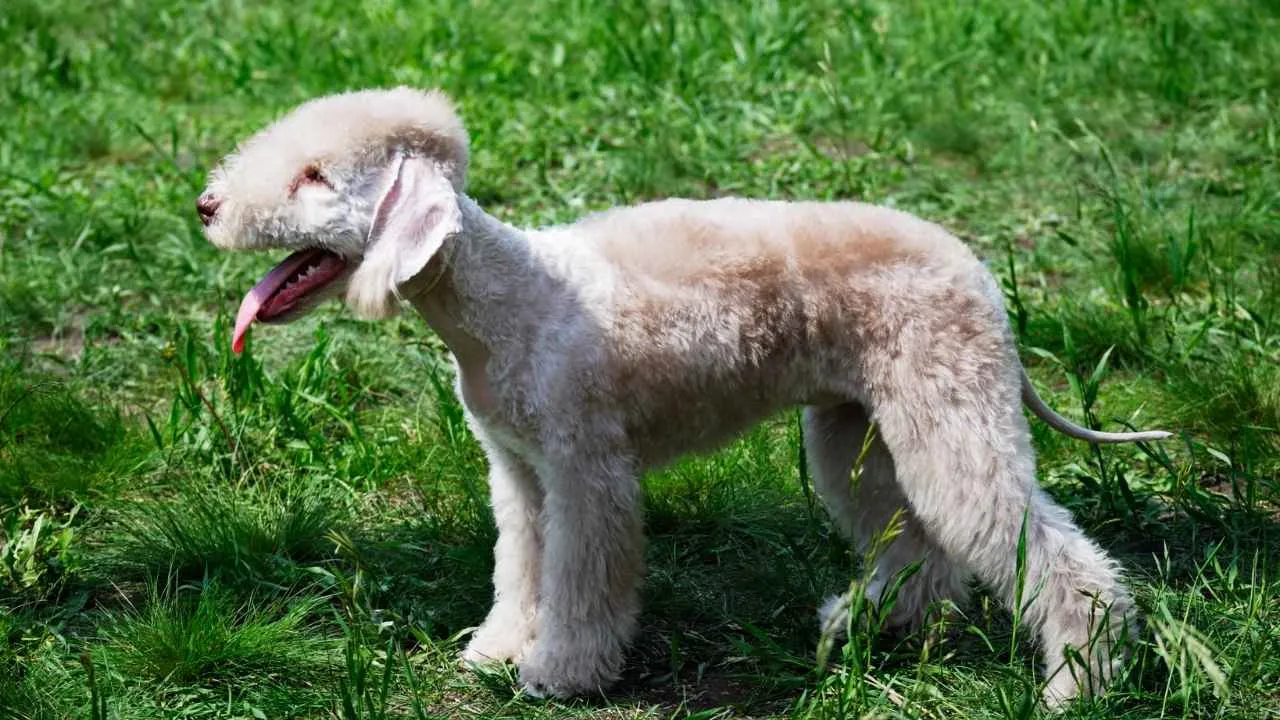
This breed was developed for hunting vermin in the mining town of Bedlington in Northumberland, England. They are believed to be a mix of the Otterhound, Whippet, Poodle, and Bull Terrier. There may be a possible link to the Dandie Dinmont, too, in the mix.
Difficulties for a First-Time Owner
The Bedlington Terrier is prone to some health issues, as per PetMD, like Copper Toxicosis, which is a hereditary condition where excess copper accumulates in their liver and damages it. This means they can’t have copper-rich dog foods.
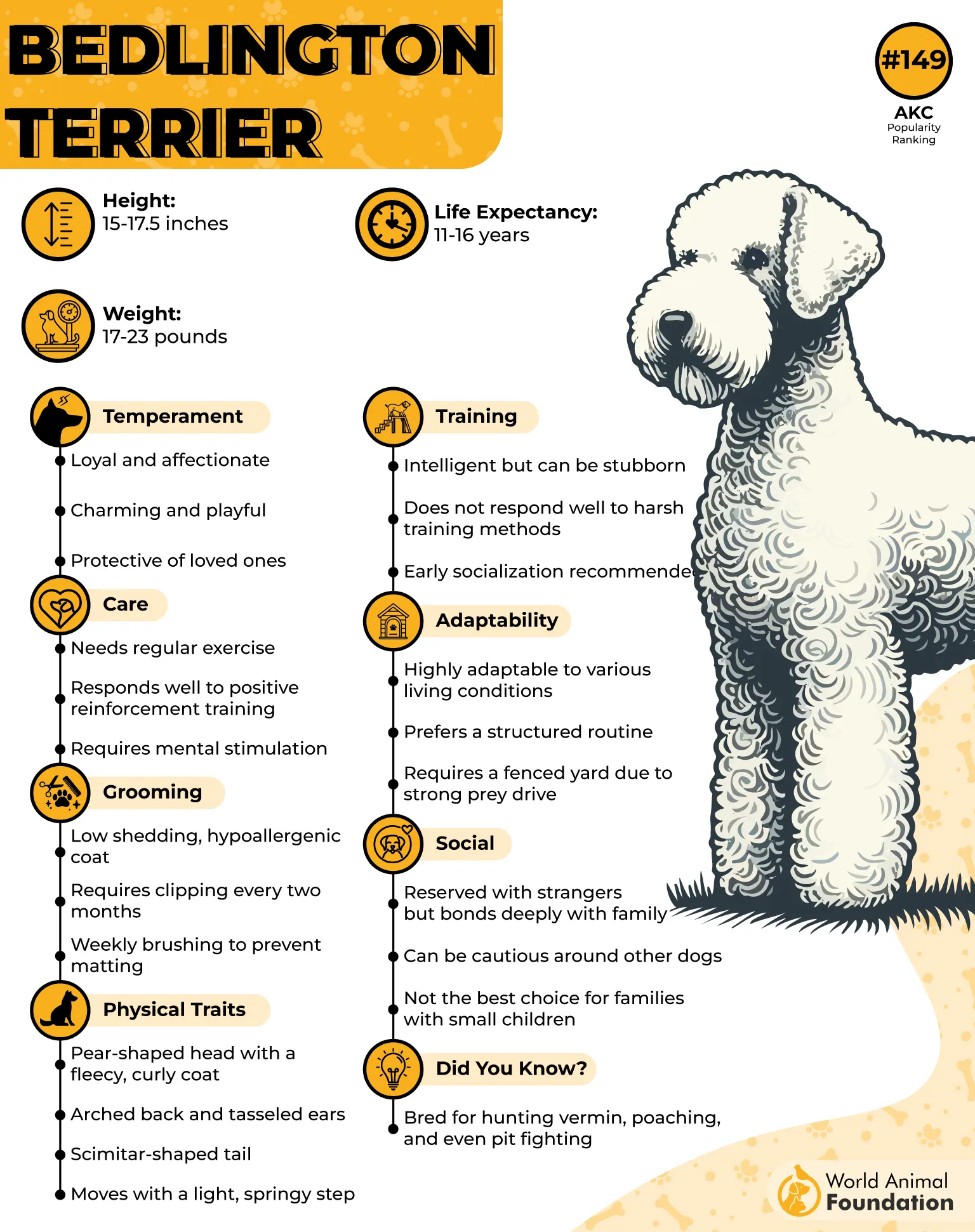
In addition to this, they are also prone to Patellar Luxation and various eye problems.
Due to their history, being bred as hunting dogs, they have a strong prey drive. And being bred to hunt vermin in particular makes their yearning to hunt small animals such as cats and birds really strong.
They must be kept on a leash if they’re outside and are not compatible with homes with other, smaller pets.
Their heritage leads them to be alert, always on guard. This makes them prone to digging and a lot of barking, the type of behaviour, if not tamed in the beginning, can surely serve as a longer-term problem. They need a firm but fair hand that a first-time owner can’t necessarily provide.
4. Shar Pei
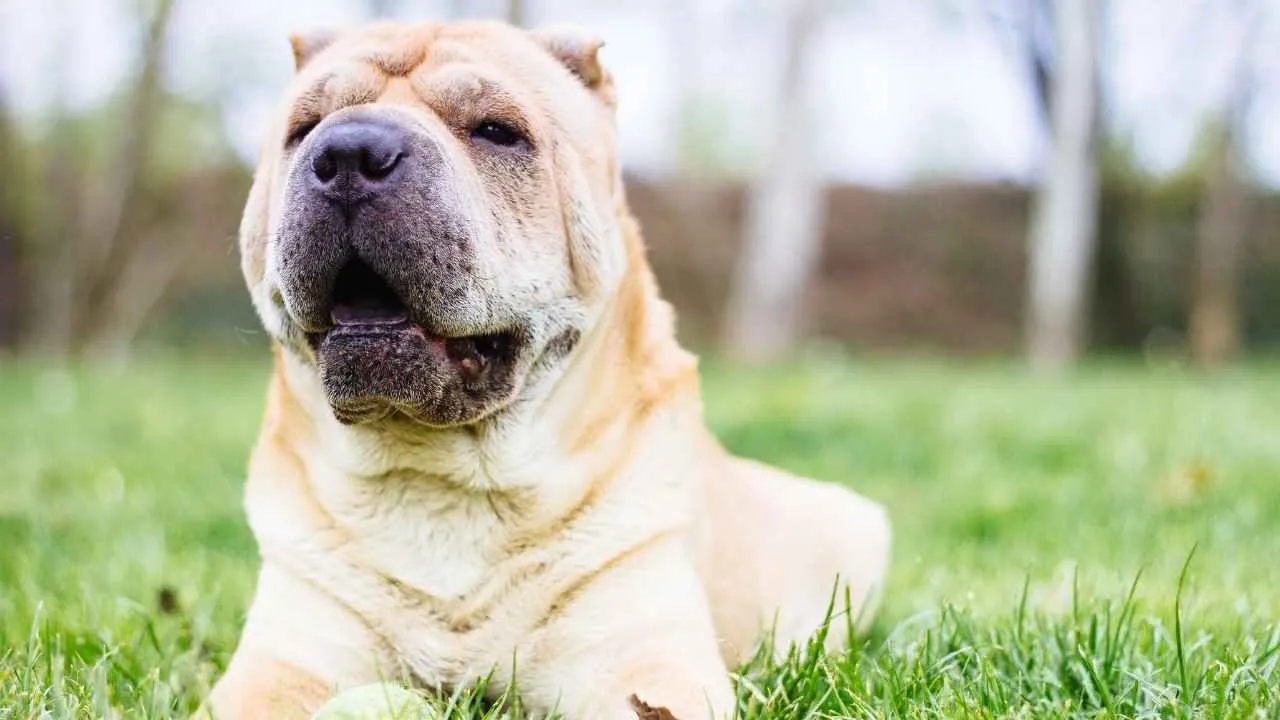
They possibly originated around 200 B.C. from Southern China. It was used as a versatile dog to hunt, guard, and even herd.
In the middle of the 20th century, due to heavy taxes imposed by the Chinese government, they nearly went extinct. But a Hong Kong breeder raised awareness about it and saved the breed in the 1970s. Orvis describes them as being affectionate with family.
Difficulties for a First-Time Owner
Their care and training and more demanding than other breeds, and it is not one for the newbies. They tend to get anxious and aggressive around other dogs, and this can be a serious issue despite them being on a leash if their handler can’t manage their size.
They need regular grooming and cleaning with special focus on their folds and ears. Even after cleaning them, if they aren’t dried thoroughly, the folds can trap moisture, which can then be a breeding ground for various bacteria and yeast, leading to skin infections.
So their folds must be inspected at least twice a week.
Their wrinkles are a staple look for the breed, but can also be a major inconvenience when they cause the eyelids to roll towards the eye. This condition is called Entropion, where the eyelids and eyelashes rub against the eye, the cornea specifically, and cause painful corneal ulcers.
5. Pharaoh Hound
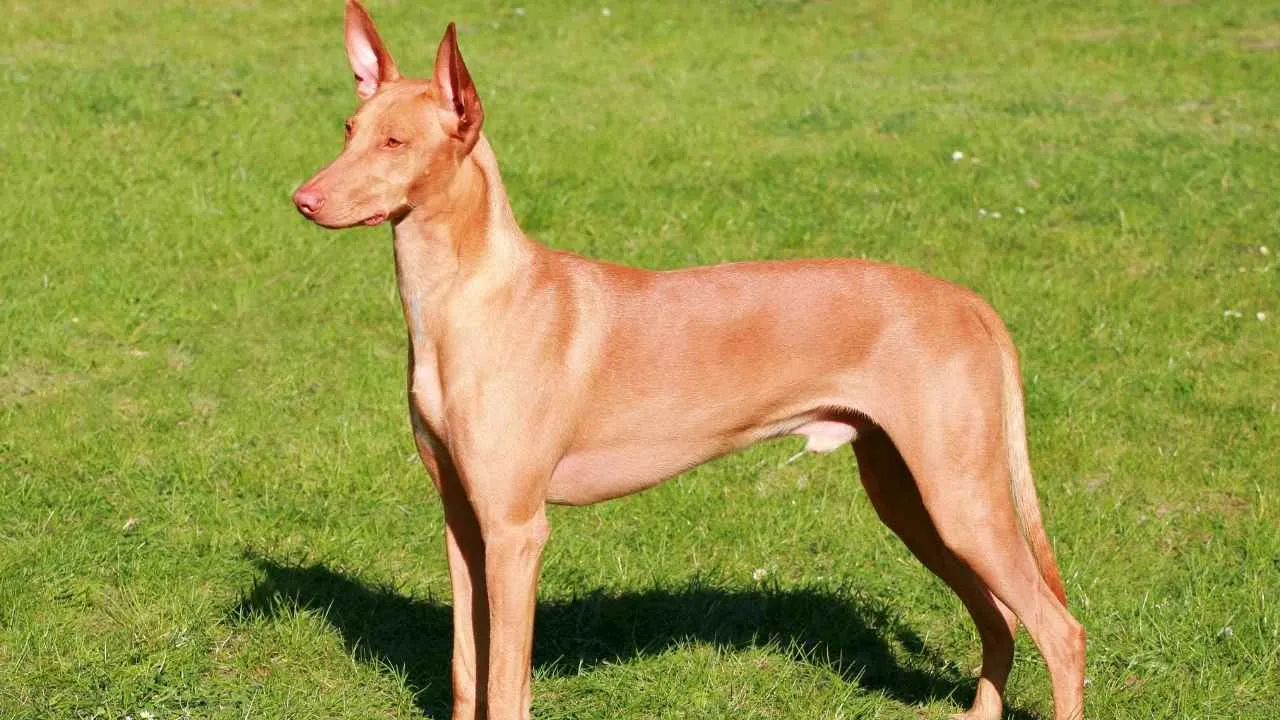
There is a rich history with the Pharaoh Hound. The breed dates back a mighty 5,000 years, all the way to ancient Egypt. It was highly adored and valued, and has been depicted on the Tombs in Egyptian art too. It was a revered hunting dog for the royalty in ancient Egypt.
Difficulties for a First-Time Owner
Similar to the Bedlington Terrier, this breed was also bred to hunt small game. Hence, it can’t be trusted independently around cats, ducks, birds, or any other smaller house pets.
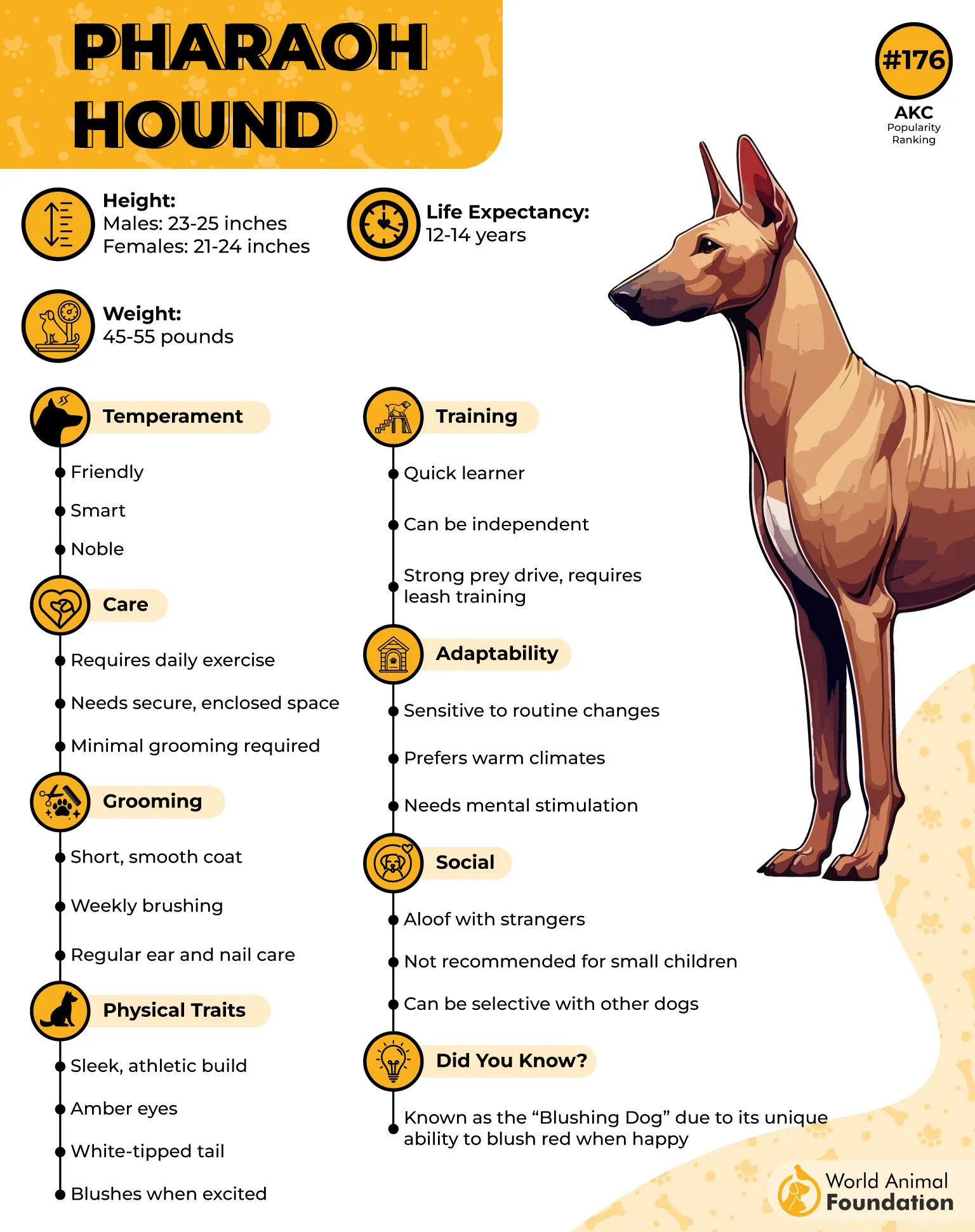
Their hunting instincts, even with hours and hours spent on extensive training, basically overpower any obedience training and effort. This breed can not be trusted off-leash in any kind of outdoor setting.
Outside, you would benefit by investing in a leash to prevent them from running off and hurting someone else or themselves.
They can be calm and quiet indoors, but only if their outdoor exercise needs are met. Your Pharaoh Hound will be in a happy mood only if they vigorously exercise and run for approximately an hour every day on top of it. So they need a total of two or three hours of extensive exercise every day.
It is very important for your dog and the sanity of your home that they reach their minimum exercise requirement for each day. To make sure you dog reaches its daily exercise requirements, you can use our Dog Exercise Calculator.
Dog Exercise Needs Calculator
Invalid input. Please enter a valid age and breed.
6. Neapolitan Mastiff
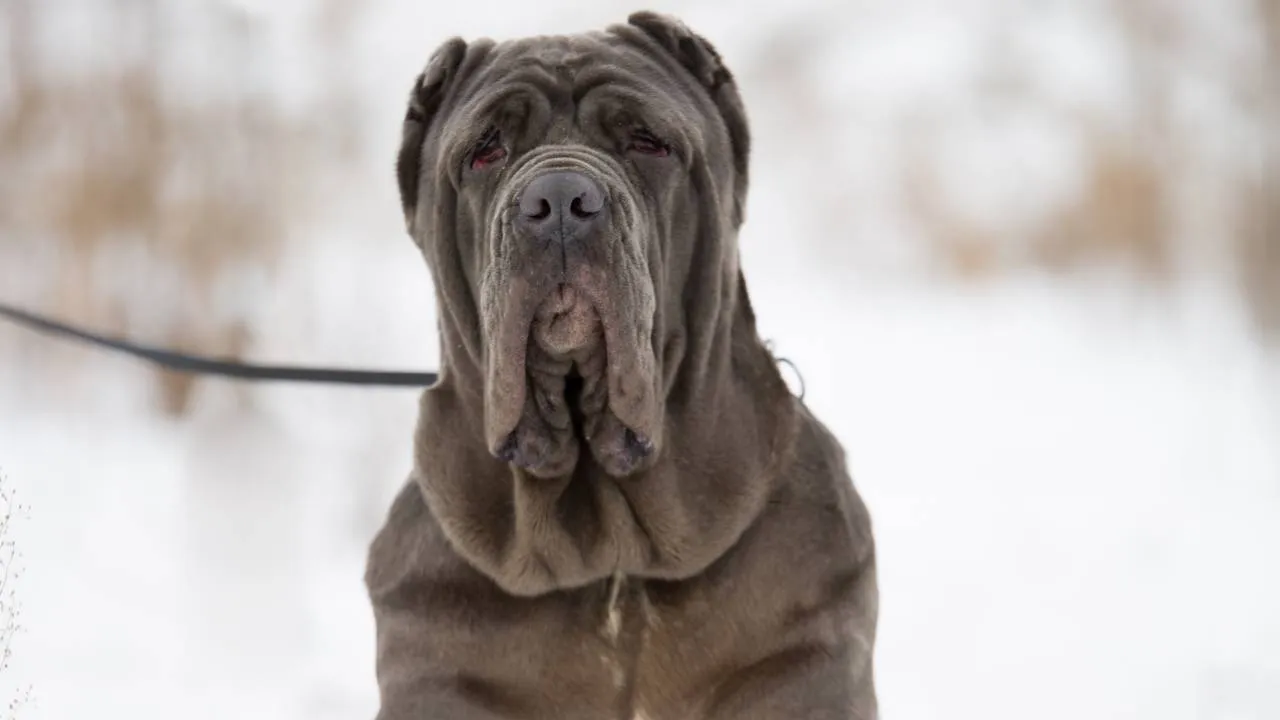
It is the direct descendant of the ancient Roman war dogs. For over two millennia, they were bred in the Naples region of Italy. After World War II, they were nearly extinct. Only restored in 1947 through the efforts of breeders.
They have a history of working as guard dogs, so loyalty and an intimidating stance are embedded in their DNA.
Difficulties for a First-Time Owner
They are intelligent, which is a prerequisite for their guarding duties, but they are also very headstrong and lazy. This can be an issue when they, for example, use their intelligence to work their way around their laziness.
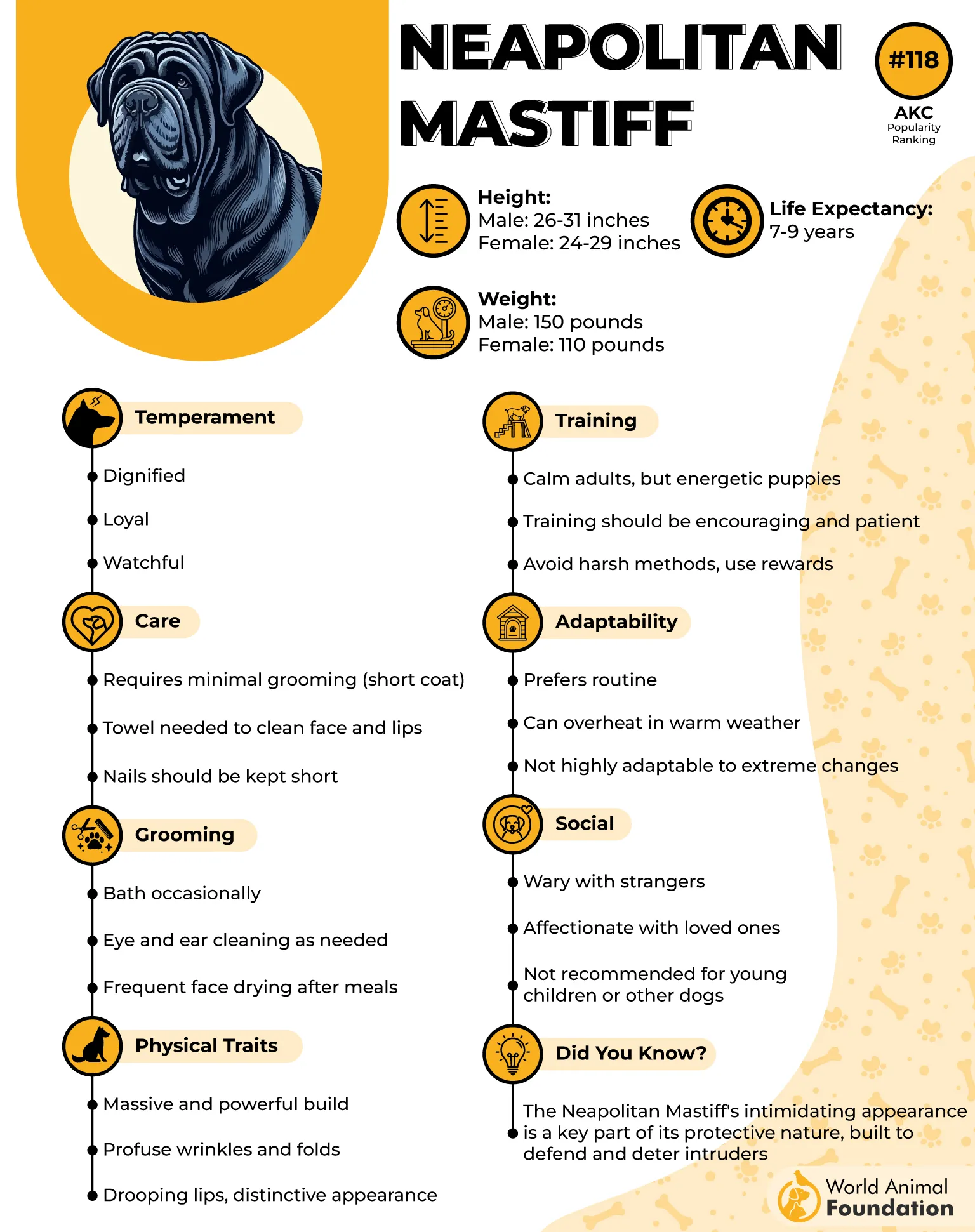
But they don’t respond well to harsh punishments and need an owner who can establish clear boundaries.
Their guarding history also makes them highly protective of their loved ones, which is a good thing. But being wary of strangers, they need early socialization and to know not every stranger is a threat, so as to avoid unprovoked aggression, which can be a bigger trouble due to their massive size.
This is a famously rowdy breed. They are really exuberant and very clumsy. Also, these are large dogs, and they tend to knock over children and even fragile items around the household without even realizing it.
7. Dogo Argentino
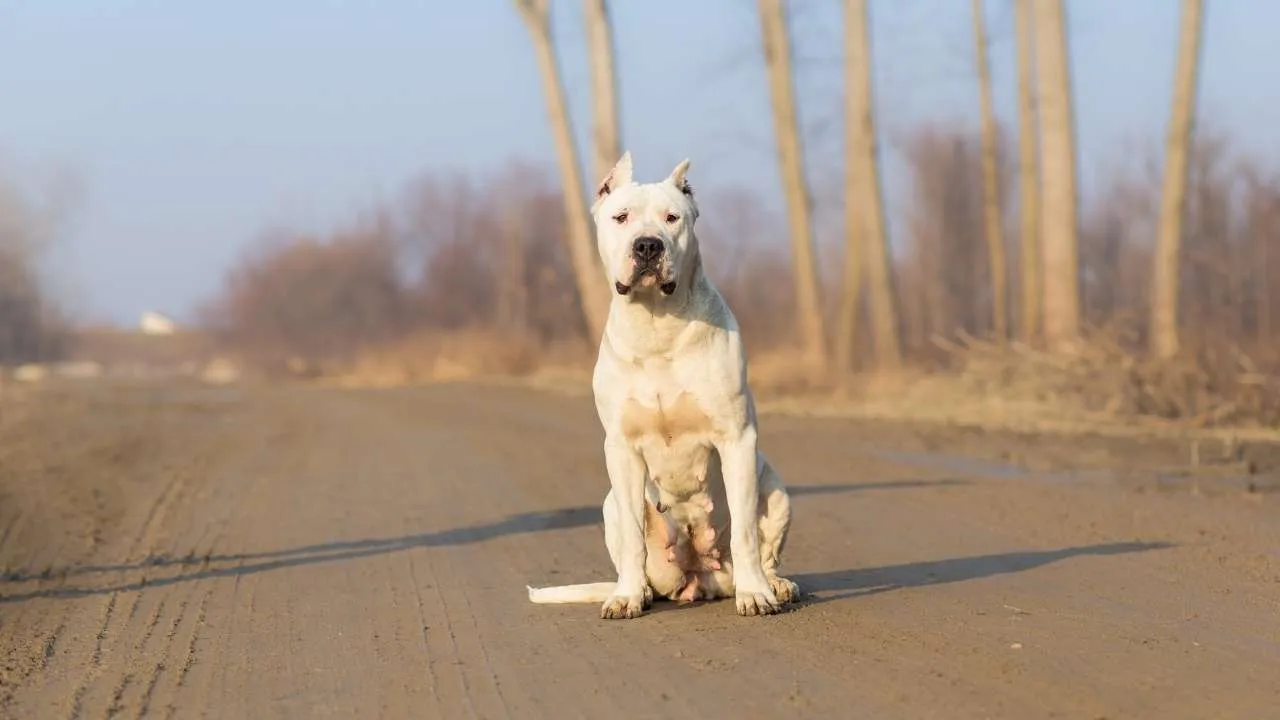
Developed by Dr. Antonio Nores Martinez in Argentina in the 1920s, this breed was made to be a powerful, large game hunter, and also a trustworthy family guardian. Dr. Antonio used the now extinct Cordoba fighting dog, Pointer, Boxer, Great Dane, Bull Terrier, and Spanish Mastiff to achieve this breed.
Difficulties for a First-Time Owner
This is a muscular breed that is also huge and very powerful due to its heritage. They have high energies and a high prey drive, and these two factors, when coupled with their size and strength, and not to mention their potential for dominance, can make this dog a handful.
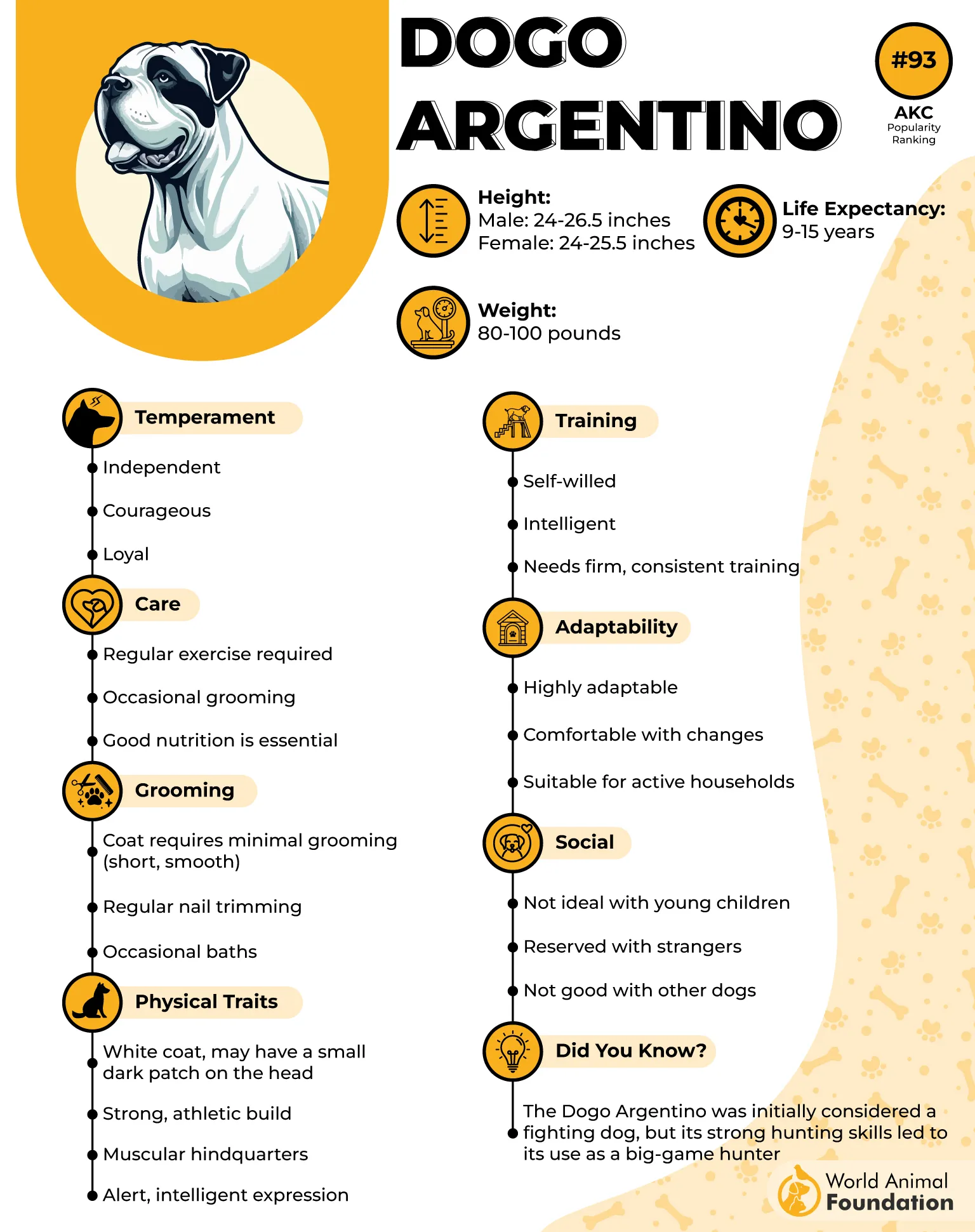
They must be properly trained and managed in a way that a new dog owner is not up to the task.
They can be aggressive towards other breeds and dogs around as well. They need early socialization to tackle this. Living with another dog from a young age can significantly lessen this, but that shouldn’t be the sole interaction they have with other dogs and pets.
While they do need a significant amount of training and exercise to remain content and happy, these dogs are highly stubborn. They have a mind of their own, are not afraid to use it, and make sure you know they are using it.
Also, they tend to view punishment as a game; this can really defeat the purpose of training with the wrong methods.
Conclusion
In short, “rare” doesn’t always mean “right”. You shouldn’t choose a dog based on which one will get you the most double-takes, but if they are compatible for you, if it’s the sort of breed you can see yourself spending a lot of time with and enjoying every moment of it.
Your pet, at the end of the day, reciprocates the energy you put into it. If you find things that stand out but struggle to find similar qualities and interests, that’s a recipe for disaster.
