




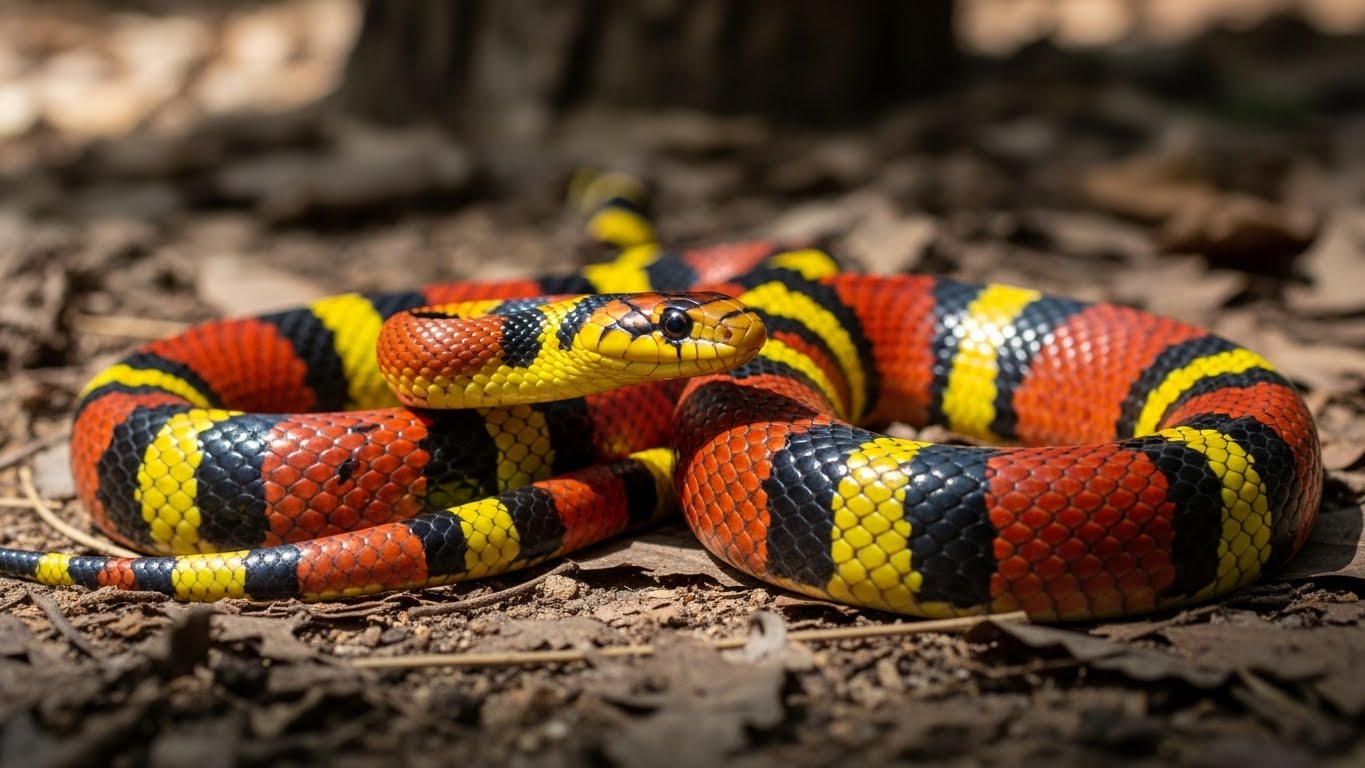
Some snakes don’t just move through their habitats—they make a statement with every slither. Their bodies are adorned with patterns so intricate, striking, or unusual that they could easily be mistaken for abstract art. These patterns serve a purpose—camouflage, intimidation, mimicry—but also turn these snakes into nature’s visual masterpieces.
Then there are species with hypnotic swirls or unusual blotches that almost seem to dance across their bodies. Each snake’s pattern is a combination of survival strategy and evolutionary creativity.
Patterns in snakes are more than aesthetics—they’re adaptations honed over millennia. They help snakes hide from predators, sneak up on prey, or signal danger with striking designs. Observing these unique patterns is like studying a gallery of living, breathing artworks, each with a story to tell.
For enthusiasts and casual observers alike, snakes with extraordinary patterns prove that the wild is full of creativity, surprise, and beauty. Their designs captivate the eye, spark curiosity, and remind us that even the most feared creatures can be awe-inspiringly beautiful.
Fact: The Woma python shows off striking bands that make it nearly invisible in the desert, and the Coral snake flaunts bold red, yellow, and black stripes that warn predators to stay away. Every scale tells a story!
Snakes with the Most Unique Patterns
1. Eastern Coral Snake
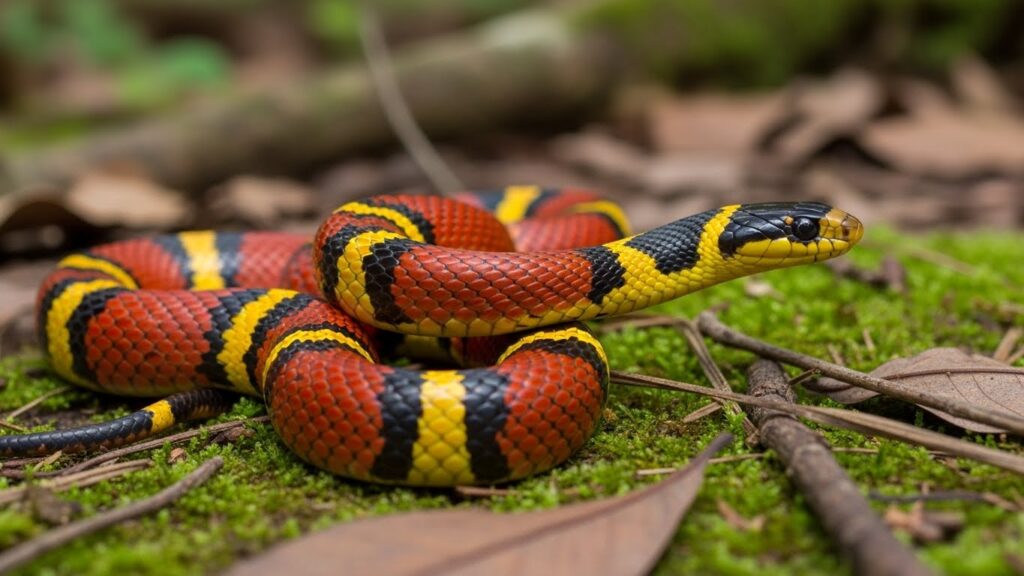
If snakes had a fashion week, the Eastern Coral Snake would strut down the runway wearing bold stripes of red, yellow, and black like it just stepped out of a designer catalog. A coral snake refers to any of over 100 species of small, secretive, and vividly patterned venomous snakes belonging to the cobra family, says Britannica.
These snakes are living proof that danger and beauty can coexist—because yes, this tiny, brightly colored creature packs venom strong enough to make you reconsider your life choices… or at least your decision to get too close.
The pattern isn’t just for show—it’s nature’s warning sign. Think of it as a “Do Not Disturb” neon sign wrapped around a tiny, slithering body. Larger red and black rings are usually separated by thinner yellow rings, giving it a candy-cane look that’s deceptively charming.
Eastern Coral Snakes mainly feast on small lizards, frogs, and even other snakes. Their venom contains potent neurotoxins that can cause rapid paralysis in prey—so if you’re a frog or a lizard, this is definitely not the kind of surprise you want. But don’t panic just yet!
The danger to humans depends on how much venom is delivered and the size of the victim. In other words, these snakes are picky about their targets… and humans are usually too big to be on the menu.
So next time you spot one, admire the showy stripes from a safe distance. It’s like seeing a celebrity: beautiful, intimidating, and best appreciated from afar.
2. Woma Python
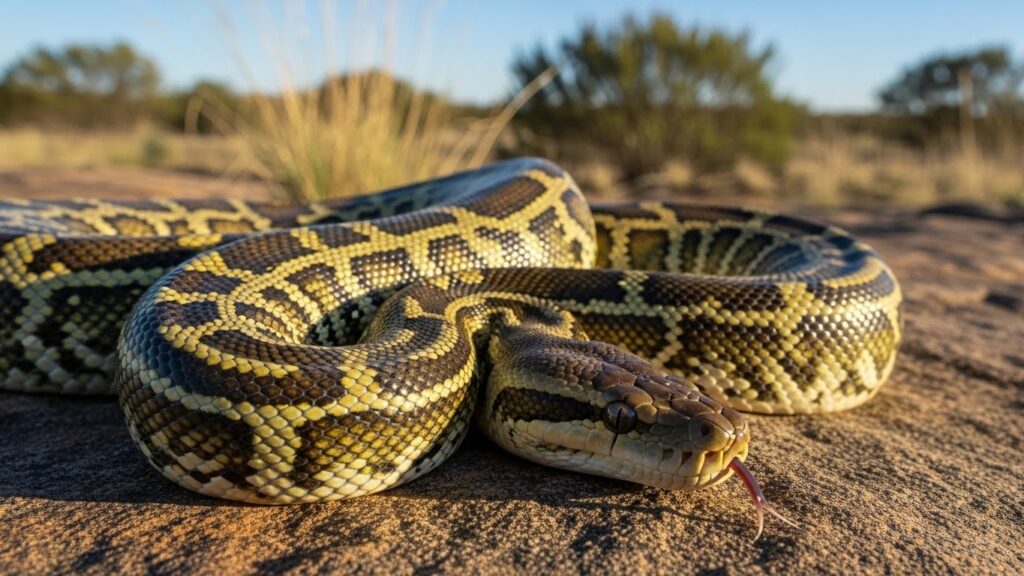
Meet the Woma Python, also affectionately known as the Sand Python—because nothing says “camouflage expert” like blending in with the sandy landscapes of Western Australia.
But don’t let the name fool you; this snake is more of a desert diva than a wallflower. With its gorgeous dorsal scales, tiny endearing eyes, and light yellow or cream belly, it has a certain “aww” factor that could almost make you forget it’s still a predator. Almost.
What really sets the Woma Python apart is its unique, eye-catching color palette. Dark-ringed bands run along its body, but the magic comes from the shades of red, pink, and orange that make it look like a sunrise slithering across the sand.
Honestly, if snakes were allowed in art galleries, the Woma Python would be hanging in the “abstract expressionism” section.
Historically, these pythons had a taste for bilbies and were clever enough to use their burrows as cozy hideouts. Today, they’ve adapted their menu to smaller prey like lizards and reptiles. In captivity, they’re happy with the classics: chicks and mice. Basically, they’ve gone from desert gourmet to convenient takeout.
So, next time you think of a desert python, imagine not just a stealthy hunter but a strikingly colorful snake that’s part artist, part predator—proof that even the sand can’t dull a natural showstopper.
3. Eyelash Viper
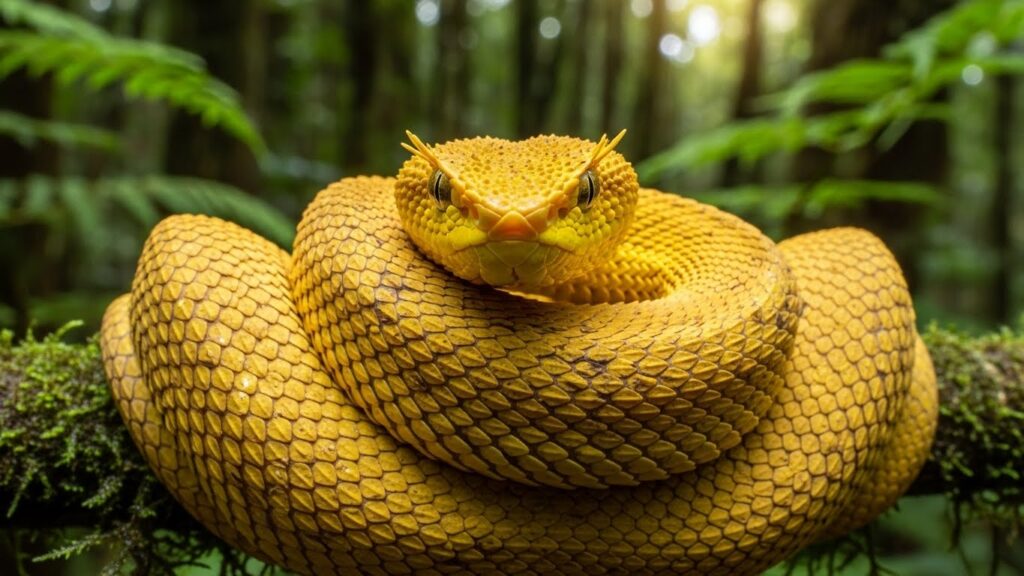
If the Eastern Coral Snake is a fashion icon, the Eyelash Viper is a full-blown fantasy creature dropped straight into real life.
Imagine a snake that could star in a mythical jungle movie—yep, that’s this little arboreal artist. With colors ranging from neon yellow to fiery red, jungle green, and even bubblegum pink, it’s basically the chameleon of the snake world with an attitude.
Its name isn’t just for show either. Those spiky “eyelashes” above its eyes aren’t makeup—they’re modified scales that give it a perpetually dramatic expression, like it’s always ready for the perfect selfie.
Living high up in the trees of Central America, Lamar University states that the Eyelash Viper has a prehensile tail that acts like a fifth limb, letting it hang onto branches like a pro gymnast on a jungle vine.
Don’t be fooled by its modest size—it rarely grows beyond 75 cm—but this snake’s venom is potent enough to subdue its prey, making sure its colorful display isn’t just for fashion points. Those bright colors are basically its “do not mess with me” warning to any predator thinking about lunch.
Fun mental image: a pink Eyelash Viper coiled delicately on a branch, lashes fluttering, ready to charm—or shock—any unsuspecting frog that hops by. Nature clearly has a flair for drama.
4. San Francisco Garter Snake
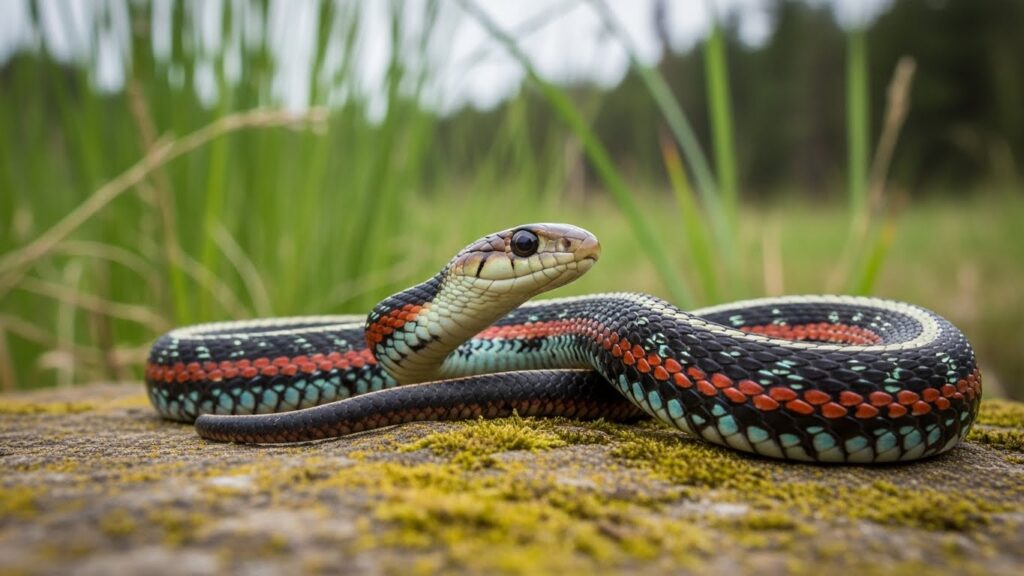
Meet the San Francisco Garter Snake—the ultimate showstopper of the snake world.
With its striking blue-green body, bold black stripes, and fiery red accents, it’s like someone took a regular garden snake and upgraded it with a designer paint job. Seriously, this snake could walk the runway… if snakes had runways.
Native to the foggy wetlands and grasslands near San Francisco, this beauty is actually endangered, which makes spotting one feel like stumbling upon a rare gem.
Don’t let its pretty colors fool you—this snake is a skilled predator, feasting on amphibians, fish, and earthworms, using both stealth and speed to make a meal disappear faster than you can say “slither snack.”
Despite its vibrant colors, the San Francisco Garter Snake is non-venomous, so humans are safe to admire it from a distance (though, of course, no hugging allowed). Its beauty is all natural—no glitter or sequins needed—making it one of the most photogenic and talked-about snakes in the United States.
Fun thought: If snakes had social media, the San Francisco Garter Snake would have thousands of followers, a flawless feed, and probably a collaboration with a wildlife photographer.
5. Blue Malayan Coral Snake
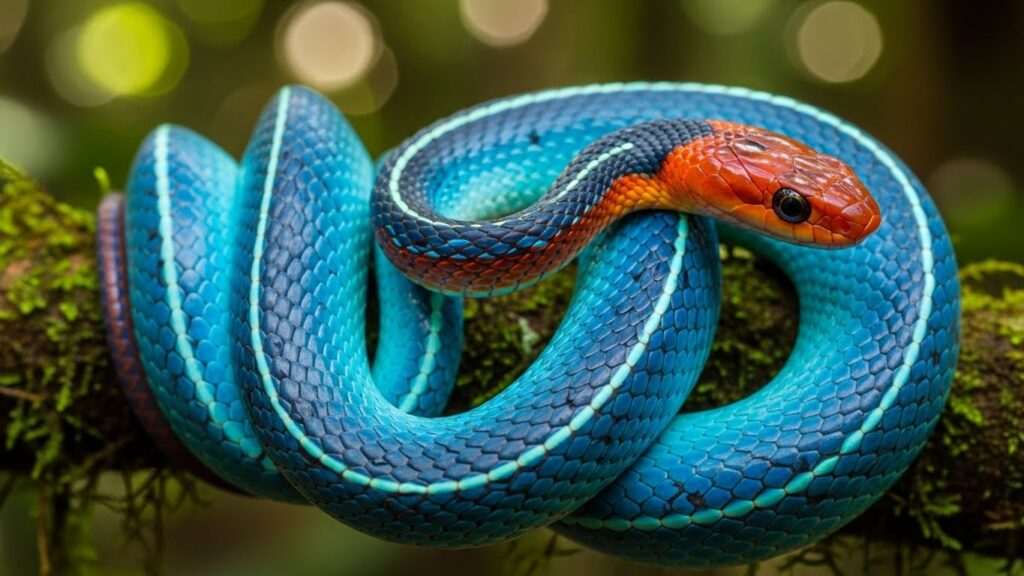
If you thought snakes couldn’t be rock stars, the Blue Malayan Coral Snake is here to prove you wrong.
This rare snake is partially burrowing and typically lives among the leaf litter in both primary and secondary forests. Its diet mainly consists of other snakes. When it feels threatened, it usually tries to escape, but sometimes it will stay put and raise its red tail as a warning signal, as per Wikipedia.
With its electric blue and black scales, plus a pop of bright orange on its head, belly, and tail, this snake looks like it just walked out of a sci-fi music video. Seriously, it could probably headline a concert and still look fabulous while doing it.
Also called the Blue Coral Snake, it’s as deadly as it is dazzling. Unlike its Eastern Coral cousin, which uses neurotoxins, this snake wields a cardiotoxin that sends its prey into spastic paralysis almost instantly—basically a “stop right there!” command straight from Mother Nature.
Its venom is impressively long-acting, but fortunately, humans aren’t frequent victims, so you can admire its beauty from a safe distance.
Fun mental image: a snake with electric-blue stripes slithering past, looking like it belongs on a neon-lit stage, and you’re just an audience member in awe—while quietly stepping back, because, well… venom. Nature really knows how to combine danger and drama in one package.
6. Brazilian Rainbow Boa
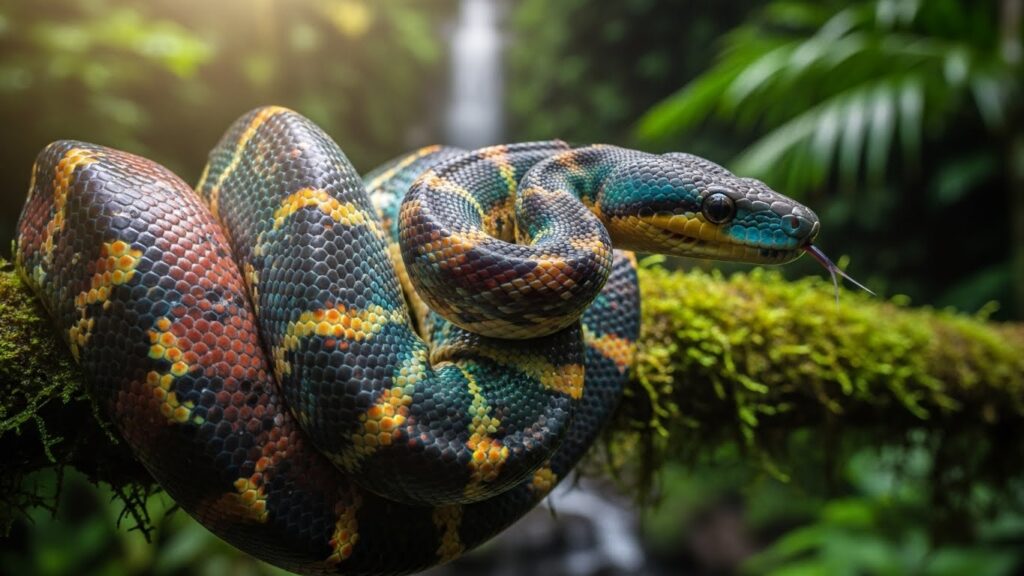
Meet the Brazilian Rainbow Boa—the snake world’s very own disco ball. Its rich, chestnut-brown scales glimmer with an iridescent sheen that reflects every color of the rainbow when it catches the sunlight. Seriously, one glimpse and you might find yourself squinting like you just walked into a spotlight—Mother Nature clearly didn’t skimp on the drama here.
Native to the humid rainforests of South America, this boa is as stealthy as it is stunning. It patiently waits in the underbrush or among fallen leaves for rodents, birds, or lizards to wander too close, then strikes with the precision of a natural-born assassin.
Though non-venomous, it uses constriction to subdue its prey, giving a hug that’s lethal rather than cozy—nature’s version of “love you to death.”
The rainbow effect on its scales isn’t just for show; it’s an ingenious form of camouflage. Sunlight filtering through the canopy creates shifting patterns of light and shadow, allowing this dazzling predator to blend seamlessly into its environment. Yet, with colors this radiant, it’s hard not to stand out—almost like trying to hide a glitter-covered snake in a spotlight.
And here’s a fun twist: some enthusiasts keep Brazilian Rainbow Boas as pets (with proper care, of course), mesmerized by their hypnotic shimmer. But in the wild, these snakes are a living reminder that beauty and danger often go hand-in-hand—or in this case, scale-in-scale.
Fun mental image: imagine a snake that sparkles like it’s had a secret meeting with a rainbow, silently coiled in the rainforest, plotting its next meal while looking absolutely fabulous doing it. Nature clearly has a flair for combining danger with drama and style.
7. Green Tree Python
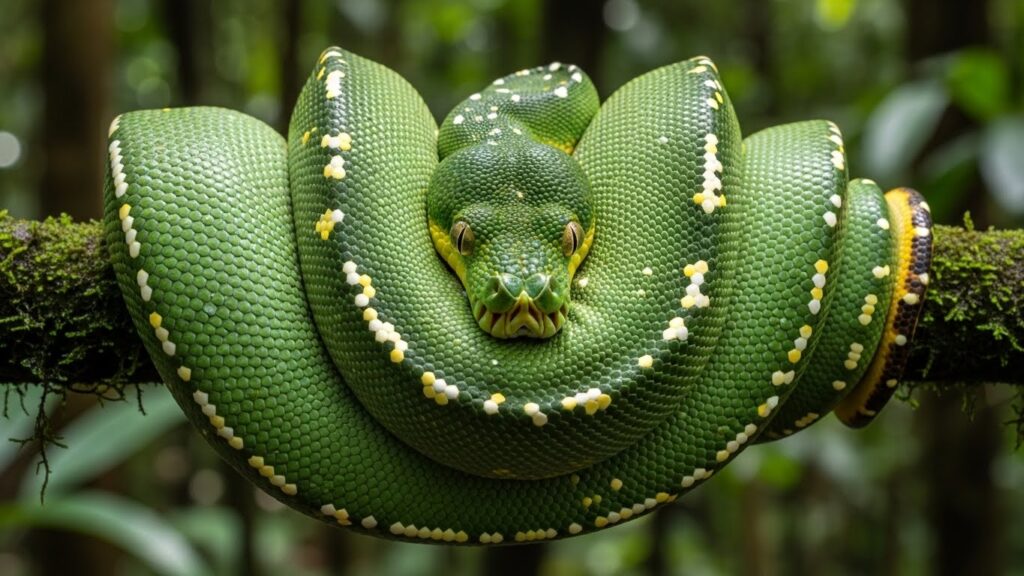
Meet the Green Tree Python—the chameleon of the snake world, with a flair for drama and a taste for tree-top living. This python’s scales shimmer in shades of green and yellow, creating mesmerizing patterns that are as unique as a fingerprint.
No two Green Tree Pythons are exactly alike, which makes spotting one in the wild feel like finding a rare work of art curled gracefully around a branch.
Green Tree Pythons aren’t born green. When they’re young, they could be fiery red, bright yellow, or even dark brown. As they mature, their scales slowly morph into the lush green-and-yellow patterns we associate with adults—a slow-motion color transformation worthy of a fantasy movie.
Imagine a baby snake starting out as a fiery red and gradually becoming a jewel-toned emerald—talk about a dramatic makeover!
Native to the rainforests of New Guinea, Indonesia, and northern Australia, these arboreal beauties can grow up to 6.6 feet long. They use their strong, prehensile bodies to coil around tree branches, hanging out like living ornaments in the canopy. Despite their striking appearance, they’re patient predators, ambushing birds and small mammals with a calculated strike.
Fun mental image: a Green Tree Python curled elegantly on a branch, its scales catching the sunlight, looking like the forest decided to hang a piece of living jewelry midair. Snake enthusiasts consider spotting one a rare treat—part thrill, part admiration, and part “wow, nature’s got style.”
Conclusion
Snakes with the most unique patterns are among the most fascinating creatures on the planet, displaying distinctive scale patterns, eyelash-like scales, keeled scales, spotted patterns, black markings, black bands, dark bands, bright red, vibrant red, yellow hues, turquoise, and other colors that help deter predators or aid in camouflage. From corn snakes, ringneck snakes, and Paradise Tree Snake in central and South America and California, to Sri Lankan Pit Viper, Banded Sea Krait, Boelen’s Python, Morelia Viridis, and King Cobra in Southeast Asia and humid woodlands, these striking snakes thrive in dense vegetation, coral reefs, and other habitats where snakes live.
Their small head, quick-moving behavior, and ability to change colors or display recessive traits in color patterns make them commonly admired by enthusiasts. Whether it’s distinctive red, rainbow iridescence, or other species exhibiting different colors, these beautiful snakes showcase striking features that highlight the incredible diversity of snakes in the world, making them a truly careful study for anyone fascinated by nature.
