




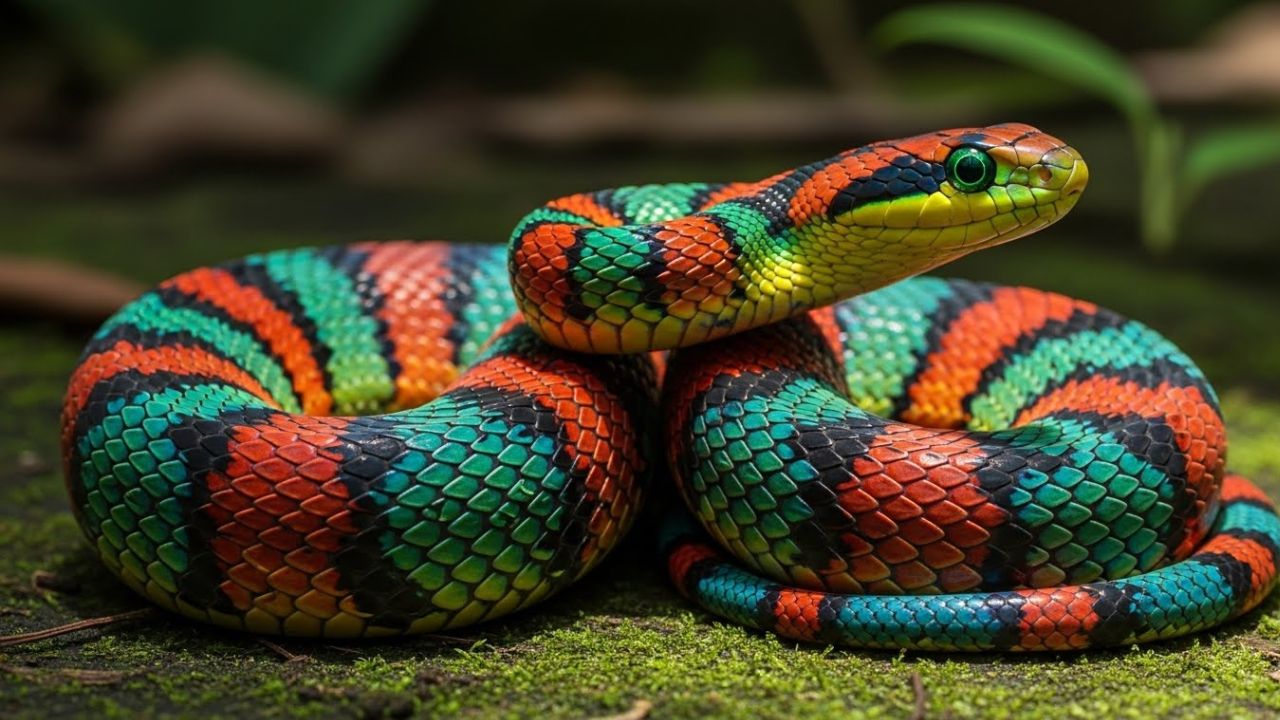
Nature has a flair for drama, and few creatures showcase it better than snakes with distinctive markings. These reptiles are far more than silent slitherers hiding in the grass—they are living canvases painted with bold stripes, vivid colors, intricate patterns, and eye-catching contrasts.
From jungle floors to desert sands, their markings aren’t just beautiful; they’re purposeful, telling powerful stories of survival, defense, and adaptation. Some snakes wear their patterns like warning signs, signaling danger to predators with vibrant colors and sharp contrasts.
Every stripe, spot, and zigzag has evolved over thousands of years, making these markings both functional and fascinating. What makes these snakes especially captivating is how their appearances can evoke curiosity, awe, and sometimes fear—all at once.
In this exploration, we’ll uncover some of the snakes with the most distinctive markings and discover why their looks are just as remarkable as their behavior. Get ready to see snakes in a whole new light.
FACT: Snakes don’t have endless pigments—most of their color comes from specialized skin cells called chromatophores. These cells produce a limited set of colors that blend and layer together, creating the bright, intricate patterns and unique markings we see across different species.
Snakes with the Most Distinctive Markings
1. Blue Malayan Coral Snake
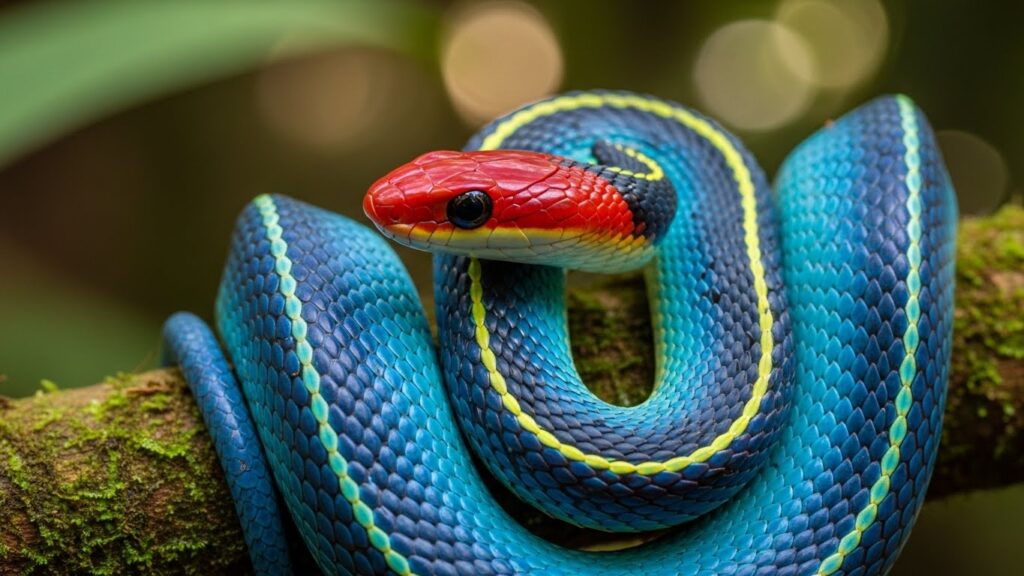
The Blue Malayan Coral Snake is one of those snakes that makes you stop, stare, and immediately question your life choices. Its appearance alone feels like nature showing off, combining beauty with a very clear “don’t mess with me” message. The snake’s look is unforgettable, featuring:
Iridescent electric blue scales that shimmer depending on the light
Deep black banding that makes the blue pop even more
A vivid orange head, belly, and tail, as if it dipped itself in warning paint
Of course, this snake isn’t just dressed to impress—it’s also dressed to intimidate. Beneath those flashy colors lies a venom system that breaks all the usual coral snake rules. Instead of the typical neurotoxic venom, it delivers a powerful cardiotoxin that can stop prey in its tracks almost instantly. Add to that:
Exceptionally long venom glands for maximum efficiency
Rapid-onset spastic paralysis in its victims
A bite that’s rare but extremely serious
Thankfully, humans aren’t its favorite target. The Blue Malayan Coral Snake is generally shy and prefers to avoid conflict whenever possible. Still, if you’re lucky (or unlucky) enough to spot one, the best response is calm admiration from a distance—no touching, no poking, and definitely no “I wonder if it’s friendly.”
In the end, this snake is living proof that nature loves contrast—stunning colors paired with serious danger. It’s gorgeous, fascinating, and absolutely not interested in becoming your new reptile friend.
2. Gaboon Viper
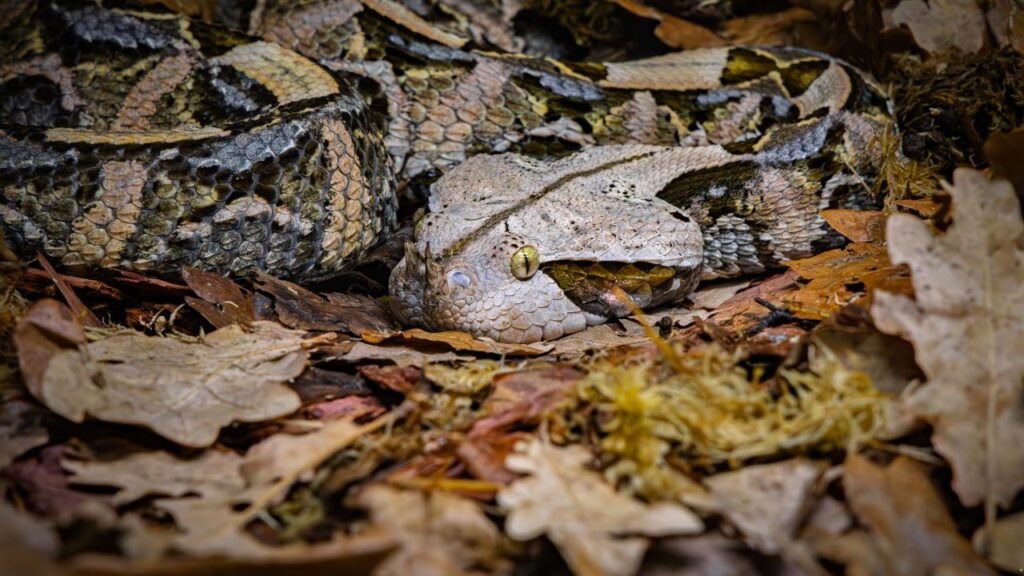
The Gaboon Viper is the definition of “looks cozy, absolutely is not.” At first glance, it resembles a beautifully patterned forest pillow just lying around minding its own business—which is exactly how it wants you to think.
Found in the tropical forests of central and western Africa, this ground-dwelling snake is famously calm, slow-moving, and surprisingly polite… right up until you forget where you’re stepping.
This viper is a heavyweight in every sense of the word. It holds the title of the heaviest venomous snake in Africa, with a thick, stout body that looks like it was built for power rather than speed. Its markings are truly distinctive, featuring:
Bold rectangles and triangles are layered across its body
According to Britannica, this intricate pattern isn’t just for looks—it’s top-tier camouflage. Among fallen leaves, roots, and forest debris, the Gaboon Viper becomes nearly invisible. This sluggish ambush predator doesn’t chase prey; it waits patiently like a master of hide-and-seek who never loses. One wrong move from dinner, and it’s game over.
Despite its laid-back personality, the Gaboon Viper does have boundaries. When threatened, it will issue a loud hiss—nature’s version of “back up, buddy.”
Strikes with lightning-fast precision
Holds firmly after the bite
Waits calmly until the venom does its job
In short, the Gaboon Viper is a master of disguise, a champion of patience, and a reminder that the forest floor is not a place for careless steps. It’s slow, stunning, and incredibly dangerous—proof that sometimes the quiet ones are the ones you should respect the most.
3. Ball Python Morphs
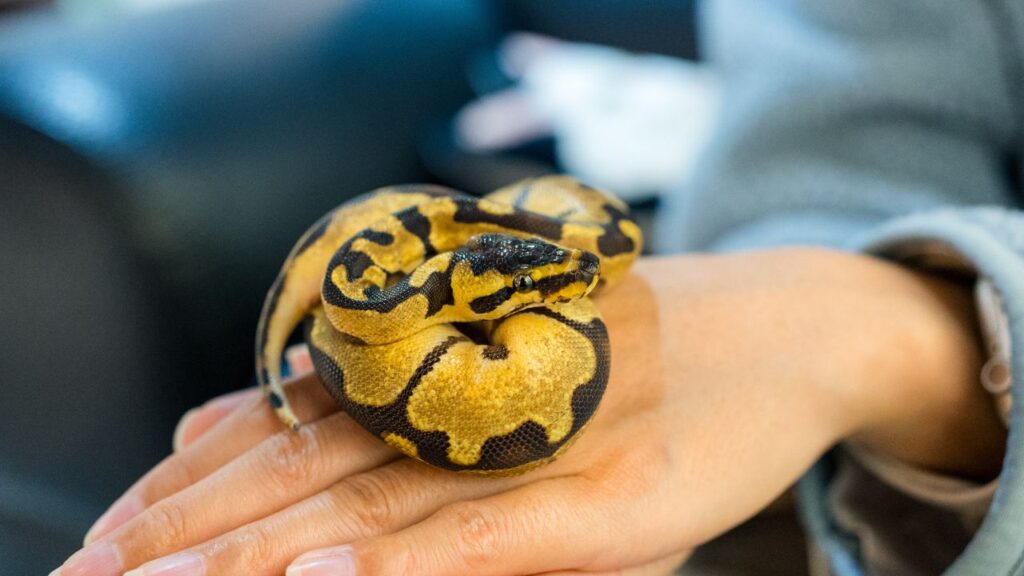
The Ball Python Morphs are proof that snakes can be fashionable and adorable at the same time. Unlike wild-patterned snakes that rely on camouflage to survive, ball python morphs look like they were designed by a very creative artist who had unlimited paint and zero chill.
Thanks to selective breeding, these snakes come in an astonishing variety of colors and patterns—and yes, people absolutely collect them like trading cards (but with way more responsibility).
What makes ball python morphs so distinctive is the sheer range of patterns they can display, including:
High-contrast blacks, whites, and golds that look airbrushed
Pastel, lavender, and creamy yellow tones that seem almost unreal
Geometric or reduced patterns, sometimes so clean they look printed
Unexpected color combos that make you squint and say, “Wait… that’s a real snake?”
Beyond their good looks, ball pythons are famously chill. They get their name from their go-to defense move—curling up into a tight little ball when stressed, which is basically the snake version of “nope, I’m done.” This calm temperament makes them one of the most popular pet snakes in the world and a favorite among beginners.
Despite their designer appearance, they’re non-venomous and rely on constriction to subdue prey. Their behavior is typically gentle and shy, meaning they’d much rather hide in a warm corner than start any trouble.
In short, ball python morphs are living proof that snakes don’t all have to look intimidating. Some are just quietly fabulous, slightly awkward, and perfectly content pretending they’re invisible—while being anything but.
4. Rainbow Snake
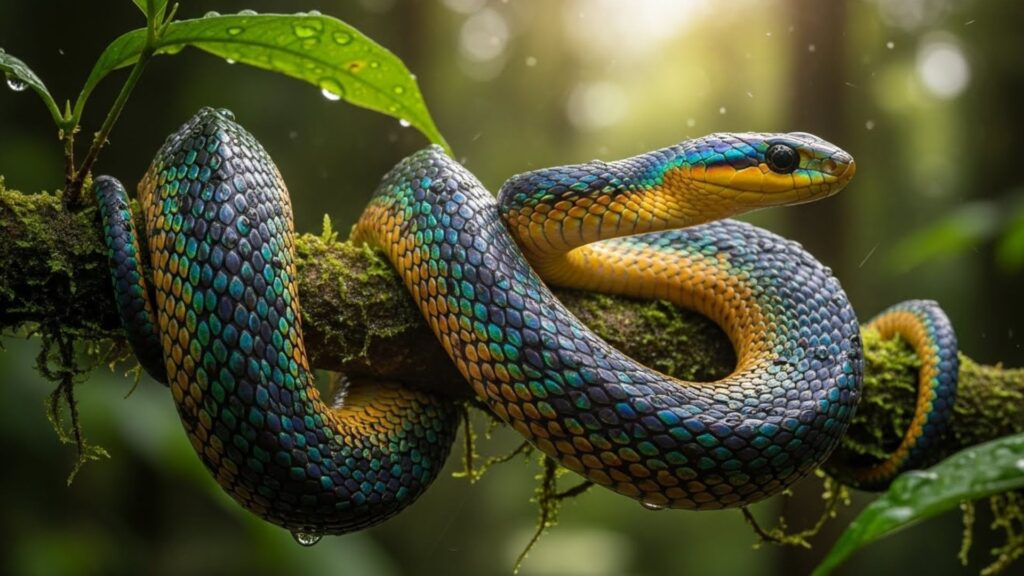
The Rainbow Snake looks like it spent its free time swimming through spilled oil paint and decided to keep the look forever. Sleek, shiny, and ridiculously photogenic, this snake doesn’t just reflect light—it shows off.
Native to the southeastern United States, the rainbow snake prefers wetlands, marshes, and slow-moving waters, where its colors really get a chance to glow.
Its markings aren’t loud in the traditional sense, but they’re unforgettable. The magic lies in its smooth, glossy scales, which create an iridescent effect that shifts with movement. Up close, you’ll notice:
Deep blue to black coloration along the back
Bold red or orange stripes running lengthwise down the body
A rainbow-like sheen that appears when light hits the scales just right
Despite its flashy appearance, the rainbow snake is harmless and shy. It’s non-venomous and spends most of its life underwater or hidden in muddy burrows, making it far less dramatic than its looks suggest. Its favorite meals are eels and other slippery aquatic creatures, which it hunts with quiet precision—no venom, no drama, just skill.
When startled, the rainbow snake would rather flee than fight. It’s not aggressive, doesn’t strike unless seriously provoked, and generally wants nothing to do with humans.
In the end, the rainbow snake is a perfect example of subtle brilliance in nature. It’s elegant, glossy, and proof that sometimes the most eye-catching creatures are also the most peaceful—like a moving jewel that politely minds its own business.
5. Reticulated Python
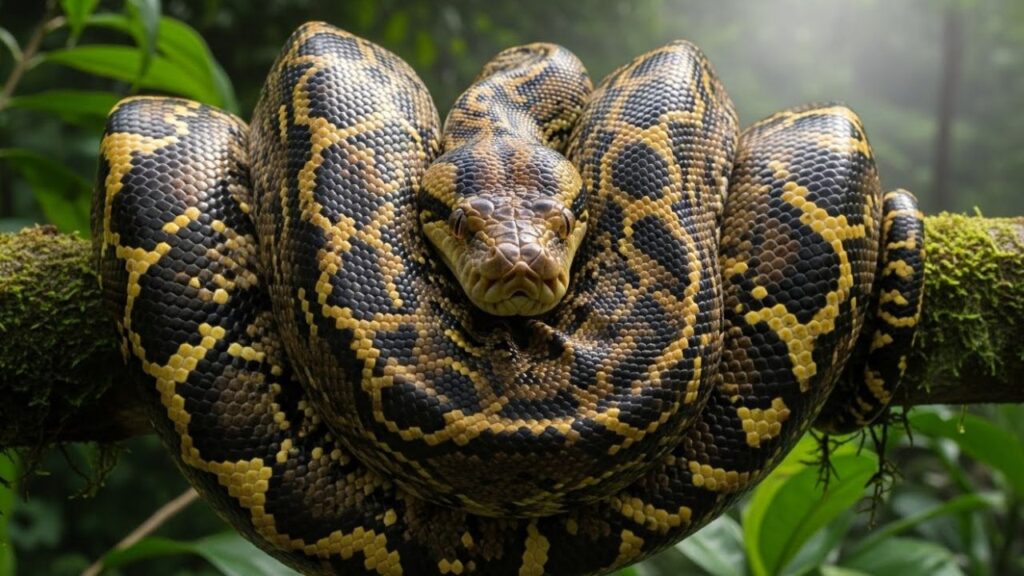
Often called “retics” (or “tics” if you’re feeling extra casual), these snakes belong to the python family and don’t have officially recognized subspecies of their own, though they do include smaller dwarf forms such as Python reticulatus jampeanus and Python reticulatus saputrai. Small… by giant-snake standards, of course.
Reticulated pythons are firmly in the “giant snake” category and rank among the largest python species on Earth. Length, muscle, attitude—they brought everything to the table. Their markings are what truly set them apart, featuring:
A complex diamond or saddle-shaped pattern across the body
A bold black stripe running from the top of the head all the way to the tail
Net-like designs that give the species its name—reticulated literally means netted
In the wild, their natural palette is a masterclass in elegance, blending:
Olive and dark green tones
Black, white, and rich gold highlights
Intricate patterning that makes every individual look slightly different
Snake breeders have taken things even further, creating dozens of reticulated python morphs with colors and patterns you’d swear were painted on. Many of these morphs don’t exist in nature, but they’re stunning enough to almost make you forget one small detail: retics can have very strong personalities.
According to PetMD, while progress has been made in domesticating them, these snakes are still best handled by experienced keepers who understand that “beautiful” doesn’t always mean “friendly.”
In short, the reticulated python is breathtaking, massive, and not here for casual handling. It’s a living work of art wrapped in muscle and attitude—proof that sometimes nature’s most impressive designs come with a very clear “experts only” label.
6. Sunbeam Snake
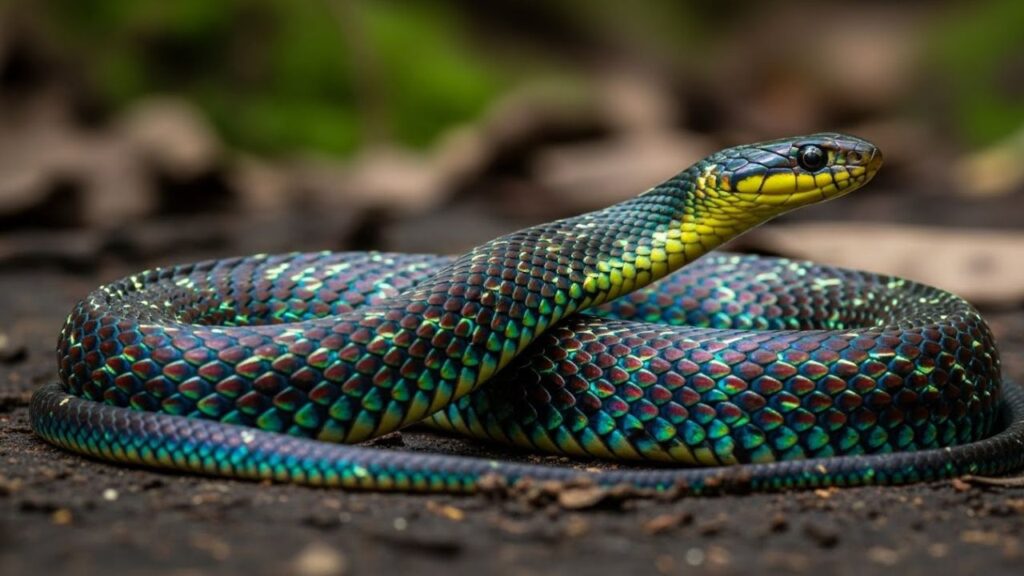
The Sunbeam Snake is like the sleek supermodel of the snake world—shiny, photogenic, and impossible to ignore.
Native to Southeast Asia, these snakes spend most of their time underground or hiding under leaf litter, but when they catch the sunlight just right, they reveal a mesmerizing metallic sheen that can make you stop and stare.
What makes them so distinctive is their incredible, reflective scales. Depending on the angle of the light, their skin flashes:
Golden, bronze, or copper hues that gleam like polished metal
Smooth, iridescent scales that seem almost liquid in texture
A uniform, streamlined body that looks designed for speed and elegance
Despite their flashy appearance, sunbeam snakes are non-venomous and relatively docile. They’re constrictors, which means they subdue their prey—mainly small reptiles and amphibians—without venom. Their hunting strategy is more about stealth and precision than brute force, making them the ninjas of the snake world.
They’re also surprisingly shy around humans. If disturbed, they’ll usually try to slither away rather than fight, keeping their shimmering beauty on display for anyone lucky enough to spot them.
In essence, the Sunbeam Snake is nature’s way of proving that you don’t need venom or intimidation to stand out. With metallic scales that sparkle like sunlight on water, it’s a small, secretive, and absolutely stunning creature that adds a touch of elegance to the forests it calls home.
7. Eyelash Viper
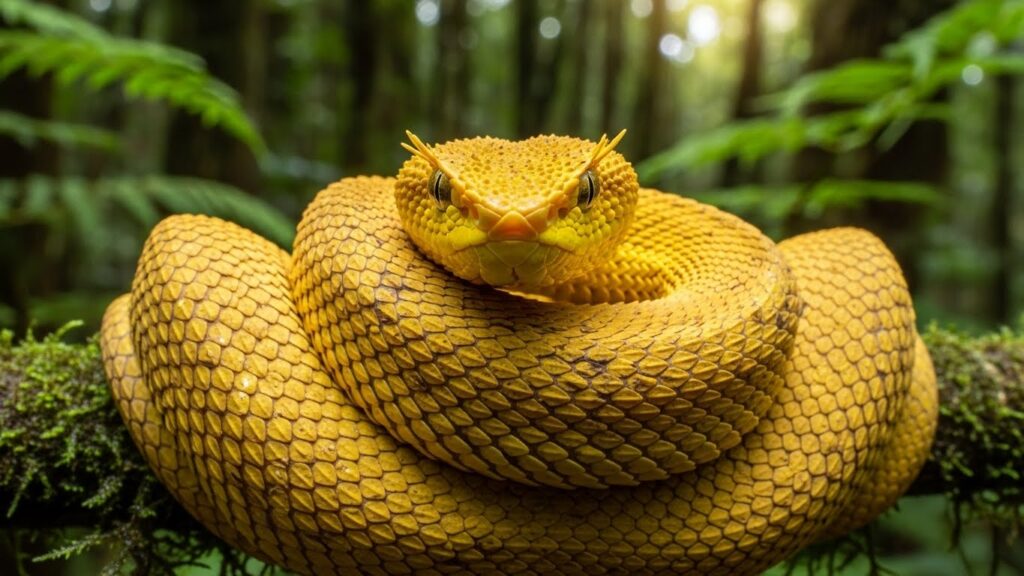
The Eyelash Viper is one of those snakes that instantly makes you do a double-take—partly because of its deadly reputation, and partly because it looks like it’s wearing a permanent set of dramatic false eyelashes.
Named for the supraciliary scales that stick out above its eyes, this small but striking pit viper manages to be both bizarre and beautiful at the same time. Eyelash vipers come in a rainbow of colors, making each individual look like a carefully chosen accessory:
Bright yellow, perfect for hiding in banana trees
Vivid pink that almost seems like nature’s jokeLush green blends seamlessly with foliage
Earthy brown for the sneaky, undercover vibe
They’re small but chunky, growing between 20 and 30 inches long, with wide, triangular heads that announce, “I’m tiny, but not to be underestimated.” Females are typically larger than males, proving that even in the snake world, size matters.
Eyelash vipers are arboreal hunters, often found in banana trees, forests, and streamside vegetation from Mexico down to Colombia. They prefer wet, humid environments near water, and their keeled, rough scales protect them as they slither among branches, searching for prey. They’re opportunistic feeders, snacking on:
Small mammals like mice and opossums
Bats and birds
Frogs and lizards
Despite their small size, these snakes are highly venomous, making them fascinating creatures that demand respect. But with their kaleidoscope of colors, expressive “eyelashes,” and stealthy hunting skills, the eyelash viper is as much a piece of living art as it is a predator.
Conclusion
Snakes with the most distinctive markings are among the most admired for their striking feature, color patterns, and color variations. Species such as the San Francisco Garter Snake (Thamnophis sirtalis tetrataenia), Green Tree Python, Paradise Tree Snake, Corn Snake, Eastern Coral Snake, Gold Ringed Cat Snake, Banded Sea Kraits, Paradise Flying Snake, Panamanian Spotted Night Snake, Asian Vine Snake, Mangrove Snake, Rainbow Boa, Morelia Viridis, and King Cobra showcase bright red, red brown, dark brown, yellow bands, blue green stripes, dark bands, iridescent scales, keeled scales, distinct markings, and striped morphs.
Found in habitats across Central and South America, Amazonian South America, Central United States, Southern Asia, Lesser Sunda Islands, coral reefs, dense vegetation, and dry scrublands, these colorful snakes prey on small prey or animals, sometimes storing in grain stores, and may completely encircle their targets. While some are poisonous or have potent venom, many are admired as attractive snakes, beautiful snakes, and distinguished by different species, highlighting the incredible diversity of colorful snake species with markings that are both dangerous creatures and a visual marvel.
Snakes with Distinctive Markings 🐍 Can You Score 5/5?
Which color combination defines the Blue Malayan Coral Snake?
Why are the Gaboon Viper’s markings so effective?
What makes Ball Python Morphs especially unique?
What creates the rainbow-like sheen of the Rainbow Snake?
What physical feature gives the Eyelash Viper its name?
