




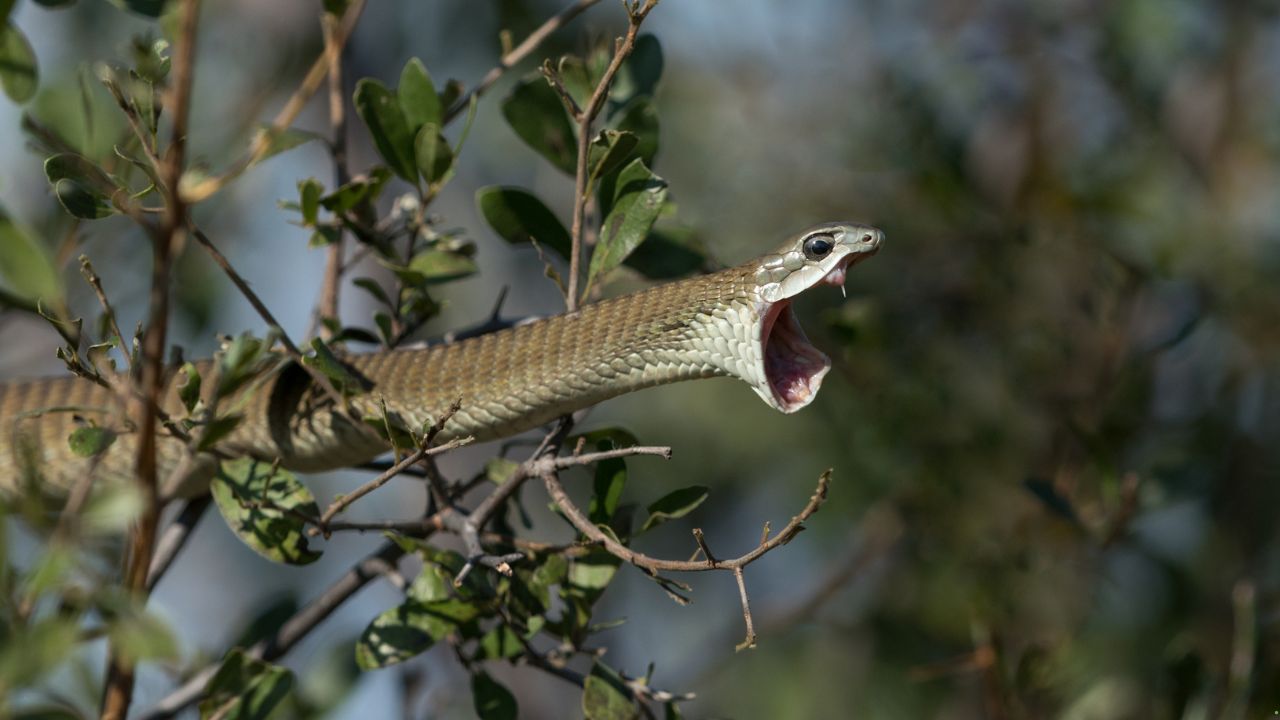
A snake’s fang is more than just a tooth—it’s a finely tuned weapon, designed to immobilize prey, defend territory, and ensure survival. Among snakes, some species boast fangs so effective that a single bite can change the course of an encounter instantly.
Venomous snakes have evolved fangs to deliver toxins efficiently. Fangs aren’t just dangerous—they’re a marvel of evolutionary engineering. Their size, shape, and mobility allow snakes to tackle prey larger than themselves and defend against threats effectively.
Observing these natural weapons in action highlights the remarkable balance between danger and design in nature.
For wildlife enthusiasts, herpetologists, and thrill-seekers alike, snakes with the most deadly fangs are a testament to nature’s ingenuity—fearsome, precise, and fascinatingly complex.
Quick Insight: Some snakes pack more than venom—they’ve got weaponized teeth. The Gaboon viper boasts the longest fangs of any snake, capable of delivering a fatal dose deep into prey, while the king cobra uses speed and precision to strike with deadly efficiency.
Types Of Fangs
“Fangs” can refer to the elongated, pointed teeth found in many animals, especially predators and venomous species. Here are the main types, grouped by the creatures that possess them:
Viper fangs (solenoglyphous) are long, hinged fangs found in vipers and rattlesnakes. They fold back when not in use and deliver deep, powerful venom injections.
Cobra fangs (proteroglyphous) are short, fixed front fangs used by cobras, mambas, and coral snakes. They inject fast-acting neurotoxic venom.
Rear-fanged snake fangs (opisthoglyphous) are grooved fangs at the back of the mouth. They belong to mildly venomous snakes like hognose snakes.
Carnivore fangs are the long canine teeth seen in lions, tigers, wolves, and other predators. They help grip, kill, and tear prey.
Saber-toothed fangs are the enormous curved canines of extinct saber-toothed cats like Smilodon. They’re among the most iconic fangs in prehistory.
Spider fangs are hollow, venom-injecting structures used by spiders to immobilize prey. They are essential to a spider’s hunting method.
Snakes with the Most Deadly Fangs
1. Gaboon Viper
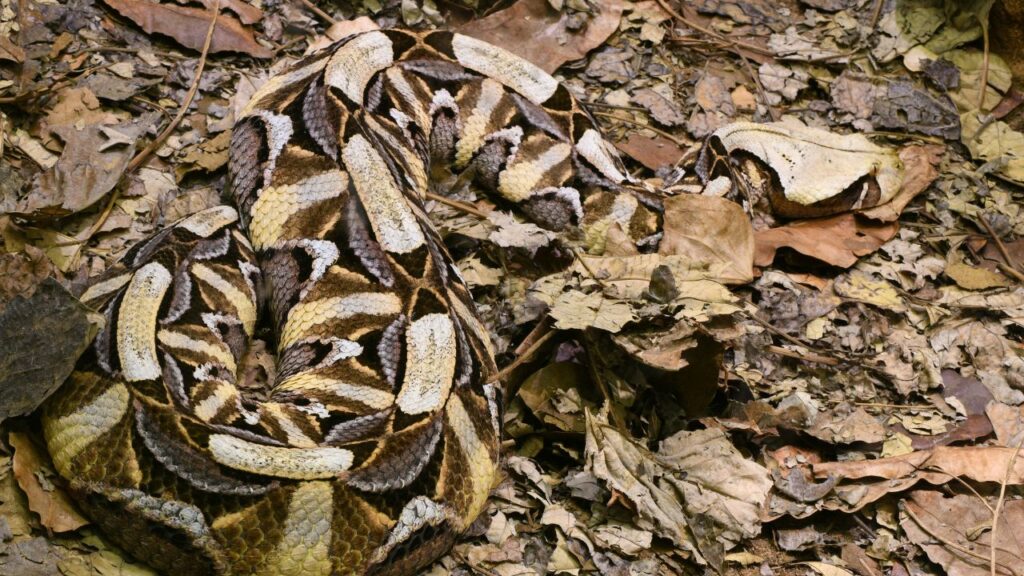
If snakes had a “Most Likely to Win a Fang-Off” award, the gaboon viper would claim the trophy and probably poke a few holes in it on the way home. Native to the lush rainforests and sun-splashed savannas of Sub-Saharan Africa, this Bitis gabonica is a creature equal parts beauty, mystery, and “why are its fangs THAT long?”
Britannica says Gaboon vipers boast the longest fangs of any snake species, reaching an impressive 1.6 inches. To put that in perspective: that’s longer than some people’s pinky nails and almost long enough to apply for a tiny dental insurance plan.
These fangs are not just for show—they can deliver one of the largest venom yields of any snake. Think of it as the “supersized combo meal” of snake bites (minus the fries).
Their bodies are boldly decorated in swirling rectangles and triangles of buff, purple, and brown, creating a velvet-like pattern so effective that they practically vanish into the leaf litter. One moment you’re admiring the forest floor… the next, you realize the forest floor is staring back.
These snakes are sluggish, preferring the “work smarter, not harder” lifestyle. But don’t let their chill attitude fool you—when necessary, they strike with the suddenness of someone who just remembered they left the stove on.
Adults typically measure 4 to 6 feet, with a few overachievers stretching past that. They don’t slither through the jungle trying to start fights—they simply exist majestically, waiting for prey to wander too close. It’s like they’ve mastered the art of introverted hunting.
2. Puff Adder
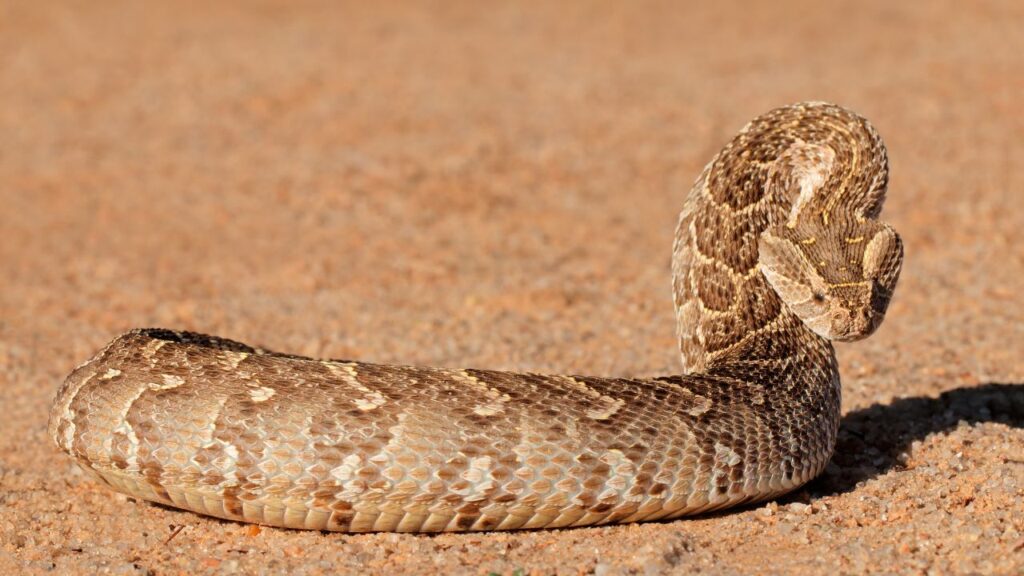
Found across Africa and even parts of the Saudi Arabian Peninsula, this snake is one of the most widespread—and misunderstood—venomous species on the continent. And trust me, it has the attitude to match its reputation.
When threatened, it inflates itself like it’s preparing for a dramatic movie role, complete with a loud, irritated hiss that basically translates to, “Back up, human. Not today.”
Unlike most snakes that slither off at the first hint of footsteps, puff adders freeze and rely on camouflage. They don’t run—they stand their ground, hiss like an upset bicycle tire, and, if needed, launch a lightning-fast strike. Honestly, they’re the introverts of the snake world: “I didn’t want trouble… but you came too close.”
With fangs up to 0.79 inches, they might not win a fang-length contest against the gaboon viper, but they absolutely make the most of what they’ve got. Their venom is potent and produced in serious quantities—typically 150–350 mg, with record yields reaching 700–750 mg.
Puff adders are the definition of patient hunters. They’ve been known to lie motionless for weeks, waiting for the perfect unsuspecting snack to wander by. Their menu includes rodents, birds, lizards, small mammals, and the occasional toad—basically, if it fits in their mouth and wanders too close, it’s dinner.
3. Black Mamba
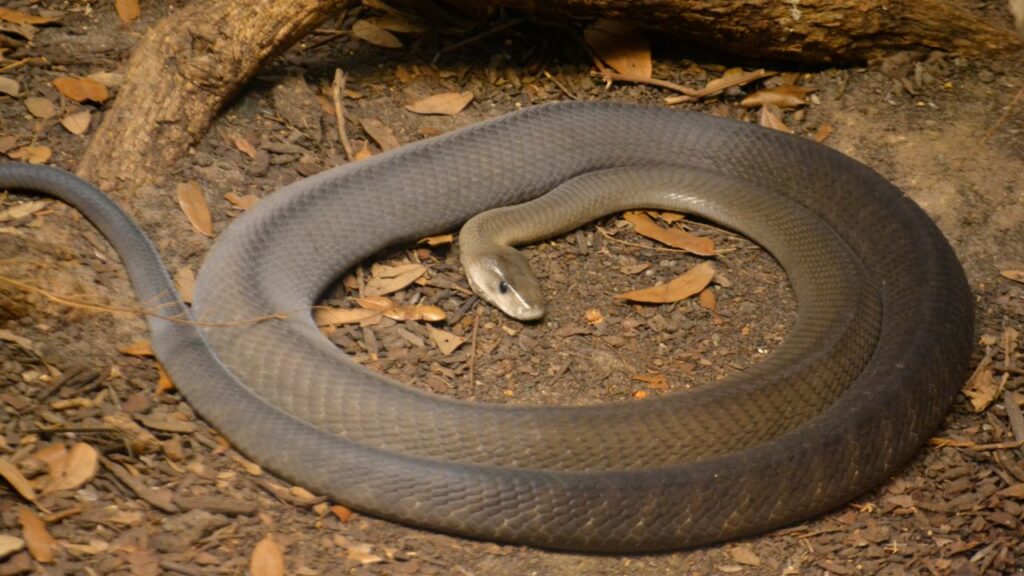
If snakes had celebrity status, the Black Mamba would be the A-list superstar: fast, famous, and with a reputation so intense it could star in its own action movie trilogy. Native across Africa’s forests, woodlands, and sweeping savannas, this snake is the stuff of legends—and sometimes nightmares—but also one of nature’s most fascinating creatures.
The Black Mamba is fast. Like, 12 miles per hour fast. That’s “mild jog for a human,” but “Olympic champion” for a snake. If there were a reptile track meet, the black mamba would win gold, silver, bronze, and then chase down the photographer for a victory lap.
Growing up to 14 feet long, it holds the title of Africa’s longest venomous snake. When fully stretched out, it could span your living room and still have enough length left over to tap you on the shoulder from behind.
Despite what its name suggests, the Black Mamba isn’t truly black on the outside. Its skin ranges from grey to brown, but open its mouth, and you’ll see the unmistakable inky-black interior—nature’s way of saying, “Now would be a great time to back up.”
As per Wikipedia, Black mambas are proteroglyphous, meaning they’re front-fanged snakes. Their fangs may only be up to (0.26 in) long—tiny compared to the gaboon viper’s monstrous toothpicks—but don’t let size fool you. These sleek needles are perfectly designed to deliver extremely potent neurotoxic venom, capable of causing life-threatening symptoms in hours if antivenom isn’t administered.
Black mambas prey on birds and small mammals, striking with terrifying speed and accuracy. Once they bite, their venom works fast—so fast, in fact, that prey rarely has time to escape. It’s like the snake version of a “one-hit knockout.”
Hood flared, mouth open (showing off that black interior), and body lifted high—this snake gives you every warning possible before reacting. Respect the signals, and the Black Mamba would rather retreat than attack.
4. Russell’s Viper

Stocky, strikingly patterned, and surprisingly common near human homes, this reptile is one of Asia’s most notorious serpents—and not because it’s shy.
Reaching up to 5 feet in length, the Russell’s viper isn’t long and slinky like the black mamba or flamboyantly patterned like the gaboon viper. Instead, it’s a heavy-bodied tank of a snake, built for staying put rather than slithering marathons.
Its skin features dark brown or black splotches on a background of yellowish-brown or pinkish-grey, giving it a look that says, “I may be cute, but do not touch.” And honestly, you should listen.
This species thrives in the open, grassy, or bushy landscapes of India, China, and much of Asia. Unfortunately for humans, it’s not afraid to move into farmlands, fields, and even the outskirts of villages, which means accidental encounters are far too common.
Basically, if snakes were neighbors, the Russell’s viper would be the one that never mows its lawn, but somehow always knows what you’re doing.
This viper loves feasting on rodents, which makes it extremely useful for pest control—if only it came with a safety manual. It also hunts lizards and small birds, striking fast and efficiently.
It’s responsible for more snakebite incidents and deaths in Asia than any other species, not because it’s out there picking fights, but because it lives so close to where people work, walk, and farm.
5. Eastern Diamondback Rattlesnake
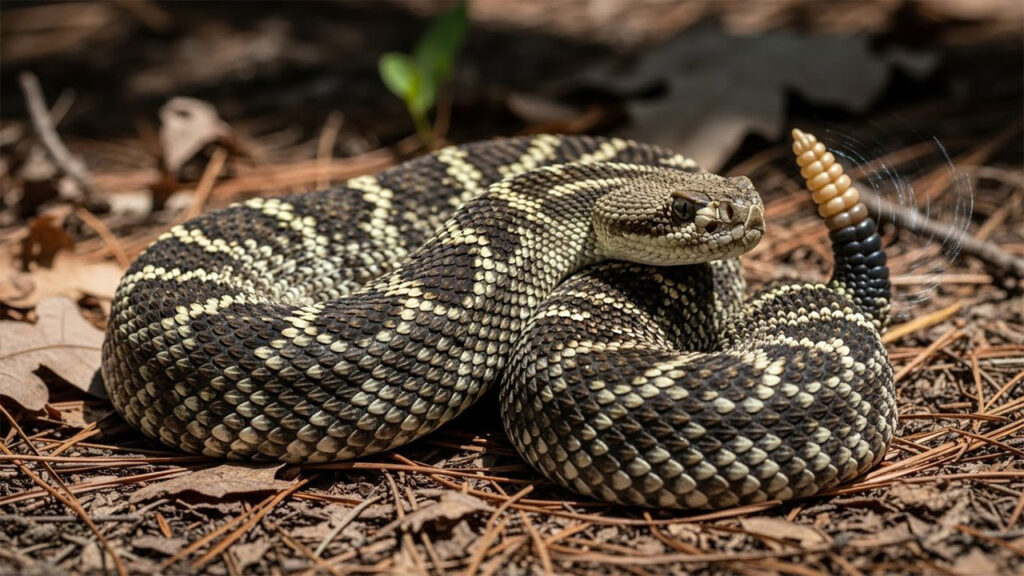
Eastern diamondbacks (Crotalus adamanteus) are basically reptile runway models: striking, confident, and absolutely aware of how good they look. Their iconic diamond-shaped patterns make them stand out—unless they’re blending perfectly into dry brush, which is their other favorite talent.
Adult diamondbacks usually measure 3 to 6 feet, but some giants stretch up to 7 feet. That’s the length of a grown man lying down… or one very overambitious yoga mat.
With 1-inch fangs, these rattlers have some of the most impressive dental equipment in the snake world. They’re basically walking hypodermic needles—except, thankfully, they give you a very loud rattling warning before they use them.
And those fangs deliver serious venom, too. On average:
400–450 mg of venom per bite
Max recorded: 858–1,000 mg
Eastern diamondback venom is designed to take down small mammals, but it’s powerful enough to cause severe tissue damage in larger animals, including humans. But remember: they’re not out here hunting people. They’re ambush predators, relying on camouflage and patience, striking only when they feel threatened.
Think of them as the introverted guardians of the American Southeast—Florida, Georgia, and beyond—who just want some peace, quiet, and a nice warm patch of sand.
Their diet consists mostly of rodents, making them surprisingly beneficial to ecosystems and even agriculture. Unfortunately, many end up persecuted due to fear and misunderstanding—even though they prefer to avoid humans whenever possible.
6. Boomslang
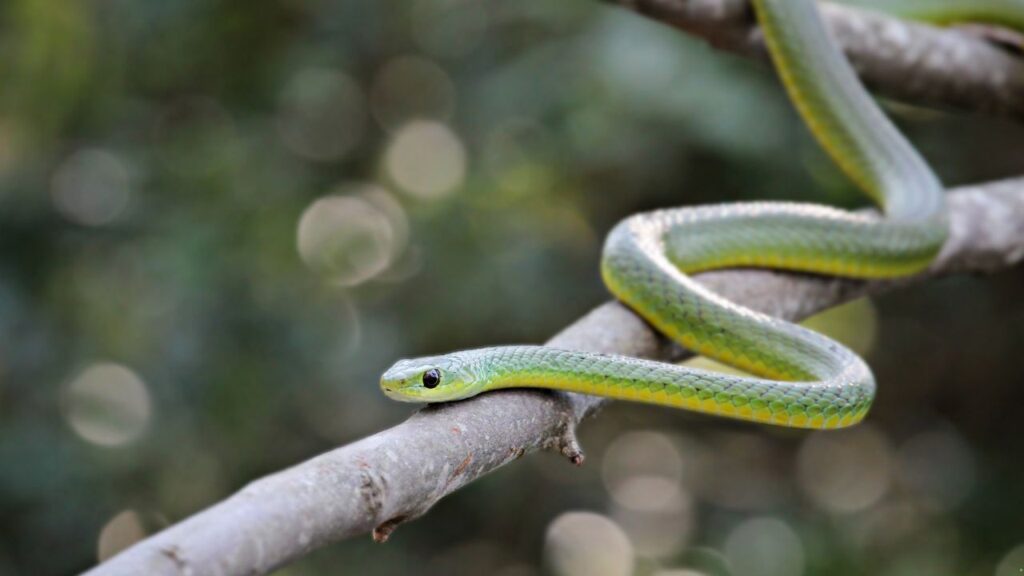
With a name that sounds like a dance move or a jungle-themed energy drink, the Boomslang (Dispholidus typus) is one of Africa’s most fascinating—and deceptively dangerous—snakes. Don’t let the cute, oversized eyes fool you. This slender tree-dweller is basically a nature ninja with a venom delivery system worthy of a spy movie.
The boomslang is an arboreal snake, meaning it spends most of its time in trees, judging the world from above like a dramatic house cat. Despite being lethal, it’s surprisingly shy and would much rather stay camouflaged in the branches than join you on a safari selfie.
Unlike the front-fanged vipers and mambas on this list, boomslangs are rear-fanged snakes (opisthoglyphous). Their fangs are located toward the back of the mouth—but still very capable of delivering highly potent hemotoxic venom.
And oh, that venom. It doesn’t just affect blood clotting—it basically convinces your blood to give up on clotting entirely. Historically, boomslang bites were thought to be harmless… until they weren’t.
Boomslang venom often works slowly, with symptoms sometimes taking hours to appear. This is the snake equivalent of that one friend who quietly plots but never forgets.
If untreated, the venom can cause:
Internal bleeding
Severe hemorrhaging
Tissue damage
A very urgent need for antivenom
Thankfully, boomslangs are extremely shy and are responsible for very few bites each year. Despite being one of Africa’s most venomous species, boomslangs are gentle by nature. They’re not aggressive and usually flee at the first sign of trouble. But corner one? Well… let’s not do that.
7. King Cobra
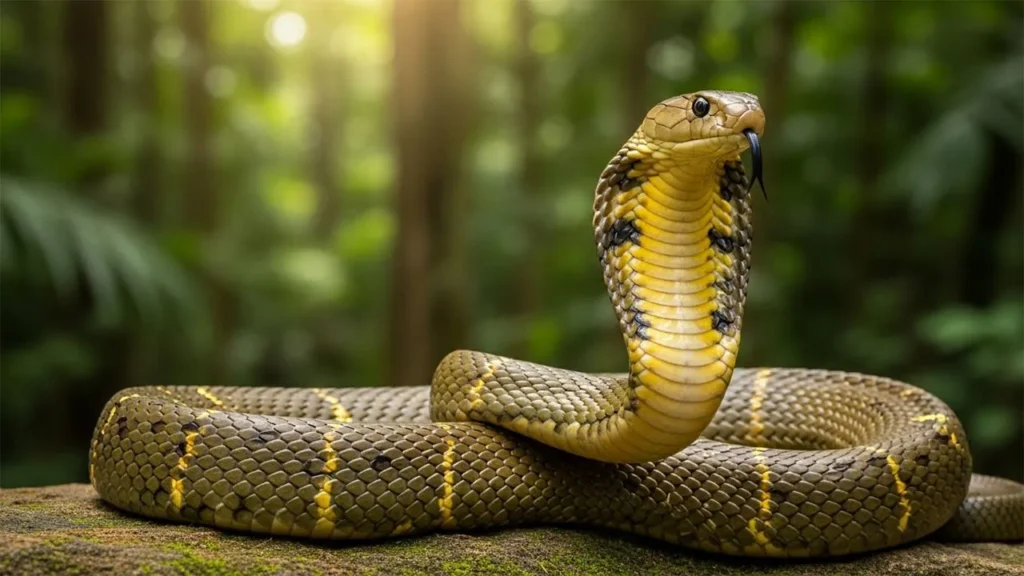
Majestic, intimidating, and surprisingly intelligent, this is the undisputed monarch of venomous snakes and the longest venomous snake on Earth.
Reaching lengths of up to 18 feet, the King Cobra isn’t just long—it’s dramatically long. You don’t “spot” a King Cobra—you realize you’re in its kingdom and politely hope for safe passage.
Its sleek, muscular body comes in shades of olive, brown, or black, designed to blend into the dense forests of Southeast Asia and the Indian subcontinent. When threatened, it raises a third of its body off the ground—meaning a six-foot human may suddenly find themselves at snake eye-level.
It’s not a moment you forget.
A single bite can deliver enough venom to kill an elephant—or around 20 grown humans if we’re doing scary math. It’s like having a fire hose that sprays neurotoxin.
Its venom shuts down the nervous system, causing respiratory failure if untreated. Simply put: you do not want to anger royalty. They produce a deep, resonant sound thanks to specialized tracheal structures, like a reptilian subwoofer. Imagine a snake with its own bass line.
Conclusion
Snakes with the most deadly fangs possess specialized anatomy that allows venom glands to deliver potent venom efficiently. Species such as the Inland Taipan, Coastal Taipan, Eastern Brown Snake, Death Adder, Cape Cobra, Philippine Cobra, Common Krait, Sea Snakes, Tiger Keelback, and Twig Snakes are among the most venomous snakes capable of causing human fatalities due to their highly venomous bites.
Their large fangs or rear fangs in some species, combined with strong jaws, allow them to inject venom deeply, delivering venom that can cause swelling and other severe effects. While bites may be extremely rare, the presence of other fangs and dangerous species adaptations ensures that other snakes remain formidable predators, emphasizing the importance of caution and respect when encountering these remarkable but lethal reptiles.
