




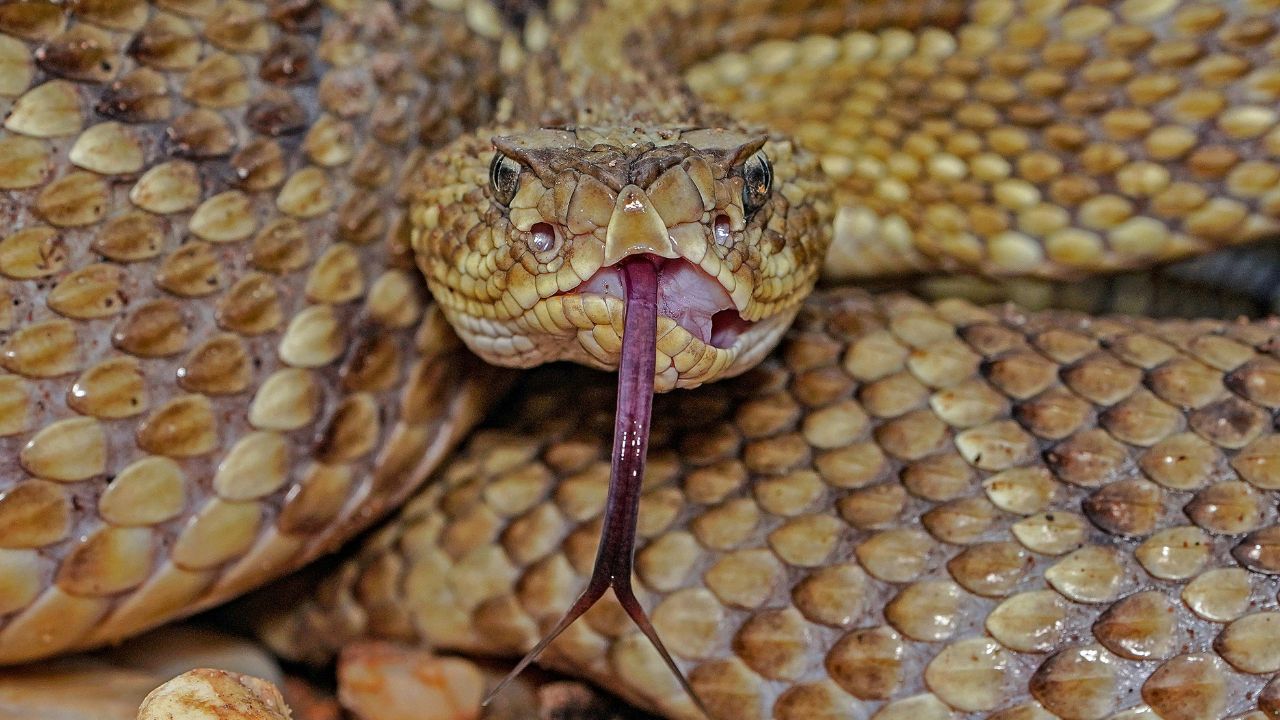
When most people think of snake venom, they imagine instant danger and deadly consequences. But in the natural world, venom isn’t always about killing—it’s often about control.
Some snakes have evolved venom so precisely balanced that it stuns or immobilizes prey instead of ending the hunt immediately. This remarkable strategy allows snakes to conserve energy, avoid injury, and ensure their next meal doesn’t fight back.
These snakes strike with incredible accuracy, delivering venom that interferes with nerves or muscles, slowing prey just enough to make capture effortless. It’s a fine-tuned biological tool, perfected through evolution and shaped by necessity.
What makes this hunting method especially fascinating is its efficiency. By stunning rather than killing outright, snakes reduce the risk of prey damaging them during a struggle. It’s a silent, swift exchange—one moment of contact followed by complete control.
Let’s uncover snakes that use venom in this calculated way, diving into how their venom works, why it evolved, and what makes these predators such effective hunters. Prepare to see venom not just as a weapon, but as a masterfully designed tool of survival.
Fact: Not all snake venom is meant to kill instantly. Some species use venom primarily to stun or immobilize their prey, slowing movement and reaction time so escape becomes impossible. This tactic allows snakes to strike, release, and safely track their prey until it’s helpless.
7 Snakes That Use Their Venom to Stun Prey
1. Black Mamba
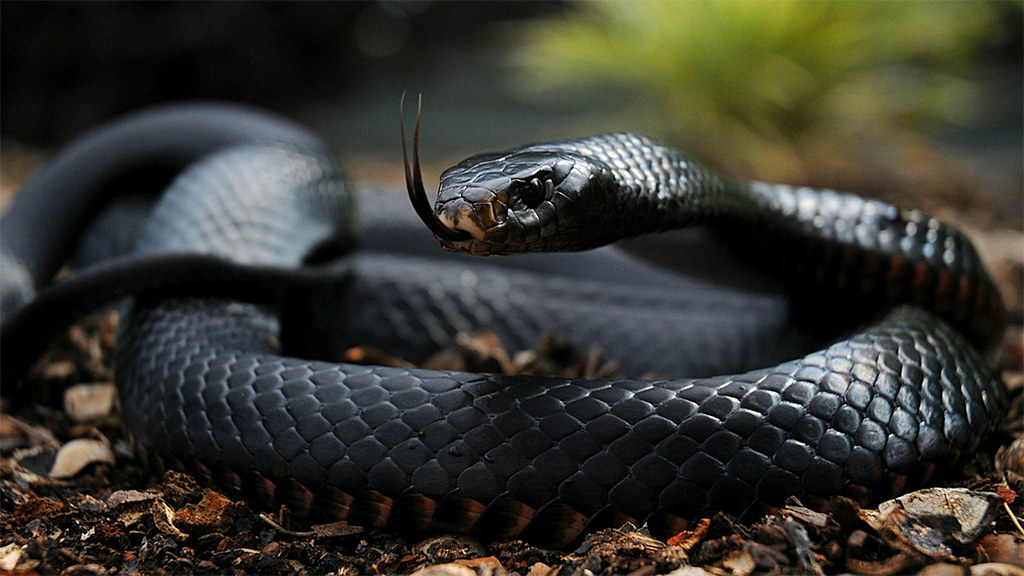
Often called Africa’s deadliest snake, the Black Mamba has venom so powerful that, without treatment, its bite can be fatal. Thankfully, antivenom exists today—but this snake’s reputation was earned long before modern medicine showed up to the party.
Despite its dramatic name, the Black Mamba isn’t actually black on the outside. It’s usually dark brown or gray, sleek and elegant like it knows it’s dangerous. The real surprise comes when it opens its mouth, revealing a jet-black interior—nature’s way of saying, “Last warning.”
Living across sub-Saharan Africa, this snake can grow up to eight feet long, making it both long and intimidating. But what truly sets it apart? Speed. The Black Mamba can slither at over 12 miles per hour, which means if you see one, it’s already judging how slow you look.
Its venom is neurotoxic, attacking the nervous system and quickly stunning prey into paralysis. This allows the snake to strike, wait briefly, and then enjoy a meal that isn’t going anywhere. Efficient. Ruthless. Very professional.
Here’s the twist: Black Mambas are actually shy. They’d rather escape than fight and usually strike only when they feel threatened. So while it has the tools of a supervillain, it mostly just wants to be left alone—proof that even the scariest creatures prefer peace and quiet.
Deadly? Yes.
Fast? Absolutely.
Evil? Nah—just really good at being a snake.
If you want it shorter, funnier, or more dramatic, just say the word!
2. Boomslang
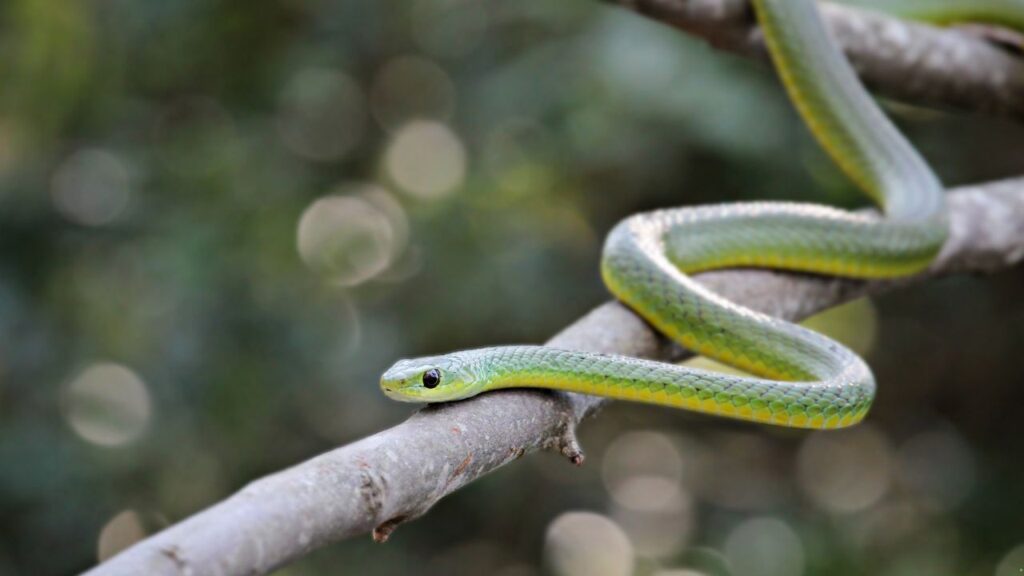
If the Black Mamba is fast and flashy, the Boomslang is quiet, patient, and incredibly sneaky—the kind of snake that wins by not being noticed.
The Boomslang is a venomous snake from the Colubridae family, and unlike most of its relatives, this one is genuinely dangerous to humans. It’s basically the rebel of the colubrids: calm on the outside, deadly on the inside.
Found mostly in trees and bushes, the Boomslang is a camouflage champion. Its body and eye color vary wildly—green, brown, black—making it blend so well into its surroundings that even nature itself might lose track of it.
As per Britannica when hunting, it becomes a living tree branch, extending the front half of its body into the air and remaining perfectly still. No movement. No drama. Just patience.
When a chameleon, bird, or other unsuspecting snack gets too close, the Boomslang strikes with lightning speed. Its venom is hemotoxic, meaning it causes internal bleeding and hemorrhages. Even small amounts can be fatal to humans, which is impressive in a “please don’t meet this snake” kind of way.
In defense mode, the Boomslang inflates its neck, revealing dark skin between its scales—essentially saying, “I was invisible five seconds ago. Now I’m warning you.” It is rear-fanged, but unlike many rear-fanged snakes, its fangs sit relatively far forward in the mouth, allowing it to deliver venom very effectively.
So while it looks calm, elegant, and tree-branch innocent, don’t be fooled. The Boomslang is proof that sometimes the most dangerous creatures are the ones that don’t rush— they wait.
3. Eastern Coral Snake

Don’t let the bright colors fool you—the Eastern Coral Snake (Micrurus fulvius) may look like it’s dressed for a tropical party, but it means business.
This striking snake, famous for its red, yellow, and black bands, lives mostly in the southeastern United States. While it’s not large or aggressive, it has a very focused hunting style and a venom that demands respect. Think of it as quietly intense.
Unlike snakes that strike and release, the Eastern Coral Snake prefers a more… hands-on approach. Wikipedia noted it attacks the head of its prey first, delivering venom right where it counts. Then it hangs on, patiently waiting until the venom does its job. Once the prey is fully paralyzed, dinner is officially served.
Its menu is surprisingly diverse. The Eastern Coral Snake primarily eats other snakes and small, elongated lizards, but it’s also been known to snack on birds, frogs, fish, insects, and yes—even other coral snakes. Talk about commitment to variety.
The venom is neurotoxic, meaning it disrupts the nervous system and causes paralysis. While bites to humans are rare (this snake is shy and non-confrontational), the venom is potent and should always be treated as a medical emergency.
So while the Eastern Coral Snake may be smaller and quieter than some of its venomous cousins, its hunting method is precise, efficient, and unmistakably effective. Bright colors. Calm demeanor. Deadly focus.
4. King Cobra
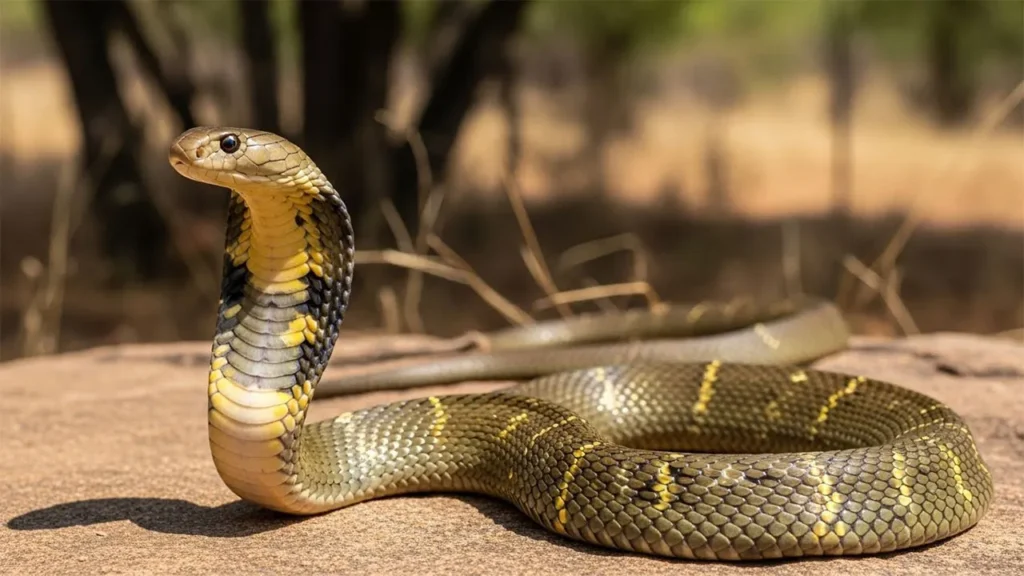
This legendary reptile is one of the longest venomous snakes on Earth, with some individuals stretching over an astonishing 18 feet. That’s longer than a car, which is frankly unnecessary, but the King Cobra has never been accused of subtlety.
Usually green, yellow, or black, the King Cobra stands out thanks to the large, distinctive scales on its head, giving it a regal, almost armored appearance. Add its iconic hood and upright posture, and you’ve got a snake that looks like it knows it’s royalty.
Despite its intimidating presence, King Cobras are not naturally aggressive toward humans. They prefer to avoid confrontation—but if startled or threatened, they will strike without hesitation.
And when they do, it’s serious. Their neurotoxic venom causes paralysis and is powerful enough to kill an elephant within three hours. Yes. An elephant. Nature really said, “Let’s not hold back.”
So while the King Cobra commands respect with its size, venom, and presence, it also reminds us that even the most powerful creatures need protection.
5. Puff Adder
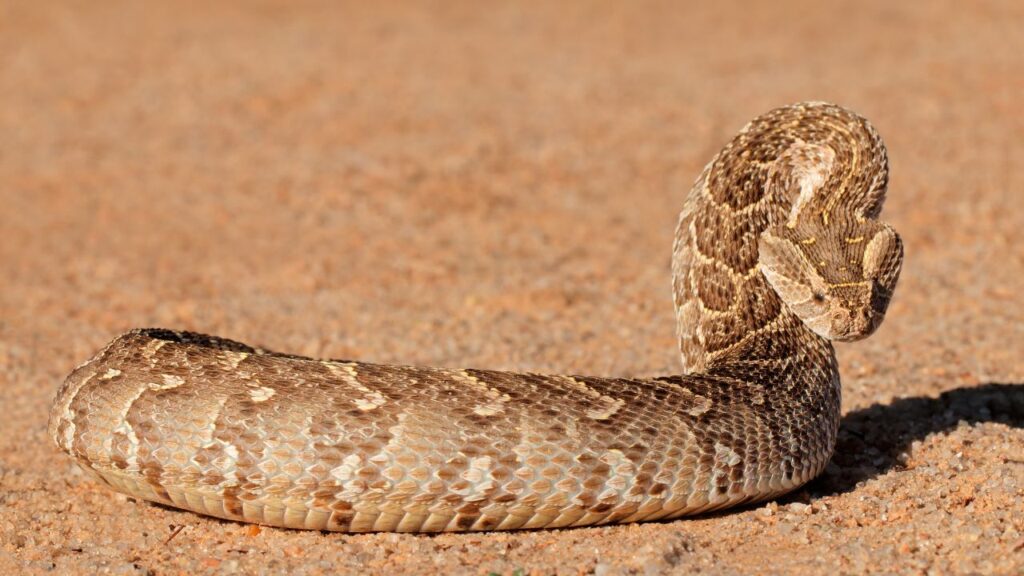
Meet the Puff Adder, a snake that proves you don’t need speed to be dangerous—sometimes, patience and perfect timing do the trick.
Found across Africa, the Puff Adder relies on camouflage and surprise attacks rather than chasing prey. Its thick, stocky body blends seamlessly with the dry leaves and grass, making it almost invisible to unsuspecting animals.
Once a target wanders close, the Puff Adder strikes with lightning speed—despite looking like it’s moving in slow motion. Nature’s sneaky paradox.
The Puff Adder’s venom is cytotoxic, causing tissue damage and intense pain. Even a small bite can be serious, making this snake one of Africa’s most dangerous in terms of human encounters.
Luckily, it usually strikes only when stepped on or provoked, preferring to wait quietly for prey like rodents, birds, and lizards to come within reach.
Fun fact: The “puff” part of its name comes from the dramatic hissing and puffing noise it makes when threatened, like it’s saying, “Back off, buddy—I’m armed and fabulous.”
Slow? Yes.
Deadly? Absolutely.
Showy? Just a little.
The Puff Adder is a master of patience, camouflage, and precision—a true testament to the saying, “Don’t underestimate the quiet ones.”
6. Eastern Diamondback Rattlesnake
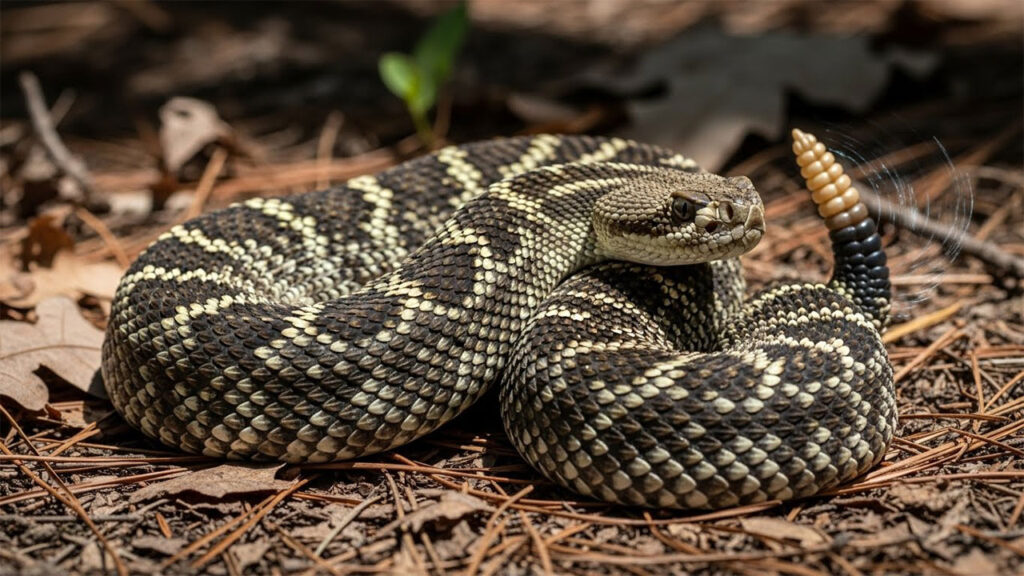
If snakes had a bodybuilding competition, the Eastern Diamondback Rattlesnake would walk away with the trophy and probably hiss at anyone who questioned it. This is the largest rattlesnake species in North America, thick, heavy, and built like it’s carrying the weight of the reptile world on its scales.
Covered in bold, dark diamond-shaped patterns, this snake’s camouflage is so good it basically becomes part of the landscape. You could walk right past one without noticing—though it will definitely notice you.
Thankfully, the Eastern Diamondback prefers peace and quiet, not conflict. But if you get too close, you’ll hear its iconic rattle: nature’s version of, “Hey, buddy… personal space.”
An expert ambush predator, the Eastern Diamondback likes to lie perfectly still under brush, grass, or sand and wait for a juicy rodent or bird to wander by. When the moment is right—boom—it strikes with terrifying speed, injects a powerful hemotoxic venom, and lets the venom do the heavy lifting.
Once the prey collapses, the snake leisurely finds the body and swallows it whole. Efficient, lazy, and lethal. Basically the perfect predator.
Despite its fearsome reputation, this rattlesnake isn’t out to pick fights. It saves the deadly stuff for dinner, not humans. Most bites happen when people try to handle it or accidentally step too close. As long as you respect its space, the Eastern Diamondback is surprisingly chill for a snake with a built-in alarm system.
7. Tiger Snake
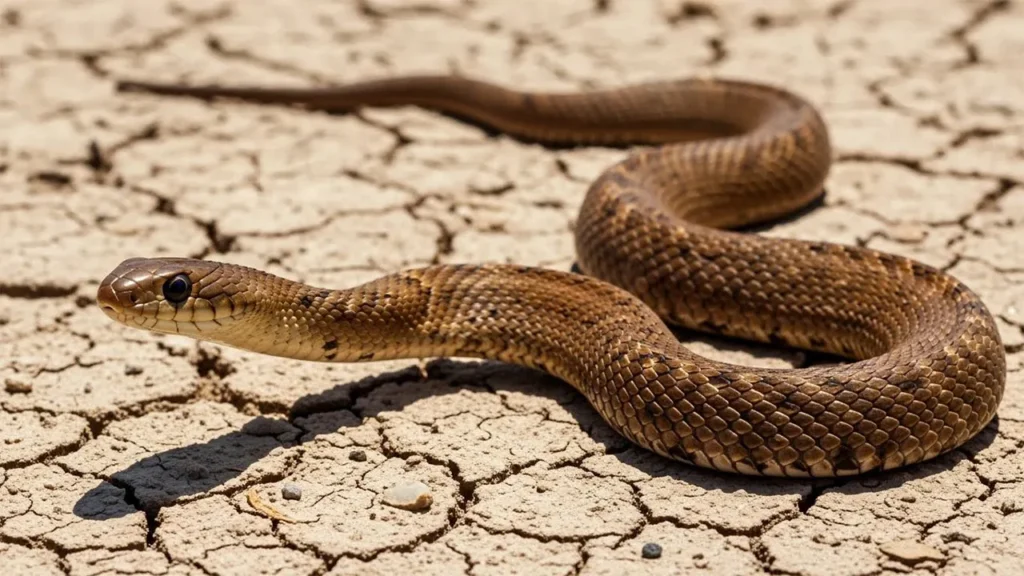
The Tiger Snake may only be about three feet long, but don’t let its size fool you—this little striped powerhouse is one of Australia’s most venomous snakes. And considering Australia’s reputation, that’s saying a lot.
Named for the dark brown or yellow-brown bands running across its body, the Tiger Snake looks like it’s wearing tiny fashionable stripes. Its belly is much lighter, giving it a two-tone look that says, “I’m stylish, but also very dangerous.”
Found along the south-eastern coast of Australia, these snakes like to hang out near wetlands—creeks, rivers, marshes, swamps—basically anywhere there’s enough moisture and enough frogs. Why frogs? Because they’re on the Tiger Snake’s favorite takeout menu.
While frogs are the main dish, Tiger Snakes won’t turn down birds, fish, other reptiles, and even small mammals. They’re flexible eaters… but not picky about making the meal stop moving first.
Their 3–5 mm fangs deliver powerful venom that’s absolutely no joke. Tiger Snake venom is a potent mix that can affect nerves, muscle function, and blood—making them extremely dangerous to humans. Fortunately, they’re not out looking for trouble; they just really love a swamp buffet.
Despite their fearsome bite, Tiger Snakes play an important ecological role. They help control populations of rats, mice, and other small animals, keeping the ecosystem balanced—like nature’s strict but effective pest-control service.
The Tiger Snake is proof that not all fierce predators need to be huge—some just need attitude, stripes, and a very effective set of fangs.
Conclusion
Snakes that use their venom to stun prey show how each snake species has evolved different venoms—from neurotoxic venom and hemotoxic venom to cytotoxic venom—to overpower prey items such as amphibians and rodents. Some, like the inland taipan, deliver powerful neurotoxins, while others, including many viper species, damage blood vessels and cause intense swelling. Even the mangrove snake may chew to inject venom, proving that many snakes employ unique mechanisms for both hunting and defensive purposes.
Across southeast Asia and beyond, species such as the spitting cobra use venom in different ways, and these venomous snake bites remain notorious. Constrictors rely less on toxins, but scientists, researchers, and herpetologists still catch and study many species to understand venom’s role and develop antivenom. Each instance highlights the natural world’s complexity, and for anyone wanting to learn more, it’s recommended to watch expert sources as study efforts continue.
