




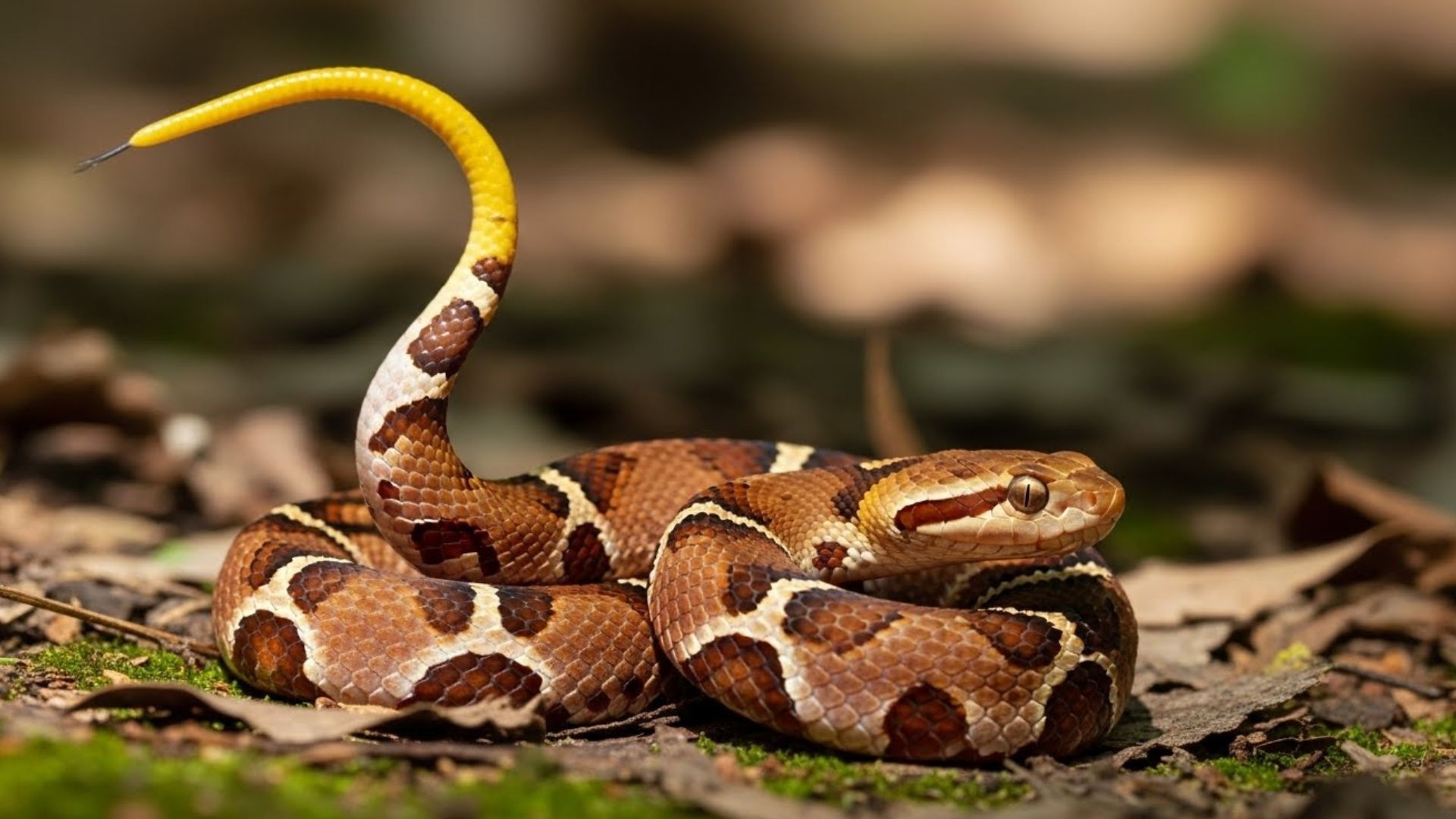
In the wild, hunting isn’t just about strength—it’s about strategy, timing, and sometimes, a little bit of trickery. Among the most fascinating predators are the snakes that have evolved a remarkable skill: using their tails as living bait.
With a flick, a wiggle, or a hypnotic dance, these reptiles can convince unsuspecting prey that a harmless snack is waiting. But of course, the moment the victim gets close, the tables turn.
These snakes remain perfectly still, sometimes for minutes or hours, letting their tail do all the hard work. It’s a quiet performance—subtle, patient, and lethal.This behavior, called caudal luring, showcases evolution at its finest. Instead of chasing prey, these snakes bring the meal straight to themselves. It’s a hunting strategy built on illusion, creativity, and precision.
Watching it in action reveals a world where survival depends not only on venom or speed, but on the art of misdirection. In nature, the clever often triumph—and these tail-lurers prove it.
Quick Insight: Called caudal luring, some snakes wiggle the tips of their tails to mimic the movements of prey, like worms or insects. This aggressive mimicry tempts unsuspecting animals within striking distance—nature’s way of turning a tail into a hunting tool!
7 Snakes That Use Their Tail to Lure Prey
1. Eastern Copperhead
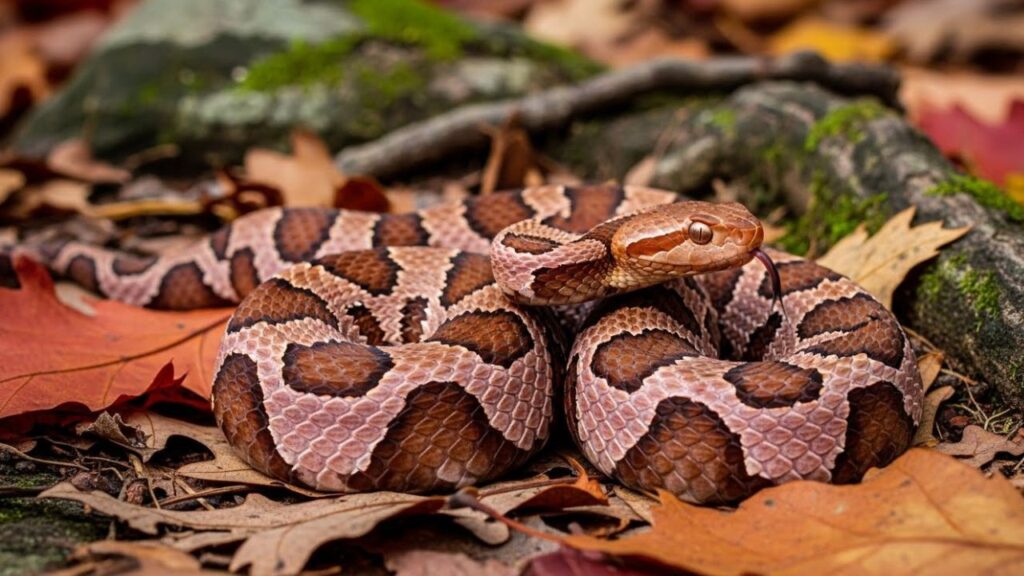
The Eastern Copperhead may look like your average woodland snake, but don’t be fooled—it’s a stealthy predator with a secret weapon: its tail. While the adults blend beautifully with dead leaves, the young copperheads come with a little extra flair—a yellowish-green tip at the end of their tail.
Why? That wiggly little tip is their dinner bell. By vibrating it like a worm squirming in the dirt, these young copperheads lure unsuspecting lizards, frogs, and other tasty critters straight into striking range.
As per Wikipedia, there’s more to these snakes than just their tail tricks. Unlike many of their flashy viper cousins, copperheads are generally “freeze first, bite only if absolutely necessary” types. Step too close, and you might trigger a defensive strike, but most of the time, they’d rather just blend into the leaf litter and silently judge your clumsiness.
And speaking of defense, copperheads have a hidden talent that rivals even the most enthusiastic drummers: tail vibration.
They can shake their tails over 40 times per second! That’s faster than any non-rattlesnake snake you’ve ever met. Picture them doing a tiny percussion solo while you tiptoe nearby—nature’s very own warning drumline.
So, next time you’re wandering through the Southern U.S. forests in spring or fall, keep an eye out for these leafy ninjas. If you see a little greenish wiggle, that’s probably not a funky piece of grass—it’s dinner calling, Copperhead style.
2. Water Moccasin
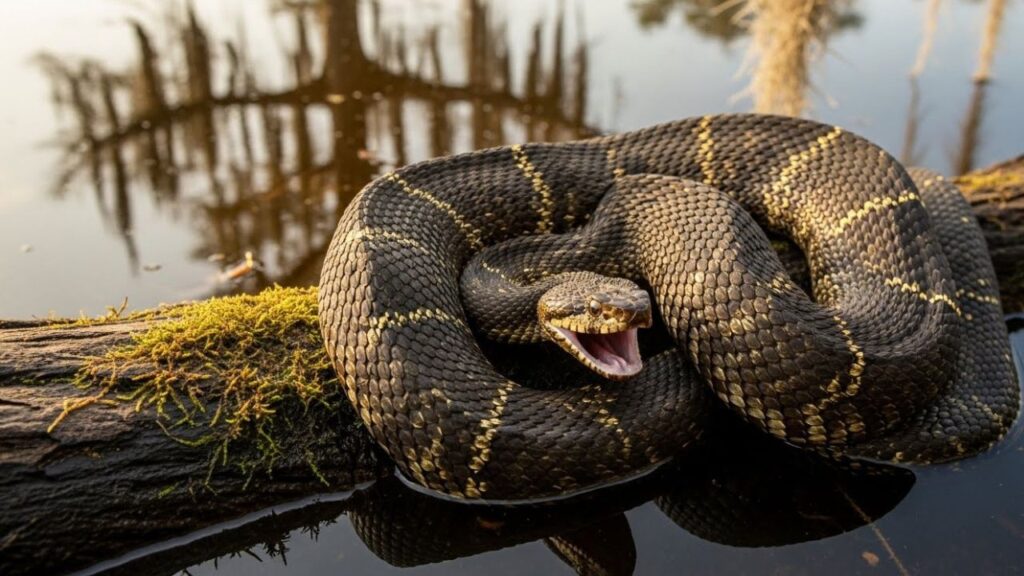
These snakes are semi-aquatic, meaning they’re just as comfortable lounging in water as they are sunbathing on a log. And much like the young copperhead, juvenile water moccasins are tail-wagging geniuses. They use the tips of their tails to lure small fish, frogs, and other unsuspecting prey right into striking distance.
Think of it as dangling a little “bait” sign: “Step closer, delicious snack ahead!” Unlike their shy copperhead cousins, water moccasins are a bit more bold. They’ll hiss, gape their cotton-white mouths, and vibrate their tails to warn you that you’re getting too close.
It’s basically their way of saying, “Hey, I’m dangerous… but also fabulous!” And while adults rely on their intimidating presence, the young ones stick to their crafty tail tricks to snag a meal.
One of the most fascinating things about these snakes is how they combine stealth and theatrics. Imagine a snake dangling its tail like a fishing lure while keeping one eye on a potential predator—like a Broadway actor in a swampy thriller.
The water moccasin’s tail-luring isn’t just a hunting tactic—it’s a performance, and every small fish is an unwitting audience member.
So next time you’re near a Southern pond, creek, or swamp, keep your eyes peeled. If you spot a little twitch in the water, that’s not a playful ripple—it might just be the water moccasin saying, “Lunch is served.”
3. Gaboon Viper
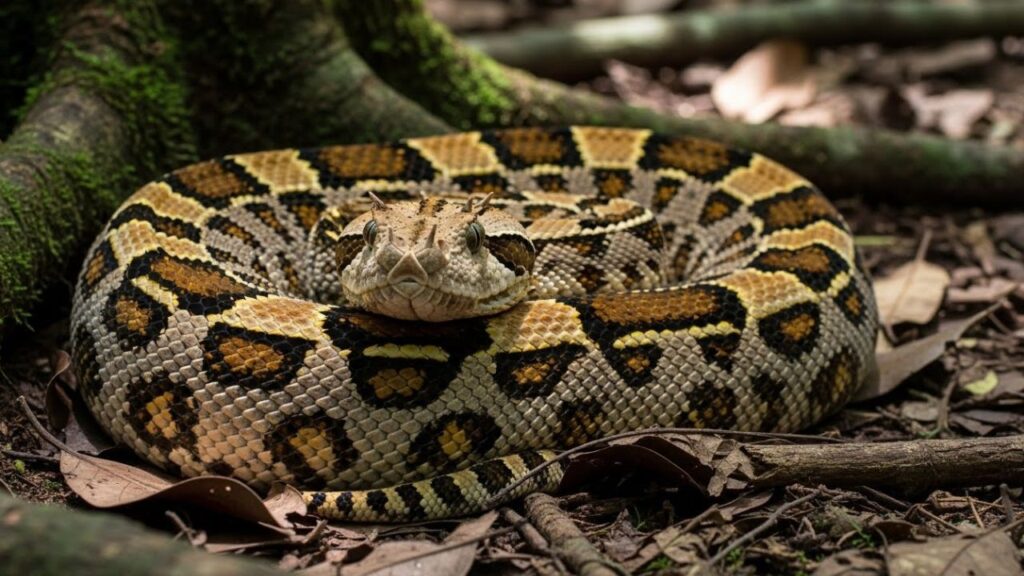
If the Eastern Copperhead is a woodland ninja and the Water Moccasin is a swampy spy, the Gaboon Viper is the ultimate camouflage artist—a leafy magician of the African forest floor. This snake doesn’t need to chase its prey; it’s an ambush specialist, perfectly disguised with a head and body that mimic fallen leaves.
Unlike some of its jittery cousins, the Gaboon viper is the epitome of chill. It has a placid, “don’t bother me” personality and rarely bites humans. If threatened, it won’t immediately strike. Instead, it raises the front part of its body, hisses like a tiny steam engine, and gives you fair warning before taking action.
Now here’s where it gets extra fascinating: the Gaboon viper has fine control over its venom. It can decide whether to inject venom and how much, meaning a single bite could range from “ouch, that stings” to “run for your life.”
Hungry? Sideways wiggle from a potential prey? Strike! Misidentified human foot? Strike! This viper plays its cards carefully, but it’s always ready for dinner.
And although tail-luring isn’t its main hunting tactic like in copperheads or moccasins, the Gaboon viper can use subtle tail movements to attract the right prey, all while blending seamlessly into the leaf litter. I
So, if you ever wander the African forests and spot a pattern of leaves that seems oddly organized… congratulations, you might have just stumbled upon a Gaboon Viper’s dining room. Don’t disturb the décor—it’s lethal, elegant, and incredibly patient.
4. Bushmaster
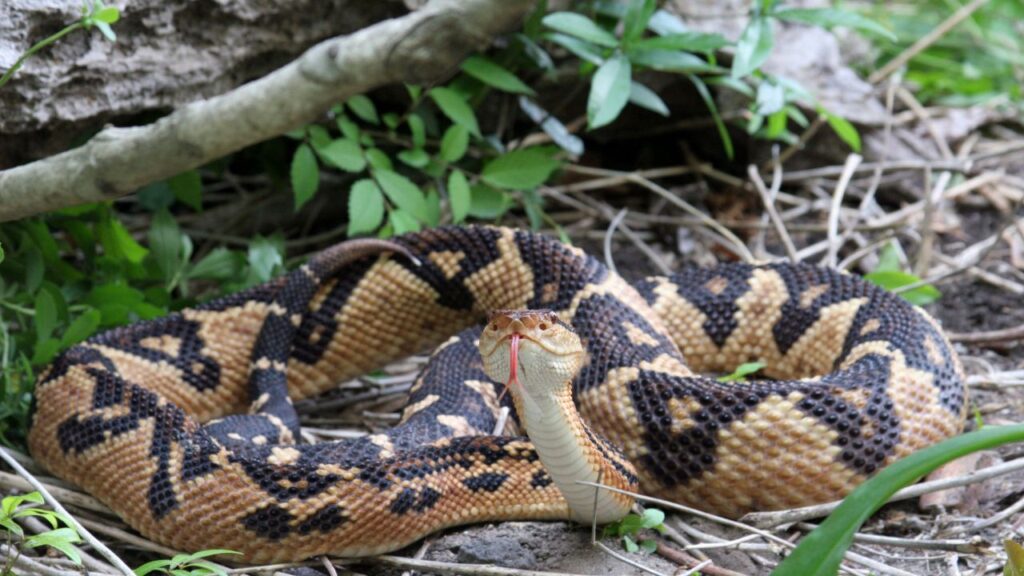
If you thought the Gaboon Viper was impressive, meet the Bushmaster—South America’s giant viper and basically the sumo wrestler of the snake world. It’s the longest venomous snake in the Americas, and yet it has a surprisingly clever side: it uses its tail to lure prey, just like the smaller tail-wagging snakes, only with a bit more “don’t mess with me” attitude.
Bushmasters are ambush predators at heart. They lie in wait on the forest floor, blending into the leaf litter with a pattern that’s basically nature’s version of camouflage pajamas.
A twitching tail tip—sometimes mimicking an insect or small worm—can be all it takes to attract a curious rodent or bird right into striking range. It’s less flashy than a Copperhead’s dance but much more “I could eat you for breakfast if I wanted to.”
Despite their intimidating size and venom, Bushmasters are not aggressive by default. They prefer to stay calm and avoid humans if possible. But if you step too close, they’ll hiss, coil, and strike with impressive speed—remember, these snakes are ambush artists, not clumsy giants.
One of the coolest things about Bushmasters is their versatile hunting style. They can lie perfectly still for hours, then use a subtle tail wiggle to tempt prey. It’s like setting a mousetrap that’s also a magic trick: “Come closer… come closer… gotcha!”
If you ever find yourself in the South American forests, keep an eye out for twitching tails among the leaves… because that little movement could belong to the jungle’s heavyweight trickster.
5. Sand Boa
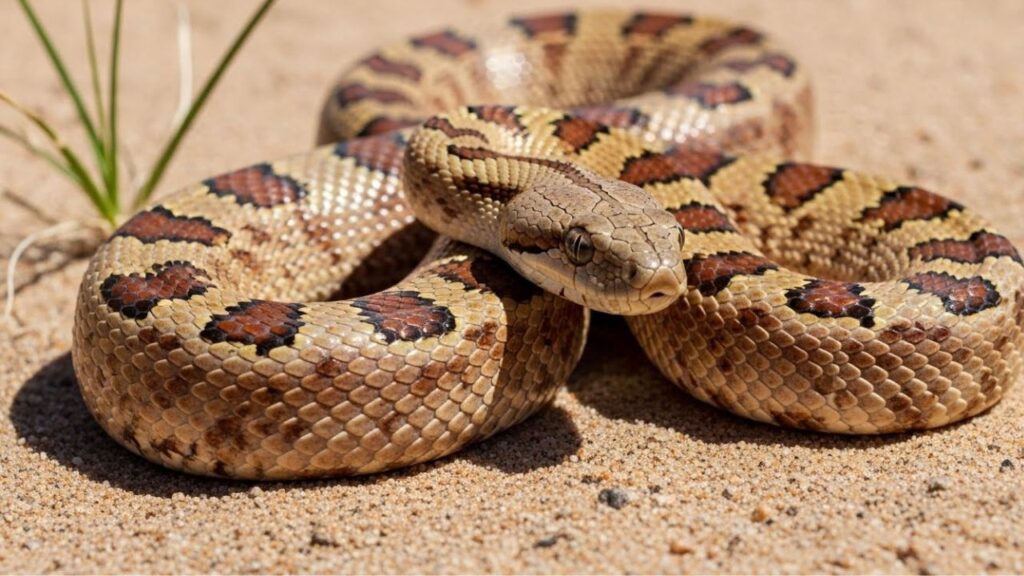
If you thought tail-luring was only for big, flashy vipers, think again—meet the Sand Boa, the pint-sized schemer of sandy habitats. These little snakes may not win any beauty contests, but they know how to use their tail as bait like pros.
Sand Boas are masters of burrowing and ambush hunting. They spend most of their time hidden under sand, leaving just their tail peeking out. That wiggly tail tip isn’t just a random dance—it’s a clever lure for unsuspecting prey, like lizards or small rodents.
From the perspective of the prey, it looks like an easy snack… and then snap! dinner disappears into a cozy sand trap. It’s like nature’s version of a sneaky magician’s sleight of hand, only with more scales.
Despite their small size, Sand Boas are tenacious and patient hunters. They’ll wait hours, sometimes even days, in their sandy hideouts, using their tail like a tiny worm on a fishing hook. And while they’re not venomous, their constricting hug is more than enough to subdue a meal.
These snakes are also surprisingly friendly toward humans—not that you’d want to cuddle them while they’re hunting—but they definitely earn points for efficiency, ingenuity, and style. A tail that lures prey? That’s a skill that deserves applause, even if it’s just a tiny sand boa clapping silently in the desert.
So next time you’re walking through a sandy area and see a little twitch in the grains, don’t just brush it off. That tiny wiggle could be the Sand Boa’s clever little dinner invitation, and nature’s most unassuming trickster is at work.
6. Common Death Adder
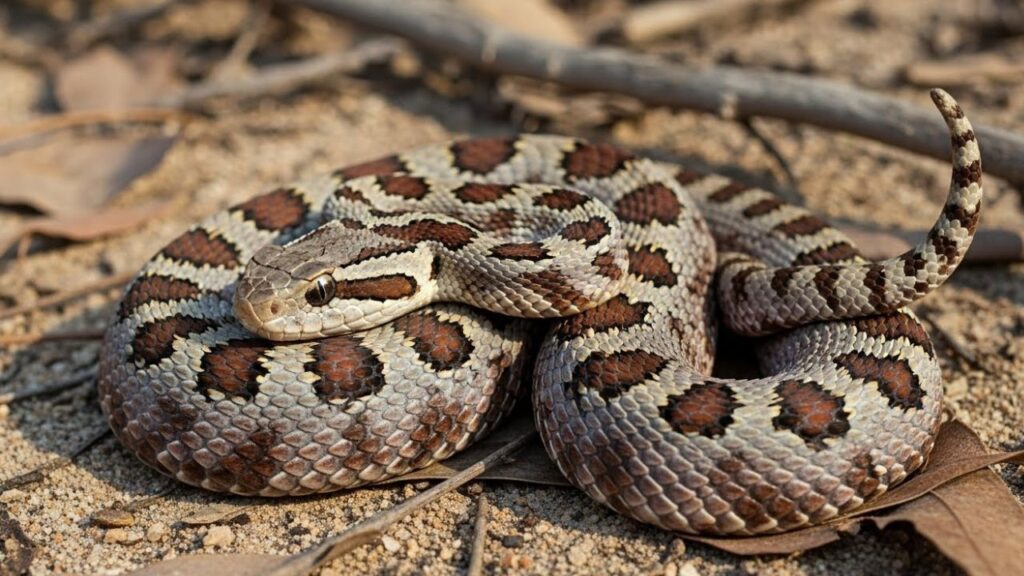
Australia is home to some seriously clever snakes, and the Common Death Adder is a true master of ambush. Unlike the long, slithery snakes you might picture, death adders are short, stocky, and perfectly designed for surprise attacks.
They spend most of their time lying in wait, blending seamlessly into leaf litter or ground cover, making them almost invisible—like a tiny, venomous ninja in a woodland cloak.
What makes them legendary (and slightly terrifying) is their tail-luring skill. The tip of their short tail wiggles like a little worm, attracting lizards, frogs, and unsuspecting birds right into striking distance.
It’s the ultimate “come closer, I dare you” trap. And when prey takes the bait? The death adder strikes with blinding speed, delivering venom potent enough to make other predators think twice.
Found across eastern and southern Australia—and even in parts of Papua New Guinea—death adders prefer woodlands, forests, grasslands, and heath areas. Anywhere there’s leaf litter or ground cover, you might be sharing space with this patient ambush artist.
But unlike some of its more aggressive cousins, the death adder usually only strikes when prey is within reach—or when someone steps too close by accident.
In short, the death adder is a combination of patience, camouflage, and lightning-fast strikes, with a flair for using its tail as both lure and magic wand. If Australia’s snakes had a “trickster” award, this little ambush artist would take home the trophy—tail wiggle included.
7. Sidewinder Rattlesnake
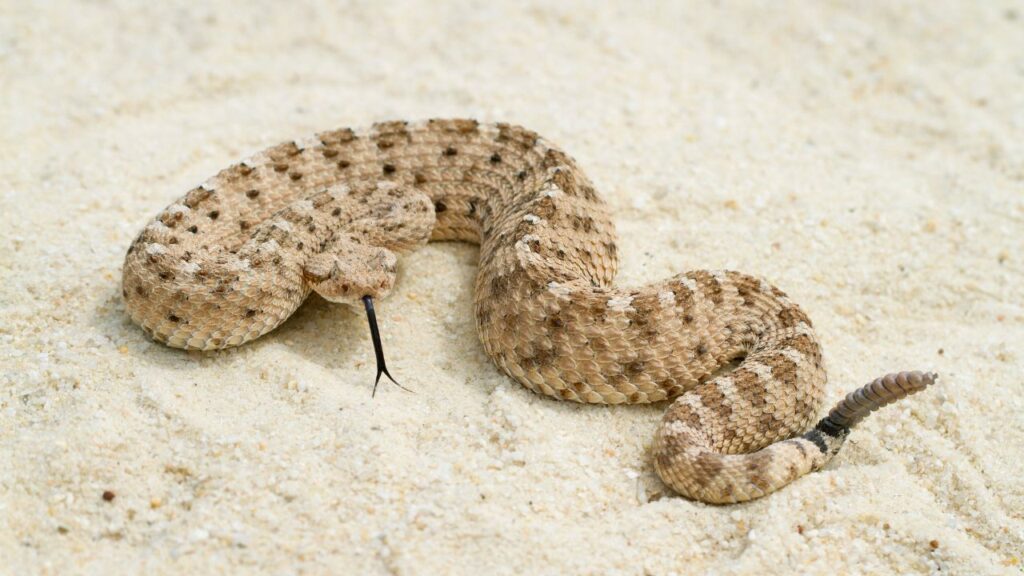
If the desert had a dance floor, the Sidewinder Rattlesnake would be its champion—gliding across the sand with a signature sideways shimmy. Found in the scorching deserts of the Southwestern U.S. and Northwestern Mexico, sidewinders are perfectly adapted to life where temperatures can turn a sun-soaked day into a sauna.
But their real trick isn’t just moving sideways—it’s hunting with style. According to A-Z Animals, juvenile sidewinders are the true tail-luring maestros. They bury themselves almost completely under the sand, leaving only the tip of their black-banded tails exposed, wiggling it like a tempting worm or insect.
Curious lizards, thinking they’ve found an easy snack, edge closer… and bam! dinner comes to them without the snake ever moving an inch.
This clever ambush strategy shows that even in the harshest environments, nature rewards creativity. Sidewinders are cold-blooded, yes, but they’re also smart, using their tail as a lure while staying cool under the sand. Think of it as desert efficiency at its finest: minimal effort, maximum payoff.
So next time you picture a rattlesnake, don’t just think “dangerous desert dweller”—think tiny tail magician, patiently plotting beneath the sand, ready to trick an unsuspecting lizard with nothing but a twitchy tip and a sideways dance.
Conclusion
Snakes that use their tail to lure prey showcase some of the most interesting and specialized hunting methods in the wild. The spider-tailed horned viper is the most famous snake species known to attract birds and lure birds with a tail tip that has evolved over generations to mimic a spider, allowing this deadly snake to capture prey with precision. Documented by scientists and researchers, specimens from a second street expedition revealed this behavior for the first time, confirming a truly new species among remarkable reptiles.
While other species may lure amphibians, mammals, or other birds, the spider-tailed horned viper remains the most striking example of how snakes create deceptive motions to catch food. Observers watching these snakes in the wild noted how they use their tails to attract prey, a technique not widely heard of before its discovery. Such findings—often shared in a post, new account, or more comments—highlight how the natural world continues to amaze as researchers uncover new behaviors that help snakes survive and thrive.
