




In the wild, danger lurks around every corner, and survival demands more than just speed or stealth—it requires ingenuity. Some snake species have evolved defense strategies so unusual, clever, and fascinating that they seem almost like nature’s own performance artists.
Take the cobra, for instance. When threatened, it fans its hood wide, hissing a warning that can make even larger predators hesitate. Then there’s the hognose snake, which goes a step further: it will flatten its head, hiss loudly, and if that doesn’t work, it even plays dead—tongue sticking out and body limp—until the threat moves on.
Other snakes, like the rattlesnake, warn predators with a signature rattle, while some harmless species mimic the coloration and behaviors of their venomous cousins to avoid danger entirely.
These impressive defensive displays aren’t just survival tools—they’re evolutionary marvels. Each method reflects a balance of instinct, adaptation, and creativity, showing that in the reptile world, brains and strategy are as vital as fangs.
Watching these snakes in action offers a window into a world where cleverness can mean the difference between life and death—and where nature’s imagination never ceases to amaze.
Fact: Some snakes have evolved defense strategies that go beyond biting. The hognose snake plays dead to fool predators, spitting cobras spray venom for long-range protection, and rattlesnakes warn intruders with their iconic rattles.
Snakes That Use Interesting Methods to Defend Themselves
1. Eastern Hog-nosed Snake
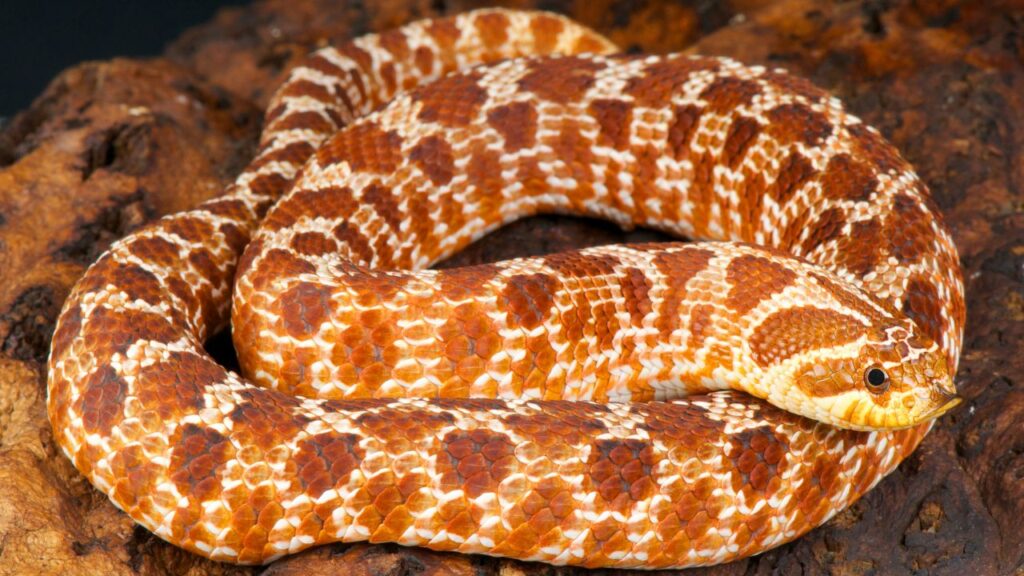
Meet the Eastern hognose snake, a reptilian thespian that could teach Hollywood a thing or two about drama. When it feels threatened, it doesn’t just hiss—it transforms into a tiny, scaly cobra. Neck flared, head raised high, and a menacing hiss, it looks like it means business… until it doesn’t, Wikipedia noted.
This snake has perfected the art of bluffing: it lunges and strikes with its mouth closed, delivering what could be described as a high-speed, “I dare you” head-butt. But the theatrics don’t stop there.
If intimidation fails, our hognose friend goes full-on drama mode—it rolls onto its back, plays dead, and even releases a foul-smelling musk from its cloaca (basically snake stink bombs). Tongue lolling out and eyes half-closed, it’s the snake version of “I’m dead, leave me alone.”
One particularly committed hognose reportedly stayed in this death scene for 45 minutes—that’s longer than some soap opera plotlines! Even water habitats can’t stop its act; the hognose can flop around like it’s auditioning for a dramatic aquatic scene.
It’s hard not to admire a creature that can simultaneously hiss, bluff, and pull off a death act worthy of an Academy Award. If snakes were to enroll in theater school, the eastern hognose would graduate summa cum laude, probably with a minor in “Musk and Flop.”
2. Rattlesnake
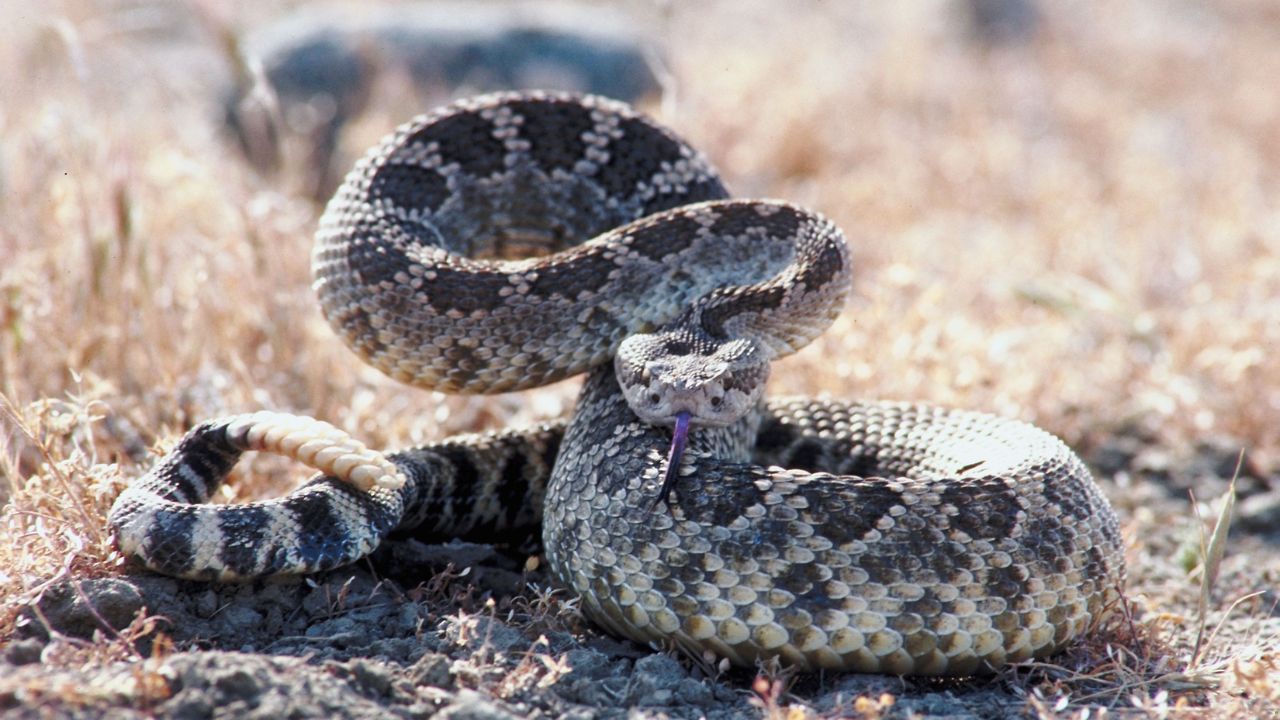
Rattlesnakes are the original multitaskers of the snake world: part stealthy hunter, part defensive tactician. Their secret weapon? That unmistakable rattle, which says, “Back off, buddy!” But there’s more to their defensive repertoire than just making noise.
When a rattlesnake detects a predator, like a kingsnake, it doesn’t just strike blindly. Using its finely tuned senses (thanks to an amazing ability to smell), it identifies danger and enacts a clever maneuver called “body bridging.” Think of it like snake yoga, but with higher stakes.
Instead of standing tall and coiled like a classic strike pose, the rattlesnake keeps its head low to the ground, making it harder for predators to grab the most vulnerable part—the head. It’s like saying, “You can’t eat me if you can’t reach me!”
Environmental factors also play a role: being ectotherms, rattlesnakes’ alertness and reaction times are influenced by the temperature around them. So a chilly morning might see them moving a bit slower, while a warm afternoon could turn them into highly efficient, rattle-shaking defensive ninjas.
The rattlesnake may look intimidating, but it’s really a thoughtful strategist, combining smarts, stealth, and a touch of theatrics to stay safe—without ever needing a Hollywood stunt double.
3. Spitting Cobra

Meet the spitting cobra, the snake world’s answer to a paintball pro—but with a much nastier twist. Found across parts of Asia and Africa, these cobras have a defensive behavior that is as dramatic as it is effective: they can literally spit venom.
And no, it’s not just a random spray—they aim for the face and eyes of their would-be attackers, hitting targets up to 3 meters (10 feet) away. That’s like the snake equivalent of sniping from across a small room.
Britannica says this venom isn’t just a mild inconvenience; it contains a high dose of phospholipase-A2, a toxin that causes searing pain and can even damage ocular membranes. In other words, get in their face, and you could end up with more than a black eye—you might get permanent blindness. It’s a serious way of saying, “Back off, or else!”
Interestingly, while spitting cobras often raise their heads in that classic, intimidating cobra posture, they can spit from just about any position, making them versatile little defenders.
Scientists believe this specialized adaptation evolved specifically to keep predators at a safe distance—no biting required. It’s like they’re saying, “I don’t need to fight you up close; I’ll make you regret even thinking about it.”
With their pinpoint accuracy, dramatic postures, and venom that packs a serious punch, spitting cobras have turned self-defense into an art form. They’re the sharpshooters of the snake world—minus the cowboy hats.
4. Bullsnake
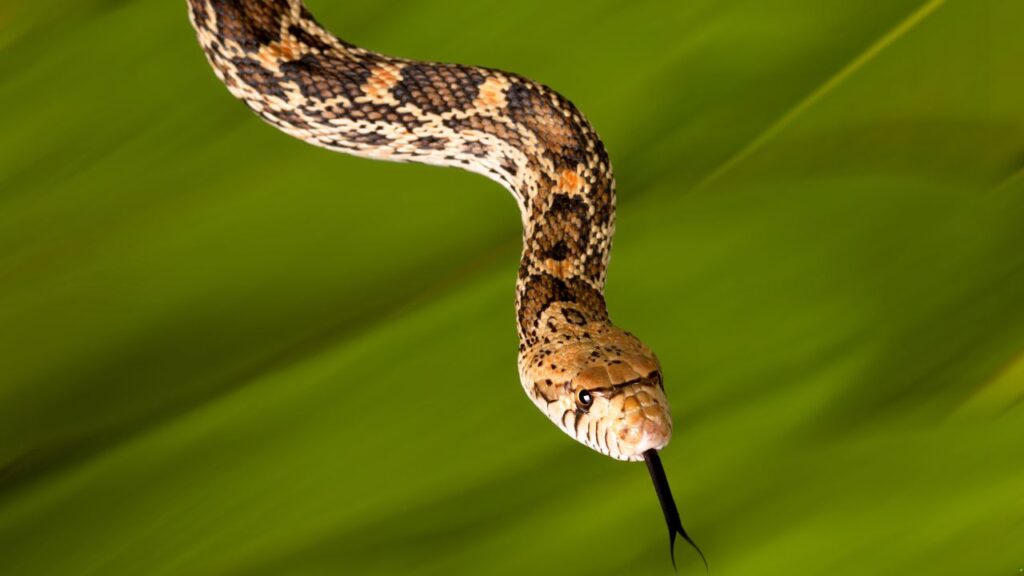
Say hello to the bullsnake, a master of theatrics and one of the most vocal snakes you’ll ever meet. Named for the deep, rumbling hiss that can easily be mistaken for a bellowing bull, this non-venomous snake has perfected the art of bluffing its way out of trouble.
When a bullsnake spots something too big to eat—like a human—it first tries the classic “stay invisible” move: freezing in place, hoping the perceived predator won’t notice. If that fails, it attempts a tactical retreat.
But here’s the catch: bullsnakes aren’t exactly speed demons. So when escaping isn’t an option, they pull out the big guns. The bullsnake will rear up like a rattlesnake, spread its body to look as large as possible, and rattle its tail against the leaves to create an intimidating soundtrack.
Then comes the dramatic “lunge-and-retreat” routine, a back-and-forth dance that screams, “I’m scary, but I’m also trying to get away!”
It’s all smoke and mirrors, though—bullsnakes are harmless to humans and rarely bite. Yet their combination of sound, size, and movement is enough to convince even the bravest predator that they’re not to be messed with.
Think of the bullsnake as the snake world’s version of a professional actor: it can intimidate, entertain, and escape all in one performance.
5. Puff Adder
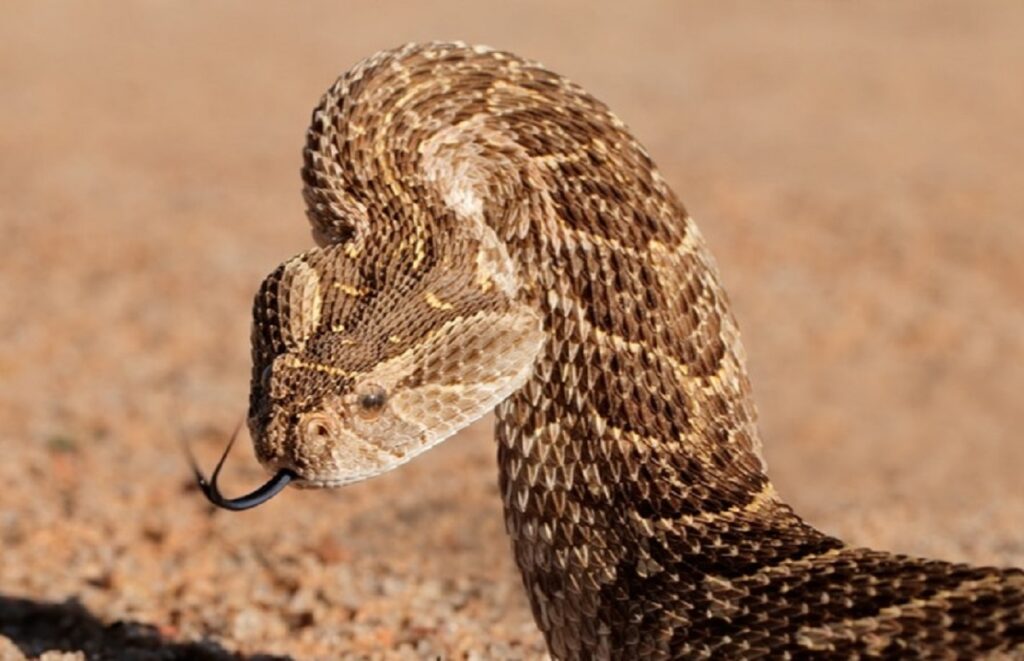
Meet the puff adder, a snake that proves you don’t need speed to make a big impression. Found across much of Africa, this snake is famous for its dramatic “puffing” display—hence the name.
When threatened, the puff adder will inflate its body, hiss loudly, and coil tightly, making itself look far more formidable than it really is. It’s the classic “look how big and scary I am!” tactic, perfect for a snake that prefers avoidance over confrontation.
Unlike the theatrical hognose or the sharpshooting spitting cobra, the puff adder is slow and deliberate. But don’t be fooled by its leisurely pace—this snake is extremely well-armed.
Its venom is potent and fast-acting, so it only strikes when it feels there’s no other choice. In other words, it’s the snake equivalent of a “don’t poke the bear” warning sign: puff up, hiss, and hope the threat backs off.
The puff adder’s defense strategy is a masterclass in intimidation. It doesn’t chase predators; it throws a loud, scaly temper tantrum and relies on the drama to keep threats at bay. Think of it as the ultimate combination of bouncer and diva: “Step back, or you’ll regret it!”
6. Ball Python
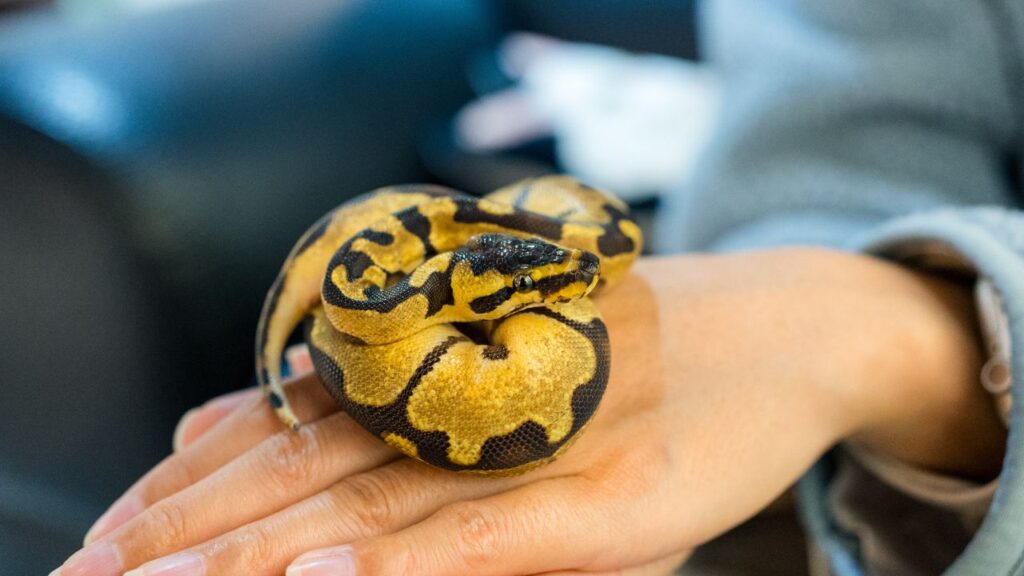
Meet the ball python, the introverted ninja of the snake kingdom. Unlike the flamboyant bullsnake or the theatrical puff adder, this snake takes a more subtle—and surprisingly clever—approach to danger. When it senses a threat, the ball python doesn’t hiss, strike, or lunge.
Nope. It curls up into a tight, secure ball, tucking its head safely in the center like it’s hiding in a fluffy snake blanket. Think of it as the ultimate “do not disturb” signal.
This curling-up strategy is deceptively effective. By protecting its most vulnerable part—the head—the ball python makes it almost impossible for a predator to land a damaging bite. And while it may look like a simple defensive move, it’s also energy-efficient: the snake doesn’t waste itself on unnecessary aggression, conserving energy until the danger passes.
Ball pythons are also masters of patience. They’ll often remain coiled for long periods, silently waiting for the predator to lose interest. In the wild, this makes them surprisingly hard to harm, as they rely on camouflage, stillness, and the element of surprise.
You could say the ball python is the introverted cousin at a wild party. While others are hissing, rattling, or spitting venom to get attention, the ball python quietly curls up in the corner, confident that staying calm and out of the way is the smartest strategy.
It’s a perfect reminder that sometimes, the best defense really is knowing when to keep your head down—literally!
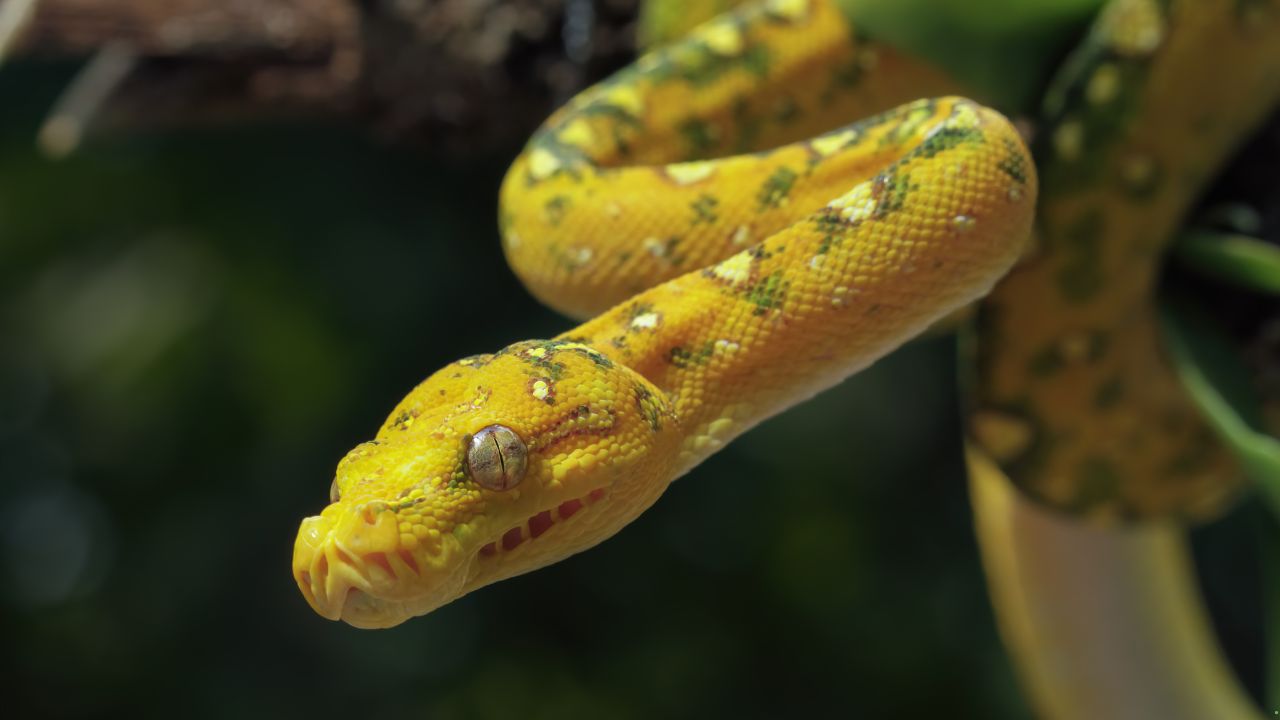
7. Green Tree Python
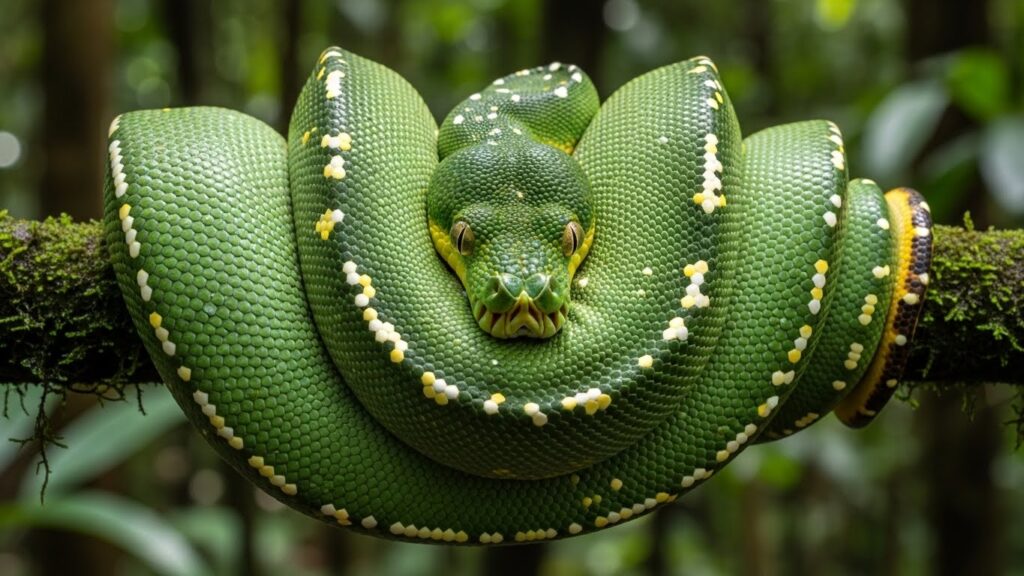
Meet the green tree python, the jungle’s own emerald acrobat. Unlike snakes that hiss, rattle, or play dead, this snake’s defense is all about camouflage, patience, and perfect positioning.
Draped elegantly over a branch, it blends seamlessly with the vibrant green leaves of its rainforest home, making it nearly invisible to predators. It’s like a master of hide-and-seek—except it’s always winning.
When threatened, the green tree python doesn’t panic. Instead, it relies on stealth and precision. It often remains motionless for hours, waiting for the predator to move on—or for prey to wander too close. And if it must act, it can deliver a quick strike, coiling and latching onto its target with surprising speed.
Its defensive posture often involves hanging in loops from a branch, head tucked in the middle, which both protects the head and gives it a perfect springboard for a strike if necessary.
In a way, the green tree python is the “silent, elegant ninja” of the snake world. No loud warnings, no dramatic hissing or spitting—just calm, strategic brilliance. Its bright green color, prehensile tail, and patient ambush tactics make it a snake that relies more on brains and stealth than theatrics or brute force.
It’s proof that sometimes, the best defense isn’t about showing off—it’s about disappearing into plain sight and letting nature do the heavy lifting. If snakes had a “stealth mode,” the green tree python would wear it like a crown.
Conclusion
Snakes that use interesting methods to defend themselves showcase the incredible diversity and adaptability of most snakes in avoiding potential predators. Many species employ Batesian mimicry, with coral snake mimics adopting colouration and patterns of venomous snakes to deter potential threats and scare animals such as birds. Others display defensive behaviour like tail rattling, moving the tail rapidly to produce a rattling sound or a loud hiss, allowing them to avoid detection or signal strength and readiness to attack if necessary.
By blending into dry leaves or adjusting behavior based on the presence of threats, snakes have adapted through evolution to use methods capable of enhancing survival. Their strategies are designed to enhance awareness of predators, measure risk, and respond quickly, demonstrating how these fascinating reptiles combine mimicry, deception, and intimidation to defend themselves effectively in the wild.
