




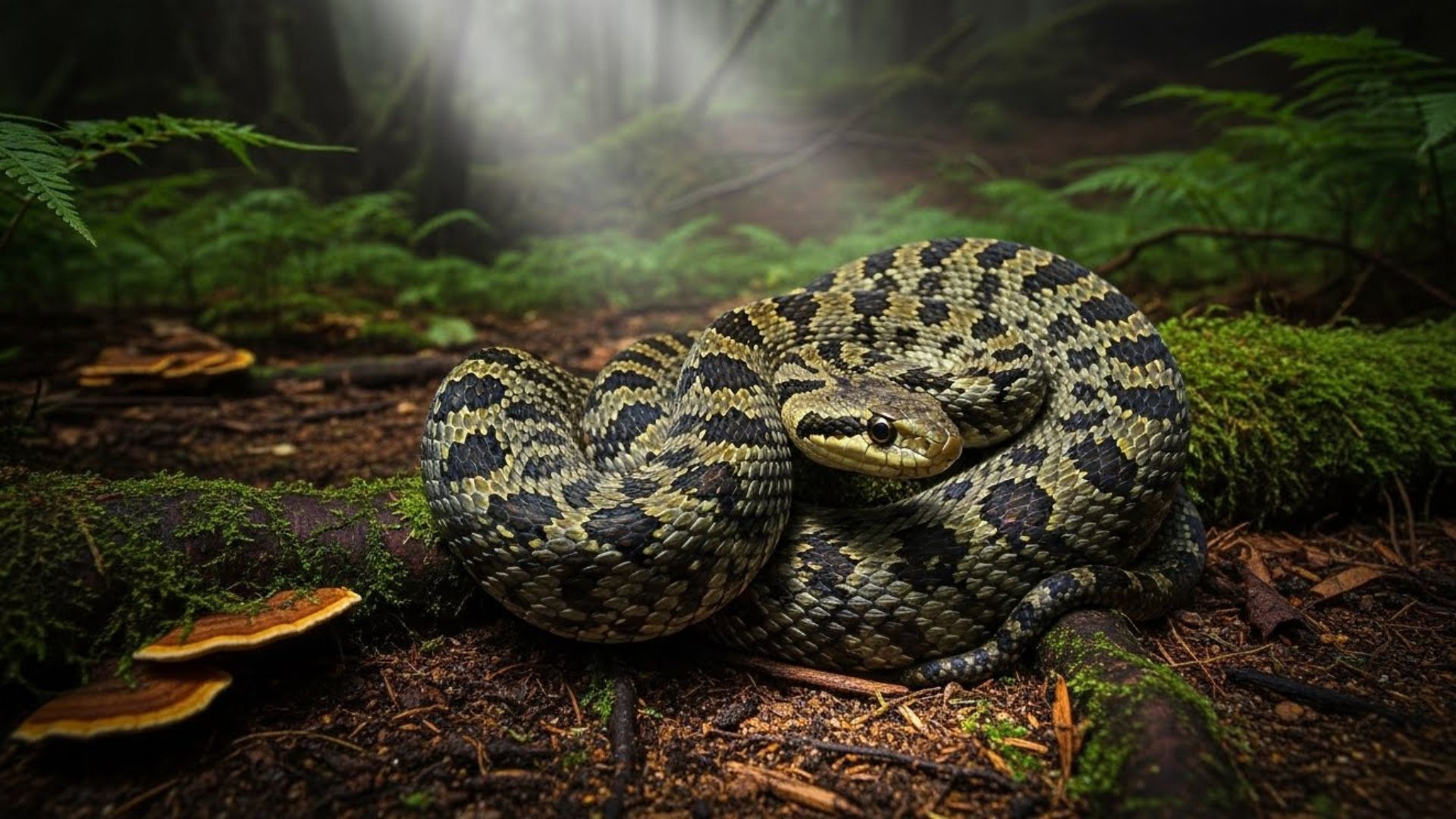
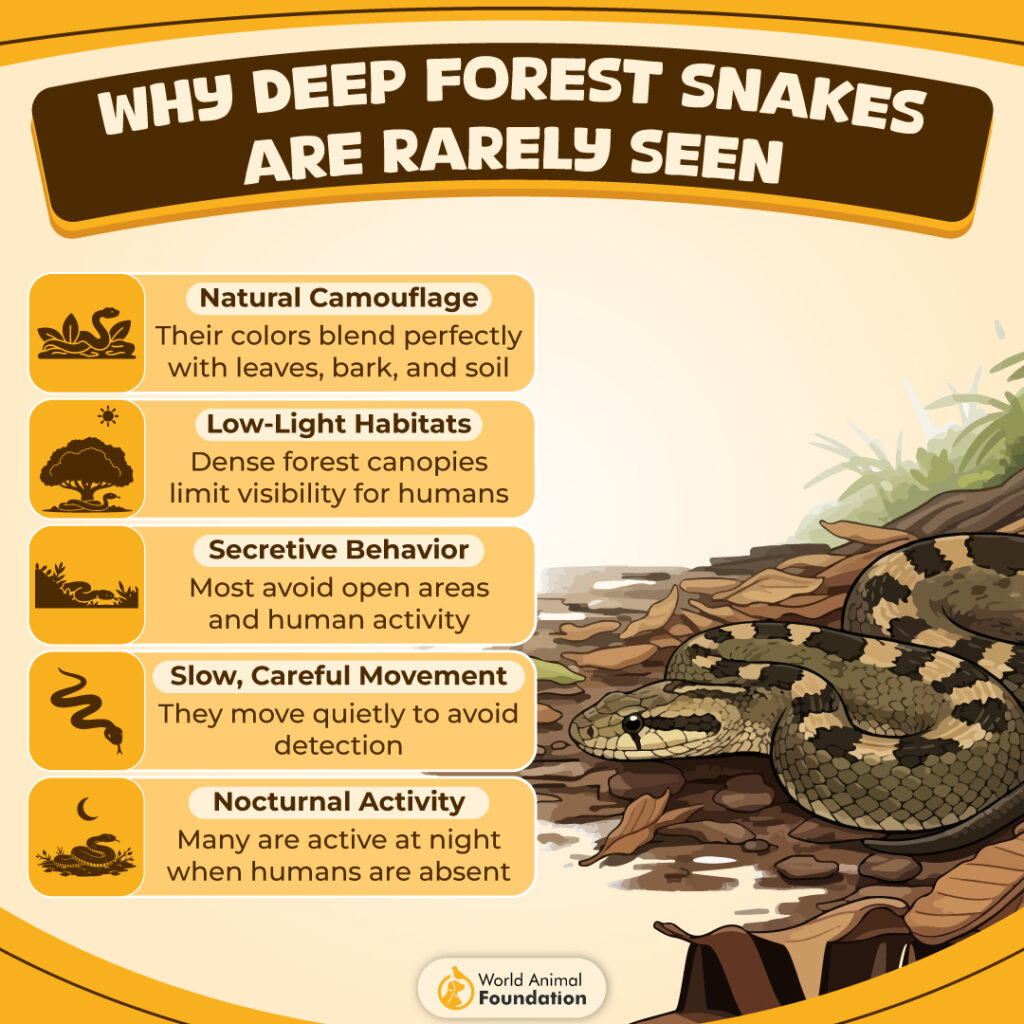
Deep within the heart of the world’s forests—where sunlight barely touches the ground and silence reigns—live some of the most elusive snakes on Earth. These forest-dwelling serpents are masters of secrecy, thriving in dense vegetation, thick leaf litter, and remote woodland ecosystems rarely disturbed by humans.
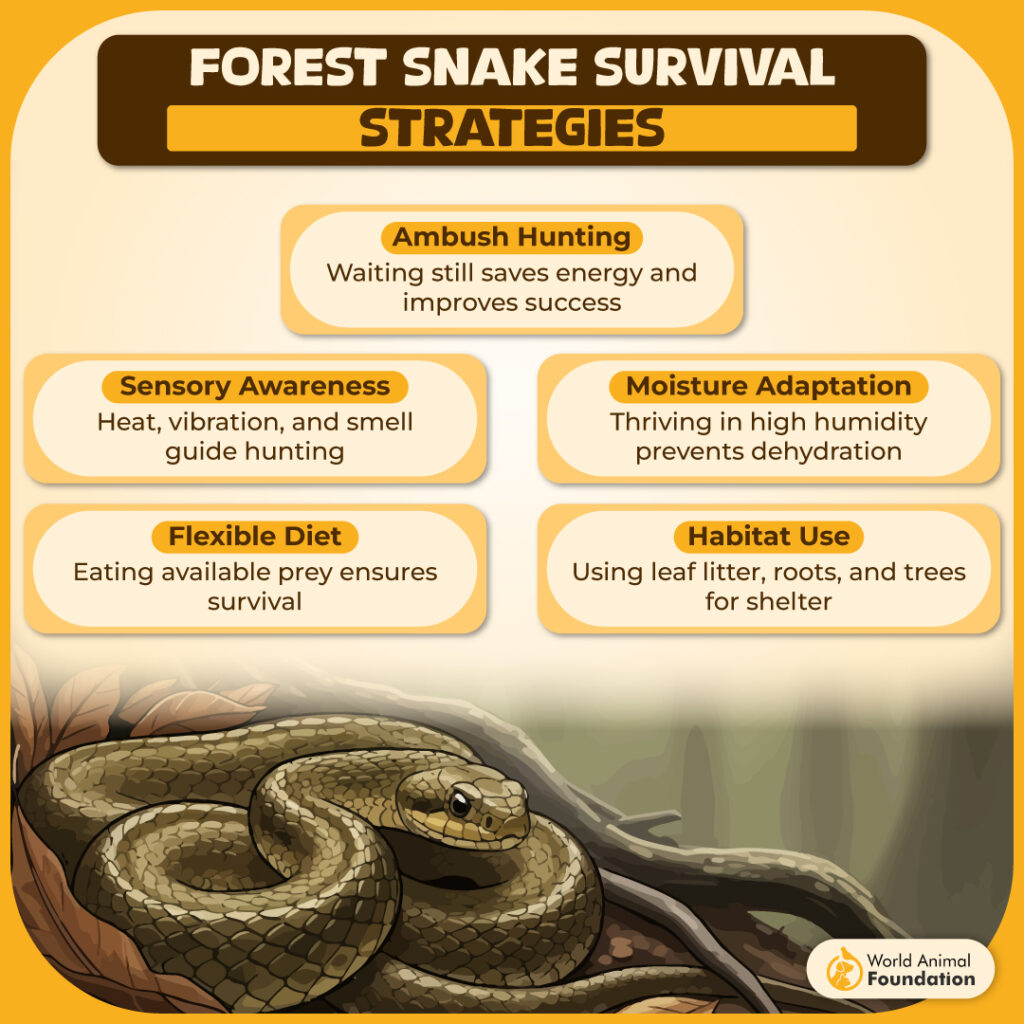
Life deep in the forest is challenging. Limited visibility, high humidity, and dense terrain demand exceptional adaptation. Many of these snakes rely on camouflage, slow and deliberate movement, and heightened sensory awareness to hunt and survive.
Their colors often mirror fallen leaves, tree bark, or mossy ground, allowing them to disappear into their surroundings with ease. We’ll explore snakes that live the deepest in the forest, uncovering how they adapt to low light, heavy cover, and isolated habitats.
From tropical rainforests to ancient temperate woodlands, these snakes play a vital role in maintaining ecological balance while remaining largely unseen. Step quietly—because in the deep forest, survival favors those who know how to stay hidden.
Quick Insight: Deep rainforest floors are home to snakes few people ever see. Species like the bushmaster and green tree python thrive in dense, shadowy jungles, using leaf litter, humidity, and camouflage to remain nearly invisible in some of the world’s most untouched forests.
Snakes That Live the Deepest in the Forest
1. Green Tree Python
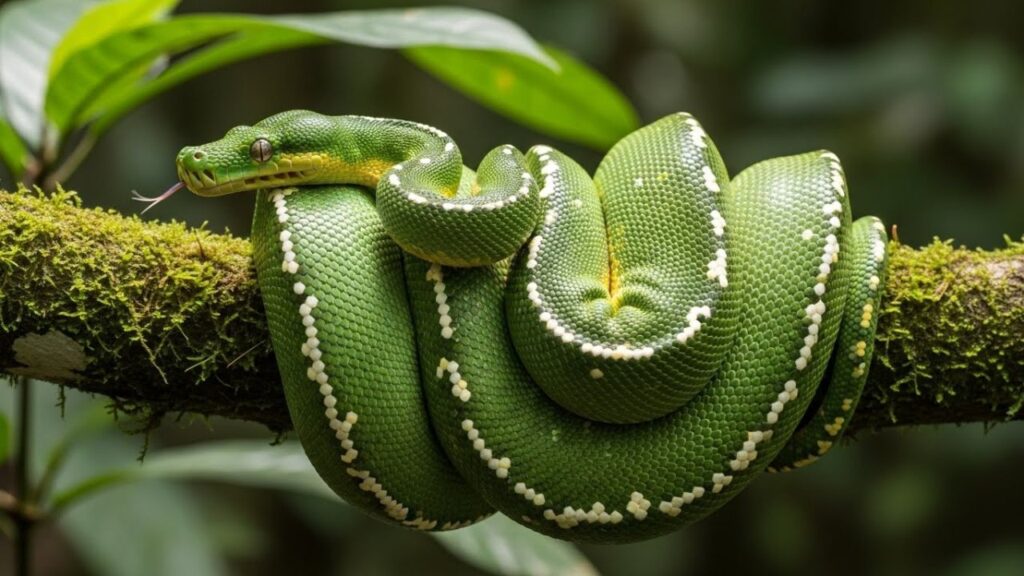
These slinky, lime-green snakes are the ultimate tree-dwellers, hanging out in the rainforests of New Guinea, Indonesia, and parts of Australia, blending in so well with the foliage that even the most seasoned explorer might walk right past them without noticing.
Think of them as the ninja camouflagers of the snake world—minus the stealthy black outfit, of course. Green tree pythons are truly a sight to behold. Their long, elegant bodies drape effortlessly over branches, like living green garlands swaying gently in the breeze.
Their heads are noticeably large, with nostrils that seem to sniff out adventure (or maybe just dinner), and big, round eyes that give them an almost wise, owl-like expression.
Size-wise, these snakes are a tale of “she who eats more grows more.” Females can get impressively long—over six feet—while males tend to be a bit more modest in length. And here’s a fun twist: baby green tree pythons don’t start life blending in with the leaves.
When it comes to their diet, these snakes are not picky. They feast on rodents, small mammals, and lizards like skinks and geckos. Imagine a tiny python brunching on forest delicacies while dangling from a branch—it’s like nature’s own version of a treehouse café.
Next time you wander the rainforest, keep your eyes peeled—you might just spot one of these green wonders, silently judging your choice of hiking boots from above.
2. Emerald Tree Boa
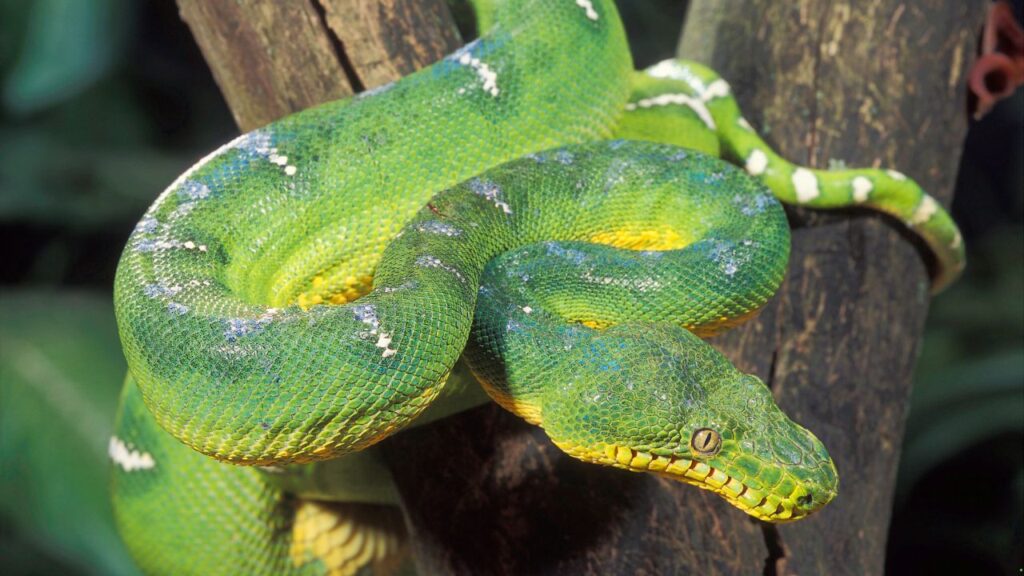
Meet the emerald tree boa, a true showstopper of South America’s rainforests. If the green tree python is the forest’s elegant acrobat, the emerald tree boa is the forest’s glamorous fashion icon, draped in emerald green with a striking pattern of jagged white “lightning bolts” running down its back.
Seriously, if snakes had Instagram, this one would be racking up likes for its outfit alone. As per Wikipedia, these boas call the rainforests of northern Colombia, Brazil, Venezuela, Suriname, and the Guianas home.
Technically, they live in what scientists call the Guiana Shield, but let’s be honest—that sounds like the perfect place for a snake to just lounge in style without interruptions. Their bellies are sunny yellow, adding a splash of color to their already dramatic ensemble—like they were made to be the stars of a rainforest runway.
Fun fact: Since 2009, scientists realized that not all emerald tree boas are created equal. Some belong to a newly distinguished species called Corallus batesii, making this forest fashionista even more exclusive.
With a body built for stealth and a look designed to stun, the emerald tree boa isn’t just any snake—it’s a living, breathing piece of rainforest art, silently watching the jungle from above as it waits for its next snack.
3. Gaboon Viper
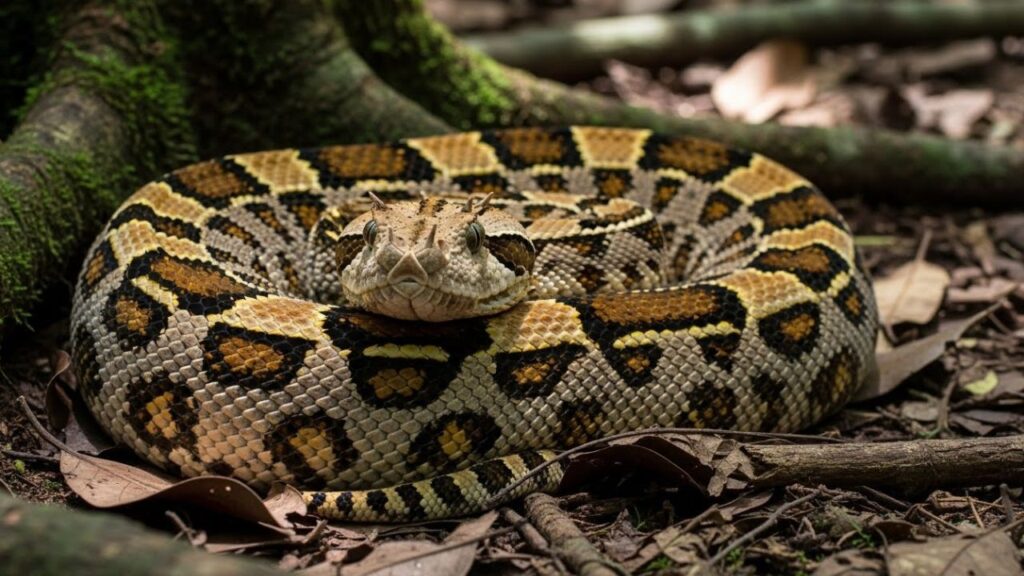
Say hello to the Gaboon viper, the rainforest’s ultimate master of disguise. These snakes are like the tank of the forest, sporting a broad, hefty body covered in intricate patterns that make them nearly invisible among fallen leaves. Seriously, if there were a camouflage contest in the jungle, the Gaboon viper would win every time.
Native to West and Central African rainforests, these vipers are heavyweights both in size and bite. They can grow over 6 feet long and weigh as much as 20 pounds, making them the heavyweight champions of the snake world.
But don’t let the size fool you—they’re surprisingly patient and quiet. Gaboon vipers are ambush predators, lying in wait for unsuspecting prey like rodents, birds, or even monkeys, then striking with lightning speed.
And yes, their fangs are impressively long—some of the longest of any snake, reaching up to 2 inches! Enough to make any jungle critter think twice.
Their patterns are a masterpiece of natural design: a mix of browns, purples, and golds that break up their outline perfectly. Combine that with a broad, triangular head and stubby tail, and you have a snake that looks like it was designed by a camouflage-obsessed artist.
Despite their fearsome reputation, Gaboon vipers are surprisingly mellow unless provoked. They’re more about stealth and patience than chaos, proving that in the jungle, sometimes the quietest creature is the deadliest.
4. Bushmaster
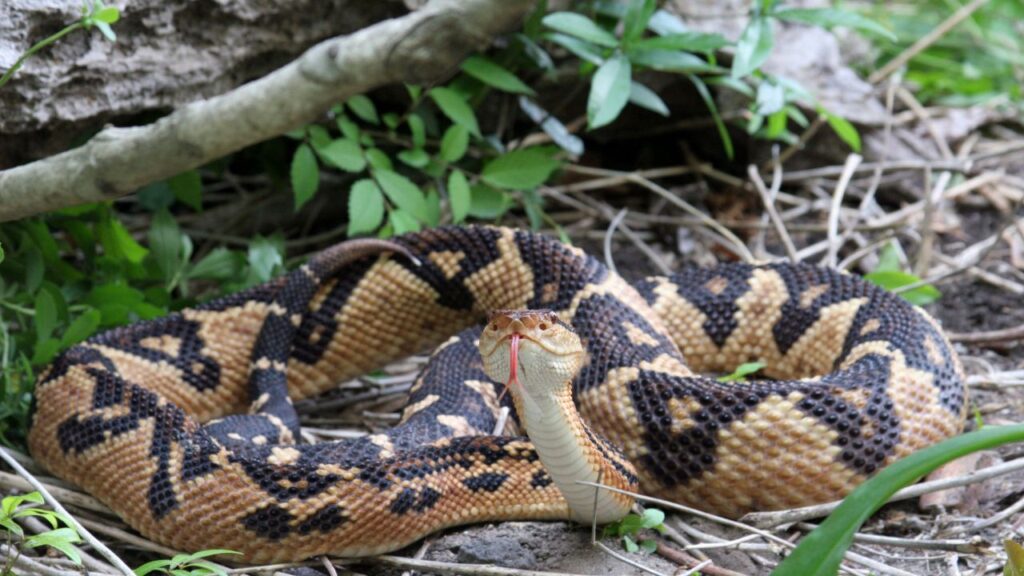
If the rainforest had a sneaky ninja, it would be the Bushmaster. These elusive snakes are rarely seen, which is perfect because they clearly enjoy their privacy.
By day, they hide away in fallen logs, tangled tree roots, or cozy leaf piles, napping like a cat in a sunbeam, Britannica noted. But come dusk, the Bushmaster transforms into a stealthy predator, slithering silently in search of its next meal.
Bushmasters are the ultimate ambush hunters. They glide along small mammal trails, waiting patiently for an unsuspecting rodent to wander too close. Then—bam!—they strike with precision. It’s like watching a forest-themed game of hide-and-seek, only the stakes are a bit higher.
These snakes are large and powerful, and while they’re impressive to behold, their shy nature means you’ll probably never spot one unless you’re extremely lucky (or extremely brave). Their patterns blend perfectly with the forest floor, giving them a cloak of invisibility that would make any magician jealous.
In short, the Bushmaster is a master of stealth and patience, a true forest phantom. Spotting one is like catching a glimpse of a ghost—rare, thrilling, and a little bit intimidating.
5. Asian Vine Snake
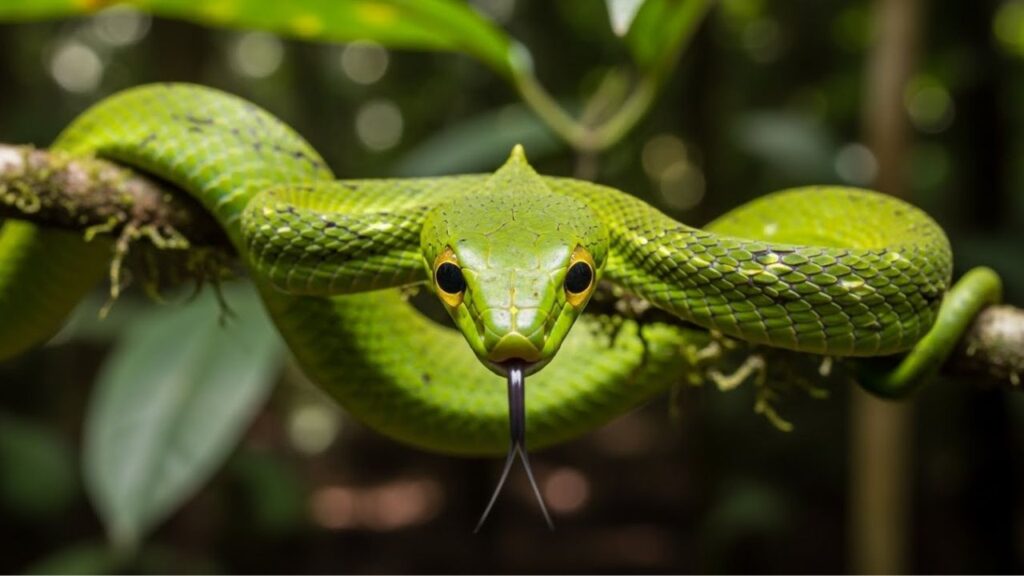
If the rainforest had a gymnast, it would be the Asian vine snake. Long, thin, and incredibly flexible, this snake winds through branches like a green ribbon dancing in the breeze.
Native to South and Southeast Asia, these snakes are the ultimate tree-dwellers, blending seamlessly with vines and foliage so well that spotting one feels like finding a secret treasure hidden in the canopy.
Their signature feature? A pointed, leaf-like head and slender, elongated body that make them look less like a snake and more like a moving part of the forest itself. Add in their piercing eyes and sudden bursts of speed, and you’ve got a creature that’s equal parts stealthy ninja and jungle magician.
Asian vine snakes are predatory perfectionists, feasting mostly on lizards, frogs, and sometimes small birds. They’ll hang in the trees, perfectly still, waiting for prey to wander within striking distance. And thanks to their thin, agile bodies, they can strike with lightning accuracy—like a tiny, green, venom-tipped javelin.
In short, the Asian vine snake is nature’s acrobat, a master of disguise and ambush. If the rainforest had a “most elegant predator” award, this snake would probably take home the trophy without breaking a sweat.
6. Green Mamba
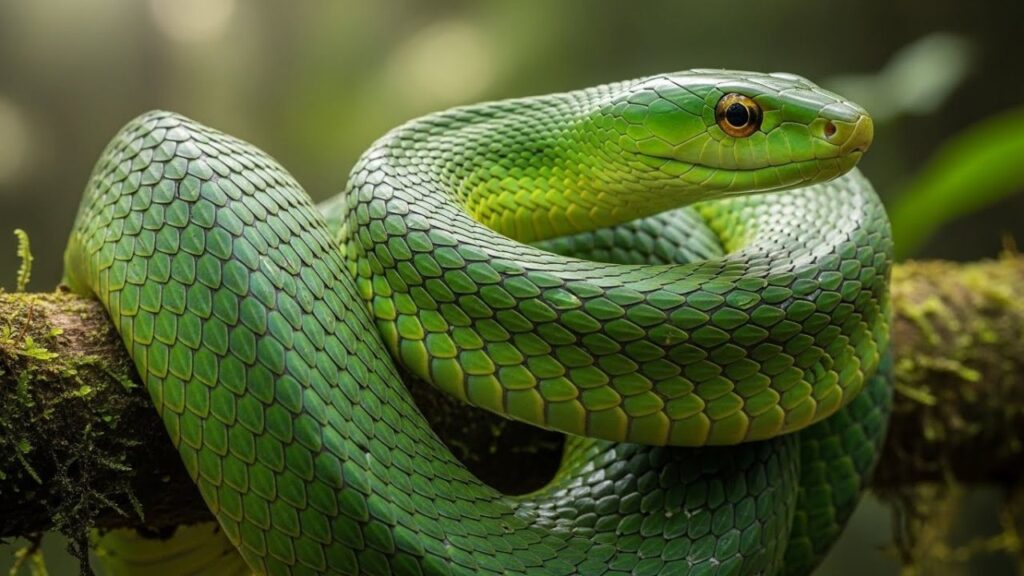
If elegance had a reptilian form, it would be the green mamba. Sleek, slender, and shimmering in a vibrant green, these snakes are like living emeralds threading through the trees of eastern Africa’s lush tropical forests and woodlands.
They’re the rainforest equivalent of a high-fashion model—graceful, striking, and impossible to ignore. But don’t let their beauty fool you. Green mambas are extremely venomous, packing a punch that’s more than capable of taking down prey in a flash.
Yet, they’re surprisingly shy and elusive, rarely crossing paths with humans. Their diet is as versatile as their movements: rodents, birds, bats, and even the occasional bird egg if the opportunity arises. These snakes are the ultimate opportunistic hunters, striking with precision whenever nature offers a buffet.
Perched silently among the branches, the green mamba embodies speed, stealth, and elegance. It’s a master of its arboreal realm, moving through the canopy like a verdant shadow.
In short, the green mamba is both a work of art and a skilled predator, a dazzling emerald thread weaving through the forest, reminding all who see it that beauty and danger often come hand in hand.
7. Mangrove Snake
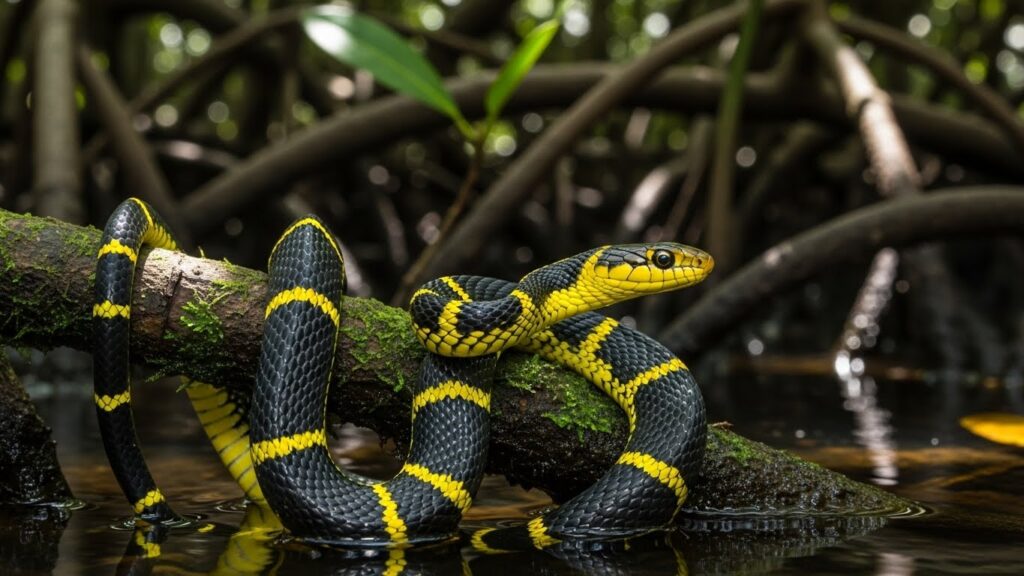
Meet the mangrove snake, a sleek, semi-aquatic snake that feels just as comfortable slithering through water as it does weaving through trees.
Found in the mangrove forests, swamps, and riverbanks of South and Southeast Asia, these snakes are true amphibious artists, gliding effortlessly between branches and waterways like nature’s own tightrope walkers.
Mangrove snakes are mostly olive green or brown, helping them blend perfectly with the dense mangroves and muddy waters they call home. Their slender, elongated bodies make them masters of stealth, whether stalking fish in the water or birds and lizards in the trees.
Opportunistic hunters, they’ll eat just about anything that comes within striking distance, from fish to frogs—and yes, even small mammals if the occasion arises.
Despite their sometimes scary reputation, mangrove snakes are more about precision than aggression. They strike quickly and efficiently, then retreat into the shadows, leaving their prey little chance to escape.
Watching one move through its watery, leafy domain is like seeing a living river snake ballet—a mix of elegance, patience, and deadly skill.
In short, the mangrove snake is the forest-and-water ninja, a flexible, adaptable hunter perfectly at home in the tangled, watery jungles it calls home. Spot one, and you’ve witnessed a masterclass in camouflage and arboreal acrobatics.
8. Coastal Taipan
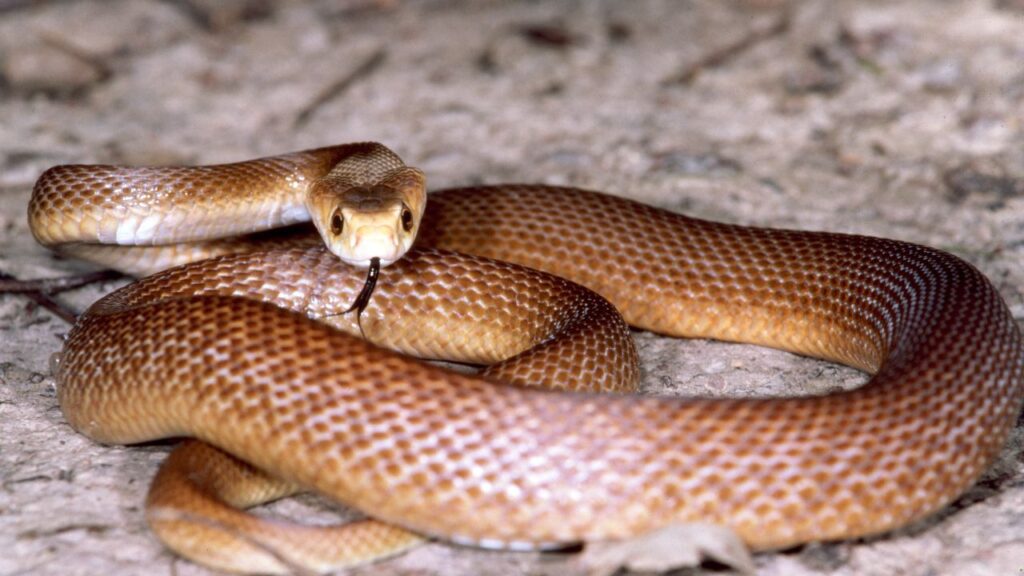
Meet the coastal taipan, one of Australia and New Guinea’s most impressive and efficient predators. These snakes can grow to nearly seven feet long, sleek and muscular, built for speed and precision.
With their uniform brown bodies, pale bellies, and piercing black eyes, they look deceptively simple—but don’t let that fool you. Coastal taipans are nature’s lethal athletes, ready to strike with lightning-fast venom whenever opportunity knocks.
Unlike some rainforest specialists, coastal taipans are adaptable adventurers. They thrive in rainforests, woodlands, and even agricultural areas, slipping quietly through undergrowth or paddocks like stealthy brown shadows.
Their diet is equally versatile, feasting on rodents and small mammals, including bandicoots, making them vital keepers of their ecosystem’s balance.
These snakes are fast, patient, and precise. They’ll stalk quietly until the perfect moment, then strike with deadly accuracy, leaving prey almost no chance to escape. Observing one in the wild is like seeing a master athlete at work—fluid, focused, and incredibly powerful.
Coastal taipan is Australia and New Guinea’s ultimate rainforest sprinter: elegant, efficient, and strikingly formidable. Cross paths with one, and you’ve just met a snake that embodies speed, stealth, and deadly beauty all in one.
9. Reticulated Python
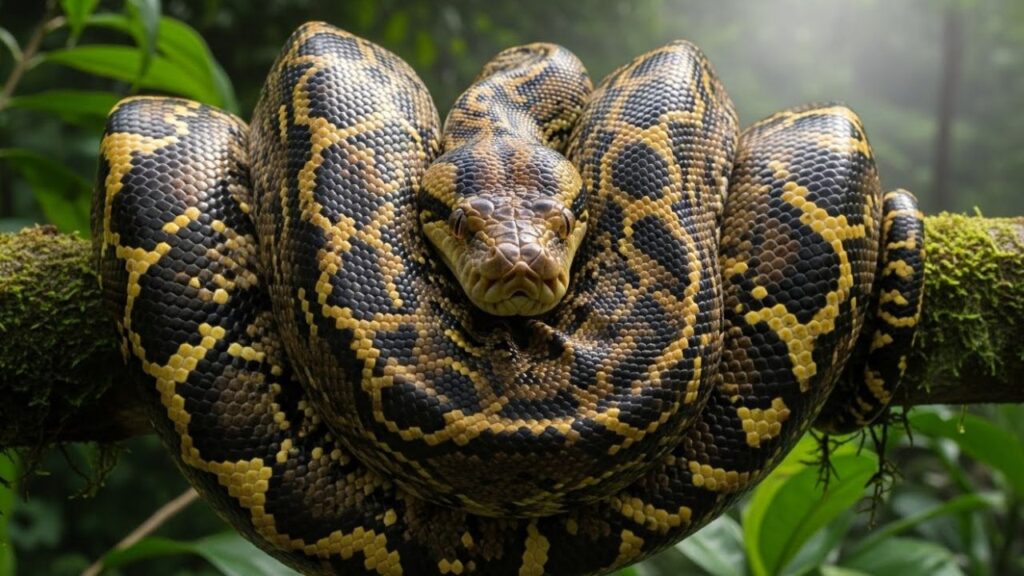
Meet the reticulated python, the world’s longest snake and the third heaviest one. These snakes are true heavyweight champions of the snake world, with adults growing up to 20 feet long and tipping the scales at over 150 pounds. That’s long enough to make most humans feel like tiny twigs in comparison!
Native to the rainforests of South and Southeast Asia, reticulated pythons are ambush predators with impressive appetites. Their diet can include everything from rodents and birds to much larger prey—think deer and feral pigs.
When it comes to dinner, they don’t do things halfway. Their name comes from the intricate, almost geometric reticulated pattern on their scales: a mix of pale white, yellow, light brown, and dark brown that gives them both a stunning appearance and near-perfect camouflage among the forest floor and tree branches.
They’re like walking (or slithering) pieces of art, blending beauty with raw power. Despite their size, reticulated pythons are surprisingly patient and calculated hunters. They don’t rush; they wait for the perfect moment, coil, and then strike with crushing strength, demonstrating that in the jungle, strategy often beats speed.
In short, the reticulated python is a rainforest superstar—a mix of elegance, brute strength, and jaw-dropping size. Spotting one in the wild is a humbling experience, reminding us just how incredible the rainforest’s slithery residents can be.
Conclusion
Snakes that live the deepest in the forest include some of the largest snakes in the world, such as Green Anaconda (Eunectes murinus), Yellow Anaconda, Burmese Pythons (Python bivittatus), Indian Python (Python molurus), Python Sebae, Scrub Python, Amethystine Python, African Rock Pythons, and Malayopython reticulatus. These non-venomous giants are top predators in tropical regions, central and South America, the Indian subcontinent, Southeast Asia, and Sub-Saharan Africa, where they ambush prey along the water’s edge, in gopher tortoise burrows, or amidst dense, diverse environments.
With a muscular body, impressive lengths, and sometimes an iridescent sheen, they can reach impressive lengths, making them the heaviest snakes or biggest snakes in the natural environment. While venomous species like King Cobra, Eastern Indigo Snakes, or Eastern Diamondback Rattlesnakes coexist, these deep-forest giants often vary widely in habitat use, crossing roads, interacting with other wildlife, or avoiding potential predators. From modern times to millions of years ago, these snakes, including anaconda eunectes and boa constrictors, remain captured in research, officially measured, and celebrated for their role as apex predators, demonstrating how most snakes thrive in the deepest forest.
Deep Forest Snakes: Can You Score 5/5? 🐍🌿
Which snake is known for its bright green color and tree-dwelling life?
Which forest snake is famous for its lightning bolt patterns?
Which snake has the longest fangs among all snakes?
Which snake is considered the longest snake in the world?
Which snake blends in by resembling vines and thin branches?
