




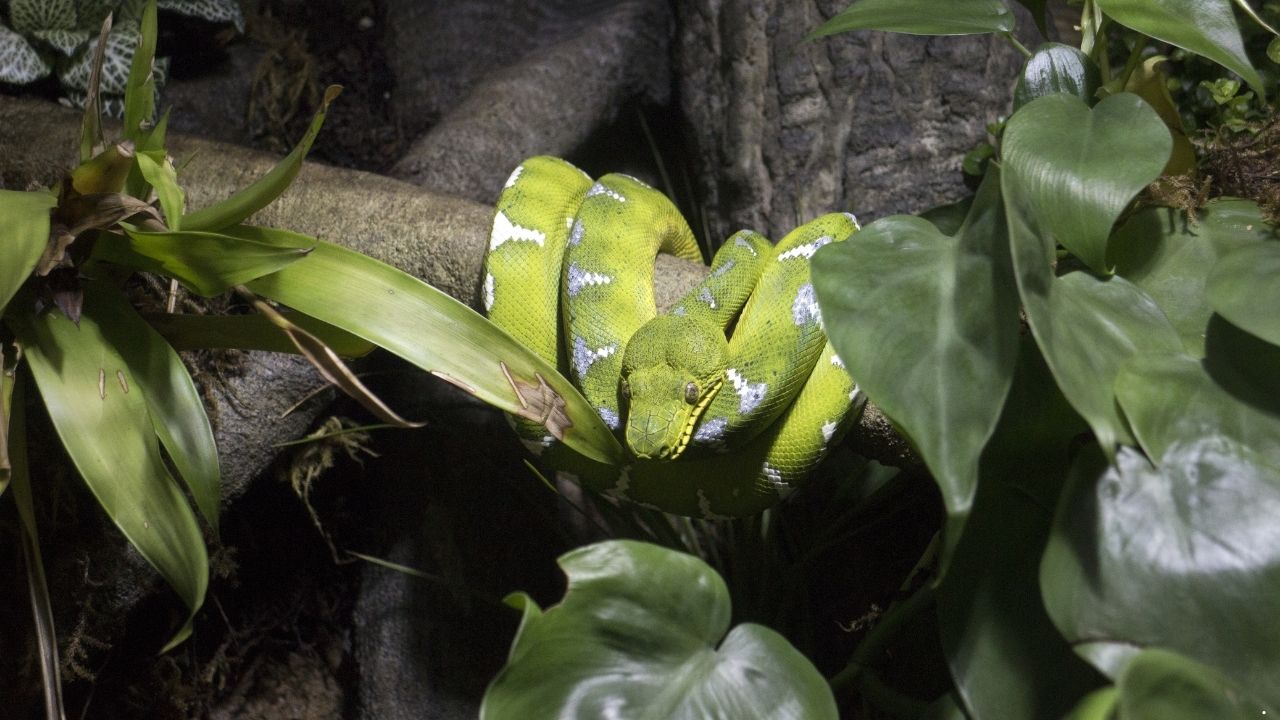
Far beyond hiking trails and forest edges lies a hidden world where sunlight barely touches the ground. In these shadowy depths live some of the most secretive snakes on Earth.
Snakes that inhabit the deepest parts of the forest are masters of camouflage and silence, perfectly adapted to life among thick vegetation, fallen leaves, and towering trees. These snakes rarely encounter humans.
Instead, they rely on patience, stealth, and finely tuned senses to survive in environments dense with life—and danger. Many have earthy colors that blend seamlessly into bark and leaf litter, while others move slowly and deliberately to avoid detection. The forest floor offers both protection and opportunity, providing abundant prey and natural cover.
Here, we’ll explore snakes that thrive deep within forest ecosystems, uncovering how they hunt, hide, and survive in some of the planet’s most complex habitats. These forest dwellers remind us that the deepest wilderness still holds mysteries waiting quietly beneath the canopy.
Fact: Deep, untouched forests hide some of the world’s most elusive snakes. Species like the bushmaster and emerald tree boa thrive beneath dense canopies, relying on humidity, camouflage, and isolation to survive far from human reach.
7 Snakes That Live in the Deepest Parts of the Forest
1. Green Tree Python
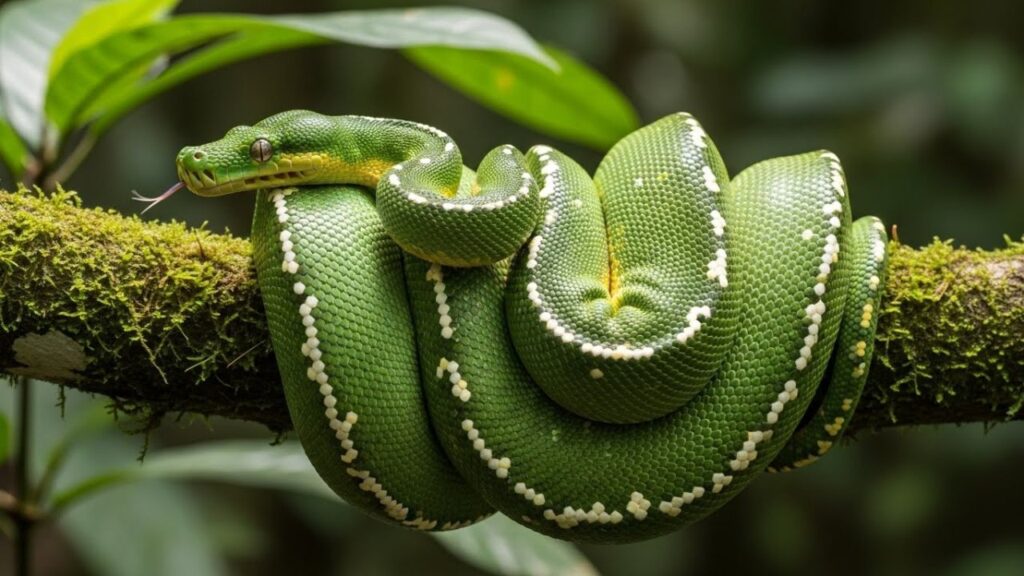
If the deepest parts of the rainforest had a fashion icon, the Green Tree Python would absolutely be strutting the canopy runway. Draped in shades of neon green, lime, and sometimes sprinkled with little white or yellow “sparkles,” this snake looks less like an animal and more like a very confident jungle accessory.
Found high up in the dense rainforests of New Guinea, Indonesia, and northern Australia, the Green Tree Python is a true forest aristocrat. It spends most of its life wrapped around branches in a perfectly coiled pose that screams, “I meant to do that.” This signature position—often called the “saddle perch”—lets it nap, hunt, and judge you silently all at the same time.
Despite looking like it might whisper ancient forest secrets, this snake is mostly just waiting for dinner. Birds, small mammals, and the occasional unlucky lizard are on the menu. And while it may look calm and decorative, don’t be fooled—this python has lightning-fast reflexes. Blink, and your snack privileges are revoked.
Personality-wise, Green Tree Pythons are a bit like that mysterious neighbor who doesn’t attend parties. They’re not venomous, but they are known for being… let’s say enthusiastic about personal space.
Handle with care—or better yet, admire from a respectful distance while whispering compliments about their color coordination.
Fun fact to impress your friends: baby Green Tree Pythons are yellow or red when they hatch and turn green as they grow up. It’s basically a glow-up montage, rainforest edition.
2. Bushmaster
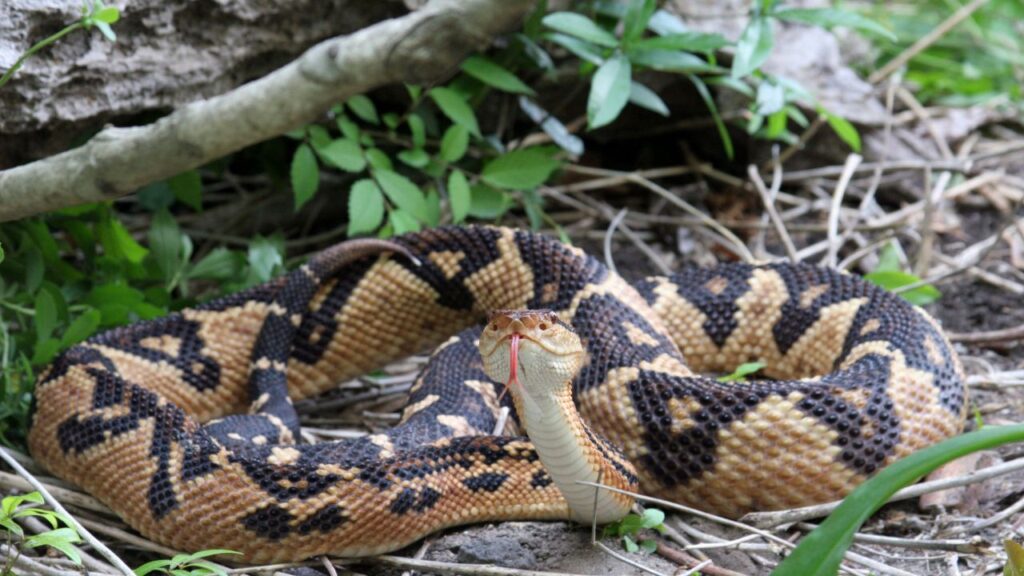
If the deep forest had a “do not disturb” sign slithering around on its own, it would be the Bushmaster. Officially known as Lachesis, this snake is the largest venomous snake in the Americas—and yes, it knows it.
Long, muscular, and impressively built, the Bushmaster is less about flashy colors and more about that rugged, “I lift logs” kind of energy. Bushmasters inhabit the dark, humid rainforests of Central and South America, thriving where the canopy is thick, the ground is damp, and humans are thankfully scarce.
These snakes prefer the forest floor, blending in perfectly with fallen leaves and shadows—basically turning themselves into a jump scare with scales. Despite its intimidating size and potent venom, the Bushmaster is surprisingly shy and reclusive.
But don’t mistake silence for softness. When threatened—or accidentally stepped near—the Bushmaster can strike with alarming speed. Think less “warning shot” and more “surprise pop quiz.”
One of the Bushmaster’s most interesting traits is its old-school survival strategy. Unlike most vipers, it lays eggs instead of giving live birth, proving it’s not just big—it’s also a bit traditional. And while it’s often portrayed as a villain of the jungle, the Bushmaster plays an important role in controlling rodent populations, keeping the forest ecosystem in balance.
Its name comes from local legends and languages, and it has inspired equal parts fear and respect among those who share its habitat. Honestly, the Bushmaster isn’t out to get you—it just wants to be left alone to mind its forest business and occasionally remind everyone that the jungle has rules.
3. King Cobra
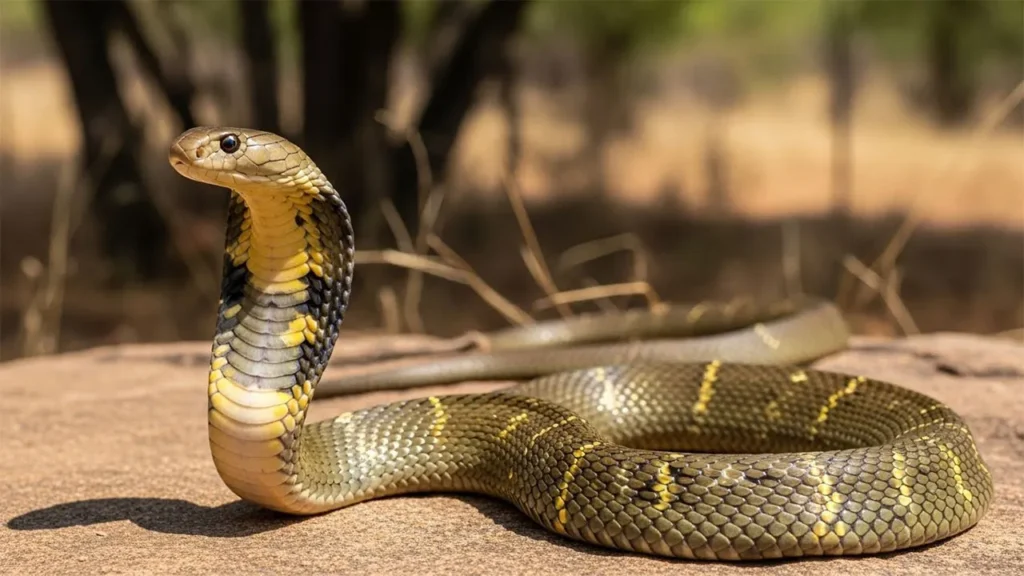
When you hear the name King Cobra, dramatic music should automatically start playing in your head. This is not just any snake—this is the longest venomous snake in the world, a true heavyweight champion of the forest floor and undergrowth.
Stretching up to an impressive 18 feet, the King Cobra doesn’t just enter the jungle… it arrives. Scientifically known as Ophiophagus hannah (which literally means “snake-eater”—talk about honest branding), the King Cobra rules the dense, humid forests of tropical Asia.
From the Terai regions of India and Nepal, across Bangladesh and Bhutan, through Southeast Asia, and all the way to Malaysia, Indonesia, and the Philippines, this snake has serious frequent-forest-flyer miles. It’s comfortable from lowland jungles to elevations of about 2,000 meters, proving it’s not picky—as long as there’s forest and privacy.
Despite its fearsome reputation, the King Cobra is actually more of an introvert than a villain. According to Wikipedia (and the snake’s own behavior), it is not naturally aggressive. In fact, it would much rather avoid humans altogether and quietly slither away like, “Nope, not today.”
However—and this is a big however—if you mess with its nest or eggs, the King Cobra flips the switch from calm forest monk to full royal bodyguard.
When threatened, the King Cobra puts on a legendary performance: it raises the front third of its body, spreads its iconic hood, and stares you down like it’s about to deliver a royal decree. The message is clear: “I don’t want trouble, but I absolutely brought it with me.”
And let’s not forget its venom—powerful enough to bring down large animals, including elephants in rare cases. Yet, despite having all the tools to be a menace, the King Cobra mostly keeps to itself, hunting other snakes and maintaining balance in the forest ecosystem. A terrifying hero? Possibly. A misunderstood monarch? Definitely.
4. Vine Snake
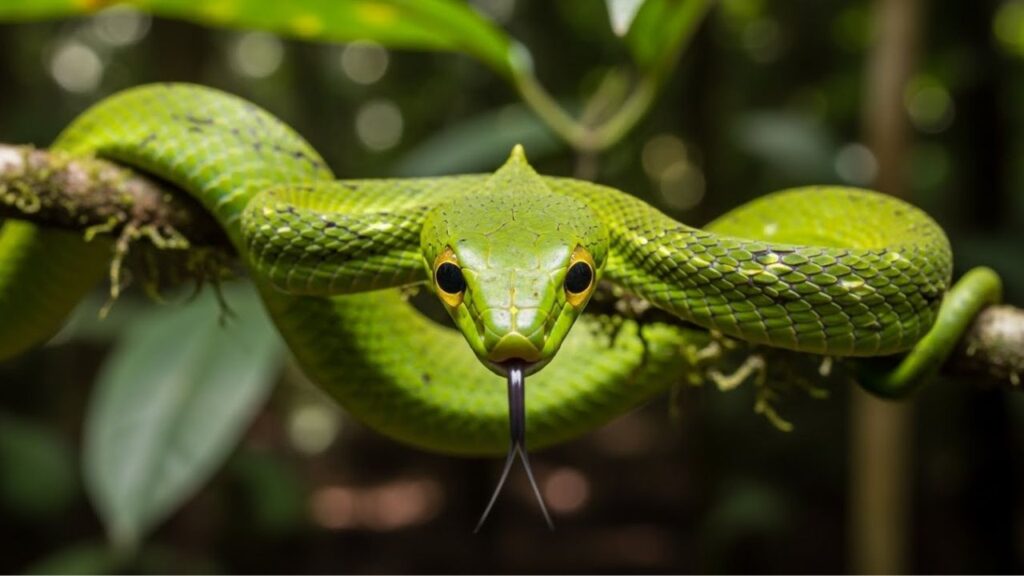
These snakes are the undisputed masters of disguise, so good at blending in that even the forest sometimes loses track of them. Vine snakes aren’t just one single species but a stylish group spread across the world.
In Asia, they belong mainly to the genus Ahaetulla; in the Americas, Oxybelis takes the stage; and in Africa, the dramatic and slightly spooky Thelotornis rules the branches. Africa’s vine snakes are especially diverse, with East Africa being their hotspot—basically a VIP lounge for snakes that like pretending to be plants.
According to Britannica, vine snakes come in two main fashion palettes. Bright green vine snakes thrive in lush rainforests, where looking like a leaf is a full-time job. Meanwhile, gray or brown varieties prefer savannas and dry forests, rocking earthy tones like nature’s minimalist designers. Either way, their goal is the same: don’t be noticed.
Their hunting strategy is straight out of a ninja handbook. Vine snakes rely on camouflage, neck inflation (which makes them look bigger and more intimidating), and venomous fangs to subdue prey. Hanging motionless among branches, they wait patiently for lizards, frogs, or birds to wander just a little too close.
Despite their venom, vine snakes aren’t aggressive and prefer to avoid confrontation. Their first line of defense is invisibility, followed by intimidation, and only then the fangs. Think of them as forest introverts: stylish, quiet, and very serious about personal space.
In the deepest parts of the forest, where vines twist and leaves overlap, the Vine Snake proves that sometimes the best way to survive isn’t strength or speed—it’s pretending you’re just another piece of the scenery.
5. Gaboon Viper
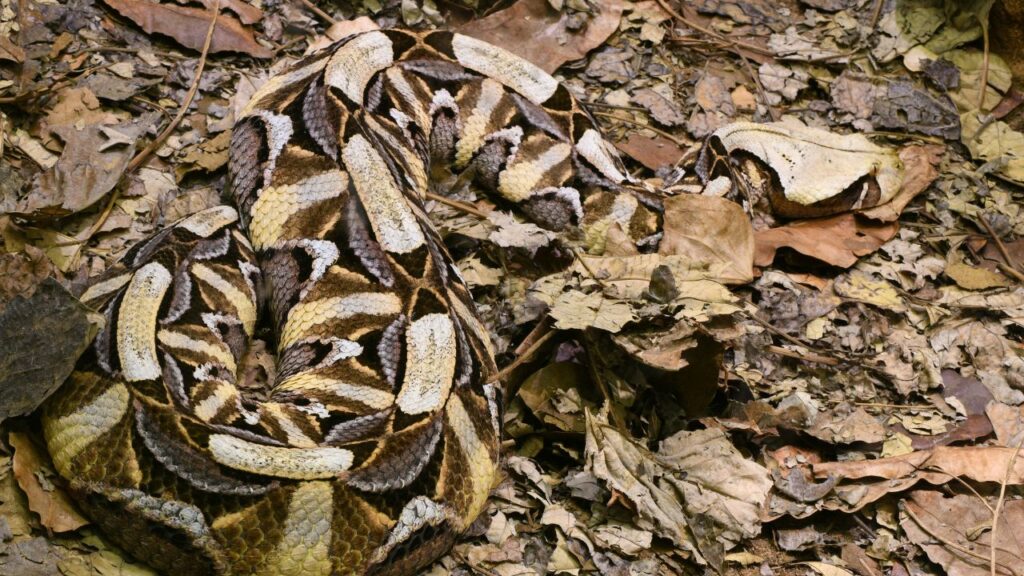
Native to the rainforests and woodlands of sub-Saharan Africa, the Gaboon Viper (Bitis gabonica) is one of the largest and heaviest vipers in the world. It’s not built for speed or drama; it’s built like a tank with excellent taste in camouflage.
Lying motionless on the forest floor, it blends so perfectly into fallen leaves that even experienced hikers might walk right past it—often unaware they just avoided a very serious mistake. What really sets the Gaboon Viper apart (aside from its impressive size) is its fangs—the longest of any venomous snake. Yes, longer than the King Cobra’s.
Nature really said, “Go big or go home.” Combine those fangs with a potent venom, and you get a snake that doesn’t need to chase anything. Prey such as rodents, birds, and even small mammals simply wander close enough… and the forest hits fast-forward.
Despite its fearsome hardware, the Gaboon Viper is surprisingly calm and non-aggressive. It prefers to stay still and avoid confrontation, relying entirely on its invisibility cloak. It won’t hiss, rattle, or make dramatic threats—it just waits. That quiet confidence makes it both fascinating and terrifying, like a villain who doesn’t need a speech.
In the deepest forests, where silence is survival, the Gaboon Viper reigns as a reminder that the most dangerous things don’t always move, roar, or announce themselves. Sometimes, they just look like leaves… until they don’t.
6. Emerald Tree Boa
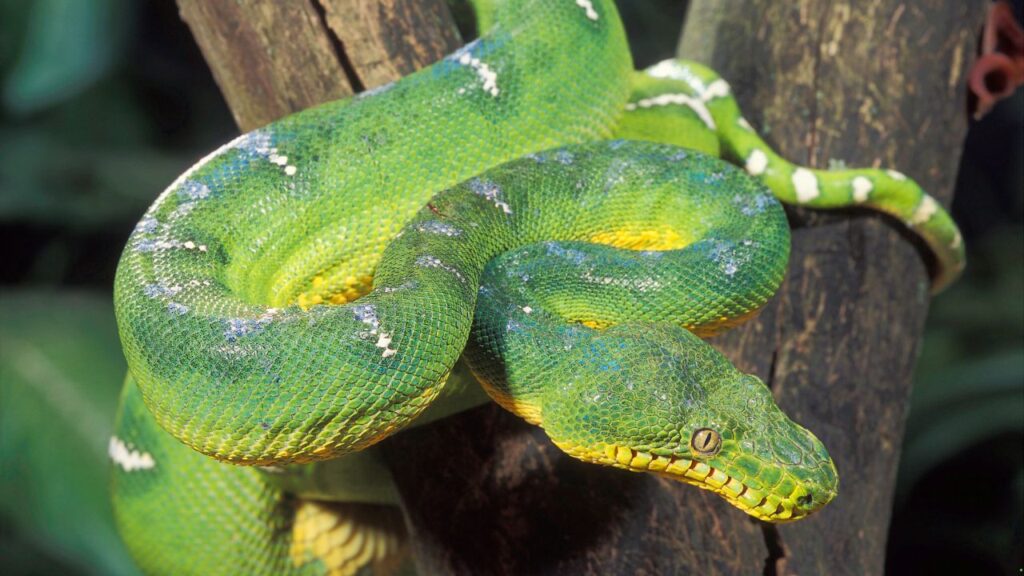
Officially known as Corallus caninus, this snake is famous for its jaw-dropping emerald-green color, often accented with white zigzag or lightning-bolt patterns. Stylish? Absolutely. Approachable? Let’s not get ahead of ourselves.
The Emerald Tree Boa calls the rainforests of South America home, especially across northern Colombia and Brazil, stretching from Venezuela to Suriname and the Guianas in the region known as the Guiana Shield.
There’s also its close cousin, sometimes called the Amazon Basin species (Corallus batesii), which sticks closely to the Amazon River basin—because even snakes appreciate good waterfront property.
This boa is an arboreal specialist, meaning it lives almost entirely in trees. Its favorite position? Perfectly coiled over a branch with its head resting in the middle—like a designer scarf that bites. From this pose, it waits patiently for prey such as birds and small mammals, striking with impressive accuracy when dinner makes a bad life choice.
Unlike some snakes that rely on speed or venom, the Emerald Tree Boa uses pure muscle and confidence. It constricts its prey with strength that says, “Resistance is adorable, but unnecessary.”
While it looks calm and regal, this species is known for being a bit… spicy. It’s not aggressive in the wild, but it does have a reputation for being defensive, especially when disturbed. Translation: admire from a distance unless you enjoy surprise heart attacks.
7. Forest Cobra
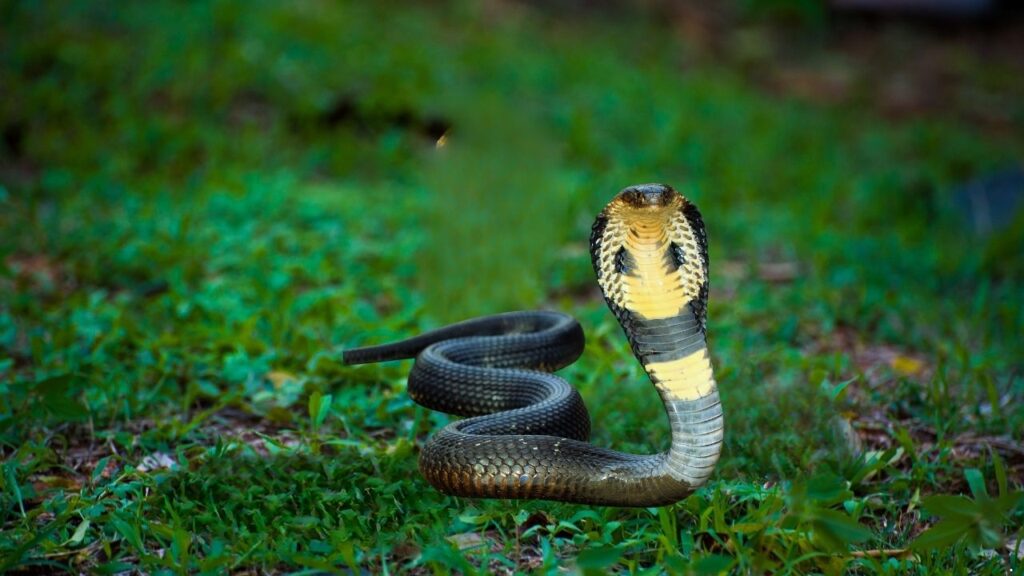
Known scientifically as Naja melanoleuca, this snake is Africa’s largest true cobra—and it wears that title with quiet, intimidating confidence. No loud announcements, no flashy colors—just smooth scales, serious venom, and a presence that says, “You’ve entered my jurisdiction.”
The Forest Cobra thrives in the dense forests of Central and West Africa, especially in humid rainforests, swamp forests, and wooded savannas. Unlike its more famous desert-leaning cobra cousins, this one prefers thick cover, deep shadows, and plenty of escape routes.
It’s equally comfortable slithering through leaf litter, climbing low vegetation, or even taking an unexpected swim—because apparently being scary on land wasn’t enough.
Despite its size and potent venom, the Forest Cobra is not naturally aggressive. It usually avoids humans and slips away when given the chance, proving that even intimidating snakes value peace and quiet. But when cornered? Oh, it absolutely puts on a show—raising its body, spreading its hood, and delivering a warning that feels very final. Think less drama queen, more disciplined martial artist.
The Forest Cobra is an active hunter, feeding on a wide variety of prey including rodents, birds, frogs, fish, and even other snakes. It plays an important role in keeping forest ecosystems balanced, quietly doing its job while everyone else panics about its reputation.
In the deepest forests, where light barely reaches the ground and silence carries weight, the Forest Cobra moves like a living shadow—calm, capable, and very much in control. It doesn’t need a crown; the forest already knows who’s in charge.
Conclusion
Snakes that live in the deepest parts of the forest include many species of snakes ranging from small snakes like garter snakes, eastern ribbonsnake, ring-necked snake, and eastern milk snake, to larger snakes such as the timber rattlesnake (Crotalus horridus), western rattlesnake, eastern copperhead, and northern cottonmouth. These snakes are typically found in forested areas, rock crevices, rock outcrops, grasslands, and even suburban areas, where loose soil, leaf litter, and hiding opportunities help them avoid most predators despite ongoing habitat loss.
Some venomous species, including pit vipers with a triangular-shaped head, heat-sensing pits, and keeled scales, contrast with non-venomous snakes like the gopher snake and brown snakes, which have round pupils, a pointed snout, and slender bodies. Depending on the range, some lay eggs while others live young, and young snakes feed on insects, amphibians and reptiles, or other small mammals. Active during the day or not, these snake species regulate body temperature, snakes eat diverse food, and snakes play vital roles in forest ecosystems—making them among the most common snakes, commonly found across many habitats, with two species or several species often sharing the same forest floor.
