




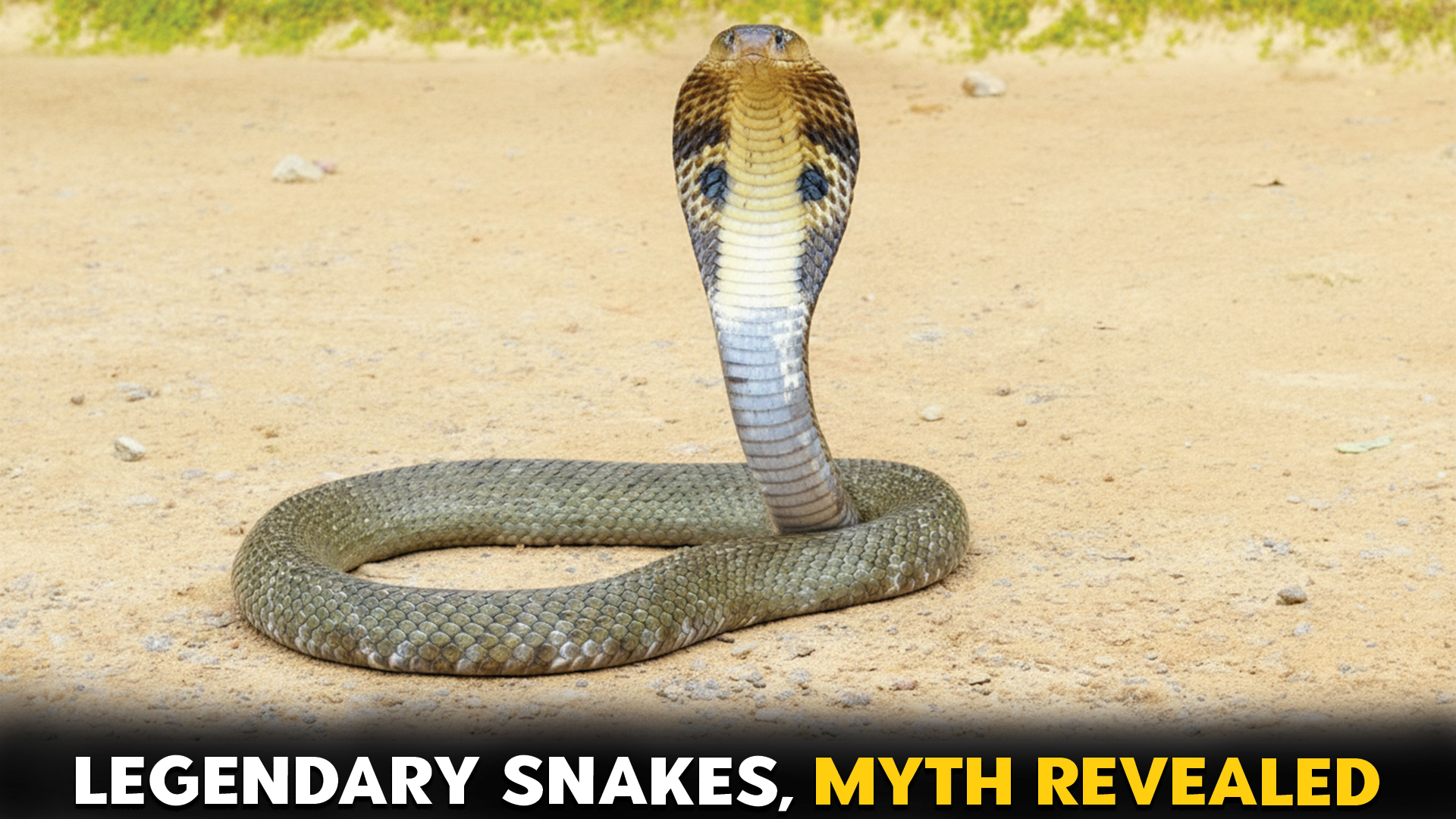
Across civilizations and centuries, snakes have slithered their way into humanity’s myths, legends, and spiritual beliefs. Feared, revered, and deeply symbolic, snakes have played major roles in mythology, often representing power, transformation, wisdom, and danger.
From ancient temples to sacred texts, these reptiles were never just animals—they were symbols woven into the fabric of human storytelling. In some cultures, snakes were seen as creators or protectors, guarding sacred knowledge or life itself.
In others, they embodied chaos, temptation, or destruction. Their ability to shed their skin made them powerful symbols of rebirth and immortality, while their venom inspired both fear and respect.
Today, we’ll explore snakes that have played significant roles in mythology, uncovering the stories, symbolism, and cultural impact behind these legendary creatures. These myths reveal not only how humans viewed snakes but how deeply intertwined they were with our understanding of life, death, and the natural world.
Quick Insight: Across cultures, snakes have symbolized power, rebirth, wisdom, and danger. From the serpent in ancient Greek and Norse myths to sacred snakes in Hindu and Mesoamerican traditions, these reptiles have slithered through legends for thousands of years.
Snakes That Have Played Major Roles in Mythology
1. King Cobra
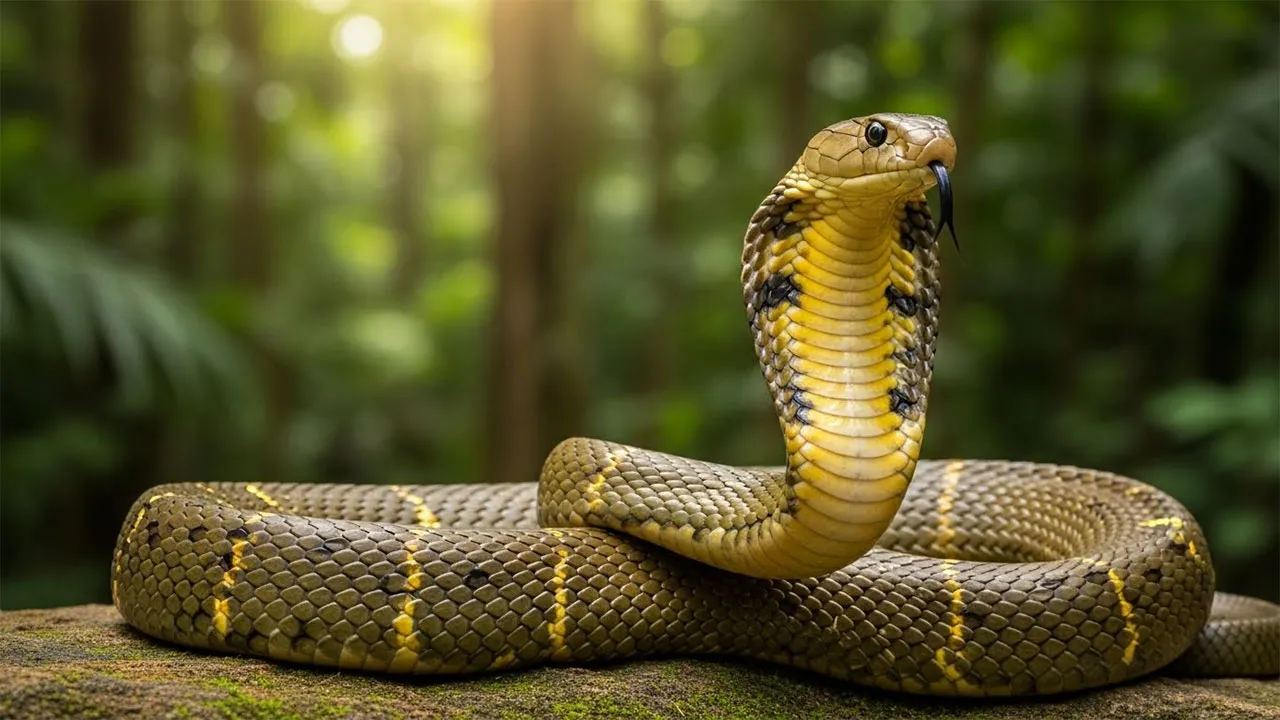
If snakes had a royal family, the King Cobra would absolutely be sitting on the throne—crown polished, hood flared, and everyone else politely backing away.
While the king cobra is a real, living snake (yes, still very much slithering around today), its size, intelligence, and don’t-mess-with-me attitude made it a mythological superstar across Asia long before documentaries and nature channels existed.
In Hindu mythology, cobras are sacred and deeply respected. The king cobra’s image blends seamlessly with divine serpent beings known as Nāgas—powerful snake deities who guard treasure, control rain, and protect the Earth. These aren’t background characters; these are VIP mythological creatures.
Even the gods are fans:
Lord Shiva wears a cobra around his neck like a divine scarf, symbolizing control over fear, death, and ego.
Lord Vishnu reclines on the massive serpent Shesha, floating peacefully on the cosmic ocean—because apparently even gods appreciate a good snake couch.
In folklore, king cobras are often believed to be intelligent guardians of forests and temples, capable of recognizing humans and remembering faces. Some legends even claim they can turn into humans, usually appearing as mysterious figures with suspiciously intense eye contact.
Villagers in parts of India and Southeast Asia traditionally avoided harming king cobras, believing the snake could bring protection—or serious bad luck if offended.
Let’s be honest: part of the king cobra’s mythological fame comes from its venom. It’s powerful enough to kill an elephant (which sounds like a myth but isn’t). This deadly ability linked the snake to themes of death, rebirth, and transformation—classic mythological territory.
2. Indian Python
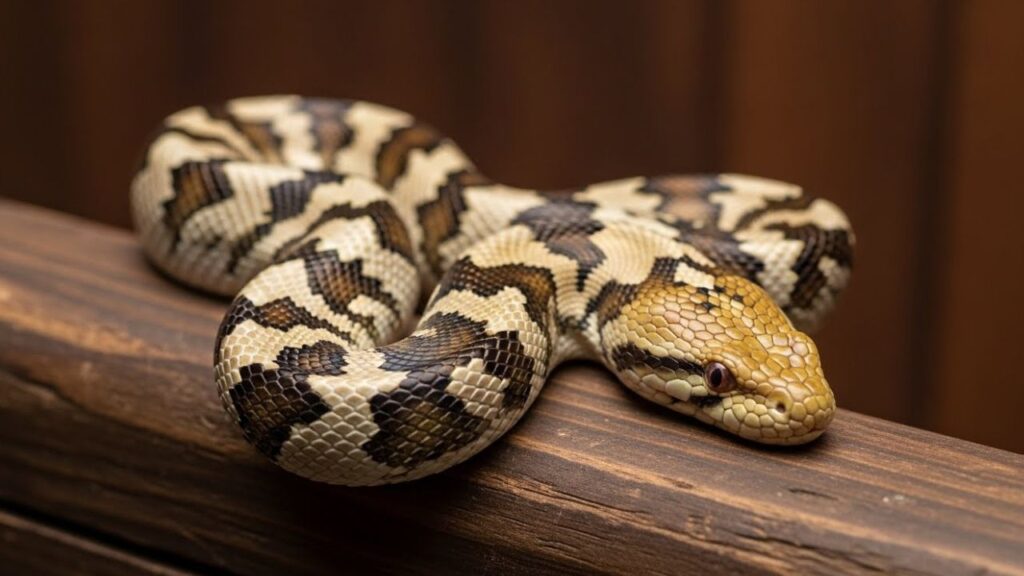
If the King Cobra is royalty, the Indian Python is the ancient sage—quiet, massive, and absolutely unbothered.
Known scientifically as Python molurus, and also called the Indian rock python or black-tailed python, this nonvenomous giant has been stretching its coils across both forests and folklore for centuries.
At an average length of 13 feet, and with some individuals growing beyond 20 feet, the Indian python isn’t just one of the longest snakes in the world—it’s basically a moving myth.
The Indian python inhabits rainforests, grassy marshes, and woodlands across the Indian subcontinent. In ancient times, encountering one wasn’t just a wildlife moment—it was a spiritual experience.
In Indian mythology and folklore, large serpents are often associated with Nāgas, powerful semi-divine beings linked to the earth, water, fertility, and protection. While the Indian python isn’t venomous or divine, its sheer size and calm demeanor made it feel… otherworldly.
Unlike venomous snakes, pythons are constrictors. They kill prey by squeezing—slowly, patiently, and with impressive commitment. In mythic symbolism, this gave the Indian python an association with:
Power through patience
Quiet dominance
Inevitable fate
No flashy venom, no dramatic strike—just a slow hug you really don’t want.
Mythology translation: The Indian python doesn’t rush. It knows time is on its side.
Historically, people both feared and revered the Indian python. Some stories painted it as a guardian of sacred spaces, while others warned travelers to respect the forests it ruled. It became a living reminder of nature’s strength—calm, ancient, and not impressed by human arrogance.
According to Britannica, the Indian python has been extensively exploited for the leather and pet trades. Although laws exist to protect it, poaching remains a major threat.
3. Boa Constrictor
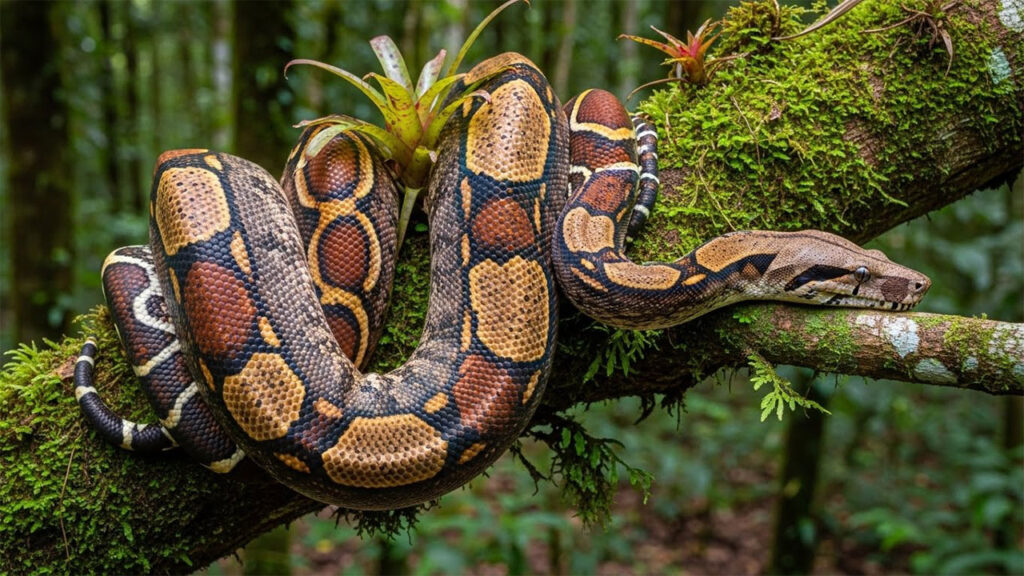
Native to Central and South America, the boa constrictor has slithered its way into the myths and beliefs of Indigenous cultures long before explorers and biologists gave it a scientific name. Big, powerful, and mysteriously calm, this snake was basically born to become a legend.
In the dense jungles of South America, the boa constrictor was often seen as a spiritual guardian of the forest. Indigenous tribes believed large snakes were closely connected to:
The Earth
The underworld
Cycles of life, death, and rebirth
Seeing a boa wasn’t just a wildlife encounter—it was a sign that the jungle was watching you. Closely.
Like the Indian python, the boa constrictor is nonvenomous and relies on constriction. In mythology, this earned it a reputation for:
Controlled power
Patience
Inevitable justice
In some South American traditions, large constrictor snakes are associated with rainbow serpents—ancient creator beings connected to rain, fertility, and rivers. These serpents were believed to shape the land itself, carving rivers as they moved.
Some legends describe boas as shape-shifting spirit beings, capable of appearing as humans or animals. Others believed shamans could spiritually transform into boas, gaining strength, protection, and wisdom from the snake.
It wasn’t worshipped in grand temples—but it was deeply respected. And in mythology, respect is sometimes more powerful than worship.
4. Russell’s Viper

Known scientifically as Daboia russelii, this highly venomous terrestrial snake has earned both fear and respect across South and Southeast Asia. Found from India to Taiwan and Java, Russell’s viper prefers open country—especially farmlands, where humans, rodents, and bad decisions frequently cross paths.
Russell’s viper is one of the leading causes of snakebite deaths in its range. Not because it’s aggressive—but because it lives exactly where people do. Farms, fields, and villages are its chosen stage, and mythology tends to bloom wherever danger and mystery overlap.
Its venom became symbolic of:
Sudden fate
Divine punishment
The thin line between life and death
In folklore, snakes like Russell’s viper weren’t just animals—they were warnings with fangs. This viper grows up to 1.5 meters (5 feet) and is marked with three rows of reddish-brown spots, each outlined in black and white. It’s nature’s way of saying, “Admire from a distance.”
Because Russell’s viper thrives in agricultural areas and controls rodent populations, some traditions viewed it as a reluctant protector of crops. Others saw it as a curse sent by angry spirits or gods.
Russell’s viper reminds us that not all legendary snakes are cosmic creators or wise guardians. Some are simply very real, very dangerous, and very good at teaching humans humility.
5. African Rock Python
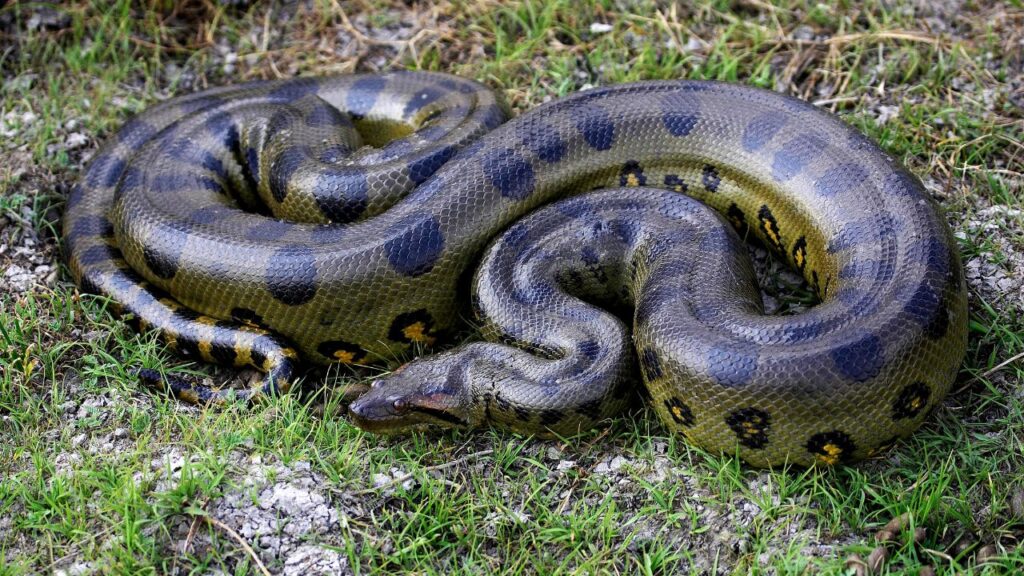
One of the largest snakes in the world, this massive constrictor has ruled the landscapes of sub-Saharan Africa for thousands of years—not just physically, but spiritually. Long before science gave it a formal name, African cultures had already written it into legend.
The African rock python thrives in savannas, forests, swamps, and rocky outcrops, which means it shows up pretty much wherever humans thought, “This seems like a nice place to live.” Naturally, mythology followed.
Across many African traditions, enormous snakes were seen as:
Earth spirits
Guardians of water and land
Messengers between the living world and the ancestors
You didn’t kill a giant python lightly. That was how you invited supernatural consequences—and nobody wanted that kind of drama.
In some regions, pythons were considered sacred animals, protected by local customs and taboos. Killing one—especially a large individual—was believed to anger spirits or ancestors.
In certain myths, the python was a creator figure, shaping rivers and valleys as it moved across the land. In others, it was a guardian of villages, keeping balance between humans and nature.
Basically, the African rock python was either your supernatural protector… or the reason you slept very respectfully at night.
6. Anaconda
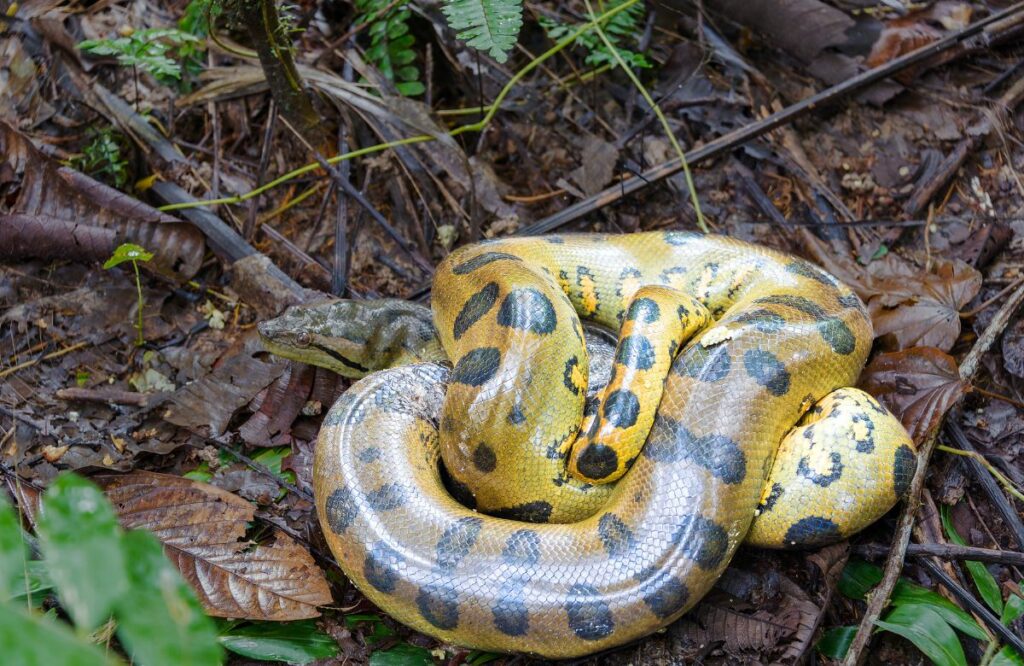
Native to the Amazon rainforest, the giant green anaconda is one of the largest and heaviest snakes in the world. Long before Hollywood discovered it, Indigenous South American cultures already knew this snake as something far more than just an animal—it was a river spirit, guardian, and sometimes a god-sized warning sign.
In Amazonian mythology, enormous water-dwelling snakes are often seen as powerful river deities. The anaconda, moving silently through murky waters, became associated with:
Creation and fertility
Life-giving rivers
The boundary between the natural and spiritual worlds
Some legends describe giant anacondas as ancient beings that shaped rivers and lakes as they traveled. Basically, geography—but make it serpentine.
Like pythons and boas, anacondas are nonvenomous constrictors, relying on sheer strength. In mythic symbolism, this made them representations of:
Overwhelming natural power
Patience and inevitability
Nature’s quiet dominance
They don’t chase. They don’t rush. They just… wait. Which mythology finds deeply unsettling—in a respectful way.
7. Western Diamondback Rattlesnake
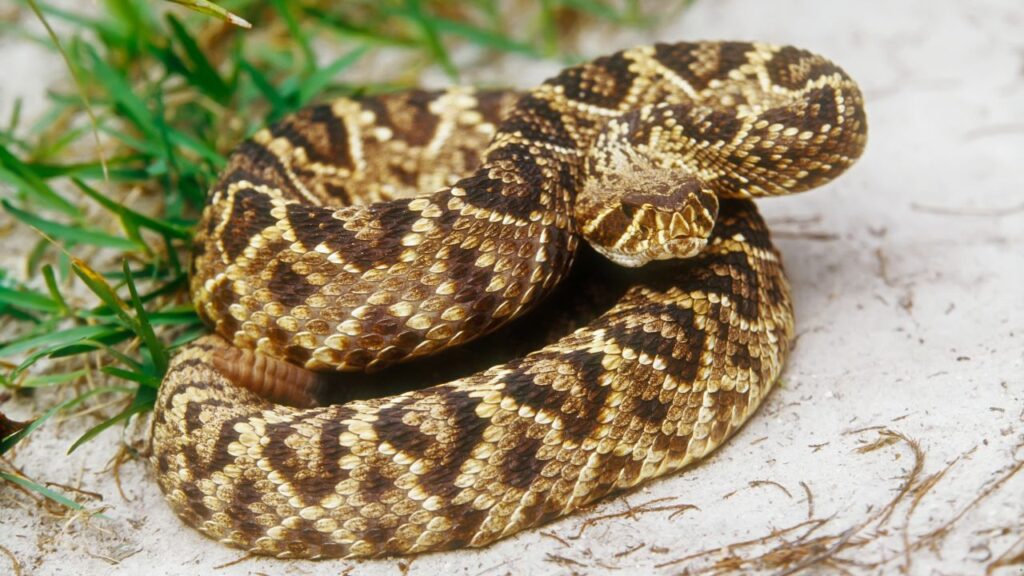
Rattlesnakes belong to the genera Crotalus and Sistrurus, part of the pit viper family Crotalinae. Among them, the Western Diamondback became one of the most iconic serpents of North America, not just biologically, but mythologically.
The rattlesnake’s most famous feature is, of course, the rattle at the end of its tail. When threatened, it produces a loud buzzing sound meant to deter predators.
In Indigenous North American traditions, this made the rattlesnake a symbol of:
Warning and boundaries
Respect for personal space
Power with restraint
Mythology appreciated the fact that the rattlesnake doesn’t attack without reason. It gives fair notice. Ignore it—and that’s on you.
Rattlesnakes live across a wide range of habitats, especially arid regions of the Americas—from southern Canada all the way to central Argentina. In desert mythology, survival is sacred, and predators are respected as essential keepers of balance.
The Western Diamondback was often seen as a protector of the land, controlling rodent populations and maintaining harmony between life forms. In spiritual stories, it sometimes acted as a guardian spirit, teaching humans to move carefully and listen closely.
Yes, rattlesnakes are venomous—and they’re responsible for most snakebite injuries in North America. But mythology and reality agree on one thing: they rarely bite unless provoked or threatened. With prompt treatment, bites are seldom fatal.
This reinforced the rattlesnake’s symbolic role as:
A keeper of balance, not chaos
A reminder that consequences follow choices
Nature’s way of enforcing boundaries
In other words, the rattlesnake isn’t evil—it’s just very clear. The Western Diamondback rattlesnake proves that mythology doesn’t always glorify the loudest or biggest serpent—sometimes it honors the one that gives a warning first.
8. Black Mamba
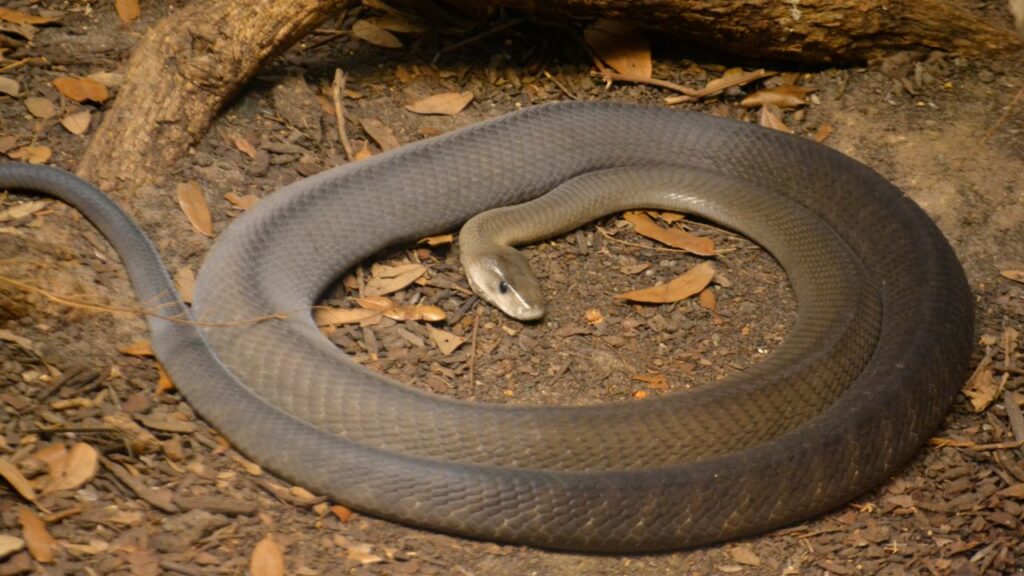
If snakes had a “don’t mess with me” award, the black mamba would win it—hands down, tail first, and with a deadly side-eye. Known scientifically as Dendroaspis polylepis, this highly venomous snake is native to sub-Saharan Africa and has earned a fearsome reputation that borders on mythical.
The black mamba isn’t just venomous—it’s incredibly fast, both on the ground and among trees. Its terrestrial and arboreal lifestyle lets it rule savannahs, woodlands, rocky slopes, and even dense forests, giving it a presence that feels almost supernatural.
In African mythology, speed and stealth are often equated to divine power or spiritual authority, and the black mamba’s lethality reinforces its image as a serpent to be respected, feared, and rarely crossed.
As per Wikipedia, the black mamba was first formally described in 1864 by zoologist Albert Günther, based on specimens collected by John Kirk during David Livingstone’s Zambesi expedition (1858–1864). But long before science cataloged it, African cultures already knew the black mamba as a powerful and often symbolic snake, associated with:
Death and danger
Swiftness and precision
Transformation and spiritual energy
Encounters with it inspired both cautionary tales and reverence, turning real-life fear into mythic storytelling.
The black mamba’s venom is potent and fast-acting, giving it the reputation of Africa’s ultimate predator. In mythology, venom often symbolizes power, judgment, and the thin line between life and death, and the black mamba embodied all of these traits perfectly.
9. Green Tree Python
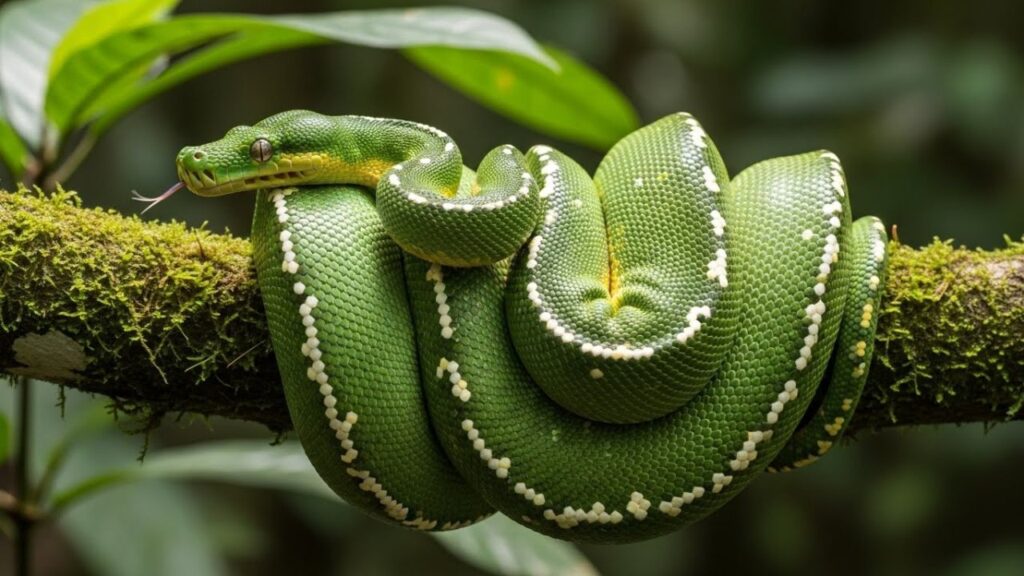
If the anaconda is the river god, the Green Tree Python is the forest guardian, silently coiled in emerald perfection, watching over the treetops like a mythic sentry.
Native to New Guinea, parts of Indonesia, and northern Australia, the Green Tree Python (scientific name Morelia viridis) is a striking, nonvenomous snake. Its vivid green coloration allows it to blend seamlessly into the rainforest canopy, making it a creature of mystery and awe.
Unlike giant constrictors that dominate the forest floor, the Green Tree Python spends most of its life high in the trees, elegantly wrapped around branches. In mythology and folklore, snakes that inhabit trees are often associated with:
Spiritual insight
Connection to the heavens or celestial realms
Guardianship of sacred groves
Its quiet, watchful presence makes it a natural symbol of wisdom and vigilance. Though nonvenomous, the Green Tree Python is a skilled constrictor, subduing small mammals and birds with precise coiling.
The Green Tree Python’s bright green (sometimes with blue, yellow, or white accents) makes it almost otherworldly, as if the forest itself painted it. In some cultures, such snakes were thought to bring life, fertility, and protection to the trees and lands they inhabit.
Fun thought: If you see one blending perfectly with the leaves, consider it a mythical green ninja watching over the forest.
Conclusion
Snakes that have played major roles in mythology appear across cultures as powerful symbols with deep symbolic meanings. In Greek mythology and ancient Greece, a serpent deity or Greek god is often shown with a serpent entwined rod or serpent entwined staff, linked to a messenger god, a Greek goddess, and even a mortal man, while the Greek myth of snake biting echoes transformation and danger, famously tied to Adam and Eve. In Norse mythology, the Midgard Serpent—a giant snake or world serpent biting its own tail—faces god Thor.
Among ancient Egyptians, the cobra goddess, or Egyptian cobra goddess, adorns the pharaoh’s headdress, linked to the sun god, snake necks, and snake heads, showing how snakes were an important symbol.
Elsewhere, myths feature a feathered serpent god, an Aztec mother goddess, a creator god, a rainbow snake, a Korean snake goddess, a snake king, and tales from Chinese mythology like the white snake that could turn humans or appear with a human head, human ears, or two snakes, often depicted as closely linked forces of life. From giant serpent guardians to coiled serpent energy, these stories show how snake gods span cultures as enduring, sacred figures.
