




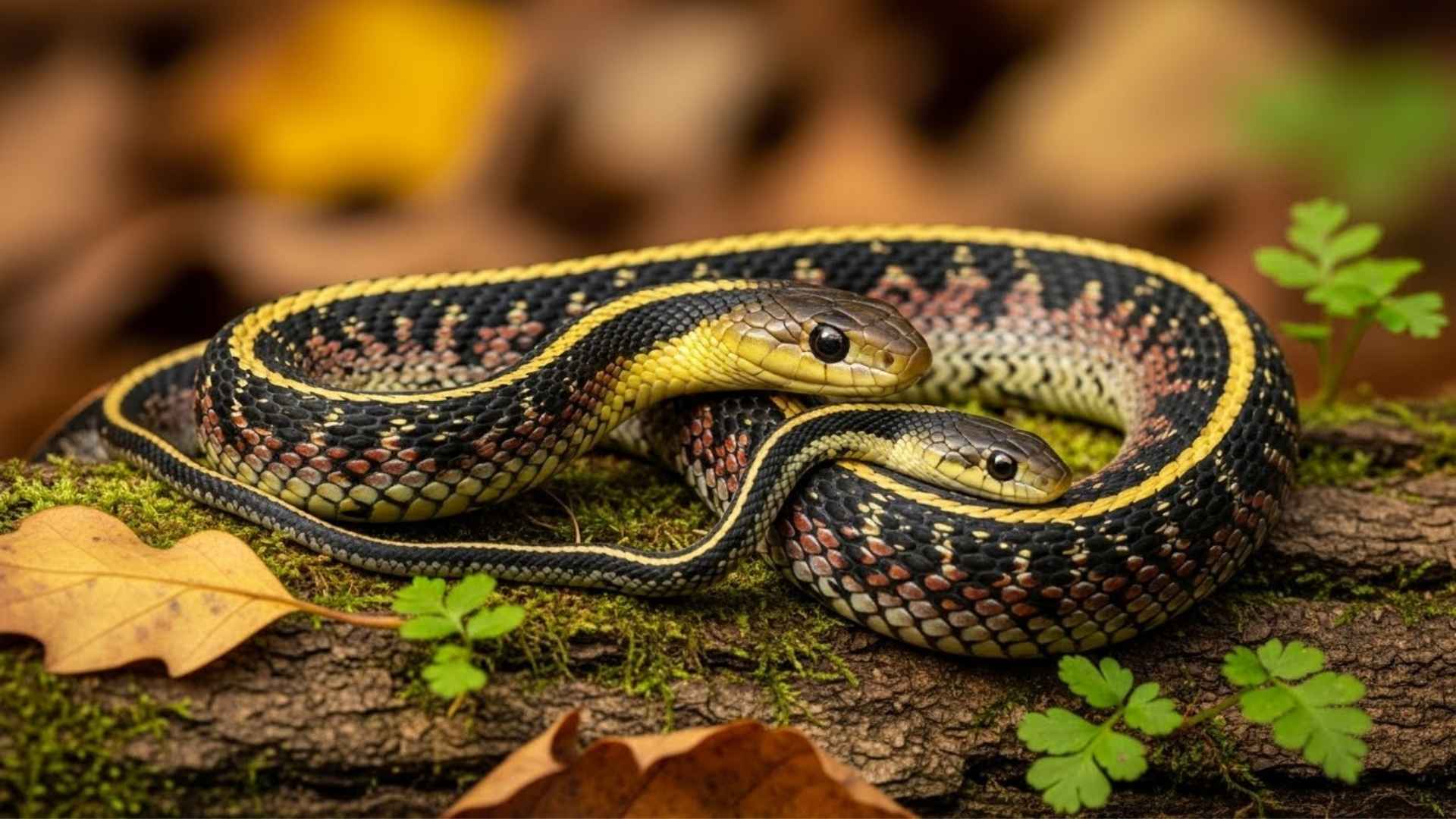
When you think of reptiles, eggs usually come to mind—but nature loves exceptions. Some snakes defy expectations by giving birth to live young instead of laying eggs. This reproductive strategy, known as live birth, is both fascinating and highly adaptive.
Snakes that give live birth often live in cooler climates or challenging environments where eggs might struggle to survive. By carrying their developing young internally, these snakes provide protection and temperature regulation until birth, increasing survival rates.
Live-bearing snakes tend to give birth to fully formed, independent offspring—tiny replicas of their parents, ready to face the world from day one. It’s a remarkable example of how evolution tailors reproduction to environmental needs.
We’ll explore snakes that give live birth instead of laying eggs, shedding light on this lesser-known aspect of snake biology and revealing just how diverse and adaptable these reptiles truly are.
Quick Insight: Some snakes are viviparous, meaning they give birth to live young. This adaptation helps species survive in colder climates where eggs might not develop properly.
Snakes That Give Live Birth Instead of Laying Eggs
1. Eastern Garter Snake
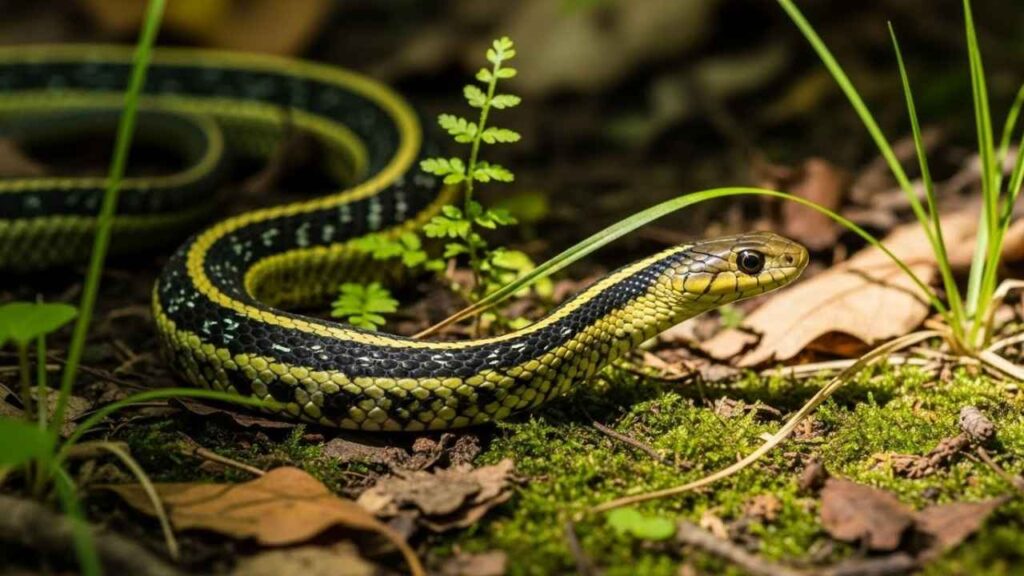
Meet the Eastern garter snake: North America’s everyday snake superstar. They’re the ones you might spot sunbathing in a garden or darting across a trail. Don’t worry—they’re mostly harmless. Sure, they have mild venom thanks to their fancy Duvernoy’s glands, but unless you’re a very tiny mouse, you’re safe.
Garter snakes come in colors that range from earthy browns to soft greens, usually with those classic yellow stripes running from head to tail. Think of them as the stripes-on-stripes fashionistas of the snake world.
Here’s where it gets really interesting: unlike most snakes that lay eggs and leave, Eastern garter snakes give birth to live young, a trait called ovoviviparous, Wikipedia noted. After a long nine-ish months of gestation (okay, not exactly nine months—they’re a bit quicker), little snakelets are born ready to slither into the world.
At birth, these tiny snakes are about 5–9 inches long—basically the length of your favorite kitchen spatula. Adults grow to roughly two feet long, so they don’t stay tiny forever. And the mating? Oh, it’s dramatic.
In spring and fall, male garter snakes form “mating balls”—dozens of males wriggling around a single female, all vying for her attention. Imagine a snake flash mob, minus the coordinated dance moves. These frenzied gatherings can last up to five days or more, making garter snake courtship the ultimate endurance test.
Once the little ones are born, it’s every snakelet for itself. The newborns hit the ground slithering and are independent almost immediately. No snake daycare needed here!
2. Boa Constrictor
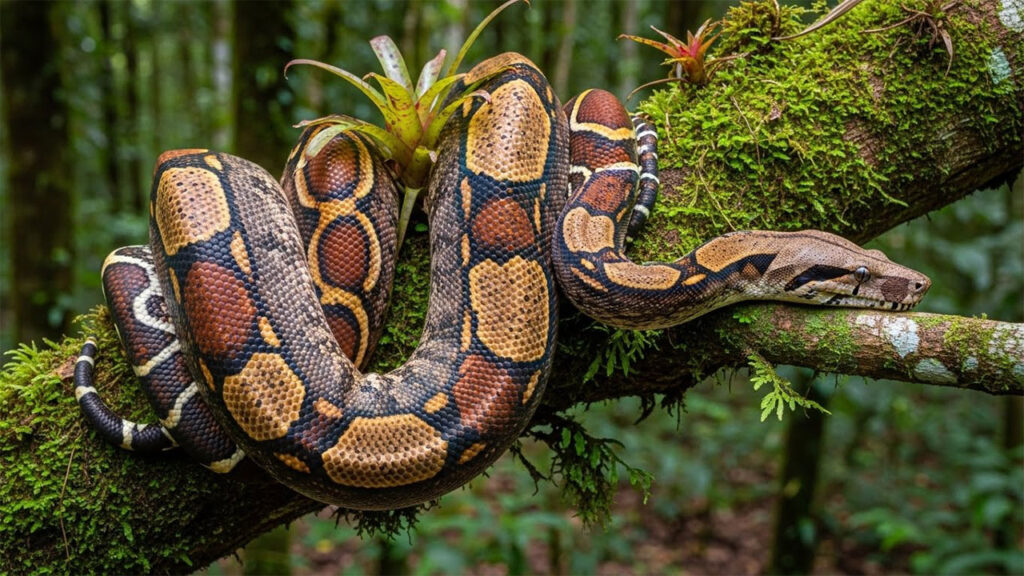
If the Eastern garter snake is the neighborhood-friendly snake, the boa constrictor is the dramatic superstar of the rainforest. Native to the lush, tropical forests of South America, boas are impressive creatures that demand attention—mainly because they can grow up to 13 feet long and weigh a whopping 100 pounds. That’s basically a living, breathing, slithery couch!
Despite their size, boas are surprisingly popular in the pet world. In captivity, they can reach their massive potential, which makes them a favorite among snake enthusiasts who aren’t afraid of a little muscle-bound reptile in their living room.
Now for the fascinating part: boas give birth to live young, and they’re serious about it. Female boas gestate their babies for about four months, then give birth to a clutch of roughly 30 snakelets. And these aren’t tiny little noodles—they’re practically “teeny boas” at 15–20 inches long at birth, already big enough to make you reconsider that “small pet” idea.
Unlike the garter snakes, boa babies don’t leave the nest immediately—they hang around Mom for a short time before striking out on their own. In the snake world, boas are basically the moms who say, “I love you, but you’re strong enough to survive out there.”
So, if you ever think snakes are just creepy little egg-layers, meet the boa: big, bold, and giving live birth like a rainforest boss.
3. Death Adder
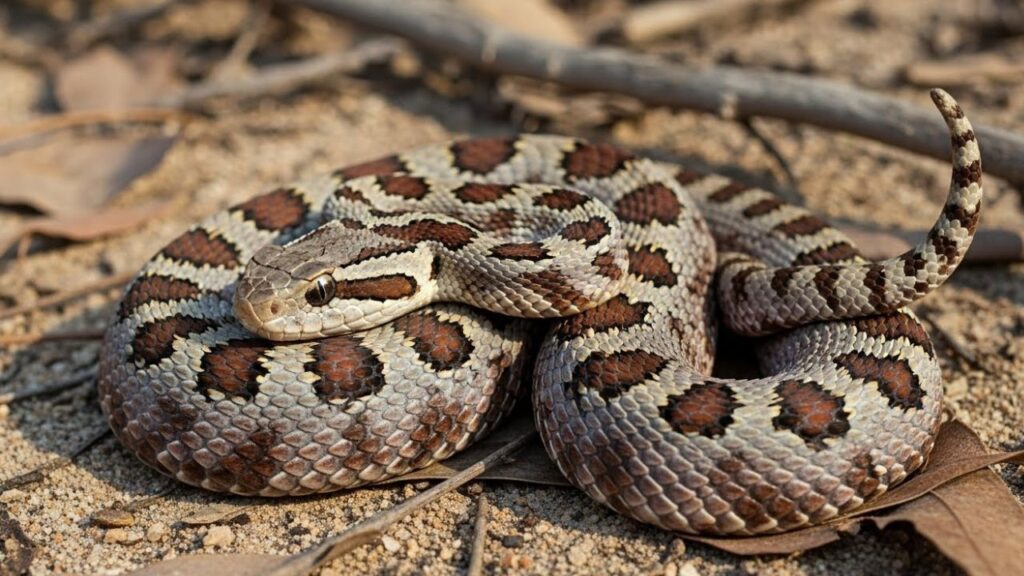
Don’t let the name scare you (well… maybe just a little)—the death adder is Australia’s master of stealth. Found across South Australia, Victoria, New South Wales, Queensland, and even in Papua New Guinea, these snakes love to hang out in both coastal and inland areas. They’re basically the “beach-to-bush” travelers of the snake world.
Despite being highly venomous, death adders are surprisingly non-aggressive. They’d rather sit and wait for their prey than chase it down. And when it comes to fangs, they’re the overachievers of Australia—boasting some of the longest fangs relative to body size of any local snake. Basically, they’re fang models.
Here’s the twist: death adders don’t lay eggs like most snakes. Instead, they’re ovoviviparous, giving birth to up to 30 snakelets at a time. That’s a lot of mini fang-wielders to keep track of!
Unfortunately, life isn’t all sunshine and hunting for the death adder. Their biggest threats are habitat loss and the invasive cane toad, which has caused significant population declines. Nature can be a tough neighborhood.
In short, the death adder is a perfect mix of stealth, venom, and reproductive efficiency—a tiny but mighty live-bearer with serious fang game.
4. Western Diamondback Rattlesnake
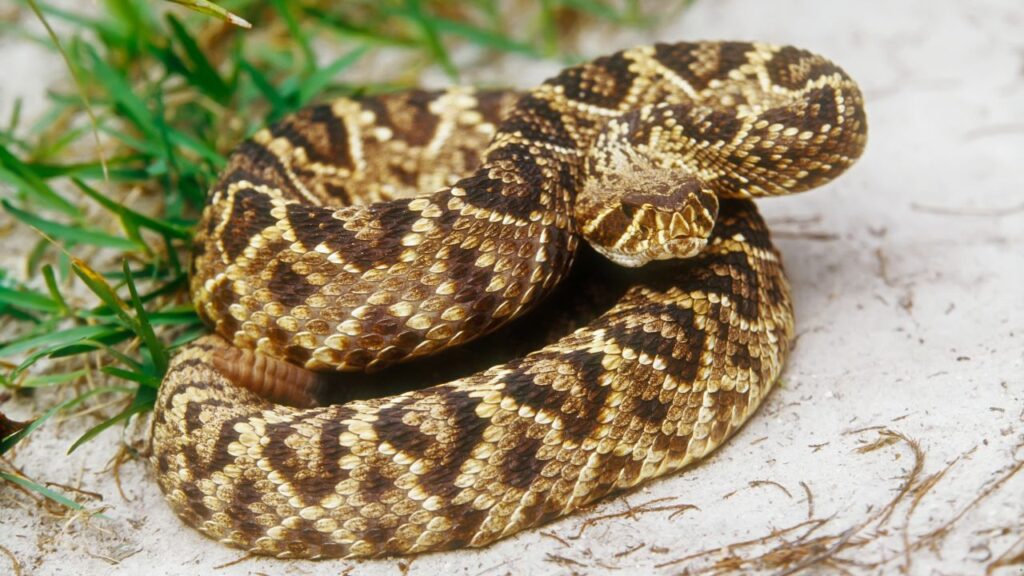
Meet the Western Diamondback, the rock star of the desert southwest. Found across the U.S. and Mexico, this rattlesnake is instantly recognizable with its brown-and-tan diamond pattern and the unmistakable rattle that says, “Back off, I’m fabulous… and venomous.”
Britannica says these snakes take winter seriously—they hibernate in abandoned burrows, often turning them into communal dens, but sometimes they crash the homes of unsuspecting gophers or prairie dogs. Imagine showing up at a party and realizing the host isn’t home—but hey, they’ve got snacks, so you make yourself comfortable.
When it comes to romance, Western diamondbacks go all out. Males engage in ritual combat, wrestling to win over a lady rattlesnake. And copulation? It’s no quick fling. It can last hours, giving a whole new meaning to “staying power.” Fertilized eggs stay inside Mom, and hatching happens internally, meaning she gives birth to live young—usually 10–20 tiny snakelets.
The babies are born ready for action, absorbing the last of their yolk and completing their first shed within about 9–11 days, then hitting the ground hunting like little desert ninjas. Independence is key—Mom has done her job, and now it’s their turn to explore, hunt, and rattle their tiny tails.
In short, the Western Diamondback is a desert diva—striking in appearance, dramatic in love, and a live-birth expert to boot.
5. Green Anaconda
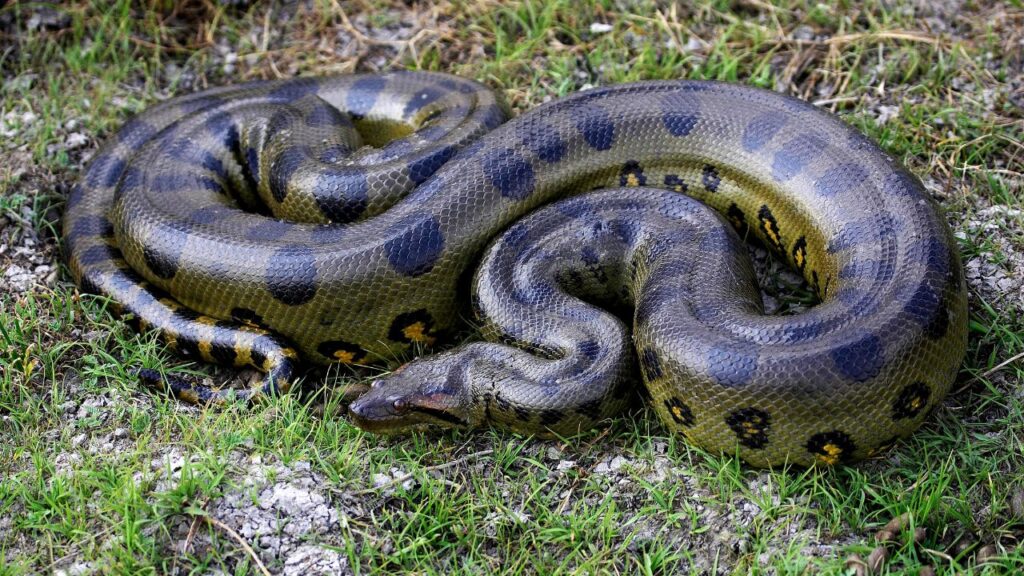
Hold onto your hats (and your boats)—the green anaconda is basically the celebrity of the snake world. Native to South America, these giants can grow up to 20 feet long and tip the scales at 150 pounds or more, with some verified specimens even reaching 200–250 pounds.
That’s not just a big snake—it’s a small, wriggly submarine. Despite their colossal size, green anacondas are non-venomous. They don’t need fangs to take down prey; they just constrict it until it submits. Think of them as the ultimate snake bodybuilders: all muscle, no toxins, and deadly efficient.
These venomous snakes are also live-birth champions. Unlike egg-laying snakes, green anacondas give birth to fully-formed babies, sometimes dozens at a time, making them some of the largest live-bearers in the snake world. Baby anacondas start life ready to slither straight into the watery world.
Speaking of water, anacondas are semi-aquatic. They spend most of their lives lounging in rivers, swamps, and wetlands, sometimes looking more like floating logs than snakes—until something edible drifts by, of course. For anyone worried about giant snakes, remember: unless you’re in the Amazon, your backyard is safe.
In short, the green anaconda is massive, impressive, and a little intimidating—but also a fascinating example of a live-birth snake that proves size really does matter.
6. Eyelash Viper
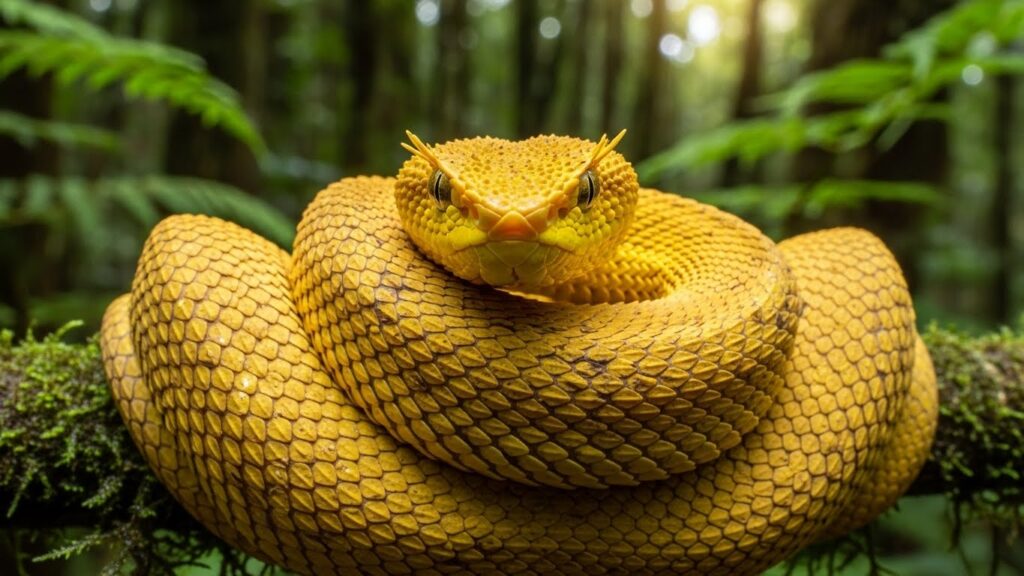
Meet the eyelash viper—the fashionista of the snake world. Found in South and Central America, this striking viper isn’t just deadly; it’s also stylish. Why? It sports a unique set of scales above its eyes that look like eyelashes, giving it a permanently “fierce but fabulous” expression.
These slender snakes come in an endless rainbow of colors—gray, yellow, red, green, brown, and more—making each one look like it just slithered out of a designer catalog. Their vibrant hues also make them popular in the pet trade, though this little beauty is highly venomous, so only the brave (or crazy) handle them.
Eyelash vipers are also live-bearers, like many of their viper cousins. According to Britannica, females carry their eggs internally for about six months before giving birth to 7–8 inch-long snakelets. Tiny but perfectly formed, these baby vipers are ready to start hunting small birds and amphibians almost immediately.
With a lifespan of at least 10 years and a population still largely a mystery to scientists, the eyelash viper is a little enigma wrapped in color and venom. In short, it’s proof that snakes can be deadly, dazzling, and downright fascinating all at once.
7. Yellow-Bellied Sea Snake
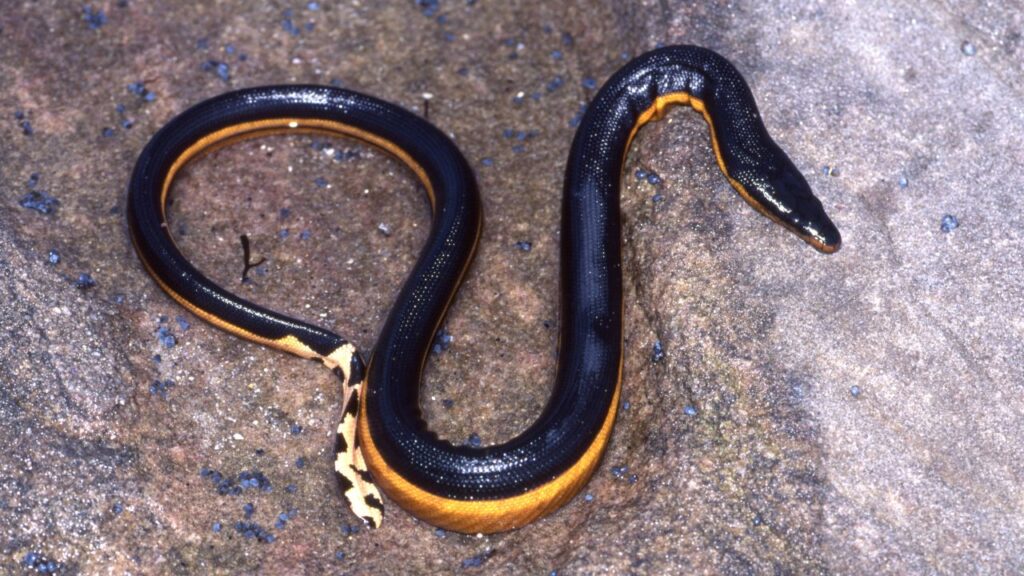
Yes, snakes can swim—and the yellow-bellied sea snake takes “swimming” to a whole new level. Spending almost its entire life in the water, this sleek serpent glides through the Indo-Pacific and eastern Pacific, occasionally drifting into the eastern Atlantic via ocean currents.
Think of it as the ultimate aquatic traveler—no passport required. Like all sea snakes, the yellow-bellied sea snake is a live-bearer.
Females carry their snakelets for about six months, then seek out shallow tidal pools to give birth. No beaches, no sandcastles—just small, fully formed babies ready to slip straight into the sea.
These snakes are two-toned, with dramatic black backs and bright yellow bellies, making them look like the highlighter of the ocean. Their flattened tails act like built-in paddles, perfect for swimming, while their potent venom ensures fish don’t get away.
They may be small—the biggest females reach about three feet—but don’t let their size fool you: one bite is enough to knock out their prey.
In short, the yellow-bellied sea snake is a compact, aquatic powerhouse, proof that live-birth snakes aren’t just on land—they can dominate the oceans too.
Conclusion
While most common snakes lay eggs, some viviparous snakes bear live young, giving live babies instead of snake eggs. Green anacondas, timber rattlesnakes, gaboon vipers, most vipers, and certain sea snakes and water snakes give birth to eggs inside the female’s body, where the egg yolk nourishes young ones until hatching. This snake reproduction strategy, seen in many species including the European adder and green snakes, reflects different methods shaped by natural selection, helping offspring survive in warm environments and among other reptiles, lizards, and animals.
