




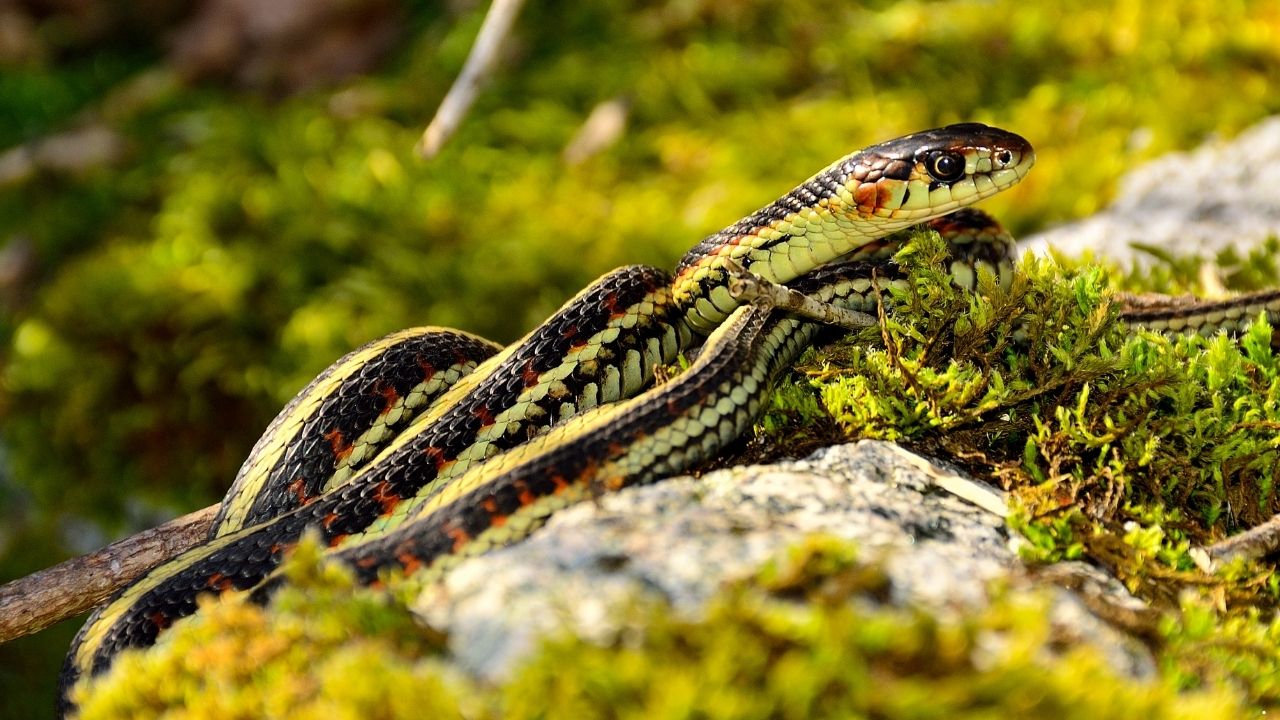
Picture walking through a dense rainforest when something green suddenly melts into the background before your eyes. What you thought was a vine shifts slightly—and then you realize it’s a snake. Even more astonishing, its color seems different from just moments ago.
This isn’t an illusion; it’s one of nature’s most clever survival tricks. Some snakes possess the remarkable ability to change their color, allowing them to blend seamlessly into their surroundings or react to environmental changes.
Unlike quick, dramatic color shifts seen in chameleons, snakes often change hues more subtly. Their transformations may depend on temperature, light, mood, or even the need to communicate. A brighter shade might help with camouflage among leaves, while darker tones can absorb heat more efficiently.
Here, we’ll explore these fascinating serpents, and you’ll uncover how evolution, environment, and survival instincts come together to create one of the animal kingdom’s most mesmerizing abilities.
Fact: Some snakes can subtly change their skin color to blend into their environment or regulate body temperature. It’s like having a built-in invisibility cloak!
Snakes That Can Change Their Color
1. Green Tree Python
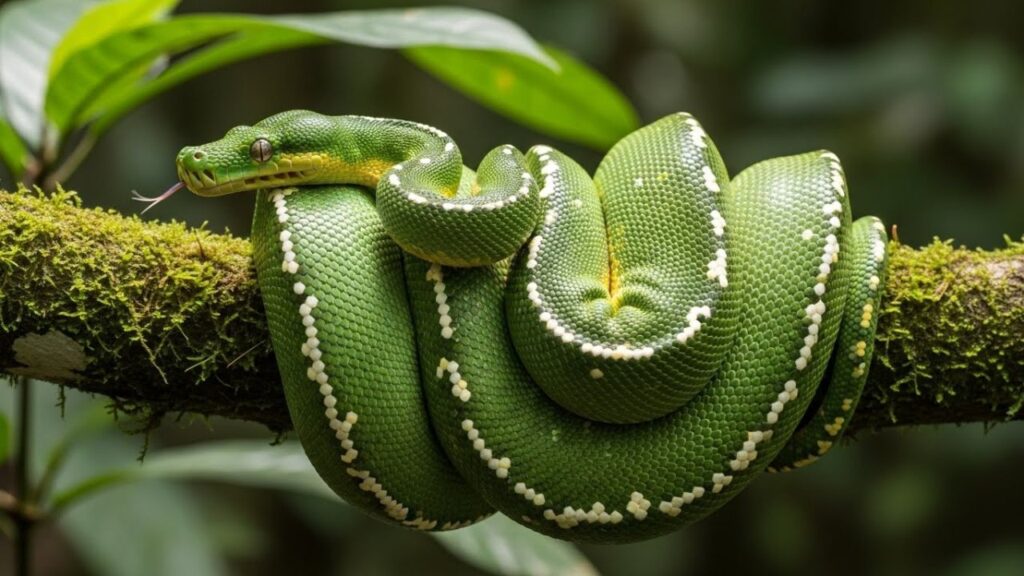
If snakes had a fashion blog, the Green Tree Python would be its top influencer. While it can’t instantly change color like a chameleon hitting a panic button, this snake still pulls off one of the coolest wardrobe transformations in the reptile world.
Green tree pythons enter the world wearing bold colors—either bright red or sunny yellow—which is a bit ironic given their name. It’s like naming a baby “Emerald” and dressing them exclusively in neon orange. Over time, though, they settle into their signature look: a rich, leafy green.
This transformation, known as an ontogenic color change (science speak for “glow-up”), takes about six months to a year. No fairy godmother involved—just biology doing its thing.
Why the dramatic makeover? It’s all about camouflage and real estate.
Juveniles hang out near the forest edge, closer to the ground, where reds and yellows blend beautifully with leaf litter and dappled sunlight. Perfect for sneaky snack attacks on smaller prey.
Adults, on the other hand, move up in the world—literally. They lounge high in the treetops, where green is the color of choice for disappearing into the foliage like a professional hide-and-seek champion.
You’ll find these snakes in northeastern Australia and New Guinea, including nearby islands. Because many populations are isolated, some green tree pythons develop unique patterns—think of them as limited-edition designs.
So while the green tree python won’t change color on command (sorry, no instant costume changes), its life-long transformation is still pretty impressive. From fiery baby hues to calm, leafy adulthood, it proves that sometimes the best glow-ups just take time—and maybe a tree or two.
2. Emerald Tree Boa
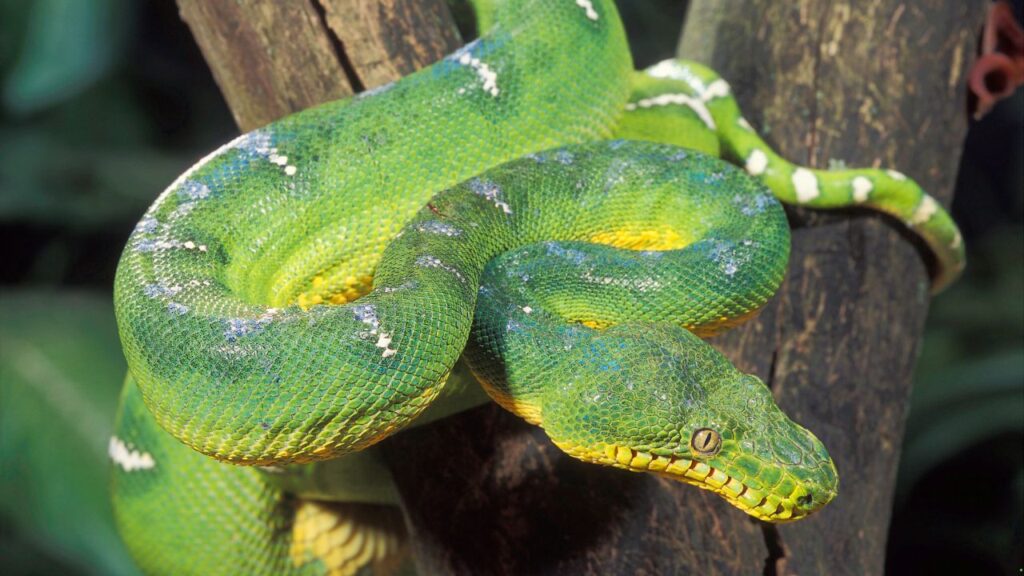
If the rainforest had royalty, the Emerald Tree Boa would absolutely be wearing a crown—and probably posing dramatically on a branch while doing it. Scientifically known as Corallus caninus, this snake looks less like an animal and more like a carefully handcrafted piece of jungle art.
Adult emerald tree boas live up to their name with a jaw-dropping emerald-green body, decorated by bold white zigzag “lightning bolts” running along their back, as per Wikipedia.
Add in a sunny yellow belly, and you’ve got a snake that looks like it was designed by Mother Nature after binge-watching a fashion show. No venom here—like all boas, this species is nonvenomous, relying on constriction rather than poison.
Emerald tree boas don’t start life looking so refined. As juveniles, they arrive in shades of orange, rust, or brick-red—basically looking like spicy jungle Cheetos. This fiery color phase lasts for several months, usually 9–12 months, before the snake slowly transitions into its signature green adult coloration.
This ontogenetic color change helps young boas blend into different environments while they’re still figuring out the whole “being a stealthy rainforest ambush predator” thing.
The emerald tree boa doesn’t just change color—it levels up. From a red-hot juvenile to a glowing green adult with lightning bolts for flair, this snake proves that patience pays off. It’s the ultimate jungle glow-up story.
3. Boomslang
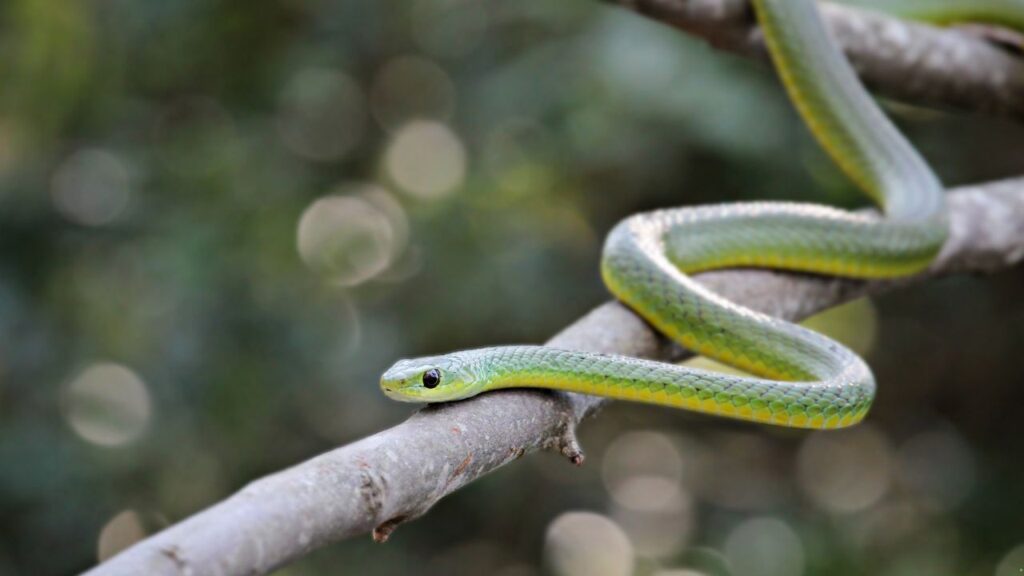
This species is one of the most widely distributed snakes in sub-Saharan Africa, popping up almost everywhere except the driest, most unforgiving deserts. If Africa were a party, the boomslang would somehow be on the guest list in nearly every room.
While generally considered a single widespread species, scientists have spent decades debating whether the boomslang should be split into multiple forms. Several variations have been proposed over the years, but none have achieved universal scientific approval.
Boomslangs don’t all follow the same dress code, but there are some trends:
Adult males are usually a vibrant leafy green, perfect for disappearing into trees like a professional introvert.
Adult females tend to be brown, blending seamlessly into branches and bark.
That said, nature loves breaking its own rules. Occasionally, you’ll find green females or brown males, just to keep biologists on their toes and field guides slightly outdated.
Young boomslangs (under one meter long) start life looking fairly understated—mostly grey and brown. But then there are the eyes. And just when you think they’re boring, juveniles pull out their secret weapon: bright blue, yellow, or orange coloring on the neck.
The boomslang may not change color instantly, but between age, sex, and the occasional rule-breaking individual, it’s one of Africa’s most visually dynamic snakes. Subtle as a juvenile, flashy as a threat display, and stylishly green (or brown… or not) as an adult—this snake proves that variety is the real spice of life.
4. Eastern Hog-nosed Snake
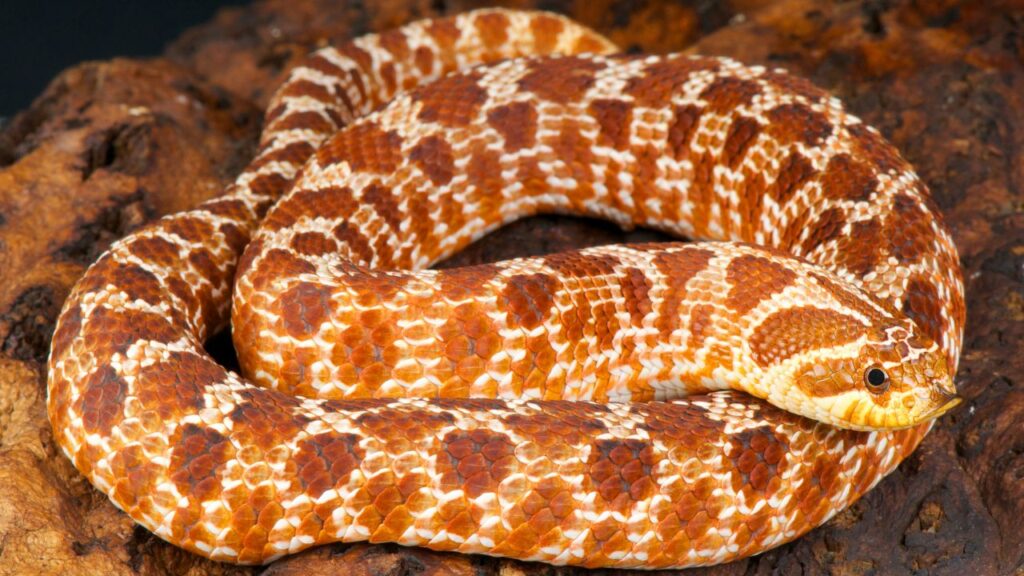
This stout, up-to-three-foot serpent doesn’t exactly change color on command, but it does come in a dazzling rainbow of hues—from yellow, orange, tan, gray, olive, brown, reddish, to even black—and often with bold blotches or patterns that make each individual look unique.
Unlike species that shift color through life stages, like the green tree python or emerald tree boa, the Eastern Hog-nosed doesn’t follow one fixed path. Instead, its color and pattern are highly variable across individuals and regions.
One snake might be a sandy tan with dark blotches, and the next might be almost entirely jet black. This isn’t a quick color change, but a natural variation that helps these snakes blend into different habitats—from sandy fields to woodlands.
Juveniles often exhibit more vivid patterns than adults, which might fade or become more muted as they grow—think of it as nature’s version of “less is more.”
Though not a chameleon, this snake is a camouflage expert. Its assortment of colors and blotches helps it melt into leaf litter, sandy trails, and forest floors. And when camouflage fails? The hog-nosed snake unleashes the most theatrical defensive performance in the snake kingdom:
It hisses loudly (yes, it’s one of the few North American snakes that really hiss) and spreads its neck into a hood, just like a cobra—complete with an intense stare that could win an Oscar.
Native to eastern North America, the Eastern Hog-nosed Snake prefers dry, loose soils and sunny habitats like fields, forests, and sandy open areas where it can burrow and hunt.
5. Garter Snake
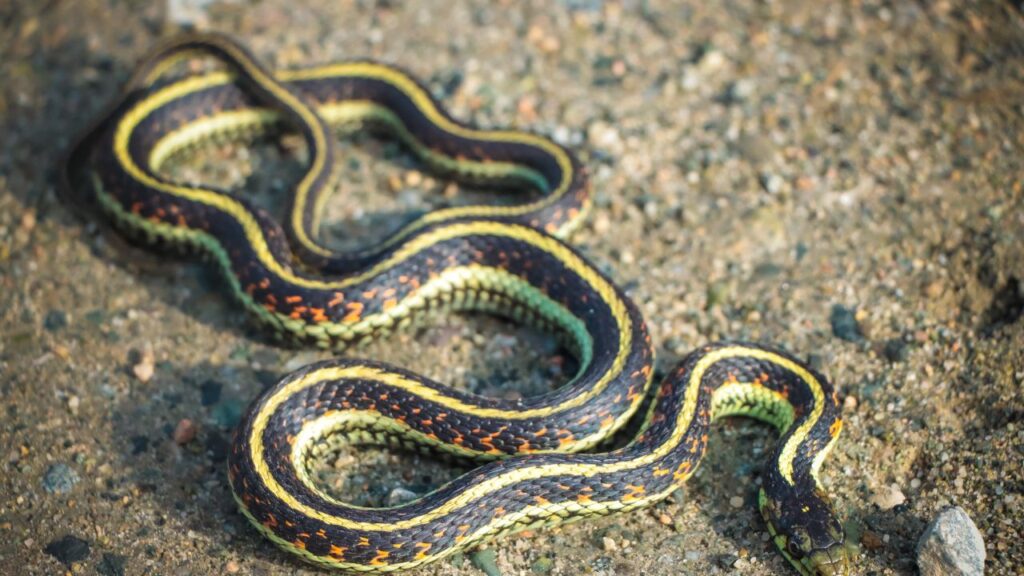
The Garter Snake is proof that you don’t have to live in a rainforest or hang from a tree to be interesting. This is the snake you’re most likely to meet while minding your own business in a yard, park, or near a pond—and it still manages to bring some style to the table.
Garter snakes are semi-aquatic, meaning they split their time between land and water like little reptilian commuters. One minute, they’re cruising through grass, the nex,t they’re swimming like they own the pond. Forests, woodlands, grasslands, lawns—garter snakes are the ultimate habitat generalists.
While garter snakes don’t dramatically change color on command, they come in a huge variety of color patterns depending on species and location. Think greens, browns, yellows, reds, blues, and even near-black, often accented with signature longitudinal stripes running down the body.
This natural color variation helps them blend into different environments, whether that’s leafy forest floors or grassy fields. In other words, they dress appropriately for the occasion—unlike humans, who wear hoodies in summer.
Among reptile hobbyists, garter snakes are often considered excellent beginner pets. Why?
They’re small and manageable
Active during the day (finally, a snake with a normal schedule)
They don’t constrict
Generally easygoing and curious
That said, they’re still snakes—not plush toys. If stressed, sick, or threatened, they may strike. It’s less “attack mode” and more “please respect my personal space.”
Garter snakes tend to be alert, inquisitive, and surprisingly tolerant when handled properly. Their active nature makes them fun to observe, especially for keepers who want a snake that actually does things instead of pretending to be a decorative stick.
6. Ball Python
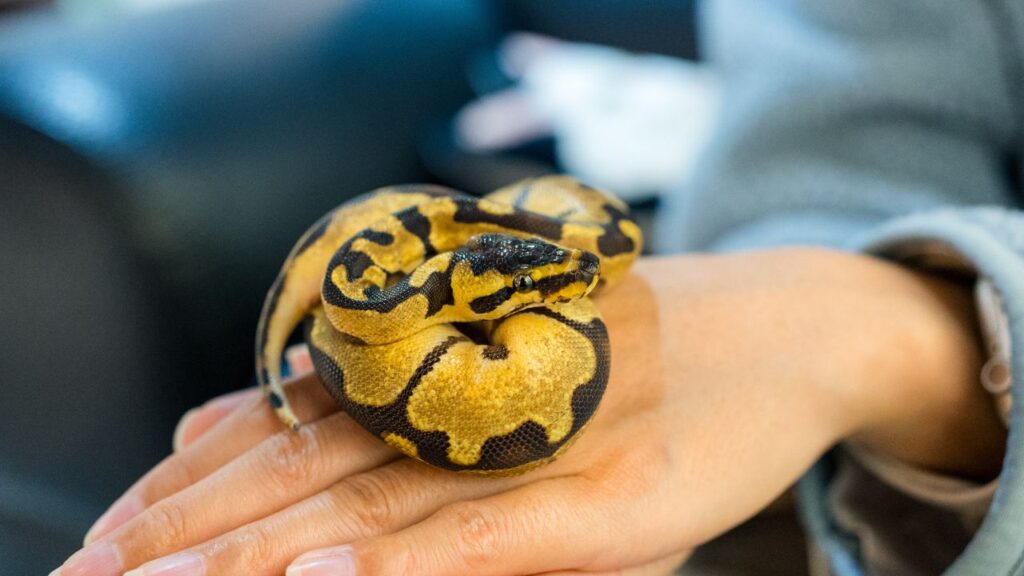
Meet the Ball Python, the snake equivalent of a cozy little ball of yarn—literally. Named for its signature habit of curling into a tight, defensive ball when scared, this python is one of the most beloved pet snakes in the world, and for good reason.
When threatened, a ball python doesn’t lash out or hiss dramatically. Nope, it curls up into a near-perfect sphere, hiding its head in the center like a cautious, scaly ballerina. It’s defense with a side of elegance—because nothing says “I mean no harm” like rolling up into a perfect ball.
Ball pythons come in an amazing variety of colors and patterns, making them highly prized by collectors. From rich browns and blacks to pastel, albino, and even “morph” varieties that look like they belong in a fantasy movie, there’s a ball python to match almost any taste. Their colors may subtly change over time as they grow, but the morphs are permanent, giving each snake its own unique flair.
Ball pythons are nocturnal, meaning they do most of their hunting and exploring under the cover of darkness. If you’re feeding one, nighttime sessions are ideal—so think of it as hosting a tiny, elegant party after dark.
PetMD noted these snakes are naturally solitary. In the wild, they prefer their own space, and pet ball pythons do best in individual enclosures. Despite their reserved nature, they’re generally docile and tolerant of handling once properly socialized.
Ball pythons grow slowly, reaching adult size in about three years, and with proper care, they can live 30 years or more—practically a lifetime companion. They’re perfect for dedicated pet owners who want a calm, beautiful, and long-term reptile friend.
7. Eastern Copperhead
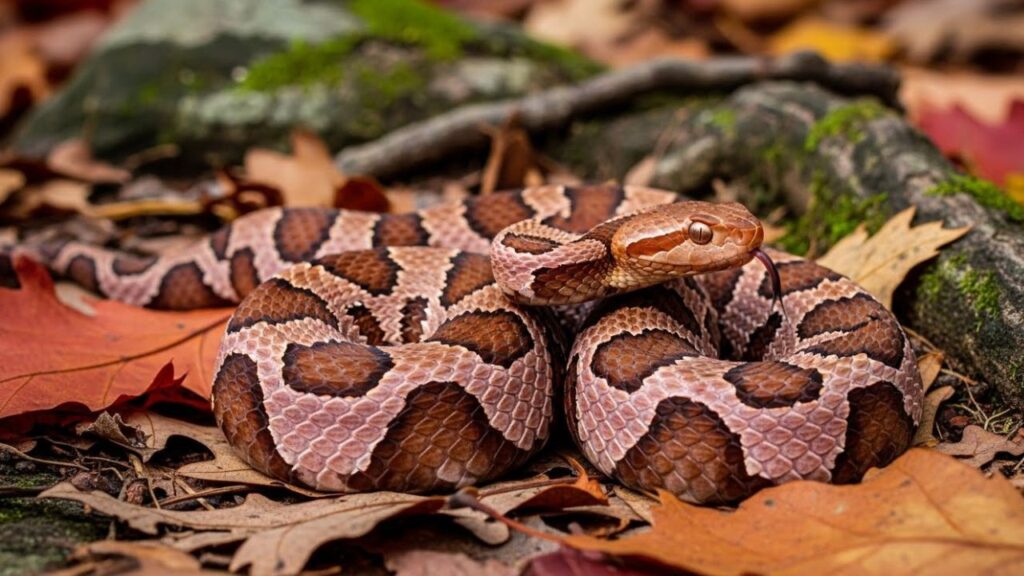
Say hello to the Eastern Copperhead, the snake that proves subtlety is a superpower. Known for its rich coppery-brown coloration and distinctive hourglass-shaped crossbands, this snake blends seamlessly into the leaf litter and forest floors of eastern North America.
Adult copperheads are usually tan to light brown with darker brown or reddish hourglass-shaped bands stretching across their bodies. This pattern isn’t just for looks—it helps them vanish into fallen leaves, making them almost invisible to both prey and predators.
Juveniles are often pale with brighter pinkish bands, giving them a slightly more “annoyingly noticeable” style before fading into the classic copper tone as they mature.
Copperheads are venomous, but they’re generally not aggressive if left alone. Their first line of defense is camouflage—literally relying on blending in rather than fighting. If they feel threatened, they may freeze, vibrate their tail like a tiny rattlesnake, or strike if cornered.
Found in eastern and central North America, Eastern Copperheads thrive in forests, rocky areas, and the edges of fields. They are ambush predators, mainly hunting small mammals, birds, and amphibians.
The Eastern Copperhead may not be flashy, but it’s a master of understated color strategy. With its rusty, patterned coat, it demonstrates that sometimes the best camouflage is the one you barely notice. Nature didn’t give it neon colors—it gave it precision.
Conclusion
Certain snake species, such as the kapuas mud snake, hog island boa constrictor, and Colombian rainbow boa, exhibit the remarkable ability to change their color. Found in regions like the Indian Ocean, round islands, and small islands, these snakes use mechanisms that adjust their markings and reddish brown hues to adapt to their surroundings, regulate temperature, or communicate.
While the pet trade has highlighted some of these species, observing how snakes change color in the wild provides a fascinating example of nature’s adaptability. Differences across other species show that color transformation can happen in response to environmental cues, making them a unique feature of Earth’s reptilian diversity, as noted in many scientific comments.
