




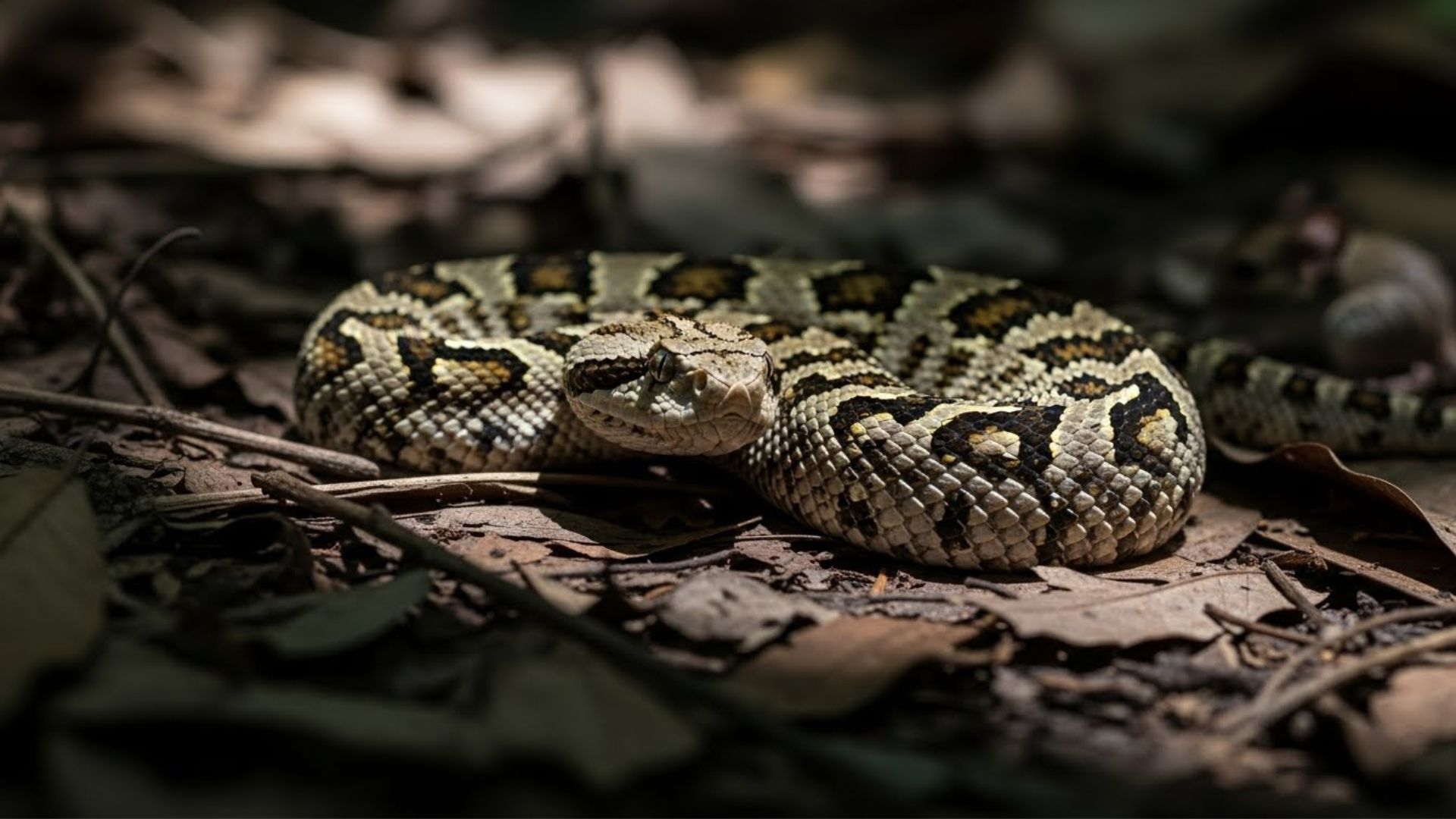
In the wild, patience can be as deadly as speed. Some snakes have perfected the art of ambush, waiting silently for hours or even days to strike the moment prey wanders too close. These masters of stealth rely on camouflage, keen senses, and lightning-fast reflexes to turn inaction into lethal precision.
Ambush-hunting snakes often blend seamlessly into their environment, whether it’s forest floor leaf litter, desert sand, or dense underbrush. Their bodies are adapted for sudden explosive strikes, allowing them to capture prey before it even realizes danger is near.
Some employ constriction, while others use potent venom, but all share one trait: they excel at turning patience into success. Studying these ambush specialists offers a glimpse into one of nature’s most effective hunting strategies.
By combining strategy, instinct, and perfect timing, these snakes demonstrate that hunting isn’t just about speed—it’s about intelligence, precision, and the art of surprise. Get ready to explore the predators that wait, watch, and strike with astonishing efficiency.
Quick Insight: Studies show these snakes can remain perfectly still for hours, striking with lightning precision when unsuspecting prey comes within range.
9 Snakes That Are Masters of Ambush
1. Gaboon Viper
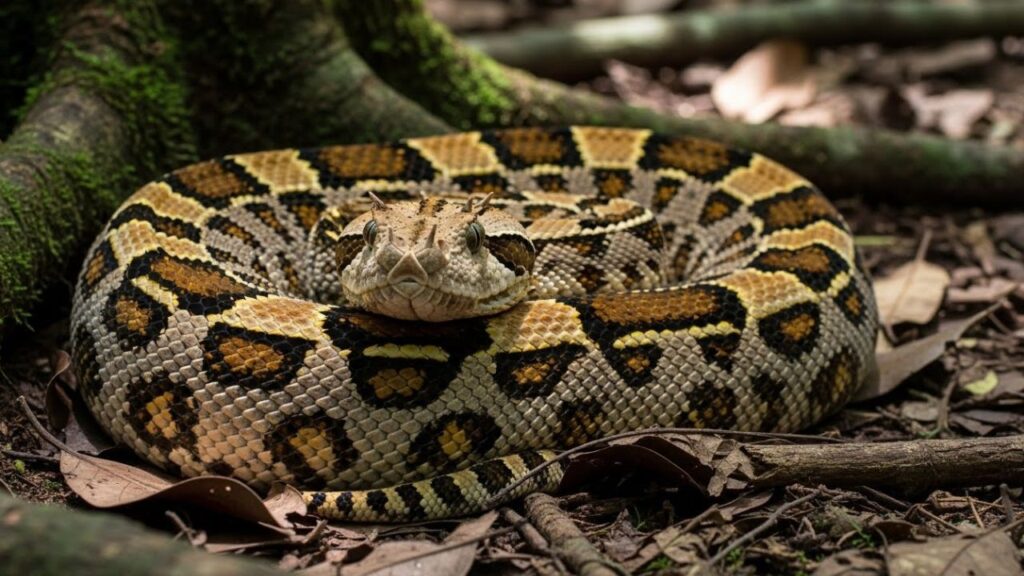
Meet the Gaboon viper, the “big daddy” of ambush predators in the snake world. Native to the lush rainforests and sun-dappled savannas of sub-Saharan Africa, this snake is the equivalent of a jungle ninja—silent, deadly, and ridiculously patient.
Now, let’s talk size. These snakes aren’t messing around. They’re some of the heaviest vipers out there, often weighing more than a toddler (and sometimes stretching up to 6 feet long!). But despite their intimidating looks, Gaboon vipers are surprisingly laid-back.
And wait they do. Gaboon vipers are the ultimate masters of ambush. Wikipedia noted they often lie motionless for hours—sometimes even days—camouflaged perfectly among the forest leaf litter. You could literally step over one and not know it’s there.
Their strategy? Sit tight, blend in, and strike only when dinner strolls by unsuspectingly. It’s ambush hunting at its finest.
When they do strike, though, they’re nothing to joke about. Gaboon vipers have the longest fangs of any snake—up to 2 inches!—and a venom that can drop prey almost instantly. Basically, they’re the IKEA of vipers: slow to set up, but deadly efficient when the job is done.
Most of their action happens at night. These nocturnal hunters patrol the first six hours of darkness, sneaking up on unsuspecting rodents and birds—or more accurately, letting them walk right into their lethal trap. It’s the snake version of “Netflix and chill,” except dinner doesn’t stand a chance.
2. Puff Adder
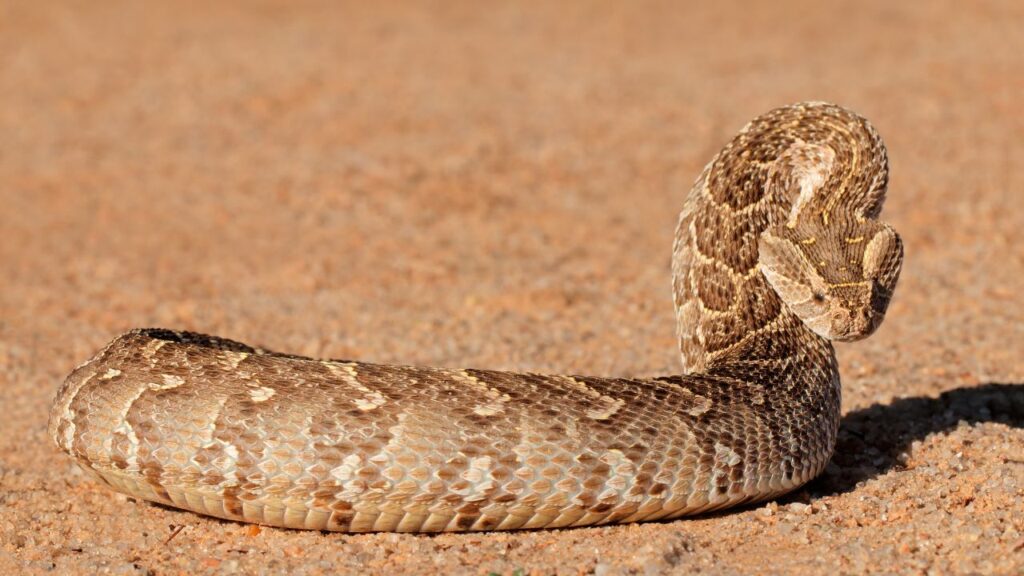
Say hello to the Puff Adder, Africa’s very own slow-motion ninja with a surprisingly deadly reputation. These vipers are found across savannahs and grasslands—from Morocco to western Arabia—and they’ve earned the grim title of being responsible for more snakebite fatalities in Africa than any other snake.
Why? Because they’re everywhere humans are, and they have zero patience for nonsense. Despite their deadly venom, Puff Adders are basically the ultimate couch potatoes of the snake world.
Most of the time, they’re sluggish, relying on camouflage to blend seamlessly into the dry grasses and sandy soil of their habitats. If danger—or dinner—passes by, they don’t chase it. Nope, they wait, perfectly still, like a green-and-brown velvet loaf of doom.
But don’t let that laziness fool you. Puff Adders are capable of bursts of surprising speed. When provoked—or when a juicy prey wanders too close—they can strike with lightning efficiency.
And their locomotion? Mostly a slow, caterpillar-style crawl using those broad ventral scales for traction…until they decide it’s time to move like the Ferrari version of snakes.
Oh, and they’re surprisingly versatile. While mostly grounded, Puff Adders can swim, climb, and even bask in low bushes. One ambitious individual was found a whopping 4.6 meters up in a tree! That’s almost 15 feet—basically the viper version of “I’m taking my ambush game to new heights.”
So, what makes the Puff Adder a true ambush artist? Patience, stealth, and the terrifying ability to turn from sloth to sprinter in a heartbeat. They’re the perfect example of: “Don’t underestimate me just because I look like I’m napping.”
3. Green Tree Python
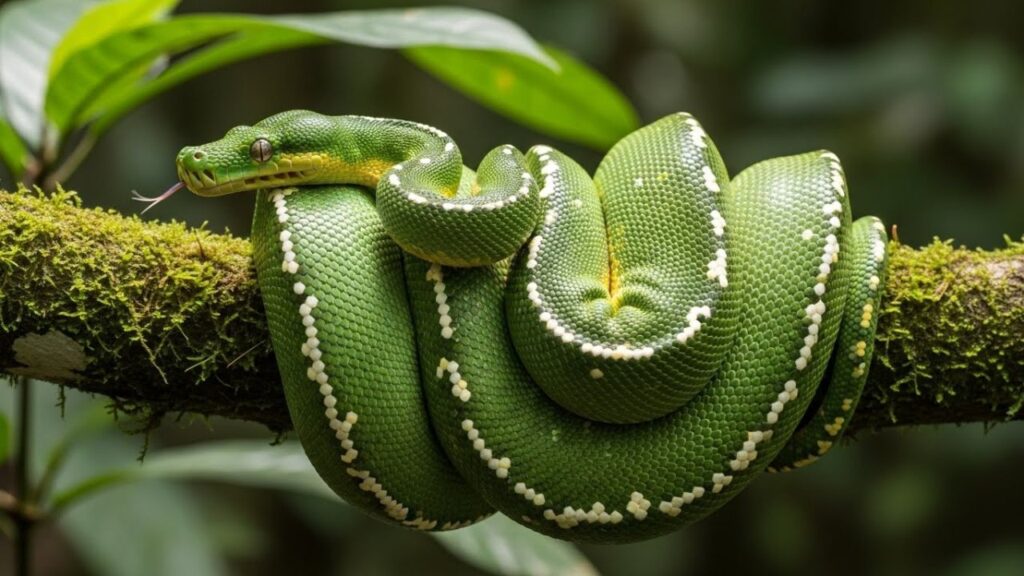
Meet the Green Tree Python, the emerald jewel of the rainforest canopy and the ultimate “branch manager” of ambush hunting. Native to New Guinea, parts of Indonesia, and northern Australia, these snakes are the masters of hanging out—literally.
Forget running around chasing prey; the Green Tree Python prefers to chill draped over a tree branch, waiting for dinner to swing by. Camouflage is their secret weapon.
Their vibrant green scales blend perfectly with the leaves, making them nearly invisible to both predators and prey. With a little splash of yellow or blue here and there, they’re basically the living version of a rainforest-themed luxury scarf—beautiful, deadly, and almost impossible to spot.
Patience is their superpower. These pythons can stay coiled for hours, sometimes even days, watching for unsuspecting birds, lizards, or small mammals to wander into striking range. And when that moment comes, the Green Tree Python doesn’t hesitate.
With a lightning-quick strike, they seize their prey and coil around it, applying a slow, crushing hug until dinner is secure. It’s ambush hunting with a touch of dramatic flair.
Unlike the more grounded vipers we’ve met, Green Tree Pythons live in the trees, making them expert acrobats. They can wrap around branches, hang upside down, and even slither along narrow vines without losing balance. Basically, they’re the yoga masters of the snake world—flexible, graceful, and deadly.
4. Emerald Tree Boa
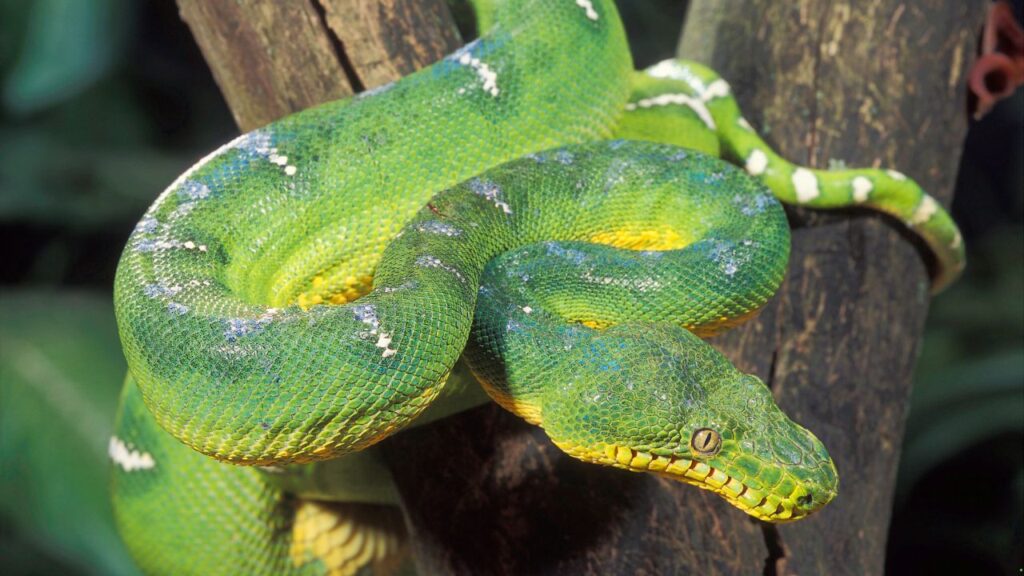
Native to the Amazon Basin and neighboring regions, this snake spends most of its life hanging out—literally—draped over tree branches like a piece of emerald jewelry. But don’t be fooled by its glamorous appearance; this boa is a patient, stealthy predator with some serious bite power.
Emerald Tree Boas are the masters of waiting. While most of us are running around, checking emails, or panicking about dinner, these snakes simply coil on a branch and let dinner come to them.
Birds, rodents, and other small critters have no idea what’s lurking above, thanks to the snake’s brilliant camouflage. Its vivid green scales and delicate white markings mimic the sunlight flickering through the canopy, making it almost invisible.
And if prey wanders too close? The boa strikes with astonishing precision, using its long, sharp teeth and powerful jaw muscles to seize and constrict its meal. Those teeth are impressively long relative to its head, perfect for snagging unsuspecting birds or mammals.
Unlike more energetic snakes, the Emerald Tree Boa is all about efficiency. Why expend energy chasing prey when the world can come to you? Coiled, draped, and perfectly camouflaged, it’s a living testament to the philosophy: “Patience pays off… especially when you’re a snake.”
So next time you imagine a snake as a slithery, menacing creature on the ground, picture the Emerald Tree Boa: a serene, hanging green predator, silently plotting its next ambush while looking like the rainforest’s most elegant accessory.
5. Sidewinder Rattlesnake
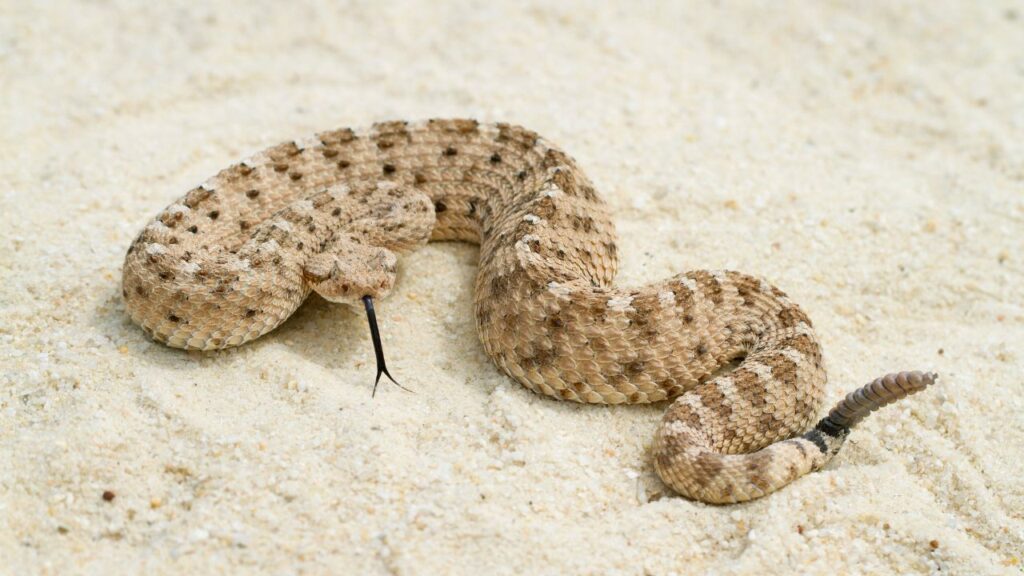
Say hello to the Sidewinder Rattlesnake, the desert’s own sandy stealth artist. Also called the horned or sidewinder rattlesnake, this relatively small snake—usually 18 to 32 inches long—is packed with lethal efficiency and an unusual style of movement that looks like it’s moonwalking across the dunes.
True to its name, the sidewinder doesn’t slither like a regular snake. Instead, it “sidewinds” across the desert floor, lifting sections of its body in a fluid, sideways motion that leaves those perfectly S-shaped tracks in the sand.
It’s not just for show—this movement helps it stay cool on hot desert days and sneak across loose sand without sinking. Basically, it’s a snake with a built-in hoverboard. According to A-Z Animals, sidewinders are shy but deadly ambush hunters.
They’ll bury themselves in the sand like a scaly ninja, waiting for unsuspecting rodents, birds, or lizards to wander by. Thanks to their heat-sensing pits, these vipers can literally “see” the infrared signature of prey, striking with precision once their target is within reach.
Behavior varies with the weather: during cooler months, they’re daytime hunters, while in scorching heat, they switch to nocturnal life. Some even go into brumation when it’s too chilly—basically snake-level hibernation.
And despite their fearsome reputation, sidewinders are more likely to bite accidentally when threatened than to attack deliberately. They’re cautious, clever, and masters of timing—the perfect desert ambush predator.
With their sleek desert camouflage, unique movement, and deadly patience, the Sidewinder Rattlesnake proves that even in the harshest environments, ambush hunting can be an art form.
6. Bushmaster
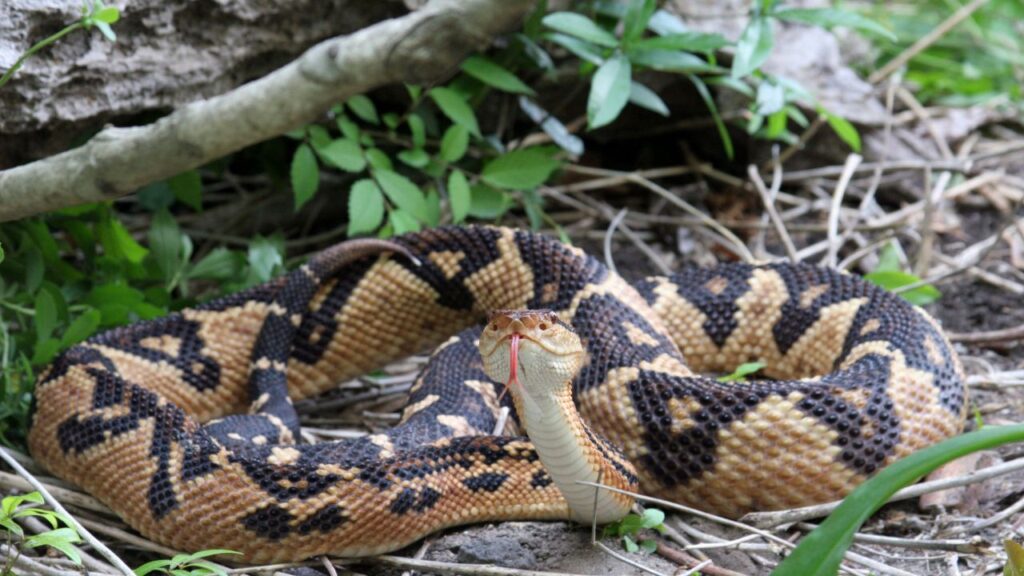
Meet the Bushmaster, the “Amazonian heavyweight” of most venomous species. This is no ordinary snake—it’s the longest venomous snake in the Western Hemisphere, often stretching 7 to 10 feet, with legends of some reaching a jaw-dropping 13 feet!
Its appearance is a masterpiece of natural camouflage. The snake’s brown-to-orange base color, patterned with dark geometric “saddles,” looks like a beaded work of art. You’d think such vivid markings would make it stand out, but in the dappled light of the rainforest, it blends in perfectly.
Ambush hunting is where the Bushmaster truly shines. Though its venom isn’t the deadliest among vipers, it delivers a hefty dose through impressively long fangs—up to 2 inches!
Motionless among leaf litter, it waits for rodents or small mammals to wander by, striking with deadly precision. And if threatened? Unlike more timid snakes, the Bushmaster can actually rear up and chase you—a reminder that even the most patient hunters have their limits.
In short, the Bushmaster is beauty and danger rolled into one colossal package: enormous, camouflaged, patient, and capable of turning a quiet rainforest walk into a very tense encounter.
7. Eastern Copperhead
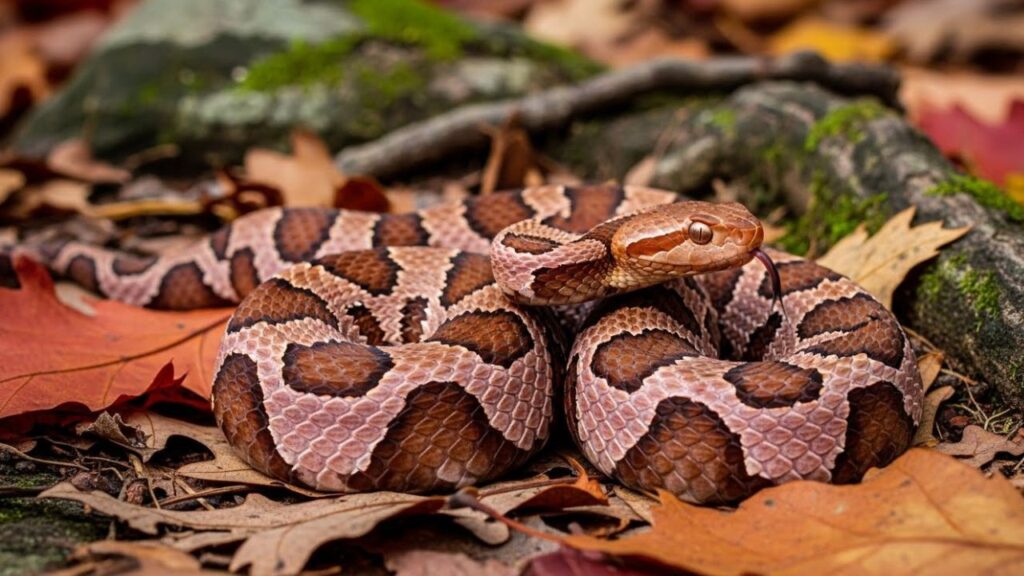
Meet the Eastern Copperhead, North America’s ultimate camouflage expert. With its coppery head and beautifully patterned body, this snake blends so perfectly into fallen leaves that you might step over it without even noticing—until it strikes. Think of it as nature’s version of stealth mode.
Eastern Copperheads are true ambush predators. Rather than chasing down prey, they lie in wait, perfectly still, letting unsuspecting mice, frogs, or insects wander right into striking range.
And when they strike? It’s lightning-fast precision—like a tiny, venomous ninja in autumn foliage. Despite being venomous, Copperheads are generally shy and non-aggressive. They prefer to freeze or slither away rather than bite.
Their strikes are mostly defensive—or for lunch—but they deliver enough venom to subdue their prey efficiently.
With their masterful camouflage, patience, and precise strikes, Eastern Copperheads prove that you don’t need speed to be a deadly hunter—sometimes, the best strategy is simply waiting in the right spot, blending in, and letting opportunity come to you.
8. Eyelash Viper
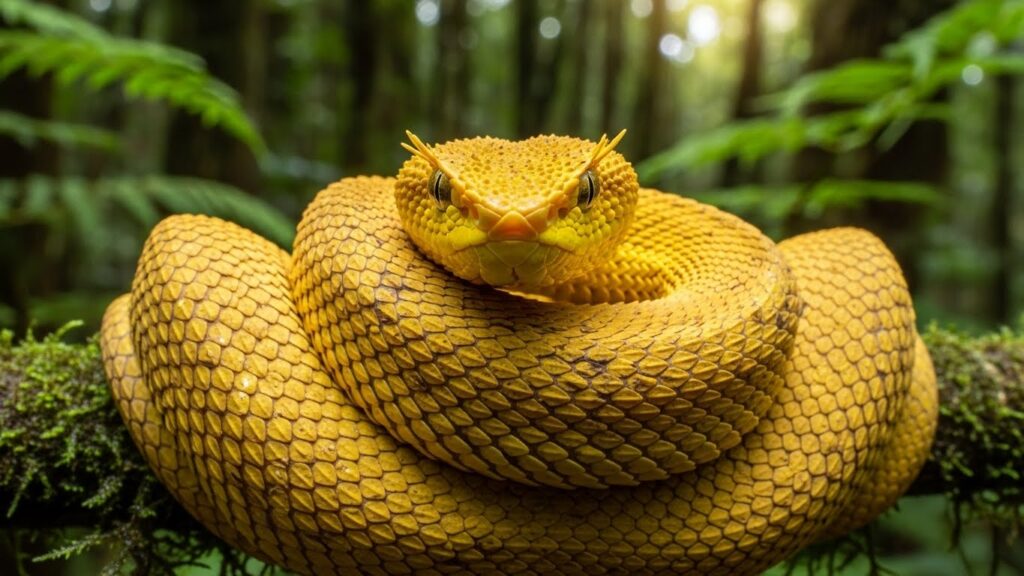
Meet the Eyelash Viper, the rainforest’s ultimate diva with a flair for dramatic camouflage. Named for the tiny, horn-like scales above its eyes that look like eyelashes, this little viper is proof that good things really do come in small, venomous packages.
Native to Central and South America, Eyelash Vipers spend almost their entire lives in the trees, coiled gracefully on branches like living jewelry.
Their vibrant colors—ranging from yellow and green to fiery red—allow them to blend perfectly with flowers, leaves, and fruit, making them almost invisible to both prey and predator. It’s ambush hunting with a fashion-forward twist.
Patience is key for these little predators. They’ll stay perfectly still for hours, waiting for birds, frogs, or lizards to pass within striking distance.
When that moment comes, their strike is lightning-quick and precise, with venom that quickly immobilizes prey. And with those tiny “eyelashes,” they look like they’re ready for a selfie—even as they’re about to snap up dinner.
Despite their delicate appearance, Eyelash Vipers are serious hunters. They combine stealth, patience, and deadly accuracy in a package smaller than most of their victims. If ambush hunting were an art form, this viper would be hanging in the Louvre.
9. Death Adder
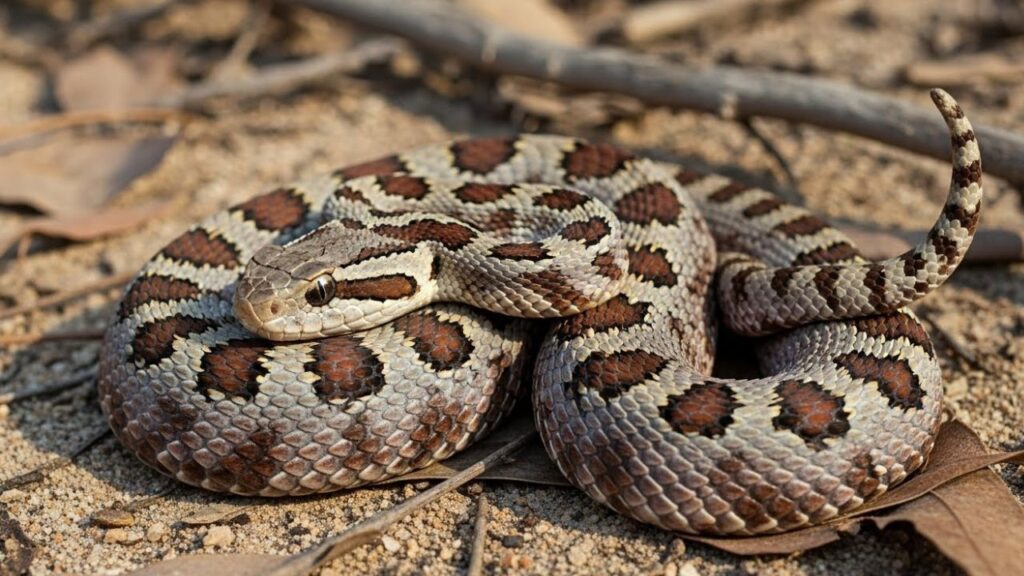
Meet the Death Adder, Australia’s ultimate ambush assassin. With a name like that, you know this snake doesn’t mess around—and it absolutely lives up to its reputation.
Short, stocky, and equipped with a wide, triangular head, the Death Adder looks almost like a leaf or piece of debris on the forest floor, making it a perfect expert at staying hidden. This snake’s hunting style is pure patience in action.
Unlike other vipers that slither around, the Death Adder stays perfectly still, often lying in wait for days at a time. It wiggles its tail like a worm or insect, a clever lure for unsuspecting birds, lizards, or small mammals. When prey comes close enough—boom!
Lightning-fast strike, and the prey is immobilized with some of the most potent venom in the world. Ambush hunting at its most efficient.
Despite its fearsome reputation, the Death Adder is surprisingly shy around humans. Most bites happen when someone accidentally steps too close or disturbs the snake. Otherwise, it’s content to sit, blend in, and let dinner wander by.
In short, the Death Adder is the embodiment of “stillness is power.” With its lethal precision, deadly venom, and clever camouflage, it proves that sometimes, the best strategy isn’t speed—it’s patience, patience, and a tiny waggle of the tail.
Conclusion
Snakes that are masters of ambush showcase extraordinary hunting adaptations across diverse habitats. From the kapuas mud snake and pit vipers to the elusive worm snake and the highly specialized tentacled snake, these venomous snakes and other snake species lie in wait for unsuspecting prey such as hunting worms and small lizards.
Some, like the boa constrictor, rely on stealth rather than venom, while others exploit bright colors or living ornaments to lure prey. Often rarely encountered, these snakes thrive in their native range of Southeast Asia, using sunlight filtering and other environmental cues to remain undetected, demonstrating why they are truly masters of ambush.
