




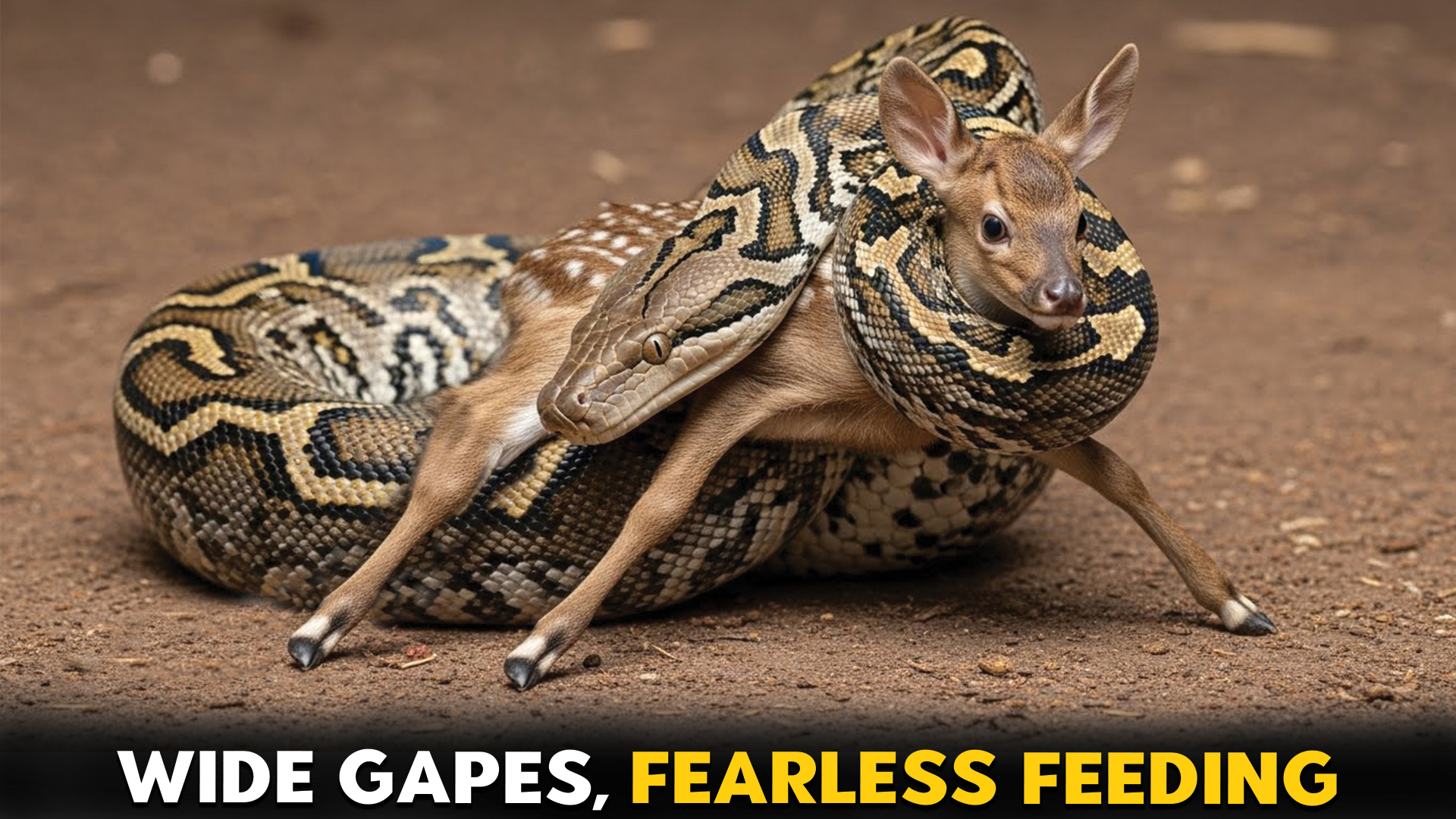
Imagine watching a snake slowly unhinge its jaws and swallow prey that looks impossibly large. No chewing, no tearing—just pure biological magic. Some snakes possess an extraordinary ability: an extremely large gape that allows them to consume prey far bigger than their own head.
These snakes don’t just open their mouths wide; their skulls are specially designed with flexible ligaments and independently moving jaw bones. This remarkable structure lets them stretch, adjust, and maneuver prey down their throats with precision and patience.
From massive constrictors that tackle deer-sized meals to stealthy ambush predators that surprise their prey, gape size plays a crucial role in hunting success. Understanding how these snakes feed offers a deeper appreciation for evolution’s creativity and efficiency.
We’ll explore seven snakes known for their extremely large gape when feeding, uncovering what makes them so unique and why their feeding habits continue to captivate wildlife enthusiasts and researchers alike.
Fun Fact: Snakes don’t unhinge their jaws—but their skull bones are loosely connected, allowing them to open their mouths incredibly wide and swallow prey much larger than their heads.
Snakes Known for Their Extremely Large Gape When Feeding
1. Reticulated Python
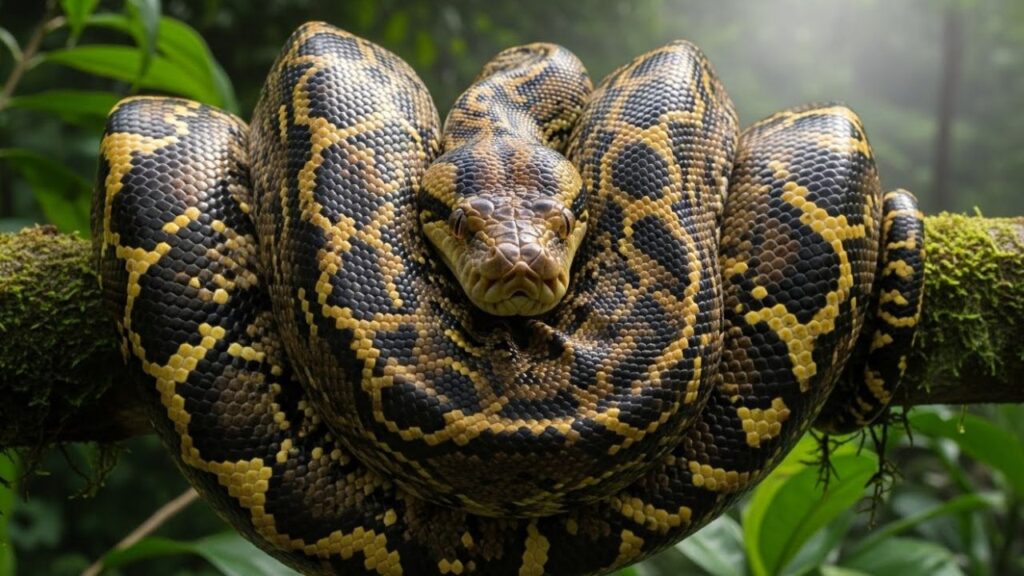
Native to Southeast Asia, this snake is famous (and slightly infamous) for having an absolutely ridiculous gape. We’re talking “How is that physically possible?” levels of mouth expansion. The reticulated python doesn’t just open wide—it unhinges reality.
Thanks to highly flexible jaw ligaments (snakes don’t actually “unhinge” their jaws, but it feels like they do), a reticulated python can swallow prey much wider than its own head. Deer. Pigs. Occasionally, something that makes humans do a double-take and Google nervously.
Think of it less like eating and more like slow-motion, full-body commitment. The reticulated python is the longest snake species in the world, often exceeding 20 feet. When a snake is basically the length of a city bus, it makes sense that its mouth operates on the same logic as sweatpants after Thanksgiving—maximum flexibility.
Its feeding strategy is:
Constrict (hug first, ask questions never)
Open mouth to an alarming degree
Swallow prey whole, like it’s trying to erase evidence
Despite their fearsome reputation, reticulated pythons are generally not aggressive toward humans. They’d much rather avoid us. That said, they are apex predators, so “respectful distance” is the relationship status here.
In short, the Reticulated Python isn’t just known for its large gape—it’s the poster snake for extreme feeding mechanics. Equal parts fascinating, intimidating, and weirdly impressive.
2. Green Anaconda
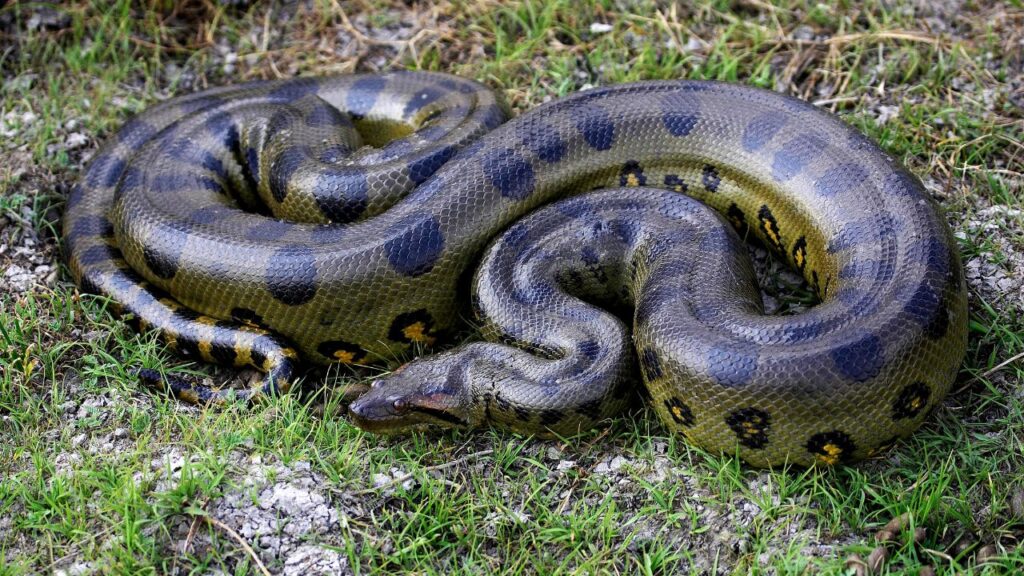
The Green Anaconda is the undisputed heavyweight champion—the kind of snake that doesn’t just open wide, it means business. Found lurking in the rivers, swamps, and flooded forests of South America, green anacondas are among the longest snakes on Earth and the largest by weight.
Translation: they’re not just long noodles—they’re thick, powerful, protein-powered noodles. Britannica says Green anacondas have a metabolism so slow it makes sloths look caffeinated. After a massive meal, they can go weeks or even months without eating again. One huge lunch, then it’s basically nap season.
Green anacondas are nonvenomous, so no poison tricks here. Instead, they rely on:
Ambush
Camouflage
A crushing hug you do NOT want
They lie nearly invisible in murky water, using heat-sensing pit organs along their upper lips to detect warm-blooded prey nearby. Once something unlucky wanders too close—SURPRISE!—The anaconda strikes, wraps, and constricts until the prey can no longer breathe.
It’s less “attack” and more aquatic sneak + industrial-strength squeeze. Green anacondas are carnivores with an impressively flexible menu. If they can catch it and overpower it, it’s probably on the table:
Birds and fish
Capybaras (yes, the giant chill rodents)
Deer and wild pigs
Caimans
Even jaguars (nature does not play fair)
Thanks to stretchy jaw ligaments, green anacondas swallow prey whole, no matter how absurdly large it looks compared to their head. Watching this happen feels like witnessing a magic trick where the hat eats the rabbit… and then the magician.
Despite their fearsome reputation, there are no confirmed records of a green anaconda successfully eating a human. That said, unsuccessful attacks have occurred, which is more than enough reason to respect their personal space—and by “personal space,” we mean the entire swamp.
3. Boa Constrictor
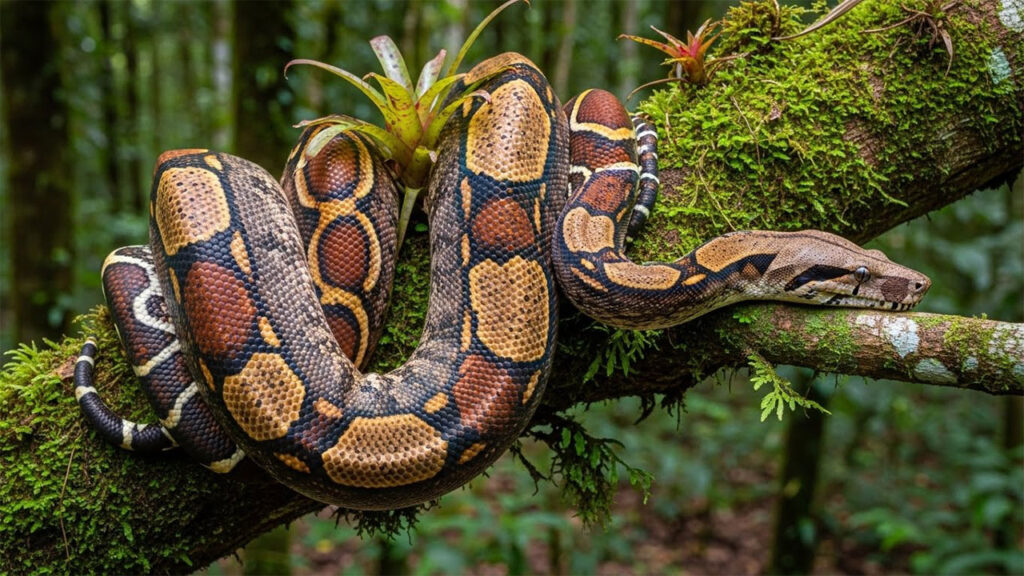
If the Green Anaconda is the heavyweight bruiser and the Reticulated Python is the jaw-dropping show-off, the Boa Constrictor is the cool, collected expert—the snake that doesn’t need flash to be impressive. It just quietly opens its mouth way wider than seems legal and gets the job done.
Found throughout Central and South America (and occasionally starring in jungle documentaries and questionable adventure movies), boa constrictors are powerful, adaptable, and masters of the slow, methodical meal.
Like its bigger cousins, the boa constrictor is nonvenomous. Instead of venom, it relies on constriction—wrapping its muscular body around prey and tightening with every exhale until breathing becomes impossible.
Boa constrictors may not be the longest or heaviest snakes on Earth, but don’t let that fool you—their jaw flexibility is top-tier. Specialized ligaments allow their mouths to stretch wide enough to swallow prey much larger than their head, all in one impressive, slow-motion act.
Boa constrictors are carnivores with a practical palate. Their meals include:
Birds
Rodents
Lizards
Monkeys
Occasionally, wild pigs and other medium-sized mammals
Boas have a slow metabolism, meaning once they finish a large meal, they can go weeks without eating again. After dining, they’ll often lie low, digesting quietly like a food critic reflecting on a very satisfying entrée.
Boa constrictors are generally calm and predictable, especially compared to some other large snakes. While bites and defensive strikes can happen if they feel threatened, they’re not known for attacking humans as prey.
4. Burmese Python
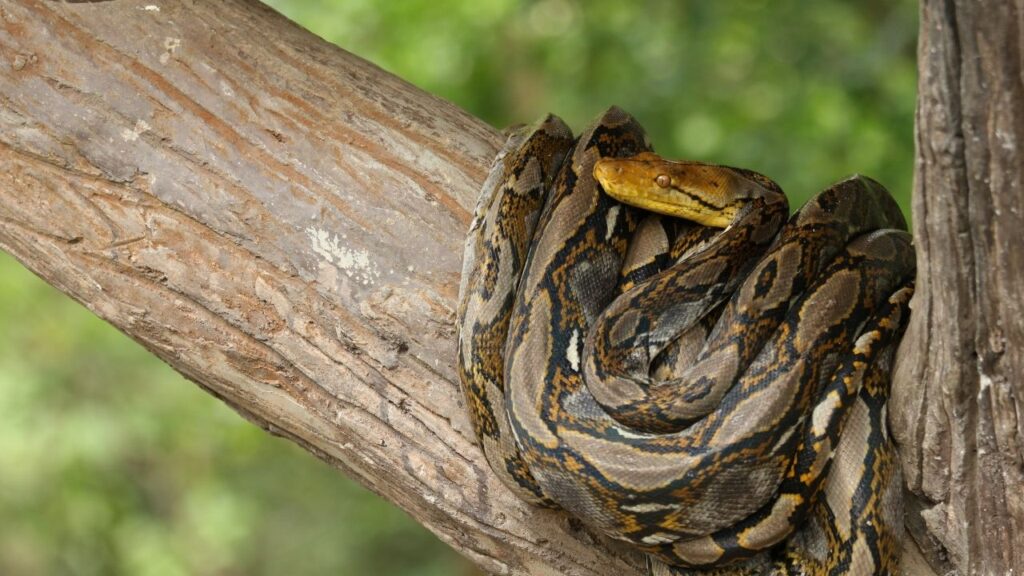
Native to Southeast Asia, Burmese pythons are among the largest snakes in the world, and they’re especially famous for their jaw-dropping gape and unbothered attitude while eating.
Burmese pythons possess highly elastic ligaments in their jaws that allow them to open their mouths far wider than their head. This incredible flexibility lets them swallow prey whole—slowly, methodically, and with zero concern for how ridiculous it looks.
Like other large pythons, Burmese pythons are nonvenomous. Instead, they rely on constriction—wrapping around prey and tightening their coils until breathing stops.
It’s quiet. It’s efficient. It’s the reason “don’t underestimate calm animals” exists. These snakes are not picky eaters. Their diet includes:
Birds
Rodents
Rabbits
Deer
Wild pigs
Alligators (yes, really)
After swallowing a large meal, Burmese pythons can go weeks or even months without eating again. They’ll spend that time resting, digesting, and basically living their best post-buffet life.
Burmese pythons are generally docile around humans, but their size alone means interactions should be taken seriously. While rare incidents involving humans have occurred, they don’t view people as regular prey.
The Burmese Python is a perfect example of how extreme gape + immense size + patience equals one of nature’s most impressive eaters. Calm on the outside, wildly capable on the inside, this snake proves that sometimes the most astonishing feats happen in total silence—followed by a very long nap.
5. African Rock Python
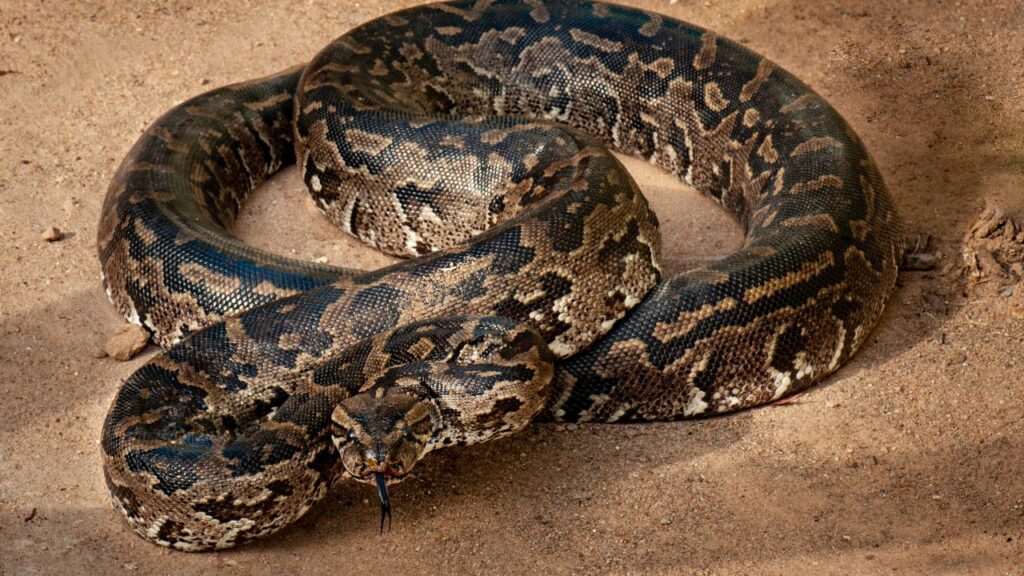
If snakes had a reputation for not asking permission, the African Rock Python would be legendary. This colossal constrictor—specifically the Central African rock python (Python sebae)—is Africa’s largest snake and one of the most powerful members of the python family.
Native to sub-Saharan Africa, this heavyweight lives everywhere from lush forests to areas flirting with desert conditions—though it prefers to stay close to water, because hydration and ambush opportunities are both important lifestyle choices.
African rock pythons are masters of adaptability. During the dry season, they go dormant, conserving energy and waiting patiently for better hunting conditions. Basically, they hit pause on life until the environment cooperates again.
Wikipedia noted that, like all pythons, the African rock python is nonvenomous. Instead, it relies on brute strength and technique. Once it grabs its prey, it coils around it and tightens with every exhale the victim makes.
Thanks to highly flexible jaw ligaments, the African rock python can swallow prey shockingly large for its head size. We’re not talking snacks—we’re talking full-course meals:
Large rodents
Monkeys
Warthogs
Antelopes
Vultures and fruit bats
Monitor lizards
Crocodiles (yes, crocodiles)
Fish, when the mood strikes
In suburban areas, it has also been known to take dogs, goats, poultry, and rats, proving that it adapts its menu based on what’s available. Truly a locavore.
One of the most jaw-dropping facts? African rock pythons have been documented eating animals as large as antelopes. Watching one swallow something with legs longer than its own head feels illegal—even though it’s 100% natural and anatomically sound.
6. King Cobra
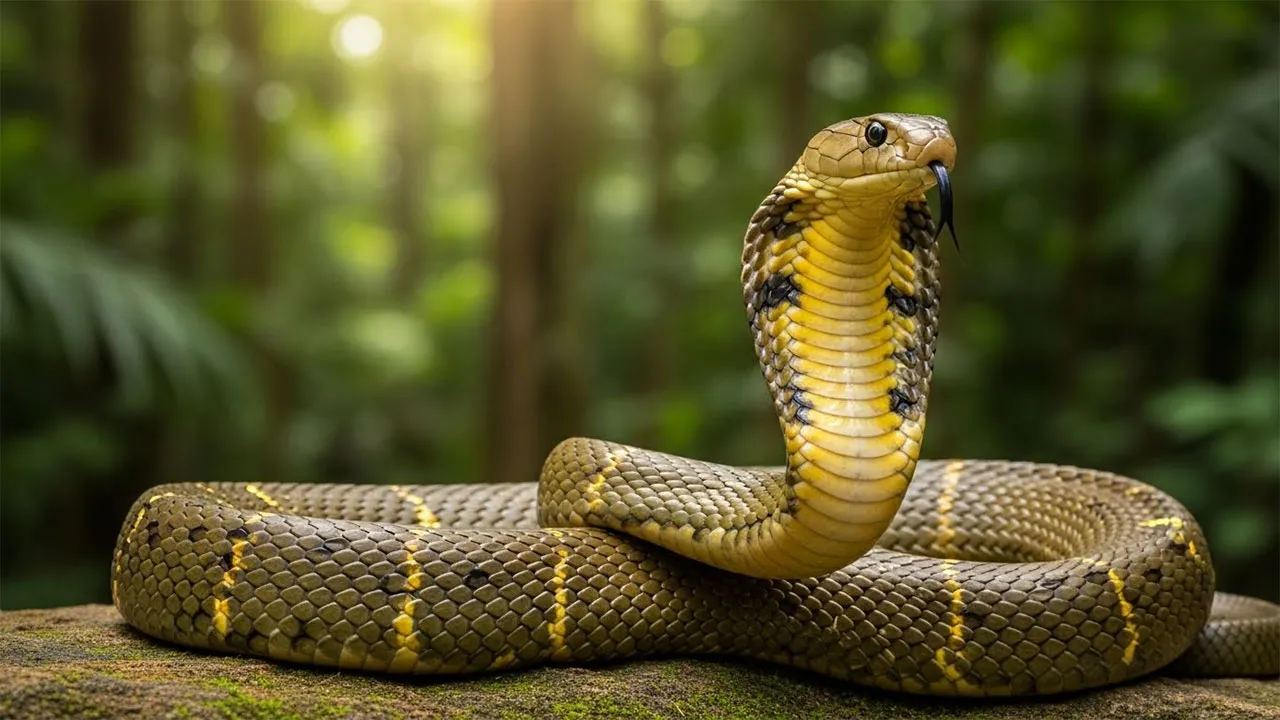
When people hear King Cobra, they usually think venom, hood, and dramatic rise music in the background. But beyond the royal flair and toxic reputation lies another underrated superpower: an impressively large gape that lets this snake dine like a true monarch.
As the longest venomous snake in the world, the King Cobra (Ophiophagus hannah) combines elegance, intimidation, and a mouth that opens wide enough to handle meals most snakes wouldn’t dare attempt.
Yes, the King Cobra is venomous—extremely so—but venom isn’t how it eats. Once prey is subdued, the cobra relies on jaw flexibility and muscle control to swallow its meal whole, just like its constrictor cousins.
Its jaws are connected by stretchy ligaments, allowing it to open its mouth far wider than you’d expect from such a sleek, upright snake. Royal posture, expandable mouth. Multitasking. The King Cobra’s scientific name literally means “snake eater.” Its diet consists mainly of:
Other snakes (pythons included—bold choice)
Lizards
Occasionally, rodents and birds
Some of its meals are nearly as long as the cobra itself, which means swallowing them requires a gape that can only be described as deeply unsettling. Watching a King Cobra eat another snake is like watching a living ribbon slowly vanish into a zipper.
Unlike ambush predators, King Cobras often actively hunt, using excellent eyesight and scent tracking. Once they strike and inject venom, they wait patiently before swallowing, because even royalty knows rushing digestion is unbecoming.
King Cobras are known for their intelligence and awareness. They don’t waste venom or effort, and they usually avoid unnecessary conflict with humans. Still, when threatened, they make their stance very clear—hood flared, body raised, message delivered.
7. Gaboon Viper
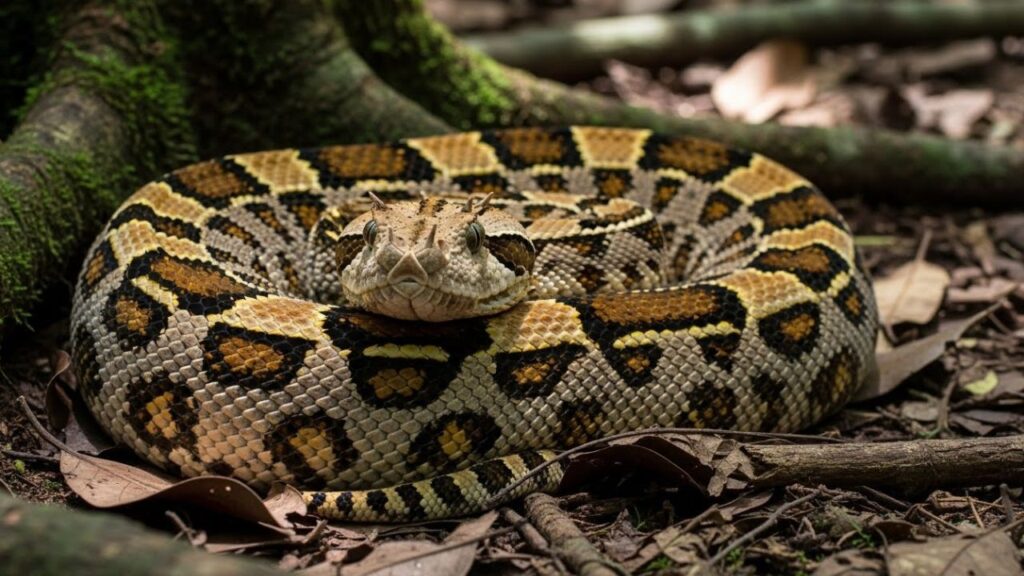
What truly earns the Gaboon viper a place on this list is its enormous gape. Its broad, triangular head and highly flexible jaw structure allow it to open wide enough to swallow surprisingly large prey whole—after delivering a venomous strike and holding on until the struggle ends.
According to the National Zoo, Gaboon vipers are nocturnal, which is one reason bites on humans are rare. By day, they lie perfectly camouflaged on the forest floor, blending in so well that even experienced observers can miss them. When prey wanders close:
Lightning-fast strike
Firm grip
Calm swallow
Adult Gaboon vipers have no natural predators, which is a solid flex in the animal kingdom. Juveniles, however, sometimes fall victim to secretary birds, proving that bravery (and powerful legs) can occasionally overcome venom.
Mating typically occurs during the rainy season, and male Gaboon vipers compete in surprisingly polite combat. They strike at each other with mouths closed, pause between rounds, and settle disputes without serious injury.
With a massive body, enormous gape, and venom delivery system that means business, this snake proves you don’t need to rush—or roar—to be one of nature’s most formidable predators. Sometimes, all it takes is patience… and a very big mouth.
Conclusion
Snakes known for their extremely large gape include both small snakes, like the harmless little African snake and African egg-eating snakes, and big snakes, such as the Python molurus bivittatus and western diamondback rattlesnake. Species like the Gans egg eater can swallow a quail egg or bird eggs, leaving an empty shell or broken shell behind. Research shows that their extreme gape evolved through stretchy skin, a soft mouth, and flexible lower jaws and lower jawbones, giving a maximal gape and large gape area relative to head length, body size, and prey shape.
These dietary generalists can swallow bigger prey, sometimes more than twice that or times larger than their own size, gaining more calories with a modest amount of effort. Even little guys like rat snakes or black rat snakes can handle surprisingly large meals, a fact that has earned mention in the Guinness World Record and draws people focus, despite being pretty scary on a small scale.
