




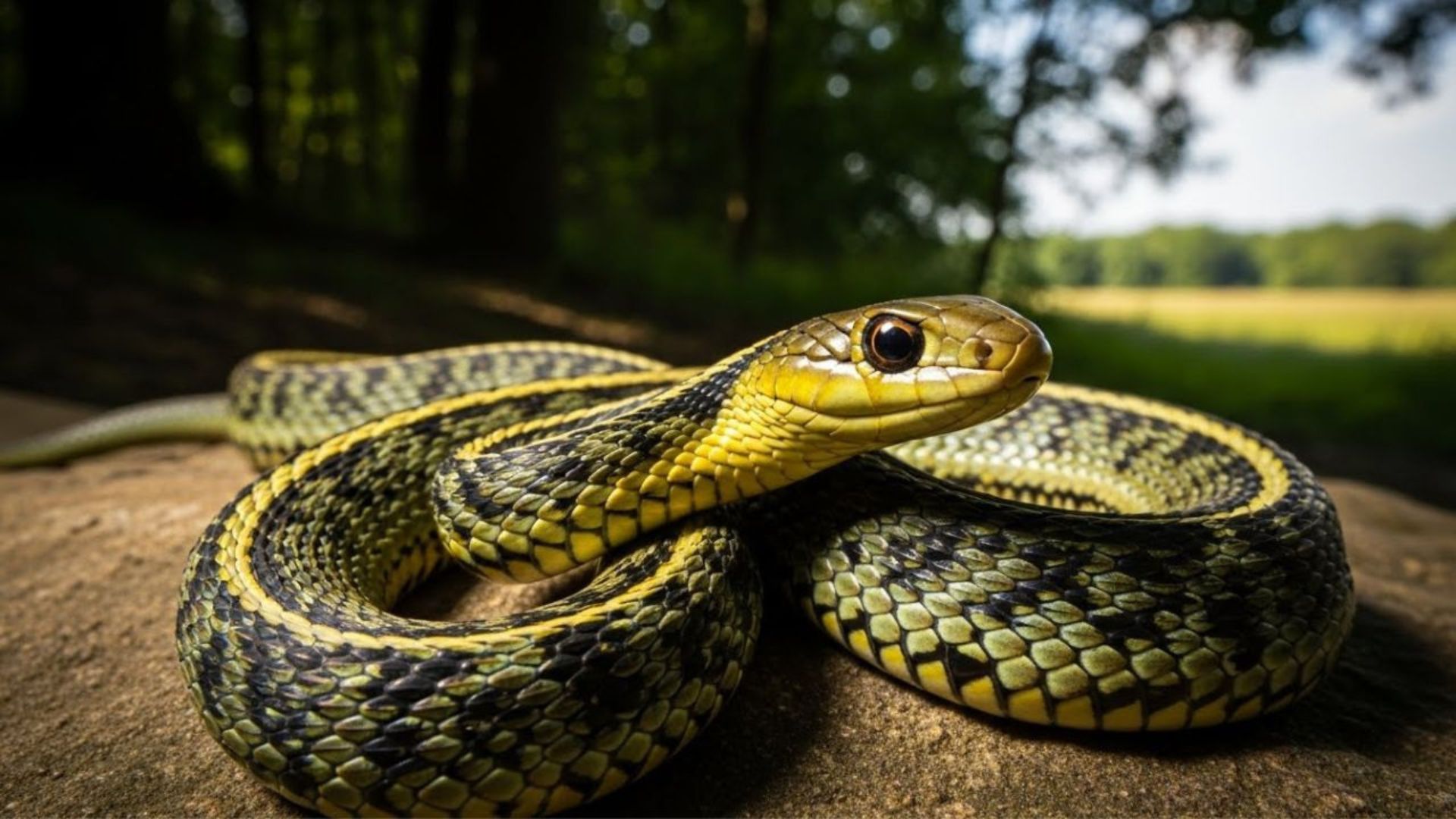
Some snakes are masters of adaptation, capable of thriving in a wide range of climates. From scorching deserts to freezing mountains, and humid rainforests to temperate wetlands, these versatile reptiles have evolved to survive where others could not.
Their resilience highlights nature’s incredible ingenuity and their ability to cope with environmental extremes. Survival in different climates requires more than toughness. These snakes adjust behavior, metabolism, and even hunting strategies according to the conditions they face.
Some hibernate or enter brumation during cold seasons, while others are nocturnal to escape daytime heat. Morphology can also play a role, from thickened skin to specialized scales that reduce water loss or provide insulation against cold environments.
Studying these adaptable species offers insight into how life can thrive under seemingly impossible conditions. They are proof that snakes are far more than simple predators—they are evolutionary marvels, capable of inhabiting habitats across the globe.
Join us as we explore the species that redefine resilience and show how snakes conquer climates from the icy peaks to sun-baked plains.
Fact: From the scorching deserts to extreme cold mountains, species like the garter snake and rattlesnake can adjust their behavior, metabolism, and activity patterns to survive extreme temperature swings.
Snakes Known for Their Ability to Survive in Different Climates
1. Garter Snake
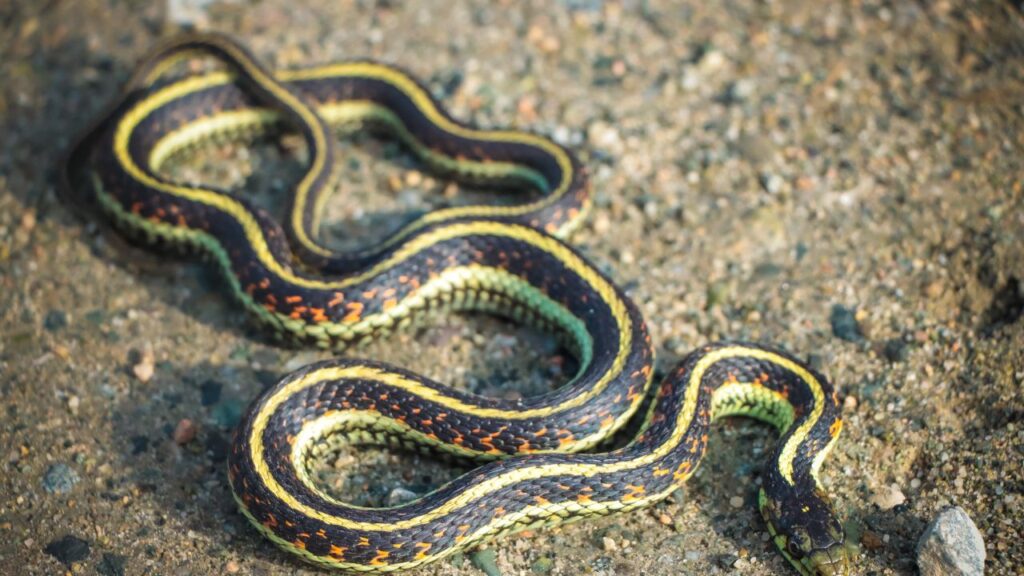
Meet the garter snake—the adventurous little traveler of the snake world. These snakes are like the Swiss Army knives of reptiles: adaptable, resilient, and always ready for a change of scenery.
Found all over North and Central America, garter snakes don’t seem to care much about where they live—they’ll make themselves at home near a sparkling stream, a calm lake, or even your backyard, Britannica noted.
Despite their sometimes slithery shyness, garter snakes are harmless to humans. That said, don’t expect them to enjoy a cuddle session. If you try to pick one up, it might bite or release a… let’s call it a “snake perfume” that’s guaranteed to clear the room. Not exactly the kind of souvenir most people want.
One of the coolest things about garter snakes is their climate versatility. Summer, winter, spring, or fall—they’ve got it covered.
In colder months, some garter snakes hibernate in cozy caves, snuggling up with their fellow snakes for warmth. They’re basically the reptilian version of a winter blanket and hot chocolate combo.
Whether you spot them darting across your garden or sunbathing on a rock by a pond, garter snakes are a testament to the power of adaptability. They’re survivors, explorers, and maybe even a little mischief-makers—all rolled into a sleek, slithery package.
2. Corn Snake
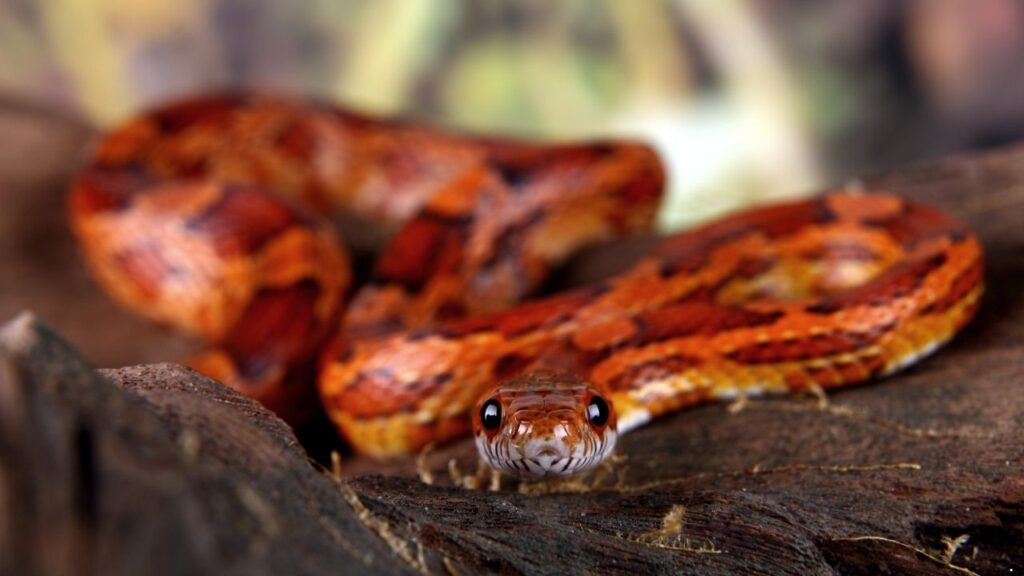
Next up in our climate-surviving snake squad is the corn snake—a true chameleon of the snake world. These snakes are as charming as they are adaptable, with patterns and colors that can make you do a double-take.
Imagine a living piece of art that can also handle chilly winters and hot summers without breaking a sweat. That’s the corn snake for you. Corn snakes are native to the southeastern United States, but they’re so flexible that they’ve thrived in many different habitats—from forests and fields to abandoned buildings.
They’re basically the real estate moguls of the snake kingdom: wherever there’s a cozy spot and a meal nearby, they’re ready to move in. One of their superpowers? Handling cold weather like pros. When it’s freezing temperatures, corn snakes will seek out burrows, crevices, or other snug hiding spots to stay warm.
And during the warmer months, they’re out and about, gracefully gliding through grass and trees like they own the place (and honestly, they kind of do).
Corn snakes are also a favorite among pet enthusiasts because of their calm nature and beautiful colors. They’re like the friendly neighbor who always has a smile—except, you know, with scales and no need for small talk.
Whether you see them in the wild or in a terrarium, corn snakes prove that being adaptable—and looking fabulous while doing it—is a skill worth mastering.
3. Eastern Kingsnake
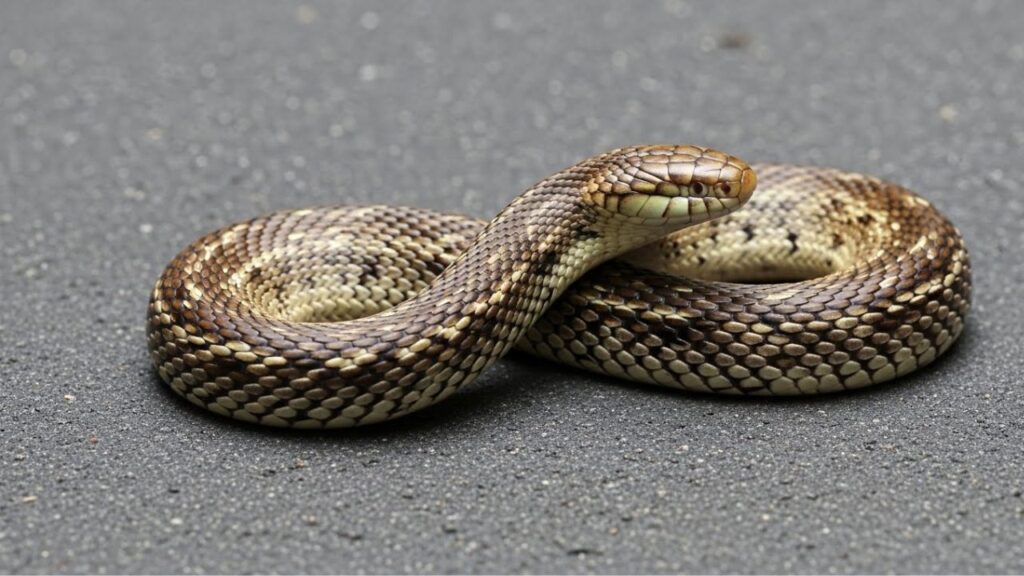
Say hello to the eastern kingsnake—a true heavyweight in the world of adaptable snakes. Known to herpetologists as Lampropeltis getula, this snake is a southeastern U.S. native that’s harmless to humans but incredibly confident in its own skin.
In fact, collectors love them not just for their striking patterns but for their fearless, go-anywhere attitude. Eastern kingsnakes are the ultimate habitat explorers. Grasslands? Check. Oak woodlands? Check. Desert, swamps, abandoned farms, low mountains—even the occasional canal or stream? Double-check.
Basically, if there’s a patch of nature with a cozy hiding spot, a kingsnake can—and probably will—make it home. They’re picky only about one thing: a thick layer of leaf litter or dense shrubs to lounge in, which makes them the masters of camouflage and comfort at the same time.
These snakes are clever about when they venture out. Wikipedia says that while often described as daytime wanderers, during the hottest months they switch to a twilight or nighttime schedule—crepuscular or nocturnal, if you want to sound fancy.
When the sun is blazing, you might find them tucked into rodent burrows, catching some shade and maybe thinking, “Ah, this is better.”
And here’s a fun tidbit: eastern kingsnakes are territorial adventurers. Their home ranges rarely overlap with other kingsnakes, so they’re kind of like solo explorers staking out their own private kingdoms. Bold, brave, and brilliantly adaptable—that’s the eastern kingsnake for you.
4. Eastern Rat Snake
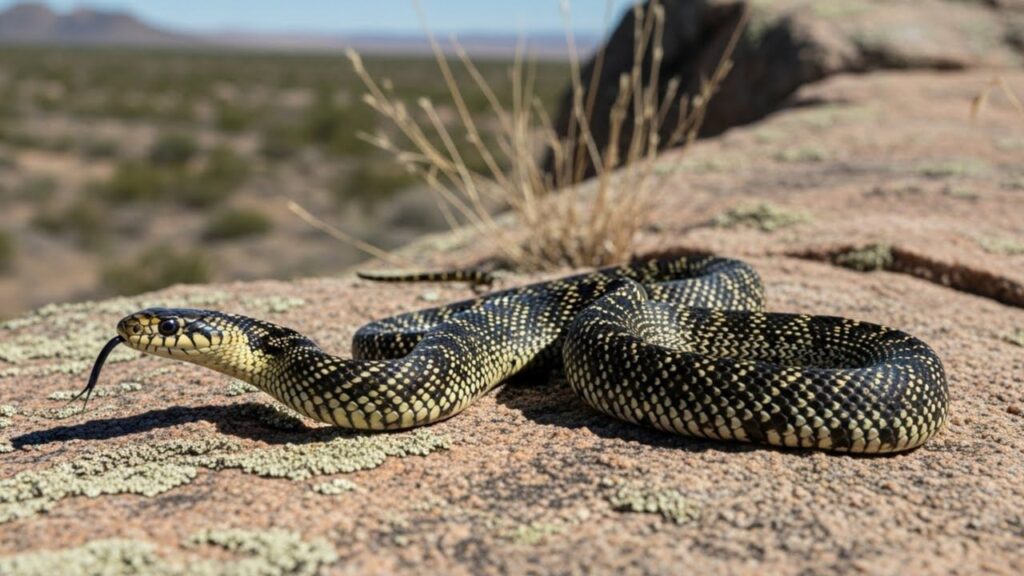
Next up, meet the eastern rat snake—a snake that’s as versatile as it is daring. These snakes are native to the eastern United States and are known for their incredible adaptability. Forests, farmlands, wetlands, even suburban backyards—if there’s a place to climb, hide, or hunt, the eastern rat snake will find it.
They’re basically the ninja of the snake world: quiet, sleek, and ready to scale anything in their path. Eastern rat snakes aren’t just ground-bound; they’re excellent climbers. Give them a tree, fence, or barn wall, and they’ll make their way up with ease, often searching for bird nests or small critters for a snack.
If you think about it, they’re like the acrobats of the reptile realm—graceful, patient, and surprisingly strategic. When it comes to temperature, eastern rat snakes are true survivors. They can handle a wide range of climates, adjusting their activity patterns to match the weather.
Too hot? They may retreat to shaded spots or hollow logs. Too cold? They hibernate in underground burrows, rock crevices, or other cozy hideaways until the warmth returns.
Despite their sometimes intimidating size—they can grow quite long—these snakes are harmless to humans. Their adaptability, climbing skills, and stealthy hunting tactics make them one of the most resourceful snakes in the eastern U.S.
So if you see one silently navigating a tree branch or sliding through tall grass, just tip your imaginary hat: here’s a snake that truly knows how to survive anywhere.
5. Ball Python
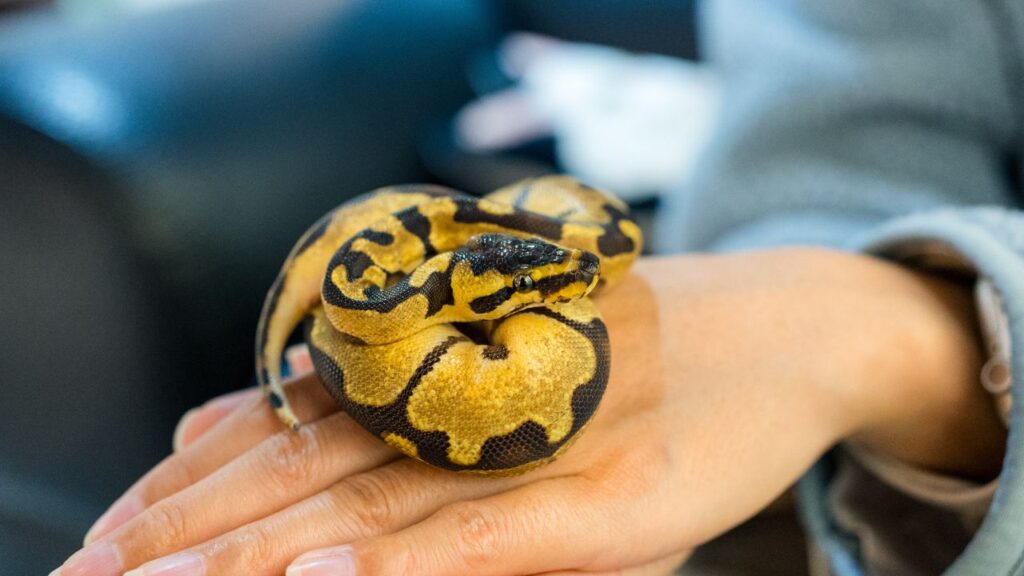
Meet the ball python—the ultimate master of personal space and relaxation. Named for their signature habit of curling into a tight, adorable ball, these snakes have practically perfected the art of “me time.” If you’ve ever wanted a reptile that embodies both charm and chill, the ball python is your go-to.
Ball pythons are slow-and-steady growers, reaching their adult size after about three years—but with the right care, they can stick around for three decades or more. That’s a long-term commitment… and a long-lasting snuggle buddy if you’re into pet snakes.
PetMD noted that being nocturnal, ball pythons do most of their prowling under the cover of night. That means feeding time should happen in the evening, when they’re wide awake and ready to hunt. And because they’re true solitary types, each ball python prefers its own cozy habitat, far from other snakes or animals.
Think of them as the introverts of the snake world—happy alone, very particular about their personal space, and occasionally just wanting to curl up and disappear.
Humidity is another secret to their comfort. A well-humidified environment helps them stay hydrated, keeps their respiratory system happy, and ensures their shed cycles go smoothly. In other words, give a ball python the right climate, and it will be a content, calm, and long-lived snake.
6. Texas Rat Snake
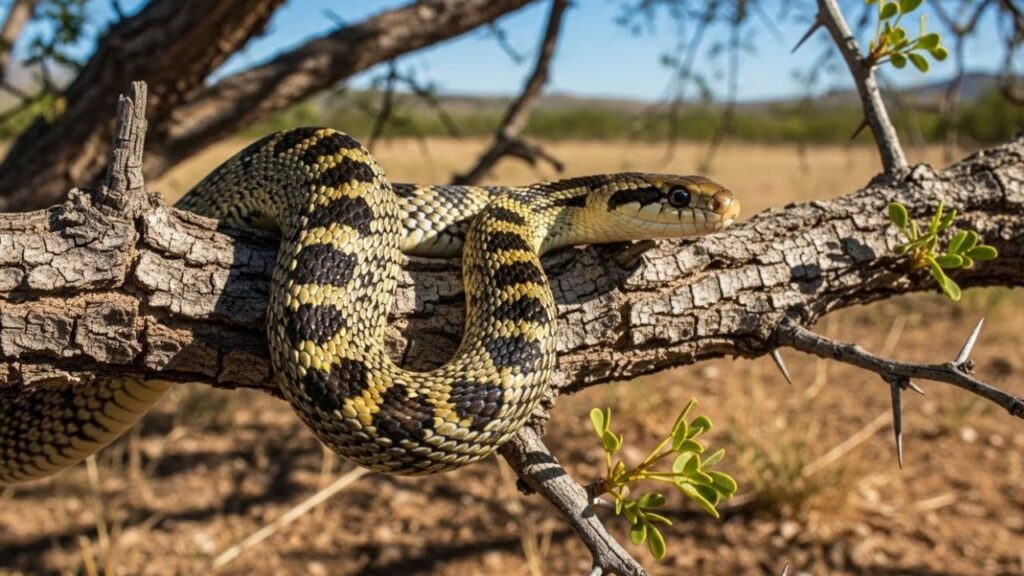
Last but definitely not least, meet the Texas rat snake—a true survivor with the independence of a cowboy.
Native to, you guessed it, Texas and surrounding areas, this snake is as versatile as the wide-open landscapes it calls home. Fields, forests, farms, and even urban edges—if there’s a spot to hunt or hide, the Texas rat snake will stake its claim.
Like its eastern cousin, the Texas rat snake is an excellent climber. Trees, fences, or barns—nothing is out of reach. They often scale high perches in search of bird eggs or small rodents, showing off both patience and acrobatic skill. You could say they’re part ninja, part mountaineer, and all predator.
Texas rat snakes are also adaptable when it comes to climate. They can thrive in hot, dry conditions or cooler, shaded areas, adjusting their activity patterns as needed.
When the temperatures drop, they retreat into burrows or crevices for a cozy hibernation, and when it warms up, they’re out and about, showing off their stealthy hunting skills.
Despite their size and hunting prowess, these snakes are harmless to humans. With their mix of independence, climbing skills, and climate adaptability, the Texas rat snake proves it can survive—and thrive—just about anywhere, making it a true champion of the snake world.
7. Mexican Black Kingsnake
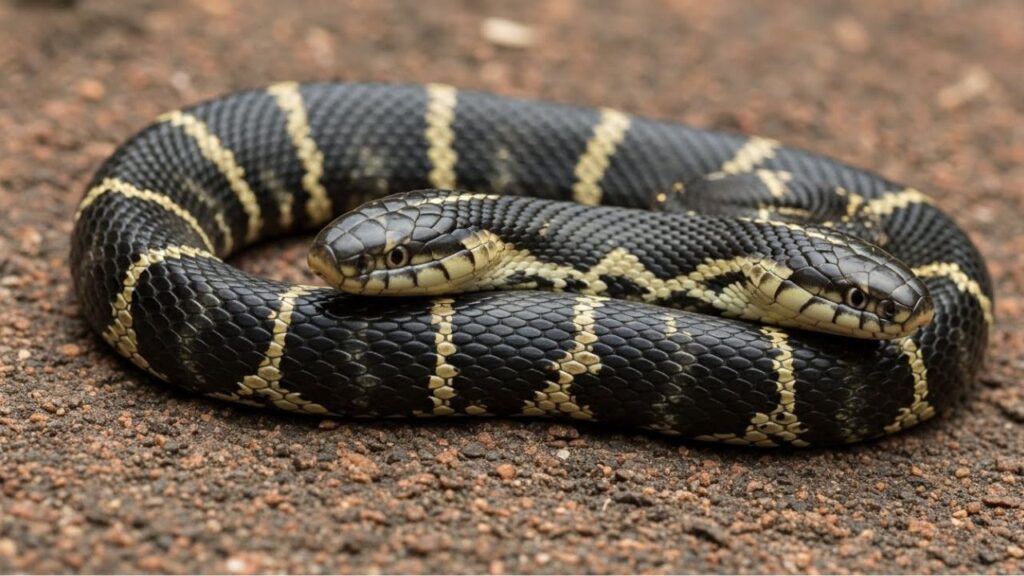
Meet the Mexican black kingsnake—a snake that’s as mysterious as it is resilient. With its glossy, jet-black scales, it looks like a midnight ribbon slinking through the landscape, ready to adapt to whatever environment comes its way.
Native to Mexico and parts of the southwestern U.S., this snake is a master of survival in varied climates—from arid deserts to semi-wooded areas. These kingsnakes are fearless hunters.
They’ll eat just about anything they can catch, including other snakes (even venomous ones!), making them the ultimate snake ninja of their ecosystem. Despite their predatory skills, they’re harmless to humans, which is great because who wants to make enemies out of such a sleek, elegant creature?
The Mexican black kingsnake is also impressively flexible when it comes to temperature. During scorching days, it’ll find shelter in burrows or under rocks; in cold temperatures, it can emerge to explore and hunt. They’re the true embodiment of “go with the flow”—or, in their case, “slither with the flow.”
Whether you see one gliding across a desert floor or hidden in shaded underbrush, the Mexican black kingsnake proves that adaptability, stealth, and a bit of flair make for the ultimate survivalist. Sleek, smart, and surprisingly social in captivity, it’s a snake that truly knows how to handle life’s ups and downs.
Conclusion
Snakes, known for their ability to survive in different climates, are remarkable cold-blooded animals capable of adapting to extreme environments and extreme temperatures. Snake species like the European adder, Green anaconda, and Indian cobra demonstrate resilience, surviving freezing temperatures, aquatic habitats, loose sand, and even near the Arctic Circle.
Most snakes adjust their body temperature to cope with extreme weather conditions, whether enduring winter months under the frost line or thriving in warmer climates across South America, Sub-Saharan Africa, and Southeast Asia.
Their adaptability allows them to hunt small mammals, birds, reptiles, and other prey, maintain populations despite climate change, and withstand long periods in harsh conditions. These resilient snakes illustrate the incredible ability of reptiles to survive in diverse environments around the world, proving their mastery over temperatures that would challenge most other animals.
