




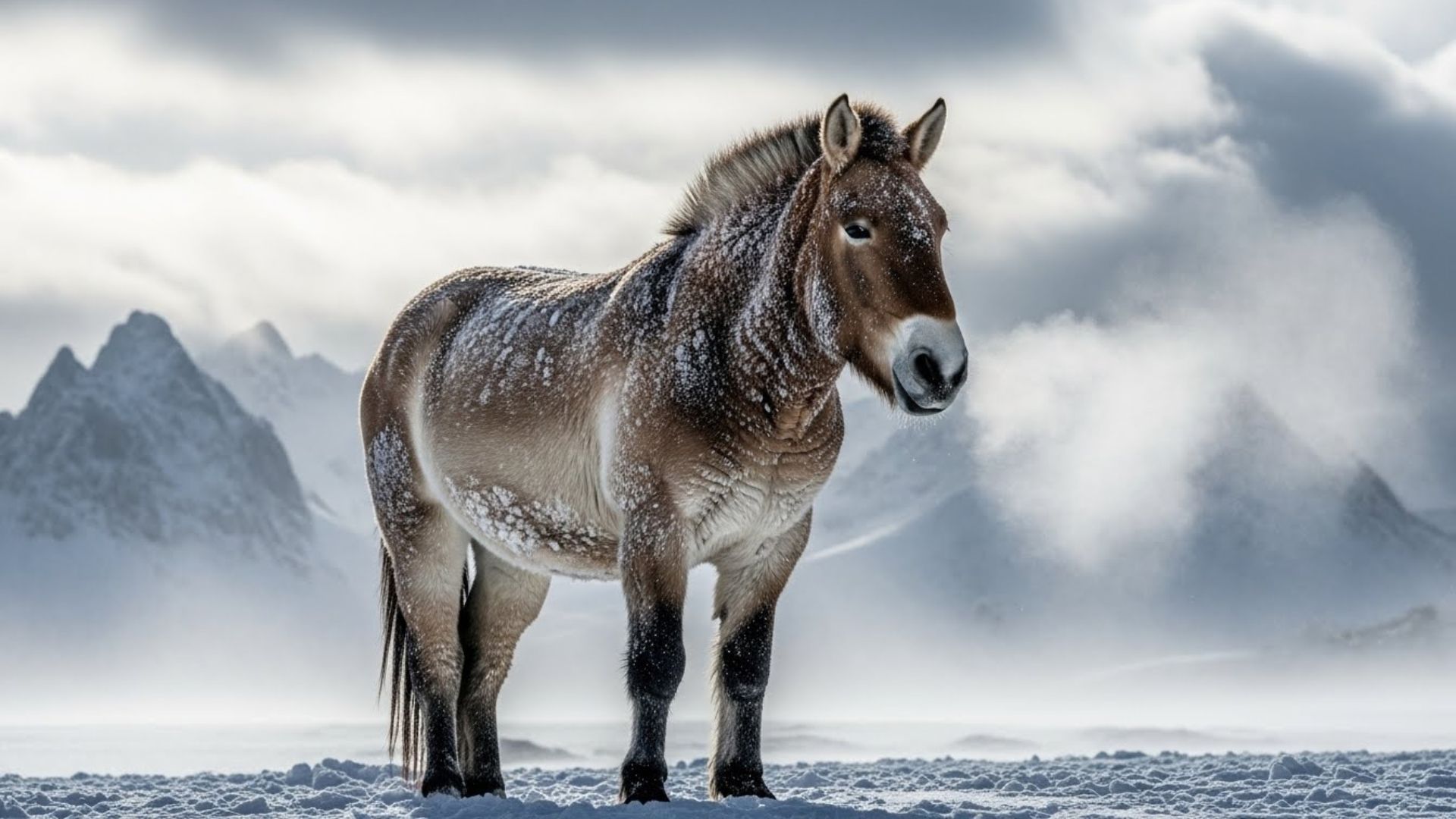
Extreme climates break routines and expose limits. Comfort disappears quickly. Yet some horses remain steady within these conditions. Where heat drains energy, they conserve it. Where cold stiffens movement, they adjust naturally.
Horses that can live in extreme climates operate with efficiency rather than excess. Their survival depends on controlled metabolism, adaptive behavior, and environmental awareness. Harsh conditions do not overwhelm them. They refine them. The landscape shapes how they move, rest, and respond.
These horses learn to exist without abundance. They learn to thrive with restraint. Extreme climates demand balance, and these horses meet that demand consistently. Their endurance is built quietly over time through exposure and adaptation.
This article explores how climate pressure forms resilience, discipline, and survival traits that define horses capable of living where others cannot.
Key Takeaways
How do horses survive where icy winds cut through skin and desert heat drains every drop of energy from the land
The Icelandic Horse and Yakutian Horse rely on dense coats and slow energy use, while Arabian Horses stay active under blazing sun with remarkable efficiency
From the Mongolian Horse digging through snow to the Mustang reading terrain during storms, survival here is built into instinct, not training
Keep going to see how different climates shaped these horses into some of the toughest animals on Earth
Horses That Can Live in Extreme Climates
1. Icelandic Horse
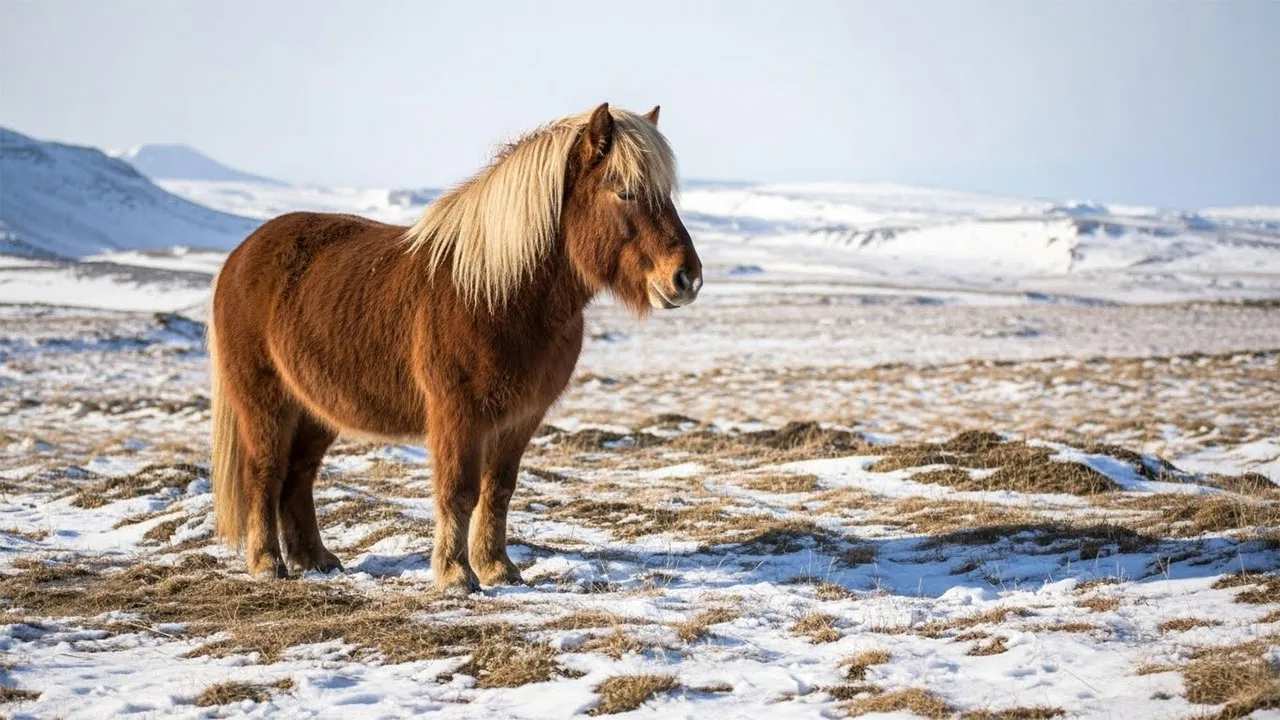
Icelandic Horses handle extreme cold with impressive resilience. Their dense double coat locks in warmth, while the woolly underlayer shields against biting Arctic winds, as PetMD writes. Small and sturdy, their low center of gravity keeps them steady even on snowy or uneven ground.
Smooth Gaits for Tough Terrain
Their famous tölt provides comfort across challenging surfaces, letting them move efficiently in harsh conditions. This gait supports long travel over ice, snow, or rocky paths.
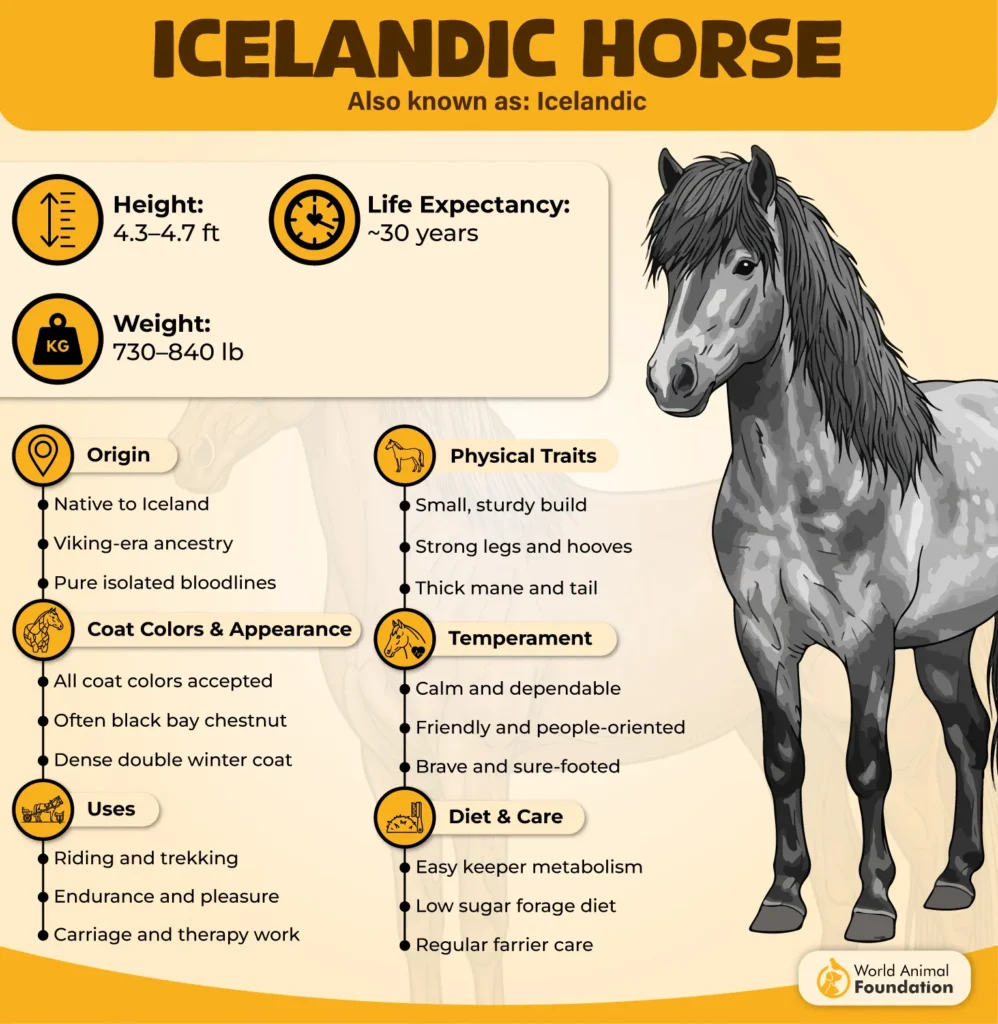
Key abilities that make this possible include:
Comfortable ride on rough terrain
Stability in deep snow
Efficient energy use across long stretches
Adapted for Independence
These horses require minimal shelter and can forage through snow, reflecting centuries of natural selection. They are alert to their surroundings and make deliberate movements, which helps them navigate remote areas. Their compact frame combines strength and balance for demanding environments.
2. Yakutian Horse
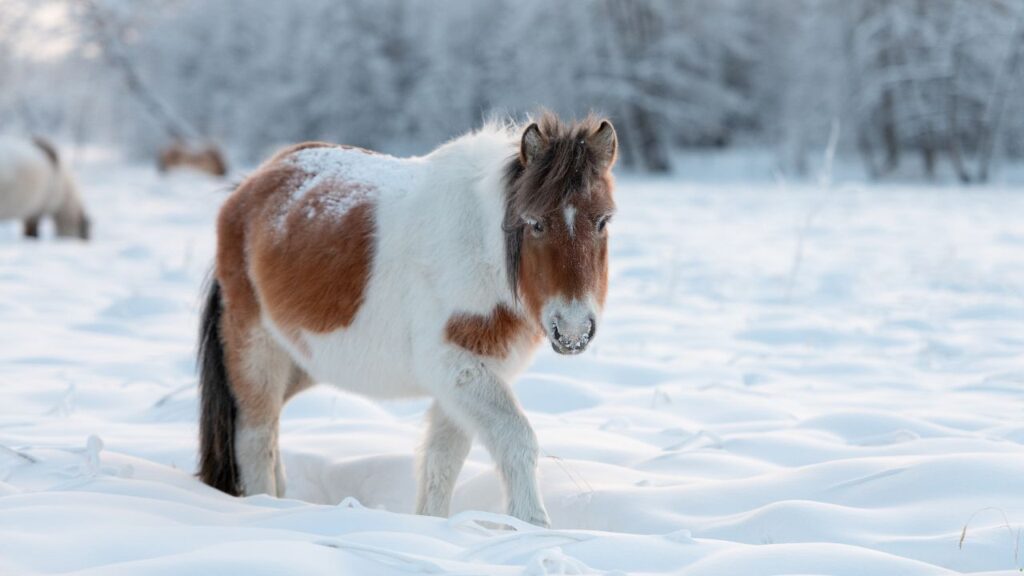
The Yakutian Horse grows a dense, woolly coat that keeps it warm in the harshest Siberian winters. This coat allows the horse to move freely while temperatures drop to -70 degrees Celsius. It’s natural insulation protects muscles and joints from frost over long periods.
Foraging Skills
Finding food under deep snow is a daily requirement for this breed. They search carefully and efficiently, showing patience and resourcefulness.
These traits are especially useful in extreme conditions:
Dig through packed snow for edible plants
Conserve energy during long, cold spells
Maintain activity even in short daylight
Endurance in Harsh Weather
The Yakutian Horse moves steadily across frozen terrain without losing strength or alertness, as ATF notes. Thick fur and sturdy hooves help it navigate snow and ice with confidence. This endurance allows it to survive and stay active when other horses would slow down.
3. Mongolian Horse
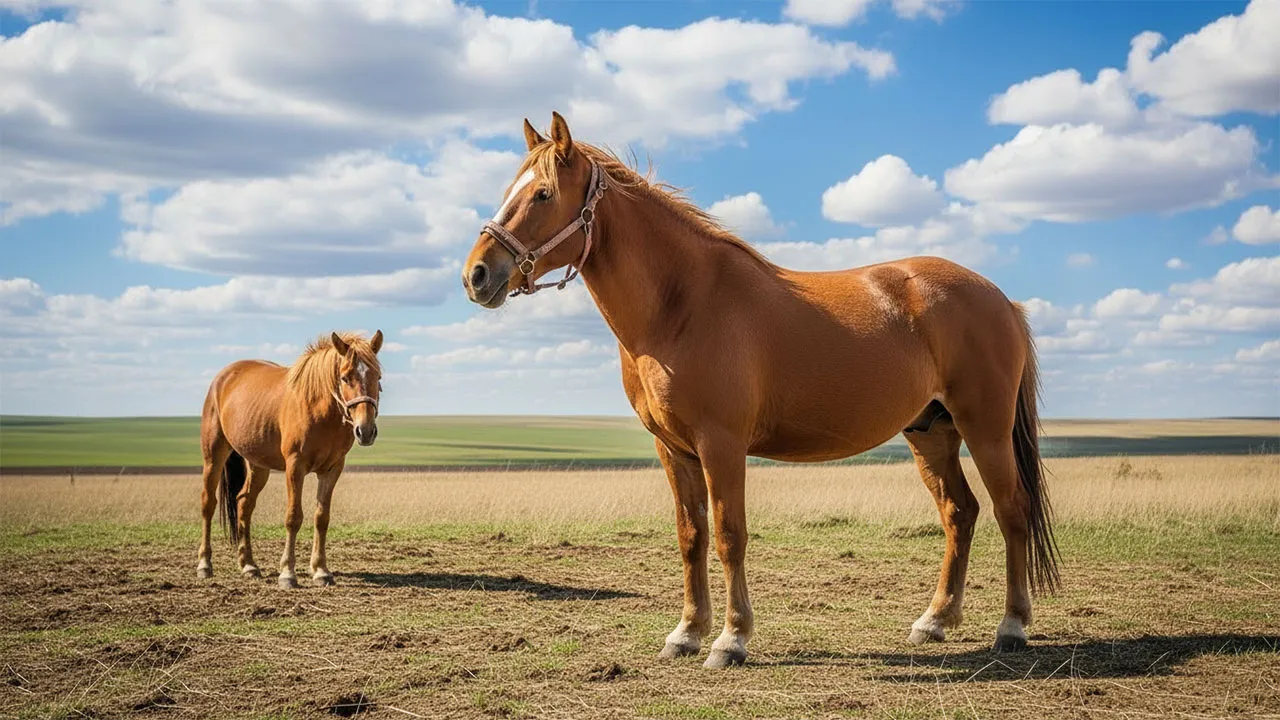
Mongolian horses endure brutal winters with temperatures plunging past -40°F. Their dense winter coat can grow up to 10 centimeters, creating insulation that keeps them active in fierce winds. Over generations, their bodies adapted to conserve energy naturally in freezing conditions.
Natural Survival Skills
These horses find vegetation beneath deep snow and process frozen forage without digestive issues, making them highly self-sufficient. Their bodies also reduce metabolic rate during extreme cold to preserve energy.
Ways they stay self-sufficient in cold weather:
Ability to dig through snow for food
Tough digestive system for frozen forage
Efficient energy use during long winters
Circulation That Protects
Specialized blood flow limits heat loss through their legs and extremities, keeping them functional in icy environments. This adaptation allows them to move steadily without extra support. Their alertness remains high even when facing blizzards or open steppe winds.
4. Norwegian Fjord

Norwegian Fjord horses combine compact size with impressive muscle power, making them suited for cold and snowy terrain. Their body structure allows them to handle heavy tasks without losing balance. Even in harsh winter conditions, their steady build keeps them reliable and efficient.
Adapted Features That Help
Thick winter coats and broad hooves give this breed a natural edge in extreme climates, as Mad Barn claims. Their crescent-shaped mane directs snow and rain away from the neck, while their strong legs provide traction on slippery ground.
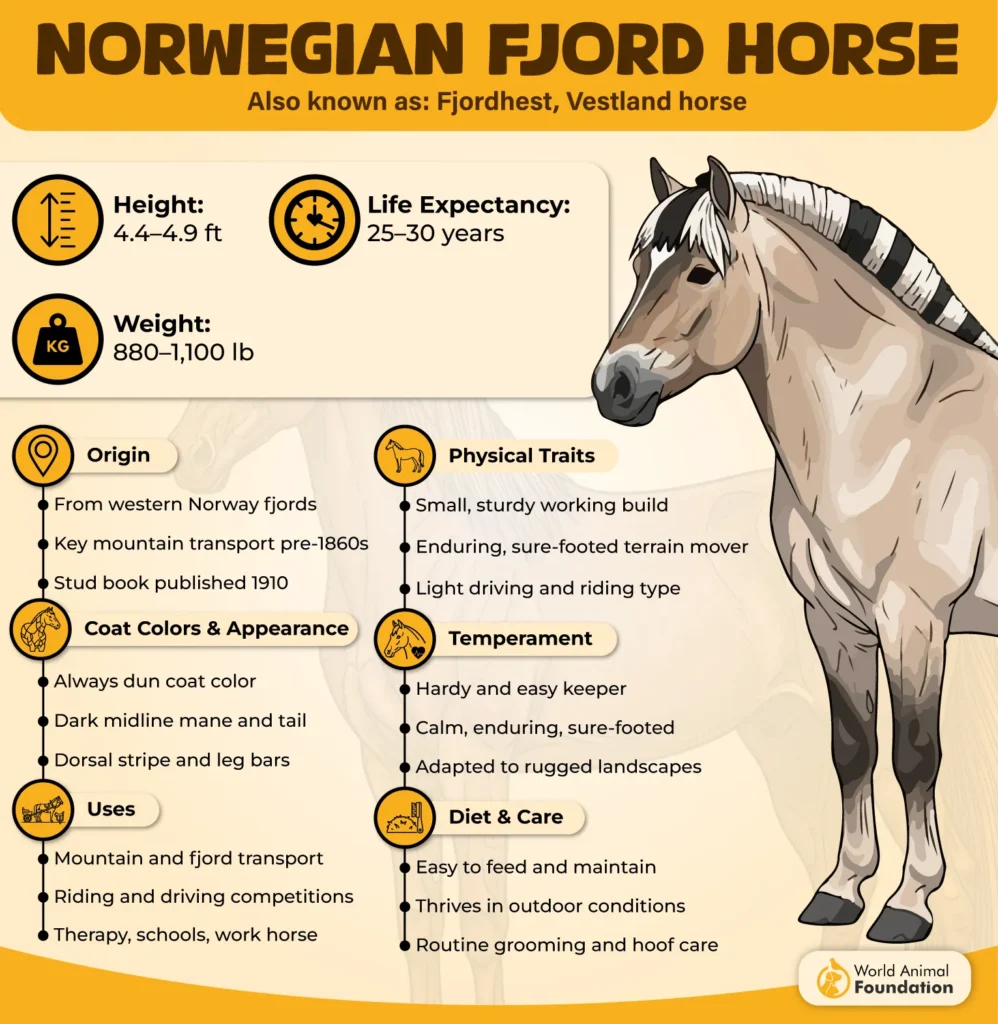
These traits make working in severe weather much easier:
Excellent grip on ice and snow
Natural insulation against cold
Steady posture for rough terrain
Calm and Sensible Temperament
Fjords are known for a balanced, thoughtful nature that supports handling in tough environments. They remain composed while navigating uneven paths or pulling loads. This temperament makes them a dependable presence in demanding outdoor conditions.
5. Shetland Pony
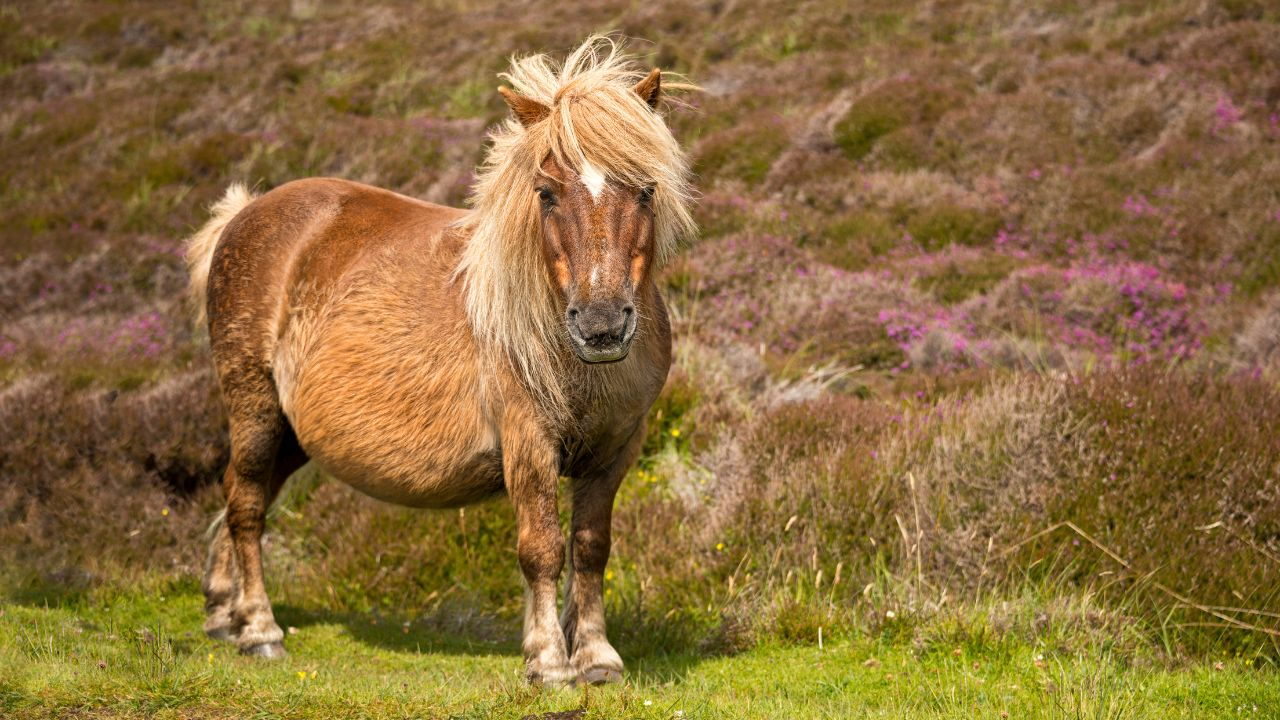
Shetland Ponies have a thick coat and solid build that protect them in freezing temperatures. Their short, muscular legs help them move confidently through snow and ice. These ponies manage cold landscapes with energy and sure-footedness that exceeds their small size.
Power That Matches Size
These ponies carry surprising strength for their frame and remain reliable under demanding conditions. Their intelligence and adaptability make them quick to adjust to changing weather.
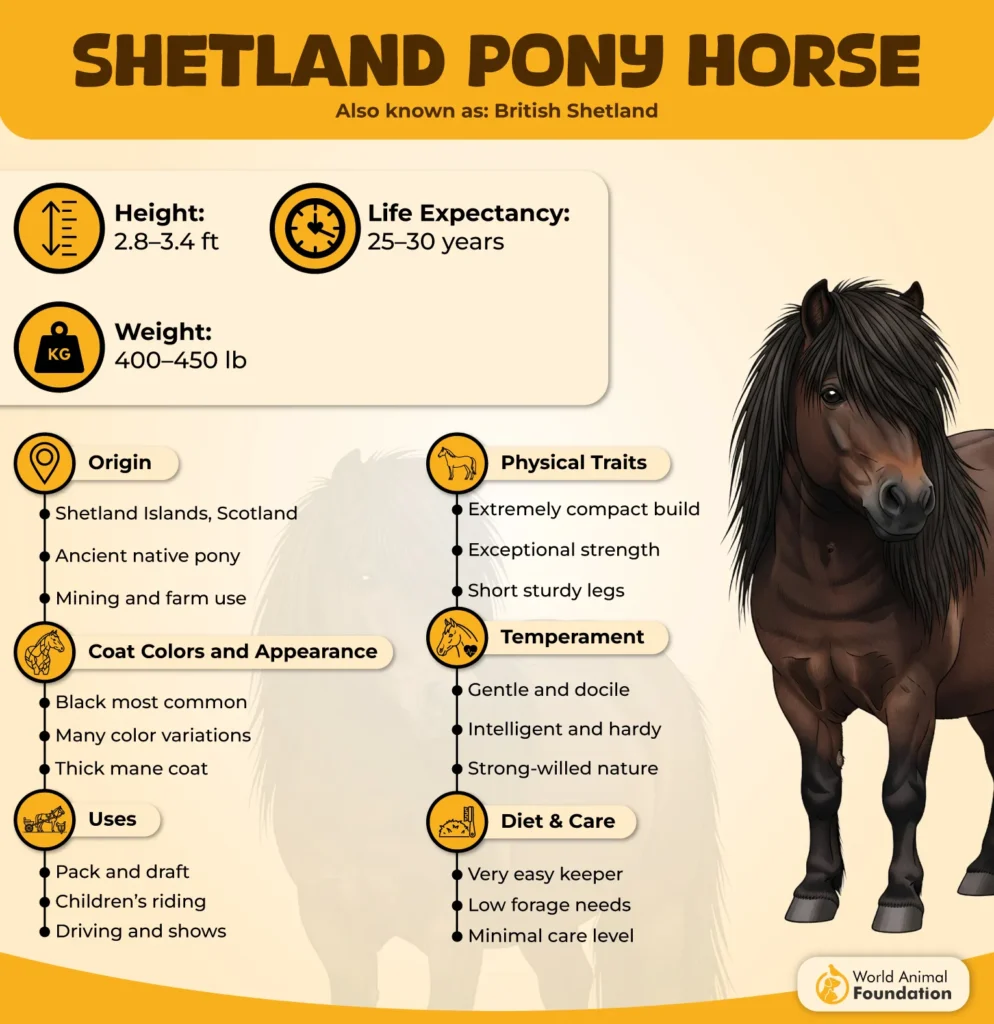
Some key traits for harsh environments:
Ability to navigate icy and rough terrain
Endurance during long periods of work
Recover quickly after sustained effort
Alert and Resourceful
Shetland Ponies notice subtle changes in weather and terrain, allowing them to move safely in unpredictable conditions. Their sharp instincts help them find footing in snowdrifts or uneven ground. This awareness makes them effective companions in extreme environments.
6. Arabian Horse

Arabian Horse shows an efficient breathing system that supports activity in hot and dry conditions. Large nostrils allow better airflow when temperatures rise and humidity drops. This natural design helps the body stay regulated during long exposure to extreme heat.
Desert Efficiency
Arabian Horse manages harsh climates through a combination of physical balance and energy control. The sleek coat reflects sunlight instead of trapping it, which reduces heat buildup during peak daytime hours.
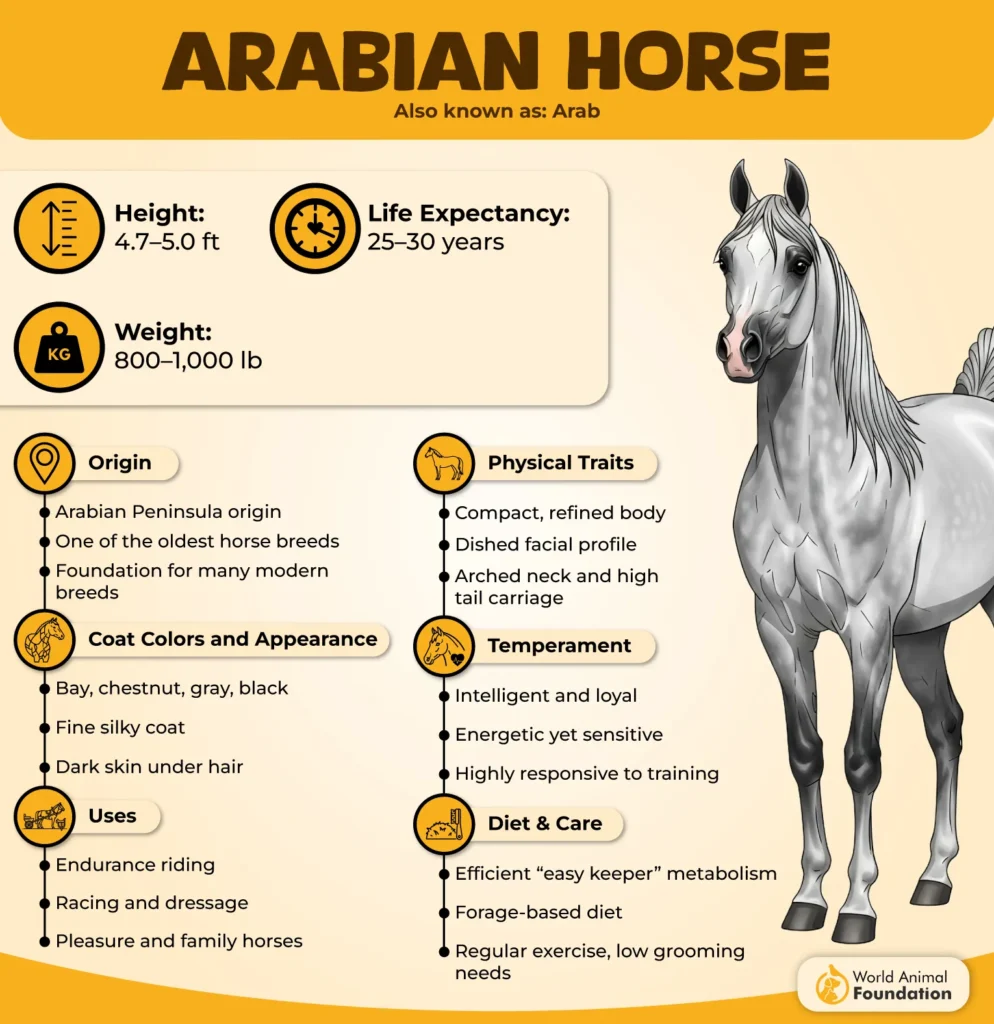
Small details explain how this works in real conditions:
Reflective coat surface
Efficient oxygen intake
Steady energy output
Built for Arid Landscapes
Arabian Horse maintains strength where water and shade are limited. Its endurance allows consistent movement across dry ground without rapid exhaustion. This makes it dependable in environments where recovery time is minimal and conditions change quickly.
7. Mustang
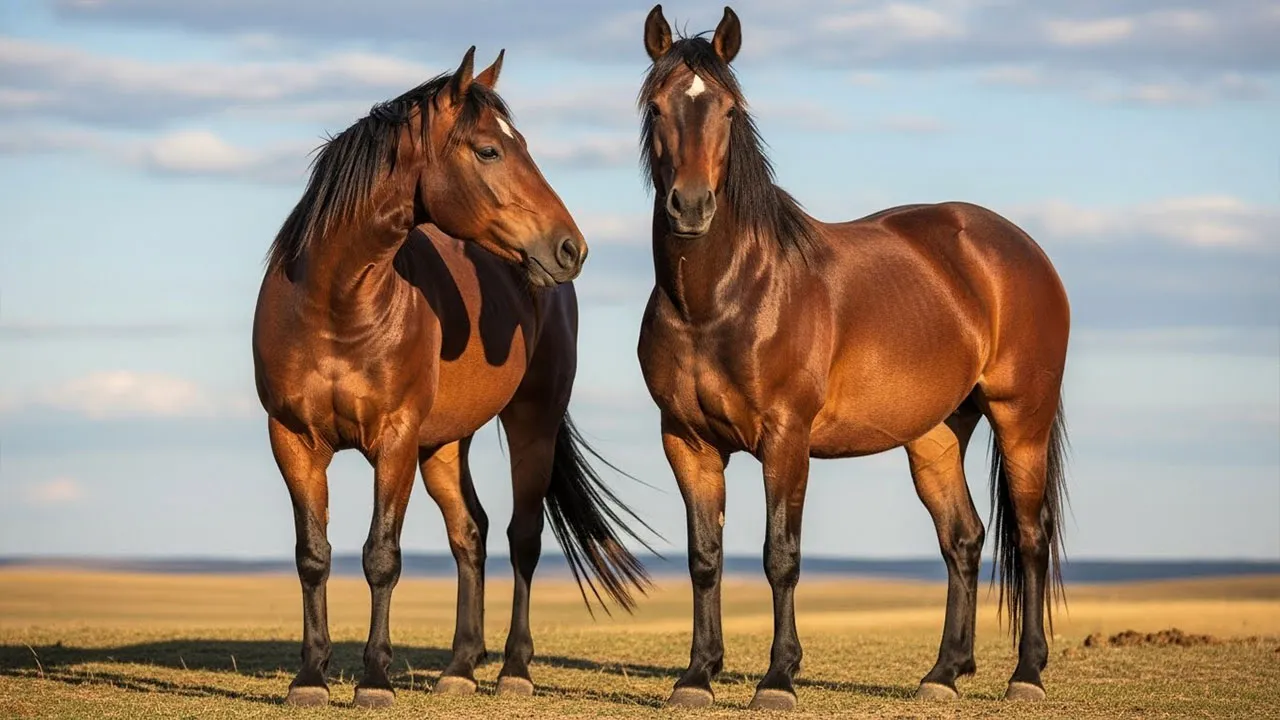
Mustang adaptability shows first in how efficiently the body manages energy during harsh winters. Natural metabolic efficiency allows stable conditions even when forage is scarce and temperatures plunge. This internal balance supports long-term survival in regions with prolonged cold and wind.
Winter Ready Structure
Mustang’s physical responses to cold conditions are practical rather than refined. Dense seasonal coats and naturally resilient hooves work together to handle snow, ice, and uneven frozen ground.
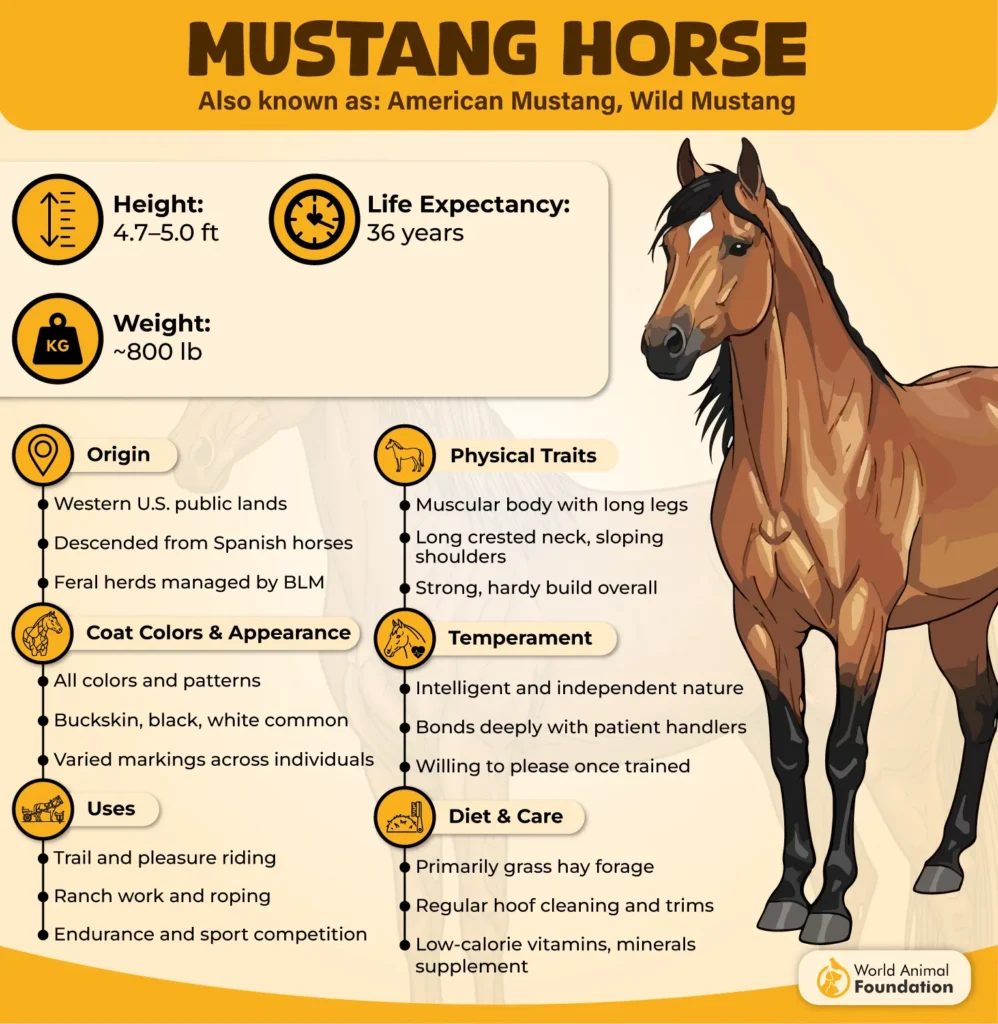
The advantages become clear when winter tightens its grip
Dense, weather-resistant winter coat
Sure footing on snow and ice
Minimal dependence on added winter care
Terrain Reading Ability
Mustang problem-solving stands out during storms and deep snow. These horses instinctively locate shelter, adjust movement paths, and conserve effort when conditions worsen. That survival intelligence translates well to environments where the weather shifts quickly and unpredictably.
8. Barb Horse
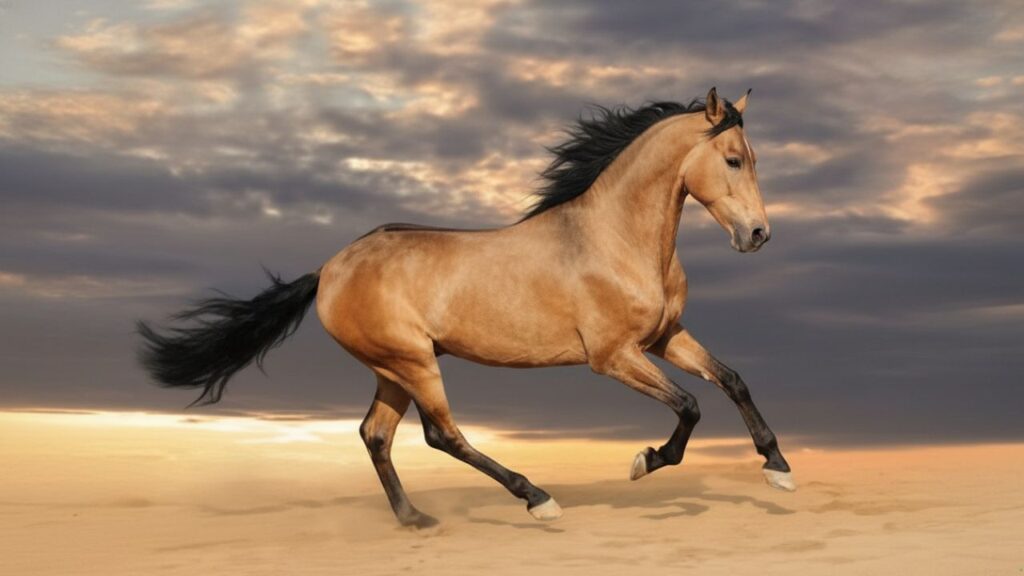
Barb Horse shows a natural ease in environments where high temperatures dominate daily conditions. Its structure supports steady movement under heat stress, helping conserve energy when shade is scarce. This physical makeup aligns well with regions shaped by sun, sand, and long dry stretches.
Confidence on Sand and Stone
Barb Horse moves across hot, loose terrain with sure footing and minimal hesitation. Tough hooves and a grounded stride reduce strain on abrasive surfaces.
That practicality shows itself through small but meaningful advantages:
Durable hooves on sand
Stable movement in heat
Sustained pace without frequent stops
Speed That Serves Survival
Quick bursts of speed remain controlled rather than reckless, which matters in exposed landscapes. The breed maintains rhythm even when terrain shifts suddenly. This balance supports consistent travel across wide open ground without unnecessary energy loss.
9. Marwari Horse
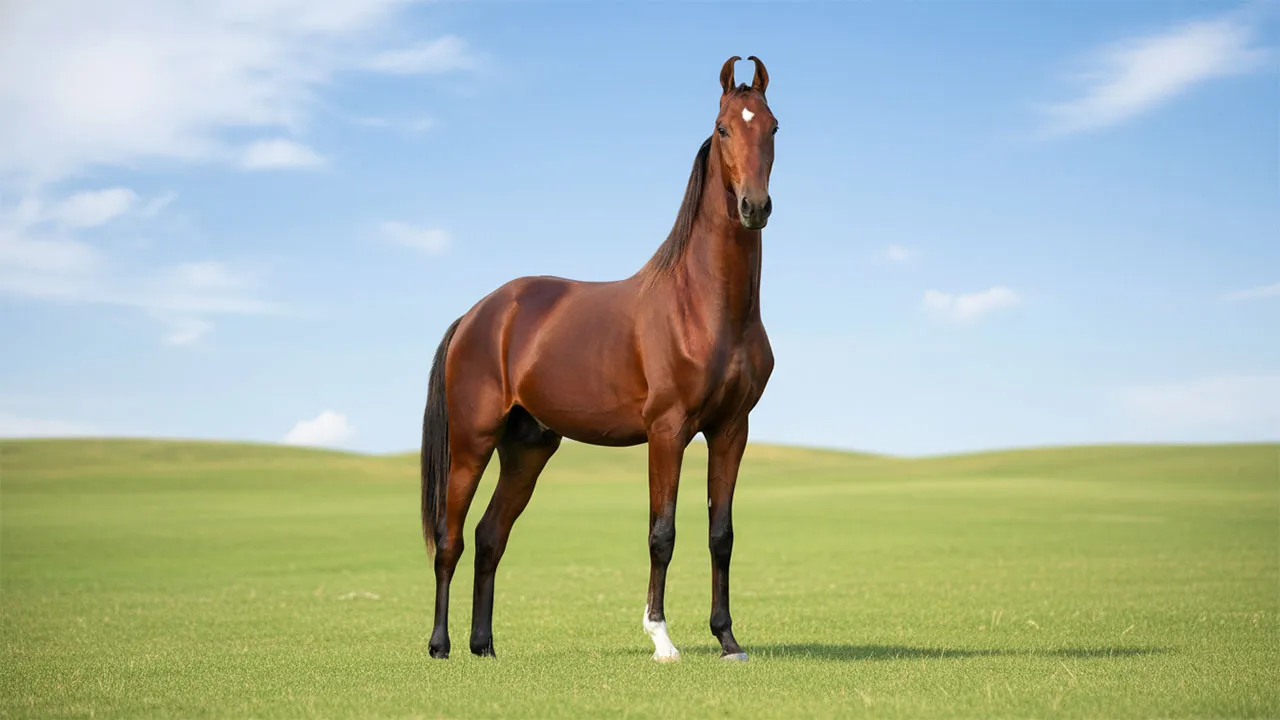
Marwari Horse is immediately marked by its inward-turning ears, a feature often linked to heightened awareness in open, hot landscapes. This physical alertness pairs with a body that remains composed under prolonged sun exposure.
Heat and Survival Balance
Life in extreme heat shaped this horse to manage energy without waste. Its form supports steady movement across dry ground while maintaining elegance rather than rigidity.
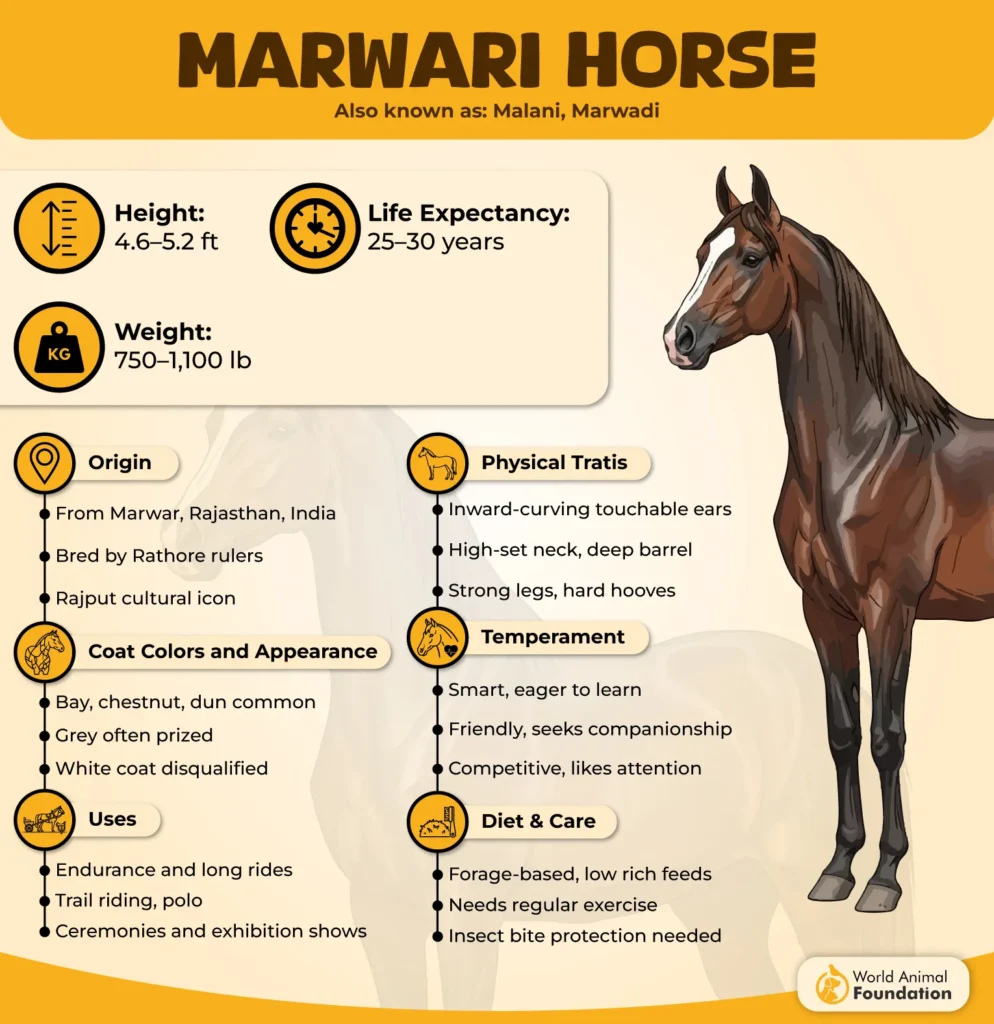
That balance becomes clearer through specific climate-focused qualities:
Natural heat adaptation
Agile structure suited for arid terrain
Consistent stamina in dry conditions
Structure That Supports Endurance
An arched neck contributes to balance and airflow during sustained activity. The agile build allows efficient navigation across sand and uneven desert surfaces. These physical elements work together to support survival where resources are limited.
Conclusion
Extreme environments reveal why certain horse breeds endure where others fail. These horse breeds regulate body temperature through coat density, circulation, and behavior. In cold winters, body temperature stays stable through controlled movement and energy use. In heat, body temperature adjusts through breathing, sweating, and shade seeking.
Horse breeds shaped by isolation learned to survive wet conditions and dry ground alike. Horse owners often overlook how climate molds structure and instinct. These horse breeds do not fight nature. They cooperate with it. Survival comes from balance, not excess. When body temperature remains steady, strength follows, and endurance becomes routine rather than a struggle.
