




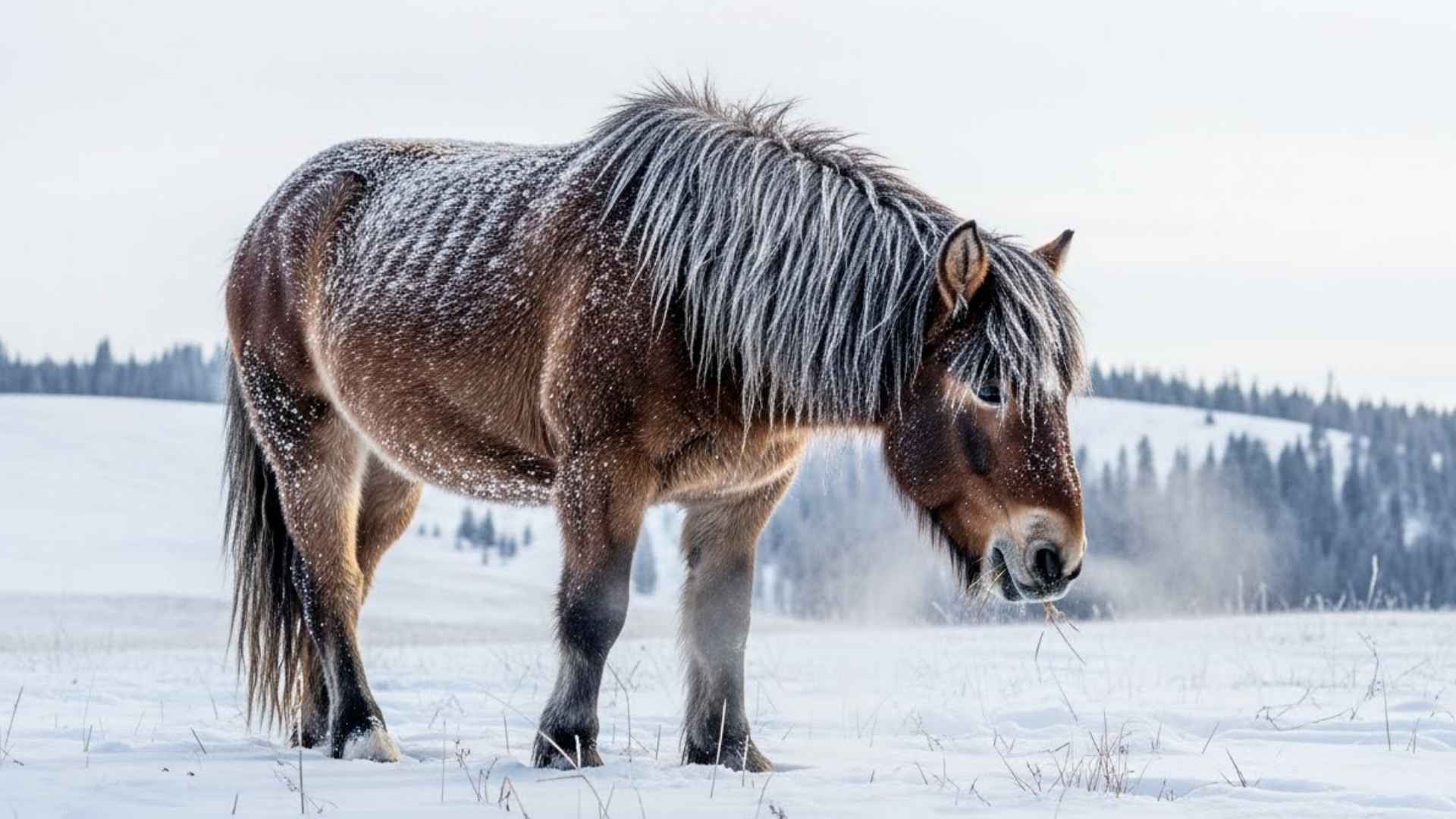
Horse breeds with thick winter coats rely on biological timing rather than chance. As daylight shortens, hair growth increases dramatically, forming dense insulation designed for cold climates. This response occurs regardless of modern care practices or human intervention.
Thick winter coats trap air near the skin, reduce heat loss, and allow horses to maintain stable body temperatures through snow, wind, and freezing nights. These coats also influence calorie needs, grooming routines, and shelter requirements.
Ignoring how winter coats function often leads to unnecessary interference or improper care decisions. Thick coats are indicators of adaptation rather than neglect. They show how well a horse is responding to seasonal change. Learning to recognize this pattern brings clarity to winter management.
In this guide, you will learn how thick winter coats form, why they vary between horses, and how understanding them supports informed winter care decisions grounded in biology and seasonal awareness.
Key Takeaways
Winter is no match for horses with thick coats that trap heat and shield them from icy conditions.
Icelandic Horses and Shetland Ponies layer dense hair to stay steady through snow and icy winds without slowing down.
Yakutian Horses and Exmoor Ponies take it further, maintaining energy and footing even in sub-zero temperatures.
Keep reading to see which seven breeds turn winter into their playground and how each coat works like natural armor.
Horse breeds with thick winter coats
1. Icelandic Horse

Icelandic Horse’s strength shows first in how calmly it handles cold exposure. That steady build works hand in hand with a dense double coat that locks in warmth during long winter stretches. Snow, wind, and freezing air become manageable conditions rather than obstacles.
Coat That Works Overtime
Icelandic Horse coats are layered by design, forming natural insulation against icy temperatures, as PetMD stated. The outer layer sheds moisture while the undercoat traps heat close to the body.
A closer look explains why winter rarely slows this breed down:
Thick double-layering
Wind-resistant hair texture
Reliable insulation in snow
Ground Sense in Winter Terrain
Icelandic Horse footing stays secure even when surfaces turn slick. Shorter stature combined with natural balance helps it move confidently across frozen ground and uneven paths. This stability pairs well with cold resistance, making winter travel less demanding.
2. Shetland Pony

The strength of the Shetland Pony shows clearly in its ability to endure harsh winter climates. Dense outer hair and a soft insulating underlayer work together to trap warmth during freezing spells. That natural protection explains why snow and wind rarely slow them down.
Built to Hold Heat
Shetland Pony coats are not just thick but purpose-driven for survival in prolonged cold. Compact bodies reduce heat loss, while winter fur grows longer and heavier as temperatures drop.
That design becomes clearer when you look closer:
Heavy double coat in winter
Tight body structure for warmth
Strong tolerance for icy weather
Small Frame Strong Output
Shetland Pony power often surprises people once real work begins. Despite their size, they have long been relied on for demanding physical tasks in cold environments, as Britannica notes. That strength, paired with insulation, makes them steady partners when conditions turn rough.
3. Norwegian Fjord

Norwegian Fjord stands out for its dense winter coat that forms naturally as temperatures drop. That thick layer works alongside a compact body to block wind and retain warmth. In snow-covered environments, this insulation plays a direct role in daily comfort and steady movement.
Coat Function in Harsh Weather
As winter deepens, the coat becomes more than visual protection. Hair density and texture help reduce heat loss during long hours outdoors.
That usefulness shows up in a few practical ways:
Heavy coat growth in cold months
Mane that sheds snow instead of matting
Skin adapted to low temperatures
Steady in Snowy Terrain
Norwegian Fjord is known for calm, reliable movement when footing turns slick. Snow-packed paths and icy ground feel more manageable due to sure footing and controlled pacing. The winter coat supports this by preventing chill during slow or sustained activity.
4. Exmoor Pony

Exmoor Pony shows resilience through intelligence and steady behavior long before weather becomes a factor. That mindset supports survival during prolonged cold and constant exposure. Winter conditions suit this pony because preparation is built into its structure rather than learned.
Cold Weather Protection
Exmoor Pony develops a serious winter coat that handles wind, moisture, and low temperatures with ease. A double-layered system insulates the body while allowing rain and snow to slide away.
The details become clearer when you look closer:
Dense insulating undercoat
Water shedding outer hairs
Natural protection against wind
Movement on Snow and Moorland
Exmoor Pony stays agile when ground conditions turn uneven or frozen. A compact and responsive build helps conserve energy while moving across snow-covered terrain. This balance reduces strain during long, cold spells when footing cannot be trusted.
5. Yakutian Horse
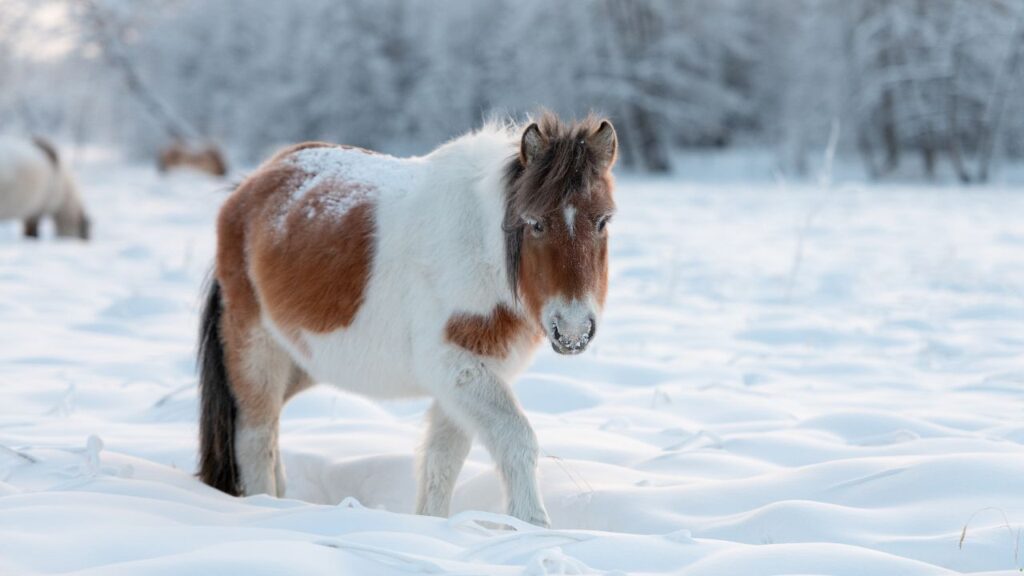
Yakutian Horses thrive in extreme Siberian winters, enduring temperatures as low as -70°C. Their dense, woolly winter coat protects against frost and biting winds. Snow-covered landscapes do not slow them, and they remain steady over icy and rugged terrain.
Winter Adaptations
Their foraging skills under deep snow make survival effortless even in long winters, as per CBC. These practical abilities help them move and feed without outside assistance, making them highly self-sufficient.
Key traits of this breed are:
Digging through thick snow to access the grass
Retaining warmth naturally in sub-zero temperatures
Maintaining a steady footing on frozen and uneven ground
Stamina for Harsh Conditions
Yakutian Horses keep energy levels consistent during extended periods outdoors. Alertness and strong physical endurance allow them to handle continuous cold-weather work. They remain capable and reliable despite the harshest conditions.
6. Haflinger

Haflingers have a dense chestnut coat and a flaxen mane that provide effective insulation against freezing temperatures. Their sturdy bodies handle snow-covered trails and slippery paths with confidence. This natural warmth makes them comfortable during extended winter excursions.
Steady and Reliable
These horses move smoothly across uneven or icy terrain while maintaining energy for long outings. Their resilience allows them to keep pace in challenging conditions without stress.
Key features of their winter abilities include:
Dense coat protects from frost and wind
Sure-footed on slippery or rocky surfaces
Capable of sustained work in cold weather
Friendly Temperament in Harsh Weather
Haflingers stay alert and attentive while remaining approachable and easy to manage. They adjust to sudden changes in the trail without becoming anxious. Their steady nature ensures consistent performance in snowy forests and rugged landscapes.
7. Clydesdale

Clydesdales are admired for their powerful build and calm demeanor, which serve them well in cold weather. Their thick winter coat insulates against snow and wind, making them reliable in frosty conditions. Broad hooves with feathering add extra stability when moving through slippery ground.
Stability and Surefootedness
This breed handles snow-covered fields and icy paths with surprising balance. Their size and steady gait provide confidence on uneven terrain, while their temperament keeps them composed.
On cold-weather surfaces, these qualities show up clearly:
Thick coat for insulation
Feathered hooves for grip
Steady, controlled movement
Gentle Giants in Action
Clydesdales combine strength with a calm, approachable personality, which helps them adapt to challenging conditions. They are attentive to their surroundings without unnecessary tension, supporting safe and controlled movement.
Conclusion
Thick winter coats are not decorative features. They are functional responses shaped by winter weather and survival needs. These coats allow horses to conserve energy when temperatures drop, and resources become limited. Long hair traps warmth while reducing heat loss across the body. An efficient metabolism works alongside this insulation to maintain balance in harsh climates.
Compared to other breeds, these horses rely less on external shelter and more on biological design. Winter weather becomes a condition to manage rather than a threat to escape. When horses conserve energy through natural coat growth, they move, feed, and rest with greater stability. Understanding this process helps owners make choices that respect adaptation rather than interfere with it.
