




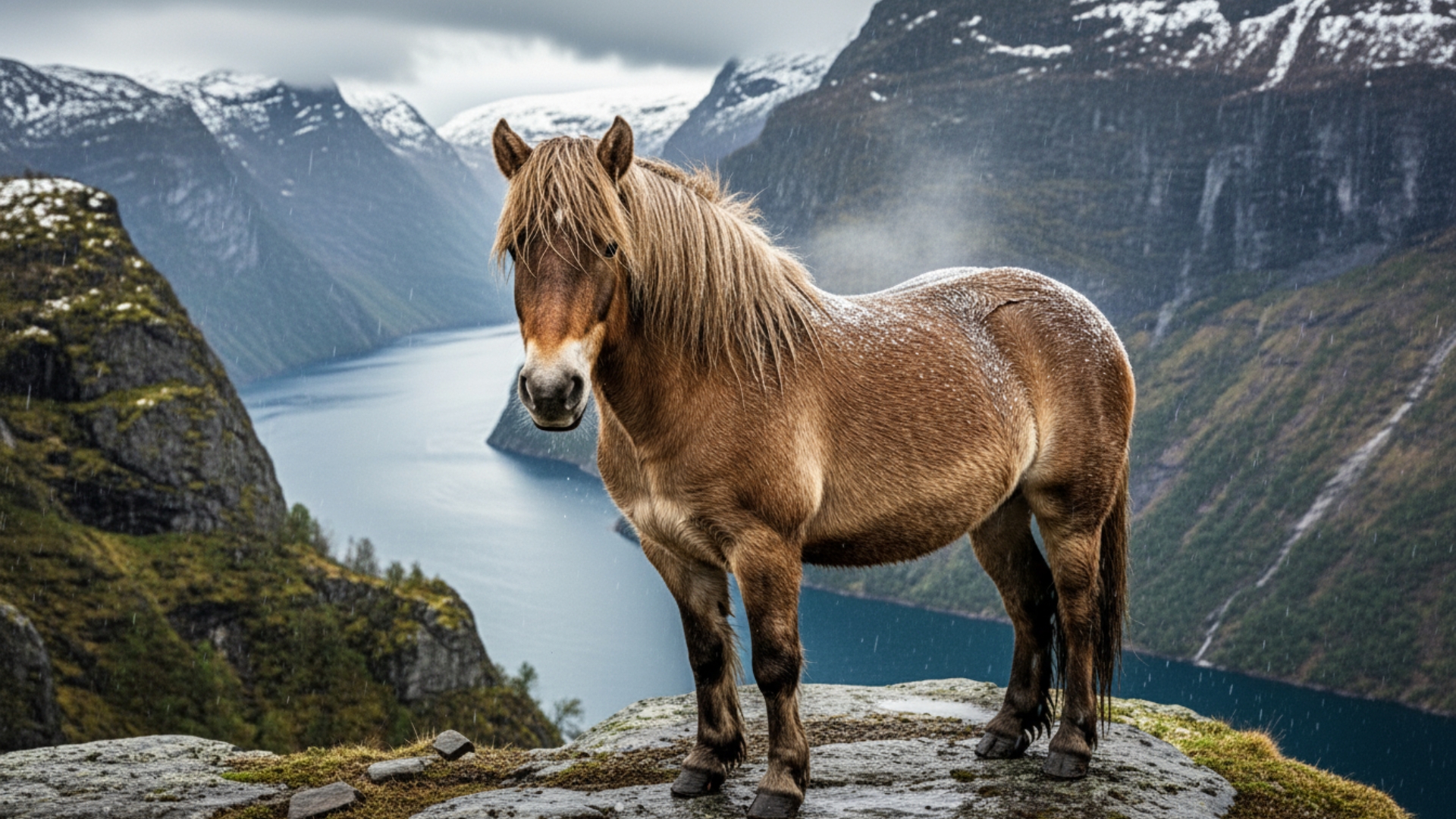
Cold rain settles into the earth, and the wind carries a chill that lingers in the bones. In landscapes where mud replaces dust and mist drifts across open fields, only certain horses move with quiet confidence.
These horses were shaped by environments that demand resilience every single day. Thick coats shield their bodies from relentless rain while strong legs carry them across slick ground without hesitation. Life in damp, cold regions requires more than beauty or speed.
It requires endurance, balance, and a calm nature that accepts harsh weather as part of daily life. Over generations, these horses learned to thrive where many others struggle to remain comfortable. Their strength reflects the landscapes they inhabit and the people who rely on them through difficult seasons.
This article explores horse breeds that adapted to cold, wet climates, revealing how nature, history, and careful breeding created animals perfectly suited for rain-soaked fields and chilly winds.
Key Takeaways
In places where rain never seems far away, and winters settle in for months, only the hardiest horses truly thrive.
The Yakutian Horse stands out for its remarkable winter coat, while the Haflinger carries surprising strength despite its compact build.
Shetland Ponies and Exmoor Ponies grew up on rugged terrain shaped by wind and rain, which explains their steady footing and quiet toughness.
As each breed appears, its history reveals how generations of life in harsh climates have shaped horses that remain dependable year-round.
Horse breeds adapted to cold wet climates
1. Yakutian Horse
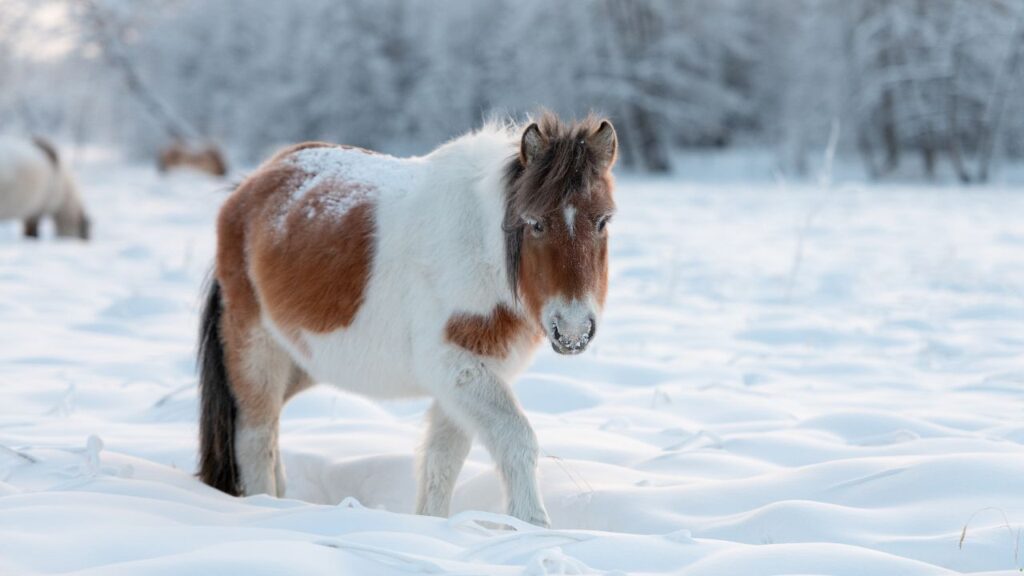
Yakutian Horse was developed in the Sakha Republic of Russia, where winter temperatures often fall below minus forty degrees. Generations in this environment shaped a hardy animal with compact proportions that help conserve warmth, as stated in ATF.
Cold Adaptation Features
This cold-hardy horse breed reveals several remarkable biological adjustments that allow it to function in severe northern climates. During severe winter conditions, the body can reduce surface area by roughly 30%.
These traits support its winter resilience:
Winter coat growing up to 10 centimeters thick
Compact body structure that reduces heat loss
Ability to slow metabolism during extreme cold
Efficient Winter Metabolism
Yakutian Horse relies on unusual metabolic efficiency when pasture becomes scarce during long winters. The body extracts maximum nutrition from rough forage that many other breeds cannot process effectively. This strategy allows the horse to remain active while conserving energy through prolonged cold periods.
2. Norwegian Fjord
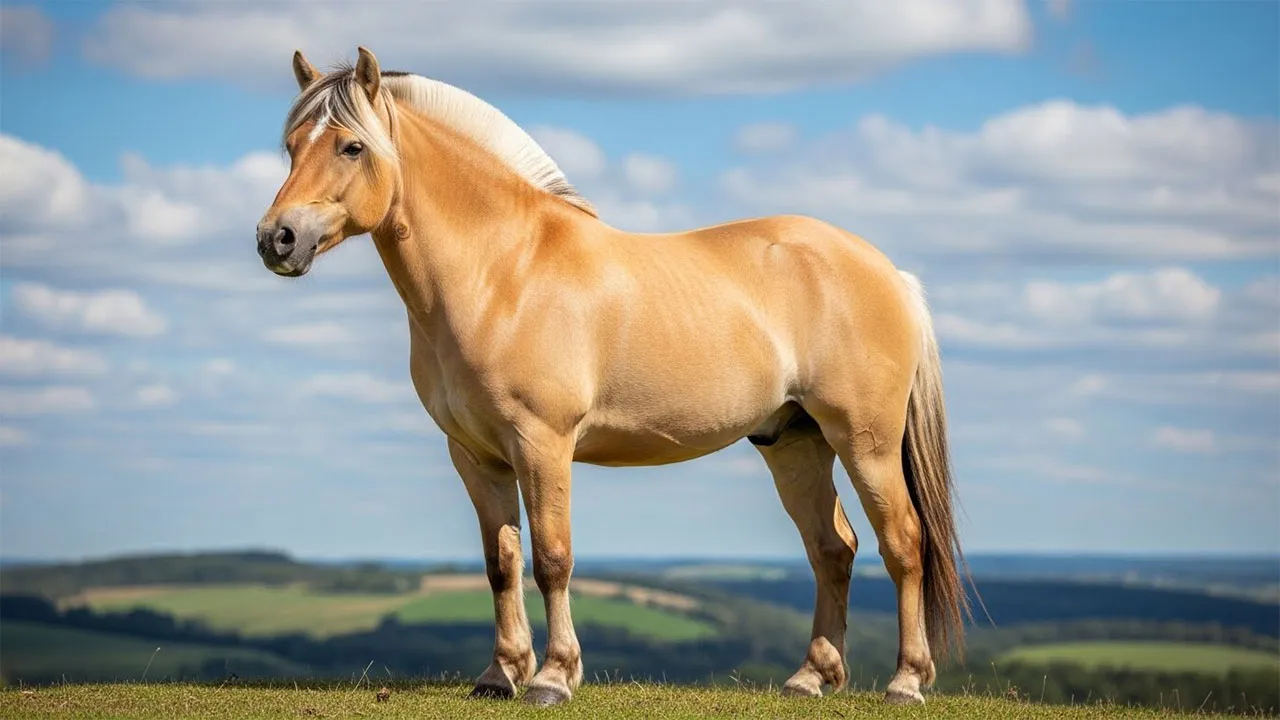
Norwegian Fjord horses represent one of the oldest surviving equine lines, shaped by generations of selective breeding in demanding northern landscapes. Their compact frame and strong muscles reflect centuries of practical use in challenging terrain.
Built for Demanding Ground
Their structure is short, powerful, and well-balanced, allowing controlled movement across snow and muddy surfaces. The thick mane, broad hooves, and dense winter coat work together to support stability and warmth, as Nord Gen notes.
This is how the breed stays prepared for icy climates:
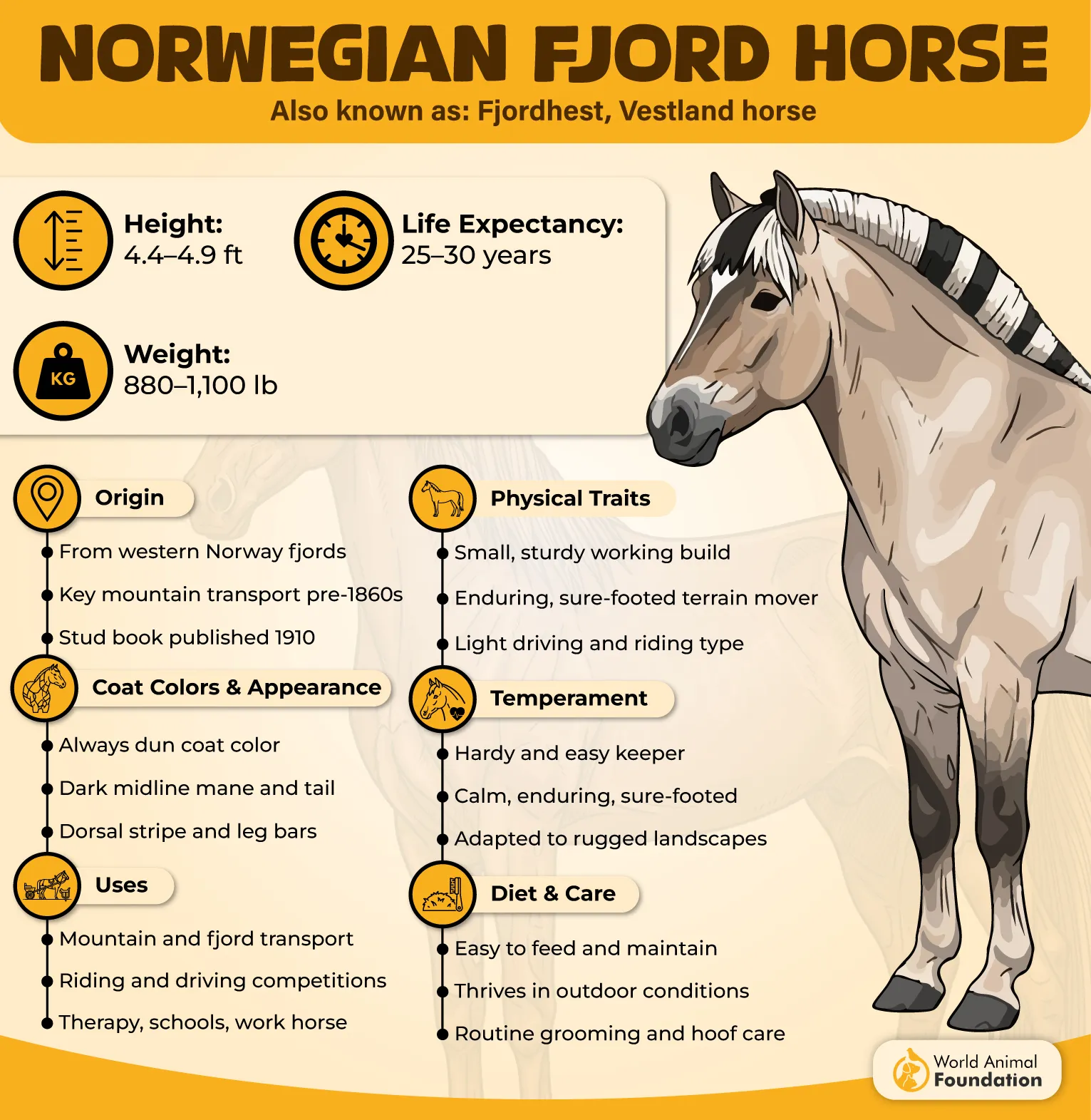
Crescent-shaped mane that helps shield the neck from rain and snowfall
Wide, sturdy hooves designed for grip on ice and wet ground
A dense coat and solid body mass that help retain body heat
Functional Adaptation
With a powerful build in a compact size, the Norwegian Fjord demonstrates how strength does not require height. Their body design supports traction, endurance, and warmth retention in freezing temperatures. Every physical detail aligns with survival and performance in harsh winter conditions.
3. Shetland Pony
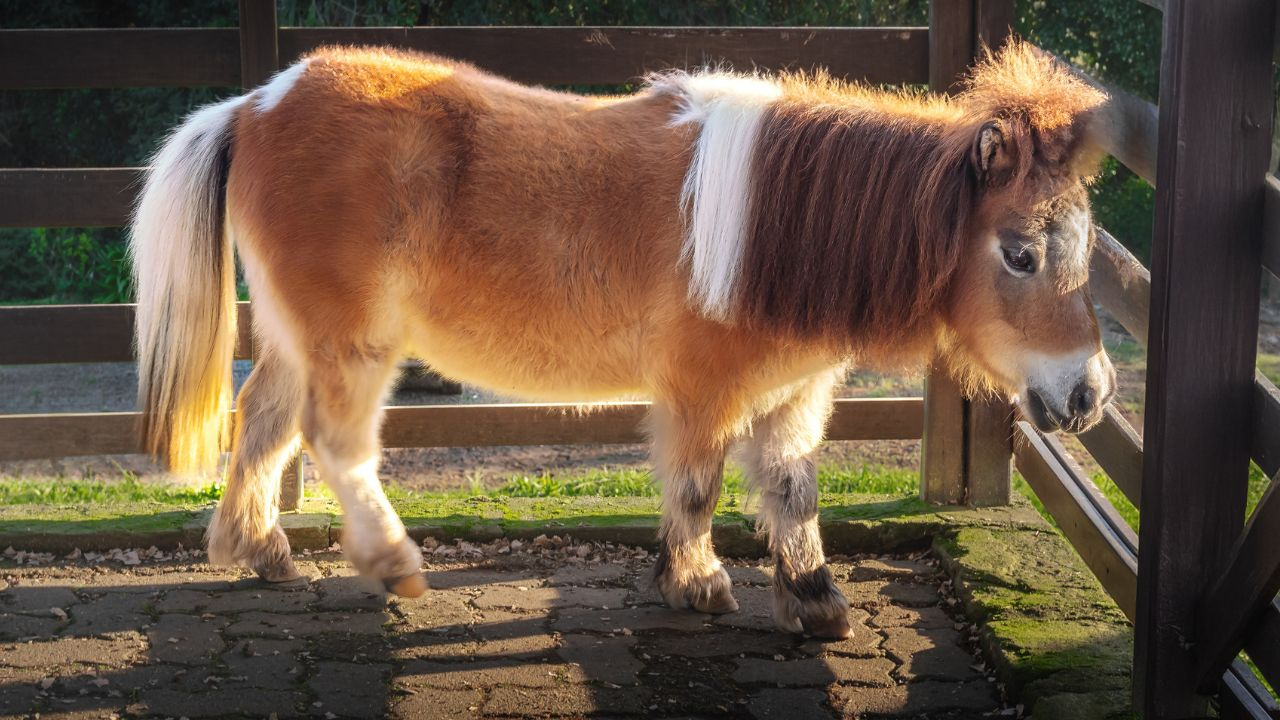
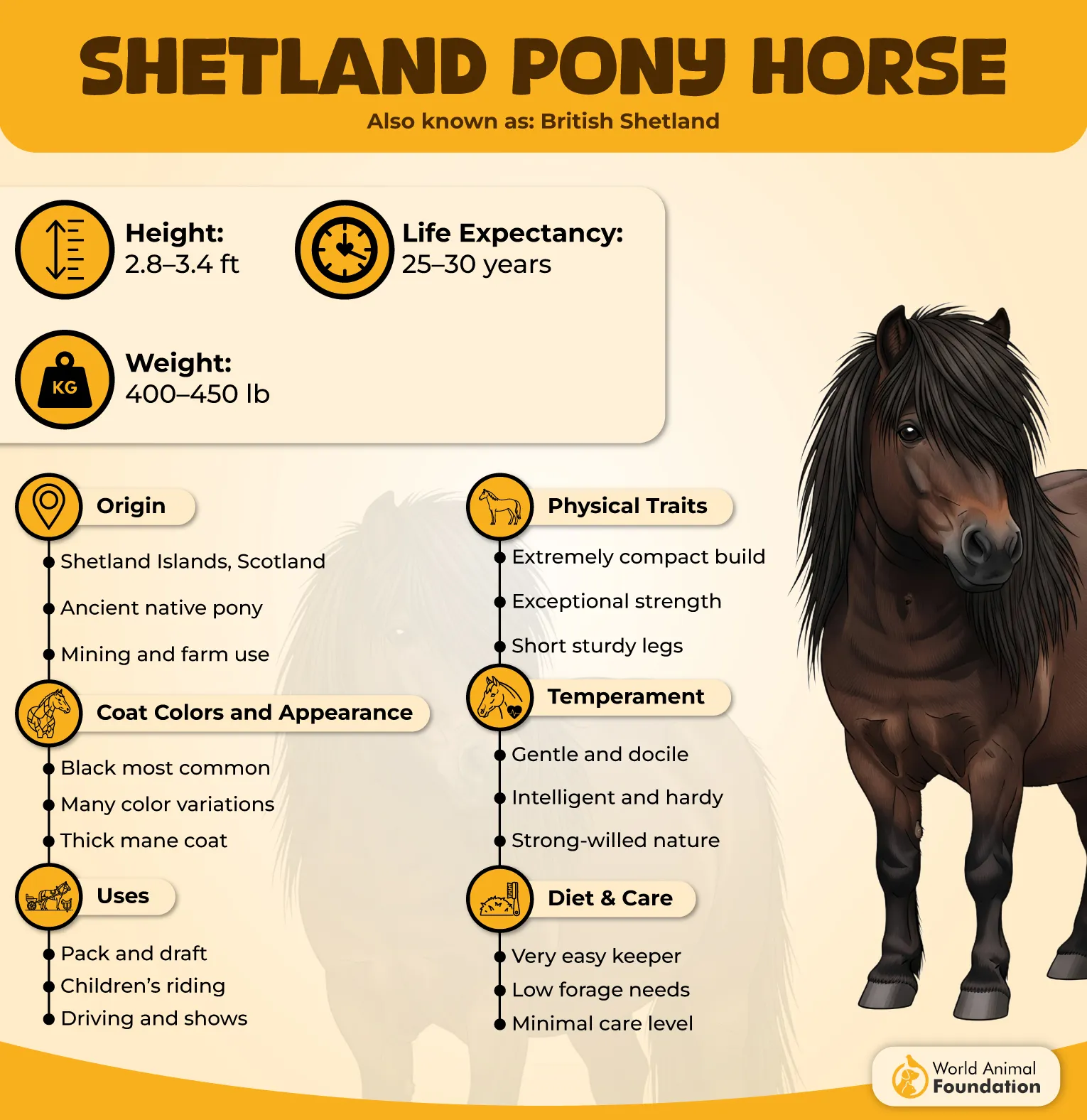
Shetland Pony was developed in the Shetland Islands, where harsh winds and cold seas shaped its resilience. Its compact frame and strong build help conserve body heat during long winters. This background explains why it remains steady in damp, freezing conditions.
Built for Winter Balance
Shetland Pony stands out for its dense double coat that works as natural insulation. Its body structure supports efficient heat retention and energy control, as PetMD noted.
Key winter adaptations of this breed are:
Thick insulating coat
Efficient digestion of limited forage
Lowered metabolic rate during scarcity
Energy Conservation Strategy
Because of its small size, the Shetland Pony maintains warmth more effectively than larger breeds. Its system is designed to extract maximum nutrition from rough pasture. When food becomes limited, it adjusts internally to preserve strength.
4. Exmoor Pony
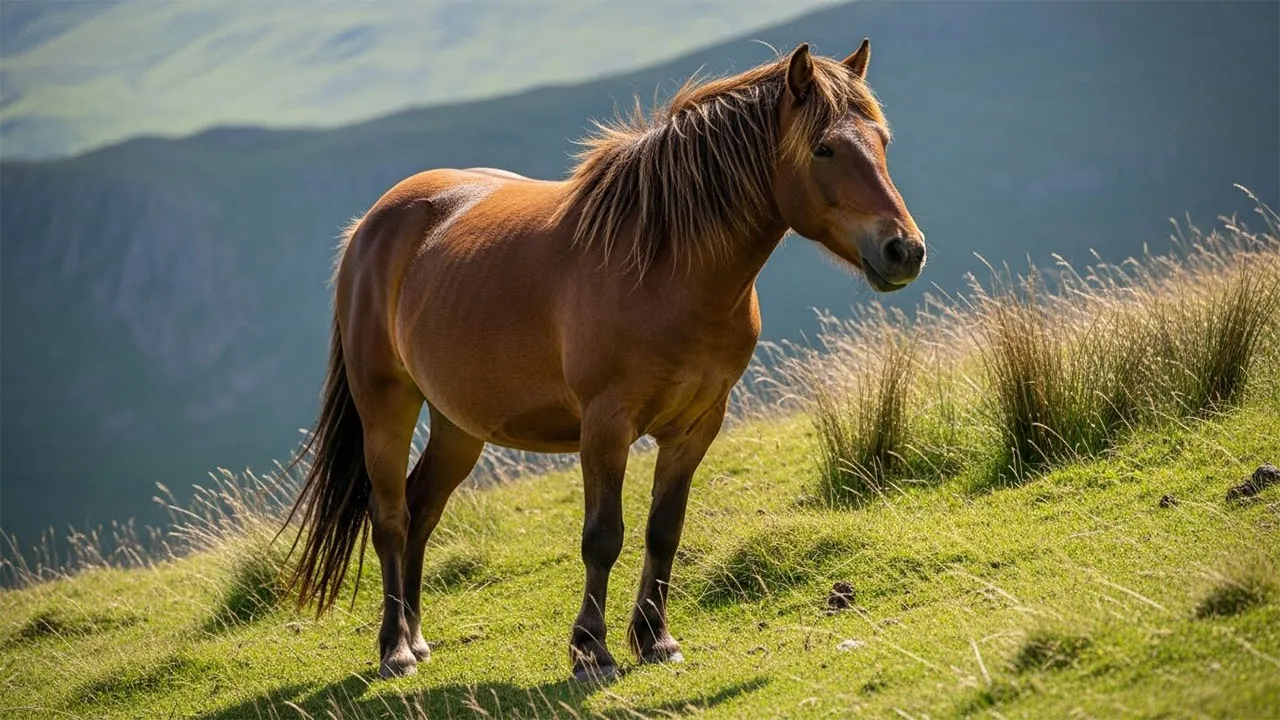
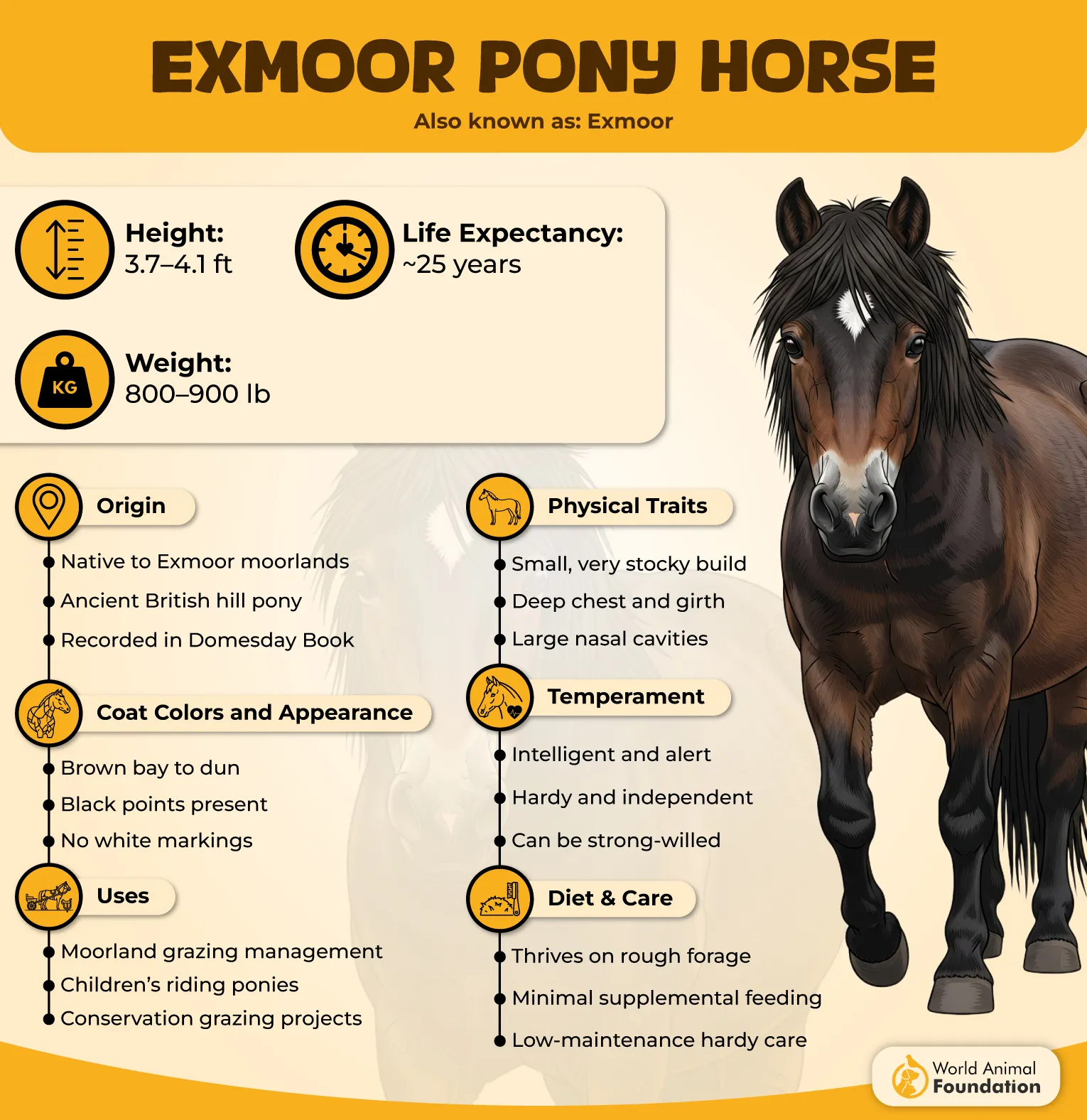
Exmoor Pony originates from the rugged moorlands of southwest England, where weather conditions are often damp and harsh. Its history is closely tied to survival in open landscapes shaped by wind and rainfall. This background shaped a hardy build suited to demanding environments.
Built for Weather Resistance
Its dense double-layered coat provides dependable insulation against cold air and persistent moisture. The compact frame and sure-footed movement help it navigate uneven, wet ground with balance.
All of this helps explain its confidence in tough environments:
Thick undercoat for insulation
Strong, agile body structure
Steady footing on rough terrain
Resilient Native Breed
As one of Britain’s oldest native ponies, it represents long-term adaptation to cold, wet landscapes. Its balanced temperament and environmental resilience reflect generations shaped by moorland life. The breed continues to demonstrate reliability in climates where weather demands durability.
5. Canadian Horse

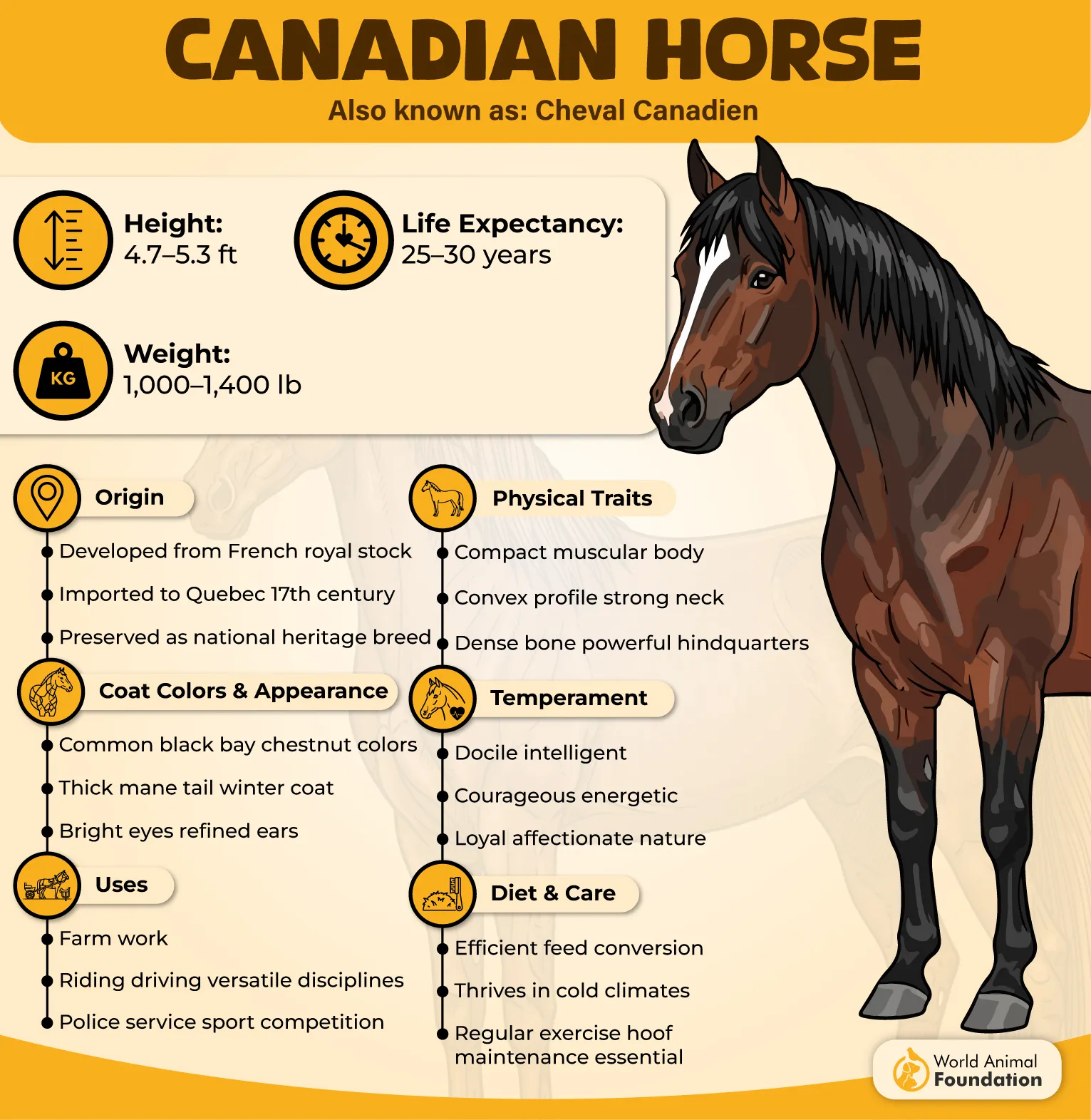
Canadian Horse traces its roots to 17th-century French stock that adapted over generations in Quebec’s demanding environment. Known historically as “Le Petit Cheval de Fer,” it earned respect for resilience shaped by long winters and rugged terrain.
Built for Endurance
Centuries of survival have refined its compact frame, strong muscles, and dense winter coat that shields it from extreme cold. Thick mane, full tail, and sturdy hooves support movement across frozen ground with confidence.
This is why they perform steadily in cold climates:
Compact yet powerful body structure
Heavy insulating coat for subzero weather
Durable hooves suited for icy terrain
Practical Adaptation to Climate
Because it evolved through natural selection in Quebec, only the most resilient horses shaped its modern form. This history resulted in a breed that manages cold exposure with efficiency and stamina. Its overall design reflects generations of adaptation to severe seasonal conditions.
6. Haflinger

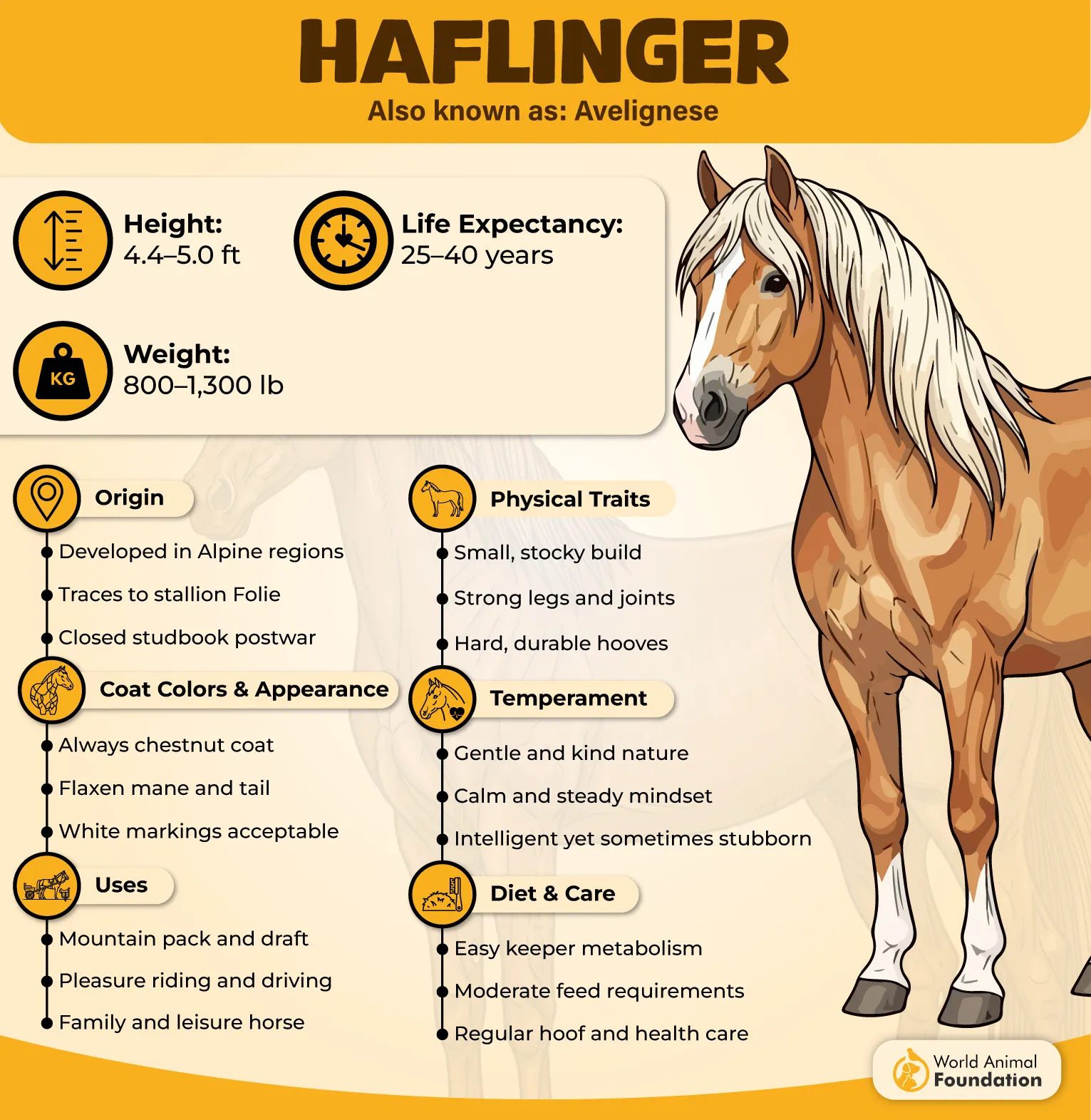
Haflinger horses trace their roots to rugged Alpine regions where terrain and weather demanded resilience. Their compact frame and striking chestnut coat with a light mane create a recognizable presence in snowy landscapes. Every detail of their build reflects adaptation to steep paths and winter conditions.
Built for Winter Ground
Their structure and physiology allow steady movement across snow and damp terrain, making them dependable in challenging seasons. They maintain energy efficiently, even when forage becomes limited.
These traits support their performance in cold weather:
A thick winter coat that insulates effectively
Strong hooves that grip icy surfaces
A balanced body that handles steep slopes with ease
Practical Alpine Companion
In regions where snow remains for months, Haflingers have proven useful for pulling sleighs and assisting in winter field work. Their willingness to learn and steady movement contribute to their reliability in cold, damp climates. Their design aligns closely with life in mountainous environments.
7. Mongolian Horse
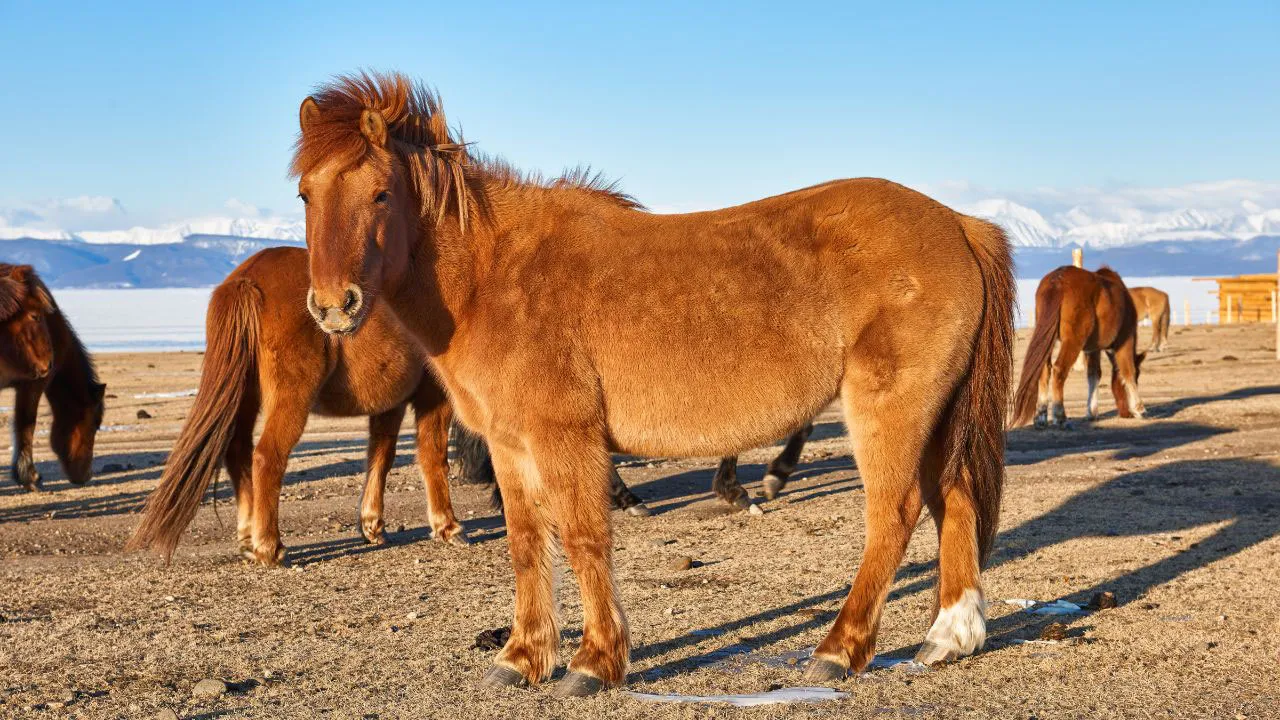
Mongolian Horse has developed remarkable survival traits after centuries on the open Central Asian steppes. Its body is compact and sturdy, built to withstand intense seasonal shifts. This foundation allows it to function reliably in freezing conditions without dependence on heavy management.
Cold Weather Adaptations
Its biological design supports extreme endurance through specialized features that limit heat loss. During severe winters, it grows an exceptionally dense coat that forms natural insulation.
These features enhance strength and resilience in action:
A winter coat that can reach impressive thickness
Circulatory patterns that conserve body warmth
The ability to slow metabolism during deep cold
Self-Sustaining Strength
Living in semi-wild conditions has shaped its ability to locate nourishment even under snow cover. Strong digestion enables it to process frozen forage efficiently without common digestive complications. This independence reduces reliance on constant shelter or additional protection.
Conclusion
Across northern landscapes, these resilient animals show how domesticated horses can adapt to conditions that challenge most horses. Generations shaped their thick coats, steady movement, and ability to maintain body condition through long winter months. In places where cold winters arrive early and linger, selecting the right horse becomes essential for reliability and comfort.
Some breeds carry distinctive traits, such as the upright mane of the Norwegian Fjord, while others reveal survival strategies shaped since the ice age. Whether working steadily under heavy loads or moving calmly through rough weather, these horses combine endurance with a calm temperament that continues to serve people living in demanding climates.
