




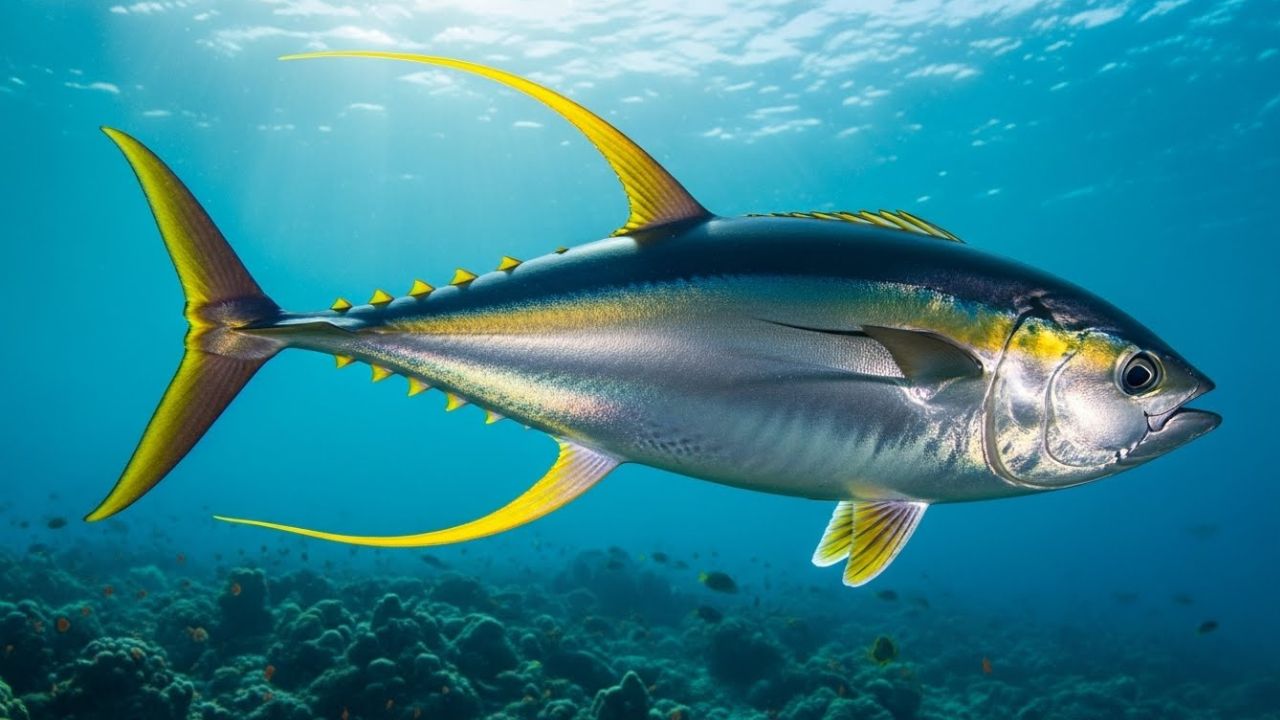
When you stop and really look at how a fish moves through water, it feels almost magical—no splashing legs, no wasted motion, just pure propulsion, balance, and grace. Swimming is not just how fish get around — it is survival, hunting, escaping predators, migrating vast distances, and even finding a mate.
Over millions of years, nature has refined each swimming method, shaping fins, muscles, and tails into masterpieces of motion.
In the world beneath the water’s surface, every flick of a tail and bend of the body matters. Some species are built for long endurance, others for explosive speed, and others for effortless glide that barely disturbs a wave.
This guide explores the best swimming techniques of different fish, breaking down how each species dominates its environment. From lightning-fast open ocean hunters to graceful rays that seem to fly underwater, each example shows how form, movement, and energy efficiency come together.
So grab your imaginary snorkel and let’s dive into the lives of the fastest, smoothest, and most impressive swimmers the sea has to offer.
Fish with the Best Swimming Techniques
1. Yellowfin Tuna
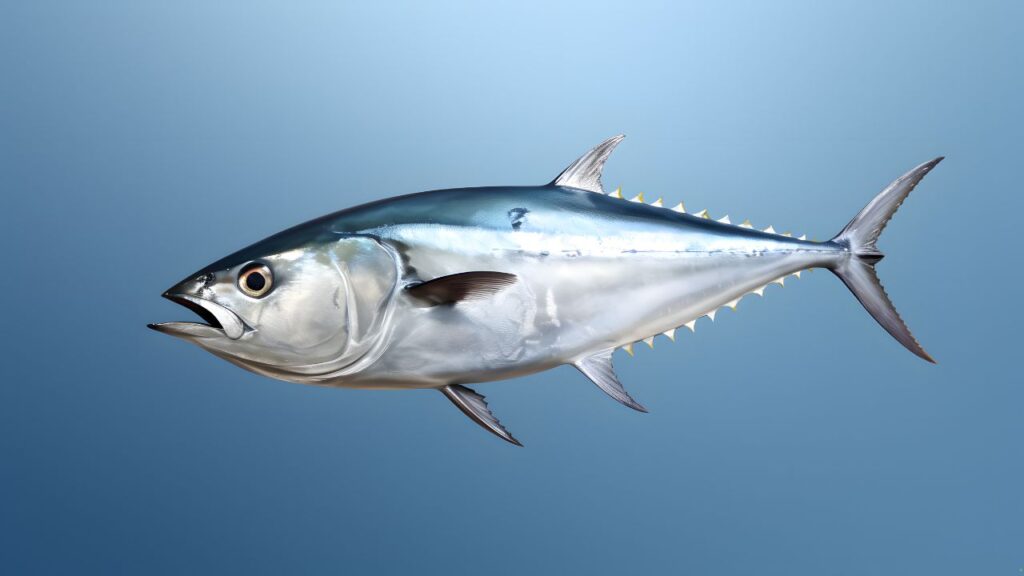
The yellowfin tuna is a true endurance champion, using a swimming technique called thunniform locomotion. In this style, almost all the movement happens near the rear, while the head and body stay rigid and streamlined. This allows the powerful caudal fin to act like a high-efficiency engine, pushing the fish forward with minimal drag.
These fish are built like underwater missiles. Their torpedo-shaped body, narrow profile, and stiff dorsal and anal fins reduce resistance as they cut through water at astonishing swimming speeds. Some can reach speeds rivaling those of fast boats, making them among the fastest species in the sea.
It often travels in a large group, covering incredible distances across the ocean. They tend to follow floating objects where the target gathers, conserving energy while staying close to food. This balance between speed and efficiency allows them to hunt and migrate over long distances without tiring.
What truly sets it apart is that their muscles are partially warm. Unlike most fish, their muscles can stay warmer than the surrounding water, allowing sustained power and faster reactions. This evolutionary advantage allows such fish to thrive in both tropical and calmer waters.
2. Blue Marlin

The blue marlin is built for drama and raw speed. From nearly invisible larvae to massive open-water hunters, their lives are defined by constant motion. Their swimming relies on a stiff body, a long tail, and powerful muscles that generate explosive thrust.
Among fish, National Geographic claims the blue marlin is often cited as one of the fastest, with estimated swimming speeds that push the limits of physics. Their sleek shape allows them to chase prey like tuna, bonitos, and flying fish with terrifying efficiency.
A unique trick of the blue marlin is its ability to fold its pectoral fins flat against the body. This reduces drag, allowing smoother movement through water at extreme velocity. When hunting, every detail of their form works together to maximize acceleration.
Blue marlin also adjust their depth daily, cruising near the surface at night and diving deeper during the day. This vertical movement helps them track their target (often other fish), regulate energy, and remain in optimal conditions for feeding and reproduction.
3. Great White Shark
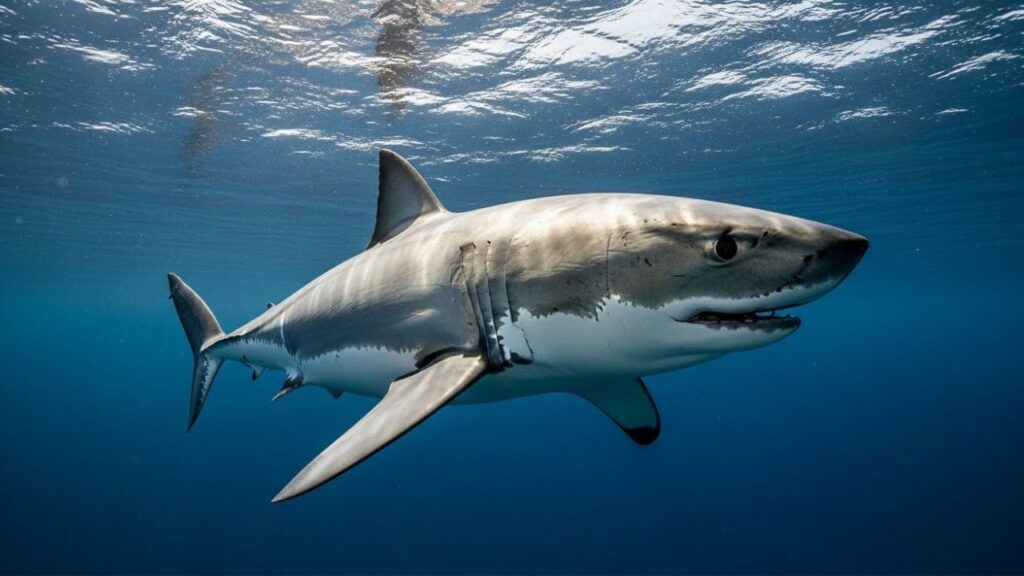
Great white sharks are masters of ambush and precision swimming. They often approach the target from below, swimming vertically in the opposite direction of escape. This tactic gives them a visual advantage while keeping them hidden until the last moment.
Instead of constant high speed, great whites conserve energy by cruising calmly. When the moment is right, they unleash short bursts of incredible power, reaching fast attack speeds in seconds. This combination of patience and explosive motion is a hallmark of elite predators.
Their muscles are mostly white muscle fibers, ideal for anaerobic power. Red muscle, used for steady swimming, sits near the center of the body, helping maintain balance and efficiency over long swims.
As young sharks grow, their swimming practice evolves alongside changes in teeth and feeding habits. This shows how deeply locomotion and hunting strategy are linked in the animal world.
4. Barracuda
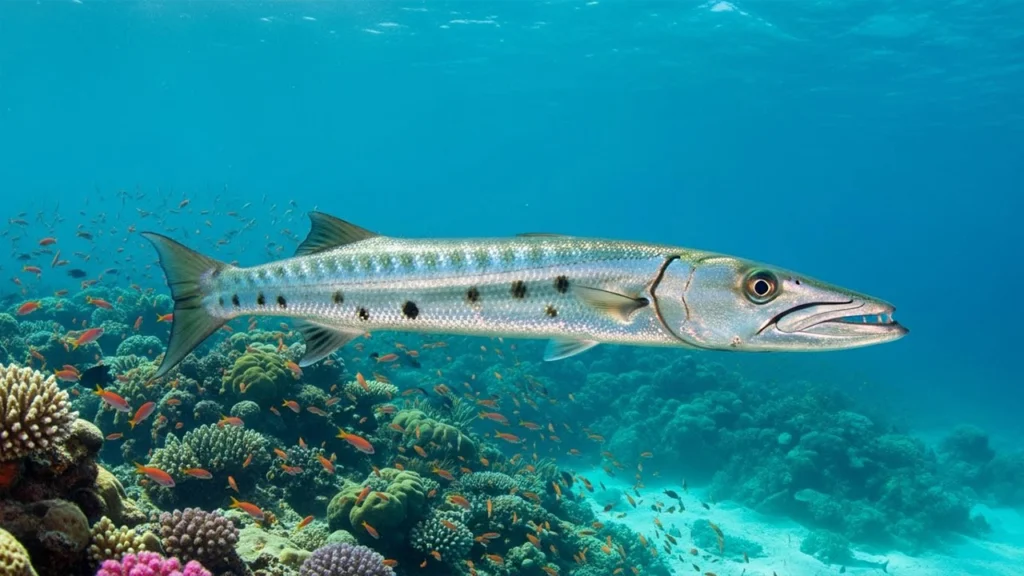
Barracudas are pure speed demons. With long, narrow body shapes and powerful tail strokes, they can accelerate almost instantly. Their swimming is built for straight-line attacks rather than fancy turns.
These fish rely heavily on vision, using countershading camouflage to blend into the water while stalking prey. Once they strike, their movement is so rapid that escape is nearly impossible.
The caudal fin of a barracuda provides massive thrust, while the rigid body minimizes drag. This design sacrifices maneuverability, but the trade-off is raw speed that few species can match.
Barracudas tend to patrol reefs and open areas, waiting for the perfect moment to strike (sometimes for long periods). Their swimming method is an ideal example of how evolution favors specialization.
5. Giant Oceanic Manta Ray
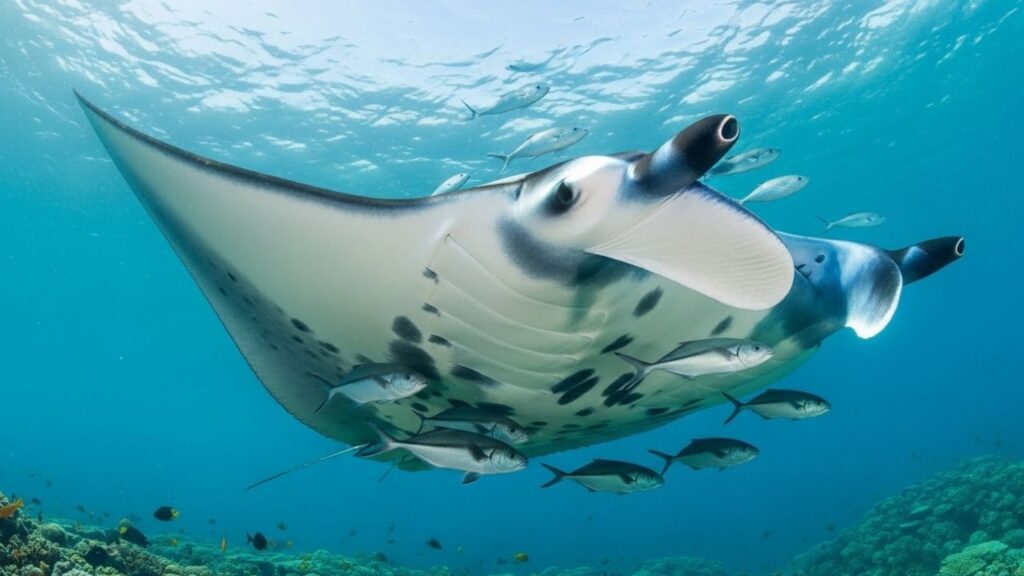
Manta rays redefine what swimming can look like. Instead of tail-powered thrust, they use massive pectoral fins that flap like wings, allowing them to glide effortlessly through the ocean.
This style of movement is incredibly efficient. Mantas can travel long distances while expending very little energy, making them one of the most graceful swimmers in the sea.
When feeding, manta rays perform looping somersaults or create spiraling currents that concentrate plankton. This clever technique allows them to feed without chasing the target, reducing effort while increasing intake.
Often found in a large group, manta rays turn feeding into a coordinated dance. Watching hundreds move together is one of the most impressive sights in underwater life.
6. Indo-Pacific Sailfish
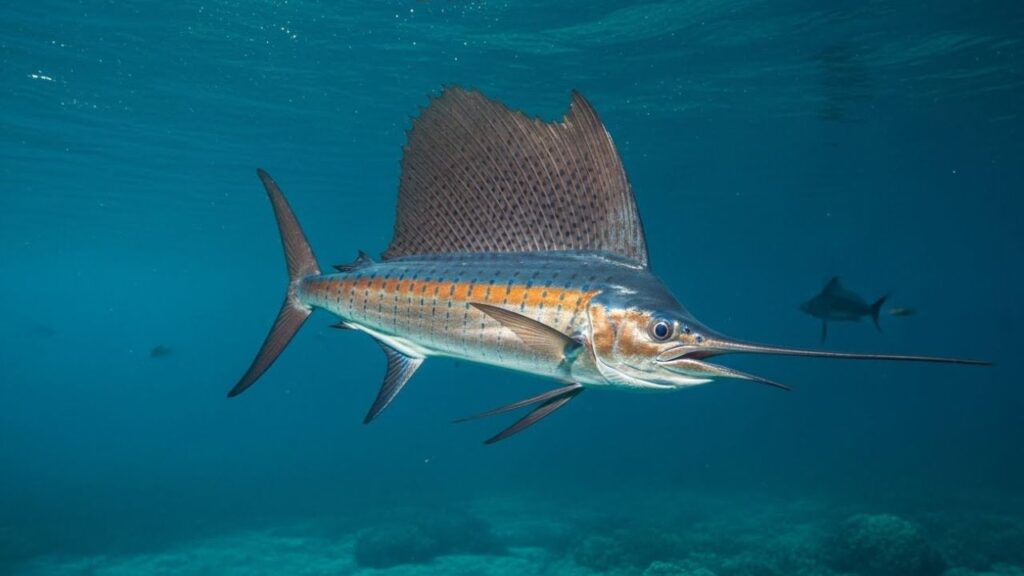
Sailfish are legends of speed. Their hydrodynamic body, sharp bill, and retractable fins enable them to reach high speeds when chasing prey.
A key feature is their massive dorsal sail. When cruising or turning, the sail provides control and intimidation. When sprinting, it folds down, reducing drag and boosting efficiency.
Their drag coefficient is astonishingly low, meaning they face minimal resistance in water. Combined with powerful muscles, this allows incredible acceleration and sustained bursts.
The sailfish’s adaptive swimming style gives it dominance in both pursuit and endurance, making it one of the fastest fish ever studied.
7. Mako Shark
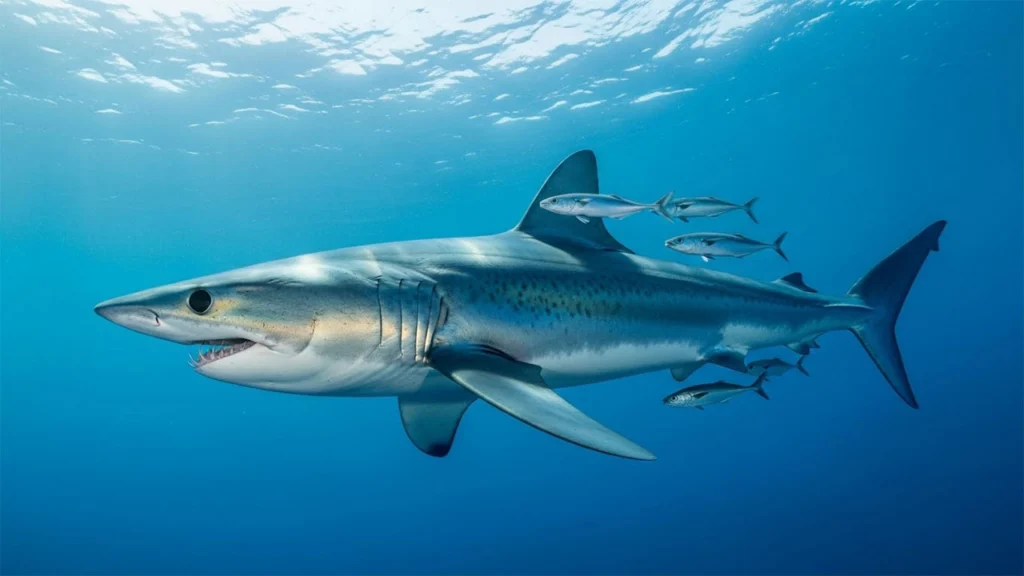
Shortfin mako sharks are built like underwater race cars. Their streamlined bodies, stiff tails, and powerful muscles allow them to reach extreme paces.
Unlike most fish, makos can keep parts of their body warmer than the surrounding water, improving muscle performance and reaction time. This thermal advantage fuels their athleticism.
Their skin is covered in specialized denticles that reduce drag, enhancing propulsion. Every scale plays a role in maximizing thrust and minimizing resistance.
Makos are also famous for leaping out of the water, showing how their swimming power extends beyond the surface. Few are as explosive or fast.
8. Bonefish
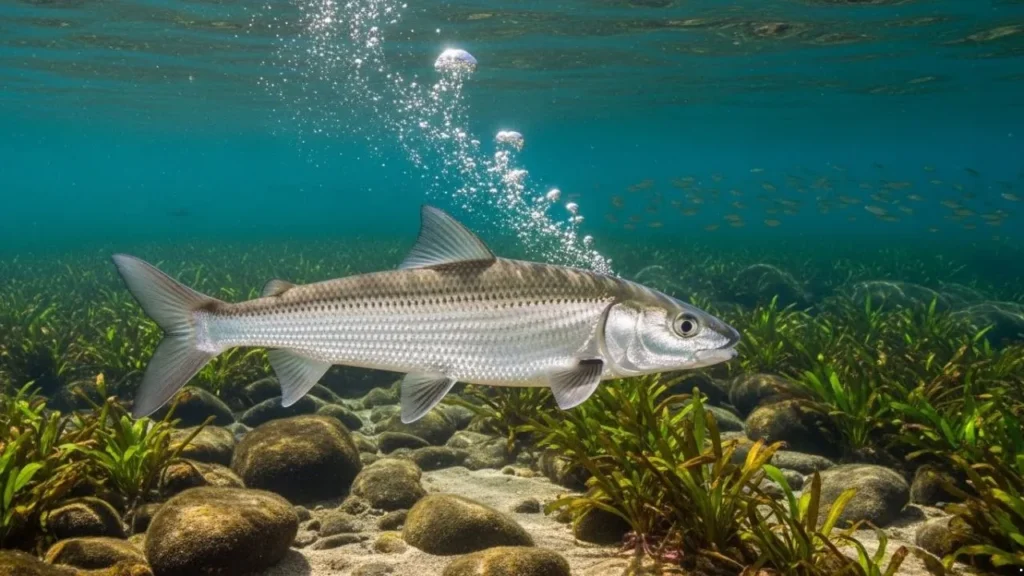
Bonefish are stealth specialists, thriving in shallow flats where precision movement matters. Their carangiform swimming approach relies on broad tail sweeps that generate sudden bursts of speed.
They often swim close to the bottom, using water jets to expose buried prey. This bottom-focused strategy requires fine control of fins and balance.
When threatened, bonefish can accelerate rapidly, using their torpedo-shaped body to escape predators. Their swimming velocities are impressive for fish living in such shallow environments.
They also time their movement with tides, letting currents assist their travel. This innovative use of natural forces boosts efficiency and conserves energy.
9. Yellow Tang
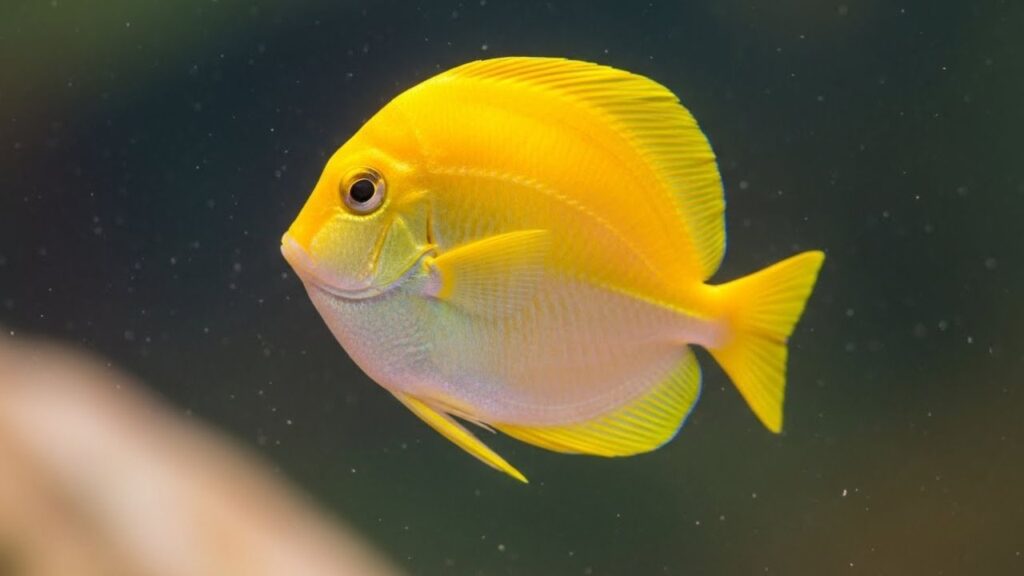
Yellow tangs bring style and function together. While they may not be the fastest fish, their swimming is perfectly tuned for reef life. Their body shape allows quick darts and smooth turns among coral.
They often move in a group, according to Fishbase, grazing algae and keeping reefs healthy. This constant movement plays a vital role in maintaining coral ecosystems.
During spawning, yellow tangs swim upward in graceful arcs, showing off precise control of fins and balance. These movements are both beautiful and biologically essential.
Though popular in a tank, yellow tangs live longer in the wild, where their natural swimming method shines. In the reef, they are quick, alert, and perfectly adapted.
Conclusion
From lightning-fast tuna to soaring manta rays, the diversity of swimming methods in the fish world is astonishing. Each species demonstrates how evolution has shaped body, fins, and muscles for specific roles, whether chasing prey, escaping predators, or traveling vast distances.
What makes these animals so fascinating is their efficiency. Without legs, they rely on perfectly timed movement, powerful rear strokes, and precise fin control to navigate their environment. Most fish don’t waste energy — every motion has a purpose.
By watching how fish swim, we gain insight into biomechanics, design, and the beauty of natural engineering. These swimming fish remind us that the ocean is full of elite athletes, each mastering water in their own remarkable way.
Whether you’re watching them glide, sprint, or cruise, one thing is clear — these are genuinely the fish with the best swimming techniques, and they make the underwater world endlessly exciting.
