




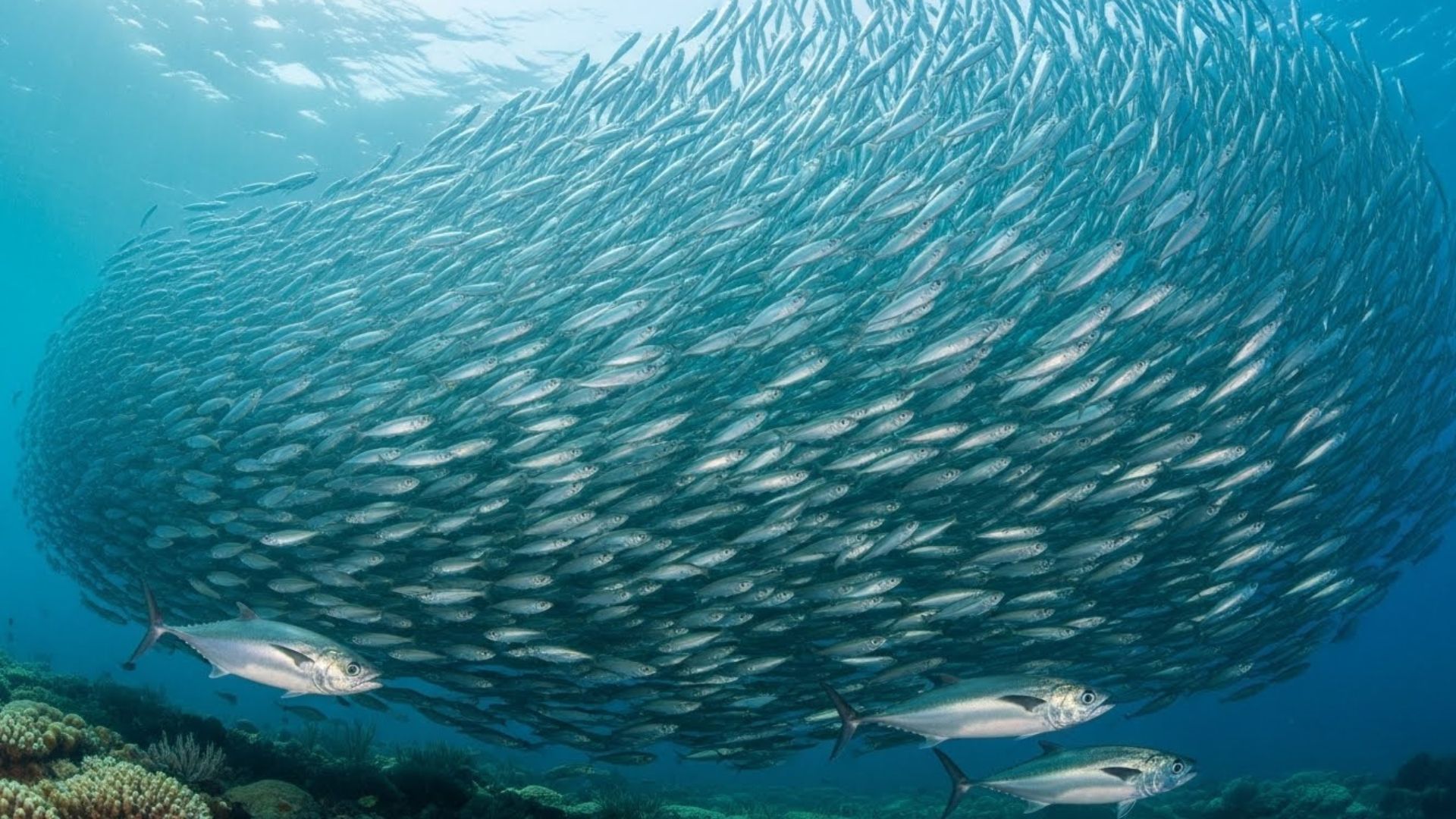
When we think of ‘smart’ animals, our minds usually jump to primates, dolphins, or maybe a clever crow. Fish, on the other hand, are rarely given the credit they deserve. Often, the intricate social dynamics of fish are overlooked, dismissed as mere instinctive schooling behaviors, yet this assumption ignores a world of complex cognition. The truth is, the underwater world is filled with finned geniuses whose problem-solving skills and social intelligence rival those of any land animal. Let’s dive in and meet some of the smartest fish in the sea.
Far from being simple, mindless animals, many fish species have some of the most fascinating and complex social lives on the planet. From family feuds and strategic alliances to full-on gender swaps, the ocean is packed with fish with incredible social structures. Let’s dive into the wild social lives of some of the ocean’s most interesting characters and gain a new understanding of these fantastic creatures.
This isn’t just about biology; it’s about the intricate behavior that shapes entire ecosystems.
7 Fish with Incredible Social Structures
1. Clownfish
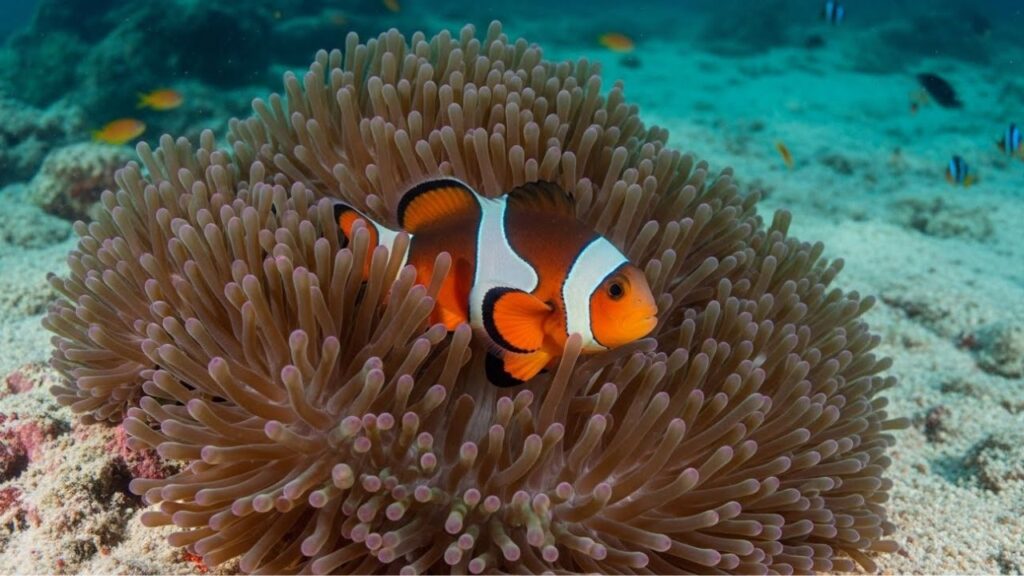
You probably know clownfish from Finding Nemo, but their fundamental family dynamic is way more dramatic than the movie lets on.
According to National Geographic, these iconic reef-associated fish live within the protective tentacles of sea anemones, and a strict hierarchy rules their home life. Each anemone houses a small group led by one large, dominant female—she’s the queen of the castle.
Her number two is the single breeding male, and everyone else is a smaller, non-breeding male just waiting in line for a promotion.
Here’s where it gets wild: every single clownfish is born male. They have the remarkable ability to change sex, a superpower called protandrous hermaphroditism. If the ruling female dies or disappears, her reign isn’t over; it just triggers a significant plot twist.
The breeding male, her loyal partner, undergoes a complete transformation, becoming a female to become the new boss. This change is permanent, and it ensures the group always has a leader to continue the family line.
So how does this succession plan avoid chaos?
The dominant pair keeps the other males in check through intimidation. This social pressure actually suppresses the growth of smaller fish, preventing them from becoming large enough to challenge the hierarchy. If a subordinate male gets too ambitious and tries to grow faster, he risks being kicked out of the anemone, losing its vital protection from predators. It’s a brutal but effective system for maintaining stability and ensuring the group’s survival.
2. African Cichlids
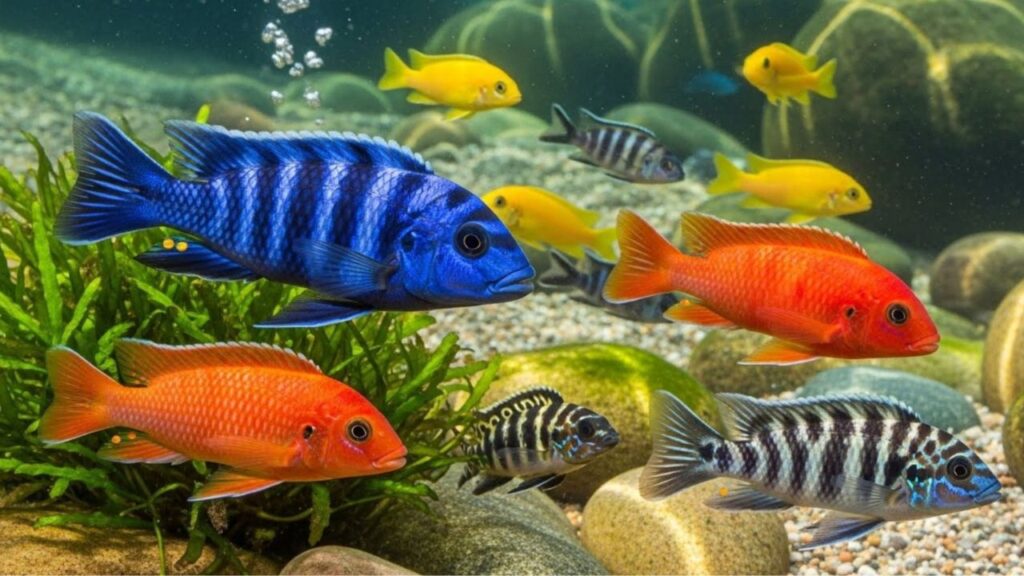
Found in Africa’s Great Lakes, these fish exhibit some of the most diverse social behaviors known. Some species are all about family, practicing cooperative breeding where everyone pitches in. These aren’t just random groups; they are highly organized societies. The complexity of these cichlid fish has given researchers a deep look into the evolution of social behavior.
Take the Fairy Cichlid, for example. These fish live in large, stable family groups that can include up to fifty individuals. At the top, you have a dominant breeding pair, the king and queen. Below them are multiple subordinate “helpers” of all ages. These helpers aren’t just freeloading; they have jobs. They help defend the territory, clean the nest, and care for the baby fish (fry).
Then you have the Astatotilapia burtoni, the ultimate social climber. Males of this species exist in two states: they’re either brightly colored, territorial, dominant bosses, or they’re drab, subordinate guys who blend in with the females.
3. Cleaner Wrasse
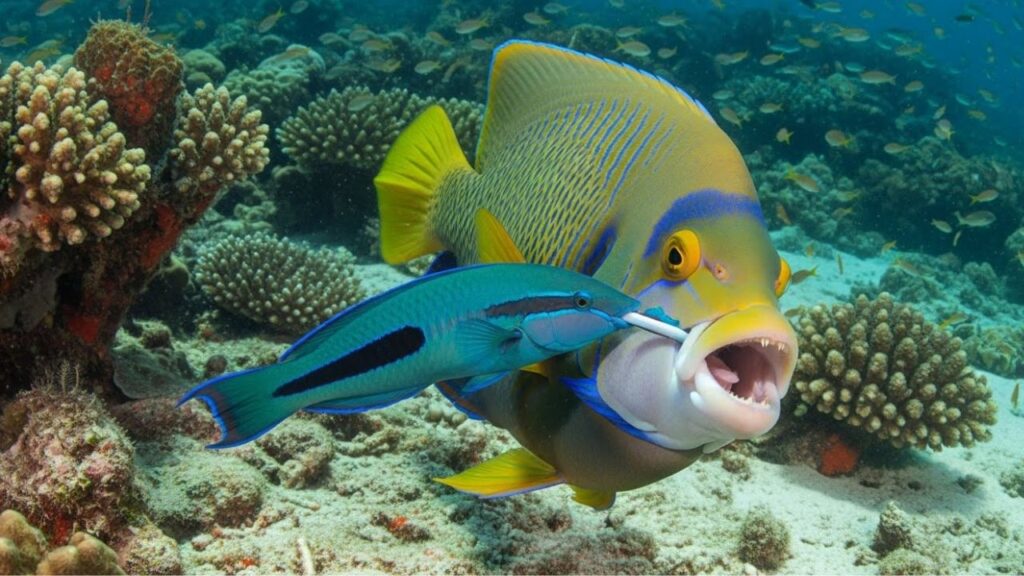
Cleaner wrasse fish set up “cleaning stations” on prominent pieces of coral, where they perform a hypnotic, wiggly dance to attract clients. Other fish, from tiny damselfish to massive sharks, line up to have parasites and dead skin picked off. It’s a classic mutualistic relationship that plays a crucial role in maintaining the health of the entire reef ecosystem.
In fact, research highlighted by the prestigious Royal Society has confirmed their incredible social intelligence, showing they can remember individual clients and make tactical decisions.
The social life of this fish is built around a harem: one dominant male rules over a group of several females. But there’s a twist—all cleaner wrasse are born female. If the male leader dies, the largest and most dominant female in the group will change sex and become the new male, sometimes in just a day. This ensures the cleaning stations stay open for business and the social order is maintained without missing a beat. The drama on the reef, even degraded reefs, never stops.
This is where their genius truly shines. A cleaner wrasse handles hundreds of clients a day and must be a master strategist. Recent research has shown they have incredible social intelligence; they can remember individual clients and make tactical decisions, as per Oceana.
For instance, they’re more likely to provide five-star service (only eating parasites) to big, scary predators or to “floater” fish who could easily take their business elsewhere. But for the small, resident fish with nowhere else to go? They might “cheat” and sneak a bite of nutritious mucus.
4. Seahorses
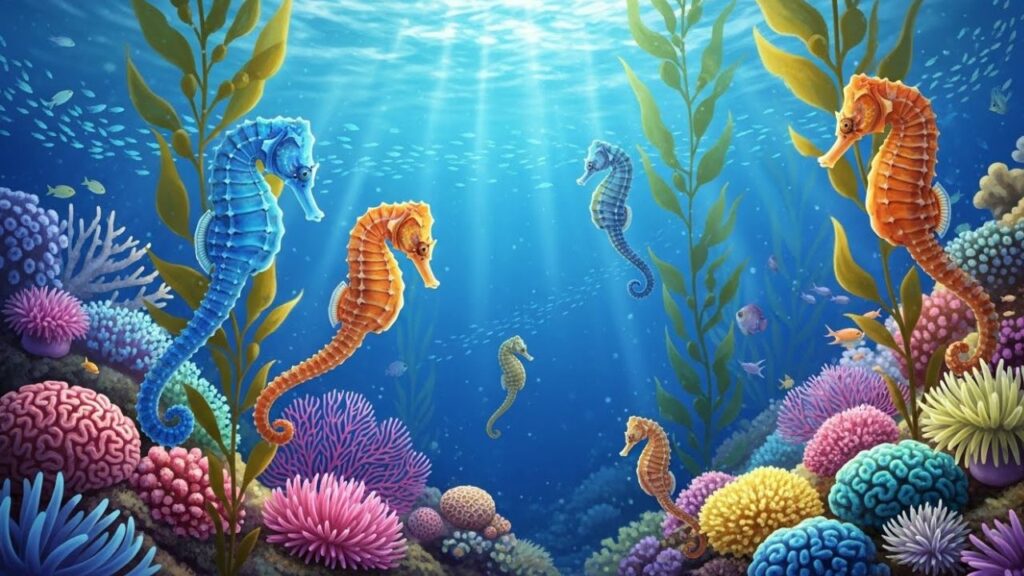
Seahorses are famously monogamous, forming strong pair bonds that can last an entire breeding season, and sometimes even for life. They are a perfect example of how deep relationships can form in the underwater world. These delicate marine fish prove that loyalty isn’t just a human concept; it’s a strategy for survival and raising the next generation.
To keep their bond strong, seahorse couples engage in an elaborate greeting ritual every single morning. The female swims over to the male’s territory, and they perform a beautiful, intricate dance together. They change colors, swim in sync, and wrap their prehensile tails around each other in an underwater ballet that can last for over an hour. This daily dance reinforces their bond, synchronizes their reproductive cycles, and serves as a check-in to make sure their partner is still alive and committed.
The most extraordinary part of their social and reproductive structure is the complete role reversal: the male gets pregnant. The female transfers her eggs into a specialized brood pouch on the male’s abdomen. He then fertilizes the eggs internally and carries them, acting as a living incubator. He provides developing embryos with oxygen and nutrients through a placenta-like system, regulating the salinity within the pouch, just as a womb does. It’s one of the most unique reproductive mechanisms in all of nature.
After carrying the babies for several weeks, the male goes through muscular contractions and gives birth, ejecting hundreds or even thousands of fully-formed, miniature seahorses into the water. From that point on, the babies are on their own, facing a tough start to life.
5. Piranhas
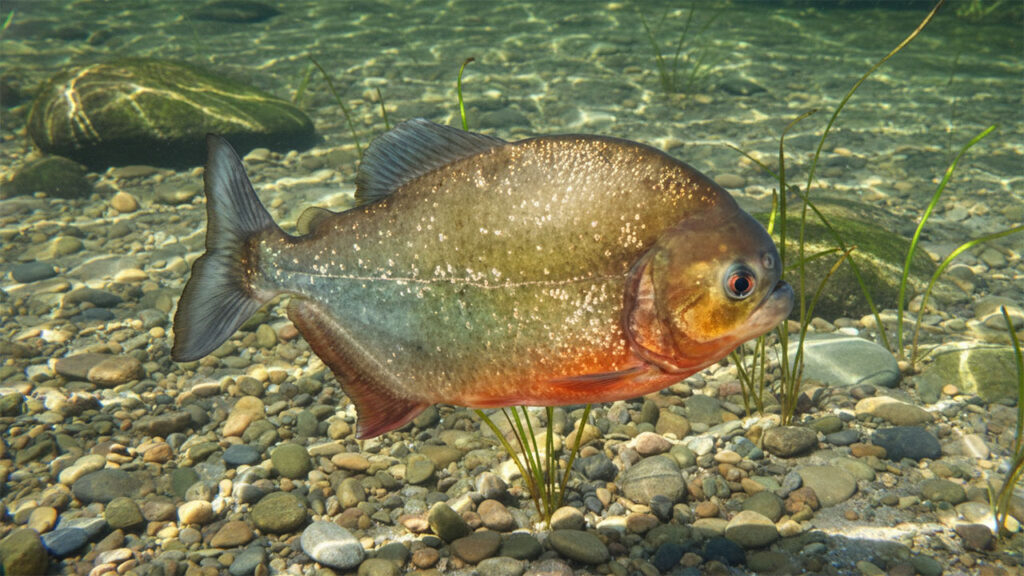
Forget everything you’ve seen in horror movies. Piranhas are less like mindless eating machines and more like anxious teenagers sticking together at a party. Britannica states that the main reason these famous fish hang out in large groups, called shoals, is for protection.
In the Amazon, there are plenty of larger fish, caimans, river birds, and dolphins that would love to make a meal out of a piranha. By sticking together, they create a “safety in numbers” defense that makes it harder for predators to single one out.
Of course, being in a group has its perks when it comes to finding food. While they have a fearsome reputation, piranhas are omnivores, eating everything from other fish and insects to fallen fruits and seeds. When foraging, the shoal can work together with impressive coordination. A scout might find a source of food and signal the others, leading to a quick, efficient feeding frenzy where each fish gets a bite. This coordinated behavior increases their foraging efficiency and ensures the whole group eats.
These shoals aren’t just a chaotic mob; they have a surprisingly complex structure. Often, the younger, smaller piranhas are pushed to the outside of the group, while the larger, sexually mature adults stay safe in the center. This formation protects the most important members of the fish populations—the breeders—while still allowing the young ones to get food.
6. Damselfish
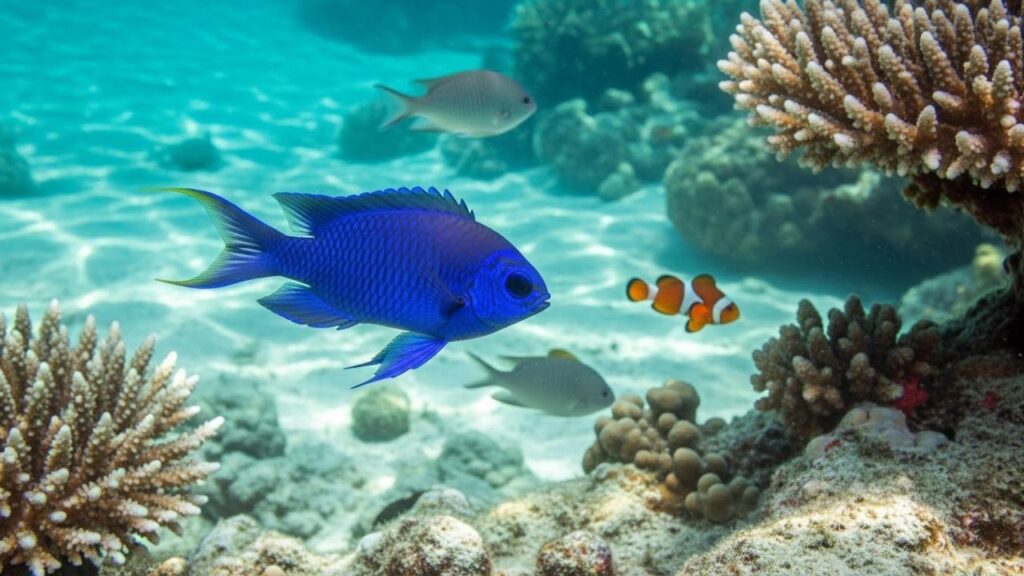
Damselfish are the gardeners of the sea, carefully cultivating their own personal “farms” of filamentous algae. This meticulous gardening isn’t just for their own food supply; by keeping the algae in check, they create clean real estate on the reef, giving tiny, drifting coral larvae a chance to settle and grow into new coral colonies.
Perhaps the most famous members of the damselfish family are the clownfish, whose intricate social lives we’ve already explored. Their symbiotic relationship with sea anemones and their strict, gender-bending hierarchy is a prime example of how damselfish have adapted to thrive in particular niches.
This incredible social structure, centered around a single anemone host, is a masterclass in making the most of limited resources on a bustling reef.
However, not all damselfish are solitary farmers. Some species, like the vibrant blue-green damselfish, are much more social, forming large, peaceful shoals that hover above coral heads to feed on plankton.
Some even use ultraviolet light as a “private” communication channel, hidden from predators that can’t see in the UV spectrum. They also produce chirps and grunts to defend their territory and attract mates, creating a rich tapestry of signals that maintain order within the vibrant reef communities.
7. Surgeonfish
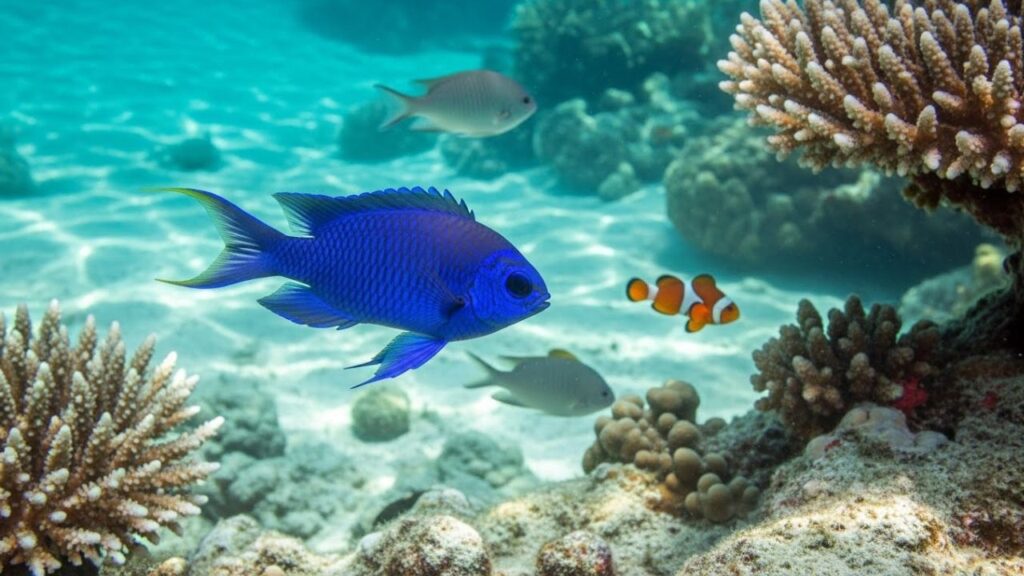
Surgeonfish is one species that really showcases a fantastic range of social strategies.
Some are all about teamwork. The primary purpose of these huge groups is to execute a brilliant feeding strategy: they create a mob to overwhelm the defenses of territorial damselfish. This allows the horde of herbivorous fish to raid the carefully tended algae farms, a classic example of strength in numbers.
The Blue Tang is a perfect example of a fish with a fluid social life. As a juvenile fish, it’s shy and solitary, hiding out in the nooks and crannies of the coral reef to avoid danger. As adults, their social behavior becomes much more flexible. They might be seen alone, in pairs, or in small groups.
On the other end of the spectrum, some surgeonfish are committed loners. The Lined Surgeonfish, for instance, lives a mostly solitary life. It establishes a territory and defends it fiercely using the sharp, scalpel-like spines at the base of its tail, which is how surgeonfish got their name.
They gather in immense spawning aggregations, often timed with the full moon, to release their eggs and sperm into the open ocean. After this brief social event, they part ways, with no parental care offered to the resulting offspring. This temporary mass gathering of the coral reef fish
plays a critical role in their life cycle, ensuring the continued survival of fish populations.
Conclusion
From the dramatic family politics of clownfish to the strategic genius of the cleaner wrasse, these animals have proven they can form intricate relationships, communicate in sophisticated ways, and build societies with clear rules and roles.
These are not just simple creatures; many feel pain and have their own personality, and their behavior reveals a level of complexity that we are only just beginning to appreciate.
Climate change, ocean warming, and habitat destruction from activities such as coastal development are putting immense pressure on coral reefs and the fish that depend on them. Our human activity is driving environmental change and disrupting the delicate ecological balance that has been fine-tuned over millennia.
Protecting these excellent fish and their homes play essential role in preserving the health of the entire ecosystem for future generations. By supporting conservation efforts and raising awareness, we can help ensure that the drama, intelligence, and wonder of these underwater societies continue to thrive.
